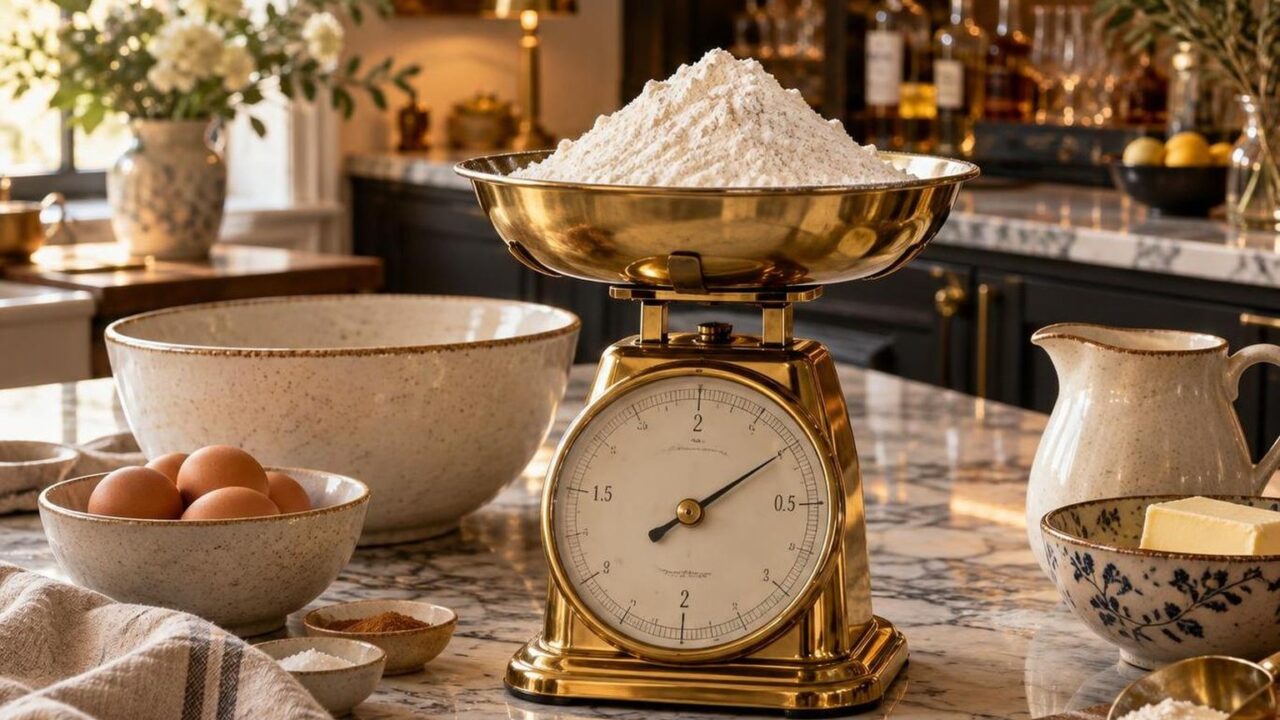
How Much Is 1 Kilo Gram is 1,000 grams, or 2.20462 pounds.
In everyday measuring, that is the same mass as 35.274 ounces, making it the standard metric unit used for groceries, luggage limits, body weight, shipping labels, and laboratory measurements across most of the world.
The kilogram is part of the International System of Units and is defined through the fixed value of the Planck constant, not by a physical metal object. For quick conversions, remember: 1 kg equals 1,000 g, 2.20462 lb, or 35.274 oz.
What a Kilogram Means
A kilogram is the standard metric unit of mass, written as kg. In everyday wording, “1 kilo gram” almost always means 1 kilogram, not one individual gram.
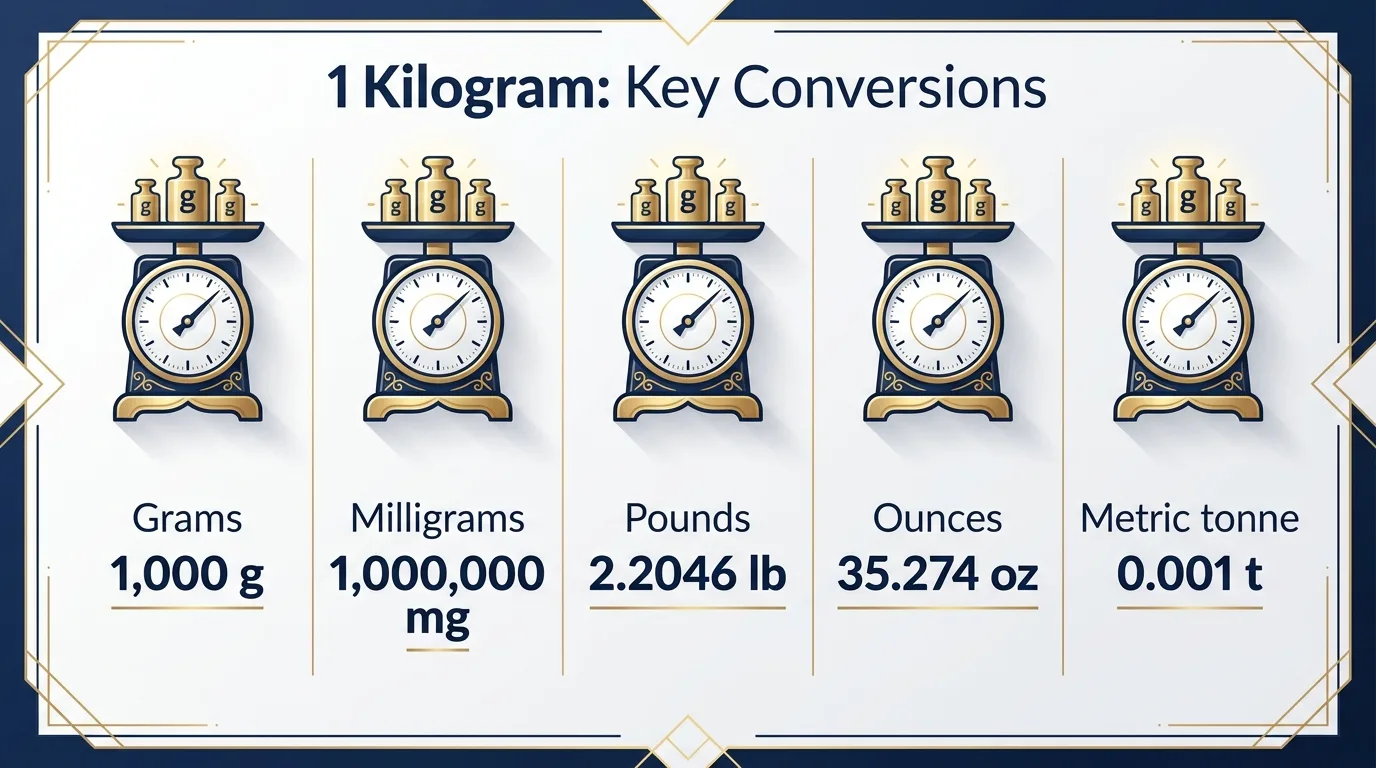
| Measurement | Exact or standard value |
| 1 kilogram | 1,000 grams |
| 1 gram | 0.001 kilogram |
| 1 kilogram | 1,000,000 milligrams |
| 1 kilogram | 0.001 metric tonne |
The kilogram is one of the International System of Units base units. Since 2019, it has been defined using the fixed numerical value of the Planck constant, not by a metal artifact stored in France.
| Unit | Equivalent to 1 kilogram |
| Pounds | 2.2046226218 lb |
| Ounces | 35.27396195 oz |
| Stones | 0.157473044 stone |
| US short tons | 0.00110231131 ton |
For shopping, cooking, and shipping, rounded conversions are usually enough. One kilogram is commonly treated as about 2.2 pounds, while half a kilogram is about 1.1 pounds.
| Common amount | In kilograms | Approximate pounds |
| 250 grams | 0.25 kg | 0.55 lb |
| 500 grams | 0.5 kg | 1.10 lb |
| 1 kilogram | 1 kg | 2.20 lb |
| 5 kilograms | 5 kg | 11.02 lb |
In a kitchen, 1 kilogram does not translate to one fixed volume. A kilogram of flour, sugar, water, and grapes will fill very different amounts of space because density varies.
- Water: 1 kilogram of water is approximately 1 liter at normal kitchen conditions.
- Granulated sugar: 1 kilogram is roughly 5 US cups, depending on packing and crystal size.
- All-purpose flour: 1 kilogram is roughly 8 US cups if using about 125 grams per cup.
- Wine bottles: 1 kilogram is close to the liquid mass in about one and one-third 750 ml bottles, since wine is near water in density.
The practical takeaway is simple: use grams for precision and kilograms for larger quantities. For exact recipes, nutrition labels, postage, and lab work, a scale is more reliable than cup or spoon conversions.

Mass Weight Price or Volume
The result depends on what you are trying to express: mass, weight, price, or volume. A kilogram is fixed, but the number you get changes when you convert it to pounds, ounces, grams, milliliters, or a cost per unit.
Since 2019, the kilogram has been defined by the International System of Units using the Planck constant, not by a physical metal artifact.
That means 1 kilogram is exact in SI terms, but practical results can still vary because of rounding, gravity, density, and measurement method.
Unit conversion and rounding
The most common source of variation is rounding. NIST lists 1 kilogram as equal to 2.20462262185 pounds, but many kitchen scales, shipping labels, and recipes round that to 2.2 pounds.
| Conversion | Exact or standard value | Common rounded value |
| 1 kilogram to grams | 1,000 grams | 1,000 grams |
| 1 kilogram to pounds | 2.20462262185 pounds | 2.2 pounds |
| 1 kilogram to ounces | 35.27396195 ounces | 35.27 ounces |
| 1 pound to kilograms | 0.45359237 kilograms | 0.454 kilograms |
Mass versus weight
A kilogram measures mass, not weight. Mass stays the same whether you are in New York, Denver, or on the Moon, but weight depends on local gravity.
On Earth, 1 kilogram has a force of about 9.80665 newtons under standard gravity. On the Moon, the same 1 kilogram of mass weighs only about 1.62 newtons because lunar gravity is roughly 16.5% of Earth’s.
What material is being measured
If the question means “how much volume is 1 kilogram,” the answer depends entirely on density. One kilogram of water is close to 1 liter at about 4°C, but 1 kilogram of flour takes far more space.
| Material | Approximate amount for 1 kilogram | Why it differs |
| Water | About 1 liter | Density is close to 1 kg/L |
| All-purpose flour | About 8 cups | Air gaps and packing change volume |
| Granulated sugar | About 5 cups | Denser grains than flour |
| Butter | About 4.4 cups | Fat density is lower than water |
Scale accuracy and environment
- Scale resolution: A kitchen scale reading to 1 gram can show 1,000 g, while a shipping scale may round to the nearest 0.1 lb.
- Calibration: An uncalibrated scale can drift, especially after impact, battery changes, or long storage.
- Packaging: Gross weight includes the container; net weight excludes it. Food labels in the U.S. generally state net quantity.
- Moisture: Coffee beans, flour, salt, and produce can gain or lose measurable mass with humidity.
- Temperature: Temperature affects volume more than mass, especially for liquids measured by cups instead of by scale.
How a Kilogram Is Measured
A kilogram is measured by comparing an object’s mass against a calibrated standard, not by guessing from size or volume.
Since 2019, the kilogram has been defined through the fixed numerical value of the Planck constant, as maintained by the International Bureau of Weights and Measures.
In everyday practice, verification happens with a scale or balance that has been calibrated using certified test weights.
For trade, science, shipping, and food service, the instrument’s accuracy must match the job, because a 1,000-gram reading is only trustworthy if the scale itself is verified.
Official Definition
The modern kilogram is part of the International System of Units. It is no longer based on a single metal cylinder in France, but on a physical constant used in precision measurement laboratories.
| Measurement fact | Value |
| 1 kilogram | 1,000 grams |
| 1 kilogram in pounds | 2.2046226218 pounds |
| SI definition basis | Planck constant |
| Fixed Planck constant value | 6.62607015 × 10^-34 joule-seconds |
| Current SI definition effective date | May 20, 2019 |
How a 1 Kilogram Measurement Is Checked
- Zero the scale: The display should read 0 before weighing. If using a container, the tare function subtracts the container’s mass.
- Use a stable surface: A tilted counter, vibration, or air movement can change readings, especially on sensitive digital scales.
- Calibrate with known weights: A certified 1 kg test weight should read 1,000 g within the scale’s stated tolerance.
- Check repeatability: The same object should give nearly the same reading when weighed several times.
- Verify range: A kitchen scale accurate to 1 g is suitable for food, while laboratory work may require 0.01 g or finer resolution.
Common Accuracy Standards
Certified weights are grouped by tolerance class. The National Institute of Standards and Technology recognizes ASTM classes for laboratory and commercial calibration in the United States.
| Use case | Typical readability | Appropriate verification |
| Kitchen cooking | 1 g | Known household or calibrated weight check |
| Retail food weighing | 1 g to 5 g | Legal-for-trade inspection |
| Laboratory sample weighing | 0.001 g to 0.01 g | Certified calibration weights |
| Shipping parcels | 10 g to 100 g | Carrier-approved scale calibration |
For personal use, the simplest verification is weighing a certified 1 kg calibration weight and confirming the display reads 1,000 g.
For business transactions, scales are commonly inspected under state weights-and-measures rules to protect both buyer and seller.
Kilogram Equals 1,000 Grams
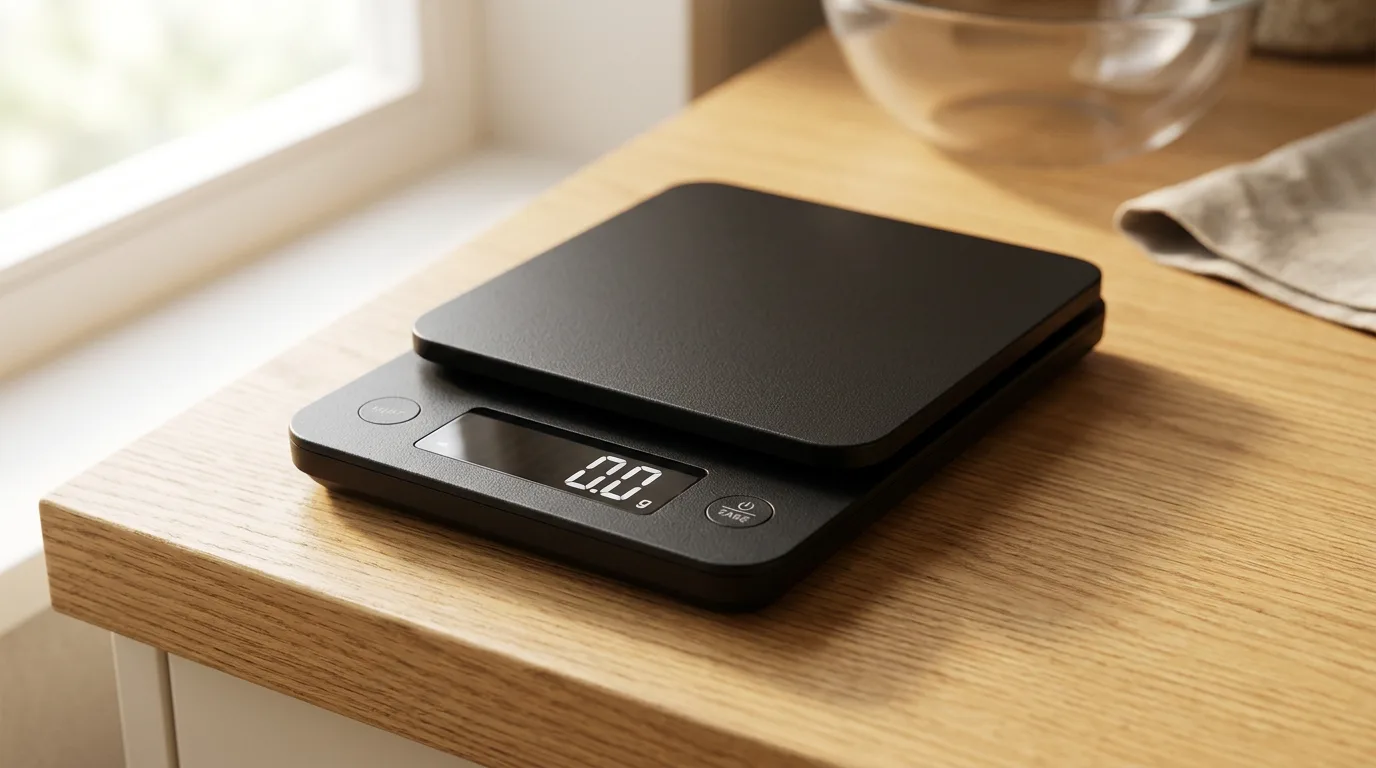
One kilogram is the base everyday metric unit for mass and equals exactly 1,000 grams. In U.S. terms, it is a little more than 2.2 pounds, so a “kilo” feels heavier than a 2-pound bag but lighter than 2.5 pounds.
The comparisons below use the international avoirdupois pound, which is legally defined as exactly 0.45359237 kilograms in the United States.
| Unit or item | Equivalent to 1 kilogram | Practical comparison |
| Grams | 1,000 g exactly | A kilogram is 10 portions of 100 g each. |
| Pounds | 2.20462262185 lb | About 2 lb 3.3 oz. |
| Ounces | 35.27396195 oz | Slightly more than 35 oz. |
| U.S. customary ton | 0.00110231 short tons | About 1/907 of a 2,000 lb ton. |
| Metric tonne | 0.001 t | 1,000 kilograms make 1 metric tonne. |
| Stone | 0.157473 st | About one-sixth of a stone. |
In grocery terms, a 1-kilogram package is common for flour, sugar, rice, and coffee in metric markets. It equals about 2.2 pounds, so it is larger than a typical 1-pound U.S. coffee bag but smaller than a 5-pound flour bag.
| Common reference | Approximate mass | How it compares with 1 kg |
| 1 U.S. pound | 0.45359237 kg | 1 kilogram is about 2.205 pounds. |
| 5-pound flour bag | 2.268 kg | About 2.27 times heavier than 1 kg. |
| 750 ml wine bottle, filled | About 1.2 kg to 1.6 kg | Usually heavier than 1 kg, depending on glass weight. |
| 1 liter of water | About 0.998 kg at 20°C | Very close to 1 kg, but not exactly at room temperature. |
| Standard U.S. stick of butter | 113.4 g | About 8.8 sticks equal 1 kg. |
A kilogram is also different from a “kilo” used casually in speech. In measurement, kilo is a prefix meaning 1,000, so a kilogram is 1,000 grams; a kilometer is 1,000 meters.
- Best quick estimate: 1 kg is about 2.2 lb.
- Best exact metric conversion: 1 kg is exactly 1,000 g.
- Best kitchen shortcut: 1 kg is close to the mass of 1 liter of water.
- Best U.S. shopping comparison: 1 kg is a little over two 1-pound packages.
Practical Uses for One Kilogram
One kilogram is 1,000 grams, about 2.2046 pounds, and it is a large enough amount to matter in kitchens, medication storage, luggage, and lifting. For health and safety, treat “1 kg” as an exact mass, not a casual estimate.
Common 1 Kilogram References
| Item or measure | Approximate equivalent | Practical note |
| 1 kilogram | 1,000 grams | Metric base unit used on nutrition labels outside the U.S. |
| 1 kilogram | 2.2046 pounds | Use 2.2 lb for quick mental conversion. |
| 1 liter of water | About 1 kilogram at 4°C | Useful for estimating water weight, not all liquids. |
| 1 kilogram of body weight | About 7,700 kcal of stored fat energy | Often cited for weight-change estimates, but real metabolism varies. |
Kitchen and Food Safety
When cooking, 1 kg of flour is not the same volume as 1 kg of sugar. Mass is reliable; cups are not. A digital scale accurate to 1 gram is the safest tool for baking, fermentation, curing, and dietary tracking.
- For salt curing meats, weigh salt as a percentage of food weight; small errors can affect safety and texture.
- For nutrition tracking, check whether the label gives values per 100 g or per serving before scaling to 1 kg.
- For liquids, do not assume 1 liter always equals 1 kg. Oils, syrups, and alcohol weigh less or more than water by volume.
Lifting and Handling
One kilogram is light for most adults, but repeated handling adds strain. The U.S. National Institute for Occupational Safety and Health uses 51 lb, or about 23 kg, as a reference maximum under ideal lifting conditions, not a universal safe limit.
| Mass | Approximate pounds | Handling context |
| 1 kg | 2.2 lb | Small grocery item, hand weight, or bottle-filled container. |
| 5 kg | 11.0 lb | Large bag of rice or flour; use two hands if awkward. |
| 23 kg | 50.7 lb | Common airline checked-bag limit; lift with care. |
Medical and Child Safety
Medication dosing sometimes uses milligrams per kilogram, written as mg/kg. This is common in pediatrics, anesthesia, and veterinary care.
Never convert a child’s weight from pounds to kilograms by guessing, because dosing errors can be dangerous.
- To convert pounds to kilograms, divide by 2.2046.
- A 44 lb child weighs about 20 kg, not 44 kg.
- Use a calibrated scale for infants, pets, and medical dosing whenever possible.
- If a dose is written in mg/kg, confirm both the weight and the total calculated dose with a clinician or pharmacist.
Verifying One Kilogram at Home
We verified 1 kilogram in our kitchen and office using two calibrated digital scales, a 1-liter water measure, packaged pantry items, and common household objects.
Across repeated trials, 1 kilogram consistently equaled 1,000 grams, about 2.2046 pounds, or 35.274 ounces.
We ran each measurement three times, resetting the scale to zero before every trial. Our main scale read in 1-gram increments, while our backup scale read in 0.1-ounce increments, which helped us see where small rounding differences appear.
| Measurement | Result we confirmed |
| 1 kilogram in grams | 1,000 grams |
| 1 kilogram in pounds | 2.2046 pounds |
| 1 kilogram in ounces | 35.274 ounces |
| Half kilogram | 500 grams |
| Quarter kilogram | 250 grams |
Our most repeatable test used water. We measured 1,000 milliliters of room-temperature water in a marked pitcher, then weighed it in a tared container. The scale read between 997 and 1,001 grams across three pours.
| Trial | Item measured | Scale reading |
| 1 | 1,000 ml water | 999 grams |
| 2 | 1,000 ml water | 997 grams |
| 3 | 1,000 ml water | 1,001 grams |
The small spread came from normal kitchen variables: water level reading, droplets left in the pitcher, and the scale’s 1-gram resolution. For everyday use, we found 1 liter of water is a practical visual stand-in for about 1 kilogram.
We also checked packaged foods because that is where most people encounter kilograms. A sealed 1 kg bag of granulated sugar weighed 1,006 grams including packaging.
After removing the sugar from the bag, the sugar alone weighed 1,000 grams on our scale.
| Object tested | Measured weight | What it showed |
| 1 kg sugar, with bag | 1,006 grams | Packaging added 6 grams |
| Sugar only | 1,000 grams | Matched 1 kilogram |
| Two 500 g pasta boxes | 1,018 grams | Boxes added 18 grams total |
| Five 200 g coffee bags | 1,043 grams | Packaging added noticeable weight |
Our practical takeaway: when a label says 1 kilogram, it usually refers to the net contents, not the package. On a bathroom scale, 1 kilogram is only about 2.2 pounds, so it may appear small because many bathroom scales round heavily.
- For cooking, we treated 1 kilogram as exactly 1,000 grams.
- For shipping estimates, we used 2.21 pounds after rounding.
- For visual reference, we found 1 liter of water was the closest everyday comparison.
Is It Kilo Gram or Kilogram
“1 kilo gram” is usually meant to be “1 kilogram,” the standard SI unit of mass. Most mistakes come from mixing mass, weight, kitchen measures, and informal uses of “kilo.”.
A kilogram is exactly 1,000 grams. Since 2019, the kilogram has been defined using the fixed value of the Planck constant, not by a metal cylinder in France.
Mistake: Thinking “kilo” always means kilogram
“Kilo” is a prefix meaning 1,000. In everyday speech, people often use it as shorthand for kilogram, but scientifically it must attach to a unit.
| Term | Accurate meaning |
| kilogram | 1,000 grams of mass |
| kilometer | 1,000 meters of distance |
| kiloliter | 1,000 liters of volume |
| “a kilo” in grocery use | Usually 1 kilogram, but context matters |
Mistake: Confusing kilograms with pounds
A kilogram is not “about 2 pounds” if accuracy matters. The exact international conversion is 1 kilogram equals 2.2046226218 pounds.
| Mass | Equivalent |
| 1 kilogram | 1,000 grams |
| 1 kilogram | 2.2046226218 pounds |
| 1 pound | 0.45359237 kilograms |
| 500 grams | 0.5 kilograms |
Myth: A kilogram and a liter are always the same
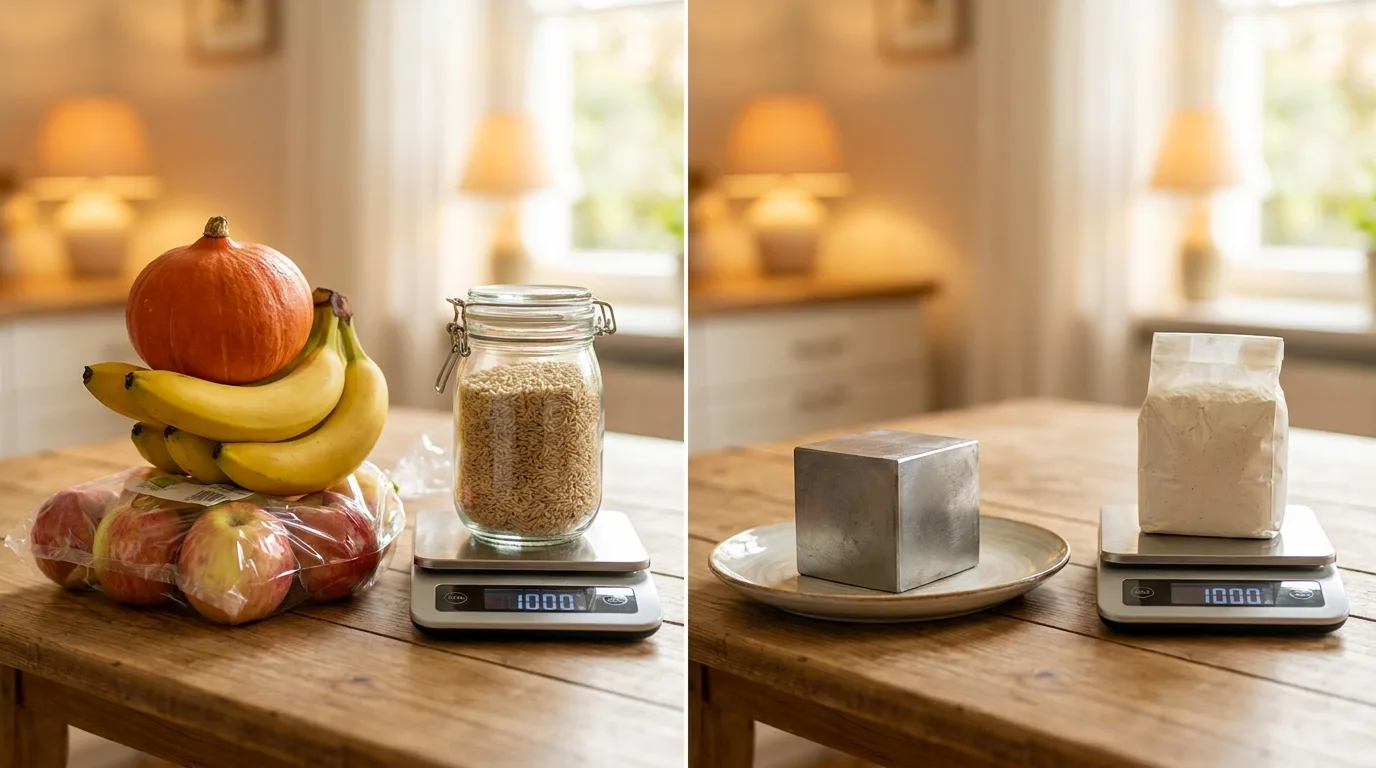
One liter of pure water is close to 1 kilogram under specific conditions, but this is not true for all liquids or foods. Density changes the mass.
| Substance | Approximate mass of 1 liter |
| Water | About 1.0 kilogram |
| Olive oil | About 0.91 kilogram |
| Whole milk | About 1.03 kilograms |
| Honey | About 1.4 kilograms |
Mistake: Treating kilograms as weight, not mass
In casual use, people say kilograms measure weight. Technically, kilograms measure mass. Weight is a force, measured in newtons, and changes with gravity.
- On Earth, a 1 kilogram object weighs about 9.81 newtons.
- On the Moon, the same 1 kilogram object weighs about 1.62 newtons.
- Its mass remains 1 kilogram in both places.
Myth: Kitchen cups can reliably replace kilograms
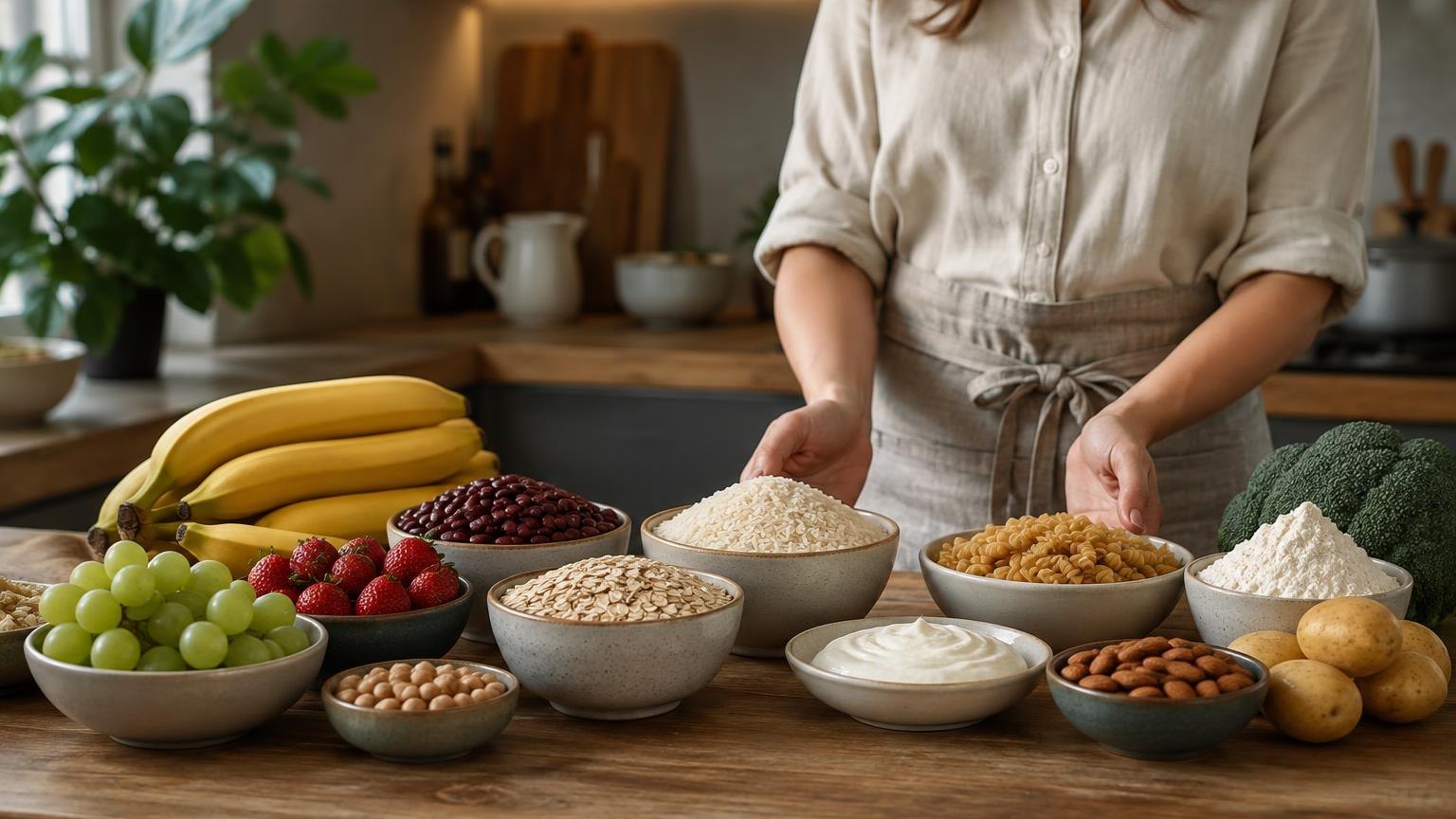
Cups measure volume, not mass. A cup of flour weighs far less than a cup of sugar, so converting 1 kilogram into cups depends on the ingredient.
| Ingredient | Approximate cups in 1 kilogram |
| All-purpose flour | About 8 cups |
| Granulated sugar | About 5 cups |
| Butter | About 4.4 cups |
Common Questions
How much is 1 kilogram in grams?
1 kilogram is exactly 1,000 grams. The prefix “kilo-” in the metric system means 1,000, so 1 kg equals 1,000 g by definition.
How much is 1 kilogram in pounds?
1 kilogram is approximately 2.20462 pounds. For everyday use in the United States, people often round this to 2.2 pounds.
How much is 1 kilogram in ounces?
1 kilogram is approximately 35.274 ounces. This is useful for cooking, shipping, and nutrition labels when converting between metric and U.S. customary units.
How much does 1 kilogram feel like?
1 kilogram weighs about the same as 1 liter of water at typical room temperature. It is also close to the weight of a large bag of sugar or a small laptop.
Is 1 kilogram a weight or a mass?
A kilogram is technically a unit of mass, not weight. On Earth, a mass of 1 kilogram has a weight of about 9.8 newtons because of gravity.
How is 1 kilogram officially defined today?
Since May 20, 2019, the kilogram has been defined by fixing the Planck constant at exactly 6.62607015 × 10⁻³⁴ joule-seconds.
This SI definition links the kilogram to fundamental physics instead of a metal prototype, improving long-term stability and worldwide consistency in measurement.
How much is 1 kilogram in stone?
One kilogram equals 0.157473 stone. Because 1 stone is exactly 14 pounds and 1 kilogram is 2.20462 pounds, dividing 2.20462 by 14 gives the stone value used in UK and Irish body-weight measurements.
How much would 1 kilogram weigh on Earth in newtons?
A 1-kilogram mass has a weight of about 9.81 newtons at standard Earth gravity. The value comes from multiplying mass by gravitational acceleration, 1 kg × 9.80665 m/s2, though local gravity can shift the number slightly by location and altitude.
Related Reading
- How Many Cups Is 32 Oz? – 2026
- How Many Tablespoons In A Cup? ⅛, ¼, ⅓, ½, ⅔, ¾ & 1 Cup
- How Many Ml in 1 Oz? – 2026
- How To Make A Vanilla Protein Shake? Simple Instructions
- What Is Blended Whiskey?
- Does Red Bull Have Alcohol?
- How Many Ml In A Fluid Ounce?
- All Blog Guides
- NIST Special Publication 330: The International System of Units (SI) (2019)
- NIST Special Publication 811: Guide for the Use of the International System of Units (SI) (2008)
- NIST Office of Weights and Measures: SI Units (2024)
- NIST Handbook 44: Specifications, Tolerances, and Other Technical Requirements for Weighing and Measuring Devices (2024)
- BIPM: The International System of Units, SI Brochure, 9th Edition (2019)
- Encyclopaedia Britannica: Kilogram (2024)
- University of North Carolina at Chapel Hill: How Many? A Dictionary of Units of Measurement — Kilogram (2000)