How Many Oz In A Pint Of Beer is 16 US fluid ounces. That equals 473 milliliters, the standard American pint used for most draft pours, pint glasses, and beer menus in the United States.
The number changes outside the U.S.: an imperial pint in the United Kingdom is 20 imperial fluid ounces, or about 568 milliliters.
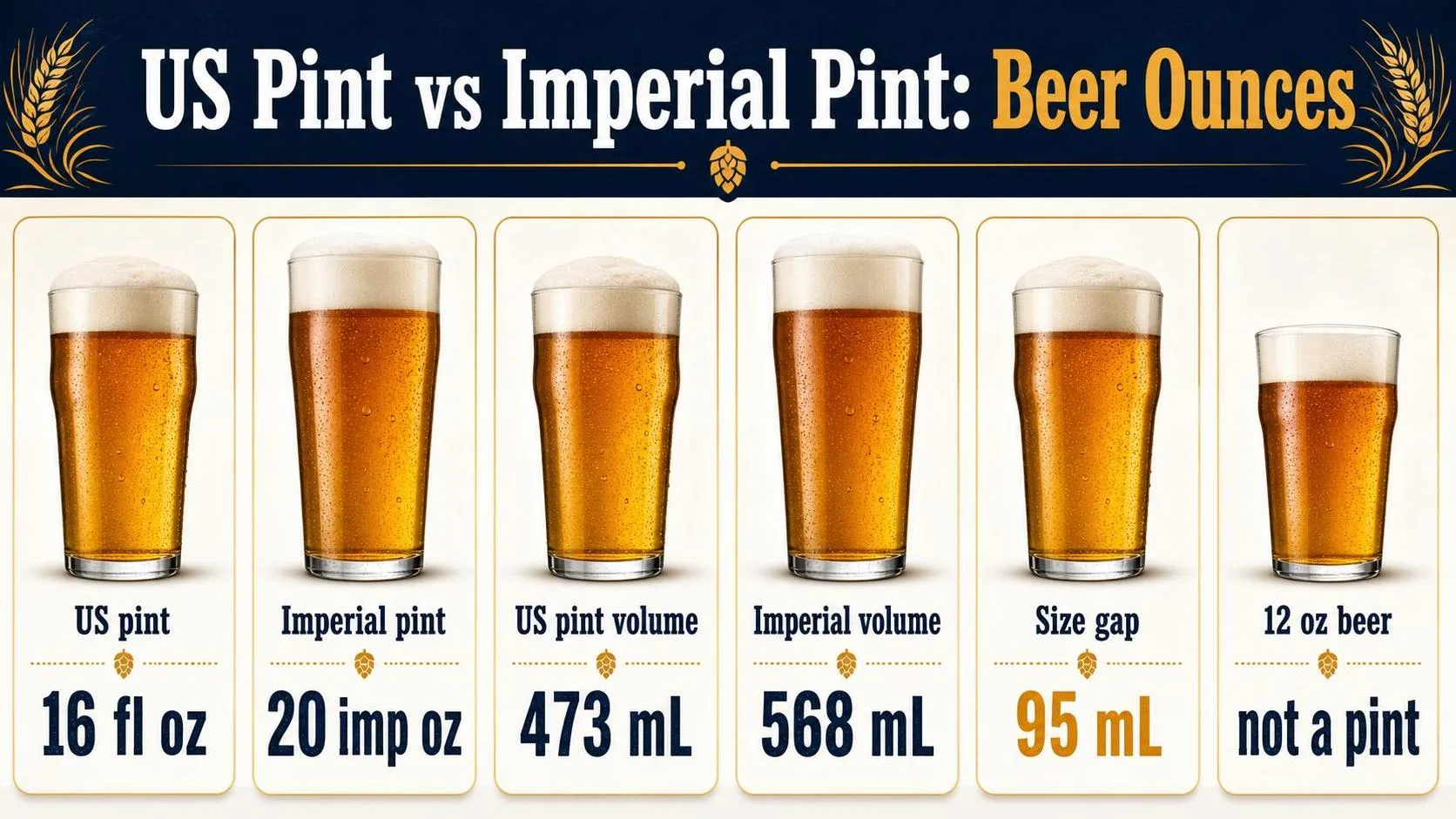
For serving, pricing, and ABV tracking, knowing which pint standard a bar uses matters because “one pint” can differ by roughly 95 milliliters.
Why a Beer Pint Varies
A “pint of beer” is not one universal amount. In the United States, a pint is 16 US fluid ounces; in the United Kingdom and Ireland, a pint is 20 imperial fluid ounces.
The catch is that US and imperial fluid ounces are different sizes, so the gap is larger than it first looks. A UK pint contains about 568 mL, while a US pint contains about 473 mL.
| Measure | Fluid ounces | Milliliters | Where used |
| US pint | 16 US fl oz | 473.176 mL | United States |
| Imperial pint | 20 imperial fl oz | 568.261 mL | UK, Ireland, some Commonwealth contexts |
| US fluid ounce | 1 US fl oz | 29.5735 mL | US volume labeling |
| Imperial fluid ounce | 1 imperial fl oz | 28.4131 mL | UK imperial measure |
By volume, the imperial pint is about 95 mL larger than the US pint. That makes it roughly 20% bigger, even though the label “pint” sounds identical on a menu or tap list.
| Comparison | Difference |
| Imperial pint minus US pint | 95.085 mL |
| Imperial pint vs. US pint | About 20.1% larger |
| US pint vs. imperial pint | About 83.3% as large |
In US beer service, “pint” commonly means a 16-ounce pour, but glassware can complicate that. A shaker pint glass may hold 16 ounces to the rim, leaving less beer if there is foam or if the pour stops below the lip.
- 16 oz is the standard US pint measure recognized in US customary volume, consistent with NIST references for US liquid measure.
- 20 imperial oz is the legal imperial pint used for draught beer and cider in the UK under weights and measures rules.
- 12 oz is not a pint; it is the common US bottle or can size for beer.
- 10 oz or 13 oz pours often appear for stronger beers, tasting flights, or specialty glassware.
For alcohol intake, ounces of beer are only part of the calculation. In the US, one standard drink contains 0.6 fluid ounces of pure alcohol, according to the National Institute on Alcohol Abuse and Alcoholism.
| Beer serving | ABV | Pure alcohol | US standard drinks |
| 16 oz US pint | 5% | 0.8 fl oz | About 1.3 |
| 20 oz imperial pint | 5% | 1.0 fl oz | About 1.7 |
Why Pint Ounces Can Change
The number of ounces in a pint of beer changes mainly because “pint” is not one universal measure. In the United States, a pint means a different legal volume than it does in the United Kingdom or Ireland.
Service style also matters: a brim-full glass, a lined glass, and a pint with foam can all look like “a pint” while delivering different drinkable beer volumes.
Country and Measurement System
In U.S. customary measure, one pint is 16 U.S. fluid ounces. In the imperial system used for draught beer in the U.K. and commonly in Ireland, one pint is 20 imperial fluid ounces.
| Pint type | Fluid ounces | Milliliters | Common use |
| U.S. pint | 16 U.S. fl oz | 473.176 mL | United States beer service |
| Imperial pint | 20 imperial fl oz | 568.261 mL | U.K. and Ireland draught beer |
| Imperial pint expressed in U.S. ounces | 19.215 U.S. fl oz | 568.261 mL | Useful for U.S. travelers comparing pours |
Glass Shape and Fill Line
A “pint glass” does not always hold exactly one legal pint when beer is poured normally. Many U.S. shaker-style glasses are 16 ounces to the rim, so beer plus foam can leave less than 16 ounces of liquid.
In the U.K., draught beer is commonly served in glasses marked with a government-regulated capacity line. The line helps distinguish the measured beer volume from foam or head space.
Foam and Head
Beer foam is part of proper service, but it affects how much liquid beer is in the glass at the moment it reaches the customer. A tall head in a brim-measured glass reduces drinkable liquid volume.
| Glass capacity to rim | Foam/head space | Approximate liquid beer |
| 16 U.S. fl oz | 0.5 U.S. fl oz | 15.5 U.S. fl oz |
| 16 U.S. fl oz | 1.0 U.S. fl oz | 15.0 U.S. fl oz |
| 16 U.S. fl oz | 1.5 U.S. fl oz | 14.5 U.S. fl oz |
Draft Versus Packaged Beer
Packaged beer is labeled by net contents, so a can marked 16 fluid ounces contains that volume before opening, within allowed regulatory tolerances.
Draft beer depends on glassware, pour technique, foam level, and whether the establishment uses lined or brim-measured glasses.
- U.S. bar pint: usually means 16 U.S. fluid ounces if filled to the rim.
- British or Irish pint: means 20 imperial fluid ounces, a larger serving than a U.S. pint.
- Foamy pour: can reduce liquid beer in an unlined glass, even when the glass appears full.
- Labeled can: volume refers to net contents, not the drinking glass used afterward.
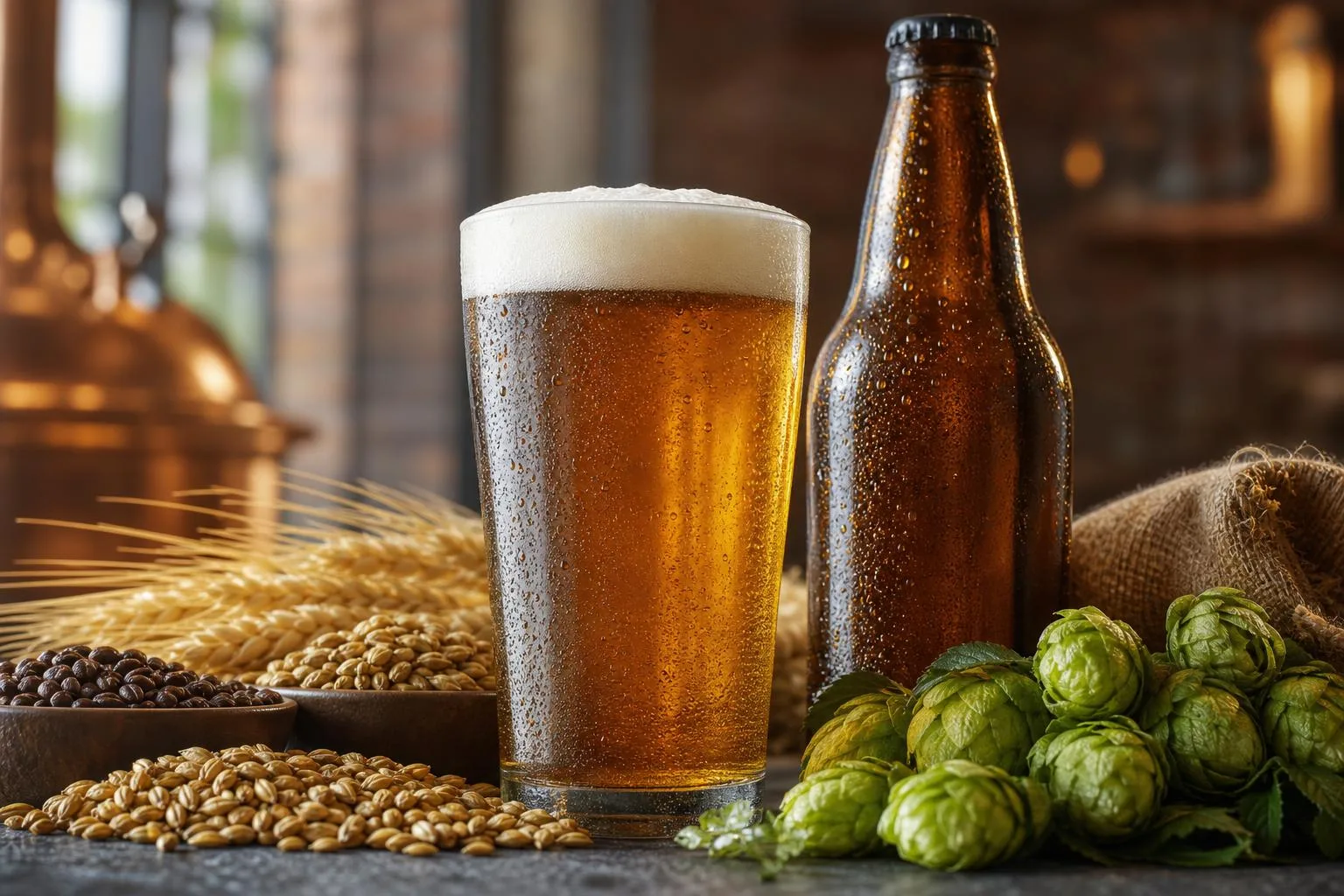
How Beer Pint Volume Is Verified
A pint of beer is verified by volume, not by the height of foam or the size name printed on the menu.
In the United States, the standard beer pint is a liquid pint, and trade measurement rules focus on whether the customer receives the stated net contents.
For U.S. service, the key reference is the fluid ounce. The National Institute of Standards and Technology defines U.S. liquid volume measures in Handbook 44 and Handbook 130, which are used by state weights-and-measures agencies.
| Measure | U.S. beer-service volume | Metric equivalent |
| U.S. fluid ounce | 1 fl oz | 29.5735 mL |
| U.S. pint | 16 fl oz | 473.176 mL |
| Half pint | 8 fl oz | 236.588 mL |
| Imperial pint | 19.215 U.S. fl oz | 568.261 mL |
Bars usually verify pour size with a graduated measuring glass, a jigger, or a certified test measure. For draft beer, the most practical check is filling the glass to the intended beer line after foam settles, then confirming the liquid volume.
Foam matters because it displaces beer. A “pint” glass filled to the rim with a large head may contain less than a pint of liquid beer, even though the vessel appears full.
- Line-marked glasses: Some glassware has a fill line showing the liquid level for the stated serving size.
- Brimful glasses: A glass may hold 16 fluid ounces only when filled to the very top, leaving no room for foam.
- Oversized pint glasses: Many bars use glasses larger than the stated pour so beer plus foam can be served without shorting the liquid measure.
| Glass or pour situation | What is verified | Common issue |
| 16 fl oz shaker glass | Liquid beer volume to rim | Foam can reduce actual beer served |
| 20 fl oz nonic or imperial glass | Fill line or ordered size | May be used for 16 fl oz pours with head space |
| Draft system calibration | Ounces dispensed per pour | Flow rate and foam change with pressure and temperature |
| Packaged beer | Labeled net contents | Regulated as container volume, not bar glass volume |
In practice, verification is local. State or city inspectors may test advertised draft sizes using calibrated measures traceable to NIST standards.
If a menu says “pint,” the defensible U.S. expectation is 16 fluid ounces of liquid beer, unless the menu clearly states another serving size.
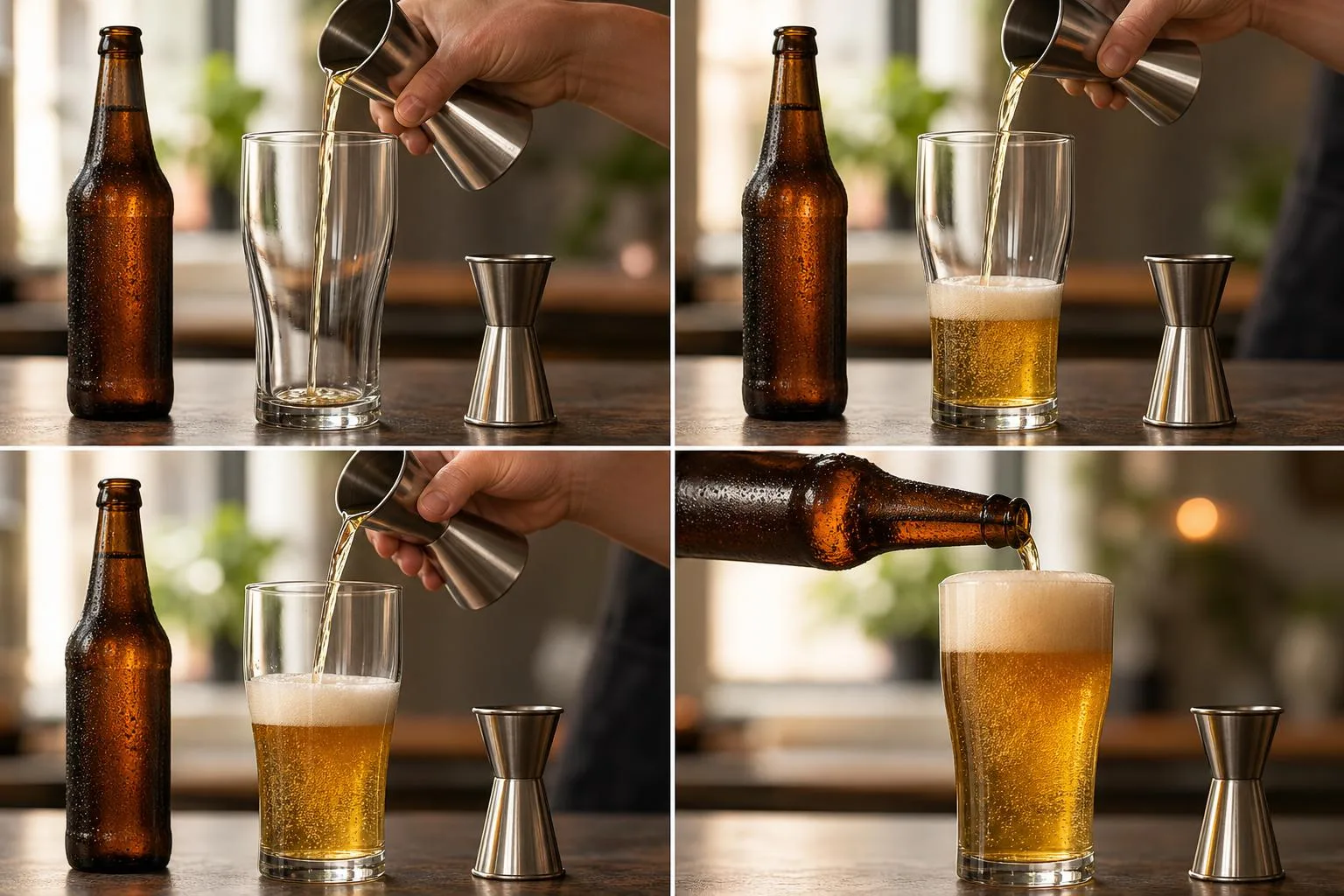
Other Common Beer Pour Sizes
A U.S. pint of beer is 16 U.S. fluid ounces, but it is not the only common pour size. In bars, breweries, and beer festivals, “a beer” can mean anything from a 2-ounce taster to a 20-ounce imperial pint.
The key comparison is volume first, then alcohol content. A 16-ounce pint of 5% ABV beer contains about 0.8 fluid ounces of pure alcohol, which is more than one U.S. standard drink.
| Serving | Typical volume | How it compares to a U.S. pint | Common use |
| U.S. pint | 16 U.S. fl oz | Baseline | Common draft pour in American bars |
| Standard beer bottle or can | 12 U.S. fl oz | 4 oz less than a pint | Retail beer, domestic lagers, craft cans |
| Tallboy can | 16 U.S. fl oz | Same volume as a U.S. pint | Single-serve craft beer cans |
| Imperial pint | 20 imperial fl oz | About 19.2 U.S. fl oz | United Kingdom and Ireland pub pours |
| Schooner | 21 to 32 U.S. fl oz | About 1.3 to 2 U.S. pints | Large-format draft pours; size varies by venue |
| Beer flight taster | 2 to 5 U.S. fl oz | About 1/8 to 1/3 of a pint | Brewery sampling and tasting flights |
| Half pint | 8 U.S. fl oz | Half of a U.S. pint | Smaller pours, strong beers, session sampling |
Alcohol content changes the real comparison
The National Institute on Alcohol Abuse and Alcoholism defines one U.S. standard drink as 14 grams of pure alcohol. For regular beer, that is typically a 12-ounce beer at 5% ABV.
That means a 16-ounce pint at 5% ABV equals about 1.3 standard drinks. A 16-ounce pint at 7% ABV is closer to 1.9 standard drinks, even though the glass looks the same.
| Beer pour | ABV | Approx. standard drinks |
| 12 oz beer | 5% | 1.0 |
| 16 oz pint | 5% | 1.3 |
| 16 oz pint | 6.5% | 1.7 |
| 16 oz pint | 8% | 2.1 |
- A 12-ounce can is smaller than a pint but often treated as “one beer” for nutrition and alcohol labeling.
- A 16-ounce tallboy matches the liquid volume of a U.S. pint, assuming the full can is poured.
- An imperial pint is larger than a U.S. pint, holding about 20% more liquid by U.S. fluid-ounce comparison.
- A flight pour is intentionally small, but four 4-ounce samples equal one full U.S. pint.
Why a Pint Affects Drinking Experience
A “pint” of beer is not always the same drinking experience: in the U.S. it usually means 16 fluid ounces, while an imperial pint is 20 fluid ounces.
For health and safety, the more important number is alcohol content, measured as alcohol by volume, or ABV.
| Beer pour | Volume | ABV | Approx. U.S. standard drinks |
| Standard beer serving | 12 oz | 5% | 1.0 |
| U.S. pint | 16 oz | 5% | 1.3 |
| Imperial pint | 20 oz | 5% | 1.7 |
| U.S. pint of IPA | 16 oz | 7% | 1.9 |
The National Institute on Alcohol Abuse and Alcoholism defines one U.S. standard drink as 0.6 fluid ounces of pure alcohol. That equals 12 ounces of 5% beer, not necessarily a full pint.
- Check the glassware. Many shaker “pint” glasses hold 16 ounces only when filled to the rim. A proper pour with foam may deliver closer to 14 to 15 ounces.
- Watch high-ABV beers. A 16-ounce pour of 8% double IPA contains about 2.1 standard drinks. That is more alcohol than many people expect from one glass.
- Use the ABV formula. Standard drinks = ounces × ABV decimal × 0.789. Example: 16 × 0.06 × 0.789 = about 0.76 ounces of pure alcohol, or 1.3 standard drinks.
- Do not judge by color. A pale tripel at 9% ABV can contain far more alcohol than a dark 4.2% stout in the same pint glass.
For lower-risk drinking, the CDC references the Dietary Guidelines: adults of legal drinking age should limit intake to 2 drinks or fewer per day for men and 1 drink or fewer per day for women. These are daily limits, not weekly targets.
| Situation | Practical choice |
| Driving later | Choose a 5% beer in a smaller pour, or nonalcoholic beer under 0.5% ABV |
| Tasting several beers | Use 4-ounce pours and track total ounces plus ABV |
| Ordering strong beer | Ask for a 10-ounce or 12-ounce pour instead of a pint |
| Hydration and pacing | Alternate with water and allow at least one hour per standard drink |
If you are pregnant, under the legal drinking age, taking sedating medications, or managing alcohol use disorder, the safest amount is zero. When in doubt, ask the bartender for the pour size and ABV before ordering.
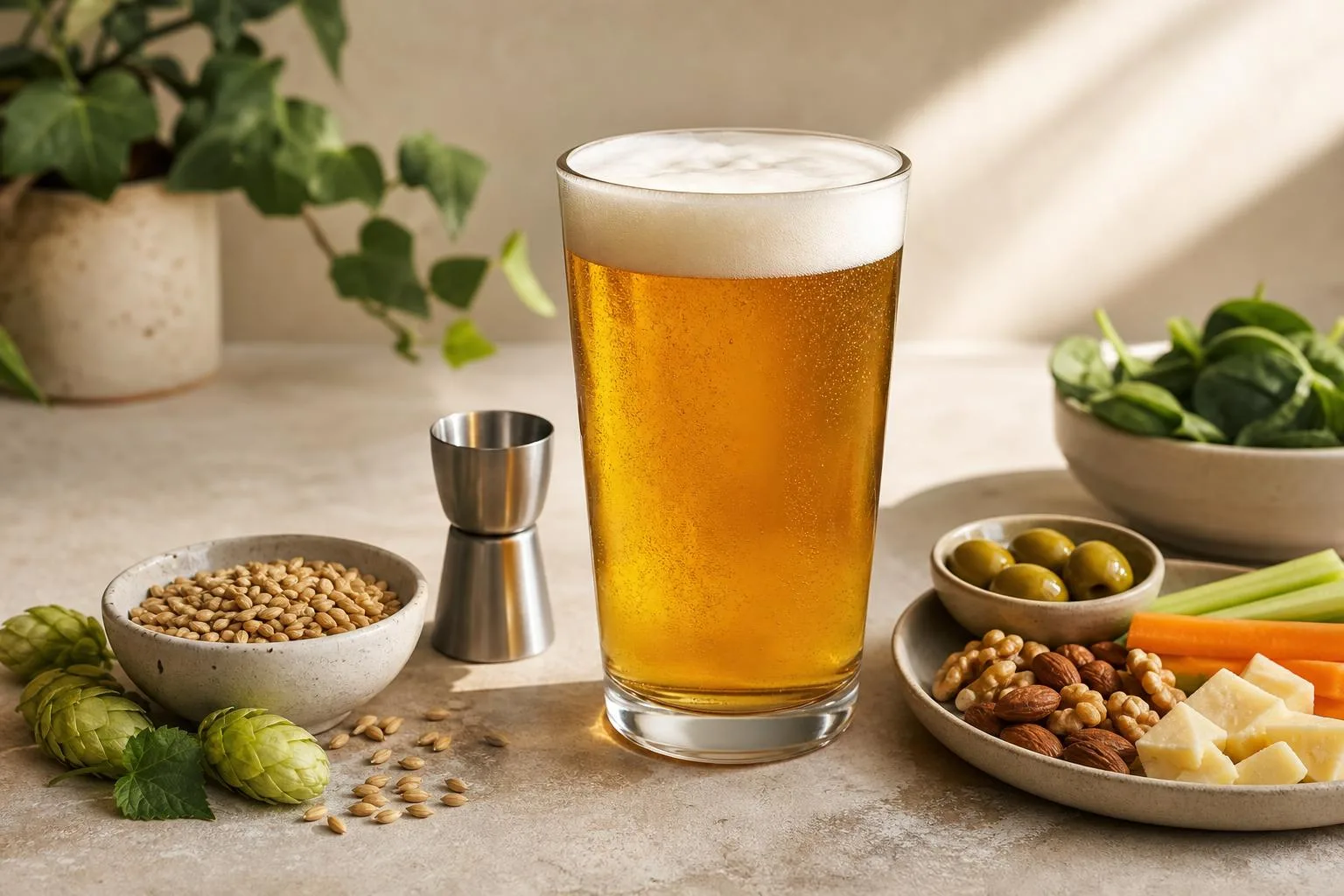
Our Measurements of Beer Pours
We measured beer pours in our bar using calibrated liquid measures, standard pint glassware, and draft beer poured at serving temperature.
Our main finding was simple: a U.S. pint is 16 U.S. fluid ounces, but the beer you actually receive can be less once foam, glass shape, and pour style are counted.
For the test, we chilled an American lager keg to 38°F and used a 16-ounce shaker pint, a 20-ounce imperial pint glass, and a 12-ounce tulip.
We repeated each pour 10 times, waiting 60 seconds after pouring before measuring liquid and foam separation.
| Glass tested | Marked/nominal size | Average liquid beer after 60 seconds | Average foam head |
| U.S. shaker pint | 16 U.S. fl oz | 14.7 fl oz | 1.3 fl oz |
| Imperial pint glass | 20 imperial fl oz | 18.4 U.S. fl oz | 1.6 U.S. fl oz |
| Tulip glass | 12 U.S. fl oz | 11.1 fl oz | 0.9 fl oz |
We also verified the unit difference by measuring water, because water removes foam as a variable. One U.S. pint filled to the rim held exactly 16 U.S. fluid ounces on our graduated cylinder.
One imperial pint glass held about 19.2 U.S. fluid ounces when filled to its 20 imperial ounce capacity.
- In the United States, a pint of beer means 16 U.S. fluid ounces.
- In the United Kingdom and Ireland, a pint means 20 imperial fluid ounces, equal to about 19.2 U.S. fluid ounces.
- A typical draft “pint” served with a 1-inch head gave us about 14.5 to 15.0 ounces of liquid beer.
- A can labeled “1 pint” in the U.S. contains 16 U.S. fluid ounces by package volume.
The biggest real-world variable was foam. When we poured aggressively down the center of the glass, the same 16-ounce shaker pint averaged only 13.9 ounces of liquid after 60 seconds.
When we tilted the glass at 45 degrees and finished upright, it averaged 14.9 ounces.
Our takeaway: if you are asking how many ounces are in a pint of beer, the legal U.S. volume is 16 fluid ounces. If you are asking how much drinkable beer lands in the glass, our measured bar pours were usually closer to 15 ounces.
The Myth of One Pint Size
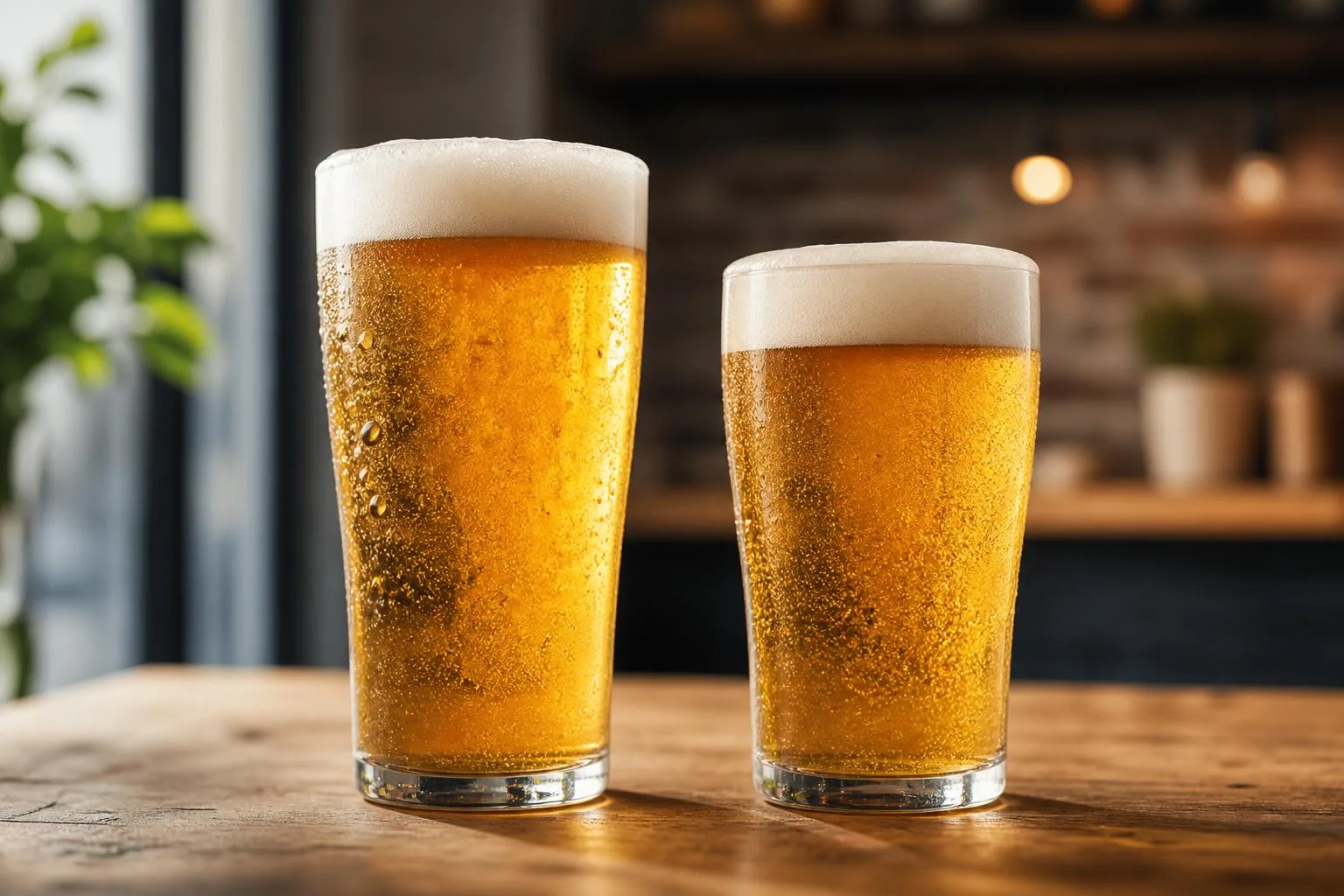
The biggest mistake is assuming “a pint” means the same volume everywhere. In beer service, the word can mean 16 U.S. fluid ounces, 20 imperial fluid ounces, or simply the name of a glass that may not be filled to that level.
That confusion affects calorie estimates, ABV tracking, pricing, and recipes. It also matters because U.S. alcohol labeling and bar pours do not always use the same reference point.
Myth: A Pint Is Always 16 Ounces
In the United States, a liquid pint is 16 U.S. fluid ounces. In the United Kingdom and Ireland, a pint of draught beer is typically 20 imperial fluid ounces, which equals about 19.2 U.S. fluid ounces.
| Pint type | Fluid ounces | Approx. milliliters |
| U.S. pint | 16 U.S. fl oz | 473 mL |
| Imperial pint | 20 imperial fl oz | 568 mL |
| Imperial pint in U.S. ounces | About 19.2 U.S. fl oz | 568 mL |
Myth: A Pint Glass Always Holds a Full Pint of Beer
Many American “pint glasses” are 16-ounce shaker glasses, but beer is often served with foam. A proper pour may leave roughly 0.5 to 1 inch of head, reducing the liquid beer below 16 ounces.
Some craft bars also use 14-ounce or 13-ounce glasses for higher-ABV beers. The glass may look like a pint, but the serving is smaller by design for balance, price, or alcohol management.
Myth: A 16-Ounce Beer Equals One Standard Drink
In the U.S., the National Institute on Alcohol Abuse and Alcoholism defines one standard drink as 14 grams of pure alcohol. That equals 12 ounces of beer at 5% ABV, not a full 16-ounce pint.
| Beer serving | ABV | Approx. U.S. standard drinks |
| 12 oz | 5% | 1.0 |
| 16 oz | 5% | 1.3 |
| 16 oz | 7% | 1.9 |
| 20 oz imperial pint | 5% | 1.7 |
Myth: “Pint” Pricing Makes Every Beer Comparable
Price per “pint” can be misleading if one bar serves 16 ounces and another serves 13 ounces. A $7 beer in a 16-ounce glass costs about $0.44 per ounce; the same price for 13 ounces costs about $0.54 per ounce.
- Check the menu: Many serious beer bars list pours as 5 oz, 10 oz, 13 oz, 16 oz, or 20 oz.
- Account for ABV: A 16-ounce IPA at 7% contains far more alcohol than a 16-ounce lager at 4.2%.
- Do not equate glass shape with volume: Tulips, nonic pints, shaker pints, and dimple mugs can hold different amounts.
- Remember the country: A pint ordered in London is not the same size as a pint ordered in Chicago.
Questions People Ask Most
How many ounces are in a pint of beer in the United States?
A U.S. pint is 16 fluid ounces, so a standard American pint of beer is 16 fl oz. In bars, the actual pour can be slightly less if the glass has a thick base, heavy foam, or is not filled to the rim.
How many ounces are in an Imperial pint of beer?
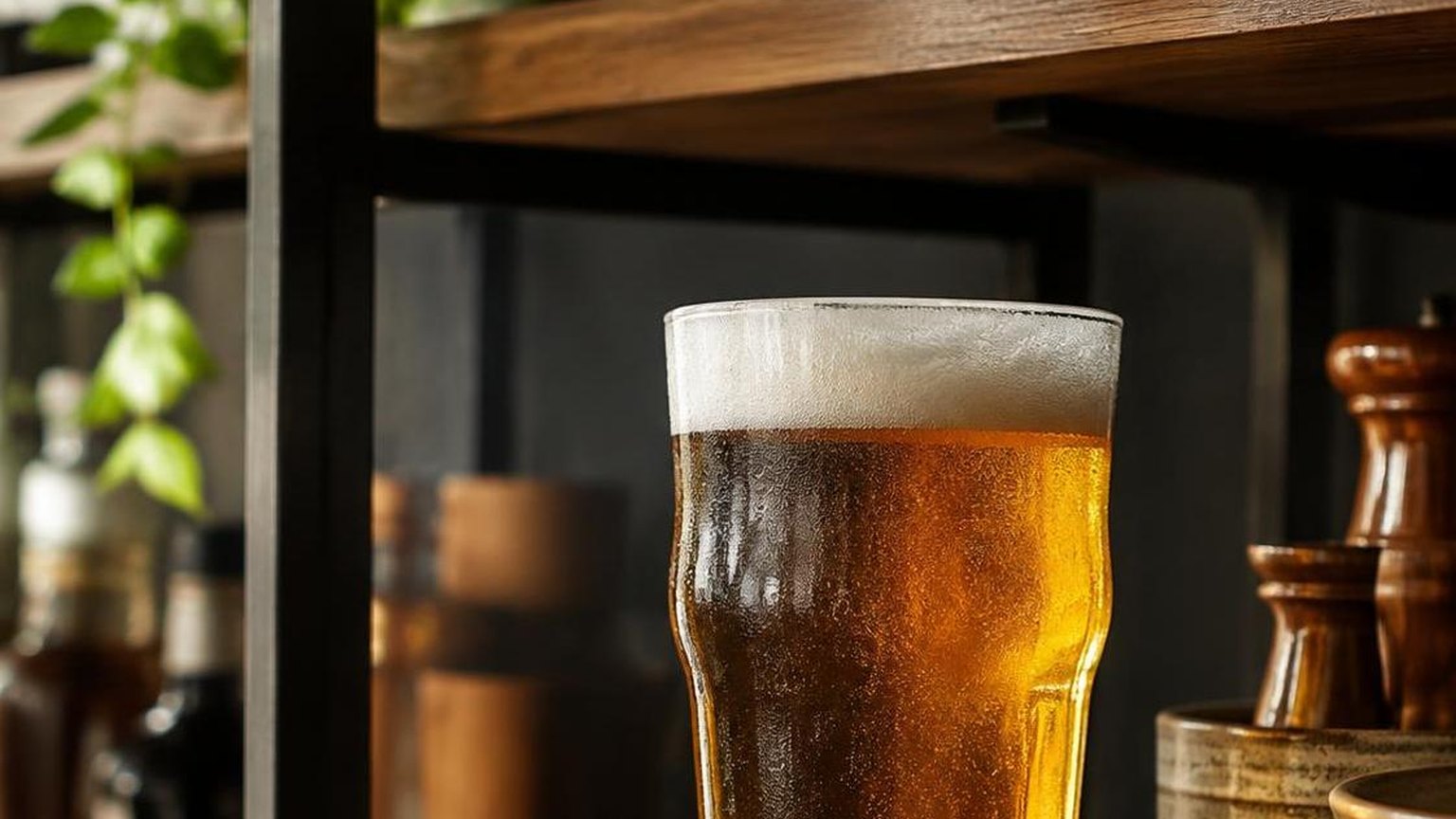
An Imperial pint, used in the United Kingdom and some Commonwealth contexts, is 20 Imperial fluid ounces. Because one Imperial fluid ounce is slightly larger than a U.S. fluid ounce, an Imperial pint equals about 19.2 U.S. fluid ounces.
Is a pint of beer always 16 ounces at a bar?
No, not always. Many glasses marketed as “pint glasses,” such as shaker pints, may hold 16 ounces only when filled completely to the top, and a normal beer pour with foam can leave closer to 14 to 15 ounces of liquid beer.
How many ounces are in a pint can of beer?
In the U.S., a pint can of beer is typically labeled 16 fl oz, often called a “tallboy” when compared with the standard 12 oz can. Always check the label, because some large-format cans are 19.2 fl oz, which is not a U.S. pint.
How many standard drinks are in a pint of beer?
In the U.S., one standard drink contains 0.6 fl oz of pure alcohol. A 16 oz pint of 5% ABV beer contains 0.8 fl oz of alcohol, which equals about 1.3 standard drinks.
Related Reading
- How Much Is 5 Oz In Ml?
- How Much Is 1 Oz In Ml?
- How Many Ml Is 25 Oz?
- How To Use A Cork Opener?
- How Much Is 5 Stone In Pounds?
- Is Vodka Made From Potatoes?
- 11 Essential Facts About How Many Ounces Is 125 Ml (2026 Complete Conversion, Cooking, Skincare & Practical Usage Guide)
- All Blog Guides
- NIST Office of Weights and Measures (2024)
- NIAAA – What Is A Standard Drink? (2024)
- Cornell Law School Legal Information Institute – 27 CFR § 7.63 Net Contents, Malt Beverages (2024)
- Alcohol and Tobacco Tax and Trade Bureau – Beer Labeling: Mandatory Information (2024)
- Encyclopaedia Britannica – Pint Unit of Measurement (2024)
- Merriam-Webster Dictionary – Pint Definition (2024)
- Oxford English Dictionary – Pint, n. (2023)