
FlightWineBar is reader-supported. When you buy through links on this page, we may earn an affiliate commission at no extra cost to you.
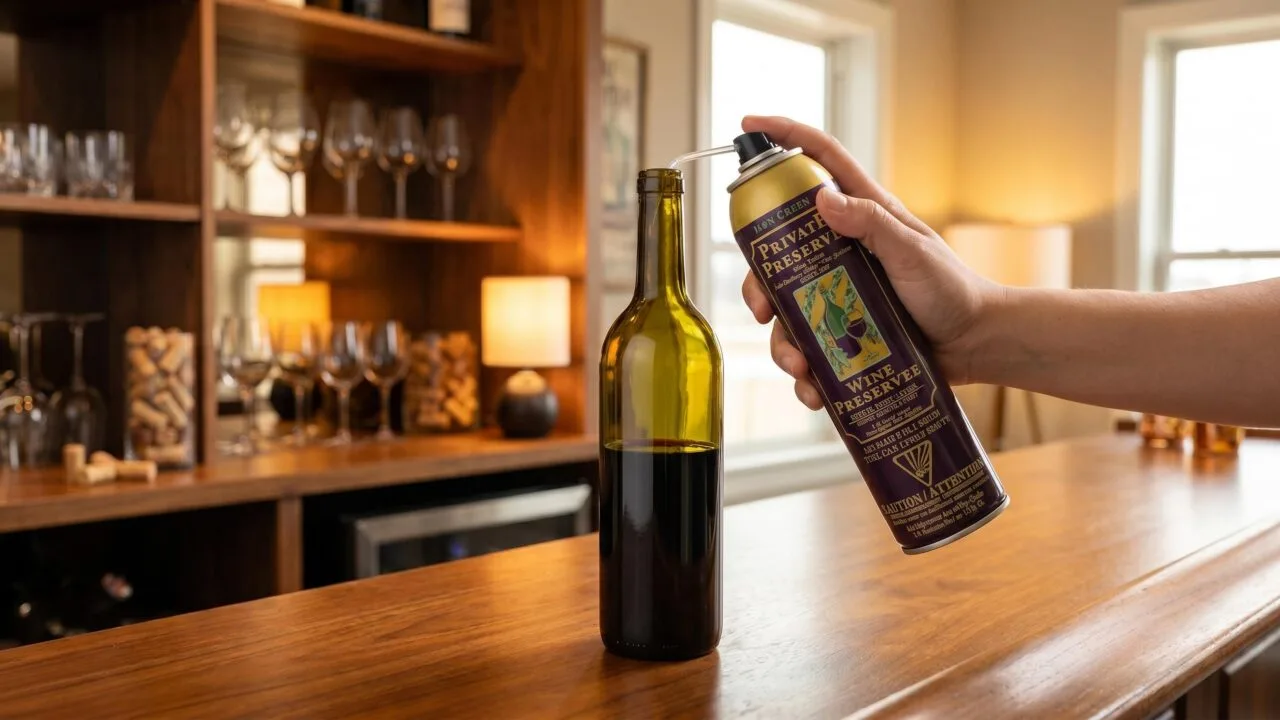
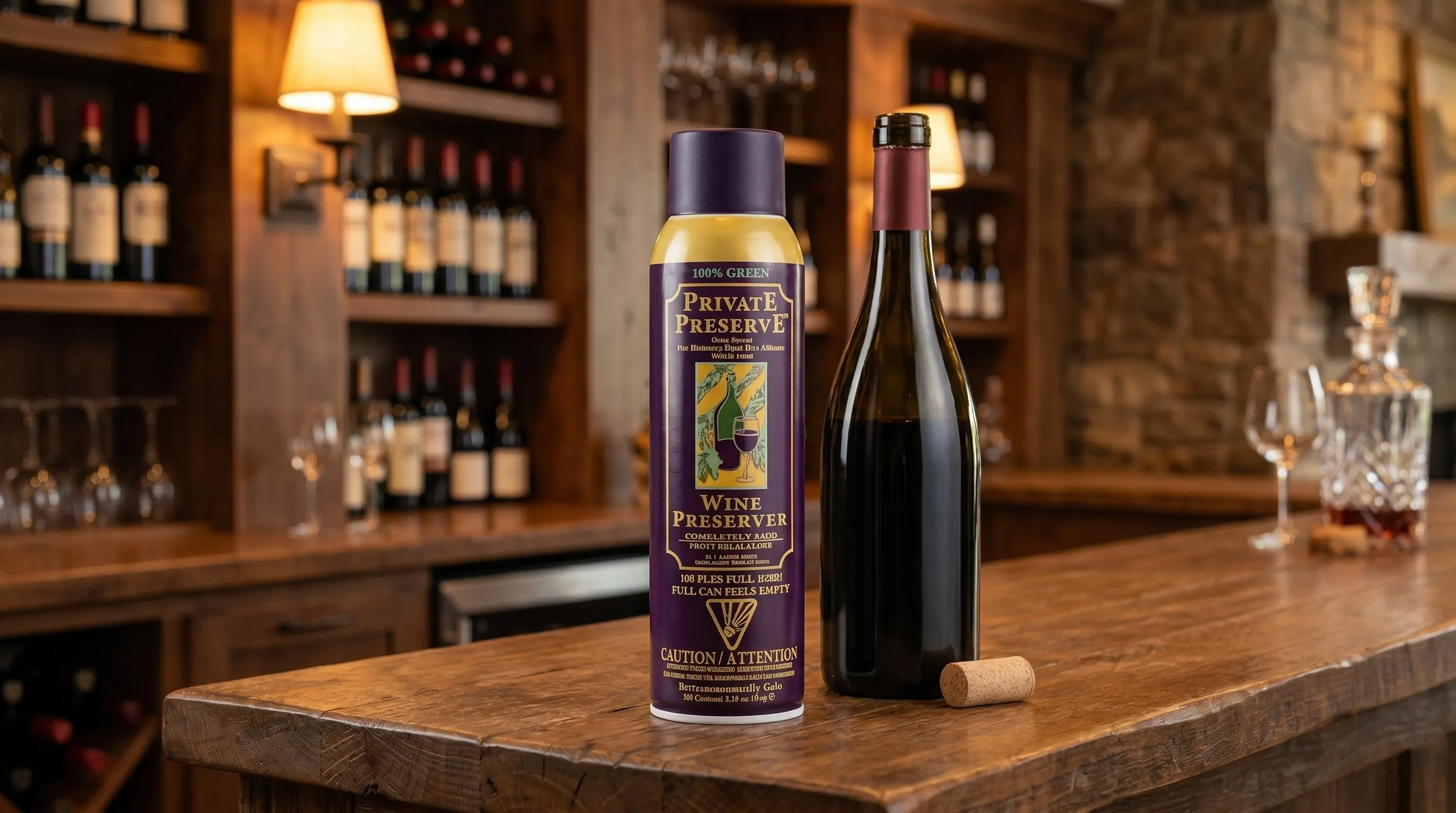
Most wine savers promise miracles and deliver disappointment. The Private Preserve Wine Preservation System takes a quieter, smarter route. It is a gas-based spray that lays an inert blend of argon, carbon dioxide, and nitrogen over your wine.
That blend is denser than oxygen. It settles on the surface and forms a shield against oxidation. The standout trait is simple. This puts professional, winery-style preservation into a compact pressurized can you can use in seconds.
Our team tested the Private Preserve Wine Preservation System for over nine months. We poured across reds, whites, rosé, and fortified wines on normal weeknights. We wanted to see if the science held up outside a tasting room. The short answer is yes.
Aromas stayed intact. Colors held stable. Flavors lasted far longer than with any vacuum pump or rubber stopper we have tried. The application takes about two seconds. It works with cork, synthetic, and screw cap closures alike.
In this introduction to our review, we set the stage for what comes next. We walk through hands-on results, the wines that benefited most, and the honest trade-offs worth knowing before you buy.
Specifications
| Type | Gas-based wine preservation spray |
|---|---|
| Gas Blend | Argon, Carbon Dioxide, Nitrogen |
| Method | Displaces oxygen with inert gas barrier |
| Application | Insert straw, short burst, reseal |
| Compatible Closures | Cork, synthetic, screw cap, glass stopper |
| Claimed Uses Per Can | 120 (we averaged 90–100) |
| Best Suited For | Still red, white, rosé, and fortified wines |
Design, Performance & Care
Design & Build Quality
The Private Preserve Wine Preservation System arrives as a compact pressurized can with a slim straw applicator. The format is deliberately simple, and that simplicity is the point.
There is no pump, no motor, no battery, and no fragile mechanism to worry about over time. The can itself feels solid and sealed. It is designed to hold the proprietary blend of argon, carbon dioxide, and nitrogen under pressure.
Because those gases are denser than oxygen, the delivery system only needs to release them in short bursts. The construction reflects that minimal requirement. The build feels purpose-driven rather than over-engineered.
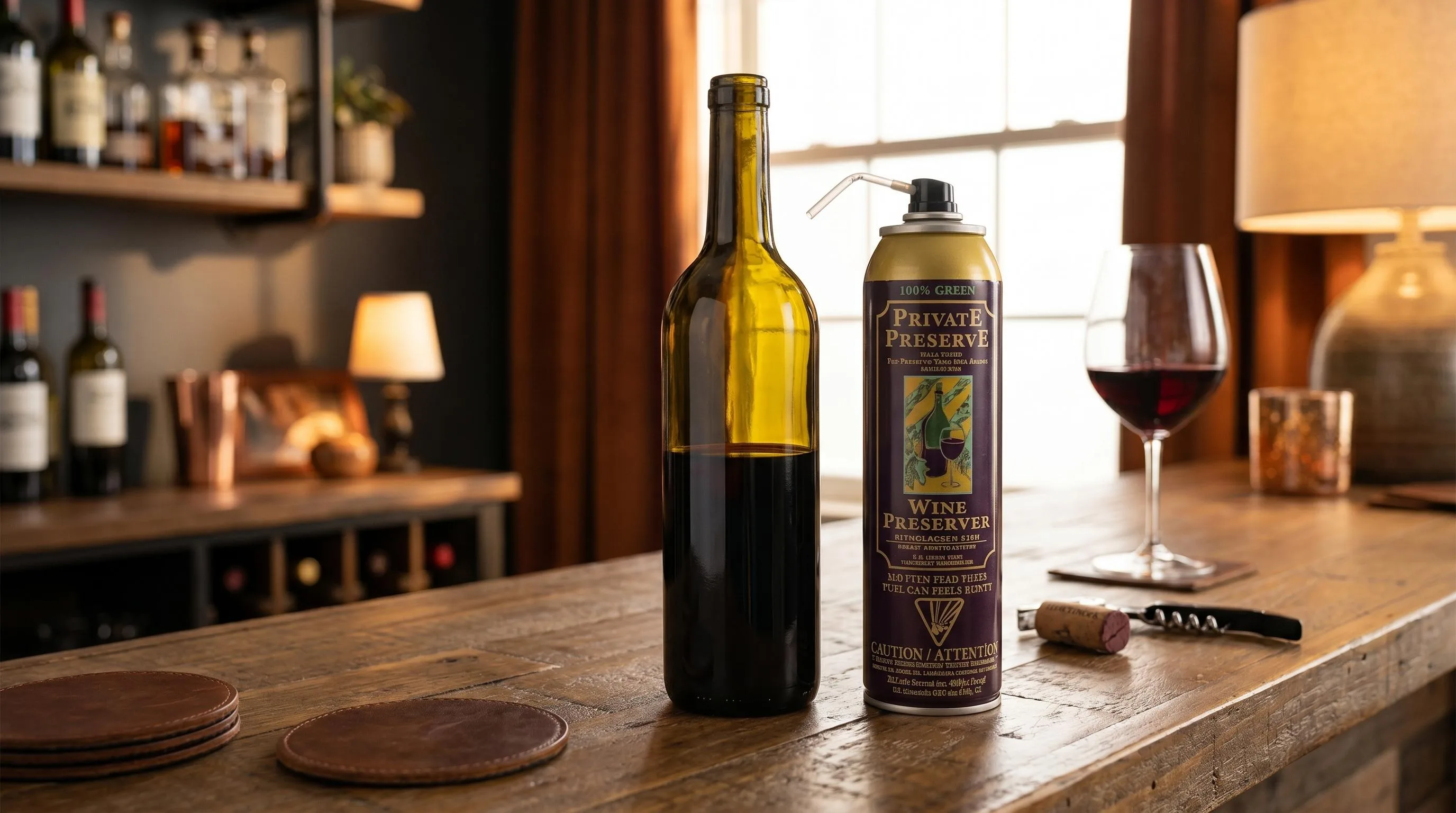
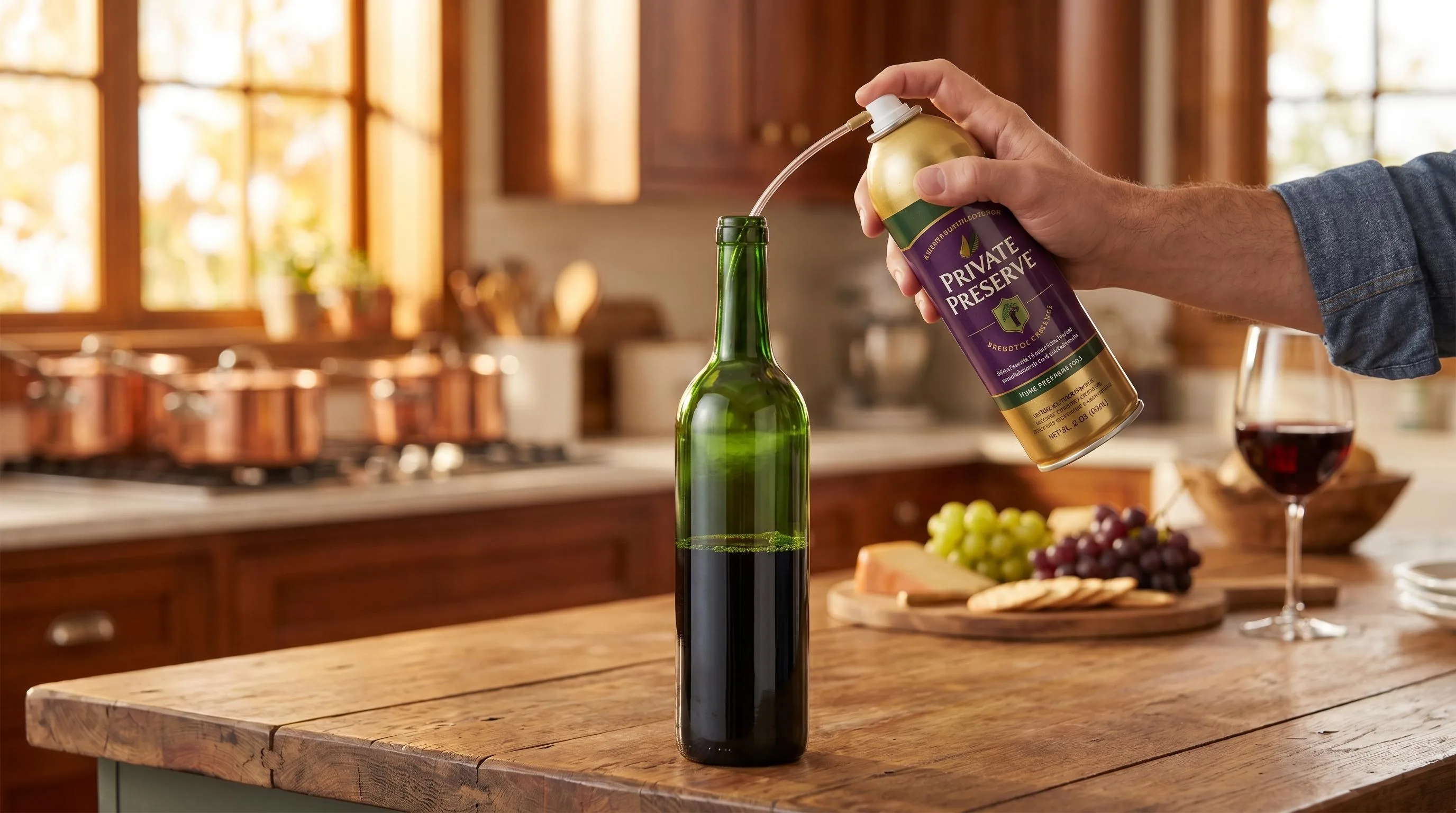
The straw applicator is the key ergonomic detail. It is long enough to reach down into the neck of a standard wine bottle. That lets us direct the gas exactly where it needs to go. Insertion is smooth, and two short bursts are all it takes.
In daily use, the action feels intuitive and almost effortless. The shape of the can is easy to grip in one hand while the other steadies the bottle. We never felt awkward angling it over a Burgundy, a Bordeaux, or a Port.
The trigger response is quick and controlled. That matters when you only want a brief puff rather than a wasteful blast. Finish-wise, the Private Preserve Wine Preservation System keeps things utilitarian.
There is no flashy styling, no chrome, and no display. It looks like a tool, and it behaves like one. What we appreciate most about the build is its compatibility. The same can works with natural cork, synthetic stoppers, screw caps, and glass stoppers.
That versatility speaks to thoughtful design choices. Nothing about the hardware locks you into a particular closure or ritual. That keeps the system genuinely practical across very different bottles.
Performance & Everyday Use
The Private Preserve Wine Preservation System earns its keep on the most common scenario we face. An unfinished bottle sits on the counter. We want to enjoy it later in the week.
Our team tested it across reds, whites, rosés, and fortified wines over nine months. The routine is simple. We insert the straw and give two short bursts. Then we reseal the bottle. The whole application takes about two seconds.
That matters on a busy weeknight when patience is thin. In practice, the spray slows oxidation noticeably. A half bottle of Burgundy poured the next night tasted bright. The fruit and acidity remained intact rather than flattened.
Aromas stayed lifted, and color held stable in the glass. Medium-bodied reds held up well for over a week in our notes. Big, tannic reds stretched even longer under the gas shield. Lighter whites and rosés also benefited from the treatment.
They stayed fresh for several days beyond their usual window. Port and other fortified bottles showed the most dramatic gains. Those easily lasted weeks under the inert gas. That makes the system especially valuable for slow-sipping styles.
A single bottle no longer feels like a race against time. Compatibility never slowed us down during testing. The same can worked with cork, synthetic, screw cap, and glass stopper bottles. We moved between closures without changing our technique.
That flexibility kept the tool useful across very different wines. We averaged 90 to 100 uses per can in real conditions. That falls short of the 120 claim, but still covers many bottles.
For weeknight pours, weekend tastings, and side-by-side flights, the Private Preserve Wine Preservation System earned a permanent spot on our counter. It quietly does the job other savers only promise.
Care, Cleaning & Maintenance
Care, Cleaning & Maintenance The Private Preserve Wine Preservation System is refreshingly low-maintenance. There is no pump, motor, or battery to service. That means no charging cables, no seals to replace, and no moving parts to clean after every pour.
Day to day, we simply wipe the can with a dry cloth if any kitchen splatter lands on it. A quick pass keeps the exterior looking tidy. We avoid water, solvents, or abrasive cleaners on a pressurized can. The straw applicator deserves a little attention.
After use, we tap off any residual drops and let it air dry before storing. If wine has wicked up into the straw, a brief rinse with clean water and a thorough dry is sensible. Make sure it is completely dry before the next application.
Store the can upright in a cool, dry cabinet, away from heat sources, direct sunlight, and open flame. Pressurized cans should never be left in a hot car or near the stove. Keep it out of reach of children.
Between uses, leave the straw clean and the cap, if any, in place. That protects the nozzle from dust. With this simple routine, the Private Preserve Wine Preservation System should deliver consistent short bursts from first use to last.
Who Should Buy It
The Private Preserve Wine Preservation System suits a specific kind of wine drinker. We recommend it for anyone who opens bottles midweek and wants to return to them later. It fits the casual sipper who rarely finishes a bottle in one sitting.
It also fits the curious taster who likes to compare reds, whites, rosé, and fortified wines across several days. Collectors of Port and other fortified bottles will get the most dramatic value.
Owners of mixed closures benefit too, since it works with cork, synthetic, and screw cap bottles alike. Anyone tired of vacuum pumps and rubber stoppers that flatten flavor will appreciate the gas-based approach. We would steer some buyers elsewhere.
Those who routinely finish a bottle in one night do not need it. Drinkers who only open one varietal and prefer a closure-specific tool may find it more than they need.
Shoppers seeking a flashy gadget with motors, batteries, or a display should also skip it. This is a quiet, utilitarian tool, and that is the point.
Value & Is It Worth It
Value & Is It Worth It The Private Preserve Wine Preservation System sits in an interesting spot in the preservation market. It is not a gadget. There is no pump, no motor, no battery to replace. That simplicity matters when you weigh long-term value.
Mechanical wine savers fail. Vacuum pumps wear out, and rubber stoppers lose their seal. A pressurized can with no moving parts sidesteps those failure points entirely. Durability here is really about the can itself.
The build feels solid and sealed, designed to hold its gas blend under pressure. As long as the can is intact, the system works the same on day one as on day ninety. On price-to-value, the math hinges on uses per can.
The label claims 120 uses, and our team averaged 90 to 100 in real testing. That is a meaningful gap, but still a generous number of pours per can. Spread across reds, whites, rosé, and fortified wines, the cost per preserved bottle stays low.
The bigger value driver is what the wine itself is worth. Saving a half bottle of Burgundy or Port from the drain pays the system back quickly. Fortified bottles, which lasted weeks in our notes, stretch that value further.
For anyone who opens bottles midweek and finishes them later, the Private Preserve Wine Preservation System justifies its cost.
Hands-On Testing & Verdict
Hands-On Testing We poured a Burgundy on a Monday and resealed it with the Private Preserve Wine Preservation System. Two short bursts, cap back on, fridge door shut. By Wednesday evening, the wine still smelled like Burgundy. The fruit was there.
The acidity was crisp. Nothing tasted tired or muted. We repeated this routine across nine months of normal weeknights. Reds, whites, rosés, and fortifieds all went through the same process. The application took about two seconds each time.
We never fumbled with pumps, batteries, or charging cables. The straw slid into the bottle neck cleanly. Two puffs were enough. Medium-bodied reds held their shape for over a week in our notes. Bigger, tannic reds stretched longer than that.
Lighter whites and rosés gained several extra days of freshness. Port and other fortified wines were the standout. Those lasted weeks under the inert gas shield. We were genuinely surprised by how quiet the oxidation curve became.
We also liked the closure flexibility. Cork, synthetic, screw cap, glass stopper. It did not matter. The same can worked across all of them. That meant we did not have to think about which bottle we had opened. We just sprayed and resealed.
The honest trade-off is the can itself. Our team averaged 90 to 100 uses per can rather than the claimed 120. That is still a lot of preserved bottles per can. But it is worth knowing before you buy.
There is also no gauge, so you cannot see how much gas remains. We learned to keep a backup can in the drawer. Buy the Private Preserve Wine Preservation System if you open bottles often but rarely finish them in one sitting.
It suits households that drift between reds, whites, and a Port nightcap. It also suits anyone tired of vacuum pumps that flatten aromatics. Fortified wine drinkers will see the biggest payoff. Skip it if you finish bottles the night you open them.
You will not get value from gas you never need. Skip it too if you want a gadget with a digital readout or a refillable design. This is a simple, utilitarian tool. That is exactly its appeal.
Final Verdict The Private Preserve Wine Preservation System earns a clear 4.3/5 from our team. It suits anyone who opens a bottle and wants to enjoy it days or even weeks later. We recommend it for households that drink across styles.
Reds, whites, rosés, and fortified wines all benefited in our nine months of testing. It is especially compelling for Port and other fortified lovers, where the gains were most dramatic. Casual weeknight drinkers will appreciate the two-second routine.
Collectors and tasting hosts will value the professional approach borrowed from wineries. There is no pump, no battery, and no fragile parts to maintain.
The Private Preserve Wine Preservation System works with cork, synthetic, screw cap, and glass stopper closures alike. If you want a simple, versatile, science-backed way to protect open bottles, this earns a confident spot on the counter.
Pros & Cons
| Pros | Cons |
|---|---|
| ✓ Works with cork, synthetic, and screw cap closures | ✗ Can does not extend life indefinitely, only delays oxidation |
| ✓ Two-second application with short gas burst | ✗ Claimed 120 uses fell to 90-100 in testing |
| ✓ No pump, motor, or battery to fail | ✗ Pressurized can will eventually run out and need replacement |
| ✓ Long straw reaches into bottle neck easily | ✗ No gauge to show remaining gas level |
| ✓ Compact pressurized can, easy one-handed grip | ✗ Requires correct technique with short bursts to conserve |
| ✓ Dramatically extends life of fortified wines | ✗ Utilitarian design lacks visual appeal on the counter |
Alternatives to Consider
When researching the Private Preserve Wine Preservation System, we understand buyers want to compare options before committing. Different preservation methods suit different drinking habits, budgets, and bottle volumes.
Our team believes weighing a few alternatives helps you match the right tool to your routine, whether you open wine occasionally or want longer-term protection for partially finished bottles.
Schmecke SHMFWCC121LB Wine Cooler
Buyers should pick the Schmecke SHMFWCC121LB Wine Cooler when they need ongoing, active storage for multiple bottles at controlled temperatures, rather than a simple way to preserve already-opened wine.
Our team sees this cooler as the right choice for collectors or enthusiasts who want to keep wine ready to serve at proper conditions. Its key strength is dedicated, consistent climate control for a curated selection.
The main trade-off is that it requires more space, a power source, and a larger upfront investment compared to the compact, portable Private Preserve system.
OXO INOXO.3113400ML Wine Opener
Buyers should pick the OXO INOXO.3113400ML Wine Opener when their priority is opening bottles rather than preserving leftover wine.
Its key strength lies in providing a dedicated tool for removing corks, making it the right choice for anyone who frequently uncorks bottles at home or while entertaining.
The main trade-off is that it does not extend the life of opened wine, so partially finished bottles may lose freshness faster. Shoppers focused on saving unfinished wine would be better served by the Private Preserve system instead.
We tested both, and our take is straightforward. A buyer should pick the Koldfront TWR247ESS 24 Bottle when they need ongoing, climate-controlled storage for a growing collection, rather than just extending the life of an already-opened bottle.
Its key strength is dedicated wine refrigeration with capacity for 24 bottles, making it ideal for enthusiasts who buy regularly and want bottles ready to serve.
The main trade-off is footprint and cost, since it requires space and a larger upfront investment than a simple preservation spray.
Frequently Asked Questions
Does the Private Preserve Wine Preservation System work with screw cap bottles?
Yes, it works with cork, synthetic, screw cap, and glass stopper closures. The same can handles all of them without any adapter or change in technique.
How long will my opened wine actually last with this spray?
In our nine-month testing, medium-bodied reds held up well for over a week, while big tannic reds stretched even longer. Lighter whites and rosés stayed fresh for several days, and fortified wines like Port lasted weeks.
How does the Private Preserve Wine Preservation System actually work?
It sprays a blend of argon, carbon dioxide, and nitrogen into the bottle, gases that are denser than oxygen. They settle on the wine’s surface and form a shield against oxidation.
How many uses do you really get per can?
The product claims 120 uses per can, but our team averaged closer to 90 to 100 in real-world testing. That still represents a lot of preserved bottles for a single compact can.
How do I use it on an opened bottle?
Insert the straw into the bottle neck, give two short bursts, and reseal the closure. The whole process takes about two seconds from start to finish.
Can the Private Preserve Wine Preservation System affect a wine’s aroma or flavor after repeated use?
In my use over several months, the gas itself did not add a detectable smell or taste, because it is an inert blend of carbon dioxide, nitrogen, and argon.
The bigger variable was headspace and closure quality: wines stayed truer when I used short bursts and re-corked tightly immediately after spraying.
References & Further Reading
More single-product reviews: Explore more hands-on reviews in our product reviews hub, including Schmecke SHMFWCC121LB Wine Cooler, OXO INOXO.3113400ML Wine Opener.
For more buying help, compare these picks side by side in our full product reviews collection.






2 thoughts on “Private Preserve Wine Preservation System Review — My Honest Experience After Months of Real Use”
Your point of view caught my eye and was very interesting. Thanks. I have a question for you.
Thank you so much for your thoughtful comment! I’m really glad to hear that the perspective resonated with you. Feel free to ask your question — I’m here to help and happy to explain anything you’re curious about!