How Make Alcohol at Home? is a two-stage process: fermentation converts sugar into ethanol using yeast, then optional distillation concentrates that ethanol.
A basic sugar wash ferments in 7–14 days at 68–78°F, reaching 8–14% ABV. Mead, the oldest documented home ferment, uses only honey, water, and yeast.
- Legality matters before equipment does. Federal law permits home fermentation of up to 100 gallons per adult annually (200 gallons per household) under 26 U.S.C.
- Legal Basics for Home Fermentation
- In the United States, federal law permits qualifying adults to make beer and wine at home for personal or family use without paying federal excise tax. That exemption does not authorize sales or home distillation. State and local rules can impose additional restrictions.
Federal Production Limits Apply per Household
Federal limits apply separately to beer and wine produced during a calendar year. They follow the household, not the number of fermenters, recipes, or people sharing equipment. Splitting a batch between spouses does not create additional allowances.
| Adults in the household | Annual beer allowance | Annual wine allowance |
| One adult | 100 US gallons | 100 US gallons |
| Two or more adults | 200 US gallons total | 200 US gallons total |
These are separate beverage allowances, not allowances per adult. The governing federal provisions are 26 U.S.C. § 5053(e) for beer and 26 U.S.C. § 5042(a)(2) for wine. Their implementing regulations include 27 C.F.R. § 25.205 and § 24.75.
For practical US compliance, home producers should be at least 21. Federal provisions define adulthood by reference to the jurisdiction’s minimum age for selling the relevant beverage when that age exceeds the federal baseline.
Permission to produce alcohol does not override laws governing underage possession or consumption.
Personal Use Does Not Mean Unrestricted Distribution
The federal exemption covers personal or family use, not sale. Charging for bottles, accepting payment through a club, or including homemade alcohol in a paid package can fall outside that exemption.
Calling a payment a “donation” does not establish legality.
- Check state alcohol-control rules before giving bottles away or transporting them across state lines.
- Confirm event requirements before taking homebrew to a competition, tasting, or club meeting.
- Ask the venue whether its license permits homemade alcohol; federal permission does not override venue restrictions.
Federal regulations allow qualifying homemade beer and wine to leave the premises for specified personal-use activities, including organized tastings and competitions. See 27 C.F.R. § 25.206 and § 24.75.
State law still determines whether your particular event, service arrangement, or transportation plan is permitted.
Distillation Requires a Different Legal Framework
Fermenting juice into wine is legally different from distilling that wine into spirits. The Alcohol and Tobacco Tax and Trade Bureau states that federal law provides no personal-use exemption for producing distilled spirits at home.
Small quantities and personal consumption do not create an exception.
Before starting, consult TTB’s “Home Distilling” guidance and your state alcohol-control agency. Do not assume that buying a still, taking a class, or obtaining an alcohol-fuel permit authorizes beverage-spirit production.
Fuel permits govern fuel alcohol, not homemade drinking spirits.
Keep a dated production log showing beverage type and batch volume. That record helps you track annual allowances, but it does not replace any required state authorization or make prohibited distribution lawful.
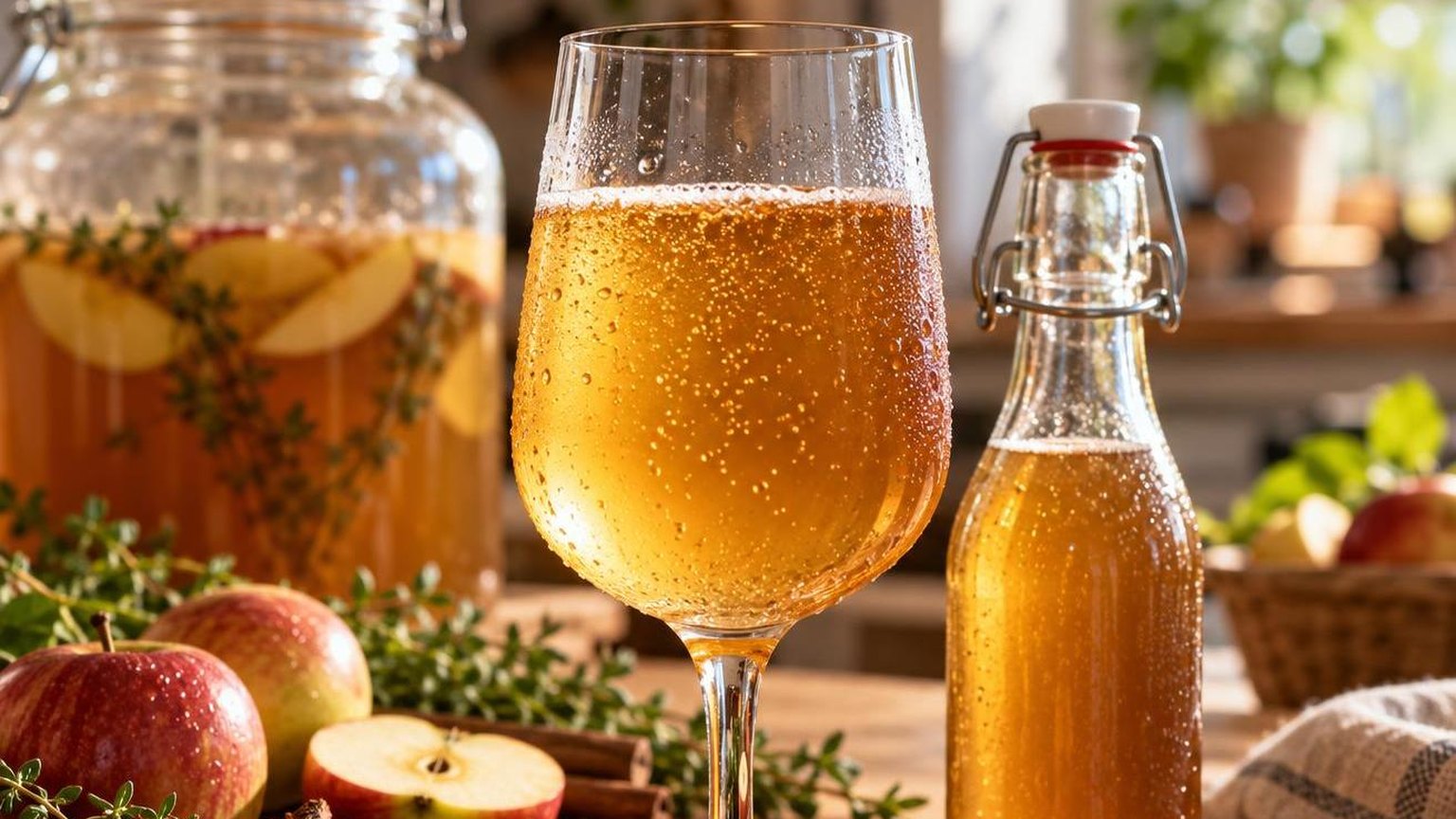
Equipment You Need Before Starting
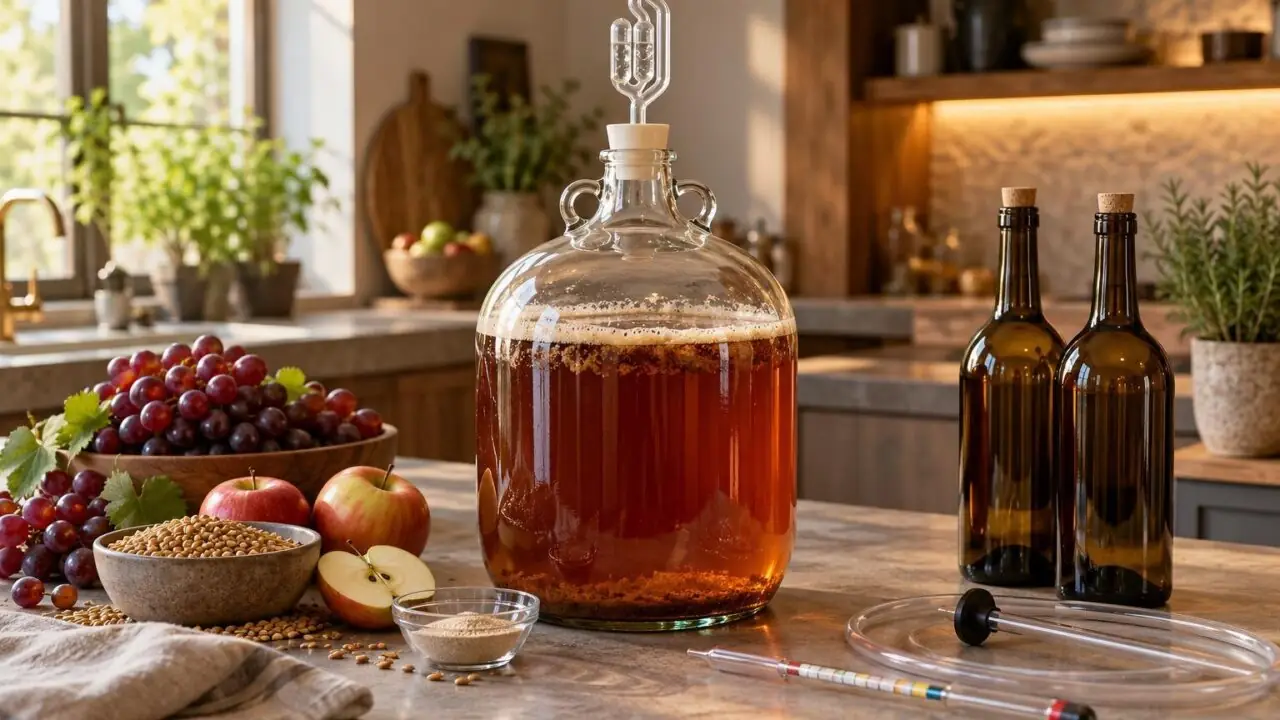
Home alcohol fermentation needs a food-safe vessel, a vent for carbon dioxide, cleaning supplies, and basic measuring tools.
Start with beer, wine, cider, or mead equipment; a still is unnecessary for fermentation and introduces separate safety and legal requirements.
Choose a Fermenter With Enough Headspace
Use a food-grade plastic bucket or a glass fermenter designed for brewing. A wide-mouth bucket makes fruit removal and cleaning easier.
Avoid scratched plastic, chipped glass, and containers that previously held chemicals: surface damage traps residue, and unknown containers may contaminate your batch.
For a small wine, cider, or mead batch, these vessel sizes provide a practical starting point. Actual headspace needs depend on foaming, fruit volume, and the yeast strain.
| Equipment | Example capacity | Purpose |
| Primary fermentation bucket | 2 US gallons for a 1-US-gallon batch | Leaves room for foam and fruit. |
| Optional aging jug | 1 US gallon | Holds transferred wine or mead with limited headspace. |
- Airlock and fitted lid or stopper: Let fermentation gas escape while limiting contamination. Never seal active fermentation inside an ordinary airtight container.
- Brewing spoon: Choose food-safe plastic or stainless steel, with enough length to mix without putting your hand into the liquid.
- Transfer tubing: Use beverage-grade tubing and, optionally, an auto-siphon to separate fermented liquid from sediment without pouring and splashing.
Separate Cleaning From Sanitizing
Buy a brewing cleaner and a sanitizer approved for food-contact equipment. Cleaning removes deposits; sanitizing reduces microorganisms on an already-clean surface.
John Palmer’s How to Brew treats these as distinct steps, not interchangeable treatments.
- Cleaner and soft brush: Remove yeast deposits and dried sugar without scratching plastic. Follow the product’s rinsing instructions.
- Measured sanitizer: Follow the label’s dilution, contact time, and rinsing requirements. “No-rinse” applies only when the product is prepared and used correctly.
- Measuring container: Reserve a clearly marked container for preparing cleaning or sanitizing solutions. Never mix cleaning chemicals.
Measure Temperature and Fermentation Progress
A thermometer helps keep yeast within its manufacturer’s recommended fermentation range. Measure the liquid rather than relying exclusively on room temperature: active fermentation produces heat.
An inexpensive digital probe thermometer works if its food-contact surfaces are sanitized before use.
Buy a brewing hydrometer and a sample cylinder. Take specific-gravity readings before fermentation and near completion to estimate alcohol and track sugar consumption.
Check the instrument’s calibration temperature; warmer or cooler samples require correction. Airlock bubbles alone cannot establish that fermentation has finished.
Match Bottles to the Finished Drink
For still beverages, use sound bottles and compatible closures. For carbonation, use pressure-rated beer bottles or appropriate PET bottles, plus measured priming sugar.
The American Homebrewers Association’s bottling guidance emphasizes fermentation completion: bottling unfinished beer can create dangerous excess pressure.
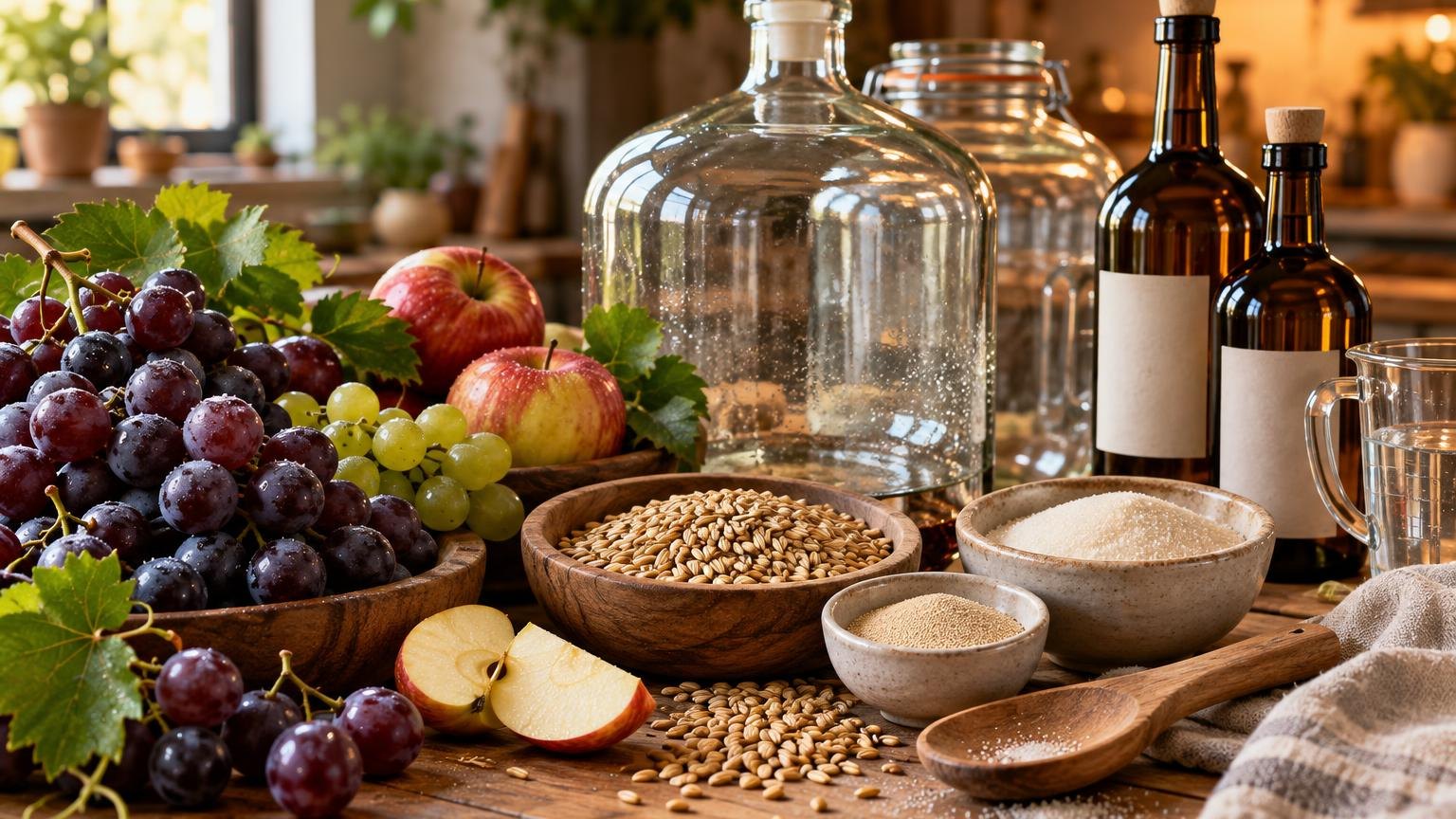
Fermentation Step by Step
For a straightforward first batch, ferment pasteurized apple juice into still cider.
Yeast converts fermentable sugars into ethanol and carbon dioxide; sanitation, suitable temperature, and verified completion matter more than an elaborate equipment setup.
Prepare the Juice and Equipment
Start with 1 US gallon of pasteurized apple juice without potassium sorbate or sodium benzoate. These preservatives inhibit yeast.
Avoid untreated juice: the FDA warns that unpasteurized juice can carry harmful bacteria, and fermentation is not a validated substitute for pasteurization.
- Use a food-grade fermenter with approximately 1 gallon of working capacity plus headspace for foam.
- Gather an airlock, stopper, hydrometer, sample cylinder, thermometer, siphon, and bottles rated for your intended use.
- Clean visible residue first. Then apply a food-contact brewing sanitizer at its labeled dilution and contact time, including to sampling equipment.
Measure and Add Yeast
Pour the juice into the sanitized fermenter. Measure its original gravity with a hydrometer before adding yeast, following the instrument’s temperature-correction instructions.
Record the reading; juice sugar content varies, so alcohol strength cannot be predicted accurately from volume alone.
Add a commercial cider or wine yeast according to its package directions. Lalvin EC-1118 is one suitable option.
Follow the manufacturer’s rehydration instructions if applicable, and use any yeast nutrient at its labeled cider or wine dosage. Do not guess nutrient quantities.
Fit the Airlock and Control Temperature
Attach a sanitized airlock filled as its manufacturer directs. Never seal an actively fermenting batch in an airtight container: accumulating carbon dioxide can rupture it.
Leave the fermenter somewhere protected from sunlight, with enough clearance for possible foaming.
For this batch, target approximately 68°F, provided that temperature suits your chosen yeast. Check the liquid temperature rather than relying exclusively on room temperature.
Fermentation generates heat, and excessively warm conditions can produce unwanted aromas.
Visible activity often develops within 48 hours, but timing varies with yeast condition and temperature. Bubbling indicates gas movement, not a reliable measure of fermentation progress.
A leaking lid can hide activity; temperature changes can produce bubbles after fermentation ends.
Confirm Completion Before Bottling
Check gravity with sanitized equipment. Seek an unchanged reading over at least 3 days and a value consistent with completed fermentation. Stable but unexpectedly high gravity can mean stalled fermentation.
Never return a tested sample to the fermenter.
| Example measurement | Value |
| Original gravity | 1.045 |
| Final gravity | 0.998 |
| Estimated alcohol by volume | 6.2% |
This estimate uses original gravity minus final gravity, multiplied by 131.25. Siphon finished cider off the sediment into sanitized bottles. For this still-cider method, add no bottling sugar or fermentable sweetener.
Discard batches with visible mold; do not taste them.
References: FDA, “What You Need to Know About Juice Safety”; John Palmer, How to Brew, fourth edition; Lallemand, Lalvin EC-1118 technical information.
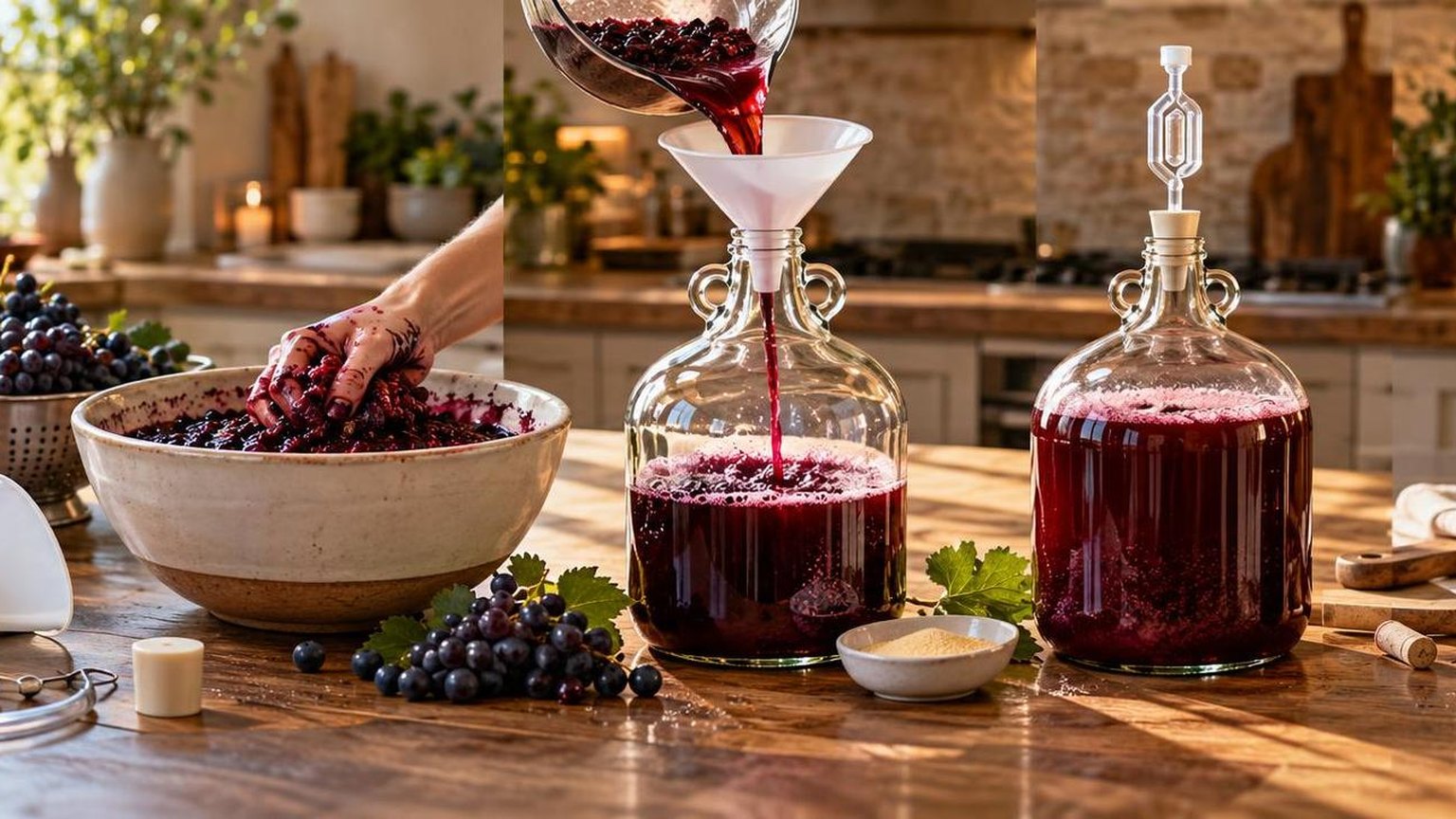
Distillation Laws Every Home Brewer Must Know
In the United States, permission to ferment beer or wine at home does not authorize distillation.
Federal law provides household exemptions for certain fermented beverages, but no equivalent personal-use exemption allows you to distill drinking spirits without federal approval.
Fermentation Exemptions Have Defined Limits
The federal home-production exemptions apply to personal or family use, not sale. Beer and wine have separate annual allowances; these are not permissions to produce whiskey, brandy, vodka, or other distilled spirits.
| Production category | Household with one adult | Household with two or more adults |
| Beer, personal or family use | 100 gallons per calendar year | 200 gallons per calendar year |
| Wine, personal or family use | 100 gallons per calendar year | 200 gallons per calendar year |
| Distilled spirits for drinking | No personal-use exemption | No personal-use exemption |
The statutes define an adult as someone at least 18, but that definition does not authorize production by someone below the applicable state minimum age. Household allowances do not increase with every additional adult.
Sources: 26 U.S.C. §§ 5042(a)(2) and 5053(e): https://www.law.cornell.edu/uscode/text/26/5042 and https://www.law.cornell.edu/uscode/text/26/5053.
A Small Still Does Not Create an Exception
Under 26 U.S.C. § 5171, distilled spirits operations generally require an approved, registered distilled spirits plant. Calling a batch experimental, keeping it for yourself, or giving it away does not create a federal home-distilling exemption.
- Do not assume equipment sales establish legality. Buying a countertop still is not federal permission to produce beverage alcohol.
- Check the proposed premises. Section 5178 generally prohibits locating a distilled spirits plant in a dwelling house or a connected shed, yard, or enclosure.
- Separate fuel from beverages. An alcohol fuel plant permit authorizes qualifying fuel operations, not production of drinking spirits. Fuel alcohol requirements include rendering the product unfit for beverage use.
Sources: https://www.law.cornell.edu/uscode/text/26/5171, https://www.law.cornell.edu/uscode/text/26/5178, and https://www.law.cornell.edu/uscode/text/26/5181.
Check Federal, State, and Local Requirements
Federal approval does not replace state licensing or local zoning, building, and fire requirements. Conversely, a state exemption cannot waive federal obligations.
Before buying equipment for alcohol production, describe your intended product, process, and premises to the Alcohol and Tobacco Tax and Trade Bureau and your state alcohol regulator.
Do not treat a headline about a court challenge as nationwide permission. A ruling’s scope, effective date, and any stay can affect who may rely on it. Get current legal advice before assuming a decision protects your operation.
Unauthorized distilling can trigger criminal prosecution and forfeiture of spirits and equipment.
Federal offenses and forfeiture provisions appear in 26 U.S.C. §§ 5601 and 5615: https://www.law.cornell.edu/uscode/text/26/5601 and https://www.law.cornell.edu/uscode/text/26/5615.
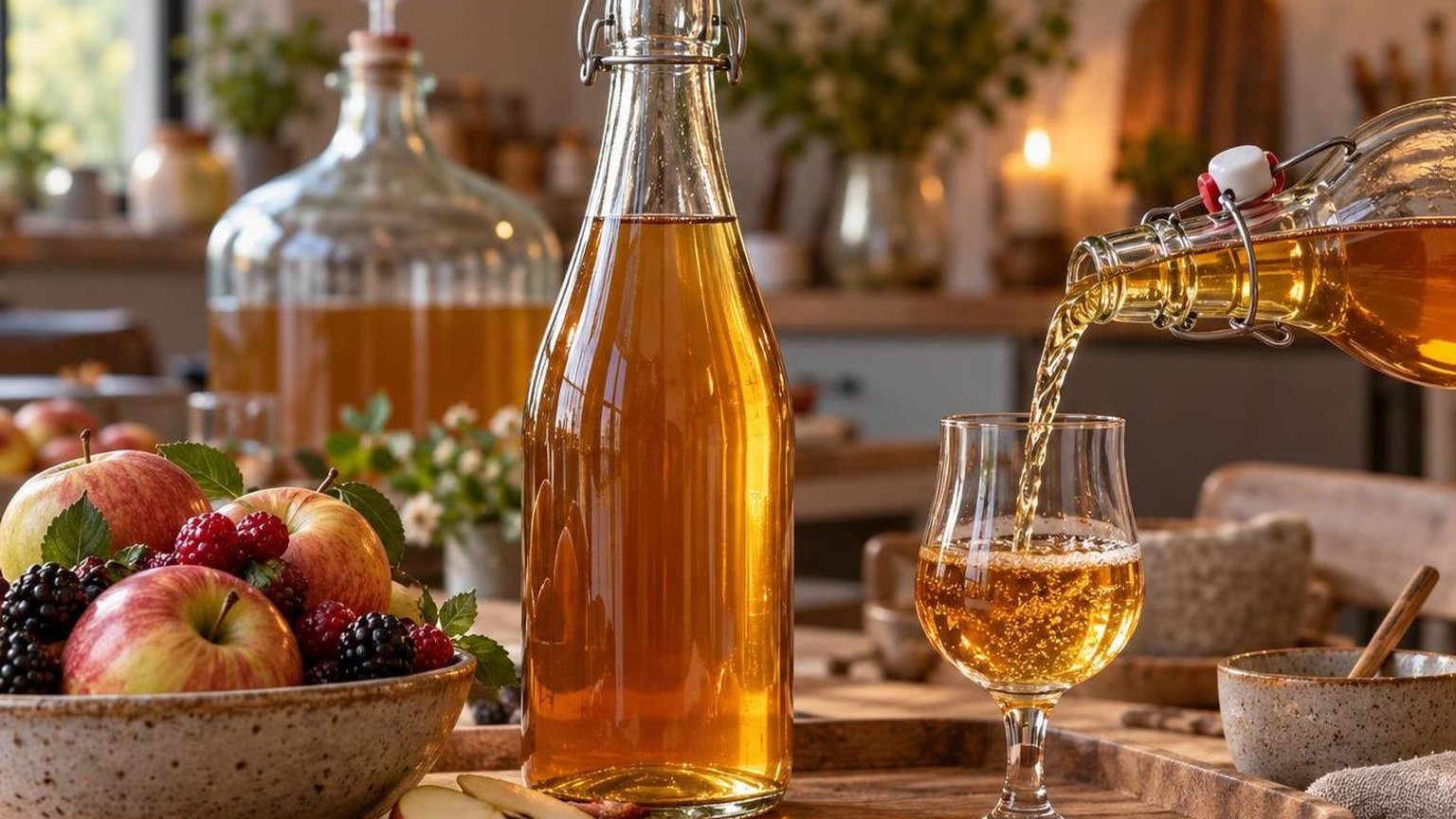
Safety Risks of Homemade Alcohol
Homemade alcohol can cause poisoning, infection, burns, or injuries from exploding containers.
Controlled beer and wine fermentation differs from improvised “pruno” production and distillation, but no homemade batch becomes safe merely because it smells normal or contains alcohol.
Contamination and Botulism
Clean equipment before sanitizing it: residue can shield microorganisms from sanitizers. Use food-grade containers, potable water, and products labeled for brewing or winemaking.
Follow the sanitizer’s stated dilution and contact time; stronger mixtures can leave unsafe residues.
Improvised fermentation can create conditions for botulism toxin production.
CDC’s report, “Botulism from Drinking Prison-Made Illicit Alcohol—Utah, 2011,” documented eight hospitalized inmates after drinking contaminated pruno.
Ordinary beverage fermentation should not be confused with these uncontrolled mixtures.
- Never use rotten ingredients, damaged food containers, or vessels previously used for chemicals.
- Discard batches with visible mold. Skimming the surface does not establish safety.
- Do not taste a questionable batch to test it. CDC states that botulinum toxin cannot be seen, smelled, or tasted.
Methanol and Unsafe Distillation
Methanol can form during fermentation, particularly when fruit pectin breaks down.
Ordinary beer and wine fermentation generally produces low concentrations; severe methanol poisoning is more closely associated with adulterated alcohol and poorly controlled spirits production.
Distillation does not create methanol from nothing, but it can concentrate and redistribute substances already present. Discarding an arbitrary first portion, checking odor, or testing flame color cannot verify safety.
Methanol distribution varies with the equipment, ingredients, and operating conditions.
Methanol poisoning can cause permanent blindness or death, and symptoms may be delayed. Suspected exposure needs immediate medical evaluation, even if the person initially feels well. Do not attempt treatment with beverage alcohol.
Pressure, Fire, and Chemical Hazards
Fermentation releases carbon dioxide. An actively fermenting batch needs an appropriate airlock or other designed pressure-release system, not a tightly sealed storage container.
Bottling before fermentation finishes can produce enough pressure to rupture glass.
- Use bottles designed for the intended carbonation pressure and follow a validated conditioning method.
- Keep alcohol and concentrated vapors away from flames, sparks, and hot surfaces.
- Never mix bleach with acids or ammonia. These combinations can release toxic gases.
Alcohol Strength and Emergency Response
Homemade does not mean low-alcohol. NIAAA defines a US standard drink as containing 14 grams of pure alcohol. Without a reliable strength estimate, serving size alone cannot establish the dose.
Hydrometer estimates also depend on correct measurements and appropriate calculations.
Call 911 for seizures, slow or irregular breathing, unconsciousness, or difficulty waking someone. Do not leave the person alone or assume they can sleep it off. For suspected poisoning in the United States, call Poison Control at 1-800-222-1222.
Legal restrictions also matter: TTB’s “Home Distilling” guidance states that federal law strictly prohibits producing distilled spirits at home for personal use. Home beer and wine exemptions do not authorize distillation.
Questions People Ask Most
How do you make alcohol at home without distilling?
Make wine, cider, or beer by letting yeast ferment sugars into ethanol and carbon dioxide.
For a simple cider, use pasteurized apple juice without potassium sorbate or sodium benzoate, add commercial cider yeast according to its instructions, and ferment in a sanitized food-grade vessel fitted with an airlock.
What equipment do you need to make alcohol at home?
You need a food-grade fermenter, an airlock, brewing sanitizer, a thermometer, a hydrometer, and suitable bottles.
Clean equipment before sanitizing it, follow the sanitizer’s labeled concentration and contact time, and never seal active fermentation in an unvented container because carbon dioxide can create dangerous pressure.
How long does homemade alcohol take to ferment?
Many basic beers and ciders complete primary fermentation in roughly 1–3 weeks, although yeast strain, temperature, and sugar concentration change that timeline.
Follow your yeast manufacturer’s temperature range and check that hydrometer readings remain unchanged for at least three days and match the recipe’s expected final range; airlock bubbles alone cannot confirm completion.
How can you measure the alcohol content of a homemade drink?
Take a hydrometer reading before fermentation and another after fermentation finishes, correcting for the instrument’s calibration temperature.
A common homebrewing estimate is ABV = (original gravity − final gravity) × 131.25, so readings of 1.050 and 1.010 indicate approximately 5.25% ABV; the American Homebrewers Association describes this gravity-based approach.
How do you prevent contamination and unsafe bottling?
Use potable water, sound ingredients, sanitized equipment, and a tested brewing or winemaking recipe; discard batches with fuzzy mold rather than skimming or tasting them.
For still drinks, confirm fermentation has finished before bottling; for bottle-conditioned drinks, use pressure-rated bottles and a recipe-calculated priming-sugar dose to reduce the risk of exploding bottles.
Is making alcohol at home legal in the United States?
According to the Alcohol and Tobacco Tax and Trade Bureau, federal personal-use exemptions generally permit annual production of up to 100 gallons of beer and separately 100 gallons of wine in a household with one adult.
Or 200 gallons of each with two or more adults, not for sale.
State and local restrictions also apply, and federal law provides no comparable personal-use exemption for distilling beverage spirits at home.
Related Reading
- Industrial Ice Makers: 5 Tips for Choosing the Right One
- How Many Truly Hard Seltzers To Get Drunk?
- Bars Near Charlotte Airport for Drinks and Food
- 10 Surprising Facts About What Do CBD Drinks Do (2026 Edition)
- How Much is 64 Oz of Water in Liters?
- What Kinds Of Red Wine Are Dry?
- How Many Ounces In 1.5 Liters?
- All Blog Guides
- U.S. Code, 26 U.S.C. § 5053 — Home Beer Production Exemption (2023)
- U.S. Code, 26 U.S.C. § 5042 — Home Wine Production Exemption (2023)
- U.S. Code, 26 U.S.C. § 5601 — Distilled Spirits Criminal Penalties (2023)
- FAO — Fermented Fruits and Vegetables: A Global Perspective (1998)
- John J. Palmer — How to Brew, Fourth Edition (2017)
- Ken Schramm — The Compleat Meadmaker (2003)
- Ronald S. Jackson — Wine Science: Principles and Applications, Fourth Edition (2014)
- Pascal Ribéreau-Gayon et al. — Handbook of Enology, Volume 1: The Microbiology of Wine and Vinifications, Second Edition (2006)