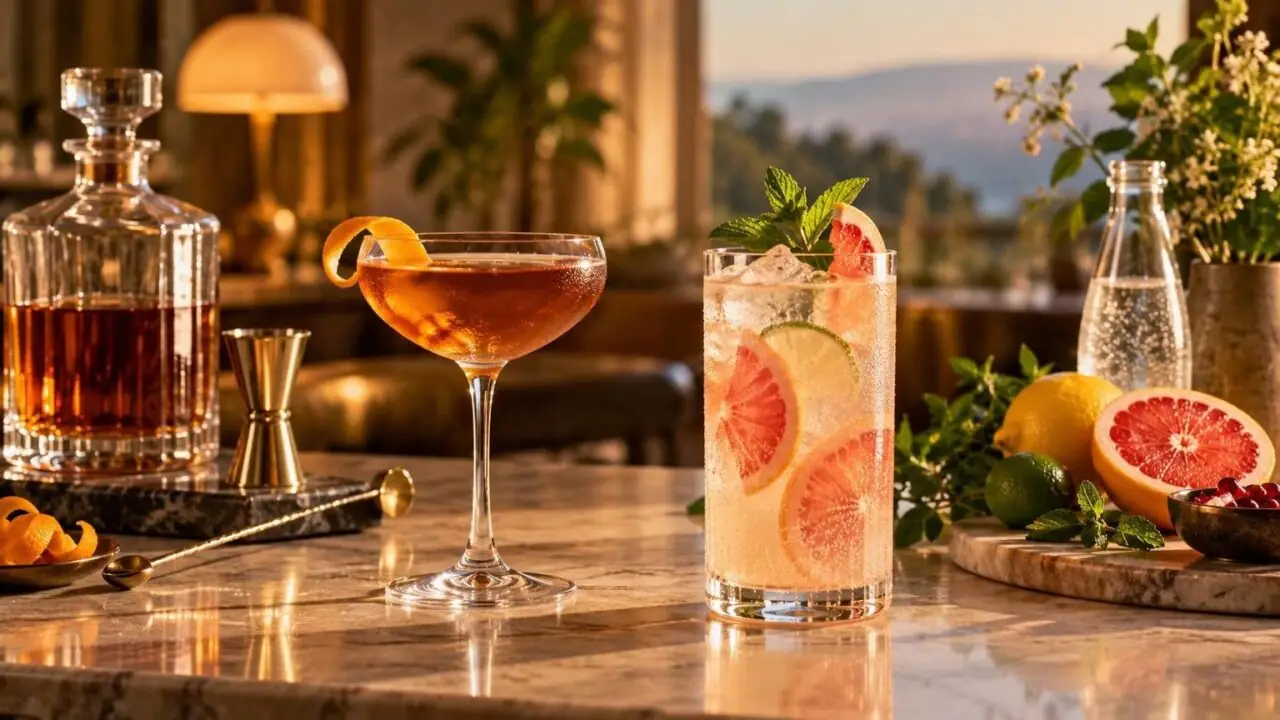
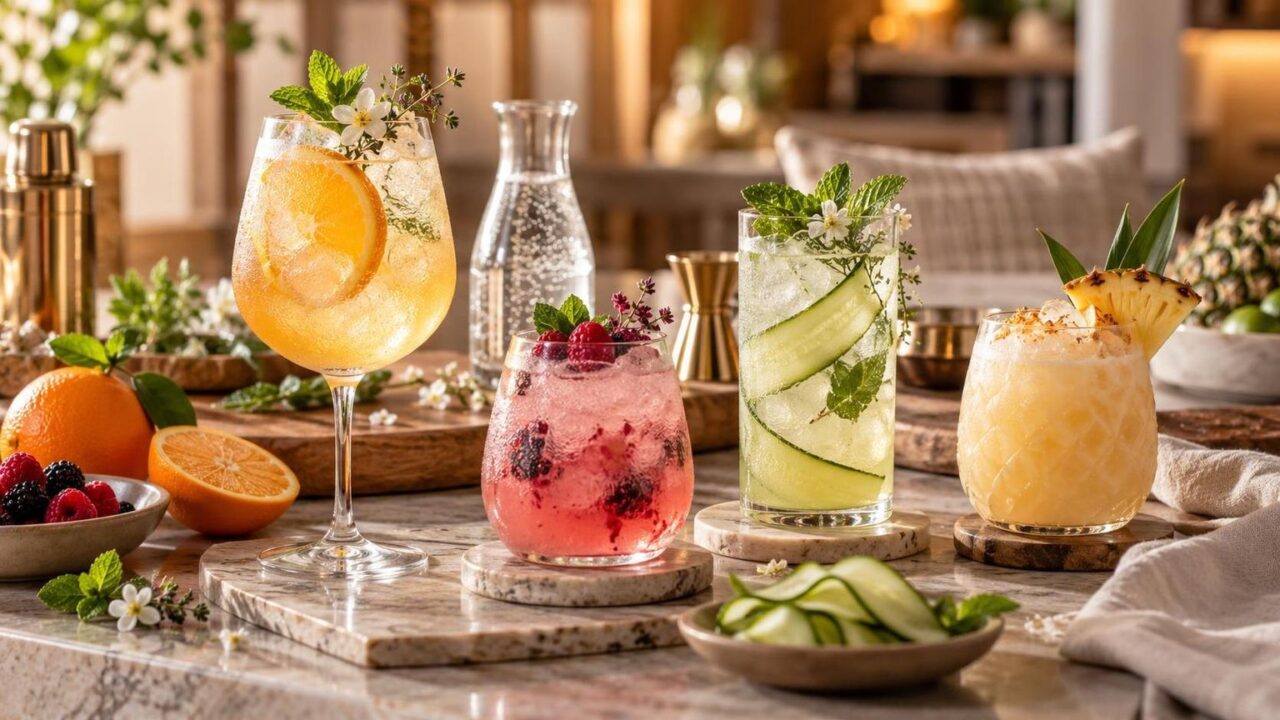
cocktails for people who dont like alcohol are mixed drinks that soften boozy flavors with fruit, citrus, cream, or sweetness. A piña colada tastes of pineapple and coconut, while an amaretto sour balances almond notes with lemon.
These flavors make the spirit less prominent without removing its alcohol.
Start with flavors you already enjoy, then choose a drink with a measured pour rather than assuming sweet means weak. This guide compares fruity, creamy, and refreshing options, explains what each tastes like, and covers ordering adjustments.
If you dislike alcohol itself, choose an alcohol-free version instead.
Why Some Cocktails Taste Less Boozy
Ethanol perception depends on concentration, temperature, and competing flavor compounds. A drink’s actual ABV matters far less than how your palate registers it.
Cocktail construction can reduce perceived alcohol by 40–60% without lowering the pour.
The Science of Masking Ethanol
Ethanol activates TRPV1 receptors—the same ones triggered by capsaicin. Sweetness, acidity, and cold temperatures suppress that receptor response, making alcohol less detectable on the palate.
A 2005 study in Chemical Senses found that sucrose concentrations above 10% reduced perceived burn from ethanol by roughly 50%. Citric acid produced a similar but smaller masking effect at concentrations around 0.5–1%.
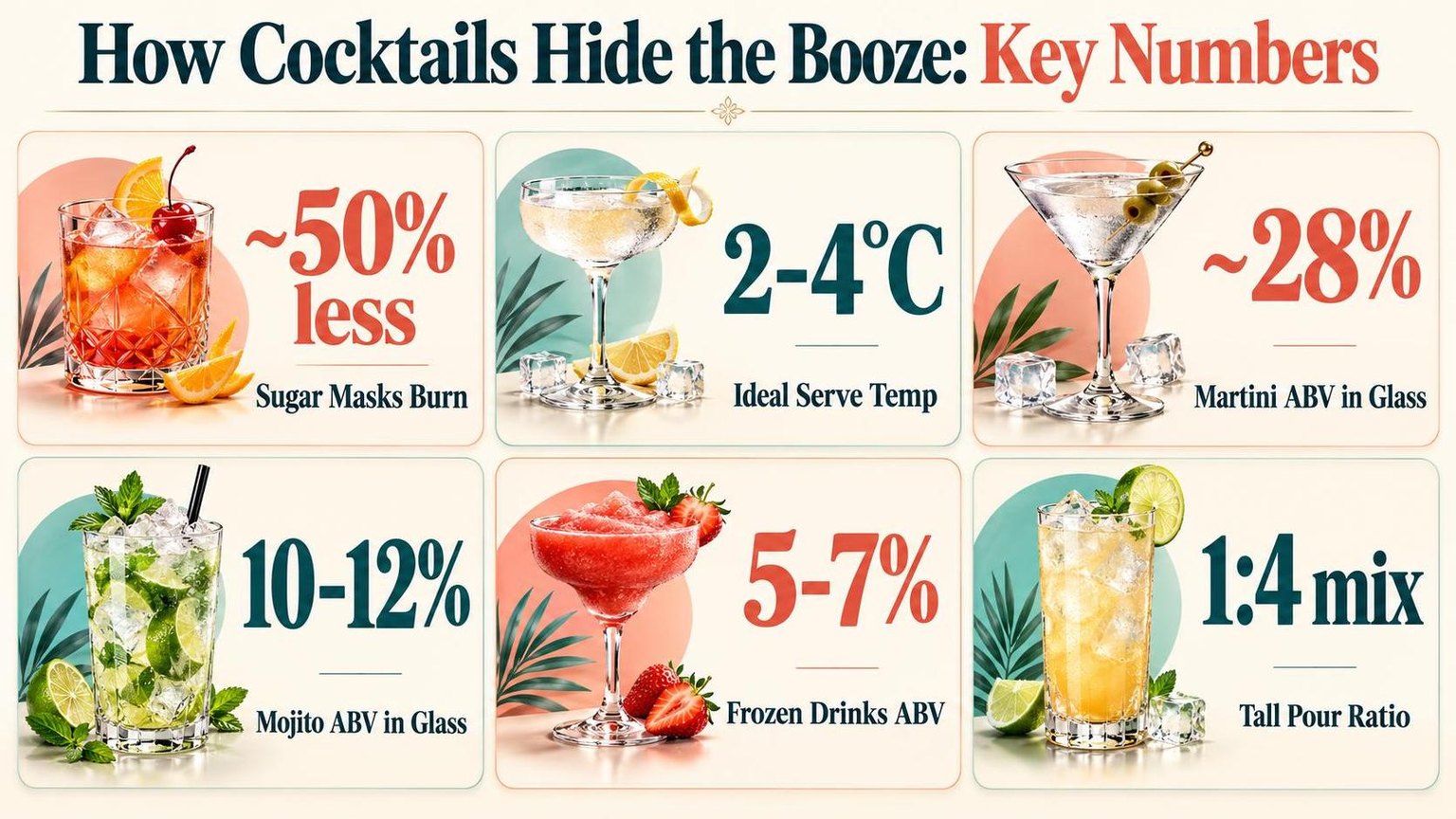
Serving temperature matters significantly. Drinks served at 2–4°C (35–39°F) taste noticeably less alcoholic than the same liquid at 18°C (64°F) because cold numbs TRPV1 sensitivity.
Key Factors That Reduce Perceived Booziness
| Factor | Mechanism | Example |
| Sugar / sweetness | Suppresses TRPV1 activation | Piña Colada (coconut cream + pineapple juice) |
| Acidity (citrus) | Competes with ethanol on taste receptors | Whiskey Sour (fresh lemon juice) |
| Dilution | Lowers actual ABV in the glass | Moscow Mule (4–5 oz ginger beer) |
| Carbonation | CO₂ tingles override alcohol burn | Aperol Spritz (3 oz prosecco + soda) |
| Cold temperature | Numbs trigeminal nerve response | Frozen Daiquiri (blended with ice) |
| Fat / cream | Coats mucous membranes, slows ethanol contact | White Russian (heavy cream float) |
Dilution Is the Biggest Lever
A standard Martini contains roughly 2.5 oz of 80-proof spirit in a 3.5 oz serve—about 28% ABV in the glass. A Mojito uses the same 2 oz of rum but lands near 10–12% ABV after muddled lime, sugar, soda, and ice.
- High-ABV cocktails (20–30%): Martini, Negroni, Manhattan—spirit-forward with minimal dilution.
- Medium-ABV cocktails (12–18%): Margarita, Cosmopolitan—balanced with citrus and liqueur.
- Low-ABV cocktails (5–12%): Aperol Spritz, Paloma, Mojito—extended with juice, soda, or sparkling wine.
Choosing drinks from that 5–12% range gives you a cocktail experience closer to beer or wine strength while delivering complex, layered flavor.
Fruity Cocktails That Soften Alcohol Flavor
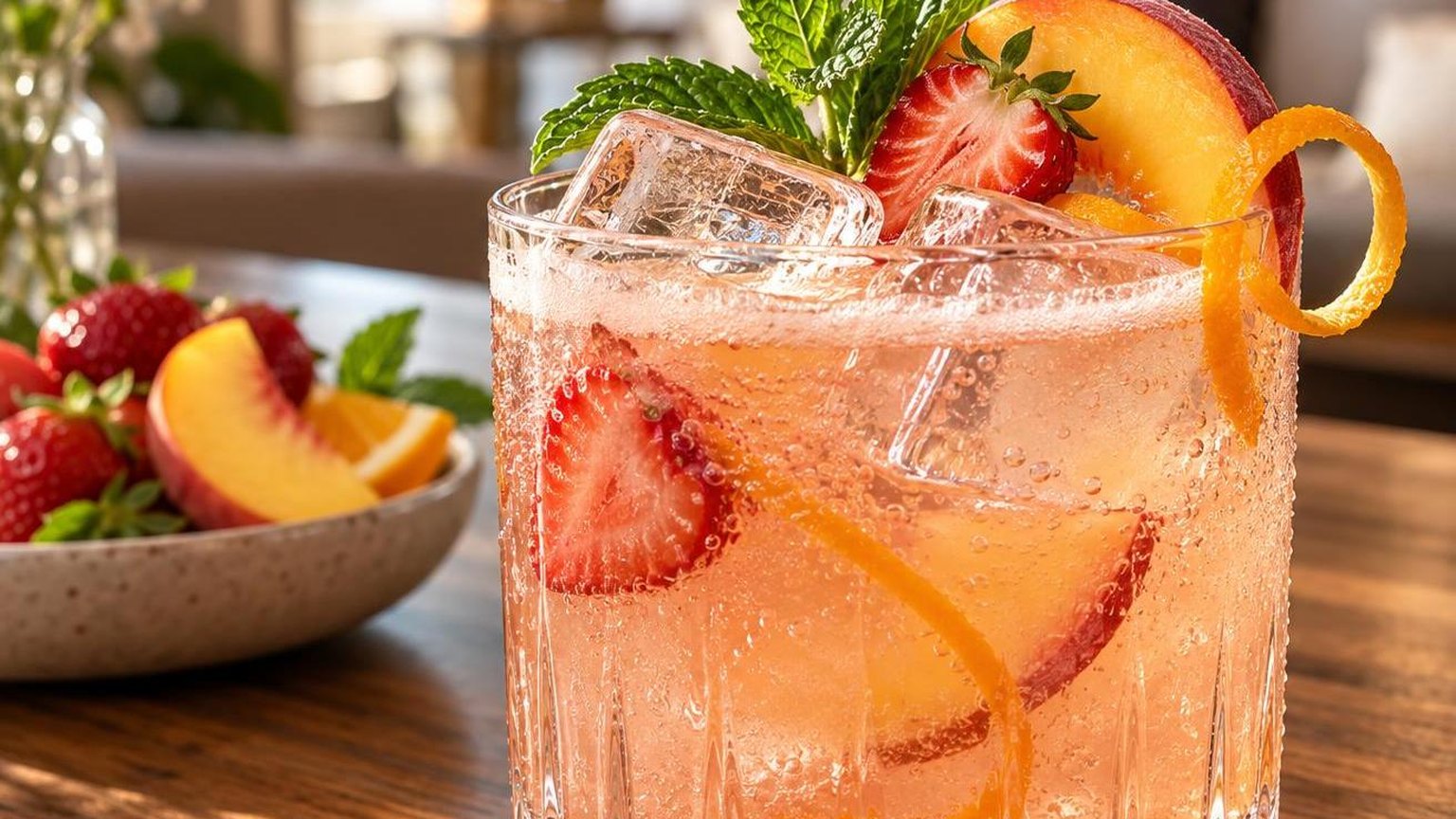
Fruit juice, fresh purées, and sweet liqueurs mask ethanol’s sharp bite by coating the palate with sugar and acid.
The higher the juice-to-spirit ratio, the less you taste the alcohol—some of these drinks clock in at just 5–8% ABV per serving.
| Cocktail | Base Spirit | Approximate ABV | Key Fruit Flavors |
| Piña Colada | White rum | ~8% | Pineapple, coconut |
| Frozen Strawberry Daiquiri | White rum | ~7% | Strawberry, lime |
| Tequila Sunrise | Tequila | ~6% | Orange, grenadine |
| Sex on the Beach | Vodka | ~8% | Peach, cranberry, orange |
| Malibu Bay Breeze | Coconut rum | ~5% | Pineapple, cranberry |
Why Fruit Juice Works So Well
Sucrose and fructose in juice suppress the bitterness receptors on the tongue. A 2019 study in Chemical Senses confirmed that sugar concentrations above 5% significantly reduce perception of ethanol’s burn.
Citric acid from lime and orange also plays a role. It stimulates saliva production, diluting the alcohol’s contact with taste buds and shifting attention toward sour and sweet notes.
Best Ordering Strategies
- Ask for a tall pour. More mixer in a highball glass drops the spirit ratio from roughly 1:2 to 1:4, cutting perceived alcohol nearly in half.
- Choose blended over shaken. Frozen cocktails incorporate ice volume, diluting the drink to 5–7% ABV compared to 12–15% in a shaken version.
- Opt for coconut rum or fruit-flavored vodka. These bottlings sit at 21–26% ABV versus 40% for standard spirits, lowering the drink’s overall strength before any mixer is added.
- Request fresh juice. Freshly squeezed orange or pineapple juice has more pulp and natural sugar than premade sour mix, providing a thicker mouthfeel that further hides the spirit.
A Reliable Starter Order
The Malibu Bay Breeze is arguably the safest entry point. Malibu coconut rum is only 21% ABV, and mixed with equal parts pineapple and cranberry juice the finished drink barely exceeds 5% ABV—comparable to a light beer.
For a step up, a classic Piña Colada blends 2 oz of rum with 3 oz of pineapple juice and 1 oz of cream of coconut. The fat in coconut cream physically coats the tongue, creating a barrier between ethanol molecules and your taste receptors.
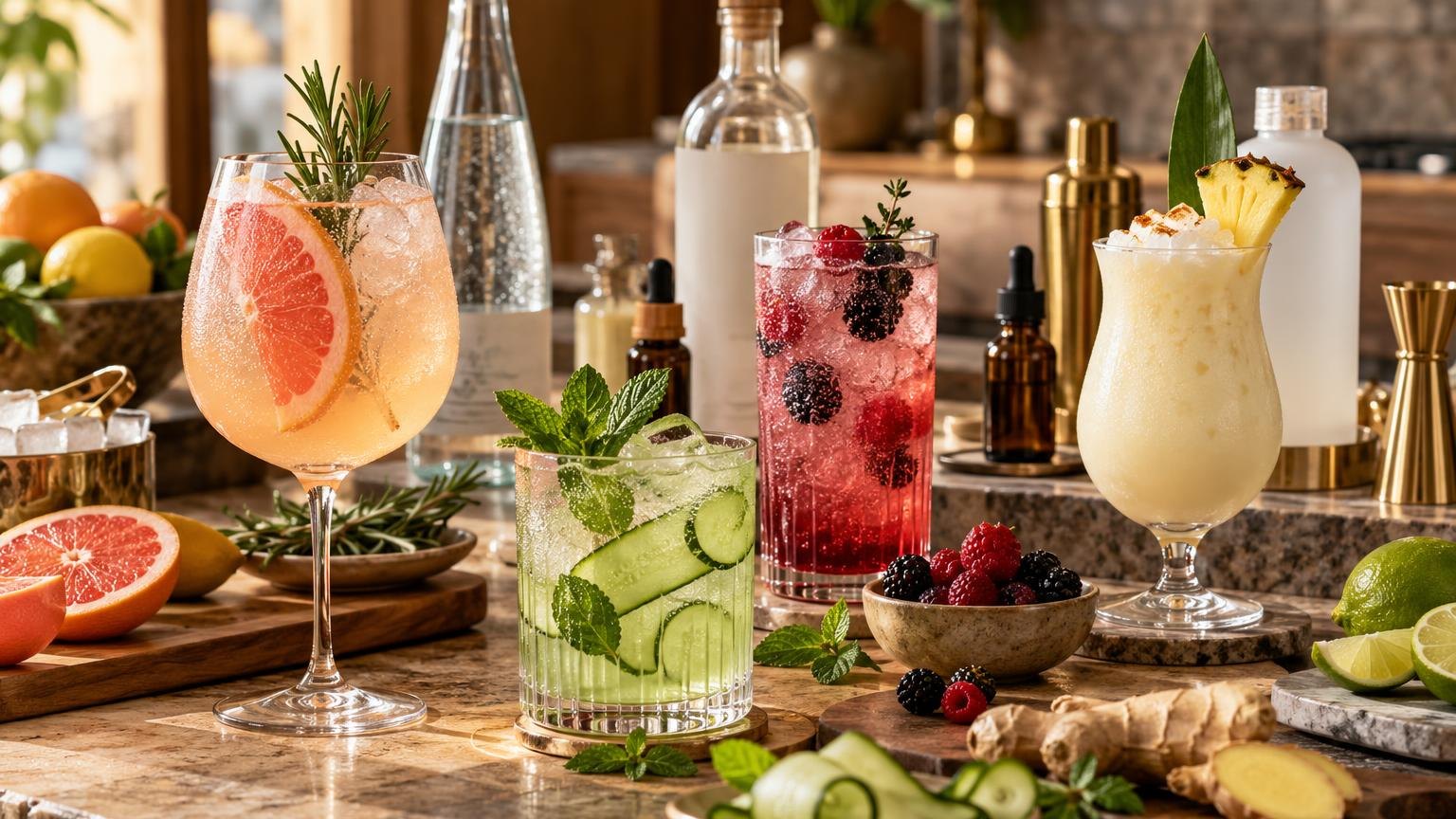
Creamy Cocktails Without a Strong Spirit Taste
Cream-based cocktails use dairy, coconut, or egg to coat the palate and suppress the perception of ethanol. Fat molecules bind volatile alcohol compounds, reducing the “burn” by up to 50% compared to spirit-forward drinks at the same ABV.
Top Creamy Cocktails Ranked by ABV and Perceived Alcohol Taste
| Cocktail | Typical ABV | Base Spirit | Key Creamy Element | Perceived Burn |
| Piña Colada | 8–12% | White rum | Coconut cream | Low |
| White Russian | 15–17% | Vodka | Heavy cream | Low–Medium |
| Mudslide | 10–14% | Vodka + Kahlúa | Irish cream liqueur | Low |
| Brandy Alexander | 14–16% | Brandy | Heavy cream + crème de cacao | Low |
| Grasshopper | 10–12% | Crème de menthe | Heavy cream | Very Low |
| Bushwacker | 8–10% | Dark rum + Kahlúa | Coconut cream + cream of coconut | Very Low |
The Grasshopper and Bushwacker consistently score lowest in perceived alcohol. Both rely on liqueurs bottled at 15–25% ABV rather than full-strength 40% spirits.
Why Fat Masks Alcohol
Research published in the Journal of Food Science confirms that fat emulsions reduce ethanol vapor release in the mouth. A 10% fat content cocktail releases roughly 30% fewer volatile alcohol molecules than a fat-free drink at identical proof.
Ordering Tips for Minimal Alcohol Taste
- Ask for coconut cream, not coconut water. Cream contains 23–24 g of fat per 100 ml; coconut water contains under 0.2 g.
- Request liqueur-based builds. Kahlúa (20% ABV), Baileys (17% ABV), and Amaretto (28% ABV) deliver sweetness with less ethanol bite than 40% spirits.
- Add a float of heavy cream. At 36% milkfat, heavy cream creates a physical barrier between the spirit and your taste receptors.
- Blend with ice. Frozen creamy cocktails dilute roughly 20–25% more than shaken versions, further lowering effective ABV per sip.
A Note on Calories
Cream-based cocktails range from 300 to 500 calories per standard serving. A classic Piña Colada averages 490 calories in a 12 oz pour.
Substituting light coconut milk drops the count to approximately 280 calories without significantly increasing perceived alcohol.
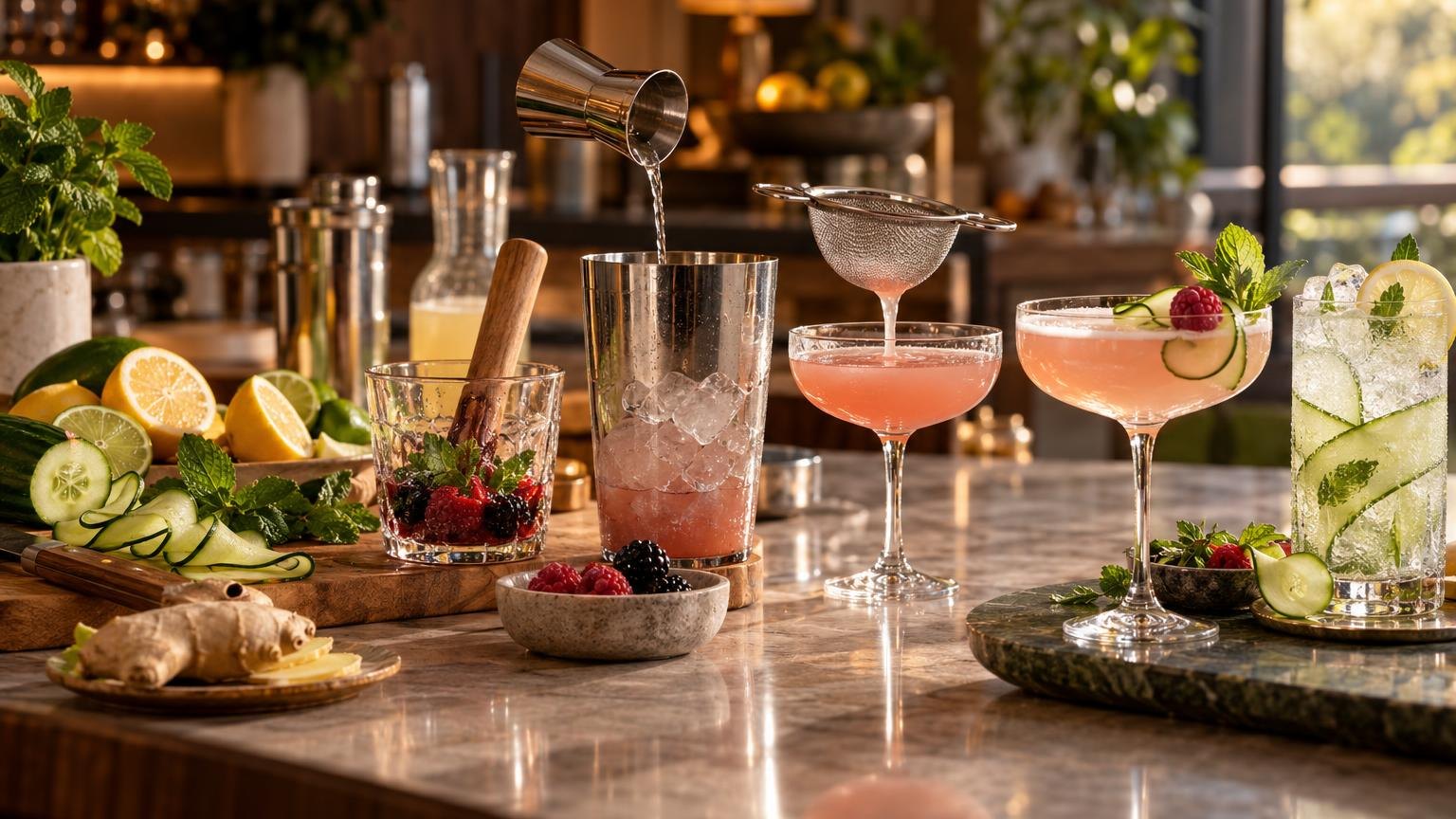
Citrus Cocktails That Balance Alcohol Burn
Citric acid directly suppresses the perception of ethanol’s bitterness and burn by stimulating salivation and activating competing taste receptors.
Research published in Chemical Senses confirms that sour tastants reduce perceived alcohol intensity by 20–30%. Citrus-forward cocktails exploit this mechanism deliberately.
Why Citrus Works Chemically
Fresh lemon juice has a pH of approximately 2.0–2.6, and lime juice sits near 2.0–2.4. This acidity triggers a flood of saliva that dilutes ethanol on the palate, softening the burn before it registers.
Citrus oils in the peel contain limonene, a terpene that adds aromatic sweetness independent of sugar. A properly expressed orange twist releases roughly 0.5 mL of essential oil across the drink’s surface.
Best Citrus Cocktails for Alcohol-Averse Drinkers
| Cocktail | ABV (approx.) | Primary Citrus | Citrus Juice (oz) |
| Whiskey Sour | 14% | Lemon | 0.75 |
| Margarita | 13% | Lime | 1.0 |
| Daiquiri | 15% | Lime | 1.0 |
| Paloma | 10% | Grapefruit + Lime | 1.5 |
| Gimlet | 17% | Lime | 0.75 |
| Bee’s Knees | 14% | Lemon | 0.75 |
The Paloma stands out at roughly 10% ABV — lower than most wine — because grapefruit soda dilutes the tequila significantly while adding both carbonation and citrus bite.
Techniques to Maximize the Citrus Effect
- Use fresh juice only. Bottled juice oxidizes within 4–6 hours and loses the bright acidity that masks ethanol.
- Add citrus last when shaking. Over-shaking citrus beyond 12–15 seconds introduces excessive air and dilution, muting flavor.
- Double the citrus, halve the spirit. Requesting 1.5 oz of citrus with 1 oz of spirit instead of the standard 2 oz creates a drink under 10% ABV.
- Express the peel over the glass. Squeezing the peel releases aromatic oils that prime the nose before the first sip, reducing perceived harshness.
The Bee’s Knees deserves special mention.
Honey syrup (3:1 honey to water) rounds out lemon’s sharp edges while gin’s juniper botanicals complement citrus naturally, creating a cocktail that rarely tastes “boozy” despite containing London dry gin.
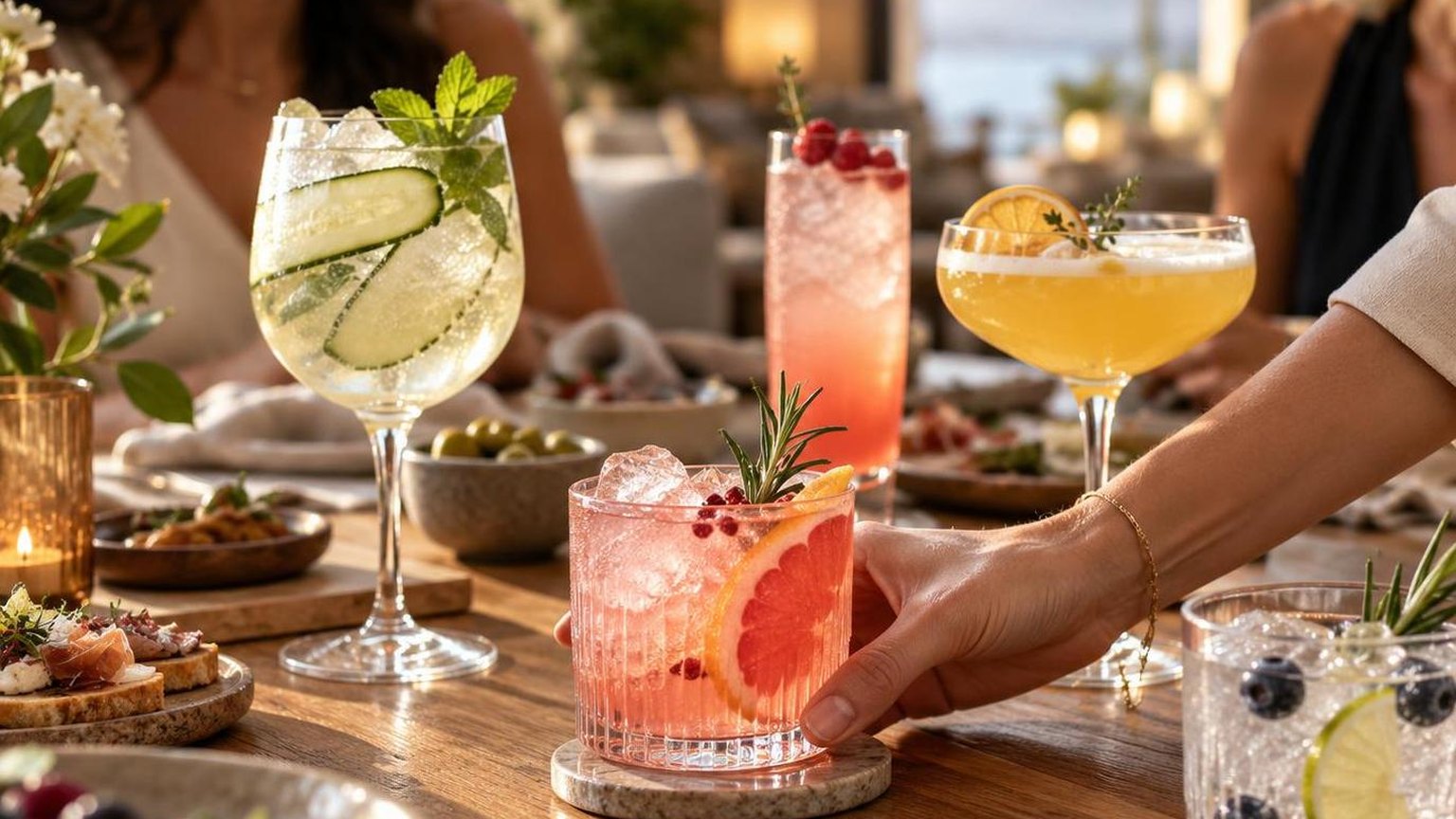
Low Alcohol Cocktails for Gentler Sipping
Low-alcohol cocktails typically land between 3% and 8% ABV—comparable to a light beer rather than a standard mixed drink. They deliver genuine cocktail complexity without the 15–25% ABV punch of a Margarita or Old Fashioned.
The Aperol Spritz is the gateway drink for alcohol-averse drinkers. Aperol itself is only 11% ABV, and once combined with Prosecco and soda water in the classic 3-2-1 ratio, the finished drink sits around 5.5% ABV.
| Cocktail | Approximate ABV | Base Spirit/Ingredient |
| Aperol Spritz | 5.5% | Aperol (11% ABV) |
| Sherry Cobbler | 7–8% | Fino sherry (15% ABV) |
| Americano | 6–7% | Campari + sweet vermouth |
| Radler / Shandy | 2–3% | Lager + lemonade |
| Mimosa | 6–8% | Prosecco + orange juice |
The Americano—Campari, sweet vermouth, and soda water in equal parts—contains zero hard liquor. It predates the Negroni by roughly 50 years, originating at Gaspare Campari’s bar in Milan during the 1860s.
Sherry-based cocktails deserve special attention. Fino and Manzanilla sherries range from 15–17% ABV, less than half the strength of vodka or gin. A Sherry Cobbler dilutes that further with crushed ice and citrus.
Techniques That Keep ABV Low
- Lengthening with soda or tonic: Adding 90–120 ml of sparkling water to a short drink can cut ABV by 40–60%.
- Swapping base spirits for fortified wines: Replace 45 ml of gin (40% ABV) with 60 ml of dry vermouth (18% ABV) and the alcohol content drops by more than half.
- Using shrubs and cordials: Vinegar-based shrubs add acidity and depth, reducing dependence on spirits for flavor complexity.
- Building on beer or cider: A Michelada uses 355 ml of Mexican lager (around 4.5% ABV) with lime, hot sauce, and Clamato—finishing well below 5% ABV.
Order these drinks at a wine bar or craft cocktail spot and specify your ABV comfort zone. Skilled bartenders routinely build drinks under 8% ABV that taste fully realized, not watered down.
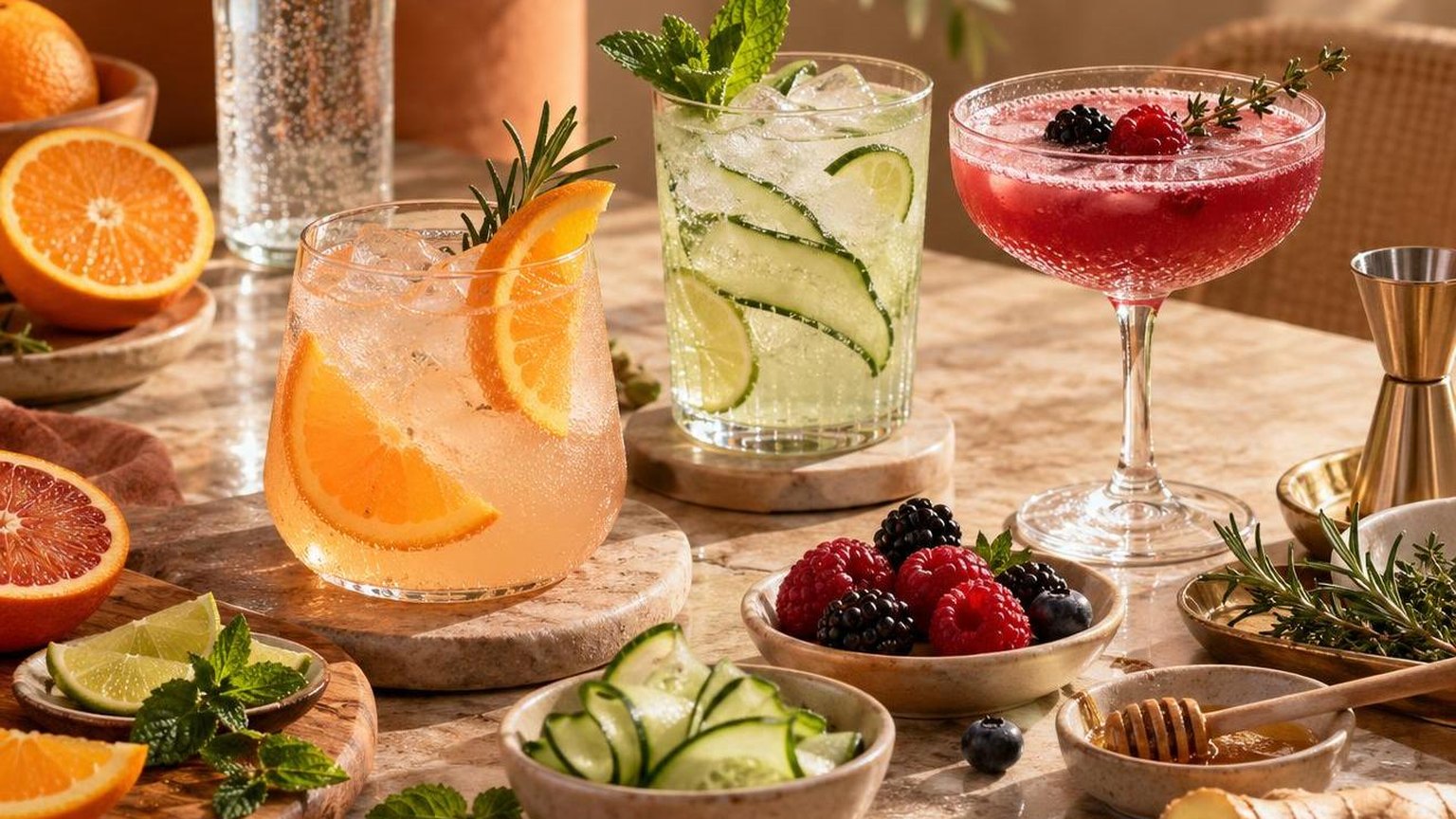
Mocktails for Avoiding Alcohol Entirely
The non-alcoholic beverage market reached $11.01 billion globally in 2023 and is projected to grow at 8.1% CAGR through 2030, according to Grand View Research.
Mocktails now account for a permanent section on menus at over 60% of upscale US restaurants.
What Defines a True Mocktail
A mocktail contains 0.0% ABV — no alcohol whatsoever. This distinguishes it from “low-ABV” drinks, which can contain up to 0.5% alcohol by volume and still carry a “non-alcoholic” label under US TTB regulations.
Well-constructed mocktails rely on four structural pillars: acidity, sweetness, bitterness, and texture. These elements replace the warmth and body that ethanol normally provides.
Essential Mocktail Ingredients and Their Roles
| Ingredient | Role | Example |
| Fresh citrus juice | Acidity, brightness | Lemon, lime, grapefruit |
| Simple syrup or honey | Sweetness, balance | 2:1 demerara syrup |
| Non-alcoholic bitters | Complexity, depth | All The Bitter aromatic bitters |
| Aquafaba or egg white | Texture, foam | 30 ml per drink |
| Soda or tonic water | Effervescence, length | Fever-Tree tonic |
| Shrubs (drinking vinegars) | Tangy backbone | Apple cider vinegar-based |
Five Reliable Mocktail Recipes Worth Mastering
- Virgin Espresso Tonic: 60 ml fresh espresso, 120 ml tonic water, 15 ml vanilla syrup, served over ice — delivers bitterness and carbonation simultaneously.
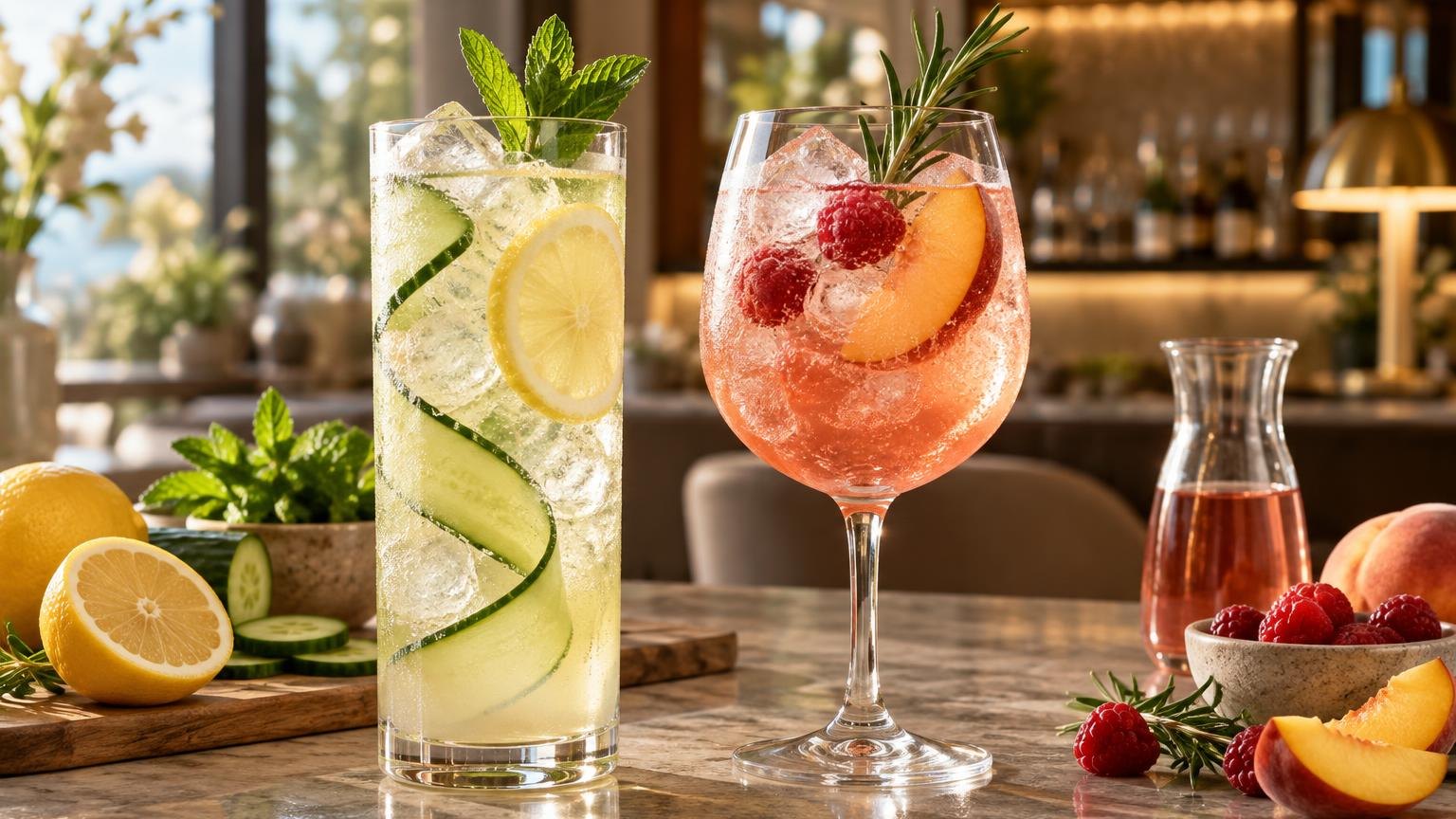
- Cucumber Spritz: Muddled cucumber, 20 ml elderflower cordial, 15 ml lime juice, topped with sparkling water.
- Smoke & Citrus Sour: 30 ml lapsang souchong tea (chilled), 25 ml lemon juice, 20 ml maple syrup, 30 ml aquafaba — dry-shaken then shaken with ice.
- Spiced Mango Mule: 90 ml mango purée, 15 ml lime juice, ginger beer, pinch of Tajín on the rim.
- Rosemary Grapefruit Fizz: 60 ml fresh grapefruit juice, 15 ml rosemary-infused simple syrup, soda water, garnished with a torched rosemary sprig.
Practical Tips for Better Mocktails
Use a jigger to measure every ingredient. A 5 ml deviation in citrus juice noticeably shifts a drink’s balance. Precision matters more without alcohol masking imperfections.
Chill glassware for at least 10 minutes before serving. Temperature directly affects perceived sweetness — warm mocktails taste cloyingly sweet, while properly chilled versions taste crisp and balanced.
How to Order Less Boozy Cocktails
Most standard cocktails contain 1.5–2 oz of base spirit, pushing ABV to 20–30%. Ordering strategically can cut that in half. A few specific phrases and substitutions give you full control at any bar.
Key Phrases That Work
Tell your bartender exactly what you want using measurable language. Vague requests like “make it weak” produce inconsistent results.
- “Half-pour, please” — reduces the base spirit from 1.5 oz to 0.75 oz, cutting ABV roughly 50%
- “Make it tall” — keeps the same spirit volume but adds more mixer in a larger glass, diluting the drink
- “Sub the vodka for Aperol” — swaps a 40% ABV spirit for an 11% ABV aperitif
- “Can you do a spritz version?” — signals you want prosecco and soda as the base instead of straight liquor
Low-ABV Spirit Substitutions
Replacing a full-strength spirit with a lower-proof alternative is the most effective single change. The flavor profile stays intact while alcohol drops dramatically.
| Standard Spirit | ABV | Low-ABV Swap | ABV |
| Vodka (40%) | 40% | Sake | 15–16% |
| Gin (40–47%) | 40–47% | Lillet Blanc | 17% |
| Bourbon (40–50%) | 40–50% | Amaro Montenegro | 23% |
| Rum (40%) | 40% | Sherry (Fino) | 15% |
| Tequila (40%) | 40% | Cocchi Americano | 16.5% |
Timing and Format Matter
Order your low-ABV drink at the start. Bartenders build rounds quickly and may not hear modifications mid-rush. Seated service at the bar top yields better customization than shouting across a crowded well.
Ask for drinks served over crushed ice rather than cubed. Crushed ice melts 30–40% faster, progressively diluting the cocktail as you sip.
A shaken drink also incorporates more water than a stirred one — roughly 0.75 oz versus 0.5 oz of dilution.
Tipping normally matters here. You’re asking for bartender attention and customization. Standard 18–20% applies regardless of the drink’s lower price point.
Frequently Asked Questions
What are the best cocktails for people who don’t like the taste of alcohol?
Frozen Piña Coladas, Mudslides, and Malibu Bay Breezes top the list because coconut cream, chocolate liqueur, and fruit juices mask the ethanol burn almost entirely.
A classic Amaretto Sour blends almond-flavored liqueur with fresh lemon juice at roughly a 2:1 mixer-to-spirit ratio, making the 28% ABV amaretto nearly undetectable.
Moscato-based spritzes also work well since Moscato d’Asti sits at just 5–5.5% ABV with pronounced residual sugar around 100–120 g/L.
How much alcohol is actually in a “light” cocktail compared to a standard one?
A standard cocktail contains roughly 14 grams of pure alcohol—equivalent to 1.5 oz of 40% ABV spirit.
Light cocktails built on lower-proof bases like Aperol (11% ABV) or St-Germain (20% ABV) mixed with soda and citrus can drop total alcohol content to 4–7 grams per serving, comparable to a light beer.
Ordering a “skinny” or “low-proof” version at most craft bars cuts ethanol by 40–60% without eliminating it completely.
Are there cocktails that taste like dessert and hide the alcohol completely?
The Grasshopper—equal parts crème de menthe, crème de cacao, and heavy cream—tastes like liquid mint chocolate chip ice cream at roughly 15% ABV per pour.
A Brandy Alexander combines cognac with dark crème de cacao and cream, producing a drink that reads as chocolate mousse on the palate.
Espresso Martinis made with vanilla vodka, Kahlúa, and a fresh shot of espresso register as sweetened iced coffee to most drinkers.
What specific ingredients neutralize the burn of alcohol in a cocktail?
Fat, sugar, and acid are the three most effective burn-blockers.
Fat from coconut cream or heavy cream coats the tongue’s TRPV1 receptors—the same receptors ethanol activates to create that burning sensation—while sugar at concentrations above 10–15% by weight suppresses bitterness perception.
Fresh citrus juice (pH 2.0–2.5 for lemon, 2.2–2.4 for lime) triggers salivation that dilutes and rinses ethanol from receptor sites.
Can I order a lower-ABV cocktail at a bar without getting a mocktail?
Ask for a “low-proof” or “sessionable” cocktail—most craft bartenders now keep dedicated low-ABV sections on their menus featuring sherry (15–17% ABV), vermouth (16–18% ABV).
Or amaro as the base spirit instead of vodka or whiskey.
A Sherry Cobbler, Americano (Campari, sweet vermouth, soda), or Hugo Spritz (elderflower, prosecco, mint, soda) all land between 6–10% ABV in the glass.
These contain real alcohol but at roughly half the concentration of a Manhattan or Negroni.
What wine-based cocktails work for people who dislike strong drinks?
The Kalimotxo (red wine and cola in a 1:1 ratio) originated in Spain’s Basque Country and dilutes wine’s tannins and alcohol to roughly 6–7% ABV.
A white wine spritzer—3 oz of Pinot Grigio with 2 oz of club soda over ice—drops a standard glass to about 8% ABV while keeping it refreshing.
Sangria made with fruit, brandy, and orange juice tastes predominantly of fruit punch, especially when chilled overnight so the fruit absorbs some of the alcohol.
Do frozen and blended cocktails actually contain less alcohol than stirred ones?
Frozen cocktails typically contain the same amount of base spirit (1.5 oz per serving) but the large volume of ice—usually 8–12 oz of crushed ice per drink—dilutes the overall ABV in the glass to 5–8%.
Compared to 20–30% in a stirred Manhattan or martini.
The cold temperature also numbs taste buds, reducing perception of ethanol by up to 25% according to sensory research published in Chemosensory Perception.
This makes frozen Daiquiris and frozen Margaritas functionally easier to drink for alcohol-averse palates.
What should someone who hates alcohol try as their very first cocktail?
A Malibu and pineapple juice (1.5 oz Malibu at 21% ABV, 4 oz pineapple juice) is the most commonly recommended starter cocktail because it tastes like coconut-pineapple juice with virtually no detectable alcohol.
The Moscow Mule—vodka, ginger beer, lime juice—works as a second option since the sharp ginger spice (from gingerol compounds) overwhelms any ethanol taste.
For a third choice, an Aperol Spritz (3 oz prosecco, 2 oz Aperol, 1 oz soda) delivers a bittersweet orange-soda flavor at only about 8% ABV in the glass.
Related Guides
- How Many Breweries in San Diego?
- Bars in the Heights Houston for Drinks and Nights Out
- Is Sprite Good For Upset Stomach? Find Out Now
- How Much Is 4 Pounds? – A Complete, Real-World Guide Based on Practical Experience
- How Long After Taking Cold Medicine Can You Drink Alcohol?
- What Is the Legal Drinking Age in Israel?
- All Blog Guides
- National Institute on Alcohol Abuse and Alcoholism – "What Is a Standard Drink?" (2023)
- U.S. Food & Drug Administration – "Beverages: Labeling of Non-Alcoholic and Dealcoholized Beverages" (2023)
- USDA FoodData Central – Nutrient Database for Fruit Juices and Mixers (2024)
- National Center for Biotechnology Information / PubMed – "Genetic Variation in Taste Receptors and Alcohol Consumption" (2021)
- Cornell University College of Agriculture and Life Sciences – "The Science of Taste Perception" (2022)
- Distilled Spirits Council of the United States – "Non-Alcoholic Spirits Market Report" (2023)
- International Bartenders Association – Official IBA Cocktail Recipes and Specifications (2024)
- Harvard T.H. Chan School of Public Health – "The Nutrition Source: Alcohol" (2023)