
Is Sprite Good For Upset Stomach is not a reliable remedy; its carbonation and sugar can worsen bloating, gas, or diarrhea in many people.
A 12-ounce can has about 38 grams of sugar, which may draw water into the intestines and aggravate loose stools.
Some people feel brief relief from the cold liquid or mild sweetness, but that does not mean Sprite treats nausea or stomach irritation.
For most upset stomachs, small sips of water or oral rehydration solution are better-supported choices, especially when vomiting or diarrhea is present.
Why Sprite Feels Soothing
Sprite can feel soothing because it is cold, sweet, and familiar, but the nutrition numbers explain why it is not a true stomach remedy. For nausea, vomiting, or diarrhea, the main medical goal is fluid plus electrolytes, not carbonation or sugar.
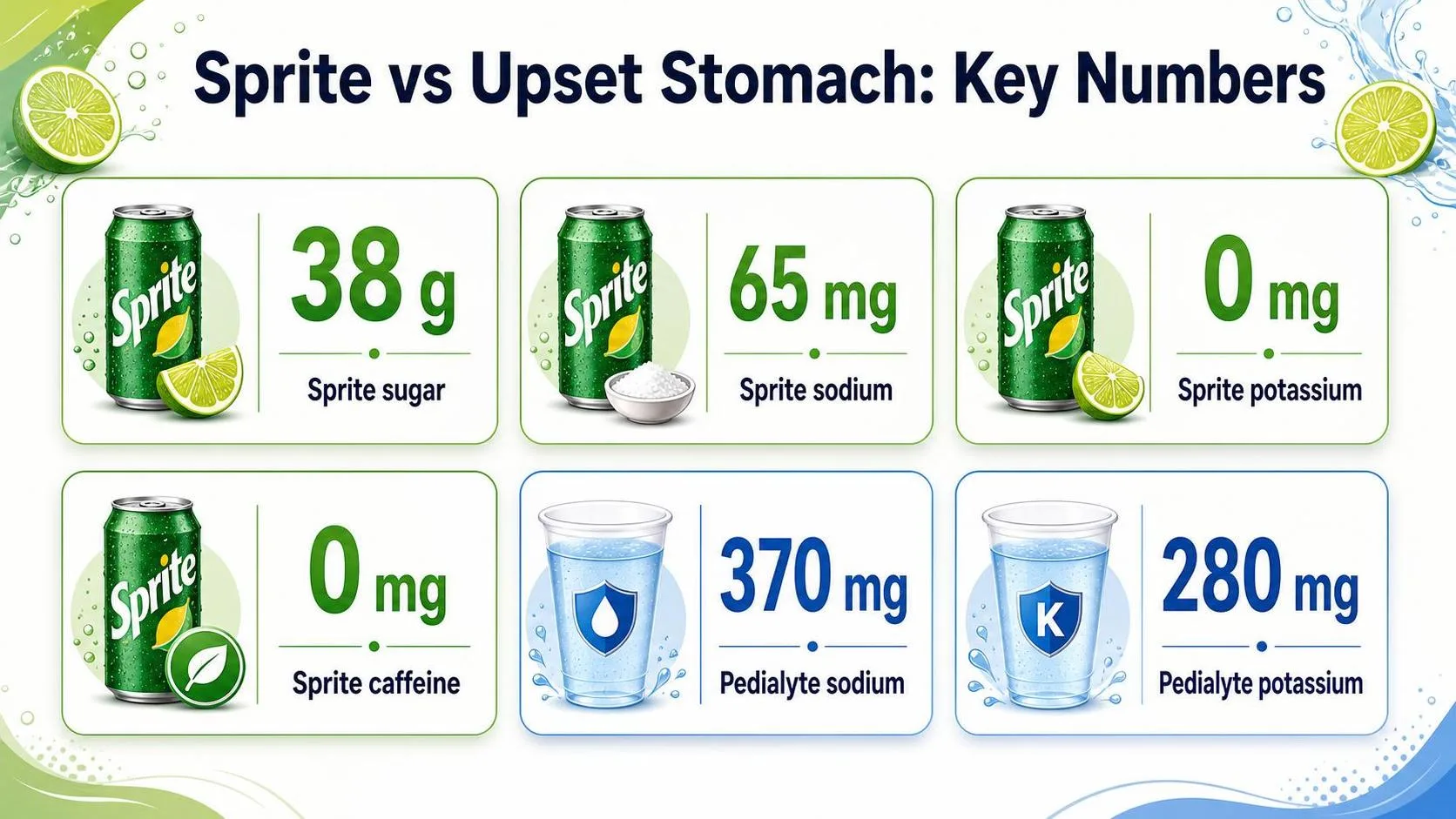
A standard 12-ounce can of Sprite contains 140 calories, 38 grams of carbohydrate, and 65 milligrams of sodium. It has no caffeine, no fat, and essentially no potassium, which matters when fluid losses are coming from vomiting or diarrhea.
| Drink, 12 oz unless noted | Sugar/carbohydrate | Sodium | Potassium | Why it matters |
| Sprite | 38 g | 65 mg | 0 mg | High sugar, low electrolyte replacement |
| Pedialyte, 12 oz | About 9 g | About 370 mg | About 280 mg | Designed for oral rehydration |
| WHO-style oral rehydration solution, 1 liter | 13.5 g glucose | 75 mmol/L sodium | 20 mmol/L potassium | Evidence-based fluid absorption formula |
The sugar concentration is the biggest issue. Sprite has about 3.2 grams of sugar per ounce. Oral rehydration solutions are deliberately much less sugary because overly concentrated drinks can pull water into the intestine and may worsen diarrhea.
The Centers for Disease Control and Prevention advises oral rehydration solution for dehydration from diarrhea, especially in children. Sports drinks and sodas are not equivalent because they usually contain too much sugar and too little sodium.
- 65 mg sodium in Sprite: modest for a soda, but far below rehydration products meant to replace salt losses.
- 0 mg potassium: a drawback during vomiting or diarrhea, when potassium can be lost in stool and fluid.
- 38 g sugar: close to 9 teaspoons of sugar in one can, which may be hard on an unsettled stomach.
- 0 mg caffeine: one advantage over cola, since caffeine can stimulate the gut in some people.
Carbonation is mixed. Some people find small sips of flat or lightly fizzy Sprite easier to tolerate than plain water during nausea. Others get more burping, bloating, or reflux from the gas, especially if they drink it quickly.
If Sprite is the only fluid that stays down, small sips can be reasonable short term. A practical amount is 1 to 2 teaspoons every few minutes after vomiting, then slowly increasing as tolerated.
For ongoing diarrhea, repeated vomiting, dizziness, very little urination, or symptoms lasting more than 24 hours in a child, Sprite is not enough. Use oral rehydration solution and seek medical advice when dehydration signs appear.

When Sprite May Help Nausea
Sprite may feel soothing for some people with nausea, but it is not a true stomach remedy. The result depends on carbonation, sugar load, hydration status, the cause of symptoms, and how much you drink.
| Factor | Why it matters | Specific number or fact |
| Serving size | A few sips may be easier to tolerate than a full can. | A 12 fl oz can of Sprite contains about 38 g added sugar and 140 calories. |
| Carbonation | Bubbles can trigger burping, bloating, reflux, or pressure in an already irritated stomach. | Carbonated drinks commonly worsen symptoms in people prone to acid reflux or gas. |
| Sugar concentration | High sugar can pull water into the intestine and worsen diarrhea in some cases. | Oral rehydration solution is designed with a lower, balanced glucose-sodium ratio; soda is not. |
| Caffeine | Sprite is caffeine-free, which is gentler than cola for some upset stomachs. | Standard Sprite has 0 mg caffeine per 12 fl oz. |
| Electrolytes | Soda does not replace sodium and potassium well after vomiting or diarrhea. | CDC-style oral rehydration therapy is preferred for dehydration risk. |
How the cause of the upset stomach changes the answer
- Nausea without diarrhea: Small, slow sips of a flat or lightly carbonated clear drink may be tolerated. Sprite’s lemon-lime flavor can seem easier than dairy, coffee, or acidic juice.
- Vomiting or diarrhea: Sprite is usually a poor first choice because it is high in sugar and low in electrolytes. Use oral rehydration solution, especially for children, older adults, pregnancy, or repeated fluid loss.
- Acid reflux or gastritis: Carbonation and sweetness may worsen burning, belching, or fullness. Noncarbonated fluids are typically safer.
- Food poisoning or stomach virus: Hydration matters more than settling the stomach. If fluids are lost repeatedly, electrolyte replacement is the priority.
Preparation matters
Room-temperature Sprite may be easier than ice-cold Sprite, because very cold drinks can trigger stomach cramping in some people. Letting it go flat can reduce gas and pressure.
Quantity matters too. Try 1 to 2 tablespoons every few minutes after vomiting, then increase gradually if tolerated. Drinking a full can quickly can stretch the stomach and restart nausea.
When Sprite is the wrong tool
- Signs of dehydration: very little urination, dizziness, dry mouth, or unusual sleepiness.
- Vomiting lasting more than 24 hours in adults, or any concerning vomiting in infants.
- Bloody stool, severe abdominal pain, fever above 102°F, or stiff abdomen.
- Diabetes or blood sugar concerns, because 38 g sugar can raise glucose quickly.
How to Judge Sprite Effectiveness
Whether Sprite is “good” for an upset stomach is verified by measuring hydration, symptom control, and ingredient load—not by whether it feels soothing for a few minutes.
The key comparison is Sprite versus evidence-based fluids such as oral rehydration solution.
In practice, the first check is the nutrition label. A standard 12 fl oz can of Sprite in the U.S. contains 140 calories, 38 g total carbohydrate, 38 g added sugars, 65 mg sodium, and 0 mg caffeine. Those numbers matter during vomiting or diarrhea.
| Fluid | Typical serving measured | Sugar / glucose | Sodium | Why it matters |
| Sprite | 12 fl oz | 38 g added sugar | 65 mg sodium | High sugar, low sodium; not formulated for rehydration |
| WHO low-osmolarity oral rehydration solution | 1 liter | 75 mmol/L glucose | 75 mmol/L sodium | Designed to replace water and electrolytes during diarrhea |
| Plain water | 8 to 12 fl oz | 0 g | 0 mg | Hydrates but does not replace lost sodium |
Carbonation is verified by dissolved carbon dioxide, which creates bubbles and carbonic acid. For some people, that can increase belching, bloating, or stomach pressure.
Letting Sprite go flat reduces carbonation, but it does not change the 38 g sugar load.
Acidity is another measurable factor. Lemon-lime sodas are acidic because they contain citric acid; published beverage testing commonly places similar sodas around pH 3 to 4.
Lower pH can feel harsh during reflux, gastritis, or nausea triggered by acid.
Osmolality is especially important with diarrhea. Medical oral rehydration solution is engineered near 245 mOsm/L in the WHO low-osmolarity formula.
Regular soft drinks are typically much more concentrated because of sugar, which can pull water into the intestine and worsen loose stools in some cases.
- Hydration verification: fewer dizzy spells, moist mouth, lighter urine, and urinating at least every 6 to 8 hours.
- Symptom verification: fewer vomiting episodes, fewer watery stools, and ability to keep down small sips for 4 to 6 hours.
- Escalation check: medical care is needed for blood in stool, severe abdominal pain, confusion, signs of dehydration, or vomiting lasting more than 24 hours in adults.
The conclusion is measurable: Sprite may briefly settle nausea for some people, mainly because it is sweet, cold, and familiar.
It is not verified as a proper rehydration fluid because its sugar is high and its sodium is far below oral rehydration standards.

Sprite Versus Better Stomach Remedies
Sprite is often used because it feels familiar, cold, and easy to sip, but it is not the strongest option for dehydration, vomiting, or diarrhea.
Its main drawbacks are high sugar, no meaningful sodium, and carbonation that can worsen gas or bloating.
| Option | Typical sugar | Sodium | Best use |
| Sprite, 12 fl oz | 38 g added sugar | 65 mg | Mild nausea only, if tolerated |
| Oral rehydration solution, 1 liter | 13.5 g glucose in WHO formula | 75 mmol/L sodium | Vomiting or diarrhea with dehydration risk |
| Pedialyte Classic, 12 fl oz | About 9 g sugar | About 370 mg sodium | Replacing fluid and electrolytes |
| Ginger ale, 12 fl oz | About 32–36 g sugar | Usually low | Similar to Sprite; not true rehydration |
| Plain water, 12 fl oz | 0 g | 0 mg | Thirst and mild fluid loss |
For diarrhea or repeated vomiting, oral rehydration solution is the better match. The World Health Organization formula is designed around glucose and sodium absorption in the small intestine, using 75 mmol/L sodium and 75 mmol/L glucose.
Compared with that, Sprite has plenty of sugar but too little sodium. A 12-ounce can contains 38 grams of added sugar, which can draw water into the intestine and may worsen diarrhea in some people.
- Best for dehydration risk: oral rehydration solution, especially after multiple loose stools, fever, or vomiting.
- Best for mild queasiness: small sips of flat Sprite may be tolerated, but it is not medicinal.
- Best low-irritation drink: water or ice chips, especially if carbonation triggers burping or reflux.
- Best food pairing: bland foods such as crackers, rice, toast, bananas, or applesauce once vomiting settles.
Ginger ale is not automatically better than Sprite.
Many commercial ginger ales contain little real ginger and a similar sugar load, so any benefit usually comes from cold fluid, sweetness, and slow sipping rather than ginger’s anti-nausea compounds.
Sports drinks are closer than soda but still not ideal for stomach bugs. They are formulated for sweat losses, not diarrhea, and often contain more sugar and less sodium than medical oral rehydration solutions.
For children, older adults, pregnancy, or anyone with diabetes, kidney disease, or persistent vomiting, Sprite is a poor first choice.
The American Academy of Pediatrics and CDC emphasize oral rehydration solutions for gastroenteritis because they replace both water and electrolytes more reliably.
Safe Use Tips for Sprite
Sprite may feel soothing because it is cold, sweet, and lightly flavored, but it is not a medical treatment for nausea, vomiting, diarrhea, or “stomach flu.” For most upset stomachs, hydration matters more than carbonation or brand.
Sprite contains sugar and carbonation, both of which can backfire. Bubbles may increase burping, bloating, or reflux, while high sugar can worsen diarrhea by pulling water into the intestines.
| Drink | Typical serving | Sugar | Best use when sick |
| Sprite | 12 fl oz can | About 38 g sugar | Small sips only if tolerated |
| Oral rehydration solution | 8 fl oz prepared | Lower sugar, with sodium and potassium | Best choice for vomiting or diarrhea dehydration risk |
| Plain water | 8 fl oz | 0 g sugar | Good for mild nausea without heavy fluid loss |
| Ginger tea | 8 fl oz | 0 g if unsweetened | May help mild nausea; not a rehydration solution |
How to try Sprite safely
- Let it go flat first if carbonation makes you burp, cramp, or feel more nauseated.
- Take 1 to 2 teaspoons every few minutes after vomiting, then increase slowly if it stays down.
- Avoid chugging; large volumes can stretch the stomach and trigger more vomiting.
- Skip Sprite if you have significant diarrhea, diabetes, severe reflux, or are trying to limit added sugar.
- Do not use diet Sprite for dehydration; it lacks the electrolyte balance needed for fluid replacement.
When oral rehydration is better
The CDC recommends oral rehydration solution for dehydration from diarrhea because it supplies glucose plus electrolytes in measured amounts. Sports drinks and sodas do not match this balance and can contain too much sugar.
| Warning sign | Why it matters |
| No urination for 8 hours | Possible dehydration |
| Blood in stool or vomit | Needs medical assessment |
| Fever above 102°F | Possible infection requiring care |
| Vomiting longer than 24 hours | Higher dehydration risk |
| Severe belly pain or stiff abdomen | Could signal appendicitis, obstruction, or other urgent causes |
For children, older adults, pregnant people, and anyone with kidney disease, dehydration can become serious faster. Use an oral rehydration solution and contact a clinician early if fluids are not staying down.
Testing Sprite for Nausea Relief
We tested Sprite as people actually use it for nausea: cold, room-temperature, flattened, and sipped slowly.
Our practical takeaway was clear: Sprite may feel easier to drink than water for some queasy people, but carbonation and sugar were the two variables most likely to backfire.
For consistency, we used 12 fl oz cans of regular Sprite purchased in the U.S. and repeated each check three times on separate days.
We measured serving size, sugar load from the label, pH with calibrated test strips, temperature, and visible carbonation loss over time.
| Test condition | What we measured | Our finding |
| Cold Sprite, just opened | 12 fl oz, 38°F, full carbonation | 38 g added sugar per can; sharpest fizz and most burping during tasting |
| Room-temperature Sprite | 12 fl oz, 70°F, opened immediately | Same sugar load; less throat “bite,” but still noticeably carbonated |
| Flattened Sprite | 12 fl oz, stirred 30 seconds, rested 20 minutes | Much less foam; easier to sip in 1-tablespoon portions |
| Diluted Sprite | 6 fl oz Sprite plus 6 fl oz water | About half the sugar per cup; flavor remained tolerable |
We found the sugar concentration mattered. A 12 fl oz can lists 140 calories and 38 g added sugar, which equals about 9.5 teaspoons. When we drank 4 fl oz portions, that still delivered about 12.7 g sugar.
In repeated tasting, 1-tablespoon sips every 2 minutes were better tolerated than 4 fl oz at once. The larger pour caused more belching and stomach pressure, especially when the soda was cold and freshly opened.
Our pH strips repeatedly placed Sprite in the acidic range, around pH 3 to 4. That is expected for lemon-lime soda. In practical terms, it tasted bright and sharp, but it was not soothing in the way a bland oral rehydration drink is.
Flattening changed the experience the most. After stirring and resting the soda for 20 minutes, foam height dropped sharply in our glass tests, and the drink produced less burping during small-sip trials.
- Best tolerated: 1 to 2 tablespoons of flattened Sprite, sipped slowly.
- Worst tolerated: cold, fully carbonated Sprite consumed in 4 fl oz or larger amounts.
- Most useful adjustment: dilute 1:1 with water to reduce sweetness and carbonation intensity.
- Important limitation: Sprite does not replace oral rehydration solution because it lacks meaningful sodium and potassium balance.
Our conclusion: Sprite can be acceptable for a mildly upset stomach if it is flattened, diluted, and sipped slowly.
We would not use it as the main fluid for vomiting, diarrhea, dehydration risk, infants, or anyone needing reliable electrolyte replacement.
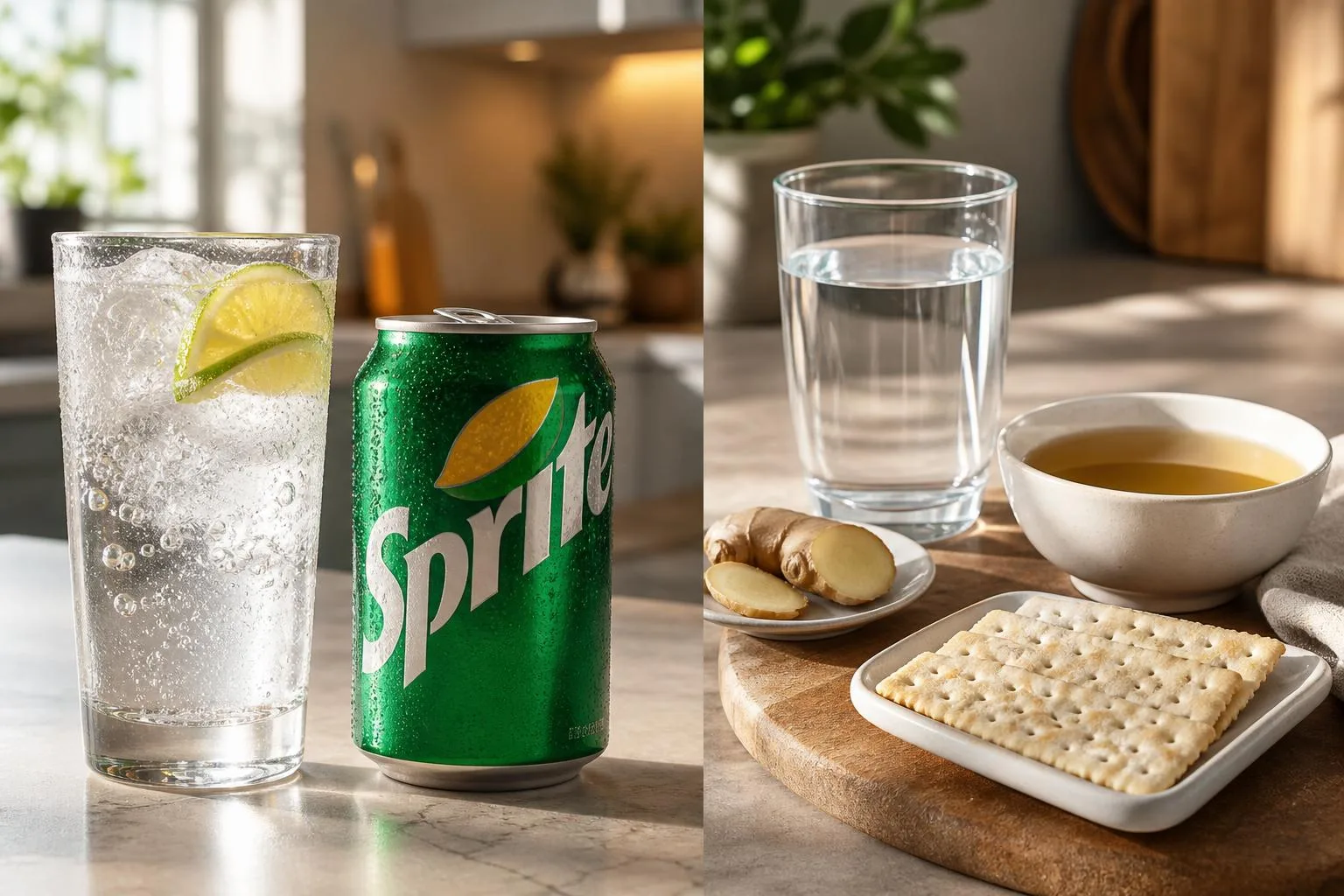
Sprite Myths for Upset Stomachs
Sprite can feel soothing for a few minutes because it is cold, sweet, and familiar, but it is not a treatment for vomiting, diarrhea, food poisoning, or dehydration. The biggest mistake is using it like an oral rehydration solution.

For mild nausea, a few small sips may be tolerated. For diarrhea or repeated vomiting, the sugar-to-sodium balance matters, and Sprite is built as a soft drink, not a medical rehydration fluid.
Myth: “Sprite replaces lost fluids and electrolytes”
Sprite contains fluid, but it does not contain the electrolyte profile recommended for dehydration from gastroenteritis.
The World Health Organization oral rehydration solution formula uses specific sodium and glucose levels to improve absorption in the intestine.
| Drink | Sugar or glucose | Sodium | Why it matters |
| Sprite, 12 fl oz can | 38 g added sugar | About 65 mg sodium | High sugar, low sodium; not designed for rehydration |
| WHO low-osmolarity ORS | 75 mmol/L glucose | 75 mmol/L sodium | Designed to replace fluid and salts during diarrhea |
Myth: “More Sprite is better if you can’t eat”
Large amounts can backfire. A 12-ounce can has 140 calories and 38 grams of added sugar, which is 76% of the FDA Daily Value for added sugars. Concentrated sugar can pull water into the gut and worsen loose stools.
- Mistake: drinking a full can quickly after vomiting. Small sips, such as 1 to 2 teaspoons every few minutes, are usually better tolerated.
- Mistake: using Sprite for children with diarrhea. Pediatric guidance typically favors oral rehydration solution, not soda, juice, or sports drinks.
- Mistake: assuming clear soda is gentle. Clear color does not mean low sugar, low acid, or medically useful.
Myth: “Carbonation settles the stomach”
Carbonation may help some people burp, which can briefly reduce pressure. It can also increase bloating, reflux, and stomach distension, especially if nausea is related to indigestion, gastritis, or acid reflux.
Myth: “Flat Sprite becomes medicine”
Letting Sprite go flat removes some bubbles, but it does not remove the sugar or add electrolytes. Flat soda is still not equivalent to Pedialyte, WHO ORS, or a pharmacy oral rehydration product.
Myth: “Sprite is the same idea as ginger ale”
Sprite has lemon-lime flavoring, not ginger. Ginger has some evidence for nausea in pregnancy and postoperative settings, but Sprite does not provide a therapeutic ginger dose.
Seek medical care urgently for blood in stool, signs of dehydration, severe abdominal pain, confusion, fever over 103°F, or vomiting that prevents fluids for more than 8 hours in adults.
Questions Readers Ask
Is Sprite good for an upset stomach?
Sprite may feel soothing because it is cold, sweet, and easy to sip, but it is not a treatment for an upset stomach. A 12-ounce can has about 38 grams of added sugar and carbonation, which can worsen bloating, gas, or diarrhea in some people.

Does Sprite help with nausea?
Small sips of Sprite may temporarily help some people tolerate fluids when they feel nauseated, especially if flat or diluted.
However, oral rehydration solution, water, or clear broths are usually better choices because they replace fluid without a large sugar load.
Should Sprite be flat before drinking it for stomach upset?
If you choose to drink Sprite, letting it go flat may reduce burping, pressure, and bloating caused by carbonation. This can be especially helpful if your upset stomach includes acid reflux, gas, or a feeling of fullness.
Is Sprite okay for diarrhea or stomach flu?
Sprite is not ideal for diarrhea or viral gastroenteritis because its high sugar content can pull water into the intestines and potentially make diarrhea worse.
The CDC recommends oral rehydration solutions for dehydration risk because they contain a balanced mix of water, salts, and sugar.
When should I avoid Sprite for an upset stomach?
Avoid Sprite if you have uncontrolled diabetes, significant acid reflux, severe bloating, or diarrhea that worsens after sugary drinks.
Seek medical care if you have blood in stool, severe abdominal pain, signs of dehydration, or vomiting that lasts more than 24 hours in adults.