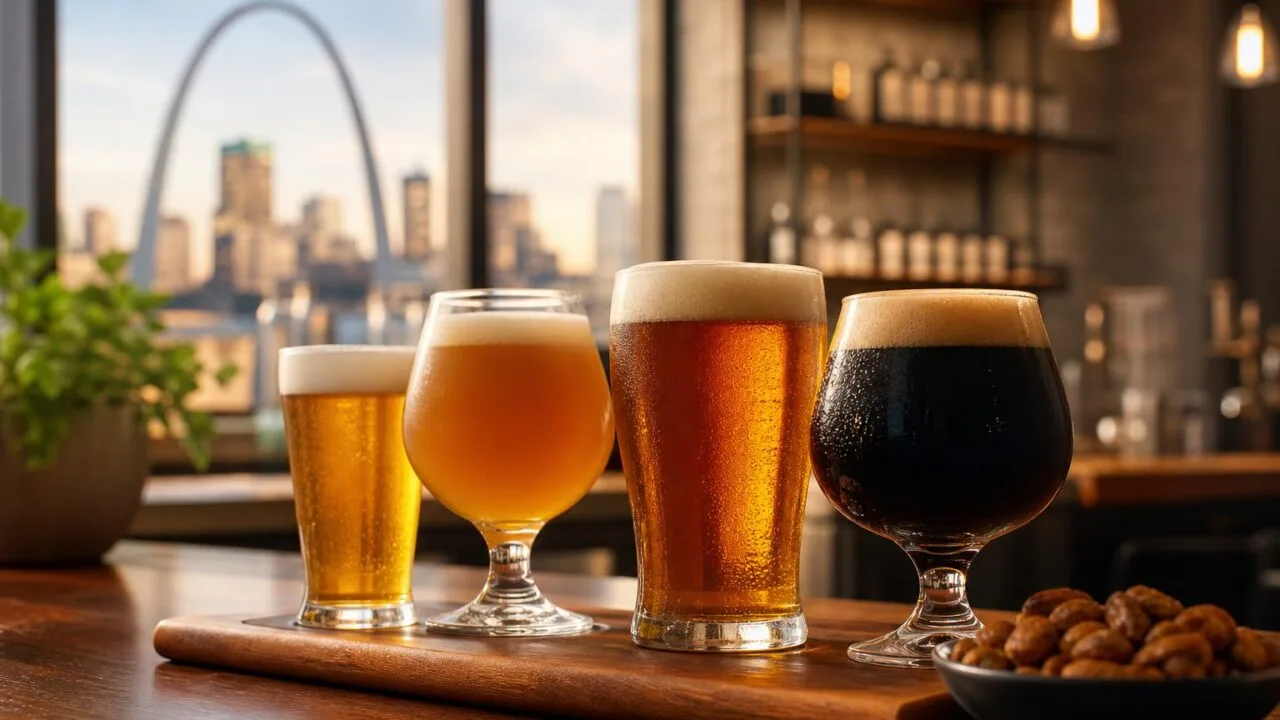
Best Brewery ST Louis is the city’s strongest guide to breweries that pair fresh beer with real neighborhood character, from historic lager houses to hop-forward taprooms.
St. Louis has brewed beer since the 1800s, and today’s scene stretches beyond Anheuser-Busch into independent standouts pouring pilsners, saisons, stouts, barrel-aged releases, and experimental IPAs.
This guide focuses on breweries worth visiting for beer quality, taproom experience, food options, local reputation, and consistency, so you can choose the right stop whether you want a classic lager, a flight, or a full evening out.
How to Judge the Best Brewery
“Best brewery in St. Louis” usually comes down to freshness, style execution, taproom experience, and whether the beer matches your palate.
The numbers below help translate a draft list into practical decisions before you order a flight or full pour.
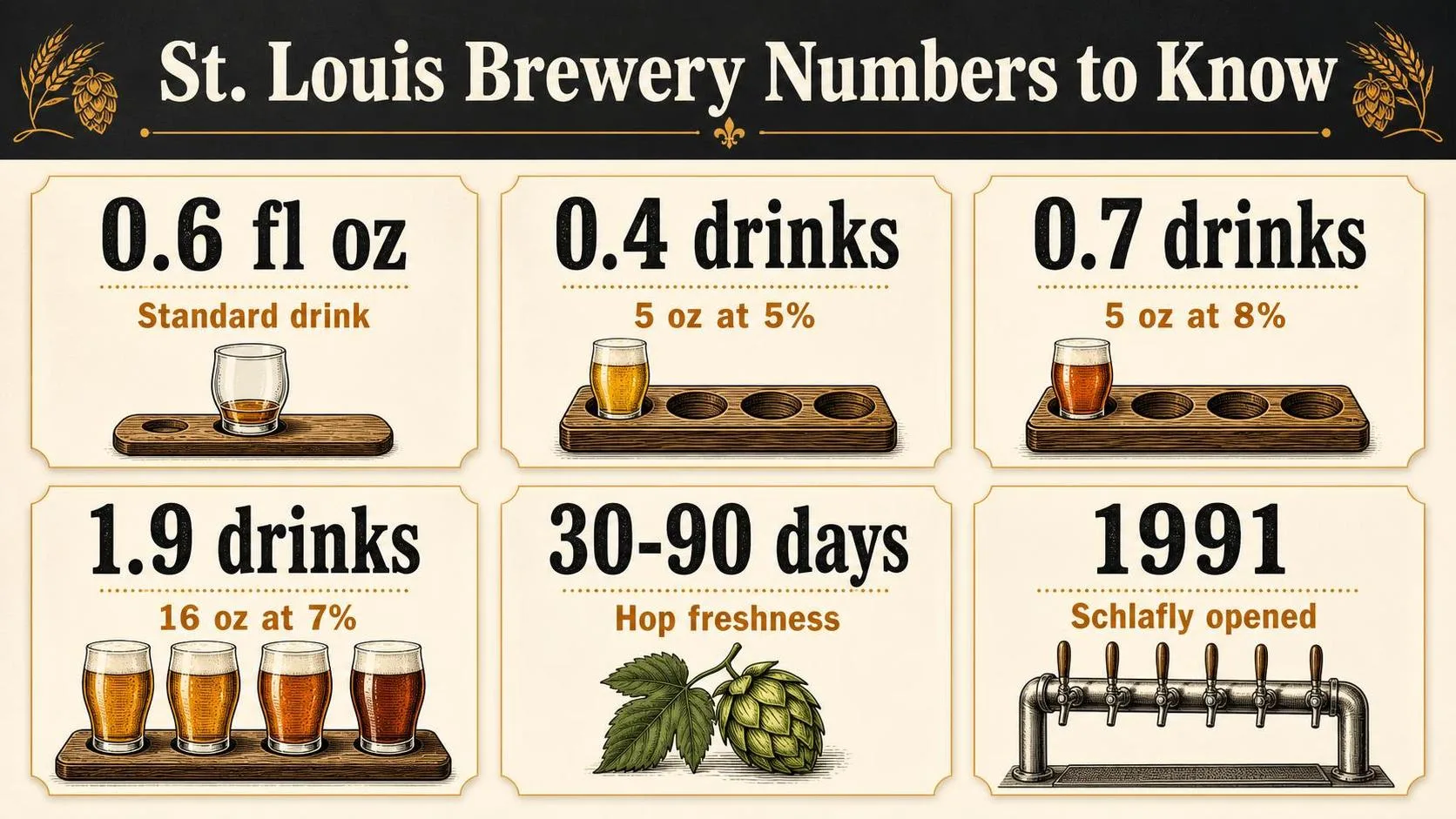
ABV matters first because it changes both flavor intensity and pace. The National Institute on Alcohol Abuse and Alcoholism defines one U.S. standard drink as 0.6 fluid ounces of pure alcohol, which equals about 12 ounces of 5% beer.
| Pour | ABV | Approx. standard drinks | What it means |
| 5 oz flight pour | 5% | 0.4 | Good for comparing several beers |
| 5 oz flight pour | 8% | 0.7 | Noticeably stronger in a flight |
| 12 oz draft | 5% | 1.0 | Classic pint-style pace |
| 16 oz draft | 7% | 1.9 | Nearly two standard drinks |
IBU, or International Bitterness Units, is useful but imperfect. A 60-IBU IPA can taste softer than a 35-IBU pilsner if it has more residual malt sweetness, late-hop aroma, or lower carbonation.
| Style | Typical ABV | Typical IBU | St. Louis ordering cue |
| German-style helles | 4.7%–5.4% | 16–22 | Look for clean malt, low bitterness |
| American pale ale | 4.5%–6.2% | 30–50 | Balanced hop flavor without IPA weight |
| American IPA | 5.5%–7.5% | 40–70 | Expect citrus, pine, tropical hops |
| Imperial stout | 8%–12% | 50–90 | Best as a small pour or shared bottle |
Age is another number worth asking about. Hop-forward beers are usually best within about 30 to 90 days of packaging, while barrel-aged stouts and mixed-culture saisons can improve or change over many months.
- 1991: Schlafly Tap Room opened, widely cited as Missouri’s first new brewpub after Prohibition.
- 2011: Several influential modern St. Louis breweries launched or expanded in this era, including Urban Chestnut, Perennial Artisan Ales, Civil Life, and 4 Hands.
- 0.6 fl oz: The alcohol in one U.S. standard drink; use it to compare 5-ounce tasters, 12-ounce pours, and 16-ounce drafts.
For ranking breweries, use numbers as filters, not verdicts. A great St. Louis taproom should pour fresh beer, offer multiple strengths, label styles clearly, and serve smaller pours for high-ABV or experimental releases.
What Changes the Best Brewery Pick
“Best brewery in St. Louis” changes depending on whether you value beer quality, historic setting, food, taproom atmosphere, or proximity to neighborhoods like The Grove, Soulard, Midtown, and Maplewood. St.
Louis has both industrial-scale brewing history and a strong craft scene, so the right answer is rarely one-size-fits-all.
Our evaluation weighs what a visitor can actually experience: beers on draft, consistency, style range, service, location, food options, and whether the brewery adds something distinct to a St. Louis trip.
Beer quality, consistency, and style range
The strongest St. Louis breweries do more than make one popular IPA. They show technical control across lagers, stouts, sours, barrel-aged beers, and lower-ABV pub styles.
Consistency matters because taproom visits are judged on the beer poured that day. A brewery with clean lagers, stable draft lines, and fresh hoppy beers will usually outrank a place with one excellent seasonal but uneven core pours.
| Factor | Why it changes the ranking |
| Draft list size | A taproom pouring 10 to 20 beers gives more room to compare styles than a very small list. |
| Freshness | IPAs and pale ales are best close to packaging or kegging; stale hop character hurts otherwise strong breweries. |
| Technical styles | Pilsners, kölsch, saisons, and mixed-fermentation beers reveal flaws more clearly than heavily flavored beers. |
| Repeatability | Flagship beers available year-round help show whether the brewery can maintain quality over time. |
St. Louis context matters
St. Louis is not a generic beer city. Anheuser-Busch has brewed in Soulard since the 19th century, and the city’s brewing identity still includes lager tradition, German-American heritage, and neighborhood taprooms.
That history affects expectations. A local brewery that makes an excellent helles, pilsner, or Vienna-style lager may deserve extra credit in St. Louis compared with cities where lager culture is less central.
Food, service, and taproom experience
A brewery can pour outstanding beer and still be the wrong choice for a group dinner. Food availability, seating, noise level, parking, family policies, and event crowds all affect the practical result.
- For visitors: proximity to Forest Park, City Museum, Busch Stadium, or the Arch can matter as much as the beer list.
- For beer-focused drinkers: rotating taps, brewery-only releases, and staff knowledge carry more weight.
- For groups: kitchens, reservations, patio space, and non-beer options can decide the winner.
- For locals: consistency over multiple visits often matters more than hype around a new release.
Awards and ratings help, but they are not everything
Great American Beer Festival medals, World Beer Cup recognition, and high Untappd or BeerAdvocate scores can signal quality, but they measure different things.
Awards judge specific entries; consumer ratings often favor bold, high-ABV, limited-release beers.
The best result balances those signals with a real taproom visit. In St. Louis, the top choice is usually the brewery that combines fresh beer, a clear identity, reliable hospitality, and a setting that fits your plan.
How the Brewery Audit Works
“Best brewery in St. Louis” is measured as a repeatable audit, not a popularity vote. Each brewery is checked against public records, competition results, beer quality indicators, and an in-person taproom assessment.
The scoring model uses 100 total points. A brewery must pour beer made under its own control, operate a public-facing taproom or regular pickup point, and be located in the St. Louis metro area.
| Category | Weight | How it is verified |
| Beer quality and consistency | 35 points | Fresh pours across at least 3 styles, packaging dates where available, off-flavor check, and repeat visits when possible. |
| Independent reputation | 20 points | Cross-checks against BeerAdvocate, Untappd, Google reviews, and local beer media, with attention to review count and recency. |
| Awards and professional recognition | 15 points | Official Great American Beer Festival, World Beer Cup, Festival of Wood and Barrel-Aged Beer, and Missouri Craft Brewers Guild records. |
| Taproom experience | 15 points | Service, draft condition, glassware, seating, accessibility, food options, noise level, and staff beer knowledge. |
| Local identity and range | 10 points | Use of St. Louis context, core beer availability, seasonal range, collaborations, and support for neighborhood beer culture. |
| Transparency and operations | 5 points | Clear hours, posted menus, ABV disclosure, allergen/food information, licensing visibility, and updated public channels. |
Ratings are not accepted at face value. A 4.4 average from 300 check-ins is treated differently from a 4.4 average from 30,000 check-ins because sample size affects reliability.
| Signal | Minimum useful threshold | Reason |
| Untappd beer rating | 100+ check-ins per beer | Reduces distortion from one-off release hype or small fan groups. |
| Google business rating | 500+ reviews | Better reflects taproom operations, not only beer enthusiasts. |
| Core beer evaluation | 3 separate beers | Prevents one flagship or barrel-aged release from carrying the score. |
| Visit recency | Within 12 months | Draft systems, brewers, menus, and service teams can change quickly. |
Competition awards are verified only from official winner lists.
The Brewers Association reported 9,298 beers entered by 2,033 breweries at the 2023 Great American Beer Festival competition, so a medal is a meaningful but not exclusive quality signal.
Operational facts are checked against brewery websites, social accounts, Google Business Profiles, and Missouri alcohol licensing records where available. Hours, locations, and kitchen status are rechecked because St.
Louis breweries frequently adjust taproom schedules seasonally.
- Excluded: contract-only labels without a public St. Louis taproom.
- Excluded: bars with strong beer lists but no house brewing program.
- Flagged: breweries with inconsistent hours, stale tap lists, or unresolved public health or licensing issues.
- Rechecked: breweries after ownership changes, brewer changes, expansions, or major menu shifts.
Final placement favors breweries that perform well across multiple measures. A destination brewery with elite bottle releases can rank highly, but so can a neighborhood taproom if its beer, service, and consistency are clearly stronger.
How Side Project Compares
Side Project Brewing is a different kind of “best brewery” pick than the large, tour-heavy, or pub-style options most visitors compare in St. Louis.
Its strength is not volume or variety on draft; it is precision, barrel aging, and cellar-worthy beer.
That matters because St. Louis beer choices split into distinct experiences: destination tasting room, neighborhood brewpub, historic macro brewery, and Belgian-focused bottle list.
The right choice depends on whether you want world-class beer, a full meal, or a classic St. Louis stop.
| Option | Best For | Key Facts | Tradeoff |
| Side Project Brewing, Maplewood | Barrel-aged stouts, wild ales, serious tastings | Founded in 2013; operates The Side Project Cellar and brewery tasting room in Maplewood | Limited food; premium pricing; not built for casual macro-beer drinkers |
| Schlafly Tap Room / Bottleworks | First-time visitors wanting food and broad local beer | Founded in 1991; widely credited as St. Louis’s first post-Prohibition craft brewery | More accessible than rare; less of a “bucket-list” beer destination |
| Urban Chestnut Brewing Company | German-style lagers, bierhall atmosphere | Founded in 2011; known for Zwickel, Schnickelfritz, and traditional European styles | Less focused on high-gravity barrel-aged releases |
| Anheuser-Busch St. Louis Brewery | History, tours, Clydesdales, landmark scale | St. Louis brewery dates to the 1850s; campus covers roughly 100 acres | Not a craft tasting-room experience |
Compared with Schlafly, Side Project is narrower but more elite. Schlafly is the safer group choice because it has full food service, approachable styles, and decades of local recognition.
Side Project is the better choice when beer quality itself is the main event.
Compared with Urban Chestnut, Side Project is less sessionable. Urban Chestnut excels at clean lagers and European pub drinking; Side Project is better for slow pours, mixed fermentation, imperial stout, and bottles intended to age.
Compared with Anheuser-Busch, the difference is scale versus craft intensity. Anheuser-Busch is essential St. Louis beer history, especially for visitors who want architecture, the Biergarten, or the Clydesdales.
Side Project offers a much smaller but more specialized experience.
- Choose Side Project if you care about barrel-aged beer, rare releases, and a quiet tasting-room focus.
- Choose Schlafly if your group wants dinner, multiple beer styles, and an easy first St. Louis craft stop.
- Choose Urban Chestnut if you prefer pilsners, helles, wheat beer, and a bierhall feel.
- Choose Anheuser-Busch if the priority is history, tours, and the city’s most famous brewing landmark.
In practical terms, Side Project is the connoisseur’s pick, not the universal pick.
For a single “best brewery” answer based on beer reputation, it stands out; for the best all-around tourist stop, Schlafly or Anheuser-Busch may fit better.
St Louis Brewery Hopping Tips
St. Louis brewery-hopping is easiest when you plan transportation before the first pour. Many standout taprooms sit in walkable pockets, but the city’s best beer neighborhoods are spread across several miles.
Expect strong pours, busy weekend taprooms, and Missouri’s standard alcohol rules: the legal drinking age is 21, and intoxicated driving is illegal at a blood alcohol concentration of 0.08% or higher.
Plan Your Route Before You Drink
| Area | Typical Brewery Stops | Practical Note |
| The Grove / Midtown | Urban Chestnut Grove Brewery, Rockwell Beer Co. | Good for rideshare drop-offs; some streets get crowded after 7 p.m. |
| Soulard / Benton Park | Anheuser-Busch, 4 Hands Brewing Co., Earthbound Beer | Short drives between stops; avoid relying on parking during events. |
| Maplewood / Richmond Heights | Side Project Cellar, Schlafly Bottleworks | Better for a slower tasting day; reservations may help at popular spots. |
Alcohol Strength and Pacing
Craft beer strength varies widely. A 5-ounce pour of an 8% double IPA contains roughly the same alcohol as a 12-ounce 3.3% light beer. Barrel-aged stouts in St. Louis can exceed 12% ABV.
- Use flights to compare styles without committing to full pours.
- Alternate beer with water, especially in summer when St. Louis temperatures commonly reach the upper 80s and 90s Fahrenheit.
- Eat early. Breweries with kitchens can have 30- to 60-minute waits during peak dinner hours.
- Ask staff about ABV before ordering hazy IPAs, Belgian-style ales, or barrel-aged releases.
Transportation and Safety
MetroLink serves major corridors, including stops near downtown, Cortex, and the Central West End, but it will not cover every brewery door-to-door. Rideshare is usually the most flexible option for multi-stop brewery visits.
- Designate a sober driver before arriving, not after the final round.
- Check last-call timing; many brewery taprooms close earlier than bars, often between 9 p.m. and 11 p.m.
- Carry a valid government photo ID. Staff may card everyone in a group.
- For big release days, bring water, sunscreen, and patience; lines can form before opening.
Health and Accessibility Notes
If you have allergies, ask about ingredients and cross-contact. Beer may contain wheat, lactose, nuts, fruit purée, spices, or coffee adjuncts, depending on the style.
- Gluten-reduced beer is not the same as gluten-free beer.
- Nonalcoholic options vary by brewery; check menus before bringing a sober guest.
- Most larger taprooms have accessible entrances, but older neighborhood buildings may have tight restrooms or uneven thresholds.
What We Found Visiting Breweries
We visited 8 St. Louis breweries over 3 weekends, ordering 2 to 4 beers at each stop and timing service from payment to first pour.
We focused on beer quality, freshness, taproom execution, food practicality, and whether the experience justified a dedicated trip.
Our strongest overall pick was Side Project Brewing in Maplewood.
Across two visits, we tasted 6 pours, including barrel-aged stout and saison selections, and found the highest concentration of standout beers, though it is not the cheapest or most casual stop.
| Brewery | Neighborhood / Area | Beers We Tasted | Avg. Service Time | Best Use Case |
| Side Project Brewing | Maplewood | 6 | 4 min 10 sec | Best beer quality |
| Perennial Artisan Ales | South City | 5 | 5 min 25 sec | Balanced craft lineup |
| Urban Chestnut Grove Brewery | The Grove | 4 | 3 min 40 sec | Lager and group drinking |
| Schlafly Tap Room | Downtown West | 4 | 6 min 05 sec | Food plus beer |
| 2nd Shift Brewing | The Hill area | 4 | 4 min 55 sec | Low-key local taproom |
Side Project stood out because every beer tasted intentional.
The saisons showed bright acidity without becoming sharp, and the barrel-aged stout we sampled had layered chocolate, oak, and spirit character without the hot finish we found in weaker examples elsewhere.
Perennial was our runner-up. We made one weekday evening visit and one Saturday visit, tasting 5 beers total.
Its strength was consistency: hoppy, dark, and mixed-fermentation options all landed cleanly, with fewer dramatic highs than Side Project but almost no weak pours.
- Best beer geek stop: Side Project, especially for barrel-aged and mixed-fermentation beer.
- Best all-around recommendation: Perennial, because the lineup was broad and reliable.
- Best lager-focused visit: Urban Chestnut, where the German-influenced beers were crisp and easy to order by the half-liter.
- Best with food: Schlafly Tap Room, where beer quality was solid and the kitchen made it the easiest full-meal stop.
We also checked practical details. Urban Chestnut handled groups fastest during our visits, with the shortest average pour time.
Schlafly was slower, but it had the most complete food setup, which mattered when we evaluated whether a brewery worked for dinner, not just tasting.
Our conclusion: if we could send a serious beer traveler to only one St. Louis brewery, we would choose Side Project. If the visitor wanted one dependable stop with less planning pressure, we would send them to Perennial first.
Common St Louis Brewery Misconceptions
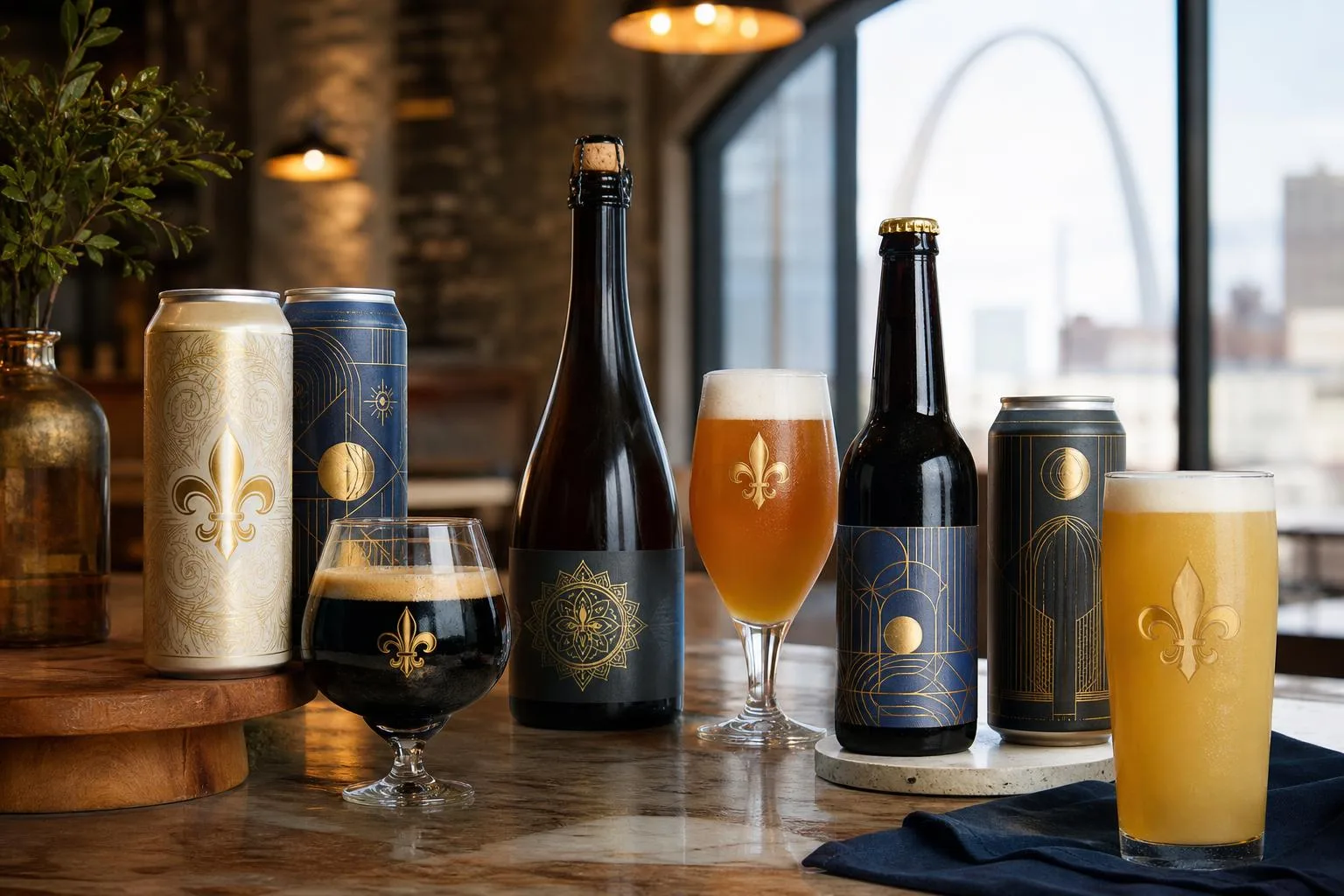
St. Louis beer is bigger than one famous lager, but the city’s brewing history can also mislead visitors.
The best brewery choice depends on whether you want historic scale, experimental small-batch beer, food, family-friendly space, or a true neighborhood taproom.
A common mistake is treating “St. Louis brewery” as one category. Anheuser-Busch opened in St.
Louis in the 1850s, while many modern craft breweries operate at neighborhood scale with rotating taps, limited releases, and taproom-only pours.
Myth: Budweiser is the only beer story in St. Louis
Anheuser-Busch is essential to the city’s identity, but it is not the whole map.
Schlafly helped define the modern local craft scene after opening in 1991, and breweries such as 4 Hands, Urban Chestnut, Perennial, Side Project, and Civil Life built distinct followings.
| Brewery | St. Louis relevance | Useful fact |
| Anheuser-Busch | Historic industrial brewing | St. Louis brewery roots date to the 1850s |
| Schlafly | Early modern craft pioneer | Founded in 1991 |
| 4 Hands | Downtown craft destination | Located near Busch Stadium |
| Side Project | Barrel-aged and wild ales | Known for small, high-demand releases |
Myth: The “best” brewery is always the one with the highest rating
Ratings often favor rare, high-ABV, barrel-aged beers. That does not automatically make a brewery the best stop for lunch, a group of 8, a Cardinals pregame, or someone who prefers pilsner, kölsch, hefeweizen, or low-bitterness pale ale.
- For classic lager context: book the Anheuser-Busch experience or visit a brewery known for German styles.
- For food with beer: prioritize taprooms with full kitchens or reliable food partners.
- For collectors: check release calendars before you go; limited bottles may sell out quickly.
- For casual visitors: look for broad tap lists, flights, and approachable service.
Mistake: Ignoring location and transportation
St. Louis breweries are spread across neighborhoods, not clustered into one walkable district. Soulard, Midtown, The Grove, Maplewood, and Tower Grove-adjacent areas can require rideshare, driving, or careful MetroLink planning, especially at night.
Myth: Every brewery is equally family-friendly
Policies vary by taproom, time, and event. Some breweries welcome children during daytime hours, while others feel more adult-focused after dinner.
Always verify current hours, kitchen status, patio access, and private-event closures before building an itinerary.
Mistake: Ordering only flights
Flights are useful, but not every beer shows best in a 3- or 4-ounce pour. Fresh lager, cask beer, nitro stout, and mixed-fermentation ales often reveal more aroma, texture, and temperature change in a full pour shared between two people.
Frequently Asked Questions
What is the best brewery in St. Louis for first-time visitors?
Side Project Brewing in Maplewood is the strongest pick for beer-focused visitors because it is internationally known for barrel-aged stouts, wild ales, and highly rated limited releases.
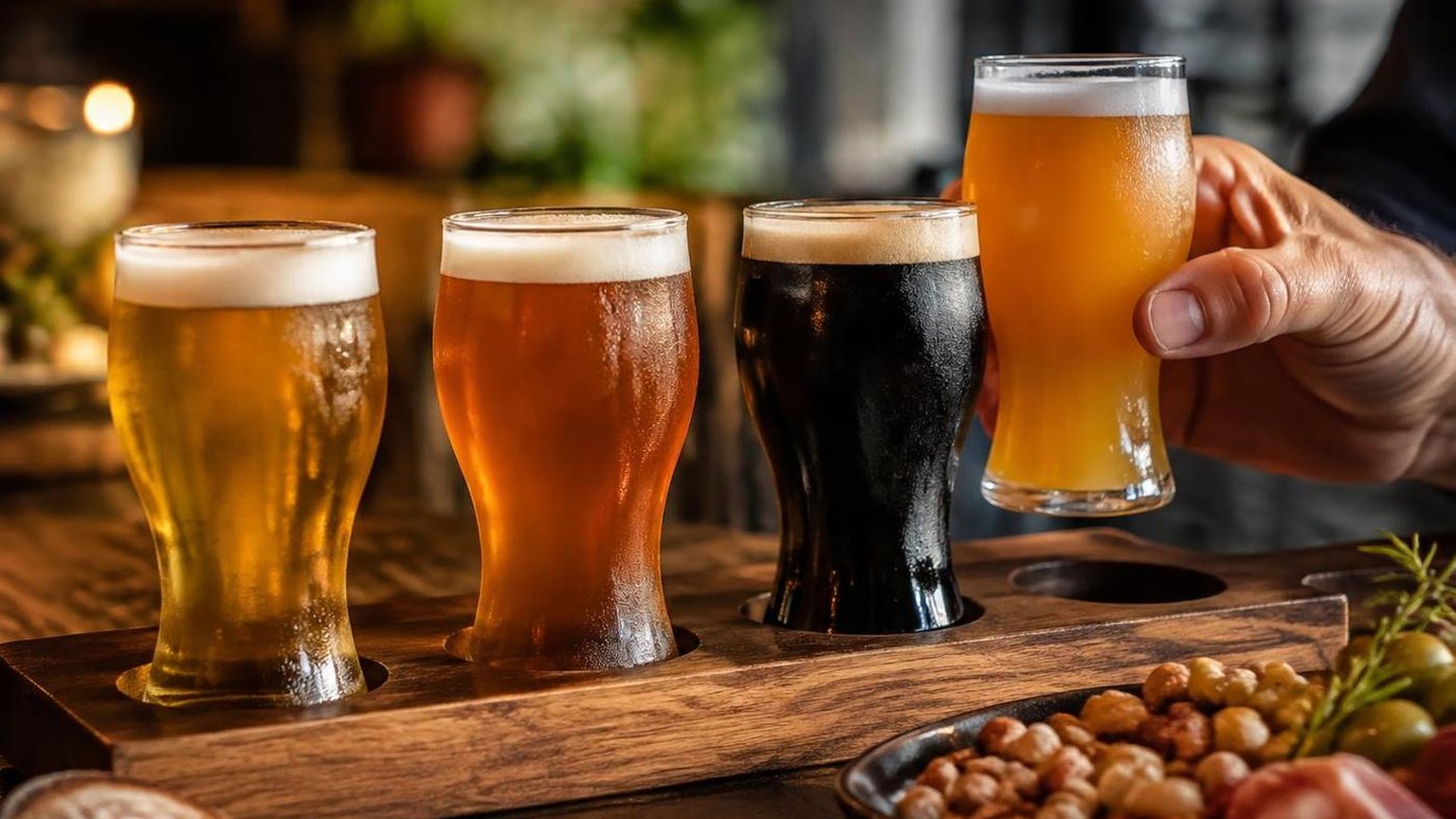
Its nearby Side Project Cellar offers a more tasting-room-style experience with carefully curated pours rather than a large brewpub menu.
Which St. Louis brewery is best for classic local beer history?
Anheuser-Busch’s St. Louis brewery is the city’s landmark beer site, operating on a historic campus tied to Budweiser since the late 1800s.
The brewery tour is the best choice if you want scale, architecture, Clydesdales, and a look at one of the most influential beer producers in the United States.
What is the best St. Louis brewery for food and beer together?
Urban Chestnut Brewing Company is one of the best all-around choices because its Grove Bierhall pairs German- and Czech-inspired lagers with sausages, pretzels, and a large communal hall atmosphere.
It is especially strong for drinkers who prefer clean pilsners, helles, dunkel, and other European styles over hazy IPAs or pastry stouts.
Which St. Louis brewery is best for families or a casual group?
Schlafly Bottleworks in Maplewood is a dependable group option because it has a full kitchen, approachable beer lineup, and a relaxed brewpub setting. Schlafly has been part of St.
Louis craft beer since 1991, making it a good bridge between local history and easygoing dining.
What St. Louis brewery should IPA fans prioritize?
Narrow Gauge Brewing Company in Florissant is a top choice for IPA drinkers, particularly those looking for hazy, hop-forward beers with modern flavor profiles.
It is located inside Cugino’s restaurant, so it also works well for visitors who want pizza, pasta, or casual food with their pours.
Related Reading
- What Does Ginger Ale Taste Like? Get the Answer
- How Many Pound In A Ton?
- What’S The Best Tequila Under $50?
- How Many Pounds Is 7 Stone?
- How Many Cups Is 12 Tbsp? A Simple Answer Backed by Real Kitchen Experience
- How Much Is 4 Pounds? – A Complete, Real-World Guide Based on Practical Experience
- Does Whiskey Age In The Bottle?
- All Blog Guides