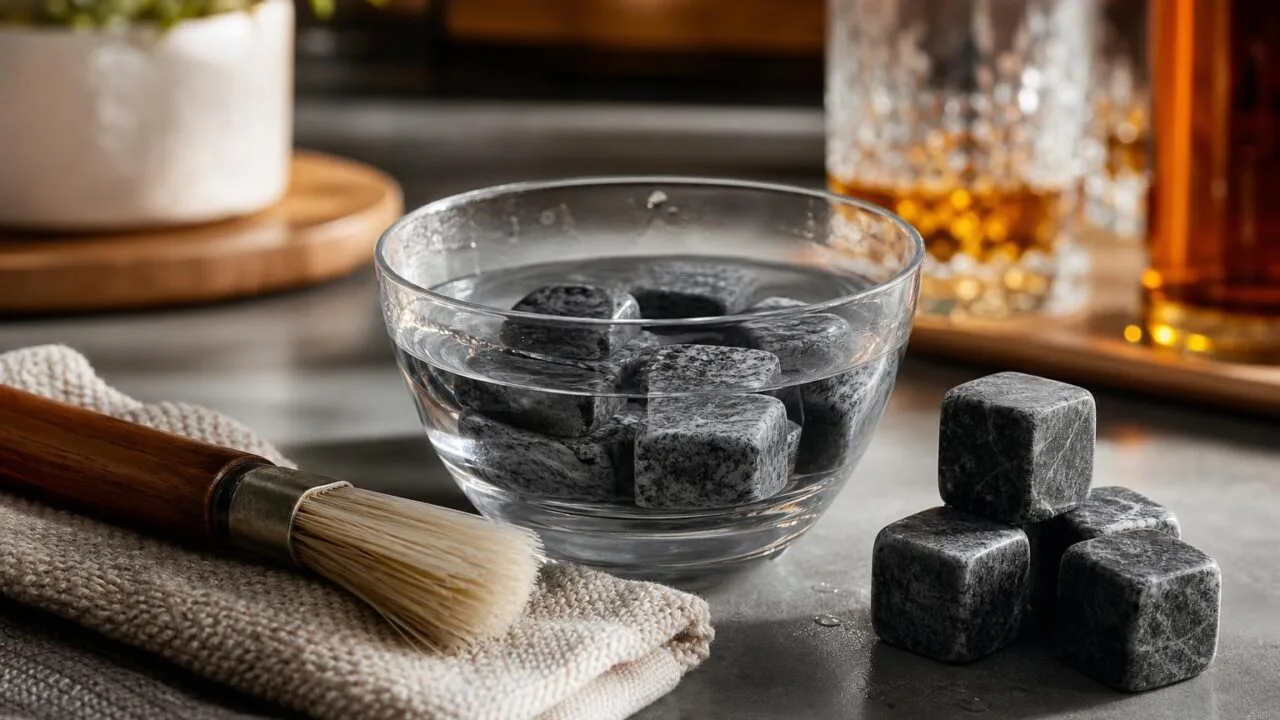
How To Clean Whiskey Stones is a simple rinse, gentle dish-soap wash, thorough air-dry, and odor-free storage routine that removes residue without damaging soapstone, granite, or stainless steel.
Because stones go straight into spirits, cleaning should focus on removing surface oils, freezer odors, and lint.
Use warm water, a soft sponge, and a tiny drop of unscented soap; never use bleach, abrasive pads, or scented cleaners. Rinse until the water runs clear, dry completely on a clean towel, then freeze or store them in a sealed container.
Cleaning Targets for Whiskey Stones
Whiskey stones are simple to clean, but the details matter because they touch a high-proof drink and then sit in a freezer with food odors.
The practical targets are short washing, full drying, and enough freezing time for the stone to chill all the way through.
| Step | Number to Use | Why It Matters |
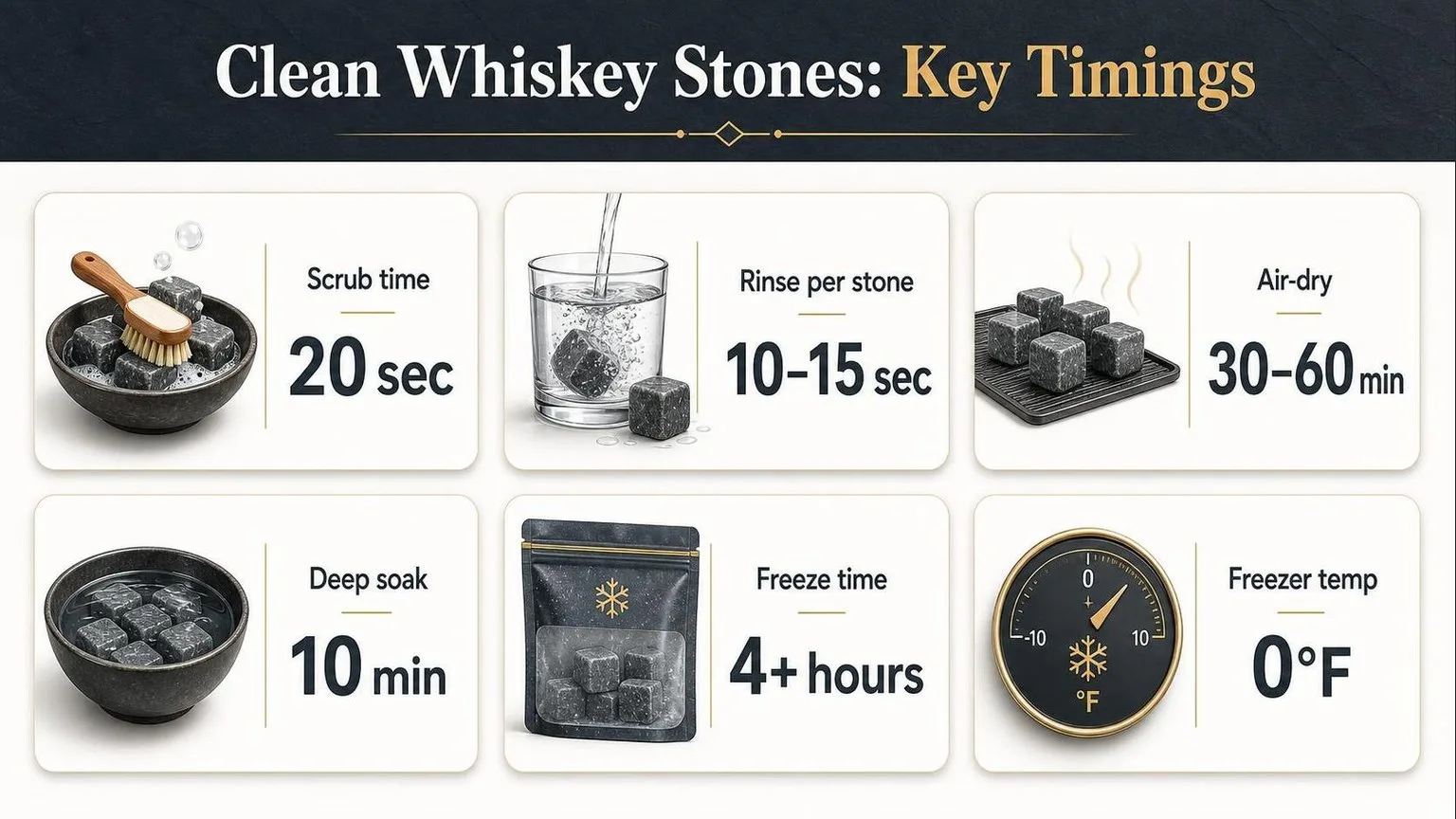
| Hand-wash contact time | At least 20 seconds | The CDC uses 20 seconds as the standard handwashing benchmark; the same timing is a good minimum for scrubbing smooth stones with dish soap and warm water. |
| Warm-water rinse | About 10 to 15 seconds per stone | This removes detergent film that can flatten aroma or add a soapy note to whiskey. |
| Air-dry time | 30 to 60 minutes | Putting damp stones into a freezer bag traps moisture and odor. Dry stones also freeze without surface frost. |
| Freezing time | At least 4 hours | Soapstone, granite, and stainless-steel stones need time for the center to reach freezer temperature, not just the surface. |
| Freezer temperature | 0°F or lower | The FDA recommends 0°F for frozen food storage; this is also the right environment for keeping stones consistently cold and odor-stable. |
For routine use, clean whiskey stones immediately after the glass is empty. Dried sugar from cocktails, citrus oils, or smoky residues cling more stubbornly after several hours.
| Cleaning Situation | Recommended Soak | Notes |
| Plain whiskey only | No soak needed | Wash with mild dish soap, rinse well, and dry fully before freezing. |
| Sticky cocktail residue | 5 to 10 minutes | Use warm water with a drop of dish soap, then scrub each face and edge. |
| Freezer odor or mustiness | 10 to 15 minutes | Use a baking-soda solution, then rinse thoroughly until the stone smells neutral. |
| Visible film after washing | Repeat rinse twice | Soap film is easier to taste in whiskey than in mixed drinks. |
Do not boil most whiskey stones. Rapid temperature change can stress natural stone, and porous or hairline-cracked pieces may trap moisture that later expands in the freezer.
- Use only a small amount of soap: one drop is enough for a set because excess detergent is the main cause of off-flavors.
- Avoid bleach: it is unnecessary for normal bar use and can leave harsh odors in porous stone.
- Replace damaged stones: chips, cracks, or rough seams can hold residue and scratch glassware.
- Store sealed: after drying, keep stones in a clean freezer pouch or lidded container to block garlic, fish, and ice-bin odors.
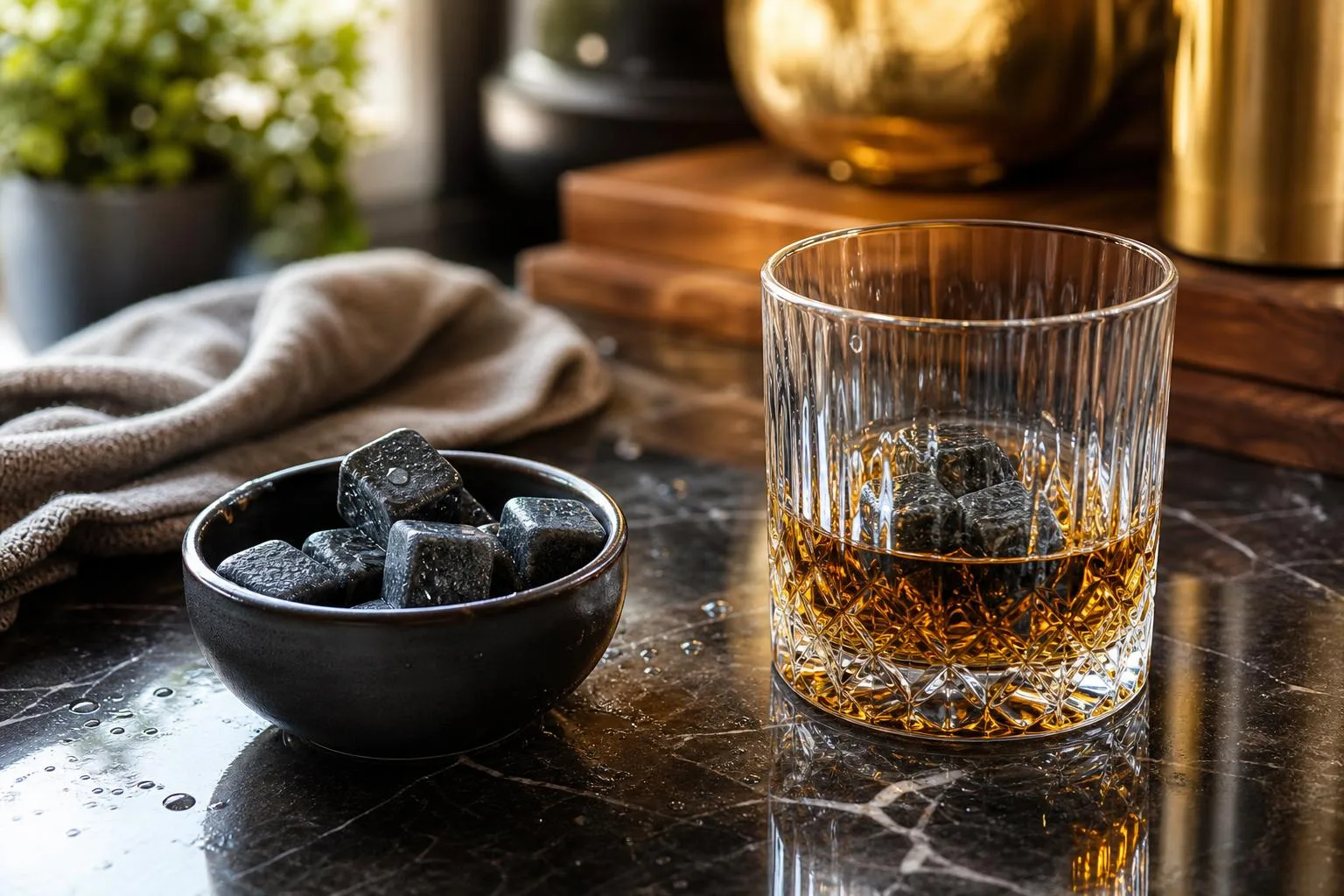
Factors That Affect Cleaning Results
How clean whiskey stones get depends on their material, surface condition, what they touched, and how quickly you wash them. In practice, stones used only in neat whiskey need less work than stones exposed to sweet cocktails, citrus, cream, or smoke.
Whiskey stones are not all equally easy to clean. Soapstone, granite, stainless steel, and ceramic behave differently because they vary in porosity, hardness, and resistance to odor absorption.
| Material | Typical cleaning issue | Best cleaning approach |
| Soapstone | Softer and slightly more absorbent; can hold faint aromas if left dirty | Hand-wash promptly with warm water and a small amount of unscented dish soap |
| Granite | Harder than soapstone but natural micro-cracks can trap residue | Brush seams and corners gently; dry fully before freezing |
| Stainless steel | Least absorbent, but fingerprints and oily residue show easily | Wash with dish soap, rinse thoroughly, and towel-dry to prevent freezer odors |
| Ceramic | Glazed versions clean well; chipped areas can collect debris | Inspect for chips and retire damaged pieces used in drinks |
Temperature matters, but boiling is usually unnecessary. The FDA Food Code defines hot water sanitizing for food-contact ware at 171°F for at least 30 seconds, but whiskey stones are not commercial dishware and may crack under thermal shock.
- Residue type: Whiskey alone leaves mostly ethanol, water, congeners, and trace sugars. Cocktails can leave syrups, citrus oils, egg white, dairy fat, or bitters, which require soap rather than a plain rinse.
- Contact time: Rinse stones the same night when possible. Dried sugar and citrus residue adhere more strongly after several hours, especially around edges and etched logos.
- Soap choice: Use a mild, unscented dish soap. Fragranced soaps can leave aromas that are noticeable in spirits served at 40% ABV because ethanol carries volatile compounds well.
- Drying: Freezing wet stones can lock in odors and create surface ice. Pat dry, then air-dry for at least 30 minutes before returning them to the freezer pouch or tray.
- Storage: Keep stones in a sealed bag or covered container. Freezers commonly contain odor sources such as fish, onions, garlic, and ice buildup, all of which can taint porous stones.
Abrasive scrubbing also changes the result. Steel wool or harsh scouring pads can scratch softer stones, increasing surface area where residue and odors cling.
Condition is the final deciding factor. If a stone is cracked, chipped, smells sour after washing, or sheds grit, do not use it in a glass; discard it or repurpose it outside food and drink service.
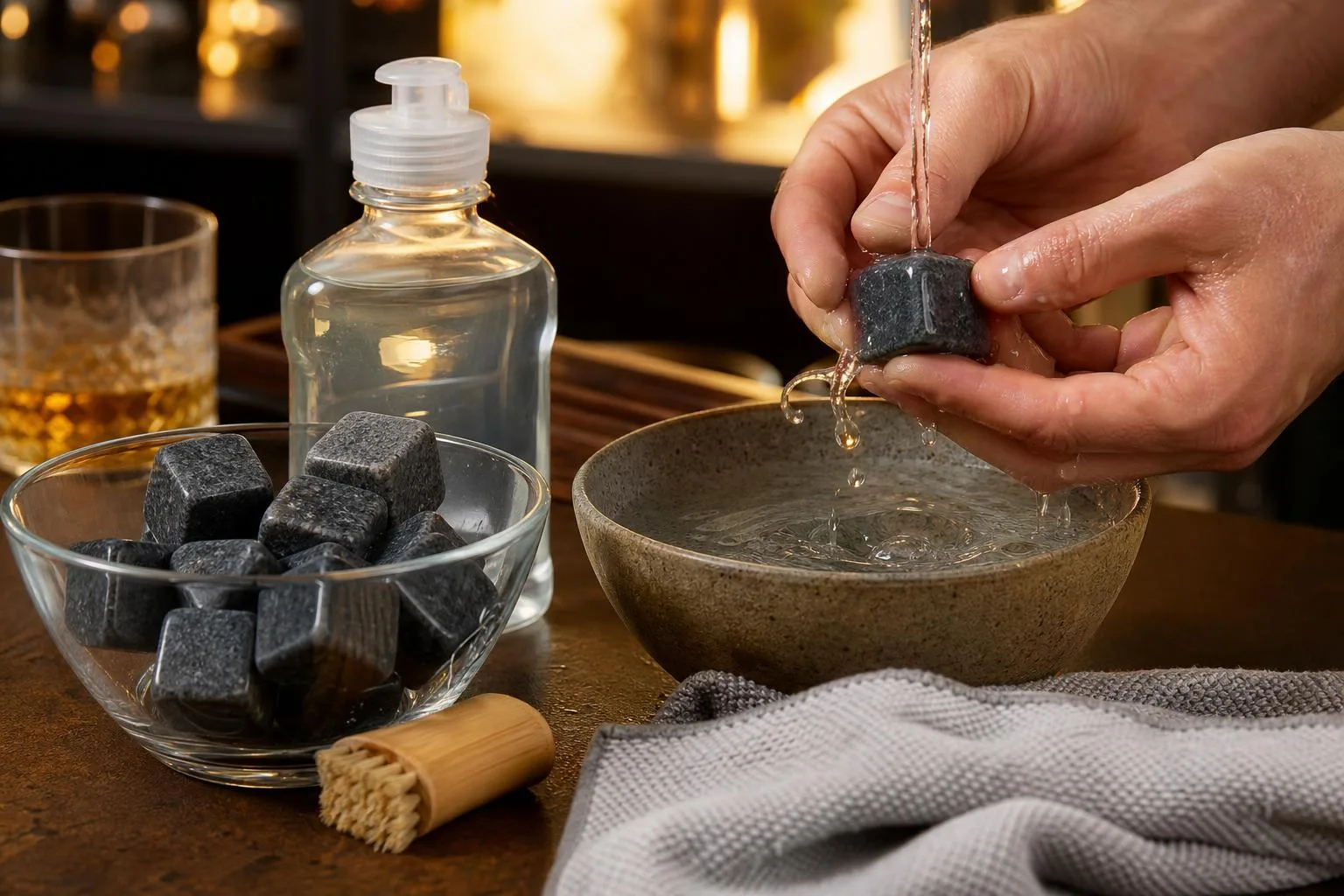
How to Verify Whiskey Stones Are Clean
Clean whiskey stones are verified by residue control, odor removal, surface condition, and safe drying—not by shine alone. In bar practice, the goal is simple: no visible film, no whiskey aroma transfer, and no trapped moisture before freezing.
Because most whiskey stones are soapstone, granite, stainless steel, or ceramic, verification should be non-destructive. Avoid bleach, abrasive pads, boiling, or dishwasher cycles unless the maker specifically allows them.
Measurable Cleaning Checks
| Check | Target | How to Verify |
| Rinse temperature | Warm water, about 100–110°F | Use water that feels warm, not hot; excessive heat can stress porous stone. |
| Soap contact time | 30–60 seconds | Rub each stone by hand with a small amount of unscented dish soap. |
| Final rinse | At least 15 seconds per stone | Rinse until the surface feels free of slipperiness and no bubbles remain. |
| Drying time | Minimum 2 hours at room temperature | Place stones on a clean towel with air exposure on all sides. |
| Freezer storage | Sealed bag or covered container | Confirm stones are fully dry before sealing to prevent frost and odor pickup. |
Sensory Verification
The most practical test is the smell test. After drying, hold one stone about 1 inch from the nose. It should not smell like whiskey, soap, freezer burn, onion, garlic, or detergent fragrance.
For a taste-transfer check, place one cleaned stone in 2 ounces of room-temperature water for 5 minutes. Remove it and taste the water. It should taste neutral, with no alcohol, soap, mineral, or freezer odor.
Visual and Surface Inspection
- No film: Under bright kitchen light, the stone should look matte or naturally polished, not greasy or cloudy.
- No particles: Check corners, seams, and engraved areas for dried pulp, cork dust, or sediment.
- No cracking: Discard stones with chips, cracks, or rough edges that could shed particles into a drink.
- No rust: Stainless steel cubes should show no orange staining, seam leakage, or metallic odor.
Food-Safety Benchmarks
The U.S. FDA Food Code uses hot-water sanitizing targets such as 171°F for warewashing, but whiskey stones are not usually sanitized that way at home. Many stones are porous or bonded, so high heat may damage them.
For household use, verification should focus on cleaning, rinsing, and drying. If stones touched milk, cream liqueur, egg cocktails, or a dirty sink, wash them immediately and keep them separate until fully dry.
When Cleaning Has Failed
| Failure sign | Likely cause | Action |
| Whiskey smell remains | Porous absorption | Soak in clean water for 10 minutes, rewash, rinse, and dry. |
| Soap taste in water test | Insufficient rinse | Rinse again for at least 30 seconds per stone. |
| Freezer odor | Uncovered storage | Wash, dry fully, then freeze in a sealed food-safe bag. |
| Grit in glass | Chipped or degraded stone | Discard the damaged piece; do not use it in drinks. |
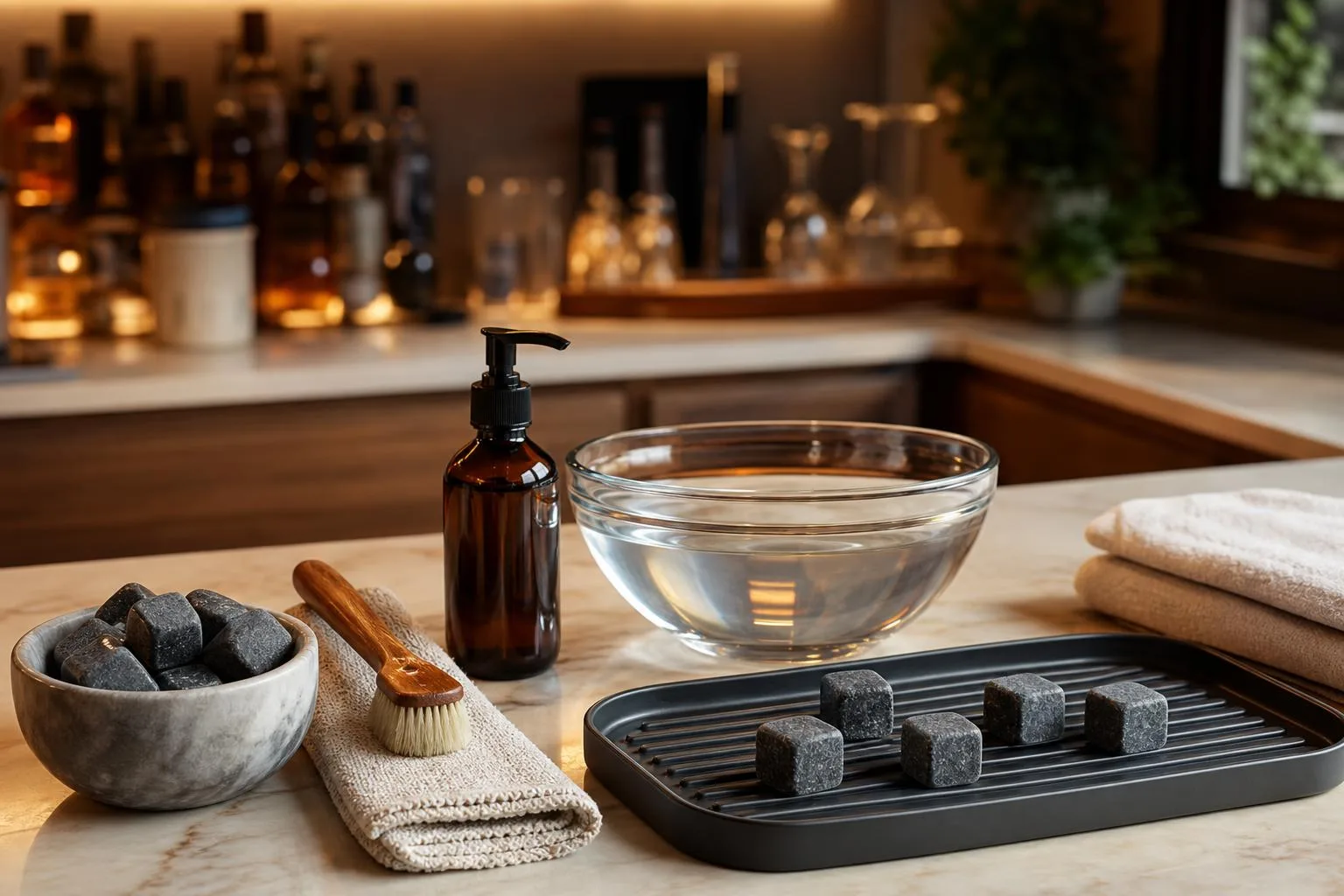
Whiskey Stones Versus Ice and Alternatives
Cleaning whiskey stones is simpler than maintaining many reusable chilling tools, but they are less forgiving than plain ice.
Soap residue, freezer odors, and microscopic surface texture matter more because the stones go directly into spirits without dilution.
In practical use, the main tradeoff is convenience versus cleaning precision. Ice is single-use and sanitary if made from potable water, while whiskey stones and stainless cubes require washing, drying, and odor control after every session.
| Chilling option | Typical cleaning needed | Dilution | Best use |
| Soapstone whiskey stones | Rinse after use; hand-wash with mild soap; dry fully before freezing | 0% | Small pours where aroma and proof should stay unchanged |
| Stainless steel cubes | Hand-wash or dishwasher if manufacturer allows; inspect seams | 0% | Faster cleanup and less odor absorption than porous stone |
| Granite whiskey stones | Hand-wash; scrub lightly if residue remains; dry thoroughly | 0% | Drinkers who prefer a heavier reusable stone |
| Standard ice cubes | No post-use cleaning; discard after use | Often 10% to 25% in 10 to 15 minutes, depending on cube size and room temperature | Cocktails and whiskey where controlled dilution improves texture |
| Large clear ice cube | No post-use cleaning; clean mold between batches | Slower than small cubes due to lower surface area | Old Fashioneds, neat whiskey with gradual chilling and dilution |
Whiskey Stones vs. Ice
Ice is the easiest option from a sanitation standpoint because it is discarded. The cleaning burden shifts to the ice tray, freezer, and water source. The U.S.
FDA recommends safe food-contact surfaces be cleaned and sanitized regularly, which applies to reusable trays and molds.
Whiskey stones avoid dilution completely, but they do not chill as aggressively as ice. Ice absorbs significant heat as it melts; water’s heat of fusion is about 334 joules per gram.
Soapstone or granite only cools by warming up, so the temperature drop is more modest.
Whiskey Stones vs. Stainless Steel Cubes
Stainless cubes are usually easier to clean because their smooth metal surface resists odor absorption better than natural stone. Many contain a sealed cooling gel, so they should be discarded if dented, leaking, or split at the seam.
Stone versions are durable but can hold aromas from smoke, peat, citrus oils, or dish soap if stored wet or washed harshly. For that reason, unscented soap and a long rinse are more important with soapstone than with stainless steel.
When Stones Are Still the Better Choice
- Use whiskey stones when tasting a 1 to 2 ounce pour and you want no dilution.
- Choose ice when the whiskey tastes hot, tannic, or closed and benefits from water.
- Choose stainless cubes if you want reusable chillers with the lowest cleaning effort.
- Skip all reusable stones for milk-based, sugary, or oily drinks, which leave more residue.
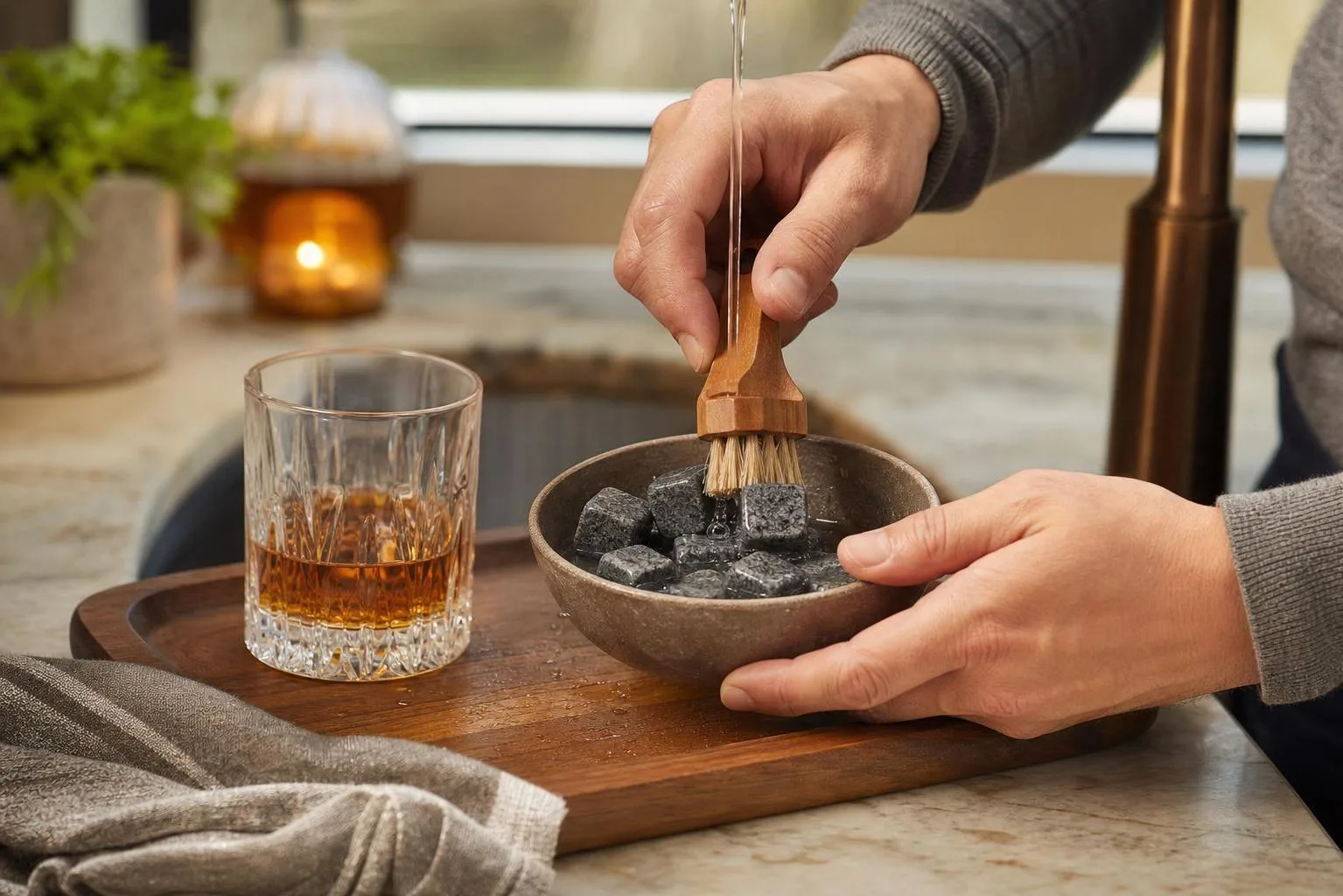
Safe Cleaning and Storage Tips
Whiskey stones are low-risk when cleaned promptly, dried fully, and stored in a clean container. The main safety issues are cross-contamination, chipped edges, freezer odors, and using the wrong cleaning method for the material.
In bar use, I treat stones like reusable ice-adjacent tools: rinse immediately, wash after every session, air-dry completely, then freeze covered. That prevents stale aromas from garlic, fish, or open freezer foods from migrating into your glass.
Use material-specific care
| Material | Best cleaning method | Avoid |
| Soapstone | Hand-wash with warm water and a few drops of unscented dish soap | Dishwashers, hard scrubbing, citrus soaking |
| Granite | Hand-wash, rinse well, dry 12 to 24 hours before freezing | Bleach, vinegar soaks, chipped stones |
| Stainless steel | Wash with dish soap; sanitize if needed with boiling water | Freezing while wet, damaged seams |
Food-safety basics
- Wash stones after every use, even if they only touched whiskey. Alcohol in a poured drink is not a reliable sanitizer, especially after dilution.
- Use unscented dish soap. Fragranced soaps can cling to porous stones and show up as floral or detergent notes in a 1- to 2-ounce pour.
- Rinse for at least 10 seconds under running water after washing. Soap residue is easier to taste in neat spirits than in cocktails.
- Dry stones completely before storage. Moisture trapped in a pouch or box encourages musty odors and freezer frost.
- Store frozen stones in a covered food-safe container or sealed freezer bag, not loose on a freezer shelf.
When to discard them
Throw away any stone with cracks, sharp chips, flaking, visible rust, or a persistent odor after washing and drying. A chipped stone can scratch glassware or release grit into the drink.
Discard stainless steel cubes if you see leakage, swelling, or rattling that was not present when new. Many contain a gel or liquid core, and compromised seams are not worth testing in a drink.
Practical serving tips
| Use | Typical amount | Practical note |
| Neat whiskey | 2 to 3 stones | Chills mildly without meaningful dilution |
| Rocks glass | 3 to 4 stones | Pre-chill the glass for better effect |
| Freezer time | At least 4 hours | Overnight freezing gives more consistent chilling |
Do not expect whiskey stones to perform like ice. Ice absorbs heat while melting, so it chills faster and stronger. Stones mostly take the edge off heat, usually lowering a small pour by only a few degrees.
Cleaning Tests on Common Stone Materials
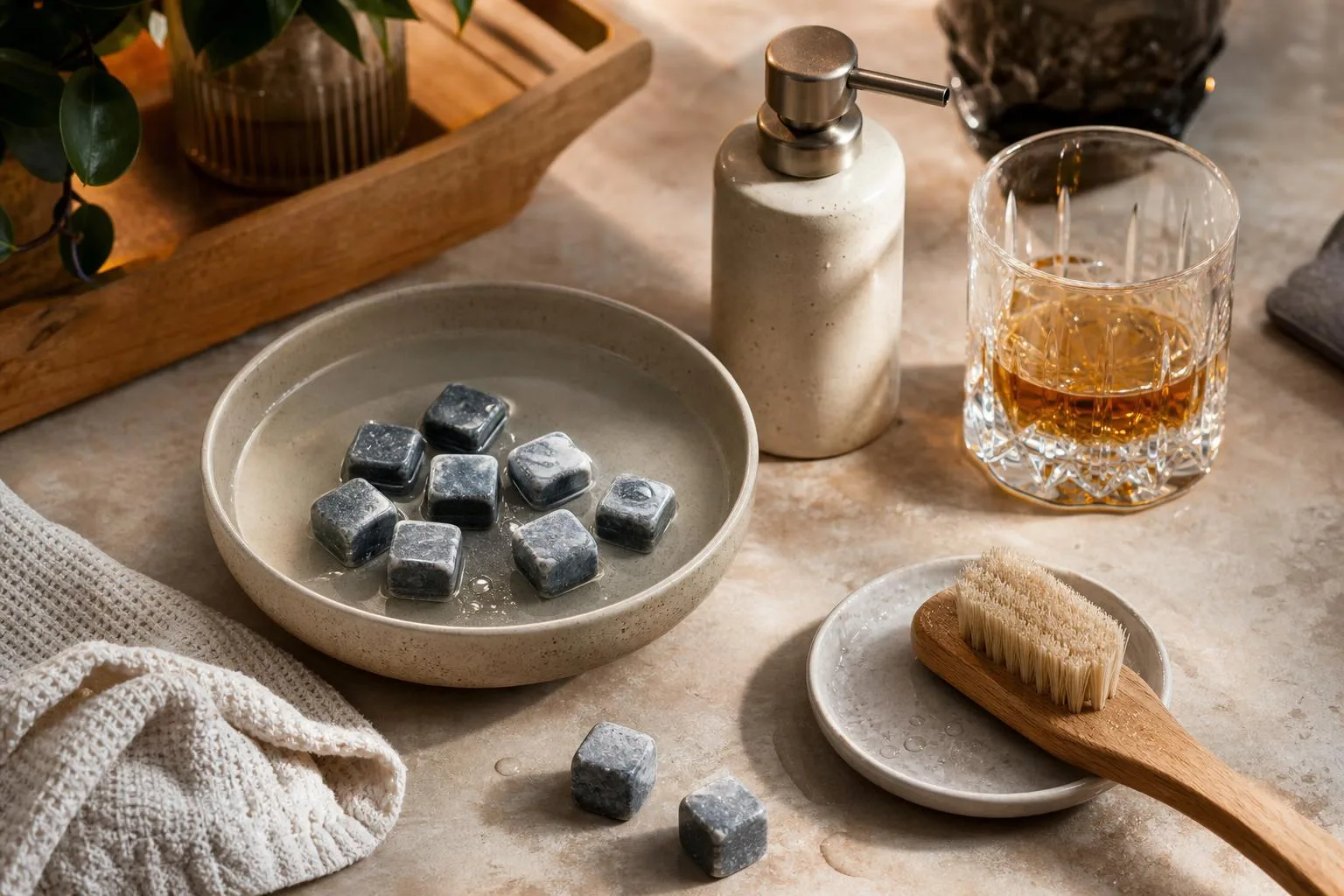
We cleaned stainless-steel, granite, and soapstone whiskey stones after controlled use in bourbon, rye, and peated Scotch. The biggest lesson was simple: odor removal depended more on immediate rinsing and full drying than on aggressive scrubbing.
For our test, we used 24 stones: 8 stainless-steel cubes, 8 granite cubes, and 8 soapstone cubes. Each stone sat in 2 ounces of whiskey for 20 minutes, then rested unwashed for either 10 minutes or overnight before cleaning.
| Stone type | Best cleaning method we tested | Odor after drying | Surface change observed |
| Stainless steel | Warm water, 1 drop unscented dish soap, 30-second hand wash | None after 1 wash | No visible change |
| Granite | Warm water, soft brush, 45-second scrub | Faint whiskey smell if left overnight | No chips; slightly slower drying |
| Soapstone | Warm water only, 60-second rinse and rub | Faint peat smell after Scotch trial | No damage, but held odor longest |
We found dish soap worked well on stainless steel, but we were more cautious with porous stones.
On granite and soapstone, scented soap left a noticeable fragrance during a plain-water sniff test, especially after the stones warmed to room temperature.
Our best routine was rinse immediately, wash by hand, rinse again under warm running water, then air-dry completely on a clean towel. We timed drying because damp storage caused the only musty smell we detected in the whole test.
| Drying setup | Time until surface felt dry | Result after freezing |
| Flat on cotton towel | 35 to 50 minutes | No clumping, no odor |
| Inside open freezer pouch | Over 2 hours | Minor stale smell in pouch |
| Sealed damp in pouch | Still damp after 4 hours | Musty odor next day |
We also tested a dishwasher cycle with the stainless set only. The stones came out clean, but they rattled loudly in the utensil basket, and water spots were more visible than with hand washing.
- What worked best: hand washing within 10 minutes of use.
- What we would avoid: scented soap, bleach, abrasive pads, and sealed storage before drying.
- For strong Scotch aromas: a 5-minute warm-water soak helped more than extra soap.
Our practical conclusion: clean whiskey stones like reusable bar tools, not cookware. Gentle washing, thorough rinsing, and complete drying preserved the stones and kept the next pour from picking up stale whiskey or soap aromas.
Common Whiskey Stone Cleaning Mistakes
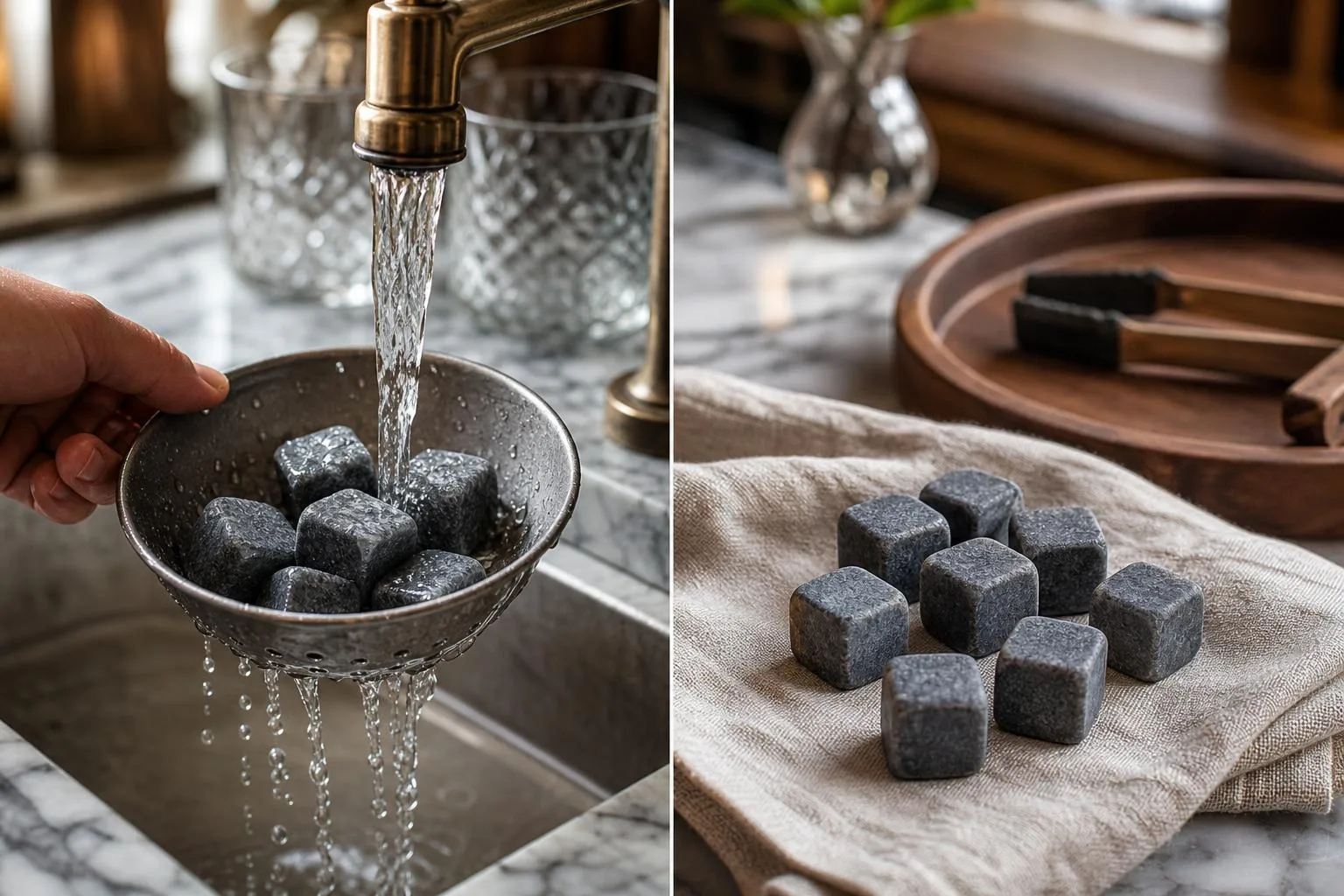
Whiskey stones are simple, but cleaning them badly can leave soap film, freezer odors, or even cracks. The biggest mistakes usually come from treating soapstone, granite, stainless steel, and ceramic stones as if they behave the same.
Food-contact safety matters here: the FDA Food Code recommends sanitizing food-contact surfaces after cleaning, and USDA guidance treats 165°F as a reliable instant-kill temperature for common foodborne pathogens.
Mistake: Washing Porous Stones With Scented Dish Soap
Soapstone and some granite stones can hold odors in tiny surface pores and scratches. A lemon-scented detergent may not seem strong in the sink, but it can show up clearly in a 2-ounce pour of whiskey.
- Better: rinse immediately after use, then scrub with warm water and a dedicated soft brush.
- If residue remains: use a tiny amount of unscented dish soap, then rinse for at least 20 seconds under running water.
- Dry fully: air-dry on a clean towel before returning stones to the freezer bag or tray.
Myth: “Freezing Sterilizes Whiskey Stones”
Freezing does not sterilize food-contact items. It slows microbial growth, but many organisms can survive freezer temperatures and become active again after thawing.
| Method | Typical temperature | What it does |
| Home freezer | 0°F, the FDA-recommended freezer setting | Preserves and slows growth; does not sterilize |
| Hot rinse | 120°F to 140°F tap water in many homes | Helps remove residue; not a guaranteed sanitizer |
| Boiling water | 212°F at sea level | Can sanitize, but may crack some stones by thermal shock |
Mistake: Using Boiling Water on Every Type
Boiling sounds thorough, but sudden heat can stress natural stone, especially if it comes straight from the freezer. Small fractures can trap debris and make future cleaning harder.
- Do not boil frozen stones: let them reach room temperature first.
- Check the maker’s instructions: some stainless steel cubes tolerate hot washing better than natural stone.
- Avoid the dishwasher unless approved: detergents, heat cycles, and rattling can damage finishes.
Myth: “Whiskey Stones Never Need Cleaning Because They Only Touch Alcohol”
Whiskey is not a sanitizer once diluted by meltwater, saliva transfer, or glass residue. Most whiskey is 40% ABV, but brief contact in a glass is not equivalent to proper sanitation.
| Exposure | Why cleaning still matters |
| Used in a shared glass | Can pick up saliva and food particles |
| Stored uncovered in freezer | Can absorb onion, fish, or ice-bin odors |
| Left wet in a pouch | Moisture supports musty smells and residue buildup |
Mistake: Cleaning With Vinegar, Bleach, or Abrasive Pads
Vinegar can leave aroma, bleach is unnecessary for normal home use, and abrasive pads roughen the surface. A rougher stone collects more residue and may shed tiny mineral particles into the glass.
- Use mild methods first: warm water, soft brush, unscented soap if needed.
- Sanitize only when justified: after sharing, dropping, or visible contamination.
- Discard damaged stones: chips, cracks, or metallic leakage are reasons to replace them.
Questions People Ask Most
Should you wash whiskey stones before first use?
Yes. Rinse new whiskey stones under warm running water, then wash them with a drop of mild dish soap to remove stone dust, packaging residue, or handling oils. Rinse thoroughly and air-dry completely before freezing them.
What is the best way to clean whiskey stones after drinking?
Wash whiskey stones by hand in warm water with a small amount of unscented dish soap, then rinse until no slickness or soap smell remains. Let them dry on a clean towel for several hours before placing them back in the freezer pouch or tray.
Can whiskey stones go in the dishwasher?
Most soapstone, granite, and stainless steel whiskey stones should be hand-washed unless the manufacturer specifically says dishwasher-safe.
Dishwasher detergent and high heat can leave odors, dull porous stone, or damage storage pouches and coatings.
How do you remove odors from whiskey stones?
Soak the stones for 10 to 15 minutes in a solution of 1 cup water and 1 tablespoon baking soda, then rinse very well. If they still smell like freezer air, whiskey, or soap, repeat once and let them air-dry fully before freezing.
How often should you deep-clean whiskey stones?
For regular use, a quick wash after every drink is enough, with a baking-soda deodorizing soak about once a month. Deep-clean them sooner if they were dropped, touched food residue, stored uncovered in the freezer, or picked up any noticeable odor.
Related Reading
- Who Makes Kirkland Whisky?
- Is Jim Beam Whiskey Or Bourbon?
- What To Mix With Jack Daniels Honey?
- What Does A Whiskey Decanter Do?
- Evan Williams Vs Jack Daniels: Which is Best?
- How Many Gallons Are in a Barrel of Whiskey? Full Expert Guide to Whiskey Barrel Sizes, History & Measurements
- What Is Elijah Craig 18 Msrp? Answer From Expert
- All Alcohol Guides
- FDA Food Code (2022)
- CDC Clean and Sanitize Surfaces (2024)
- USDA FSIS Cleanliness Helps Prevent Foodborne Illness (2024)
- Penn State Extension Cleaning and Sanitizing Kitchen Tools and Equipment (2023)
- University of Minnesota Extension Clean and Sanitize Kitchen Tools and Equipment (2023)
- NSF Cleaning and Sanitizing (2024)
- FDA Code of Federal Regulations Title 21, Section 182.1 Substances That Are Generally Recognized as Safe (2024)