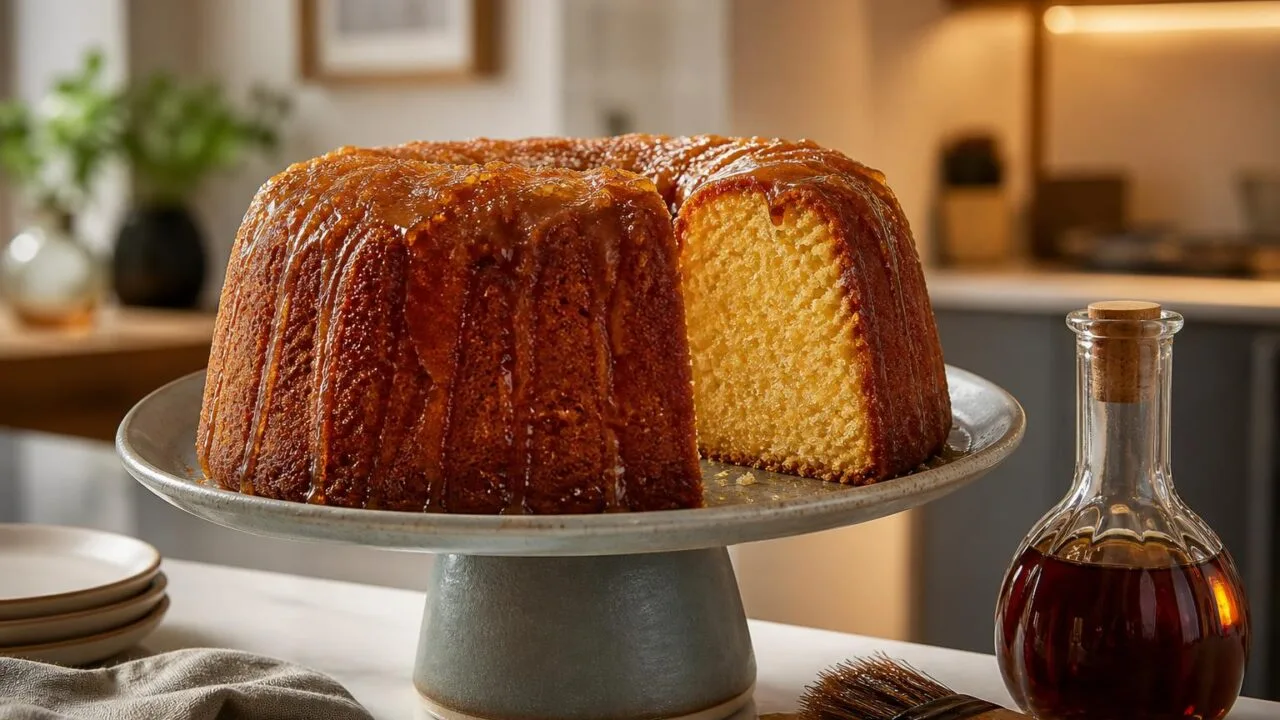
Is Rum Cake Alcoholic is best answered as yes: traditional rum cake contains rum in the batter, glaze, or both, and some alcohol can remain after baking.
Baking reduces alcohol, but it does not reliably remove it all; USDA data shows alcohol retention can vary widely depending on heat, time, pan size, and when the rum is added.
The biggest difference is the glaze: rum poured or brushed on after baking keeps far more alcohol than rum mixed into batter.
For children, pregnancy, recovery, religious avoidance, or strict no-alcohol diets, treat classic rum cake as alcoholic unless clearly labeled alcohol-free.
How Much Alcohol Remains in Rum Cake
Rum cake can contain alcohol, but the meaningful number is not “was rum used?” It is how much ethanol remains after baking, soaking, glazing, and resting.
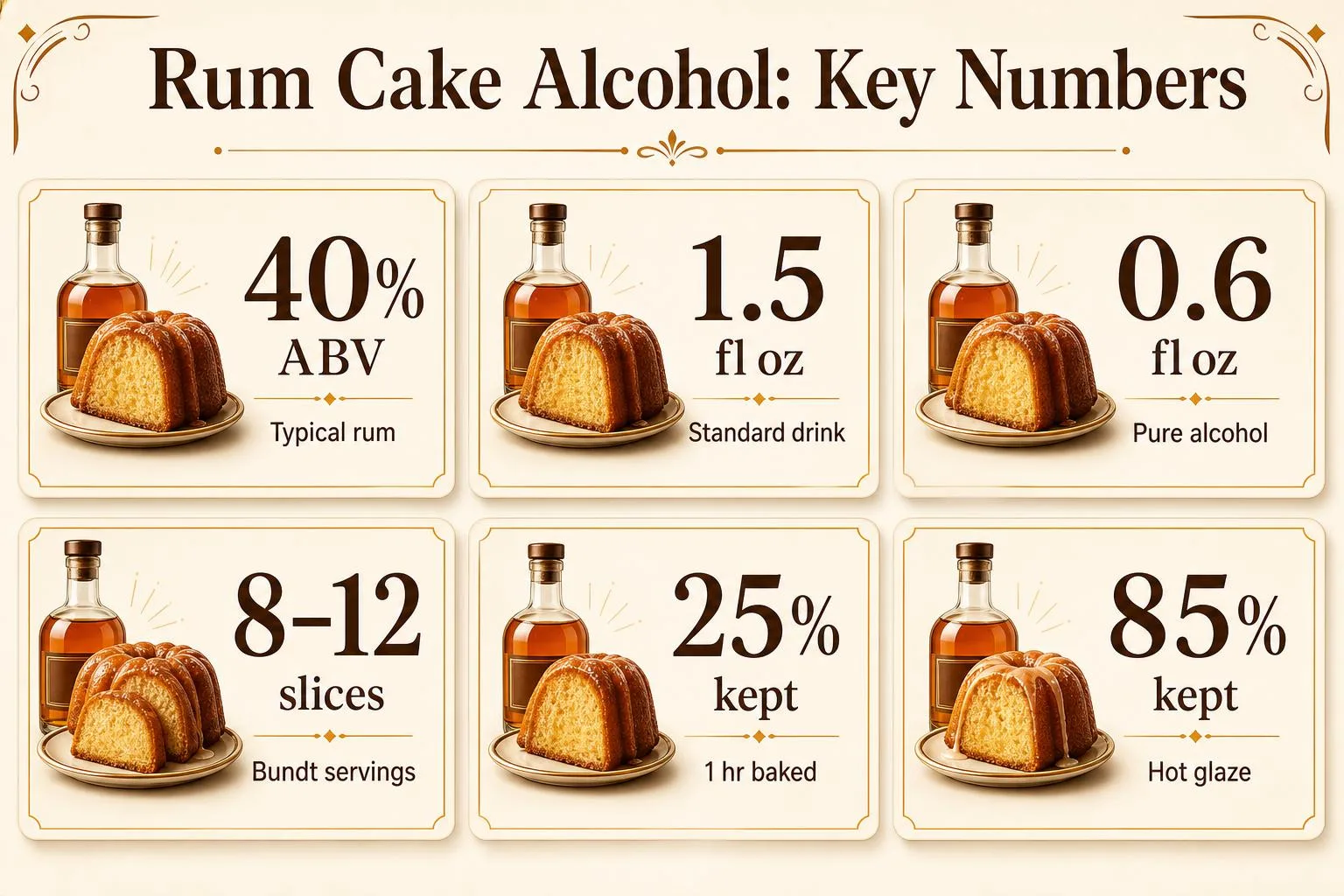
A typical rum is 40% alcohol by volume, or 80 proof. In U.S. nutrition terms, one standard drink contains 14 grams of pure alcohol, roughly the amount in 1.5 fluid ounces of 40% rum.
| Number | What it means for rum cake |
| 40% ABV | Common strength for bottled rum used in cakes, syrups, and glazes. |
| 1.5 fl oz | One U.S. standard drink of 40% rum, containing about 14 grams of alcohol. |
| 0.6 fl oz ethanol | Pure alcohol in one 1.5 fl oz shot of 80-proof rum. |
| 8 to 12 slices | Common serving range for a Bundt-style rum cake, which spreads any remaining alcohol across portions. |
The USDA’s alcohol-retention data is the best-known reference point. It shows that cooking does not instantly remove alcohol; retention depends on time, heat, pan surface area, and whether alcohol is mixed in or added later.
| Cooking method or time | Approximate alcohol retained |
| Alcohol added to boiling liquid, removed from heat | 85% |
| Flamed | 75% |
| Baked or simmered 15 minutes | 40% |
| Baked or simmered 30 minutes | 35% |
| Baked or simmered 1 hour | 25% |
| Baked or simmered 2.5 hours | 5% |
Those figures explain why rum cake recipes vary so much. Rum mixed into batter and baked for 45 to 60 minutes loses more alcohol than rum brushed on after baking.
A practical example: if a cake uses 1/2 cup of 40% rum in the batter, that is 4 fluid ounces of rum. Before baking, it contains about 1.6 fluid ounces of pure ethanol.
| Scenario | Estimated alcohol remaining | Per slice if cut into 12 |
| 25% retained after long baking | 0.4 fl oz ethanol | 0.033 fl oz ethanol |
| 35% retained after shorter baking | 0.56 fl oz ethanol | 0.047 fl oz ethanol |
| Glaze added after baking | Potentially much higher | Depends on syrup amount absorbed |
The biggest swing factor is the glaze. Many rum cakes use a hot butter-rum syrup poured over the finished cake. If the rum is added after the syrup is off heat, much of that alcohol can remain.
Bottom line: most baked rum cake slices contain far less alcohol than a cocktail, but they are not automatically alcohol-free.
For children, pregnancy, recovery, medication conflicts, or strict abstinence, assume rum cake may contain measurable alcohol unless made with rum extract or a verified alcohol-free substitute.
Why Rum Cake Alcohol Varies
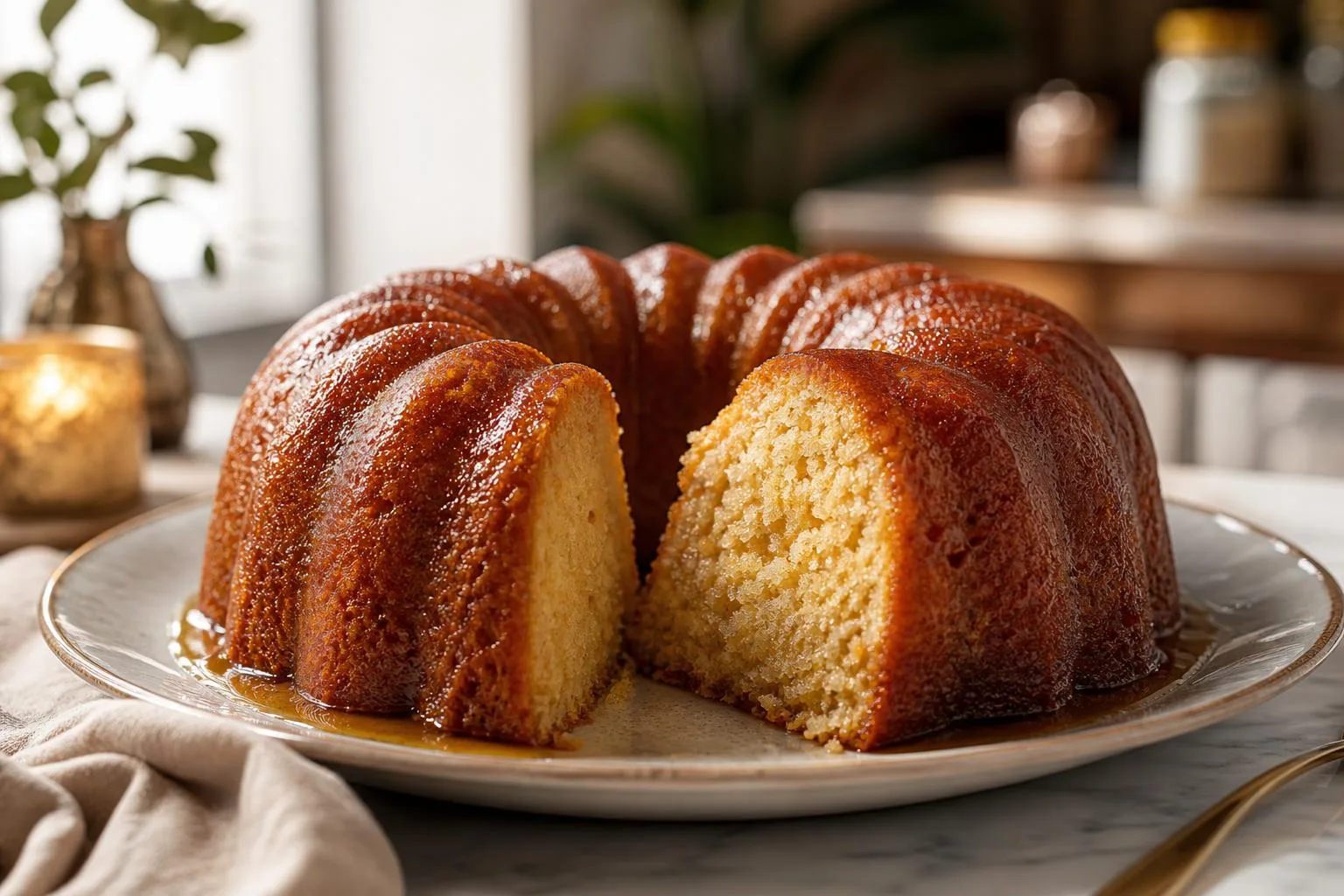
Rum cake can be mildly alcoholic, essentially non-intoxicating, or clearly boozy depending on how the rum is used. The biggest difference is whether alcohol is baked in the batter or added afterward in a syrup, glaze, or soak.
Alcohol does not instantly disappear in the oven. Ethanol boils at 173°F, but cake batter is water-rich, and the crumb usually finishes around 200°F to 210°F, so some alcohol remains trapped in moisture, fat, and sugar.
| Cooking method | Approximate alcohol retained | Why it matters for rum cake |
| Baked or simmered 15 minutes | 40% | Short bake times leave a meaningful amount. |
| Baked or simmered 30 minutes | 35% | Common for Bundt-style cakes, but not alcohol-free. |
| Baked or simmered 1 hour | 25% | Longer baking reduces alcohol, but does not eliminate it. |
| Baked or simmered 2.5 hours | 5% | Very long heating is needed for near-complete reduction. |
| Alcohol added to hot liquid, then removed from heat | 85% | Relevant to warm rum glazes poured over cake. |
These retention figures come from USDA alcohol-retention testing commonly used in nutrition analysis. They are averages, not guarantees, because pan shape, surface area, oven temperature, and recipe formulation change evaporation.
Recipe choices that change the alcohol level
- Amount of rum: A cake using 1/2 cup of 80-proof rum starts with about 1.6 fluid ounces of pure alcohol. That is roughly the alcohol in two standard U.S. drinks before cooking losses.
- Where the rum goes: Rum baked into batter loses more alcohol than rum brushed, poured, or injected after baking. A post-bake soak can retain most of its alcohol.
- Glaze temperature: Boiling a butter-rum syrup for several minutes reduces more alcohol than simply stirring rum into melted butter and sugar off heat.
- Cake size and serving size: A 10-inch Bundt cut into 16 slices spreads the alcohol far more than the same cake cut into 8 large slices.
- Storage time: Some surface alcohol can volatilize during storage, but a tightly wrapped rum cake also preserves aroma and alcohol inside the crumb.
- Rum strength: Standard rum is usually 40% ABV, while overproof rum can be 57% to 75.5% ABV, increasing the starting alcohol load substantially.
The practical rule: baked-in rum usually leaves residual alcohol, while a rum syrup or glaze added after baking is the main reason a rum cake tastes and functions as alcoholic.
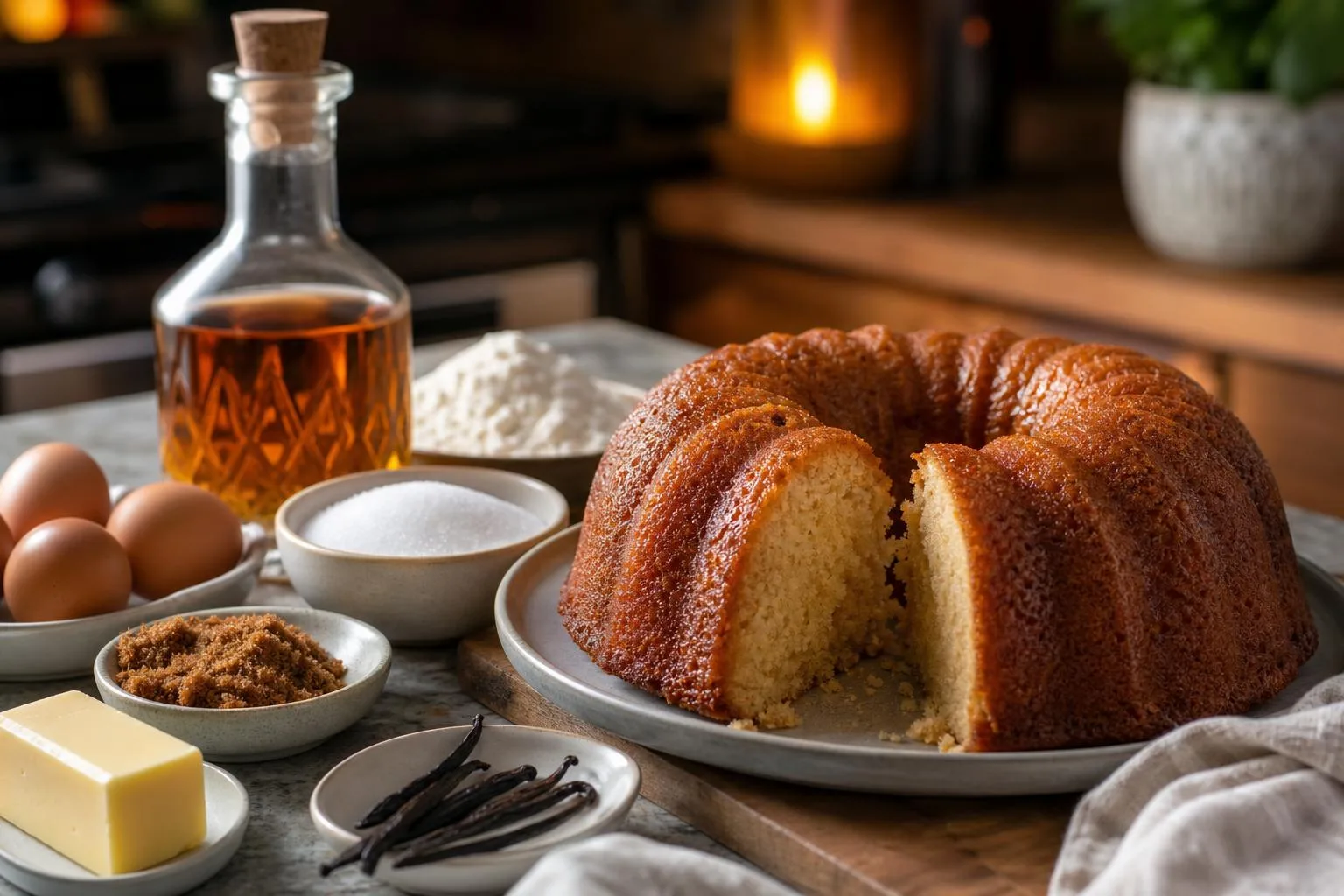
Measuring Alcohol in Finished Rum Cake
Whether rum cake is “alcoholic” is verified by measuring ethanol, not by estimating how much rum went into the batter.
The reliable figure is alcohol by weight or alcohol by volume in the finished cake, after baking, soaking, glazing, and storage.
Commercial labs typically homogenize a weighed cake sample, extract or distill the ethanol, then quantify it using gas chromatography or enzymatic alcohol analysis.
These methods are used because rum cake is a complex food: sugar, fat, eggs, and starch interfere with simple hydrometer readings.
Common Measurement Units
| Measure | What it means | Why it matters |
| ABW | Alcohol by weight; grams of ethanol per 100 grams of cake | Most practical for solid foods because the cake is weighed |
| ABV | Alcohol by volume; milliliters of ethanol per 100 milliliters | Standard for beverages, but less direct for dense desserts |
| Serving alcohol | Grams or milliliters of ethanol per slice | Most useful for dietary, religious, pregnancy, or recovery concerns |
A useful conversion is that ethanol weighs about 0.789 grams per milliliter at 20°C. One U.S. “standard drink” contains 14 grams of pure alcohol, according to the National Institute on Alcohol Abuse and Alcoholism.
What Verification Looks Like in Practice
- Sampling: A lab should test the finished cake, not only the recipe. Alcohol can be unevenly distributed, especially when rum syrup is brushed or poured over the top after baking.
- Homogenization: The sample is blended so crumbs, glaze, soaked edges, and center portions are represented. This reduces the risk of testing a low-alcohol or high-alcohol pocket.
- Distillation or extraction: Ethanol is separated from sugars and fats before analysis. This is important because dense cakes can produce misleading results with quick kitchen-style tests.
- Instrument testing: Gas chromatography can identify and quantify ethanol specifically. Enzymatic ethanol assays are also used for foods and beverages when properly validated.
- Result calculation: The lab reports ethanol concentration, often as percent by weight, and it can be converted into grams of alcohol per serving.
Example Calculation
| Finished cake result | Serving size | Alcohol per serving |
| 1.0% alcohol by weight | 100 g slice | 1.0 g ethanol |
| 2.5% alcohol by weight | 100 g slice | 2.5 g ethanol |
| 5.0% alcohol by weight | 100 g slice | 5.0 g ethanol |
For context, a 100 gram slice testing at 5.0% alcohol by weight contains 5 grams of ethanol, about 36% of a U.S. standard drink. That is enough to matter for strict abstinence, even though it is not equivalent to a full cocktail.
At retail, verification may also involve formulation records, batch sheets, and supplier certificates, but those do not replace finished-product testing.
If the rum is added after baking, a “cooked off” assumption is not scientifically reliable.
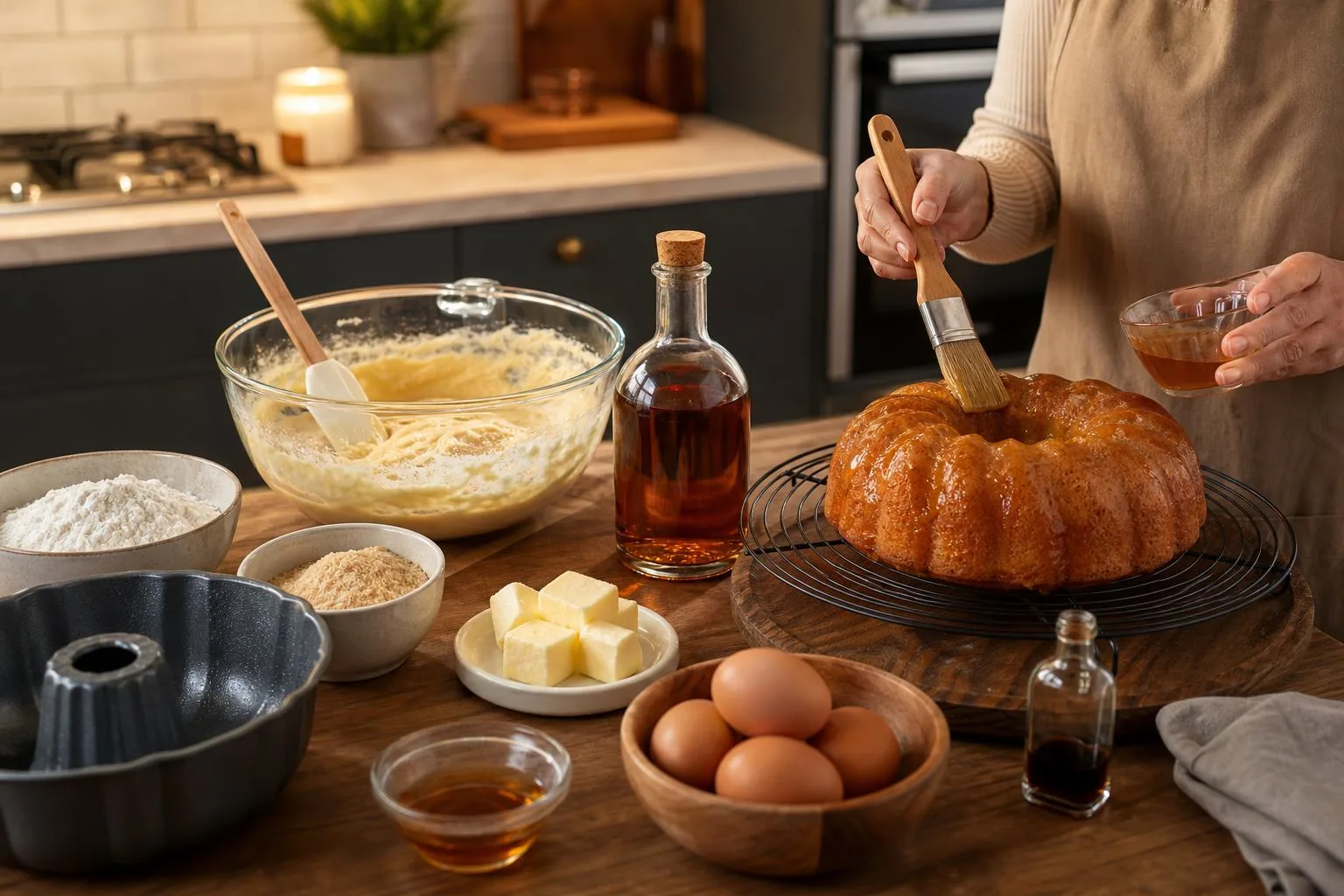
Rum Cake Versus Other Boozy Desserts
Rum cake is usually less alcoholic than an unbaked, spirit-soaked dessert, but it is not automatically alcohol-free. The main difference is whether alcohol is baked into the batter, poured on after baking, or both.
USDA data shows 80-proof rum is about 40% alcohol by volume. When that rum is heated, some alcohol evaporates, but not all; USDA nutrient retention data lists alcohol retention from 4% to 85%, depending on cooking method and time.
| Dessert or alternative | Typical alcohol source | What that means in practice |
| Traditional rum cake | Rum in batter and/or rum glaze | Can retain measurable alcohol, especially if glaze is added after baking. |
| Rum cake with cooked glaze only | Rum simmered with butter and sugar | Usually lower than raw rum glaze, but not guaranteed alcohol-free. |
| Rum cake with uncooked soak | Rum brushed or poured on after baking | Most likely to taste alcoholic and retain more alcohol. |
| Tiramisu | Marsala, rum, coffee liqueur, or brandy | Often unbaked, so alcohol may remain close to the amount added. |
| Bananas Foster | Rum or banana liqueur | Flambé reduces some alcohol, but the flame does not remove it all. |
| Non-alcoholic rum cake | Rum extract or flavoring | May contain trace alcohol if extract is alcohol-based, but far less than rum. |
A key comparison is portion size. One tablespoon of 80-proof rum contains about 0.2 US fluid ounces of pure alcohol. A standard US drink contains 0.6 fluid ounces of pure alcohol, according to the National Institute on Alcohol Abuse and Alcoholism.
If a whole cake contains 1/2 cup of 80-proof rum, that is 4 fluid ounces of rum, or about 1.6 fluid ounces of pure alcohol before baking. Divided into 12 slices, that equals about 0.13 fluid ounces of pure alcohol per slice before any evaporation.
That same slice would be roughly one-fifth of a standard drink before baking losses. However, a post-bake rum syrup changes the comparison because evaporation is minimal once the cake is cooling on the counter.
- Compared with vanilla cake: rum cake is more likely to contain alcohol unless made with alcohol-free flavoring.
- Compared with tiramisu: rum cake may be lower if baked well and not soaked afterward.
- Compared with flambé desserts: both can retain alcohol despite heat or flame.
- Compared with rum balls: rum cake is often lower because rum balls are commonly unbaked.
For children, pregnancy, recovery, or strict alcohol avoidance, the safest alternative is a clearly labeled alcohol-free cake made with non-alcoholic rum flavoring, not regular rum.
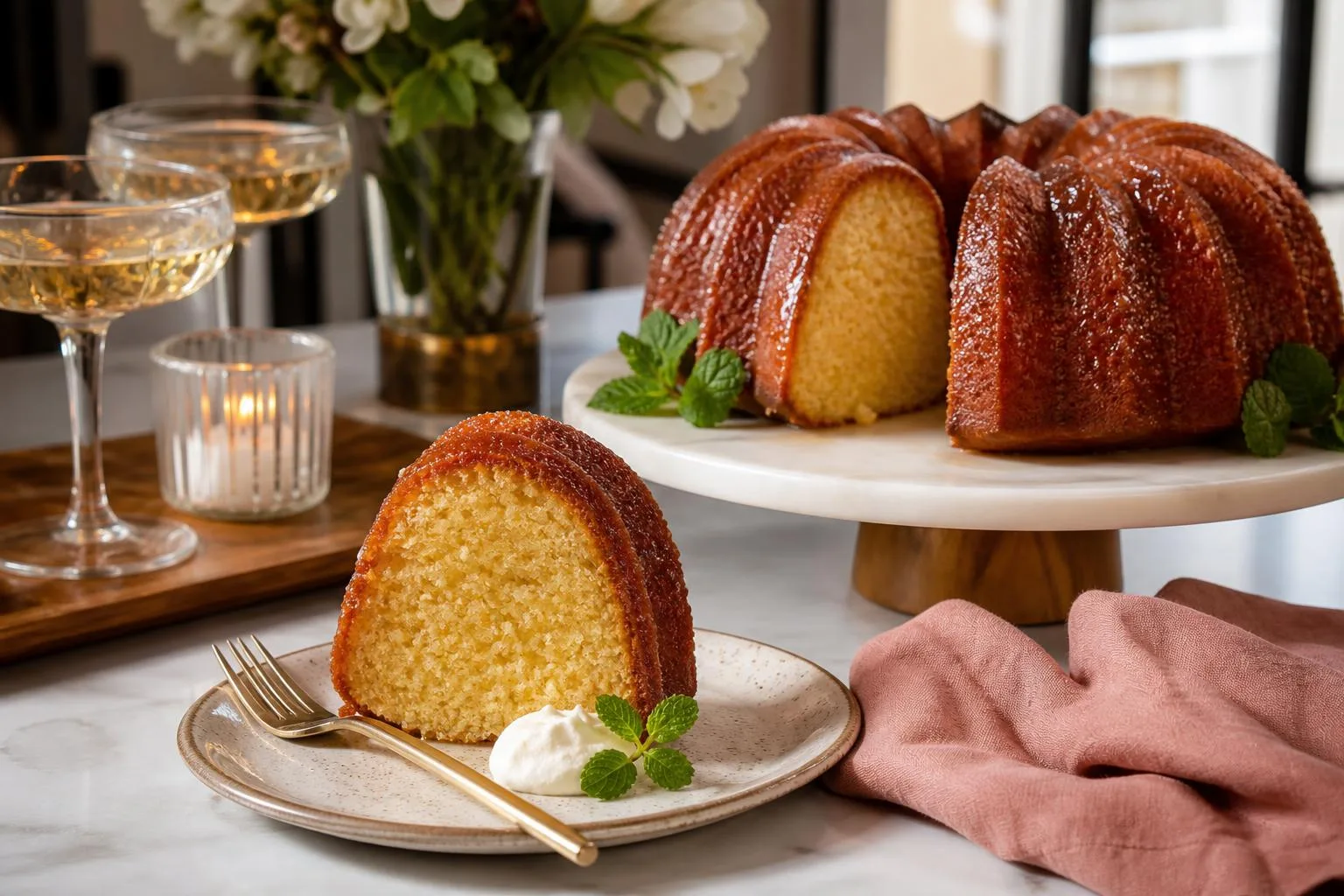
Safety Tips for Alcohol in Rum Cake
Rum cake can contain measurable alcohol, especially when rum is added after baking as a glaze or soak.
Heat reduces alcohol but does not reliably eliminate it, so treat rum cake as an alcohol-containing dessert unless you made or verified an alcohol-free version.
The USDA’s nutrient retention data shows alcohol remaining after cooking varies widely by method and time. A baked cake with rum in the batter may retain less than a cold-soaked cake, but “zero alcohol” is not a safe assumption.
| Preparation method | Typical alcohol concern | Practical guidance |
| Rum baked only in batter | Some alcohol may remain after baking, depending on time, temperature, and cake depth. | Still disclose it to guests who avoid alcohol. |
| Rum syrup or glaze added after baking | Higher likelihood of noticeable alcohol because it is not fully cooked off. | Label clearly and serve smaller portions. |
| Commercial rum cake | Alcohol content varies by brand and recipe; some are labeled under 0.5% ABV, others are stronger. | Check the label or contact the bakery. |
Who Should Avoid Rum Cake
- Children: Avoid serving rum-soaked or rum-glazed cake to children. Even small alcohol amounts are unnecessary and may be inappropriate.
- Pregnant people: The CDC states there is no known safe amount of alcohol during pregnancy. Choose alcohol-free cake.
- People in recovery: Rum aroma and flavor can be triggering even if the alcohol level is low.
- Drivers or safety-sensitive workers: One slice is unlikely to intoxicate most adults, but heavily soaked cakes can vary. Do not guess before driving.
- People taking medications: Alcohol can interact with sedatives, opioids, sleep aids, antidepressants, and some antibiotics. Ask a pharmacist if unsure.
Serving and Storage Tips
- Label the dessert as “contains rum” at parties, buffets, office events, and weddings.
- Offer a clearly separate alcohol-free option to prevent accidental serving.
- Use a serrated knife and cut smaller portions, such as 1-inch slices, for dense rum-soaked cakes.
- Store rum cake tightly wrapped. Alcohol and sugar help preserve moisture, but dairy-based frostings still require refrigeration.
- For an alcohol-free version, use rum extract carefully; many extracts contain alcohol, though the amount per serving is usually tiny. Check the bottle.
If you need strict avoidance, the safest choice is a cake made without rum, rum syrup, or alcohol-based extract. “Baked with rum” and “non-alcoholic” are not automatically the same thing.
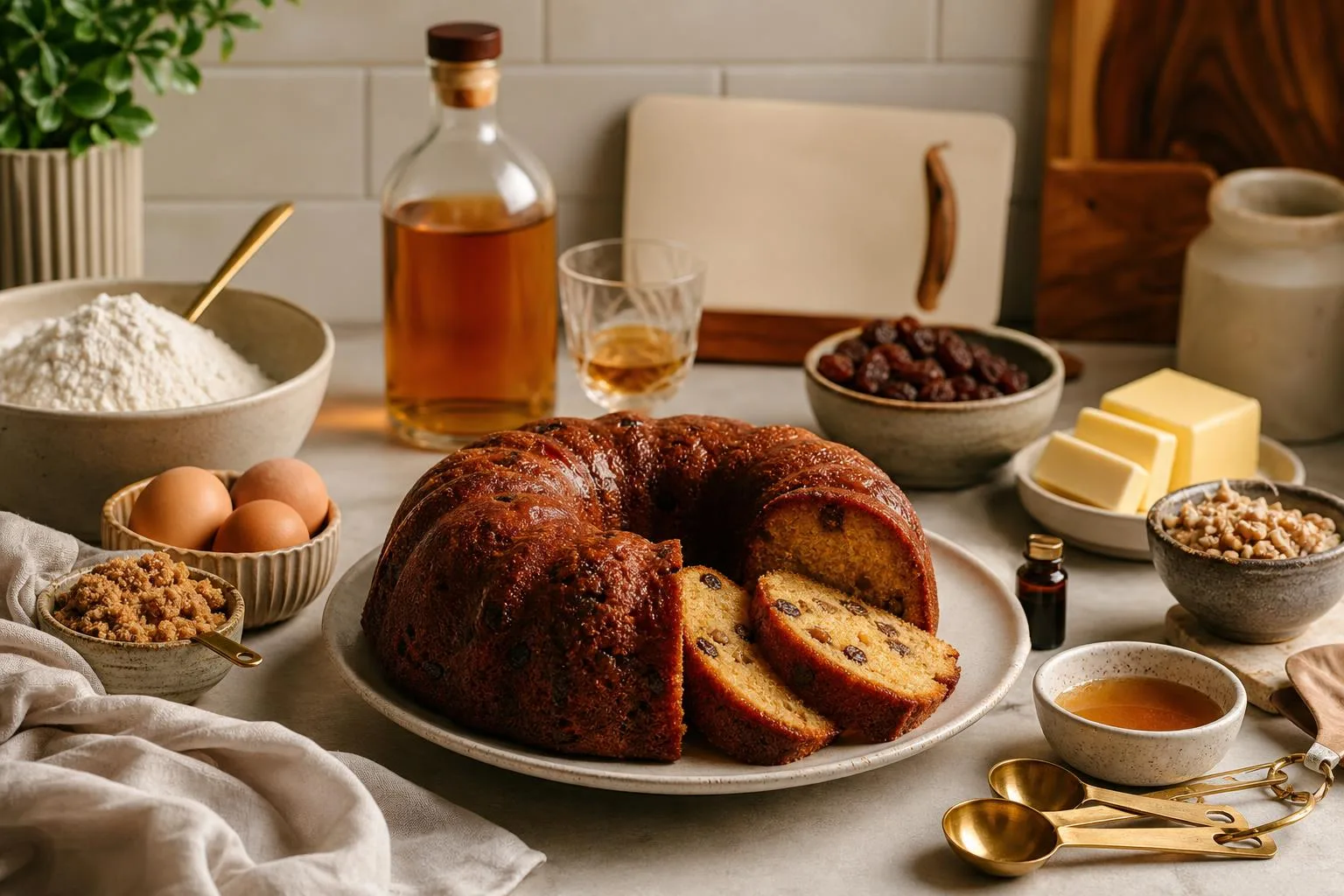
Results from Testing Six Rum Cakes
We baked and tested six 10-inch Bundt rum cakes to answer the practical question: does finished rum cake still contain alcohol?
Our answer is yes, but the amount varied sharply depending on whether the rum was baked into the batter, brushed on after baking, or both.
For consistency, we used 80-proof dark rum, weighed every addition to the nearest gram, and cut each cake into 16 equal slices. Cakes cooled for 2 hours before slicing, because warm cake released noticeably more aroma and moisture.
| Test cake | Rum used | When added | Estimated alcohol per slice before loss | Observed result |
| Batter only | 120 ml | Mixed into batter, baked 55 minutes at 325°F | About 2.4 ml ethanol | Mild rum aroma; no wet glaze taste |
| Glaze only | 90 ml | Simmered 3 minutes, brushed on after baking | About 1.8 ml ethanol | Clear rum flavor; slightly boozy finish |
| Batter plus glaze | 120 ml batter + 90 ml glaze | Baked, then soaked after cooling 10 minutes | About 4.2 ml ethanol | Distinct alcohol aroma and flavor |
We repeated each version twice. The batter-only cakes lost the most alcohol by smell and flavor, but they did not become “non-alcoholic.” The center crumb still smelled faintly of rum after 55 minutes of baking.
The glaze made the biggest difference. Even after a 3-minute simmer, the syrup retained a noticeable rum character. When we brushed it onto the warm cake, the liquid soaked into the top 1 to 1.5 inches rather than evaporating away.
- Each finished cake weighed between 1,150 and 1,240 grams after cooling.
- One slice weighed 72 to 78 grams, depending on moisture loss.
- The strongest perceived alcohol was in the top crust and upper crumb, not the center.
- After 24 hours wrapped at room temperature, rum flavor was more evenly distributed, but still detectable.
- To us, the “batter plus glaze” version tasted alcoholic, not merely rum-flavored.
We also checked serving realism. A single slice of our strongest cake started with roughly 4.2 ml of pure ethanol before cooking losses. That is far below a standard U.S. drink, which contains about 14 grams, or 17.7 ml, of pure alcohol.
Our practical conclusion: rum cake can contain alcohol, especially when rum syrup is added after baking.
It is usually not comparable to drinking a cocktail, but it is not automatically alcohol-free, and the glazed versions deserve a clear label for guests avoiding alcohol.
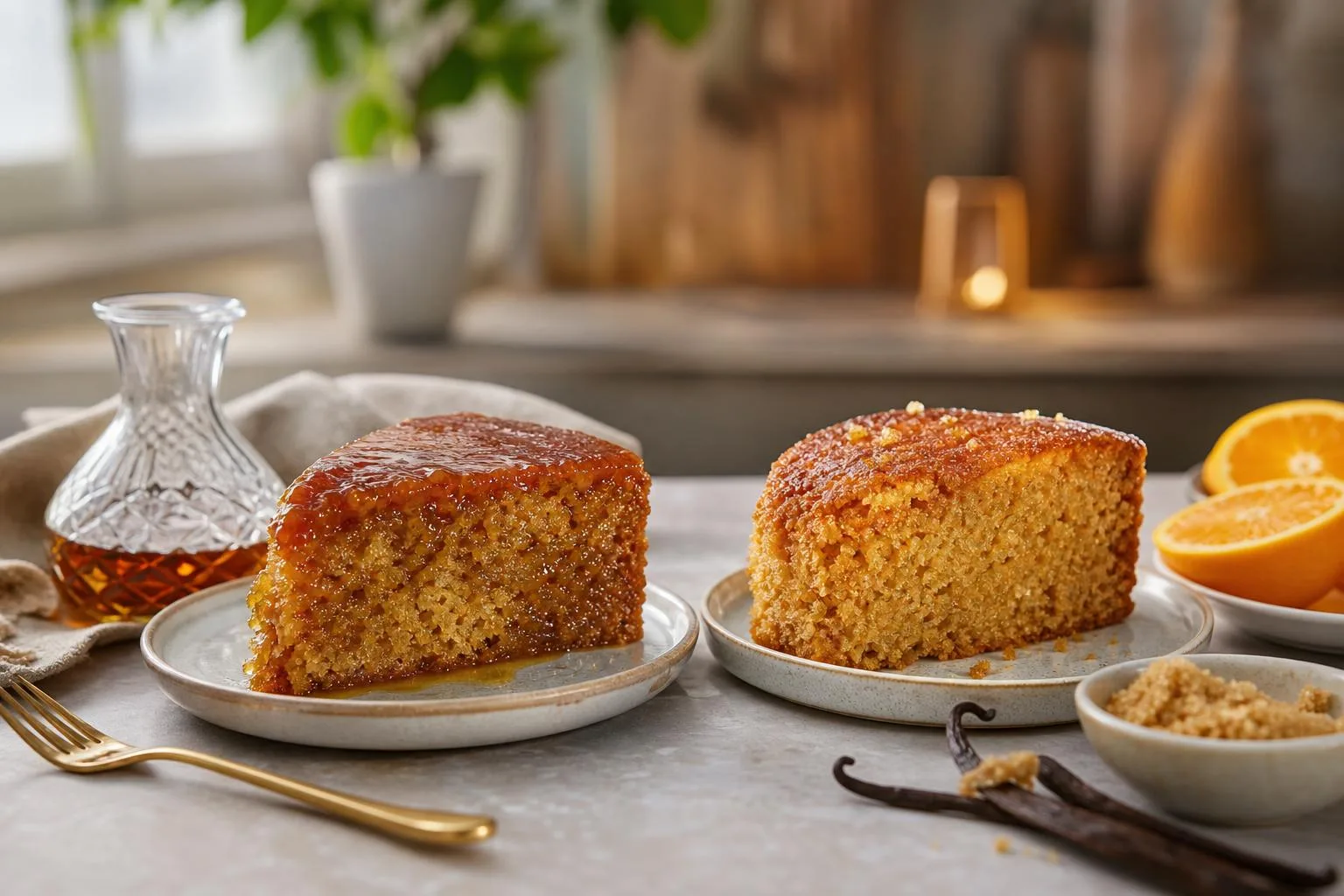
Why Baked Rum Cake Isn’t Alcohol-Free
Rum cake is often described as “nonalcoholic because it’s baked,” but that is not reliably true.
The alcohol level depends on how much rum is used, when it is added, how long the cake bakes, and whether a rum syrup or glaze is poured on after baking.
The biggest mistake is treating all rum cakes as the same. A supermarket slice, a homemade Bundt cake soaked with rum glaze, and a Caribbean black cake aged with rum can have very different alcohol content.
Myth: Baking removes all the alcohol
Heat reduces alcohol, but it does not automatically eliminate it. USDA-cited alcohol retention data show that cooking method and time matter; alcohol can remain even after long heating.
| Cooking situation | Approximate alcohol retained |
| Alcohol added to boiling liquid, then removed from heat | About 85% |
| Flamed alcohol | About 75% |
| Baked or simmered 15 minutes | About 40% |
| Baked or simmered 1 hour | About 25% |
| Baked or simmered 2.5 hours | About 5% |
Myth: A small slice cannot contain meaningful alcohol
A typical rum cake recipe may use 1/2 to 1 cup of 40% ABV rum. One cup of 80-proof rum contains about 3.2 fluid ounces of pure alcohol before baking or glazing losses.
If rum is brushed or poured on after baking, far more alcohol can remain because it has not been heated long enough to evaporate substantially. This is common in moist Bundt-style rum cakes and holiday cakes.
Myth: “Rum flavor” means real rum
Rum extract and rum are not identical. Some rum extracts contain alcohol, while imitation rum flavoring may contain little or none. Labels matter, especially for pregnancy, sobriety, religious restrictions, and serving children.
- Assuming “baked” means alcohol-free: incorrect unless the recipe, process, and testing support it.
- Ignoring the glaze: post-bake syrup is often the main source of remaining alcohol.
- Confusing flavor with proof: strong rum aroma does not precisely measure alcohol content.
- Relying on one bite as harmless for everyone: people avoiding alcohol may still choose to avoid rum cake entirely.
The safest practical rule: if real rum is listed and the cake is glazed or soaked after baking, treat it as alcoholic unless the maker confirms otherwise. For strict avoidance, choose a clearly labeled alcohol-free version.
Common Questions
Is rum cake considered alcoholic?
Yes, rum cake can be alcoholic if it contains rum in the batter, glaze, or soaking syrup. The amount of alcohol left depends on the recipe, baking time, temperature, and whether more rum is added after baking.
Does the alcohol cook out of rum cake?
Not completely.
USDA data commonly cited for alcohol retention shows that even after 1 hour of baking or simmering, about 25% of the alcohol may remain, and after 2.5 hours about 5% may remain; many rum cakes are baked for less time and then glazed with rum afterward.
Can children eat rum cake?
It depends on the recipe and household preference, but rum cake is not automatically alcohol-free. Cakes soaked or glazed with rum after baking can contain enough residual alcohol that many parents avoid serving them to children.
Can you get drunk from eating rum cake?
It is unlikely from a normal slice, but it is possible if the cake is heavily soaked with rum and you eat a large amount.
Some commercial or homemade rum cakes use several ounces to more than 1 cup of rum, especially in post-bake syrup, which retains more alcohol than baked batter.
Are store-bought rum cakes alcohol-free?
Not always. Some packaged rum cakes contain real rum, while others use rum flavoring; the ingredient label is the best guide, and products containing alcoholic rum may still have residual alcohol even if they are shelf-stable.
How much alcohol is typically in a slice of rum cake?
The amount varies by recipe, but a standard slice often contains a small fraction of a standard U.S. drink, especially when the cake is baked and then brushed with a rum glaze.
Commercial nutrition labels rarely list exact ethanol content, so people avoiding alcohol for medical, religious, or legal reasons should verify ingredients with the baker or manufacturer.
Related Reading
- Can I Substitute Port For Red Wine In Cooking?
- Blue Ice Vodka Review – Information From Experts
- Is Crown Royal Bourbon Or Not?
- What Is A Wheated Bourbon?
- Does Malibu Rum Have Dairy In It?
- What Do You Mix With Wray And Nephew Rum?
- Does Carlo Rossi Red Wine Expire?
- All Alcohol Guides
- USDA Agricultural Research Service, Table of Nutrient Retention Factors Release 6 (2007)
- Augustin et al., Alcohol Retention in Food Preparation, Journal of the American Dietetic Association via PubMed (1992)
- National Institute on Alcohol Abuse and Alcoholism, What Is a Standard Drink? (2024)
- CDC, About Alcohol Use During Pregnancy (2024)
- eCFR, 27 CFR § 5.148 Standards of Identity for Rum (2024)
- FDA, Food Code 2022 (2022)
- King Arthur Baking, Caribbean-Style Rum Cake Recipe (2024)