
The difference between brandy and bourbon is that brandy is distilled from fermented fruit, while bourbon is an American whiskey distilled from at least 51% corn and aged in new charred oak barrels.
That single split explains most contrasts in aroma, sweetness, texture, aging rules, and cocktail use.
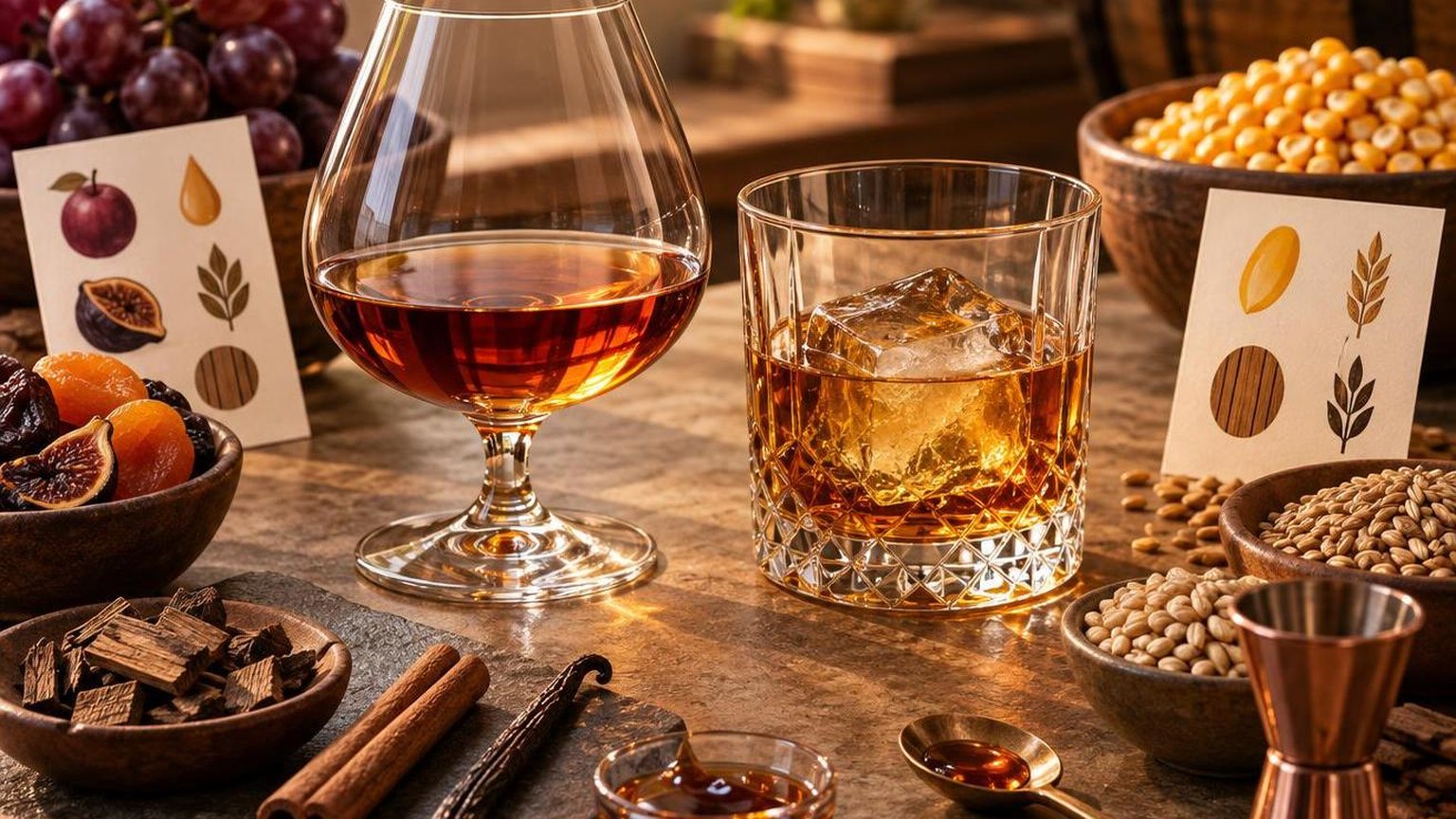
Brandy often tastes of grapes, apples, dried fruit, and floral spice, depending on its base and region.
Bourbon leans toward vanilla, caramel, oak, baking spice, and corn sweetness because U.S. law controls its grain bill, barrel type, and production proof. This guide compares ingredients, distillation, aging, flavor, serving, and buying choices.
Brandy and Bourbon Defined Clearly
Brandy is a spirit distilled from fermented fruit juice, most commonly grapes. Bourbon is an American whiskey distilled from a grain mash containing at least 51% corn.
Their raw ingredients, legal definitions, and production methods share almost nothing in common.
What Makes Brandy, Brandy
Brandy derives its name from the Dutch word brandewijn, meaning “burnt wine.” Production begins with fermenting fruit — typically grapes — then distilling the resulting wine.
- No single country holds exclusive rights to the term “brandy,” though Cognac must come from the Cognac AOC region in southwestern France
- Armagnac, France’s oldest brandy, has been produced since the early 14th century
- Brandy is typically distilled to no higher than 170 proof (85% ABV) and bottled at a minimum of 80 proof (40% ABV)
- Aging occurs in oak barrels, though duration requirements vary — Cognac VS requires a minimum of 2 years, VSOP requires 4 years, and XO requires 10 years
What Makes Bourbon, Bourbon
Federal Standards of Identity (27 CFR §5.143) define bourbon with strict legal criteria. Congress declared bourbon a “distinctive product of the United States” in 1964.
- Mash bill must contain at least 51% corn, with the remainder typically rye, wheat, and malted barley
- Must be distilled to no more than 160 proof (80% ABV)
- Must enter new, charred oak barrels at no more than 125 proof (62.5% ABV)
- Must be bottled at a minimum of 80 proof (40% ABV)
- No minimum aging period exists unless labeled “straight bourbon,” which requires at least 2 years
Side-by-Side Comparison
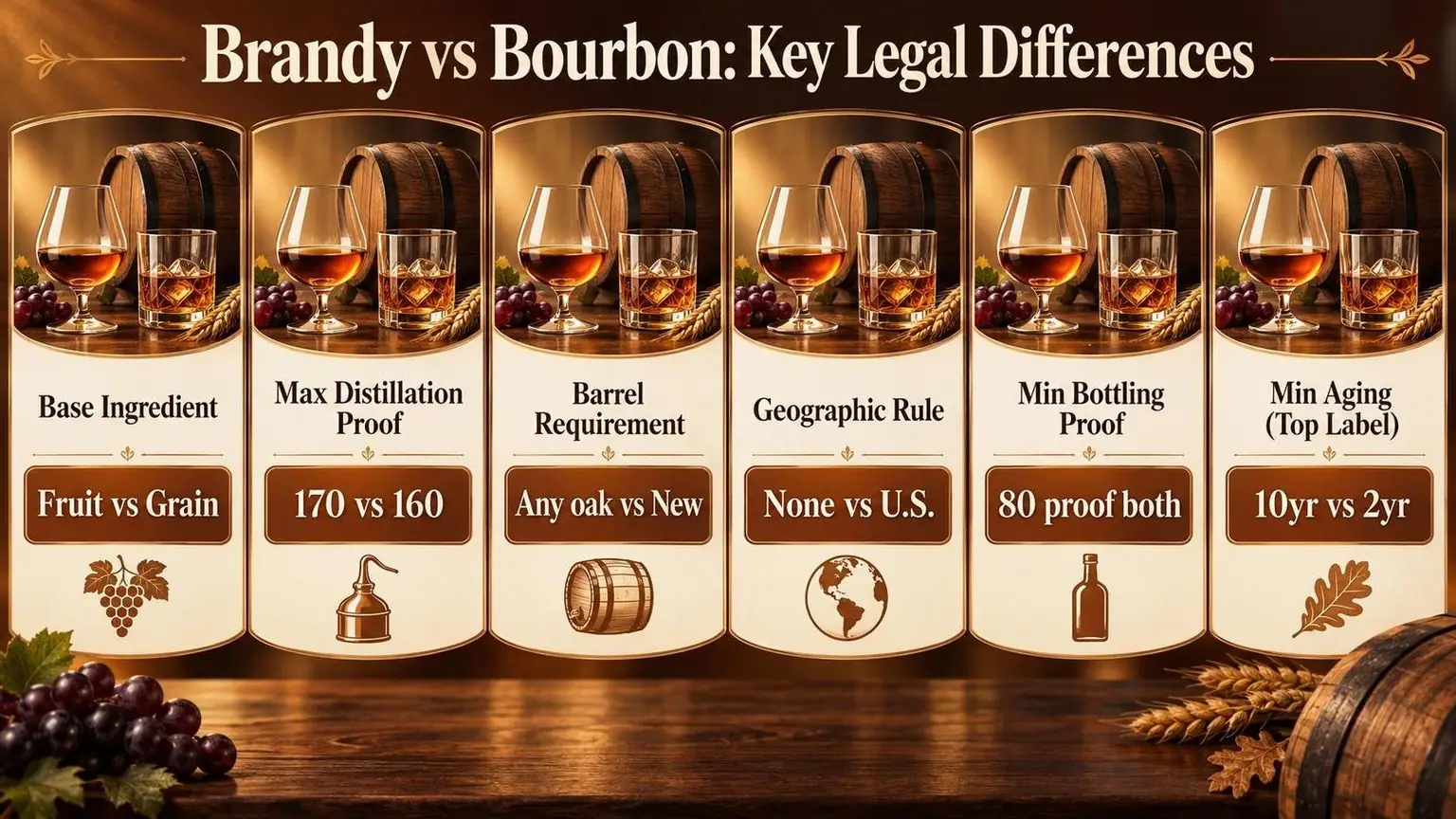
| Attribute | Brandy | Bourbon |
| Base ingredient | Fruit (usually grapes) | Grain (minimum 51% corn) |
| Max distillation proof | 170 proof (85% ABV) | 160 proof (80% ABV) |
| Barrel requirement | Oak (new or used) | New charred oak only |
| Geographic restriction | None for generic brandy | Must be made in the U.S. |
| Minimum bottling proof | 80 proof (40% ABV) | 80 proof (40% ABV) |
These distinctions are not stylistic preferences — they are codified in law. Mislabeling a spirit as bourbon or Cognac carries federal penalties in the United States and EU respectively.
Ingredients Behind Each Spirit
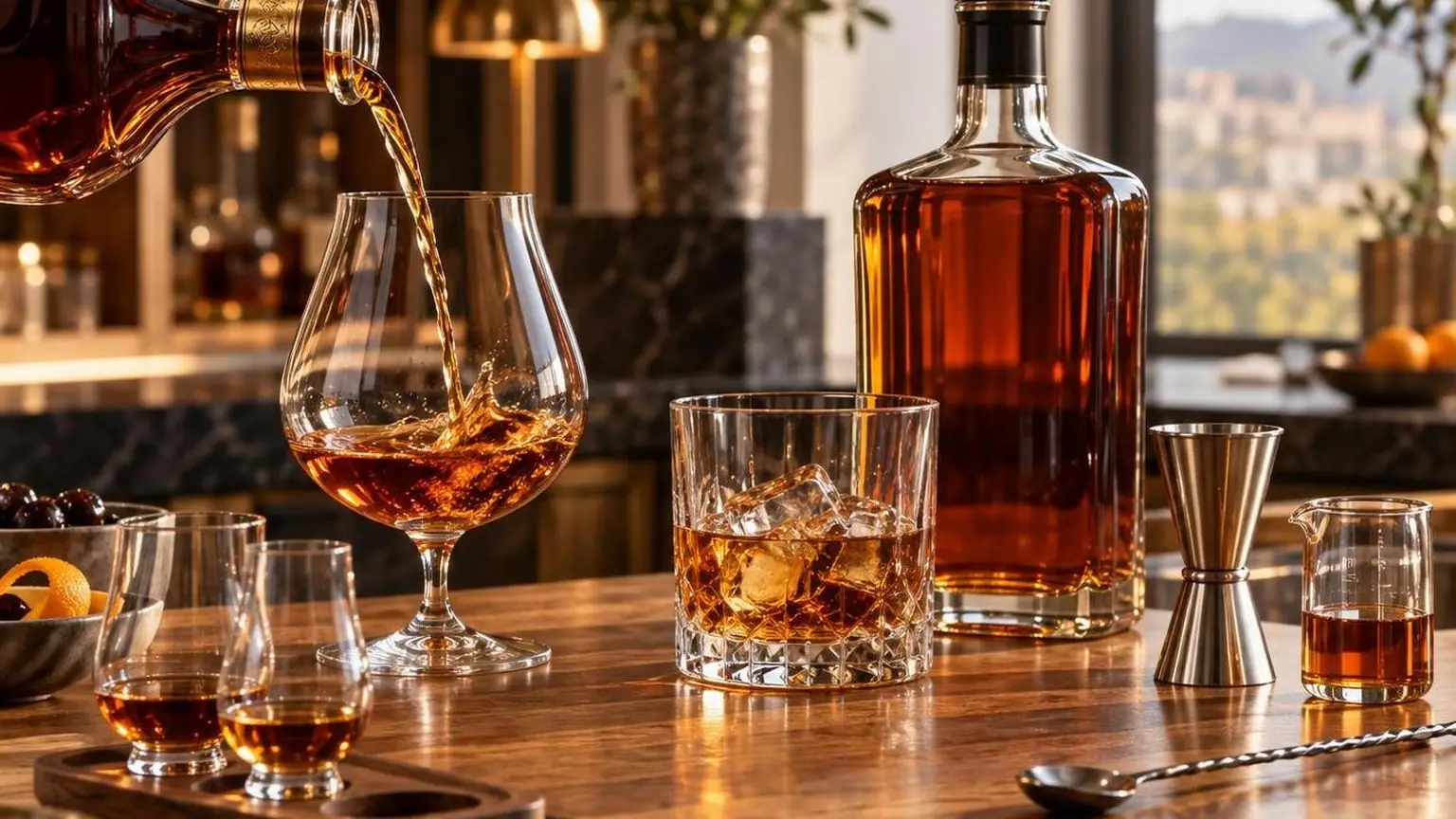
Brandy and bourbon start from fundamentally different raw materials. Brandy derives from fermented fruit—most commonly grapes—while bourbon is a grain-based whiskey bound by U.S. federal law to contain at least 51% corn in its mash bill.
Brandy’s Fruit Foundation
Grape brandy uses wine as its base distillate. Cognac, for example, requires 90% Ugni Blanc grapes minimum. Other fruit brandies use apples (calvados), pears (poire williams), or cherries (kirschwasser).
No grain, no added sugar, no coloring agents are permitted in traditional European appellations like Cognac and Armagnac. The fruit’s natural sugars supply all fermentable material.
Bourbon’s Grain Mash Bill
Federal Standards of Identity (27 CFR § 5.143) mandate bourbon contain at least 51% corn. The remaining 49% typically splits between malted barley and a flavoring grain—either rye or wheat.
Common mash bill configurations vary by distillery and target flavor profile:
- Traditional (high-rye): 75% corn, 13% rye, 12% malted barley — used by Buffalo Trace, Jim Beam
- Wheated: 70% corn, 16% wheat, 14% malted barley — used by Maker’s Mark, Pappy Van Winkle
- High-corn: 80%+ corn with smaller portions of rye and barley — used by some craft distillers for sweeter profiles
Side-by-Side Ingredient Comparison
| Attribute | Brandy | Bourbon |
| Primary ingredient | Grapes or other fruit | Corn (minimum 51%) |
| Secondary ingredients | None (single fruit source) | Rye or wheat, malted barley |
| Sugar source | Naturally occurring fructose | Grain starches converted by malt enzymes |
| Additives permitted (US) | Caramel coloring in some styles | None — straight bourbon prohibits additives |
| Water role | Used to proof down after distillation | Used in mashing, fermenting, and proofing |
Malted barley plays a critical enzymatic role in bourbon production. Its natural enzymes convert corn and grain starches into fermentable sugars during the mashing step at approximately 148–158°F.
These ingredient differences drive each spirit’s core character. Brandy retains fruit esters and floral aromatics; bourbon delivers caramel sweetness from corn and spice from its secondary grains.
How Distillation Separates Them
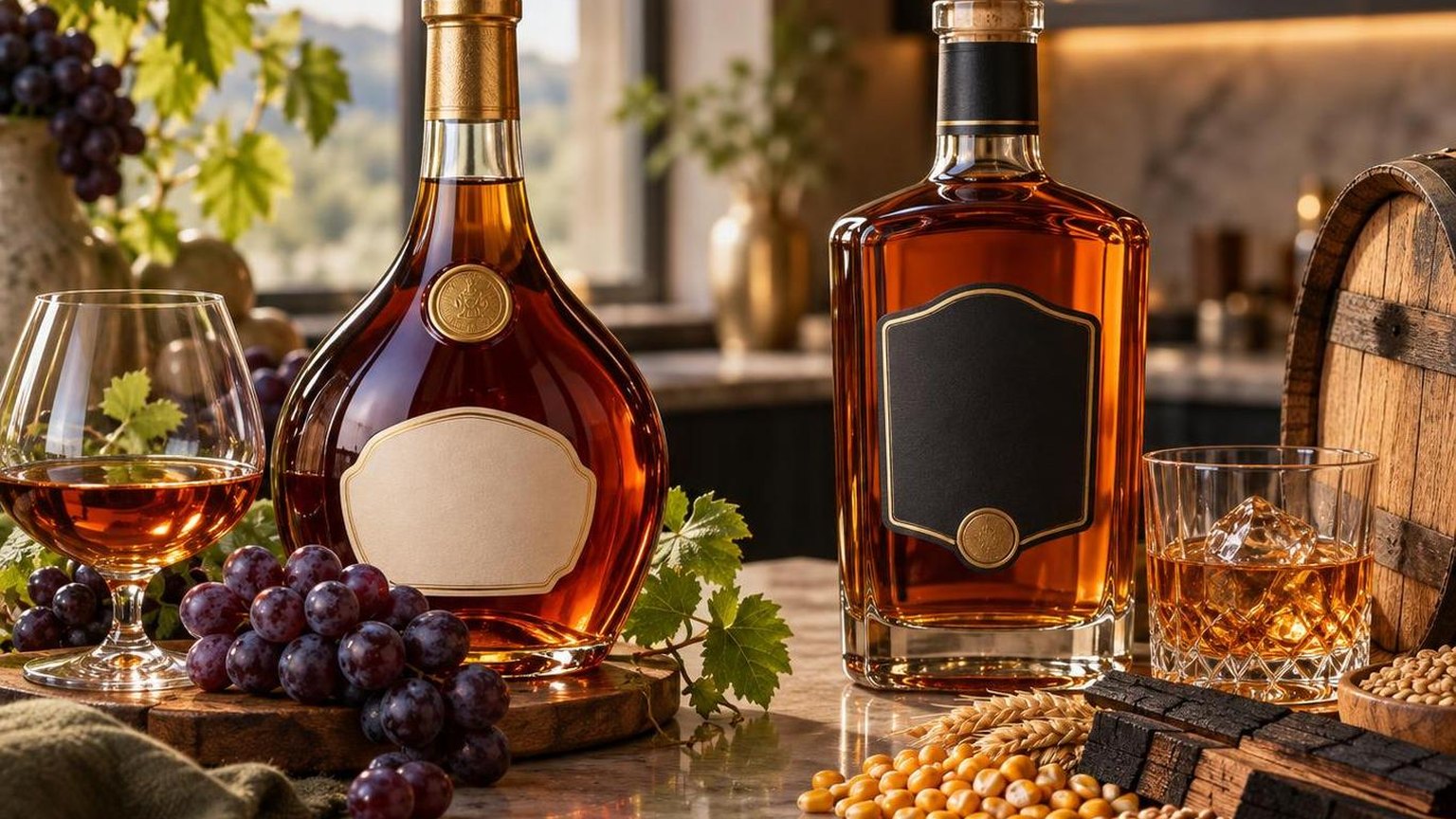
Brandy and bourbon diverge sharply at the still. The base material, still type, and legally mandated proof limits at distillation create fundamentally different spirits before a single day of aging occurs.
Still Types and Traditions
Cognac and many premium brandies use copper pot stills (alembic charentais), requiring double distillation. Each batch passes through the still twice, concentrating flavors from the wine base.
Bourbon producers predominantly use continuous column stills, often paired with a copper doubler or thumper for a second refinement pass. Column stills run 24/7, producing spirit at higher volume than pot stills.
Legal Distillation Limits
Federal regulations cap the proof at which each spirit leaves the still. These limits directly control how much flavor carries over from the fermented base.
| Parameter | Bourbon | Brandy (Cognac) |
| Base material | Grain mash (≥51% corn) | Fermented grape wine |
| Max distillation proof | 160 proof (80% ABV) | ~144 proof (72% ABV) |
| Typical distillation passes | 1–2 (column + doubler) | 2 (double pot distillation) |
| Max barrel entry proof | 125 proof (62.5% ABV) | ~140 proof (70% ABV) |
| Distillation time per batch | Continuous | ~12 hours per pass |
Why the Numbers Matter
Bourbon’s 160-proof ceiling under 27 CFR §5.22 forces distillers to retain more grain character—corn sweetness, cereal richness—in the final distillate. Distilling higher would strip those congeners away.
Cognac’s double distillation in pot stills produces a spirit around 70% ABV. The slower, batch-driven process preserves fruity esters and volatile acids derived from the original wine.
Heads, Hearts, and Tails
- Brandy distillers make precise manual cuts between heads, hearts, and tails during each of two passes, selecting roughly 30% of the total run as the “heart” for aging.
- Bourbon distillers using column stills achieve separation continuously through plates inside the column—typically 12 to 19 perforated plates—rather than batch-by-batch cuts.
These mechanical and regulatory differences mean bourbon exits the still grain-forward and robust, while brandy emerges fruit-driven and aromatic—before oak ever enters the equation.
Aging Rules and Barrel Differences
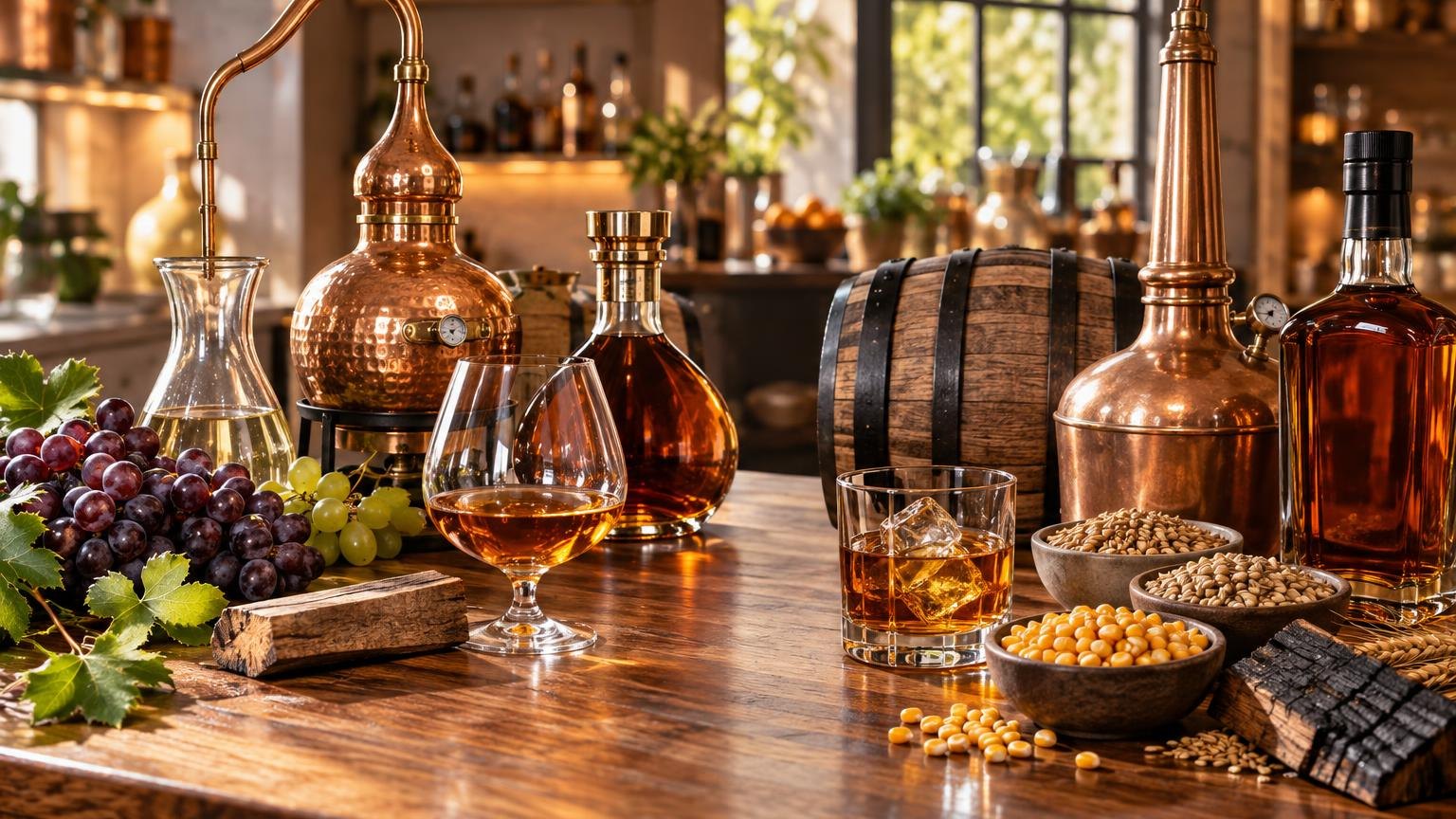
Bourbon and brandy follow fundamentally different aging regulations, driven by distinct governing bodies and production traditions.
These rules dictate barrel type, minimum duration, and labeling standards—producing spirits with radically different flavor profiles.
Bourbon Aging Requirements
Federal Standards of Identity (27 CFR §5.143) mandate bourbon age in new, charred oak containers. No minimum aging period exists for standard bourbon, but “straight bourbon” requires at least two years.
Bourbon aged fewer than four years must display an age statement on the label. Bottled-in-bond bourbon requires exactly four years of aging in a federally bonded warehouse under the Bottled-in-Bond Act of 1897.
Brandy Aging Requirements
Brandy regulations vary by country and style.
Cognac follows Bureau National Interprofessionnel du Cognac (BNIC) rules requiring aging in French oak barrels—typically Limousin or Tronçais—with strict minimum periods tied to grade designations.
American brandy carries no federal minimum aging requirement, though most producers age between two and twelve years. Armagnac permits both new and previously used oak barrels, unlike bourbon’s new-barrel mandate.
Barrel Comparison
| Factor | Bourbon | Brandy (Cognac) |
| Barrel type | New charred American oak | Used French oak (Limousin/Tronçais) |
| Barrel reuse | Prohibited—single use only | Reused across multiple batches |
| Char/toast level | Charred (typically #3 or #4 char) | Toasted, not charred |
| Typical capacity | 53-gallon (200 L) barrels | 300–350 L barriques |
| VS minimum age | N/A | 2 years |
| VSOP minimum age | N/A | 4 years |
| XO minimum age | N/A | 10 years (since 2018) |
Why It Matters for Flavor
- New charred oak gives bourbon intense vanilla, caramel, and smoky char notes within just 2–4 years of aging.
- Used French oak imparts subtler tannins, dried fruit, and floral qualities to brandy over longer maturation periods.
- Bourbon’s single-use barrel rule generates a massive surplus—spent bourbon barrels supply the Scotch, rum, and tequila industries worldwide.
Climate accelerates bourbon aging in Kentucky’s hot summers, where warehouse temperatures can exceed 100 °F (38 °C). Cognac’s temperate maritime climate produces slower, more gradual extraction from the wood.
Flavor Profiles Side by Side
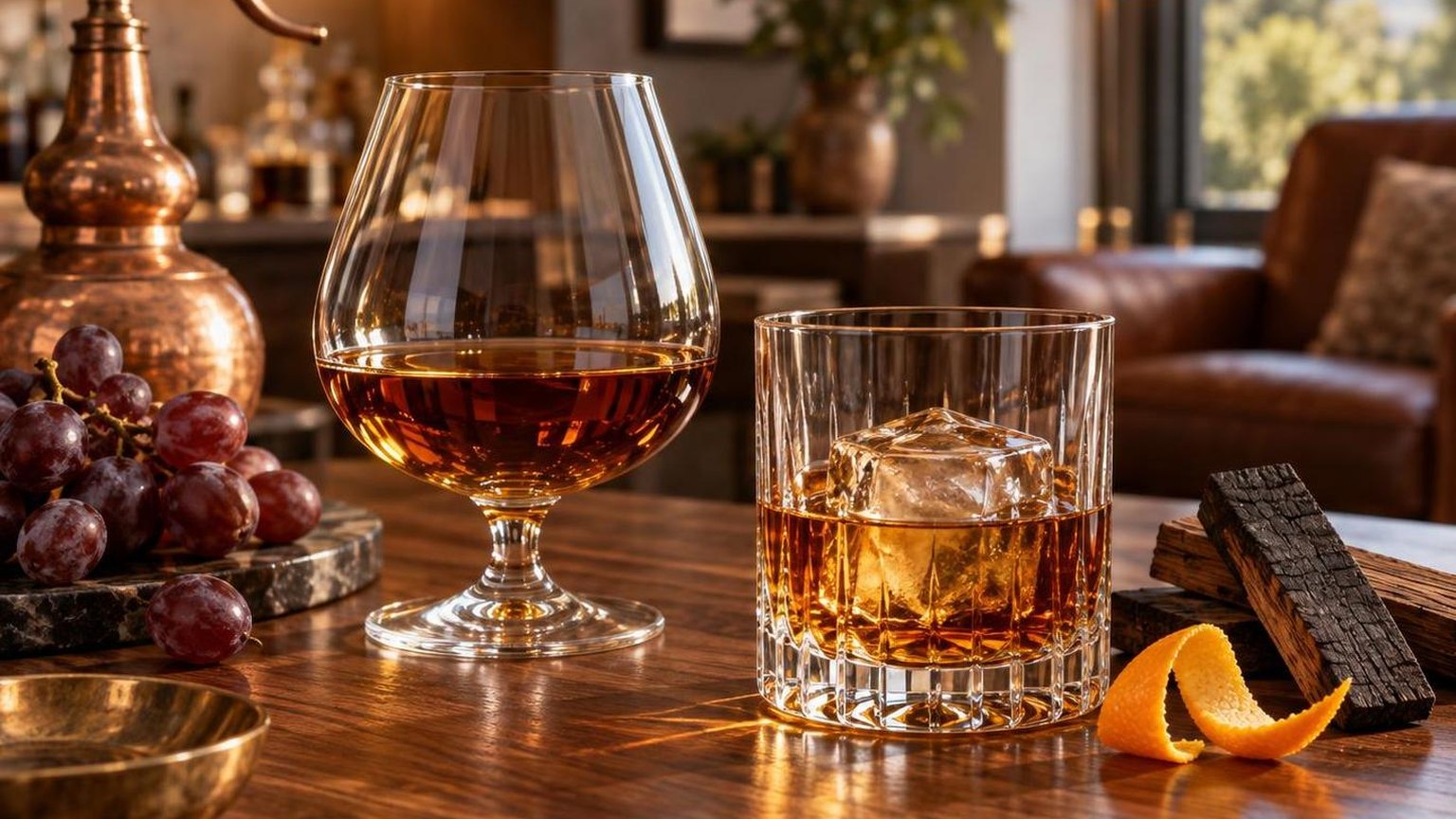
Brandy and bourbon deliver fundamentally different flavor architectures because they start from different raw materials—grapes versus grain.
These base ingredients, combined with distinct distillation methods and aging requirements, produce two spirits that rarely overlap on a tasting wheel.
| Attribute | Brandy (VS/VSOP/XO) | Bourbon |
| Primary flavors | Dried fruit, baked apple, apricot, honey | Caramel, vanilla, toasted oak, baking spice |
| Sweetness source | Residual fruit esters from grape distillation | Caramelized corn sugars (≥51% corn mash bill) |
| Typical ABV | 40–43% | 40–50% (often bottled at 45–50%) |
| Tannin level | Moderate (from Limousin or Tronçais oak) | Higher (from new charred American white oak) |
| Finish length | Soft, lingering warmth with floral notes | Bold, spicy, often peppery with cinnamon heat |
| Aging vessel | Used French oak barrels (often 270–350 L) | New charred American oak barrels (200 L standard) |
Brandy’s Fruit-Forward Character
Cognac-style brandies distilled in copper pot stills at around 70% ABV retain concentrated grape esters. A VSOP aged minimum 4 years develops butterscotch, quince, and white pepper.
XO expressions (minimum 10 years since 2018) gain leather, tobacco, and dried fig complexity.
Bourbon’s Grain-Driven Boldness
Federal standards require bourbon to enter new charred oak barrels at no more than 62.5% ABV.
That virgin oak contact extracts vanillin compounds rapidly—up to 60% of bourbon’s flavor comes directly from the barrel, according to industry estimates.
Higher-rye bourbons (20–35% rye in the mash bill) push toward black pepper and clove. Wheated bourbons like Maker’s Mark substitute wheat for rye, producing softer, bread-like sweetness with cherry and toffee notes.
Key Aromatic Differences
- Brandy nose: Orchard fruit, orange blossom, light nuttiness, subtle grape must
- Bourbon nose: Charred wood, brown sugar, corn sweetness, nutmeg
- Shared notes: Both can exhibit vanilla, caramel, and dried fruit after extended oak aging
Side by side, brandy reads as elegant and fruit-driven while bourbon presents as robust and wood-forward. The distinction traces back to one variable: fruit-based distillate versus grain-based distillate meeting different oak regimens.
Cocktail Uses for Each
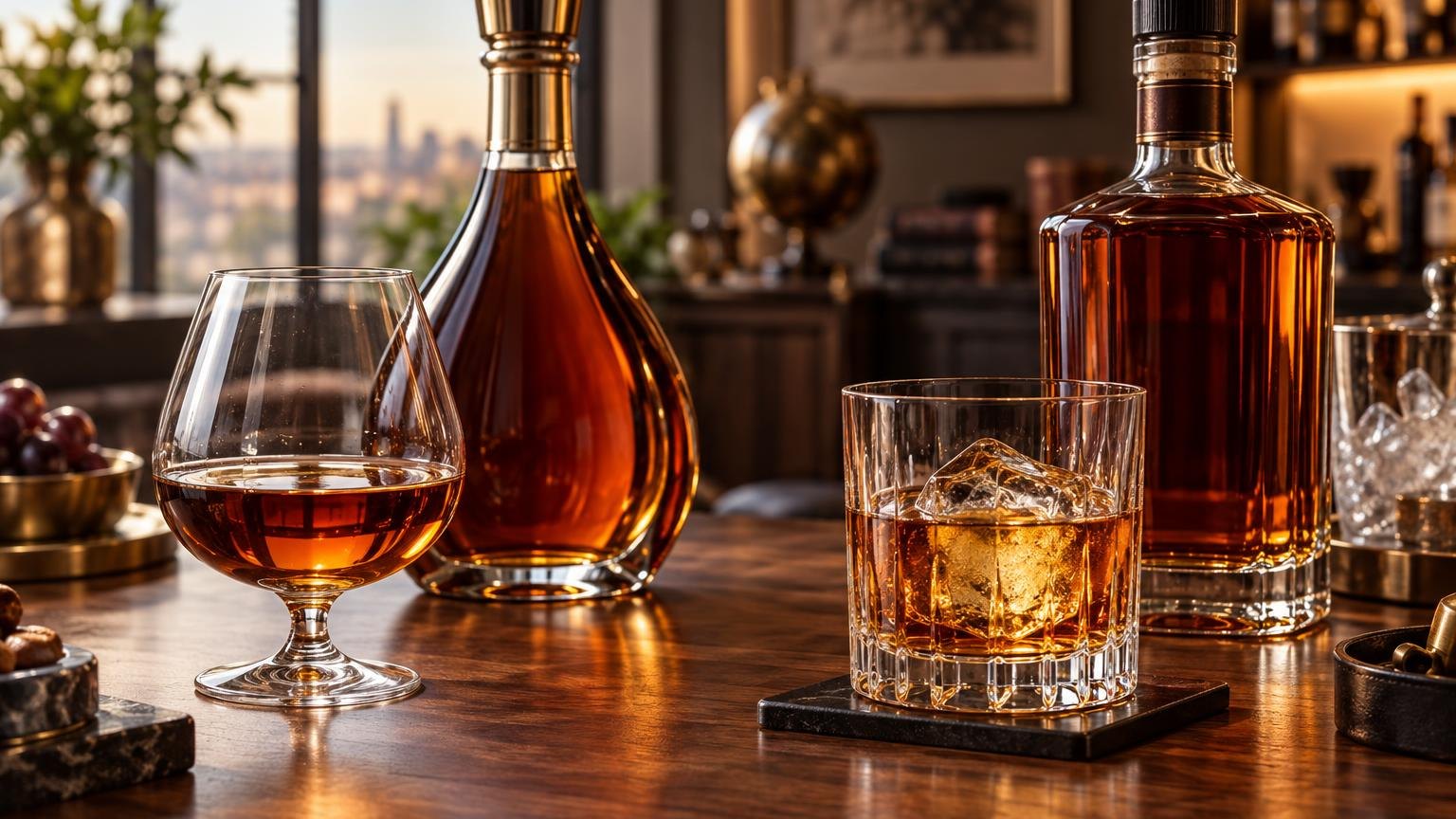
Brandy and bourbon anchor entirely different cocktail families.
Brandy drives French and classic pre-Prohibition recipes built on fruit-forward complexity, while bourbon dominates American whiskey cocktails that rely on caramel sweetness and oak spice.
Iconic Brandy Cocktails
- Sidecar — Created around 1922 at the Ritz Paris, combining 2 oz cognac, 1 oz Cointreau, and ¾ oz fresh lemon juice. The grape-based spirit’s acidity pairs naturally with citrus.
- Brandy Alexander — Equal parts cognac, crème de cacao, and heavy cream (typically ¾ oz each). A dessert cocktail dating to the early 1900s.
- Vieux Carré — Originated at New Orleans’ Hotel Monteleone in the 1930s, splitting the base between rye whiskey and cognac at ¾ oz each.
- Brandy Crusta — Invented by Joseph Santini in New Orleans around 1852, considered a direct ancestor of the Sidecar.
Iconic Bourbon Cocktails
- Old Fashioned — The most ordered cocktail in the U.S. according to Drinks International’s 2024 Annual Brands Report. Standard build: 2 oz bourbon, 1 sugar cube, 2–3 dashes Angostura bitters.
- Mint Julep — The official drink of the Kentucky Derby since 1938. Churchill Downs serves roughly 120,000 juleps over the two-day race weekend.
- Whiskey Sour — Documented as early as 1862 in Jerry Thomas’ Bar-Tender’s Guide. Standard ratio: 2 oz bourbon, ¾ oz lemon juice, ¾ oz simple syrup.
- Boulevardier — Bourbon replaces gin in a Negroni framework: 1½ oz bourbon, 1 oz sweet vermouth, 1 oz Campari.
Key Mixing Differences
| Factor | Brandy | Bourbon |
| Typical proof in cocktails | 80 proof (40% ABV) | 80–100 proof (40–50% ABV) |
| Best pairing flavors | Citrus, cream, stone fruit | Bitters, honey, mint, cherry |
| Sugar interaction | Needs less added sweetener | Handles heavier syrups well |
| Substitutability | Swaps with aged rum or calvados | Swaps with rye whiskey |
Brandy’s inherent fruitiness reduces the need for liqueurs in many recipes. Bourbon’s higher proof and tannic structure let it stand up to bold modifiers like Campari or amaro without losing presence.
Choosing Between Brandy and Bourbon
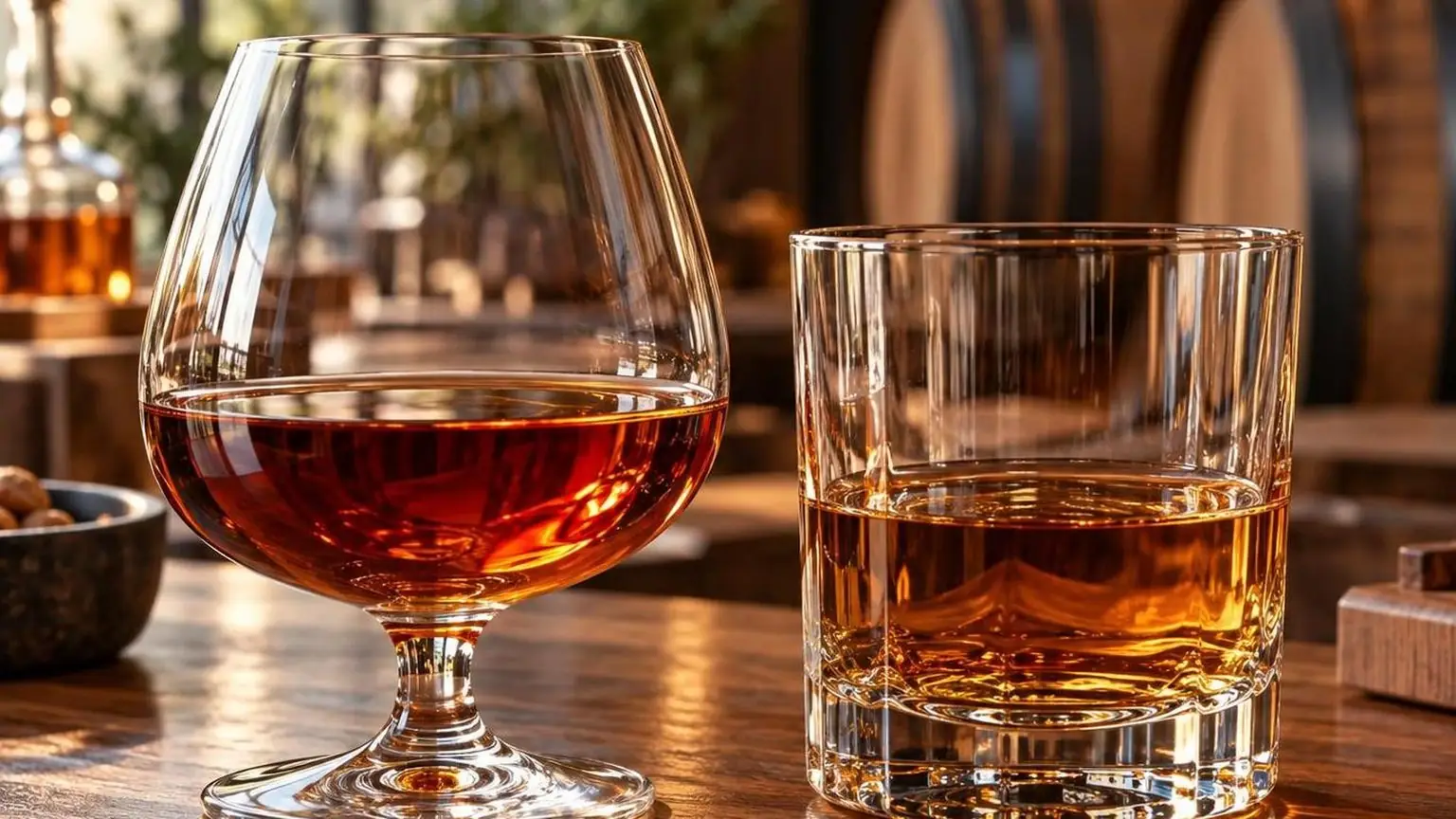
Brandy and bourbon serve different roles at the bar and on the palate. Your choice depends on base ingredient preference, flavor profile, cocktail intent, and budget range.
Key Decision Factors at a Glance
| Factor | Brandy | Bourbon |
| Base ingredient | Distilled from grapes or fruit | Minimum 51% corn mash bill |
| Typical ABV | 35–60% | 40–62.5% (max barrel entry 62.5%) |
| Aging requirement | VS: min 2 years; VSOP: min 4 years; XO: min 10 years (Cognac) | No minimum (except “straight”: 2+ years) |
| Calorie count (1.5 oz) | ~98 calories | ~97 calories |
| Entry-level price | $12–$25 | $15–$30 |
| Premium price range | $150–$3,000+ (Cognac XO) | $50–$300 (allocated bourbons higher) |
| Primary flavor notes | Dried fruit, floral, honey | Caramel, vanilla, oak, baking spice |
When to Reach for Brandy
- After-dinner sipping — its fruit-forward warmth suits digestif service at 60–65°F in a tulip glass.
- Classic cocktails like the Sidecar, Brandy Alexander, or Stinger that rely on grape-based spirit complexity.
- Wine drinkers transitioning to spirits, since brandy’s grape origin delivers familiar aromatic territory.
When Bourbon Is the Better Pick
- Robust cocktails — the Old Fashioned, Mint Julep, and Whiskey Sour all depend on bourbon’s corn-driven sweetness and oak backbone.
- Food pairings with smoked meats, barbecue, or charred dishes where bourbon’s charred new-oak aging mirrors the plate.
- Collectors and enthusiasts chasing allocated bottles from distilleries like Buffalo Trace or Four Roses limited editions.
Budget Considerations
Mid-shelf bourbon ($25–$50) consistently delivers high quality. Brands like Wild Turkey 101, Evan Williams Single Barrel, and Elijah Craig Small Batch score 87–92 points across major review platforms.
Comparable brandy quality demands spending slightly more. A reliable VSOP Cognac like Rémy Martin or Pierre Ferrand typically runs $35–$55 per 750 ml bottle.
Neither spirit contains carbohydrates or fat. Both fit low-carb diets when consumed neat or with zero-calorie mixers, making the choice purely one of flavor preference and occasion.
Questions Readers Ask
Is brandy made from grapes while bourbon is made from corn?
Brandy is distilled from fermented fruit juice—most commonly grapes, though apple (Calvados) and pear (Poire Williams) versions exist.
Bourbon, by U.S. federal law (27 CFR §5.143), must be produced from a grain mash containing at least 51% corn, with the remainder typically rye, wheat, and malted barley.
Do brandy and bourbon follow different aging requirements?
Bourbon must be aged in new, charred American oak barrels with no minimum duration for standard bourbon, though “straight bourbon” requires at least 2 years.
Brandy aging varies by style: Cognac mandates a minimum of 2 years in French oak, with VS, VSOP (4 years), and XO (10 years) tiers, while many brandies worldwide have no legal aging minimum at all.
How do the alcohol-by-volume levels compare between brandy and bourbon?
Bourbon enters the barrel at no more than 62.5% ABV and is bottled at a minimum of 40% ABV.
Brandy is typically distilled to between 35–60% ABV depending on regional regulations—Cognac, for example, comes off the pot still around 70% ABV and is bottled at a minimum of 40% ABV.
Why does brandy taste fruity while bourbon tastes sweet and oaky?
Brandy retains aromatic esters and volatile compounds from its fruit-based wash, producing notes of dried apricot, apple, and floral elements.
Bourbon’s high corn content generates natural sweetness, and its mandatory new charred oak barrels impart strong vanilla, caramel, and toasted wood flavors that dominate the palate.
Can brandy be produced anywhere while bourbon is restricted to the United States?
Brandy is produced globally with no geographic restriction on the general term—major producing countries include France, Spain, South Africa, and Peru.
Bourbon is legally defined as a product of the United States under federal standards of identity; contrary to popular belief, it does not have to be made in Kentucky, though roughly 95% of the world’s bourbon supply originates there.
Which is typically higher in calories per serving, brandy or bourbon?
At 40% ABV, a standard 1.5 oz (44 ml) pour of either spirit contains approximately 97–105 calories, with negligible difference between them since calories in unflavored distilled spirits come almost entirely from alcohol content.
The distinction arises with sweetened or flavored brandies, which can exceed 130 calories per serving due to added residual sugar—bourbon has no added sugar permitted by law.
Further Reading
- What Is the Difference Between Irish Whiskey and Bourbon?
- Is Rye Or Bourbon Better For Old Fashioned?
- Who Makes Kirkland Bourbon For Costco?
- Different Types of Bourbon and What Sets Them Apart
- Is Bourbon Gluten Free? Professional Answer
- Is Tennessee Whiskey Bourbon? The Most Accurate Answer
- All Alcohol Guides
- TTB – Distilled Spirits Standards of Identity (2023)
- FDA – CPG Sec 510.400 Brandy; Labeling (2024)
- USDA FoodData Central – Alcoholic Beverage, Distilled, Whisky (2024)
- USDA FoodData Central – Alcoholic Beverage, Distilled, Brandy (2024)
- National Institute on Alcohol Abuse and Alcoholism – What Is a Standard Drink? (2023)
- PubMed Central – Congener Content of Alcoholic Beverages and Residual Effects (2010)
- Kentucky Distillers' Association – History of Bourbon (2024)
- University of California Davis – Viticulture and Enology, Brandy Production (2023)
- MasterClass – Brandy vs. Whiskey: Differences Explained (2023)
- Britannica – Brandy: Definition, Production, Types (2024)





