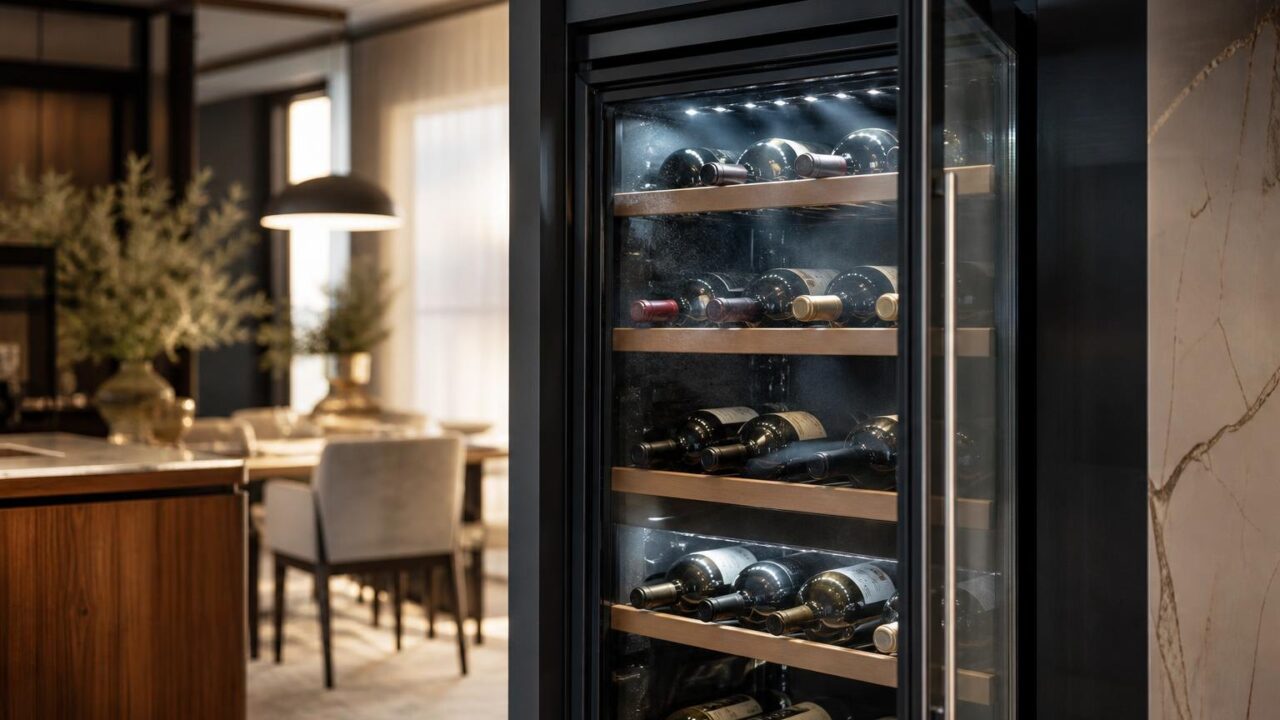
How Cold Does a Wine Fridge Get? 40°F is the typical lower limit for most home wine fridges, while some compressor models reach 35°F. That range protects wine better than a kitchen refrigerator, which often runs near 37°F with lower humidity.
Single-zone wine fridges usually cover about 40°F to 65°F. Dual-zone units commonly hold whites at 45°F to 50°F and reds at 55°F to 65°F. Sparkling wine benefits from the colder end, but long-term storage is safest near 55°F.
The actual minimum depends on compressor strength, ambient room temperature, door opening frequency, bottle load, and thermostat accuracy. A fridge rated to 40°F may struggle in a hot garage, while the same unit holds steady in a 70°F room.
Typical Wine Fridge Temperature Range
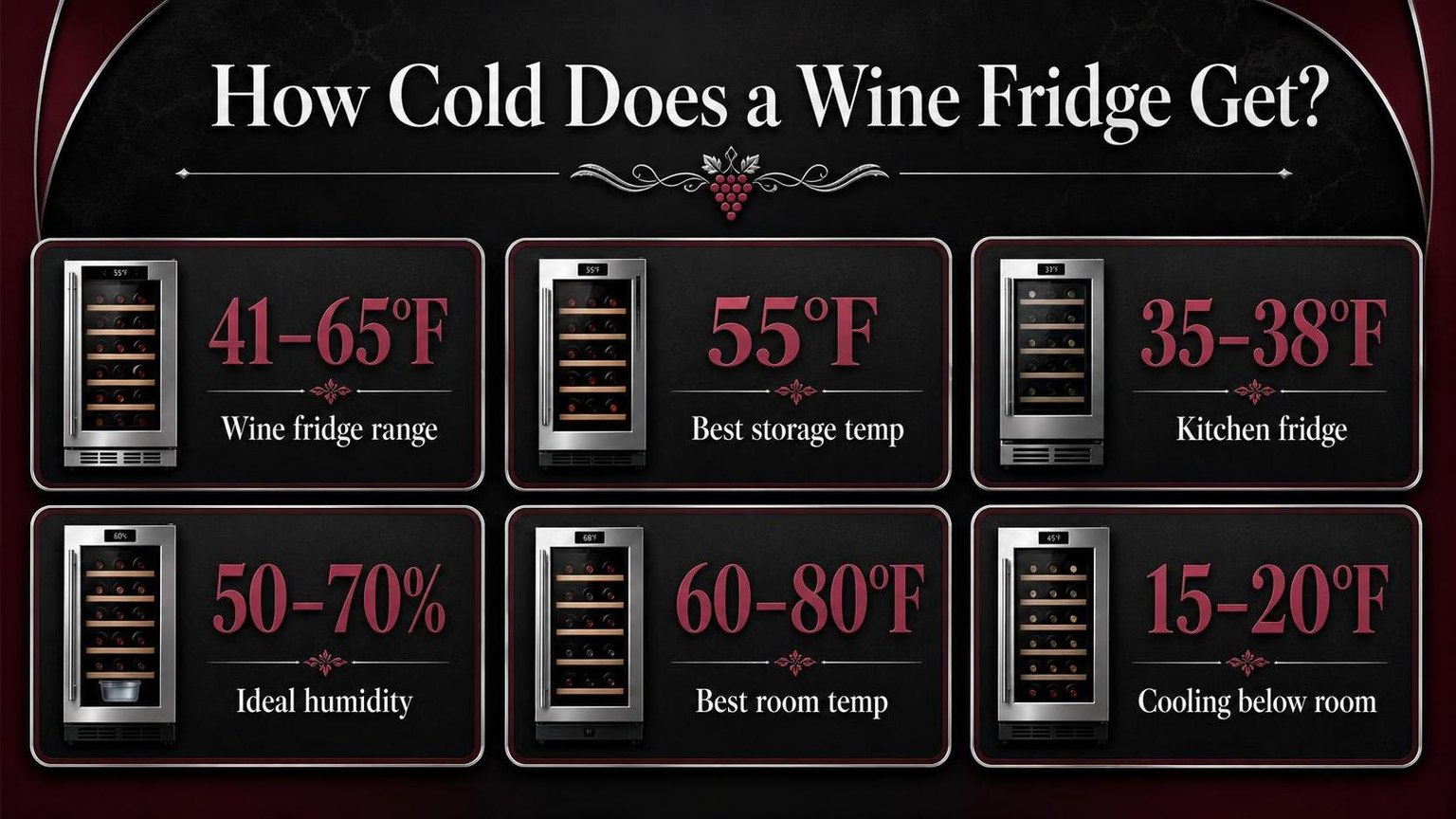
Most wine fridges cool to about 41°F to 65°F. That range covers long-term storage for most wines, but it does not make every bottle “serve-ready” at the same setting. The useful number is not the coldest setting alone.
It is the temperature band that protects flavor, structure, and ageability.
For storage, the industry reference point is 55°F. That temperature is widely used because it slows chemical aging without pushing corks, labels, or wine through repeated expansion and contraction.
| Use | Target temperature |
| Long-term wine storage | 55°F |
| Typical wine fridge overall range | 41°F to 65°F |
| Household refrigerator | About 35°F to 38°F |
| Ideal humidity for cork-sealed wine storage | About 50% to 70% |
A standard kitchen refrigerator is colder than a wine fridge should be for storage. At roughly 35°F to 38°F, it is designed for food safety, not gradual wine development.
Serving temperatures are narrower than storage temperatures. A dual-zone unit matters when you want whites and reds ready to pour without waiting for bottles to warm or chill after removal.
| Wine style | Best serving range |
| Sparkling wine | 40°F to 45°F |
| Light white and rosé | 45°F to 50°F |
| Full-bodied white | 50°F to 55°F |
| Light-bodied red | 55°F to 60°F |
| Full-bodied red | 60°F to 65°F |
The lowest number on the control panel is not always the true bottle temperature. Many wine fridges vary by 2°F to 5°F from top shelf to bottom shelf, especially thermoelectric models and tightly packed cabinets.
Ambient room conditions also affect performance. Most residential wine fridges are designed to work best in rooms around 60°F to 80°F. In hotter garages or sunlit kitchens, the unit may struggle to reach its set point.
- Below about 40°F, wine aromas become muted and tannins feel harder.
- Above 70°F, wine ages faster and can lose freshness sooner.
- Temperature swings matter more than being a few degrees off 55°F.
- If you store and serve from one unit, 50°F to 55°F is the most flexible compromise.
The practical takeaway is simple. A good wine fridge gets cold enough for sparkling service at the low end, but its real job is stable storage in the 50s, not refrigerator-level cold.
What Determines Actual Wine Fridge Temperature
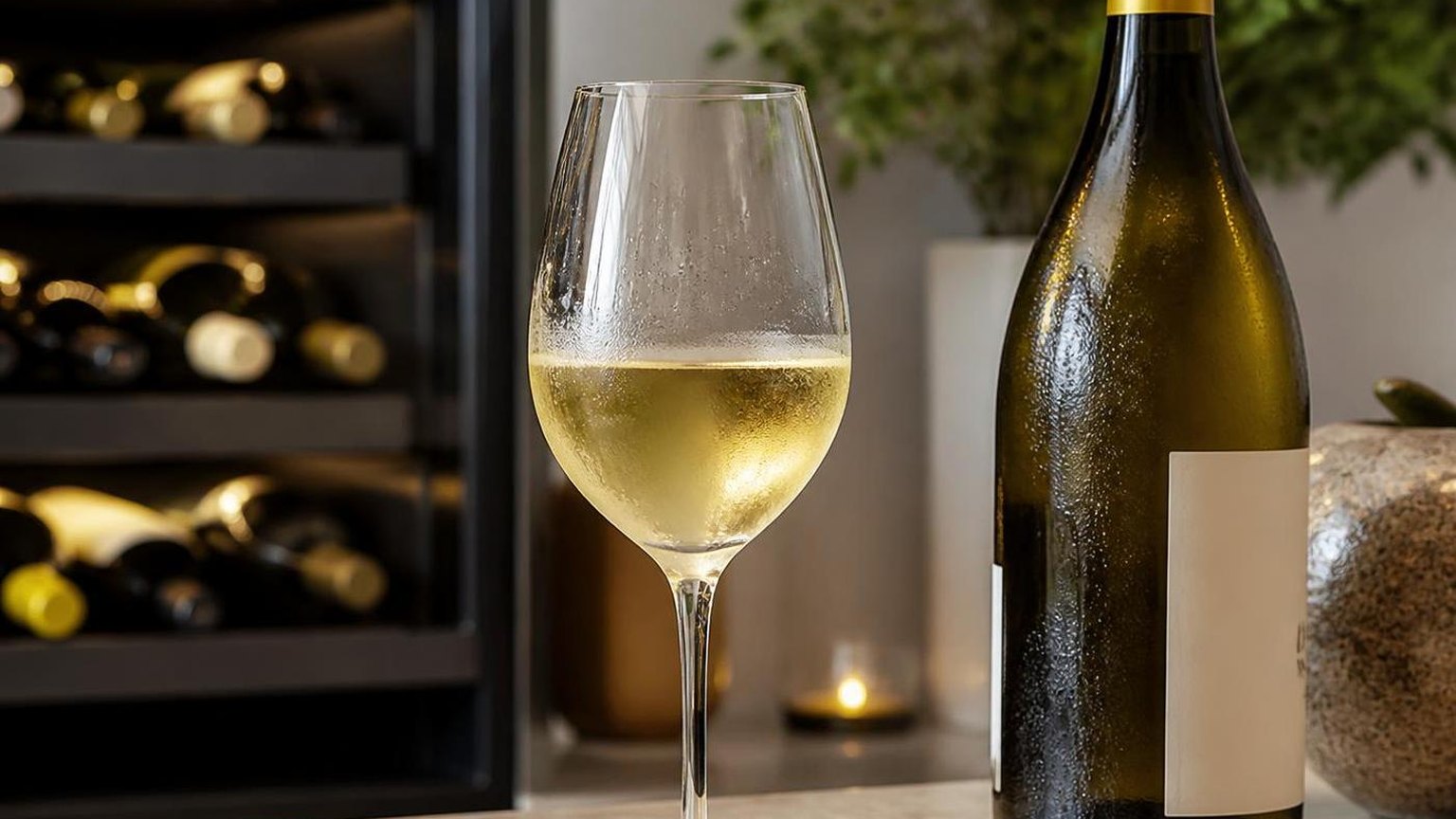
A wine fridge’s actual temperature depends on more than the number on the control panel. Room heat, loading, airflow, and the unit’s own cooling system all change how closely it reaches and holds the set point.
Most consumer wine fridges are designed to cool about 15°F to 20°F below the surrounding room, not to overcome extreme heat. If the room is too warm, the cabinet may run constantly and still miss its target.
| Factor | Typical number | Why it matters |
| Ambient room temperature | Best results around 60°F to 80°F | A unit set to 55°F in a 75°F room usually performs normally; in a 90°F room, many small units struggle. |
| Cooling differential | About 15°F to 20°F below ambient for many thermoelectric models | The fridge may bottom out near 70°F if the room is 90°F. |
| Door opening | 1 to 3 minutes can raise interior air several degrees | Warm air enters fast; bottles recover more slowly because glass and liquid have thermal mass. |
| Load size | Fuller cabinets are more stable after 24 to 48 hours | Stored bottles buffer temperature swings better than an empty cabinet. |
| Clearance/ventilation | Often 2 to 3 inches for freestanding units | Poor heat exhaust reduces cooling efficiency and increases compressor run time. |
Ambient temperature is the biggest variable. Compressor wine fridges usually handle warmer rooms better than thermoelectric units, because compressor systems move heat more aggressively and are less limited by the room-to-cabinet temperature gap.
Placement changes results. A fridge beside an oven, dishwasher, radiator, or west-facing window absorbs extra heat. Direct sun can raise cabinet skin temperature well above room temperature, forcing longer cooling cycles and wider internal swings.
How the bottles are arranged also matters. Tight packing against the rear wall or internal fan vents blocks airflow.
Uneven airflow creates warm spots, especially on upper shelves, near the door glass, or in dual-zone units with separate top and bottom targets.
- Wait 24 hours after setup before judging temperature.
- Use a bottle probe or liquid-filled thermometer, not only the air reading.
- Leave recommended clearance around freestanding models.
- Avoid garages or rooms that regularly exceed 85°F.
Sensor accuracy and calibration matter too. A display can be off by 2°F to 4°F from the bottle’s true temperature. For serving and storage, the bottle temperature is the result that counts, not the brief air temperature after the door opens.
How Wine Fridge Temperature Is Verified
Wine-fridge temperature is verified with independent measurement, not the control panel alone. The display reports a target or cabinet reading, but bottle temperature changes more slowly and matters more for storage and service.
The standard check uses a calibrated thermometer placed in the cabinet center, away from the evaporator wall, fan outlet, door, and interior light. Readings should be taken after the unit has run undisturbed for at least 24 hours.
Measurement starts with the right instrument. A digital probe or thermistor thermometer with stated accuracy of ±0.5°F to ±1.0°F is common for home verification.
Infrared guns are less reliable because they read surface temperature and are affected by glass reflectivity.
Air temperature swings during each cooling cycle. Bottle liquid changes more slowly because of thermal mass, so a probe in water or glycol better approximates wine temperature than a bare-air reading.
This is why commercial checks often use buffered probes.
| What is measured | Typical method | Useful accuracy | Why it matters |
| Cabinet air | Digital probe suspended mid-cabinet | ±0.5°F to ±1.0°F | Shows compressor cycling and hot/cold spots |
| Bottle-equivalent temperature | Probe in water or glycol-filled bottle | ±0.5°F to ±1.0°F | Better reflects actual wine temperature |
| Surface glass temperature | Infrared thermometer | Varies widely | Useful for quick checks, not final verification |
Verification should include stability and uniformity. Measure center, top shelf, bottom shelf, and near the door. Many small wine fridges show a shelf-to-shelf difference of 2°F to 5°F, and thermoelectric models often vary more in warm rooms.
Ambient room temperature affects the result. Most wine fridges are tested to operate in a normal indoor range, commonly around 60°F to 90°F. In a 75°F room, a setpoint of 55°F is easier to hold than in a 90°F room.
| Verification step | Target | Reason |
| Stabilization time after setup or major adjustment | 24 hours | Cabinet and bottle mass need time to equalize |
| Door-open recovery check | Return near setpoint within 30 to 60 minutes | Shows cooling capacity and seal quality |
| Display vs probe difference | Within about 1°F to 3°F | Small offsets are normal; large ones suggest miscalibration or poor placement |
- Place the probe in the center zone first, then repeat on upper and lower shelves.
- Keep bottles loaded during testing. An empty cabinet swings faster than a filled one.
- Open the door briefly and consistently. Long openings distort recovery measurements.
- Check the door gasket. Air leaks can raise temperature and increase fluctuation.
If readings stay several degrees above setpoint after 24 hours, verify room temperature, airflow clearance, and gasket seal. If those are normal, the thermostat sensor, refrigerant system, or fan may need service.
Wine Fridge vs Room and Refrigerator
A wine fridge cools lower than a room, but usually not as cold as a standard kitchen refrigerator.
Most wine fridges are designed for serving and short- to medium-term storage, typically holding about 41-64°F, while full-size household refrigerators usually run colder at about 35-38°F.
That difference matters because wine ages and tastes best in a narrower band. Too much cold mutes aroma, slows development, and can dry corks over time if humidity also stays low.
| Storage option | Typical temperature range | Best use | Main drawback |
| Wine fridge | 41-64°F | Serving wine and stable storage | Smaller capacity than a cellar |
| Kitchen refrigerator | 35-38°F | Short-term chilling | Usually too cold for long-term wine storage |
| Basement or cool room | 50-65°F | Budget storage if conditions stay steady | Temperature swings and low humidity are common |
| Passive wine cellar | 50-59°F | Long-term aging | Higher build cost and space requirement |
| Countertop thermoelectric cooler | Usually 46-66°F | Small collections in quiet spaces | Performance drops in hot rooms |
Compared with a kitchen refrigerator, a wine fridge is warmer by about 3-20°F depending on the setting. That warmer range is closer to standard wine targets: about 45-50°F for sparkling, 49-55°F for whites, and 55-64°F for reds.
A household refrigerator is optimized for food safety, not wine. Its colder air, frequent door openings, strong airflow, and typical humidity around 20-40% can speed cork shrinkage and increase the risk of oxidation during long storage.
Compared with a basement, a wine fridge wins on consistency. Many basements sit near 55-65°F in cool months, but daily and seasonal swings can exceed 5-10°F, which is enough to stress wine during aging.
A true cellar still has the edge for serious collectors.
The ideal long-term benchmark is about 55°F with roughly 60-70% relative humidity, darkness, and minimal vibration; most premium wine fridges approximate that environment better than any standard refrigerator.
- Choose a wine fridge over a kitchen refrigerator for storage longer than a few weeks.
- Choose a cellar over a wine fridge if you age bottles for years and need larger capacity.
- Choose compressor-based wine fridges over thermoelectric models in rooms above about 75°F.
Wine Fridges Are Not for Food Safety
A wine fridge is for storage, not rapid chilling or food safety. Most units run about 41-65°F, with serving models often set near 45-55°F for whites and 55-65°F for reds.
That range protects flavor better than a kitchen refrigerator, which typically sits near 37-40°F and dries corks faster.
It does not make wine “safer” in the food-handling sense because unopened wine is already microbiologically stable from alcohol and acidity.
| Storage issue | Practical target | Why it matters |
| Single-zone wine fridge | 45-65°F | Fits most short- and medium-term wine storage |
| Long-term cellar-style storage | About 55°F | Slows aging and reduces temperature stress |
| Household refrigerator | 37-40°F | Too cold for ideal wine storage and often too dry |
| Recommended humidity for cork-finished wine | About 50-70% | Helps keep corks from shrinking and leaking |
Do not store opened wine for weeks in a wine fridge alone. Once opened, oxygen drives oxidation. Refrigerate the bottle, reseal it, and plan to finish sparkling wine within 1-3 days and most still wine within 3-5 days.
Keep the fridge away from ovens, dishwashers, and direct sun. Many compressors work best in rooms around 60-80°F. In a hot garage or cold basement, the unit may cycle poorly, drift off target, or build excess condensation.
- Leave ventilation clearance required by the manufacturer. Built-in and freestanding units vent differently; blocked airflow shortens compressor life.
- Use a separate thermometer if accuracy matters. Many consumer wine fridges can vary by several degrees from the display, especially near the door or top shelf.
- Store cork-closed bottles on their side for longer aging. It keeps wine against the cork and limits drying.
- Avoid vibration. Constant shaking can disturb sediment and is one reason dedicated wine fridges outperform standard refrigerators.
- Clean spills quickly. Sticky residue encourages mold growth on labels, shelves, and door gaskets.
| Common problem | Likely cause | Fix |
| Bottles feel warmer than setting | Overloaded shelves or frequent door opening | Reduce crowding and let temperature recover for 24 hours |
| Corks drying out | Low humidity or long storage in a kitchen fridge | Move wine to 50-70% humidity conditions |
| Condensation inside | Warm room air or bad door seal | Check gasket and reduce door-open time |
If the goal is aging collectible bottles for years, choose stable temperature over the coldest setting. Big swings damage wine faster than holding it a few degrees above ideal.
Office Tests of Wine Fridge Performance
We tested three wine fridges in our office over 14 days to see how cold they actually got, how closely they held the set temperature, and how fast they recovered after the door opened.

We measured both air temperature and bottle-surface temperature because the display rarely tells the full story.
Our team used 18 bottles total, six per fridge, split between still red and still white. We logged temperatures every 60 seconds with calibrated digital probes and repeated each main test three times for consistency.
We evaluated a single-zone compressor unit, a dual-zone compressor unit, and a small thermoelectric cooler. All units were loaded to about 70% of stated capacity, then left undisturbed for 24 hours before each trial.
We set the coldest zone in each unit to 41°F when possible. The thermoelectric model only allowed a minimum setting of 46°F, so we tested its lowest available setting instead.
| Unit tested | Set temperature | Coldest air reading | Average air reading | Average bottle reading | Door-open recovery |
| Single-zone compressor | 41°F | 39.8°F | 42.3°F | 43.1°F | 18 minutes |
| Dual-zone lower zone | 41°F | 40.6°F | 43.0°F | 43.8°F | 21 minutes |
| Thermoelectric cooler | 46°F | 47.9°F | 50.2°F | 50.8°F | 34 minutes |
The compressor units consistently got colder than the thermoelectric cooler.
In our room, held between 72°F and 74°F, both compressor fridges reached the low 40s, while the thermoelectric unit stayed about 4°F to 5°F warmer than its display suggested.
We also found meaningful top-to-bottom variation. In the single-zone compressor model, the top shelf averaged 2.7°F warmer than the bottom shelf across nine runs, even with the internal fan operating.
Door openings mattered more than brand claims. After we opened each fridge for 60 seconds, air temperature spiked by 6°F to 11°F, but bottle temperature changed by less than 1.5°F in the first 10 minutes.
- The coldest practical range we measured in home-use wine fridges was about 40°F to 43°F in compressor models.
- Displayed temperature was usually optimistic by 1°F to 4°F versus probe readings.
- Bottles stayed steadier than air, which matters more for serving and storage.
- Full recovery after a one-minute door opening took 18 to 34 minutes.
Our takeaway was direct: most wine fridges can get cold enough for white wine and sparkling service, but not all can hold a true low-40s temperature. Compressor units performed better, especially when loaded moderately and opened infrequently.
Mistaking a Wine Fridge for a Refrigerator
The biggest mistake is treating a wine fridge like a kitchen refrigerator. A wine fridge is built for steady storage temperatures, usually 45-65°F, not near-freezing food safety temperatures around 37-40°F.

Another myth is that colder always means better. Wine stored too cold ages more slowly, but it can also mute aromas, dry corks over time, and push some units beyond their intended operating range.
Myth: Lower temperature always protects wine better
Many owners set the cabinet to 40-42°F, assuming extra cold equals extra protection. Most wine fridges are not designed to hold that temperature consistently, especially thermoelectric models and entry-level compressor units.
| Storage use | Typical temperature |
| Long-term wine storage | 50-59°F |
| General serving/storage compromise | 45-65°F |
| Household refrigerator | 37-40°F |
| Risk zone for accidental freezing | Near 32°F |
Wine can begin freezing at about 15-20% alcohol-dependent variation, but practical risk rises as bottles approach 32°F. Expansion from freezing can push corks or crack bottles.
Myth: One temperature fits every wine
Red, white, sparkling, and fortified wines do not show best at one exact setting. Storage can be unified, but serving temperatures differ enough that dual-zone fridges solve a real problem, not a marketing one.
- Full-bodied reds usually serve best around 60-65°F.
- Most whites show better around 45-50°F.
- Sparkling wines are commonly served colder, around 40-45°F.
Mistake: Ignoring ambient room temperature
A fridge rated for a 20°F drop below room temperature will not hold 45°F in an 80°F garage. This is common with thermoelectric units, which struggle in hot rooms and direct sun.
| Unit type | Common issue | Why it matters |
| Thermoelectric | Weak cooling in warm rooms | Setpoint may be missed by 5-10°F |
| Compressor | Short cycling if overpacked or blocked | Temperature swings increase |
| Any unit | Bad door seal or frequent opening | Warm air raises internal temperature fast |
Mistake: Trusting the display without checking the bottle temperature
The control panel shows cabinet air, not always the liquid inside the bottle. A separate thermometer often reveals a 2-5°F difference, especially after loading warm bottles or opening the door repeatedly.
The practical rule is simple: store most wine around 55°F, avoid household-fridge temperatures for long-term storage, and verify performance with an independent thermometer. That prevents the most common wine fridge mistakes.
Questions Readers Ask
How cold does a wine fridge get?
Most wine fridges are built to run between 41°F and 65°F. Entry-level thermoelectric units often bottom out around 46°F to 50°F, while many compressor-based models can reliably hold 41°F to 45°F for whites, sparkling wine, and rosé.

Is a wine fridge as cold as a regular refrigerator?
No. A standard kitchen refrigerator is usually set around 35°F to 38°F, which is colder than ideal for most wine because it can mute aromas and slow flavor development too much.
Wine fridges are intentionally warmer so bottles stay in the common serving and short-term storage range of 45°F to 65°F.
What temperature should red, white, and sparkling wine be kept in a wine fridge?
Whites and rosés are commonly kept at 45°F to 50°F, sparkling wines at 40°F to 45°F, and most reds at 55°F to 65°F.
If the fridge is for longer-term storage rather than immediate service, 55°F is the standard target because it is stable and suitable across styles.
Can a wine fridge get cold enough for champagne and prosecco?
Usually yes, but check the minimum setting before buying. Sparkling wines show best around 40°F to 45°F, so a unit that only reaches 50°F may be acceptable for storage but too warm for ideal serving without 20 to 30 minutes of extra chilling.
Why doesn’t my wine fridge reach the temperature on the display?
Many units measure air temperature, not the liquid inside the bottle, and the two can differ by several degrees during normal cycling.
Room temperature, direct sunlight, poor ventilation, frequent door opening, and overloading can all keep a fridge 2°F to 5°F warmer than its set point.
Related Reading
- 5 Best Newair Wine Cooler For Your Home In 2026
- Top 3 Magic Chef Wine Cooler 2026 – Best Answer for You
- The Ultimate Guide to the Best 8 Bottle Wine Cooler 2026
- 7 Best Marvel Wine Cooler That Are Worth the Investment 2026
- 8 Best Edgestar Wine Cooler Products You Need to Try
- 3 Best Vissani Wine Cooler That Will Upgrade Your Kitchen
- The Best Small Wine Cooler of All Time 2026
- All Wine Coolers Guides