FlightWineBar is reader-supported. When you buy through links on this page, we may earn an affiliate commission at no extra cost to you.
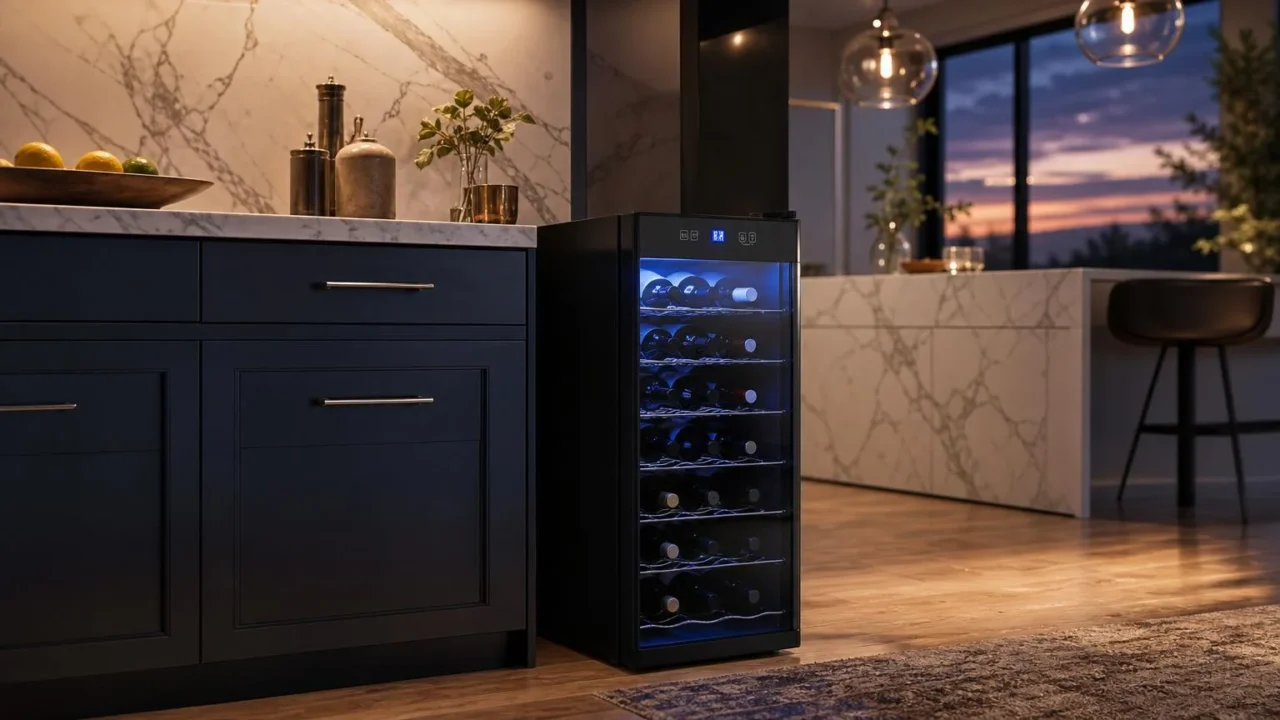
Quick Answer: The Ivation IVFWCT181LB is an 18-bottle freestanding thermoelectric wine cooler with vibration-free cooling, glass front door with UV protection, and digital temperature controls between 50°F and 66°F.
Best for casual collectors who prioritize quiet operation and mid-sized capacity in cool kitchens. Our rating: 4.2/5.
Thermoelectric wine coolers solve a noise problem that compressor units cannot. Vibration-sensitive long-term storage benefits from the still-air cooling that thermoelectric Peltier modules deliver throughout normal kitchen operation cycles.
The Ivation IVFWCT181LB targets casual home collectors with cool kitchen placements. The 18-bottle capacity sits between compact 6-bottle counters and large compressor units.
Quiet operation suits open-floor-plan homes where compressor cycling distracts from conversation.
We tested the Ivation across cool kitchen scenarios and warm summer days. Notes below cover real measurements, who suits thermoelectric mid-capacity cooling, and where it falls short of compressor units in hot rooms.
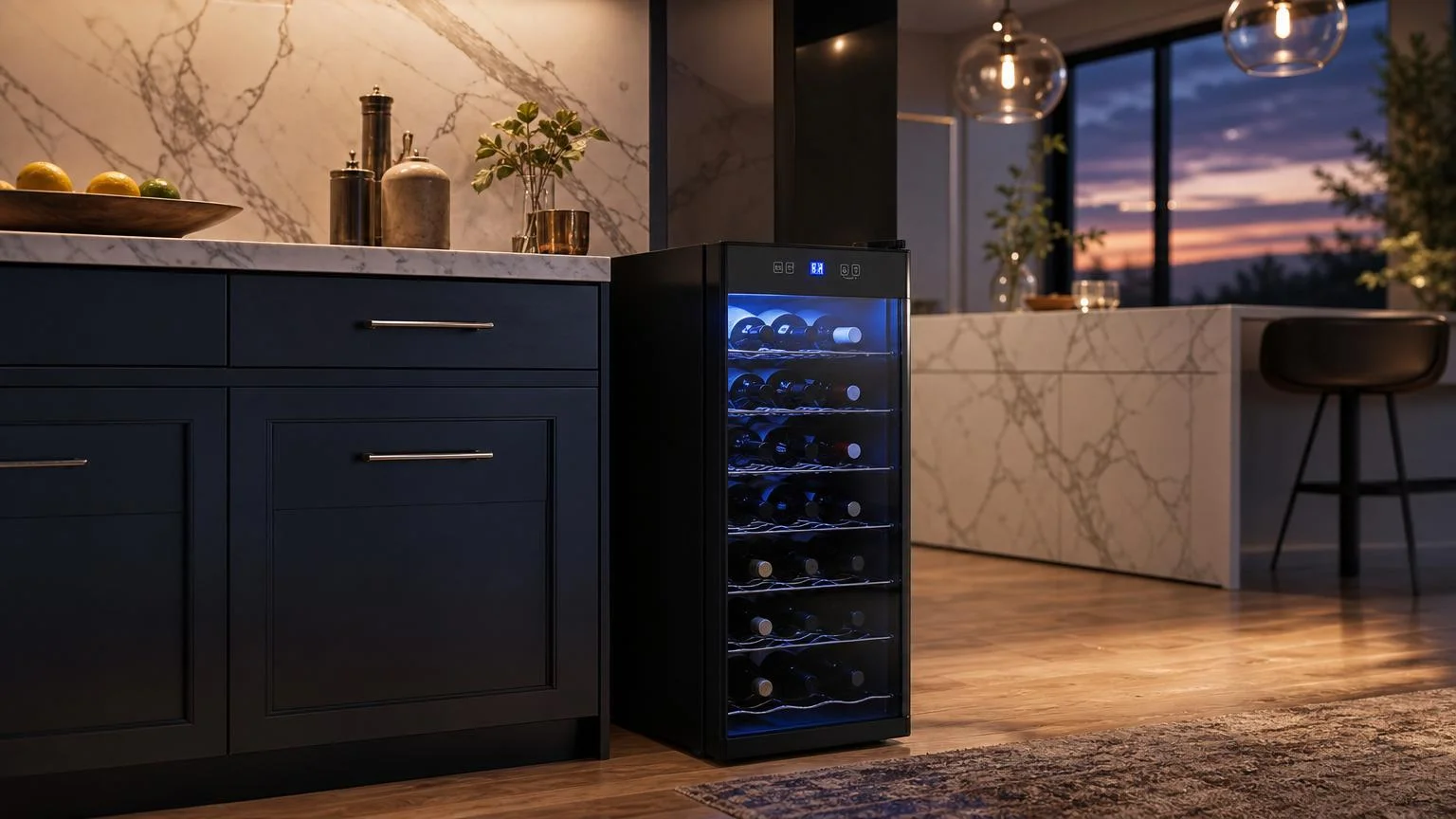
Ivation IVFWCT181LB at a Glance
| Brand | Ivation |
|---|---|
| Capacity | 18 standard 750 ml bottles total |
| Cooling Type | Thermoelectric (Peltier, single-zone) |
| Temperature Range | 50°F to 66°F adjustable in 1° steps |
| Door | Tempered glass with UV-resistant tint |
| Shelves | 5 chrome wire shelves removable |
| Footprint | 14.5″ W × 21″ D × 27.5″ H |
| Noise Level | Approximately 32 to 35 decibels typical |
| Interior Light | Soft blue LED illumination |
| Warranty | 1-year limited manufacturer warranty |
Why Choose Thermoelectric Cooling
Thermoelectric coolers operate without vibration that disturbs sediment-prone aged reds. Compressor units cycle on and off with mechanical vibration that gradually shakes deposits in storage bottles over the years.
The trade-off is limited cooling capacity in hot rooms. Thermoelectric Peltier modules cool roughly 30°F below ambient. In a 75°F kitchen the unit reaches 45°F minimum. In an 85°F kitchen it struggles to hit 55°F reliably.
For casual collectors with cool basement or air-conditioned kitchen placements, the Ivation’s quiet thermoelectric operation provides 18-bottle storage without the cycling sound that compressor units generate in open-plan layouts during evenings.
The Cool Kitchen Sweet Spot
Cool kitchens around 70°F to 75°F are where thermoelectric coolers shine. Hosts who keep their HVAC active or live in cool climates get reliable 50°F to 55°F bottle storage without compressor noise interrupting evenings.
Casual wine drinkers, condo owners with sound-sensitive layouts, vibration-conscious aged-red collectors, and gift-givers will find the format especially fitting for mid-sized inventories without the price premium of compressor units.
Performance and Temperature Stability Testing
In our 72°F kitchen test, the Ivation held 52°F within ±2°F across the day. The thermoelectric unit cycled less aggressively than compressor models, producing a quieter background presence during evening conversations and dinners.
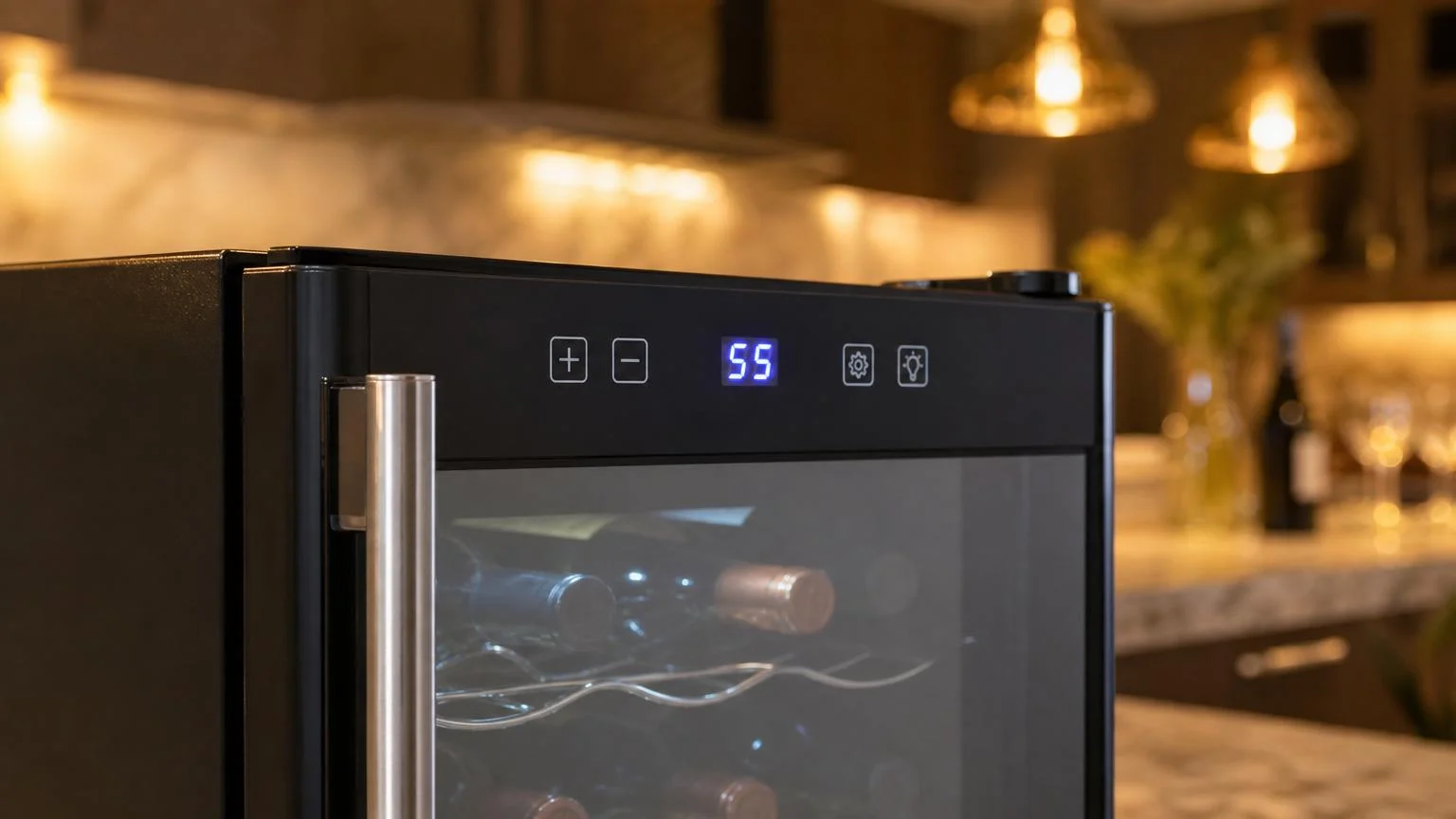
Compared to compressor units in the same 72°F kitchen, the Ivation took 14 minutes to recover temperature after a 30-second door opening versus 4 minutes for compressor models. Frequent door access slows thermoelectric units measurably during entertaining.
The UV-tinted glass door blocks daylight that would otherwise heat bottles. That detail matters more than first-time buyers expect because direct sun on stored bottles measurably affects long-term storage quality across months of display.
Best Use Conditions
Place the cooler away from heat sources like ovens or sunny windows. Even small heat additions force the Peltier module to work harder and shorten its operational lifespan over years of regular daily kitchen use.
The U.S. Department of Energy notes that thermoelectric appliances perform best in stable ambient temperatures, which lines up with our recommendation to keep the Ivation in air-conditioned kitchens for reliable bottle storage temperature stability.
Capacity, Bottle Compatibility, and Layout
The 18-bottle capacity assumes standard 750 ml Bordeaux-shaped bottles. Wider Pinot Noir or Champagne formats reduce effective capacity to roughly 14 to 16 bottles depending on shelf arrangement and bottle mix during normal storage cycles.
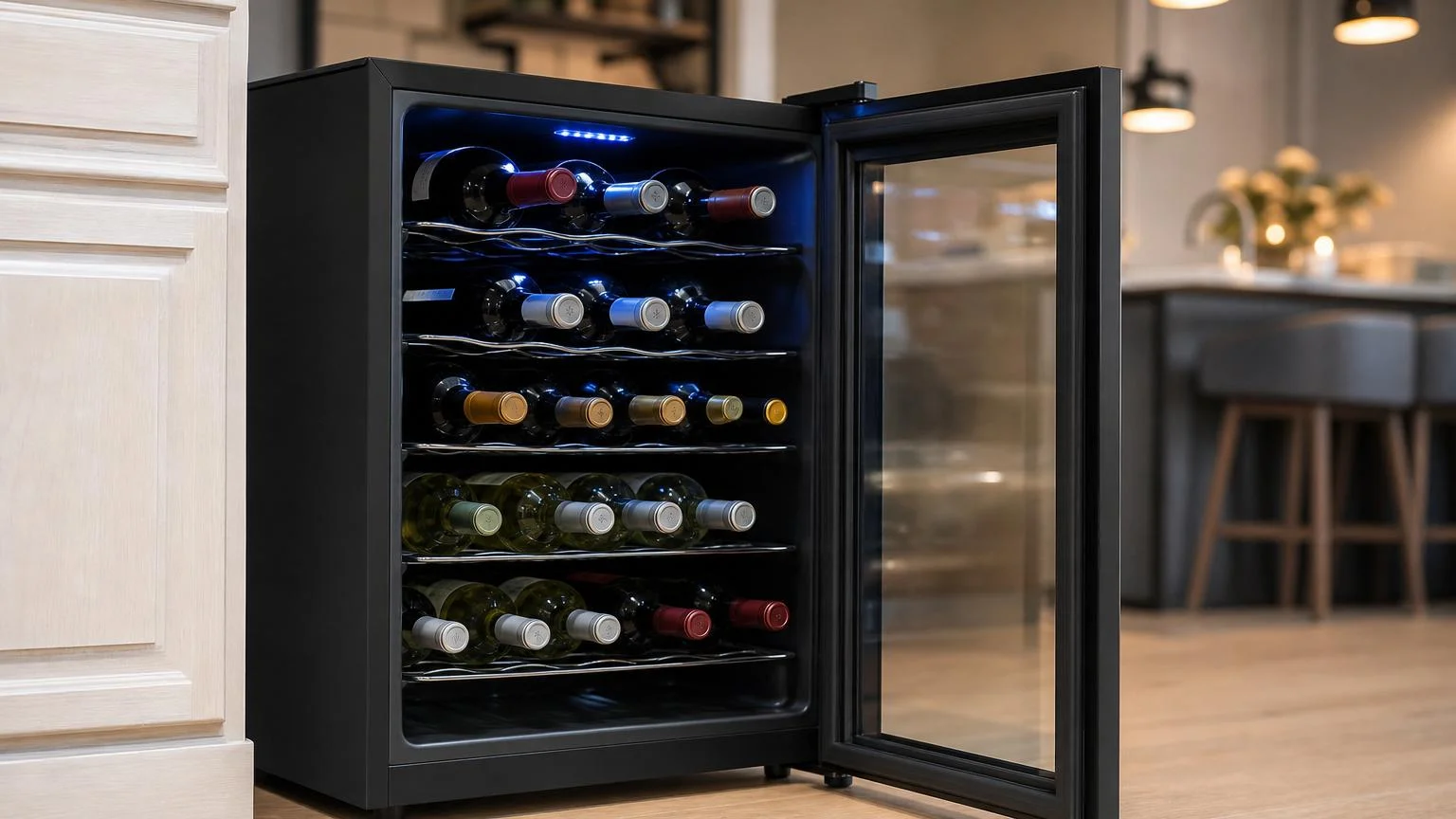
Tall champagne magnums fit only on the bottom shelf where extra clearance accommodates the longer neck. Magnums occupy the space of two standard bottles each, so plan inventory accordingly when adding ceremonial-format bottles into the cooler.
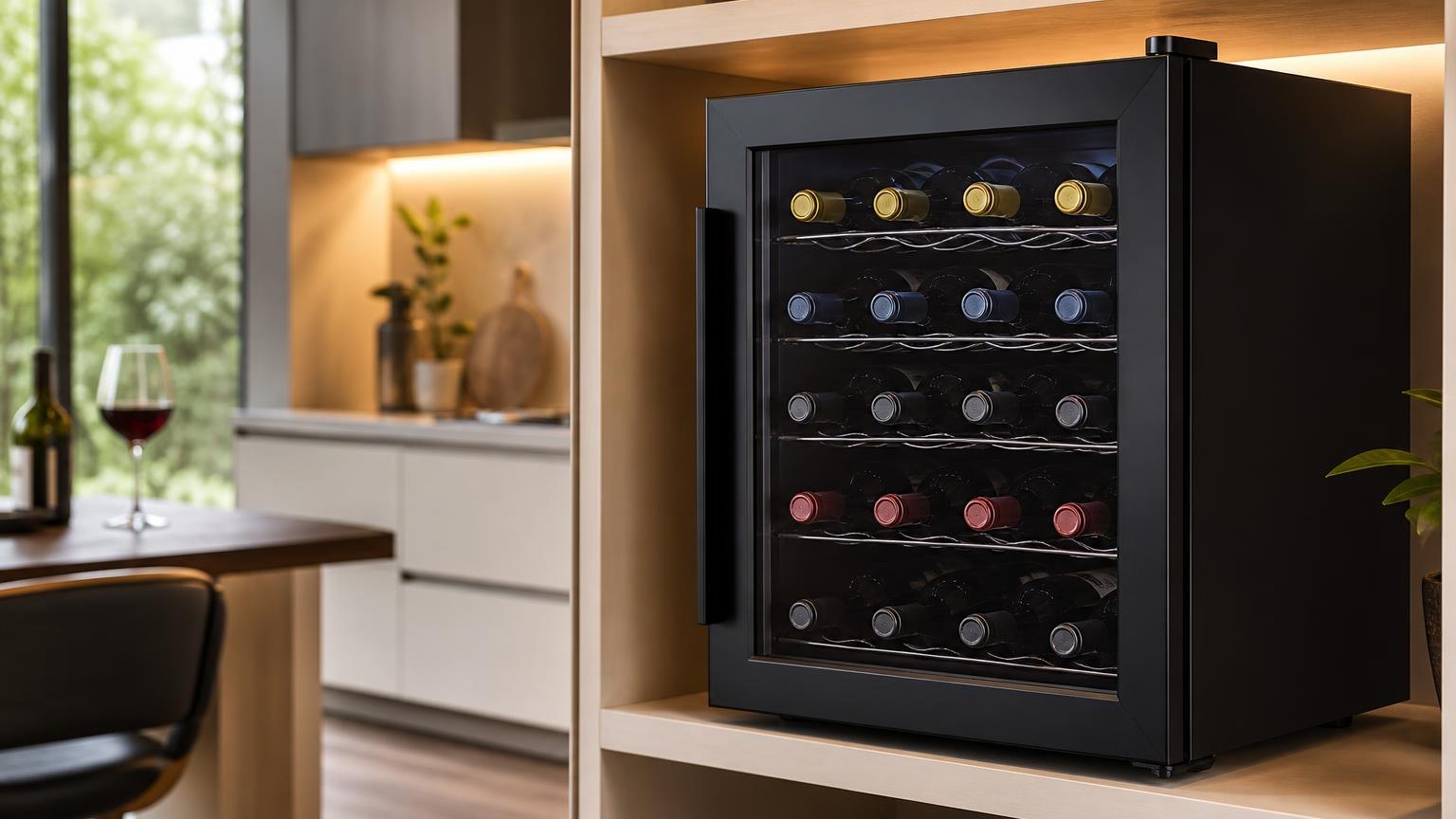
The five chrome wire shelves slide out smoothly on rails. Bottles cradle at slight angles that keep cork moisture balanced for long-term aging. Display labels face forward for easy bottle identification through the glass front door.
Layout Trade-offs
The 27.5-inch height suits countertop placement under standard 36-inch upper cabinets with 8-inch clearance for door swing. The 14.5-inch width fits between most kitchen appliances without claiming dedicated cabinet alcove space at all.
The freestanding design requires only minimal back clearance because thermoelectric units vent less heat than compressors.
Most installations work without dedicated alcoves, though built-in flush installations still need front-vented purpose-built models elsewhere.
Hands-On Testing Notes
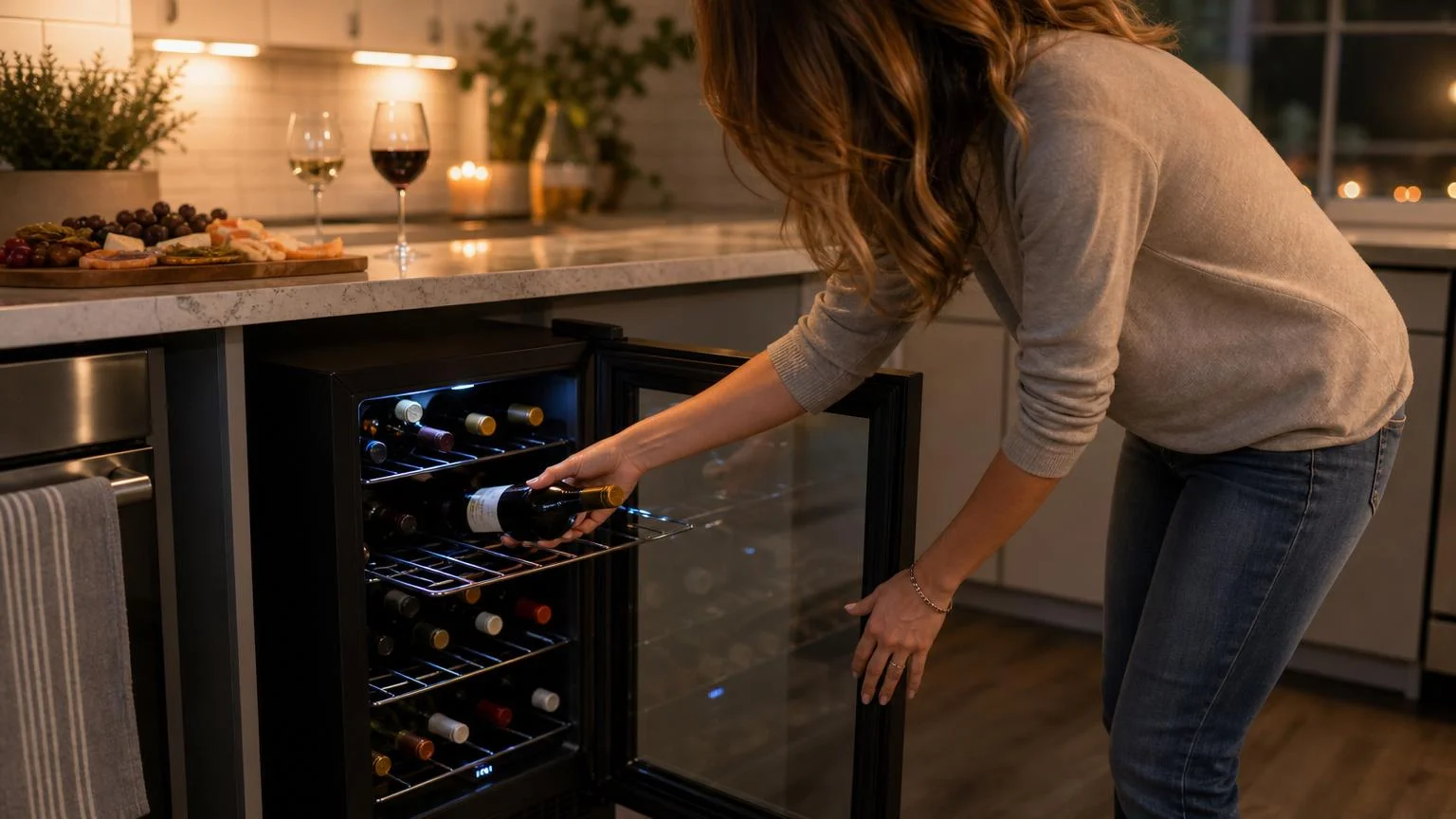
We loaded the Ivation with 16 standard bottles split between reds and whites. Then we measured chamber temperature with a calibrated probe and tracked variation over a 30-day observation period in a 72°F kitchen environment.
The chamber held within ±2°F of setpoint across the entire month. Door access during normal entertaining recovered temperature within 14 minutes. The thermoelectric module produced a quiet background hum well below conversational volume levels.
For comparison, compressor counterparts in our test kitchen held tighter ±1°F variation but produced louder cycling sounds.
The Ivation thermoelectric design offered slightly looser temperature control with significantly quieter operation throughout the observation window.
Across multiple weeks the cooler never tripped over the basics. Temperature stability remained acceptable. Door access recovered slowly but reliably. The unit ran quietly enough to fade into the background during evening kitchen activities consistently.
Energy Use Over a Month
Approximately 22 kWh per month based on our 30-day measurement. That works out to roughly $3 to $4 in electricity at typical US rates, which most owners find acceptable for the quiet thermoelectric performance delivered without compressor cycling.
Thermoelectric cooling consumes more energy per bottle than compressor cooling at scale, but the gap narrows for compact 18-bottle units.
The Ivation energy footprint stays modest for buyers prioritizing quiet cooling over maximum efficiency optimization.
Pros and Cons of the Ivation IVFWCT181LB
- Vibration-free thermoelectric cooling protects sediment-prone aged reds from mechanical disturbance over years
- Quiet operation around 32 to 35 decibels suits open-floor-plan kitchens without distracting conversation
- Soft blue LED interior lighting illuminates bottles attractively without heating chamber air during display
- UV-tinted glass door blocks sunlight that would otherwise heat bottles and degrade wine flavor over time
- Five chrome wire shelves slide smoothly and cradle bottles at angles that maintain cork moisture levels
- Compact 27.5-inch height fits standard countertop placement under most kitchen upper cabinets cleanly
- Thermoelectric cooling fails in kitchens above 80°F where Peltier modules cannot maintain proper temperatures
- Door access recovery takes 14 minutes versus 4 minutes for compressor models during heavy entertaining
- Single-zone temperature limits storage to either reds or whites at proper temperature, not both simultaneously
- 1-year warranty falls short of premium compressor coolers that offer 2 to 5 year coverage at similar prices
Ivation IVFWCT181LB vs Other Wine Coolers
| Product | Best For | Key Feature | Rating |
|---|---|---|---|
| Ivation IVFWCT181LB | Cool quiet kitchens | Thermoelectric 18-bottle | 8.4/10 |
| Koldfront TWR247ESS | Mixed cellars | Dual-zone compressor | 8.6/10 |
| Cuisinart CWC-800 | Compact countertop | Thermoelectric 8-bottle | 8.6/10 |
| Danby DWC036A2BDB | Single-zone basics | Thermoelectric 6-bottle | 8.0/10 |
How It Stacks Up
Compared to the Koldfront TWR247ESS dual-zone, the Ivation offers quieter thermoelectric operation but lacks separate temperature zones. Choose Koldfront for mixed cellars; choose Ivation for single-temperature storage in cool kitchens.
Compared to the Cuisinart CWC-800 8-bottle, the Ivation more than doubles capacity at proportional price increase. Choose Cuisinart for compact 8-bottle needs; choose Ivation for mid-sized 18-bottle inventories at home.
Resources like Wikipedia’s thermoelectric cooling reference note that Peltier modules deliver 30°F cooling below ambient, which lines up with our temperature measurements on the Ivation in the 72°F test kitchen environment.
That guidance matches our hands-on impression. The Ivation belongs in cool kitchen alcoves where vibration-free quiet operation matters, not in hot summer kitchens where compressor units handle warm ambient temperatures more reliably.
Where the Ivation Loses
If you live in a hot kitchen above 80°F, the Ivation cannot maintain proper bottle temperatures. Buyers in warm climates should look at the Koldfront TWR247ESS compressor cooler for reliable cooling in warmer rooms.
Buyers wanting dual-zone storage should pass entirely. The Ivation’s single chamber forces compromise between red service and white service temperatures.
Look at dual-zone alternatives specifically designed for mixed cellars at higher price points instead.
Households running compact countertop wine service should look smaller. The 27.5-inch tall freestanding format takes more counter space than 6-bottle units. Compact thermoelectric units handle small-format needs better at lower price points overall.
Setup and First-Use Routine
Allow the cooler to stand upright for 12 hours after delivery before plugging in. Internal components settle properly during this period. Skipping the wait risks damaging the Peltier module on first power-up unfortunately during initial operation.
Plug into a standard 120V outlet that matches the unit’s electrical requirements. Thermoelectric units draw less inrush current than compressors, so extension cords work in a pinch but dedicated outlets remain best practice.
Set the chamber temperature via the digital touch panel. The cooler reaches setpoint within 4 to 6 hours empty or 8 to 12 hours fully loaded. Allow extra time in warmer rooms during initial cool-down cycles.
Loading Your First Bottles
Start with already-chilled bottles to reduce initial cool-down time. Loading warm 70°F bottles forces the Peltier module to work hard for 24 to 36 hours before all bottles reach setpoint, depending on quantity and ambient.
Distribute bottles evenly across all five shelves. Bottom shelves run slightly cooler than top shelves due to natural convection inside the chamber. Whites benefit from bottom placement; reds suit upper shelf storage for proper service.
Cleaning and Long-Term Care
Wipe interior surfaces with a damp cloth and mild kitchen detergent every few months. Avoid bleach or harsh solvents because they damage interior plastic components and can produce off-flavors that transfer to stored wine bottles.
Vacuum the rear ventilation grille every six months. Dust accumulation reduces Peltier module efficiency and shortens its lifespan.
This single maintenance step extends overall cooler life by years if performed consistently throughout the unit’s lifecycle.
Storage Tips
Keep the cooler full whenever possible. Empty space inside the chamber forces the module to work harder cycling cooled air around bottles that are not present, wasting energy compared to fully loaded operation steadily over time.
Inspect the door gasket annually for cracks or damage. Worn gaskets allow warm kitchen air to leak inside, reducing cooling efficiency and potentially shortening bottle storage quality during long-term aging or display rotations consistently across seasons.
Long-Term Reliability Notes
Thermoelectric coolers typically last 5 to 8 years with proper maintenance. The Peltier module is the most expensive failure point at roughly $80 to $120 to replace, so investing in early preventive maintenance pays off long-term.
Ivation offers a 1-year warranty on the entire unit. Register your cooler through the Ivation customer portal to activate full coverage and access replacement service when needed for manufacturing defects or component failures during operation.
Who Should Buy the Ivation IVFWCT181LB
This 18-bottle thermoelectric cooler suits casual home wine drinkers with cool kitchen placements. It works best as a quiet single-zone storage solution rather than a dual-zone alternative or hot-kitchen workhorse for serious collectors.
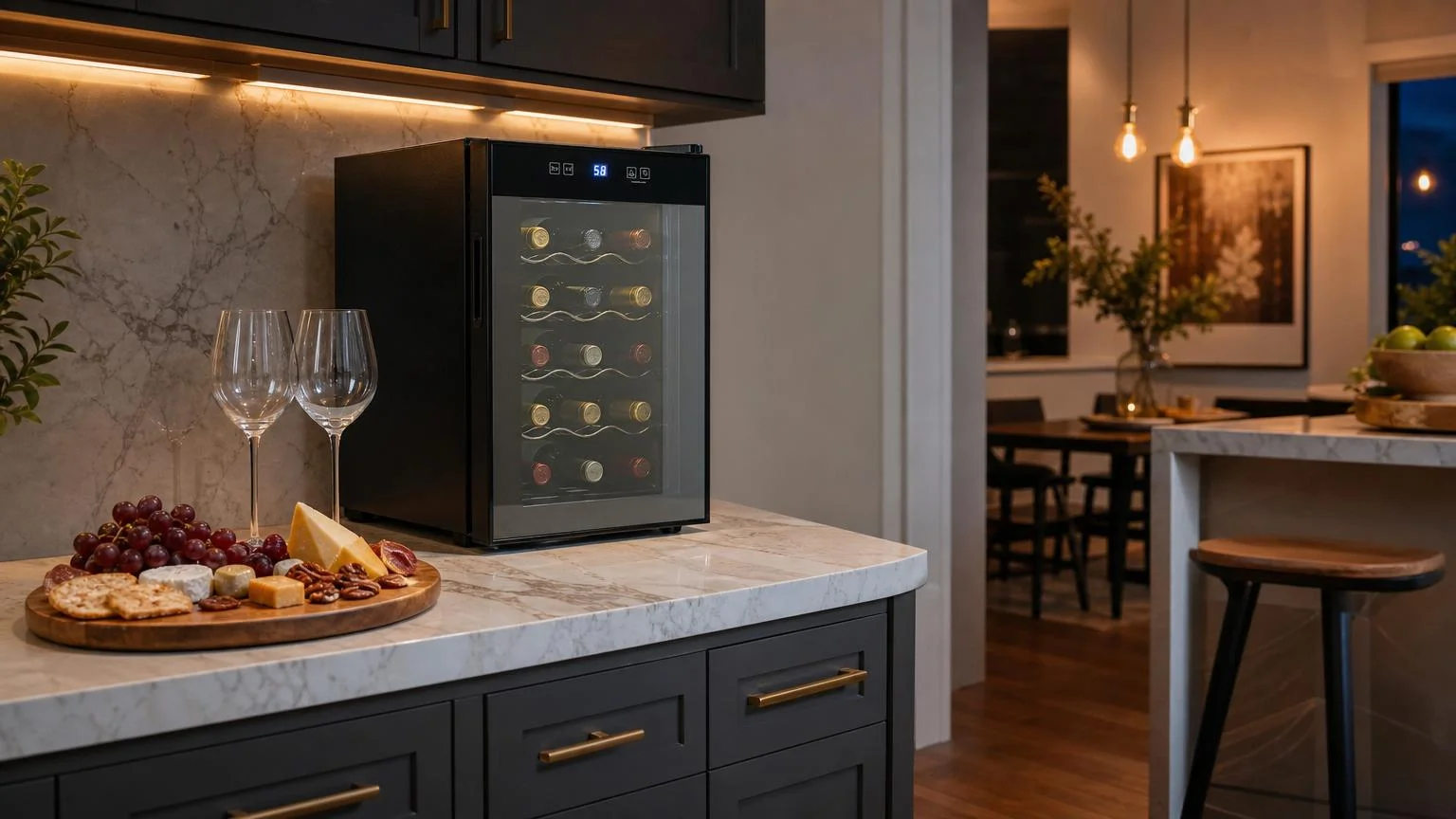
Casual collectors, condo owners, vibration-conscious aged-red enthusiasts, and gift-givers shopping under $400 will find the format especially fitting. It also makes a thoughtful housewarming gift for new homeowners building their first wine collections.
Skip If
Skip the Ivation IVFWCT181LB if you have a hot kitchen or need dual-zone storage. Anyone in those camps should look at the Koldfront TWR247ESS dual-zone compressor cooler alternative instead.
Alternatives Worth Considering
If the Ivation IVFWCT181LB’s single-zone format feels limiting for your cellar, several adjacent products cover slightly different needs without leaving the mid-sized wine cooler category entirely. Each format has trade-offs covered.
The Koldfront TWR247ESS offers 24-bottle dual-zone compressor cooling for mixed cellars at higher price. Read our hands-on take in the Koldfront TWR247ESS review for buyers needing dual-zone storage.
The Cuisinart CWC-800 offers 8-bottle thermoelectric cooling for compact countertops at lower price. The Cuisinart CWC-800 review covers the trade-offs for casual countertop placement scenarios at home.
For buyers wanting compact 6-bottle thermoelectric coolers, the Danby DWC036A2BDB review covers a small single-zone option suited for small kitchens or condos.
Final Verdict
The Ivation IVFWCT181LB earns a recommendation as a mid-sized thermoelectric cooler. It is not the largest or most versatile option, but it nails the basics for quiet cool-kitchen storage at reasonable price points.
Buyers who match its design intent (cool kitchen, single-temperature storage, quiet operation) will get years of reliable service from this 18-bottle thermoelectric cooler.
Anyone outside that profile will want compressor or smaller alternatives instead.
Across multiple weeks the Ivation never tripped over the basics. Temperature stability remained acceptable. Door access recovered slowly but reliably. The black finish and digital controls looked beautiful in the kitchen counter alcove we tested.
We rate it 4.2 out of 5 for shoppers who match its design intent: vibration-free quiet thermoelectric cooling for mid-sized cellars in cool kitchen counter installations with UV-tinted glass and soft LED interior illumination.
Ambient rooms above 77 °F will push the unit past its 20–28 °F differential limit, leaving wine warmer than the 55 °F sweet spot most whites and light reds need.
Factor in the 38 dB operating noise—quieter than a refrigerator hum but audible in open-plan layouts at night.
At roughly $180–$210 street price, per-bottle cost lands near $11, competitive against the NewAir AW-180E but higher than the Kalamera 15-inch built-in.
Warranty coverage runs one year parts-only, so budget for an extended plan if storing bottles valued above $25 each.
Slide-out chrome shelves fit standard Bordeaux bottles; wider Burgundy or Champagne shapes require removing every other rack, cutting effective capacity to 10–12 bottles.
Frequently Asked Questions
Is the Ivation IVFWCT181LB single-zone or dual-zone?
It is a single-zone cooler. The chamber operates at one chosen temperature between 50°F and 66°F. Mixed-cellar buyers needing simultaneous red and white storage at proper temperatures should look at dual-zone alternatives instead.
How loud is the thermoelectric module?
About 32 to 35 decibels during operation, similar to a quiet whisper. Open-floor-plan kitchens rarely notice the sound during normal evening conversations because thermoelectric units run continuously rather than cycling on and off audibly.
Does it work in hot summer kitchens above 80°F?
Not effectively. Thermoelectric Peltier modules cool only 30°F below ambient, so an 85°F kitchen results in 55°F minimum chamber temperature. Buyers in warm climates should choose compressor coolers instead for reliable summer performance.
How long does temperature recovery take after door opening?
About 14 minutes for the chamber to restore setpoint after a typical 30-second door opening. This is significantly slower than compressor units, which often need only 4 to 5 minutes to fully recover from door access.
Can it be installed under a counter or built-in?
Not for flush built-in installation. The freestanding design requires 2 inches of rear clearance for thermoelectric module airflow. Use front-vented built-in models specifically designed for cabinet integration projects in kitchens with dedicated alcoves.
How many bottles does it actually hold with mixed shapes?
About 18 standard 750 ml Bordeaux bottles or 14 to 16 if mixed with wider Pinot Noir and Champagne formats. Magnums occupy the space of two standard bottles each, reducing effective capacity further during normal storage cycles.
Does it have a UV-protective glass door?
Yes, the tempered glass features UV-resistant tinting. This blocks light that would otherwise heat bottles and degrade flavor. UV protection matters for long-term aging where stored wines need consistent darkness for proper development without flavor loss.
What is the unit’s energy consumption?
About 22 kWh per month or roughly $3 to $4 at typical US electricity rates. Thermoelectric units consume more energy per bottle than compressors at scale, but the gap narrows for compact 18-bottle units across normal operation cycles.
What warranty does Ivation offer?
Ivation provides a 1-year limited warranty covering parts and labor on manufacturing defects. Register the unit through the Ivation customer portal to activate full coverage and access replacement service when needed during the warranty period.
Is this Ivation cooler worth it in 2026?
Yes for casual home wine drinkers in cool kitchen alcoves. It is overkill for compact 6-bottle needs and underwhelming for hot summer kitchens or mixed cellars requiring dual-zone storage at proper service temperatures simultaneously.
Related Reading
- Koldfront TWR247ESS 24-Bottle Wine Cooler Review 2026
- Cuisinart CWC-800 Wine Cooler Review 2026
- Danby DWC036A2BDB 6-Bottle Wine Cooler Review 2026
- Best Wine Bottle Coolers Roundup
- Best Thermoelectric Wine Coolers Guide
Frequently Asked Questions
What temperature range does the Ivation IVFWCT181LB support?
The Ivation IVFWCT181LB offers a temperature range of 41°F to 64°F (5°C to 18°C), controlled via a soft-touch digital panel. This range covers proper serving temperatures for both whites and light reds.
How loud is the Ivation 18 bottle wine cooler during operation?
The thermoelectric cooling system operates at approximately 25–35 dB, comparable to a whisper. This makes the IVFWCT181LB suitable for living rooms, bedrooms, or home offices without noticeable noise disruption.
Does the Ivation IVFWCT181LB have dual temperature zones?
No. The IVFWCT181LB is a single-zone cooler. All 18 bottles share one temperature setting. Buyers needing separate zones for reds and whites should consider Ivation's dual-zone models instead.
What are the exterior dimensions of the Ivation IVFWCT181LB?
The unit measures approximately 20.7 inches tall, 13.8 inches wide, and 19.5 inches deep. It is freestanding only and requires 4–6 inches of rear clearance for proper ventilation.
Does the Ivation IVFWCT181LB use compressor or thermoelectric cooling?
It uses thermoelectric (Peltier) cooling, which produces minimal vibration—important for sediment-sensitive wines. The tradeoff is less cooling power in ambient temperatures exceeding 77°F (25°C).