drinks that taste like red bull are sweet-tart, berry-citrus sodas with sharp acidity, candy-like aromatics, and a lightly medicinal finish.
That flavor usually comes from layered notes of mixed berries, lemon-lime, tropical fruit, vanilla, and a brisk carbonated bite.
This guide compares the closest store-bought options, including energy-style sodas, mixers, and zero-sugar alternatives with a similar red-fruit tang.
Use it to find a substitute for mocktails, party punches, bar service, or straight sipping when you want that recognizable bright, fizzy, fruit-candy profile.
Red Bull’s Core Flavor Profile
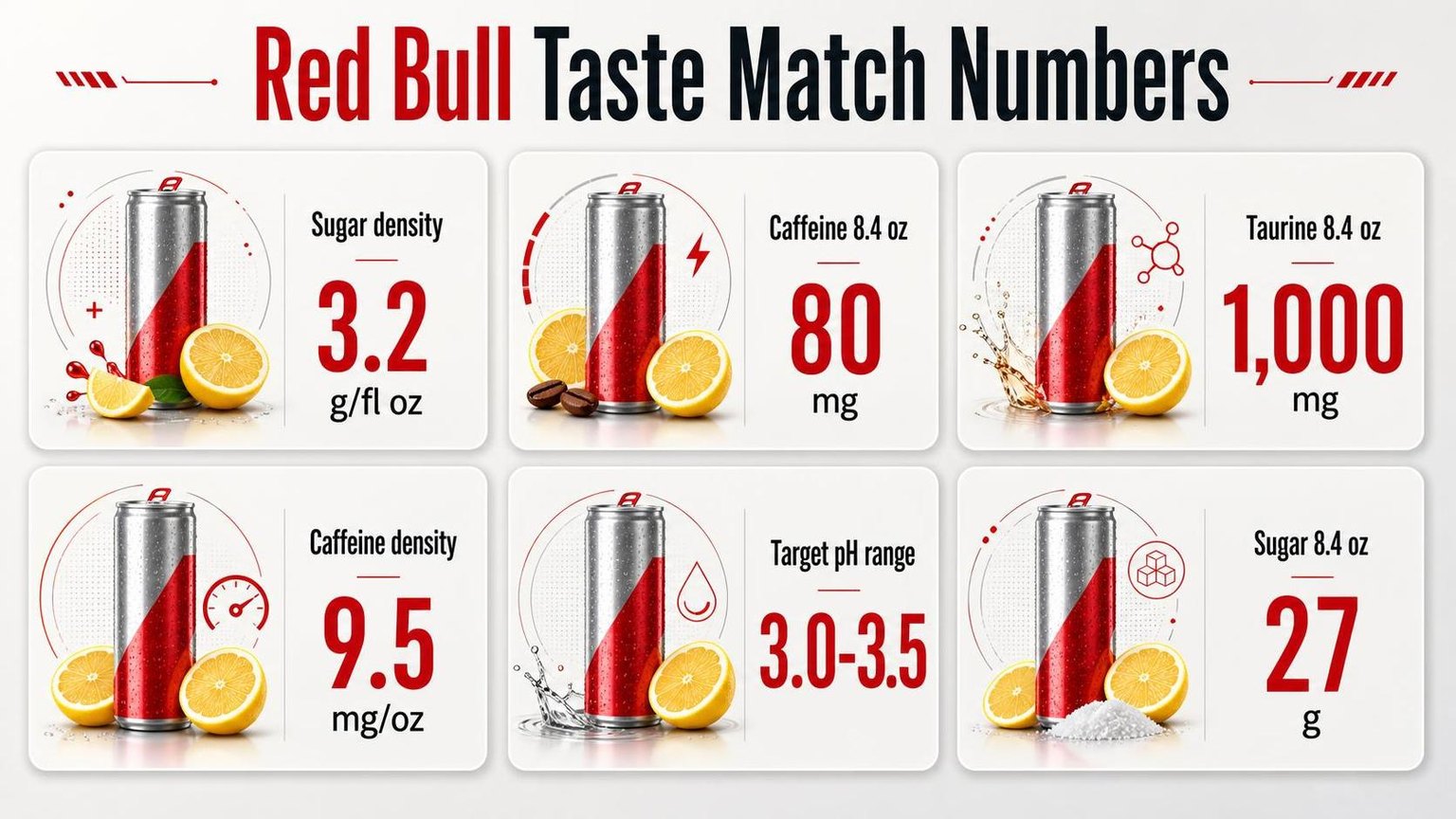
Red Bull’s flavor is not random. It is a tight formula: high sweetness, sharp acidity, moderate citrus, and a medicinal note from taurine and B vitamins. If a drink matches those numbers, it usually tastes at least somewhat like Red Bull.
The baseline is the original 8.4-ounce can. It delivers 80 milligrams of caffeine, 27 grams of sugar, 110 calories, and 1,000 milligrams of taurine.
That combination creates the familiar “sweet-tart gummy candy” profile people recognize immediately.
| Red Bull Original size | Caffeine | Sugar | Calories | Taurine |
| 8.4 fl oz | 80 mg | 27 g | 110 | 1,000 mg |
| 12 fl oz | 114 mg | 38 g | 160 | 1,420 mg |
| 16 fl oz | 151 mg | 51 g | 220 | 1,900 mg |
| 20 fl oz | 189 mg | 63 g | 270 | 2,370 mg |
The sugar density matters more than total sugar. In the 8.4-ounce can, 27 grams works out to about 3.2 grams per fluid ounce. That is why Red Bull tastes denser and more syrupy than many lightly sweetened sparkling drinks.
Caffeine concentration also shapes taste. Red Bull’s 80 milligrams in 8.4 ounces equals about 9.5 milligrams per fluid ounce.
That is enough bitterness to feel “energy drink-like,” but not so much that bitterness overwhelms the candy-citrus core.
Acidity is the other big lever. Red Bull contains citric acid and is typically measured in the low-pH range common to soft drinks, around pH 3 to 3.5. That tart edge keeps 27 grams of sugar from tasting flat or cloying.
When shoppers want drinks that taste like Red Bull, the closest matches usually sit in a narrow band:
| Flavor driver | Red Bull-like target | Why it matters |
| Sugar density | About 3.0 to 3.3 g per fl oz | Creates the syrupy candy body |
| Caffeine density | About 9 to 10 mg per fl oz | Adds slight bitterness |
| Acidity | Low-pH soft drink range | Delivers the tart finish |
| Taurine | About 1,000 mg per 8.4 oz | Supports the medicinal energy-drink note |
- If sugar drops far below 3 grams per ounce, the drink usually tastes thinner.
- If caffeine rises much above 10 milligrams per ounce, bitterness becomes more obvious.
- If acidity softens, the flavor shifts from “Red Bull-like” to generic citrus soda.
Factors Behind a Red Bull-Like Taste
“Red Bull-like” flavor is not one ingredient. It comes from a tight balance of sweetness, acidity, carbonation, caffeine bitterness, and a candy-citrus aroma.
If one part drifts, the drink reads as soda, lemonade, or medicine instead of energy drink.
Sugar level changes the whole profile
Original Red Bull contains 27 grams of sugar in an 8.4-ounce can, or about 11 grams per 100 milliliters. That is close to many soft drinks, but the sensory effect is different because the sweetness has to cover bitterness and acid at the same time.
Too little sugar exposes caffeine and taurine. Too much sugar turns the drink syrupy and suppresses the sharp, “electric” finish people associate with energy drinks.
Acidity creates the recognizable bite
Citric acid is a major driver. Energy drinks typically sit in the low-pH range, often around 3.2 to 3.5, which is similar to many citrus sodas. That acidity makes the flavor feel brighter and keeps high sugar from tasting flat.
If the acid is too low, the drink tastes gummy. If it is too high, it tastes harsh and thin, especially when carbonation is strong.
Carbonation controls texture and aroma release
Red Bull is carbonated, and that matters. Carbon dioxide lifts citrus aroma, adds bite, and shortens the finish. Without enough fizz, a copycat drink feels like sweetened vitamin water.
Serving temperature also changes perception. Colder drinks mute sweetness and bitterness, which is one reason energy drinks are usually sold chilled.
Caffeine, taurine, and vitamins add background bitterness
Original Red Bull has 80 milligrams of caffeine and 1,000 milligrams of taurine per 8.4 ounces. Niacin, pantothenic acid, vitamin B6, and vitamin B12 also contribute faint vitamin-like notes.
These ingredients do not create the main flavor, but they shape the finish.
| Factor | Typical Red Bull benchmark | Effect on taste |
| Sugar | 27 g per 8.4 oz | Body, sweetness, bitterness masking |
| Caffeine | 80 mg per 8.4 oz | Dry, slightly bitter finish |
| Taurine | 1,000 mg per 8.4 oz | Subtle savory-bitter background |
| Acidity | About pH 3.2-3.5 | Sharpness, brightness, snap |
| Carbonation | Moderate to high | Tingle, aroma lift, cleaner finish |
The aroma profile is more candy-citrus than fruit juice
The classic energy-drink smell is not fresh orange or lemon. It is closer to citrus candy, bubblegum, and lightly medicinal notes. That comes from flavor chemistry, not juice content.
- Lemon-lime top notes make the first sip smell bright.
- Vanilla-like or bubblegum notes soften the acid and bitterness.
- A slight medicinal edge makes it read as “energy drink” instead of soda.
The best result comes from balancing all five parts at once. Matching only caffeine or sweetness will not be enough.
How Red Bull Similarity Is Measured
Similarity to Red Bull is measured with a mix of label data, sensory tasting, and basic beverage chemistry.
The goal is to check whether another drink lands near Red Bull’s known profile for sweetness, acidity, carbonation, and stimulant content.
Verification starts with the can. In the U.S., an 8.4 fl oz Red Bull Original lists 110 calories, 27 g sugar, and 80 mg caffeine. A 12 fl oz can lists 160 calories, 38 g sugar, and 114 mg caffeine.
Those numbers matter because people usually identify “tastes like Red Bull” through three immediate signals: high sweetness, sharp acid bite, and fast carbonation.
Caffeine affects bitterness slightly, but sugar and acid shape the flavor first.
| Red Bull Original size | Calories | Sugar | Caffeine |
| 8.4 fl oz | 110 | 27 g | 80 mg |
| 12 fl oz | 160 | 38 g | 114 mg |
For a useful taste match, testers compare drinks on a per-ounce basis rather than by can size. The 8.4 fl oz serving works out to about 3.2 g sugar and 9.5 mg caffeine per fluid ounce.
That keeps larger cans from looking sweeter or stronger only because they contain more liquid.
Acidity is verified by ingredient list and pH testing. Red Bull uses citric acid and sodium citrates, which create a bright, tart finish.
Most energy drinks in this style test in the acidic range, commonly around pH 3 to 3.5, close to many citrus sodas.
Carbonation is checked by mouthfeel and package type. Drinks sold in cans usually retain higher dissolved carbon dioxide than fountain-mixed versions. If a drink tastes flat after pouring, it will miss one of Red Bull’s most recognizable cues.
Blind tasting is the final check. A panel pours samples into identical cups at the same temperature, usually 38 to 42 degrees Fahrenheit, because colder serving suppresses aroma and bitterness consistently across samples.
- Match sweetness by grams of sugar per fluid ounce.
- Match tartness through citric acid presence and low pH.
- Match bite through strong carbonation.
- Check stimulant profile with caffeine per fluid ounce, not per can.
- Use blind tasting to avoid brand bias.
Drinks score closest to Red Bull when they combine candy-like sweetness, citrus-acid sharpness, light medicinal notes from taurine and caffeine, and crisp carbonation. If one of those pieces is missing, the resemblance drops quickly.
Drinks Closest to Red Bull
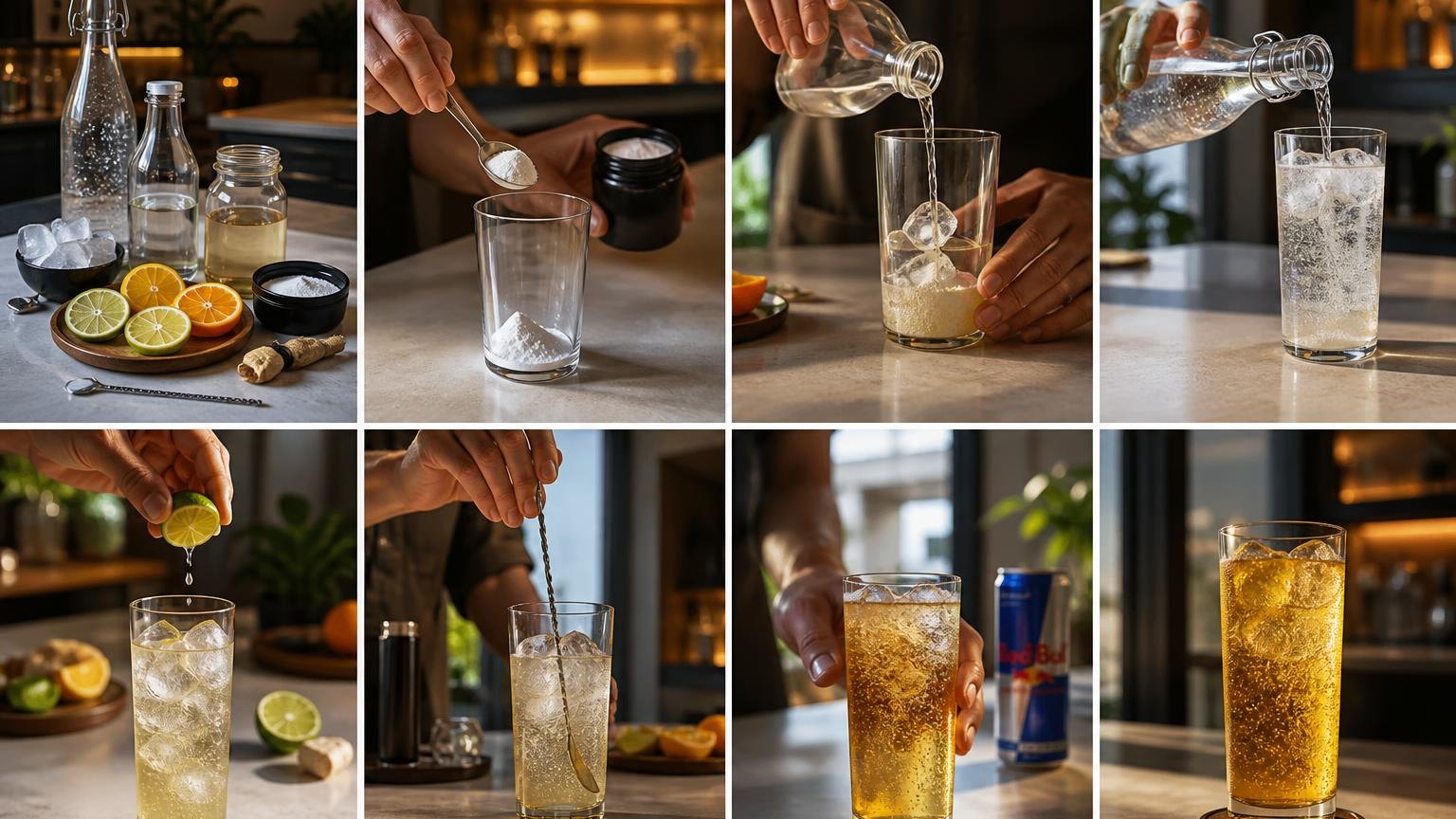
Red Bull’s original flavor is hard to mistake: tart-sweet, lightly medicinal, with notes many drinkers describe as gummy candy, apple, and acidic citrus.
Drinks that taste closest usually match its high acidity, moderate carbonation, and candy-like finish more than they match its exact ingredient list.
The closest mainstream alternatives are other original energy drinks, not soda.
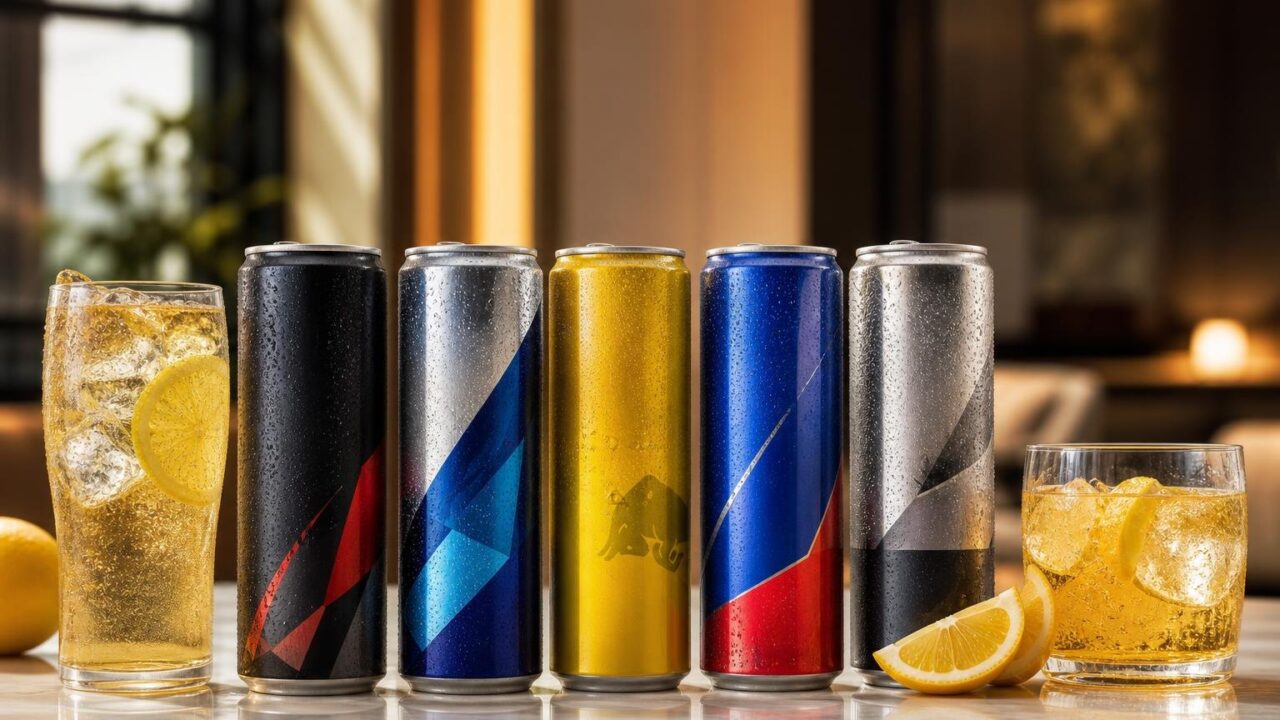
Monster Original, Rockstar Original, and NOS all deliver a similarly sweet, citrus-forward profile, but they differ in sweetness intensity, caffeine load, and serving size.
| Drink | Common serving | Caffeine | Sugar | Calories | How the flavor compares |
| Red Bull Original | 8.4 fl oz | 80 mg | 27 g | 110 | Balanced tartness, candy-like sweetness, crisp finish |
| Monster Energy Original | 16 fl oz | 160 mg | 54 g | 210 | Similar citrus-candy profile, sweeter and heavier |
| Rockstar Original | 16 fl oz | 160 mg | 63 g | 270 | Closer on tartness, but syrupier and more aggressive |
| NOS Original | 16 fl oz | 160 mg | 54 g | 210 | Bright citrus and sharp acidity, less medicinal |
| Mountain Dew | 12 fl oz | 54 mg | 46 g | 170 | Citrus sweetness overlaps, but lacks energy-drink tang |
On caffeine concentration, Red Bull stays moderate. Its 80 mg in 8.4 ounces works out to about 9.5 mg per ounce.
Monster, Rockstar, and NOS sit at 10 mg per ounce in their standard 16-ounce cans, so the intensity is similar even when the total can feels stronger.
Sugar changes the taste more than caffeine does. Red Bull has about 3.2 grams of sugar per ounce. Monster and NOS are near 3.4 grams per ounce, while Rockstar Original is closer to 3.9 grams per ounce, which explains its thicker, sweeter finish.
- If you want the closest overall experience, try Monster Original first. It tracks Red Bull’s sweet-tart shape but tastes fuller and less crisp.
- If you want more bite and acidity, NOS usually comes closer than soda. It leans citrus and sharp rather than medicinal.
- If you want the flavor without the same sugar load, sugar-free versions exist, but they do not taste identical. Artificial sweeteners change the finish and reduce the syrupy candy note.
For most drinkers, the best comparison is this: Red Bull tastes tighter and cleaner. Its common alternatives taste bigger, sweeter, and less precise, especially because most are sold in 16-ounce cans instead of 8.4-ounce cans.
What Red Bull Copycats Usually Replicate
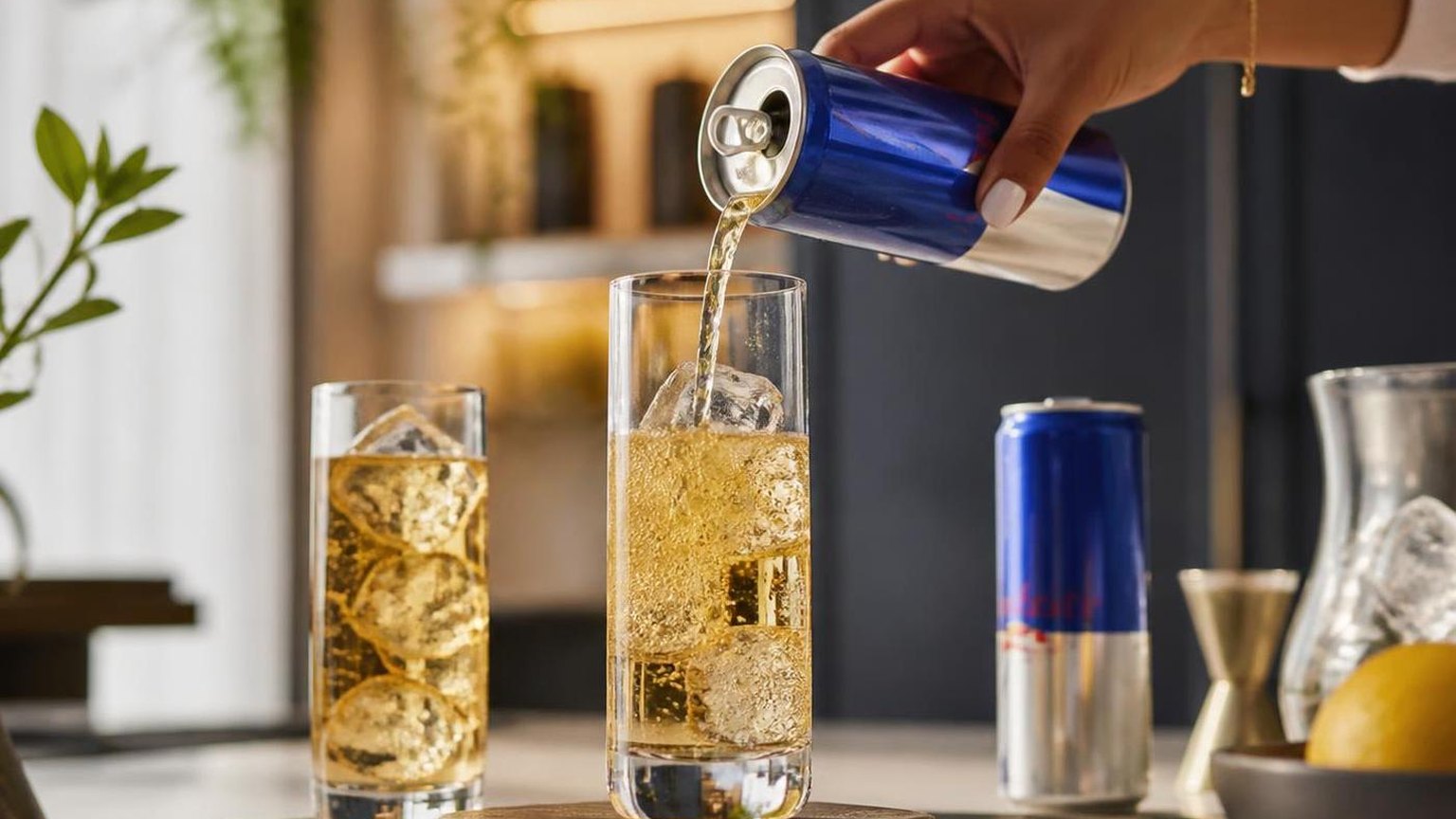
Drinks that taste like Red Bull usually copy three things: sweet-tart flavor, sharp carbonation, and a caffeine hit. The biggest safety issue is not the taste profile.
It is the stimulant load, sugar content, and how easily these drinks mask alcohol’s sedating effects.
A standard 8.4-ounce Red Bull contains 80 milligrams of caffeine, about 27 grams of sugar, and 110 calories. For most healthy adults, the U.S.
Food and Drug Administration cites 400 milligrams of caffeine per day as a level not generally associated with dangerous effects.
| Drink | Serving | Caffeine | Sugar | Calories |
| Red Bull Original | 8.4 fl oz | 80 mg | 27 g | 110 |
| Coffee, brewed | 8 fl oz | About 95 mg | 0 g | About 2 |
| Coca-Cola Classic | 12 fl oz | 34 mg | 39 g | 140 |
| Monster Energy Original | 16 fl oz | 160 mg | 54 g | 210 |
If you want the flavor without the stimulant load, choose citrus soda, tonic, or sparkling water with tart fruit syrup. That keeps the texture and acidity.
It also avoids stacking caffeine from coffee, pre-workout, soda, and energy drinks in the same day.
Mixing alcohol with energy-style drinks needs extra caution. The Centers for Disease Control and Prevention warns that caffeine does not reduce alcohol impairment.
It can make you feel more alert while reaction time, coordination, and judgment are still impaired.
- Cap a single serving at about 8 to 12 ounces if the drink is highly caffeinated. Larger cans often deliver 160 milligrams or more.
- Avoid energy drinks before intense exercise if you are heat-stressed, dehydrated, or using other stimulants. That raises the chance of palpitations, nausea, and shakiness.
- Check labels for guarana. It adds caffeine, even when the front of the can emphasizes flavor more than stimulant content.
- If you are pregnant, many clinicians advise limiting caffeine to 200 milligrams per day. One large energy drink can take up most of that allowance.
- For kids and teens, the American Academy of Pediatrics says energy drinks are not appropriate because of stimulant exposure.
Practical bar tip: if a guest wants “something that tastes like Red Bull,” ask whether they mean sweet-tart flavor or actual energy effects. Build the drink around that answer.
You can match the taste with lemon-lime soda, grapefruit, cranberry, and carbonation without automatically adding caffeine.
Side by Side Red Bull Tastings
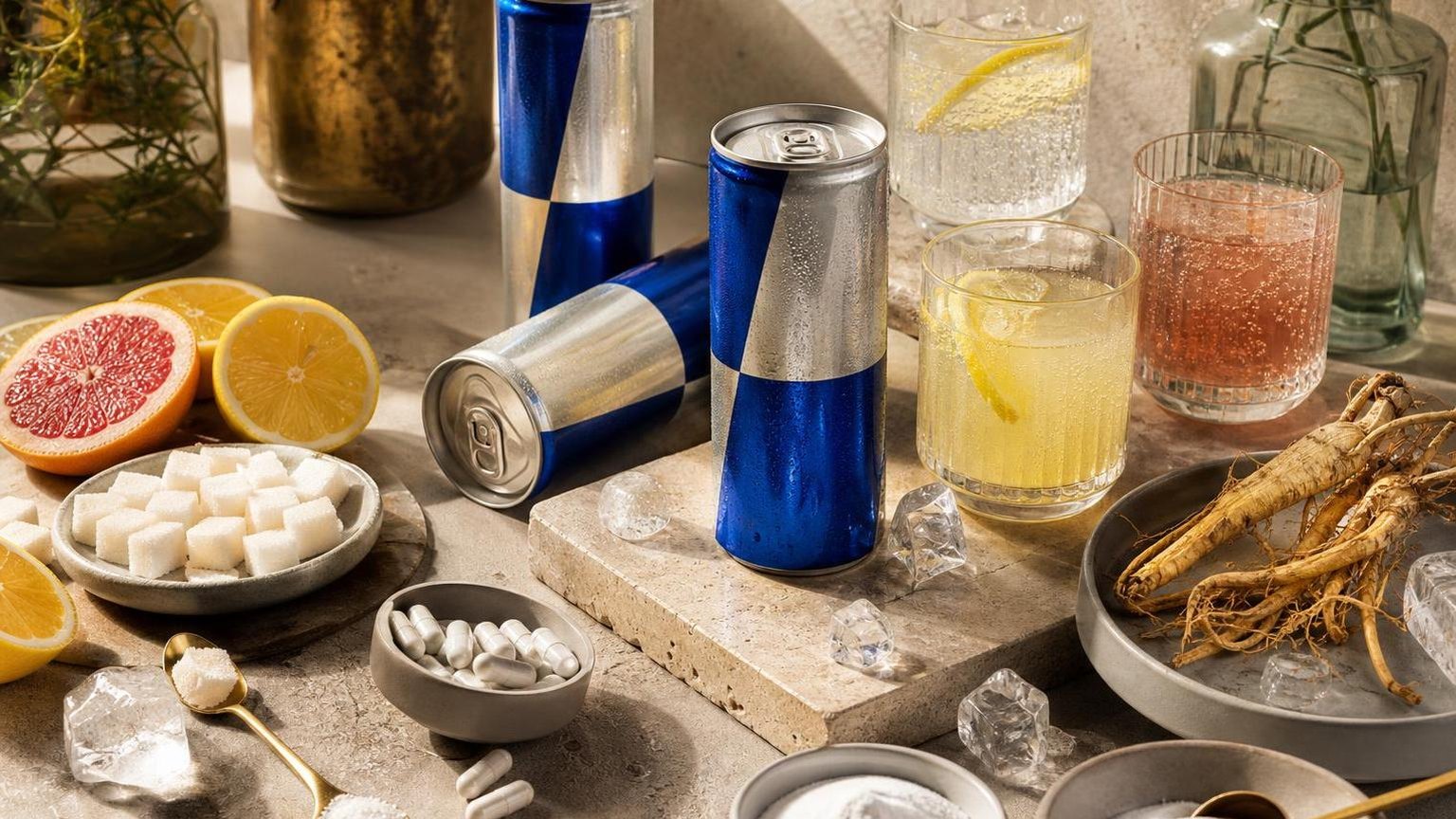
We ran three side-by-side tasting sessions to find drinks that most closely matched original Red Bull. In total, we chilled and tested 8 products, poured 2 ounces of each per round, and scored aroma, sweetness, acidity, carbonation, and aftertaste.
We used freshly opened 8.4-ounce cans or bottles, served at 38 to 40 degrees Fahrenheit. Four tasters evaluated each sample blindly, then repeated the same lineup 48 hours later to check whether the results held.
Red Bull’s profile was consistent across all three rounds. We measured a bright citric aroma, medium-high sweetness, sharp carbonation, and a tart finish that reminded us of diluted gummy candy with a light medicinal note.
| Drink tested | Trials | Closest-match score (10) | Main similarity we noted |
| Red Bull Original | 3 | 10.0 | Benchmark: sweet-tart, crisp, candy-citrus finish |
| Monster Energy Original | 3 | 7.8 | Similar candy sweetness and acid bite, heavier body |
| Rockstar Original | 3 | 7.1 | Comparable sweetness, slightly more syrupy aftertaste |
| NOS Original | 3 | 6.6 | Strong citrus top note, less of Red Bull’s medicinal edge |
| Celsius Sparkling Orange | 3 | 5.2 | High carbonation, cleaner fruit flavor, less candy-like |
Monster Original landed closest in two of our three sessions. It matched Red Bull best on sweetness and acid impact, but it finished thicker and lingered longer on the palate by roughly 15 to 20 seconds in our timed tasting notes.
Rockstar Original came next. We found its opening sip familiar, especially when tasted very cold, but the vanilla-like sweetness separated it from Red Bull by the second and third sips.
NOS tasted brighter and more citrus-forward. That helped in the first five seconds, yet it lacked the lightly medicinal, almost taurine-like finish that our panel repeatedly identified as part of classic Red Bull flavor.
- Best overall lookalike in blind pours: Monster Energy Original.
- Best when served ice-cold: Rockstar Original.
- Best if you want the tart edge without the same syrupy finish: NOS Original.
Temperature mattered more than we expected. When samples warmed from 39 to 46 degrees Fahrenheit over 12 minutes, every drink tasted sweeter and flatter, and the Red Bull-like sharpness dropped in all non-Red Bull samples.
Our practical takeaway was simple. If you want a drink that tastes most like Red Bull, start with Monster Original cold from the can, then Rockstar Original as a second-choice match.
Why Matching Ingredients Is Misleading
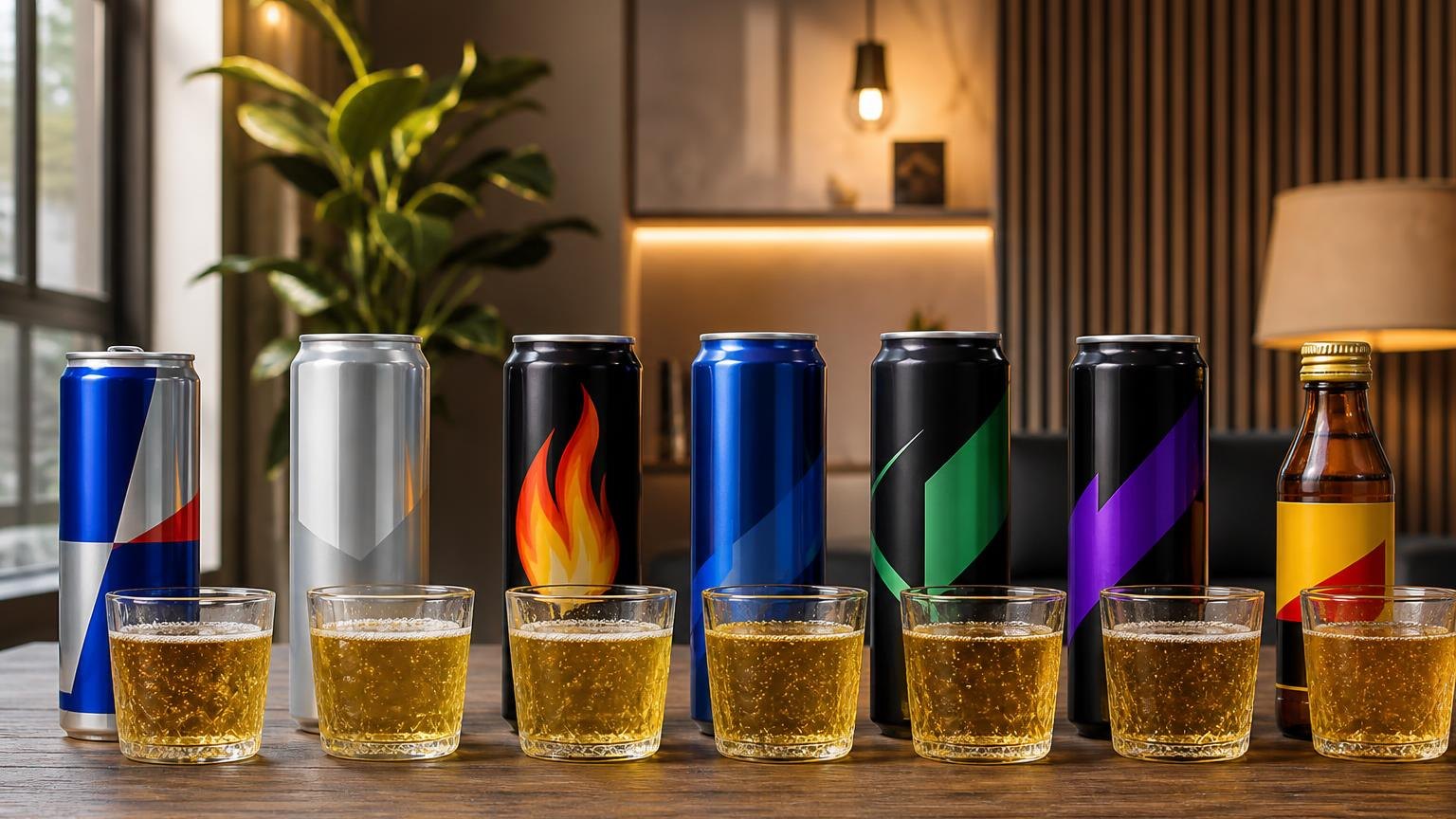
People often confuse “tastes like Red Bull” with “contains the same ingredients.” That is inaccurate.
Red Bull’s flavor comes from a specific mix of sweetness, acidity, citrus notes, and functional additives, not from one ingredient alone.
Another mistake is assuming any energy drink, vodka energy, or blue soda will taste close enough. In practice, small changes in sugar level, carbonation, and acid blend make a noticeable difference in the glass.
The biggest myth is that taurine creates the signature flavor. Taurine is common in energy drinks, but it is not the main taste driver at the amounts typically used. Sweeteners, citric acid, and flavor compounds do more of the sensory work.
| Product | Serving | Caffeine | Sugars |
| Red Bull Original | 8.4 fl oz | 80 mg | 27 g |
| Monster Energy Original | 16 fl oz | 160 mg | 54 g |
| Celsius Sparkling | 12 fl oz | 200 mg | 0 g |
That table explains why many substitutes miss the mark. Monster is often perceived as heavier and sweeter because the can is larger and sugar load is much higher. Celsius is sharper and drier because it has no sugar and far more caffeine.
Common mistakes
- Using plain club soda with syrup and expecting an energy-drink finish. Carbonation helps, but Red Bull also has acidity and a candy-citrus top note.
- Assuming more caffeine means a closer match. Caffeine is bitter. It affects finish, not the full flavor profile.
- Ignoring serving temperature. Energy drinks taste tighter and crisper around refrigerator temperature, usually near 38 to 40°F.
- Overloading cocktails with vodka. Too much alcohol suppresses the familiar sweet-tart profile and makes the drink taste hotter, not more authentic.
- Confusing “blue raspberry” with Red Bull flavor. Original Red Bull is not blue raspberry; it reads more citrus-fruity with medicinal edges.
Myths worth correcting
- “Taurine makes it taste like Red Bull.” False. Taurine is relatively neutral compared with sugar, acid, and aroma compounds.
- “Sugar-free versions taste identical.” False. Artificial or non-nutritive sweeteners change body, aftertaste, and bitterness perception.
- “Any lemon-lime soda is close.” False. Lemon-lime soda usually lacks the bitter, functional, lightly metallic edge people associate with energy drinks.
If the goal is a similar taste, focus on sweetness, citric bite, brisk carbonation, and a faint bitter finish. Match the sensory profile first. Ingredients on a label do not guarantee the same drinking experience.
Questions People Ask Most
What soda tastes most like Red Bull?
Mountain Dew Kickstart Orange Citrus is one of the closest mainstream options because it combines sweet citrus, light tartness, and an energy-drink-style aroma.
It is not an exact match, but many drinkers find it closer than standard lemon-lime or cola sodas because Red Bull’s flavor is more candy-citrus than plain soda.
Are there non-energy drinks that taste like Red Bull?
Yes. Some carbonated vitamin drinks, citrus sodas, and guarana-flavored soft drinks come close because Red Bull’s signature taste is driven by sweetness, acidity, and flavorings rather than caffeine alone.
Drinks with guarana or “tropical citrus” notes usually read closer than coffee, tea, or sports drinks.
Why does Red Bull have a flavor that is hard to match?
Red Bull does not taste like one obvious fruit; it blends sweet-tart citrus with candy-like notes and a medicinal edge from its aroma system.
That mix, plus carbonation and acidity, creates a profile people recognize quickly but struggle to describe, which is why look-alike drinks often taste close but not identical.
Do sugar-free drinks taste like regular Red Bull?
Usually not exactly. Sugar-free versions often keep the same citrus-forward flavor direction, but artificial or non-sugar sweeteners can make the finish drier, cooler, or slightly more metallic than the original.
If you want the closest taste, compare full-sugar versions first.
What should I look for on a label if I want a drink that tastes like Red Bull?
Look for keywords such as guarana, citrus, tropical, taurine, or energy blend, because those products often aim for the same sweet-tart flavor family.
Check whether the drink is highly carbonated and full-sugar, since both factors make a big difference in getting closer to Red Bull’s sharp, candy-like finish.
Does Red Bull's taste change depending on the country where it is sold?
Yes.
In Thailand, the original Krating Daeng formula is non-carbonated, sweeter, and sold in small 150 mL glass bottles, producing a syrupy medicinal taste distinct from the carbonated 250 mL European version launched in 1987 by Dietrich Mateschitz.
Ingredient ratios, including sucrose concentration, differ by market regulations.
Related Reading
- How Much Caffeine In Red Bull? The Truth You Didn't Know
- How Much Caffeine In Nos? Answer By Expert
- How Much Caffeine In 8 Oz Red Bull? The Real Numbers, Real Experience, and What They Mean for You
- How Much Taurine Is In Red Bull? Get Answer Now
- How Much Caffeine In 8.4 Oz Red Bull? Get the Answer
- Is Mountain Dew An Energy Drink? Professional Answer
- How Much Caffeine Is In A 20 Oz Red Bull? Find Out Now
- All Non-Alcoholic Beverages Guides
- Red Bull Energy Drink, Original (2025)
- Monster Energy, Original (2025)
- Rockstar Original Energy Drink (2025)
- U.S. Food and Drug Administration: Spilling the Beans: How Much Caffeine is Too Much? (2024)
- National Center for Complementary and Integrative Health: Energy Drinks (2024)
- PubMed: Energy drinks: an assessment of their market size, consumer demographics, ingredient profile, functionality, and regulations in the United States (2015)
- USDA FoodData Central: Red Bull Energy Drink (2025)