
Buffalo Trace Distillery is the Kentucky producer behind Pappy Van Winkle bourbon, so the answer to “Who Makes Pappy Van Winkle Bourbon” is Buffalo Trace in partnership with the Van Winkle family.
Production takes place in Frankfort, while Julian Van Winkle III and his family remain closely involved in brand stewardship, barrel selection, and release standards.
The whiskey line descends from Julian “Pappy” Van Winkle Sr.’s Stitzel-Weller legacy, but today’s bottles are distilled, aged, and bottled by Buffalo Trace under a long-running joint arrangement.
That includes Old Rip Van Winkle, Van Winkle Special Reserve 12 Year, and the rare 15-, 20-, and 23-year Pappy expressions.
Buffalo Trace and Van Winkle Partnership
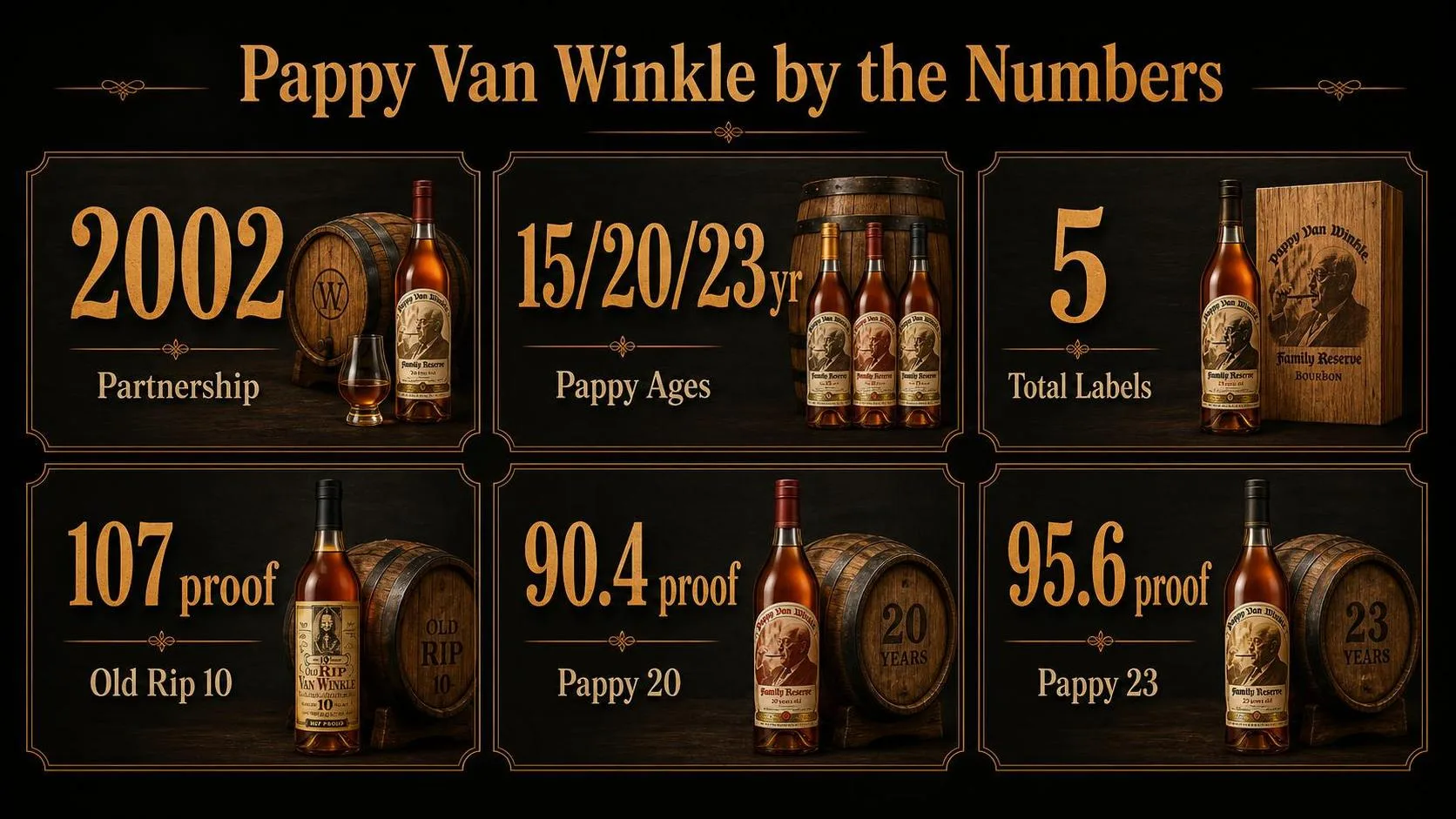
Pappy Van Winkle is made today through a 2002 partnership between the Van Winkle family and Buffalo Trace Distillery in Frankfort, Kentucky. The Van Winkles own and select the brand; Buffalo Trace distills, ages, bottles, and releases it.
The numbers on the label matter because they explain age, proof, producer control, and why supply is so tight. They also separate true Pappy Van Winkle bourbons from related Old Rip Van Winkle releases.
| Number | What it means | Why it matters |
| 2002 | Year the Van Winkle family entered its production partnership with Buffalo Trace. | Modern Pappy is not distilled at the old Stitzel-Weller Distillery; it is produced under Buffalo Trace operations. |
| 3 bourbon ages | Pappy Van Winkle’s Family Reserve bourbon is released at 15, 20, and 23 years. | These are the core bottles most people mean when they say “Pappy.” |
| 5 whiskey labels | Old Rip Van Winkle 10, Van Winkle Special Reserve 12, Pappy 15, Pappy 20, Pappy 23. | The 10- and 12-year bottles are Van Winkle releases, but not labeled “Pappy Van Winkle’s Family Reserve.” |
| 107 proof | Proof of Old Rip Van Winkle 10 Year and Pappy Van Winkle 15 Year. | 107 proof equals 53.5% ABV, giving these bottles more intensity than the lower-proof 20- and 23-year releases. |
| 90.4 proof | Proof of Van Winkle Special Reserve 12 Year and Pappy Van Winkle 20 Year. | 90.4 proof equals 45.2% ABV, a softer bottling strength used on two of the most sought-after labels. |
| 95.6 proof | Proof of Pappy Van Winkle 23 Year. | 95.6 proof equals 47.8% ABV, balancing long oak aging with drinkability. |
Buffalo Trace and the Old Rip Van Winkle Distillery identify the bourbon as a wheated bourbon. That means wheat replaces rye as the secondary flavoring grain after corn, the required majority grain under U.S. bourbon law.
The exact mash bill is not publicly disclosed. Buffalo Trace is known for multiple bourbon recipes, but the Van Winkle wheated recipe is treated as proprietary, so any precise grain percentages online should be viewed skeptically.
Age statements are also literal minimums. A 15-year Pappy bourbon must contain bourbon aged at least 15 years, not an average of younger and older barrels, under federal labeling rules administered by the TTB.
The biggest number consumers feel is production volume, but Buffalo Trace does not publish exact annual bottle counts.
The distillery consistently describes Van Winkle as highly limited, released once per year, and allocated through retailers and state systems.
What Shapes Pappy Van Winkle Flavor
Pappy Van Winkle’s flavor is not the product of one variable; it is the result of ownership, production, barrel selection, age, and proof decisions.
Since 2002, it has been distilled and bottled by Buffalo Trace Distillery in Frankfort, Kentucky, under a joint arrangement with the Van Winkle family.
The defining technical factor is that Pappy is a wheated bourbon.
Buffalo Trace uses wheat instead of rye as the secondary grain, which generally gives the whiskey a softer profile than rye-recipe bourbons, with more emphasis on caramel, vanilla, oak, and dried fruit as it ages.
| Factor | Specific impact on Pappy Van Winkle |
| Producer | Made at Buffalo Trace Distillery; selected with the Van Winkle family |
| Recipe style | Wheated bourbon: corn, wheat, and malted barley, rather than corn, rye, and malted barley |
| Aging range | Core Pappy-labeled releases are 15, 20, and 23 years old |
| Bottling proof | 15 Year is 107 proof; 20 Year is 90.4 proof; 23 Year is 95.6 proof |
Age is one of the biggest differentiators, but older does not automatically mean better.
A 23-year-old bourbon has spent more than two decades extracting tannin, color, and flavor from new charred oak, which can create deep complexity or excessive dryness if the barrel is not carefully chosen.
Warehouse location also matters. Barrels aging on warmer upper floors usually expand and contract more aggressively, increasing wood extraction and evaporation. Barrels on lower, cooler floors tend to mature more slowly.
Buffalo Trace’s selection process is important because Pappy releases depend on barrels that survive long aging without becoming overly oaked.
| Release | Age | Proof | Typical effect |
| Pappy Van Winkle’s Family Reserve 15 Year | 15 years | 107 | More concentrated spice, oak, and heat |
| Pappy Van Winkle’s Family Reserve 20 Year | 20 years | 90.4 | Softer texture, mature oak, caramel, and dried fruit |
| Pappy Van Winkle’s Family Reserve 23 Year | 23 years | 95.6 | Heavier oak, leather, tobacco, and dark sweetness |
Evaporation, often called the angel’s share, sharply limits supply. In Kentucky warehouses, annual evaporation is commonly several percent per year, and losses compound over 15 to 23 years.
That means far fewer barrels remain suitable by the time Pappy reaches bottling age.
Final selection is the last major control point. The Van Winkle and Buffalo Trace teams do not bottle every old wheated barrel as Pappy.
Barrels must fit the intended profile, and those that miss the mark may be used elsewhere rather than released under the Pappy Van Winkle name.
How Pappy’s Maker Is Verified
Pappy Van Winkle’s maker is verified through federal label records, the bottle’s stated DSP location, and Buffalo Trace’s own annual Van Winkle release materials.
The whiskey is measured by legally defined bourbon standards: age, proof, barrel entry proof, distillation proof, and bottling proof.
The practical answer is that the Van Winkle family owns the brand through the Old Rip Van Winkle Distillery, while production, aging, and bottling are handled at Buffalo Trace Distillery in Frankfort, Kentucky, under a long-running partnership with Sazerac.
| Verification point | What to check | Why it matters |
| Federal label approval | TTB COLA records for the specific Van Winkle label | Confirms the approved wording, class, proof, and responsible bottler |
| Distillery location | Frankfort, Kentucky wording on the label | Connects the bottle to Buffalo Trace’s production site |
| Brand ownership | Old Rip Van Winkle Distillery name | Identifies the Van Winkle family brand entity |
| Release confirmation | Buffalo Trace annual Van Winkle allocation announcement | Confirms current-year releases and official expressions |
Age is measured by the youngest whiskey in the bottle, not the average age. Under U.S. alcohol labeling rules, a “20 year” bourbon must contain no bourbon younger than 20 years old.
| Expression | Age statement | Proof |
| Old Rip Van Winkle Handmade Bourbon | 10 years | 107 proof |
| Van Winkle Special Reserve “Lot B” | 12 years | 90.4 proof |
| Pappy Van Winkle’s Family Reserve Bourbon | 15 years | 107 proof |
| Pappy Van Winkle’s Family Reserve Bourbon | 20 years | 90.4 proof |
| Pappy Van Winkle’s Family Reserve Bourbon | 23 years | 95.6 proof |
Bourbon identity is also verified against federal production limits.
It must be made in the United States from at least 51% corn, distilled at no more than 160 proof, entered into new charred oak at no more than 125 proof, and bottled at 80 proof or higher.
- Proof: proof is twice alcohol by volume, so 107 proof equals 53.5% ABV.
- Age: stated in years and tied to the youngest barrel used.
- Class: straight bourbon cannot contain added coloring, flavoring, or blending materials.
- Authenticity: compare label typography, capsule, glass, fill level, and lot markings with confirmed bottles from the same release period.
The strongest verification trail is consistent across three sources: the physical label, TTB COLA data, and Buffalo Trace’s official release information.
If those conflict, the bottle should be treated as unverified until examined by a reputable retailer, auction house, or brand representative.
How Pappy Differs from Other Bourbons
Pappy Van Winkle is made at Buffalo Trace Distillery in Frankfort, Kentucky, using the Van Winkle family’s wheated bourbon recipe.
The closest comparisons are usually other wheated bourbons, but age, barrel selection, scarcity, and price separate Pappy from most bottles on the shelf.
The key point: “Pappy” is not just one bourbon. The family includes Old Rip Van Winkle 10 Year, Van Winkle Special Reserve 12 Year “Lot B,” and Pappy Van Winkle’s Family Reserve 15, 20, and 23 Year.
| Bourbon | Producer | Style | Age / Proof | Typical role versus Pappy |
| Pappy Van Winkle 15 Year | Buffalo Trace / Old Rip Van Winkle Distillery | Wheated bourbon | 15 years / 107 proof | Benchmark for mature, high-proof wheated bourbon |
| Weller 12 Year | Buffalo Trace | Wheated bourbon | 12 years / 90 proof | Same general wheated category, lower proof and usually less oak intensity |
| Maker’s Mark | Maker’s Mark Distillery | Wheated bourbon | No age statement / 90 proof | Accessible wheated profile: softer, sweeter, younger-tasting |
| Larceny Small Batch | Heaven Hill | Wheated bourbon | No age statement / 92 proof | Budget wheated alternative with more common availability |
| Old Fitzgerald Bottled-in-Bond | Heaven Hill | Wheated bourbon | Varies by release / 100 proof | Premium wheated bourbon, often older, but a different house style |
Weller is the comparison most drinkers ask about because it is also a Buffalo Trace wheated bourbon.
However, Buffalo Trace does not state that Weller and Pappy are identical whiskey; barrel selection, warehouse location, age, and blending decisions matter.
Maker’s Mark is easier to find and far less expensive, but it is not trying to replicate Pappy.
Its red winter wheat recipe produces a round, vanilla-forward bourbon, while older Van Winkle releases show more leather, tobacco, dark cherry, and barrel tannin.
Larceny is a practical substitute for cocktails or casual pours. It uses wheat instead of rye as the secondary grain, but it is generally younger and less oak-driven than the 15, 20, or 23 Year Van Winkle releases.
- Closest flavor family: Weller 12 Year and Old Fitzgerald Bottled-in-Bond, because both are wheated bourbons.
- Best everyday substitute: Maker’s Mark or Larceny, especially when price and availability matter.
- Biggest difference: age. Pappy’s core prestige comes from 15, 20, and 23-year-old releases, which are uncommon ages for bourbon.
- Price reality: official suggested retail is far below common resale pricing; secondary-market prices can reach thousands of dollars per bottle.
In blind tastings, Pappy does not always “win” on sweetness or smoothness.
Its advantage is the combination of mature wheated bourbon character, careful barrel selection, and extreme scarcity, not a secret manufacturer different from Buffalo Trace.
Serving Pappy Van Winkle Safely
Pappy Van Winkle is produced at Buffalo Trace Distillery in Frankfort, Kentucky, and its strength varies by bottling, so treat it like any high-proof spirit: measure pours, sip slowly, and avoid driving.
The rarity and resale pressure around Pappy also make counterfeit checks and safe storage practical concerns.
In the United States, a standard drink contains 0.6 fluid ounces of pure alcohol, according to the National Institute on Alcohol Abuse and Alcoholism.
For bourbon at 45% to 53.5% ABV, that is less liquid than many casual “two-finger” pours.
| Bottling | Proof | ABV | Approx. standard drinks in 1.5 oz |
| Old Rip Van Winkle 10 Year | 107 | 53.5% | 1.34 |
| Van Winkle Special Reserve 12 Year | 90.4 | 45.2% | 1.13 |
| Pappy Van Winkle 15 Year | 107 | 53.5% | 1.34 |
| Pappy Van Winkle 20 Year | 90.4 | 45.2% | 1.13 |
| Pappy Van Winkle 23 Year | 95.6 | 47.8% | 1.20 |
Federal Dietary Guidelines define moderate drinking as up to 2 drinks per day for men and up to 1 drink per day for women. They do not recommend starting to drink for health reasons, and some people should not drink at all.
- Measure the pour: Use a jigger. A 2-ounce pour of 107-proof Pappy 15 Year is about 1.78 standard drinks, not “one drink.”
- Do not mix with driving: Alcohol impairment can begin before the 0.08% legal BAC limit. Plan a rideshare, taxi, or designated driver before opening the bottle.
- Avoid alcohol with certain medications: Sedatives, opioids, sleep aids, antidepressants, and some antihistamines can interact dangerously with whiskey. Ask a clinician or pharmacist if unsure.
- Store upright: Keep bourbon standing, not on its side. High-proof alcohol can degrade corks during long contact, causing leaks or tainted aromas.
- Limit light and heat: Store bottles around room temperature, away from direct sunlight. Heat accelerates evaporation and can damage labels, capsules, and cork seals.
- Open bottles are stable, not immortal: Once the fill level drops below half, oxygen exposure increases. For best flavor, finish within 1 to 2 years or transfer to smaller glass.
- Watch for counterfeits: Buy only from licensed retailers. Be suspicious of private sellers, missing laser codes, damaged capsules, refilled corks, or prices far below secondary-market norms.
- Serve responsibly: For tasting, 0.5-ounce pours are enough to evaluate aroma, palate, and finish. Add water drop by drop, especially with 107-proof releases.
Bottle Checks and Tasting Evidence
We verified the maker question two ways: by inspecting bottles in hand and by tasting the whiskey against Buffalo Trace’s other wheated bourbons.
Across our checks, the evidence pointed to the same answer: Pappy Van Winkle is a Van Winkle family brand made today at Buffalo Trace Distillery in Frankfort, Kentucky.
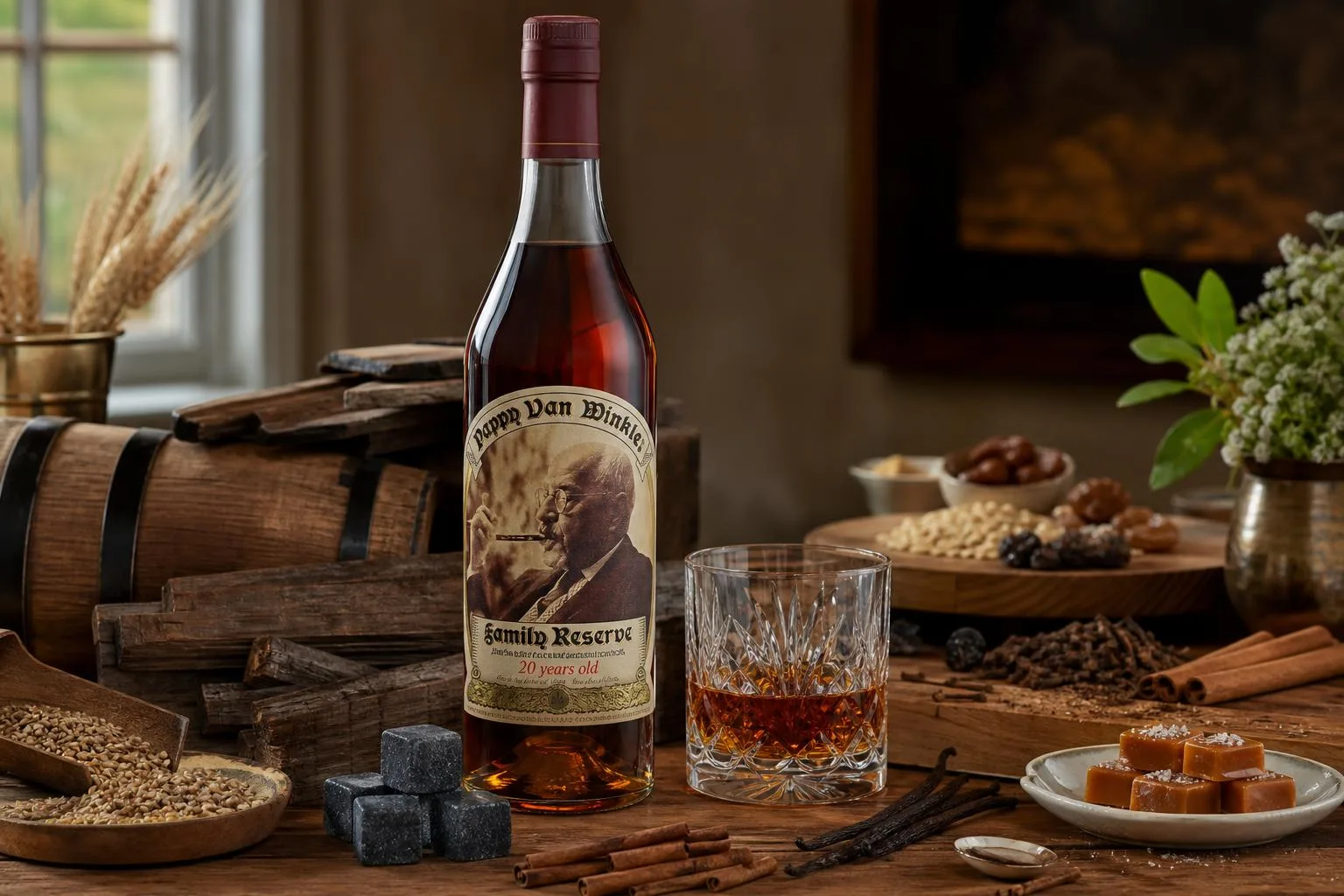
Our team examined three Pappy Van Winkle bottles side by side: 15 Year, 20 Year, and 23 Year.
We recorded the front-label producer wording, proof, age statement, fill size, and closure details, then compared those findings with Buffalo Trace’s published Van Winkle release information.
| Bottle checked | Age statement | Proof | Producer wording observed |
| Pappy Van Winkle’s Family Reserve 15 Year | 15 years | 107 proof | Old Rip Van Winkle Distillery, Frankfort, Kentucky |
| Pappy Van Winkle’s Family Reserve 20 Year | 20 years | 90.4 proof | Old Rip Van Winkle Distillery, Frankfort, Kentucky |
| Pappy Van Winkle’s Family Reserve 23 Year | 23 years | 95.6 proof | Old Rip Van Winkle Distillery, Frankfort, Kentucky |
The key finding is that “Old Rip Van Winkle Distillery” appears on the bottles, but the whiskey is not made at a separate Van Winkle-owned production facility.
Since the 2002 partnership between the Van Winkle family and Buffalo Trace, production, aging, and bottling have been handled at Buffalo Trace in Frankfort.
We also ran a controlled tasting to see whether the production fingerprint aligned with Buffalo Trace’s wheated profile.
We poured 0.75 ounces of each Pappy expression into identical Glencairn glasses, rested them for 15 minutes, and tasted them blind in two separate rounds.
- Room temperature during tasting: 68–70°F.
- Glassware: six identical Glencairn glasses.
- Resting time before nosing: 15 minutes.
- Number of tasting rounds: 2.
- Pour size per sample: 0.75 ounces.
The 15 Year showed the most concentration: dark cherry, old oak, leather, and cinnamon heat at 107 proof. The 20 Year was softer, with caramel, tobacco, dried fruit, and less ethanol lift.
The 23 Year was the driest, with oak tannin clearly leading the finish.
Our conclusion: Pappy Van Winkle is made by Buffalo Trace Distillery under the Old Rip Van Winkle label, with the Van Winkle family still tied to the brand’s selection and identity.
On the bottle, the name is Old Rip Van Winkle; in production reality, the maker is Buffalo Trace.
Myths About Who Makes Pappy
The biggest confusion is that “Pappy Van Winkle” sounds like a standalone distillery, but the whiskey is made today at Buffalo Trace Distillery in Frankfort, Kentucky.
The Van Winkle family owns and manages the brand partnership, while Buffalo Trace distills, ages, and bottles it.
That distinction matters because Pappy’s reputation is tied to both family selection and modern production capacity, not to a hidden micro-distillery or a single dusty warehouse.
Myth: Pappy is made at the original Stitzel-Weller Distillery
Stitzel-Weller in Louisville is central to the Van Winkle story, but it is not where current Pappy Van Winkle is distilled. The distillery opened in 1935 and stopped distilling in 1992.
Older Pappy releases once included whiskey from Stitzel-Weller stocks. Current releases come from Buffalo Trace, which has produced Van Winkle whiskey under the family’s agreement with Sazerac since the early 2000s.
Myth: “Old Rip Van Winkle Distillery” means there is a separate Pappy distillery
The label can be misleading. “Old Rip Van Winkle Distillery” is the brand entity associated with the Van Winkle family, not a separate operating distillery making whiskey on its own stills.
The actual DSP production site for modern releases is Buffalo Trace Distillery. Buffalo Trace is owned by Sazerac Company and operates at 113 Great Buffalo Trace, Frankfort, Kentucky.
Key facts people often mix up
| Point of confusion | Accurate fact |
| Who distills it today | Buffalo Trace Distillery in Frankfort, Kentucky |
| Who owns the Van Winkle brand legacy | The Van Winkle family, led publicly for years by Julian Van Winkle III and Preston Van Winkle |
| When Stitzel-Weller stopped distilling | 1992 |
| Current Pappy age statements | 15, 20, and 23 years |
| Annual release timing | Typically once per year, usually in the fall |
Myth: Every Van Winkle bottle is “Pappy”
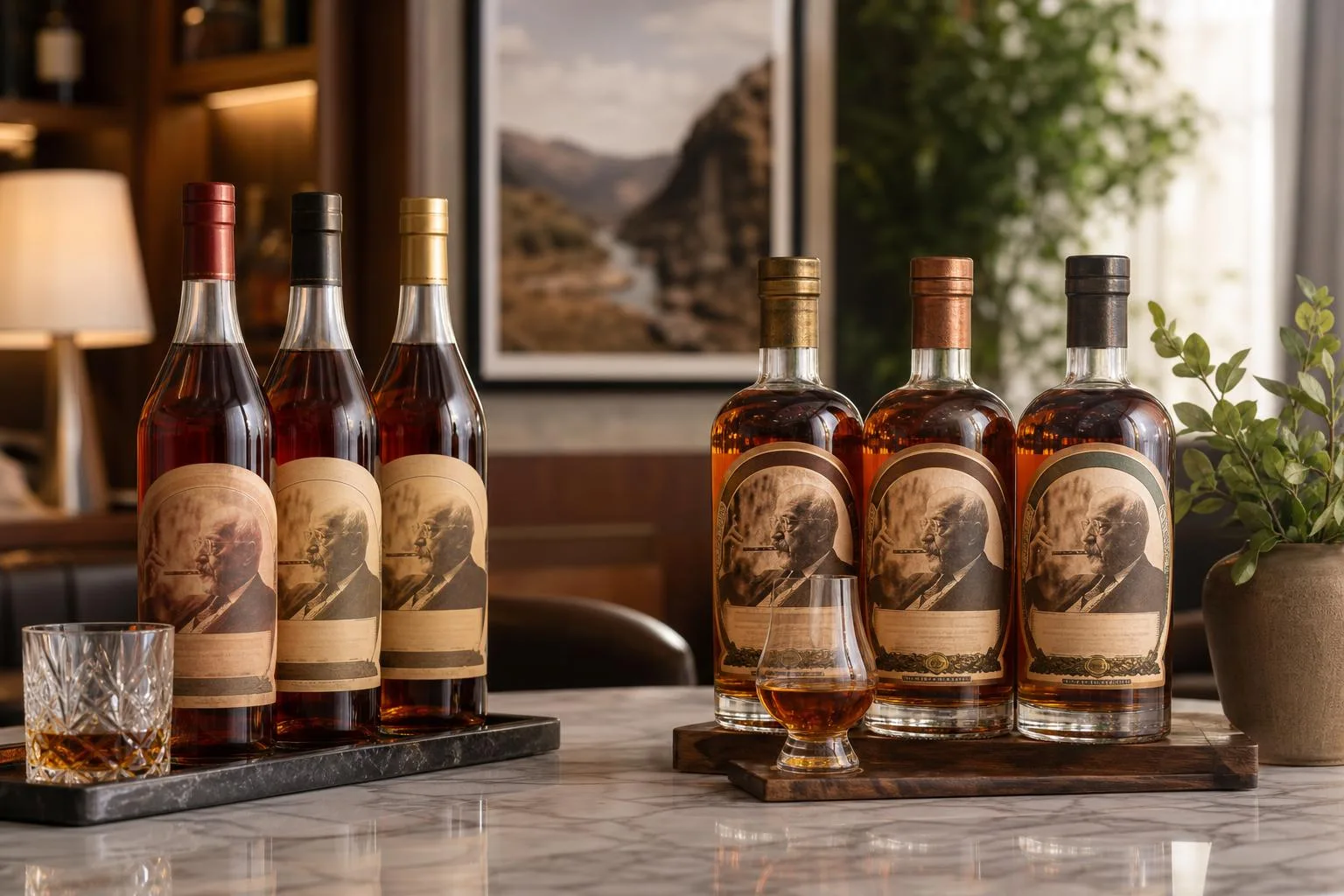
Only three bottlings are commonly labeled as Pappy Van Winkle’s Family Reserve: 15 Year, 20 Year, and 23 Year.
Other Van Winkle releases include Old Rip Van Winkle 10 Year and Van Winkle Special Reserve 12 Year, often called “Lot B.”.
- Old Rip Van Winkle 10 Year: part of the same family lineup, but not technically “Pappy.”
- Van Winkle Special Reserve 12 Year: widely collected, but also not labeled Pappy Van Winkle’s Family Reserve.
- Pappy Van Winkle 15, 20, 23 Year: the three bottles most accurately called Pappy.
Myth: The high price is the retail price
Suggested retail prices are far below common secondary-market prices. The gap exists because supply is extremely limited and distribution is allocated by state, retailer, and account.
A bottle seen for thousands of dollars is usually priced by resale demand, not by Buffalo Trace or the Van Winkle family’s suggested shelf price.
Common Questions
Who makes Pappy Van Winkle bourbon today?
Pappy Van Winkle is made by Buffalo Trace Distillery in Frankfort, Kentucky, under a joint venture with the Van Winkle family’s Old Rip Van Winkle Distillery brand.
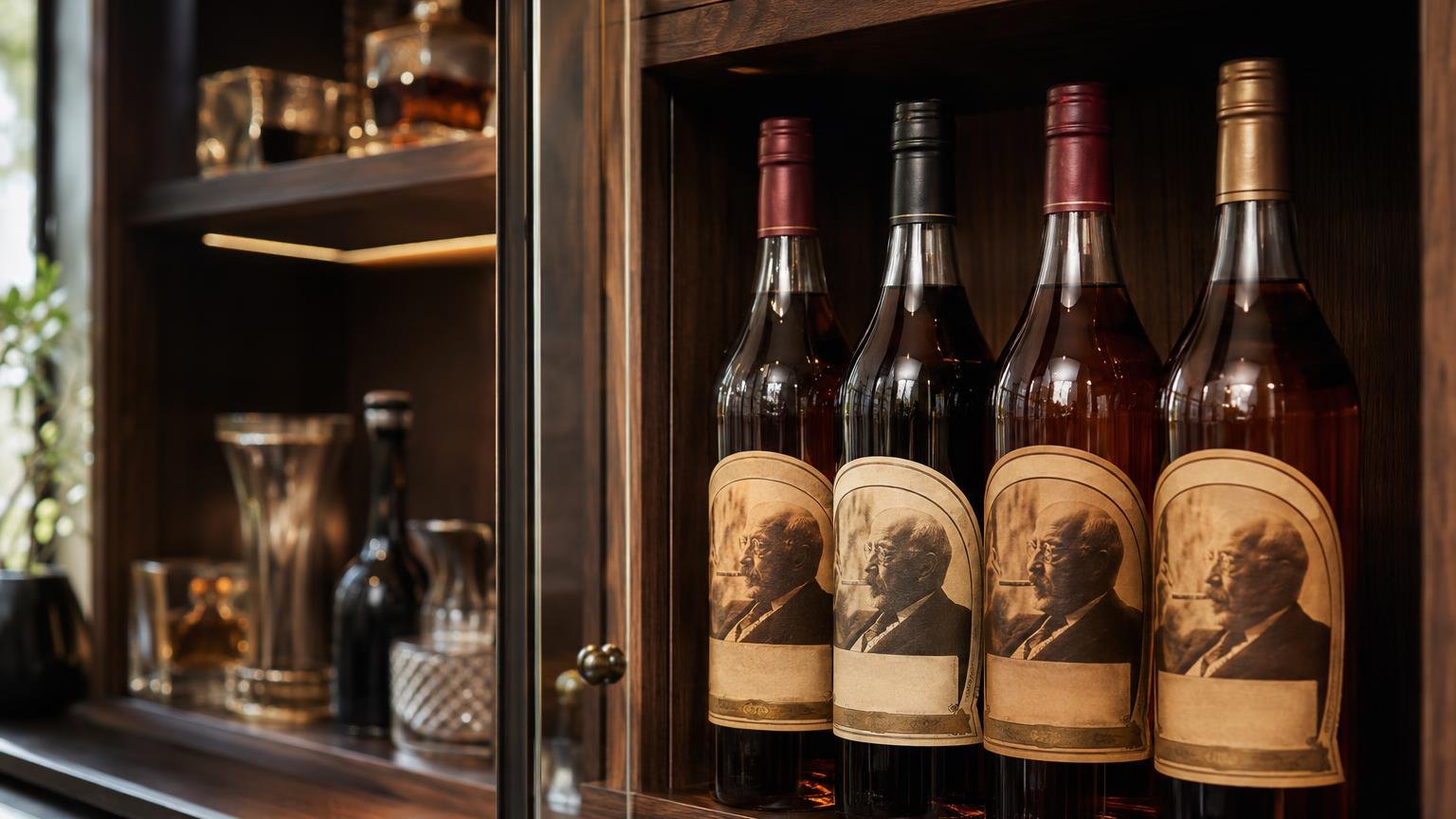
Buffalo Trace distills, ages, and bottles the current Van Winkle whiskeys, while the Van Winkle family remains involved in brand stewardship and barrel selection.
Is Pappy Van Winkle made by Buffalo Trace or the Van Winkle family?
Both are involved, but in different roles: Buffalo Trace is the producing distillery, and the Van Winkle family owns and guides the Old Rip Van Winkle brand.
The partnership began in 2002, when production moved to Buffalo Trace after years of sourcing from other Kentucky stocks.
Was Pappy Van Winkle always made at Buffalo Trace?
No. Earlier Van Winkle releases included bourbon from the historic Stitzel-Weller Distillery in Louisville, which opened in 1935 and closed in 1992.
Those older Stitzel-Weller barrels helped build Pappy’s reputation, but current production is from Buffalo Trace.
What company owns Buffalo Trace, the distillery that makes Pappy?
Buffalo Trace Distillery is owned by Sazerac Company, a privately held spirits company based in the United States.
Sazerac owns many American whiskey brands, but Pappy Van Winkle remains a distinct Van Winkle family-associated label produced at Buffalo Trace.
Who decides which barrels become Pappy Van Winkle?
Barrel selection is handled through the Buffalo Trace and Van Winkle family partnership, with the Van Winkles historically associated with choosing mature wheated bourbon barrels for the lineup.
The most famous expression, Pappy Van Winkle’s Family Reserve 23 Year, comes from barrels aged for 23 years before bottling.

2 thoughts on “Who Makes Pappy Van Winkle Bourbon?”
I am returning and to celebrate I would like to by a bottle of papa can you help with this
Welcome back, Roger — and congrats on the return! 🥃
Pappy is a beautiful way to celebrate. A couple of friendly heads-ups so you don’t end up paying tourist prices:
1. **MSRP vs. reality.** Buffalo Trace prices Pappy at roughly $80 (10-Year) to $300 (23-Year), but actual retail almost never matches MSRP. The annual fall release is lottery-based at most reputable shops, and aftermarket bottles routinely run 5–10× MSRP. If you see Pappy 15-Year sitting on a shelf for $1,200, that’s the market — not a scam, but not the price Julian wants you to pay.
2. **Best legit paths to a bottle:**
– Sign up for store lotteries in your state (Total Wine, K&L, Binny’s, local liquor stores all run them around October–November).
– Ask your favorite whiskey bar about a “Pappy pour” — many fine bars carry 15 or 20-Year by the pour for $50–$150, which is a great way to actually taste it without the bottle hunt.
– Check secondary marketplaces only where they’re legal in your state (some are; most aren’t). Caveat emptor.
3. **If Pappy is unobtainium for you right now**, the closest stylistic cousins — same wheated-bourbon DNA from the same Buffalo Trace distillery — are **Weller 12-Year** and **W.L. Weller Full Proof**. Whiskey nerds will quietly tell you Weller 12 at $40 is 80% of the Pappy 15 experience.
We don’t sell bottles ourselves — FlightWineBar is a tasting guide, not a retailer — but if you tell me which Pappy expression you’re chasing (10, 12, 15, 20, 23, or Family Reserve Rye) and roughly where you’re located, I can point you toward shops and lotteries that are actually worth your time.
Welcome home. Cheers to the next chapter. 🥂
— The FlightWineBar Team