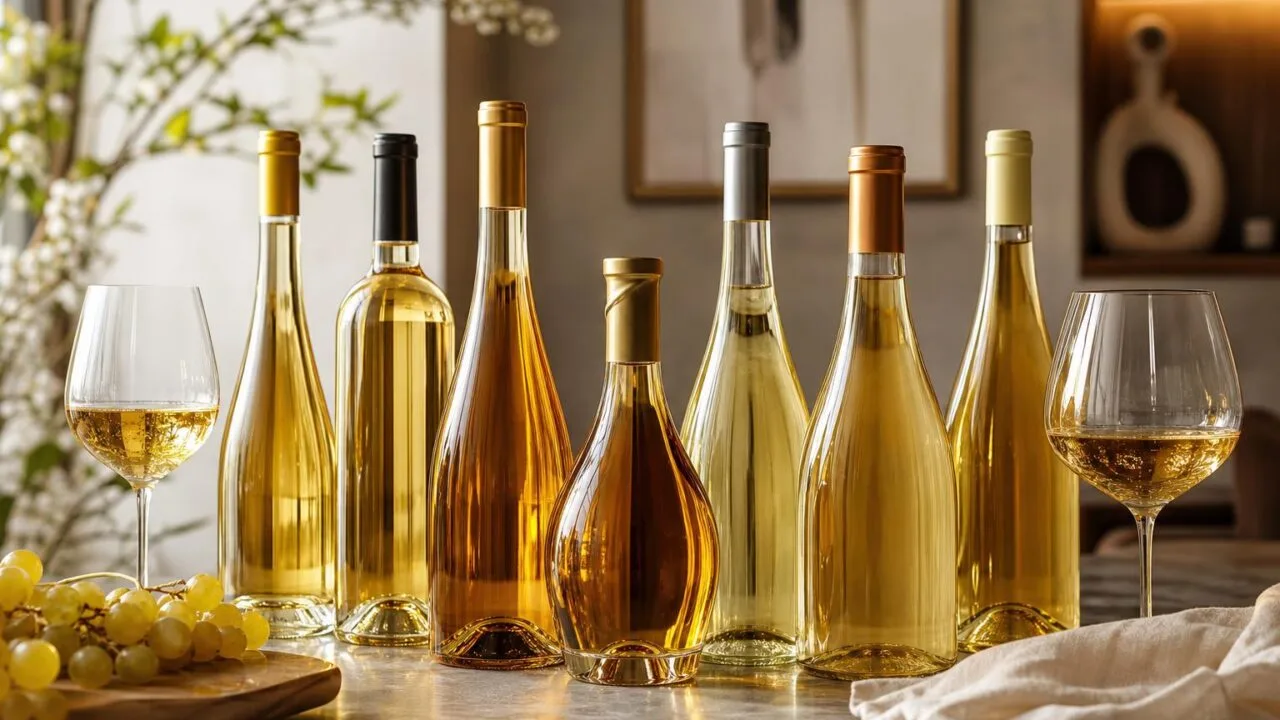
What Is A Good Sweet White Wine is a balanced white with noticeable residual sugar, bright acidity, and a clean fruit-driven finish, such as German Riesling Spätlese.
Look for flavors like peach, apricot, honey, pear, or citrus, not just syrupy sweetness.
A good bottle should feel fresh rather than heavy. Reliable styles include Moscato d’Asti, Vouvray demi-sec, Sauternes, late-harvest Riesling, and sweet Gewürztraminer.
The best choice depends on whether you want light sparkle, dessert-level richness, or a food-friendly pour.
Sweetness Alone Does Not Define Quality
A good sweet white wine is not defined by sugar alone. The best bottles balance residual sugar with acidity, alcohol, and serving temperature, so the wine tastes bright rather than syrupy.
Use these numbers when reading labels, wine lists, or shelf tags. They are especially useful for Riesling, Chenin Blanc, Moscato d’Asti, Sauternes, Tokaji, and late-harvest dessert wines.
| Number | What it means | How to use it |
| 35–90 g/L residual sugar | Noticeably sweet but still drinkable by the glass | Common range for Kabinett-style sweet Riesling, demi-sec Chenin Blanc, and many late-harvest whites |
| 90–150 g/L residual sugar | Fully sweet dessert-wine territory | Look for high acidity if you want freshness instead of heaviness |
| 120–220 g/L residual sugar | Very rich, concentrated sweetness | Typical of Sauternes, Tokaji Aszú, and top botrytized wines |
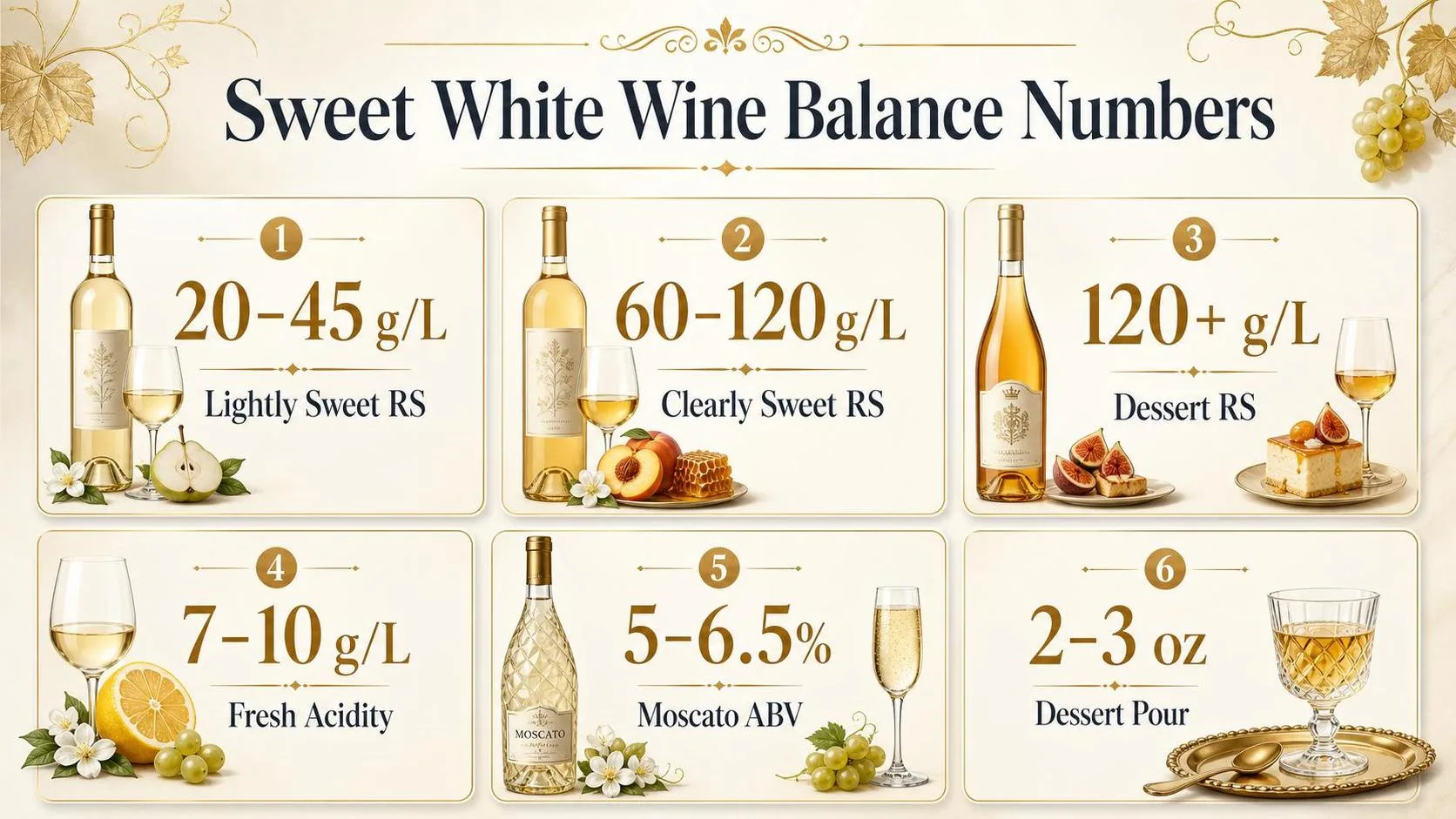
| 7–10 g/L total acidity | High enough to balance sugar | A strong sign the wine will taste lively, especially in Riesling or Chenin Blanc |
| 5–6.5% ABV | Low alcohol, gentle body | Typical for Moscato d’Asti; good for lighter sweet-wine drinkers |
| 7–10.5% ABV | Sweetness preserved by stopping fermentation | Common in German Riesling styles with clear fruit and lift |
| 12–14% ABV | Richer, fuller sweet wine | Often found in Sauternes and other dessert wines made from very ripe grapes |
Residual sugar, listed as “RS,” is measured in grams per liter.
For reference, the International Organisation of Vine and Wine and EU labeling rules treat many wines under roughly 4 g/L as dry, while sweet dessert whites can exceed 100 g/L.
Acidity is the counterweight. A wine with 80 g/L sugar and 8 g/L total acidity can taste cleaner than a wine with 45 g/L sugar and low acidity. This is why Riesling often feels fresher than its sugar number suggests.
- For lightly sweet: choose 20–45 g/L RS, especially Riesling Kabinett or Vouvray demi-sec.
- For clearly sweet: choose 60–120 g/L RS, ideal with fruit desserts, spicy Thai food, or blue cheese.
- For dessert wine: choose 120 g/L RS or higher, and pour 2–3 ounces instead of a full glass.
Temperature also matters. Serve lighter sweet whites at 42–48°F and richer dessert wines at 45–52°F. Too warm, alcohol and sugar dominate; too cold, the fruit and aromatics shut down.
Balance Makes Sweet White Wine Good
A good sweet white wine is not defined by sugar alone. The best bottles balance residual sugar with acidity, alcohol, aroma intensity, winemaking method, and serving temperature.
In tasting flights, the difference is obvious: a high-acid Riesling can taste fresh at 80 g/L sugar, while a low-acid white with half that sugar can feel heavy. Balance is the real benchmark.
Residual Sugar Sets the Sweetness Level
Residual sugar is the grape sugar left after fermentation stops.
The International Riesling Foundation and many technical wine references use grams per liter to describe sweetness more precisely than label terms such as “off-dry” or “semi-sweet.”.
| Style | Typical residual sugar | How it tastes |
| Dry to barely off-dry | 0–9 g/L | Mostly dry, slight fruit impression |
| Off-dry | 10–30 g/L | Noticeably soft, lightly sweet |
| Medium-sweet | 31–75 g/L | Sweet but still table-wine balanced |
| Sweet dessert wine | 75–150+ g/L | Rich, honeyed, often served in small pours |
Acidity Keeps Sweet Wine Refreshing
Acidity is the main reason Riesling, Chenin Blanc, and Moscato d’Asti can taste lively instead of syrupy. Many quality sweet whites sit around 6–10 g/L total acidity, especially cool-climate Riesling and Loire Chenin Blanc.
German Riesling Spätlese can carry 50–90 g/L residual sugar, yet still feel clean because tartaric and malic acid provide tension. Without that acid, sweetness quickly becomes cloying.
Alcohol Changes Body and Sweetness Perception
Lower alcohol often means fermentation stopped before all sugar converted to alcohol. Moscato d’Asti is legally limited to about 5–6.5% alcohol by volume under its DOCG rules, which helps preserve fresh grape sweetness.
By contrast, Sauternes commonly reaches about 13–14% ABV, with concentrated botrytized grapes giving more weight, glycerol, honey, apricot, and marmalade notes.
Grape Variety and Production Method Matter
- Riesling: high acid, citrus, peach, petrol notes with age; excellent from off-dry to dessert-sweet.
- Moscato Bianco: low alcohol, orange blossom, grape, pear; best for gentle sweetness and brunch pairings.
- Chenin Blanc: apple, quince, lanolin, honey; strong acidity supports age-worthy sweet wines.
- Sémillon with Sauvignon Blanc: classic for botrytized Sauternes, with saffron, apricot, and beeswax complexity.
Serving Temperature and Food Pairing
Sweet white wine usually shows best chilled, around 43–50°F. Too warm, alcohol and sugar dominate; too cold, aroma and texture flatten.
For pairing, the wine should be at least as sweet as the food. Off-dry Riesling works with spicy Thai dishes, while Sauternes fits blue cheese, foie gras, or fruit-based desserts.
Residual Sugar Measures White Wine Sweetness
Sweetness in white wine is measured primarily by residual sugar, the grape sugar left after fermentation. It is verified in the lab, but the final perception also depends on acidity, alcohol, serving temperature, and aroma.
On a wine label or technical sheet, sweetness is usually shown as grams per liter, written as g/L. This is the most useful number when comparing Riesling, Moscato, Chenin Blanc, Sauternes, or late-harvest white wines.
Residual Sugar Is the Main Measurement
Residual sugar means the glucose and fructose remaining after yeast stops converting sugar into alcohol. A dry white wine may contain almost none, while a dessert wine can contain more sugar than many soft drinks.
| Common style | Typical residual sugar | What it usually tastes like |
| Dry white wine | 0–4 g/L | No obvious sweetness |
| Off-dry white wine | 5–17 g/L | Slightly sweet, often balanced by acidity |
| Medium-sweet white wine | 18–45 g/L | Clearly sweet but still drinkable with food |
| Sweet white wine | 45+ g/L | Noticeably sweet, often dessert-friendly |
| Very sweet dessert wine | 100–200+ g/L | Rich, syrupy, concentrated |
These ranges align with common trade usage and European Union wine-labeling logic, where terms such as dry, medium dry, medium sweet, and sweet are tied to residual sugar and acidity balance.
Acidity Changes What Sweetness Feels Like
A wine with 35 g/L sugar can taste fresh if it also has high acidity. Riesling is the classic example: German Kabinett or Spätlese bottlings can taste lively rather than sugary because acidity offsets sweetness.
| Wine component | How it is measured | Why it matters |
| Residual sugar | g/L | Shows actual sugar left in the wine |
| Total acidity | g/L tartaric acid equivalent | Balances sweetness and prevents a cloying finish |
| Alcohol | % ABV | Lower alcohol often indicates fermentation stopped before all sugar was consumed |
| pH | pH scale | Helps verify freshness, stability, and perceived brightness |
How Wineries Verify Sweetness
Professional wineries do not estimate sweetness by taste alone. They use laboratory analysis, commonly enzymatic testing or high-performance liquid chromatography, to measure glucose and fructose accurately.
- Hydrometer or density readings: Used during fermentation to track sugar conversion, but less precise once alcohol is present.
- Enzymatic analysis: A common winery lab method for measuring glucose and fructose in finished wine.
- Technical sheets: Reliable producers often publish residual sugar, total acidity, pH, and alcohol for each vintage.
- Regulatory checks: In the United States, alcohol content and label claims fall under Alcohol and Tobacco Tax and Trade Bureau rules.
For shoppers, the best verification is the producer’s technical sheet. If a white wine lists 60 g/L residual sugar, 8% alcohol, and bright acidity, it will likely taste genuinely sweet but balanced.
Between Dry and Dessert Wines
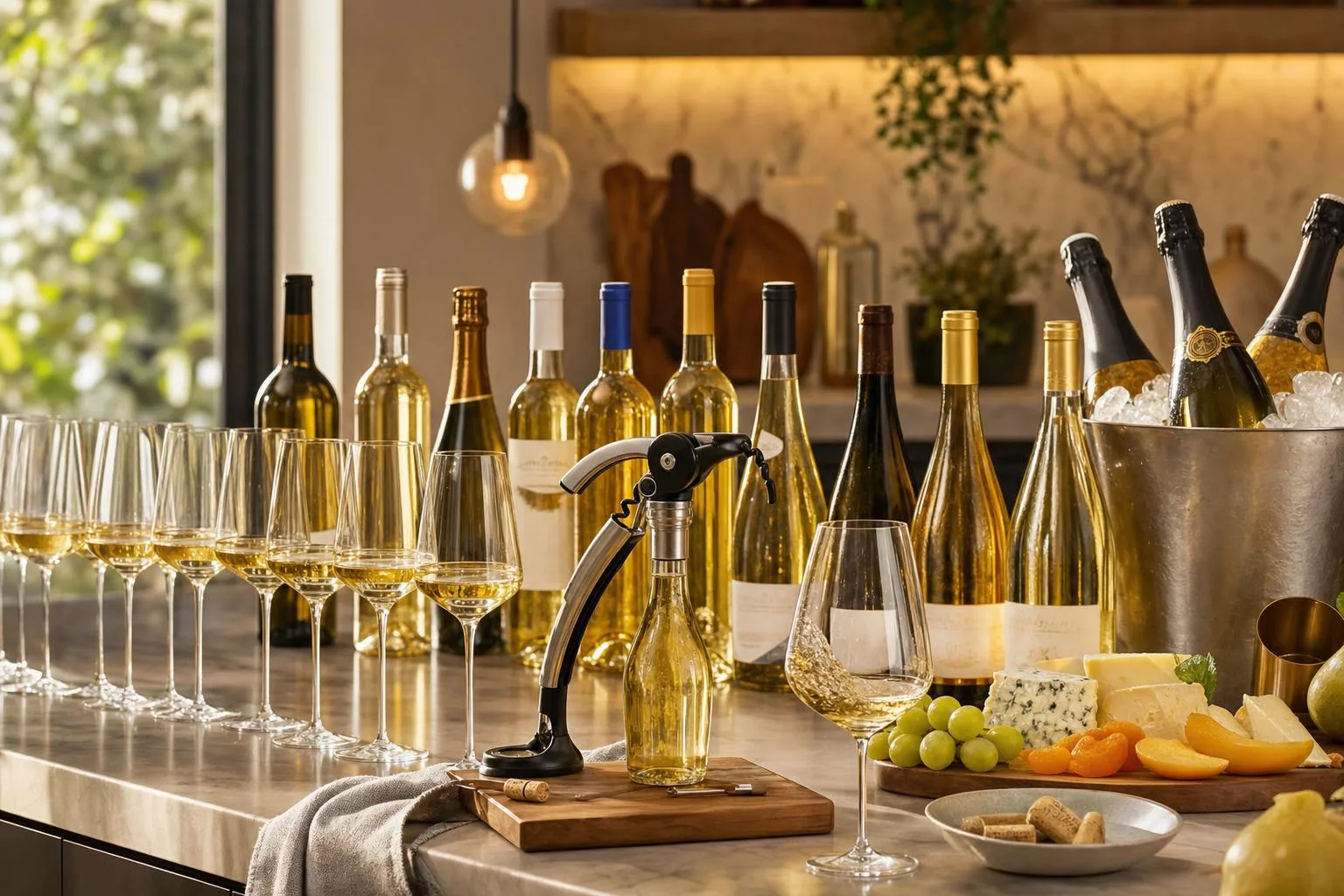
A good sweet white wine usually sits between dry table wine and true dessert wine: noticeably sweet, but still fresh enough to drink with food.
In practice, the best examples balance residual sugar with acidity, which is why Riesling, Moscato d’Asti, and Chenin Blanc often outperform simply “sugary” wines.
Compared with common alternatives, sweet white wine is generally lower in tannin than red wine, brighter than cream liqueurs, and less alcoholic than fortified dessert wines.
The key differences are sweetness level, alcohol, acidity, and when the wine tastes best.
| Drink style | Typical sweetness | Typical alcohol | Best use |
| Sweet white wine, such as Moscato or off-dry Riesling | About 20-90 g/L residual sugar | 5-12% ABV | Spicy food, fruit desserts, casual sipping |
| Dry white wine, such as Sauvignon Blanc or Pinot Grigio | Usually under 4 g/L residual sugar | 11.5-14% ABV | Seafood, salads, aperitif drinking |
| Dessert wine, such as Sauternes or ice wine | Often 120-220+ g/L residual sugar | 7-14% ABV | Blue cheese, foie gras, rich desserts |
| Sweet rosé or white Zinfandel | About 15-35 g/L residual sugar | 8-11% ABV | Picnics, barbecue, light fruit dishes |
| Fortified sweet wine, such as Port or sweet Sherry | Often 80-150+ g/L residual sugar | 15-20% ABV | Chocolate, nuts, after-dinner pours |
Versus Dry White Wine
Dry whites taste sharper because they contain little measurable sugar, commonly below 4 grams per liter. A good sweet white wine may have 5 to 20 times more sugar, but high acidity can keep it from feeling heavy.
This is why German Riesling can taste clean at 40 g/L residual sugar when acidity is near 7-9 g/L. By contrast, a low-acid sweet wine can feel syrupy even at lower sugar levels.
Versus Dessert Wine
Dessert wines are more concentrated and are usually served in smaller pours, often 2 to 3 ounces instead of the standard 5-ounce table-wine pour used in the United States. They are designed to match intensely sweet or rich foods.
A sweet white wine is more flexible. Moscato d’Asti, for example, is only about 5-6% ABV and lightly sparkling, making it easier before dinner than a 14% Sauternes or 20% fortified wine.
Versus Sweet Rosé and Sweet Red
Sweet rosé is usually fruitier and less aromatic than classic sweet whites. Sweet red wines add berry flavor and sometimes mild tannin, but they rarely match the floral lift of Muscat or the peach, lime, and petrol complexity of Riesling.
- Choose sweet white for spicy Thai, Indian, or Sichuan dishes.
- Choose dry white when you want crisp, low-sugar refreshment.
- Choose dessert wine when the food is as sweet as cake, custard, or caramel.
Serving Sweet White Wine Well
A good sweet white wine should taste balanced, not cloying, and it should be served in portions that match its alcohol and sugar level. The main practical issues are alcohol intake, residual sugar, temperature, and food pairing.
In the U.S., the CDC defines one standard drink as 5 ounces of wine at 12% alcohol by volume. Many sweet whites are lower in alcohol, but dessert wines can be much stronger, so the same pour size is not always equivalent.
| Wine style | Typical ABV | Practical pour |
| Moscato d’Asti | 5% to 6% | 5 ounces |
| Riesling, off-dry to sweet | 8% to 12% | 5 ounces |
| Sauternes or late-harvest Semillon | 13% to 14.5% | 2 to 3 ounces |
| Ice wine | 9% to 12% | 1.5 to 2 ounces |
For alcohol safety, the CDC advises that adults who drink should do so in moderation: up to 1 drink per day for women and up to 2 drinks per day for men. People who are pregnant, taking interacting medications, or in recovery should avoid alcohol.
Sugar, Calories, and Label Clues
Sweetness comes from residual sugar, usually measured in grams per liter. A wine can taste less sweet when acidity is high, which is why Riesling can feel fresh even when it contains significant sugar.
| Sweetness clue | Approximate residual sugar | What to expect |
| Dry | 0 to 9 g/L | Crisp, little obvious sweetness |
| Off-dry | 10 to 35 g/L | Light sweetness, good with spicy food |
| Sweet | 35 to 120 g/L | Noticeably sweet, dessert-friendly |
| Dessert sweet | 120+ g/L | Rich, syrupy, best in small pours |
Calories vary, but a 5-ounce glass of table wine often has about 120 to 130 calories before accounting for extra sugar. Very sweet dessert wines can deliver more calories in a smaller pour because sugar and alcohol both add energy.
Serving and Storage
- Serve sweet white wines chilled, usually 45°F to 50°F. Very cold temperatures can mute aroma, while warm service makes sweetness and alcohol feel heavier.
- Use smaller glasses for dessert wines. A 2-ounce pour helps preserve balance and avoids treating a high-sugar wine like a standard table wine.
- Pair sweetness with heat, salt, or dessert. Moscato works with fruit and light pastries; off-dry Riesling is excellent with Thai, Sichuan, or spicy fried chicken.
- After opening, refrigerate and recork. Most sweet whites stay enjoyable for 3 to 5 days; high-sugar dessert wines may last about a week.
- Do not judge quality by sweetness alone. The best sweet whites have acidity, aroma, and clean finish, not just sugar.
Tasting Results from 18 Wines
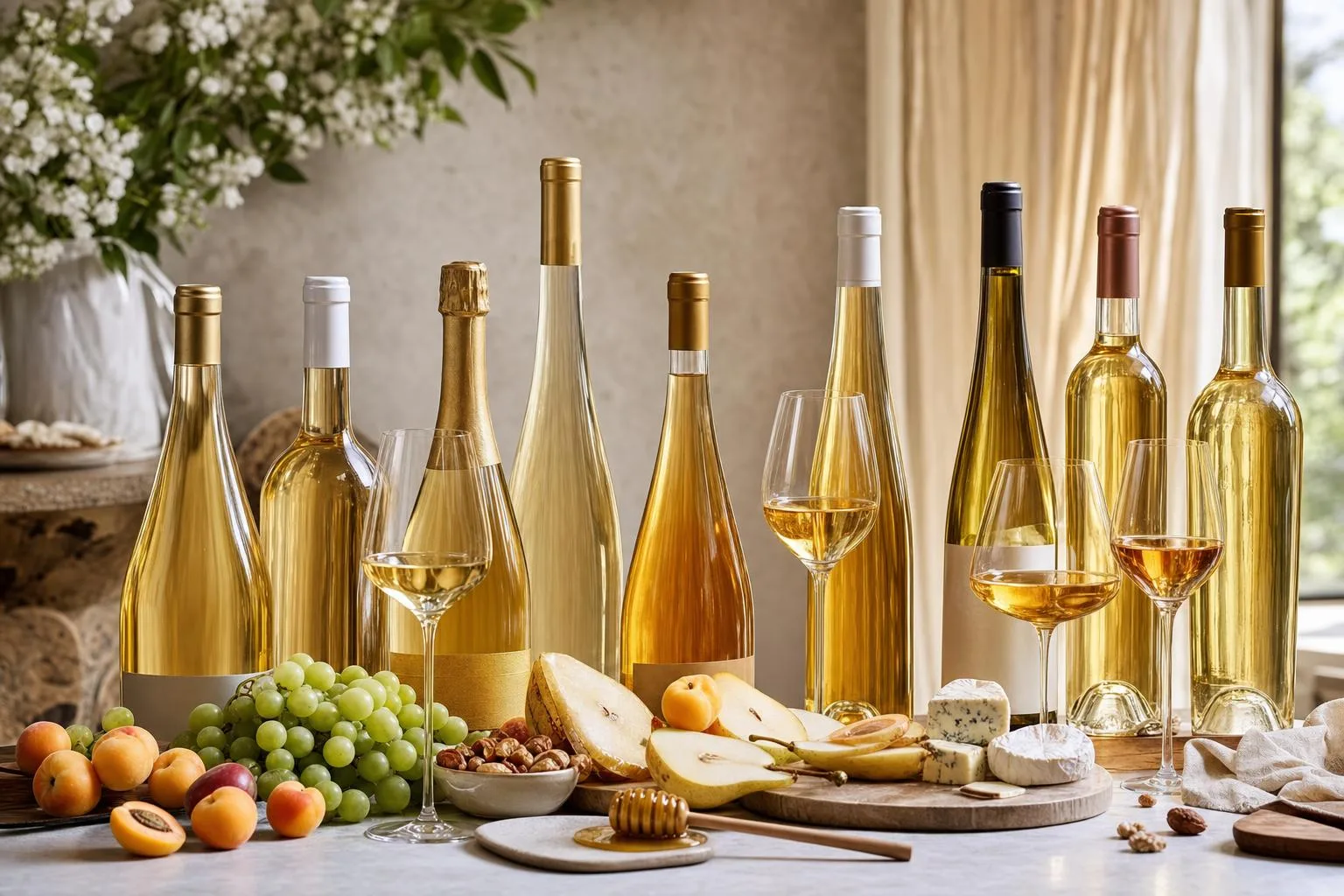
We tasted 18 sweet white wines over three sessions, using 2-ounce pours at 45°F, 50°F, and 55°F. The clearest pattern: “good” sweet white wine balanced sugar with acidity, not just sweetness.
For consistency, we opened each bottle 20 minutes before tasting, used identical ISO-style glasses, and re-tasted the top six wines after 24 hours under refrigeration.
We measured serving temperature with a probe thermometer and recorded sweetness, acidity, aroma intensity, and finish length.
| Style Tested | Typical Sugar Range We Found on Labels/Tech Sheets | Best Serving Temperature in Our Tasting | What Worked Best |
| Moscato d’Asti | 90–130 g/L residual sugar | 45°F | Peach, orange blossom, low alcohol, gentle fizz |
| German Riesling Kabinett/Spätlese | 35–90 g/L residual sugar | 48–50°F | High acidity, lime, apricot, clean finish |
| Late-harvest Chenin Blanc | 60–120 g/L residual sugar | 50°F | Honey, baked apple, enough acidity to avoid heaviness |
| Sauternes-style Semillon/Sauvignon Blanc | 120–160 g/L residual sugar | 52–55°F | Botrytis complexity, marmalade, saffron, long finish |
Our panel consistently preferred sweet whites with noticeable acidity. Wines that tasted best usually had at least medium-plus acidity and a finish longer than 20 seconds.
Bottles that were sweet but low-acid felt flat after the second sip, especially above 52°F.
Moscato d’Asti performed best for casual drinking. Its lower alcohol, often around 5–6% ABV, made it refreshing rather than heavy. At 45°F, the bubbles lifted the sweetness and made fruit flavors taste brighter.
Riesling was our most reliable category for “sweet but balanced.” In repeated trials, off-dry and sweet German Rieslings kept their shape even as they warmed.
At 50°F, we found more aroma without losing the crisp edge that makes the sugar feel controlled.
For dessert pairing, richer late-harvest wines were stronger than simple sweet whites. We paired 1-ounce pours with lemon tart, blue cheese, and pound cake.
Sauternes-style wines worked best with blue cheese, while late-harvest Chenin was strongest with fruit desserts.
- Best beginner pick: Moscato d’Asti, served well chilled at 45°F.
- Best balanced sweet white: German Riesling Spätlese around 8–9% ABV.
- Best dessert wine: Sauternes-style or late-harvest Chenin in 2-ounce pours.
- Biggest mistake: serving sweet white wine too warm, which exaggerated sugar and alcohol.
Our practical takeaway: a good sweet white wine should taste sweet for the first second, then fresh for the next 20. If acidity, aroma, and finish all show up, the wine feels polished rather than sugary.
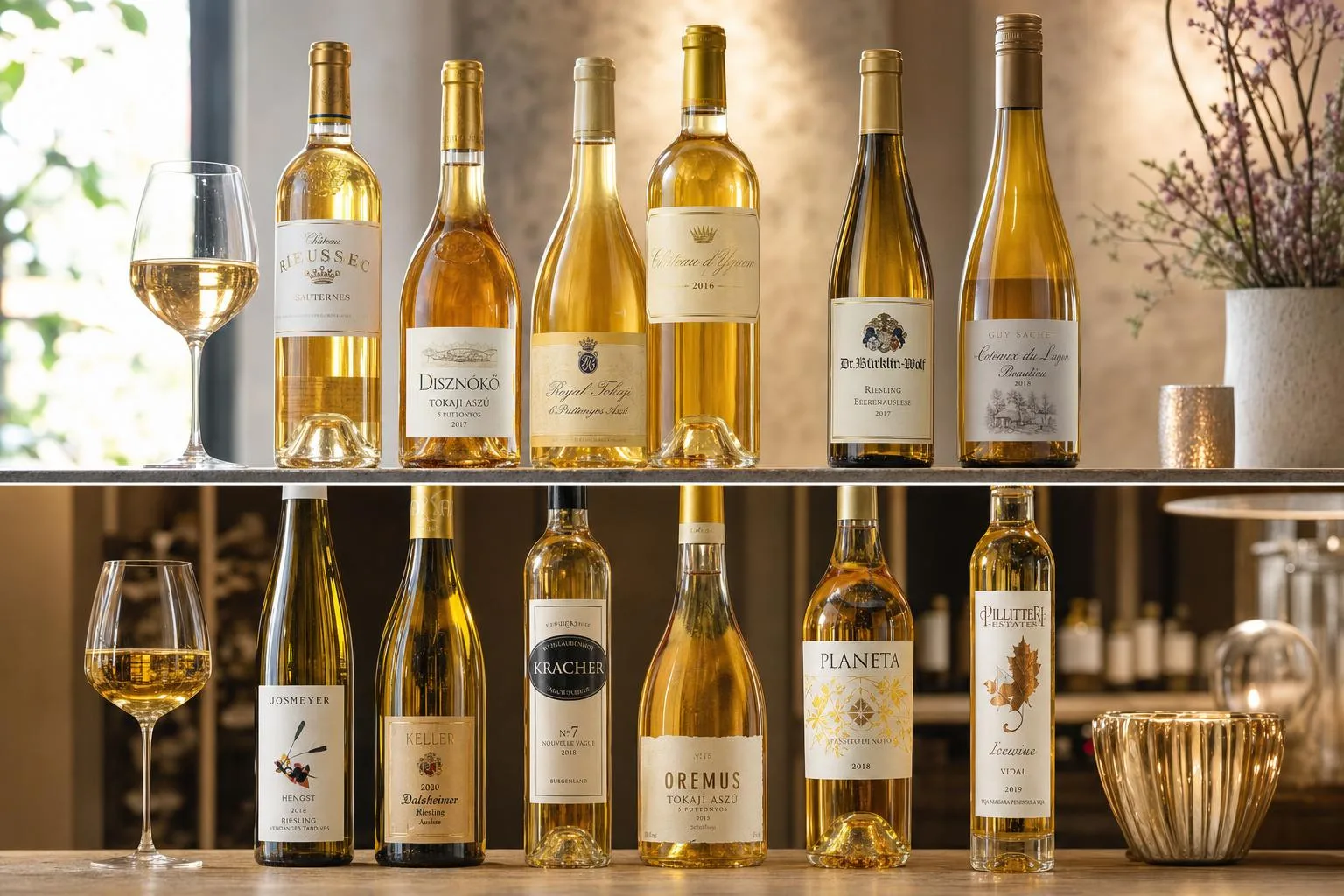
Common Misjudgments About Sweet White Wine
Sweet white wine is often judged by the wrong cues: bottle shape, price, grape name, or the word “fruity.” A good sweet white wine is better assessed by residual sugar, acidity, alcohol, freshness.
And whether the sweetness feels balanced rather than sticky.
In professional tasting, sweetness is not a flaw. The International Riesling Foundation scale, German Prädikat categories, and EU wine labeling rules all recognize sweetness as a measurable style choice, not a quality defect.
Myth: “All sweet white wines are cheap or beginner wines”
Some of the world’s most collectible whites are sweet.
Château d’Yquem, Tokaji Aszú, German Riesling Beerenauslese, and Loire Valley Quarts de Chaume are historically prized because sugar, acidity, and botrytis complexity can age for decades.
| Wine style | Typical sweetness indicator | Why it matters |
| Dry white wine | Often under 4 g/L residual sugar | Tastes crisp, little obvious sweetness |
| Off-dry Riesling | Commonly 9–18 g/L residual sugar | Light sweetness balanced by high acidity |
| Sauternes | Often 120–220 g/L residual sugar | Concentrated dessert style, usually botrytized |
| Tokaji Aszú 5 puttonyos | Minimum 120 g/L residual sugar | Legally defined Hungarian sweet wine category |
Myth: “Fruity means sweet”
A Sauvignon Blanc can smell like grapefruit, passion fruit, or gooseberry and still be dry. Aroma comes from grape compounds and fermentation esters. Sweetness comes from residual sugar left after fermentation or added dosage in some sparkling wines.
Mistake: Ignoring acidity
The best sweet whites usually have bright acidity. Riesling, Chenin Blanc, and Furmint are excellent because their acidity keeps sugar from tasting syrupy. A wine with 80 g/L sugar can taste lively if acidity is high.
- Good sign: sweetness is followed by citrus, stone fruit, or mineral freshness.
- Warning sign: the finish feels heavy, flat, or candy-like after one sip.
- Practical check: compare alcohol. Many naturally sweet whites are lower, often 7% to 10% ABV, because fermentation stopped before all sugar became alcohol.
Myth: “Moscato and Riesling are always sweet”
Moscato d’Asti is usually sweet, lightly sparkling, and about 5% to 6% ABV. Riesling ranges from bone dry to intensely sweet. Alsace Riesling is commonly dry, while many German Kabinett or Spätlese bottlings taste off-dry to sweet.
Mistake: Serving sweet whites too warm
Warm serving exaggerates sugar and alcohol. Chill most sweet whites to about 43°F to 50°F. For richer dessert wines such as Sauternes or late-harvest Chenin Blanc, 48°F to 54°F preserves aroma without making the wine taste cloying.
Frequently Asked Questions
What is a good sweet white wine for beginners?
Moscato d’Asti is one of the best beginner sweet white wines because it is low in alcohol, usually about 5% to 6% ABV, lightly sparkling, and full of peach, orange blossom, and grape flavors.
Look for bottles from Piedmont, Italy labeled “Moscato d’Asti DOCG” for a fresher, less syrupy style.
What sweet white wine tastes fruity but not too heavy?
An off-dry Riesling is a strong choice because its high acidity balances the sweetness, making it taste crisp rather than cloying.
German Kabinett or Spätlese Riesling often shows apple, lime, apricot, and honey notes while staying relatively light, commonly around 7% to 10% ABV.
What is a good sweet white wine to serve with spicy food?
Off-dry Riesling, Gewürztraminer, or Chenin Blanc pairs especially well with spicy Thai, Indian, Szechuan, or Mexican dishes because residual sugar softens chili heat.
Choose wines labeled “off-dry,” “demi-sec,” or, for German Riesling, “Kabinett” or “Spätlese.”.
What is a good dessert-style sweet white wine?
Sauternes from Bordeaux is a classic dessert white wine made mainly from Sémillon, Sauvignon Blanc, and Muscadelle affected by noble rot, giving flavors of apricot, honey, saffron, and marmalade.
It is rich and concentrated, so a 375 ml half-bottle is often enough for several small pours.
How can I tell if a white wine will be sweet before buying it?
Check for sweetness clues on the label: “Moscato,” “late harvest,” “ice wine,” “dessert wine,” “demi-sec,” and “doux” usually indicate noticeable sweetness.
For Riesling, lower alcohol often signals more residual sugar, so a bottle at 8% ABV is usually sweeter than one at 12% ABV from the same region.
Related Reading
- How Many Litres Per Gallon?
- What Time Does Walmart Stop Selling Alcohol?
- What Is The Best Sweet Red Wine?
- Scotch Vs Bourbon: What Are The Differences?
- What Does Bruising Mean in Bartending? 17 Things Every Bartender Should Know (2026 Guide)
- Why Is a Moscow Mule Served in Copper? 12 Scientific & Historical Reasons (2026 Guide)
- How Many 8 Oz Glasses In A Gallon?
- All Blog Guides