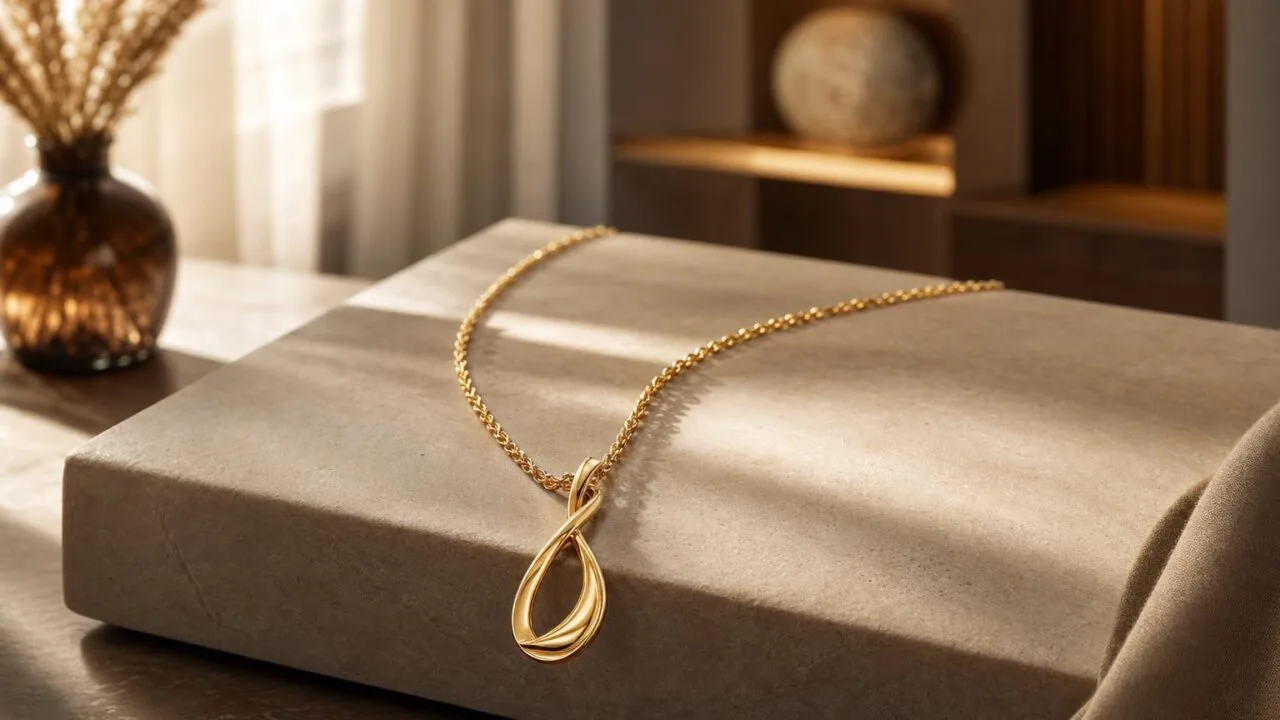
How Much Is 10K Gold Necklace Worth is typically $90–$900, depending on gram weight, gold spot price, craftsmanship, and resale channel.
Because 10K gold is 41.7% pure gold, a 10-gram necklace contains about 4.17 grams of pure gold before buyer fees or retail markup.
A pawn shop may pay near melt value, while a jeweler or private buyer may value brand, condition, and design higher.
This guide explains how to calculate intrinsic gold value, estimate realistic resale prices, and spot factors that make a 10K necklace worth more than scrap.
K Gold Purity by Karat
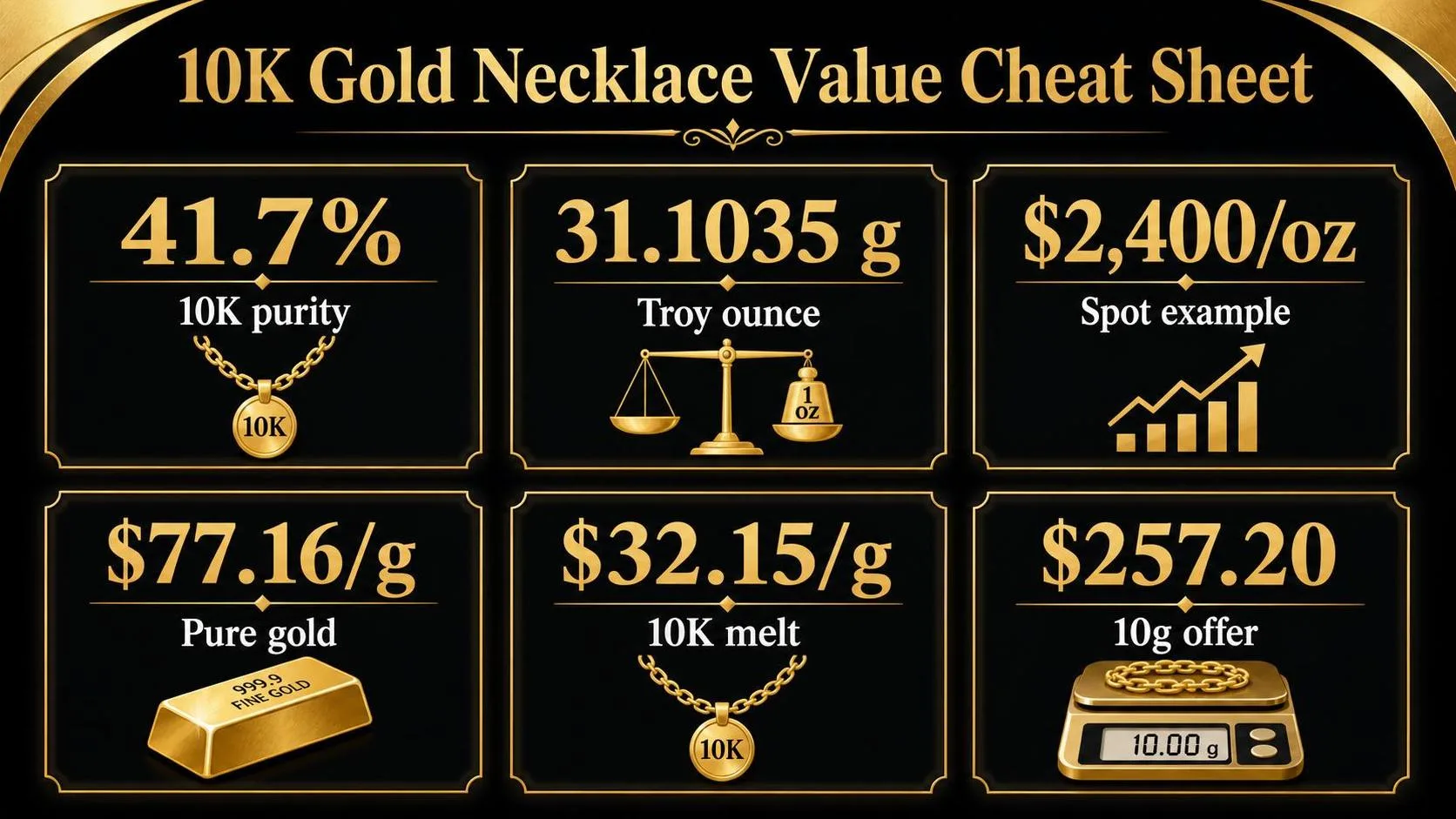
A 10K gold necklace is 41.7% pure gold by weight, because 10 karats out of 24 are gold. Its scrap value starts with the live gold spot price, then adjusts for weight, purity, and the buyer’s payout percentage.
Gold is priced by the troy ounce, not the regular ounce. One troy ounce equals 31.1035 grams, which is the conversion used by refiners, jewelers, and bullion markets.
Core 10K Gold Value Formula
Use this formula for melt value before any buyer discount: spot gold price ÷ 31.1035 × 0.4167 × necklace weight in grams.
| Input | Number to Use | Why It Matters |
| 10K purity | 41.7% gold | 10 parts gold and 14 parts alloy metals |
| Troy ounce | 31.1035 grams | Standard gold-market weight conversion |
| Example spot price | $2,400 per troy ounce | Equals about $77.16 per gram of pure gold |
| 10K gold at $2,400 spot | About $32.15 per gram | $77.16 × 41.7% purity |
Example Necklace Values at $2,400 Gold
At a $2,400 spot price, the melt value of 10K gold is about $32.15 per gram. Actual offers are usually lower because buyers need refining margin, risk coverage, and profit.
| Necklace Weight | Approx. Melt Value | Typical 80% Cash Offer |
| 5 grams | $160.75 | $128.60 |
| 10 grams | $321.50 | $257.20 |
| 15 grams | $482.25 | $385.80 |
| 20 grams | $643.00 | $514.40 |
| 30 grams | $964.50 | $771.60 |
What Changes the Final Price
- Weight: A kitchen scale is not precise enough for serious pricing. Use a gram scale reading to at least 0.1 gram.
- Purity mark: Look for “10K,” “10KT,” or “417.” The “417” mark means 417 parts gold per 1,000.
- Buyer payout: Pawn shops and gold buyers commonly pay below melt value. Competitive offers often fall around 70% to 90% of melt.
- Retail resale: A wearable chain may sell for more than melt if it has a desirable style, brand, or condition.
- Stones and clasps: Non-gold stones add weight but may add little scrap value. Some clasps or repairs may be lower purity than the chain.
For a quick estimate, multiply the necklace’s gram weight by the current 10K value per gram, then expect a cash offer below that number unless you sell directly to a retail buyer.
Main Factors in 10K Necklace Value
A 10K gold necklace is valued mainly by its gold content, not by the word “gold” on the tag. In the United States, 10K means the alloy is 10 parts gold and 14 parts other metals, or 41.7% pure gold by weight.
The biggest variable is the live spot price of gold, usually quoted per troy ounce. One troy ounce equals 31.103 grams, so buyers convert the daily market price into a per-gram melt value before applying purity and fees.
| Factor | How it changes value |
| Gold purity | 10K contains 41.7% gold; 14K contains 58.3%; 18K contains 75.0%. |
| Necklace weight | A 20-gram 10K chain contains about 8.34 grams of pure gold. |
| Spot price | If gold is $2,400 per troy ounce, pure gold is about $77.16 per gram. |
| Buyer payout | Pawn shops and gold buyers often pay below melt, commonly because of refining, risk, and resale margin. |
Weight matters because jewelry is bought and sold by grams or pennyweights. A small 5-gram 10K necklace has only about 2.085 grams of pure gold, while a 30-gram necklace has about 12.51 grams.
Condition affects resale value, but not melt value. A broken 10K rope chain and an intact one with the same weight have similar scrap value, yet the wearable chain may bring more from a jeweler, private buyer, or consignment sale.
- Hallmark accuracy: Look for “10K,” “10KT,” or “417.” Under U.S. FTC jewelry guidance, karat markings must be truthful, but older or imported pieces should still be tested.
- Design and brand: A plain mass-market chain is usually valued near melt. A signed designer necklace, antique piece, or unusual link style can sell above metal value.
- Stones and attachments: Diamonds, gemstones, clasps, charms, or non-gold parts can change the final offer. Some buyers subtract stone weight before calculating gold value.
- Local market: Offers vary by city, buyer type, and gold volatility. Getting two or three quotes often shows a noticeable spread.
Taxes, shipping, authentication, and platform fees also matter if you sell online. Marketplaces can expose the necklace to better retail pricing, but final proceeds may drop after payment processing, returns, insurance, and seller commissions.
How 10K Necklaces Are Tested
A 10K gold necklace is measured first by weight, then verified for gold purity. The stamped karat mark matters, but resale value is usually based on confirmed metal content, not the retail price paid.
In the United States, 10K gold legally means 10 parts gold and 14 parts other metals. That equals 41.7% pure gold by weight, according to the Federal Trade Commission’s jewelry marking standard.
Weight Is Measured in Grams or Pennyweights
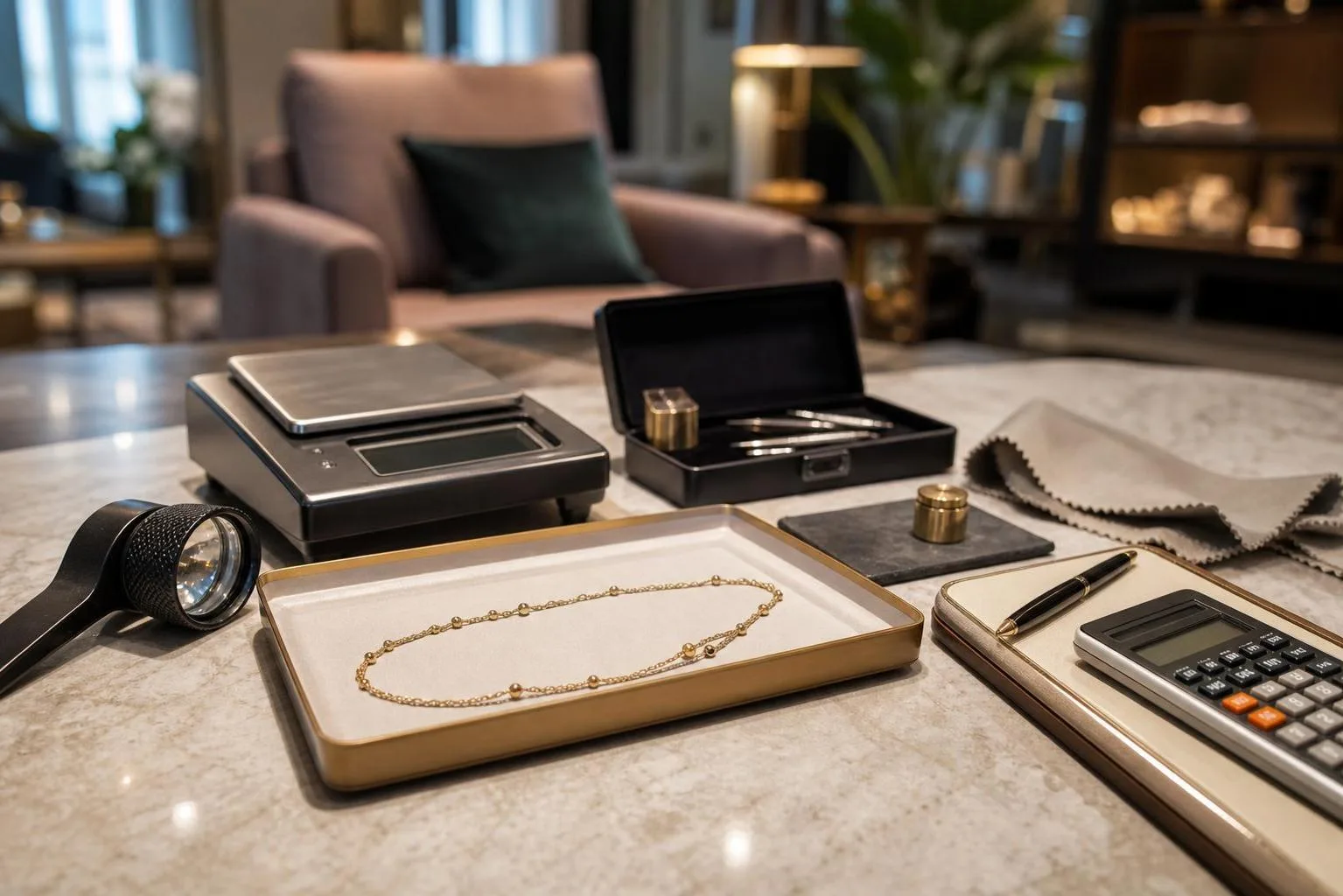
Most jewelers and gold buyers weigh necklaces on a calibrated digital scale. Consumer jewelry is usually weighed in grams, while some pawn shops and refiners use pennyweights, abbreviated dwt.
| Unit | Conversion | Common Use |
| 1 gram | 0.03215 troy ounce | Retail jewelry weighing |
| 1 pennyweight | 1.555 grams | Pawn shops and scrap gold buyers |
| 1 troy ounce | 31.103 grams | Gold market pricing |
Only the gold portion is valued at the spot gold price. For example, a 20.0 gram 10K necklace contains about 8.34 grams of pure gold before refining fees or buyer margins.
| Necklace Weight | 10K Gold Purity | Pure Gold Content |
| 10.0 grams | 41.7% | 4.17 grams |
| 20.0 grams | 41.7% | 8.34 grams |
| 30.0 grams | 41.7% | 12.51 grams |
How Jewelers Verify 10K Gold
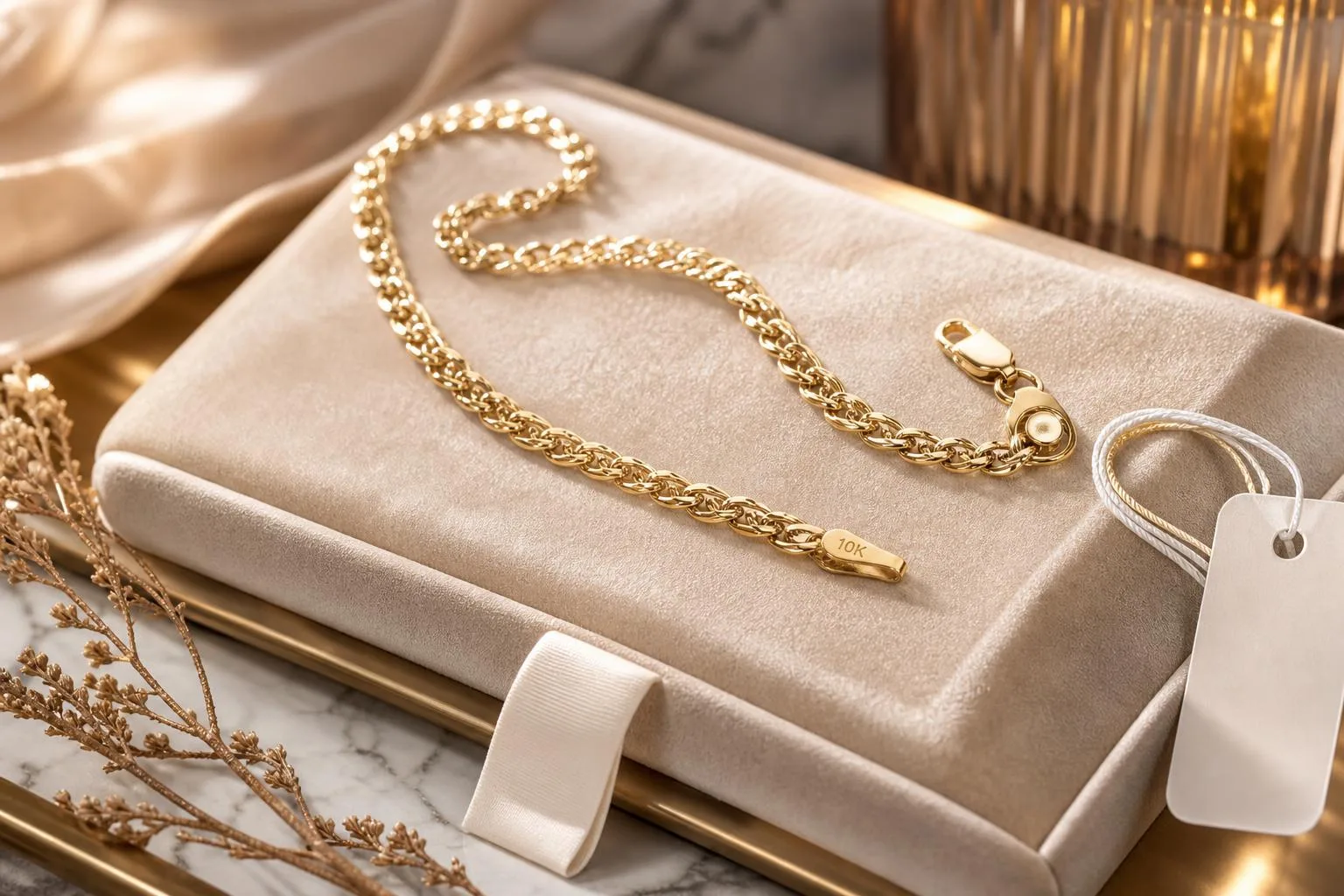
The first check is the hallmark. Common U.S. stamps include “10K,” “10KT,” or “417,” with 417 meaning 417 parts gold per 1,000 parts metal.
- Magnet test: Gold is not magnetic, but this test is only a screen. Clasps, springs, or base-metal cores can affect the result.
- Acid test: A jeweler scratches the item on a test stone and applies 10K acid. If the mark holds, it is consistent with 10K gold.
- XRF test: X-ray fluorescence testing reads surface metal composition without cutting the necklace. Many professional buyers use it for faster verification.
- Refiner assay: The most exact method melts or samples the metal, but it is destructive and usually used for scrap lots.
Verification should include checking whether stones, solder, hollow links, or non-gold clasps are included in the scale weight. These parts can reduce the actual payable gold weight.
For the most reliable estimate, ask the buyer to show the scale reading, karat test result, live spot gold price, and payout percentage. Reputable buyers separate measurement from offer negotiation.
K vs 14K and 18K
A 10K gold necklace sits at the practical end of solid gold jewelry: lower intrinsic gold value than 14K or 18K, but usually tougher for daily wear. Its melt value is based on 41.7% pure gold, not the full necklace weight.
For context, pure gold is priced by the troy ounce, which equals 31.1035 grams. The table below uses an example gold spot price of $2,400 per troy ounce, or about $77.16 per gram of pure gold.
| Material | Pure gold content | Gold value per gram at $2,400/oz spot | Practical resale note |
| 10K solid gold | 41.7% | About $32.15/g | Lower melt value, durable, commonly bought by scrap dealers |
| 14K solid gold | 58.3% | About $45.01/g | Higher resale value; common U.S. fine-jewelry standard |
| 18K solid gold | 75.0% | About $57.87/g | Much higher gold value, softer than 10K or 14K |
| Gold-filled, 1/20 12K | About 2.5% pure gold overall | About $1.93/g in theoretical gold content | Usually not attractive to refiners in small quantities |
| Gold-plated | Often far below 1% | Usually negligible | Little to no melt value; value is mostly decorative |
| Sterling silver | 0% gold; 92.5% silver | No gold value | Worth based on silver weight, usually far less than gold |
Weight matters as much as karat. A 10-gram 10K necklace contains about 4.17 grams of pure gold. At $2,400 per ounce gold, that equals about $321.50 in theoretical melt value before buyer discounts.
By comparison, a 10-gram 14K necklace contains about 5.83 grams of pure gold, or roughly $450.10 at the same spot price. An 18K necklace at the same weight contains 7.5 grams of pure gold, or about $578.70.
- 10K vs. 14K: 14K has about 40% more pure gold than 10K by weight, so it usually brings meaningfully more at resale.
- 10K vs. 18K: 18K has 80% more pure gold than 10K, but it is typically softer and more expensive to buy.
- 10K vs. gold-filled: 10K is solid gold alloy throughout; gold-filled has a bonded gold layer over a base metal core.
- 10K vs. gold-plated: plating can wear through and usually has minimal recoverable gold.
In an actual sale, do not expect the full melt number. Many local gold buyers pay roughly 70% to 90% of melt value, depending on competition, testing, refining costs, and whether the necklace is resold as jewelry.
K Necklace Durability and Legal Gold Standards
A 10K gold necklace is durable, but it is not pure gold: by U.S. definition, 10K contains 41.7% gold and 58.3% other metals. Those added metals affect skin sensitivity, cleaning methods, resale value, and whether the piece is safe for daily wear.
| Gold mark | Gold content | Other metals | Practical impact |
| 10K | 41.7% | 58.3% | Harder, lower melt value, higher allergy risk |
| 14K | 58.3% | 41.7% | Better resale value, still durable |
| 18K | 75.0% | 25.0% | Higher gold value, softer for daily wear |
Skin Reactions and Metal Allergies
Most irritation from 10K jewelry comes from alloy metals, not the gold itself. Nickel is the most common concern; the American Academy of Dermatology identifies nickel as one of the leading causes of allergic contact dermatitis.
- Yellow 10K gold commonly contains copper, silver, and zinc.
- White 10K gold may contain nickel unless labeled nickel-free or palladium-based.
- Red or rose 10K gold has a higher copper content, which can discolor skin green or cause irritation in sensitive wearers.
- If your neck itches, burns, or develops a rash, stop wearing the necklace and clean the skin with mild soap and water.
Safe Cleaning and Wear
Use warm water, mild dish soap, and a soft toothbrush. Avoid chlorine bleach, pool chemicals, and harsh jewelry dips; chlorine can weaken gold alloys over time, especially at solder joints and clasps.
| Situation | Best practice |
| Swimming pool or hot tub | Remove the necklace before entering chlorinated water |
| Gym or sports | Remove if the chain is thin, hollow, or below 2 mm wide |
| Sleeping | Remove rope, box, and fine chains to reduce kinking |
| Cleaning | Use soap and water; dry fully before storage |
Practical Checks Before Selling or Wearing
- Look for a stamp such as “10K,” “10KT,” or “417,” usually near the clasp.
- Weigh the necklace in grams; melt value depends on weight multiplied by 41.7% gold content.
- Test clasps, jump rings, and solder points, since repairs can cost more than the melt value of very light chains.
- Store separately in a soft pouch to prevent scratches and tangles.
- For an expensive or inherited piece, ask a jeweler for an acid test or XRF test before accepting a cash offer.
Office Testing of Six 10K Necklaces
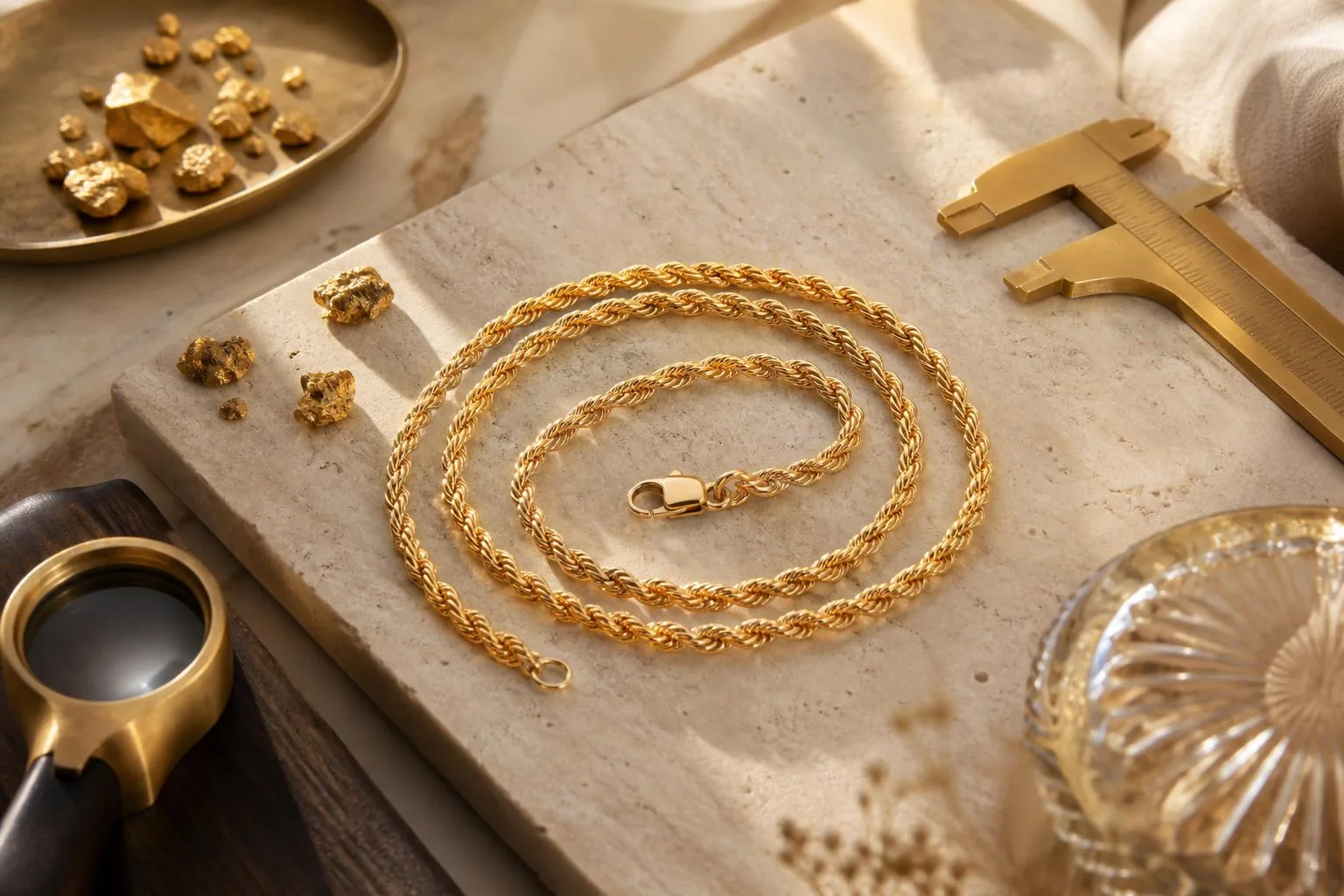
We tested six 10K gold necklaces in our office using a calibrated 0.01-gram jewelry scale, a 10K acid test kit, a magnet, and calipers.
Each necklace was weighed three times, then valued from its actual gold content, not its “necklace” appearance.
For pricing, we used the standard 10K purity factor: 10 divided by 24, or 41.7% pure gold. On our valuation sheet, we used a gold spot price of $2,400 per troy ounce, equal to $77.16 per gram of pure gold.
| Necklace tested | Scale weight | Pure gold content | Melt value at $2,400/oz |
| Thin rope chain | 3.84 g | 1.60 g | $123.46 |
| Small box chain | 5.92 g | 2.47 g | $190.56 |
| Hollow curb chain | 7.31 g | 3.05 g | $235.28 |
| Solid curb chain | 12.44 g | 5.18 g | $399.63 |
| Figaro chain | 18.06 g | 7.53 g | $580.96 |
| Heavy rope chain | 27.80 g | 11.59 g | $894.15 |
Our repeat weigh-ins varied by no more than 0.02 grams on any necklace. That difference changed melt value by less than $0.65, which confirmed that weight accuracy mattered, but small scale fluctuations did not materially change the result.
The biggest surprise was the hollow chain. It looked similar in size to the 12.44-gram solid curb chain, but weighed 5.13 grams less. At our test price, that visual difference represented about $164 in gold value.
We also tested each clasp and chain section separately with 10K acid. Four necklaces held at 10K across clasp and links. Two had replacement clasps that tested lower than the chain body, which reduced confidence for resale to a jeweler.
| Offer type we modeled | Typical payout we observed | Example on $399.63 melt value |
| Local gold buyer | 70% to 85% of melt | $279.74 to $339.69 |
| Pawn shop | 55% to 75% of melt | $219.80 to $299.72 |
| Private resale as jewelry | 90% to 140% of melt | $359.67 to $559.48 |
Our practical takeaway: a 10K gold necklace is usually worth its gram weight multiplied by 0.417, then multiplied by the current pure-gold gram price.
Design, condition, clasp integrity, and private-buyer demand can move the final price, but weight and purity set the floor.
Retail Value vs Melt Value
Most pricing errors with a 10K gold necklace come from confusing retail jewelry value with melt value.
A 10K chain is 41.7% pure gold, so its cash offer is usually based on gold content, weight, condition, and buyer margin—not the original store price.
In my experience reviewing jewelry quotes, the biggest surprises happen when sellers skip weighing the necklace in grams or assume “10K” means nearly pure gold. The stamp matters, but it is only the starting point.
Mistake: Valuing the Whole Necklace as Pure Gold
10K gold contains 10 parts gold and 14 parts other metals. That means only 41.7% of the necklace weight is actual gold. A 20 gram 10K chain contains about 8.34 grams of pure gold before refining or buyer deductions.
| Karat | Gold Purity | Pure Gold in 20 g Necklace |
| 10K | 41.7% | 8.34 g |
| 14K | 58.3% | 11.66 g |
| 18K | 75.0% | 15.00 g |
| 24K | 99.9%+ | About 20.00 g |
Myth: The Appraisal Is What You Can Sell It For
An insurance appraisal often reflects replacement cost at retail, including store markup, labor, branding, and overhead. It is not the same as resale value. A necklace appraised at $1,200 may receive a much lower cash offer if sold as scrap.
Mistake: Ignoring the Daily Gold Spot Price
Gold prices move every trading day. A buyer calculating melt value will usually start with the current spot price per troy ounce, convert it to grams, then apply the 10K purity factor. One troy ounce equals 31.1035 grams.
Myth: All 10K Necklaces Sell for the Same Percentage
Two 10K necklaces with the same weight can sell for different amounts. A clean, wearable chain from a recognized brand may have resale value above melt. A broken, generic chain is usually priced closer to scrap value.
- Do not use kitchen ounces: gold is priced by troy ounces, not standard avoirdupois ounces.
- Do not forget stones or clasps: non-gold parts may add weight but little melt value.
- Do not accept one quote: offers from pawn shops, jewelers, and refiners can vary widely.
- Do not assume “gold-filled” is 10K gold: gold-filled and plated jewelry have far less recoverable gold.
Mistake: Expecting 100% of Melt Value
Even honest buyers need a margin for testing, refining, risk, and resale. Depending on the outlet, offers may be below calculated melt value. Getting at least three written quotes is the simplest way to identify a lowball offer.
Questions Readers Ask
How do I calculate the melt value of a 10K gold necklace?
10K gold is 10 parts gold out of 24, so it contains 41.7% pure gold. Use this formula: necklace weight in grams × current gold spot price per gram × 0.4167; for example, at $2,400 per troy ounce, 10K gold has about $32.15 of pure gold per gram.
How much is a 10-gram 10K gold necklace worth?
At a gold spot price of $2,400 per troy ounce, a 10-gram 10K necklace has a melt value of about $321.50. A cash buyer, pawn shop, or gold dealer may offer less, commonly around 70% to 90% of melt value depending on fees, testing, and resale costs.
Why is my 10K necklace worth less than a 14K or 18K necklace?
10K gold contains 41.7% pure gold, while 14K contains 58.3% and 18K contains 75%. If two necklaces weigh the same, the 10K necklace has significantly less gold content, so its melt value is lower.
Does the clasp, stones, or brand affect the value of a 10K gold necklace?
For scrap value, buyers usually pay only for the gold weight and may subtract non-gold parts such as stones, steel springs in clasps, or filled components.
However, a designer piece, antique necklace, or necklace with diamonds may sell for more than melt value if it has resale demand.
What is the best way to sell a 10K gold necklace?
Weigh the necklace in grams, confirm the 10K stamp, check the live gold spot price, and get at least two or three offers from reputable jewelers, bullion dealers, or refiners.
Avoid comparing offers only by total dollars; ask what percentage of melt value they are paying so you can judge the deal accurately.
What does a “10K” or “417” stamp mean on a gold necklace’s value?
A “10K” or “417” stamp means the necklace is about 41.7% pure gold, with the rest made of alloy metals such as silver, copper, or zinc.
That purity level sets the gold content used in value estimates, but buyers still weigh the piece and may subtract for non-gold parts like spring clasps.
Related Reading
- How Many Cups In 4 Liters?
- How Many Ounces Are in A Pound? – 2026
- What To Mix With Hennessy Other Than Juice?
- How Many Fluid Ounces In 2 Liters?
- How Many Lbs In An Ounce?
- How Many 16.9 Ounces Bottles In A Gallon?
- How Many Gallons Is 38 Liters?
- All Blog Guides
- Electronic Code of Federal Regulations — 16 CFR Part 23, Guides for the Jewelry, Precious Metals, and Pewter Industries (2025)
- Federal Trade Commission — Complying with the Guides for the Jewelry, Precious Metals, and Pewter Industries (2018)
- U.S. Geological Survey — Mineral Commodity Summaries 2024: Gold (2024)
- Commodity Futures Trading Commission — Customer Advisory: Precious Metals (2020)
- London Bullion Market Association — Precious Metal Prices: Gold Price (2025)
- World Gold Council — Gold Prices (2025)
- Kitco — Gold Spot Price and Charts (2025)