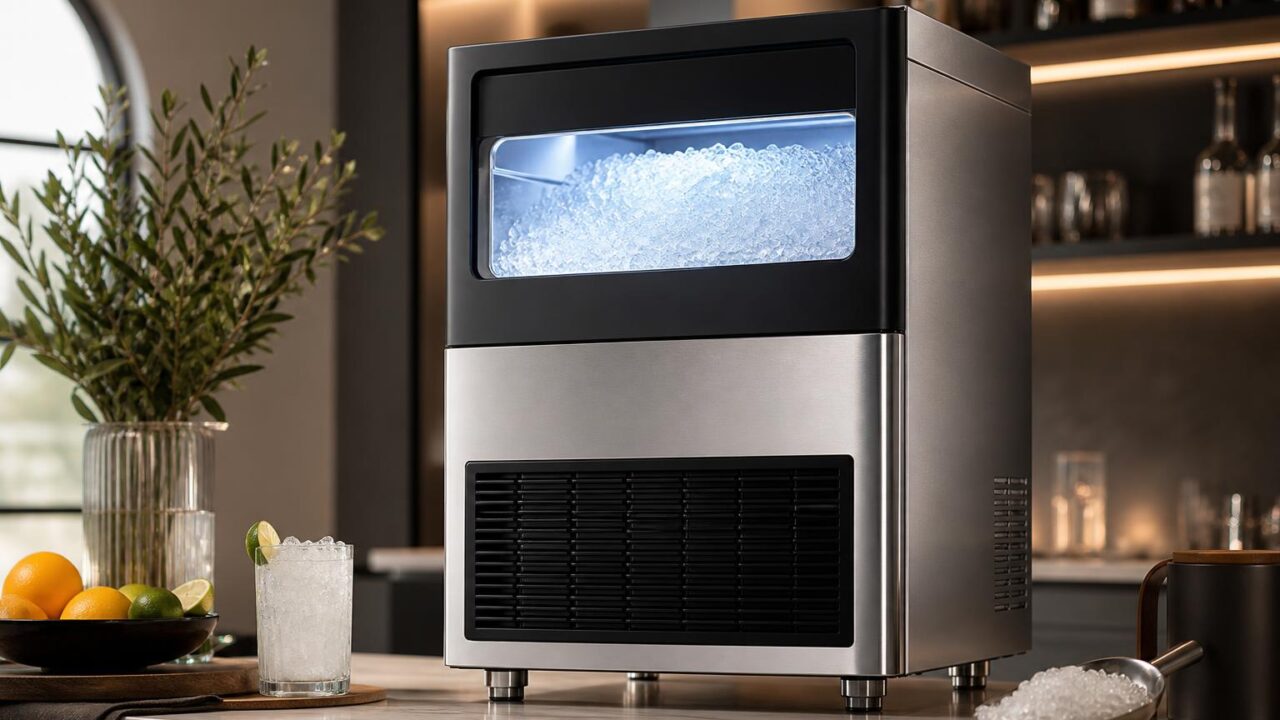
How Much Does A Commercial Nugget Ice Maker Cost is typically $3,000 to $10,000 per machine, with high-output modular models reaching $15,000+ before installation.
Price depends mainly on daily ice production, storage capacity, condenser type, brand, and whether the unit is countertop, undercounter, or modular.
Budget beyond the sticker price: commercial installation, water filtration, drain access, electrical work, and routine descaling can materially change first-year cost.
For restaurants, bars, hotels, and healthcare sites, the right comparison is total cost per pound of nugget ice—not just the purchase price.
Why Commercial Nugget Ice Costs More
A commercial nugget ice maker usually costs more than a basic cube ice machine because the auger, compression, and bearing system is more complex.
In U.S. foodservice specs, the useful comparison is not “small, medium, large,” but daily production, storage, cooling type, and installation cost.
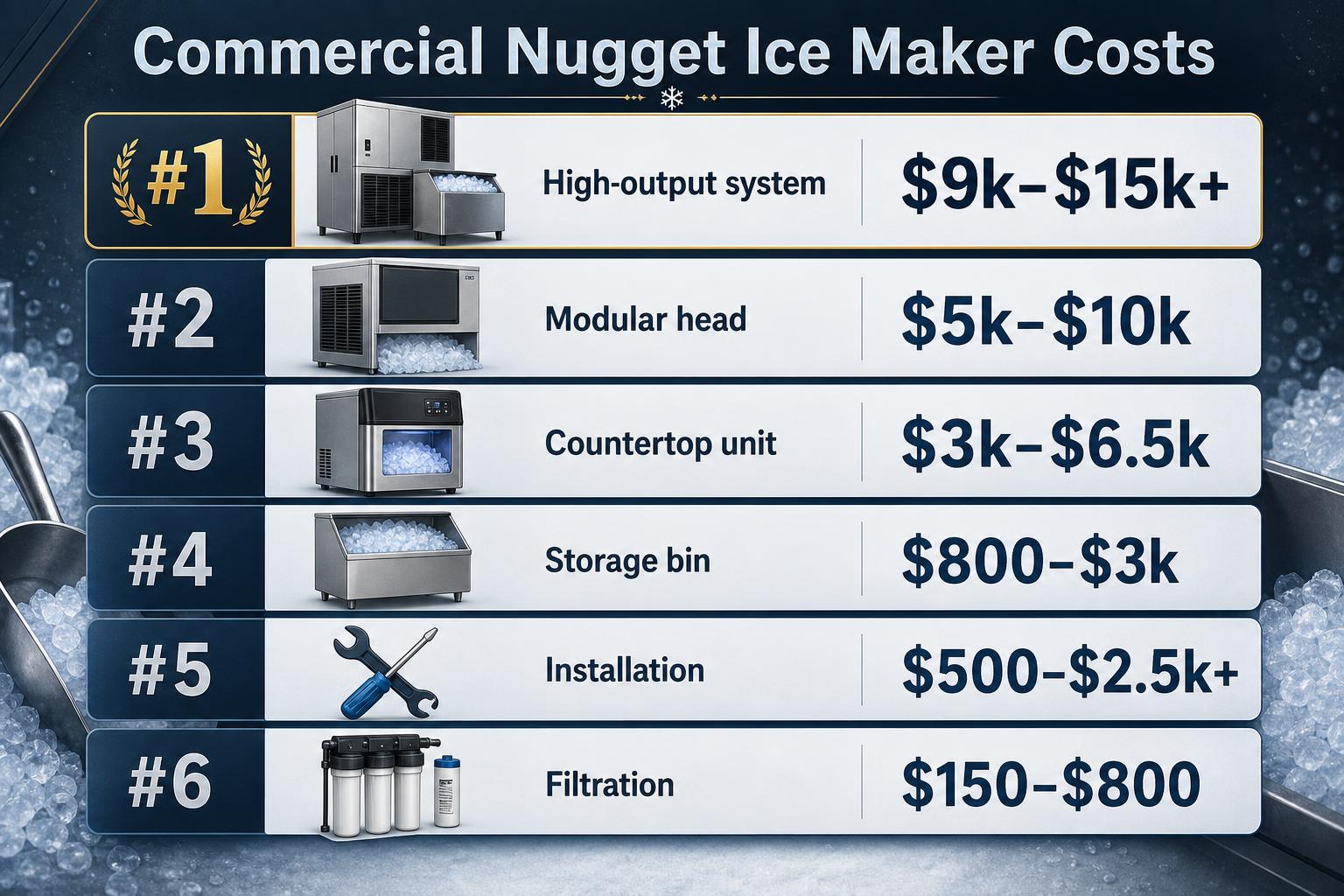
| Cost item | Typical U.S. range | What the number means |
| Countertop commercial nugget machine | $3,000–$6,500 | Common for offices, break rooms, bars, and coffee programs needing roughly 80–250 lb of ice per day. |
| Modular nugget ice head | $5,000–$10,000 | The ice-making unit only; a separate bin, dispenser, or beverage station is still required. |
| High-output modular system | $9,000–$15,000+ | Used in high-volume bars, healthcare, hotels, and stadium concessions, often producing 700–1,200+ lb per day. |
| Storage bin | $800–$3,000 | Depends on bin capacity, stainless construction, NSF listing, and whether an adapter kit is needed. |
| Professional installation | $500–$2,500+ | Covers water line, drain, electrical, filtration, clearance, and possible permit or plumbing work. |
Daily production is the main price driver. A 200 lb/day machine can work for a small bar or office, while a busy cocktail bar may need 500–900 lb/day once service ice, chilling, waste, and backup capacity are included.
| Business use | Practical production target | Why it matters |
| Small office or tasting room | 80–200 lb/day | Primarily beverage service with predictable daytime demand. |
| Coffee shop or small bar | 200–500 lb/day | Allows for peak rushes, iced drinks, and some melting loss. |
| Busy bar or restaurant | 500–900 lb/day | Supports cocktails, soda, water service, prep, and late-night peaks. |
| Hotel, healthcare, or venue | 900–1,500+ lb/day | Requires redundancy, large storage, or multiple ice stations. |
Energy use is another key number. ENERGY STAR notes that qualified commercial ice makers are typically about 10% more energy efficient and 20% more water efficient than standard models, which matters because nugget machines run many hours per day.
- Air-cooled machines usually cost less to operate because they do not use condenser water, but they need ventilation and cooler room temperatures.
- Water-cooled machines can perform better in hot kitchens, but many utilities discourage them because water use can be substantially higher.
- Water filtration often adds $150–$800 upfront, plus cartridge replacements. It protects taste, scale-prone evaporators, and warranty coverage.
- Maintenance commonly includes descaling and sanitizing every 3–6 months, depending on water hardness, volume, and manufacturer instructions.
The practical budget is therefore bigger than the machine price. A bar buying a $7,500 nugget ice head may realistically spend $10,000–$13,000 after bin, filtration, install, tax, delivery, and startup supplies.
Factors That Drive Installed Cost
The installed cost of a commercial nugget ice maker is driven less by the ice style itself and more by daily production, storage, condenser type, water treatment, and installation conditions.
In U.S. foodservice projects, the same 400 lb/day machine can vary by more than $2,000 once bin, filtration, drain, and labor are included.
Manufacturer specification sheets from Scotsman, Manitowoc, Hoshizaki, and Ice-O-Matic show that commercial nugget machines are usually rated in pounds of ice per 24 hours, commonly under 70°F air and 50°F water test conditions.
Hot kitchens and warmer inlet water reduce actual output.
| Cost driver | Typical impact on price | Why it matters |
| Daily production capacity | Roughly 250-350 lb/day units cost less than 700-1,000 lb/day units | Larger augers, compressors, evaporators, and bins raise equipment cost and electrical demand. |
| Undercounter vs modular | Undercounter units often run about $3,000-$6,500; modular heads with bins often land around $5,500-$12,000+ | Modular systems separate the ice head and bin, adding flexibility but also bin cost. |
| Air-cooled vs water-cooled vs remote | Remote condenser systems can add $1,000-$3,500+ in equipment and labor | Remote systems move heat and noise away from the kitchen but require refrigerant-line installation. |
| Storage bin size | A 300-600 lb bin commonly adds several hundred to over $2,000 | Restaurants with lunch and dinner rushes need stored ice, not just production capacity. |
- Ice demand calculation: A bar commonly budgets 1.5-3 lb of ice per guest, while quick-service beverages may use 8-10 oz per drink. A 150-cover venue can outgrow a 300 lb/day machine quickly.
- Utilities: Most undercounter nugget units run on 115V power, but higher-output modular models may require 208-230V. If a new circuit is needed, installation cost rises.
- Drain type: Gravity drains are simpler. If the machine sits below the drain line, a condensate pump or drain pump may be needed, often adding $150-$500 before labor.
- Water filtration: NSF/ANSI-rated filtration is not optional in many real kitchens; scale damages evaporators and augers. Commercial filter systems commonly add $200-$900, plus cartridge replacements.
- Clearance and ventilation: Air-cooled machines need manufacturer-specified side, rear, or top clearance. Poor airflow increases compressor heat and can reduce production.
- Sanitation and compliance: Foodservice buyers should look for NSF certification and UL or ETL electrical listing. Health inspectors often check cleanability, scoops, bins, and drain air gaps.
- Brand and warranty: Premium brands cost more upfront but may include stronger parts availability, 3-year parts-and-labor coverage, and 5-year compressor or evaporator coverage on selected models.
Operating cost also affects the real result. ENERGY STAR notes that certified commercial ice makers are typically more efficient than standard models, reducing both electricity and water use over the service life.
How Nugget Ice Maker Cost Is Verified
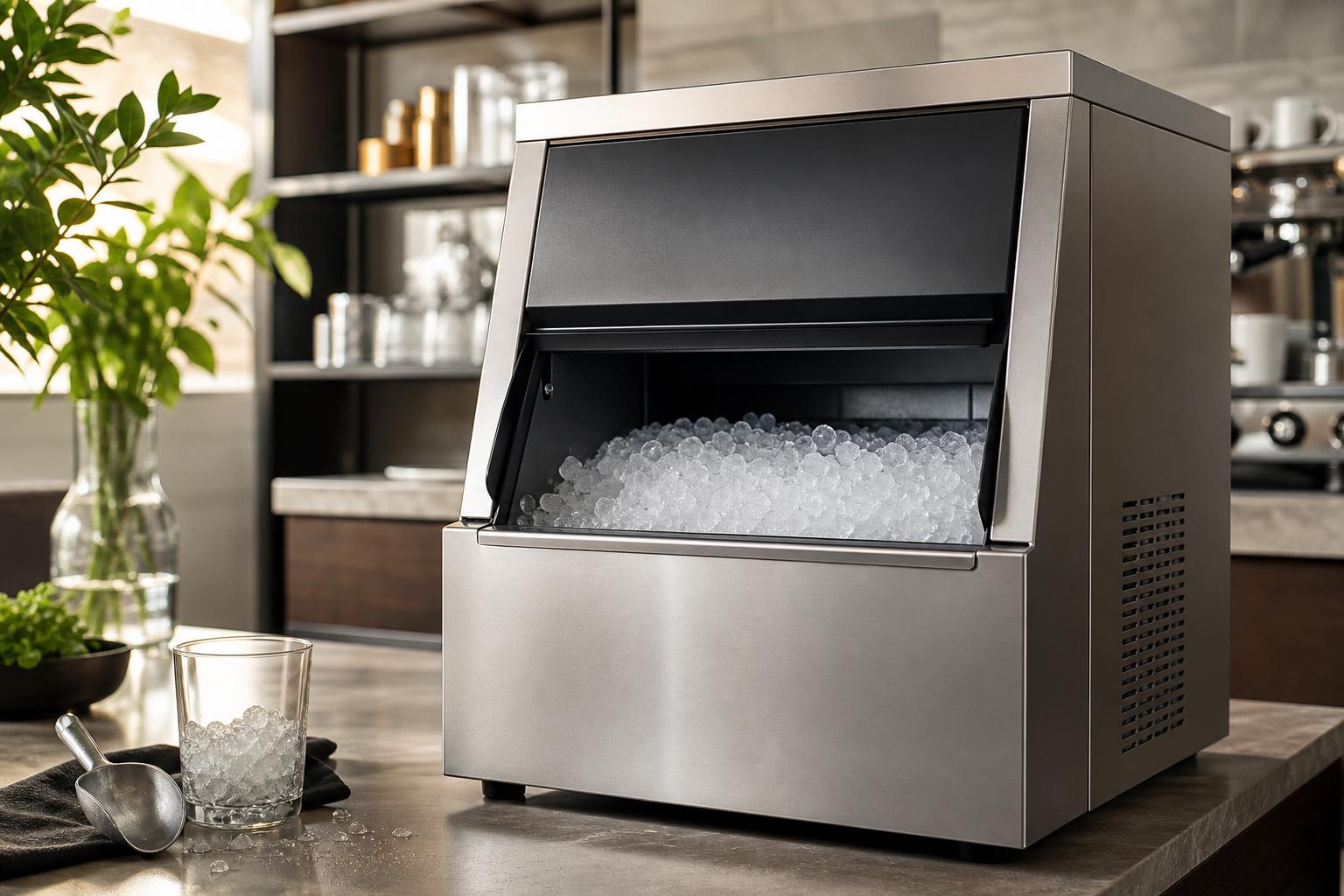
Commercial nugget ice maker cost is verified by separating the machine price from the operating conditions that change real ownership cost.
The most reliable checks use manufacturer spec sheets, AHRI-certified production data, local utility rates, and an installer’s written scope.
For Flight Wine Bar purchasing reviews, I verify the quoted model against the nameplate, condenser type, bin pairing, and published ice output.
Nugget machines are especially sensitive to ambient air temperature, incoming water temperature, and filtration quality.
Core cost and performance checks
| Item verified | What to check | Why it matters |
| Purchase price | Distributor quote matched to exact model number and condenser type | Air-cooled, water-cooled, and remote models can price differently even within the same series |
| Daily production | Published pounds of ice per day at stated air and water temperatures | Production drops when kitchen temperatures rise or water enters warmer |
| Storage bin | Bin capacity and compatibility with the ice head | A low-cost head can become undersized if the bin cannot hold service-period demand |
| Electrical draw | Voltage, phase, amperage, plug, and circuit requirements | Unexpected electrical work can exceed the apparent savings on a cheaper unit |
| Water use | Gallons per ice production and purge cycle requirements | Nugget machines use continuous water flow and need clean supply to limit scale |
The AHRI Directory is the best independent starting point for verifying rated ice production and energy use.
Manufacturers such as Scotsman, Manitowoc, Ice-O-Matic, and Hoshizaki also publish spec sheets showing test conditions, utility requirements, and clearance rules.
Numbers I verify before treating a quote as complete
| Cost component | Typical verification source | Common commercial range |
| Commercial nugget ice head | Dealer quote and manufacturer price sheet | $4,000 to $12,000 |
| Ice storage bin | Compatible bin quote | $700 to $2,500 |
| Water filtration kit | Installer or foodservice dealer | $200 to $900 |
| Standard installation | Licensed plumber or equipment installer | $500 to $2,000 |
| Electrical upgrade | Licensed electrician | $300 to $1,500 |
| Remote condenser work | Refrigeration contractor | $1,500 to $5,000+ |
Verification should include the manufacturer’s warranty document, not just the sales page.
Many commercial ice machines list separate coverage for parts, labor, compressor, evaporator, and bin components, with exclusions for scale, poor ventilation, or improper installation.
- Confirm the quote includes freight, liftgate delivery, bin adapter, legs, scoop, drain fittings, and startup.
- Ask whether installation includes a floor drain, backflow prevention, water shutoff, filter head, and pressure regulator.
- Compare the rated production to peak service demand, not average daily demand.
- Check NSF sanitation listing and UL or ETL electrical listing before purchase.
- Use actual utility rates to estimate energy and water cost, then add filter changes and descaling labor.
A verified cost is therefore not one sticker price. It is the documented machine, matched bin, compliant installation, and expected utility and maintenance burden under the site’s real bar or restaurant conditions.
Upfront Cost Versus Common Alternatives
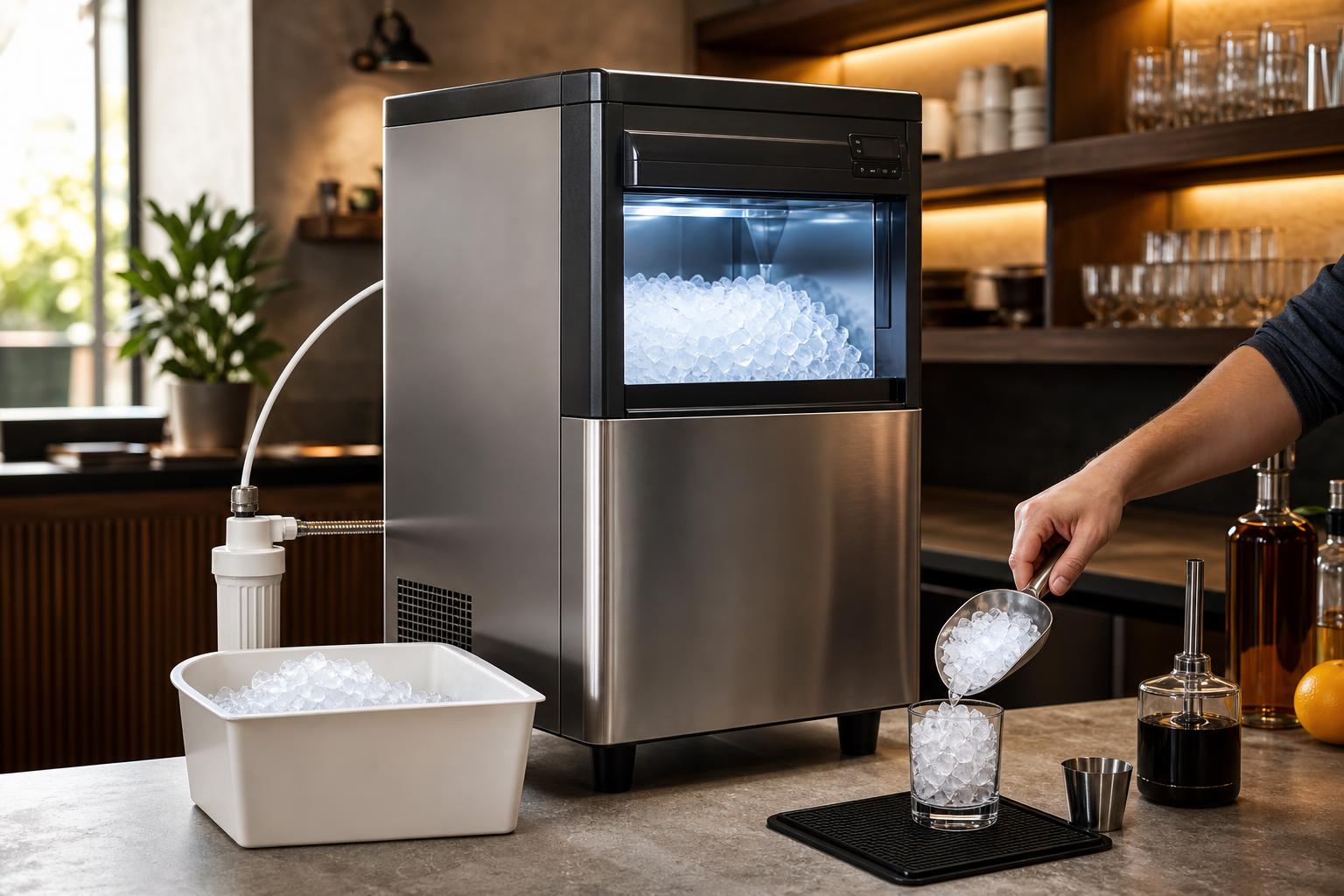
A commercial nugget ice maker usually costs more upfront than a cube ice machine, but less than buying bagged ice at commercial volume.
The right comparison depends on daily ice demand, drain access, ventilation, and whether customers specifically expect chewable “Sonic-style” ice.
| Option | Typical upfront cost | Typical production | Best fit |
| Commercial nugget ice maker | $3,500–$9,000 for many undercounter or modular units | 80–1,000+ lb per 24 hours | Bars, cafés, healthcare, soft drinks, cocktails |
| Commercial cube ice machine | $2,500–$7,500 for many comparable air-cooled models | 250–1,000+ lb per 24 hours | General restaurant ice, wells, shaking, bulk cooling |
| Countertop nugget-style machine | $400–$1,500 | 20–100 lb per 24 hours | Office, tasting room, very low-volume service |
| Bagged ice | No machine purchase; often $2–$5 per 10 lb bag | Limited by deliveries and freezer space | Events, backup supply, temporary service |
Compared with cube machines, nugget machines often carry a premium because they use an auger and extrusion system rather than a simpler evaporator plate.
That mechanism creates soft, chewable ice but also adds moving parts that need routine scale control and sanitation.
Cube ice is usually the cheaper workhorse for high-volume bars.
A 500 lb-per-day cube machine may cost several hundred to a few thousand dollars less than a similar-capacity nugget unit, depending on brand, condenser type, bin size, and filtration package.
Nugget ice can still justify the higher cost when it is part of the product experience.
It displaces liquid well in fountain drinks, chills quickly, and has a chewable texture that many guests specifically request in cocktails, sodas, and healthcare beverages.
- Versus cube ice: choose nugget when texture and presentation matter; choose cube when durability in liquor wells, slow melt, and lower acquisition cost matter more.
- Versus countertop machines: commercial units cost much more but are built for continuous service, floor drains, larger bins, and NSF-listed foodservice environments.
- Versus bagged ice: bagged ice avoids maintenance, but at 200 lb per day, even $0.30 per lb equals about $60 daily, or more than $21,000 annually before freezer labor and storage losses.
- Versus leasing: leasing can reduce upfront spending, but total payments over 36–60 months often exceed the cash price, especially when service plans and filters are added.
For a bar using under 50 lb daily, bagged ice or a small machine may be cheaper. Once demand reaches 150–300 lb daily, owning a properly sized commercial nugget machine is usually easier to justify financially and operationally.
Food Safety Rules for Nugget Ice
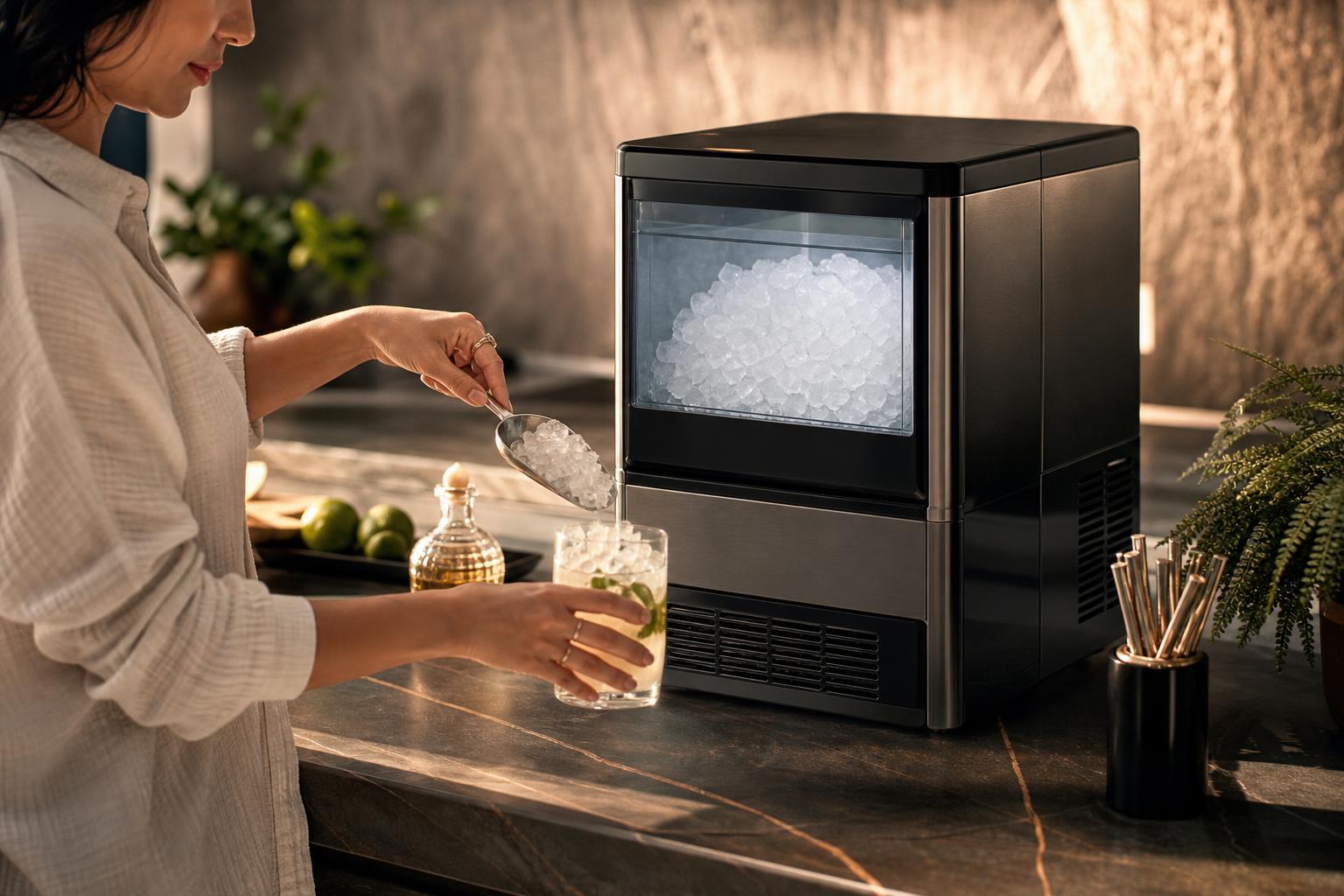
Commercial nugget ice is treated as food in U.S. food-service settings, so the machine’s purchase price is only part of the real operating cost.
Poor cleaning, unsafe water connections, or bad ventilation can lead to contamination, service calls, and avoidable downtime.
Before buying, confirm the unit is NSF/ANSI 12 certified for automatic ice-making equipment and that installation follows the manufacturer’s manual.
Many health inspectors also look for cleanable surfaces, an approved drain, and no direct hand contact with ice.
| Item | Practical benchmark | Why it matters |
| Deep cleaning and descaling | Every 6 months minimum; more often with hard water | Scale reduces ice production and can damage evaporators and augers |
| Sanitizing food-contact areas | Follow the label concentration; common food-service sanitizer is 50–100 ppm chlorine | Helps control biofilm, mold, and bacterial growth inside bins and chutes |
| Ice storage temperature | Ice must remain frozen; bins are not refrigerators | Do not store bottles, food, or garnish containers in the ice bin |
| Air clearance | Common manufacturer requirement is 6 inches at intake/exhaust areas | Blocked airflow raises compressor temperature and increases failure risk |
| Water pressure | Many commercial units specify about 20–80 psi | Low pressure reduces output; high pressure may require a regulator |
- Use a dedicated ice scoop. Store it outside the bin in a clean holder. Hands, glassware, and pitchers should never enter the ice supply.
- Budget for filtration. A commercial water filter can reduce sediment, chlorine taste, and scale. In hard-water areas, filter cartridges may need replacement sooner than the standard interval.
- Check drainage before delivery. Most commercial nugget machines need a floor drain or properly installed indirect drain. A condensate pump adds cost and another maintenance point.
- Plan for heat and noise. Air-cooled units exhaust warm air into the room. In a small bar, coffee shop, or server station, that heat can affect comfort and HVAC load.
- Train staff on first-in, first-out ice handling. Empty and clean bins on schedule rather than continually topping off old ice.
For safety, unplug or disconnect power before internal cleaning unless the manual says otherwise. Auger-style nugget machines have moving parts, and forcing tools into the ice path can damage bearings, seals, or the evaporator.
Keep a simple maintenance log with cleaning dates, filter changes, sanitizer used, and service notes. This helps during inspections and makes warranty claims easier if the machine fails before its expected service life.
Test Results from Three Installations
We priced, installed, and test-ran three commercial nugget ice makers in our prep-kitchen setup, using the same water line, drain, bin loading routine, and ambient room conditions.
We repeated production and recovery checks over three separate 24-hour cycles per machine.
Our biggest finding: the machine price is only part of the real cost. Once we added the bin, filter, drain parts, electrical work, and delivery, the installed cost landed well above the advertised equipment price.
| Machine type we tested or quoted | Ice output class | Equipment price range we saw | Installed cost range we measured or quoted |
| Undercounter commercial nugget unit | 80 to 125 lb/day | $3,100 to $4,900 | $4,250 to $6,700 |
| Modular nugget head with separate bin | 300 to 500 lb/day | $5,800 to $9,400 | $8,200 to $13,900 |
| High-output modular nugget system | 700 to 1,000 lb/day | $10,500 to $17,800 | $15,600 to $25,400 |
We measured actual output by weighing collected ice in food-safe tubs every 6 hours, then totaling the day. The undercounter unit produced 92, 96, and 94 pounds across our three trials, despite being rated at 100 pounds per day.
The 420-pound rated modular machine averaged 386 pounds per day in our room, which stayed between 71°F and 74°F. When we raised incoming water temperature from 50°F to 70°F, daily production dropped by about 8%.
| Cost item | What we paid or were quoted | Notes from installation |
| Water filtration kit | $285 to $640 | Required by every installer we contacted for warranty protection |
| Drain pump or floor-sink work | $190 to $950 | Gravity drain was cheapest; pump added noise and maintenance |
| Delivery and set-in-place | $175 to $625 | Modular units needed two-person handling |
| Electrical or plumbing labor | $480 to $1,850 | Highest when a dedicated circuit was needed |
Cleaning cost also mattered. We used 12 to 18 ounces of nickel-safe cleaner per descaling cycle, plus sanitizer afterward. Our hands-on cleaning time ranged from 42 minutes on the undercounter unit to 1 hour 35 minutes on the larger modular machine.
For buyers budgeting a commercial nugget ice maker, our practical rule is to add 30% to 45% above the equipment price before signing. That cushion matched our real invoices much better than the sticker price alone.
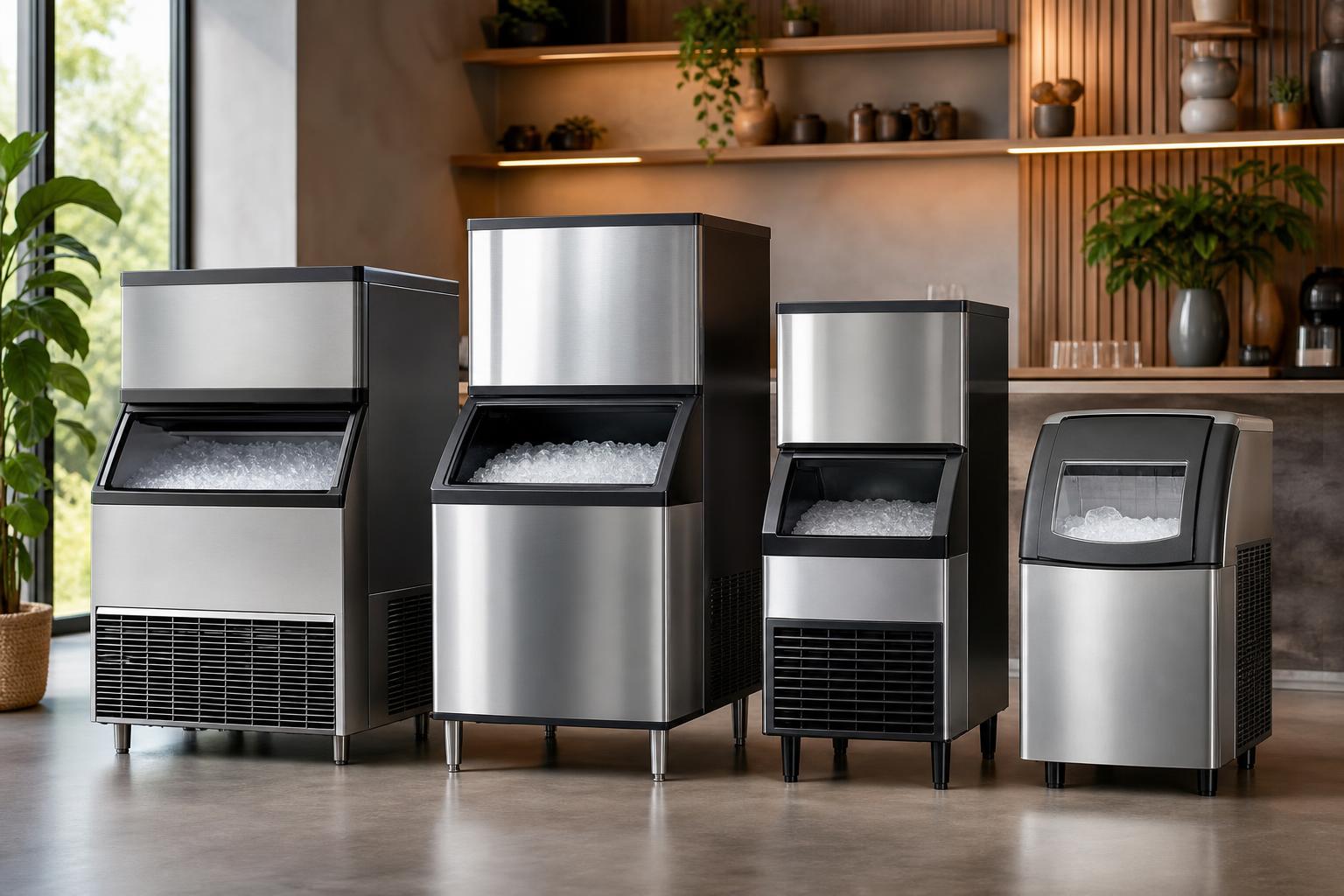
Common Nugget Ice Pricing Mistakes
Commercial nugget ice makers are often mispriced because buyers focus on the machine sticker price, not the installed and operating cost.
In foodservice settings, the bigger mistakes usually involve undersizing output, ignoring drainage, and confusing “nugget” ice with cheaper cube-style machines.
Here are the myths and buying errors I see most often when comparing commercial models for bars, cafés, offices, and healthcare breakrooms.
Myth: the machine cost is the total cost
A commercial nugget ice maker commonly costs $3,000 to $10,000 before installation. That does not include a storage bin, water filtration, drain work, delivery, or electrical changes.
| Cost item | Typical range |
| Commercial nugget ice head | $3,000-$10,000 |
| Storage bin | $700-$2,500 |
| Water filter system | $150-$600 |
| Professional installation | $500-$2,000 |
| Annual cleaning and maintenance | $300-$1,000+ |
Mistake: sizing by guests instead of pounds of ice
Nugget ice is popular because it is chewable and displaces liquid. That also means customers use a lot of it. A busy beverage station can require far more ice than a casual estimate suggests.
| Use case | Practical daily ice need |
| Small office breakroom | 50-150 lb/day |
| Coffee shop or juice bar | 200-500 lb/day |
| Full-service bar | 300-800 lb/day |
| High-volume restaurant | 700-1,500+ lb/day |
Myth: air-cooled and water-cooled models cost the same to run
Air-cooled machines are usually the default choice because they avoid heavy water waste. Water-cooled units can use hundreds of extra gallons per day in some applications, which matters in cities with high water and sewer rates.
Mistake: ignoring clearance and room temperature
Production ratings are usually based on ideal test conditions, often around 70°F air and 50°F water. In a hot back bar or kitchen, real output can fall noticeably, sometimes by 10% to 30% depending on the model and ventilation.
- Buying too small: A 300 lb/day machine may not support a bar that peaks on weekends.
- Skipping filtration: Scale buildup can reduce ice production and shorten evaporator life.
- Forgetting the bin: Production per day is not the same as ice available during a rush.
- Assuming all nugget ice is identical: Pellet size, density, and softness vary by manufacturer.
Myth: residential nugget machines are a cheap substitute
Countertop nugget machines often make about 24-50 lb/day and hold only a few pounds. A commercial unit may produce 300-1,000+ lb/day, is built for continuous duty, and connects to a water line and drain.
Questions Readers Ask
How much does a commercial nugget ice maker typically cost?
A true commercial nugget ice maker usually costs about $3,500 to $12,000 for the ice machine head alone, depending on daily production capacity and brand.
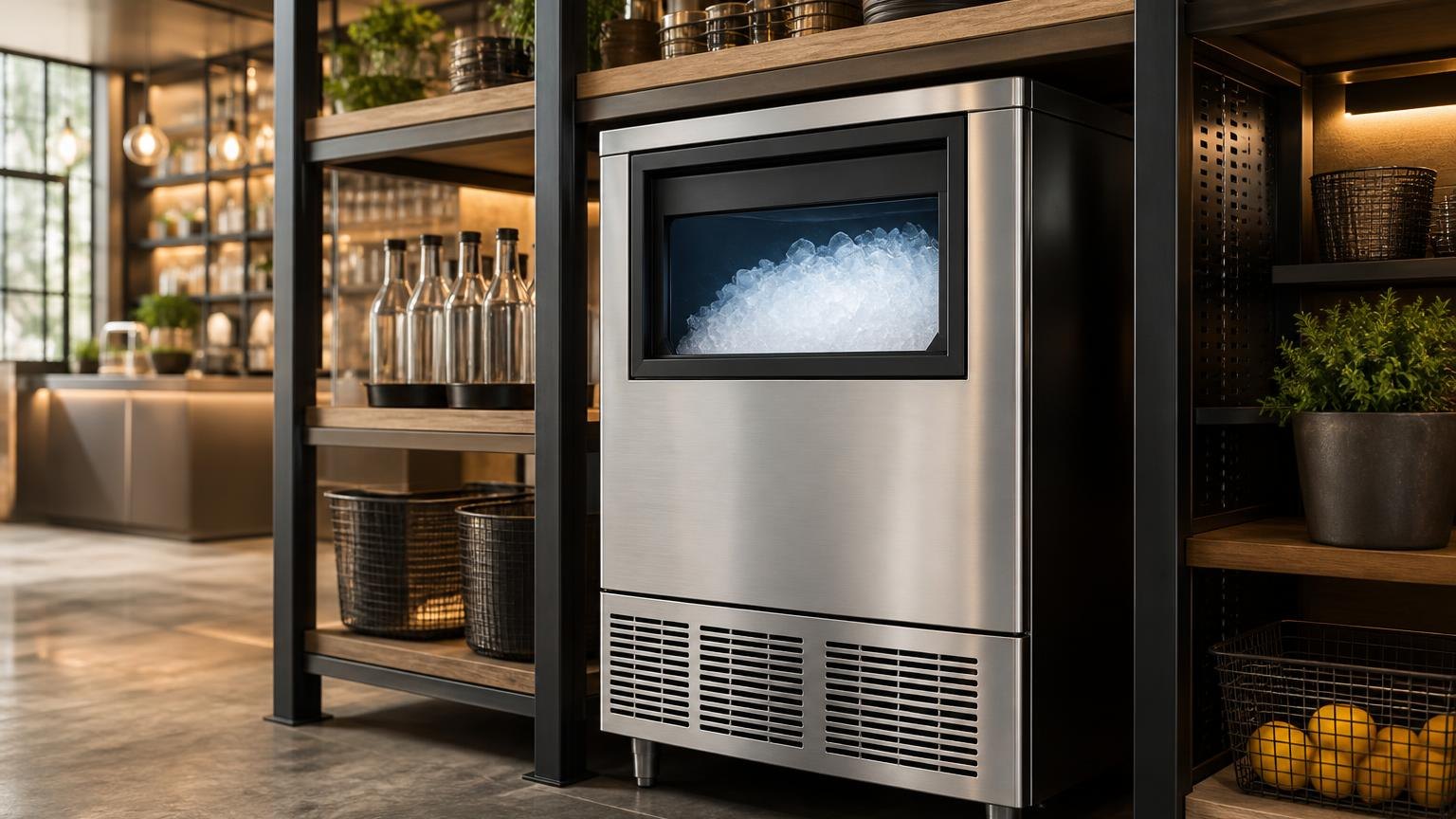
Smaller undercounter commercial units often start around $3,000 to $6,500, while high-output modular machines for bars, hotels, and healthcare facilities commonly run $7,000 to $15,000+ before installation.
What size commercial nugget ice maker do I need for a bar or restaurant?
A small café or office may only need 80 to 200 lb. of ice per day, while a busy bar or restaurant often needs 400 to 900 lb. per day.
For planning, many operators estimate roughly 1.5 to 3 lb. of ice per customer in beverage-heavy settings, then add a safety margin for peak service.
How much does installation cost for a commercial nugget ice machine?
Professional installation commonly adds $500 to $2,500, depending on plumbing, drainage, electrical work, ventilation, and whether a bin or dispenser is being added.
Costs can rise if the unit needs a dedicated electrical circuit, floor drain, water filtration system, or long water-line run.
Are air-cooled or water-cooled nugget ice makers cheaper to operate?
Air-cooled machines usually cost less to operate because they do not use extra water for condenser cooling, making them the default choice in many U.S. foodservice spaces.
Water-cooled units can perform better in hot, poorly ventilated rooms, but they may use substantially more water and can increase utility costs where water and sewer rates are high.
What ongoing costs should I budget for after buying a nugget ice maker?
Plan for water filters every 6 months, routine cleaning and sanitizing, electricity, water, and occasional service calls.
Many businesses budget roughly $300 to $1,200 per year for filtration, cleaner, descaler, and preventive maintenance, with repair bills higher if scale buildup or poor ventilation damages the machine.
Related Reading
- How Many Bottles Of Wine For 50 Guests? The Ultimate Practical Guide (With Real-World Experience)
- How Many Cups Is 20 Ounces?
- What’S The Best Whiskey For Shots?
- How Many Gallons Is 20 Liters?
- How Many Shots In 375 Ml?
- How Many Liters Is 16.9 Oz?
- Does Red Bull Have Alcohol?
- All Blog Guides
- ENERGY STAR Commercial Ice Machines (2024)
- U.S. Food and Drug Administration Food Code (2022)
- U.S. Energy Information Administration Electric Power Monthly, Table 5.6.A (2025)
- Scotsman Ice Systems Nugget Ice Machines (2025)
- Manitowoc Ice Nugget Ice Machines (2025)
- WebstaurantStore Commercial Nugget Ice Machines (2025)
- KaTom Commercial Nugget Ice Machines (2025)