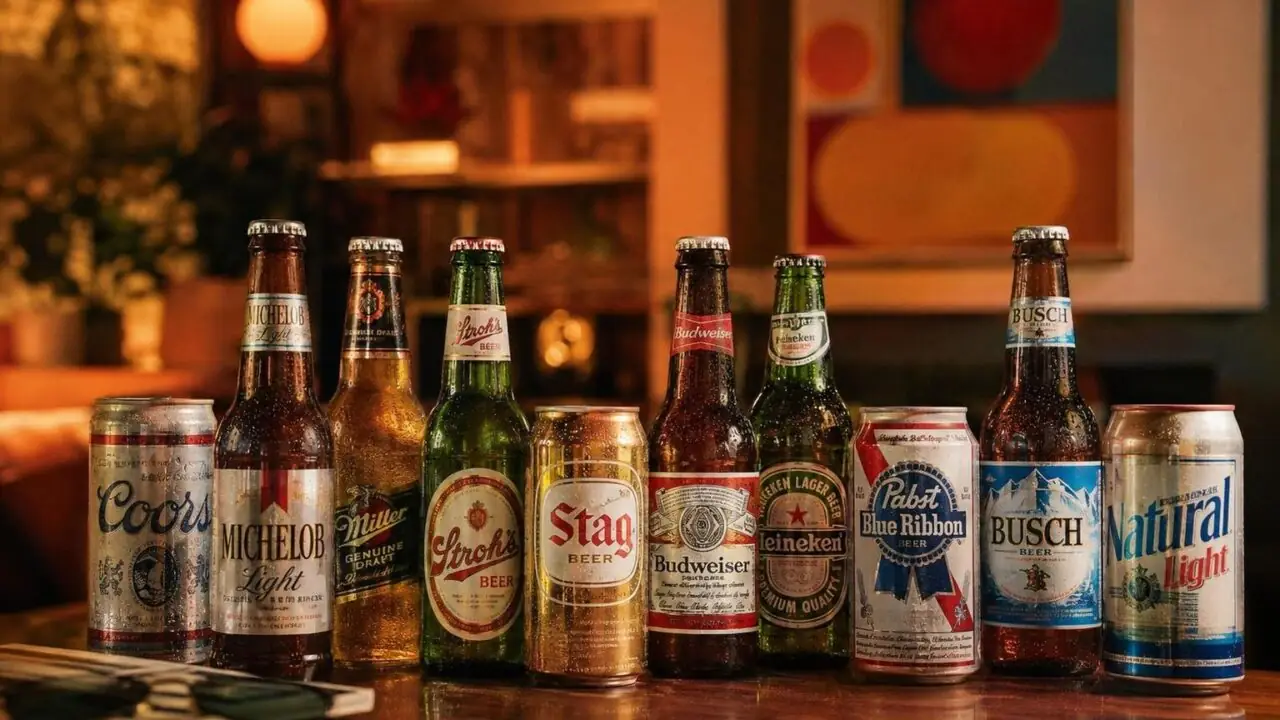
beers of the world world market is the global beer sector linking breweries, importers, distributors, retailers, and drinkers across more than 190 countries.
It covers mass-market lagers, regional ales, craft styles, low- and no-alcohol beer, and premium imports shaped by local taste, tax rules, climate, and retail access.
This article explains where beer demand is growing, which countries dominate production and consumption, how multinational brewers compete with local producers, and why packaging, pricing, ingredients, and regulation change from market to market.
Use it to understand beer as both a cultural product and a measurable global industry.
Global Beer Market Size Today
The global beer market is a roughly trillion-dollar consumer industry, but published totals vary because researchers measure different transaction points.
Retail sales, brewery revenue, alcoholic beer, non-alcoholic beer, and on-premise consumption are not included consistently across market studies.
Current market estimates
| Source | Valuation year | Estimated global value | Measurement context |
| Grand View Research | 2023 | US$1.25 trillion | Global beer market revenue, including multiple product and distribution segments |
| Fortune Business Insights | 2023 | US$839.53 billion | Beer market value under the firm’s narrower category methodology |
| IMARC Group | 2024 | US$687.3 billion | Global market estimate based on its industry model and covered sales channels |
These figures should not be averaged. Each is internally consistent with its publisher’s definitions, currency assumptions, geographic coverage, and treatment of taxes and distributor margins.
For commercial planning, the correct figure is the one whose methodology matches the intended sales level.
Market size by physical output
Production volume provides a more comparable view because beer is measured in hectoliters rather than retail dollars.
The BarthHaas Report recorded worldwide beer output of approximately 1.88 billion hectoliters in 2023, equivalent to about 188 billion liters.
| Production measure | 2023 quantity | Equivalent scale |
| Worldwide beer production | Approximately 1.88 billion hectoliters | Approximately 188 billion liters |
| Equivalent 355-milliliter servings | Approximately 530 billion servings | A volume conversion, not reported consumer purchases |
Production does not equal consumption in the same year. Inventory changes, exports, imports, spoilage, and alcohol-free products can separate brewery output from final retail sales.
Nevertheless, volume confirms beer’s enormous physical scale and helps distinguish genuine category growth from price-driven revenue growth.
Where the market is concentrated
China remains the largest national beer market by consumption volume. Kirin Holdings’ global beer consumption report placed China first, followed by the United States, Brazil, Mexico, and Russia in its 2022 country ranking.
| Rank | Country | Market significance |
| 1 | China | Largest total consumption volume |
| 2 | United States | Large premium, craft, and mainstream market |
| 3 | Brazil | Major warm-climate lager market |
| 4 | Mexico | Large domestic market and export center |
| 5 | Russia | High-volume national market |
Value growth increasingly comes from premium lagers, craft beer, alcohol-free products, and higher on-premise prices rather than rapidly expanding global volume.
Market evaluations should therefore track both liters sold and revenue per liter, while separating mature markets from faster-growing regions in Asia, Africa, and Latin America.
Leading Beer Countries by Volume
China has dominated global beer production since 2002, consistently brewing more than any other nation.
The world produced approximately 1.89 billion hectoliters of beer in 2022, with the top ten countries accounting for nearly two-thirds of that total output.
Top 10 Beer-Producing Countries (2022–2023)
| Rank | Country | Annual Production (million hectoliters) |
| 1 | China | ~360 |
| 2 | United States | ~194 |
| 3 | Brazil | ~152 |
| 4 | Mexico | ~140 |
| 5 | Germany | ~87 |
| 6 | Vietnam | ~44 |
| 7 | Russia | ~73 |
| 8 | Spain | ~40 |
| 9 | Poland | ~37 |
| 10 | United Kingdom | ~35 |
China’s dominance stems from a population exceeding 1.4 billion and the rapid rise of domestic brands like Snow Beer, the world’s best-selling beer by volume since 2008.
Market Value and Growth Drivers
The global beer market was valued at roughly $614 billion in 2023, according to industry analyses. Projections estimate it will reach approximately $774 billion by 2030, reflecting a compound annual growth rate near 3.4%.
Mexico’s rise to fourth place is notable. The country overtook Germany around 2017, driven by massive export volumes—Corona and Modelo rank among the top-selling imported beers in the United States.
Per Capita Consumption Leaders
Volume production and per capita consumption tell different stories. The Czech Republic leads the world in beer consumption per person, a distinction it has held for decades.
| Country | Per Capita Consumption (liters/year) |
| Czech Republic | ~128 |
| Austria | ~101 |
| Romania | ~96 |
| Germany | ~91 |
| Poland | ~89 |
Czech beer culture centers on pilsner-style lagers originating from Plzeň in 1842. The national average exceeds two liters per person per week.
Regional Shifts Reshaping the Market
Africa and Southeast Asia represent the fastest-growing beer regions. Nigeria, Ethiopia, and Vietnam have posted annual growth rates between 5% and 8% over the past decade.
- Africa: Beer production surpassed 140 million hectoliters continent-wide in 2022, with South Africa, Nigeria, and Ethiopia leading.
- Asia-Pacific: Accounts for roughly 33% of global beer volume, making it the largest regional market.
- Europe: Mature but declining slightly, with Western European markets losing approximately 0.5–1% volume annually since 2015.
- Latin America: Brazil and Mexico together produce nearly 300 million hectoliters, rivaling China’s solo output.
These shifts reflect urbanization, rising disposable incomes, and younger demographics in emerging markets replacing the stagnating consumption patterns of traditional European strongholds.
Fastest Growing Beer Regions
The global beer market shifts away from traditional strongholds. Africa, Asia-Pacific, and Latin America now drive volume and value growth, while mature European and North American markets plateau or contract in per-capita consumption.
Africa: The Standout Performer
Africa’s beer market grows at a compound annual growth rate (CAGR) near 5–6% through 2028, outpacing every other continent. Nigeria, Ethiopia, and South Africa anchor this expansion.
AB InBev, Heineken, and Diageo invest heavily across Sub-Saharan Africa. Heineken operates over 10 breweries on the continent. Nigeria alone consumed approximately 18 million hectoliters in 2023.
| Region | Estimated CAGR (2023–2028) | Key Driver |
| Sub-Saharan Africa | 5–6% | Rising urbanization, young demographics |
| Southeast Asia | 4–5% | Tourism recovery, premiumization |
| India | 7–8% | Low per-capita base (2 liters/year), expanding middle class |
| Latin America | 3–4% | Craft segment growth, population size |
| Western Europe | 0–1% | Premiumization offsets volume decline |
| North America | 0–1% | Shift to spirits and RTDs |
Asia-Pacific: Volume Giant
China remains the world’s largest beer market by volume at roughly 380 million hectoliters annually, though domestic consumption peaked around 2013. Growth now comes from premiumization rather than volume gains.
India represents the continent’s highest-growth opportunity. Per-capita beer consumption sits at approximately 2 liters compared to the global average of 26 liters, leaving enormous headroom.
Vietnam consumes around 4.6 billion liters annually, ranking it among Asia’s top five beer markets. Sabeco and Heineken Vietnam dominate market share exceeding 70% combined.
Latin America: Craft and Premium Surge
Brazil, the world’s third-largest beer market at roughly 140 million hectoliters, sees craft beer growing at double-digit rates. Mexico exports more beer than any nation — over 40 million hectoliters in 2023.
Ambev controls approximately 60% of Brazil’s beer market. Colombia and Peru show 4–5% annual growth driven by expanding retail distribution networks.
Factors Fueling Regional Growth
- Demographics: Africa’s median age is 19.7 years — half the population will reach legal drinking age within a decade
- Urbanization: Urban populations in Sub-Saharan Africa grow by 4% annually, increasing access to formal retail
- Low per-capita baselines: India at 2 liters and several African nations below 10 liters leave substantial growth runway
- Infrastructure investment: Heineken committed over €600 million to African brewery expansion between 2020 and 2025
- Premiumization: Consumers in China, Brazil, and Vietnam increasingly trade up, boosting revenue growth beyond volume
Mature markets in Europe and North America grow primarily through higher-margin segments — craft, non-alcoholic, and imported specialty beers — while emerging regions deliver both volume and value expansion simultaneously.
International Beer Styles Driving Sales
Global beer market revenue reached approximately $614 billion in 2023, with distinct regional styles commanding increasingly international audiences.
Consumer preference has shifted measurably toward craft and specialty imports, reshaping distribution channels across six continents.
| Beer Style | Estimated Global Market Share (2023) | Year-over-Year Growth |
| Lager (Pale/Pilsner) | 63% | +1.2% |
| Wheat Beer (Hefeweizen/Witbier) | 7% | +3.8% |
| IPA (all sub-styles) | 6% | +7.9% |
| Stout & Porter | 5% | +4.1% |
| Sour/Wild Ale | 2% | +11.3% |
| Other Specialty/Craft | 17% | +5.6% |
Lager dominates volume globally, anchored by brands like Heineken, Snow Beer, and Budweiser. Yet its growth rate trails every specialty category listed above.
Regional Styles With Expanding Export Footprints
Belgian Trappist and abbey ales generated over €85 million in export revenue in 2022. Breweries like Chimay and Westmalle ship to more than 60 countries each.
German wheat beers — particularly Hefeweizen from Bavaria — saw U.S. import volumes rise roughly 9% between 2021 and 2023, per Brewers Association import data.
Mexican lagers became the largest beer import category in the United States. Constellation Brands reported Modelo Especial as the top-selling single beer brand in U.S. retail by 2023.
- Czech Pilsner: Pilsner Urquell exports to over 50 countries; Czech beer exports exceeded 4.6 million hectoliters in 2022.
- Japanese Rice Lager: Asahi and Sapporo expanded European distribution by 14% between 2020 and 2023.
- Irish Stout: Guinness reached record global sales of 3.1 billion pints in Diageo’s fiscal year 2023.
- Belgian Lambic/Sour: Cantillon’s annual production of roughly 3,800 hectoliters sells out globally, with secondary-market prices exceeding $100 per bottle for limited releases.
IPA: The Cross-Border Phenomenon
India Pale Ale originated in England but became synonymous with American craft brewing. U.S. craft IPA sales exceeded $5.7 billion in 2022, representing roughly 28% of total craft volume.
Sub-styles like Hazy IPA and West Coast IPA now appear in breweries from São Paulo to Seoul. BrewDog, based in Scotland, built a $2 billion valuation largely on IPA-driven international expansion across 60+ markets.
Consumer Trends Shaping Demand
Premiumization drives consumers toward higher-priced imports and craft styles. Nielsen data shows premium and super-premium beers grew at 4× the rate of economy brands in 2022–2023.
Low- and no-alcohol variants of international styles are accelerating. The non-alcoholic beer segment surpassed $22 billion globally in 2023, growing at a compound annual rate near 8%.
These converging trends — premiumization, style diversification, and moderation — ensure that international beer styles will continue capturing share from legacy mainstream lagers in markets worldwide.
World Beer Trade and Export Leaders
International beer trade concentrates in a small group of brewing and logistics hubs. Mexico leads export value, while the Netherlands, Belgium, Germany, and Czechia combine large breweries with efficient access to European markets.
The figures below use 2023 merchandise-trade data for HS 2203, “beer made from malt,” reported through UN Comtrade and summarized by the Observatory of Economic Complexity.
Values are rounded U.S. dollars and include packaged beer crossing national borders.
Leading beer exporters in 2023
| Rank | Exporter | Approximate export value | Trade profile |
| 1 | Mexico | $6.1 billion | Large shipments to the United States and Canada |
| 2 | Netherlands | $2.6 billion | Major European brewing and distribution hub |
| 3 | Belgium | $2.1 billion | Strong branded, specialty, and contract brewing exports |
| 4 | Germany | $1.7 billion | Broad European customer base |
| 5 | Czechia | $1.4 billion | Pilsner exports led by regional and global brands |
Mexico’s position reflects scale and proximity. Mexican breweries send substantial volumes north by truck and rail, and the United States is the country’s dominant foreign market.
Grupo Modelo’s Corona and Modelo Especial, together with Heineken México products, anchor this export system.
The Netherlands’ ranking does not represent only beer brewed for Dutch consumers. Rotterdam-area logistics, multinational ownership, and nearby European markets allow Dutch facilities to distribute beer efficiently across the continent.
Belgium benefits from similar cross-border access and from a highly diversified portfolio.
Import demand and trade routes
The United States is both a major beer producer and the world’s most important beer-import market by value.
Mexican imports dominate American shelves, while imports from the Netherlands, Belgium, Ireland, Germany, and Canada supply additional lager, wheat beer, stout, and specialty segments.
| Market | Common principal suppliers | Main commercial reason |
| United States | Mexico, Netherlands, Belgium, Ireland, Canada | Large consumer base and strong imported-brand demand |
| United Kingdom | Ireland, Netherlands, Belgium, France | Short sea routes and extensive brand variety |
| France | Belgium, Netherlands, Germany, Spain | Dense European road and retail networks |
Trade values do not equal brewery revenue. They include transfer prices, packaging, freight arrangements, and currency effects; they also count re-exports.
A country can therefore rank highly as an exporter without producing every beer shipped from its ports.
For comparisons, use HS 2203 consistently and identify the year. UN Comtrade revisions, exchange rates, and customs treatment can change rankings, while domestic production statistics measure a different market from cross-border trade.
Questions Readers Ask
What is the current size of the global beer market?
The global beer market was valued at approximately $793 billion in 2023 and is projected to reach over $1.07 trillion by 2030, growing at a CAGR of around 4.5%.
Asia-Pacific leads consumption volume, with China alone producing roughly 36 billion liters annually. The United States remains the highest-value single market, generating over $120 billion in retail beer sales per year.
Which countries produce the most beer worldwide?
China dominates global beer production at approximately 360 million hectoliters per year, followed by the United States (~195 million hl), Brazil (~145 million hl), Mexico (~140 million hl), and Germany (~85 million hl).
China’s output is largely driven by domestic brands like Snow Beer—the world’s best-selling beer by volume at over 100 million hl annually.
Mexico has risen sharply in the rankings due to the export success of Corona and Modelo, which together account for a significant share of U.S. imports.
Which beer styles define different regions of the world?
Germany is synonymous with lagers, wheat beers (Hefeweizen), and Märzen styles brewed under Reinheitsgebot purity standards dating to 1516.
Belgium produces over 1,500 distinct beers including Trappist ales, lambics fermented with wild yeast, and strong abbey dubbels and tripels.
The UK anchors the cask-conditioned bitter and porter tradition, while the Czech Republic claims the original pilsner, first brewed in Plzeň in 1842.
How has craft beer influenced the global beer market?
Craft beer accounts for roughly 13% of the U.S. beer market by volume and over 24% by dollar value as of 2023, with more than 9,500 operating craft breweries nationwide.
This movement has spread globally—the UK now hosts over 1,900 craft breweries, and even traditionally macro-lager markets like Japan and Brazil have seen craft segments growing at 10–15% annually.
Major conglomerates have responded through acquisitions; AB InBev alone has purchased over a dozen craft brands including Goose Island, Elysian, and Camden Town Brewery.
AB InBev (Belgium-Brazil) controls roughly 27% of global beer volume through brands like Budweiser, Stella Artois, and Corona.
Heineken holds approximately 12% market share with operations in over 70 countries, while Carlsberg captures around 6%, with particular dominance across Northern Europe and Asia.
China Resources Snow Breweries, though less known internationally, ranks as the world’s largest single beer brand by volume sold.
What trends are reshaping the world beer market in 2024–2025?
Non-alcoholic beer is the fastest-growing segment, expanding at over 7% CAGR globally, with brands like Athletic Brewing and Heineken 0.0 driving mainstream adoption—the segment now exceeds $25 billion worldwide.
Premiumization continues as consumers trade up; beers priced above $15 per six-pack are growing nearly three times faster than economy brands in the U.S. and Europe.
Sustainability pressures are also significant, with Carlsberg targeting zero-carbon breweries by 2030 and AB InBev committing 100% of contracted electricity from renewable sources across its operations.
Related Reading
- Why Are Some Beers Sold in Green Bottles?
- How Many Ounces In A 2 Liter Bottle?
- How Much Is 10 Pounds?
- Why Do They Call Liquor Spirits? Answer From Expert
- How Much Is 64 Ounces In Gallons?
- Where Can I Buy Trop Hop Beer?
- What Alcohol Is In Bud Light Seltzer?
- All Blog Guides
- Brewers Association (2024)
- National Institute on Alcohol Abuse and Alcoholism (2023)
- USDA Foreign Agricultural Service (2024)
- TTB – Alcohol and Tobacco Tax and Trade Bureau (2024)
- PubMed Central – Global Alcohol Consumption Trends (2023)
- UC Davis Department of Food Science and Technology (2024)
- World Health Organization – Global Status Report on Alcohol and Health (2024)
- Statista – Beer Industry Worldwide (2024)
- Barth-Haas Group – The Barth Report: Hops and Beer (2024)