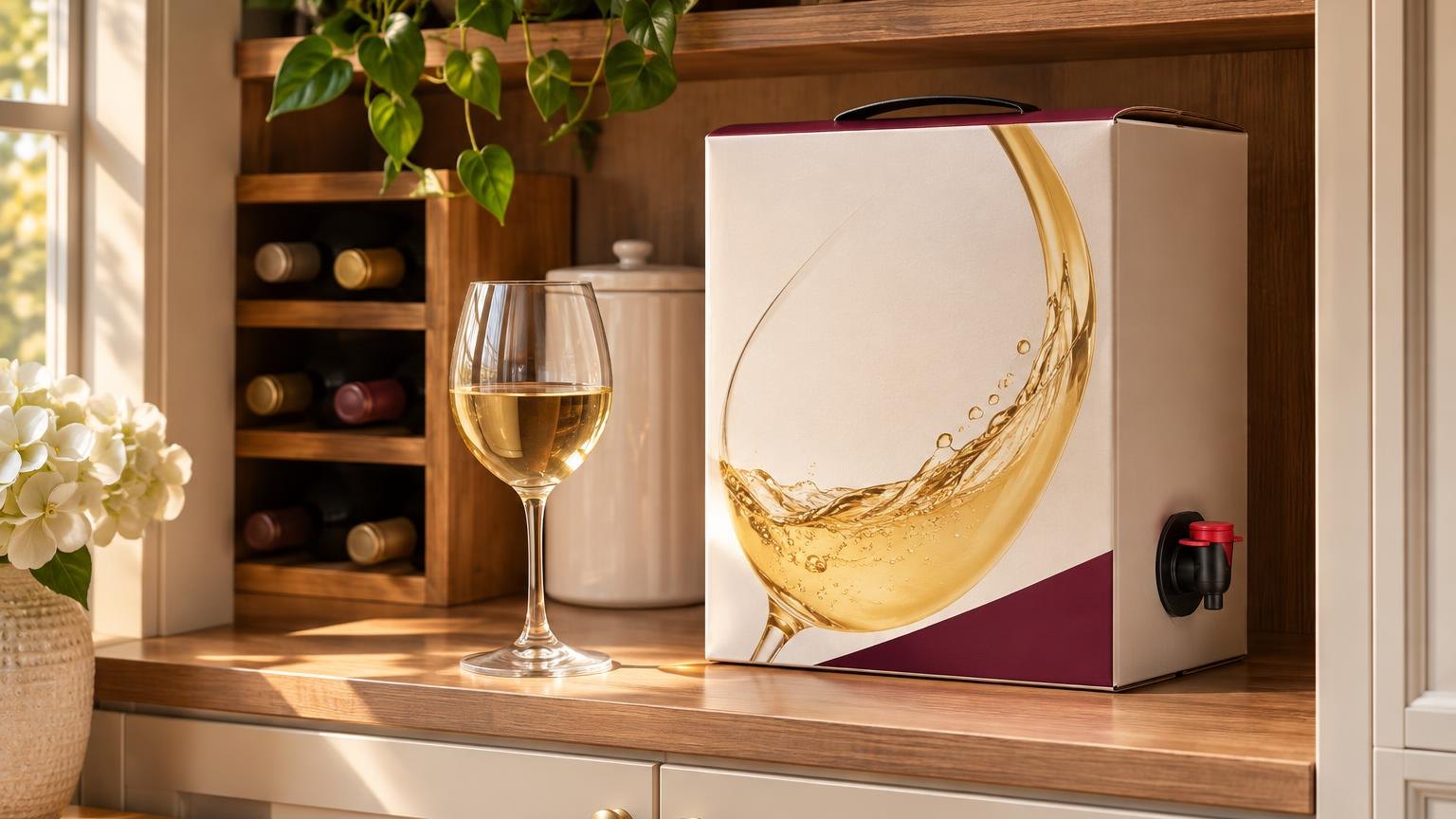
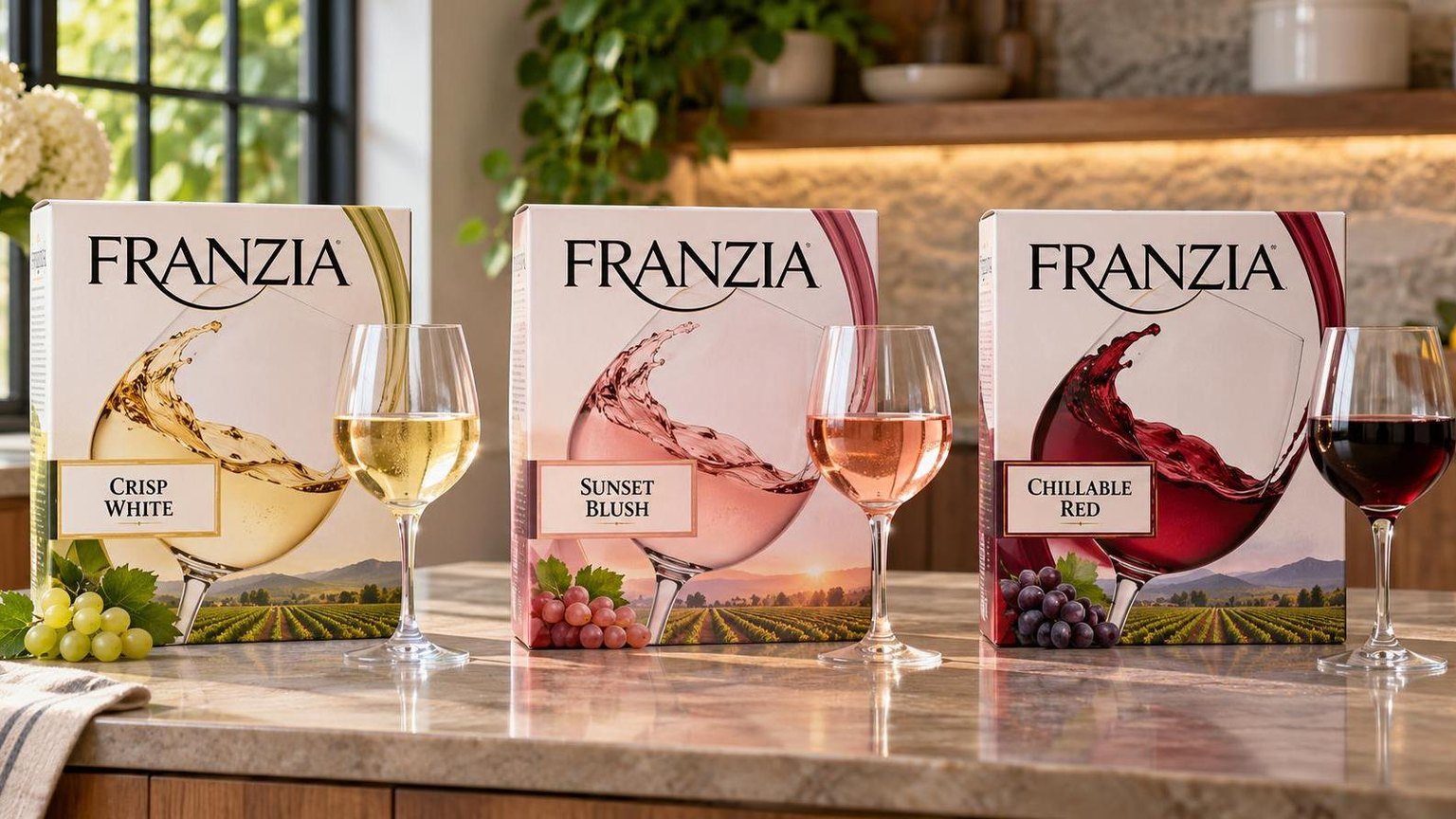
The alcohol content of franzia varies by wine, with many varieties around 9% to 13% alcohol by volume (ABV). Check the label on your specific box: the percentage depends on the varietal and product, so one figure does not apply to every Franzia wine.
ABV tells you how much of the wine’s volume is pure alcohol; it is not a measure of serving size. A standard U.S. wine serving is 5 ounces, but the alcohol in that pour changes with the wine’s listed ABV.
Franzia’s product information and package label are the best sources for the exact value.
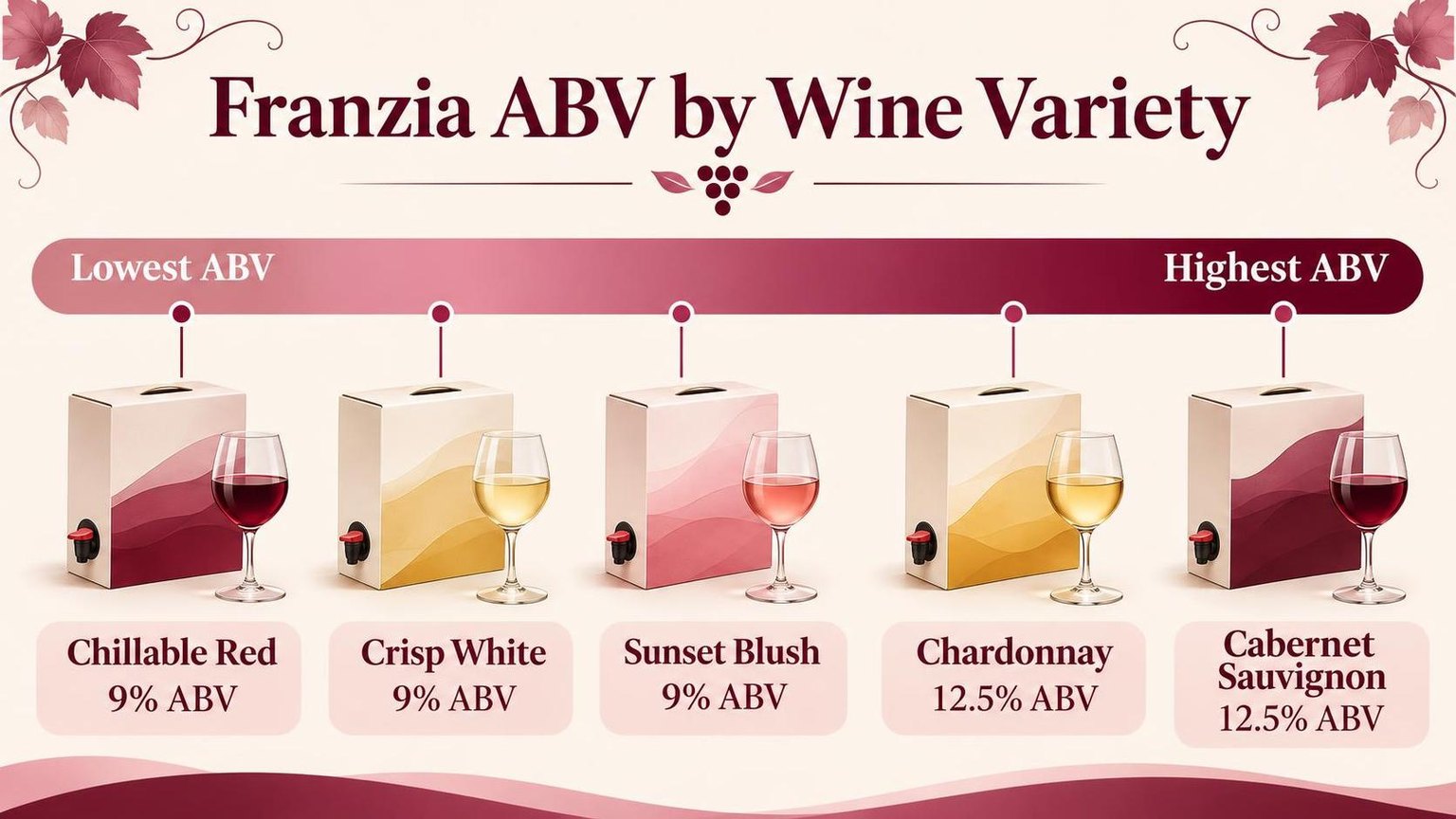
Franzia ABV by Wine Variety
Franzia’s alcohol by volume (ABV) varies by wine: a lighter, sweet blend is not necessarily as strong as its Cabernet Sauvignon.
The figures below are commonly listed for U.S. products, but packaging can change, so the ABV printed on your carton is the figure to use.
| Franzia wine | Commonly listed ABV | What the number means in a 5-fl-oz pour |
| Chillable Red | 9% | 0.45 fl oz of pure alcohol |
| Crisp White | 9% | 0.45 fl oz of pure alcohol |
| Sunset Blush | 9% | 0.45 fl oz of pure alcohol |
| Chardonnay | 12.5% | 0.625 fl oz of pure alcohol |
| Cabernet Sauvignon | 12.5% | 0.625 fl oz of pure alcohol |
ABV is the percentage of a drink’s volume that is alcohol. For example, five fluid ounces of wine at 9% ABV contains 5 × 0.09, or 0.45 fluid ounces of pure alcohol. At 12.5% ABV, the same pour contains about 39% more alcohol.
Wine style is a useful clue, not a substitute for reading the label. Chillable Red, Crisp White, and Sunset Blush are commonly listed at 9% ABV, while Chardonnay and Cabernet Sauvignon are commonly listed at 12.5%.
Do not assume every Franzia red, white, or sweet wine shares one of those values.
Serving size matters just as much as ABV. The National Institute on Alcohol Abuse and Alcoholism defines a U.S. standard drink as 0.6 fluid ounces of pure alcohol—approximately five fluid ounces of wine at 12% ABV.
A five-ounce pour at 9% falls below that benchmark; a five-ounce pour at 12.5% slightly exceeds it.
If you pour from a box rather than a bottle, measure the glass when you want to compare drinks accurately. An eight-ounce serving at 9% ABV contains 0.72 fluid ounces of alcohol, more than the 0.625 fluid ounces in five ounces at 12.5%.
Check the specific carton for its stated ABV and use your actual pour size.
Sources: Franzia product information and U.S. carton labels for variety-specific ABV; National Institute on Alcohol Abuse and Alcoholism, “What Is a Standard Drink?”.
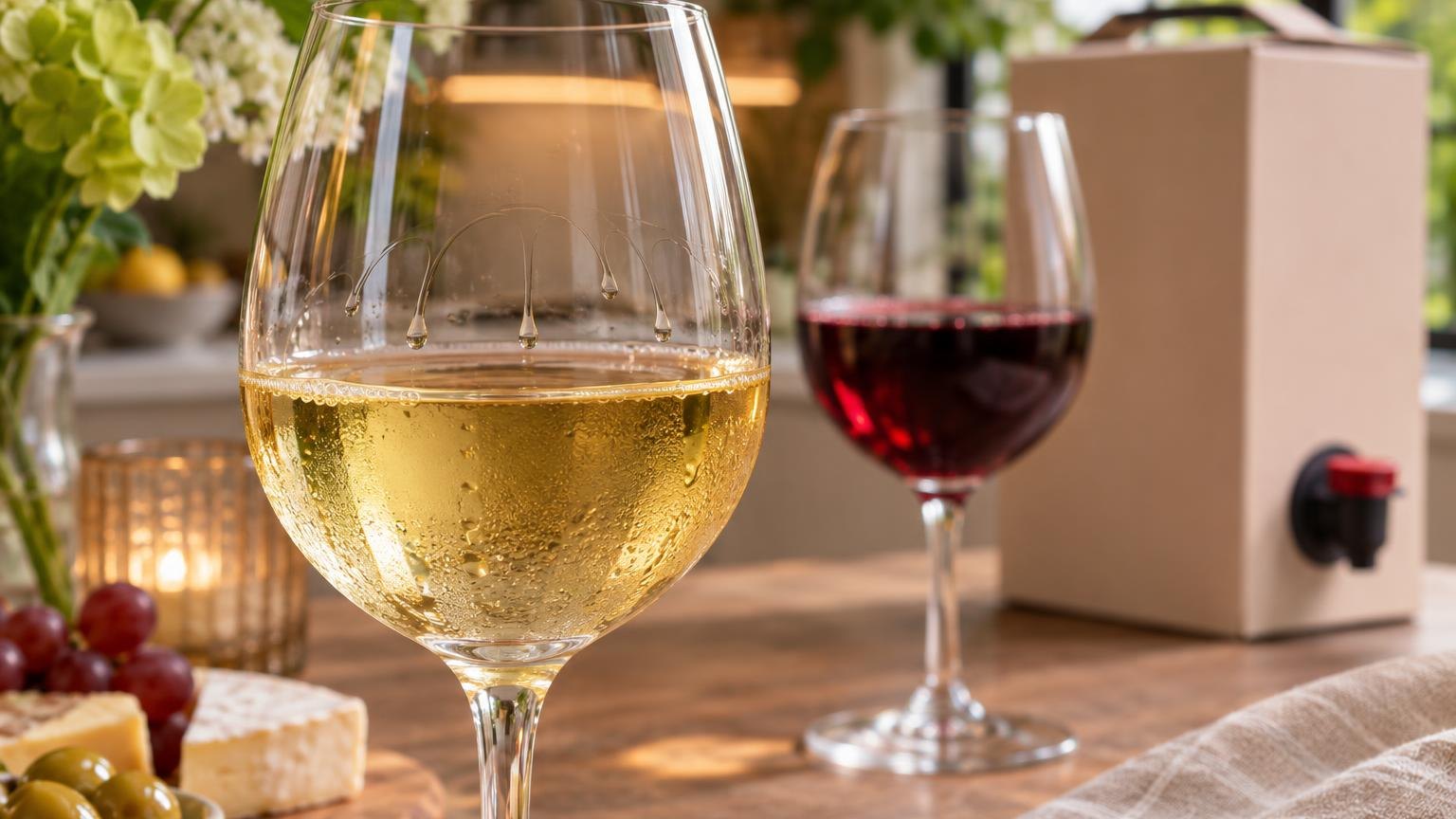
Alcohol Content Across Franzia Box Sizes
A larger Franzia box contains more alcohol in total, but its size does not determine the wine’s alcohol by volume (ABV). ABV depends on the specific wine.
Check the percentage printed on your box rather than assuming every Franzia variety has the same strength.
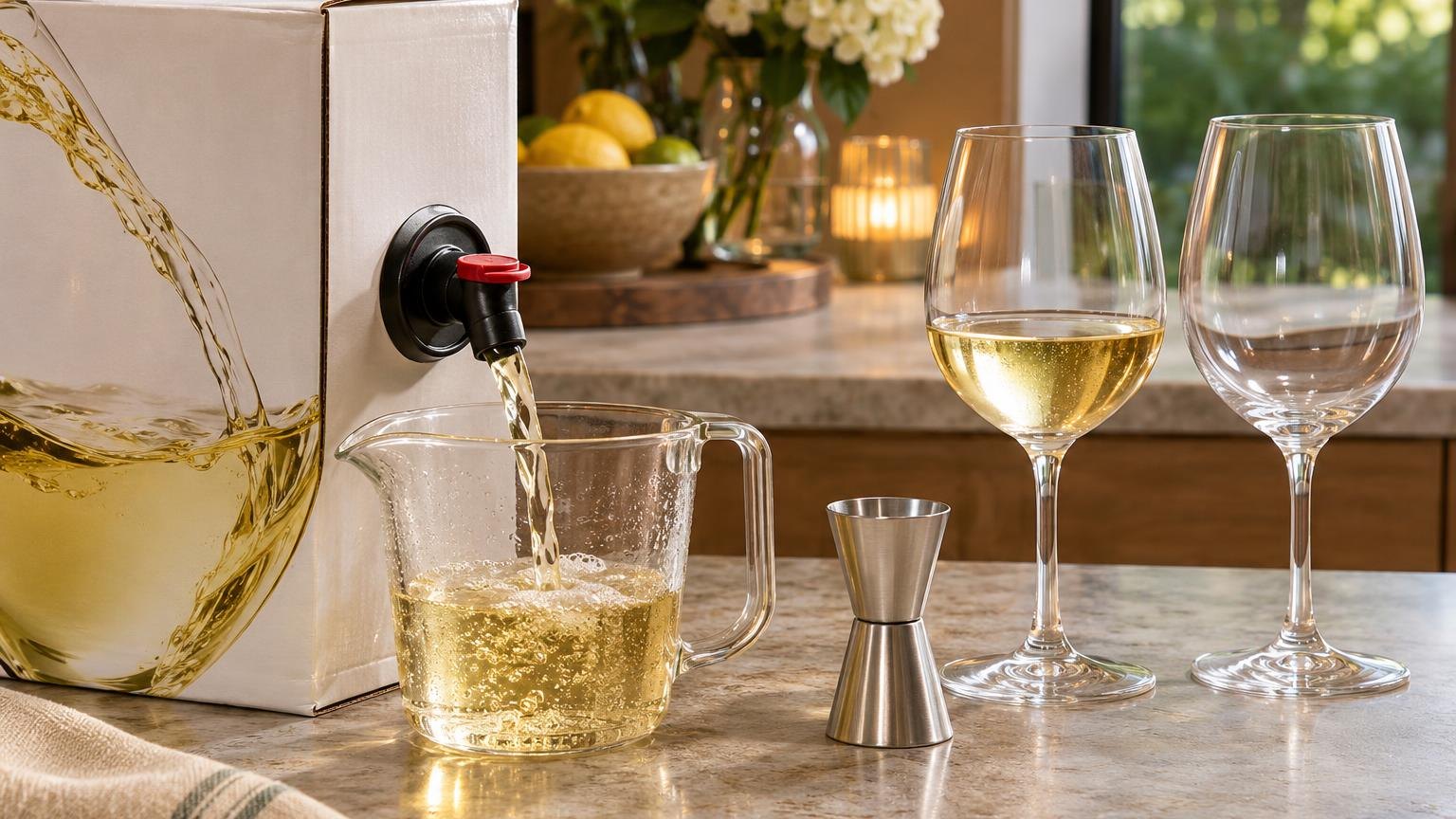
Franzia sells wines in 3-liter and 5-liter boxes. A 3-liter box holds the equivalent of four standard 750-milliliter bottles; a 5-liter box holds about 6.7 bottles.
If both contain wine at 12% ABV, the 5-liter box contains two-thirds more pure alcohol.
| Box size | Example ABV | Pure alcohol in box | Approximate U.S. standard drinks |
| 3 liters | 9% | 270 milliliters | 15.2 |
| 3 liters | 12% | 360 milliliters | 20.3 |
| 5 liters | 9% | 450 milliliters | 25.4 |
| 5 liters | 12% | 600 milliliters | 33.8 |
The 9% and 12% figures are calculation examples, not ABV claims for particular Franzia wines. The table multiplies box volume by ABV to find the volume of pure alcohol.
It then converts that volume to U.S. standard drinks using the National Institute on Alcohol Abuse and Alcoholism’s definition: approximately 14 grams of pure alcohol per drink.
Box size also changes how many glasses you can pour. At 5 fluid ounces per glass, a 3-liter box yields about 20 pours, while a 5-liter box yields about 34. Those counts describe serving volume—not alcohol strength.
A 5-ounce pour at 9% ABV contains less alcohol than the same pour at 12%.
For an estimate based on the box you own, find its stated volume and ABV on the packaging. Multiply the volume in milliliters by the ABV expressed as a decimal; for example, 12% becomes 0.12.
Dividing the resulting milliliters of pure alcohol by about 17.7 gives approximate U.S. standard drinks.
Because a box can remain available for many pours, tracking the amount poured is more useful than counting how many days it has been open.
The National Institute on Alcohol Abuse and Alcoholism notes that a typical 5-ounce glass of 12% wine contains approximately one standard drink.
Franzia Chillable Red ABV
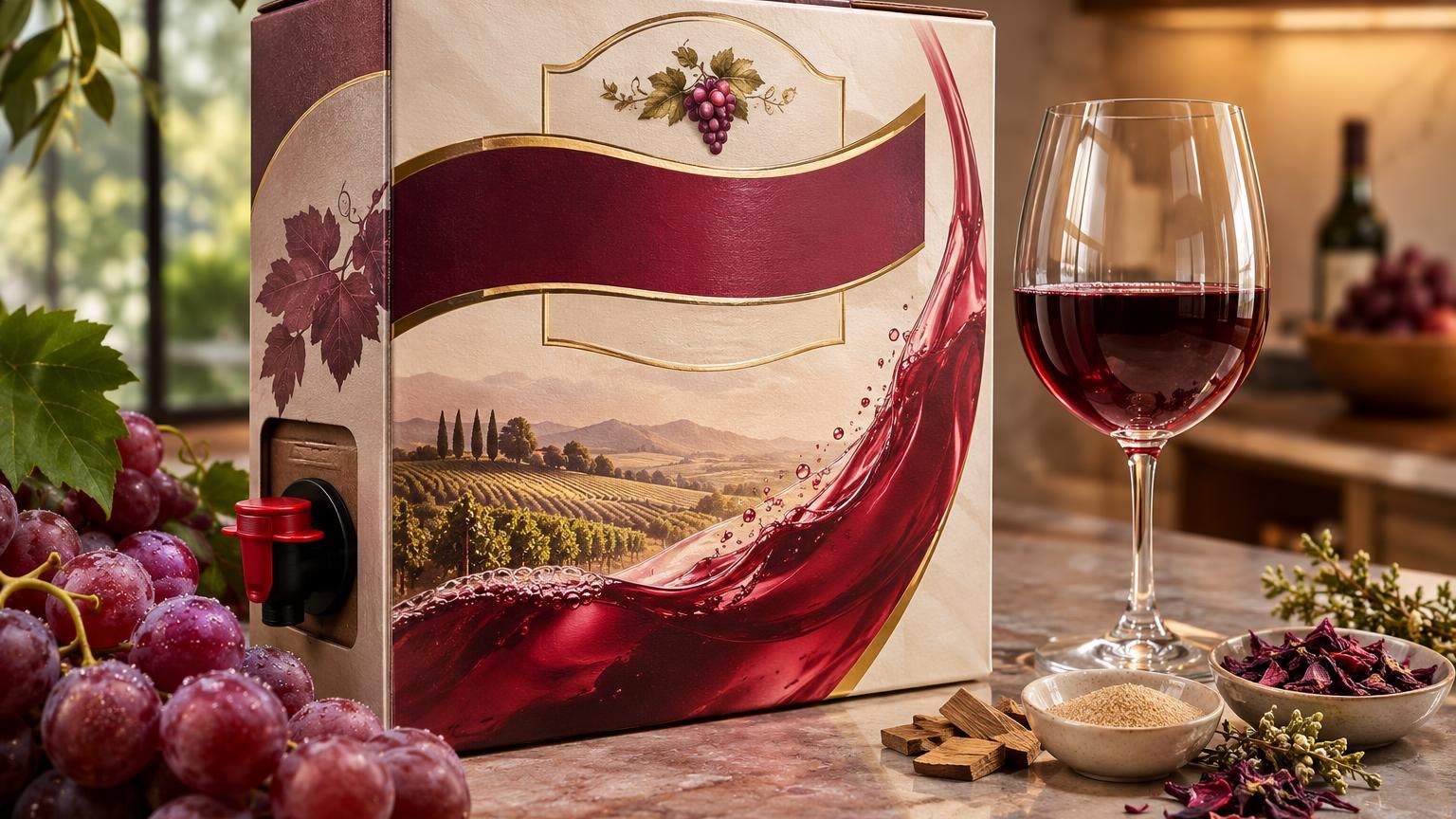
Franzia Chillable Red is commonly listed at 9% alcohol by volume (ABV). That means alcohol accounts for 9% of the wine’s volume, not 9% of the entire box’s weight.
Check the ABV printed on your carton, since its label is the best source for the product you purchased.
Chillable Red is intended to be served cold, but chilling does not reduce its alcohol content. The amount of alcohol in your glass depends on how much you pour.
Boxed wine makes it easy to top off a glass without noticing, so measuring a pour can be useful.
Alcohol per pour
The calculations below use a 9% ABV wine. They apply the U.S. National Institute on Alcohol Abuse and Alcoholism (NIAAA) definition of a standard drink: approximately 0.6 fluid ounces, or 14 grams, of pure alcohol.
| Chillable Red poured | Pure alcohol at 9% ABV | Approximate U.S. standard drinks |
| 5 fl oz | 0.45 fl oz | 0.75 |
| 8 fl oz | 0.72 fl oz | 1.2 |
| 10 fl oz | 0.90 fl oz | 1.5 |
A standard drink is a measure of alcohol, not a recommended serving size. NIAAA’s familiar wine example—a 5-fluid-ounce glass at 12% ABV—contains approximately one standard drink.
At 9% ABV, the same-sized pour contains less alcohol, as the table shows.
If your carton lists a different ABV, use its printed figure rather than the table’s estimate. To calculate pure alcohol in fluid ounces, multiply the volume poured by the ABV expressed as a decimal.
Divide that result by 0.6 to estimate U.S. standard drinks.
Franzia’s Chillable Red product description identifies it as a red wine made to be served chilled.
For alcohol tracking, the practical details are the carton’s stated ABV and your actual pour size; the word “chillable” does not indicate an alcohol-free or low-alcohol product.
White Zinfandel and Moscato Alcohol
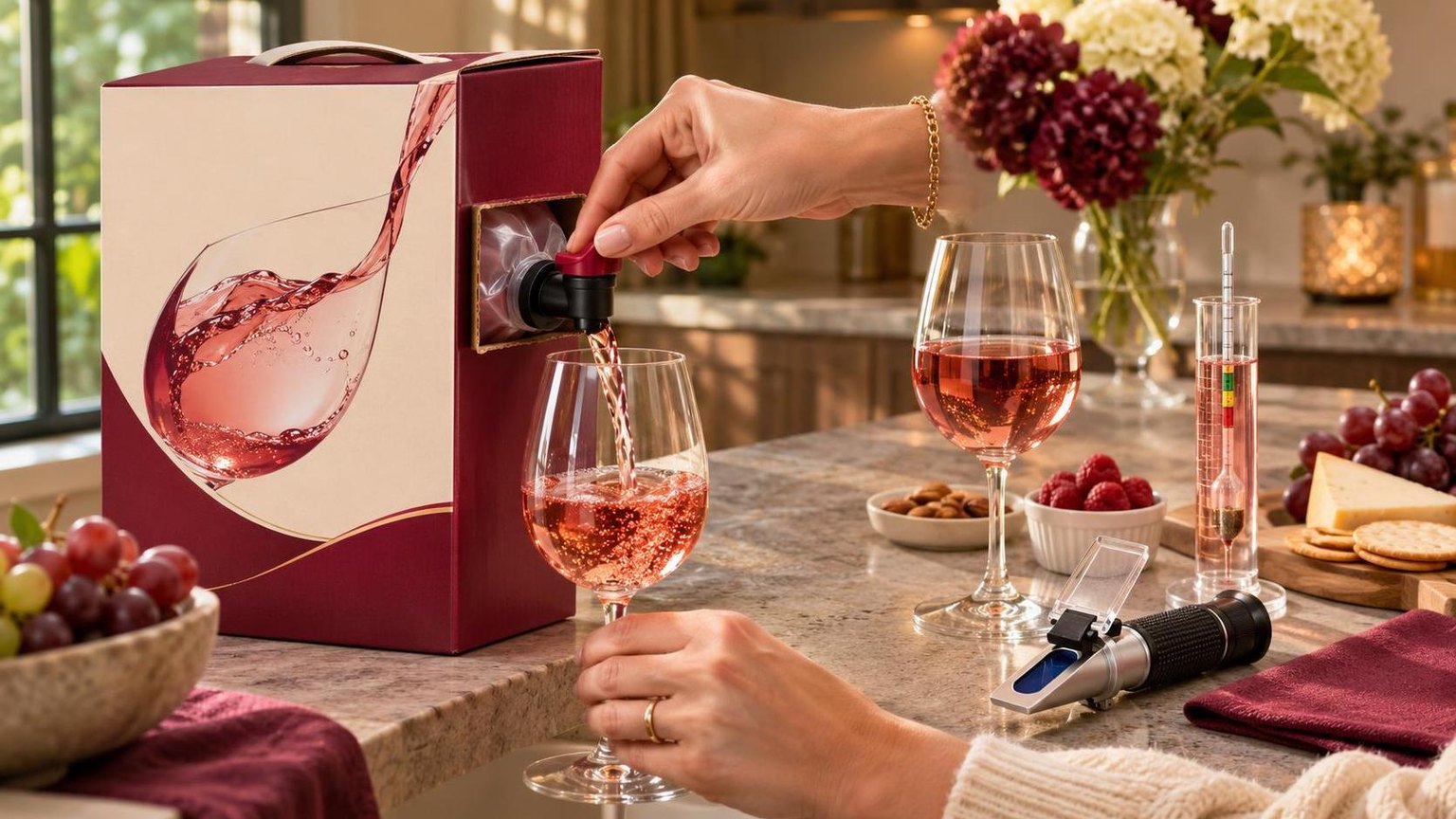
Franzia White Zinfandel and Moscato are both sweet wines, but sweetness does not tell you how much alcohol is in a glass.
For the comparison below, White Zinfandel is calculated at 9% alcohol by volume (ABV) and Moscato at 10% ABV; check your package for the ABV of the wine you actually bought.
Alcohol in a serving
| Wine | ABV used | Pure alcohol in a 5-fl-oz pour | U.S. standard drinks |
| Franzia White Zinfandel | 9% | 0.45 fl oz | 0.75 |
| Franzia Moscato | 10% | 0.50 fl oz | 0.83 |
The calculation is straightforward: multiply the volume poured by the ABV expressed as a decimal. The National Institute on Alcohol Abuse and Alcoholism defines a U.S. standard drink as containing about 0.6 fluid ounces of pure alcohol.
The table uses that definition and a measured 5-fluid-ounce pour, not a full wineglass.
At these ABVs, the difference between the wines is modest for one serving. Pour size can matter more.
A glass filled to 8 fluid ounces contains substantially more alcohol than the serving shown in the table, even though the wine’s ABV has not changed.
Why the label matters
ABV measures the share of a beverage that is alcohol; it does not measure sweetness. White Zinfandel’s pink color and Moscato’s fruity aroma therefore cannot establish their alcohol content.
Likewise, a sweet taste does not mean a wine is alcohol-free or low enough in alcohol to ignore when tracking drinks.
Franzia sells wine in large-format boxes, making it especially useful to measure a serving rather than estimate one by eye.
Read the alcohol statement on the specific carton or its current product information before relying on the percentages above. The printed ABV is the appropriate figure for calculating how much alcohol is in your pour.
For context, NIAAA’s standard-drink reference lists 5 fluid ounces of wine at 12% ABV as approximately one standard drink. That benchmark describes a particular serving and strength—not every glass of wine.
If your pour or the ABV on your Franzia package differs, your alcohol intake differs too.
How Franzia ABV Compares
Franzia is a brand, not a single alcohol strength. Its wines range from lighter options such as Chillable Red to fuller-bodied varieties such as Cabernet Sauvignon, so the ABV printed on the specific box matters more than the brand name.
The table compares a 5-ounce pour of two Franzia wines with common beverage benchmarks. The beer and spirits serving sizes follow the U.S. standard-drink definition used by the National Institute on Alcohol Abuse and Alcoholism (NIAAA).
| Beverage | ABV | Serving | Pure alcohol |
| Franzia Chillable Red | 9% | 5 fl oz | 0.45 fl oz |
| Franzia Cabernet Sauvignon | 12.5% | 5 fl oz | 0.625 fl oz |
| NIAAA wine benchmark | 12% | 5 fl oz | 0.60 fl oz |
| NIAAA regular-beer benchmark | 5% | 12 fl oz | 0.60 fl oz |
| NIAAA distilled-spirits benchmark | 40% | 1.5 fl oz | 0.60 fl oz |
At the same 5-ounce pour size, 12.5% Cabernet Sauvignon contains about 39% more pure alcohol than 9% Chillable Red. That difference comes from ABV, not the box format: a larger container does not make an individual pour stronger.
Chillable Red’s 5-ounce pour falls below the 0.60 fluid ounces of pure alcohol in one U.S. standard drink. Cabernet Sauvignon’s 5-ounce pour sits slightly above it.
NIAAA defines one standard drink as containing approximately 0.6 fluid ounces, or 14 grams, of pure alcohol.
Pour size can outweigh a modest ABV difference. A 9% wine poured to 8 ounces contains 0.72 fluid ounces of pure alcohol—more than the standard-drink benchmark—while a measured 5-ounce pour of 12% wine contains 0.60 fluid ounces.
Use these figures as comparisons, not as a substitute for the package. Check the ABV on your Franzia box when available, then multiply the pour size in fluid ounces by the ABV expressed as a decimal to estimate fluid ounces of pure alcohol.
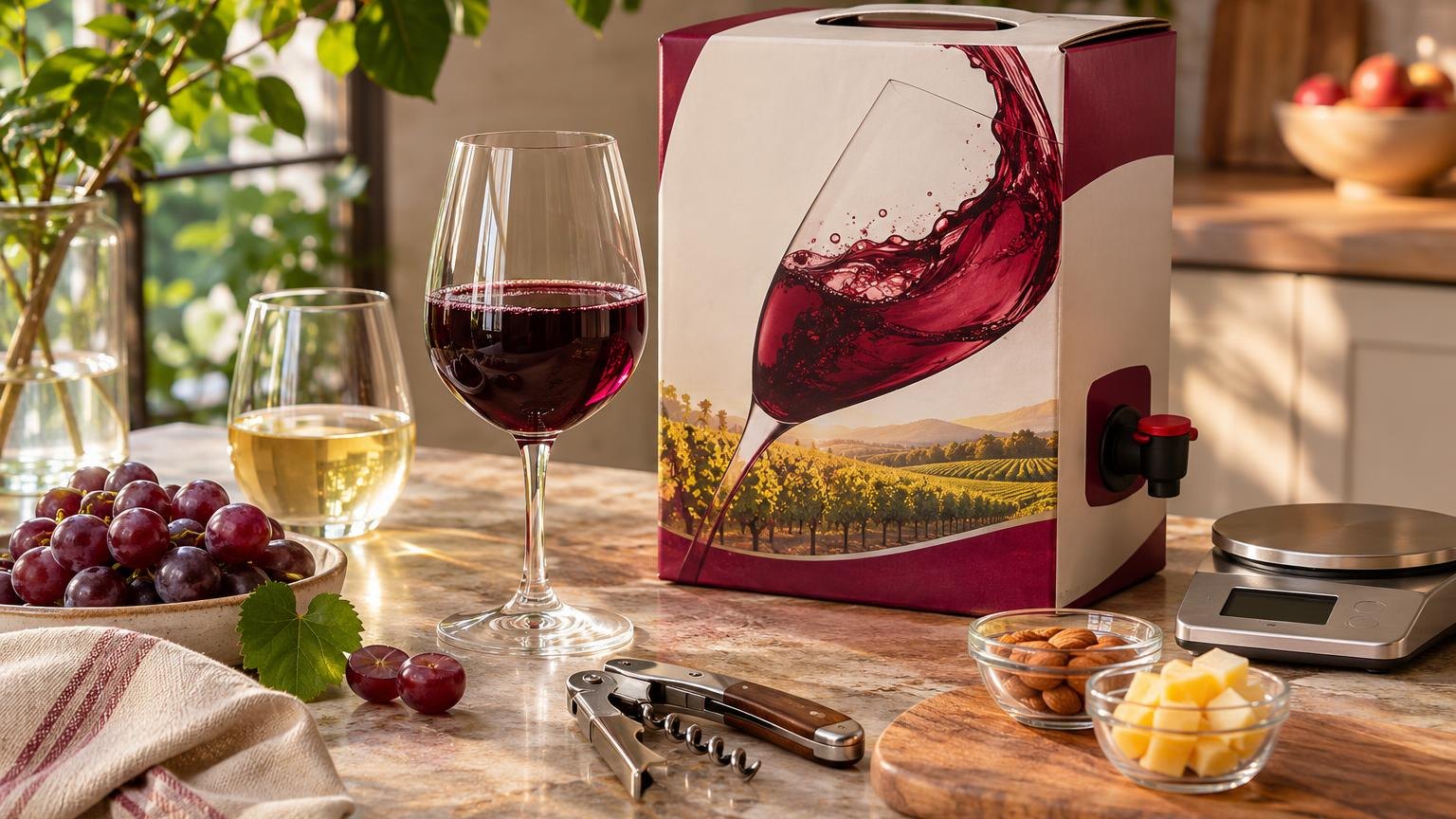
Franzia Servings and Standard Drinks
A serving poured from a Franzia box is not automatically one standard drink.
In the United States, the National Institute on Alcohol Abuse and Alcoholism (NIAAA) defines one standard drink as containing about 0.6 fluid ounces, or 14 grams, of pure alcohol—the amount in 5 fluid ounces of wine at 12% alcohol by volume (ABV).
Check the ABV printed on your particular Franzia box before estimating how much alcohol a pour contains. The table shows how serving size and ABV change the count; these percentages are calculation examples, not ABV claims for every Franzia variety.
| Wine ABV | Standard drinks in a 5-ounce pour | Standard drinks in an 8-ounce pour |
| 9% | 0.75 | 1.20 |
| 12% | 1.00 | 1.60 |
| 13% | 1.08 | 1.73 |
An 8-ounce glass of wine at 12% ABV therefore contains 60% more alcohol than a 5-ounce glass of the same wine. A larger glass can make that pour look modest, so glass size is a poor substitute for measuring.
How Many Servings Are in a Box?
Box size tells you how much wine is available, not how much alcohol is in each serving. At 12% ABV, a box contains approximately one standard drink per 5-ounce pour. The figures below use U.S. fluid ounces and are rounded to one decimal place.
| Box volume | Approximate 5-ounce pours | Approximate standard drinks at 12% ABV |
| 3 liters | 20.3 | 20.3 |
| 5 liters | 33.8 | 33.8 |
These are volume-based estimates, not guarantees of how many glasses you will pour. At a different ABV, the number of 5-ounce pours stays the same, but the number of standard drinks changes.
For example, a 5-liter box at 9% ABV contains about 25.4 standard drinks; at 13% ABV, it contains about 36.6.
For any Franzia wine, calculate standard drinks by multiplying the ounces poured by the label’s ABV expressed as a decimal, then dividing by 0.6.
For a practical check, measure a pour once with a kitchen measuring cup: it shows where 5 ounces actually falls in the glass you use.
Checking the Current Franzia Label
For the alcohol content of a particular Franzia box, read the box you have rather than relying on a figure quoted for another variety.
Look for “alc. by vol.” or “alcohol by volume,” followed by a percentage; that percentage is the wine’s ABV.
Check the printed panels near the product description, ingredients, and government warning. If the carton is difficult to read, photograph those panels before discarding the box.
Match the variety name and package size when checking a retailer listing or Franzia product page: a number attached to one wine is not a reliable answer for every Franzia wine.
ABV measures the share of the wine’s volume that is alcohol, not the percentage of the box you should drink. The calculation below shows what different illustrative label percentages mean in a 5-fluid-ounce pour.
These examples are not ABV claims for specific Franzia products.
| Example label ABV | Alcohol in a 5-fl-oz pour | Approximate U.S. standard drinks |
| 10% | 0.50 fl oz | 0.83 |
| 12% | 0.60 fl oz | 1.00 |
| 13% | 0.65 fl oz | 1.08 |
The standard-drink figures use the National Institute on Alcohol Abuse and Alcoholism definition of one U.S. standard drink as 0.6 fluid ounce of pure alcohol.
A 5-fluid-ounce wine pour at 12% ABV meets that definition; a fuller pour contains more alcohol even when the label percentage stays the same.
Do not confuse the carton’s volume with its alcohol percentage. A box marked 5 L describes how much wine the package holds. It does not mean 5% ABV.
Likewise, serving suggestions and calorie figures cannot substitute for the printed alcohol statement.
U.S. wine-labeling rules also explain why wording matters.
Under 27 CFR § 4.36, qualifying wine containing at least 7% but not more than 14% alcohol by volume may use “table wine” or “light wine” instead of a numerical alcohol-content statement.
If you cannot find a percentage, do not infer an exact ABV from that wording; contact the brand with the variety and package details.
Common Questions
Do all Franzia wines have the same alcohol content?
No. Alcohol by volume (ABV) varies by Franzia wine and can differ by market or release, so the percentage printed on your box is the most reliable figure for the wine you bought.
What is the alcohol content of Franzia Crisp White?
Franzia Crisp White is commonly listed at 9% ABV. Check the box label before using that figure to calculate servings, since product listings may not reflect every release.
How much alcohol is in Franzia Chillable Red?
Franzia Chillable Red is commonly listed at 9% ABV. Its red color does not mean it has the same alcohol content as Franzia’s other red wines; compare their printed ABV figures.
What is the ABV of Franzia Chardonnay?
Franzia Chardonnay is commonly listed at 12% ABV. That is three percentage points higher than a 9% ABV Franzia wine, meaning an equal-size pour contains one-third more pure alcohol.
What is the alcohol content of Franzia Cabernet Sauvignon?
Franzia Cabernet Sauvignon is commonly listed at 12.5% ABV. Use the percentage on the specific box you purchase if you need an exact calculation.
How much alcohol is in a 5-ounce glass of 9% ABV Franzia?
A 5-ounce pour at 9% ABV contains 0.45 fluid ounces of pure alcohol. That is 0.75 of a U.S. standard drink, which the National Institute on Alcohol Abuse and Alcoholism defines as containing about 0.6 fluid ounces of pure alcohol.
How many standard drinks are in a 5-liter box of 12% ABV Franzia?
A 5-liter box at 12% ABV contains approximately 34 U.S. standard drinks, based on the National Institute on Alcohol Abuse and Alcoholism’s 0.6-fluid-ounce definition.
It holds about 34 five-ounce pours, each equivalent to approximately one standard drink at 12% ABV.
Further Reading
- Alcoholic Drinks That Don\u2019t Taste Like Alcohol
- Sour Mash Vs Bourbon: Which is Best?
- 7 Essential Reasons Why Do SodaStream Bottles Expire (2026 Guide)
- How Much Is A Gram Of Sugar In Teaspoons?
- What Alcohol Goes With Dr Pepper?
- How Many Ounces In 3 4 Pound?
- All Blog Guides
- Franzia, Chillable Red (n.d.)
- Franzia, Crisp White (n.d.)
- Franzia, Chardonnay (n.d.)
- National Institute on Alcohol Abuse and Alcoholism, What Is a Standard Drink? (n.d.)
- Centers for Disease Control and Prevention, About Alcohol Use (n.d.)
- Alcohol and Tobacco Tax and Trade Bureau, Wine (n.d.)
- NIAAA – Alcohol's Effects on the Body