
Calories in bottle Budweiser depend on the bottle size: a standard 12-fluid-ounce bottle contains about 145 calories.
That figure applies to Budweiser’s regular lager, not every beer in the brand’s lineup, and the calorie total rises with the amount you drink.
For comparison, a 16-ounce bottle or pour contains roughly 193 calories when calculated proportionally from the 12-ounce serving.
Check the bottle’s stated volume before comparing calorie counts; “one bottle” is not a consistent serving size across packages.
Budweiser’s calories come primarily from its alcohol and residual carbohydrates.
The 145-calorie estimate is useful for tracking intake, but product formulations and labeling can change, so consult the current package or Budweiser’s official nutrition information for the most precise figure.
Calories in a 12-Ounce Budweiser Bottle
A standard 12-ounce bottle of Budweiser contains 145 calories, according to Budweiser’s published nutrition information. That figure applies to the beer in the bottle, not a particular glass or serving size after pouring.
Budweiser lists its original lager at 5% alcohol by volume (ABV), with 10.6 grams of carbohydrate and 1.3 grams of protein per 12-ounce serving. It contains no fat.
The calories come primarily from alcohol, with the remaining energy coming mostly from carbohydrate.
| Budweiser nutrition | One 12-ounce bottle |
| Calories | 145 |
| Alcohol by volume | 5% |
| Carbohydrate | 10.6 grams |
| Protein | 1.3 grams |
| Fat | 0 grams |
The calorie total can be surprising if you look only at the carbohydrate figure. Alcohol supplies energy even though it is not listed as carbohydrate on a beer’s nutrition information.
The FDA uses approximately 7 calories per gram for alcohol, compared with approximately 4 calories per gram for carbohydrate or protein.
At 5% ABV, a 12-ounce bottle contains about 0.6 fluid ounce of pure alcohol, or roughly 14 grams. The National Institute on Alcohol Abuse and Alcoholism uses that amount of alcohol to define one U.S. standard drink.
Using the FDA’s energy factor, the alcohol accounts for about 98 calories.
Applying the same energy factors to Budweiser’s listed nutrients gives approximately 42 calories from carbohydrate and 5 from protein. Added to the alcohol estimate, those figures come to about 145 calories.
These are rounded calculations, not a separate laboratory analysis of what is in an individual bottle.
For calorie tracking, count the full bottle rather than treating “one beer” as a fixed serving regardless of package size.
A 12-ounce bottle and a 12-ounce can of the same Budweiser lager contain the same volume of beer; the container itself does not add calories to the drink.
The published figure also assumes you drink the entire bottle. If you leave beer behind, you consume less than the bottle’s stated total.
Conversely, pouring more than one bottle into a large glass does not turn it into a single 145-calorie serving.
Finally, check the exact product name before entering a drink in a food log. “Budweiser” here means the original 5% ABV lager.
Bud Light, Budweiser Zero, and other beers in the broader brand family have different formulations; their calorie figures should not be substituted for the original bottle.
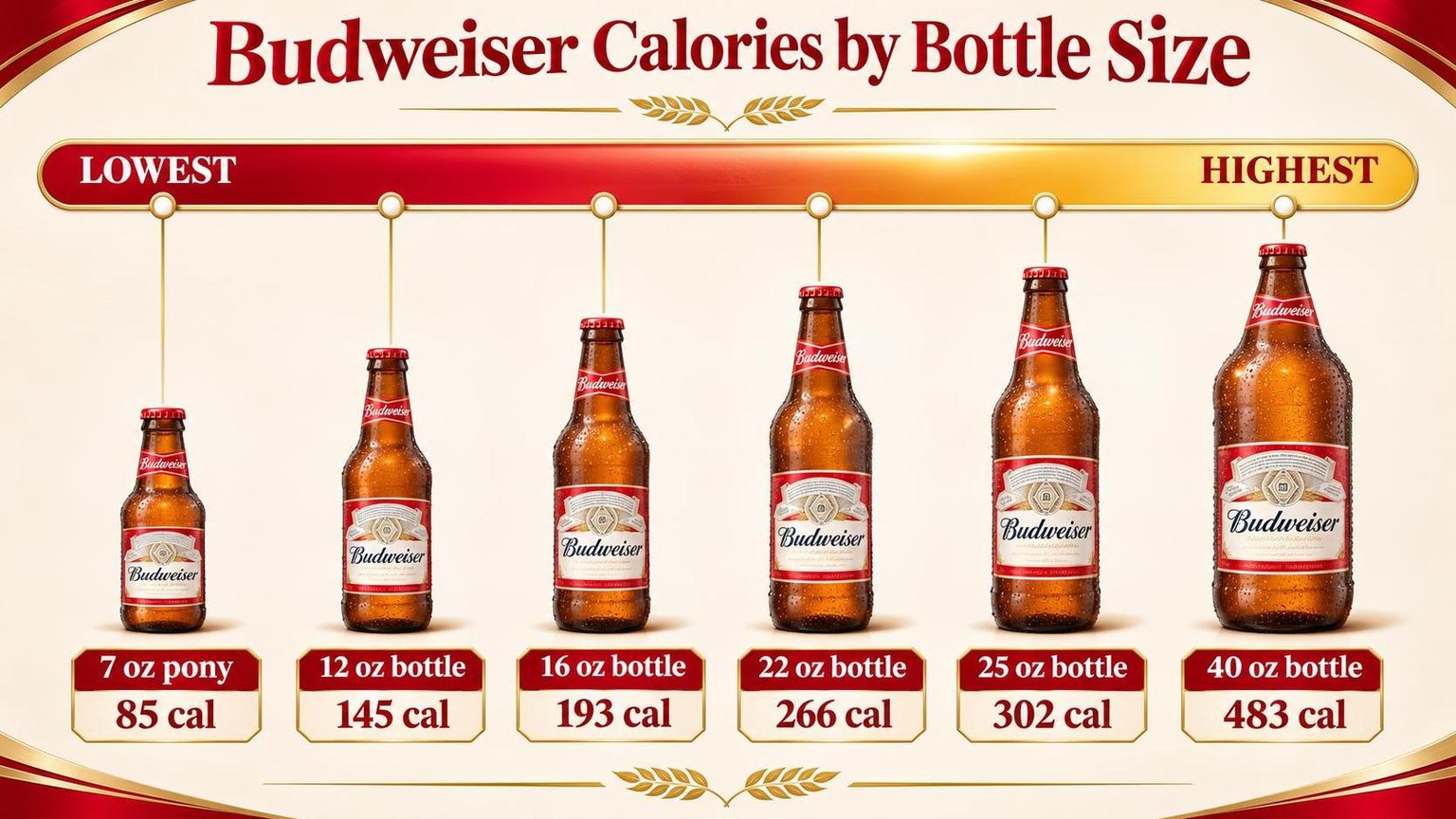
Budweiser Bottle Calories by Size
A standard 12-fluid-ounce bottle of Budweiser contains 145 calories, according to Budweiser’s published nutrition information.
Larger bottles contain more calories because they hold more beer; the estimates below scale that figure by volume and are not separate manufacturer-published calorie counts for every package.
| Bottle size | Estimated calories | Approximate U.S. standard drinks |
| 7 fl oz pony bottle | 85 | 0.58 |
| 12 fl oz bottle | 145 | 1.00 |
| 16 fl oz aluminum bottle | 193 | 1.33 |
| 22 fl oz bottle | 266 | 1.83 |
| 25 fl oz aluminum bottle | 302 | 2.08 |
| 40 fl oz bottle | 483 | 3.33 |
These estimates use Budweiser’s published 145 calories per 12 fluid ounces, or about 12.1 calories per fluid ounce. Each total is rounded to the nearest whole calorie.
Bottle formats vary by retailer and market, so check the volume printed on the container rather than relying on its shape or a shelf description.
Why bottle size changes the total
Budweiser is listed at 5% alcohol by volume (ABV). The National Institute on Alcohol Abuse and Alcoholism defines one U.S. standard drink as containing about 14 grams of pure alcohol—the amount in 12 fluid ounces of beer at 5% ABV.
The table’s standard-drink estimates assume that same strength throughout.
Alcohol is a substantial source of the calories in beer. The National Institute on Alcohol Abuse and Alcoholism notes that alcohol supplies about 7 calories per gram.
Budweiser also lists 10.6 grams of carbohydrates per 12-fluid-ounce serving; carbohydrates contribute calories, but the carbohydrate figure alone does not represent the bottle’s total.
The practical distinction is between a serving and a bottle. The familiar calorie figure describes one standard-size serving, not every Budweiser container.
An aluminum bottle or large glass bottle can hold more than one serving even when it is sold as a single item. If you drink the entire container, use its full volume to estimate your intake.
For the most reliable number, first confirm that the label says Budweiser, not Bud Light, Budweiser Select, or another related beer: those products have different nutrition profiles.
Then look for a container-specific nutrition panel, if one is provided. Because displayed calorie figures are rounded, a label’s total may differ slightly from a calculation based on the standard serving.
Sources: Budweiser’s published product nutrition information for calories, carbohydrates, and ABV; National Institute on Alcohol Abuse and Alcoholism guidance on standard drinks and calories from alcohol.
Calories in Budweiser Compared With Light Beer
A 12-fluid-ounce bottle of Budweiser has 145 calories, compared with 110 in Bud Light and 95 in Michelob ULTRA. Bottle size matters: these figures describe the standard 12-ounce serving, not every bottle or draft pour sold under the same brand.
| Beer | Calories per 12 fl oz | Carbohydrates | Alcohol by volume | Calories fewer than Budweiser | Calories per six-pack |
| Budweiser | 145 | 10.6 g | 5.0% | — | 870 |
| Bud Light | 110 | 6.6 g | 4.2% | 35 | 660 |
| Michelob ULTRA | 95 | 2.6 g | 4.2% | 50 | 570 |
The per-bottle calorie, carbohydrate, and alcohol figures come from the brands’ published product nutrition information; six-pack totals are calculated from those figures.
A six-pack is included to show how a modest difference per bottle can add up, not to suggest that it is a recommended serving.
Light beer generally saves calories by reducing both alcohol and remaining carbohydrates. Alcohol contributes approximately 7 calories per gram, while carbohydrate contributes about 4 calories per gram, according to USDA dietary guidance.
Those figures explain why a beer’s calorie count cannot be estimated from its carbohydrate number alone.
Budweiser’s higher alcohol content accounts for part of its calorie difference from Bud Light. Its greater carbohydrate content accounts for another part.
Label values are rounded, and beer can contain small amounts of other nutrients, so calculating calories from the listed alcohol and carbohydrates may not reproduce the published total exactly.
“Light” also does not mean alcohol-free. Bud Light and Michelob ULTRA still contain alcohol, and drinking several bottles increases both calorie and alcohol intake.
If the goal is to compare beers fairly, use the same serving volume for each rather than comparing a small bottle with a larger can.
Check the package before using the table for a different format. A 16-ounce can contains more liquid than a 12-ounce bottle, even when the beer and its calories per ounce are unchanged.
Draft servings can vary too; the glass size, rather than the word “pint” on a menu, determines the volume poured.
Calories are only one consideration when choosing between regular and light beer. The listed alcohol-by-volume percentage indicates strength, while the nutrition information describes energy and carbohydrates per serving.
For tracking intake, record the specific beer, its container size, and how much you actually drank.
If you are choosing solely on calories for the same 12-ounce serving, the table gives a clear answer: Budweiser has the highest total of these three beers.
If you prefer Budweiser, choosing a single standard bottle instead of a larger serving is another way to keep the serving’s calorie total predictable.
Budweiser Calories and Carbohydrates
A standard 12-fluid-ounce bottle of Budweiser contains 145 calories and 10.6 grams of carbohydrates, according to Budweiser’s published nutrition information.
Those figures apply to regular Budweiser at 5% alcohol by volume (ABV), not Bud Light or another Budweiser-branded beer.
Calories by bottle size
The 12-ounce bottle is the usual reference point, but Budweiser is also sold in larger bottles. The larger-bottle figures below scale the published 12-ounce values by volume; they are estimates, not separate nutrition claims printed for each package.
| Budweiser bottle size | Estimated calories | Estimated carbohydrates |
| 12 fl oz | 145 | 10.6 g |
| 16 fl oz | 193 | 14.1 g |
| 22 fl oz | 266 | 19.4 g |
| 25 fl oz | 302 | 22.1 g |
Check the volume on the bottle before logging it. “One bottle” is not a fixed serving size, and drinking a large bottle means consuming more than the nutrition figures commonly quoted for Budweiser.
Estimates may differ slightly from a package label because the published values are rounded.
Where the calories come from
Budweiser’s calories come primarily from alcohol and carbohydrates. Its published nutrition information lists 1.3 grams of protein and zero grams of fat per 12-ounce serving.
The 10.6 grams of carbohydrates contribute roughly 42 calories when calculated at four calories per gram.
Alcohol supplies substantial energy even though it is not counted as carbohydrate. The USDA uses approximately seven calories per gram of alcohol.
The National Institute on Alcohol Abuse and Alcoholism defines a U.S. standard drink as containing about 14 grams of pure alcohol and lists 12 ounces of 5% beer as an example.
That makes a standard Budweiser bottle approximately one standard drink. Its alcohol accounts for roughly 98 calories before considering carbohydrates and the small amount of protein.
These component calculations are approximate: published nutrient figures, alcohol content, and calorie factors are rounded, so they need not sum exactly to the stated 145 calories.
What the carbohydrate number means
Carbohydrates in beer include sugars and other carbohydrates remaining after brewing; the total carbohydrate figure does not mean the bottle contains 10.6 grams of added sugar.
For carbohydrate tracking, use Budweiser’s published total rather than estimating carbs from its calorie count. Alcohol contributes calories without appearing in the carbohydrate total.
The same distinction matters when comparing a beer with a nonalcoholic drink: calorie totals alone cannot tell you how much carbohydrate either contains.
For the most accurate entry in a food log, select regular Budweiser and confirm that the serving volume matches the bottle in hand.
How Many Calories in a Budweiser Six-Pack
A six-pack of standard 12-ounce Budweiser bottles contains 870 calories: 145 calories per bottle multiplied by six. That figure assumes you drink the beer without adding anything; food and other drinks add to the total.
Anheuser-Busch lists original Budweiser at 145 calories and 5% alcohol by volume (ABV) per 12-ounce serving. Bottle size matters, so check the volume on the package before using the six-pack total.
| Budweiser consumed | Beer volume | Calories |
| 1 standard bottle | 12 fl oz | 145 |
| 2 standard bottles | 24 fl oz | 290 |
| 3 standard bottles | 36 fl oz | 435 |
| 6 standard bottles | 72 fl oz | 870 |
The table uses Budweiser’s per-serving figure, not a separate calorie measurement of a packaged six-pack.
It also shows why counting bottles is useful: two bottles contribute 290 calories, while three contribute 435, even before a meal or snacks.
What if the six-pack contains 16-ounce cans?
A six-pack of 16-ounce cans contains 96 fluid ounces of beer, compared with 72 fluid ounces in six standard bottles.
At the same calorie rate per ounce, one 16-ounce Budweiser is approximately 193 calories, and all six are approximately 1,160 calories.
Those 16-ounce figures are estimates calculated from the published 12-ounce serving: 145 multiplied by 16 and divided by 12. They should not be mistaken for a separately published nutrition figure for that can size.
Calories and alcohol are different measurements
A 12-ounce Budweiser at 5% ABV contains about 0.6 fluid ounce of pure alcohol, or roughly 14 grams. The National Institute on Alcohol Abuse and Alcoholism defines that amount as one U.S. standard drink.
Six standard bottles therefore contain approximately six standard drinks.
Alcohol contributes roughly seven calories per gram, so it accounts for a substantial share of Budweiser’s calories. The remaining calories come primarily from carbohydrates and other components of the beer.
The 870-calorie total describes energy intake; it does not describe how quickly alcohol affects someone or whether driving is safe.
For a quick comparison with daily intake, 870 calories equal 43.5% of a 2,000-calorie reference diet.
That percentage is context, not a recommended beer allowance: individual calorie needs vary, and the alcohol in a six-pack is a separate consideration from its calories.
If you are logging a six-pack, enter the container volume first and then the number consumed.
Use 145 calories for each 12-ounce original Budweiser bottle; use a proportionate estimate for larger containers unless their packaging provides a more specific value.
Budweiser Light and other Budweiser products have different nutrition figures.
Frequently Asked Questions
How many calories are in a 12-ounce bottle of Budweiser?
A 12-fluid-ounce bottle of regular Budweiser contains 145 calories, according to Budweiser’s published nutrition information. Check the bottle size before using that figure; it applies to 12 ounces.
How many calories are in a 22-ounce bottle of Budweiser?
A 22-fluid-ounce bottle contains approximately 266 calories if it has the same composition as the standard Budweiser bottle. That estimate scales the published 145 calories per 12 ounces to 22 ounces.
How many calories are in a 330-milliliter bottle of Budweiser?
A 330-milliliter bottle contains approximately 135 calories, based on Budweiser’s figure of 145 calories per 12 U.S. fluid ounces (355 milliliters).
Labels in different markets may report nutrition differently, so use the bottle’s label when available.
How many carbohydrates are in a 12-ounce bottle of Budweiser?
Budweiser lists 10.6 grams of carbohydrates per 12-fluid-ounce serving. That same serving has 145 calories; carbohydrate grams alone do not account for all of them because beer also contains alcohol.
Does Budweiser have more calories than Bud Light?
Yes. Published nutrition information lists 145 calories for a 12-ounce Budweiser and 110 calories for a 12-ounce Bud Light, a difference of 35 calories per bottle of equal size.
How much alcohol is in a bottle of Budweiser?
Regular Budweiser is 5% alcohol by volume (ABV). A 12-ounce bottle at 5% ABV contains about 0.6 fluid ounces of pure alcohol, which the National Institute on Alcohol Abuse and Alcoholism defines as one U.S. standard drink.
How many calories are in two bottles of Budweiser?
Two 12-fluid-ounce bottles contain 290 calories in total, using Budweiser’s published 145 calories per bottle. They also contain 21.2 grams of carbohydrates and, at 5% ABV, the equivalent of two U.S. standard drinks.
Related Reading
- 11 Essential Facts About How Many Cans Of Beer In A Keg (2026 Complete Draft System & Serving Guide)
- How Much Alcohol is in Dos Equis? Alcohol in Dos Equis
- What Is the Beer Game Often Played with Red Solo Cups?
- Good People Hazy Snake Beer Review and Details
- 10 Shocking Facts About How Many Beers In A Half Barrel You Need to Know (2026 Guide)
- Where Is Shiner Beer Sold?
- All Alcohol Guides
- USDA FoodData Central (2019)
- Centers for Disease Control and Prevention, About Alcohol Use (2024)
- U.S. Departments of Agriculture and Health and Human Services, Dietary Guidelines for Americans (2020)
- Budweiser (n.d.)
- Anheuser-Busch, Tap Into Your Beer (n.d.)
- NIAAA – Alcohol's Effects on the Body
- Dietary Guidelines for Americans 2020-2025 (USDA/HHS)