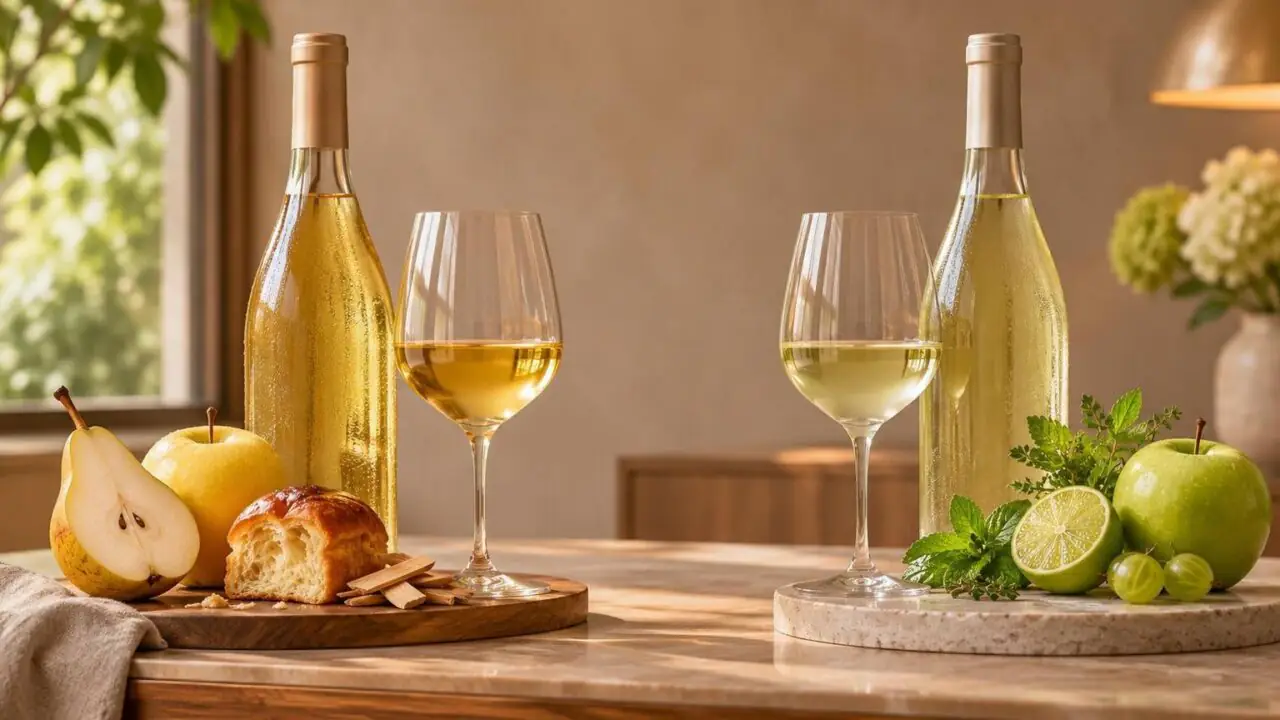
The difference between chardonnay and sauvignon blanc is that chardonnay is typically rounder and less aromatic, while sauvignon blanc is usually brighter, more herbal, and sharply citrusy.
Chardonnay’s flavor can range from green apple and lemon to ripe peach, depending on climate and winemaking.
Sauvignon blanc often shows lime, grapefruit, fresh herbs, or grass, with lively acidity.
It is commonly fermented and aged in stainless steel to preserve freshness; chardonnay may also be aged in oak, adding notes of vanilla, toast, or baking spice and a richer texture.
Both are dry white wines, but neither grape has just one taste. Climate, harvest timing, and cellar choices make a difference. For a crisp, aromatic glass, try sauvignon blanc; for a softer, fuller style, choose chardonnay.
Check the region and producer, since those clues can be as useful as the grape name.
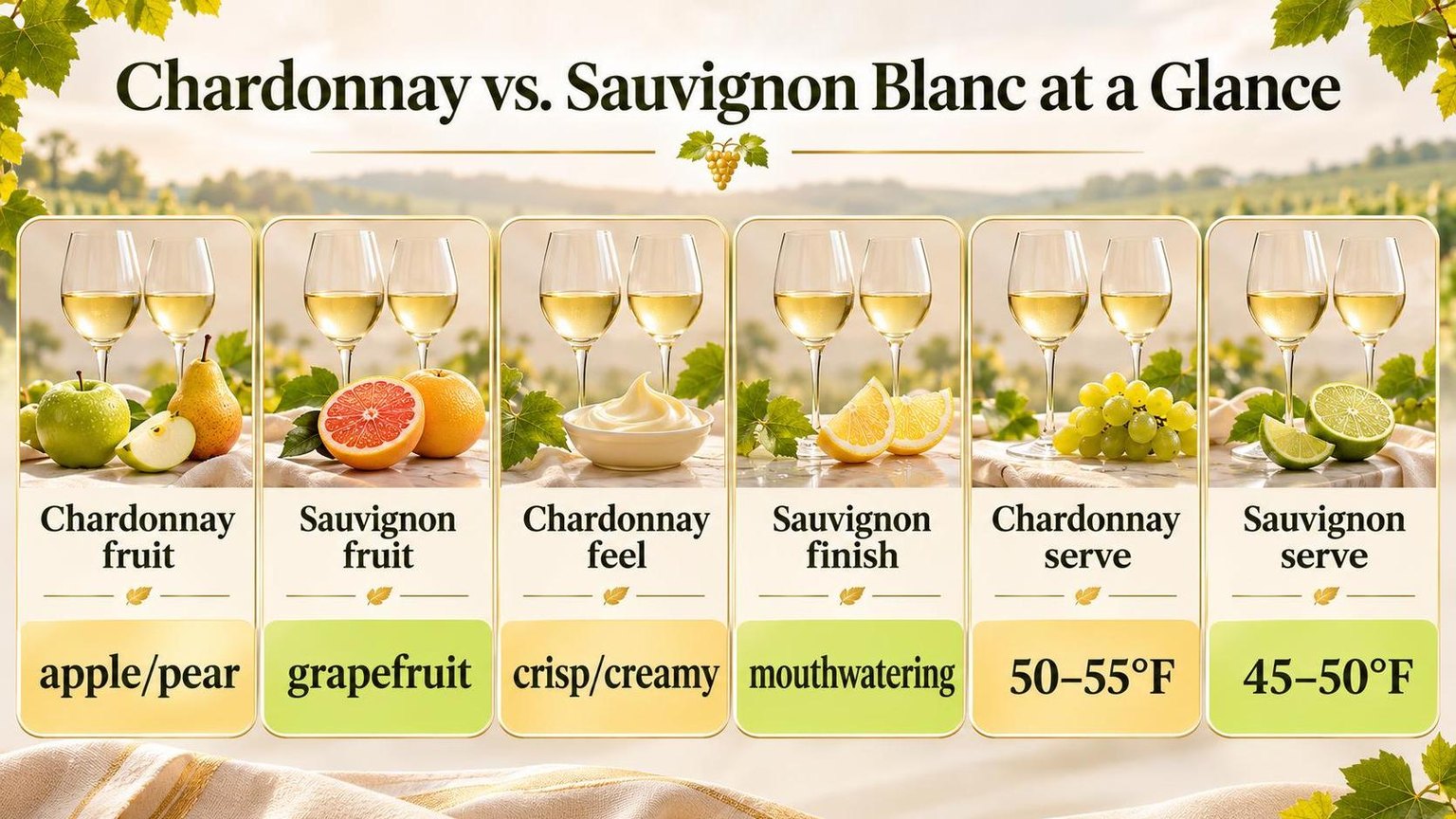
Chardonnay and Sauvignon Blanc Flavor Profiles
Chardonnay often tastes of apple, pear, citrus, or stone fruit, with a texture that can range from crisp to creamy. Sauvignon Blanc typically leads with grapefruit, lime, passion fruit, herbs, and a sharper impression of acidity.
Neither grape has one fixed flavor: climate and winemaking change what reaches the glass.
What to expect from Chardonnay
In cooler regions, Chardonnay commonly emphasizes green apple, lemon, and sometimes a mineral or saline impression. Warmer growing conditions favor riper peach, melon, and pineapple notes.
Climate influences ripeness, but harvest timing also matters: grapes picked earlier generally retain more acidity and taste less overtly tropical.
Winemaking can alter Chardonnay more dramatically than its fruit descriptors suggest. Malolactic fermentation converts sharper malic acid into softer lactic acid and may produce diacetyl, a compound associated with buttery aromas.
The University of California, Davis, identifies diacetyl as an important aroma compound in wines that undergo this fermentation.
Oak barrels can add vanilla, toast, baking spice, or coconut-like notes; those flavors come from the barrel rather than the Chardonnay grape.
Contact with spent yeast, called lees, can contribute a fuller texture and bread- or pastry-like impressions. An unoaked Chardonnay need not taste buttery, and an oaked one need not be sweet.
What to expect from Sauvignon Blanc
Sauvignon Blanc usually presents more immediate citrus and herbal aromas. Depending on where it grows and how ripe the grapes become, it may suggest gooseberry, cut grass, green pepper, grapefruit, or passion fruit.
Its lively acidity often makes the finish feel mouthwatering even when the wine is completely dry.
The Australian Wine Research Institute identifies volatile thiols as contributors to Sauvignon Blanc’s passion fruit, grapefruit, and tropical-fruit aromas. Methoxypyrazines contribute green, grassy, and capsicum-like notes.
These are identifiable aroma compounds, not evidence that fruit or herbs were added to the wine.
Style matters here, too. Stainless-steel fermentation commonly preserves a fresh, fruit-forward profile, while some producers use oak or extended lees contact for more weight and less obvious grassy character.
New Zealand examples often foreground pungent tropical fruit and herbs; Sancerre, made from Sauvignon Blanc, commonly shows citrus, herbs, and a more restrained profile.
How to compare them in the glass
Temperature affects which differences you notice first. As a practical starting point, serve a fuller-bodied Chardonnay slightly warmer than a brisk Sauvignon Blanc, then let either glass warm if its aromas seem muted.
These are tasting ranges, not rules for every bottle.
| Wine style | Starting serving temperature |
| Fuller-bodied Chardonnay | 50–55°F (10–13°C) |
| Crisp Sauvignon Blanc | 45–50°F (7–10°C) |
For a side-by-side tasting, smell before sipping, then compare texture and the finish. Chardonnay may feel rounder, particularly with malolactic fermentation or lees contact. Sauvignon Blanc often feels leaner and more piercing.
If both taste crisp and unoaked, focus on Chardonnay’s apple-and-pear character versus Sauvignon Blanc’s herbal and grapefruit aromas.
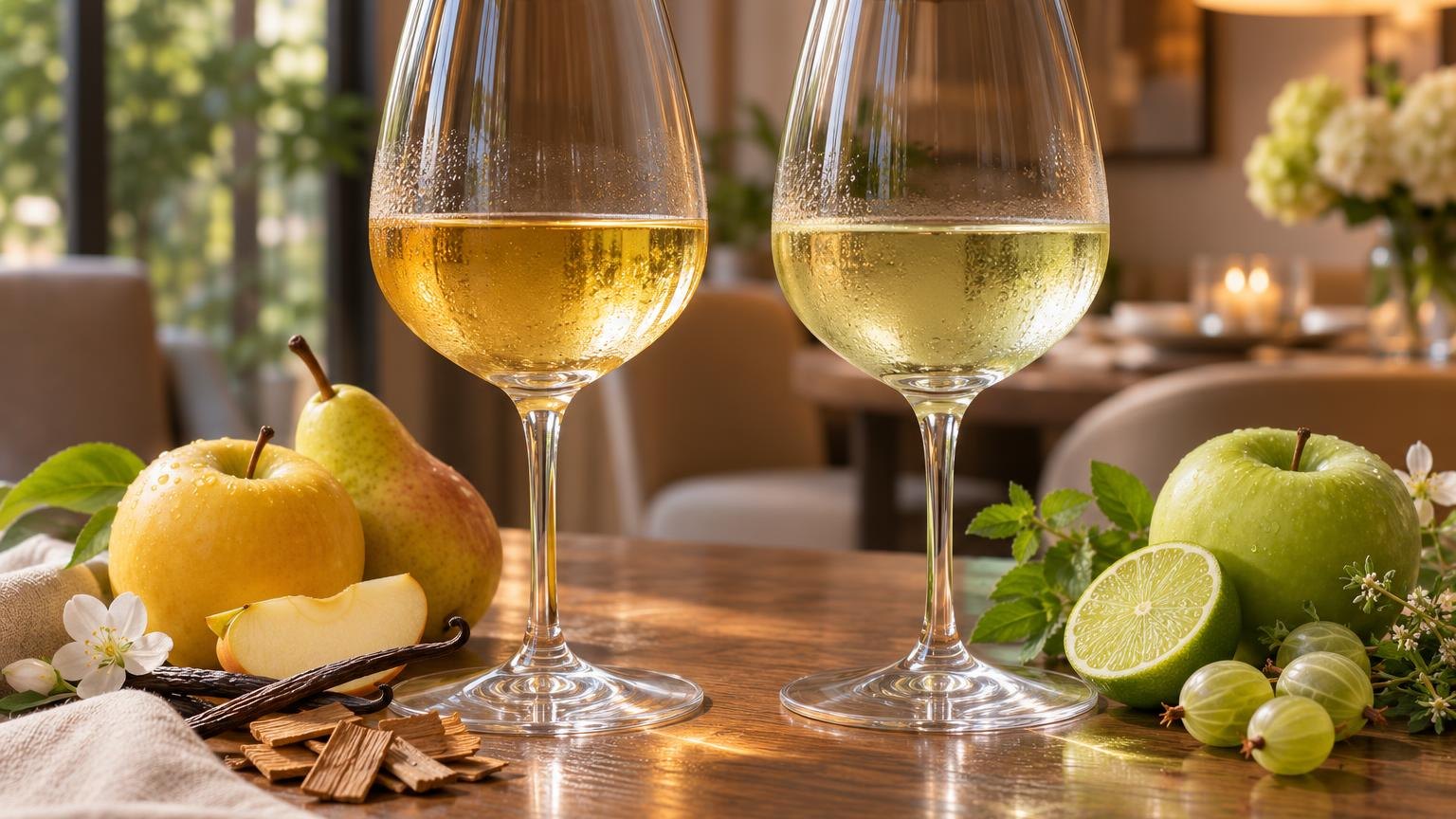
How Oak Changes Chardonnay
Oak can make Chardonnay taste markedly different from Sauvignon Blanc, but the grape itself does not taste like vanilla or toast.
Those aromas come from winemaking choices: the vessel, its age and toast level, and how long the wine remains in contact with it.
What the barrel contributes
Oak contains compounds that can add vanilla, coconut, clove, smoke and toasted-bread aromas. The Australian Wine Research Institute identifies vanillin, oak lactones, eugenol and volatile phenols among the compounds responsible.
Toasting a barrel changes which aromas it contributes; it does not add sugar to the wine.
New barrels generally contribute more noticeable oak flavor than barrels that have held wine before. French and American oak can also smell different: American oak is often associated with more pronounced coconut notes.
Neither origin guarantees a particular result; barrel age, toast and the winemaker’s choices matter too.
Barrel size changes how much wood touches a given volume of wine. All else being equal, a smaller barrel exposes more wine to oak surface than a larger one. These are common sizes, not fixed rules for how an individual Chardonnay will taste:
| Oak vessel | Typical capacity | Practical implication |
| Barrique | 225 liters | Greater oak contact per liter than a larger vessel of similar shape |
| Puncheon | 500 liters | Less oak contact per liter, all else being equal |
Oak is not the same as butter
The buttery note often associated with Chardonnay usually comes from malolactic fermentation, not the barrel. During this process, bacteria convert sharper malic acid into softer lactic acid; they may also produce diacetyl, which smells buttery.
The process can happen in a tank as well as in oak.
Likewise, a creamy or bread-dough texture may reflect time on the lees—the spent yeast left after fermentation—and stirring those lees. Oak aging and these techniques often appear together, which makes their effects easy to confuse.
WSET’s Level 3 wine specification treats oak, malolactic fermentation and lees contact as distinct winemaking influences.
Barrels also permit gradual oxygen exposure, which can help soften a wine’s texture and integrate its aromas. That effect differs from the flavor of the wood itself.
A winemaker can ferment Chardonnay in stainless steel and age it in oak, or ferment it in oak from the start.
For a comparison with Sauvignon Blanc, check the bottle rather than assuming every Chardonnay is oaky. An unoaked Chardonnay may emphasize apple, citrus and acidity; an oak-aged one may add vanilla and toast.
Sauvignon Blanc is commonly made without conspicuous oak, although oak-aged versions exist. The clearest contrast is therefore production style, not a flavor inherent to either grape.
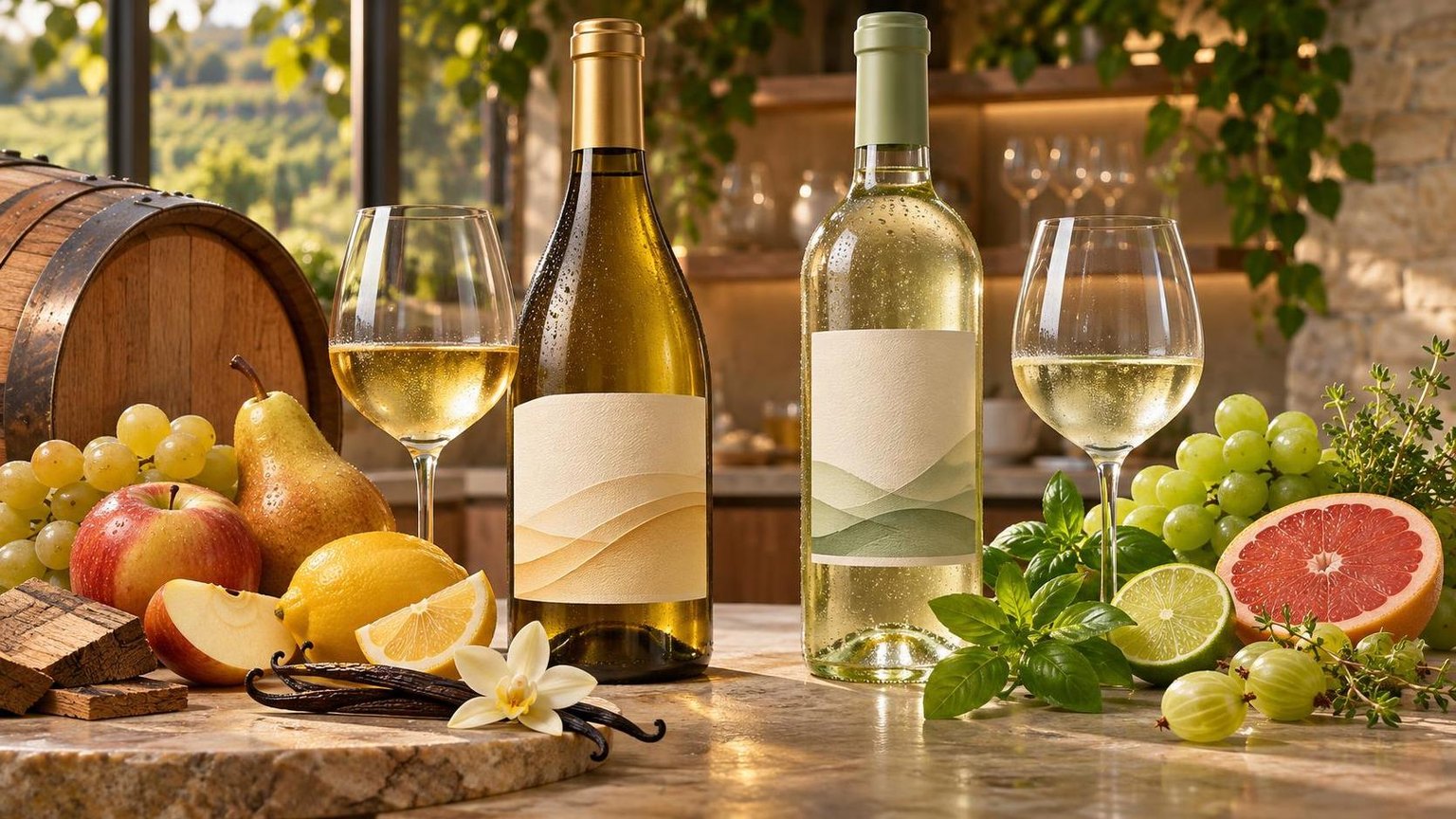
Sauvignon Blanc’s Acidity and Aromas
Sauvignon Blanc usually tastes more sharply refreshing than Chardonnay, with aromas that lean toward citrus, herbs, and green fruit rather than apple, butter, or toast.
The difference is not absolute: climate, ripeness, and winemaking can make either grape taste lean or rich.
Acidity is a major reason Sauvignon Blanc feels brisk. In cooler growing areas, the grapes can retain enough acidity to give the wine a mouthwatering finish, even when its fruit aromas suggest ripe passion fruit.
Acidity is best judged alongside body and aroma: a wine can smell tropical and still taste taut.
The grape’s green notes have a specific chemical link. Methoxypyrazines, particularly the compound known as IBMP, contribute aromas often described as bell pepper, cut grass, or leafy herbs.
The Australian Wine Research Institute (AWRI) notes that methoxypyrazines generally decline as grapes ripen, helping explain why earlier-picked wines can smell greener.
Other signature aromas emerge during fermentation. Sauvignon Blanc grapes contain largely non-aromatic precursors that yeast can release as volatile thiols.
AWRI identifies 3MH with grapefruit and passion-fruit notes, 3MHA with passion fruit and box tree, and 4MMP with box tree and other pungent green-fruit impressions.
| What to notice | Sauvignon Blanc | Chardonnay |
| Typical fruit impression | Grapefruit, lime, passion fruit | Apple, pear, peach |
| Common non-fruit impression | Grass, herbs, bell pepper | Butter or toast when winemaking creates those notes |
| Typical palate impression | Brisk, often light to medium-bodied | Often rounder, but highly style-dependent |
These are tasting tendencies, not grape-by-grape guarantees. Butteriness in Chardonnay commonly reflects malolactic fermentation, which converts sharper-tasting malic acid into softer-tasting lactic acid. Toast and vanilla usually come from oak.
Neither characteristic is an inherent flavor of Chardonnay grapes, and some Chardonnay is unoaked and notably crisp.
Place matters within Sauvignon Blanc, too. Marlborough, New Zealand, is strongly associated with pronounced citrus, passion-fruit, and green-herb aromas.
In France’s Loire Valley, Sancerre and Pouilly-Fumé are Sauvignon Blanc appellations whose wines often emphasize citrus, herbs, and a restrained, stony impression. Producer choices still matter within each region.
In the glass, start by smelling the wine before judging its sharpness. Look for grapefruit or lime, then check for grass, herbs, or passion fruit.
Take a sip and notice whether your mouth waters after swallowing; that lingering sensation is a more useful clue to acidity than aroma alone.
Serve a fresh, unoaked example cool, around 45–50°F (7–10°C), then let it warm slightly in the glass if its aromas seem muted.
That practical check helps separate Sauvignon Blanc’s vivid smell from its firm palate—and makes the contrast with a rounder Chardonnay easier to recognize.
Body, Pairings, and Serving Temperature
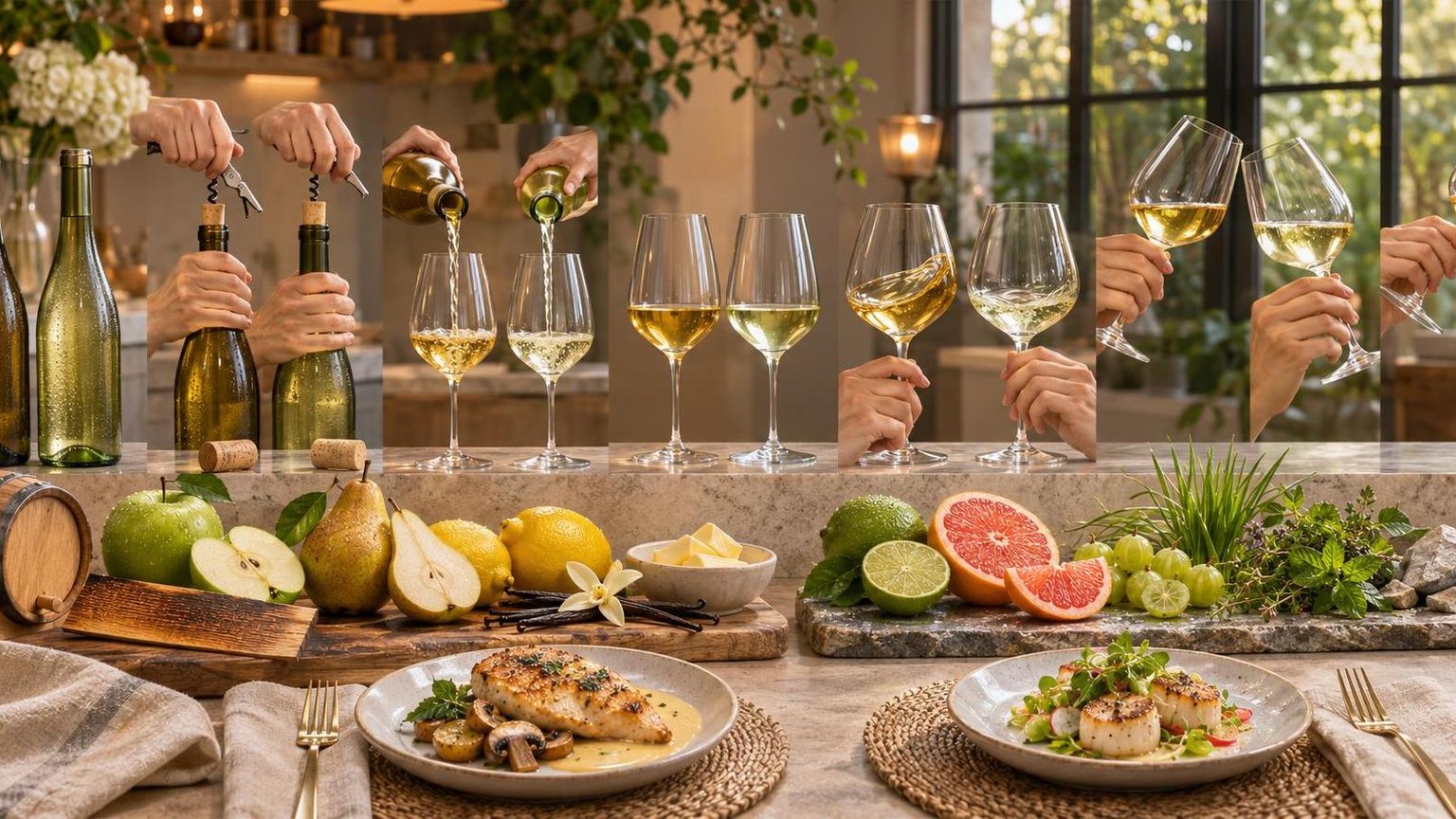
Chardonnay and Sauvignon Blanc can both be dry, refreshing whites, but they do not always fill the same role at the table.
Sauvignon Blanc usually emphasizes acidity and herbal or citrus flavors; Chardonnay ranges from lean and crisp to broad and creamy, depending on how it is made.
Body describes a wine’s weight in the mouth, not its sweetness. Alcohol, oak aging, and time on spent yeast, called lees, can make Chardonnay feel fuller. Malolactic fermentation can soften its sharper acidity and add buttery aromas.
Sauvignon Blanc is typically lighter-bodied, though oak-aged examples can be fuller.
Use these temperatures as starting points, not rigid rules. They follow Wine Folly’s guidance to serve lighter whites cooler than fuller-bodied whites; the middle range for unoaked Chardonnay is a practical adjustment within that guidance.
| Wine style | Typical feel | Serving temperature | Good starting pairing |
| Sauvignon Blanc | Light to medium body; pronounced acidity | 45–50°F | Goat cheese or oysters |
| Unoaked Chardonnay | Light to medium body; crisp to rounded | 48–52°F | Grilled fish or shrimp |
| Oaked Chardonnay | Medium to full body; often creamy | 50–55°F | Roast chicken or creamy pasta |
Sauvignon Blanc is an especially useful choice when a dish benefits from a squeeze of lemon. Its acidity brings a similar lift to oysters, shrimp, and simply cooked white fish.
With goat cheese, that acidity refreshes the palate while the wine’s citrus or grassy notes complement the cheese’s tang.
Herb-driven dishes offer another reason to choose Sauvignon Blanc. A salad with fresh parsley, a green-herb sauce, or asparagus can echo the variety’s green aromas.
Those aromas are partly associated with methoxypyrazines, compounds documented in Sauvignon Blanc by the Australian Wine Research Institute.
For Chardonnay, match the bottle’s style before matching the grape name. A lean, unoaked Chardonnay suits seafood or grilled vegetables because neither the food nor the wine needs much richness.
An oaked, fuller-bodied Chardonnay has enough weight for roast chicken, mushrooms, or pasta in a cream sauce.
Oak can contribute vanilla or toast flavors, while lees contact may add a breadlike note. Those flavors can work well with browned chicken skin or lightly toasted ingredients.
Butteriness, however, is not guaranteed: WSET explains that malolactic fermentation can create buttery aromas, but winemaking choices affect whether they are noticeable.
Temperature changes what you taste. Serving a full-bodied Chardonnay very cold can suppress its aroma and make its texture seem less generous; serving Sauvignon Blanc too warm can dull its refreshing impression.
If a glass tastes muted straight from the refrigerator, let it warm briefly and taste it again.
For a mixed table, consider the sauce rather than the protein alone. Fish with a sharp herb dressing points toward Sauvignon Blanc, while the same fish with a buttery sauce may favor Chardonnay.
Check whether the Chardonnay is oaked: that detail is often more useful for pairing than its grape variety alone.
Choosing Between the Two Wines
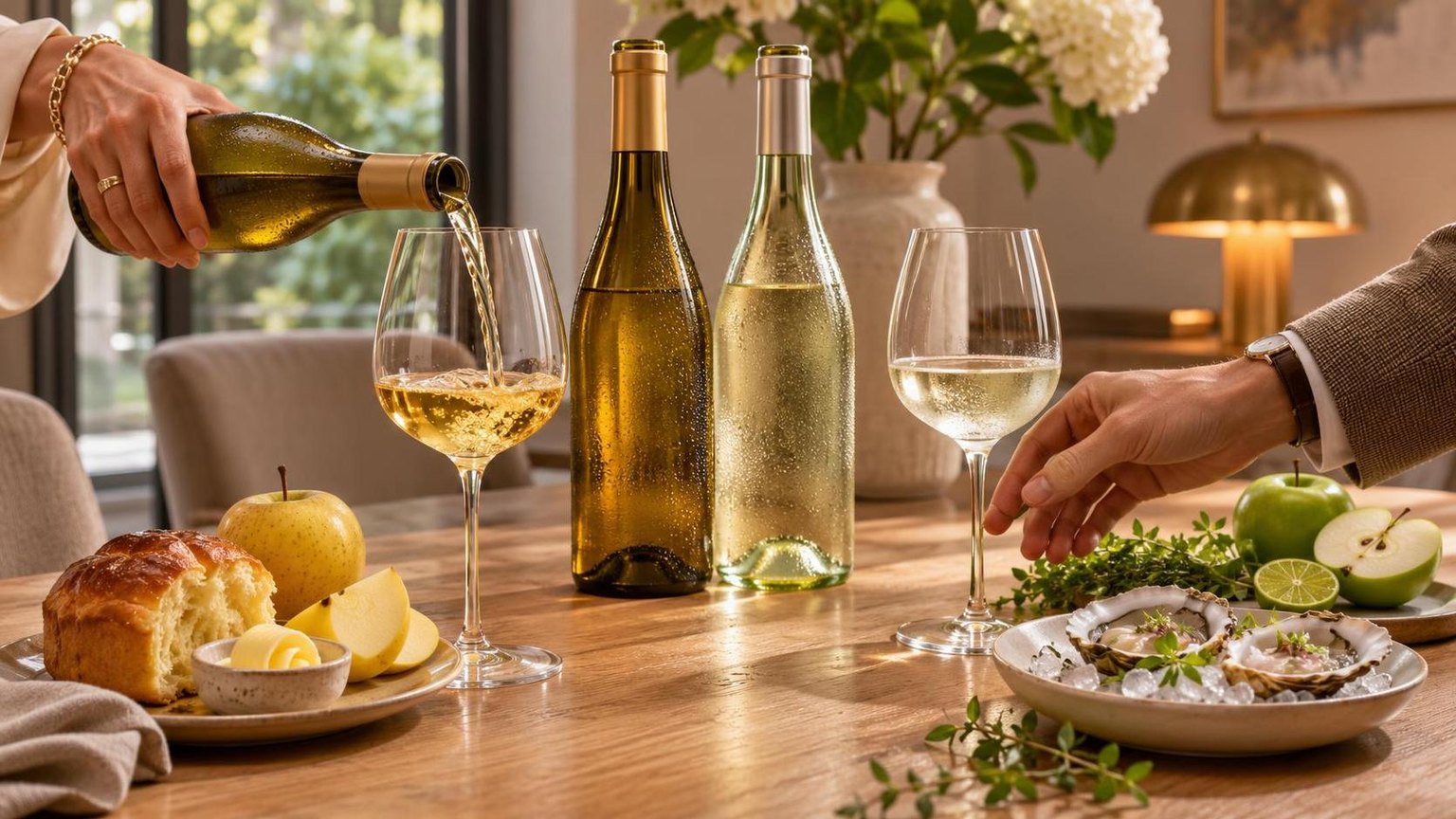
Choose sauvignon blanc when you want a crisp, aromatic wine; choose chardonnay when you want a subtler white that can range from lean to rich.
The most useful question is not simply which grape you prefer, but whether the chardonnay is unoaked or oak-influenced.
Start with the flavors you want
Sauvignon blanc commonly brings citrus, green fruit and herbal aromas, with acidity that makes the finish feel brisk. New Zealand Winegrowers describes Marlborough examples as ranging from fresh-cut grass and citrus to tropical fruit.
For a less overtly fruity expression, look to Sancerre in France’s Loire Valley.
Chardonnay is less defined by a single aroma. Cool-climate examples can suggest lemon and green apple; warmer sites can produce riper peach or tropical-fruit notes.
As Wine & Spirit Education Trust teaching materials explain, winemaking also changes its profile: oak can add vanilla or toast, while malolactic fermentation can soften acidity and contribute buttery notes.
Do not assume every chardonnay tastes buttery. Chablis, made from chardonnay in northern Burgundy, is often a useful choice for drinkers who like the freshness of sauvignon blanc but want a different flavor profile.
Bourgogne Wines identifies citrus, mineral and saline impressions among the region’s characteristic tasting descriptions.
Match the wine to the food
- Choose sauvignon blanc for goat cheese, herb-dressed salads, asparagus or seafood with lemon. Its pronounced acidity can refresh the palate after a tangy or herbal bite.
- Choose unoaked chardonnay for oysters, simply cooked fish or roast chicken with lemon. It offers a fresh alternative when sauvignon blanc’s grassy aromas would compete with the dish.
- Choose oak-influenced chardonnay for roast chicken, lobster with butter or pasta in a cream sauce. Its fuller texture and oak-derived flavors are better suited to richer preparations.
For spicy food, check the bottle rather than relying on the grape name.
A highly alcoholic, heavily oaked chardonnay can make chile heat feel more prominent; a fruit-forward sauvignon blanc may work better, although a dry example will not provide the sweetness that noticeably tempers heat.
Use the label—and the serving temperature
Look for “unoaked” if you want a fresher-tasting chardonnay; “barrel fermented” or “oak aged” signals a reason to expect more richness or oak flavor.
Neither term guarantees how much butteriness you will taste. If possible, compare the wines at the same meal: food can change which one seems more appealing.
| Wine style | Practical starting temperature |
| Sauvignon blanc | 45–50°F |
| Unoaked chardonnay | 45–50°F |
| Fuller-bodied, oak-influenced chardonnay | 50–55°F |
These are starting points, consistent with Wine Enthusiast’s guidance to serve crisp whites cooler than fuller-bodied whites.
If a wine tastes muted straight from the refrigerator, let it warm slightly in the glass before deciding whether you like it.
Frequently Asked Questions
What is the main taste difference between Chardonnay and Sauvignon Blanc?
Chardonnay commonly shows apple, pear or citrus flavors, while Sauvignon Blanc is more likely to show grapefruit, passion fruit or green pepper.
Climate and winemaking change the result: the Oxford Companion to Wine notes that Chardonnay’s relatively neutral grape character makes its finished wines especially responsive to those choices.
Which has more acidity and body?
Sauvignon Blanc typically tastes more sharply acidic and lighter-bodied; Chardonnay often feels rounder, particularly when grown in a warm climate or made with oak.
Neither rule is absolute: unoaked Chablis, made from Chardonnay, is known for its pronounced acidity, according to the Bourgogne Wine Board.
Why does Sauvignon Blanc sometimes smell grassy?
Naturally occurring compounds called methoxypyrazines can give Sauvignon Blanc aromas of cut grass, green pepper and herbs.
The Australian Wine Research Institute identifies these compounds as contributors to the variety’s characteristic green notes.
Is Chardonnay always oaked and Sauvignon Blanc always unoaked?
No. Chardonnay can be fermented or aged in stainless steel for a fresher style, while oak barrels can add texture and notes such as toast or vanilla; Sauvignon Blanc is usually made without a prominent oak flavor, but oaked examples exist.
Oak is a winemaking choice, not a property of either grape.
Why does some Chardonnay taste buttery?
Buttery Chardonnay is often associated with malolactic fermentation, a process that converts sharper malic acid into softer lactic acid and can produce the butter-scented compound diacetyl.
The process is optional, so many Chardonnays have no noticeable butter flavor.
Which regions are especially associated with each grape?
Chardonnay is the white grape of Burgundy’s Chablis and is also one of the permitted grapes in Champagne.
Sauvignon Blanc is central to France’s Sancerre and New Zealand’s Marlborough; the regional names on a label can therefore be more informative than the grape name alone.
Which should I choose with food?
Choose a crisp Sauvignon Blanc for goat cheese, asparagus or dishes with fresh herbs; its acidity and herbal character suit those flavors.
Choose a fuller-bodied Chardonnay for roast chicken or creamy sauces, but use a lean, unoaked Chardonnay instead if you want a lighter match.
Further Reading
- How Many Bottles of Wine for 30 People?
- Does Cooking Wine Go Bad?
- How Many Carbs In A Glass Of Cabernet?
- Does Wine Have Caffeine?
- What Is Ice Wine? Taste, Brands & Pairings (2026 Guide)
- How Many Calories Are in a Bottle of Chardonnay?
- How Many Calories In 750 Ml Of Wine?
- How Long Can You Store Wine at Room Temperature?
- All Alcohol Guides
- USDA FoodData Central (n.d.)
- Electronic Code of Federal Regulations, Wine Labeling and Advertising (n.d.)
- University of California, Davis, Department of Viticulture and Enology (n.d.)
- Australian Wine Research Institute (n.d.)
- Wine Folly, Chardonnay (n.d.)
- Wine Folly, Sauvignon Blanc (n.d.)
- Vivino, Chardonnay (n.d.)
- Vivino, Sauvignon Blanc (n.d.)
- Dietary Guidelines for Americans 2020-2025 (USDA/HHS)