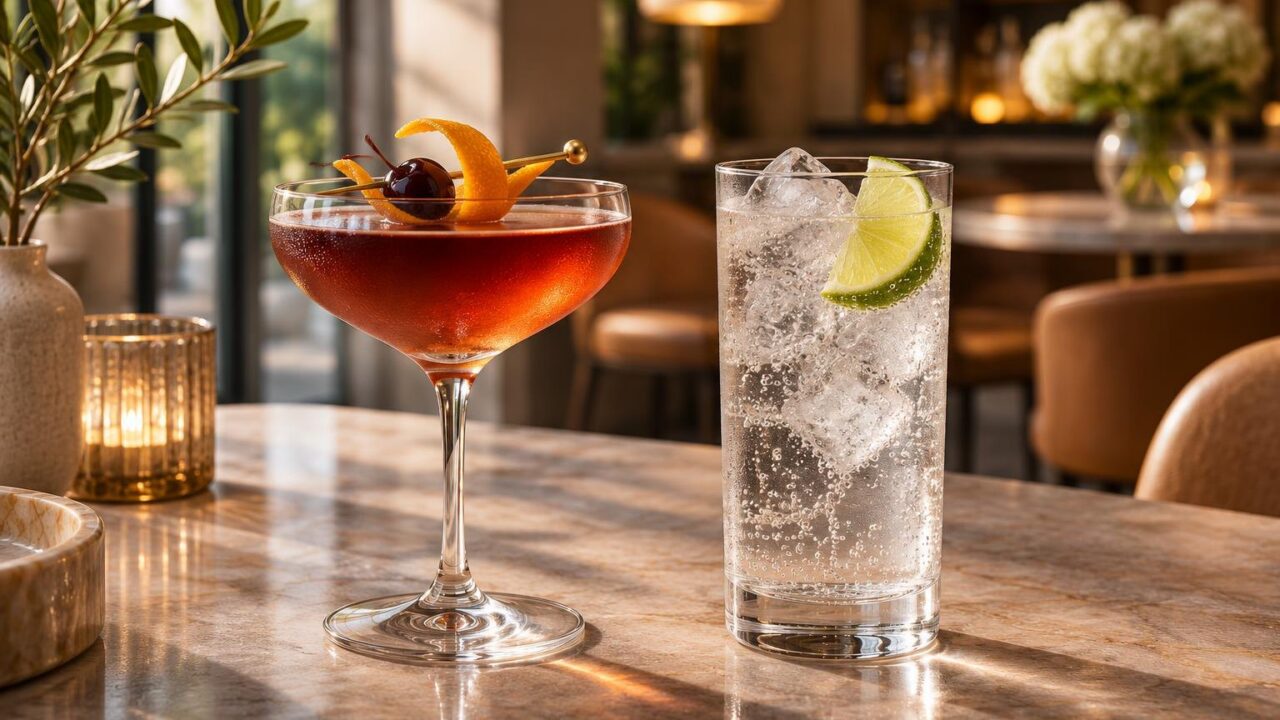
A cocktail is a mixed drink made by combining at least two ingredients, often a spirit with mixers, bitters, or other flavorings.
The terms overlap, but “cocktail” usually refers to a more specific, deliberately balanced recipe, while “mixed drink” is the broader category.
That distinction is practical rather than absolute: a gin and tonic is both a cocktail and a mixed drink, while a whiskey and soda is commonly called a mixed drink.
Definitions vary by bar and context, so ingredients and preparation offer clearer clues than the name alone.
Knowing the difference helps you understand menus, choose a style, and describe what you want to order without assuming every mixed drink follows a formal cocktail recipe.
Cocktail and Mixed Drink Definitions
A mixed drink combines ingredients in one beverage; a cocktail is a type of mixed drink.
In everyday bar usage, “cocktail” often suggests a named recipe, but the terms overlap rather than marking a strict boundary between simple and elaborate drinks.
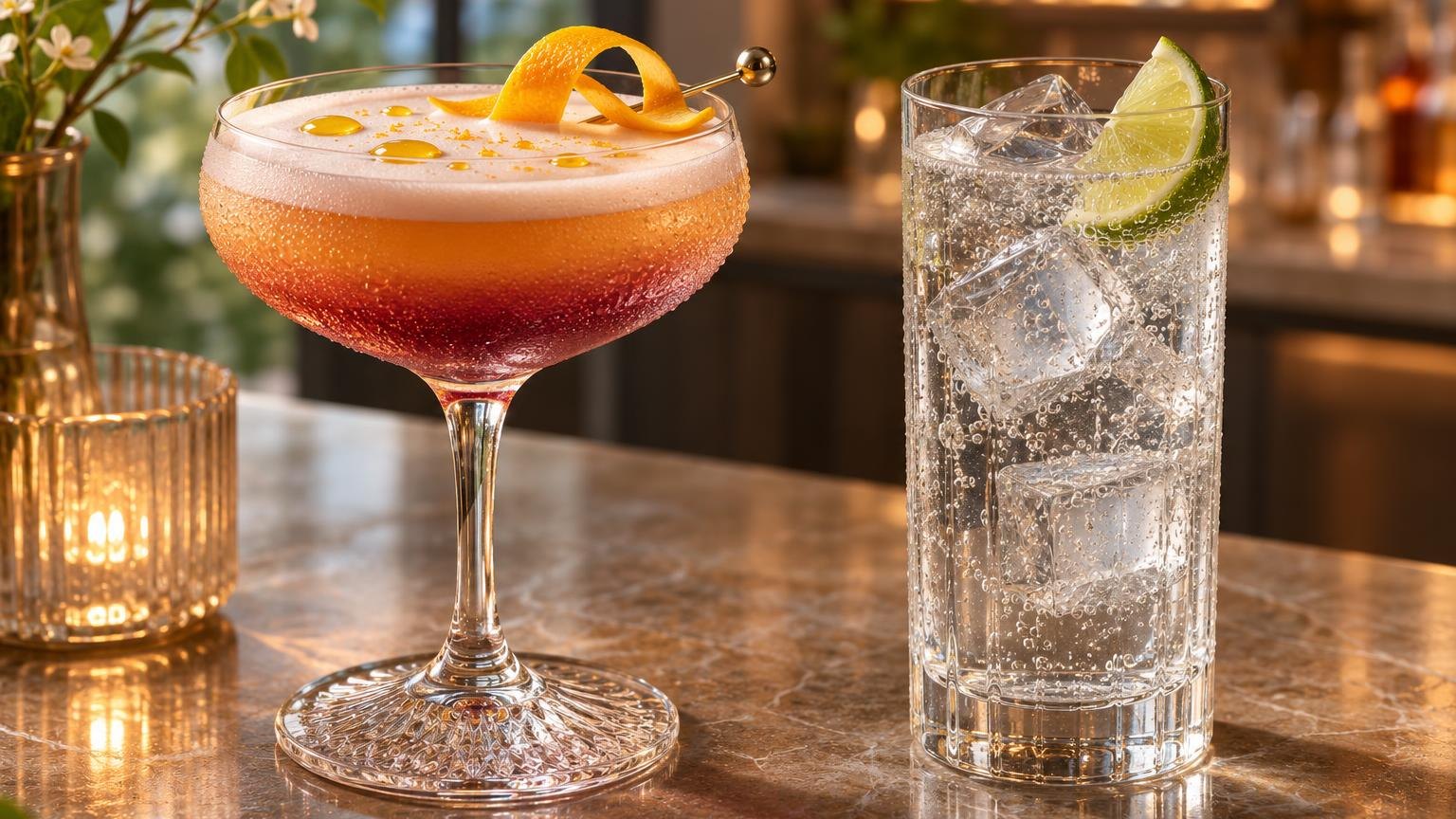
Merriam-Webster defines a mixed drink as an alcoholic beverage made with two or more ingredients. That broad definition covers whiskey and cola, a gin and tonic, and a dry martini. Whiskey served neat has no added mixer, so it is not a mixed drink.
Encyclopaedia Britannica describes a cocktail as a mixed drink, usually alcoholic, containing distilled liquor and a flavoring ingredient such as juice, liqueur, or vermouth. “Usually” matters.
Common usage and published cocktail collections also include drinks made with wine rather than spirits.
The International Bartenders Association (IBA), for example, lists the Mimosa among its official cocktails. Its recipe combines Prosecco and orange juice.
A cocktail therefore need not contain gin, vodka, rum, or another distilled spirit to be recognized as one.
What the recipes show
These IBA recipes show why ingredient count and serving style cannot, by themselves, separate cocktails from mixed drinks.
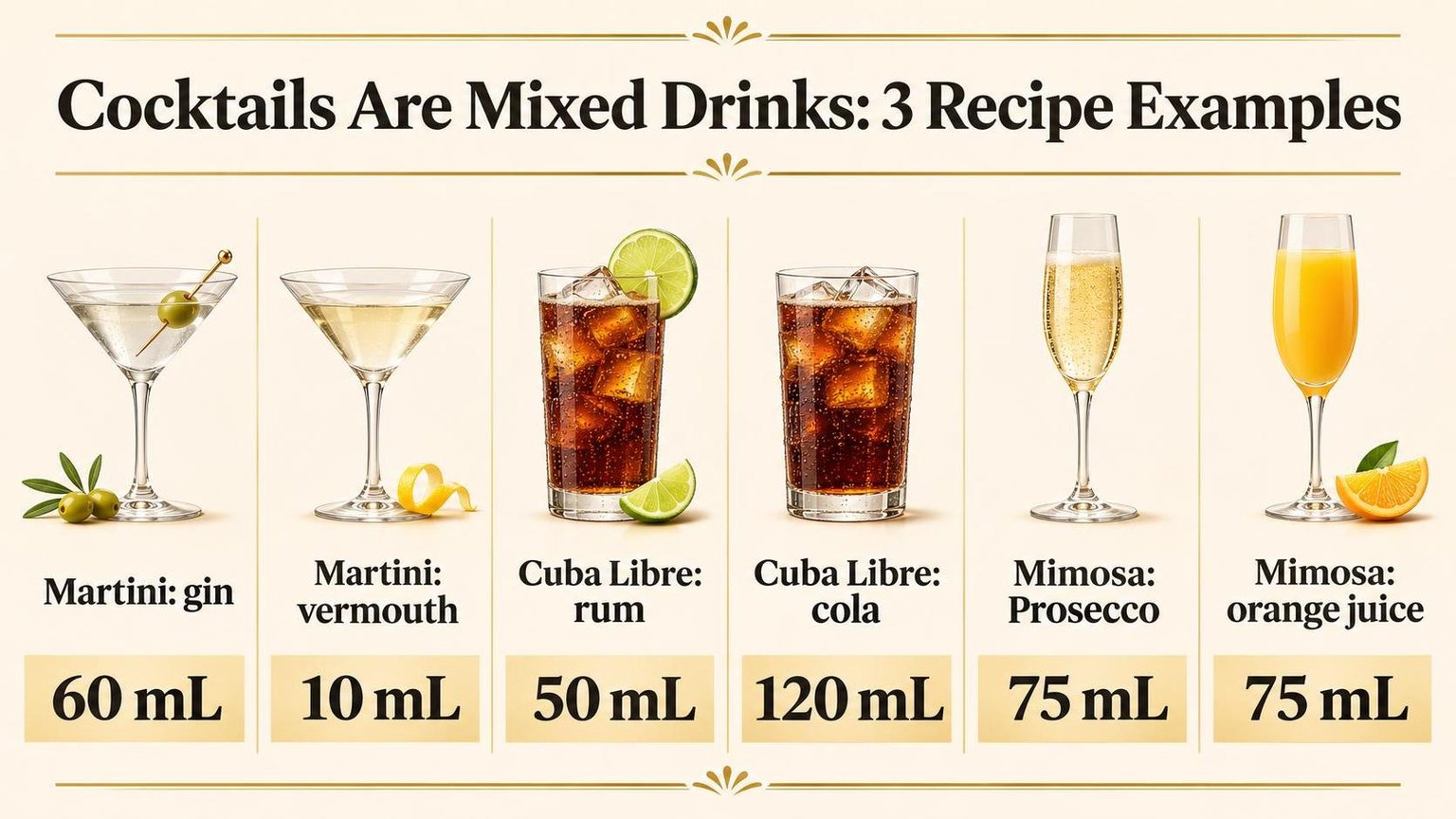
Each is a cocktail with a published formula, and each also satisfies the ordinary meaning of “mixed drink.” The quantities below are from the IBA’s recipe entries.
| IBA cocktail | Specified ingredients | What it illustrates |
| Dry Martini | 60 ml gin; 10 ml dry vermouth | A short, spirit-forward cocktail is still a mixed drink. |
| Cuba Libre | 50 ml white rum; 120 ml cola; 10 ml fresh lime juice | A long drink containing soda can also be a cocktail. |
| Mimosa | 75 ml Prosecco; 75 ml orange juice | A recognized cocktail does not always contain distilled liquor. |
Historical definitions were narrower. In an 1806 issue of The Balance and Columbian Repository, a cocktail was described as a “stimulating liquor” composed of spirits, sugar, water, and bitters.
That description helps explain the Old Fashioned, but it does not describe every drink called a cocktail today.
At a bar, “mixed drink” can be the clearest request when you want a straightforward spirit and mixer without a particular recipe. “Cocktail” is useful when ordering a named preparation.
Neither word guarantees a certain strength, number of ingredients, glass, or price; the recipe and pour determine those details.
Why Every Cocktail Is a Mixed Drink
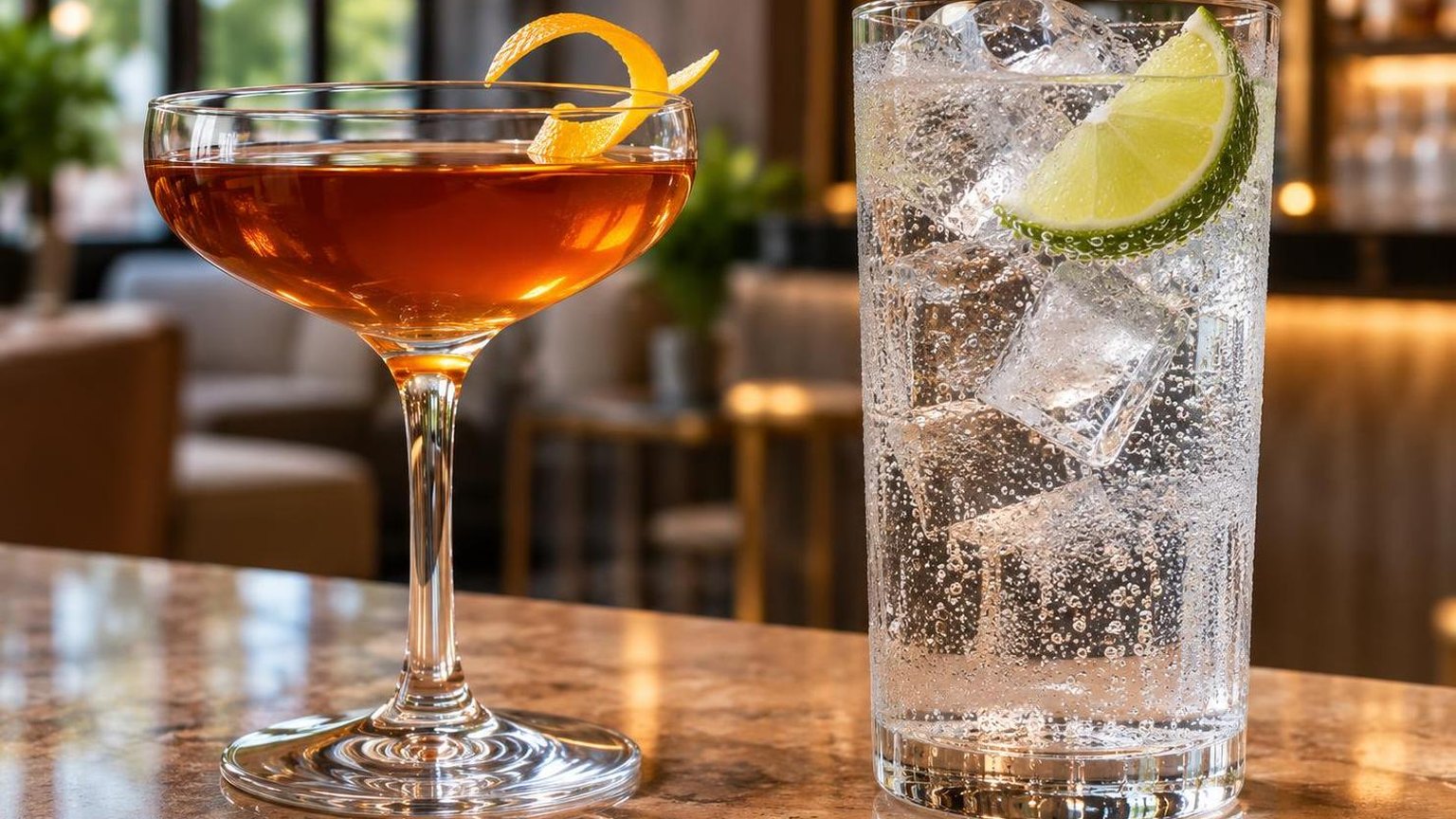
A cocktail combines a beverage base with other ingredients to create a finished drink. That makes it a mixed drink, even when the preparation is simple.
The distinction works in one direction: a drink can be mixed without necessarily being called a cocktail.
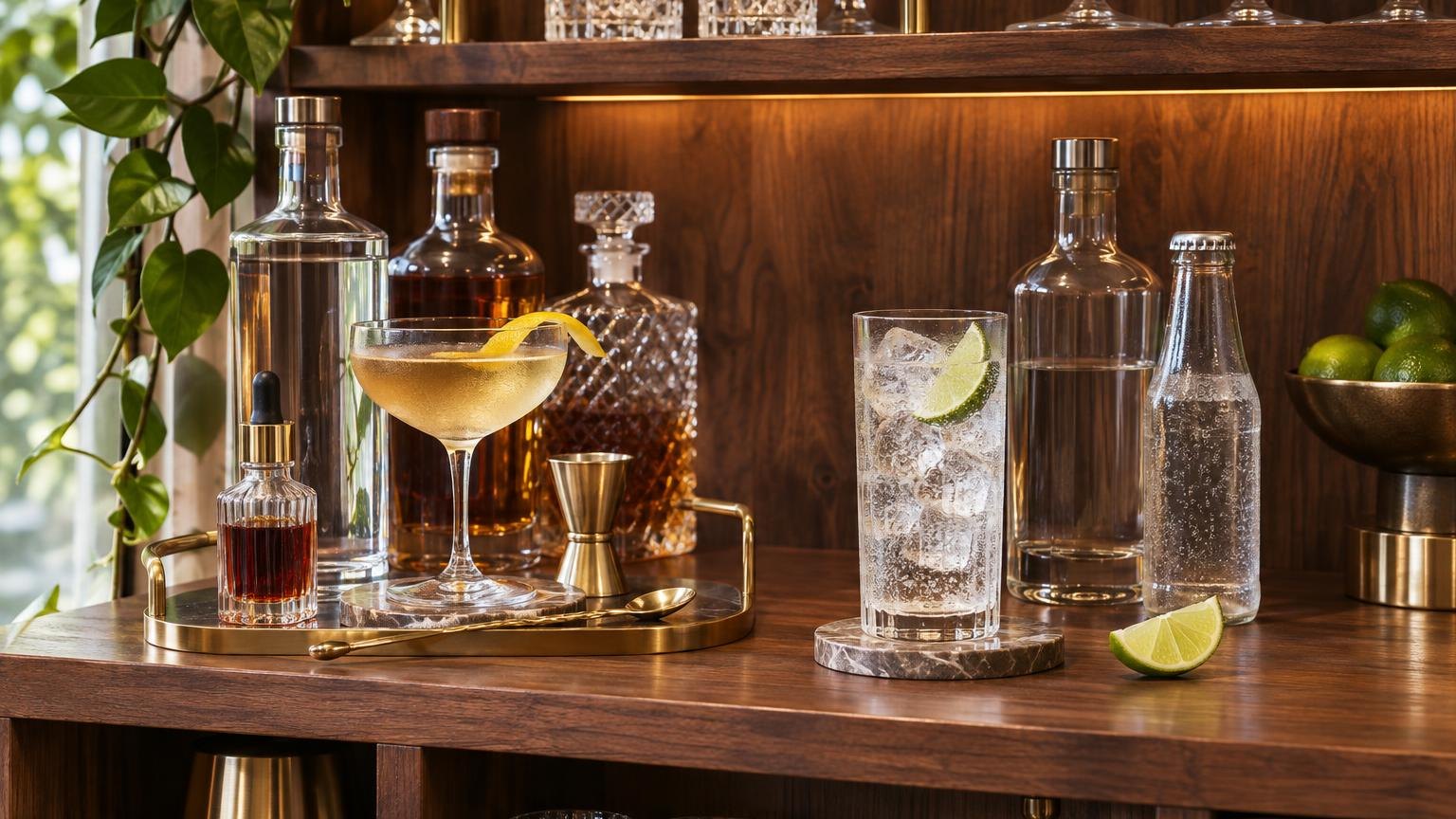
Merriam-Webster defines a mixed drink broadly as an alcoholic drink made by combining ingredients. Its definition of cocktail likewise describes a drink in which wine or distilled liquor is mixed with flavoring ingredients.
Neither definition requires a particular glass, garnish, technique, or number of bottles behind the bar.
The International Bartenders Association’s published recipes make the overlap concrete. Each drink below is recognized as a cocktail, and each combines ingredients rather than serving its alcoholic base alone.
| Cocktail | IBA ingredients | What is mixed |
| Old Fashioned | 45 mL bourbon or rye whiskey, a sugar cube, Angostura bitters, and water | Whiskey with sweetening, bitters, and dilution |
| Dry Martini | 60 mL gin and 10 mL dry vermouth | Gin with aromatized wine |
| Bellini | 100 mL Prosecco and 50 mL white peach purée | Sparkling wine with fruit |
The Dry Martini is useful evidence against an ingredient-count rule. Its published recipe is short, yet it is unquestionably a cocktail.
The Bellini shows why defining cocktails only as spirits-based drinks is too narrow: the IBA lists a wine-based preparation as a cocktail.
History supports the broader point. In an 1806 response to a reader, the American newspaper The Balance, and Columbian Repository described a “cock-tail” as a stimulating liquor composed of spirits, sugar, water, and bitters.
That early description identifies a mixture; it does not make bitters, sugar, or whiskey mandatory for every cocktail served today.
In everyday bar language, “mixed drink” is often the broader, less specific order.
A guest asking for whiskey and cola has named a mixed drink; a guest asking for an Old Fashioned has named a cocktail with an established identity and expected preparation.
Both require combining ingredients, but only the latter tells the bartender to follow a recognizable recipe.
Mixing also need not mean shaking. A bartender may stir a Martini, build a highball directly in its serving glass, or gently combine a Bellini.
The method changes texture and dilution, not the underlying relationship: a cocktail is a particular kind of mixed drink.
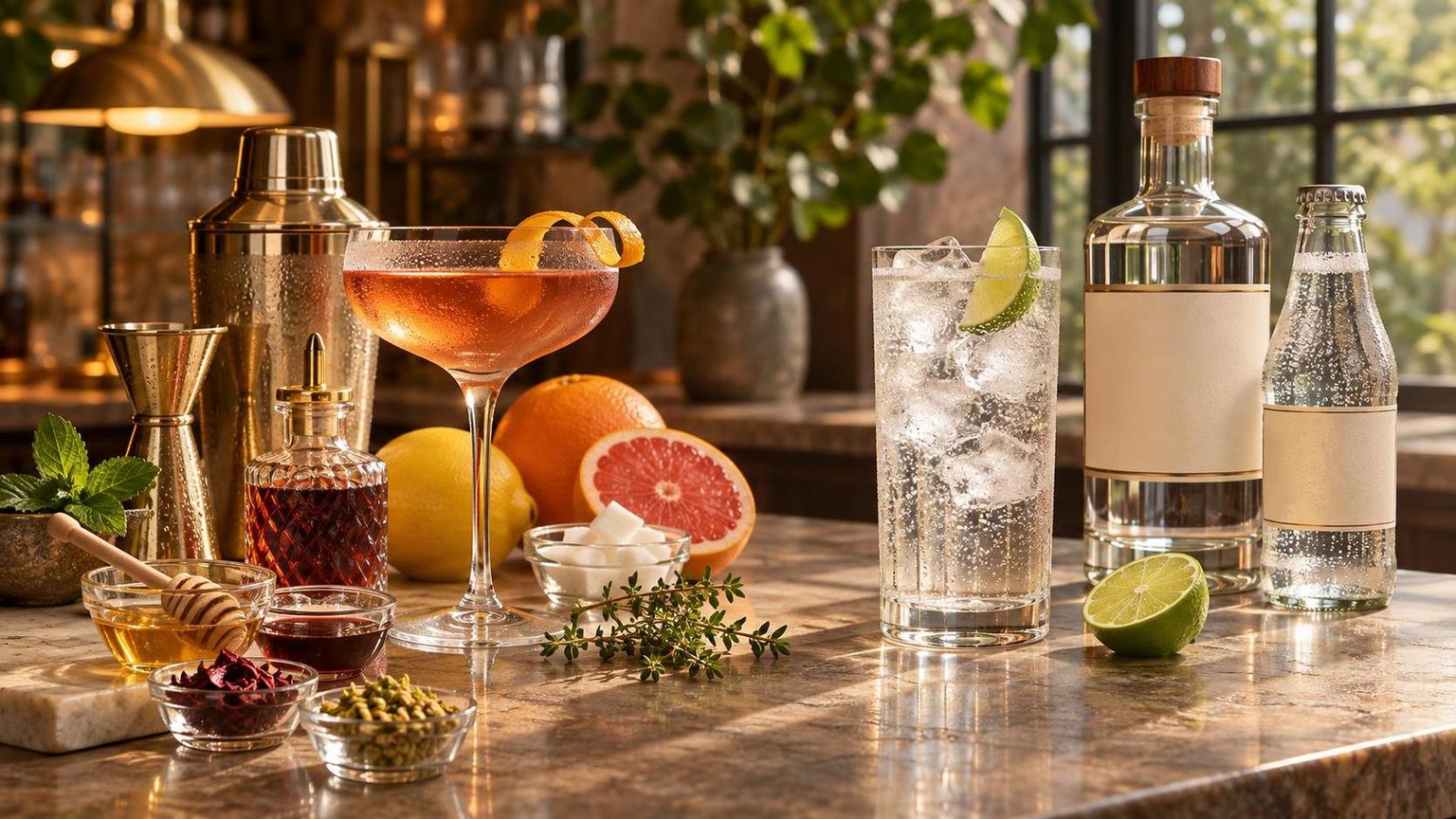
When Mixed Drinks Are Not Cocktails
A mixed drink is anything made by combining beverages or other drink ingredients; a cocktail is a narrower, though flexible, category.
The practical distinction is whether the drink has an identifiable cocktail recipe or is simply a combination poured for convenience. There is no universal ingredient-count rule.
Simple combinations can fall outside the category
Cola splashed into whiskey, vodka topped with whatever juice is open, or beer mixed with lemonade may be described as mixed drinks without being presented as cocktails. That does not make them inferior.
It means the drink is being identified by its components rather than by a defined recipe, preparation, or recognized name.
Context matters. A bartender may serve a measured whiskey and soda as a highball cocktail, while someone pouring the same ingredients casually at home may call it a mixed drink.
Ice, a garnish, or a cocktail glass does not settle the classification on its own.
Two ingredients do not disqualify a cocktail
The International Bartenders Association (IBA) includes the Mimosa on its official cocktail list. Its published recipe calls for equal measures of sparkling wine and fresh orange juice.
The IBA also lists the Cuba Libre, which adds lime juice to rum and cola. These published recipes show why counting ingredients is an unreliable test.
| Drink | IBA recipe amounts | Classification |
| Mimosa | 75 ml sparkling wine; 75 ml fresh orange juice | Listed cocktail |
| Cuba Libre | 50 ml white rum; 120 ml cola; 10 ml fresh lime juice | Listed cocktail |
The older definition was narrower in a different way. In its May 13, 1806, issue, The Balance and Columbian Repository defined a cocktail as a drink composed of spirits, sugar, water, and bitters.
Modern cocktail lists plainly extend beyond that formula; a Mimosa contains no distilled spirit.
Alcohol is not the deciding factor either
Fruit juice mixed with sparkling water is a mixed drink, but it is not automatically a cocktail. An alcohol-free drink deliberately built to resemble a cocktail may reasonably be called a nonalcoholic cocktail or mocktail.
The distinction rests on the recipe and how the drink is presented, not merely on whether it contains alcohol.
Likewise, a canned beverage does not become a cocktail just because it contains spirits, nor cease to be one because it is packaged.
Read the recipe or label: “vodka and soda” identifies a mixed drink, while a ready-to-drink Margarita identifies a specific cocktail style. In ordinary conversation, the categories overlap, and menus may use them differently.
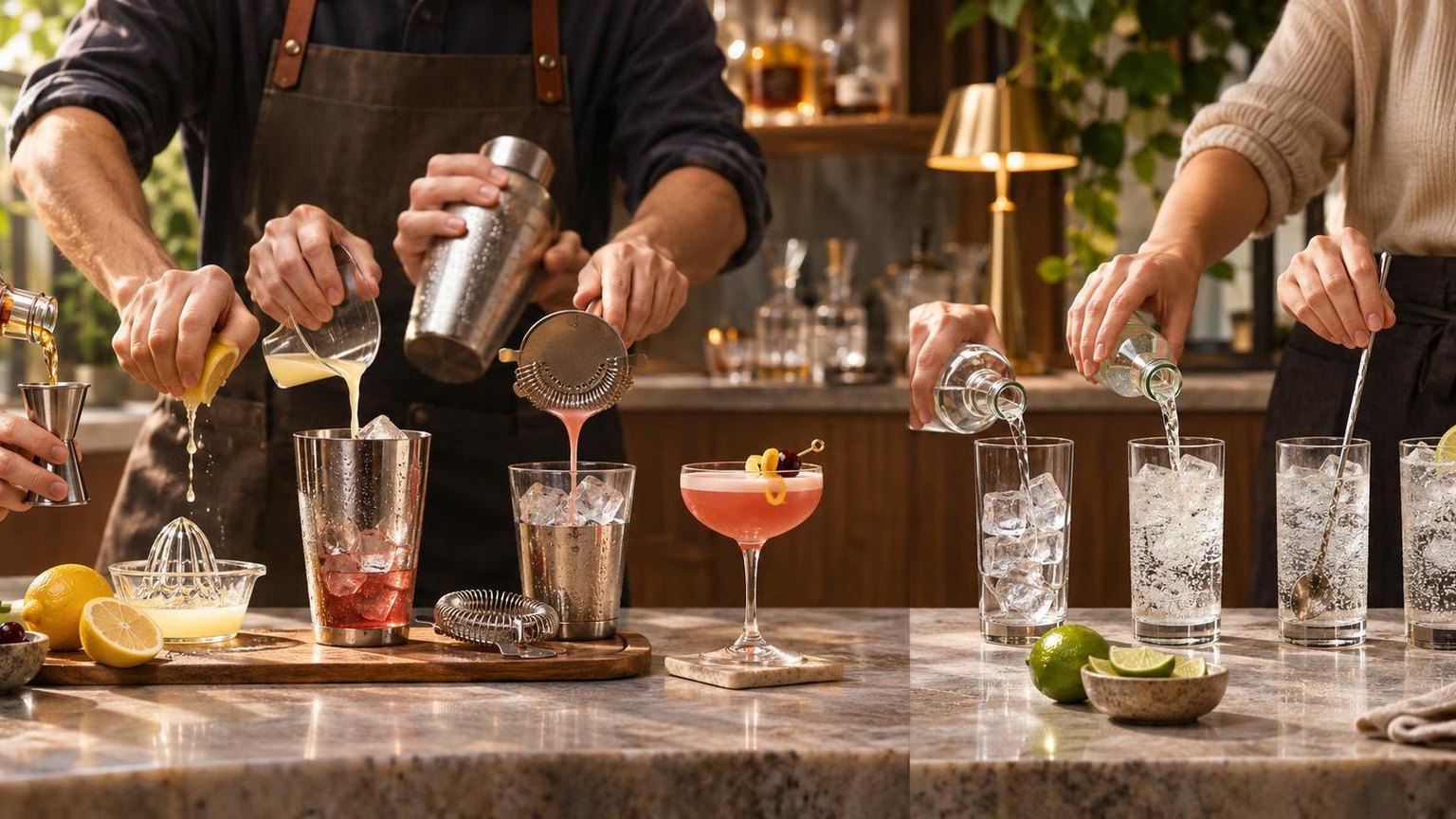
How Ingredients Shape the Difference
The ingredients do not create a strict boundary: a cocktail is a mixed drink, and even a spirit combined with one mixer may be called a cocktail.
In practice, “cocktail” often signals a drink assembled for a particular balance of flavor, while “mixed drink” also covers straightforward spirit-and-mixer orders.
A cocktail recipe specifies more than a base spirit. Citrus contributes acidity, syrup or liqueur adds sweetness, and bitters supply concentrated aroma and bitterness.
The bartender adjusts those elements together, then considers how ice, shaking, or stirring will chill and dilute the drink. A simple mixed drink can be equally enjoyable without requiring that same set of decisions.
Ingredient patterns in published recipes
The International Bartenders Association (IBA) recipes below show why ingredient count alone cannot settle the terminology.
Its Dry Martini uses two liquid ingredients, while its Cuba Libre includes cola—a familiar mixer—and still appears in the IBA’s cocktail collection.
| IBA recipe | Specified ingredients | What the ingredients do |
| Dry Martini | 60 ml gin; 10 ml dry vermouth | Vermouth adds herbal, wine-based flavor to a spirit-forward drink. |
| Margarita | 50 ml 100% agave tequila; 20 ml triple sec; 15 ml freshly squeezed lime juice | Liqueur brings sweetness and orange flavor; lime supplies acidity. |
| Cuba Libre | 50 ml white rum; 120 ml cola; 10 ml fresh lime juice | Cola provides sweetness and carbonation; lime sharpens the finish. |
These quantities come from the IBA’s “Dry Martini,” “Margarita,” and “Cuba Libre” recipes. They describe those published versions, not mandatory formulas for every bar.
A bartender may change a recipe’s proportions or ingredients and still use its familiar name, so the drink’s name is more useful than a rigid ingredient-count rule.
Ingredients also affect how strong a drink tastes, but flavor is not a reliable measure of its alcohol content. Cola, juice, and syrup can mask a spirit’s bite; ice and other nonalcoholic ingredients dilute it.
The alcohol added with each spirit or liqueur still counts, regardless of how sweet or light the finished drink tastes.
For a guest ordering at a bar, the practical distinction is the recipe’s intent. Ask what provides the sweetness, acidity, bitterness, and dilution—not whether the glass contains enough ingredients to qualify as a cocktail.
That question reveals far more about how the drink will taste.
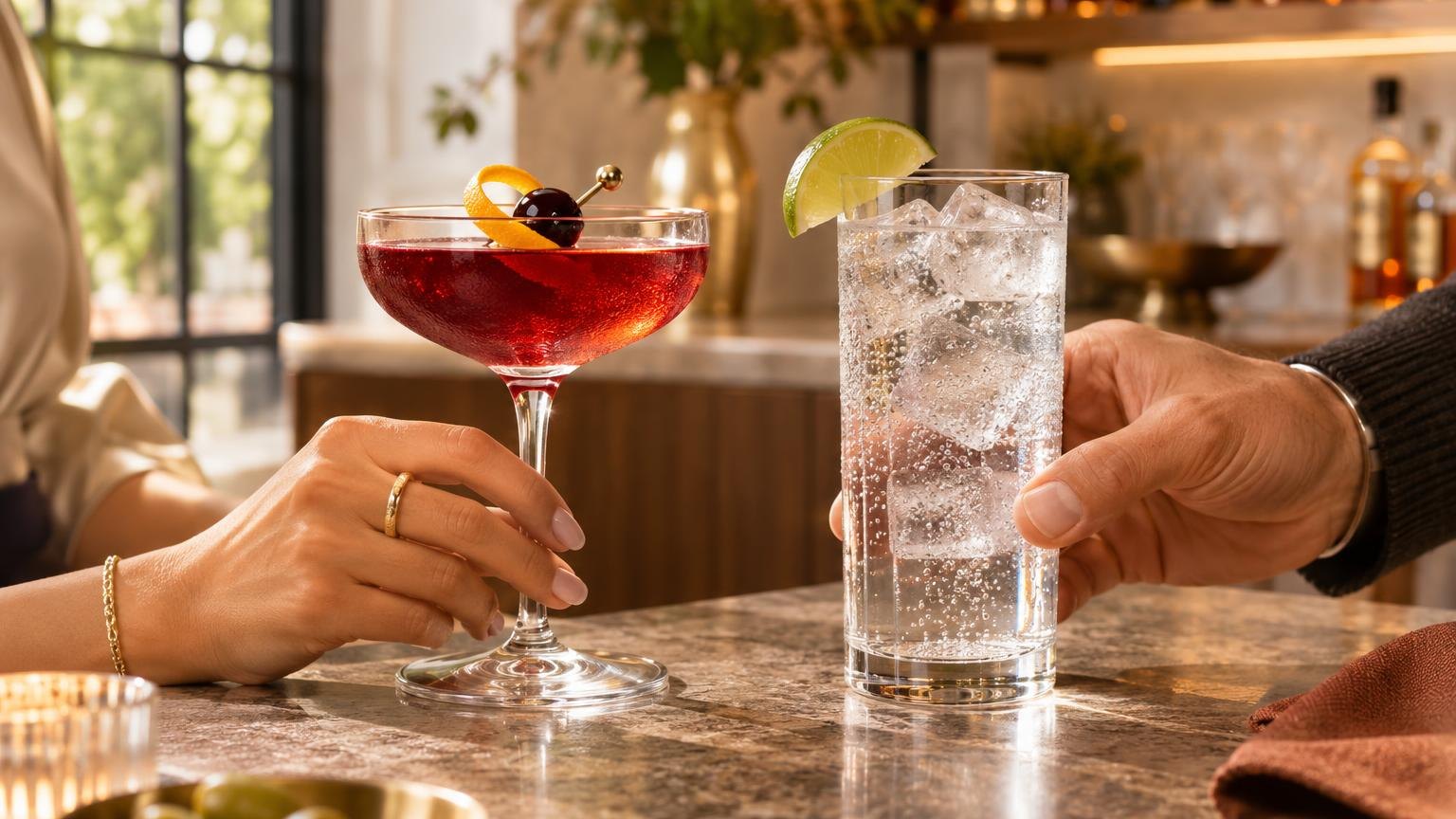
Classic Cocktails and Simple Highballs
An Old Fashioned and a whisky soda both contain whiskey, water, and ice, but they ask different things of the bartender.
The Old Fashioned follows a defined recipe with sugar and bitters; whisky soda is usually a flexible order for whiskey topped with soda water.
What the recipes show
The International Bartenders Association (IBA) publishes standardized recipes for classic cocktails. Its Old Fashioned and Negroni provide useful points of comparison with a simple highball.
The whisky soda below is an illustrative bar build, not an IBA specification.
| Drink | Ingredients and amounts | Typical preparation |
| Old Fashioned, IBA recipe | 45 mL bourbon or rye whiskey; 1 sugar cube; 2–3 dashes Angostura bitters; a few dashes water | Dissolve the sugar with bitters and water, add whiskey and ice, then stir. |
| Negroni, IBA recipe | 30 mL gin; 30 mL Campari; 30 mL sweet red vermouth | Stir with ice and serve over ice. |
| Whisky soda, illustrative build | 45 mL whisky; approximately 120 mL soda water | Pour over ice and top with soda; adjust the soda to taste. |
The Old Fashioned’s sugar and bitters change the whiskey’s flavor without adding much liquid.
In a Negroni, each ingredient supplies a distinct component: gin brings botanical flavors, Campari contributes bitterness, and sweet vermouth adds sweetness and wine-based aromas.
Both drinks depend on their specified ingredients, not merely on containing alcohol.
A highball is generally built in a tall glass with ice, a spirit, and a larger quantity of carbonated mixer. Whisky soda keeps that structure deliberately simple.
Ordering it does not ordinarily imply bitters, syrup, or another flavoring; the choice of whisky and the amount of soda make the most noticeable difference.
The categories still overlap. The IBA lists the Cuba Libre as a cocktail made with white rum, cola, and fresh lime juice. It has the spirit-and-mixer structure of a highball, but its named recipe includes lime.
Calling it a cocktail does not make it less of a mixed drink or a highball.
For a practical ordering distinction, use a cocktail’s name when you want its established ingredients and preparation.
For a simple highball, name the spirit and mixer, then specify any preference that matters to you, such as a lighter pour of soda or a squeeze of citrus. “Mixed drink” remains the broadest term: it comfortably describes both.
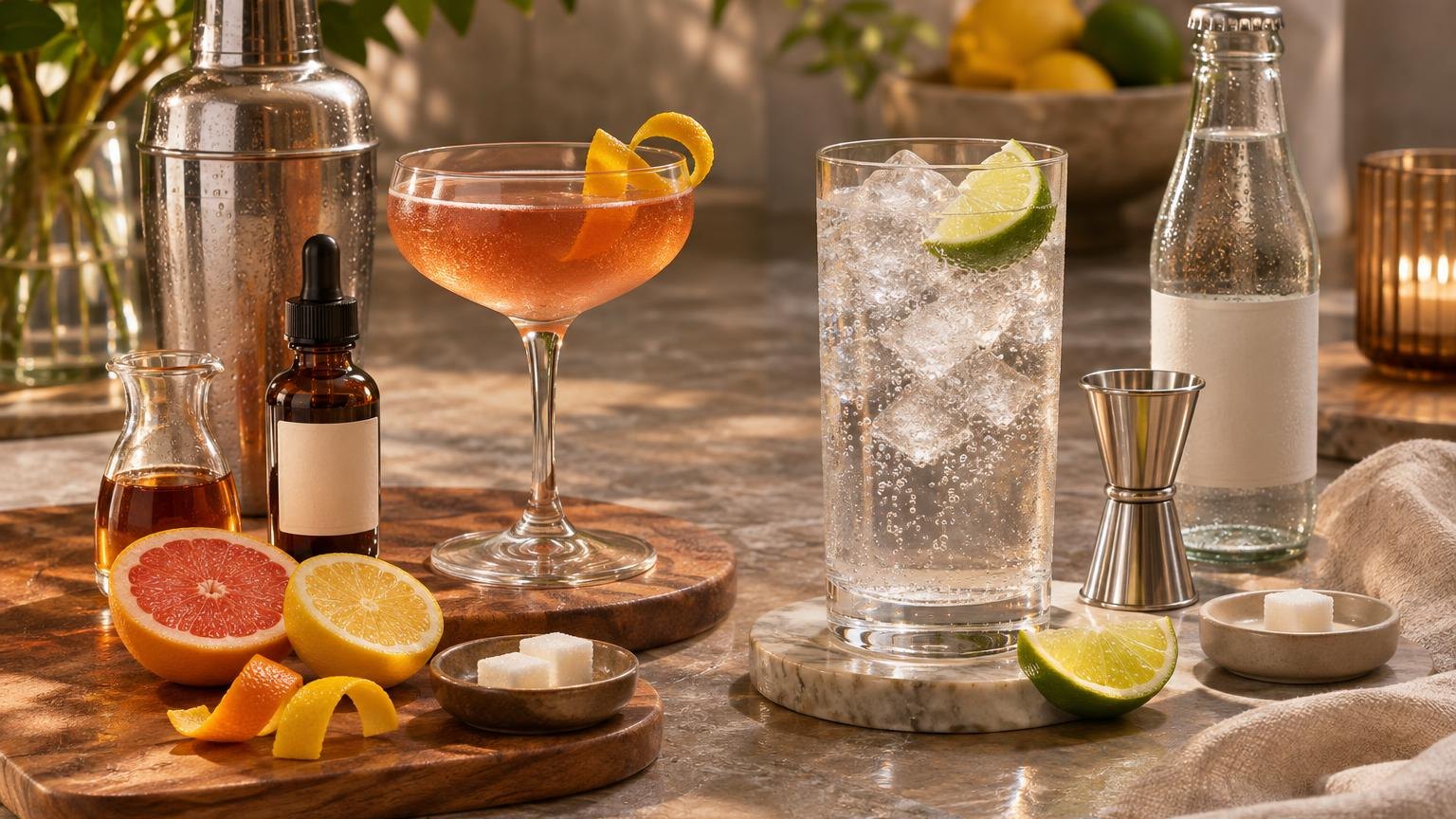
Ordering Cocktails and Mixed Drinks
Order by ingredients and preparation, not by the label alone. “Mixed drink” can mean any drink combining ingredients, while “cocktail” usually signals a named recipe with a more specific balance, technique, or garnish.
A vodka soda is a straightforward mixed drink; a Margarita is a cocktail with a recognizable recipe.
How to make the order clear
For a simple mixed drink, name the spirit, mixer, and any preference that matters: “vodka soda with lime” or “gin and tonic, light on the tonic.” Ask for a particular brand only if you want it; otherwise.
The bartender may use the bar’s standard pour.
For a cocktail, give the drink’s name and mention meaningful changes up front. “Margarita on the rocks.
No salt” tells the bartender more than “tequila with lime.” The International Bartenders Association publishes a Margarita specification using tequila, triple sec, and fresh lime juice.
But individual bars may adjust their house recipe.
Do not use “cocktail” as shorthand for “stronger.” Alcohol content depends on the actual pour and every alcoholic ingredient, not whether the drink has a name.
The table illustrates a vodka soda made with 40% ABV vodka and an alcohol-free mixer; it does not describe every bar’s serving.
| Requested vodka pour | Pure alcohol from vodka | U.S. standard drinks |
| 1.5 fl oz | 0.6 fl oz | 1 |
| 3 fl oz | 1.2 fl oz | 2 |
The National Institute on Alcohol Abuse and Alcoholism defines a U.S. standard drink as containing about 0.6 fluid ounces of pure alcohol.
A “double” is not a reliable quantity across venues, so ask what the bar pours rather than assuming the second row describes its double.
Questions worth asking
- Ask what goes into an unfamiliar house cocktail, especially if you avoid dairy, egg, nuts, or particular fruit. A drink name alone does not establish its ingredients.
- Ask whether the quoted price changes with a premium spirit, an added shot, or a substitution before ordering.
- If you want no alcohol, request a nonalcoholic drink explicitly. “Light” can refer to sweetness or mixer quantity rather than alcohol content.
When a drink arrives differently from what you requested, describe the specific issue—such as the wrong mixer or an unwanted salted rim—rather than debating whether it qualifies as a cocktail.
That gives the bartender a clear way to correct the order.
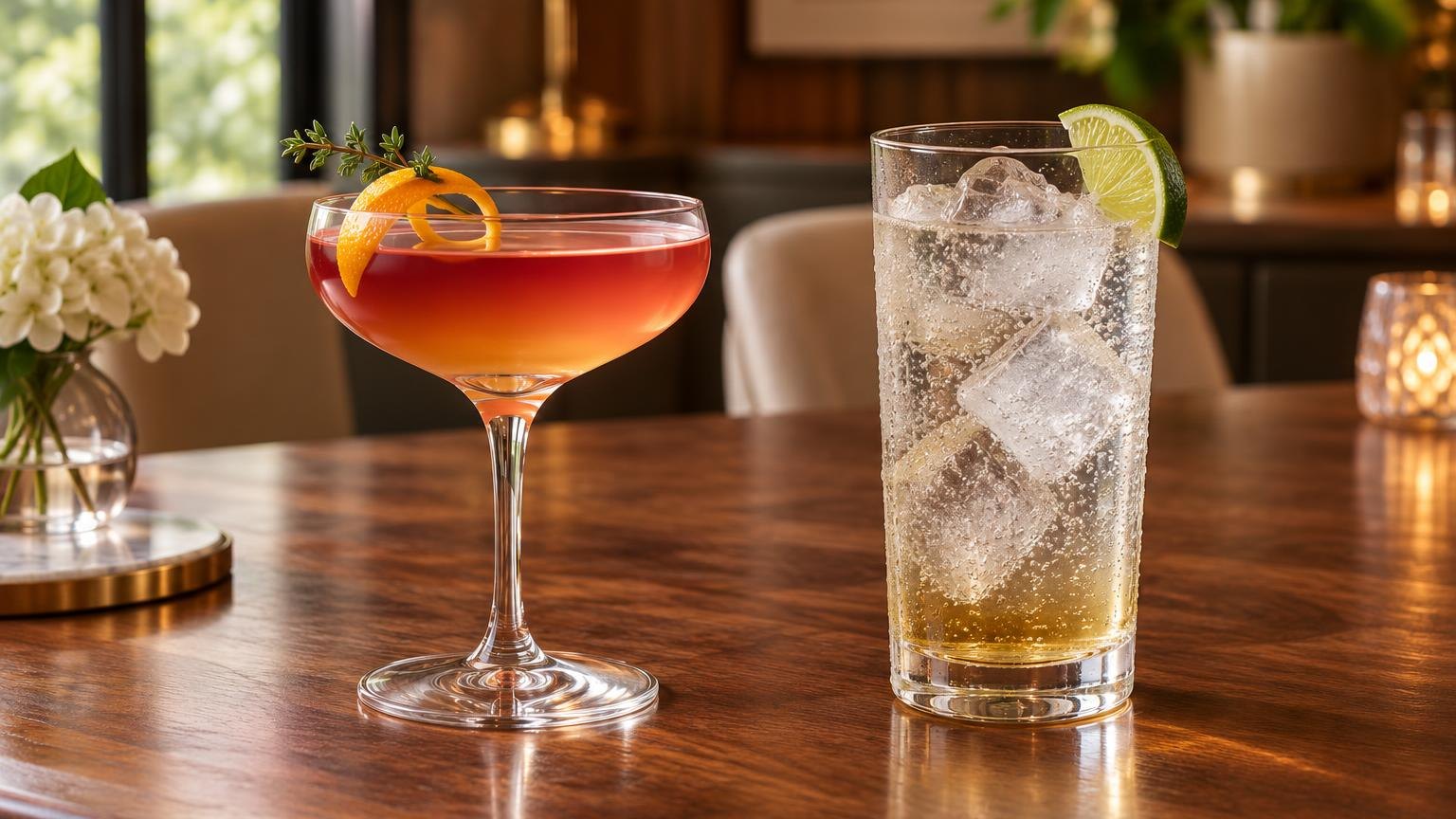
Questions Readers Ask
What is the difference between a cocktail and a mixed drink?
A mixed drink is any drink made by combining beverages or ingredients; “cocktail” is a more specific term, though its modern boundaries are flexible. A Martini is both, while vodka and soda is commonly called a mixed drink or highball.
Can a drink with only two ingredients be a cocktail?
Yes. A Gin and Tonic combines gin and tonic water, and a Black Russian combines vodka and coffee liqueur; the International Bartenders Association lists the Black Russian as a cocktail.
Does a cocktail have to contain bitters?
No. An 1806 definition in The Balance, and Columbian Repository described a cocktail as spirits, sugar, water, and bitters, but modern usage is broader. A Margarita, for example, is a cocktail made without bitters.
Are cocktails stronger than other mixed drinks?
Not necessarily: strength depends on the amount of alcohol and the finished drink’s volume, not its name.
The National Institute on Alcohol Abuse and Alcoholism defines a U.S. standard drink as containing about 0.6 fluid ounces of pure alcohol—roughly the amount in 1.5 ounces of 40% ABV spirits—so one large cocktail can contain more than.
One standard drink.
Is a mocktail a cocktail or a mixed drink?
A mocktail is a nonalcoholic drink designed in the style of a cocktail, often combining ingredients such as juice, syrup, citrus, and soda.
It is also a mixed drink in the literal sense, but “mocktail” makes the absence of alcohol clearer when ordering.
Does a cocktail have to be shaken or stirred?
No. Cocktails can be shaken, stirred, or built directly in the serving glass; an Old Fashioned, for instance, is commonly built in its glass. Preparation method describes how a drink is made, not whether it qualifies as a cocktail.
- What Do Pina Coladas Taste Like? The Ultimate Tropical Flavor Guide (2026 Edition)
- Dirty Martini Vs Martini: The Easiest Way to Distinguish
- What Is In A Buttery Nipple Shot? Get Answer Now
- Substitute For Grand Marnier – Best Grand Marnier Substitute
- What Is New Mix Paloma? What You Need to Know
- All Alcohol Guides
- National Institute on Alcohol Abuse and Alcoholism (n.d.)
- Centers for Disease Control and Prevention (n.d.)
- National Cancer Institute (n.d.)
- Merriam-Webster, “Cocktail” (n.d.)
- Merriam-Webster, “Mixed Drink” (n.d.)
- Cambridge Dictionary, “Cocktail” (n.d.)
- Cambridge Dictionary, “Mixed Drink” (n.d.)
- International Bartenders Association, “Margarita” (n.d.)
- International Bartenders Association, “Old Fashioned” (n.d.)