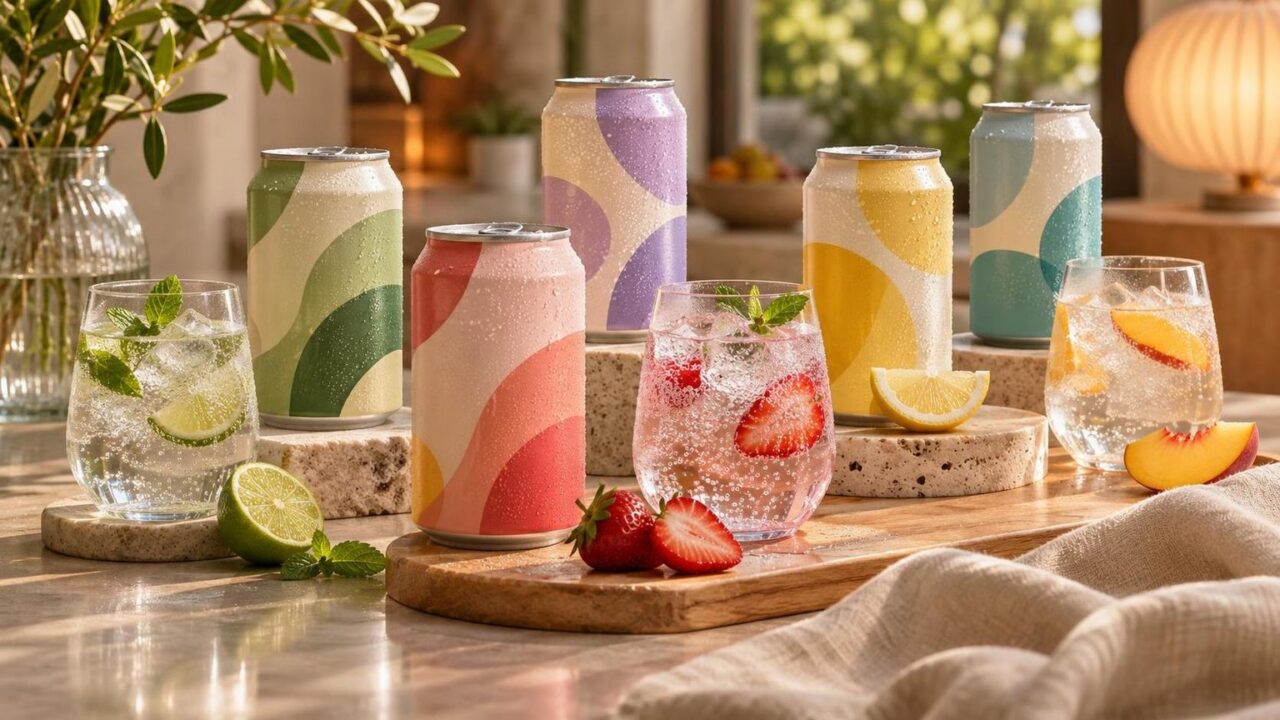
Drink and play sparkling water is carbonated water that can add a crisp, bubbly option to a game-day break.
Check the label to see whether it contains only carbonated water or also flavorings, sweeteners, sodium, or other ingredients; products sold as sparkling water vary.
If you are choosing it for a child or serving it during play, use the ingredient list rather than the front-label claims.
For active play, keep still water available too, especially during prolonged exercise, hot weather, or heavy sweating. Sparkling water can count toward fluid intake, but its bubbles may feel uncomfortable for some people during movement.
Try a small serving first, and drink according to thirst and conditions. Avoid glass containers around play areas, and follow the product’s storage instructions.
These simple checks help you decide whether drink and play sparkling water fits the occasion without assuming every brand has the same ingredients or is right for everyone.
What Drink and Play Sparkling Water Is
Drink and Play sparkling water is best understood as a carbonated-water beverage: water with dissolved carbon dioxide that produces bubbles when opened.
The name alone does not establish a particular flavor, sweetener, mineral content, or package size, so the label on the specific product matters.
Carbonation gives sparkling water its fizz and slightly tart sensation.
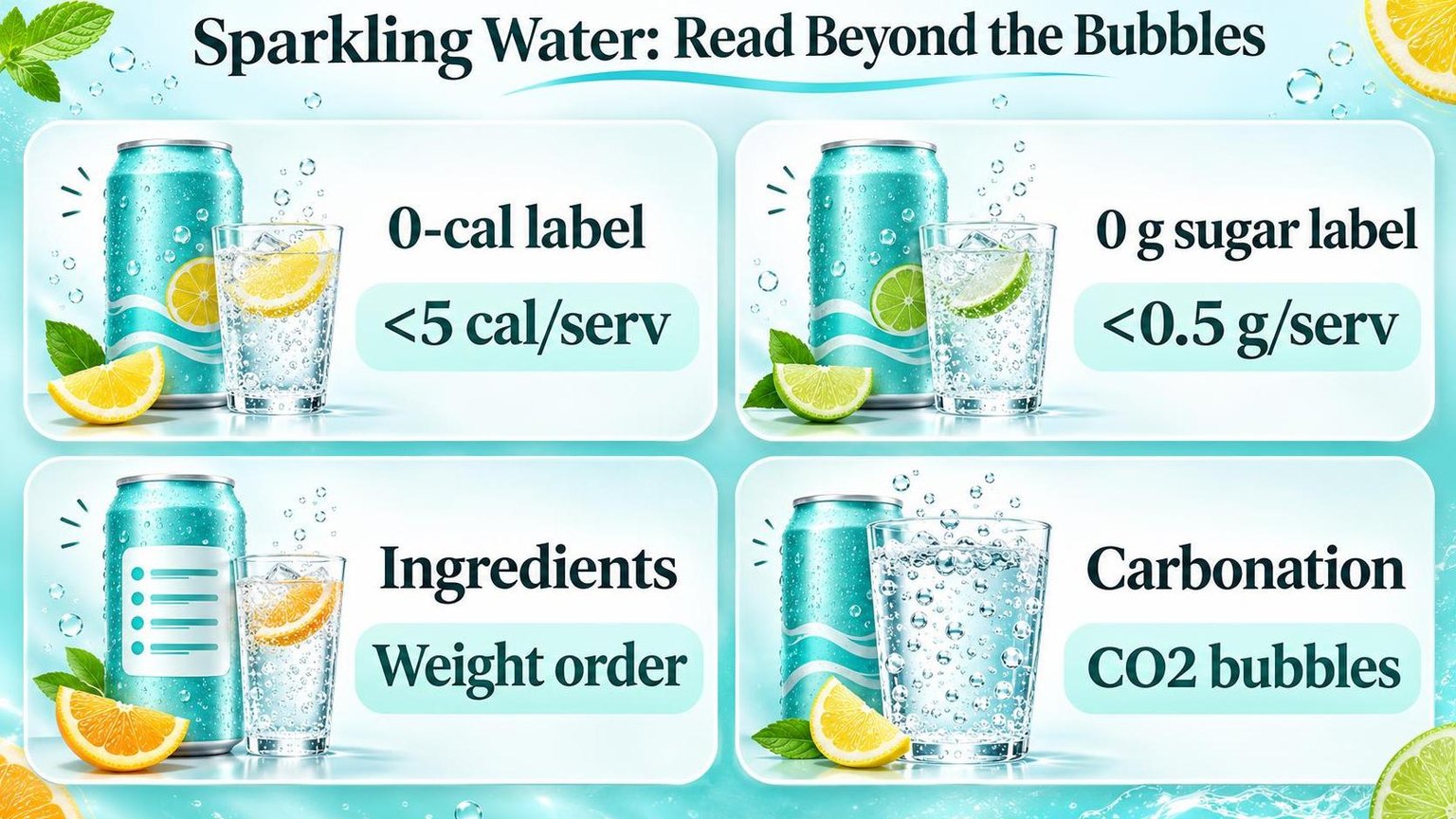
Plain sparkling water generally contains no sugar and provides no meaningful calories, but a flavored product can contain additional ingredients. “Sparkling water” on the front of a package is therefore a starting point.
Not a complete description of what is inside.
What to Check on the Package
- Ingredients: Look for carbonated water, flavors, fruit juice, sweeteners, or added minerals. Under FDA rule 21 CFR 101.4, ingredients in a multi-ingredient packaged food are generally listed in descending order by weight.
- Nutrition Facts: Check the stated serving size, calories, total sugars, added sugars, and sodium. Those figures describe the labeled serving—not necessarily the entire bottle or can.
- Product name: Do not assume “sparkling water,” “seltzer,” “club soda,” and “tonic water” have identical ingredients. Tonic water, for example, may contain sugar and quinine; club soda may contain added minerals.
A label showing 0 calories or 0 grams of sugar is useful, but it is not proof that a product contains literally none.
FDA labeling rules allow calories below 5 per serving to be declared as zero and total sugars below 0.5 gram per serving to be declared as zero (21 CFR 101.9).
If Drink and Play is being considered as an alternative to soda or as a mixer, distinguish its carbonation from its recipe. Bubbles do not add sugar; any sugar or sweetener comes from other ingredients.
Likewise, a flavored sparkling water may taste sweet without containing sugar if it uses a non-sugar sweetener.
The most accurate description of a particular Drink and Play sparkling water is the one supported by its own package. Check the product name and ingredient list first, then use the Nutrition Facts panel to confirm what a serving provides.
That avoids assigning one flavor’s or formulation’s details to every product sold under the name.
Drink and Play Flavor Options
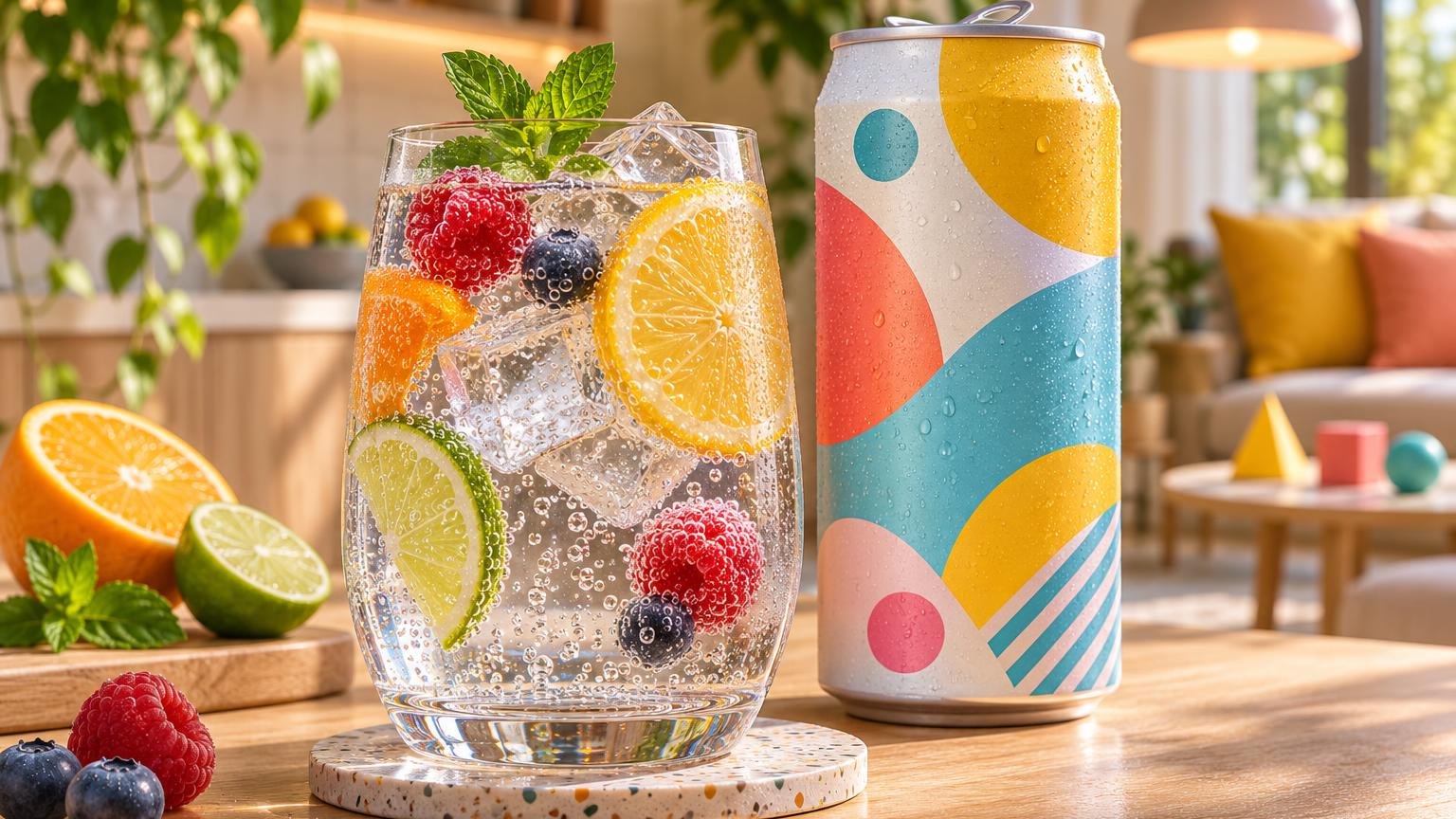
Choose a Drink and Play sparkling water by its package label, not by a flavor name alone.
A current, verified list of Drink and Play flavors is not available here, so the profiles below are tasting guides rather than claims that specific varieties are sold.
For a flight, compare flavors at the same temperature and pour each into a clean glass. Start with the lightest profile: a strong berry or tropical aroma can make a subtler citrus sample harder to assess afterward.
| Flavor profile to look for | What to expect in the glass | What to check on the package |
| Citrus-style | A bright aroma and a sharper impression, even without sugar. | Whether the flavor is identified as lemon, lime, orange, or a blend. |
| Berry-style | A fruit-forward aroma that may smell sweeter than the drink tastes. | The ingredient list and Nutrition Facts panel; fruit flavor does not establish fruit-juice content. |
| Tropical-style | A fuller, sometimes candy-like aroma that can stand out in a tasting flight. | Whether the product contains sweeteners or juice, rather than assuming sweetness comes from flavoring. |
Flavoring is not the same as sweetening. Under FDA regulation 21 CFR § 101.22, “natural flavor” describes a flavor ingredient’s source and function; it does not mean the finished drink is sugar-free or made primarily from fruit.
Check “Total Sugars” and “Added Sugars” separately on the Nutrition Facts panel.
Calories also depend on the complete formulation. Sugar supplies approximately 4 calories per gram, so two similarly named sparkling waters can differ nutritionally if one includes sugar or juice.
FDA regulation 21 CFR § 101.9 sets the Nutrition Facts labeling framework; the printed serving size is the appropriate basis for comparing packages.
For the clearest flavor comparison, taste each option before adding ice, citrus, or a mixer. Note whether the aroma resembles a particular fruit, whether sweetness is actually present, and whether the finish is clean or lingering.
These observations help distinguish a preferred flavor from a preferred level of sweetness.
If choosing a variety for children or for someone avoiding a particular ingredient, read the package each time.
Flavor names and front-label artwork are useful for navigation, but the current ingredient list and Nutrition Facts panel provide the more reliable answer about sweeteners, juice, and allergens.
Ingredients and Nutrition Facts
For Drink and Play sparkling water, the ingredient list and Nutrition Facts panel on the specific package are the most reliable sources: flavors and formulations can differ.
The key questions are whether the can contains only carbonated water, includes flavoring or minerals, or adds sweeteners.
What the ingredients tell you
Plain sparkling water is water infused with carbon dioxide, which creates its bubbles. A flavored version may also list natural flavors, fruit juice, citric acid, or minerals.
None of those ingredients should be assumed to be in every Drink and Play product; check the label rather than relying on the flavor name.
Ingredients appear in descending order by weight under FDA labeling rules (21 CFR 101.4).
A sweetener near the beginning of the list is therefore more prominent by weight than one near the end. “Natural flavor” identifies a regulated ingredient category, but it does not tell you how much fruit, if any.
The drink contains (21 CFR 101.22).
Carbonation itself does not add sugar or calories. Juice or caloric sweeteners can, while noncaloric sweeteners may produce a sweet taste without a corresponding sugar value.
Check both the ingredient list and the Nutrition Facts panel for a complete picture.
How to read the nutrition panel
Start with the labeled serving size, then check calories, total sugars, added sugars, and sodium.
If the container holds more than one serving, the values listed per serving do not represent the whole container unless a separate per-container column appears.
| Label entry | What a zero declaration can mean |
| Calories: 0 | Fewer than 5 calories per serving |
| Total sugars: 0 g | Less than 0.5 g per serving |
| Sodium: 0 mg | Less than 5 mg per serving |
These are FDA rounding rules for Nutrition Facts declarations, not measured values for a particular Drink and Play can (21 CFR 101.9). They explain why “zero” on a label does not always mean the absolute absence of a nutrient.
If caffeine, vitamins, or electrolytes are important to your choice, look for them on the particular package rather than treating them as standard sparkling-water ingredients.
Keep the container nearby when comparing products: serving size and formulation determine what the numbers mean.
Caffeine Sugar and Calories
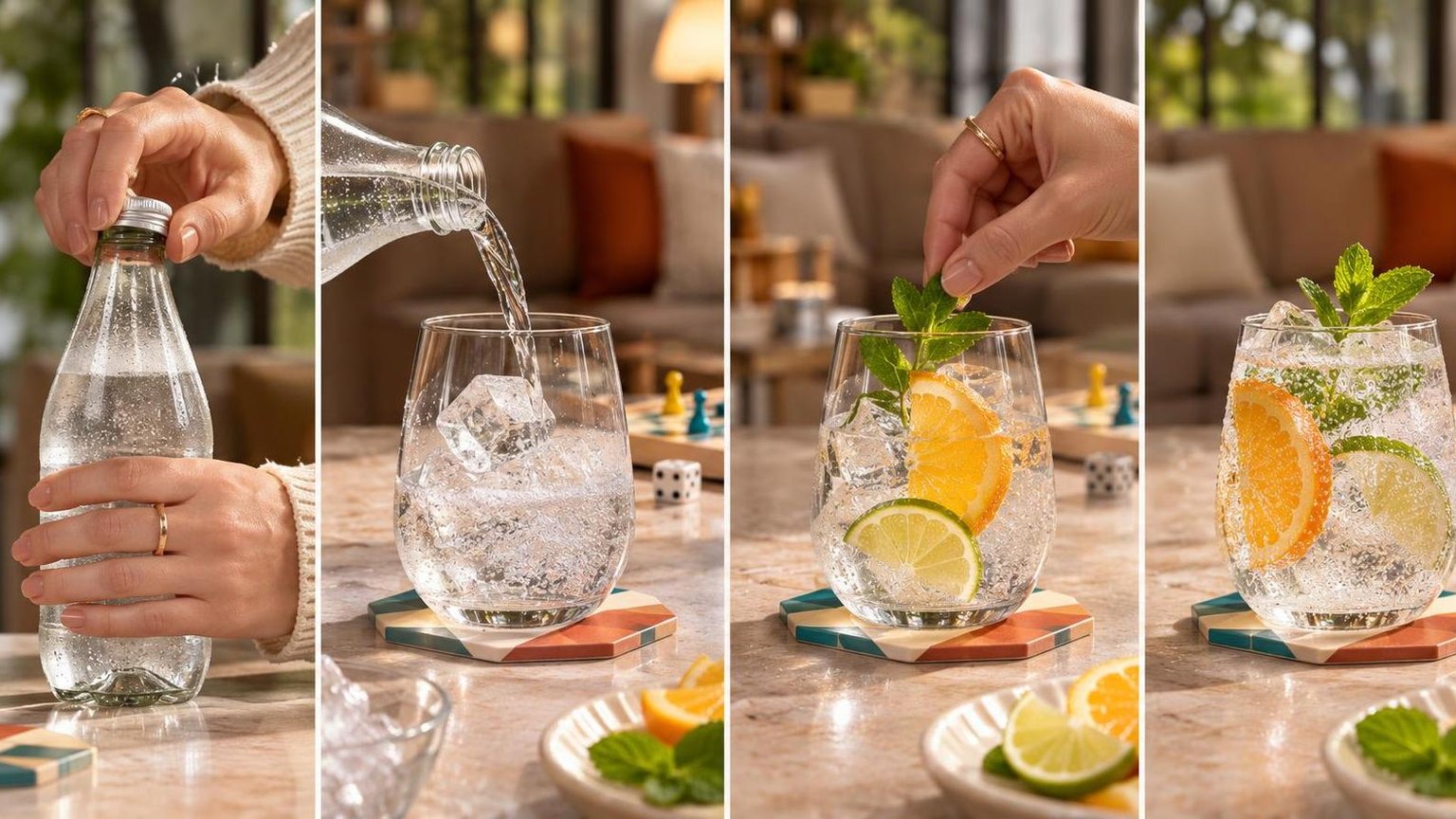
Do not assume a Drink and Play sparkling water is caffeine-free or sugar-free because it is carbonated. The Nutrition Facts panel and ingredient list on the particular bottle or can are the reliable checks; flavors and formulations can differ.
How plain sparkling water compares
Plain carbonated water contains no sugar, caffeine, or meaningful calories. For context, the table compares it with a familiar sweetened soda. The Coca-Cola figures are for the U.S.
12-fluid-ounce Original Taste can, according to The Coca-Cola Company.
| Beverage and serving | Calories | Total sugar | Caffeine |
| Plain, unsweetened sparkling water; 12 fl oz | 0 | 0 g | 0 mg |
| Coca-Cola Original Taste; 12 fl oz | 140 | 39 g | 34 mg |
Those plain-water figures are a baseline, not a verified nutrition statement for every Drink and Play product.
A flavored sparkling water can still be unsweetened, but a version containing juice or added sweeteners may have a different sugar or calorie total. Read the label for the exact flavor and package in hand.
What to check on the label
- Serving size: Compare the listed serving with the amount you will drink. If a container holds multiple servings, the per-container totals will be higher than the per-serving figures.
- Total Sugars and Added Sugars: Total Sugars includes naturally occurring and added sugar. The U.S. Food and Drug Administration (FDA) sets the Daily Value for Added Sugars at 50 grams on a 2,000-calorie diet; a product can contain total sugar even when Added Sugars reads zero.
- Caffeine: Check the package for a caffeine statement and the ingredients for added caffeine. FDA guidance says caffeine amounts are not generally required on the Nutrition Facts panel, so an absent milligram figure does not establish that a flavored drink is caffeine-free.
A label showing zero calories or zero sugar also deserves a precise reading. FDA labeling rules permit calories below 5 per serving to be declared as zero and total sugars below 0.5 gram per serving to be declared as zero.
For an everyday choice, use the product’s complete label rather than its “sparkling water” description alone.
Where to Buy Drink and Play
Start with the exact product name when searching for Drink and Play sparkling water. Online results can include unrelated drinks or older listings, so a search result alone does not establish that a seller has the product in stock.
Check the package image and seller details before making a trip or placing an order.
Check local availability
Search grocery and beverage-store websites for “Drink and Play sparkling water,” then enter your ZIP code or select a store. If a listing appears, check whether it says the item is available for pickup, delivery, or shipping.
Store-level availability can differ from what appears in a general web search.
If you find a listing but plan to shop in person, call the store with the product name and package size. Ask staff to confirm the item on the shelf; a product page may remain online when a store has no current stock.
Check online listings before ordering
Marketplace listings require a closer look at the seller, not just the product title. Match the front-label image, flavor, package size, and manufacturer information to the drink you want.
A listing for another sparkling water—or for a mixed beverage pack—is not a reliable substitute.
Read the delivery estimate and return terms before paying, especially if a third-party seller fulfills the order.
Under the Federal Trade Commission’s Mail, Internet, or Telephone Order Merchandise Rule, sellers generally must ship within the time they advertise or, when they give no time, within 30 days.
Delays trigger notice and refund requirements (FTC, 16 CFR Part 435).
Verify the product on arrival
For a U.S. retail package, check the net quantity, ingredient statement, and Nutrition Facts information where required. These are governed by FDA food-labeling regulations, including 21 CFR 101.4, 101.9, and 101.105.
Compare the delivered package with the listing before opening it.
Do not use a damaged or leaking container. If the flavor, size, or seller-supplied product differs from the order, photograph the package and contact the retailer through its order page.
That gives you a record tied to the purchase rather than relying on the product listing, which a seller may later change.
Sparkling Water Compared With Soda
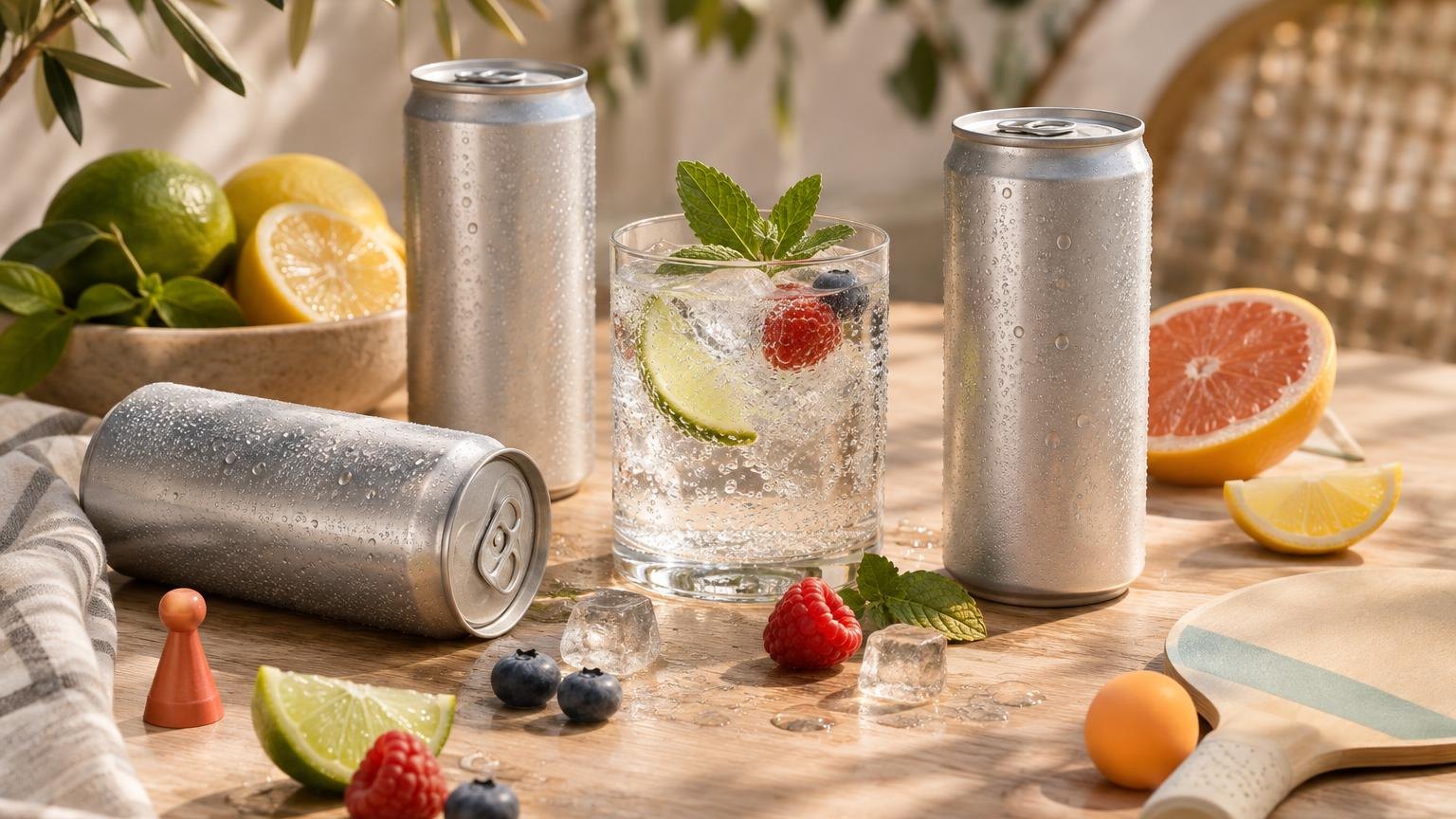
Plain, unsweetened sparkling water provides carbonation without the sugar in regular soda.
That distinction matters more than the bubbles: carbonation changes texture, while added sugar changes a drink’s calorie content and nutritional profile. Check the label, because flavored sparkling waters are not necessarily unsweetened.
What changes in a glass?
| Per 12 fl oz | Plain, unsweetened sparkling water | Coca-Cola Original Taste |
| Calories | 0 | 140 |
| Total sugar | 0 g | 39 g |
| Added sugar | 0 g | 39 g |
| Share of FDA Daily Value for added sugar | 0% | 78% |
Sources: Coca-Cola’s U.S. nutrition information for Original Taste and the U.S. Food and Drug Administration’s added-sugars Daily Value.
The sparkling-water figures apply to plain, unsweetened carbonated water; a specific product’s Nutrition Facts label is the authority for what is in that container.
Regular soda’s sugar is the main nutritional difference. The Centers for Disease Control and Prevention links frequent consumption of sugar-sweetened beverages with health concerns including weight gain, type 2 diabetes, and heart disease.
Replacing regular soda with unsweetened sparkling water removes that beverage’s added sugar without giving up fizz.
“Sparkling water” does not guarantee the same ingredients across brands. Seltzer is typically water with added carbon dioxide; mineral water may also contain naturally occurring minerals.
Some flavored versions contain only flavoring, while others add juice, sugar, or sweeteners. Read both the ingredient list and Nutrition Facts panel rather than relying on the front-of-package name.
Diet soda is a different comparison: it can be sugar-free, but it generally uses sweeteners and other ingredients that plain sparkling water does not.
If the goal is simply to avoid added sugar, either may meet it; if the goal is a short ingredient list, plain sparkling water is the clearer choice.
For teeth, unsweetened does not mean entirely acidity-free. The American Dental Association says plain sparkling water is generally fine for teeth, while citrus-flavored varieties may be more acidic.
Frequent sipping increases the time teeth are exposed to acid. Water remains the better everyday choice when fluoride exposure is also a consideration.
Serving and Storage Tips
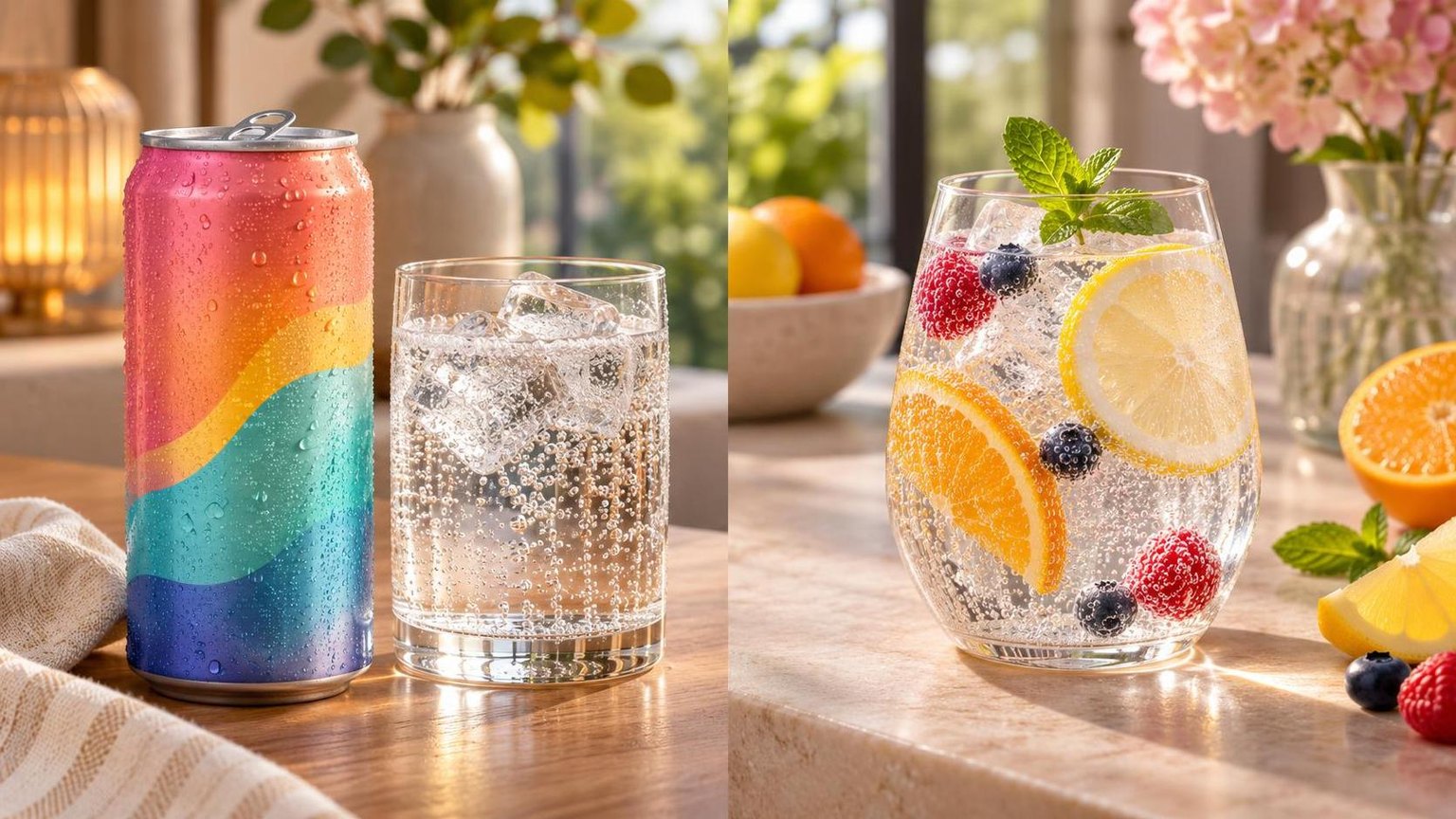
Serve Drink and Play sparkling water cold and open it just before pouring. Temperature, the size of the opening, and how long the container sits uncapped all affect how much carbonation reaches the glass.
Serving for the Best Fizz
A practical serving target is 35–45°F (2–7°C): refrigerator-cold, but not frozen. Carbon dioxide is more soluble in colder water, so a chilled drink generally holds its bubbles better than a warm one.
The temperature range is a serving preference, not a safety requirement.
- Use a clean glass. Tilt it slightly and pour down the inside wall to reduce foaming; straighten the glass near the end if you want a fuller head of bubbles.
- If adding ice, use a few large, clean cubes. Ice chills the drink but provides surfaces where bubbles can form, so pour shortly before serving.
- For a flavored variety, check the label before adding syrup or juice. Those additions can change the sugar content and make a drink harder to assess by taste alone.
Storing Sealed and Opened Containers
Store sealed containers in a cool, dry place away from direct sunlight, heat, and household chemicals. Follow any storage instructions and best-by date printed on the package. The U.S.
Food and Drug Administration recommends protecting bottled water from heat and chemical exposure during storage.
| Container | Practical storage approach |
| Unopened | Keep sealed and follow the package date and storage directions; chill before serving. |
| Opened, resealable | Cap tightly and refrigerate. For the liveliest carbonation, aim to drink it within 1–3 days. |
| Opened, not resealable | Pour what you plan to serve. Refrigeration slows warming, but an uncovered opening lets carbonation escape. |
The 1–3-day window is a quality guideline, not a universal food-safety deadline. Once opened, carbonation gradually escapes; repeated uncapping and a large air space in the container speed the loss of fizz.
Do not freeze a sealed bottle or can, because expanding contents can damage the package.
If serving citrus-flavored sparkling water frequently, consider having it with meals rather than sipping continuously.
The American Dental Association notes that frequent exposure to acidic drinks can contribute to enamel erosion; rinsing with plain water afterward is a simple precaution.
Common Questions
Does Drink and Play sparkling water contain sugar or calories?
Check the Nutrition Facts panel for the specific flavor: plain carbonated water has no sugar, but sweetened versions may differ. Under FDA labeling rules, a drink can display “0 calories” if it contains fewer than 5 calories per serving.
Is Drink and Play sparkling water as hydrating as still water?
Yes, sparkling water contributes to daily fluid intake just as still water does. The CDC lists plain sparkling water as a low- or no-calorie alternative to sugary drinks.
Does Drink and Play sparkling water contain caffeine?
Carbonation does not imply caffeine, but the ingredient list is the reliable place to check a particular product. Look for added caffeine or caffeine-containing ingredients if you are choosing a drink for children or avoiding stimulants.
Can Drink and Play sparkling water damage tooth enamel?
Plain sparkling water is generally a better choice for teeth than sugary soda, though carbonation makes it mildly acidic.
The American Dental Association advises limiting frequent exposure to acidic drinks; added citric acid can make a flavored water more acidic.
Can Drink and Play sparkling water be used in a nonalcoholic spritz?
Yes. Pour it over ice with a splash of juice or a nonalcoholic aperitif, then add the sparkling water last to preserve its bubbles; check the other ingredients if you want the finished drink to be alcohol-free.
How should an opened bottle or can of Drink and Play sparkling water be stored?
Refrigerate an opened, resealable bottle with its cap tightly closed to slow the loss of carbonation. An opened can cannot be sealed as effectively, so it is best enjoyed soon after opening.
Keep Exploring
- How Long Does It Take For Water To Boil? Most Correct Answer
- How Many Ml In An Ounce Of Water?
- How Much Is 1/3 Cup Of Water?
- What The Difference Between Distilled Water And Purified Water?
- How Many Water Bottles Should I Drink In A Day? Answer From Expert
- Why Is Saratoga Water So Expensive? 12 Reasons Behind the Premium Price (2026 Guide)
- How Many Beers Are in a Mike's Harder Lemonade?
- How Much Aspartame In Coke Zero? Get the Answer
- All Non-Alcoholic Beverages Guides
- CDC, “Rethink Your Drink” (2026)
- National Institute of Dental and Craniofacial Research, “Tooth Decay” (2026)
- USDA, “FoodData Central” (2026)
- Electronic Code of Federal Regulations, “21 CFR § 165.110: Bottled Water” (2026)
- Electronic Code of Federal Regulations, “21 CFR § 101.9: Nutrition Labeling of Food” (2026)
- NIAAA – Alcohol's Effects on the Body
- NIAAA – Alcohol Facts and Statistics
- MedlinePlus (NIH) – Alcohol
- ENERGY STAR
- Dietary Guidelines for Americans 2020-2025 (USDA/HHS)