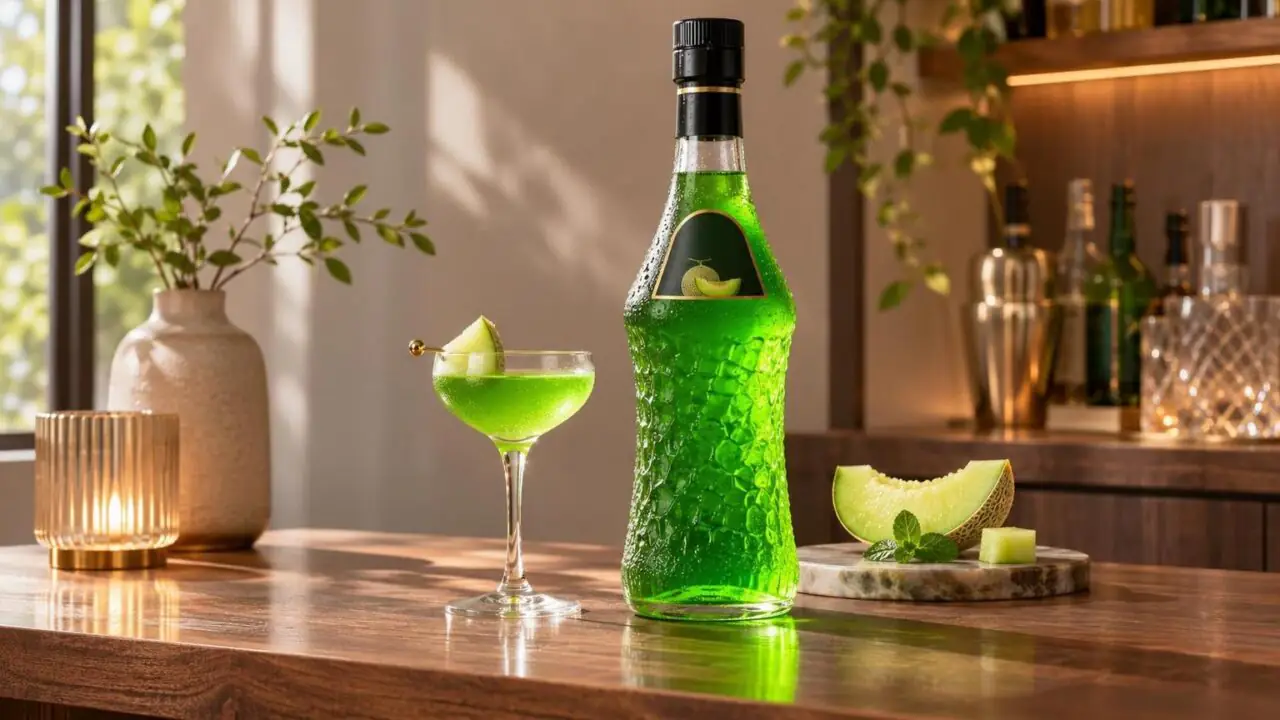
The alcohol content of Midori is 20% ABV (40 proof), so it is stronger than beer or wine but lower in alcohol than many standard spirits.
Midori is a bright-green melon liqueur made by Suntory, and its sweetness can make the alcohol less noticeable in a mixed drink.
That 20% ABV figure applies to the liqueur itself; a cocktail’s strength depends on how much Midori and other alcoholic ingredients it contains, plus any dilution from ice or mixers.
Check the bottle label for the product’s listed alcohol by volume, since labels provide the most direct confirmation for the bottle you have.
For serving and recipe comparisons, use ABV rather than color or sweetness: neither tells you how much alcohol a drink contains.
Midori’s relatively moderate strength makes it a common ingredient in cocktails, but the finished drink can still contain substantial alcohol when combined with spirits such as vodka or rum.
Midori Alcohol Content by Country
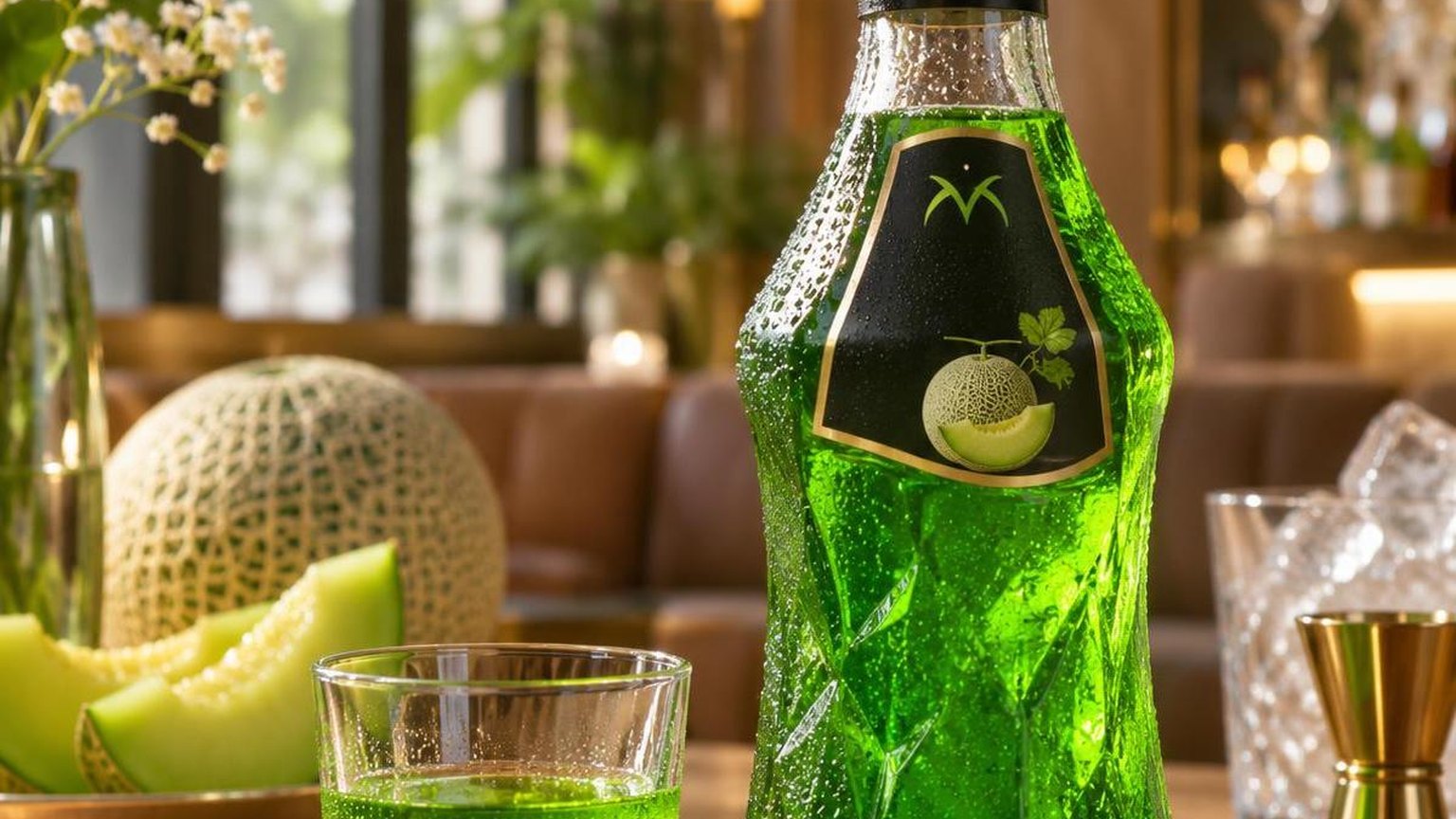
Midori melon liqueur is generally sold at 20% alcohol by volume (ABV) in the United States, United Kingdom, Australia, and Canada.
That means one-fifth of the liquid in the bottle is alcohol; the country where you buy it does not, by itself, change its strength.
ABV shown in national product listings
The producer’s Midori product information and the national retail listings below give the same ABV. These are listings for Midori melon liqueur, not for a premixed Midori cocktail, whose alcohol content depends on its recipe.
| Country | Source | Listed ABV |
| United States | Midori brand product information | 20% |
| United Kingdom | Master of Malt Midori Melon Liqueur listing | 20% |
| Australia | Dan Murphy’s Midori Melon Liqueur listing | 20% |
| Canada | LCBO Midori Melon Liqueur listing | 20% |
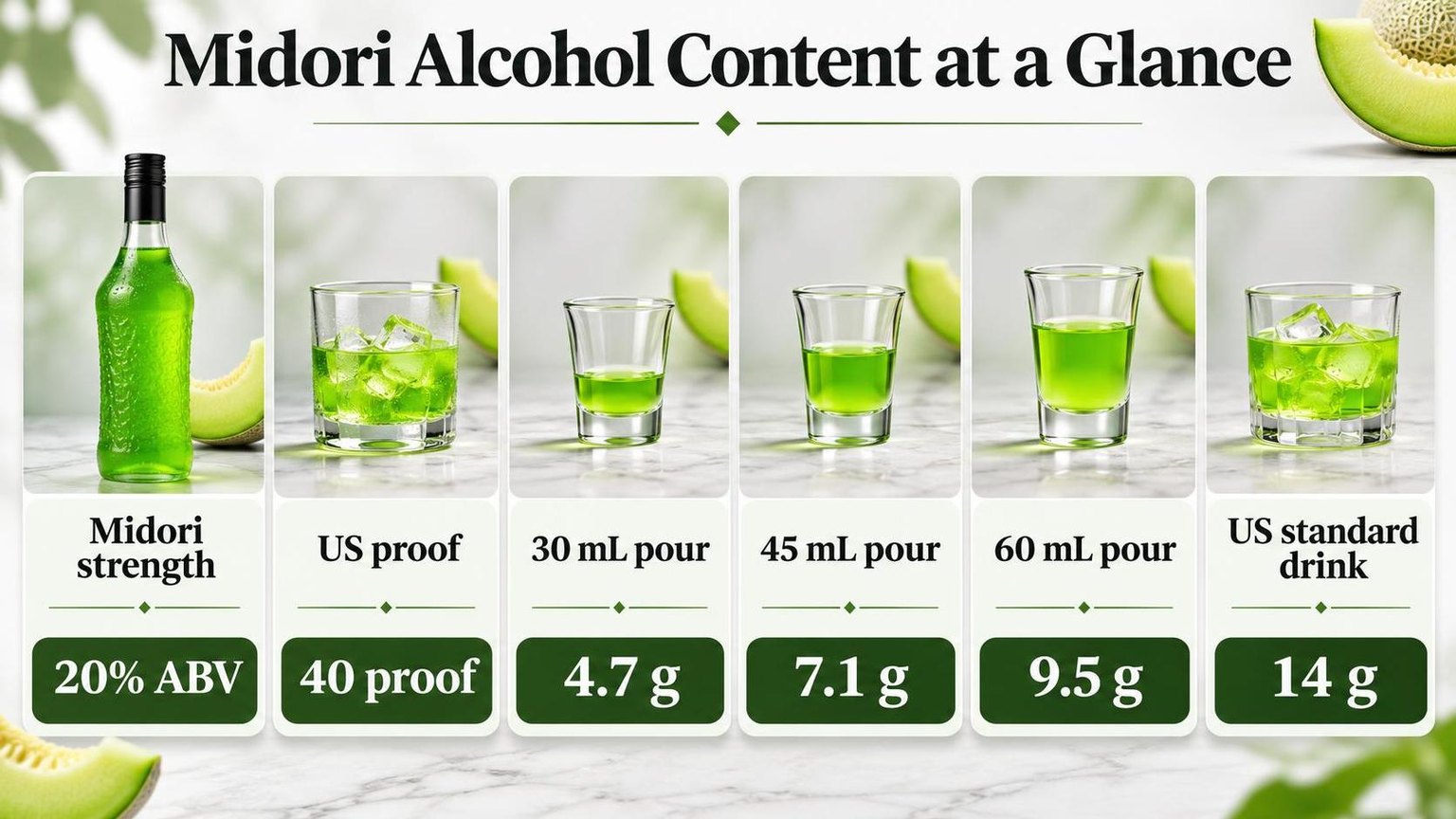
In the United States, 20% ABV is also expressed as 40 proof: US proof is twice the ABV number. Proof is a labeling convention, not an additional measure of alcohol in the bottle.
In every country, check the ABV printed on the bottle you actually have, especially if it is an older bottling.
What the percentage means in a pour
ABV describes the liqueur before it is mixed. To estimate the pure alcohol in a measured pour, multiply the pour volume by 0.20. The figures below assume Midori at 20% ABV and show alcohol from Midori alone, before adding any other spirits.
| Midori poured | Pure alcohol by volume | Approximate alcohol by weight |
| 30 mL | 6 mL | 4.7 g |
| 45 mL | 9 mL | 7.1 g |
| 60 mL | 12 mL | 9.5 g |
The weight estimates use ethanol’s approximate density of 0.789 grams per milliliter.
A 45 mL pour therefore contains about half of a US standard drink, which the National Institute on Alcohol Abuse and Alcoholism defines as 14 grams of pure alcohol.
Midori’s sweet taste and vivid green color do not indicate how much alcohol a finished drink contains.
Vodka, rum, or another alcoholic ingredient adds to the total; juice, soda, and ice change the drink’s concentration but do not remove the alcohol already poured.
For the most reliable estimate, measure each alcoholic ingredient separately.
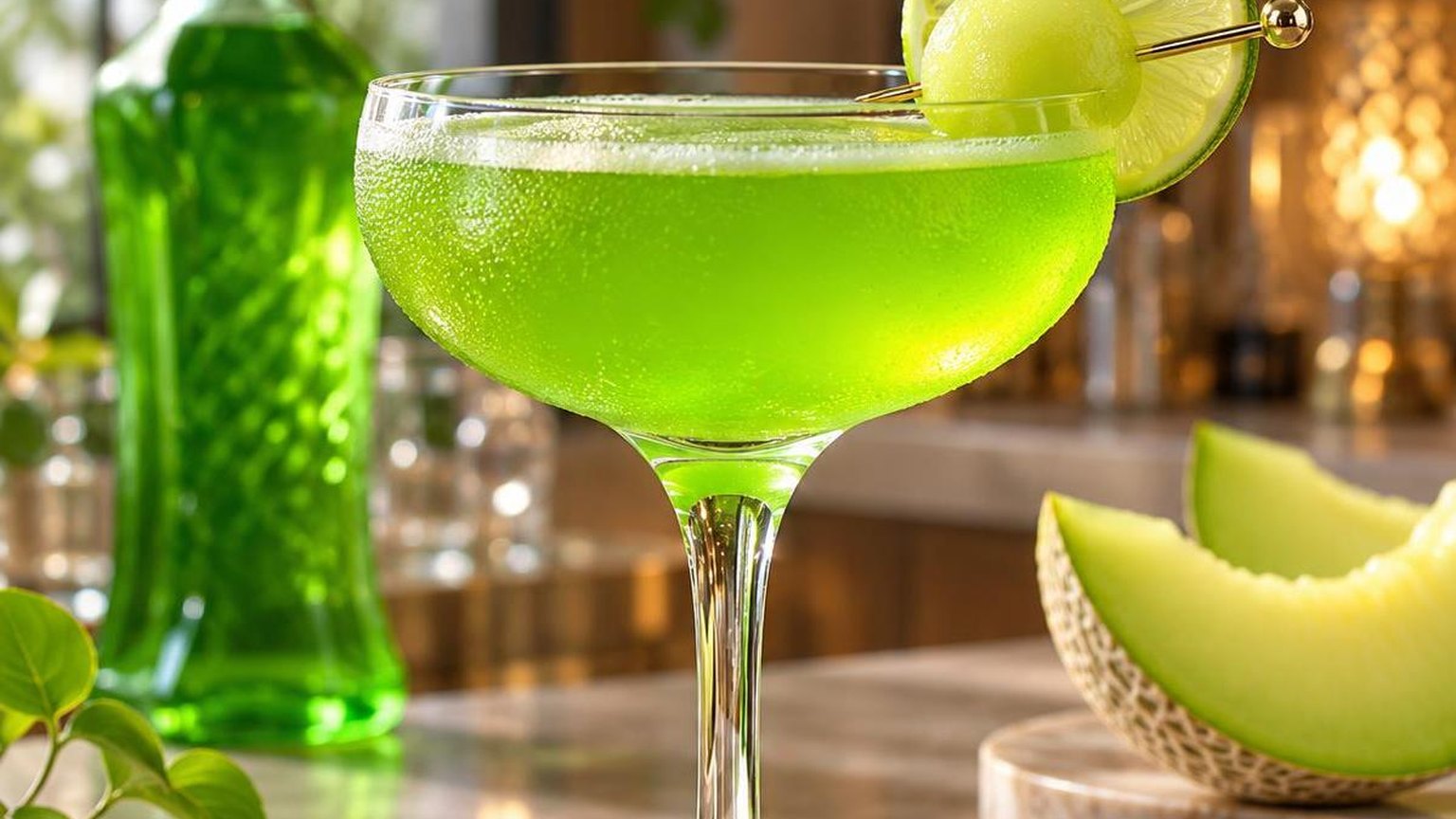
Midori ABV and US Proof
Midori melon liqueur is typically sold in the United States at 20% alcohol by volume (ABV), equivalent to 40 US proof. Check the ABV printed on your bottle, since product specifications can vary by market.
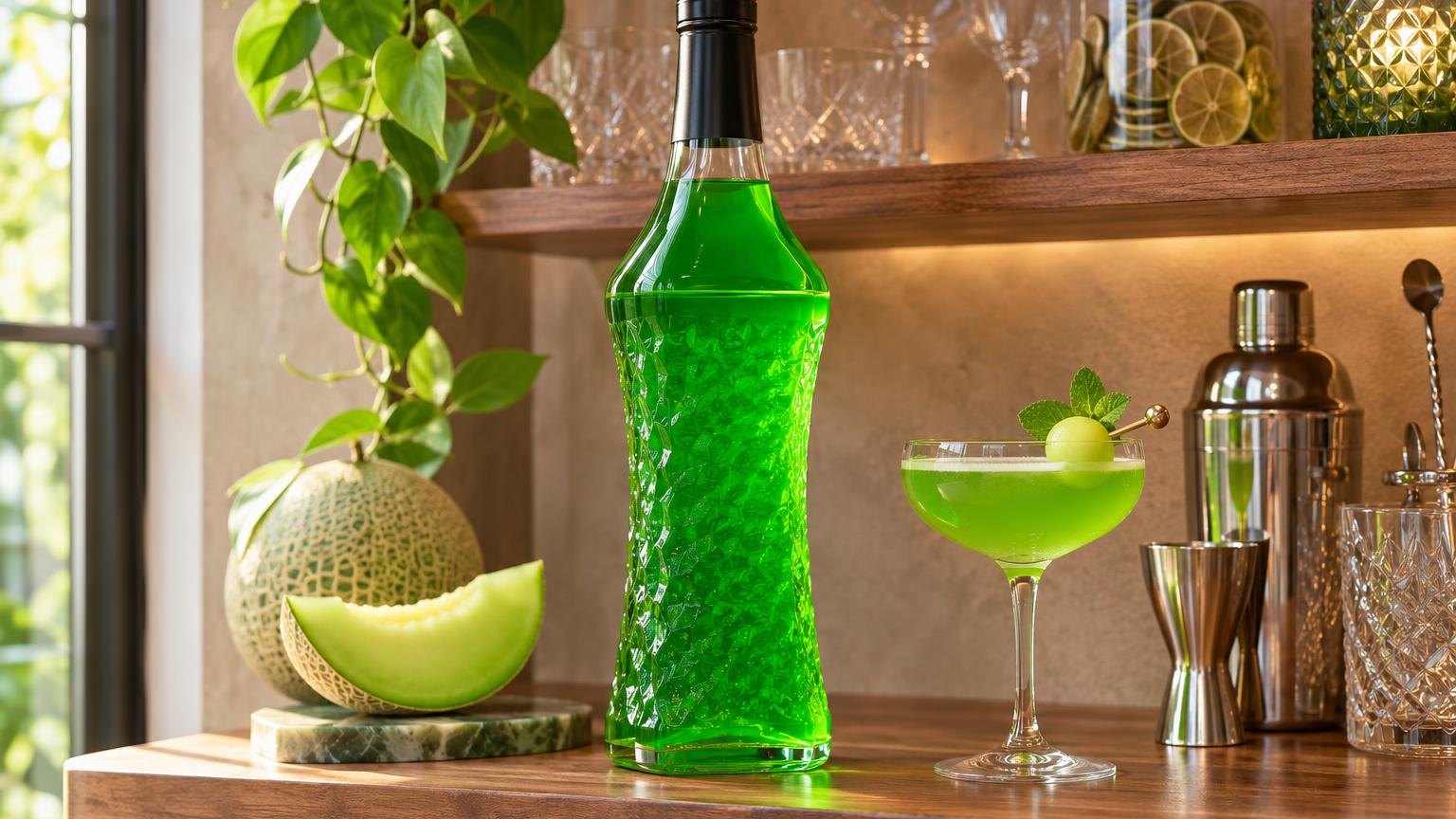
ABV describes the share of a beverage’s volume that is alcohol. US proof is twice the ABV percentage, so a bottle labeled 20% ABV is 40 proof.
Midori’s product information identifies it as a melon liqueur; its sweetness and vivid green color do not indicate how much alcohol it contains.
| Pour or reference | ABV | US proof | Approximate pure alcohol |
| 1 fl oz Midori | 20% | 40 | 0.20 fl oz |
| 1.5 fl oz Midori | 20% | 40 | 0.30 fl oz |
| 1.5 fl oz vodka at the stated strength | 40% | 80 | 0.60 fl oz |
| One US standard drink, as defined by NIAAA | Varies | Varies | About 0.60 fl oz |
The calculation is pour volume multiplied by ABV expressed as a decimal. A measured 1.5 fl oz pour of Midori therefore contains about 0.30 fl oz of pure alcohol—half the amount in the 1.5 fl oz vodka example.
It also equals roughly half a US standard drink.
That distinction matters when a recipe calls for a “shot.” Shot-glass capacity and actual pours vary, so the word alone cannot establish alcohol intake. Measure the Midori poured, then account for every other alcoholic ingredient.
Adding vodka, rum, or sparkling wine increases a cocktail’s alcohol content even if the drink tastes mostly of melon.
Mixing Midori with a nonalcoholic ingredient changes the finished drink’s ABV, but not the amount of alcohol contributed by the Midori. For example, the calculation below assumes the liquids combine without volume change and excludes ice melt:
| Drink component or result | Amount |
| Midori at 20% ABV | 1.5 fl oz |
| Alcohol-free soda | 3 fl oz |
| Total liquid before ice melt | 4.5 fl oz |
| Approximate finished-drink ABV | 6.7% |
In practice, melted ice increases volume and lowers the ABV further, while leaving the drink’s total alcohol unchanged.
For an exact serving estimate, use the bottle’s labeled ABV, measure each pour, and include any additional spirits.
The ABV-to-proof conversion follows US Alcohol and Tobacco Tax and Trade Bureau usage; the standard-drink reference follows the National Institute on Alcohol Abuse and Alcoholism.
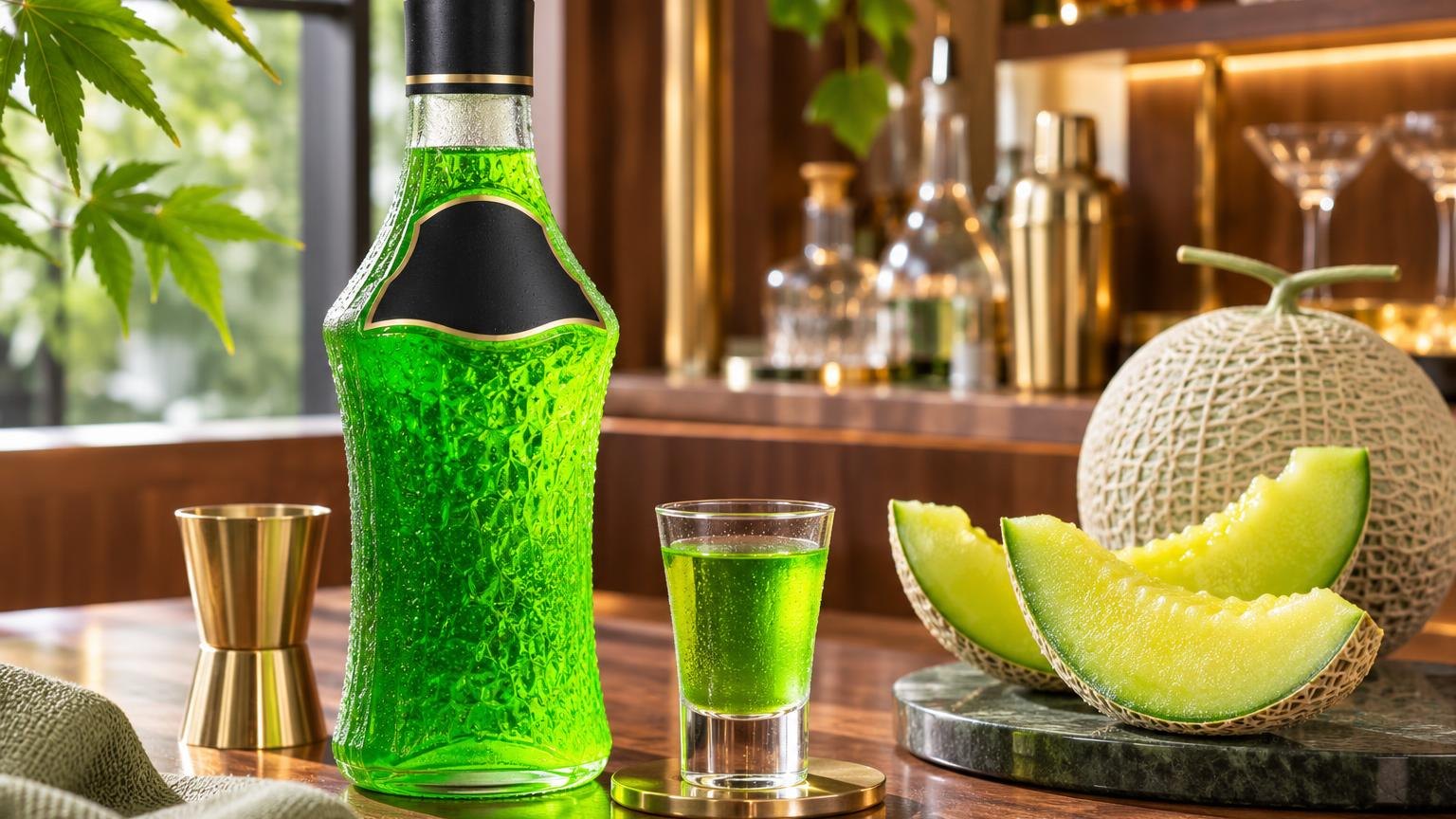
Alcohol in a Midori Shot
A standard 1.5-fluid-ounce shot of Midori contains about 0.3 fluid ounce of pure alcohol. Midori melon liqueur is bottled at 20% alcohol by volume (ABV), or 40 proof, in the United States.
Its sweet melon flavor does not change the amount of alcohol in the glass.
How much alcohol is in the pour?
ABV describes the share of a beverage’s volume that is alcohol. To calculate the alcohol in a straight pour of Midori, multiply the poured volume by 0.20. The result is an estimate of pure alcohol by volume, not the volume of liqueur you drank.
| Drink and pour | ABV | Pure alcohol | U.S. standard drinks |
| Midori, 1 fluid ounce | 20% | 0.2 fluid ounce | About 0.33 |
| Midori, 1.5 fluid ounces | 20% | 0.3 fluid ounce | 0.5 |
| Midori, 2 fluid ounces | 20% | 0.4 fluid ounce | About 0.67 |
| Vodka, 1.5 fluid ounces | 40% | 0.6 fluid ounce | 1 |
The standard-drink figures use the National Institute on Alcohol Abuse and Alcoholism’s U.S. definition: one standard drink contains approximately 0.6 fluid ounce, or 14 grams, of pure alcohol.
The vodka row provides a familiar reference; it does not imply that every bar pours shots at the same size.
“A shot” describes a serving, not a fixed amount of alcohol. A bartender’s measured pour, a home pour, and a drink served in a shot glass can hold different volumes.
Measuring the Midori matters if you are tracking alcohol intake rather than estimating from the glassware.
What changes in a mixed drink?
Adding juice, soda, or another nonalcoholic mixer increases the drink’s total volume but does not remove the alcohol already in the Midori. Adding vodka, rum, or another alcoholic ingredient increases the total alcohol.
Count each ingredient and its measured pour when estimating a cocktail’s standard drinks.
Midori’s sweetness can make its alcohol less noticeable on the palate. It is still an alcoholic liqueur, and the alcohol in a quickly consumed shot counts toward your intake just as it does when the same pour is sipped in a cocktail.
Check the bottle label for the ABV of the product you have.
Sources: Midori product alcohol labeling; National Institute on Alcohol Abuse and Alcoholism, “What Is a Standard Drink?” Table values are calculated from the stated ABVs and pour sizes.
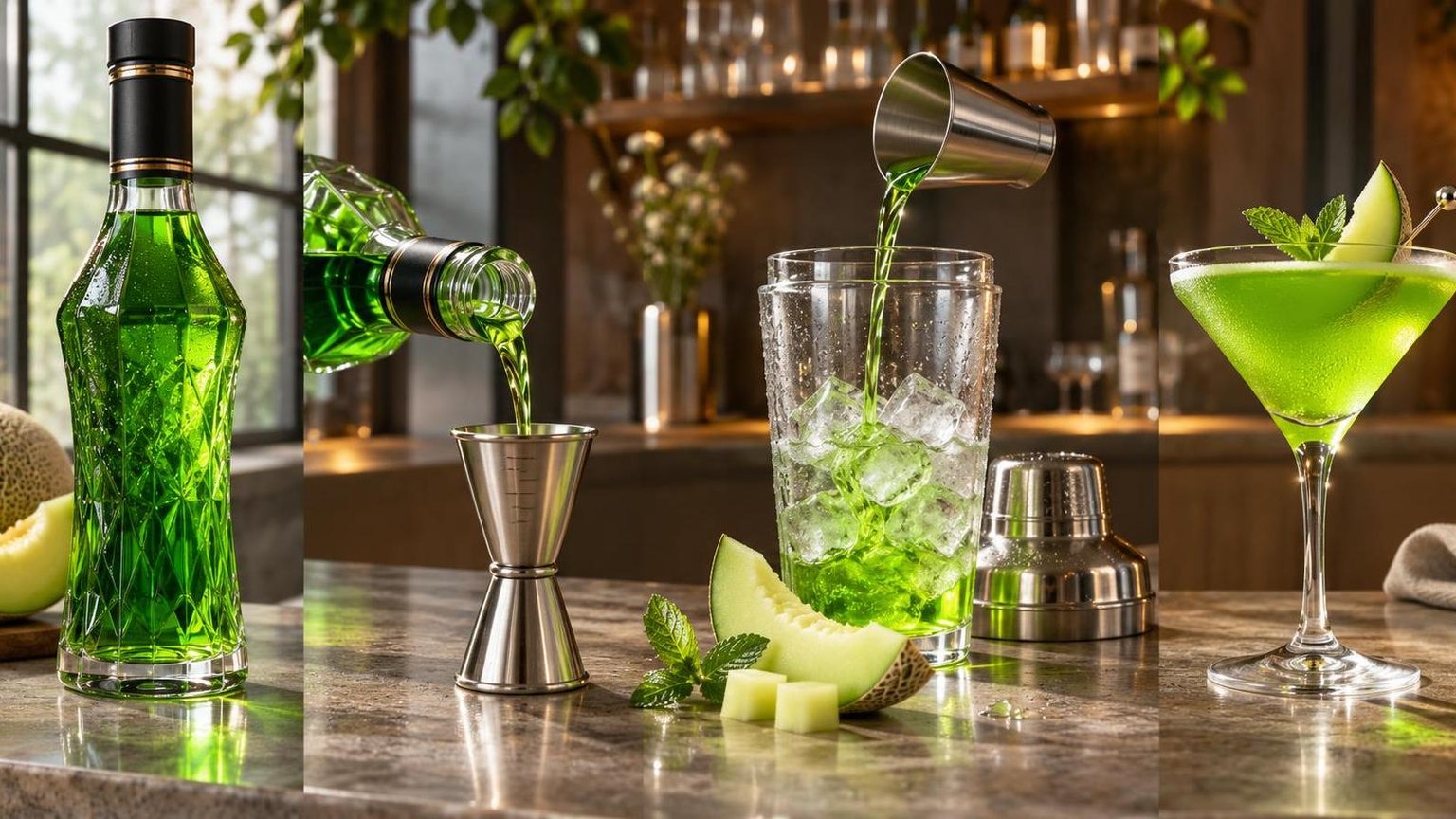
Midori Compared With Base Spirits
Midori sold in the United States is 20% alcohol by volume (ABV), or 40 proof. That is half the alcohol concentration of an 80-proof bottle of vodka, gin, rum, tequila, or whiskey, but it does not make a Midori cocktail automatically low in alcohol.
Proof is twice ABV in the United States. The table compares equal 1.5-fluid-ounce pours; actual base-spirit bottlings vary, so check the label rather than assuming every bottle is 80 proof.
| Drink | Bottle ABV | U.S. proof | Pure alcohol in 1.5 fl oz |
| Midori melon liqueur | 20% | 40 | 0.30 fl oz |
| Vodka, typical 80-proof bottle | 40% | 80 | 0.60 fl oz |
| Gin, typical 80-proof bottle | 40% | 80 | 0.60 fl oz |
| Rum, typical 80-proof bottle | 40% | 80 | 0.60 fl oz |
| Tequila, typical 80-proof bottle | 40% | 80 | 0.60 fl oz |
| Whiskey, typical 80-proof bottle | 40% | 80 | 0.60 fl oz |
The National Institute on Alcohol Abuse and Alcoholism defines a U.S. standard drink as approximately 0.6 fluid ounces of pure alcohol, or 14 grams.
On that basis, the Midori pour in the table is about half a standard drink; each listed base-spirit pour is about one.
Those figures describe alcohol, not serving size or sweetness. Midori is a melon-flavored liqueur, so its sweetness can make a drink taste less spirit-forward. Taste is not a reliable measure of how much ethanol is in the glass.
In a mixed drink, count every alcoholic ingredient. This example uses the bottle strengths shown above and measures alcohol before adding ice, juice, or soda:
| Ingredient or total | Amount | Pure alcohol |
| Midori at 20% ABV | 2 fl oz | 0.40 fl oz |
| Vodka at 40% ABV | 1 fl oz | 0.40 fl oz |
| Total | 3 fl oz before mixers | 0.80 fl oz, about 1⅓ U.S. standard drinks |
Ice melt or a nonalcoholic mixer increases the finished drink’s volume and lowers its ABV, but neither removes the alcohol already poured. Adding another spirit or liqueur increases the total.
For a useful estimate, multiply each ingredient’s fluid ounces by its ABV as a decimal, then add the results.
Midori’s U.S. labeling provides its bottle strength; the National Institute on Alcohol Abuse and Alcoholism provides the standard-drink definition.
U.S. distilled-spirit labeling and proof conventions are governed by the Alcohol and Tobacco Tax and Trade Bureau under 27 CFR Part 5.
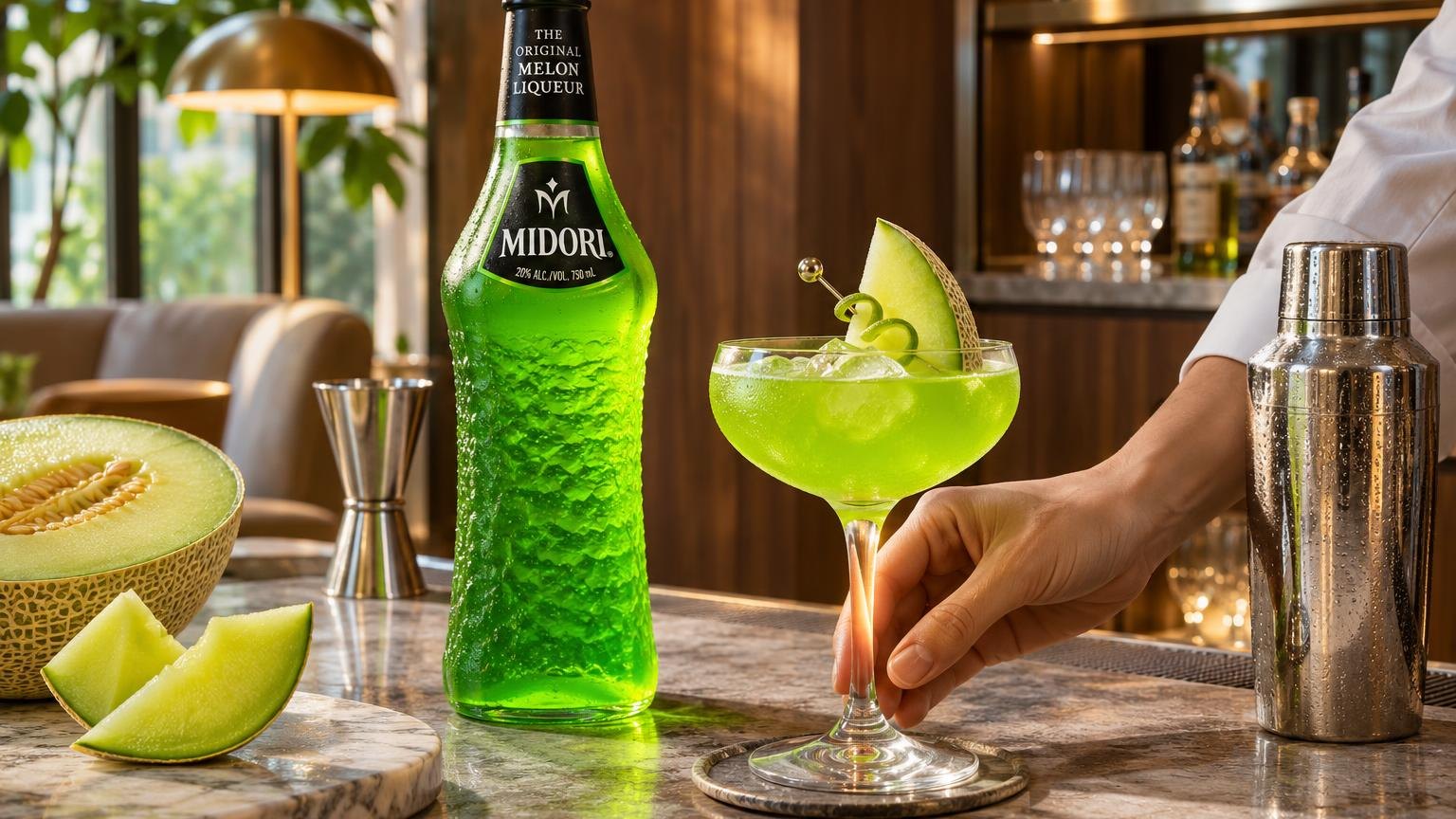
Midori Compared With Other Melon Liqueurs
Midori is typically bottled at 20% alcohol by volume (ABV) in the United States. That makes it stronger than some widely sold melon liqueurs, although all three products below are substantially lower in alcohol than a typical 40% ABV spirit.
| Melon liqueur | ABV | U.S. proof | Pure alcohol in a 1.5 fl oz pour |
| Midori | 20% | 40 proof | 0.300 fl oz |
| Bols Melon | 17% | 34 proof | 0.255 fl oz |
| DeKuyper Melon | 15% | 30 proof | 0.225 fl oz |
The ABV figures reflect the producers’ published product information or U.S. bottle labeling. U.S. proof is twice the ABV; the pure-alcohol figures are calculated by multiplying pour size by ABV.
Check the bottle you are using, because formulations and labeling can differ by market or change over time.
What the Difference Means in a Cocktail
Replacing Midori with the same volume of Bols Melon or DeKuyper Melon lowers the alcohol contributed by the liqueur.
It does not necessarily lower a drink’s total ABV by the same proportion: vodka, rum, other ingredients, and dilution from melted ice also affect the finished cocktail.
For a cocktail made without another alcoholic ingredient, the difference is more noticeable. Midori supplies more ethanol per ounce than either alternative in the table.
If a recipe also calls for a full-strength spirit, the melon liqueur may account for a smaller share of the drink’s alcohol.
Alcohol strength is not a reliable shortcut for flavor, either. Melon liqueurs vary in sweetness, acidity, aroma, and color as well as ABV.
A lower-proof substitute can make a familiar recipe taste sweeter or less melon-forward; tasting before adding extra syrup is more useful than adjusting solely by proof.
Putting a Pour in Context
The National Institute on Alcohol Abuse and Alcoholism defines a U.S. standard drink as containing about 0.6 fluid ounce of pure alcohol.
On that measure, the Midori pour shown in the table contains half a standard drink before any other alcoholic ingredients are added.
When comparing bottles for a recipe, read the ABV on the label rather than relying on the shared description “melon liqueur.” Measure the pour as well.
Changing the amount used can have a greater effect on alcohol content than switching between these brands.
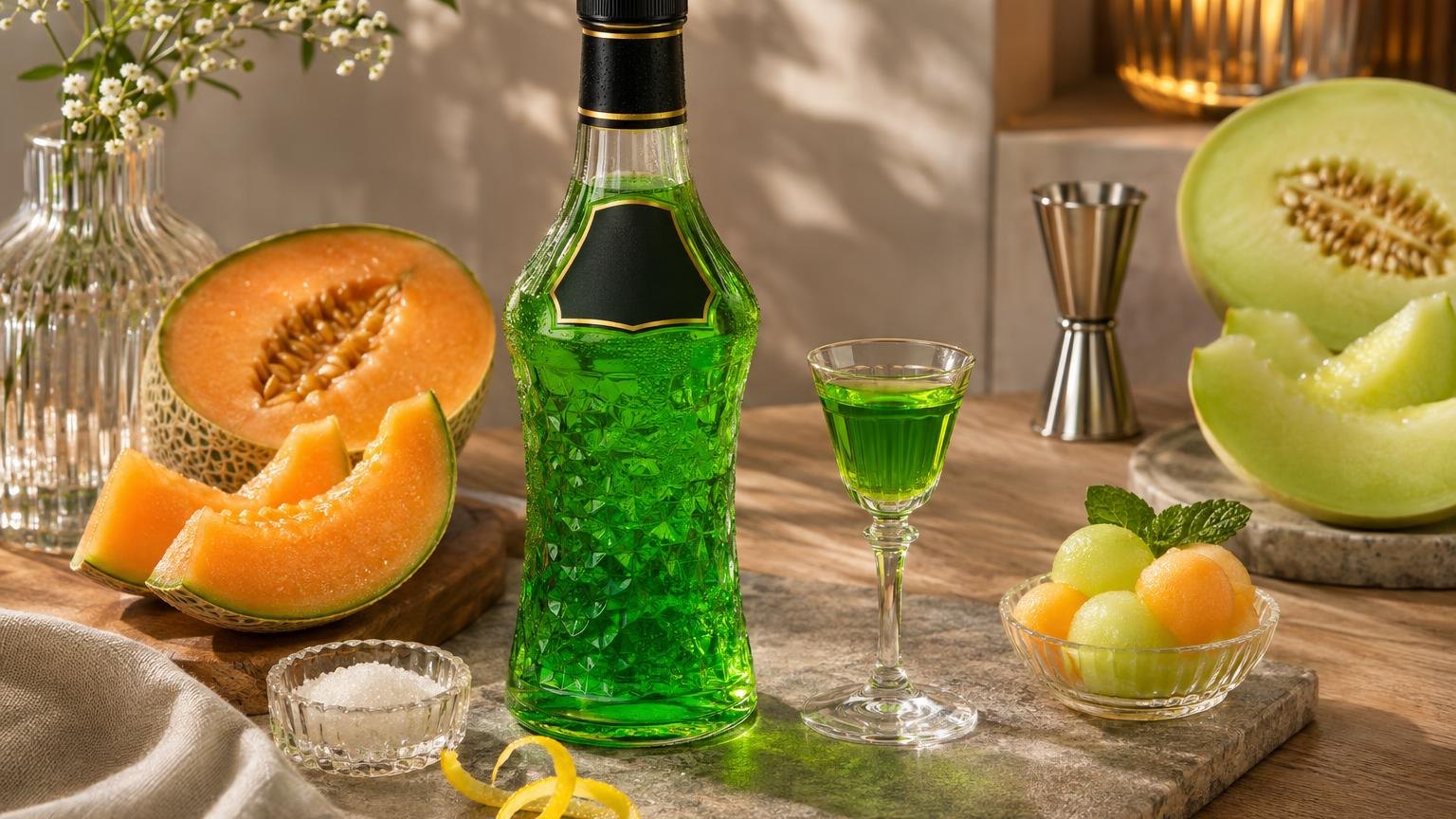
How Cocktails Change Midori Alcohol Content
Midori sold in the United States is 20% alcohol by volume (ABV), but a cocktail’s strength depends on everything poured alongside it. Soda and juice lower the drink’s ABV; vodka raises it.
Neither change alters the amount of alcohol contributed by the Midori itself.
The examples below use Midori at 20% ABV and vodka at 40% ABV, with ingredient volumes added together before ice melts. They are illustrative recipes, not standardized formulas: a bartender’s pour sizes and mixers may differ.
ABV is calculated by dividing the volume of pure alcohol by the drink’s total liquid volume.
| Illustrative cocktail | Ingredients | Approximate ABV before ice dilution | U.S. standard drinks |
| Midori and soda | 1.5 oz Midori; 3 oz soda | 6.7% | 0.5 |
| Midori Sour with soda | 1.5 oz Midori; 1 oz lemon juice; 0.5 oz simple syrup; 2 oz soda | 6% | 0.5 |
| Vodka Midori Sour | 1.5 oz Midori; 1 oz vodka; 1 oz lemon juice; 0.5 oz simple syrup; 2 oz soda | 11.7% | About 1.2 |
| Vodka–Midori cocktail | 1.5 oz Midori; 1.5 oz vodka; 0.5 oz lime juice | 25.7% | 1.5 |
Midori’s product information lists its alcohol content as 20% ABV. The National Institute on Alcohol Abuse and Alcoholism defines a U.S. standard drink as containing about 0.6 fluid ounces of pure alcohol.
On that basis, a 1.5-ounce Midori pour contributes 0.3 fluid ounces of alcohol, or half a standard drink.
Added vodka changes the alcohol total, not just the flavor. In the vodka Midori Sour shown above, Midori contributes 0.3 fluid ounces of pure alcohol and vodka contributes 0.4.
Lemon juice, syrup, and soda increase the liquid volume without adding alcohol, producing a lower ABV than the vodka–Midori cocktail.
Ice adds another variable. Shaking a drink or letting it sit over ice introduces water, so its served ABV can be lower than the table’s estimate.
Melting ice does not remove alcohol or reduce the number of standard drinks; it spreads the same alcohol through more liquid.
For a reliable estimate when ordering, ask how much Midori and any spirits are in the glass. A tall, sweet drink can taste less alcoholic than a short one while still containing more than one standard drink.
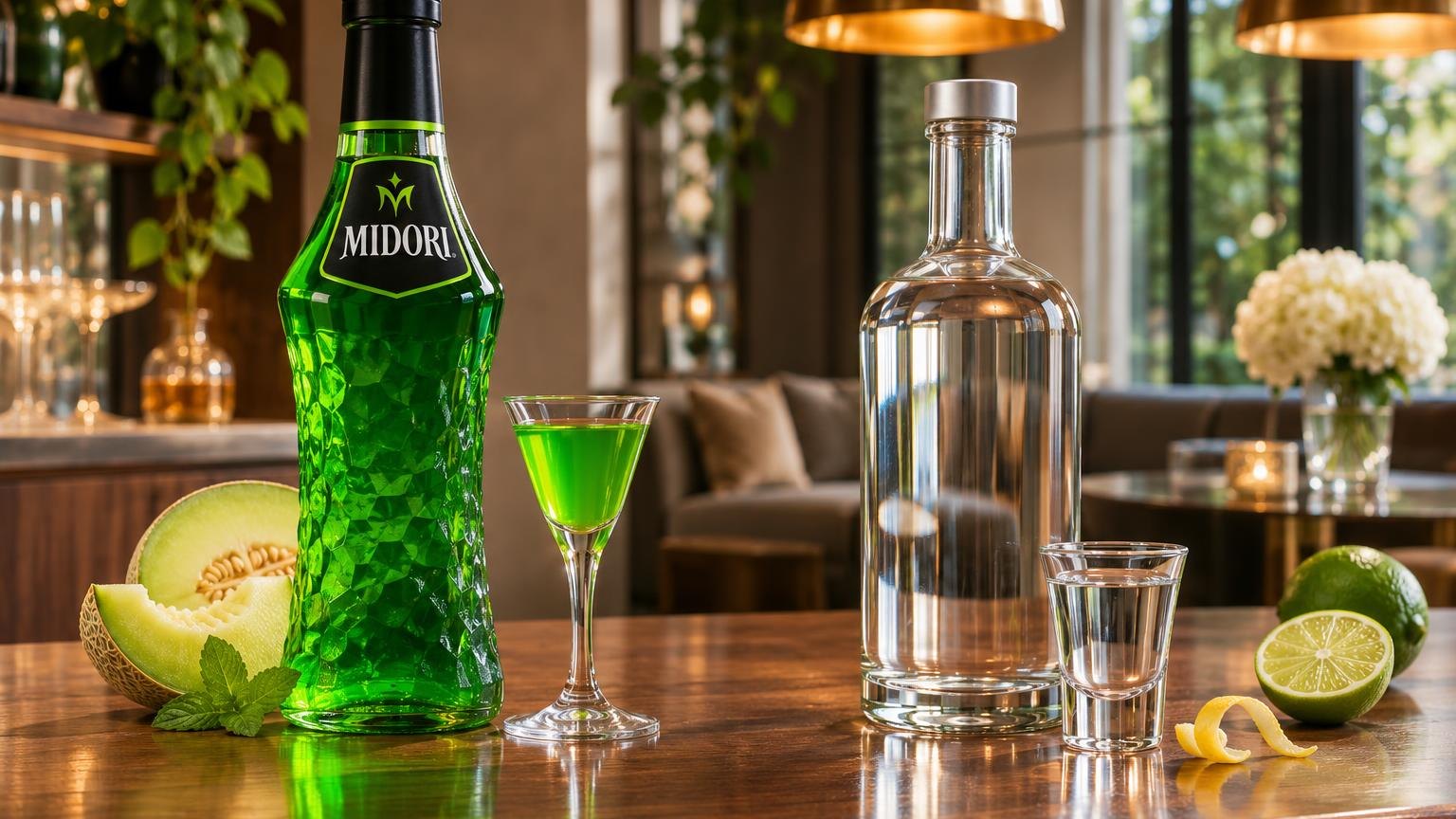
Questions People Ask Most
What is Midori’s alcohol content?
Midori melon liqueur is listed at 20% alcohol by volume (ABV) on the brand’s U.S. product information. That means alcohol accounts for 20% of the liquid’s volume.
What proof is Midori?
Midori is 40 proof in the United States. U.S. proof is twice the ABV, so 20% ABV equals 40 proof.
How much Midori equals one U.S. standard drink?
Three fluid ounces of Midori at 20% ABV contain 0.6 fluid ounces of pure alcohol. That matches the National Institute on Alcohol Abuse and Alcoholism’s definition of one U.S. standard drink; a 1.5-ounce pour of Midori is half a standard drink.
Is Midori as strong as vodka?
No. Midori at 20% ABV has half the alcohol concentration of vodka bottled at 40% ABV: a 1.5-ounce pour contains 0.3 fluid ounces of pure alcohol from Midori, versus 0.6 from that vodka.
How does a serving of Midori compare with beer or wine?
Three ounces of 20% ABV Midori contain the same amount of pure alcohol—0.6 fluid ounces—as 12 ounces of 5% ABV beer or 5 ounces of 12% ABV wine.
Those are the serving examples the National Institute on Alcohol Abuse and Alcoholism uses to illustrate one U.S. standard drink.
Does adding juice or soda lower the alcohol content of a Midori drink?
A mixer lowers the drink’s ABV by adding volume, but it does not remove alcohol. For example, 1 ounce of Midori mixed with 3 ounces of alcohol-free juice makes a 4-ounce drink at approximately 5% ABV, assuming no ice melt.
How much alcohol is in a cocktail with Midori and vodka?
One ounce of 20% ABV Midori plus 1 ounce of 40% ABV vodka contains 0.6 fluid ounces of pure alcohol—one U.S. standard drink—before any other alcoholic ingredients are added.
Nonalcoholic mixers change the cocktail’s final ABV, not that amount of alcohol.
Can Midori’s alcohol content vary by bottle?
Use the ABV printed on your bottle if it differs from the brand’s U.S. listing of 20%. The label is the relevant figure for calculating how much alcohol is in a pour from that bottle.
Keep Exploring
- What Proof Is Captain Morgan Spiced Rum?
- Is Pinot Noir The Healthiest Red Wine?
- What Food Pairs Well With Rum?
- What Kind Of Wine Is Dry Red Wine?
- Do You Refrigerate Red Wine Before Opening?
- All Alcohol Guides
- Midori, Official Website (n.d.)
- Suntory Global Spirits (n.d.)
- Difford’s Guide (n.d.)
- Liquor.com (n.d.)
- National Institute on Alcohol Abuse and Alcoholism, “What Is a Standard Drink?” (n.d.)
- National Institute on Alcohol Abuse and Alcoholism, “Alcohol’s Effects on the Body” (n.d.)
- Centers for Disease Control and Prevention, “About Alcohol Use” (n.d.)