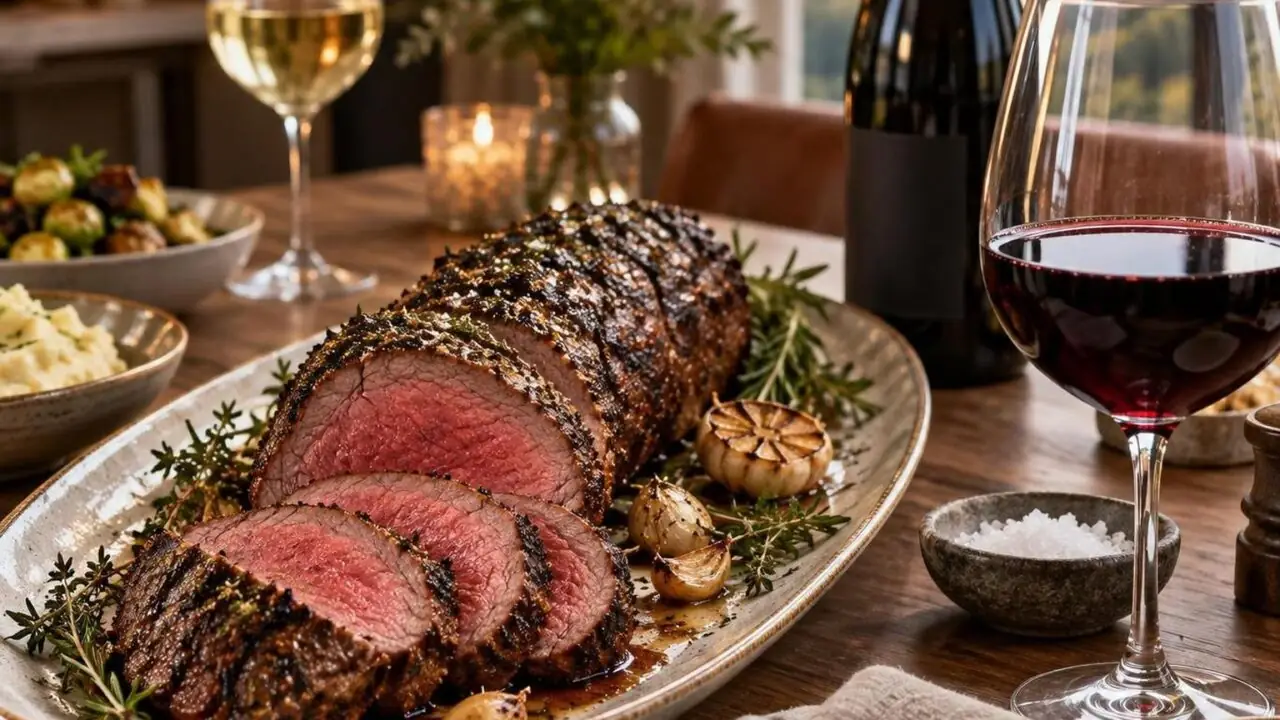
Beef tenderloin wine pairing reaches its peak with medium-bodied reds like Pinot Noir and Merlot, whose softer tannins complement the cut’s delicate, buttery texture without overpowering it.
This lean filet demands a different approach than fattier steaks.
Unlike ribeye or strip steak, tenderloin carries less intramuscular fat, so heavily tannic Cabernet Sauvignon can taste harsh against it.
The ideal beef tenderloin wine pairing balances fruit concentration with restrained oak and silk-like tannins.
Preparation method—grilled, pan-seared, or wrapped in pastry for Beef Wellington—shifts the best match significantly, which this guide covers in detail.
Why Beef Tenderloin Demands Specific Wines
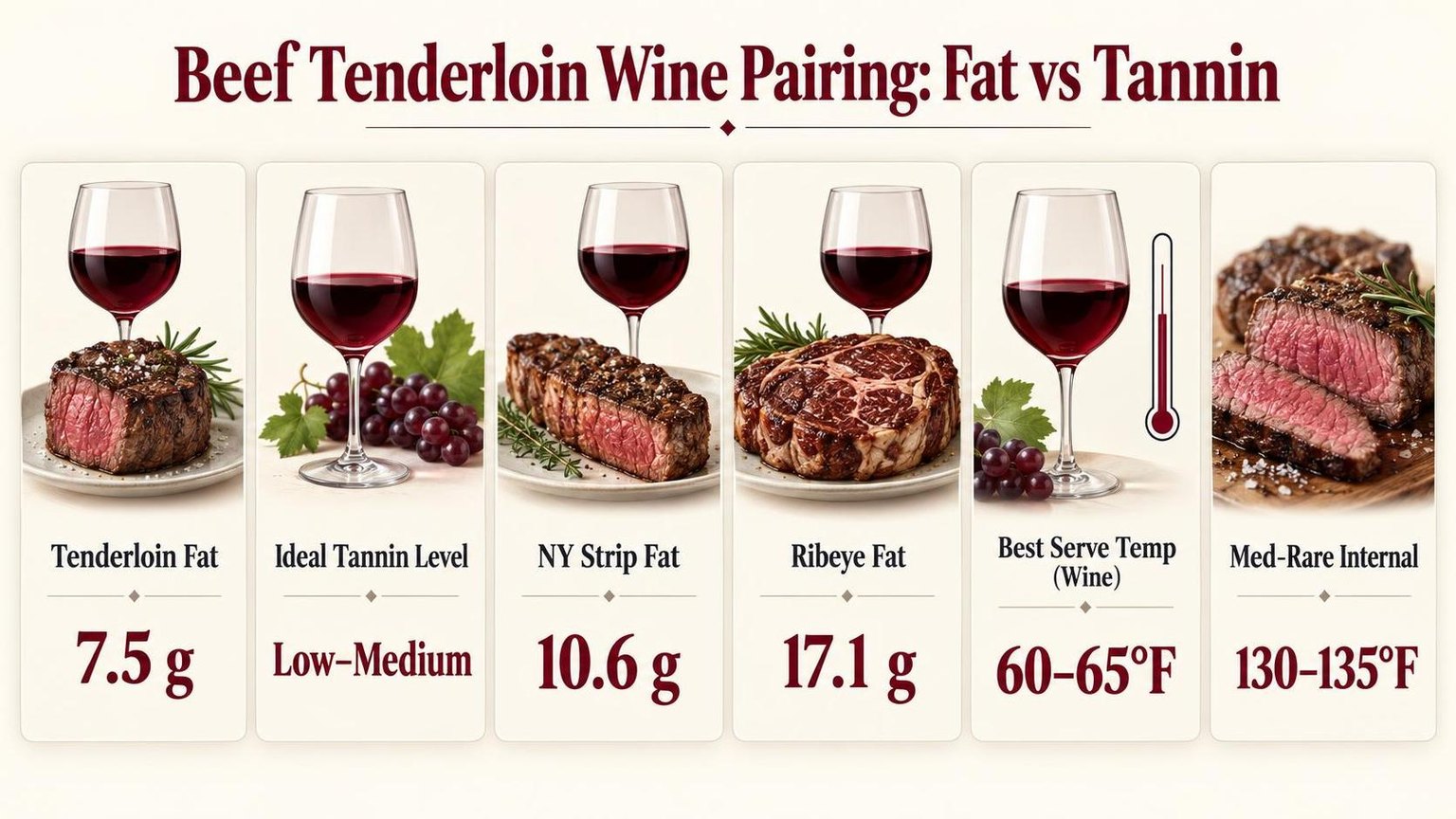
Beef tenderloin is the leanest premium steak cut, containing just 7.5 grams of total fat per 3-ounce cooked serving.
That low fat content fundamentally changes how wine interacts with the meat compared to fattier cuts like ribeye at 17.1 grams per serving.
The tenderloin comes from the psoas major muscle along the cow’s spine. This muscle bears almost no weight, producing exceptionally tender fibers with minimal connective tissue and intramuscular marbling.
Fat Content Shapes Wine Selection
Tannins in red wine bind to fat proteins and get softened in the process. With less fat available, high-tannin wines taste harsher and more astringent against tenderloin than they do with well-marbled cuts.
| Cut | Total Fat (3 oz cooked) | Ideal Tannin Level |
| Beef Tenderloin / Filet Mignon | 7.5 g | Low to Medium |
| New York Strip | 10.6 g | Medium to High |
| Ribeye | 17.1 g | High |
| Wagyu Ribeye (BMS 6–8) | 22–28 g | Very High |
This table illustrates a direct correlation: as fat content drops, the wine’s tannin intensity should decrease proportionally to maintain balance on the palate.
Flavor Intensity and Umami
Tenderloin scores lower on the glutamate scale than cuts like short rib or skirt steak. Its flavor profile is subtle, buttery, and clean rather than deeply beefy. An overpowering wine will bury those delicate qualities entirely.
Wines with fruit-forward profiles and moderate acidity complement tenderloin’s restrained umami. High-alcohol blockbusters above 15% ABV tend to overwhelm the cut’s nuanced character.
Preparation Method Matters
How you cook tenderloin shifts the pairing calculus. Each method introduces different flavor compounds that interact with wine chemistry in distinct ways.
- Pan-seared with butter: Added fat from butter opens the door to slightly higher tannin wines like Pomerol or Volnay
- Grilled over charcoal: Maillard reaction compounds and smoke flavor pair well with oak-aged reds carrying complementary toast notes
- Beef Wellington (pastry-wrapped): The duxelles mushroom layer adds earthy umami, making Pinot Noir and Nebbiolo natural partners
- Sous vide at 130°F: Minimal browning preserves the cleanest beef flavor, demanding the most restrained wines with bright acidity
The Temperature Factor
Tenderloin is typically served medium-rare at an internal temperature of 130–135°F.
At this doneness, the meat retains maximum moisture content around 70%, creating a juicy texture that calls for wines with enough acidity to refresh the palate between bites.
Wines served between 60–65°F pair best with medium-rare tenderloin. Serving red wine too warm amplifies alcohol perception, which clashes with the cut’s gentle flavor.
Serving too cold mutes the fruit and accentuates tannin — the opposite of what this lean cut needs.
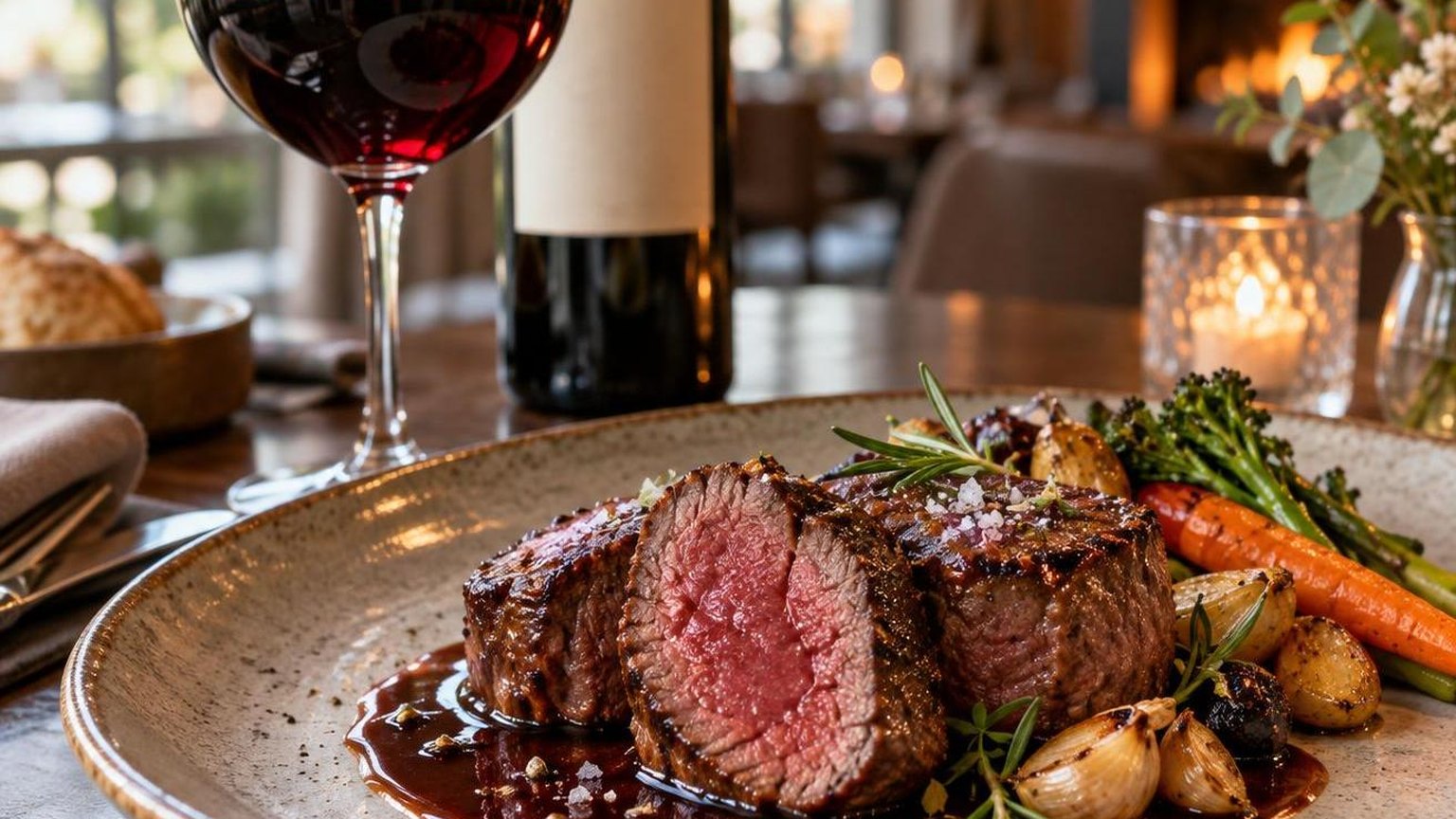
Best Red Wines for Beef Tenderloin
Beef tenderloin is lean, finely grained, and milder than ribeye, so it needs acidity and moderate tannin rather than sheer power.
Choose the wine according to the sauce, crust, and cooking method; these usually contribute more flavor than the meat itself.
Pinot Noir: Best for Simply Roasted Tenderloin
Pinot Noir combines bright acidity, restrained tannin, and red-fruit flavors that support tenderloin without masking it.
Red Burgundy adds earthy, mushroom, and savory notes, while Oregon Pinot Noir commonly offers riper cherry fruit and gentle spice.
Choose Pinot Noir for rare or medium-rare tenderloin served with mushrooms, shallots, herbs, or a light red-wine reduction. Avoid heavily extracted, high-alcohol examples because sweet oak and dense fruit can overwhelm the cut’s subtle flavor.
Cabernet Sauvignon: Best with a Dark Crust or Rich Sauce
Cabernet Sauvignon works when grilling, peppercorn crust, bordelaise, or demi-glace adds intensity. Its tannins bind with meat proteins and fat, while acidity refreshes the palate.
Because tenderloin has limited marbling, balanced Bordeaux or restrained Napa Cabernet is safer than an exceptionally tannic bottling.
A Cabernet-based Left Bank Bordeaux is especially effective with bordelaise. Cabernet supplies cassis, cedar, and structure; Merlot in the blend can soften the texture.
Decant young examples to reduce their initial firmness and make aromatic details easier to perceive.
Merlot: Best All-Purpose Choice
Merlot offers plum, black cherry, moderate acidity, and softer tannins than Cabernet Sauvignon. It suits bacon-wrapped tenderloin, pan-seared filet mignon, and preparations finished with garlic butter.
Right Bank Bordeaux adds savory tobacco and mineral notes that complement mushrooms and truffles.
Nebbiolo: Best with Truffles or Earthy Sauces
Barolo and Barbaresco pair well with tenderloin served alongside truffles, porcini, or risotto. Nebbiolo’s high acidity cuts through butter-based sauces, while aromas of rose, cherry, tar, and dried herbs echo earthy garnishes.
Mature bottles are preferable because young Nebbiolo can taste aggressively tannic beside lean meat.
Rioja Reserva: Best with Smoke and Roasted Flavors
Tempranillo-based Rioja Reserva brings red cherry, leather, vanilla, tobacco, and measured tannin. It is particularly successful with grilled tenderloin, roasted peppers, paprika, or bacon.
Oak-aged savory flavors connect naturally with browning produced by searing.
| Wine | Best preparation | Suggested serving temperature | Typical aeration |
| Pinot Noir | Roast, mushrooms, herbs | 55–60°F | 15–30 minutes |
| Cabernet Sauvignon | Grilled, pepper crust, bordelaise | 60–65°F | 45–90 minutes |
| Merlot | Pan-seared, bacon-wrapped | 58–64°F | 30–60 minutes |
| Nebbiolo | Truffles, porcini, butter sauce | 60–65°F | 60–120 minutes |
| Rioja Reserva | Smoked or paprika-seasoned | 58–64°F | 30–60 minutes |
Serving temperatures follow the cool-cellar range generally recommended for structured reds; warmer wine emphasizes alcohol, while excessive chilling hardens tannin. Aeration times are practical starting points, not fixed rules.
Taste after opening, then decant only while the wine continues to gain aroma and balance.
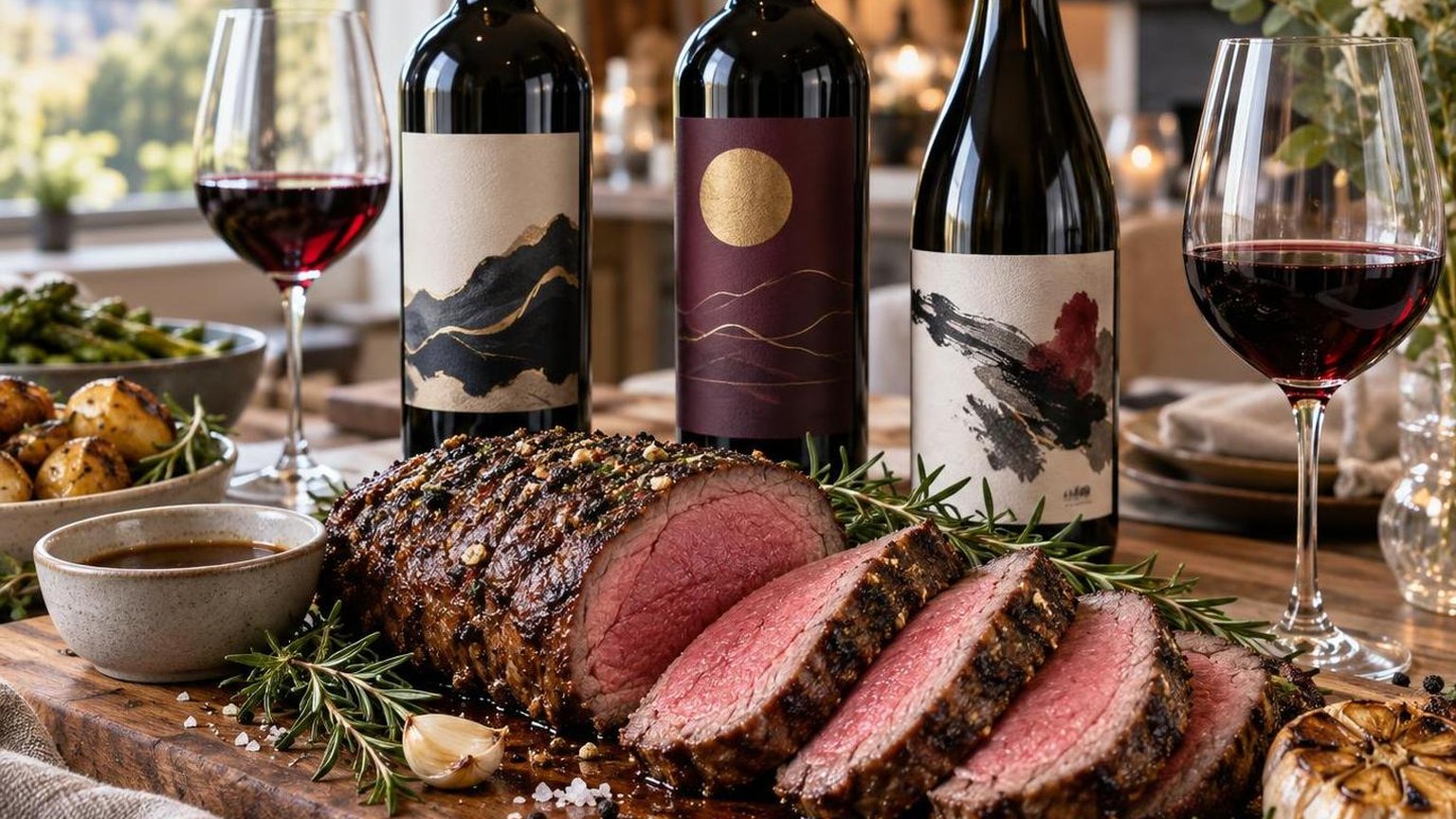
White and Rosé Options That Work
Red wine dominates beef tenderloin pairing conversations, but specific whites and rosés complement this lean cut effectively.
Tenderloin carries less marbling than ribeye—roughly 6–7 grams of fat per 3-ounce serving—making it more receptive to fuller-bodied white wines than fattier steaks.
Full-Bodied Whites With Enough Structure
Oak-aged Chardonnay stands as the most reliable white pairing for beef tenderloin. Burgundian examples from appellations like Meursault or Puligny-Montrachet deliver 13–13.5% ABV with enough weight and texture to match the meat’s density.
California Chardonnays from Sonoma Coast or Russian River Valley work similarly. Look for bottles aged 10–14 months in French oak, which develop buttery, toasted-hazelnut notes that mirror the Maillard crust on seared tenderloin.
White Rhône blends built on Marsanne and Roussanne offer another path. Hermitage Blanc and Châteauneuf-du-Pape Blanc deliver viscous, waxy textures at 13.5–14.5% ABV that stand up to béarnaise or brown butter sauces.
| White Wine | ABV Range | Oak Aging | Best Tenderloin Preparation |
| Meursault (Burgundy) | 13–13.5% | 12–18 months | Pan-seared with cream sauce |
| Sonoma Coast Chardonnay | 13.5–14.5% | 10–14 months | Grilled with herb butter |
| Hermitage Blanc | 13.5–14% | 12–16 months | Roasted with mushroom duxelles |
| Condrieu (Viognier) | 13–14% | 6–10 months | Beef tenderloin with apricot glaze |
Rosé Wines With Substance
Not every rosé works here. Pale, 12% ABV Provence rosé lacks the body to pair with seared beef. Seek out darker, more structured bottlings with at least 13% alcohol and some tannic grip from skin contact.
Tavel remains the benchmark rosé for red meat. This southern Rhône appellation mandates dry rosé production exclusively.
Tavel typically reaches 13.5–14.5% ABV with 24–48 hours of maceration, producing deeper salmon-copper color and genuine structural weight.
Bandol rosé from Mourvèdre grapes offers similar heft. The grape’s naturally high tannin transfers even during brief skin contact, giving these wines a savory, almost meaty quality at 13–14% ABV.
- Tavel (Rhône Valley) — 48-hour maceration gives tannic backbone; pairs with medium-rare tenderloin and roasted vegetables
- Bandol Rosé (Provence) — Mourvèdre-based, 13–14% ABV; handles peppercorn-crusted preparations
- Cerasuolo d’Abruzzo — Italian Montepulciano rosé with 12.5–13.5% ABV; matches tenderloin carpaccio or tartare
- Navarra Rosado (Spain) — Garnacha-based, often 13–14% ABV; works with grilled tenderloin and chimichurri
Temperature Matters
Serve these whites at 55–58°F rather than standard white-wine temperature of 45–50°F. Warmer serving amplifies body and rounds out oak tannins.
Rosés benefit from 52–55°F, slightly below room temperature, to preserve freshness while allowing weight to show.
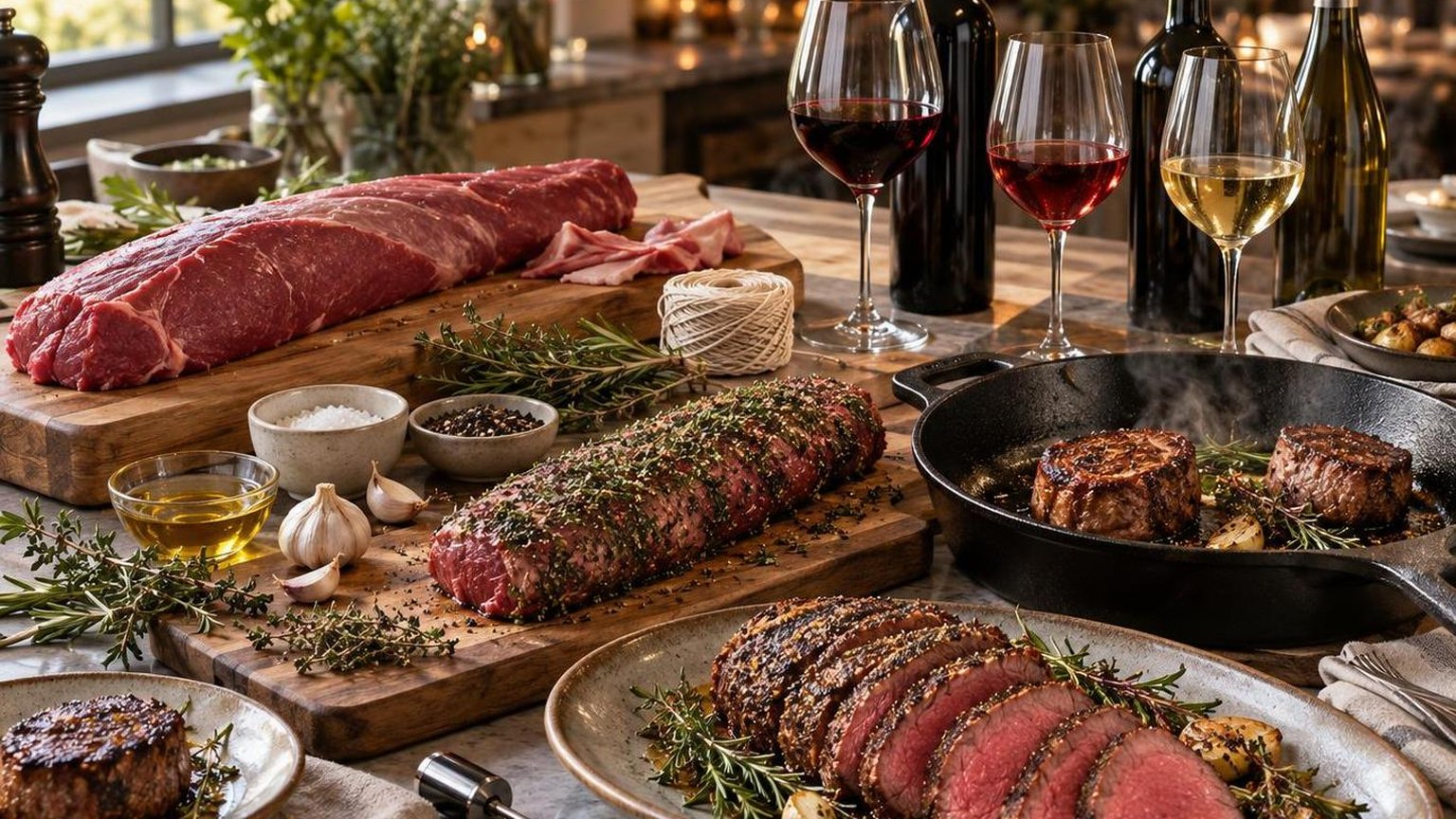
Pairing by Tenderloin Cooking Method
Beef tenderloin is lean, finely grained, and less intensely beefy than ribeye, so cooking method often matters more than the cut itself.
Match wine weight and tannin to browning, smoke, sauce, and doneness rather than choosing the biggest available Cabernet Sauvignon.
| Preparation | Target internal temperature | Best wine direction |
| Rare | 120–125°F before resting | Pinot Noir or cru Beaujolais |
| Medium-rare | 130–135°F before resting | Merlot, Cabernet Franc, or restrained Cabernet Sauvignon |
| Medium | 140–145°F before resting | Rioja Reserva or mature Bordeaux blend |
| USDA minimum for whole beef steaks and roasts | 145°F followed by a 3-minute rest | Moderate-tannin red with fresh acidity |
Pan-Seared Filet Mignon
A hot skillet produces a dark Maillard crust without adding smoke.
That savory surface suits medium-bodied Merlot, Cabernet Franc, or Rioja Reserva, whose red-fruit acidity refreshes the palate while moderate tannins avoid overwhelming tenderloin’s limited fat.
For a butter-basted filet with thyme and garlic, choose Right Bank Bordeaux or Washington Merlot. Plum fruit echoes the browned butter’s sweetness, while herbal notes connect with thyme.
Avoid heavily extracted, high-alcohol reds when the steak is served without sauce; they can make the meat seem comparatively mild.
Grilled Tenderloin
Charcoal, wood, and hard grill marks increase bitterness, smoke, and roasted flavor. Cabernet Sauvignon, Syrah, or a Cabernet-based Bordeaux blend works because darker fruit, firmer tannin, and oak-derived toast can meet those stronger flavors.
Choose Northern Rhône Syrah for pepper-rubbed beef; its black pepper, olive, and smoked-meat character creates a direct aromatic bridge.
With a gas-grilled filet that has only light browning, select Cabernet Franc or cooler-climate Cabernet Sauvignon rather than a dense, heavily oaked style.
Oven-Roasted Whole Tenderloin
Roasting usually creates less crust relative to the amount of softly textured interior. Pinot Noir, mature Rioja, or aged Bordeaux therefore fits better than young, tannic Napa Cabernet.
Bottle age softens tannin and introduces savory notes resembling the roast’s browned exterior.
With mushroom duxelles or a Wellington preparation, Pinot Noir from Burgundy or Oregon is especially effective. Earthy aromas complement mushrooms, bright acidity cuts puff-pastry butter, and restrained tannin respects the delicate beef.
Sous Vide, Then Seared
Sous vide yields uniform doneness and minimal moisture loss, but the brief finishing sear determines the pairing. A lightly seared tenderloin favors Pinot Noir or Gamay; a deeply crusted finish supports Merlot, Cabernet Franc, or Rioja.
Dry the meat thoroughly before searing. Better surface browning creates roasted flavors that make structured red wine taste more integrated rather than detached from the dish.
Smoked Tenderloin
Smoking adds intensity that the lean meat does not naturally possess. Pair restrained oak smoke with Syrah, Malbec, or Tempranillo.
For sweeter woods or barbecue glaze, select a fruit-forward Zinfandel, but retain enough acidity to prevent the combination from becoming heavy.
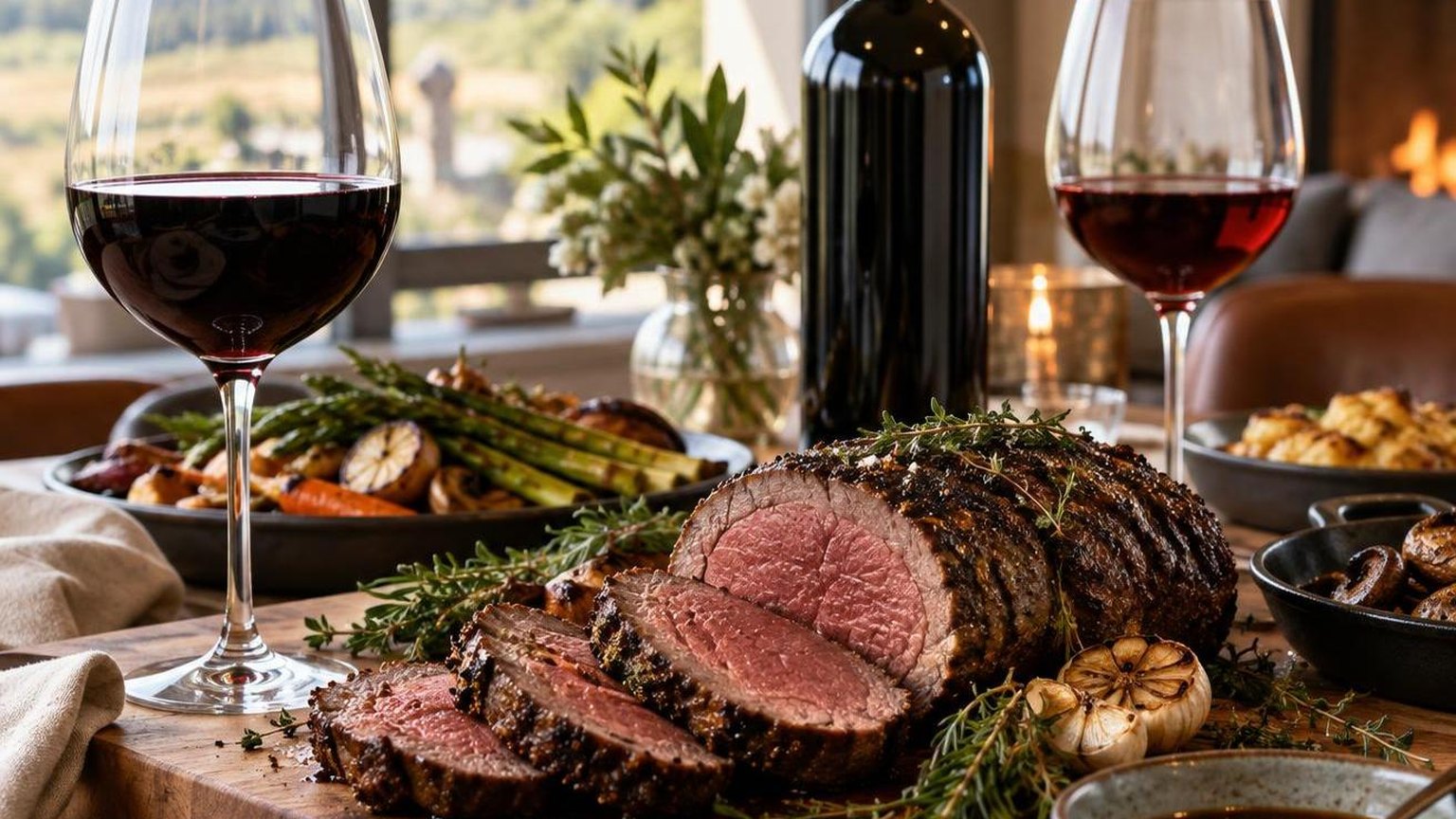
Sauce and Seasoning Change the Match
Beef tenderloin is lean, mildly flavored, and unusually tender, so the sauce often determines the wine more than the meat. Match the wine’s acidity, tannin, fruit intensity, and alcohol to the strongest element on the plate.
Use the Sauce as the Pairing Target
A Cabernet Sauvignon that suits peppercorn sauce can overpower simply roasted tenderloin. Conversely, a delicate Pinot Noir may taste thin beside blue cheese or a concentrated red-wine reduction.
| Sauce or seasoning | Best wine direction | Why it works |
| Salt, black pepper, and herbs | Pinot Noir, Merlot, or restrained Cabernet Franc | Moderate tannin respects the lean meat; herbal aromas echo thyme and rosemary. |
| Red-wine jus or demi-glace | Cabernet Sauvignon, Bordeaux blend, or Syrah | Reduction adds savory concentration, supporting firmer tannin and darker fruit. |
| Mushroom sauce | Pinot Noir, aged Nebbiolo, or mature Rioja | Earth, dried herbs, and forest-floor aromas reinforce mushroom umami. |
| Béarnaise or cream sauce | Chardonnay, white Burgundy, or low-tannin Merlot | Acidity refreshes the palate after butterfat; excessive tannin can feel coarse. |
| Blue cheese crust | Syrah, Cabernet Sauvignon, or Port | Salt and pungency require concentrated fruit; sweetness can soften salty intensity. |
| Chimichurri | Cabernet Franc, Malbec, or Carménère | Fresh acidity handles vinegar, while herbal notes complement parsley and oregano. |
| Horseradish | Riesling, Grüner Veltliner, or fruit-forward Pinot Noir | High acidity and modest alcohol limit the burning effect of pungent heat. |
Account for Salt, Fat, Acid, and Heat
Salt generally makes tannic wine seem smoother and fruitier.
The Wine & Spirit Education Trust’s systematic pairing guidance identifies salt as a component that can reduce the perception of bitterness and acidity while increasing apparent body and fruit character.
Butter and cream need freshness rather than maximum power. Choose a Chardonnay with clear acidity, preferably without heavy new-oak sweetness, or a supple red with restrained tannin.
Béarnaise also contains vinegar and tarragon, making freshness and herbal compatibility especially important.
Acidic sauces can make low-acid wine seem flat. A tomato-based sauce, sharp chimichurri, or vinegar-heavy reduction therefore needs a wine with equal or greater perceived acidity.
Sangiovese, Barbera, Cabernet Franc, and traditional-method sparkling wine are dependable options.
Chile, cayenne, and aggressive horseradish become hotter with elevated alcohol and firm tannin. Favor juicy fruit, lower alcohol, and slight sweetness. Off-dry Riesling works particularly well when the seasoning is hotter than the beef itself.
Adjust for Cooking and Serving
A hard sear creates browned, roasted flavors through Maillard reactions, supporting darker-fruited and more oak-influenced reds.
Poached or gently roasted tenderloin retains subtler flavors and pairs better with Pinot Noir, mature Rioja, or structured white Burgundy.
Taste the finished sauce before opening the bottle. If it is richer, saltier, sweeter, more acidic, or more pungent than the beef, select for that dominant trait; tenderloin rarely supplies enough fat or flavor to rescue an overpowered pairing.
Common Questions
What wine pairs best with a classic beef tenderloin?
Cabernet Sauvignon from Napa Valley or Bordeaux is the benchmark pairing because its firm tannins (typically 28–32 on the Adams-Harbertson scale) bind with the proteins in beef.
Softening the wine’s astringency while amplifying the meat’s umami.
A bottle in the $40–$80 range—such as a Rutherford or Pauillac appellation—delivers enough structure without overwhelming tenderloin’s comparatively delicate texture among beef cuts.
Does the cooking method change which wine works with beef tenderloin?
Yes, significantly.
A grilled or charcoal-seared tenderloin develops Maillard-reaction compounds that favor smoky, oak-aged reds like Malbec from Mendoza’s Uco Valley, while a butter-basted, oven-roasted filet mignon pairs better with a softer.
Fruit-driven Merlot or a Right Bank Bordeaux (≥60% Merlot blend) that complements the richness without competing with char flavors.
Can you pair Pinot Noir with beef tenderloin?
Pinot Noir works exceptionally well, especially with tenderloin prepared without heavy sauces.
Oregon Willamette Valley or Burgundy Côte de Nuits bottlings (look for villages like Gevrey-Chambertin or Vosne-Romanée) offer enough earthy depth and silky tannin to match the lean, tender texture of the cut.
Choose vintages with 13–13.5% ABV for optimal balance.
What wine complements beef tenderloin with a peppercorn or béarnaise sauce?
A peppercorn-crusted tenderloin (steak au poivre) demands a spice-driven Syrah from the Northern Rhône—Côte-Rôtie or Crozes-Hermitage—where the wine’s black-pepper and smoked-meat notes (from rotundone compound concentrations.
Averaging 100–200 ng/L) mirror the dish.
For béarnaise, a medium-bodied Chardonnay from Meursault or Pouilly-Fuissé handles the tarragon and butter emulsion without clashing.
Is red wine the only option, or can white wine pair with beef tenderloin?
Full-bodied whites can work with lighter tenderloin preparations.
An oak-aged white Burgundy (Puligny-Montrachet or Corton-Charlemagne) or a barrel-fermented Viognier with 14%+ ABV provides enough weight and texture to stand alongside a chilled, thinly sliced beef tenderloin carpaccio dressed with olive oil.
Lemon, and Parmigiano-Reggiano.
The key is matching the wine’s body to the dish’s intensity.
How should you serve the wine temperature-wise for a beef tenderloin dinner?
Serve structured reds like Cabernet Sauvignon at 62–65°F (17–18°C), not “room temperature,” which in most US homes sits around 72°F and makes alcohol taste hot and tannins flabby.
Pull the bottle from a 55°F wine fridge 30 minutes before serving, or refrigerate a room-temperature bottle for 15 minutes. Lighter reds like Pinot Noir benefit from the cooler end at 58–62°F (14–17°C).
Further Reading
- Sherry Vs Brandy: What Is The Difference?
- How Many Shots Are in a Bottle of Wine?
- What Is the Alcohol Content of Black Box Wine?
- How Long Does An Unopened Bottle Of Wine Last?
- How Many Wine Coolers To Get Drunk?
- What Does Marsala Wine Taste Like? Answer From Expert
- How Much Wine Is In A Bottle?
- How Many Ounces In Wine Bottle? The Complete, Real-World Guide (2026 Edition)
- All Alcohol Guides