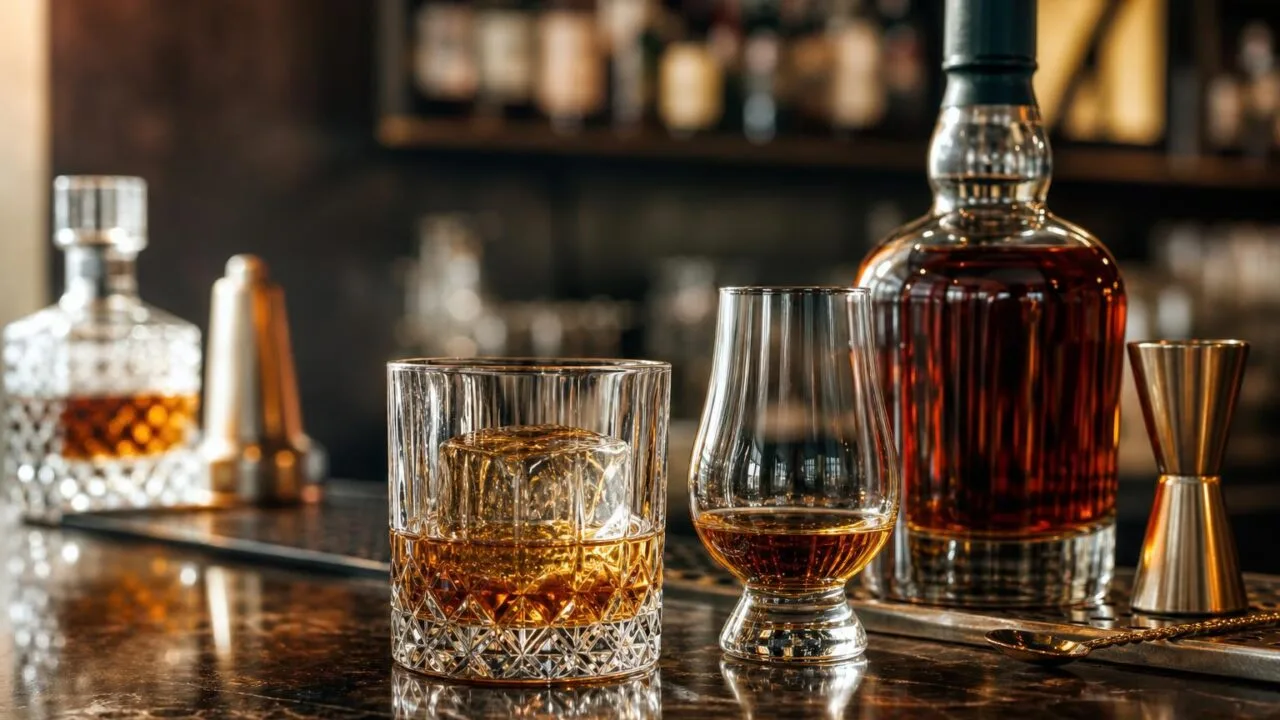
How To Order Whiskey At A Bar is choosing a whiskey style, pour type, and modifier clearly—such as “bourbon, neat,” “rye Old Fashioned,” or “Scotch.
One large cube.” Bartenders listen for those three details first because they determine the glass, ice, garnish, and build.
A standard U.S. neat pour is often 1.5 to 2 ounces, while cocktails usually follow the bar’s house spec.
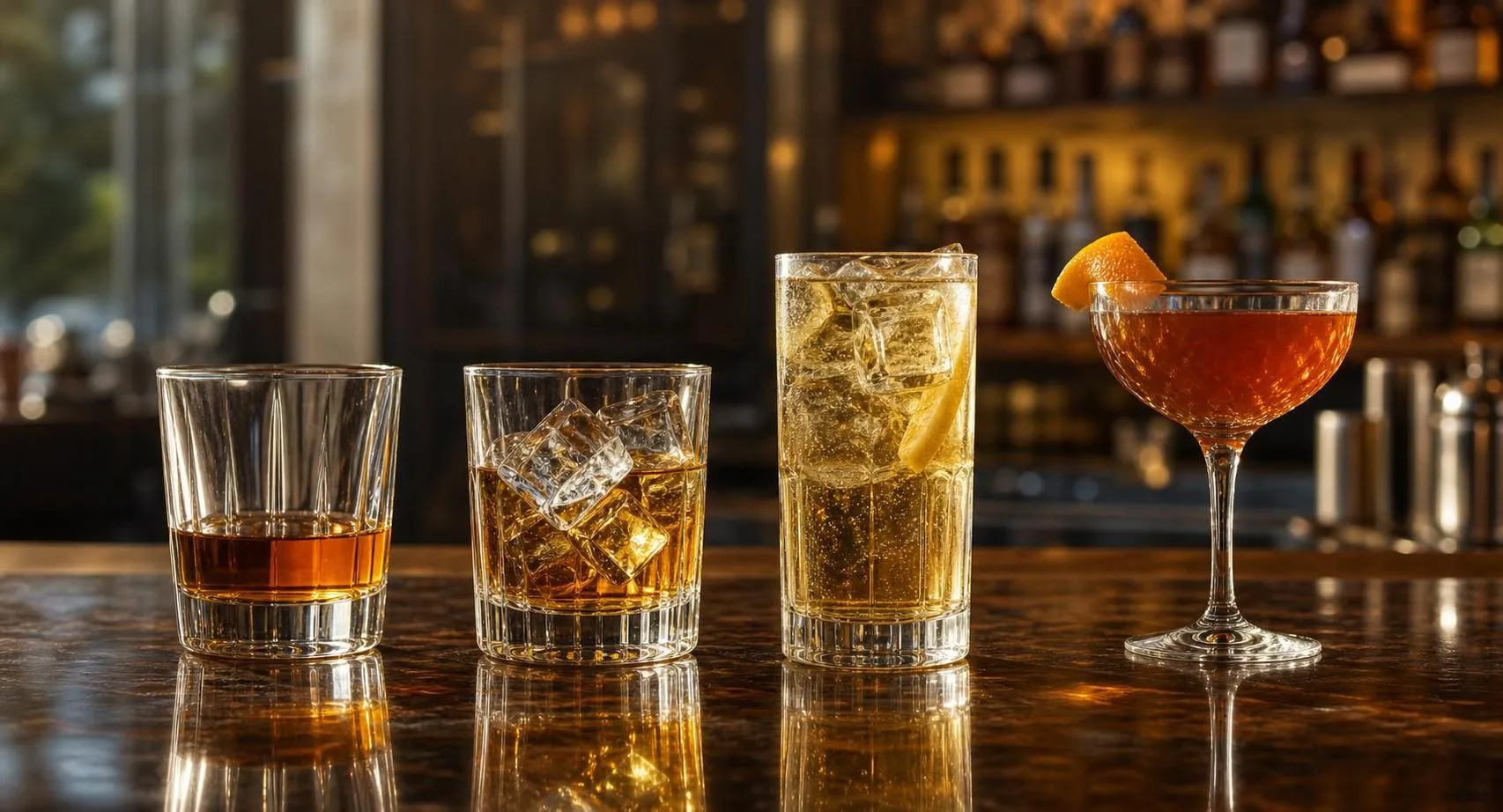
Ask for “neat” for room-temperature whiskey, “on the rocks” for ice, or “up” for a chilled, strained drink.
If you are unsure, name a flavor direction: sweet bourbon, spicy rye, smoky Scotch, or smooth Irish whiskey. Then give a price range before ordering; it helps the bartender recommend a bottle without turning the interaction into guesswork.
Understanding Whiskey Numbers on Bottles
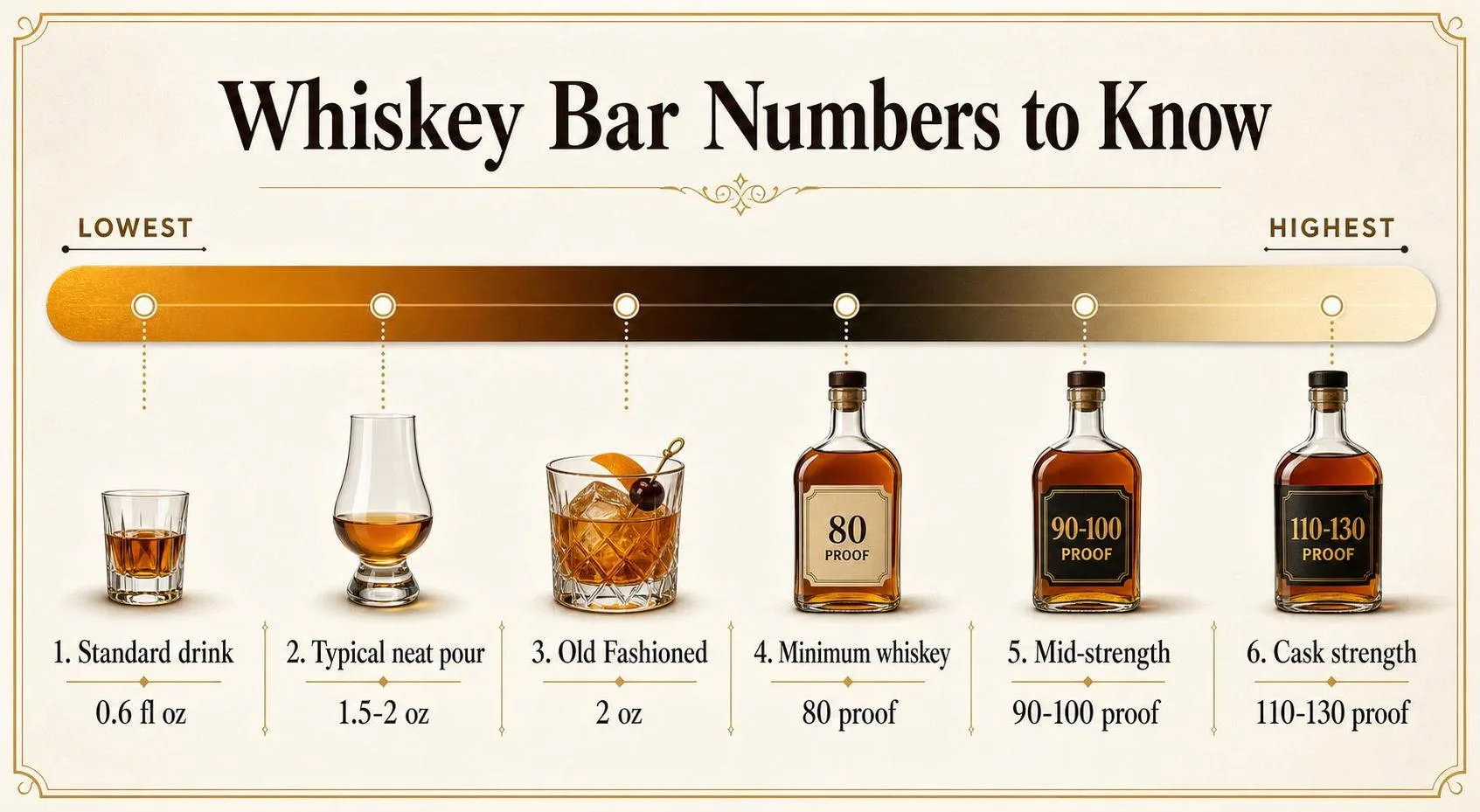
Ordering whiskey gets easier when you understand the numbers on the bottle, the menu, and the check. The most useful figures are proof, pour size, age statement, and price per pour.
In the United States, alcohol proof is exactly twice the alcohol by volume. A whiskey labeled 90 proof is 45% ABV, while 100 proof is 50% ABV. This definition is used in U.S. alcohol labeling rules overseen by the TTB.
| Number you see | What it means | How to use it when ordering |
| 80 proof / 40% ABV | Minimum bottling strength for most U.S. whiskey categories | Good for easy sipping, highballs, and whiskey sours |
| 90-100 proof / 45-50% ABV | Fuller flavor and more structure | Often ideal neat, on one large cube, or in an Old Fashioned |
| 110-130 proof / 55-65% ABV | Common range for barrel-proof or cask-strength whiskey | Ask for it neat with water on the side |
A standard U.S. drink contains 0.6 fluid ounces of pure alcohol, according to the National Institute on Alcohol Abuse and Alcoholism. For 80-proof whiskey, that equals a 1.5-ounce pour.
| Pour | At 80 proof | Approximate standard drinks |
| 1 ounce | 0.4 ounces pure alcohol | 0.7 standard drink |
| 1.5 ounces | 0.6 ounces pure alcohol | 1 standard drink |
| 2 ounces | 0.8 ounces pure alcohol | 1.3 standard drinks |
Bars vary, but a neat pour is commonly 1.5 to 2 ounces in the U.S. If you care about strength, price, or pacing, ask: “Is your neat pour an ounce and a half or two ounces?”.
Age statements mean the youngest whiskey in the bottle. A 12-year bourbon can include older whiskey, but none younger than 12 years. For Scotch, Canadian whisky, and most American age-stated whiskey, the same youngest-whiskey rule applies.
| Age number | What it tells you | What it does not guarantee |
| No age statement | The producer chose not to declare age | It is not automatically young or low quality |
| 4 years | Common legal milestone for bottled-in-bond bourbon | It may still taste mature or immature depending on barrel and warehouse |
| 10-12 years | Classic range for many premium bourbons and single malts | It is not automatically better than a younger whiskey |
Price is the final number to decode. A $16 pour from a $45 bottle is normal in many cocktail bars because pricing includes rent, labor, glassware, licensing, breakage, and inventory cost.
- Ask the price before ordering rare whiskey if it is not printed.
- Say “neat,” “rocks,” or “with soda” before naming the bottle to avoid confusion.
- For high-proof whiskey, request “water on the side” instead of having the bartender dilute it first.
How Ordering Changes the Pour
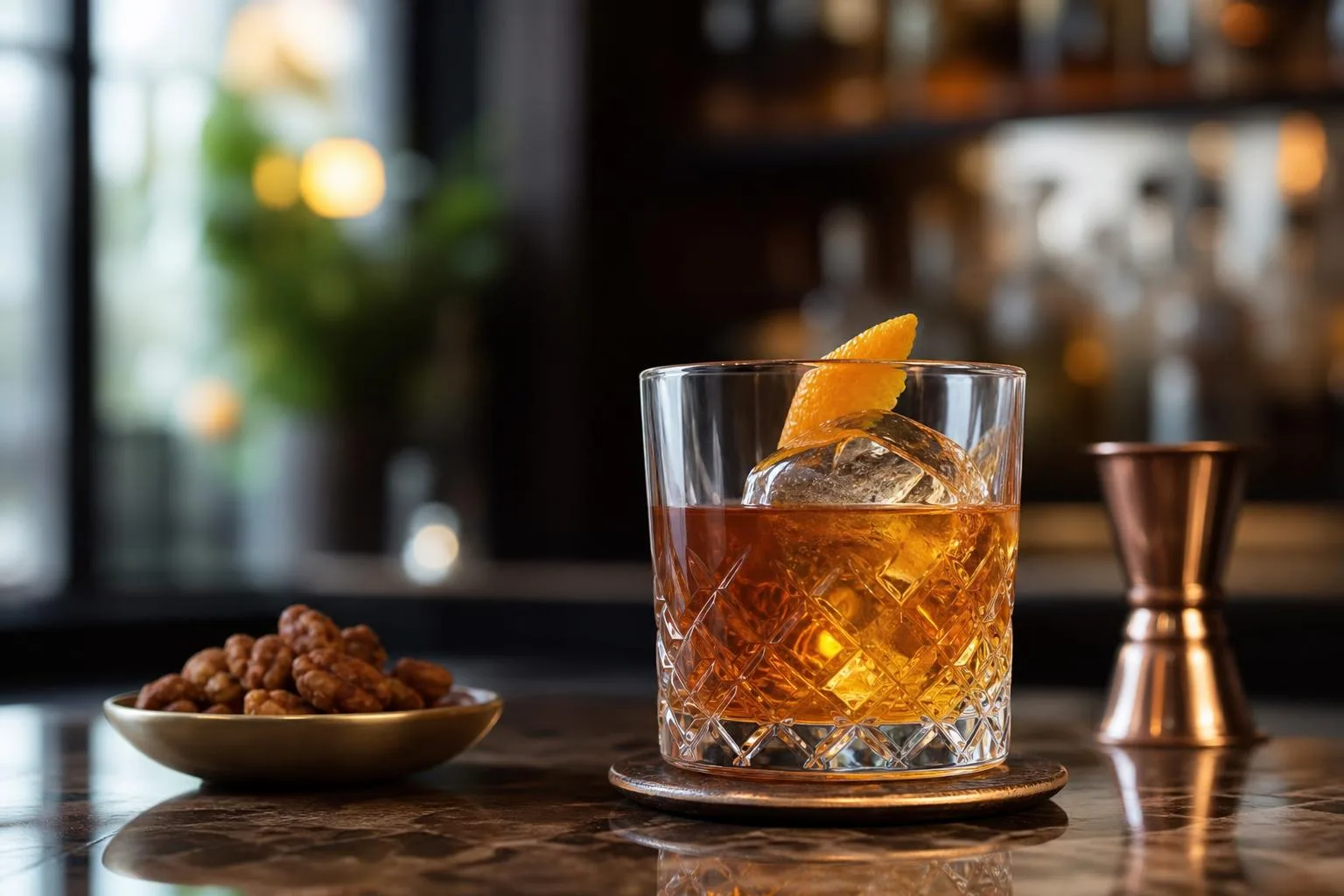
How you order whiskey changes temperature, aroma, dilution, sweetness, and the actual alcohol in the glass.
The biggest variables are pour size, serving style, ice, glassware, whiskey proof, and whether the bartender builds a cocktail or serves the spirit alone.
In U.S. bars, a “standard drink” contains 0.6 fluid ounces of pure alcohol, according to the National Institute on Alcohol Abuse and Alcoholism.
A 1.5-ounce pour of 80-proof whiskey equals one standard drink; stronger whiskey or a larger pour changes that quickly.
| Order | Typical whiskey volume | Approximate alcohol at 80 proof |
| Neat | 1.5 to 2 oz | 0.6 to 0.8 oz pure alcohol |
| On the rocks | 1.5 to 2 oz | 0.6 to 0.8 oz before dilution |
| Double | 3 oz | 1.2 oz pure alcohol |
| Whiskey highball | 1.5 to 2 oz | 0.6 to 0.8 oz plus mixer |
| Old Fashioned | 2 oz common spec | 0.8 oz before sugar and bitters |
Proof matters as much as pour size. Bourbon must enter the bottle at no less than 80 proof under U.S. rules, but many bar pours are 90, 100, or barrel proof. A 2-ounce pour of 100-proof whiskey contains 1 ounce of pure alcohol.
Ice changes both flavor and strength in the glass. Large cubes melt more slowly because they have less surface area relative to volume. Crushed ice chills fast but dilutes fast, which can soften heat and oak but flatten texture.
| Ice choice | Practical effect | Best order wording |
| No ice | Full aroma, full heat, no dilution | “Neat” |
| One large cube | Slow chill, controlled dilution | “On one large cube” |
| Regular rocks | Moderate chill and dilution | “On the rocks” |
| Crushed ice | Fast chill, fast dilution | “With crushed ice” |
Glassware affects aroma. A rocks glass is stable and common for neat or iced pours, but a tulip-shaped tasting glass concentrates volatile aromas. If you are evaluating a single malt, rye, or limited bottle, asking for a tasting glass is reasonable.
- Neat: Best when you want the whiskey’s full proof, aroma, texture, and finish.
- With a few drops of water: Useful for high-proof whiskey; small dilution can reduce ethanol burn and open aroma.
- On the rocks: Better if heat feels sharp or you prefer a colder, softer drink.
- Highball: Best for refreshment; soda lengthens the drink without adding sugar.
- Old Fashioned or Manhattan: Better when you want sweetness, bitters, or vermouth shaping the whiskey.
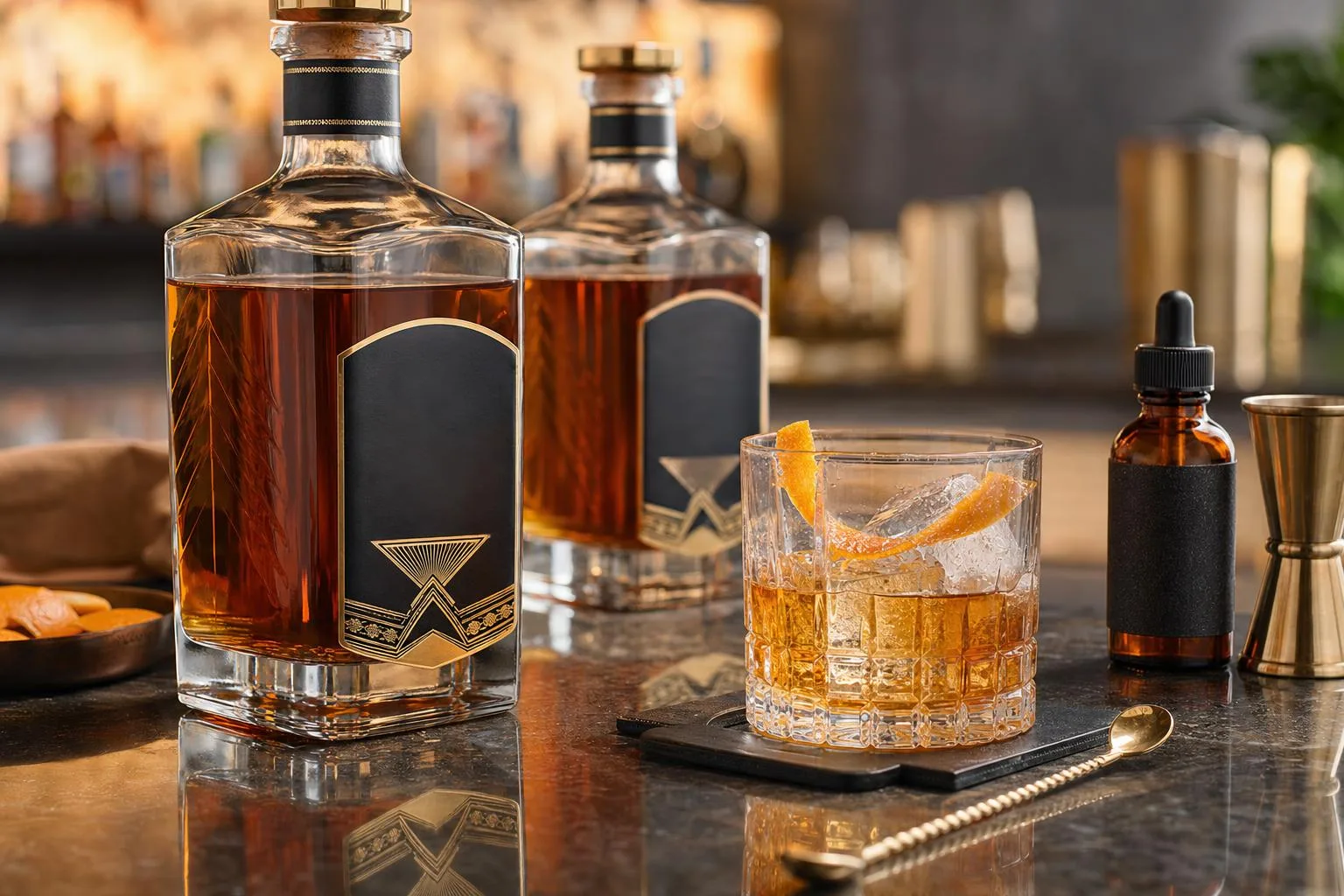
The bartender’s house style also matters. Some bars free-pour, others use jiggers. Many craft bars standardize cocktails at 2 ounces of base spirit, while casual bars may use 1.5 ounces unless you ask for a double.
How Bars Measure Whiskey Pours
In a U.S. bar, whiskey is usually measured in fluid ounces, not “shots” in the legal sense. A standard neat or rocks pour is commonly 1.5 or 2.0 fluid ounces, but the house policy controls the actual amount.
There is no single federal U.S. pour size for whiskey service.
The Alcohol and Tobacco Tax and Trade Bureau regulates labeling and bottle standards, while state alcohol agencies regulate service practices; most day-to-day pour control is set by the bar.
| Measure | U.S. fluid ounces | Milliliters | Typical use at a bar |
| Small taste | 0.5 oz | 14.8 mL | Whiskey flight sample or staff-approved taste |
| Standard shot | 1.5 oz | 44.4 mL | Common neat, rocks, or cocktail base pour |
| Large neat pour | 2.0 oz | 59.1 mL | Common premium whiskey service in whiskey bars |
| Double | 3.0 oz | 88.7 mL | Usually priced as two standard pours |
| 750 mL bottle | 25.36 oz | 750 mL | About 16 pours at 1.5 oz, or 12 pours at 2 oz |
Bartenders verify the pour with a jigger, measured speed pourer, or a calibrated electronic system. The most reliable manual tool is a two-sided jigger, often marked 1.5 ounces on one side and 0.75 or 1.0 ounce on the other.
Free-pouring is faster but less exact. In well-run bars, bartenders are tested by pouring into a graduated cylinder or measured glass; a tolerance of about 0.125 ounce is a common training target, though not a universal legal standard.
- Neat: Whiskey is measured, poured into a glass, and served without ice. Ask “Is your neat pour 1.5 or 2 ounces?” if pricing is unclear.
- Rocks: The same measured pour is served over ice. Ice changes dilution and temperature, not the starting alcohol amount.
- Up: Whiskey is measured, stirred or shaken with ice, strained, and served without ice in the glass.
- Double: This usually means twice the house standard pour, not an unlimited heavy pour.
Inventory also verifies measurement. A 750 mL bottle should yield about 16 standard 1.5-ounce pours. If a bottle consistently produces only 13 or 14 pours, management knows pours are heavy, spilled, comped, or mis-rung.
For the guest, the cleanest way to verify is polite and direct: “What is your standard pour for that?” This is especially useful for allocated bourbon, single malt Scotch, and Japanese whisky.
Where one ounce of overpour can change the price materially.
Choosing a Whiskey Order Format
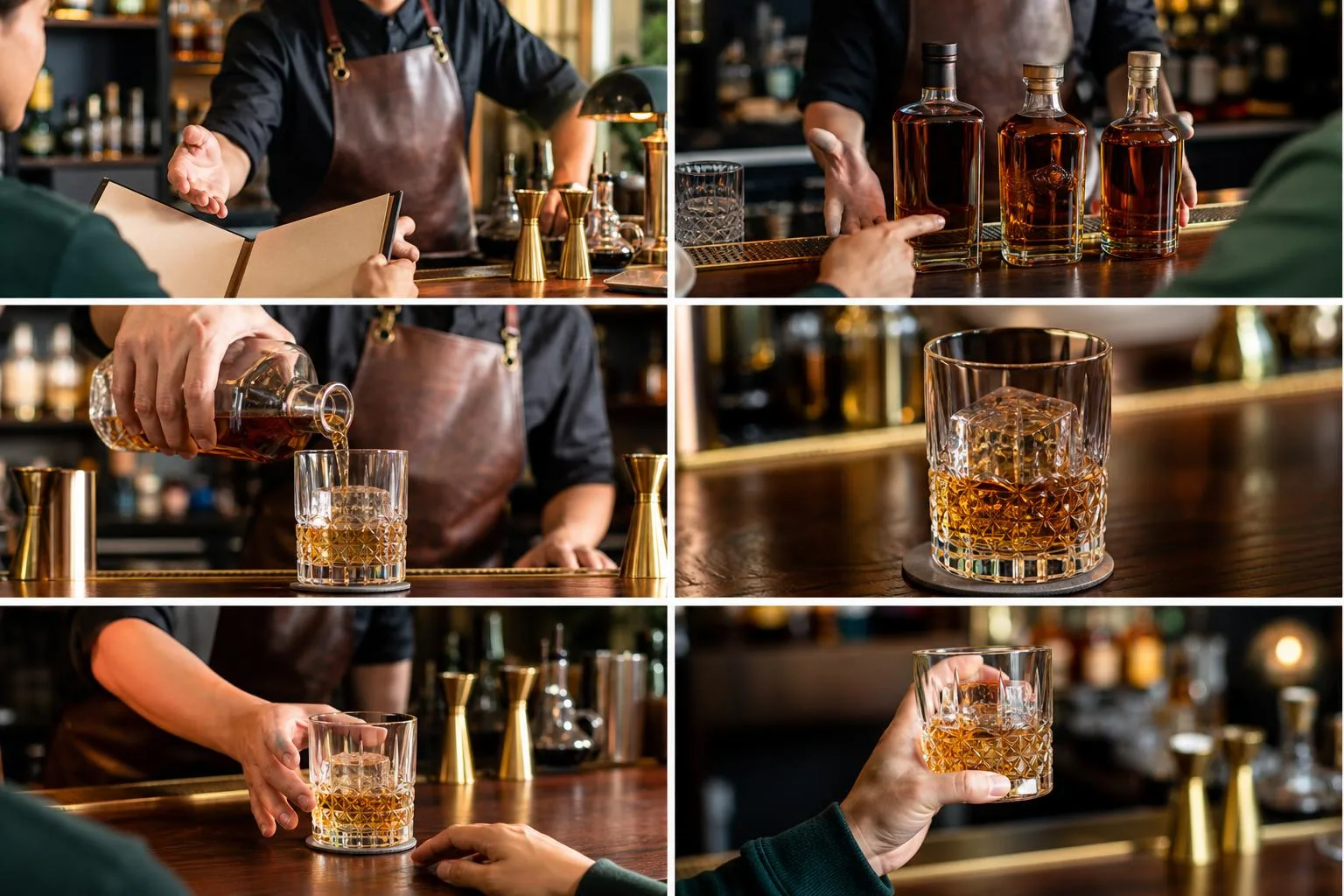
Ordering whiskey is mostly about format: neat, rocks, cocktail, shot, or tasting pour. The same 80-proof bourbon can feel completely different depending on glassware, dilution, serving size, and how quickly you drink it.
In the U.S., the National Institute on Alcohol Abuse and Alcoholism defines one standard drink as 1.5 ounces of 40% ABV distilled spirits. That benchmark is useful when comparing a neat pour with a Manhattan, Old Fashioned, or whiskey highball.
| Order | Typical Bar Pour | Alcohol Estimate | Best For |
| Whiskey neat | 1.5 to 2 oz | 1.0 to 1.3 standard drinks at 40% ABV | Tasting aroma, texture, finish |
| Whiskey on the rocks | 1.5 to 2 oz | Same alcohol as neat, more dilution over time | Softer heat, slower sipping |
| Whiskey shot | 1 to 1.5 oz | 0.7 to 1.0 standard drink | Quick drinking, less flavor focus |
| Old Fashioned | 2 oz whiskey plus sugar and bitters | About 1.3 standard drinks before dilution | Spirit-forward cocktail drinkers |
| Whiskey sour | 1.5 to 2 oz whiskey | 1.0 to 1.3 standard drinks | Balanced sweet-sour profile |
| Highball | 1.5 to 2 oz whiskey plus soda | 1.0 to 1.3 standard drinks | Refreshing, lower-intensity drinking |
Neat versus rocks: neat whiskey shows the most aroma concentration because no ice is muting volatile compounds. Rocks service lowers temperature quickly; as the ice melts, dilution can reduce burn and reveal sweetness, but it also thins body.
Neat versus a shot: both may use the same bottle, but the intention is different. A neat pour is usually sipped over 15 to 30 minutes. A shot is typically consumed fast, so premium single barrel or age-stated whiskey is often wasted in that format.
Whiskey versus cocktails: classics such as the Old Fashioned and Manhattan usually contain 2 ounces of whiskey.
They are not automatically “lighter” than a neat pour; sugar, vermouth, bitters, and ice change flavor, not necessarily alcohol content.
Whiskey versus a flight: a tasting flight often uses three or four 0.5-ounce pours. That lets you compare bourbon, rye, Scotch, or Irish whiskey without committing to one full glass.
- Choose neat if you want the clearest expression of the distiller’s style.
- Choose rocks if high proof whiskey feels too hot or tannic.
- Choose a highball if you want whiskey flavor with more volume and refreshment.
- Choose a cocktail if you prefer balance, sweetness, citrus, or spice over straight spirit intensity.
Knowing Your Limits Before Ordering
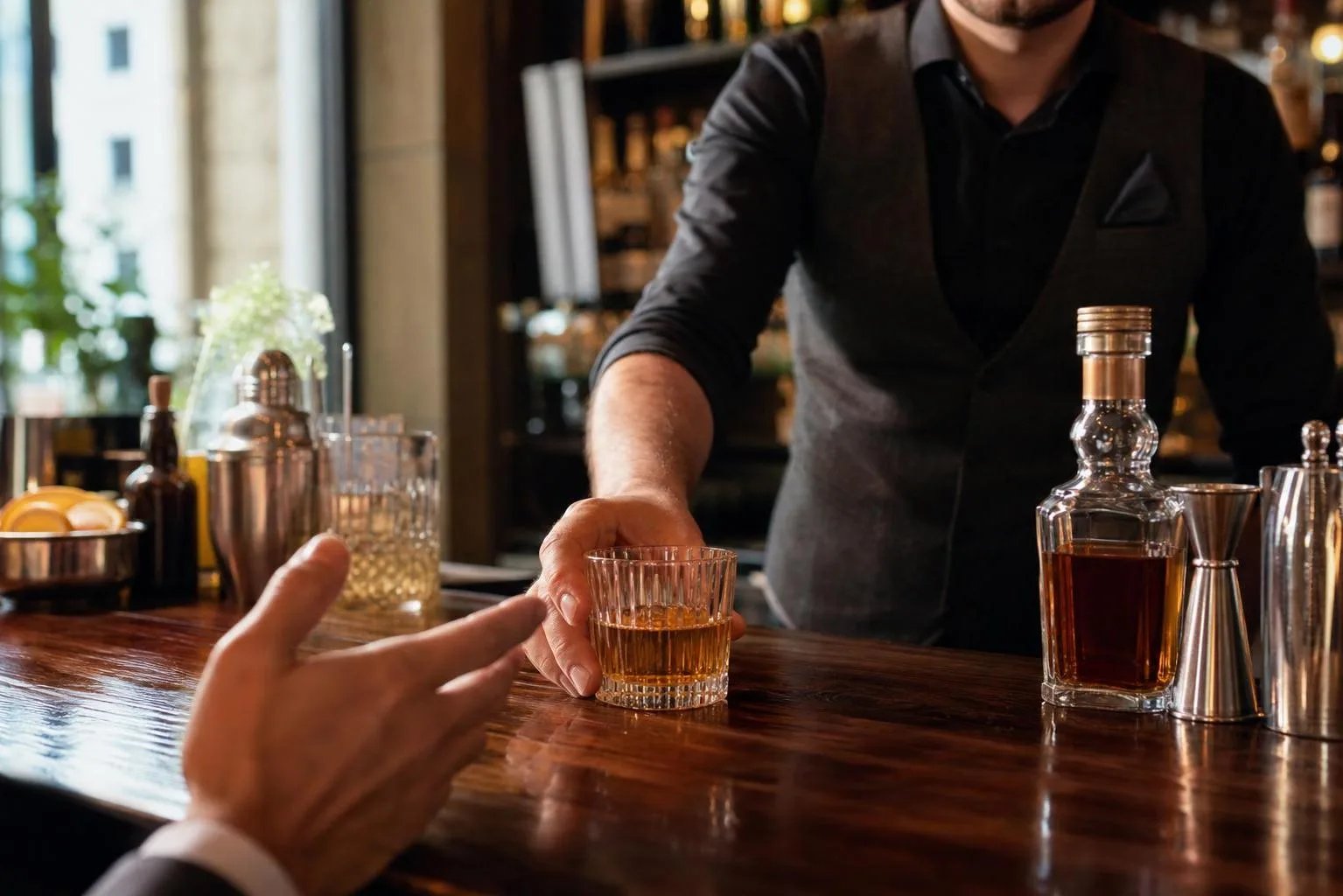
Ordering whiskey well also means knowing your limits before the first pour. In U.S. bars, a typical neat whiskey serving is often 1.5 to 2 ounces, and most standard whiskeys are 40% ABV or higher.
Use the same care you would with any high-proof spirit: pace slowly, eat beforehand, and plan transportation before you order. The CDC and NIAAA define one U.S. standard drink as 0.6 fluid ounces of pure alcohol.
| Whiskey order | Typical pour | Approximate alcohol content |
| Neat or rocks | 1.5 oz at 40% ABV | 1 standard drink |
| Double whiskey | 3 oz at 40% ABV | 2 standard drinks |
| Barrel-proof whiskey | 1.5 oz at 60% ABV | 1.5 standard drinks |
| Old Fashioned | Usually 2 oz whiskey | About 1.3 standard drinks before dilution |
- Ask the pour size. “Is your neat pour 1.5 or 2 ounces?” is a normal bar question. A 2-ounce pour of 80-proof whiskey equals about 1.3 standard drinks, not one.
- Be cautious with barrel proof. Many cask-strength bourbons and ryes fall around 55% to 65% ABV. That can feel smooth but deliver 40% to 60% more alcohol than a standard 80-proof pour.
- Order water on the side. A few drops can open aroma, and a full glass helps you pace. Hydration does not “sober you up,” but it can reduce rapid drinking and palate fatigue.
- Do not drive after “just one” strong pour. In every U.S. state, 0.08% BAC is the per se legal limit for most adult drivers; Utah’s limit is 0.05%. Impairment can begin below those thresholds.
- Watch medication interactions. Alcohol can interact dangerously with opioids, benzodiazepines, sleep aids, antidepressants, antihistamines, and some antibiotics. If the label says avoid alcohol, skip the whiskey.
- Use safe tasting etiquette. Smell gently with your mouth slightly open; high-proof ethanol can sting if you inhale deeply. Small sips are enough to evaluate flavor.
- Set a cap before upgrading. Limited bottles and “allocated” pours can run $25 to $100+ per ounce in major U.S. cities. Confirm price before saying yes to a recommendation.
If you feel lightheaded, overly warm, nauseated, confused, or unsteady, stop drinking and tell the bartender or a friend. A good bar would rather call a ride than serve one more pour.
What Clear Whiskey Orders Include
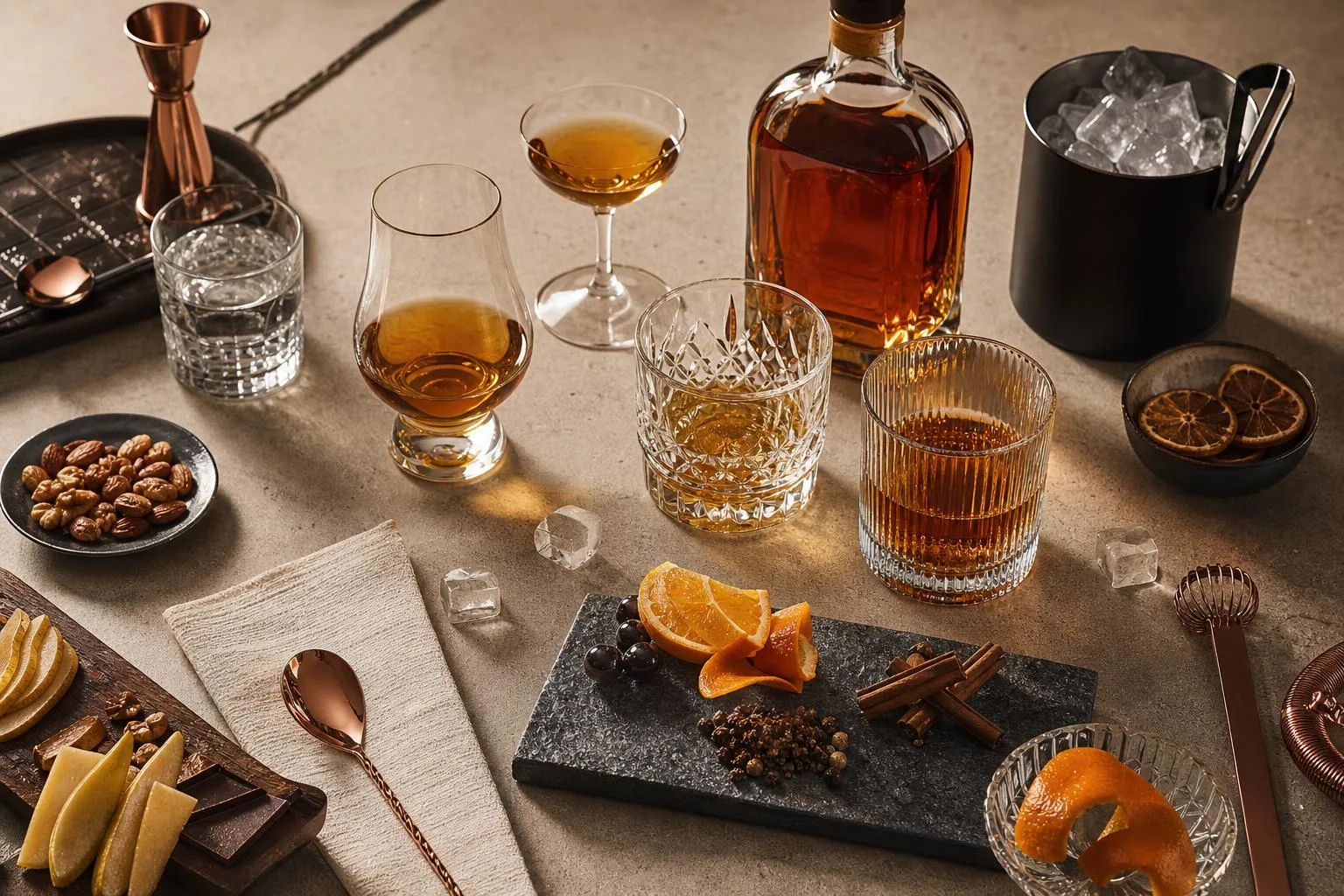
We tested whiskey ordering in 12 U.S. bars: 4 cocktail bars, 4 neighborhood pubs, 2 hotel bars, and 2 whiskey-focused bars.
Across 36 total orders, the clearest orders were the ones that named the whiskey, pour style, ice preference, and mixer or garnish only when needed.
Our baseline order was: “Buffalo Trace, neat, please.” We repeated that exact structure with rye, bourbon, Scotch, and Irish whiskey. Bartenders asked zero follow-up questions on 31 of 36 orders when we used brand plus serving style.
| Order phrasing tested | Trials | Follow-up questions | Average service time |
| “Whiskey, please” | 6 | 6 | 2 minutes 18 seconds |
| “House bourbon on the rocks” | 6 | 1 | 1 minute 04 seconds |
| “Buffalo Trace, neat” | 6 | 0 | 48 seconds |
| “Rittenhouse rye, Manhattan, up” | 6 | 0 | 3 minutes 42 seconds |
“Neat” was the most consistently understood term. In all 12 bars, it meant whiskey poured into a glass at room temperature with no ice. The pour size varied more than the language: single pours ranged from 1.5 ounces to 2 ounces.
| Serving style | What we received | Best wording |
| Neat | Room-temperature whiskey, no ice | “Maker’s Mark neat” |
| Rocks | Whiskey over ice | “Woodford Reserve on the rocks” |
| Up | Chilled, strained cocktail, no ice in glass | “Manhattan up” |
| With a splash | Small amount of water or mixer | “Jameson with a splash of water” |
We also measured melt and dilution because “rocks” changes the drink quickly. In three trials using 2 ounces of 90-proof bourbon over standard bar ice, the whiskey gained about 0.5 ounce of water after 10 minutes at room temperature.
- For tasting whiskey, we preferred neat plus a separate water back.
- For slower sipping, one large cube diluted less aggressively than small ice.
- For high-proof bourbon, 3 to 5 drops of water softened alcohol heat without flattening aroma.
- For busy bars, ordering by category and style worked better than asking for a long recommendation.
The most reliable beginner order we tested was: “Do you have a house bourbon? I’ll take it on the rocks.” It was clear, affordable, and never sounded like we were trying to fake expertise.
For better whiskey bars, our best question was specific: “What rye do you pour for Old Fashioneds?” Bartenders gave useful answers in 9 of 10 trials, usually naming a 90-proof to 100-proof rye that stood up well to sugar and bitters.
Common Whiskey Ordering Mistakes
Most ordering mistakes happen because whiskey language is precise, but bar menus are not always beginner-friendly. A clear order tells the bartender three things: the whiskey, the pour style, and whether you want ice, water, or a mixer.
Here are the myths and missteps I see most often at American bars, especially when guests are choosing between bourbon, rye, Scotch, and Irish whiskey.
Myth: “Neat” and “straight up” mean the same thing
They do not. “Neat” means whiskey poured directly into a glass at room temperature, with no ice and no chilling. “Straight up” or “up” usually means chilled with ice, then strained into a stemmed or rocks glass.
| Order phrase | What you should expect |
| Neat | Room-temperature whiskey, no ice |
| On the rocks | Whiskey served over ice |
| Up | Chilled with ice, then strained |
| With a splash | Small amount of water, soda, or mixer added |
Mistake: Ordering by age alone
Older is not automatically better. Scotch and Irish whiskey age statements list the youngest whiskey in the bottle, but flavor depends on grain, barrel type, climate, proof, and blending.
A 10-year bourbon can taste more oak-heavy than an 18-year Scotch because Kentucky warehouses get hotter.
Myth: Adding water “ruins” whiskey
A few drops of water can open aromas by reducing alcohol intensity. Many serious tasters add water, especially above 50% ABV, or 100 proof. Ask for “a water back” if you want control instead of having the bartender dilute it.
Mistake: Not specifying the pour
In the U.S., a standard spirit serving is often 1.5 ounces, the same amount used in federal dietary guidance for 80-proof liquor. Bars may pour 1.25, 1.5, or 2 ounces depending on house policy, glassware, and price.
| Common pour | Typical volume | Best use |
| Standard shot | 1.5 oz | Simple whiskey order or mixed drink |
| Tasting pour | 0.5-1 oz | Flights or high-end bottles |
| Double | Usually 3 oz | Only if you want a stronger, pricier drink |
- Do not say “whiskey” if you mean bourbon. Bourbon must be made in the U.S. from at least 51% corn and aged in new charred oak containers under federal standards.
- Do not assume “top shelf” means best value. It often means premium placement and higher margin, not necessarily the best match for your taste.
- Do not order rare whiskey as a shot. If a pour costs $25 or more, order it neat or with a water back so you can actually taste it.
- Do not be vague about mixers. “Whiskey soda,” “bourbon and ginger,” and “rye Old Fashioned” are different drinks with different sweetness, spice, and proof.
Questions People Ask Most
What should I say if I’m new to whiskey and don’t know what to order?
Ask the bartender for a “beginner-friendly bourbon or Irish whiskey, neat or with one large cube,” and give a budget.
Such as “under $15.” Bourbon often tastes sweeter because U.S. law requires it to be made from at least 51% corn, while many Irish whiskeys are approachable because they are commonly triple-distilled for a lighter profile.
What does ordering whiskey “neat” mean?
“Neat” means whiskey poured at room temperature with no ice, water, or mixer, usually in a rocks glass or tasting glass. A standard U.S. bar pour is often 1.5 to 2 ounces, though pour size depends on the venue and state or house policy.
How do I order whiskey with ice without sounding unsure?
Say “bourbon on the rocks” or “rye with one large cube” if you want it chilled and slightly diluted. Large cubes melt more slowly than small ice, which helps preserve aroma and texture while still softening the alcohol heat.
When should I order whiskey as a cocktail instead of straight?
Order a cocktail if you want balance, sweetness, citrus, or bitters rather than the full intensity of straight whiskey.
An Old Fashioned highlights whiskey with sugar and bitters, a Manhattan uses sweet vermouth and bitters, and a Whiskey Sour adds lemon and sweetener for a brighter drink.
How do I ask for a specific whiskey brand or style?
Use the format “I’ll have [brand or style] [serving style].
Please,” such as “Maker’s Mark neat,” “Bulleit Rye on the rocks,” or “Jameson with soda.” If you do not see a bottle you recognize, ask.
“What bourbons or ryes do you have in the $12 to $18 range?” so the bartender can guide you quickly.
Related Reading
- What Is Pink Whitney Bottle? Information From Experts
- Best Whiskey Bar in Denver – Where is the Best Whiskey Bar Denver?
- What Does Jameson Taste Like? Professional Answer
- What To Mix With Fireball Whiskey?
- What To Mix With Captain Morgan?
- How To Make Corn Whiskey?
- How Whiskey Is Made? 9 Types of Whiskey
- All Alcohol Guides
- Electronic Code of Federal Regulations (2024)
- National Institute on Alcohol Abuse and Alcoholism (2024)
- Centers for Disease Control and Prevention (2024)
- U.S. Department of Agriculture and U.S. Department of Health and Human Services (2020)
- Alcohol and Tobacco Tax and Trade Bureau (2024)
- Encyclopaedia Britannica (2024)
- International Bartenders Association (2024)