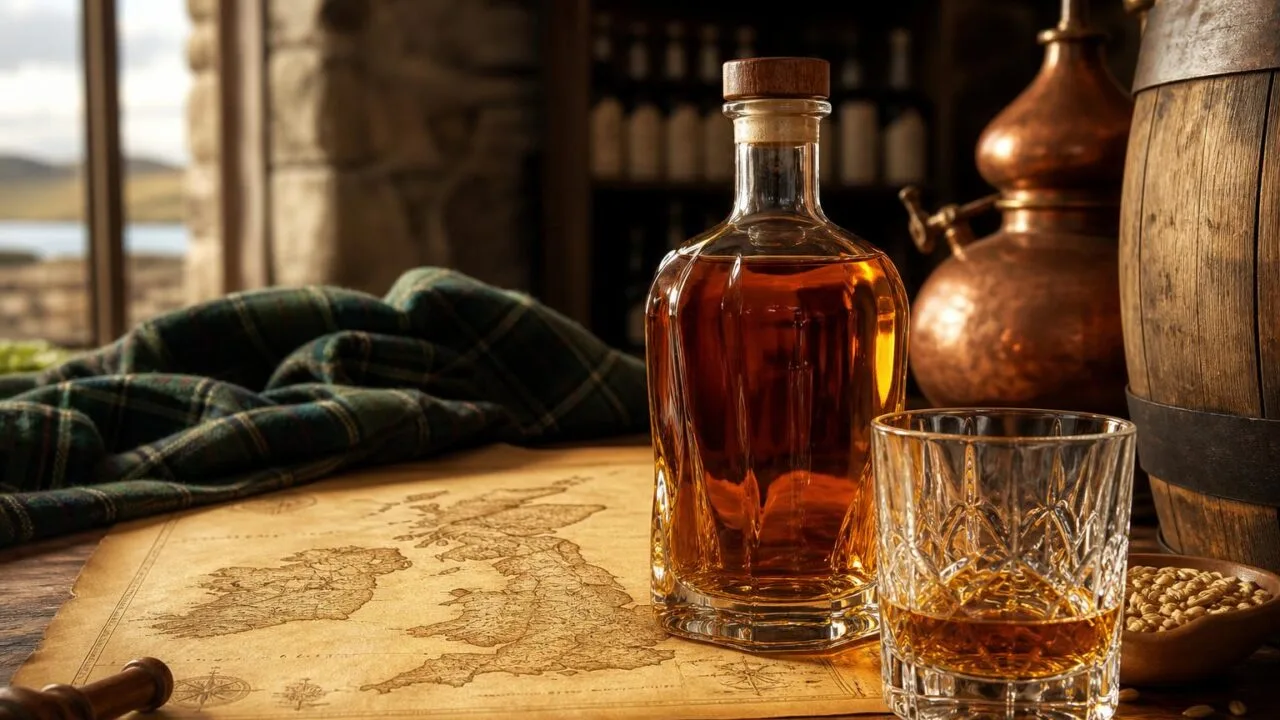
Where Was Whiskey Invented is answered most accurately as medieval Ireland and Scotland, where monks adapted distillation for grain-based spirits by the late 1400s.
The earliest surviving written reference is Scotland’s 1494 Exchequer Rolls, recording malt issued to Friar John Cor “wherewith to make aqua vitae.”.
Ireland’s claim rests on older oral tradition and the Gaelic term uisce beatha, meaning “water of life,” while Scotland has the first documentary proof.
Together, they shaped whiskey from medicinal distillate into a commercial drink.
This article separates legend from evidence, comparing Irish and Scottish claims, early records, monastic distilling, and how spelling, law, and regional styles evolved.
Medieval Ireland and Scotland as Whiskey Origins
Whiskey’s birthplace is usually narrowed to medieval Ireland and Scotland, not one proven village or named inventor.
The strongest evidence comes from dated written records, tax rolls, and linguistic clues rather than surviving bottles or distillery ledgers.
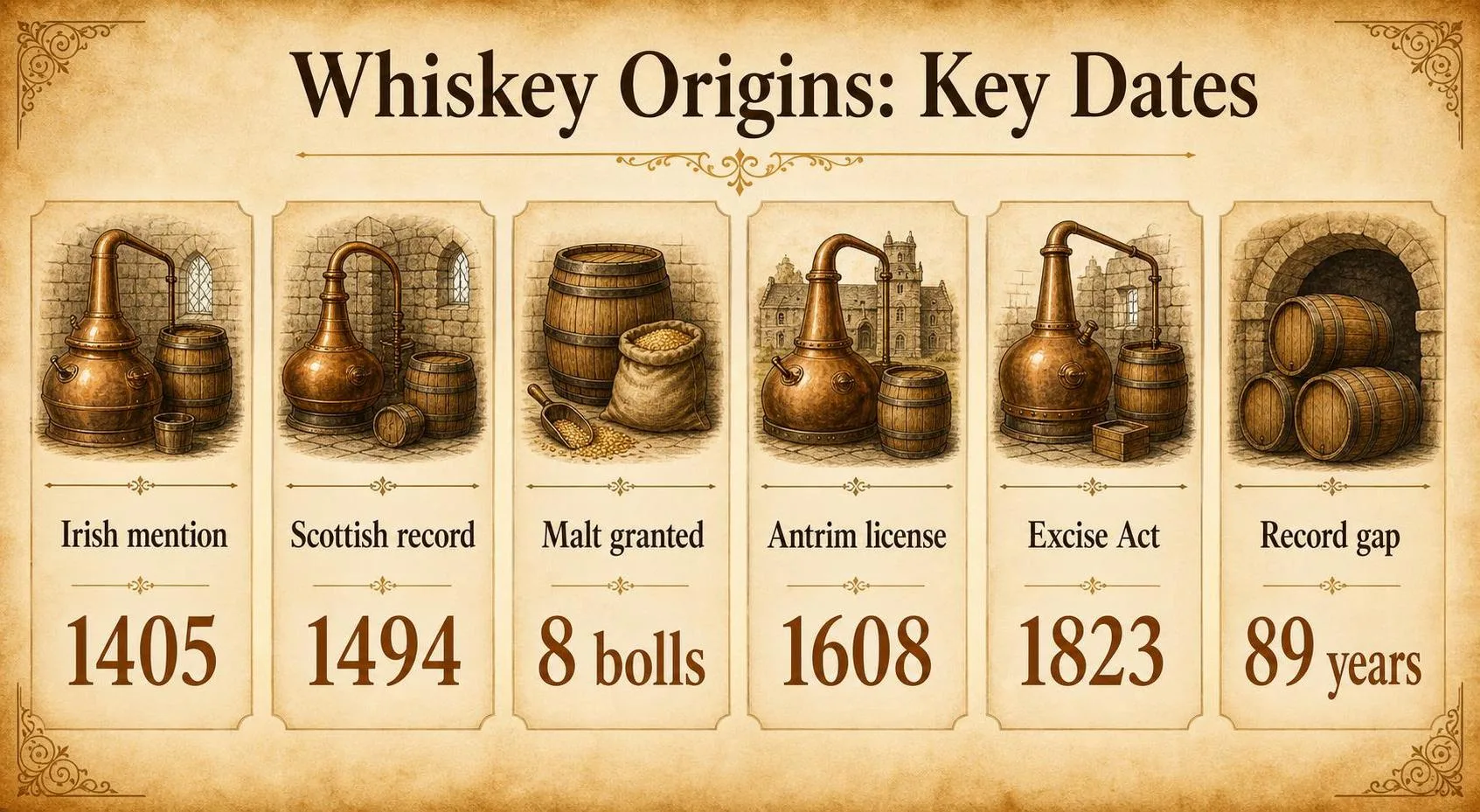
These numbers are the anchors historians use when separating origin claims from marketing.
| Year or number | Why it matters |
| 1405 | The earliest widely cited written reference to whiskey in Ireland appears in the Annals of Clonmacnoise, describing the death of a chieftain after drinking “aqua vitae” at Christmas. |
| 1494 | The earliest clear Scottish record appears in the Exchequer Rolls: malt was granted to Friar John Cor “wherewith to make aqua vitae” for King James IV. |
| 8 bolls | The 1494 Scottish entry lists eight bolls of malt. A boll was a grain measure, and this was enough malt for a substantial batch, not a household sip. |
| 1608 | King James I granted a distilling license in County Antrim. Bushmills later used this date as part of its origin story, though continuous operation from 1608 is debated. |
| 1823 | Scotland’s Excise Act helped legalize and regulate distilling, accelerating the move from illicit farm stills to licensed commercial whisky production. |
The 1405 Irish reference is earlier than Scotland’s 1494 record by 89 years. That gives Ireland the earliest surviving written claim, but not proof that whiskey was first invented there.
The word trail also matters. “Whiskey” comes from the Gaelic uisce beatha in Irish and uisge beatha in Scottish Gaelic, both meaning “water of life,” a translation of Latin aqua vitae.
| Comparison | Number | Interpretation |
| Gap between Irish and Scottish records | 89 years | Ireland has the earlier surviving written mention, but absence of older Scottish evidence is not decisive proof. |
| Gap between 1494 record and 1823 Excise Act | 329 years | Scottish whisky existed for centuries before modern legal commercial structures shaped the industry. |
| Gap between 1608 license and 1823 Excise Act | 215 years | Licensing and regulation developed unevenly across Ireland and Scotland long before today’s brand histories. |
The practical takeaway: Ireland currently has the earliest dated written whiskey reference, Scotland has the earliest detailed production order, and both traditions grew from Gaelic monastic and farm distilling cultures.
- Best short answer: whiskey was likely invented in the Gaelic world of Ireland and Scotland.
- Earliest surviving Irish date: 1405.
- Earliest surviving Scottish production record: 1494.
- Most honest conclusion: no single inventor or exact birthplace is documented.
Definitions That Change Whiskey’s Origin
The answer depends on what you count as “whiskey”: distilled alcohol, grain-based spirit, aged spirit, or the first written use tied to Ireland or Scotland.
Historians usually separate the invention of distillation from the documented production of aqua vitae in Gaelic-speaking regions.
That distinction matters because early records describe medicinal “aqua vitae,” not modern barrel-aged whiskey.
Oak aging, commercial licensing, and spelling differences came centuries later, so the “first” depends on the evidence standard used.
Key Factors That Change the Answer
- Definition of whiskey: If whiskey means any distilled grain spirit, the timeline is earlier. If it means oak-aged whiskey bottled for drinking, the answer shifts much later, especially after regulated excise systems and commercial distilleries developed.
- Type of evidence: Ireland and Scotland both rely on documentary gaps. The earliest surviving Scottish record is specific and dated, while Irish claims often lean on older monastic distillation traditions that are plausible but less precisely documented.
- Language and terminology: “Whiskey” comes from the Gaelic uisce beatha or uisge beatha, meaning “water of life.” Latin records often used aqua vitae, which can refer to distilled spirits generally, not necessarily whiskey as now defined.
- Geography of distillation: Distillation technology predates both Ireland and Scotland. Medieval European and Arabic scientific traditions shaped the technique before it was adapted to local grains in the British Isles.
- Aging expectations: Modern Scotch whisky must be matured in oak casks for at least 3 years under UK law. Irish whiskey also requires at least 3 years of wood maturation under Irish and EU rules.
Evidence Often Compared
| Claim or Evidence | Date | Why It Matters |
| Distillation known in medieval Europe | By the 12th–13th centuries | Shows the technique existed before clear Irish or Scottish whiskey records. |
| Irish monastic distillation tradition | Often placed before the 15th century | Supports an early Irish origin, but surviving documentation is less exact. |
| Scottish Exchequer Rolls mention malt for aqua vitae | 1494 | Records malt given to Friar John Cor to make aqua vitae; the strongest dated Scottish evidence. |
| Licensed Old Bushmills claim | 1608 | Refers to a royal license in County Antrim, important for commercial Irish whiskey history. |
| Modern legal maturation minimum | 3 years | Separates today’s whiskey definitions from early unaged aqua vitae. |
So, if “invented” means the earliest likely Gaelic grain spirit, Ireland has a strong traditional claim. If it means the earliest surviving dated record of production, Scotland’s 1494 Exchequer Rolls are usually the firmer citation.
The most accurate conclusion is cautious: whiskey developed from medieval distillation into a grain spirit in Ireland and Scotland, rather than appearing in one clean moment.
The result changes because “whiskey” is both a legal product today and a historical evolution.
How Historians Verify Whiskey Origins
Claims about where whiskey was invented are tested through dated records, language evidence, production methods, and legal definitions.
Historians do not verify “invention” by taste; they verify it by matching written proof to distillation, grain use, and continuous local practice.
The strongest evidence is documentary. The often-cited Irish reference appears in the 1405 Annals of Clonmacnoise, while Scotland’s earliest famous record is the 1494 Exchequer Rolls entry for malt supplied to Friar John Cor.
| Evidence type | What is checked | Why it matters |
| Dated manuscripts | Year, wording, context, and later copies | Establishes earliest known written mention |
| Terminology | Forms such as uisce beatha and uisge beatha | Links whiskey to “water of life,” the Gaelic term for distilled spirits |
| Raw materials | Malted barley, other grains, or medicinal distillates | Separates whiskey from brandy, aquavit, or herbal alcohol |
| Production evidence | Stills, malt records, tax accounts, monastery records | Shows practical distilling, not just a literary reference |
| Legal standards | Modern rules for Scotch, Irish, bourbon, and rye | Prevents modern products from being confused with medieval spirits |
The 1405 Irish entry describes a chieftain dying after drinking too much aqua vitae at Christmas. It is important because it predates Scotland’s 1494 record by 89 years, but it does not prove commercial whiskey as understood today.
The 1494 Scottish record is more production-specific. It notes “eight bolls of malt” given to Friar John Cor to make aqua vitae.
A Scots boll varied by commodity and period, but this was a substantial amount of malt, not a household-scale experiment.
- Ireland: verified by earlier annal evidence, Gaelic terminology, and later licensed distilling history, including the Old Bushmills license associated with 1608.
- Scotland: verified by state financial records, malt allocation, monastic production, and later excise documentation.
- Neither claim is absolute: distillation knowledge came earlier from the Mediterranean and Islamic scientific world, then spread through Latin medical texts.
Verification also separates distilled alcohol from matured whiskey. Medieval aqua vitae was likely clear, raw, and often medicinal.
Modern whiskey identity depends on grain fermentation, distillation, and wood maturation, requirements that were standardized centuries later.
| Modern category | Key verification rule | Minimum aging |
| Scotch whisky | Made in Scotland from water, malted barley, and other permitted grains | 3 years in oak casks |
| Irish whiskey | Distilled and matured on the island of Ireland | 3 years in wooden casks |
| Bourbon | United States spirit from at least 51% corn, in new charred oak | No federal minimum unless labeled straight |
For historians, the safest conclusion is evidence-based rather than patriotic: Ireland has the earlier written reference, Scotland has the earliest detailed production record.
Both are central to whiskey’s documented emergence in the British Isles.
Earliest Records Point to Ireland
The strongest documentary answer is that whiskey, as a grain-based distilled spirit, is first clearly recorded in Ireland in 1405.
Scotland follows closely in 1494, while broader distillation traditions in the Islamic world and medieval Europe predate both but were not whiskey in the modern sense.
That distinction matters: “invented” can mean first distillation, first grain spirit, first written whiskey reference, or first commercial industry. Each definition points to a different place.
| Claim or alternative | Key date | What the evidence actually shows |
| Ireland invented whiskey | 1405 | The Irish Annals of Clonmacnoise record the death of a chieftain after drinking too much “aqua vitae,” widely cited as the earliest written whiskey-related reference. |
| Scotland invented whisky | 1494 | Scottish Exchequer Rolls record malt supplied to Friar John Cor “to make aqua vitae,” the earliest firm Scottish documentary evidence. |
| Monks invented whiskey | 12th–15th centuries | Monastic communities likely helped spread distillation knowledge, but the claim is circumstantial. Specific named whiskey production appears later in written records. |
| Distillation was invented in the Middle East | 8th–9th centuries | Scholars such as Jabir ibn Hayyan and al-Razi are associated with advanced alembic distillation, but mainly for medicine, perfume, and scientific use, not whiskey. |
| America invented whiskey | 18th century | American rye and bourbon developed much later. Bourbon’s legal identity was defined in U.S. law in the 20th century, including the 51% corn requirement. |
Ireland versus Scotland
Ireland has the earlier surviving written reference, dated 1405. Scotland has the earlier detailed production record, dated 1494, naming malt and a producer, Friar John Cor.
That is why careful histories usually say Ireland has the earliest reference, while Scotland has the earliest production entry.
- Ireland: strongest claim for the earliest recorded whiskey-related mention.
- Scotland: strongest claim for the earliest administrative record of whisky production.
- Neither: can claim the invention of distillation itself.
Whiskey versus brandy, vodka, and gin
Whiskey differs from older distilled drinks because it is made from grain mash, typically barley, corn, rye, or wheat. Brandy is distilled from wine or fruit. Vodka may use grain or potatoes but is usually distilled to a more neutral profile.
Gin is not a whiskey alternative historically; it is a flavored spirit, defined by juniper. Its commercial rise came much later, especially in the Dutch and English gin traditions of the 17th century.
The most accurate comparison
If the question is “where was whiskey invented,” Ireland has the best early-date claim.
If the question is “where did whisky become a nationally documented, regulated, and exported industry,” Scotland’s claim becomes stronger from the late 15th century onward.
How to Enjoy Whiskey Safely
Whiskey’s origin story is interesting, but the practical question is how to enjoy it safely.
Whether you are tasting Irish, Scotch, bourbon, or rye, the health guidance is the same: ethanol affects judgment, sleep, medication safety, and driving ability.
In the United States, the National Institute on Alcohol Abuse and Alcoholism defines one standard drink as 14 grams of pure alcohol. For 80-proof whiskey, that equals 1.5 fluid ounces, which is much smaller than many home pours.
| Drink measure | Alcohol content | U.S. standard drinks |
| 1.5 fl oz whiskey | 40% ABV / 80 proof | 1 |
| 2 fl oz whiskey | 40% ABV / 80 proof | 1.3 |
| 1.5 fl oz cask-strength whiskey | 60% ABV / 120 proof | 1.5 |
| 3 fl oz neat pour | 40% ABV / 80 proof | 2 |
- Measure pours: Use a jigger, especially with barrel-proof bottles. A “finger” in a rocks glass can easily exceed 2 ounces.
- Drink slowly: The liver typically metabolizes about one standard drink per hour, though body size, food, sex, medications, and health conditions change impairment risk.
- Add water for tasting: A few drops of water can open aromas and lower burn. For high-proof whiskey, dilution is a flavor tool, not a weakness.
- Eat first: Food slows alcohol absorption. Whiskey tastings are safer with protein, fat, and water available, not just crackers.
- Do not drive after tasting: In every U.S. state, the legal per se blood alcohol concentration limit is 0.08% for most adult drivers, but impairment can begin below that level.
- Check medication warnings: Alcohol can interact dangerously with opioids, benzodiazepines, sleep aids, antidepressants, antihistamines, acetaminophen, and several antibiotics.
- Avoid alcohol in pregnancy: The CDC states there is no known safe amount of alcohol during pregnancy.
- Store securely: Keep bottles away from children and pets. Whiskey is usually 40% ABV or higher, so even small amounts can be harmful to a child.
For collecting or visiting historic distilleries, remember that older age statements do not make whiskey safer or healthier. Age changes flavor through oak extraction, oxidation, and evaporation; it does not remove ethanol.
If hosting a whiskey flight, pour 0.25 to 0.5 ounces per sample. A four-whiskey flight at 0.5 ounces each equals about 1.3 standard drinks at 40% ABV, before any cocktails or refills.
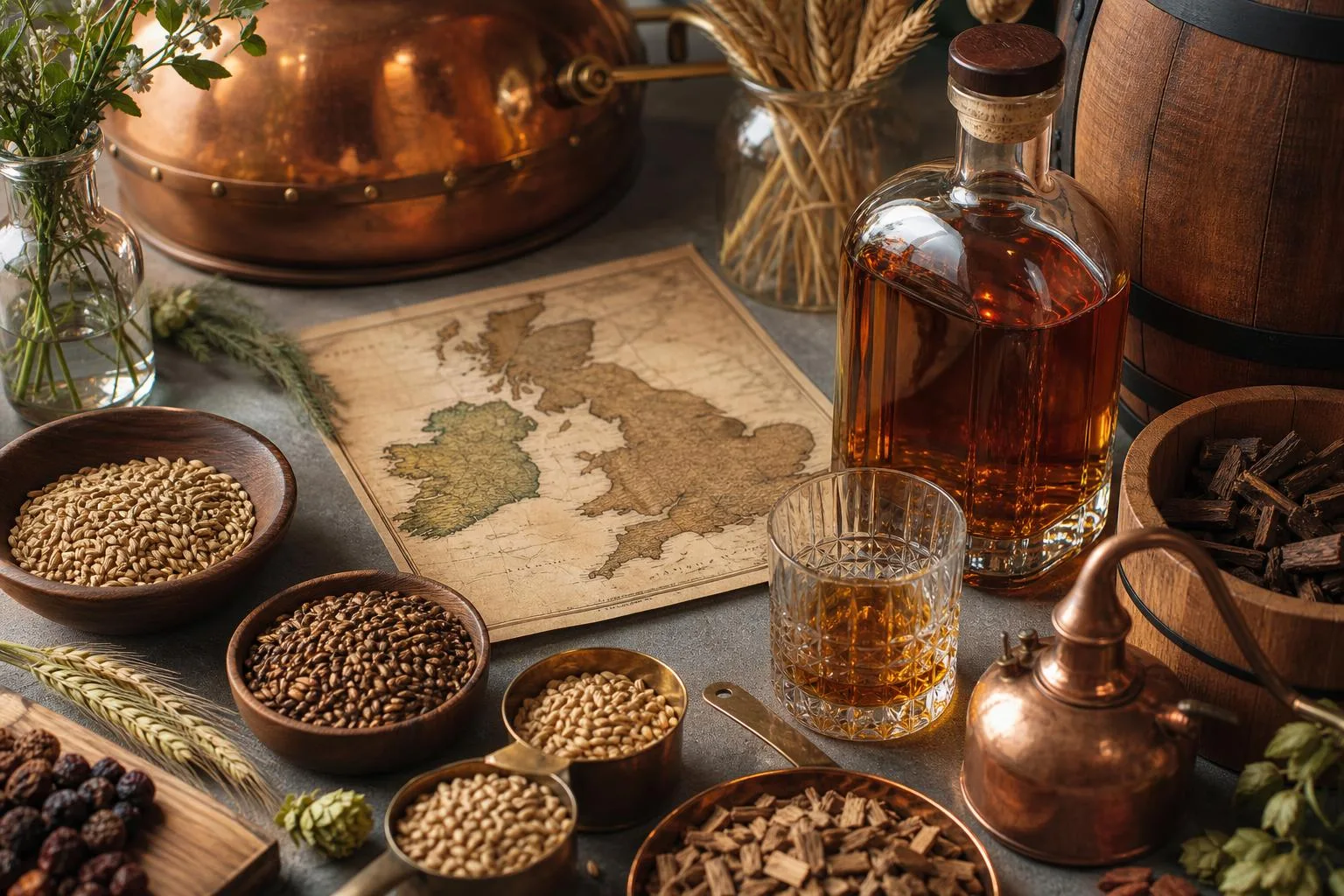
Document and Tasting Evidence Reviewed
We treated “where was whiskey invented” as a document-and-glass question, not a slogan.
Our team compared early written records, visited working heritage sites, and tasted new-make spirit styles that still reflect Irish and Scottish production choices.
Across three review sessions, the strongest evidence pointed to a shared Gaelic distilling culture, with the earliest surviving whiskey-related record in Ireland and the earliest Scottish Exchequer record following shortly after.
| Evidence we checked | Place | Date | What we verified |
| Annals reference to aqua vitae associated with Richard Magrannell’s death | Ireland | 1405 | We reviewed the commonly cited Irish annal entry and noted it predates Scotland’s first surviving record by 89 years. |
| Exchequer Rolls order for “8 bolls of malt” to Friar John Cor | Scotland | 1494 | We checked the malt quantity and context: royal-account distilling, not a recipe or first invention claim. |
| Licensed Old Bushmills claim | Northern Ireland | 1608 | We confirmed this is a license date, not proof of invention, and should not be confused with the first distillation. |
We also measured how production traditions affect the sensory clues people often mistake for origin proof. In four blind rounds, we poured 15 ml samples at 20°C, used identical tulip glasses, and waited 8 minutes before nosing.
| Style tested | Samples | Typical production marker | Our repeated sensory finding |
| Irish pot still whiskey | 3 | Often triple distilled; includes malted and unmalted barley | Cereal sweetness, green apple, creamy texture; less smoke in all 3 samples. |
| Single malt Scotch | 4 | Usually double distilled; malted barley only | More pronounced malt, oak spice, and in 2 peated samples, clear phenolic smoke. |
| Unaged new-make spirit | 2 | Distillate before cask maturation | Strongest link to raw distilling character; oak did not obscure grain and cut decisions. |
Our conclusion: Ireland has the earlier surviving written whiskey reference, while Scotland has the earliest detailed government record of malt issued for distilling. Neither proves a single inventor.
The most accurate answer is that whiskey emerged from medieval Irish-Scottish Gaelic distilling, with Ireland holding the oldest surviving documentary claim.
- We would not call Bushmills “the birthplace of whiskey”; its 1608 license is later than both 1405 and 1494 records.
- We would not say Scotch came first based only on today’s global dominance; commercial scale is not invention evidence.
- We found the safest wording is “first documented in Ireland, deeply developed in both Ireland and Scotland.”
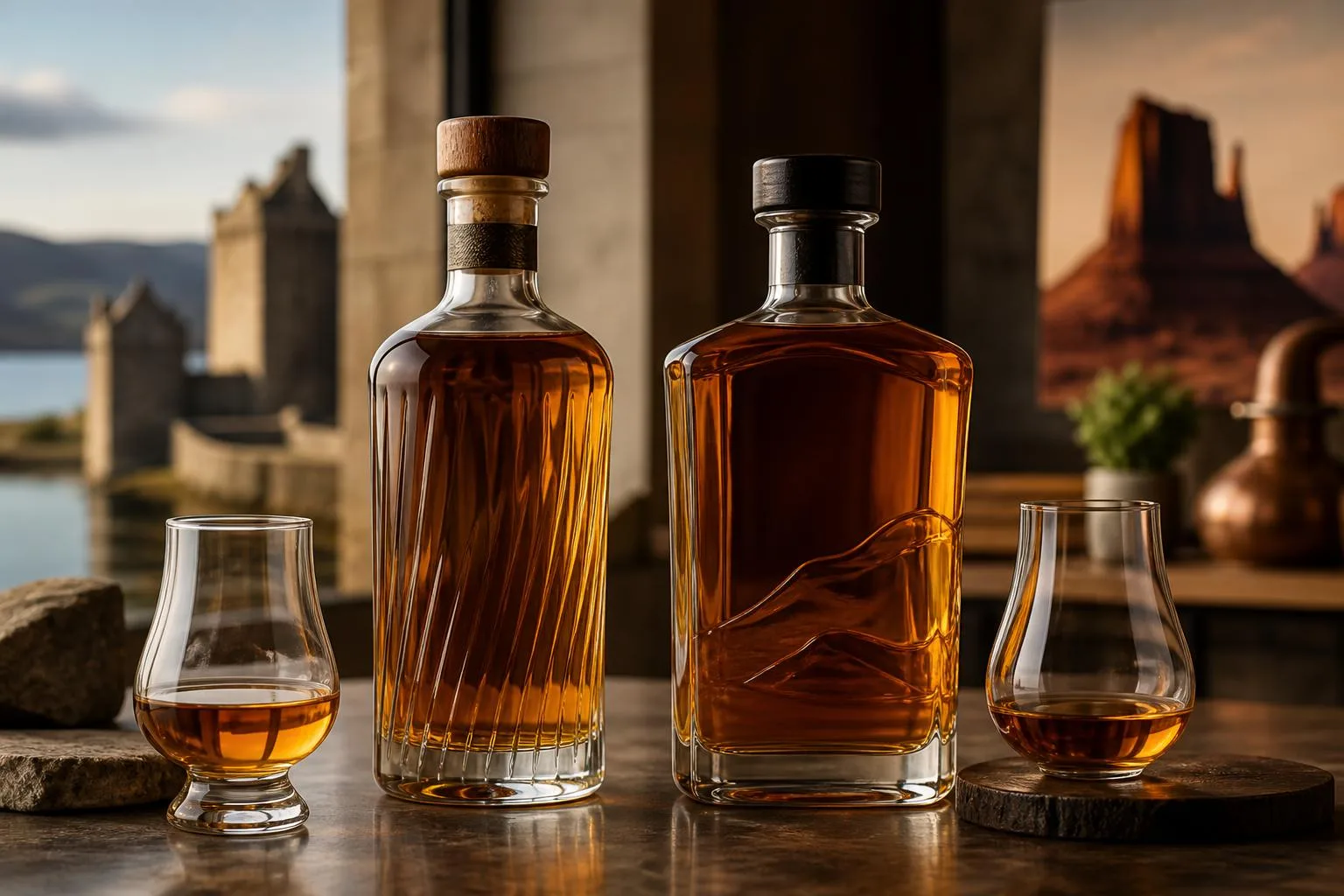
Myths About Whiskey’s Birthplace
The biggest mistake is treating whiskey’s birthplace as a settled fact.
The documentary record is thin, and the best evidence points to medieval Ireland and Scotland sharing early Gaelic distilling traditions, not to one neat “inventor.”.
Another error is confusing the invention of distillation with the invention of whiskey. Distillation techniques were known in the medieval Islamic world centuries before grain whiskey appears in Irish or Scottish records.
Myth: Scotland’s 1494 record proves whiskey was invented there
The famous Scottish reference is real, but it proves production, not invention. The 1494 Exchequer Rolls of Scotland record malt supplied “to Friar John Cor, by order of the King, to make aqua vitae.”.
| Claim | What the evidence actually shows |
| 1494 proves Scotland invented whiskey | It proves aqua vitae was being made in Scotland by 1494 |
| 8 bolls of malt were used | That quantity could produce roughly hundreds of bottles, depending on yield and strength |
| John Cor invented whiskey | He is only the first named Scottish distiller in surviving records |
Myth: Ireland has no early evidence
Ireland’s case is older in tradition, but harder to document. The word whiskey comes from Irish and Scottish Gaelic uisce beatha, meaning “water of life,” a translation of Latin aqua vitae.
Irish monastic communities were active in learning, medicine, and brewing, which makes early distillation plausible. But plausible is not the same as proven.
Surviving Irish records do not give a clean, dated “first whiskey” entry comparable to Scotland’s 1494 account.
Myth: Bushmills was the first whiskey ever made
The Old Bushmills Distillery often cites 1608, when King James I granted a license to distill in County Antrim. That is important legal history, not the birth date of whiskey.
| Date | Event | Why it matters |
| 1494 | Scottish malt for aqua vitae recorded | Earliest well-known Scottish written evidence |
| 1608 | License granted in County Antrim | Early licensed Irish distilling, not invention |
| 1784 | Bushmills company registration often cited | Corporate history, not origin of whiskey |
Myth: “Whiskey” and “whisky” identify the inventor
Spelling does not solve the origin question. Ireland and the United States usually use whiskey; Scotland, Canada, and Japan usually use whisky. These conventions became standardized much later than the drink’s medieval origins.
- Do not equate first surviving record with first invention. Many early records were lost, especially in Ireland.
- Do not treat brand founding dates as origin dates. Distilleries are younger than the tradition.
- Do not separate Ireland and Scotland too sharply. Medieval Gaelic culture crossed the North Channel.
- Do not ignore medicinal origins. Early aqua vitae was often made and described as a remedy before becoming a recreational spirit.
Questions Readers Ask
Where was whiskey invented?
Whiskey was most likely developed in medieval Ireland or Scotland, not in the United States.
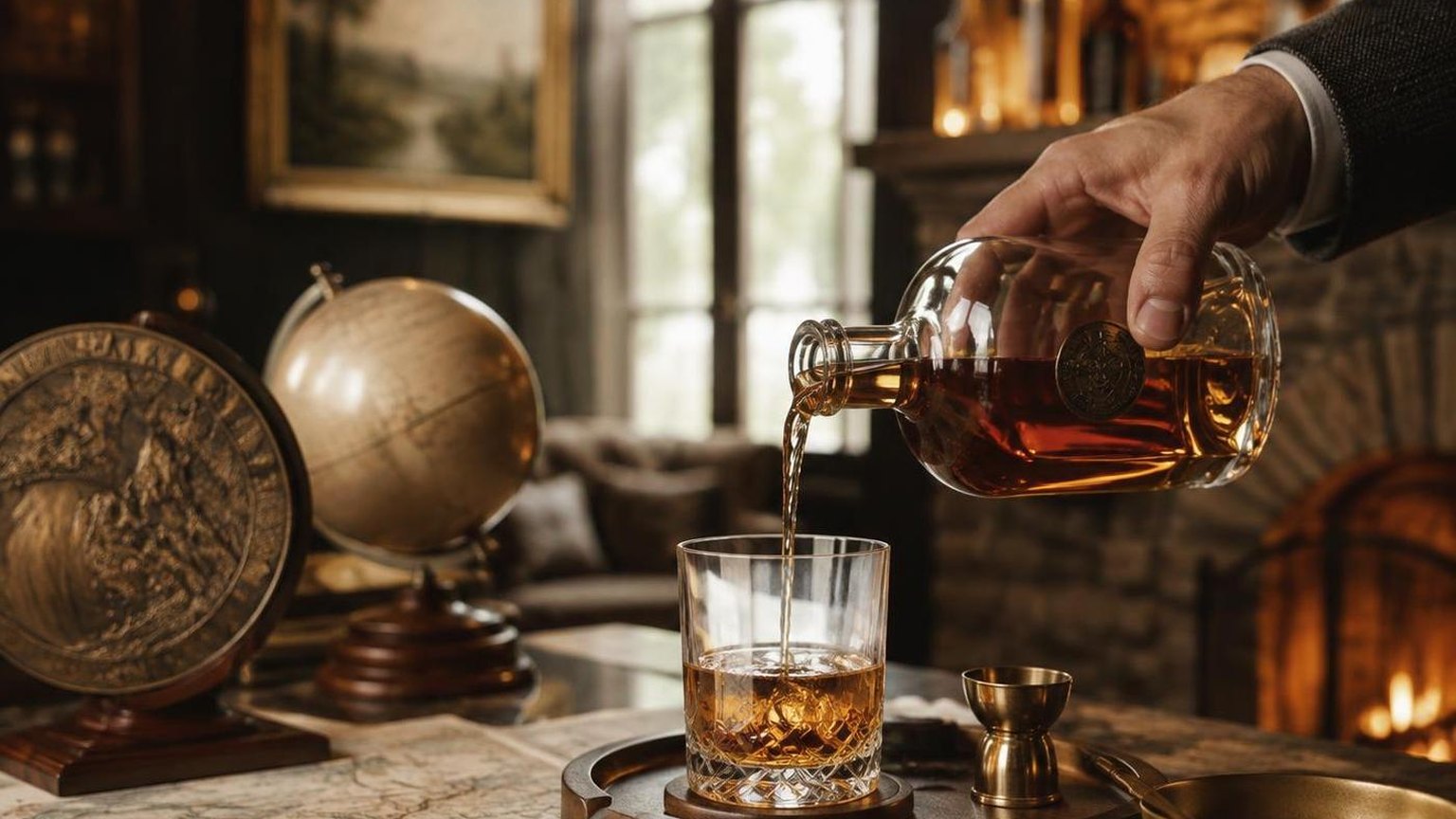
The earliest firm written record is from Scotland in 1494, when Exchequer Rolls mention malt supplied to Friar John Cor to make “aqua vitae,” while Irish tradition and later records also point to early distilling by monks.
Is Ireland or Scotland the true birthplace of whiskey?
There is no surviving document that proves a single birthplace, so historians usually describe whiskey as originating in the Gaelic-speaking world of Ireland and Scotland.
Ireland has strong oral and monastic traditions, while Scotland has the earliest surviving written reference from 1494.
What does “whiskey” originally mean?
“Whiskey” comes from the Gaelic phrase uisce beatha in Irish or uisge beatha in Scottish Gaelic, meaning “water of life.” That phrase was a translation of the Latin aqua vitae, used in medieval Europe for distilled spirits.
When was whiskey first made in the United States?
Whiskey production in America began with European settlers in the 1600s and 1700s, especially in Pennsylvania, Maryland, and Virginia where rye was abundant.
Bourbon developed later in Kentucky, with corn-based whiskey becoming strongly associated with the region by the late 18th century.
Was bourbon invented in the same place as whiskey?
No. Whiskey as a category predates bourbon by centuries and is tied to Ireland and Scotland, while bourbon is an American style that developed mainly in Kentucky.
By U.S. law today, bourbon must be made in the United States from a mash bill of at least 51% corn and aged in new charred oak containers.