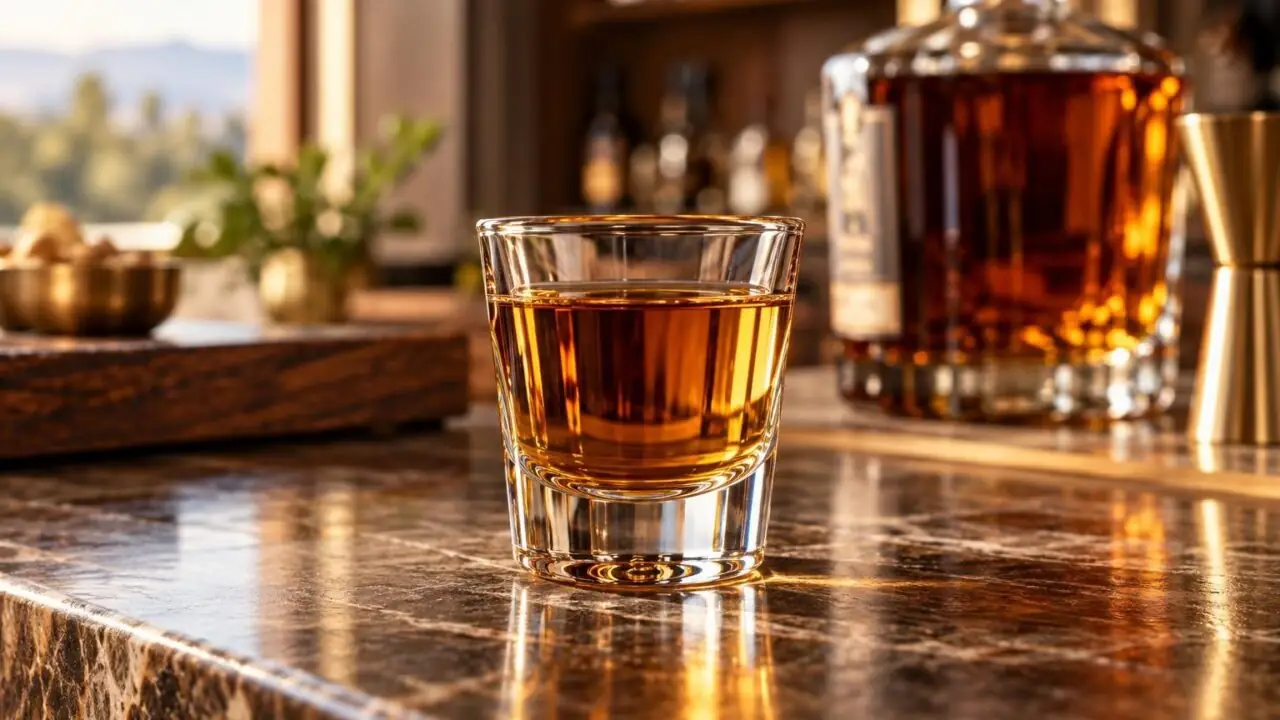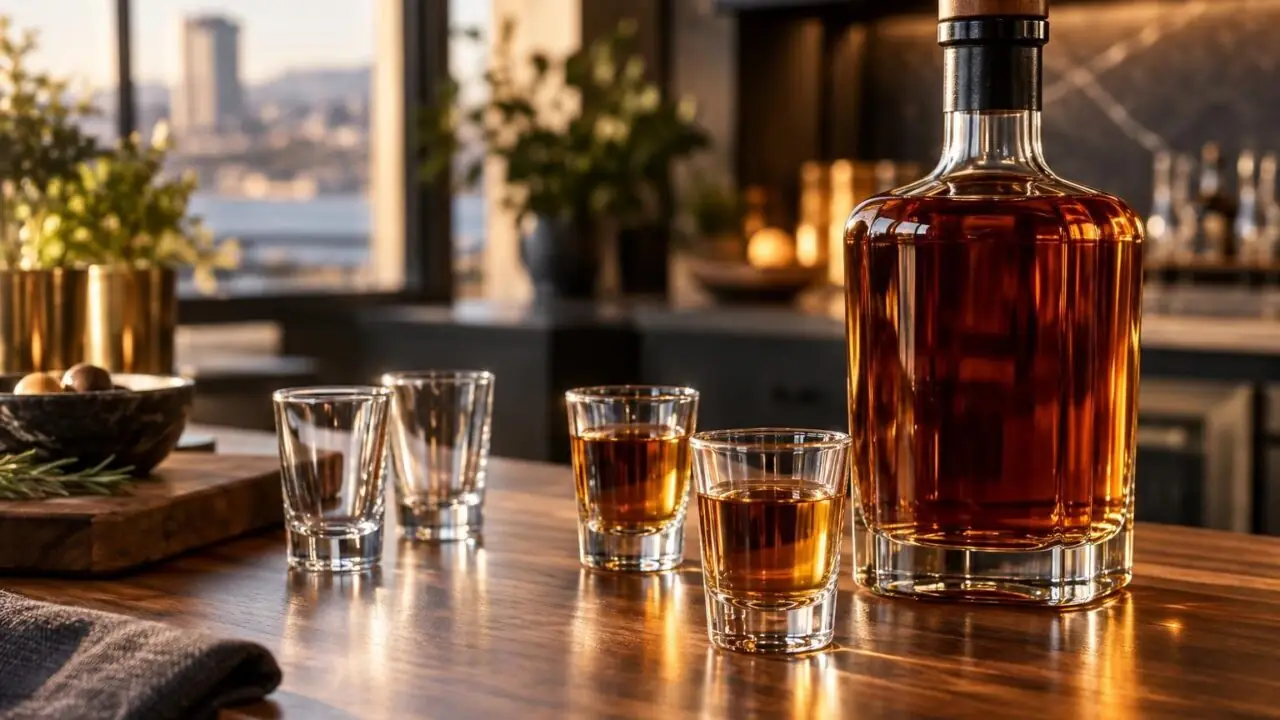
How Many Shots Are in a Bottle of Whiskey? has a simple answer: 17 1.5-ounce shots in a standard 750 ml bottle. That count comes from dividing 25.36 U.S. fluid ounces by a typical U.S. shot size of 1.5 ounces, with a small remainder left over.
Bottle size and pour size change the math. A 1-liter bottle holds about 22 standard shots, while a 1.75-liter handle holds about 39.
Bars, home pours, tasting flights, and cocktail recipes may use 1 ounce, 1.25 ounces, or 2 ounces instead, so knowing the bottle volume and pour size gives the accurate count.
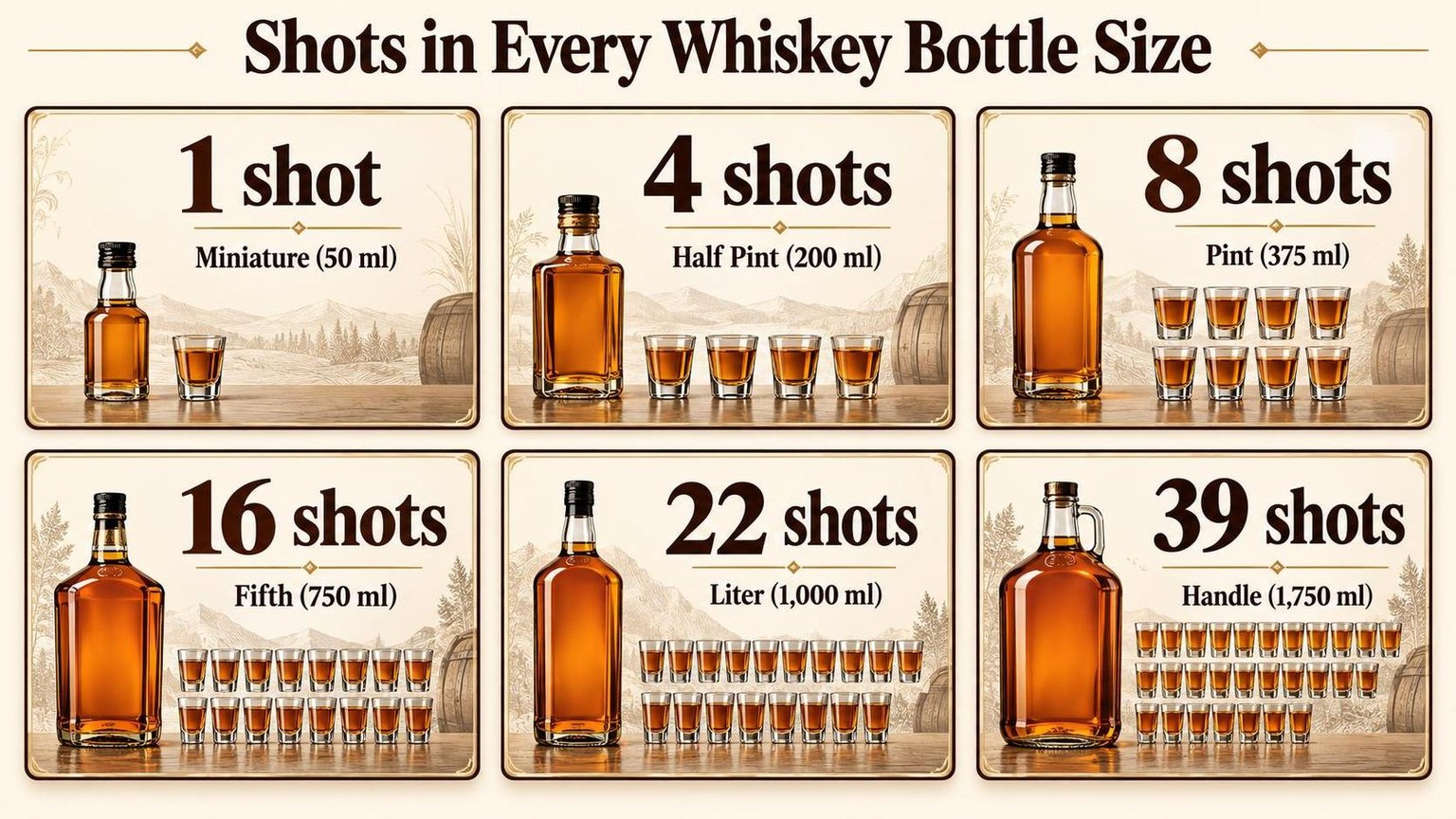
Standard Whiskey Bottle Shot Counts
A standard 750 ml bottle of whiskey yields exactly 16 shots when poured at the U.S. standard of 1.5 oz (44.36 ml) per shot. That number shifts dramatically depending on bottle size and regional pour standards.
Shot Counts by Bottle Size
The U.S. market sells whiskey in federally regulated bottle sizes established by the TTB (Alcohol and Tobacco Tax and Trade Bureau). Each size produces a predictable number of 1.5 oz pours.
| Bottle Size | Volume (ml) | Volume (oz) | Shots (1.5 oz) |
| Miniature (Nip) | 50 ml | 1.7 oz | 1 |
| Half Pint | 200 ml | 6.8 oz | 4 |
| Pint | 375 ml | 12.7 oz | 8 |
| Fifth (Standard) | 750 ml | 25.4 oz | 16 |
| Liter | 1,000 ml | 33.8 oz | 22 |
| Handle | 1,750 ml | 59.2 oz | 39 |
How Pour Size Changes the Count
Not every country—or every bartender—pours 1.5 oz. The UK standard single measure is 25 ml (0.85 oz), while Japan commonly pours 30 ml (1.0 oz). These differences significantly alter shot counts from the same 750 ml bottle.
| Pour Standard | Shot Size | Shots per 750 ml |
| UK Single | 25 ml (0.85 oz) | 30 |
| UK Double | 50 ml (1.7 oz) | 15 |
| Japan Standard | 30 ml (1.0 oz) | 25 |
| U.S. Standard | 44.36 ml (1.5 oz) | 16 |
| U.S. Double | 88.72 ml (3.0 oz) | 8 |
Practical Considerations
- Free pouring typically loses 10–15% of a bottle to over-pours, reducing a 750 ml bottle to roughly 13–14 usable shots.
- Jigger-measured pours maintain accuracy and preserve the full 16-shot yield.
- Cocktail recipes often call for 2 oz of whiskey, giving you only 12 drinks per standard bottle.
For party planning, estimate 12–14 servings per 750 ml bottle to account for real-world pouring variation. A handle at 1,750 ml offers the best per-shot value and covers approximately 30–35 realistic pours.
Shots in Common Bottle Sizes
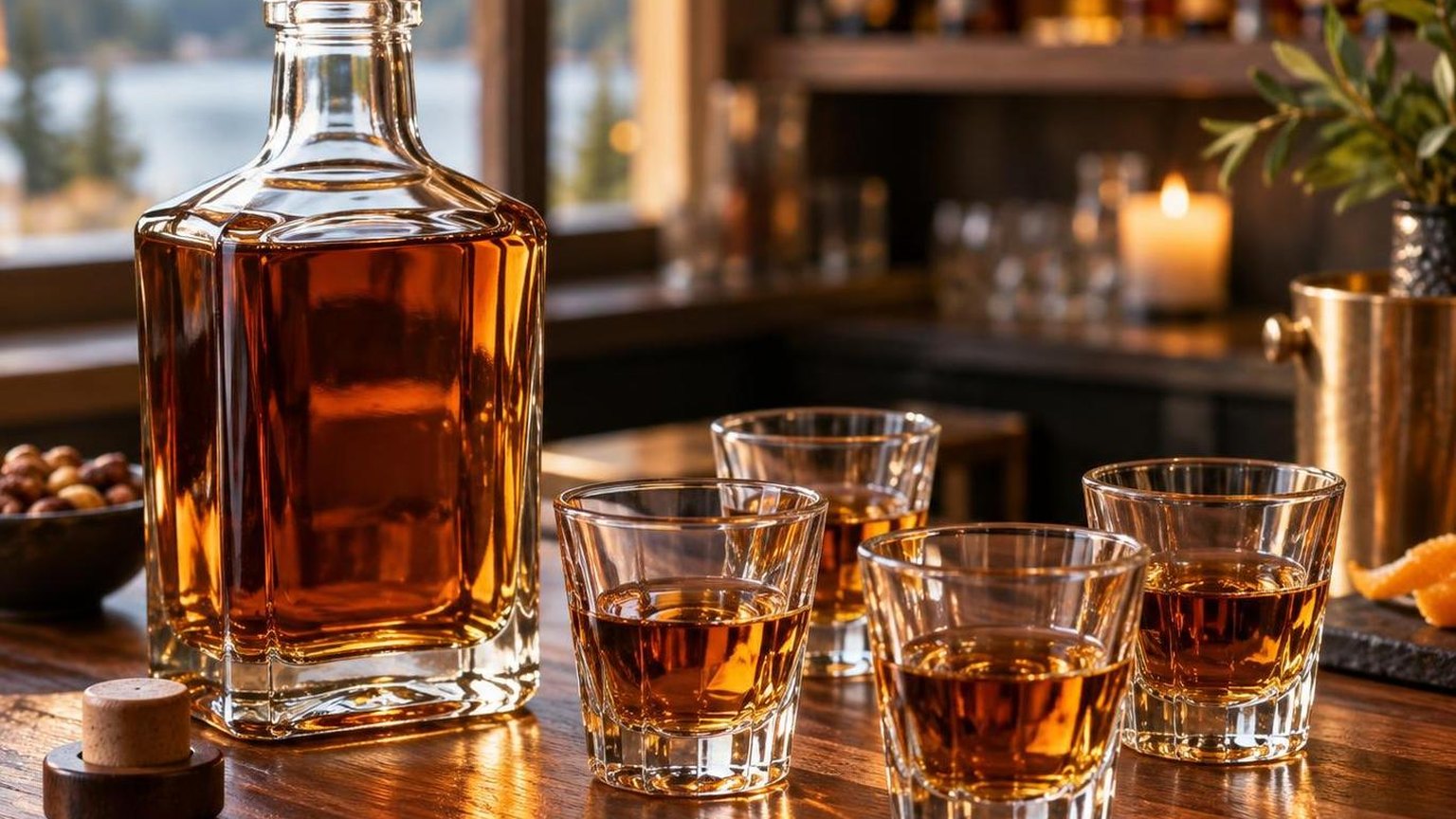
Whiskey bottles range from pocket-sized 50 ml miniatures to 1.75-liter handles. Each size yields a predictable number of 1.5 oz (44.36 ml) standard US shots, making it straightforward to plan for parties, home bars, or cost-per-pour calculations.
| Bottle Size | Volume (ml) | Volume (oz) | Standard Shots (1.5 oz) |
| Miniature (Nip) | 50 ml | 1.7 oz | 1 |
| Half Pint | 200 ml | 6.8 oz | 4 |
| Pint | 375 ml | 12.7 oz | 8 |
| Fifth (Standard) | 750 ml | 25.4 oz | 16 |
| Liter | 1,000 ml | 33.8 oz | 22 |
| Handle | 1,750 ml | 59.2 oz | 39 |
The Standard 750 ml Fifth
A 750 ml bottle—called a “fifth” because it approximates one-fifth of a US gallon (757 ml)—is the most common retail size worldwide. It delivers exactly 16.9 standard 1.5 oz pours, rounded down to 16 full shots.
At an average US retail price of $25–$35 for a mid-range bourbon, that puts the cost per shot between $1.56 and $2.19—far below the $8–$14 typical bar markup.
The 1.75-Liter Handle
The handle holds 2.3 times the volume of a standard fifth. Its 39 shots make it the most cost-efficient option for entertaining, often priced only 40–60% more than a 750 ml bottle of the same label.
Smaller Formats
Half pints (200 ml) and pints (375 ml) serve travelers and occasional drinkers. Airlines typically stock 50 ml miniatures, each containing one precise shot—convenient for portion control and sampling.
- 50 ml miniatures — sold in multi-packs; ideal for tasting flights at home.
- 200 ml half pints — fit in a coat pocket; yield 4 shots.
- 375 ml pints — split-size option offering 8 shots, common for premium single malts sold at trial-friendly price points.
These counts assume zero spillage. In practice, expect to lose roughly half a shot per 750 ml bottle to splashing, over-pours, and residual liquid left inside the glass walls.
Why Shot Size Changes the Count
A standard 750 ml bottle holds the same volume everywhere, but “one shot” varies by country and context. That single variable—pour size—swings your total count from as few as 12 to as many as 25 shots per bottle.
Standard Shot Sizes Around the World
The U.S. standard shot is 1.5 oz (44.36 ml). Other countries define it differently, and the difference is not trivial.
| Country | Shot Size | Shots per 750 ml Bottle |
| United States | 1.5 oz (44.36 ml) | 16.9 (~17) |
| United Kingdom | 25 ml (single) / 35 ml (large) | 30 (single) / 21.4 (large) |
| Germany | 20 ml | 37.5 |
| Japan | 30 ml | 25 |
| Australia | 30 ml | 25 |
| Italy | 40 ml | 18.75 |
| Canada | 1.5 oz (44.36 ml) | 16.9 (~17) |
Bar Pours vs. Home Pours
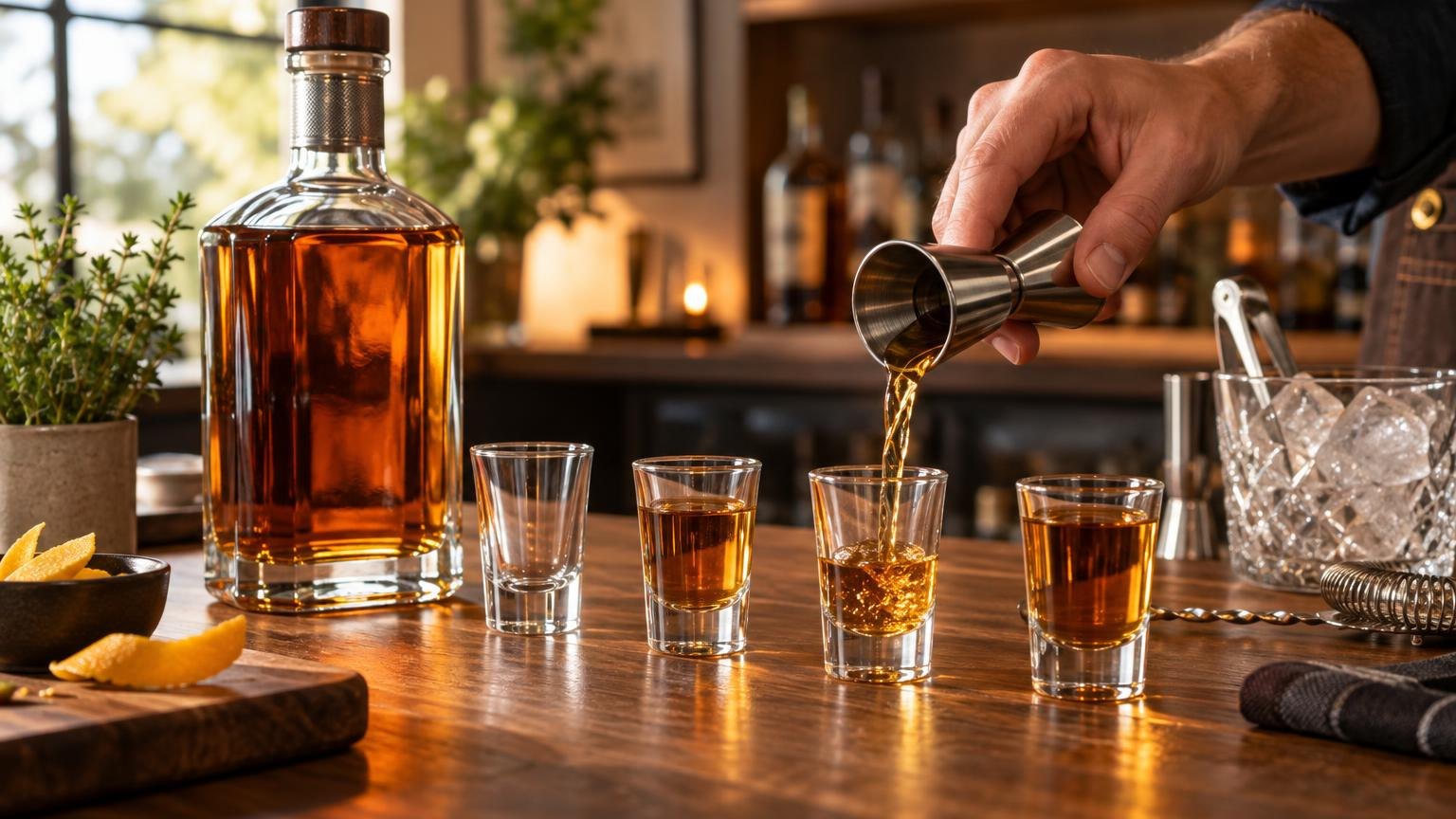
Most U.S. bars use measured jiggers at exactly 1.5 oz. Free-pouring bartenders average 1.75–2 oz per shot, cutting your bottle yield to roughly 12–14 servings.
At home, casual pourers tend to overshoot by 20–30%, according to studies published in Alcoholism: Clinical and Experimental Research. A 2-oz home pour yields only 12.5 servings from one 750 ml bottle.
Cocktail Recipes Add Another Variable
Classic whiskey cocktails rarely call for a single 1.5-oz shot. An Old Fashioned uses 2 oz of bourbon. A Whiskey Sour calls for 2 oz. A Manhattan requires 2 oz of rye.
At 2 oz per drink, a 750 ml bottle delivers only 12.5 cocktails—five fewer than the standard shot count of 17.
- 1 oz pour (tasting/flight): ~25 servings per bottle
- 1.5 oz pour (standard shot): ~17 servings per bottle
- 2 oz pour (cocktail/rocks): ~12 servings per bottle
- 3 oz pour (double): ~8 servings per bottle
Knowing your pour size before purchasing prevents mid-party shortages. For cocktail-heavy events, budget one 750 ml bottle for every 12 guests having one drink each.
US Versus UK Shot Measures
A “shot” has no universal size. The US standard shot is 1.5 fl oz (44.36 ml), while the UK serves spirits in regulated measures of 25 ml or 35 ml. This single difference changes how many shots you get from every bottle.
Official Shot Sizes Compared
| Country | Standard Shot | Metric Equivalent | Shots per 750 ml Bottle |
| United States | 1.5 fl oz | 44.36 ml | ~16.9 (rounded to 16) |
| United Kingdom (single) | 25 ml | 25 ml | 30 |
| United Kingdom (large) | 35 ml | 35 ml | ~21.4 (rounded to 21) |
UK measures are legally defined under the Weights and Measures Act 1985. Licensed premises must serve spirits in multiples of 25 ml or 35 ml—not both in the same establishment.
US shot sizes carry no federal legal mandate. The 1.5 fl oz measure is an industry convention, not a regulation. Some US bars pour 1.25 oz shots; others pour 2 oz.
Why the Difference Matters
Ordering a “double” in a UK bar gives you 50 ml or 70 ml. A US double is typically 3 fl oz (88.72 ml). The US double exceeds even the UK large double by nearly 19 ml.
- Alcohol per serving: A US 1.5 oz shot of 80-proof (40% ABV) whiskey contains approximately 0.6 fl oz of pure alcohol. A UK 25 ml measure contains roughly 0.34 fl oz (10 ml) of pure alcohol—about 43% less per serving.
- Cost implications: A 750 ml bottle yields 14 fewer servings under US pours than under UK 25 ml measures. Bars pricing per shot see dramatically different revenue per bottle.
- Home pouring: Without a jigger or measured optic, free-poured “shots” average 1.7–2.0 fl oz in US studies, further widening the gap.
When calculating how many shots a bottle holds, always specify which country’s measure you mean. The answer ranges from 16 to 30 shots from the same 750 ml bottle depending on the standard applied.
How Pours Affect Bottle Yield
A standard 750 ml bottle holds a fixed volume, but the number of drinks it produces depends entirely on pour size. Shifting from a 1.5 oz standard pour to a 2 oz generous pour cuts your bottle yield by 25%.
Yield by Pour Size
The math is straightforward: divide 750 ml (25.36 oz) by your pour volume. Here are the most common scenarios.
| Pour Size | Ounces | Shots per 750 ml Bottle | Common Setting |
| Pony shot | 1.0 oz | 25 | Layered shooters, tastings |
| Standard shot | 1.5 oz | 16 | US bars, home pours |
| Generous / rocks pour | 2.0 oz | 12 | Whiskey neat or on the rocks |
| Double | 3.0 oz | 8 | Double cocktails |
| UK standard measure | 1.18 oz (35 ml) | 21 | British pubs |
Where the Extra Liquid Goes
Free-pouring without a jigger typically adds 0.25–0.5 oz per drink. Over a full bottle, that overpour costs 2–4 servings.
- Free-pour variance: Studies by the Beverage Alcohol Resource group found bartenders overpour by an average of 20–30% without measured tools.
- Spillage and residual: Roughly 0.5 oz remains in a “finished” bottle, reducing usable volume to about 24.86 oz.
- Ice displacement: Pouring over ice does not change liquid volume, but larger ice cubes slow dilution, affecting perceived strength and encouraging smaller pours.
Cost Implications
A $40 bottle poured at 1.5 oz yields 16 servings at $2.50 per drink in liquor cost. At 2 oz, the same bottle yields 12 servings at $3.33 each—a 33% increase in cost per serve.
Bars target an 18–22% pour cost ratio. Using a consistent 1.5 oz jigger is the single most effective way to protect that margin and maintain predictable inventory.
At home, choosing your default pour size before opening the bottle helps you plan how many guests a single bottle can serve.
Bar Math for Whiskey Service
Accurate pour counts determine profitability for every whiskey program. A standard 750 ml bottle yields roughly 16 standard 1.5 oz (44 ml) pours, but actual yield shifts dramatically based on pour size, glassware, and service style.
Yield by Pour Size
| Pour Size | Shots per 750 ml | Shots per 1 L | Shots per 1.75 L |
| 1 oz (30 ml) | 25.4 | 33.8 | 59.2 |
| 1.25 oz (37 ml) | 20.3 | 27.0 | 47.3 |
| 1.5 oz (44 ml) | 16.9 | 22.5 | 39.4 |
| 2 oz (59 ml) | 12.7 | 16.9 | 29.6 |
Most U.S. bars use a 1.5 oz standard pour. Upscale whiskey bars often serve 2 oz pours, reducing yield by 25% per bottle.
Revenue Calculation
Bar managers apply a standard cost formula: divide bottle cost by number of pours, then multiply the per-pour cost by 4–5 to set menu price. This targets a 20–25% pour cost ratio.
| Bottle Cost | Pours (1.5 oz) | Cost per Pour | Menu Price (20% cost) | Gross Revenue |
| $30 | 16 | $1.88 | $9.40 | $150.40 |
| $60 | 16 | $3.75 | $18.75 | $300.00 |
| $120 | 16 | $7.50 | $37.50 | $600.00 |
Spillage and Shrinkage Adjustments
Industry data from the National Restaurant Association estimates average spillage and shrinkage at 15–25% of inventory. Practical planning should use 14–15 usable pours per 750 ml bottle rather than the theoretical 16.9.
- Free-pouring increases variance by up to 20% compared to jigger-measured pours
- Measured pours with a jigger maintain accuracy within 3–5% of target volume
- Speed pourers calibrated to a 4-count (1.5 oz) offer a middle ground but require regular staff testing
Conducting weekly bottle inventory using a tenthing system—estimating liquid level in tenths—catches overpouring before it erodes margins.
A single extra quarter-ounce per pour across 16 servings costs the equivalent of one full drink lost per bottle.
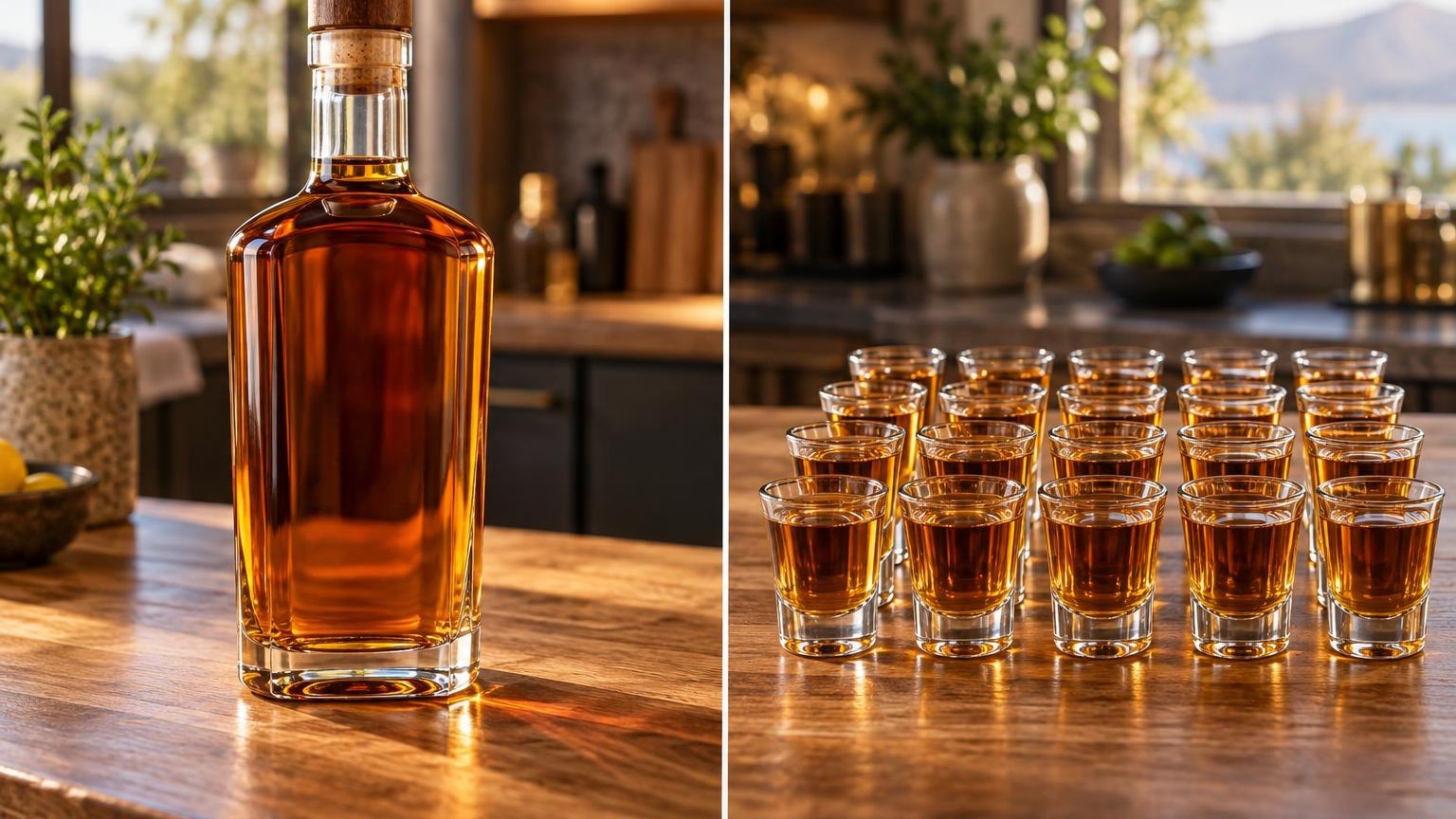
Quick Reference Whiskey Shot Chart
A standard US shot measures 1.5 oz (44 ml). The number of shots per bottle depends entirely on bottle size. This chart covers every common format from miniatures to handle bottles.
| Bottle Size | Volume (oz) | Volume (ml) | Shots (1.5 oz) |
| Miniature (Nip) | 1.7 oz | 50 ml | 1 |
| Half Pint | 6.8 oz | 200 ml | 4.5 |
| Pint | 12.7 oz | 375 ml | 8.5 |
| Standard (Fifth) | 25.4 oz | 750 ml | 16 |
| Liter | 33.8 oz | 1,000 ml | 22 |
| Handle | 59.2 oz | 1,750 ml | 39 |
The 750 ml bottle—historically called a “fifth” because it approximates one-fifth of a US gallon (757 ml)—is the industry standard sold in liquor stores nationwide.
Why Shot Size Changes the Count
Not every establishment pours 1.5 oz. Shot sizes vary by state regulation, bar policy, and country. That variance directly shifts how many servings you extract from one bottle.
| Shot Size | Common Usage | Shots per 750 ml |
| 1.0 oz (30 ml) | UK single measure | 25 |
| 1.25 oz (37 ml) | Some US bars, Utah state pour | 20 |
| 1.5 oz (44 ml) | US standard | 16 |
| 2.0 oz (59 ml) | US double / generous pour | 12 |
Utah legally caps a single spirit pour at 1.5 oz, while many craft cocktail bars default to 2 oz pours for Old Fashioneds and Manhattans, reducing a standard bottle to just 12 servings.
Practical Takeaways for Party Planning
- Casual gathering (10 guests, 2 drinks each): 20 shots needed—two 750 ml bottles at 1.5 oz pours.
- Budget move: A 1.75 L handle delivers 39 shots, costing roughly 30–40% less per ounce than two separate fifths of the same label.
- Cocktail recipes: Most classic whiskey cocktails call for 2 oz, so plan on 12 cocktails per 750 ml bottle, not 16.
Always measure with a jigger rather than free-pouring.
Studies from Cornell University’s Food and Brand Lab found bartenders over-pour by an average of 0.3 oz per drink when pouring without a jigger—enough to lose 3 full servings from a single bottle.
Frequently Asked Questions
How many shots are in a standard 750ml bottle of whiskey?
A standard 750ml bottle contains approximately 16.9 shots when using the US standard shot size of 1.5 oz (44ml). Most bartenders round this to 16 full pours, accounting for slight over-pours and spillage during service.
How many shots are in a half-pint (200ml) and pint (375ml) bottle?
A 200ml bottle yields roughly 4.5 standard 1.5 oz shots, while a 375ml (half-bottle) delivers about 8.5 shots.
These smaller formats are useful for estimating consumption at intimate gatherings or for sampling unfamiliar expressions without committing to a full 750ml.
How many shots does a handle (1.75L) of whiskey provide?
A 1.75-liter handle contains approximately 39.4 standard 1.5 oz shots, making it the most cost-efficient format for parties or high-volume bars.
At an average price of $30–$50 for well whiskey, that translates to roughly $0.76–$1.27 per shot before markup.
Does the shot count change with different international pour standards?
Yes, significantly. A UK standard measure is 25ml (yielding 30 shots per 750ml bottle), while a Japanese standard pour is 30ml (25 shots per bottle).
The US 44ml standard produces the fewest shots per bottle among major markets, so always clarify which measurement system you are using when calculating.
How many cocktails can you make from one 750ml bottle of whiskey?
Most whiskey cocktails such as an Old Fashioned or Manhattan call for 2 oz (60ml) of spirit per drink, meaning a 750ml bottle yields about 12 cocktails.
Highball-style drinks like a Whiskey Sour sometimes use 1.5 oz, stretching the bottle to roughly 16 servings.
How many shots should I plan per guest for a party?
Industry guidelines from the National Restaurant Association suggest budgeting 2–3 drinks per guest for the first hour and 1–2 drinks per hour after that.
For a 3-hour event with 10 guests, that means 40–50 shots total, or roughly 3 standard 750ml bottles of whiskey to ensure adequate supply.
Related Reading
- What To Mix With Southern Comfort?
- Does Whiskey Get Better With Age?
- What does Crown Royal Taste Like? Answer From Expert
- Who Owns Howler Head Whiskey?
- Does Moonshine Go Bad?
- What Is The Best Irish Whiskey To Drink Straight?
- All Alcohol Guides
- Alcohol and Tobacco Tax and Trade Bureau – Standards of Fill for Distilled Spirits (2023)
- National Institute on Alcohol Abuse and Alcoholism – What Is a Standard Drink? (2023)
- Centers for Disease Control and Prevention – Dietary Guidelines for Alcohol (2024)
- U.S. Dietary Guidelines for Americans, 2020–2025 (2020)
- National Institute of Standards and Technology – Handbook 44: Specifications for Liquid Measuring Devices (2023)
- Distilled Spirits Council of the United States – Annual Economic Briefing (2023)
- Rethinking Drinking – NIAAA: How Much Is Too Much? (2023)