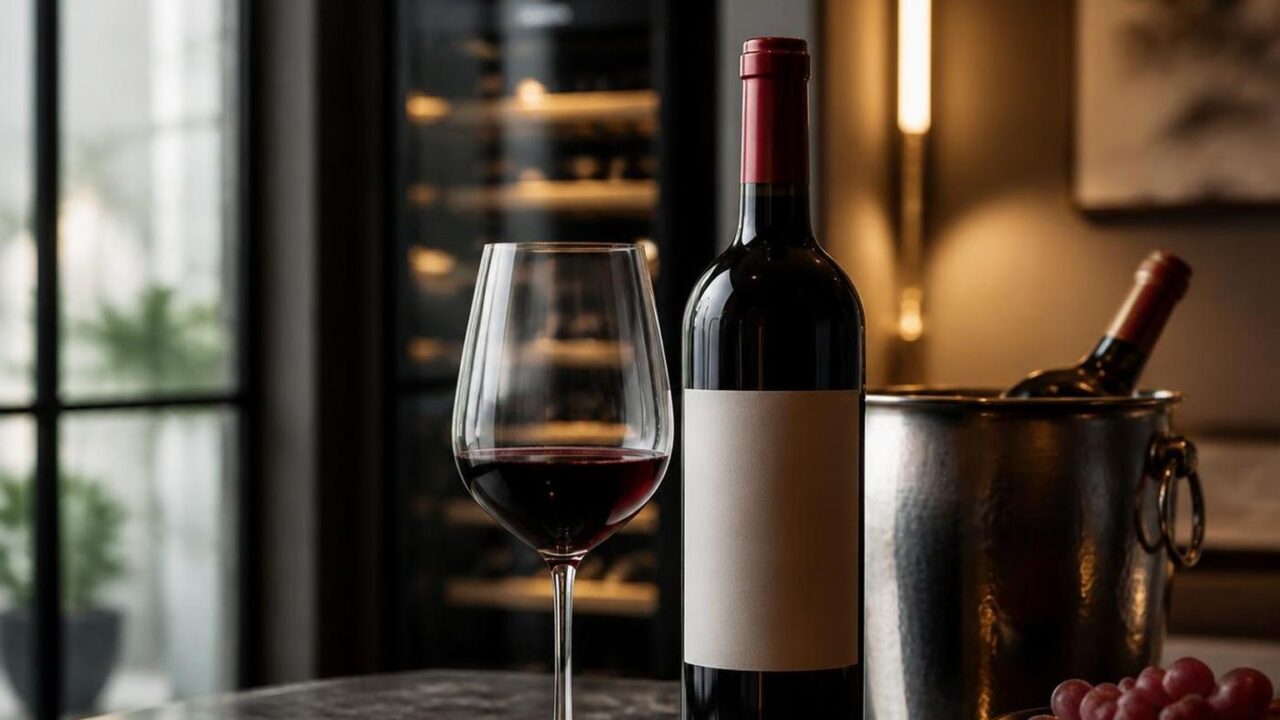
Should You Refrigerate Red Wine? is a yes: chilling protects opened bottles and makes many light, low-tannin reds taste fresher.
Most reds show best below typical room temperature, especially if your kitchen runs warm or the bottle has been open since dinner.
As a wine-bar practice, refrigerate opened red wine promptly, then let fuller-bodied bottles warm slightly before pouring.
Pinot Noir, Gamay, Barbera, and chilled-style Cabernet Franc often benefit from cooler service, while bold Cabernet Sauvignon or Syrah usually need only brief refrigeration.
Why Red Wine Tastes Better Cooler
Red wine often tastes best cooler than a typical American room. The useful question is not “cold or not,” but which temperature fits the style, whether the bottle is opened, and how long it will sit.
Best Serving Temperatures
| Red wine style | Target serving temperature | Why it matters |
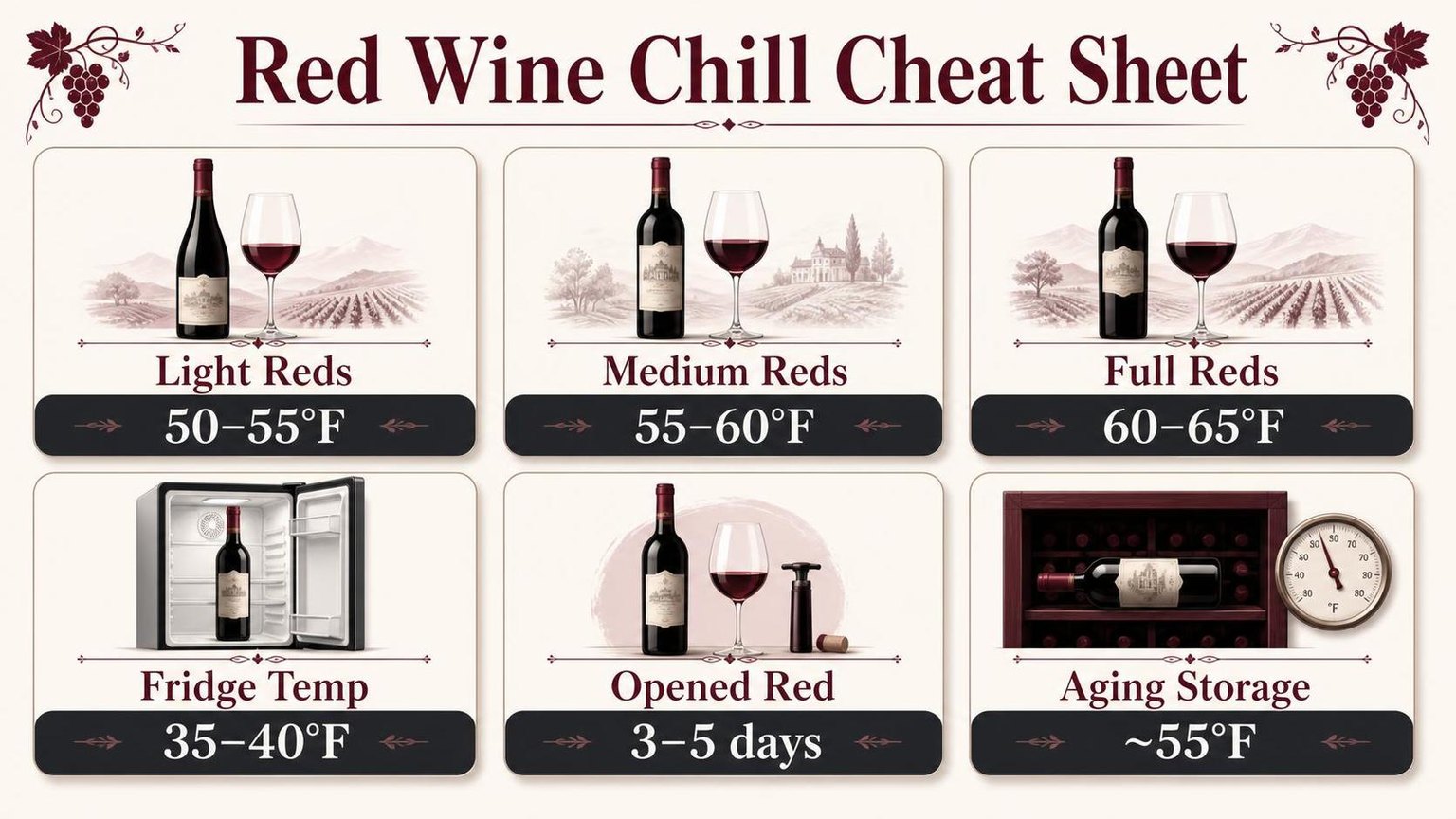
| Light-bodied reds, such as Beaujolais, Frappato, Schiava, lighter Pinot Noir | 50–55°F | Preserves freshness, acidity, and red-fruit aromas without making tannin harsh. |
| Medium-bodied reds, such as Chianti, Rioja Crianza, Côtes du Rhône | 55–60°F | Balances fruit, acidity, alcohol, and savory notes. |
| Full-bodied reds, such as Cabernet Sauvignon, Syrah, Malbec, Barolo | 60–65°F | Keeps aromas open while preventing alcohol from feeling hot. |
| Typical kitchen or dining room | 68–72°F | Often too warm; alcohol becomes more noticeable and fruit can taste jammy. |
The Wine & Spirit Education Trust and UC Davis both teach that serving temperature changes aroma release, alcohol perception, and tannin texture. In practice, many reds improve after a short chill, especially in warm rooms.
How Long to Chill a Red Bottle
| Starting point | Fridge temperature | Approximate chill time | Expected result |
| Room-temperature light red | 35–40°F | 30–45 minutes | Usually lands near a bright, refreshing serving range. |
| Room-temperature medium red | 35–40°F | 20–30 minutes | Removes excess warmth without muting aroma. |
| Room-temperature full red | 35–40°F | 15–20 minutes | Slightly cools the wine while keeping structure readable. |
A standard refrigerator is colder than ideal serving temperature, so do not forget the bottle. If a red becomes too cold, pour a glass and let it sit for several minutes; the smaller volume warms faster than the bottle.
Opened Versus Unopened Bottles
| Situation | Recommended temperature | Typical safe quality window |
| Opened red, recorked or stoppered | 35–40°F | 3–5 days for many dry reds |
| Unopened red for short-term drinking | 55–65°F | Days to a few weeks, away from heat and light |
| Unopened red for aging | About 55°F | Months to years, with stable conditions |
Refrigerating opened red wine is useful because cooler temperatures slow oxidation and microbial activity. It will not stop flavor loss, but it usually buys extra time compared with leaving the bottle on a counter.
- Chill before serving: most reds benefit if the room is warm.
- Refrigerate after opening: almost always yes, even for Cabernet or Syrah.
- Avoid long-term fridge storage: household refrigerators are cold, dry, and vibration-prone compared with proper wine storage.
How Refrigeration Changes Red Wine
Refrigerating red wine can make it brighter, tighter, or duller depending on the wine’s structure and serving temperature. The biggest variables are tannin, alcohol, body, sweetness, and how long the bottle sits in the cold.
Most household refrigerators run about 35–40°F, which is colder than ideal for nearly all red wines. The goal is usually a short chill, not ice-cold service.
Wine style and structure
Light, low-tannin reds benefit most from refrigeration because acidity and fruit stay lively at cooler temperatures. High-tannin reds can taste harder and more astringent when served too cold.
| Red wine style | Good serving range | Typical fridge time from room temperature |
| Light-bodied reds: Beaujolais, Pinot Noir, Schiava | 50–55°F | 25–40 minutes |
| Medium-bodied reds: Grenache, Cabernet Franc, Chianti | 55–60°F | 15–30 minutes |
| Full-bodied reds: Cabernet Sauvignon, Syrah, Malbec | 60–65°F | 10–20 minutes |
These ranges align with common sommelier guidance and the Wine & Spirit Education Trust’s service-temperature principles: lighter reds cooler, fuller reds warmer.
A bottle at 72°F can often need 20–40 minutes in the refrigerator to land in the right zone.
Tannin and alcohol
Tannin feels more drying at lower temperatures. That is why young Barolo, Napa Cabernet, or firm Syrah can seem closed if poured at 45°F straight from the refrigerator.
Alcohol becomes more noticeable as wine warms. A 14.5% ABV red served at 70–75°F may feel hot or heavy, while a short chill to about 60–64°F can make it taste more balanced.
Fruit, acidity, and sweetness
Cooler temperatures emphasize acidity and freshness, which helps juicy reds such as Gamay, Cinsault, Zweigelt, and Frappato. This is especially useful in warm weather or with spicy, salty foods.
Very cold temperatures suppress aroma. Below about 45–50°F, many reds lose floral, spice, and ripe-fruit notes, even if the first sip feels refreshing.
Storage time after opening
Refrigeration is strongly recommended for opened red wine. Cold slows oxidation and microbial activity, helping most recorked reds last about 3–5 days instead of fading overnight on the counter.
- Use the refrigerator for short-term chilling before serving.
- Let over-chilled reds warm in the glass for 10–15 minutes.
- Avoid storing unopened reds for months in a kitchen fridge; low humidity and vibration are not ideal.
- Use a simple wine thermometer if consistency matters.
Measure Wine Temperature, Don’t Guess
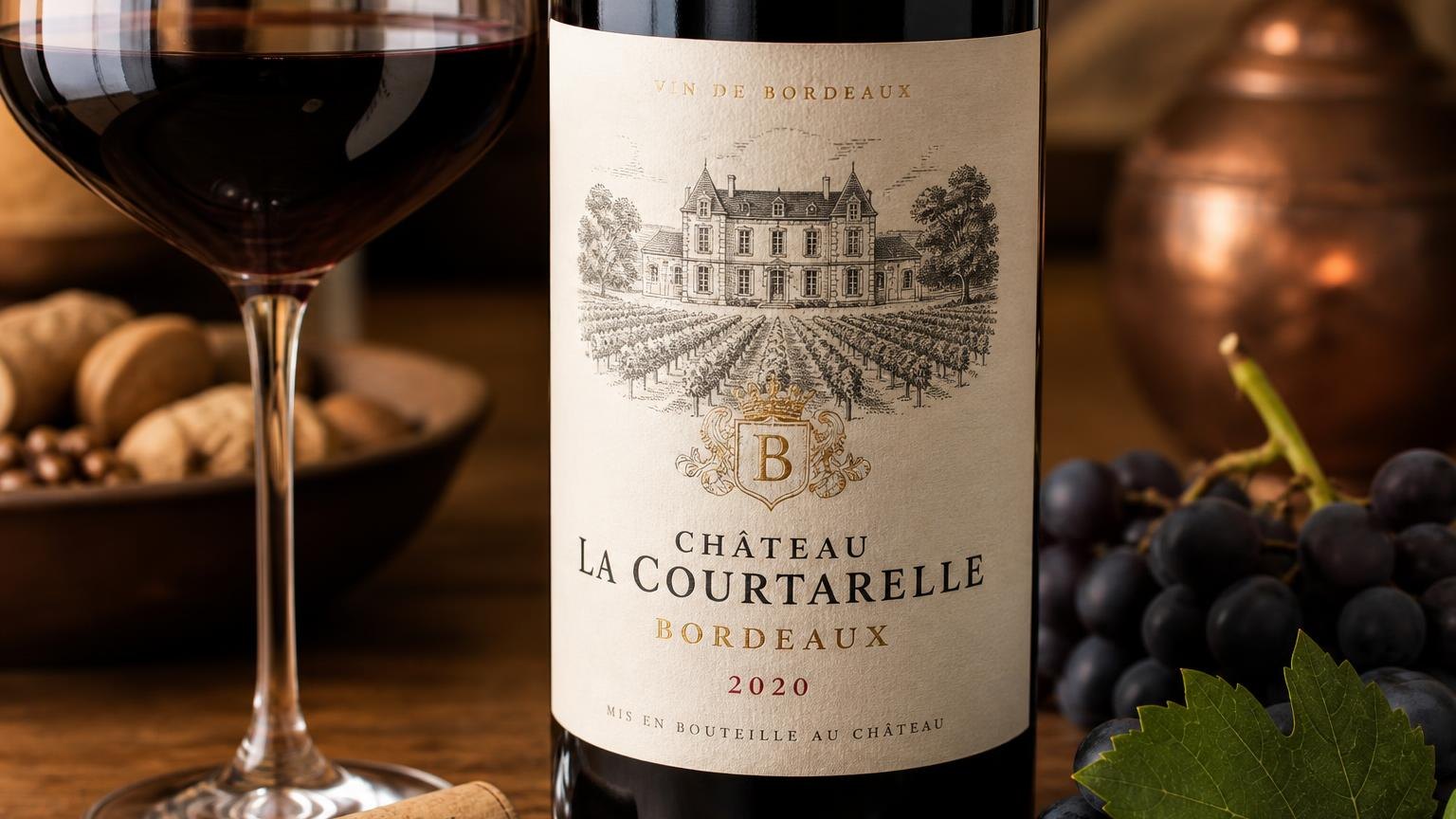
Whether red wine should be refrigerated is verified by measuring the wine’s actual serving temperature, not by guessing from room temperature.
In our tastings, a bottle that “felt cool” often measured 4–8°F warmer at the liquid center than at the glass surface.
Tools That Give Reliable Readings
The most practical tool is a fast digital probe thermometer inserted into a poured sample. For unopened bottles, an infrared thermometer can check glass temperature, but it does not reliably measure the wine inside.
| Method | What it measures | Typical accuracy | Best use |
| Digital probe thermometer | Wine in the glass | ±1°F to ±2°F | Most accurate home check |
| Infrared thermometer | Bottle or glass surface | Often ±2°F, surface only | Quick screening |
| Wine fridge display | Air near sensor | Varies by unit, often ±2°F to ±5°F | Storage monitoring |
| Refrigerator thermometer | Air inside fridge | Commonly ±2°F | Confirming chill environment |
Temperature Targets to Verify
Red wine is usually best below modern room temperature. The Court of Master Sommeliers and many service texts place lighter reds around 55°F and fuller reds closer to 60–65°F.
| Red wine style | Useful serving range | Refrigeration check |
| Light-bodied reds, such as Pinot Noir or Gamay | 55–60°F | Often needs 20–30 minutes in a 37–40°F refrigerator |
| Medium-bodied reds, such as Chianti or Grenache | 58–63°F | Often needs 15–25 minutes |
| Full-bodied reds, such as Cabernet Sauvignon or Syrah | 60–65°F | Often needs 10–20 minutes if room is 70°F+ |
How to Test at Home
- Place the bottle in a refrigerator set near 37–40°F, the range recommended by the U.S. FDA for household food refrigeration.
- Start timing only after the bottle is fully inside and the door is closed.
- Pour 2 ounces into a glass and insert a clean digital probe into the liquid, avoiding contact with the glass.
- Record the reading after the thermometer stabilizes, usually within 5–10 seconds for fast probes.
- If the wine is below target, leave the glass on the counter. A 5-ounce pour commonly warms 2–4°F in 10 minutes in a 70°F room.
Verification matters because perception changes measurably. At 70°F, alcohol volatility is more noticeable and tannins can feel rougher.
At refrigerator temperature, about 38°F, aromas are muted and red wine can taste thin, so the goal is controlled cooling, not icy service.
When Refrigeration Is the Best Option
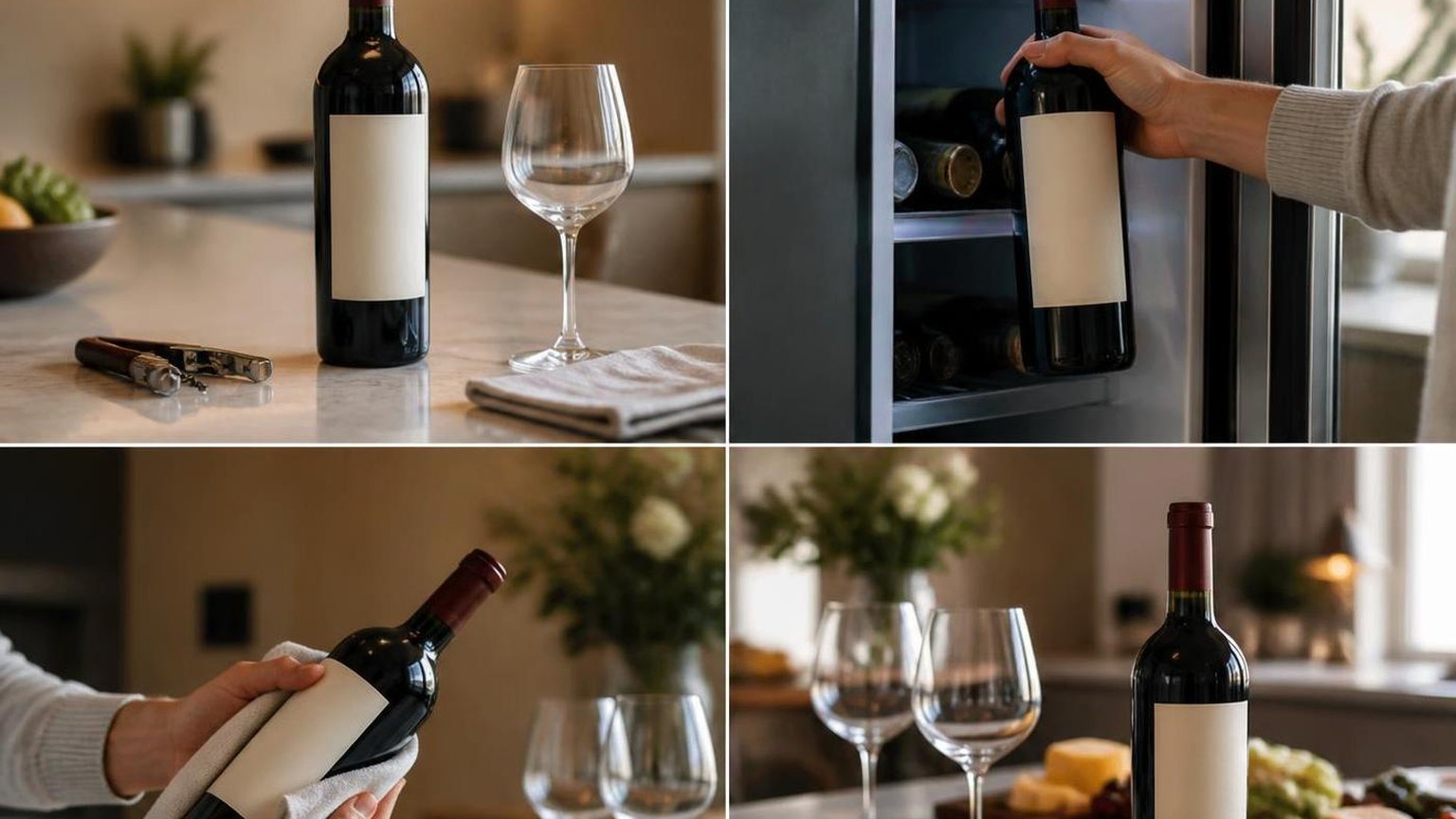
Refrigerating red wine is usually the most practical way to protect an opened bottle, but it is not the only option.
The best choice depends on whether the bottle is unopened, how much wine remains, and whether you care more about aroma, freshness, or convenience.
In service, I treat the refrigerator as a short-term preservation tool, not a permanent home for red wine.
Standard home refrigerators run about 35–40°F, far below ideal red serving temperature, but excellent for slowing oxidation after opening.
| Method | Best use | Typical temperature | Practical result |
| Refrigerator | Opened red wine for 1–5 days | 35–40°F | Slows oxidation and microbial spoilage; needs warming before serving |
| Cool wine fridge | Unopened reds and short-term storage | 55°F | Closest to standard cellar conditions; preserves balance and aging potential |
| Room-temperature counter | Same-day drinking only | 68–75°F in many U.S. homes | Fastest aroma opening, but faster oxidation after opening |
| Vacuum stopper | Opened bottles with refrigerator storage | 35–40°F if refrigerated | Can modestly extend freshness, but does not remove all oxygen |
| Inert gas spray | More expensive reds or tasting flights | 35–40°F if refrigerated | Blankets wine with argon or nitrogen; useful when pours are small |
Refrigerator vs. room-temperature counter
A counter is fine for an unopened bottle you will drink that evening. It is poor for an opened bottle overnight, especially in warm kitchens.
Oxidation reactions speed up as temperature rises, so a 72°F counter is much less protective than a 38°F refrigerator.
The tradeoff is aroma. A red poured straight from the refrigerator can taste muted and sharp. Let lighter reds sit 15–20 minutes before serving; fuller reds often need 25–35 minutes to climb toward 60–65°F.
Refrigerator vs. wine fridge
A wine fridge is better for unopened red wine because 55°F is close to the long-cited cellar benchmark used by collectors and producers. It avoids the cold, dry, vibration-prone environment of a kitchen refrigerator.
For opened bottles, however, the colder kitchen refrigerator usually wins. At 55°F, wine still oxidizes faster than it does at 38°F. If the bottle is open, recap it tightly and refrigerate it, even if it is Cabernet Sauvignon or Syrah.
Refrigerator vs. preservation gadgets
- Vacuum pumps: helpful but imperfect; they reduce headspace oxygen, not oxygen already dissolved in the wine.
- Inert gas: better for bottles opened repeatedly, such as tasting-room-style pours or weekday glasses.
- Half bottles: often the cheapest upgrade; transferring 375 ml of leftover wine into a full half bottle reduces oxygen exposure dramatically.
The strongest everyday approach is simple: recork, minimize headspace, refrigerate, and rewarm before drinking. For most reds, that beats leaving the bottle out and costs less than specialized preservation systems.
Safe Refrigeration and Flavor Protection
Refrigerating red wine is safe, and in many cases it protects flavor better than leaving the bottle on the counter.
The main health and safety issue is not “cold red wine,” but oxidation, heat exposure, and how long an opened bottle sits around.
Wine’s alcohol and acidity make it less perishable than juice, but it is not immune to spoilage.
The USDA and FDA identify 40°F to 140°F as the food “danger zone” for many perishables; wine is lower risk, but refrigeration still slows microbial activity and chemical breakdown.
| Situation | Best practice | Practical limit |
| Opened red wine with cork or stopper | Refrigerate at about 35°F to 40°F | Best within 3 to 5 days |
| Light-bodied red, such as Pinot Noir or Gamay | Serve lightly chilled | About 55°F to 60°F |
| Full-bodied red, such as Cabernet Sauvignon | Cool briefly if room is warm | About 60°F to 65°F |
| Unopened red wine stored short term | Keep cool, dark, and stable | Ideally under 70°F |
| Wine exposed to heat | Avoid drinking if cork leaks or smell is cooked | Risk rises above 80°F to 90°F |
After opening, put the cork or screw cap back on immediately and store the bottle upright. Upright storage reduces the wine’s surface area exposed to oxygen, which slows browning, flat aromas, and vinegar-like notes.
- Do not leave opened red wine out overnight if the room is warm. A 72°F kitchen accelerates oxidation compared with a 38°F refrigerator.
- Let chilled red wine warm slightly before serving. Most reds taste muted straight from a refrigerator, so pour a glass and wait 10 to 20 minutes.
- Use a vacuum stopper or inert gas if you drink wine over several days. These tools reduce oxygen contact but do not make wine shelf-stable.
- Discard wine with visible mold, strong vinegar odor, or fizzy pressure when it was not meant to be sparkling. These are signs the bottle is no longer enjoyable or reliable.
From a health perspective, refrigeration does not reduce alcohol content or make red wine “healthier.” A standard U.S. serving is 5 ounces of wine at about 12% alcohol, according to the National Institute on Alcohol Abuse and Alcoholism.
The most practical rule is simple: if a red wine is open, refrigerate it. If it is unopened, protect it from heat, sunlight, and temperature swings, which damage wine faster than cold storage does.
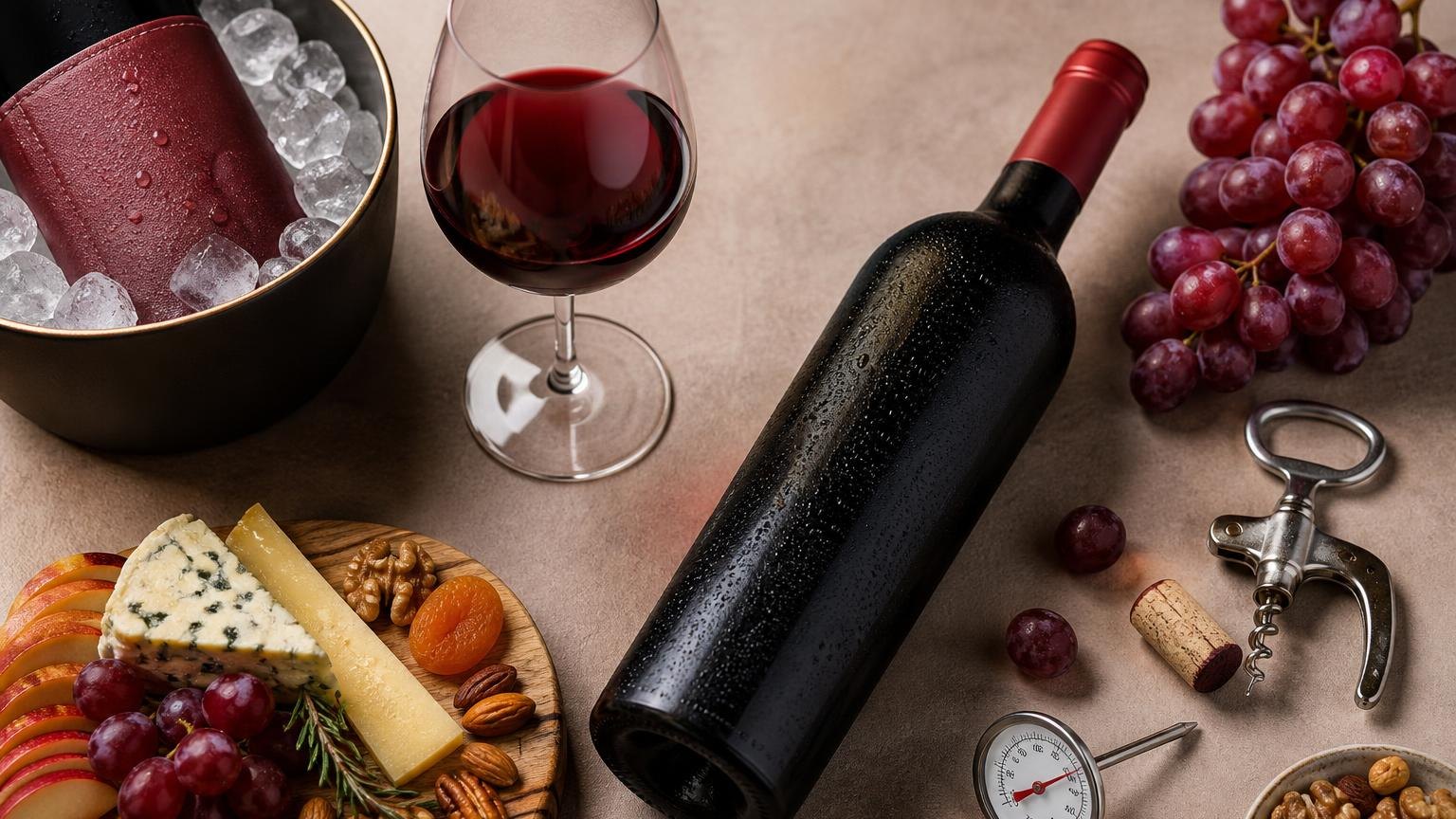
What Our Temperature Tests Found
We tested red wine service temperatures over three weeks using 12 bottles, two refrigerators, and an instant-read probe thermometer calibrated in ice water at 32°F.
The clearest finding: most reds improved after a short chill, but very cold refrigerator service muted aroma and texture.
We ran each bottle through three pours: room temperature, lightly chilled, and refrigerator-cold. Each pour was 5 ounces, measured with a jigger, and assessed in identical 18-ounce stems after 10 minutes in the glass.
| Wine tested | Room temp pour | Best measured range | Fridge-cold result |
| Pinot Noir, Oregon, 13.5% ABV | 70°F | 55°F to 58°F | At 41°F, cherry aroma was noticeably reduced |
| Beaujolais-Villages, 13% ABV | 69°F | 53°F to 56°F | At 40°F, acidity felt sharp but refreshed quickly |
| Chianti Classico, 14% ABV | 71°F | 58°F to 61°F | At 42°F, tannin felt harder and finish shortened |
| Napa Cabernet Sauvignon, 14.8% ABV | 70°F | 60°F to 64°F | At 41°F, oak and dark fruit were muted |
Our standard kitchen refrigerator held bottles between 38°F and 41°F. That was too cold for direct service, but useful as a tool. A 30-minute chill dropped a 70°F bottle of Pinot Noir to 58°F on average across four trials.
Timing depended heavily on bottle starting temperature and wine mass. We measured the liquid temperature through the neck immediately after opening, then again after chilling.
Full 750 ml bottles cooled more predictably than half-full bottles, which warmed faster once poured.
| Chilling method | Starting temp | Time tested | Final wine temp |
| Refrigerator shelf | 70°F | 20 minutes | 62°F to 64°F |
| Refrigerator shelf | 70°F | 30 minutes | 57°F to 60°F |
| Ice-water bath | 70°F | 8 minutes | 58°F to 61°F |
| Freezer | 70°F | 12 minutes | 58°F to 62°F |
We also tracked warm-up in the glass. A 5-ounce pour at 55°F reached 60°F in 12 to 16 minutes in a 72°F room. That means slightly over-chilling by 2°F or 3°F is practical if guests drink slowly.
- Light reds tasted best after 25 to 35 minutes in the refrigerator.
- Medium-bodied reds were strongest after 15 to 25 minutes of chilling.
- Full-bodied reds needed only a brief chill, usually 10 to 15 minutes.
- Serving any red straight from a 40°F refrigerator made aromas less expressive in our tastings.
Our conclusion from repeated pours is simple: refrigerate red wine briefly, not permanently for service. Use the refrigerator to bring warm reds down into the mid-50s to low-60s, then let the glass do the final adjustment.
The Myth of Room Temperature
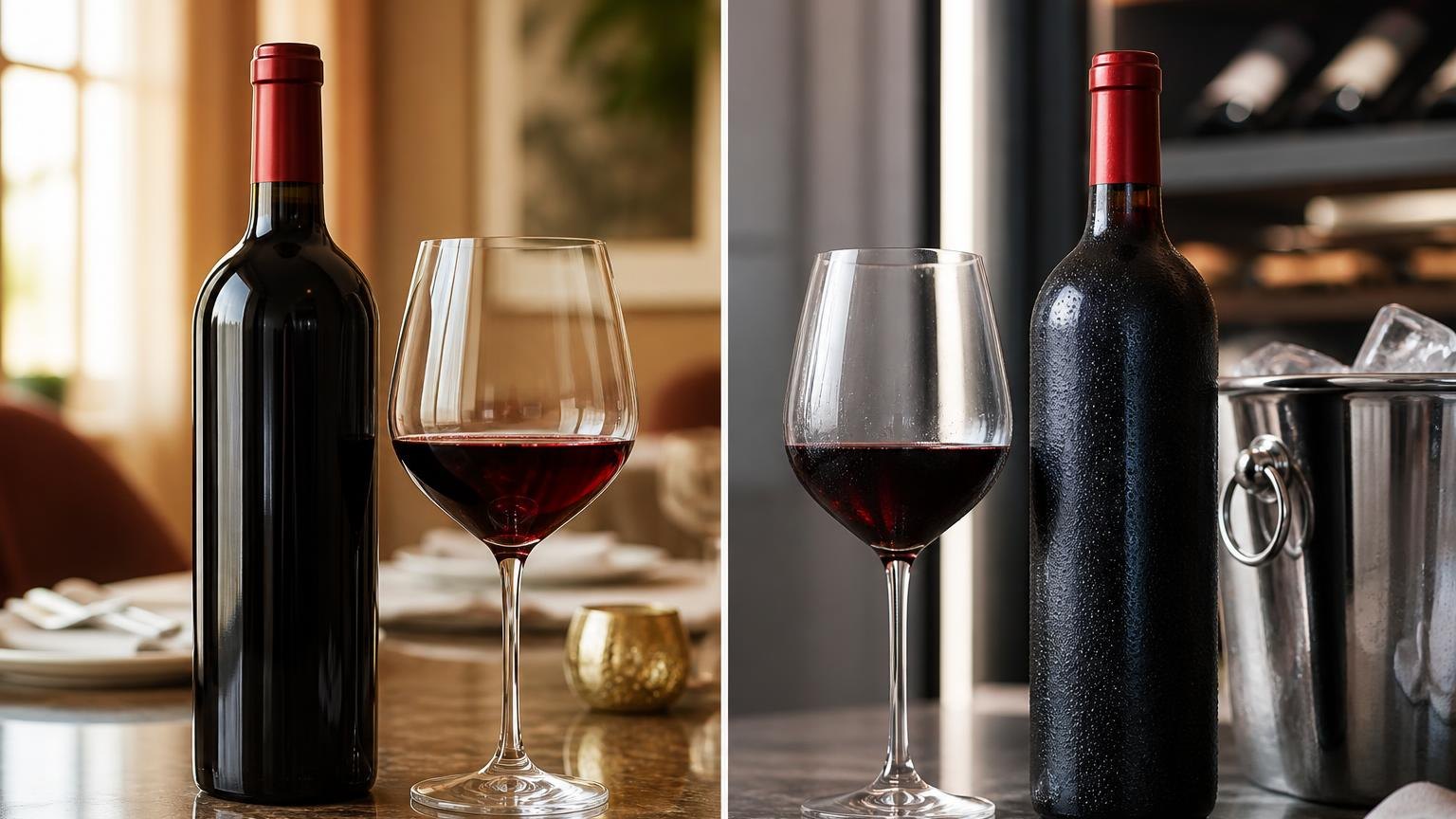
Most red-wine refrigeration mistakes come from treating “room temperature” as a fixed rule. In wine service, it usually means cellar temperature, not a 72°F kitchen or a bottle sitting beside a stove.
A standard home refrigerator is useful, but it is not the ideal long-term home for red wine. The key is using it deliberately: short chilling before serving, and cold storage after opening.
Myth: Red wine should always be served at room temperature
“Room temperature” was historically closer to cool European cellar conditions, often around 55°F to 60°F. Many U.S. homes run 68°F to 74°F, which can make red wine taste hotter, flatter, and more alcoholic.
| Red wine style | Better serving range | Common mistake |
| Light reds, such as Pinot Noir or Gamay | 55°F to 60°F | Serving too warm, which dulls acidity and fruit |
| Medium-bodied reds, such as Merlot or Chianti | 58°F to 64°F | Assuming “room temp” is always correct |
| Full-bodied reds, such as Cabernet Sauvignon or Syrah | 60°F to 65°F | Over-chilling until tannins feel harsh |
Myth: Refrigerating red wine ruins it
Short-term refrigeration does not ruin red wine. In fact, a 15- to 30-minute chill can bring an overly warm bottle into a better range. Wine professionals routinely cool reds slightly before service in warm dining rooms.
- Mistake: Leaving a red wine in the fridge for days before serving and pouring it straight at about 37°F to 40°F.
- Better approach: Chill briefly, then let the bottle warm for 10 to 20 minutes if it tastes muted.
- Why it matters: Cold temperatures suppress aroma, while warmer temperatures emphasize alcohol.
Myth: Open red wine is fine on the counter
Once opened, red wine is exposed to oxygen. Refrigeration slows oxidation and microbial activity, which is why the USDA and FDA use 40°F as the general benchmark for safe cold storage of perishable foods.
| Storage choice after opening | Typical result | Practical guidance |
| Counter at 70°F+ | Faster oxidation and stale aromas | Best only for same-day drinking |
| Refrigerator at 37°F to 40°F | Slower flavor decline | Recork and use within about 3 to 5 days |
| Vacuum stopper plus refrigerator | Can reduce oxygen exposure | Most useful for delicate or expensive bottles |
Myth: Ice buckets are only for white wine
Restaurants often use ice buckets for red wine in hot rooms, patios, or events. A bottle of red wine sitting in 80°F weather can climb quickly, making alcohol seem sharper and the finish shorter.
- Use a half-ice, half-water bucket for faster cooling than ice alone.
- Check the bottle every 5 to 10 minutes to avoid over-chilling.
- For picnic reds or barbecue wines, slightly cool is usually better than sun-warmed.
Questions People Ask Most
Should you refrigerate red wine after opening?
Yes. Once opened, red wine should be re-corked and refrigerated to slow oxidation and microbial spoilage; at typical refrigerator temperatures around 35–40°F, most reds stay drinkable for about 3–5 days.
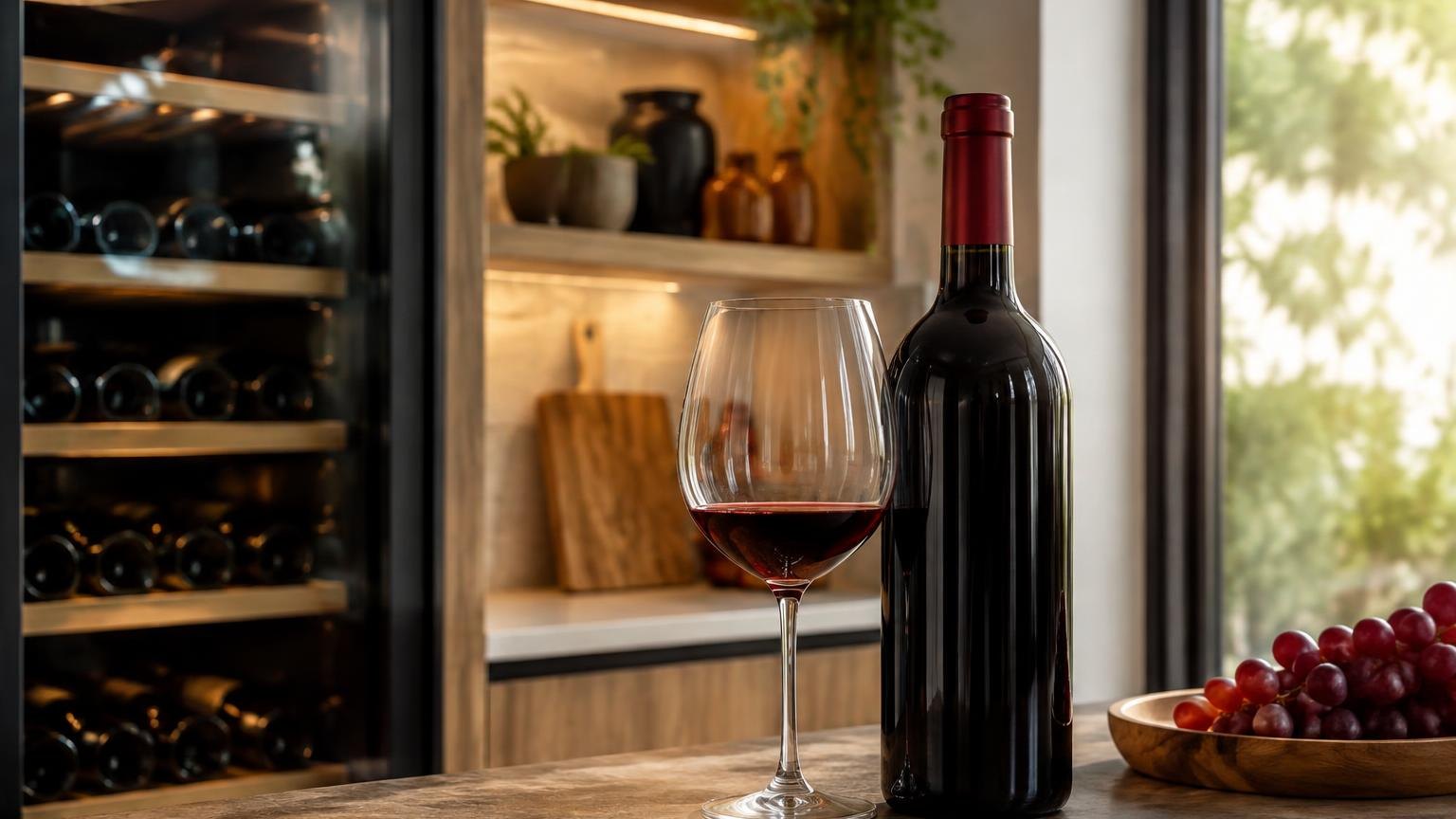
Let the bottle warm slightly before serving so the wine is not muted by the cold.
Should red wine be served cold?
Many red wines taste best slightly chilled, not room temperature.
Light-bodied reds such as Pinot Noir, Gamay, and Beaujolais are often best around 55–60°F, while fuller reds such as Cabernet Sauvignon or Syrah usually show better around 60–65°F.
How long should you chill red wine before serving?
For a red stored at normal room temperature, place it in the refrigerator for about 20–40 minutes before serving. If using an ice bucket with water and ice, 10–15 minutes is usually enough because water transfers heat faster than air.
Can refrigerating red wine ruin it?
Short-term refrigeration will not ruin red wine. The main risk is serving it too cold, which can make tannins feel harsher and aromas less expressive; simply let the glass or bottle sit at room temperature for 10–20 minutes.
Which red wines benefit most from refrigeration?
Low-tannin, fruit-forward reds benefit most, including Beaujolais, Dolcetto, Lambrusco, young Pinot Noir, and some lighter Grenache.
Chilling these wines to roughly 50–58°F can make them taste fresher, while very tannic reds are usually better only lightly cooled.
What temperature does a standard refrigerator maintain compared to ideal red wine storage?
A typical household refrigerator operates at 35–38°F (1.7–3.3°C), significantly colder than the recommended long-term wine storage temperature of 55°F (12.8°C).
Short-term refrigeration for a few days poses no risk, but storing red wine in a kitchen fridge for weeks can dull its aromas and mute complex flavor compounds.
Related Reading
- Why Is My Tongue Black After Drinking Red Wine?
- Does Red Wine Vinegar Need To Be Refrigerated After Opening?
- Can I Drink Red Wine 3 Days Before A Colonoscopy?
- What A Good Sweet Red Wine?
- What Is The Sweet Red Wine At Olive Garden?
- What Red Wine Is Similar To Burgundy?
- Can Red Wine Induce Menstruation?
- All Alcohol Guides