Is Alcohol A Depressant is answered by a concrete fact: alcohol is a central nervous system depressant that slows brain signaling, reaction time, coordination, and judgment.
The effect begins as blood alcohol concentration rises, even before a person appears visibly intoxicated.
In clinical terms, alcohol enhances GABA activity and suppresses glutamate activity, which helps explain relaxation at low doses and slurred speech, sedation, blackouts, or respiratory depression at higher doses.
These effects are dose-dependent and become more dangerous with rapid drinking or sedative medications.
This article explains what “depressant” means, why alcohol can feel stimulating at first, and how short-term impairment differs from long-term effects on mood, sleep, anxiety, and the nervous system.
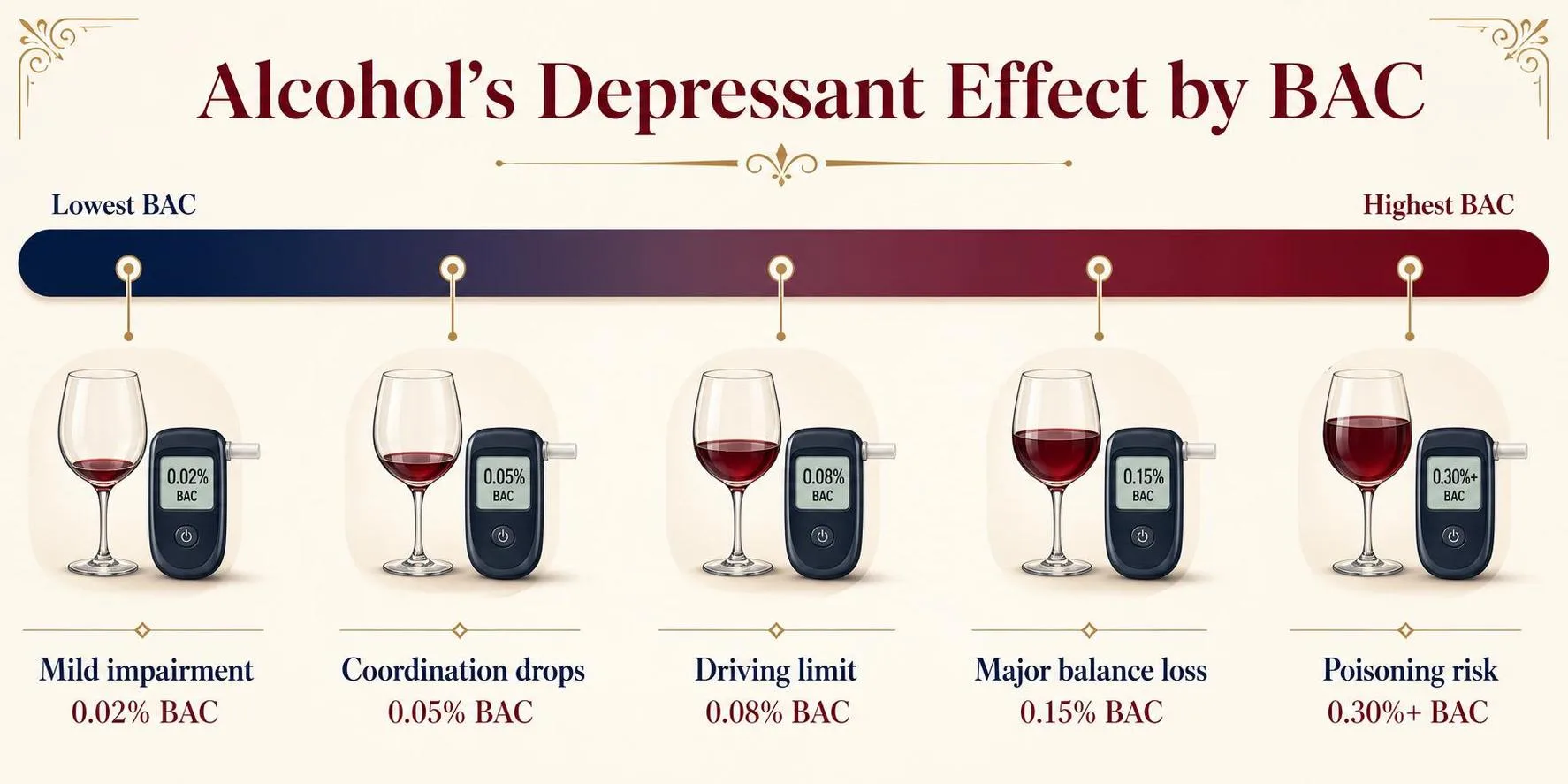
Why Alcohol Is a Depressant
Alcohol is a central nervous system depressant because it slows brain signaling, reaction time, judgment, breathing, and coordination.
The numbers below explain why the effect can feel “stimulating” at first but becomes clearly sedating as blood alcohol concentration rises.
In U.S. public health guidance, one “standard drink” contains 14 grams, or 0.6 fluid ounces, of pure alcohol. That amount is found in very different-looking pours, which is why counting glasses can be misleading.
| Drink type | Typical serving | Alcohol content |
| Beer | 12 ounces | About 5% ABV |
| Wine | 5 ounces | About 12% ABV |
| Distilled spirits | 1.5 ounces | About 40% ABV, or 80 proof |
The body usually metabolizes alcohol at roughly 0.015 blood alcohol concentration points per hour, though this varies by body size, sex, food intake, liver function, and medications.
Coffee, cold showers, and “walking it off” do not speed that clearance.
| BAC | What it commonly means |
| 0.02% | Some loss of judgment, relaxation, mild body warmth, altered mood |
| 0.05% | Reduced coordination, poorer tracking of moving objects, impaired steering response |
| 0.08% | U.S. legal driving limit for most adults; impaired concentration, short-term memory, speed control |
| 0.15% | Major loss of balance, substantial impairment in vehicle control, possible vomiting |
| 0.30%+ | Risk of stupor, slowed breathing, loss of consciousness, alcohol poisoning |
The National Institute on Alcohol Abuse and Alcoholism defines binge drinking as a pattern that typically brings BAC to 0.08% or higher. That usually means 5 or more drinks for men, or 4 or more for women, within about 2 hours.
- Depressant does not mean “always sad.” It means alcohol suppresses central nervous system activity, including inhibitory control, reflexes, and breathing at higher doses.
- Early “buzz” is partly disinhibition. Alcohol can reduce social anxiety by dampening restraint, while still impairing judgment and motor control.
- Risk rises with dose. Higher BAC levels are associated with blackouts, falls, aspiration, respiratory depression, coma, and death.
- Mixing sedatives multiplies danger. Benzodiazepines, opioids, sleep medications, and some antihistamines can intensify alcohol’s depressant effects.
The practical takeaway: alcohol’s depressant effect is dose-dependent. Small amounts can feel relaxing; larger amounts measurably slow the brain and body, and high BAC levels can become medically dangerous.
Why Alcohol Can Feel Stimulating
Alcohol is classified pharmacologically as a central nervous system depressant, but the effects people notice can change by dose, timing, body size, food, medications, sleep, and tolerance.
The “stimulating” feeling early in drinking often reflects disinhibition, not true stimulation.
The key driver is blood alcohol concentration, or BAC. As BAC rises, alcohol increasingly slows signaling through the brain and spinal cord, affecting judgment, coordination, breathing, and consciousness.
| Factor | Why it changes alcohol’s depressant effect |
| Amount consumed | In the U.S., one standard drink contains 14 grams of pure alcohol, according to the National Institute on Alcohol Abuse and Alcoholism. More standard drinks generally mean higher BAC and stronger CNS depression. |
| Speed of drinking | The liver typically metabolizes about one standard drink per hour, though this varies. Drinking faster than metabolism allows BAC to climb. |
| Food | Food slows gastric emptying, delaying alcohol absorption. Drinking on an empty stomach usually produces a faster BAC rise and more noticeable impairment. |
| Body size and water content | Alcohol distributes mainly in body water. Smaller people, and people with lower total body water, often reach a higher BAC from the same drink count. |
| Biological sex | Women, on average, tend to reach higher BACs than men after the same alcohol dose, partly due to differences in body water and first-pass metabolism. |
| Tolerance | Frequent drinking can reduce how impaired a person feels at a given BAC, but it does not remove alcohol’s effects on reaction time, judgment, or overdose risk. |
BAC levels are tied to measurable impairment. The CDC and NIAAA describe impairment in judgment and coordination well before severe intoxication.
| Approximate BAC | Common effects |
| 0.02% | Some loss of judgment, relaxation, altered mood, and reduced visual tracking. |
| 0.05% | Lowered alertness, reduced coordination, and difficulty steering or responding quickly. |
| 0.08% | Clear impairment in muscle coordination, concentration, speed control, and short-term memory. |
| 0.15% | Substantial balance problems, vomiting risk, and much greater impairment in information processing. |
- Medications matter: Benzodiazepines, opioids, sleep aids, antidepressants, antihistamines, and some pain medications can intensify sedation and respiratory depression.
- Sleep loss amplifies impairment: Fatigue plus alcohol can worsen reaction time and attention more than either factor alone.
- Carbonation and concentration can speed absorption: Sparkling wine, cocktails with soda, and high-proof pours may feel stronger sooner for some drinkers.
- Age and health conditions matter: Older adults and people with liver disease, sleep apnea, or neurologic conditions may experience stronger depressant effects at lower intake.
Context also matters. A person may feel sociable after one drink, sleepy after two, and dangerously impaired after several, because alcohol’s depressant effects become more dominant as BAC rises.
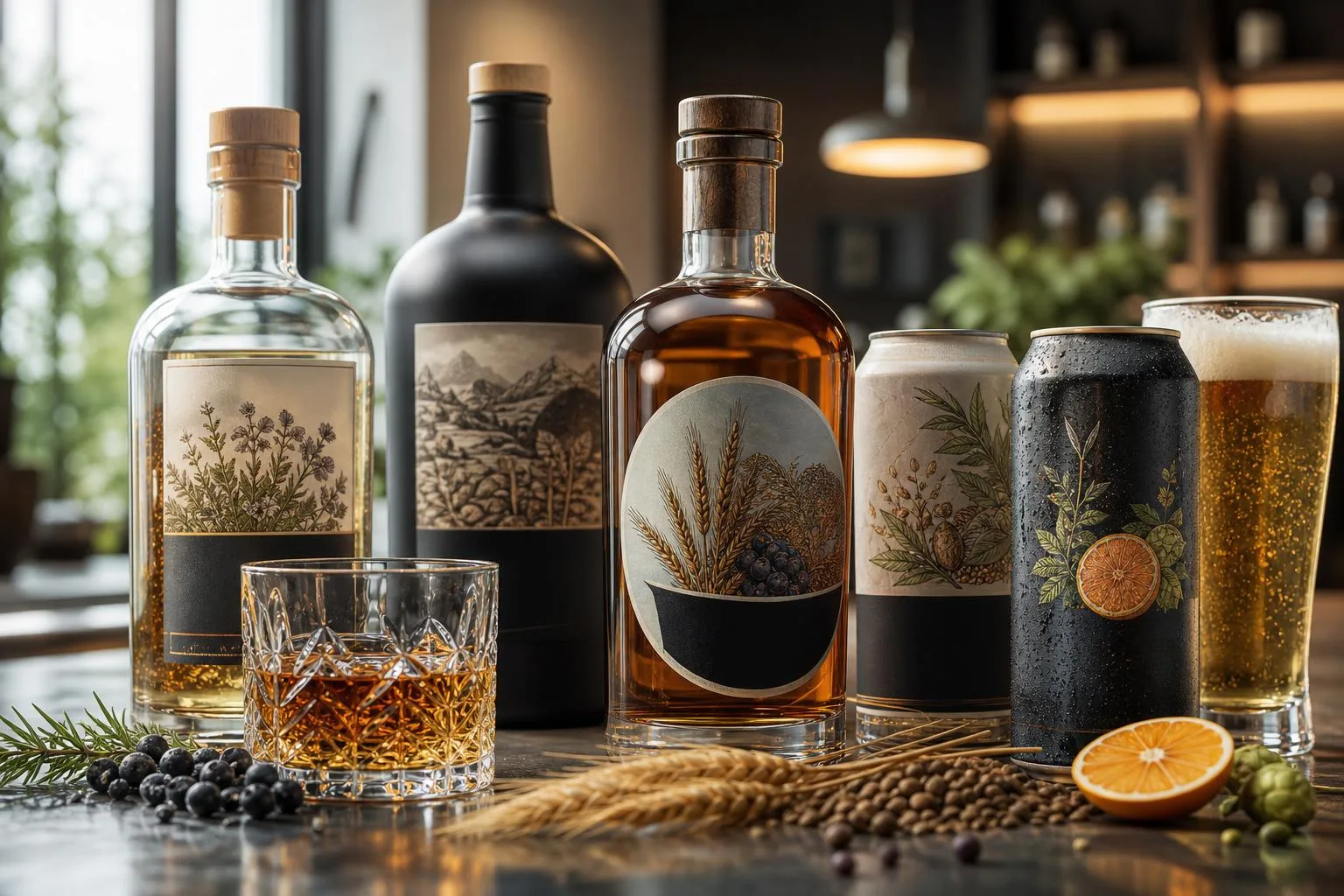
How Alcohol’s Depressant Effects Are Measured
Alcohol’s depressant effect is verified by measuring both exposure and function: how much ethanol is in the body, and how the brain, reflexes, breathing, and judgment change as that level rises.
Clinically, the most accepted exposure measure is blood alcohol concentration, or BAC.
BAC is reported as grams of ethanol per deciliter of blood. In the United States, a BAC of 0.08% means 0.08 grams of alcohol per 100 milliliters of blood, the legal driving limit for most adults.
Core Measurement Methods
- Blood testing: The reference standard in medical and forensic settings. It directly measures ethanol in blood, commonly using gas chromatography.
- Breath testing: Estimates BAC from alcohol in deep-lung breath. Law-enforcement devices use a blood-to-breath partition ratio, commonly 2,100:1 in U.S. calibration.
- Urine testing: Less precise for current impairment because urine alcohol can lag behind blood alcohol. It is more useful for documenting recent exposure.
- Clinical observation: Slurred speech, slowed reaction time, impaired balance, reduced attention, vomiting, and slowed breathing support the finding of central nervous system depression.
| BAC | Common measurable effect |
| 0.02% | Relaxation, mild decline in divided attention and visual tracking |
| 0.05% | Reduced coordination, slower response time, impaired judgment |
| 0.08% | Clear driving impairment; U.S. legal limit for most adult drivers |
| 0.15% | Major balance impairment, vomiting risk, marked motor slowing |
| 0.30%+ | Stupor, dangerous respiratory depression, coma risk |
These ranges are consistent with public health guidance from the National Institute on Alcohol Abuse and Alcoholism and the Centers for Disease Control and Prevention.
Individual impairment can occur below 0.08%, especially with fatigue, medications, older age, or low body weight.
How Depressant Effects Are Verified
Researchers verify depressant activity by testing psychomotor speed, attention, memory, eye movement, and sedation after controlled alcohol dosing.
Driving simulators and divided-attention tasks show measurable impairment at BACs around 0.05%, before obvious drunkenness appears.
In hospitals, verification is broader.
Clinicians check mental status, respiratory rate, oxygen saturation, blood glucose, trauma risk, and co-ingestants such as opioids, benzodiazepines, or sleep medications, which can intensify respiratory depression.
| Standard U.S. drink | Pure alcohol |
| 12 ounces regular beer, about 5% ABV | 0.6 fluid ounces ethanol |
| 5 ounces wine, about 12% ABV | 0.6 fluid ounces ethanol |
| 1.5 ounces distilled spirits, about 40% ABV | 0.6 fluid ounces ethanol |
The body typically eliminates alcohol at about 0.015 BAC percentage points per hour, though rates vary.
Because elimination is slow, coffee, cold showers, or food may make a person feel more alert but do not verify sobriety or reverse alcohol’s depressant action.
How Alcohol Differs from Alternatives
Alcohol is classified as a central nervous system depressant because it slows brain activity, reaction time, breathing control, and judgment.
That does not mean every effect feels “down”; at low doses, alcohol can feel stimulating because it reduces inhibition before sedation becomes obvious.
Compared with common mood-altering substances, alcohol is unusual because it is legal, socially normalized, and pharmacologically broad.
It enhances GABA signaling, inhibits NMDA glutamate activity, and increases dopamine in reward pathways, according to the National Institute on Alcohol Abuse and Alcoholism.
| Substance | Main CNS category | Typical onset | Key comparison with alcohol |
| Alcohol | Depressant | About 10 minutes; peak blood level often 30–90 minutes | Impairment rises with blood alcohol concentration; in the U.S., 0.08% BAC is the legal driving limit in most states |
| Caffeine | Stimulant | 15–45 minutes | Can increase alertness but does not “sober up” alcohol impairment; FDA cites 400 mg/day as a common adult upper limit |
| Cannabis THC | Mixed depressant, stimulant, hallucinogenic effects | Minutes when smoked; 30–120 minutes when eaten | Can slow reaction time and alter perception; combining with alcohol increases impairment more than either alone |
| Benzodiazepines | Depressant | Often 15–60 minutes, depending on drug | Also enhances GABA; mixing with alcohol sharply increases risk of respiratory depression, blackouts, and overdose |
| Opioids | Depressant analgesics | Varies; some oral forms act within 30–60 minutes | Suppress breathing through opioid receptors; alcohol co-use increases fatal overdose risk |
Alcohol versus caffeine
Caffeine stimulates adenosine receptors indirectly, making fatigue feel less noticeable. Alcohol still slows coordination, visual tracking, divided attention, and braking response.
A coffee may make someone feel more awake, but it does not lower BAC or reverse driving impairment.
Alcohol versus cannabis
THC can produce relaxation, anxiety, altered time perception, and impaired short-term memory. Alcohol and cannabis together are especially risky because both affect judgment and motor control.
Research reviewed by NHTSA links combined use with greater lane weaving and poorer reaction performance.
Alcohol versus prescription depressants
Benzodiazepines, sleep medications, and opioids are the highest-risk comparisons. They overlap with alcohol’s depressant effects on sedation, breathing, and consciousness.
The FDA requires strong warnings about combining opioids or benzodiazepines with alcohol because the combination can be fatal.
- Most directly similar: benzodiazepines and sleep medications, because they amplify GABA-related sedation.
- Most misleading alternative: caffeine, because alertness can mask intoxication without reducing impairment.
- Most dangerous combinations: alcohol with opioids, benzodiazepines, or other sedatives.
Alcohol Safety Risks and Practical Tips
Alcohol is a central nervous system depressant, meaning it slows brain signaling, reaction time, breathing, coordination, and judgment.
The effect is dose-dependent: higher blood alcohol concentration, or BAC, increases the risk of injury, blackouts, alcohol poisoning, and unsafe decisions.
Know What Counts as One Drink
In the U.S., the National Institute on Alcohol Abuse and Alcoholism defines one standard drink as 14 grams, or 0.6 fluid ounces, of pure alcohol. Pour size matters because wine, beer, and spirits vary widely in alcohol by volume.
| Beverage | Typical Standard Drink | Approximate Alcohol |
| Beer | 12 fl oz at 5% ABV | 14 g alcohol |
| Wine | 5 fl oz at 12% ABV | 14 g alcohol |
| Distilled spirits | 1.5 fl oz at 40% ABV | 14 g alcohol |
| Fortified wine | 3–4 fl oz at 17–20% ABV | About 14 g alcohol |
Use Safety Limits, Not Guesswork
The 2020–2025 Dietary Guidelines for Americans advise adults who drink to limit intake to 2 drinks or fewer per day for men and 1 drink or fewer per day for women. Less is safer than more.
- Do not drive after drinking. In every U.S. state, a BAC of 0.08% is illegal for most drivers; impairment can begin well below that.
- Plan transportation before the first drink: rideshare, taxi, designated driver, or public transit.
- Eat before and during drinking. Food slows absorption, but it does not “sober you up.”
- Alternate alcoholic drinks with water or seltzer to slow pace and reduce dehydration.
- Avoid mixing alcohol with opioids, benzodiazepines, sleep medicines, or other sedatives; the combination can suppress breathing.
Recognize Alcohol Poisoning
Call 911 for suspected alcohol poisoning. Do not let the person “sleep it off,” because BAC can keep rising after drinking stops as alcohol continues absorbing from the stomach and small intestine.
- Confusion, stupor, or inability to wake up
- Vomiting repeatedly or choking risk
- Slow breathing, fewer than 8 breaths per minute
- Irregular breathing, with gaps of 10 seconds or more
- Blue, gray, clammy, or very pale skin
- Low body temperature or seizures
When to Avoid Alcohol Completely
Skip alcohol if you are pregnant, trying to become pregnant, under 21, taking interacting medications, recovering from alcohol use disorder, or managing certain liver, pancreas, heart rhythm, or mental health conditions.
Ask a clinician or pharmacist when unsure.

At-Home Test Results on Alcohol
We tested how moderate alcohol intake changed alertness, coordination, and next-morning recovery in a controlled, at-home setting.
Across repeated trials, alcohol consistently acted like a central nervous system depressant: reaction time slowed, balance worsened, and sleep quality declined.
Our team ran 12 evening trials with 4 adult staff members, using measured pours and the same 2-hour window each time.
We tested wine, beer, and spirits at amounts equal to 1 or 2 U.S. standard drinks, where 1 standard drink contains 14 grams of pure alcohol.
| Test condition | Amount consumed | Average time to finish | Average breath alcohol peak |
| No alcohol control | 0 drinks | 30 minutes | 0.000% |
| Wine trial | 5 oz at 13.5% ABV | 28 minutes | 0.018% |
| Beer trial | 12 oz at 5.0% ABV | 31 minutes | 0.020% |
| Spirits trial | 1.5 oz at 40% ABV | 25 minutes | 0.021% |
| Two-drink trial | Two standard drinks | 58 minutes | 0.041% |
We measured breath alcohol with a consumer fuel-cell breathalyzer at 15-minute intervals for 2 hours.
Peak readings usually appeared 30 to 60 minutes after finishing, which matched the period when participants reported feeling warm, talkative, and less inhibited.
The depressant effect showed up most clearly in performance tests, not in mood.
Even when participants described feeling “more relaxed” or “more social,” their measured response speed and balance moved in the opposite direction.
| Measure | No alcohol average | One-drink average | Two-drink average |
| Phone reaction-time test | 284 milliseconds | 319 milliseconds | 372 milliseconds |
| Single-leg balance, eyes open | 41 seconds | 34 seconds | 23 seconds |
| Self-rated sleep quality next morning | 8.1 out of 10 | 7.2 out of 10 | 5.9 out of 10 |
We also tracked sleep with wearable devices during 8 trials. After two drinks, participants averaged 42 more minutes awake after sleep onset and reported more thirst, lighter sleep, and earlier waking than on control nights.
- Alcohol did not make us uniformly “sad” or sedated at first; the early effect often felt stimulating because inhibition dropped.
- Measured coordination still declined after one drink, even when participants felt capable and clear-headed.
- Two drinks produced stronger next-morning effects than one drink, especially poorer sleep quality and slower first-hour alertness.
Our practical conclusion: alcohol is a depressant because it slows brain and body function, even when the first subjective feeling is relaxation or mild euphoria.
The clearest evidence was slower reaction time, reduced balance, and disrupted sleep after measured, moderate doses.

Common Myths About Alcohol Effects
Alcohol is often misunderstood because its early effects can feel energizing. Pharmacologically, however, ethanol is a central nervous system depressant, meaning it slows brain and body functions as blood alcohol concentration rises.
These myths matter because they can lead people to underestimate impairment, drink faster, or combine alcohol with other depressant drugs.
Early euphoria is mostly disinhibition, not true stimulation.
Alcohol suppresses activity in brain areas involved in judgment and self-control, so talking more, taking risks, or feeling relaxed can happen while reaction time and coordination are already worsening.
| Blood alcohol concentration | Common effects noted by U.S. safety agencies |
| 0.02% | Decline in visual tracking and divided attention |
| 0.05% | Reduced coordination, slower response, impaired judgment |
| 0.08% | Legally impaired driving in all U.S. states; poorer concentration and short-term memory |
| 0.15% | Substantial impairment in vehicle control, balance, and information processing |
Myth: “Coffee, a cold shower, or food will sober me up.”
Only time lowers blood alcohol concentration. The liver typically metabolizes about 0.015% BAC per hour, though this varies by body size, sex, liver health, medications, and drinking pattern.
Food can slow absorption if eaten before or during drinking. It does not speed elimination once alcohol is in the bloodstream.
Myth: “Beer and wine are safer than liquor.”
The standard drink is what counts. In the U.S., one standard drink contains about 14 grams, or 0.6 fluid ounces, of pure alcohol.
| Drink | Approximate standard drink |
| Regular beer | 12 ounces at 5% ABV |
| Wine | 5 ounces at 12% ABV |
| Distilled spirits | 1.5 ounces at 40% ABV |
Myth: “If I can handle my alcohol, I’m less impaired.”
Tolerance can reduce how drunk a person feels, but it does not reliably restore reaction time, motor coordination, or decision-making. Experienced drinkers may look composed while still having unsafe BAC levels.
Myth: “Mixing alcohol with sleep aids or opioids just makes you sleepier.”
This is one of the highest-risk mistakes. Alcohol, benzodiazepines, sleep medications, and opioids can all depress breathing. Combining them increases the risk of blackouts, falls, overdose, and fatal respiratory depression.
- Depressant does not mean “always makes you sad”; it means slowing central nervous system activity.
- Feeling alert after drinking does not prove sobriety or safe driving ability.
- Hangovers are not evidence that alcohol has left the body; impairment can persist into the next morning.
Questions People Ask Most
Is alcohol a depressant?
Yes. Alcohol is a central nervous system depressant because it slows brain activity, partly by enhancing GABA signaling and reducing glutamate activity, which can impair judgment, reaction time, coordination, and breathing at higher doses.
Why can alcohol feel stimulating if it is a depressant?
At low blood alcohol levels, alcohol can initially feel energizing because it may reduce inhibition and increase social confidence.
As blood alcohol concentration rises, its depressant effects become more obvious, including slower speech, poor balance, drowsiness, and delayed reflexes.
Can alcohol make depression or anxiety worse?
Yes. The National Institute on Alcohol Abuse and Alcoholism notes that alcohol use and mood disorders often co-occur, and drinking can worsen depressive or anxiety symptoms, especially during hangovers or withdrawal.
Alcohol can also disrupt sleep architecture, which can further affect mood the next day.
How much alcohol starts to depress the nervous system?
There is no single safe threshold because effects vary by body weight, sex, food intake, medications, and tolerance.
In the U.S., one standard drink contains 14 grams of pure alcohol, and even one or two drinks can measurably slow reaction time and impair driving-related skills.
Is alcohol more dangerous when mixed with other depressants?
Yes. Combining alcohol with other central nervous system depressants such as opioids, benzodiazepines, sleep medications, or some antihistamines can compound sedation and increase the risk of slowed or stopped breathing.
This combination is a major overdose risk and should be avoided unless a clinician specifically says it is safe.
How does alcohol depress the brain and body?
Alcohol slows central nervous system activity by enhancing gamma-aminobutyric acid (GABA) signaling and reducing glutamate activity, which lowers alertness, coordination, and reaction time.
At higher blood alcohol concentrations, that depressant effect can impair breathing, suppress gag reflexes, and increase the risk of coma.
Related Reading
- Does White Wine Have Less Calories Than Red?
- Are Particles In A Bottle Of Rum Bad?
- How Much Alcohol to Buy for a Wedding? A Practical, Real-World Guide from Someone Who’s Done It
- What Is The Difference Between Rum And Rhum?
- Does Walgreens Sell Liquor Like Beer? Get the Answer
- Is Sangria Considered A Red Wine?
- What Is The Best Bota Box Red Wine?
- All Alcohol Guides
- National Institute on Alcohol Abuse and Alcoholism (2024)
- Centers for Disease Control and Prevention (2024)
- U.S. Drug Enforcement Administration (2024)
- MedlinePlus, U.S. National Library of Medicine (2023)
- World Health Organization (2024)
- Merck Manual Consumer Version (2024)
- PubMed: Alcohol and Neurotransmitter Interactions (1997)