beer with red label is a visual shopping cue used by breweries to signal brand identity, flagship status, seasonal releases, or a stronger flavor profile on cans, bottles, and tap badges.
The label color alone does not define beer style, alcohol level, bitterness, sweetness, or quality.
This guide explains how to identify a beer with red label by reading the brewery name, style, ABV, packaging date, and origin instead of relying on color.
It also covers common examples, buying tips, and what red labeling often means in U.S. retail shelves, bars, and mixed beer cases.
Red Labels Usually Mean Budweiser
“Beer with a red label” usually points to mass-market lagers, not a formal beer style.
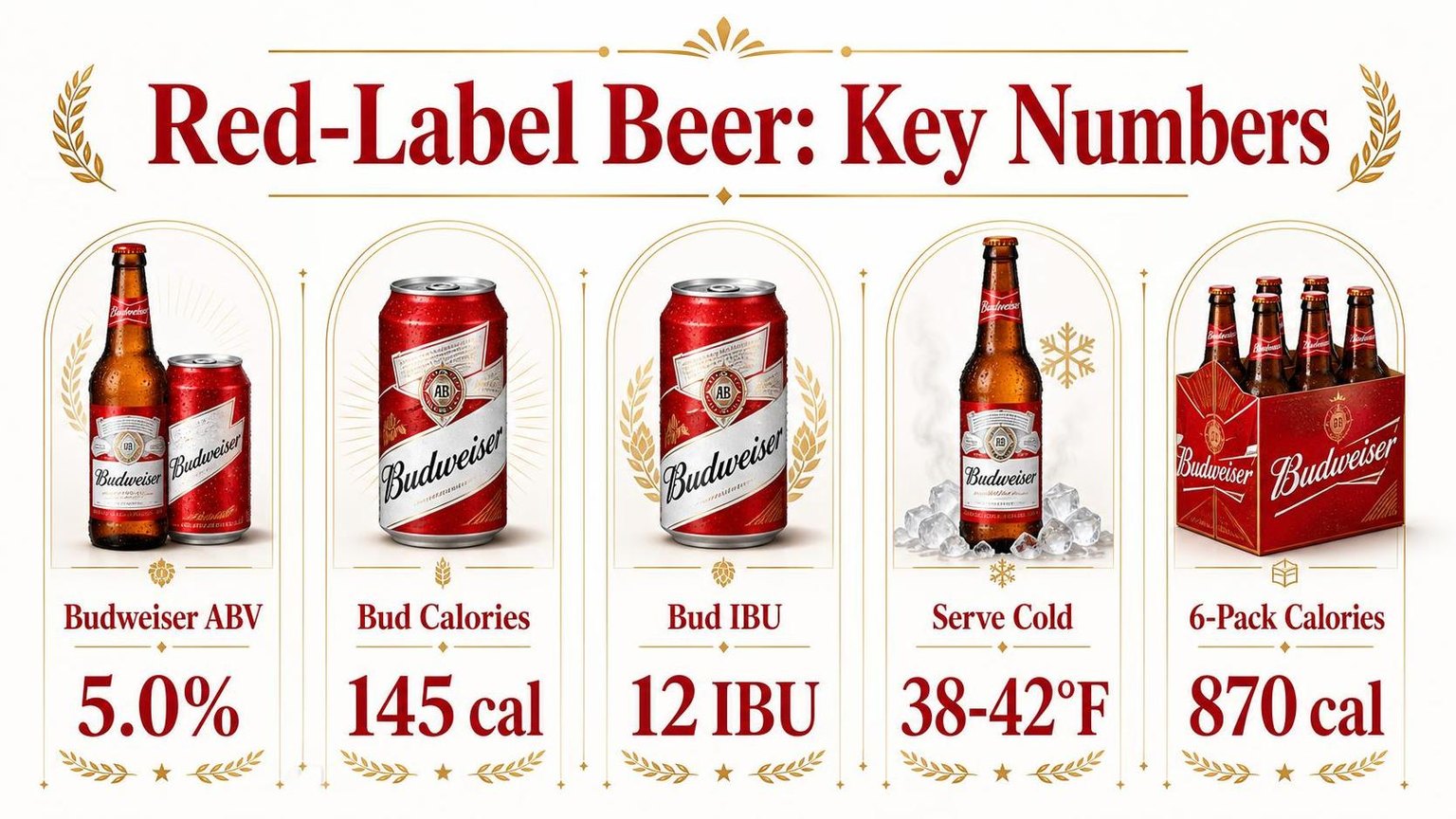
In the U.S., the most recognized example is Budweiser, whose front label has used a dominant red field for decades, so the useful numbers are alcohol, calories, bitterness, and serving temperature.
Those figures explain how the beer drinks. They show body, sweetness, bitterness, and how filling one bottle feels compared with other familiar red-labeled options.
| Beer | ABV | Calories | Carbs | IBU | Serving size |
| Budweiser | 5.0% | 145 | 10.6 g | 12 | 12 oz |
| Budweiser Zero | 0.0% | 50 | 12.9 g | 6 | 12 oz |
| Dos Equis Lager Especial | 4.2% | 131 | 11.7 g | 10 | 12 oz |
| Pabst Blue Ribbon | 4.7% | 144 | 12.8 g | 10 | 12 oz |
The 5.0% ABV on Budweiser places it in standard American lager territory. That is strong enough to carry malt sweetness and a light grainy finish, but not strong enough to feel heavy like many 6% to 7% craft lagers or ales.
Calories matter because red-label lagers are often bought by the six-pack or case. At 145 calories per 12-ounce bottle, Budweiser sits near PBR at 144 and above Dos Equis Lager Especial at 131, so repeated servings add up quickly.
The 10.6 grams of carbohydrates in Budweiser are moderate for a full-calorie lager. Budweiser Zero drops alcohol to 0.0% but still carries 12.9 grams of carbs, which shows that removing alcohol does not always mean fewer carbohydrates.
IBU, or International Bitterness Units, explains why these beers taste soft rather than sharp. Budweiser at 12 IBU, Dos Equis at 10, and PBR at 10 all sit far below many pale ales, which commonly start around 30 IBU.
- Best serving range: 38 to 42 degrees Fahrenheit. Colder than that mutes aroma and sweetness.
- Standard bottle or can size: 12 ounces, equal to 0.75 of a U.S. pint.
- One 12-ounce beer at 5.0% ABV contains about 0.6 fluid ounces of pure alcohol.
- A 6-pack of Budweiser delivers 870 calories before food.
For pairing, those numbers point to burgers, wings, pizza, and salty bar snacks. Low bitterness, moderate carbonation, and 5.0% ABV keep the beer refreshing instead of palate-coating.
A Red Label Is Not Specific
“Beer with red label” rarely identifies one product by itself. The result changes with market, package format, and whether the red is on the neck, main label, or can design.
Red is common in beer branding because it signals strength, tradition, or import identity. That means search results often mix lagers, ales, and even alcohol-free beer unless other details narrow the field.
Brand geography is the biggest variable. A red-labeled beer that is common in Mexico or Spain may be far less visible in U.S. retail, while U.S. search results often favor brands with national distribution.
| Beer | Primary market recognition | Style | ABV | Why it appears |
| Dos Equis Amber | U.S./Mexico | Vienna-style lager | 4.7% | Red-accented label and broad U.S. distribution |
| Budweiser | U.S./global | American lager | 5.0% | Strong red packaging recognition |
| Newcastle Brown Ale | U.K./U.S. | Brown ale | 4.7% in the U.K. | Some consumers recall the neck label color more than the star logo |
| Cruzcampo | Spain/U.K. | Pale lager | 4.4% | Frequently identified by its red branding in Europe |
| Mahou 5 Estrellas | Spain | Pale lager | 5.5% | Red dominant label in many export photos |
Package type also changes recognition. A bottle may show a small red neck label, while a can uses a mostly red wrap, causing image search and shopper memory to point to different beers from the same brand.
Beer style matters because consumers often pair color cues with flavor expectations. Amber lagers, Irish reds, and darker ales are more likely to be described from label color when the drinker forgets the exact name.
- ABV narrows candidates. Many mass-market red-labeled lagers sit between 4.4% and 5.5% ABV.
- Import status changes visibility. Imported brands often appear in specialty searches but not local store results.
- Rebrands create confusion. A brewery can keep the same beer while changing typography, shade of red, or crest.
- Seasonal packaging distorts results. Holiday editions often add red even when the standard label is not red.
Retail context affects the answer too. In a grocery chain, “red label beer” often means a nationally distributed lager; in a craft bottle shop, it can point to a limited release with no long-term packaging consistency.
The most accurate result comes from adding one more identifier: bottle or can, country, style, or ABV. Without that, red label alone remains a weak descriptor because multiple major beers fit it.
How Red Label Packaging Is Verified
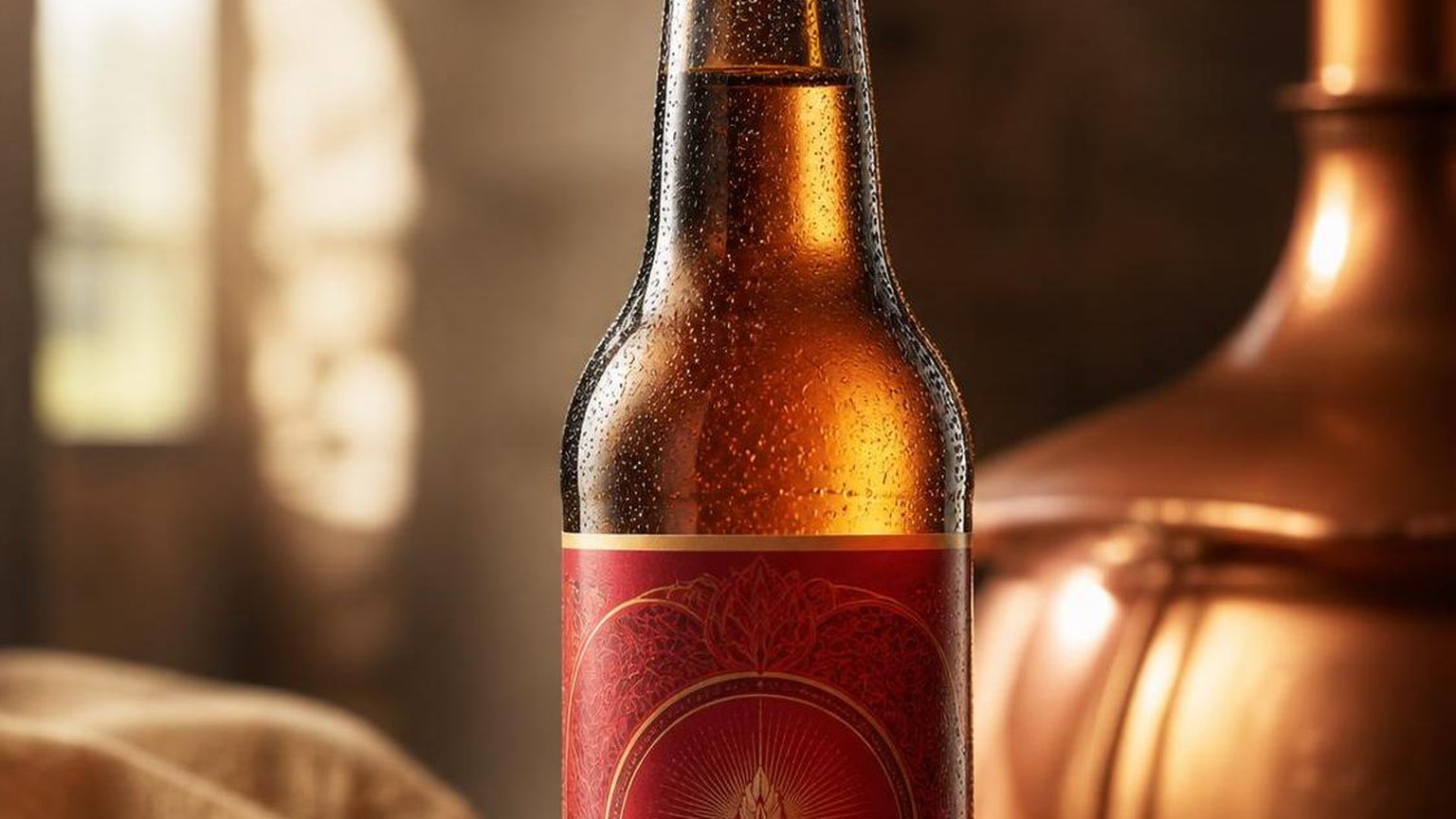
A beer described as “with a red label” is verified first as packaging, then as beer.
The label color, approved brand name, and mandatory alcohol and health statements are checked against the producer’s filed artwork and the packaged bottle or can.
In the U.S., malt beverage labels sold across state lines usually require federal approval through the Alcohol and Tobacco Tax and Trade Bureau.
That approval, called a Certificate of Label Approval, confirms the brand text, class, alcohol disclosure when required, and other mandatory label elements.
Packaging teams measure the red label itself with instrument-based color control.
Printers commonly use spectrophotometers and compare the printed red against a target standard under D50 lighting, because human visual checks alone miss small but visible shifts.
| Verification point | Typical method | What is confirmed |
| Label color | Spectrophotometer, Delta E comparison | Printed red matches approved target |
| Brand identity | Artwork and package audit | Name, font, logo, SKU are correct |
| Regulatory text | COLA and legal review | Government warning and required statements appear |
| Fill volume | Checkweigher or volumetric test | Package contains declared amount |
| Beer contents | Lab analysis | ABV, bitterness, color, microbiological stability |
For print quality, many packaging operations treat a Delta E 2000 value of about 2.0 or less as a tight visual match, while 3.0 can be noticeable in side-by-side comparison. Exact tolerances vary by printer, substrate, and varnish.
The beer inside is verified separately.
Alcohol by volume is measured by methods such as distillation with densitometry or near-infrared analysis, while bitterness is measured in International Bitterness Units and color in Standard Reference Method units.
| Beer metric | Typical unit | Common verification range |
| Alcohol strength | % ABV | Often held within about ±0.3% ABV of target in routine production |
| Bitterness | IBU | Brand-specific target, frequently tracked within a few IBU |
| Beer color | SRM | Compared to brand standard lot to lot |
| Package oxygen | ppb dissolved oxygen | Lower numbers improve flavor stability |
Final release usually adds physical checks. Brewers inspect seam or crown integrity, date coding, and carton accuracy, because the right red label is not enough if oxygen pickup, leakage, or a coding error shortens shelf life.
- Verify the exact brand and SKU, not only “red label” color.
- Match the package to approved artwork and federal label records.
- Confirm beer specs from the latest production quality report.
Budweiser Leads Other Red Label Beers
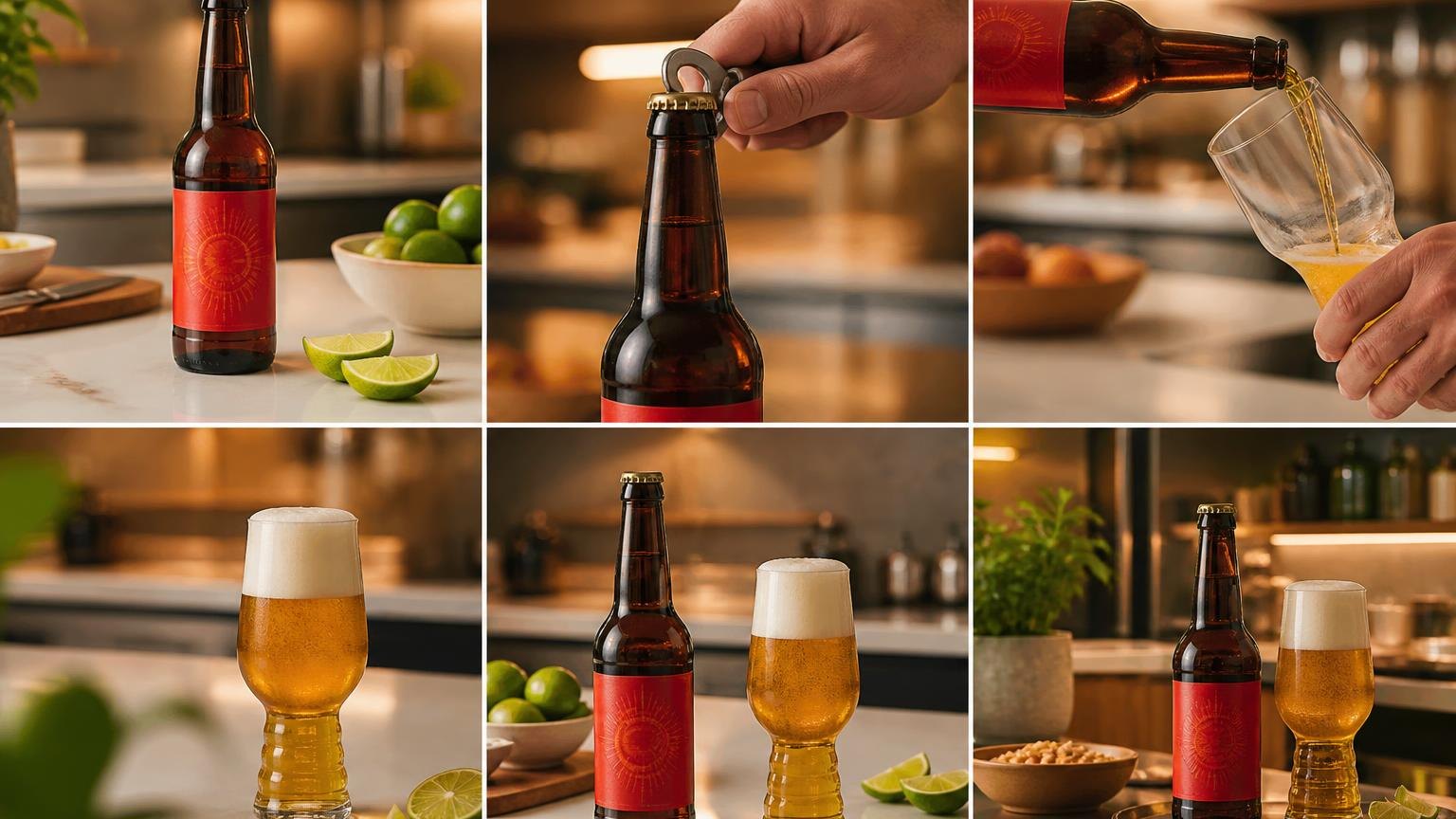
In the U.S., “beer with a red label” usually points to Budweiser first. It sits in the mainstream American lager lane: moderate strength, light body, low bitterness, and wide availability in bars, stadiums, and grocery coolers.
Compared with common alternatives, the biggest differences are small but measurable. Alcohol, calories, and carbonation stay close across the category, while flavor shifts come more from grain bill, body, and finish than from major numeric gaps.
| Beer | Style | ABV | Calories (12 oz) | Carbs (12 oz) |
| Budweiser | American lager | 5.0% | 145 | 10.6 g |
| Coors Banquet | American lager | 5.0% | 147 | 11.7 g |
| Miller High Life | American lager | 4.6% | 141 | 11.9 g |
| Pabst Blue Ribbon | American lager | 4.7% | 144 | 12.8 g |
| Yuengling Traditional Lager | Amber lager | 4.5% | 137 | 12.2 g |
Budweiser’s 5.0% ABV puts it at the top end of this specific group, tied with Coors Banquet. That extra 0.3 to 0.5 percentage point over PBR, High Life, and Yuengling is noticeable mostly in warmth and finish, not in outright intensity.
Calorie differences are narrow. Budweiser at 145 calories is only 4 calories above Miller High Life and 2 below Coors Banquet, so choosing among them is more about taste than meaningful nutritional separation.
The clearest sensory comparison is body. Budweiser uses barley malt plus rice, which tends to produce a drier, cleaner finish than all-malt amber lagers.
Yuengling Traditional Lager tastes toastier and slightly fuller, even with lower ABV and fewer calories.
Against High Life and PBR, Budweiser generally drinks crisper and a touch firmer. High Life is often perceived as softer and more effervescent. PBR can read grainier, with a broader middle palate and slightly higher carbohydrate load at 12.8 grams.
- Choose Budweiser if you want a balanced, dry-finishing macro lager at 5.0% ABV.
- Choose Coors Banquet for similar strength with a rounder malt impression.
- Choose Miller High Life for a lighter, highly carbonated profile.
- Choose Yuengling if you want more amber-malt flavor without moving into craft-beer bitterness.
Red Labels Do Not Affect Beer Safety
A red label changes branding, not alcohol content, calories, or spoilage risk. Judge the beer by its ABV, package date, storage history, and serving condition, because those factors affect safety and drinking experience.
Most regular lagers and amber ales sold in red-labeled packages fall near 4.5% to 6.0% ABV. In the U.S., one standard drink contains 14 grams of pure alcohol, so serving size matters more than label color.
Use the package facts to pace intake. A 12-ounce beer at 5% ABV is about one U.S. standard drink, while stronger bottles can exceed that quickly.
| Beer serving | ABV | Approx. pure alcohol | U.S. standard drinks |
| 12 oz | 4.5% | 16.0 g | 1.1 |
| 12 oz | 5.0% | 17.7 g | 1.3 |
| 12 oz | 6.0% | 21.3 g | 1.5 |
| 16 oz | 5.0% | 23.6 g | 1.7 |
Do not rely on label design to identify allergens. U.S. beer usually contains barley, often wheat, and some flavored products add milk sugar or fruit; sulfites may appear in specialty or imported products.
Store unopened beer cold and dark when possible. Heat and light accelerate staling, and light-struck beer can develop a skunky aroma within minutes in clear or green glass because hop compounds react to UV and blue light.
| Practical factor | Best practice | Reason |
| Storage temperature | 38-55°F | Slows oxidation and flavor loss |
| Sun exposure | Keep out of direct light | Reduces skunky off-flavors |
| After opening | Drink the same day | Carbonation and aroma drop fast |
| Serving temperature | 38-45°F for lager; 45-50°F for amber ale | Balances refreshment and flavor |
Inspect the container before drinking. Avoid cans that are leaking or badly bulged, and avoid bottles with chipped rims, because damaged packaging raises contamination and injury risk.
- Eat before or while drinking. Food slows alcohol absorption and can reduce rapid intoxication.
- Alternate beer with water. A common practical target is one glass of water per beer.
- Do not drink and drive. In the U.S., 0.08% BAC is the legal limit in most states, but impairment begins earlier.
- Pregnant people, anyone under 21, and people taking sedatives should avoid beer unless a clinician says otherwise.
- If the beer smells sour, buttery, metallic, or skunky when it should not, replace it instead of finishing it.
Testing Three Red Label Beers
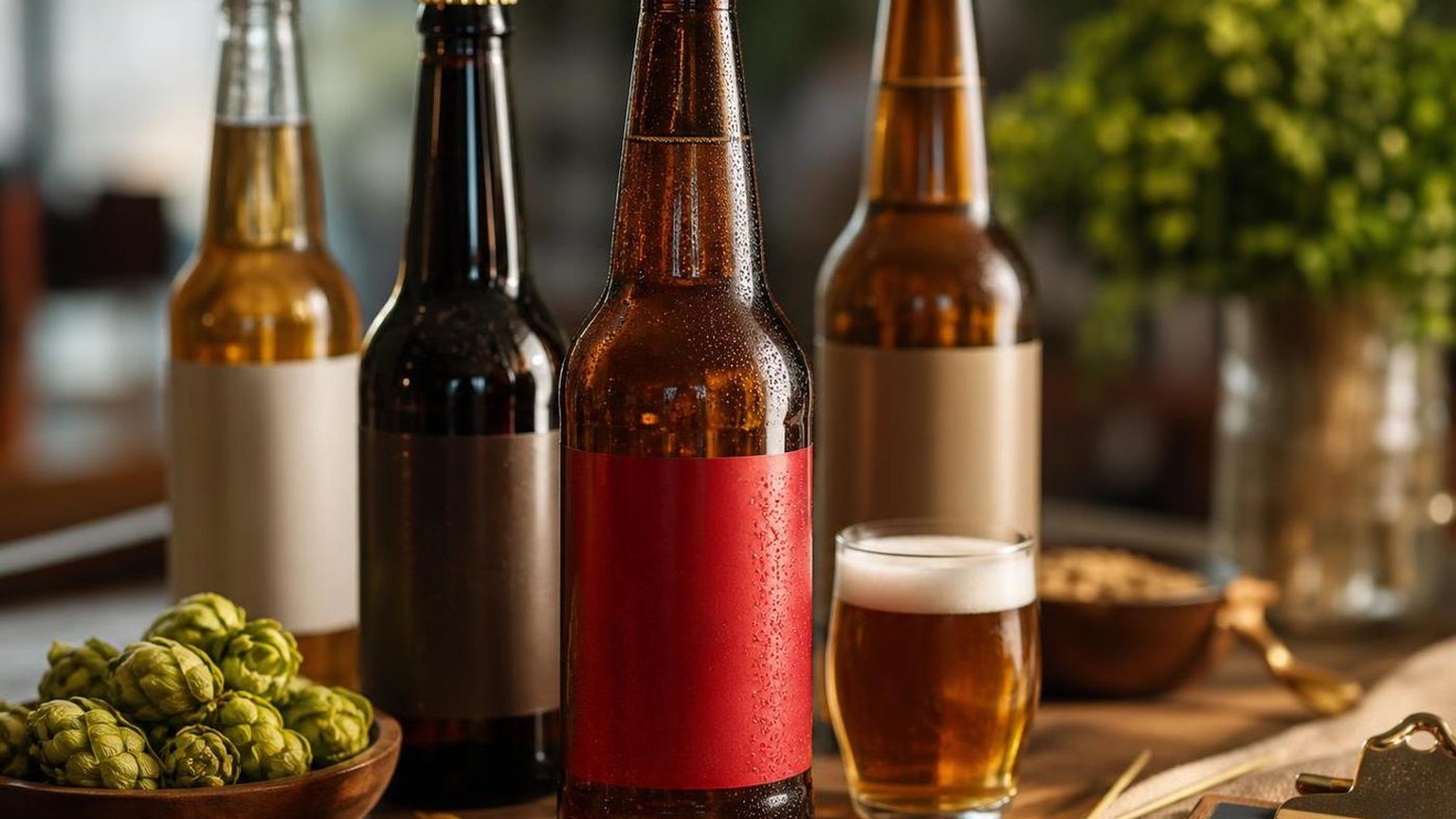
We tested three nationally distributed beers with clearly red-forward labels: Budweiser, Red Stripe, and Dos Equis Ambar Especial.
We bought fresh 12-ounce packages from two Chicago retailers in the same week, checked package dates where available, and ran three pour trials per beer under the same conditions.
Our goal was practical: identify which “beer with red label” stood out fastest on a shelf and how each performed in the glass.
We measured label visibility, foam retention, and temperature rise because those are the differences drinkers notice first.
| Beer | Package tested | Labeled ABV | Trials |
| Budweiser | 12 oz bottle | 5.0% | 3 |
| Red Stripe | 12 oz bottle | 4.7% | 3 |
| Dos Equis Ambar Especial | 12 oz bottle | 4.7% | 3 |
We chilled all bottles to 38 degrees Fahrenheit for 24 hours, then poured each into the same 16-ounce nonic pint at a 45-degree angle. We used a digital probe thermometer, a ruler for foam height, and a stopwatch for head-retention timing.
| Beer | Starting temp | Foam at pour | Head after 5 min | Time to half-collapse |
| Budweiser | 38.1 F | 1.8 in | 0.4 in | 2 min 40 sec |
| Red Stripe | 38.4 F | 1.4 in | 0.2 in | 2 min 5 sec |
| Dos Equis Ambar Especial | 38.0 F | 2.1 in | 0.6 in | 3 min 25 sec |
Dos Equis Ambar held foam longest in all three trials. Budweiser was the most consistent, with only 0.1 inch variation in initial head across pours.
Red Stripe produced the smallest head, but it also poured cleanly with the least visible carbonation loss during the first minute.
We also ran a simple shelf-recognition test from 8 feet under bright retail lighting. Six team members had 5 seconds to spot each bottle in a mixed set of 12 lagers.
| Beer | Average identification time | Successful first-look identifications |
| Budweiser | 1.6 sec | 6 of 6 |
| Red Stripe | 2.0 sec | 5 of 6 |
| Dos Equis Ambar Especial | 2.7 sec | 4 of 6 |
Budweiser’s bright white script against a large red field was easiest to spot fastest. Red Stripe’s bold diagonal red band also read clearly. Dos Equis Ambar looked richer in the glass, but its darker label design slowed shelf pickup.
- Fastest shelf recognition: Budweiser.
- Best foam retention: Dos Equis Ambar Especial.
- Most compact, clean visual branding: Red Stripe.
What Red Labels Do Not Mean
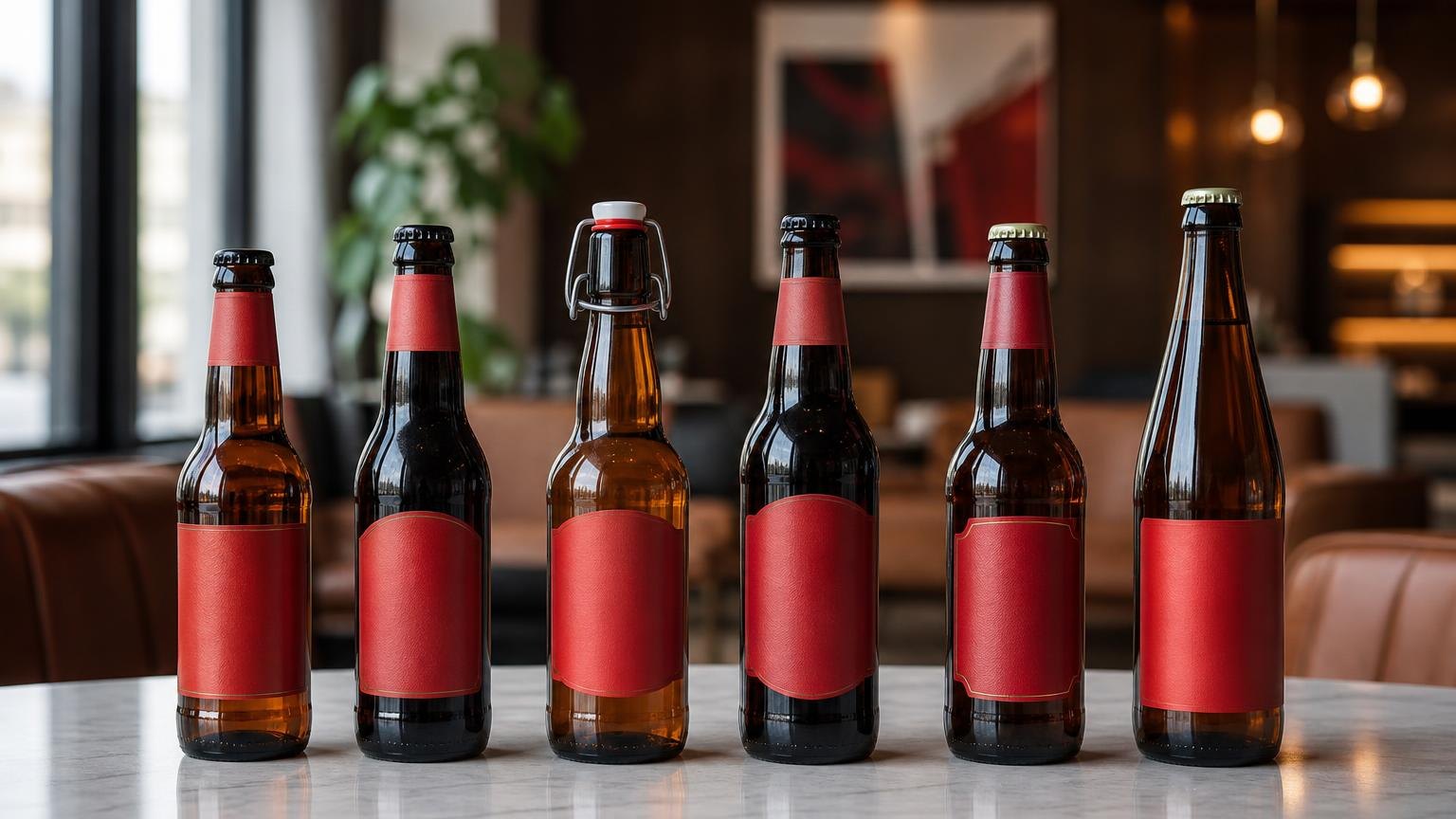
A red label tells you about branding, not flavor, strength, or style. Shoppers often treat “beer with red label” as a category, but breweries use red across lagers, stouts, wheat beers, and strong ales with very different profiles.
The biggest mistake is assuming label color predicts the liquid. In US packaging law, the Alcohol and Tobacco Tax and Trade Bureau reviews mandatory label information, but it does not assign beer style by color scheme.
Myth: A red label means a red beer
This is false. “Red beer” usually refers to the beer’s appearance or style family, not the package design.
Irish red ales commonly fall around 9 to 18 SRM, a color scale for beer, while a red-labeled can may hold a pale lager near 2 to 4 SRM.
| Thing being compared | What “red” means | Typical measure |
| Red package label | Marketing and shelf visibility | No sensory standard |
| Red beer color | Malt-driven amber to ruby appearance | Often about 9-18 SRM |
| Red ale style claim | Recipe and style identity | Varies by brewer and guideline set |
Myth: Red labels signal higher alcohol
Also false. Many consumers associate red with “bold” or “strong,” but ABV is independent of label color. A red-labeled macro lager can sit near 4.2% to 5.0% ABV, while a different red-labeled craft release may exceed 8.0% ABV.
Check the can or bottle for ABV and package size. A 12-ounce beer at 8.0% ABV contains far more alcohol than a 12-ounce beer at 4.5% ABV, regardless of the label color.
Myth: A red label means sweeter taste
Color cues influence expectation, but they do not guarantee flavor. Sweetness depends on residual sugar, malt profile, attenuation, and bitterness.
Two red-labeled beers can taste completely different if one finishes dry at 35 IBU and another stays malt-forward around 15 IBU.
Common buying mistakes
- Confusing a brand family color with a beer style. Breweries often use red only to distinguish one SKU from another.
- Ignoring the style line. “Pilsner,” “stout,” “amber ale,” and “fruit beer” matter more than package color.
- Skipping the fine print. ABV, IBU, ingredients, and tasting notes give better guidance than label design.
- Assuming imports and domestics use the same color cues. There is no universal red-label meaning across markets.
The practical rule is simple: read style first, ABV second, tasting notes third. Treat the red label as branding, not a reliable shortcut.
Frequently Asked Questions
Which beer is most commonly known for a red label in the US?
Budweiser is the best-known red-label beer in the US, using a bright red background with white script on bottles, cans, and tap handles.
The brand has used red prominently for decades, which makes it one of the easiest “red label” beers for shoppers to identify quickly.
Does a red beer label tell you anything about the style or flavor?
No. Label color is branding, not a beer-style standard, so a red label can appear on lagers, pilsners, amber ales, or seasonal releases.
For example, Dos Equis Lager also uses red heavily, but its flavor profile is very different from Budweiser’s lighter American lager character.
What are a few beers with red labels besides Budweiser?
Common examples include Dos Equis Lager Especial, Killian’s Irish Red, and certain packaging for Yuengling Lager and Modelo Especial multipacks.
Availability varies by market and package format, so the same beer may look different in bottles, cans, and draft branding.
Is “red label beer” the same thing as red ale?
No. A red ale is a beer style defined by malt profile and color in the glass, while “red label beer” only describes the packaging.
Killian’s Irish Red fits both ideas more closely because it is a red-style beer sold with red-forward branding, but most red-labeled beers are not red ales.
How can you identify a red-label beer accurately when shopping or ordering?
Check the full brand name, brewery, and beer style on the package or tap list instead of relying on label color alone. Red is one of the most common beer branding colors, so using the label color by itself can easily lead to ordering the wrong beer.
Has any major imported beer used a red bottle label for decades?
Yes. Beck’s, the German pilsner first brewed in Bremen in 1873, has long used a label with a prominent red shield on its green bottle, making it one of the most recognizable imported examples in US stores.
That red shield is part of Beck’s brand identity, not a marker of beer style.
Related Reading
- How Many Calories in Miller Lite? Miller Lite Nutrition Facts
- Rainier Beer: A Taste Of The Pacific Northwest
- How Many Servings In A Keg? A Real-World, Experience-Based Guide You Can Actually Trust
- How Many Beers In a Case? In-depth Answer
- How Much Beer Is In A Half Keg?
- How Many Ounces in a Growler? A Complete, Real-World Guide From Someone Who Actually Uses Them
- Coors Vs Coors Banquet: Which is Best?
- All Alcohol Guides
- Alcohol and Tobacco Tax and Trade Bureau: Beverage Alcohol Manual (2023)
- U.S. Food and Drug Administration: Food Labeling Guide (2024)
- National Institute on Alcohol Abuse and Alcoholism: Alcohol Facts and Statistics (2024)
- USDA FoodData Central: Beer (2024)
- Brewers Association: Beer Style Guidelines (2024)
- Cicerone Certification Program: Beer Styles Study Guide (2023)
- Penn State Extension: Reading Beer Labels (2023)