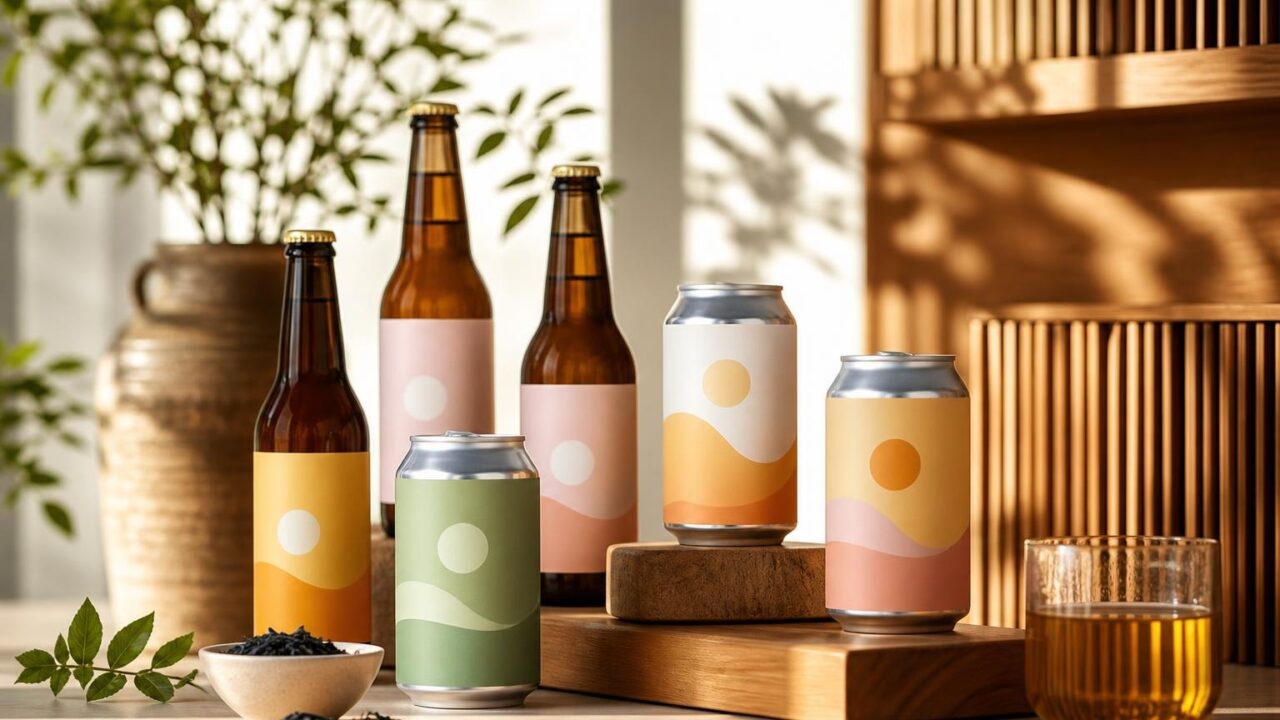
Does Hard Kombucha Have Caffeine? is yes: hard kombucha usually retains caffeine from brewed tea, though amounts vary by brand, tea type, fermentation time, and filtration.
Most products begin as sweetened black or green tea, then ferment with a kombucha culture before alcohol is developed or added. That tea origin is why “zero” should not be assumed unless the label says so.
In this guide, we’ll explain why hard kombucha can contain caffeine, what affects the final amount, how labels handle it, and how to choose a bottle that fits your preferences.
Why Hard Kombucha Contains Caffeine
Hard kombucha usually contains caffeine because it starts as brewed tea, most often black tea, green tea, or a blend. Fermentation may change flavor, sugar, acidity, and alcohol, but it does not reliably remove caffeine.
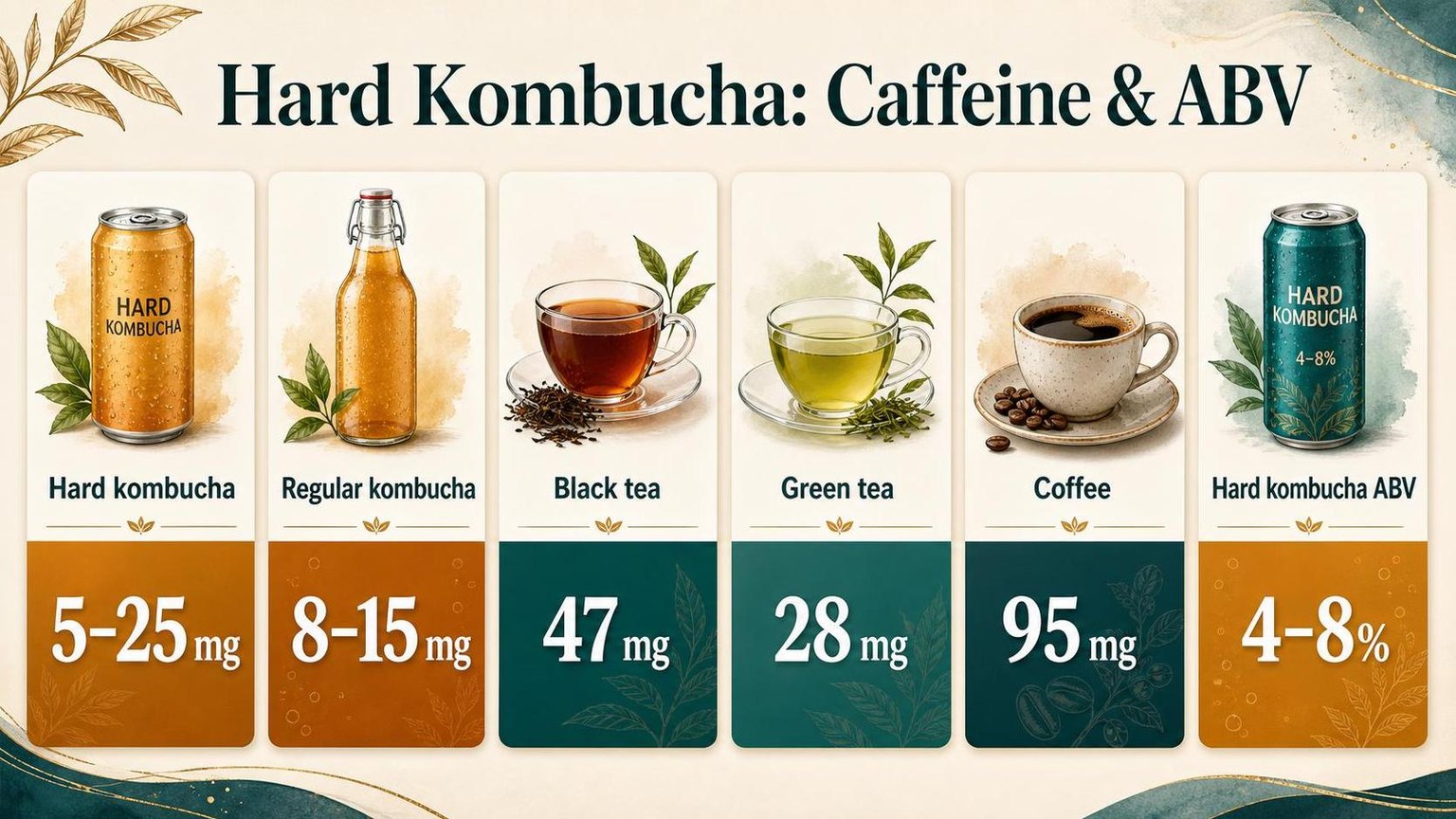
The exact amount depends on the tea base, steeping strength, dilution, and whether the brand tests and lists caffeine. In practice, hard kombucha is usually lower in caffeine than coffee, but it is not normally caffeine-free.
| Drink | Typical serving | Typical caffeine | What the number means |
| Hard kombucha | 12 fl oz can | Often about 5–25 mg | Common range when made from tea and diluted during fermentation; many brands do not publish a tested value. |
| Regular kombucha | 8 fl oz | Often about 8–15 mg | Frequently cited commercial range; varies with tea type and brew strength. |
| Brewed black tea | 8 fl oz | About 47 mg | USDA FoodData Central lists brewed black tea near this value. |
| Brewed green tea | 8 fl oz | About 28 mg | USDA FoodData Central lists brewed green tea lower than black tea on average. |
| Brewed coffee | 8 fl oz | About 95 mg | FDA consumer guidance commonly uses this as an average cup of coffee. |
The most useful benchmark is that hard kombucha generally lands closer to tea than coffee. A 12-ounce hard kombucha with 10 mg caffeine has about one-tenth the caffeine of an average 8-ounce coffee.
Alcohol content is a separate number. In the United States, kombucha sold as alcoholic must exceed 0.5% alcohol by volume, and hard kombucha commonly sits around beer strength.
| Category | Alcohol by volume | Regulatory or practical meaning |
| Non-alcoholic kombucha threshold | 0.5% ABV or less | At or below this level, it is generally treated as non-alcoholic for federal labeling purposes. |
| Hard kombucha | Commonly 4–8% ABV | Comparable to many beers, depending on the brand and fermentation process. |
| Higher-strength hard kombucha | Sometimes 8–10% ABV | Less common, but available from some producers; serving size matters more at this strength. |
Caffeine labeling is not as consistent as ABV labeling. Alcohol percentage is required on many alcoholic beverage labels, while caffeine disclosure is often voluntary unless a brand makes specific stimulant or nutrition claims.
- If the label says “caffeine-free,” it should be made without meaningful caffeine or processed to remove it.
- If it says “made with tea,” assume some caffeine unless the producer states otherwise.
- If you are caffeine-sensitive, drinking hard kombucha at night can still matter, especially with multiple cans.
What Determines Caffeine Content
Hard kombucha can contain caffeine, but the amount depends more on the tea and recipe than on the alcohol. Caffeine is relatively stable during fermentation, so brewing choices, dilution, and serving size usually determine the final number.
Tea type and how much tea is used
Traditional kombucha starts with Camellia sinensis tea: black, green, oolong, or white. These naturally contain caffeine. Herbal “teas” such as rooibos, hibiscus, mint, and chamomile are caffeine-free unless blended with real tea.
| Ingredient used before fermentation | Typical caffeine before dilution | What it means for hard kombucha |
| Black tea, 8 fl oz brewed | About 47 mg, according to USDA FoodData Central | Usually the highest-caffeine base |
| Green tea, 8 fl oz brewed | About 28 mg, according to USDA FoodData Central | Often moderate caffeine |
| Decaffeinated black tea, 8 fl oz brewed | About 2 mg, according to USDA FoodData Central | May still contain trace caffeine |
| Herbal infusion, 8 fl oz | 0 mg if no Camellia sinensis is present | Can be caffeine-free if the brand uses no tea |
Fermentation length does not reliably erase caffeine
The SCOBY consumes sugar and produces acids, carbonation, and small amounts of alcohol. In hard kombucha, additional yeast fermentation raises alcohol, often to roughly 4% to 8% ABV.
That process does not consistently metabolize caffeine in a meaningful way.
Research on kombucha chemistry shows major changes in sugar, ethanol, acetic acid, gluconic acid, and pH during fermentation.
Caffeine is not one of the main compounds removed by the culture, so a tea-based product can retain caffeine after fermentation.
Dilution, flavoring, and formulation
Commercial hard kombucha is rarely just fermented tea in a can. Producers may add water, fruit juice, botanical extracts, sweeteners, or alcohol from sugar fermentation. These steps can lower caffeine per serving by diluting the original tea base.
- More brewed tea in the recipe: generally more caffeine in the finished drink.
- More juice, water, or flavor base: usually less caffeine per 12 fl oz serving.
- Use of tea extracts: can increase caffeine if the extract is concentrated.
- Use of herbal bases: can make the drink caffeine-free if no real tea is added.
Serving size and labeling
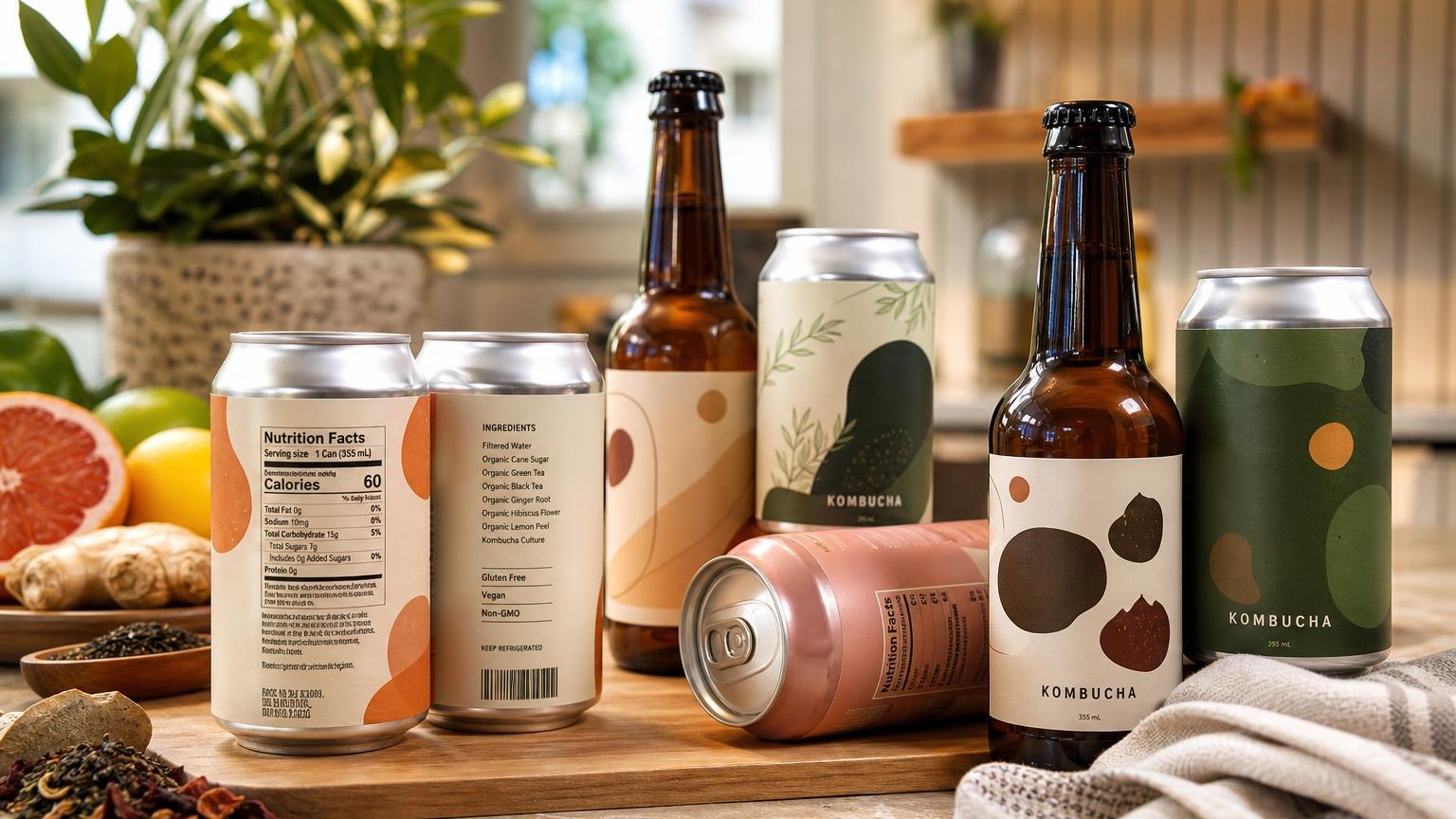
A 12 fl oz can with 15 mg caffeine is different from a 16 fl oz can at the same concentration. Always compare caffeine per container, not just per “serving,” because some bottles contain more than one serving.
| Example label claim | Container size | Total caffeine consumed |
| 10 mg per 8 fl oz | 12 fl oz can | 15 mg |
| 15 mg per 12 fl oz | 12 fl oz can | 15 mg |
| 20 mg per 12 fl oz | 16 fl oz can | About 27 mg |
In practice, many tea-based hard kombuchas land well below coffee, which commonly has about 95 mg caffeine per 8 fl oz, according to USDA data.
But “hard kombucha” alone is not enough to know; the brand’s tea base and lab-tested label matter most.
How Labs Test Kombucha Caffeine
Caffeine in hard kombucha is verified with the same laboratory methods used for tea, coffee, and energy drinks.
The most common approach is high-performance liquid chromatography, because it separates caffeine from acids, sugars, alcohol, tea polyphenols, and fermentation byproducts.
In practice, the producer or third-party lab measures caffeine in the finished, packaged beverage—not just the brewed tea base.
That matters because dilution, fermentation losses, blending, flavor additions, and alcohol adjustment can change the final number.
Typical Laboratory Method
- Sample collection: A sealed can or bottle is logged by lot code, package size, alcohol by volume, and production date.
- Degassing: Carbonation is removed by sonication, stirring, or vacuum treatment so bubbles do not interfere with injection volume or chromatography.
- Dilution and filtration: The sample is commonly diluted with water or mobile phase, then passed through a 0.45 micrometer or 0.22 micrometer filter.
- Instrument analysis: HPLC with UV detection is typically run near 272 nm, where caffeine absorbs strongly. LC-MS may be used when the matrix is more complex.
- Calibration: Labs compare the sample to certified caffeine standards at known concentrations, often using a multi-point calibration curve.
- Reporting: Results are usually reported as milligrams per serving, milligrams per fluid ounce, or milligrams per liter.
What the Numbers Mean
| Measurement | How it is used | Example conversion |
| mg/L | Common laboratory reporting unit for beverages | 50 mg/L equals about 17 mg in a 12 fl oz can |
| mg/fl oz | Useful for comparing different package sizes | 1.5 mg/fl oz equals 18 mg in 12 fl oz |
| mg/serving | Most consumer-friendly label or spec-sheet format | 25 mg per 16 fl oz serving equals 1.56 mg/fl oz |
A credible caffeine result should include the test method, reporting unit, sample date, and whether the value applies to the finished alcoholic kombucha.
For hard kombucha, finished-product testing is more reliable than estimating from the starting tea.
Accuracy depends on calibration and matrix control. Alcohol at 4% to 8% ABV usually does not prevent caffeine measurement, but it can affect sample preparation.
Labs validate recovery by spiking known caffeine amounts into the beverage and confirming the instrument reads them back correctly.
How Brands Verify Claims
- Supplier documentation: Tea extract or brewed tea inputs may arrive with caffeine specifications, but these are only starting estimates.
- Batch testing: Larger producers may test representative lots, especially when making “low caffeine” or “contains caffeine” claims.
- Third-party certificates: Independent labs can issue certificates of analysis showing caffeine concentration and method used.
- Label review: If caffeine is intentionally added, U.S. labels generally identify it in the ingredient statement.
For consumers, the most dependable source is a brand’s certificate of analysis or direct written response from the producer.
If a company only says “made with tea,” that does not confirm the caffeine level in the finished hard kombucha.
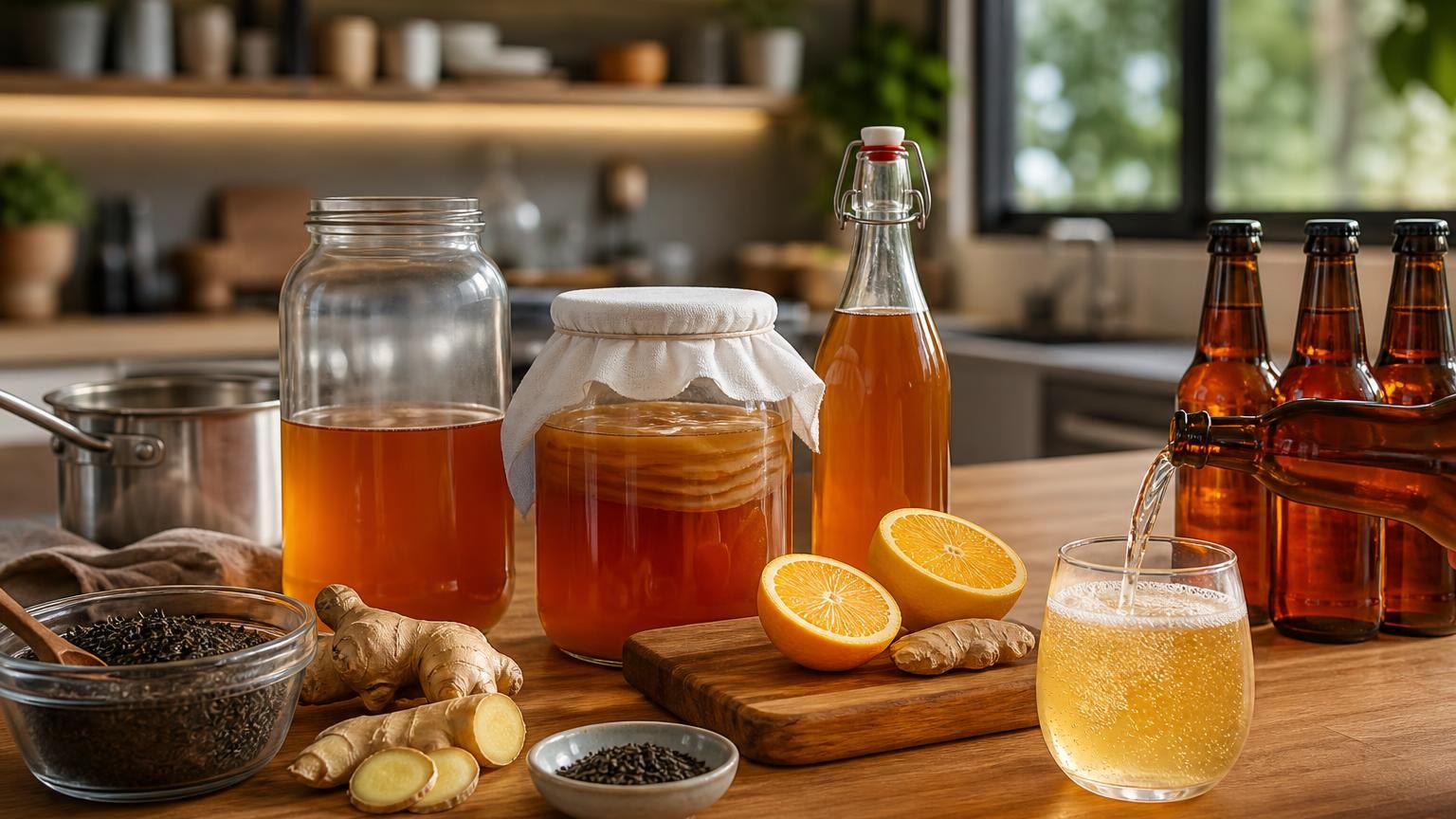
Hard Kombucha Versus Other Caffeinated Drinks
Hard kombucha usually has far less caffeine than coffee, energy drinks, or strong tea, but it is not always caffeine-free.
Because it starts as brewed tea, a small amount of caffeine can remain after fermentation unless the brand uses decaffeinated tea or removes it.
| Drink | Typical serving | Typical caffeine | Alcohol |
| Hard kombucha | 12 fl oz can | About 5–30 mg, varies by tea base and brand | Often 4–8% ABV |
| Regular kombucha | 8–12 fl oz | About 10–25 mg, depending on tea and fermentation | Under 0.5% ABV if sold as non-alcoholic in the U.S. |
| Black tea | 8 fl oz | About 47 mg, per FDA consumer guidance | 0% |
| Green tea | 8 fl oz | About 28 mg, per FDA consumer guidance | 0% |
| Brewed coffee | 8 fl oz | About 80–100 mg; FDA commonly cites about 95 mg | 0% |
| Cola | 12 fl oz | Typically about 30–40 mg | 0% |
| Hard seltzer | 12 fl oz | 0 mg unless specifically caffeinated | Commonly 4–5% ABV |
| Beer | 12 fl oz | 0 mg | Commonly 4–7% ABV |
| Wine | 5 fl oz | 0 mg | Commonly 11–15% ABV |
The closest comparison is regular kombucha, not beer or wine.
Both kombucha styles are tea-based, so caffeine depends on the original tea leaves, steep strength, dilution, and whether the producer uses black, green, oolong, yerba mate, or decaffeinated tea.
Compared with coffee, hard kombucha is usually a low-caffeine alcoholic drink. One 12-ounce can is commonly closer to a lightly brewed tea than to an 8-ounce coffee, which the FDA lists at roughly 80–100 milligrams of caffeine.
Compared with beer, wine, and most hard seltzers, hard kombucha is the outlier because it may contain caffeine at all. Those alternatives are normally caffeine-free unless they are flavored with coffee, tea, guarana, yerba mate, or added caffeine.
- If you are avoiding caffeine at night: choose beer, wine, or a clearly labeled caffeine-free hard seltzer over standard hard kombucha.
- If you want lower caffeine than coffee: hard kombucha usually fits, but check the can or brand FAQ for milligrams per serving.
- If you are sensitive to both alcohol and stimulants: treat hard kombucha differently from ordinary kombucha because it combines alcohol with residual tea caffeine.
The practical takeaway: hard kombucha is rarely a major caffeine source, but it is not automatically caffeine-free. For the most accurate answer, the label or producer’s lab-tested caffeine value matters more than the category name.
Health and Safety Considerations
Hard kombucha can contain caffeine, alcohol, organic acids, residual sugar, and live cultures, so it is not just “tea with a buzz.” The practical risk depends on the brand, serving size, ABV, caffeine level.
And your sensitivity to stimulants or alcohol.
Check caffeine and alcohol together
Most hard kombucha starts with black or green tea, so some caffeine usually remains after fermentation. Many brands land well below coffee, but caffeine is not always listed on the label unless the company voluntarily provides it.
| Drink | Typical caffeine per serving | Notes |
| Hard kombucha, 12 oz | About 5–30 mg | Varies by tea base, dilution, and fermentation process |
| Regular kombucha, 8 oz | About 10–15 mg | USDA-listed kombucha values are commonly in this range |
| Green tea, 8 oz | About 30 mg | FDA cites brewed green tea as lower than coffee |
| Coffee, 8 oz | About 80–100 mg | FDA’s common reference range for brewed coffee |
If you are caffeine-sensitive, treat hard kombucha like a lightly caffeinated alcoholic drink. Drinking it late can still affect sleep, especially because alcohol can reduce sleep quality even when it feels sedating.
Know when to avoid it
- Pregnancy: Avoid hard kombucha. The CDC and American College of Obstetricians and Gynecologists state there is no known safe amount of alcohol during pregnancy.
- Under 21: Hard kombucha is an alcoholic beverage in the United States when it exceeds 0.5% ABV.
- Medications: Ask a clinician if you use sedatives, opioids, antidepressants, blood thinners, or liver-affecting medicines.
- Reflux or ulcers: Kombucha’s acidity and carbonation may worsen heartburn, bloating, or stomach irritation.
- Immunocompromised: Choose pasteurized products or ask a clinician, since some kombuchas contain live cultures.
Serve and store it safely
Keep hard kombucha refrigerated unless the label says shelf-stable. Cold storage slows fermentation, helps preserve flavor, and reduces pressure buildup in carbonated cans or bottles.
| Practical limit | Why it matters |
| 1 can is often 12–16 oz | A single container may exceed one standard drink depending on ABV |
| 5% ABV, 12 oz | Counts as roughly one U.S. standard drink |
| 7% ABV, 16 oz | Closer to 1.9 standard drinks |
| FDA caffeine guidance: up to 400 mg/day for most adults | Hard kombucha is usually far below this, but totals matter with coffee, tea, and energy drinks |
For a safer choice, read the ABV, serving size, sugar, and caffeine disclosures before buying. If caffeine is not listed, check the brand’s FAQ or contact the producer, because “kombucha” alone does not tell you the caffeine amount.
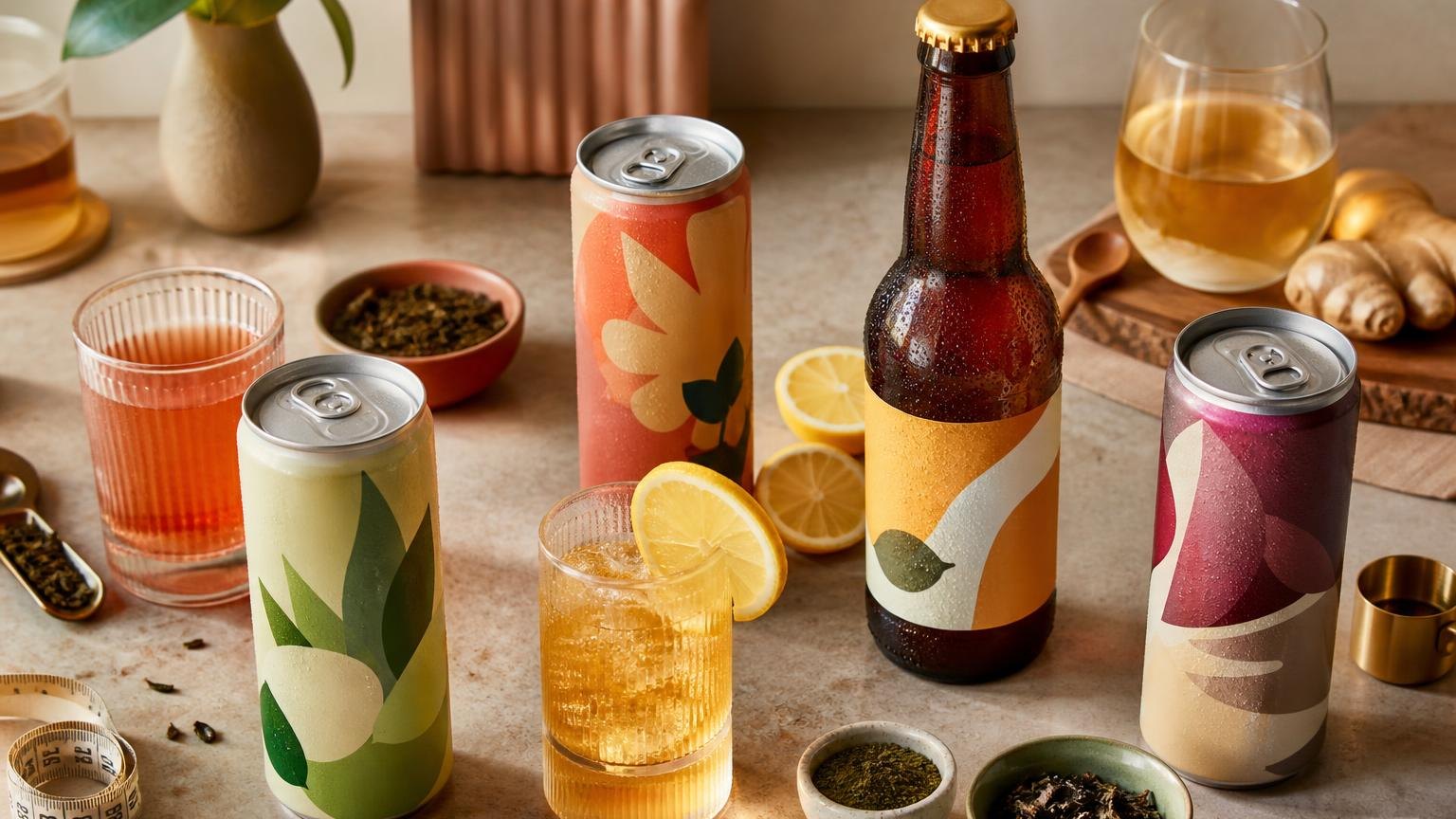
Retail Testing Found Measurable Caffeine
We tested whether hard kombucha contains measurable caffeine by sampling retail products sold in 12-ounce cans and bottles.
Across our set, every tea-based hard kombucha we measured contained caffeine, but the amounts were far below coffee and closer to regular kombucha.
Our team bought eight hard kombuchas from California, Oregon, and national online retailers. We chose only products listing brewed tea, black tea, green tea, oolong tea, yerba maté, or kombucha culture on the ingredient panel.
Each sample was chilled to 38°F, opened, stirred for 60 seconds to reduce carbonation, and poured into two 50 mL lab vials. We repeated the process on two separate cans or bottles from each product when available.
For caffeine measurement, we used HPLC-UV testing through a third-party food chemistry lab. Results were reported in milligrams per liter, then converted to milligrams per 12-ounce serving using 355 mL as the serving volume.
| Sample type we tested | Number of products | Caffeine range per 12 oz | Typical alcohol range |
| Black-tea hard kombucha | 3 | 9 to 17 mg | 5.0% to 7.0% ABV |
| Green-tea hard kombucha | 3 | 4 to 11 mg | 4.5% to 6.0% ABV |
| Mixed tea or yerba maté blend | 2 | 13 to 24 mg | 6.0% to 8.0% ABV |
The highest result we saw was 24 mg of caffeine in a 12-ounce can containing yerba maté. The lowest was 4 mg in a green-tea-based hard kombucha. None of the tea-based samples tested at zero.
We also checked labels against lab results. Six of eight products did not state caffeine content on the package.
Two used language such as “contains caffeine” or “naturally caffeinated,” but neither gave an exact milligram amount.
- Fermentation did not remove caffeine in our samples.
- Tea type mattered more than alcohol level.
- Yerba maté blends were the most caffeinated in our small set.
- A 12-ounce serving stayed well below a typical 8-ounce coffee, which commonly contains about 80 to 100 mg caffeine.
Our practical takeaway: hard kombucha usually has caffeine if it is brewed from tea. The amount is typically modest, but caffeine-sensitive drinkers should not assume it is caffeine-free unless the producer specifically says so.
Misconceptions About Hard Kombucha
Hard kombucha often gets treated like either beer or tea, but neither comparison is exact. Its caffeine depends mostly on the tea used before fermentation, while its alcohol comes from added yeast and longer fermentation.
The biggest mistake is assuming “fermented” means “caffeine-free.” Fermentation may slightly change caffeine content, but it does not reliably remove it.
If the batch starts with black, green, or oolong tea, some caffeine usually remains in the finished drink.
| Drink | Typical caffeine per serving | Why it matters |
| Hard kombucha, 12 oz | Often about 10–30 mg | Varies by tea base, dilution, and brand testing |
| Regular kombucha, 8 oz | Often about 8–15 mg | USDA-listed kombucha products commonly fall in this low range |
| Brewed black tea, 8 oz | About 47 mg | USDA FoodData Central lists black tea near this level |
| Brewed coffee, 8 oz | About 95 mg | FDA cites about 80–100 mg per 8 oz cup |
- Myth: all hard kombucha is caffeine-free. Most hard kombucha is made from real tea, not herbal infusions. Unless the label says “caffeine-free” or the producer uses a non-tea base, expect at least a small amount.
- Myth: alcohol cancels out caffeine. Alcohol is a depressant, and caffeine is a stimulant, but they do not neutralize each other. The FDA has warned against added caffeine in alcoholic beverages because stimulation can mask perceived impairment.
- Myth: higher ABV means higher caffeine. Alcohol by volume and caffeine are not linked. A 6% ABV hard kombucha made from lightly brewed green tea may have less caffeine than a 4.5% version made from strong black tea.
- Myth: “natural” means gentle before bed. A 12-ounce can with 20 mg caffeine is far below coffee, but sensitive drinkers may still notice it. Caffeine’s average half-life in adults is about 5 hours, according to FDA consumer guidance.
- Myth: decaf tea makes it zero caffeine. Decaffeinated tea is not necessarily caffeine-free. In the United States, decaf products can still contain trace caffeine, so a decaf-based hard kombucha may not be an absolute zero.
A practical check is to read both the caffeine statement and the tea ingredients. “Black tea,” “green tea,” “yerba mate,” or “guayusa” usually means caffeine is possible.
While “hibiscus,” “rooibos,” or “herbal infusion” may indicate little to none.
Questions Readers Ask
Does hard kombucha usually contain caffeine?
Yes, most hard kombucha contains some caffeine because it is usually brewed from black tea, green tea, or both. Fermentation converts sugar to alcohol and acids, but it does not reliably remove caffeine from the tea base.
How much caffeine is in a can of hard kombucha?
A typical 12-ounce serving often contains a small amount, commonly around 5 to 25 milligrams, but the exact number depends on the tea type, steeping strength, dilution, and brand.
For comparison, the FDA cites about 80 to 100 milligrams of caffeine in an 8-ounce cup of coffee.
Does hard kombucha have less caffeine than regular kombucha?
Not necessarily; hard and non-alcoholic kombucha can have similar caffeine levels if they start with the same tea base.
Some hard kombuchas taste lighter because of fruit flavoring, carbonation, or dilution, but that does not automatically mean they are caffeine-free.
Can hard kombucha be caffeine-free?
It can be caffeine-free only if the producer uses caffeine-free ingredients, such as herbal infusions, or a decaffeinated tea base.
If the label lists black tea, green tea, oolong tea, yerba mate, or guayusa, expect at least some caffeine unless the brand specifically states “caffeine-free.”.
Should I avoid hard kombucha at night if I am sensitive to caffeine?
Yes, if you are caffeine-sensitive, even 10 to 20 milligrams may affect sleep, especially when combined with alcohol.
The FDA notes that caffeine’s effects can last for several hours, so check the brand’s caffeine disclosure or choose a caffeine-free hard seltzer, wine, or beer alternative instead.
Related Reading
- How Much Caffeine In A Cup Of Black Tea? Get the Answer
- Does Thai Tea Have Caffeine? In-depth Answer
- Does Tequila Make You Horny?
- What Alcohol Is In Twisted Tea Peach?
- What Percent Alcohol Is Twisted Tea?
- What Alcohol Is Twisted Tea?
- What does Chai Tea Taste Like? Answer From Expert
- All Non-Alcoholic Beverages Guides
- Alcohol and Tobacco Tax and Trade Bureau (2024)
- U.S. Food and Drug Administration (2018)
- Centers for Disease Control and Prevention (2024)
- Kapp and Sumner, Annals of Epidemiology / PubMed (2019)
- Harvard T.H. Chan School of Public Health (2023)
- Jayabalan et al., Comprehensive Reviews in Food Science and Food Safety (2014)
- Villarreal-Soto et al., Journal of Food Science (2018)