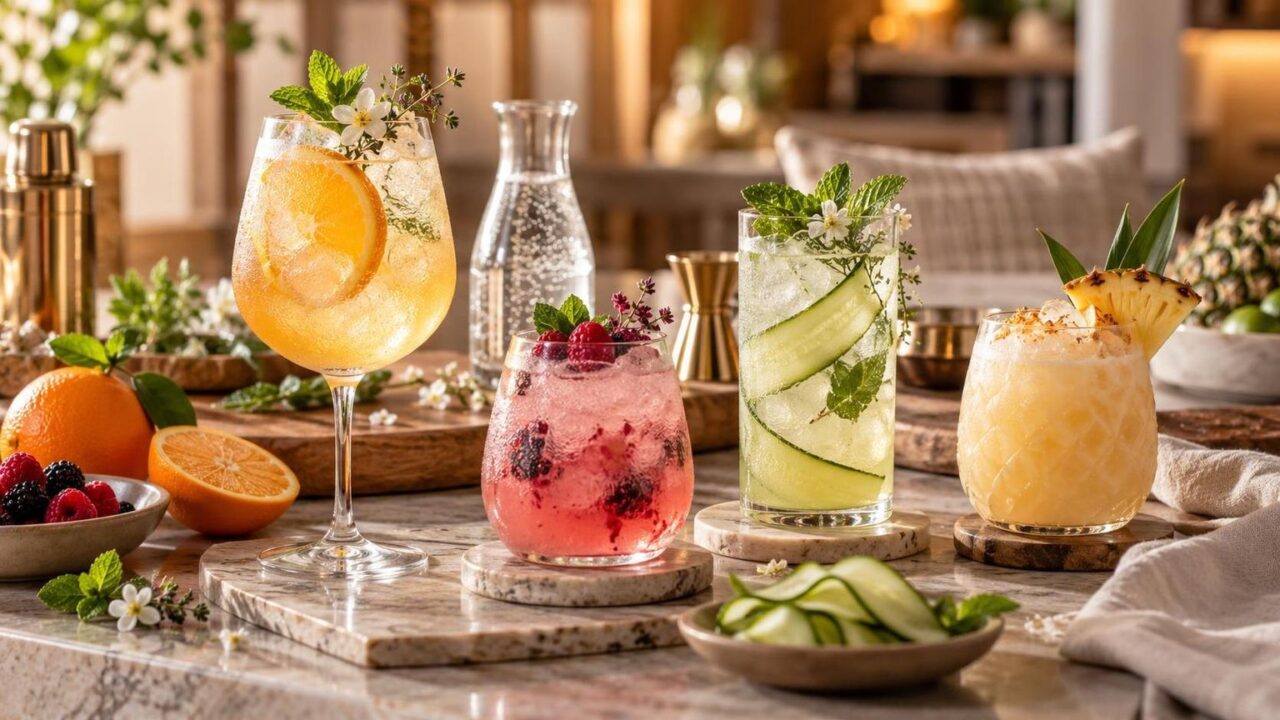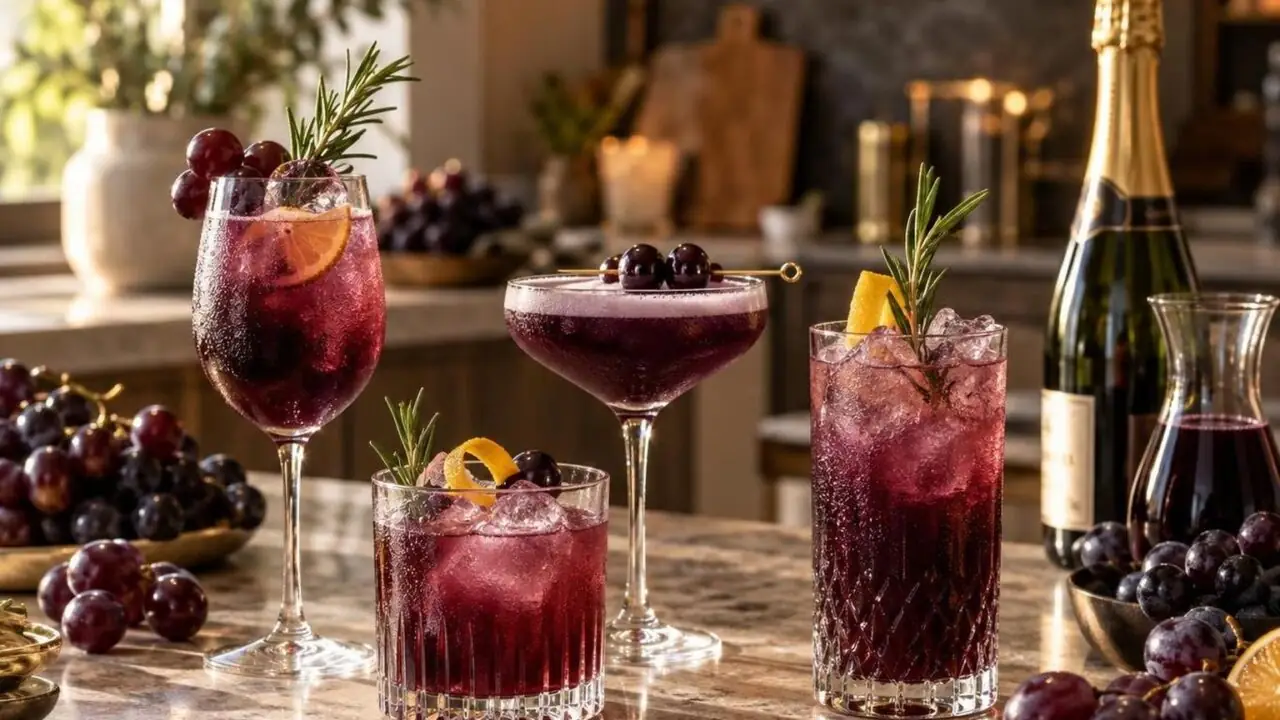
Alcohol drink with grape juice is a sweet, fruit-forward cocktail combining a spirit with white, red, or concord grape juice. Vodka keeps the flavor clean, gin adds herbal notes, rum contributes warmth, and brandy deepens the fruit character.
Lemon juice or lime juice prevents the mixture from tasting flat.
A reliable starting ratio is 2 ounces of spirit, 3 ounces of grape juice, and 1 ounce of fresh citrus juice, stirred with ice. Adjust the sweetness with simple syrup only after tasting.
Serve the drink over fresh ice in a rocks glass, or strain it into a chilled coupe. This guide covers spirit choices, grape-juice pairings, proportions, garnishes, and responsible serving considerations.
Best Liquors to Mix With Grape Juice
Grape juice’s natural sweetness and acidity (pH 3.3–3.5) make it a versatile mixer that pairs with a wide range of spirits. The key is matching the juice’s bold flavor profile with liquors that complement rather than compete.
Top Spirit Pairings Ranked
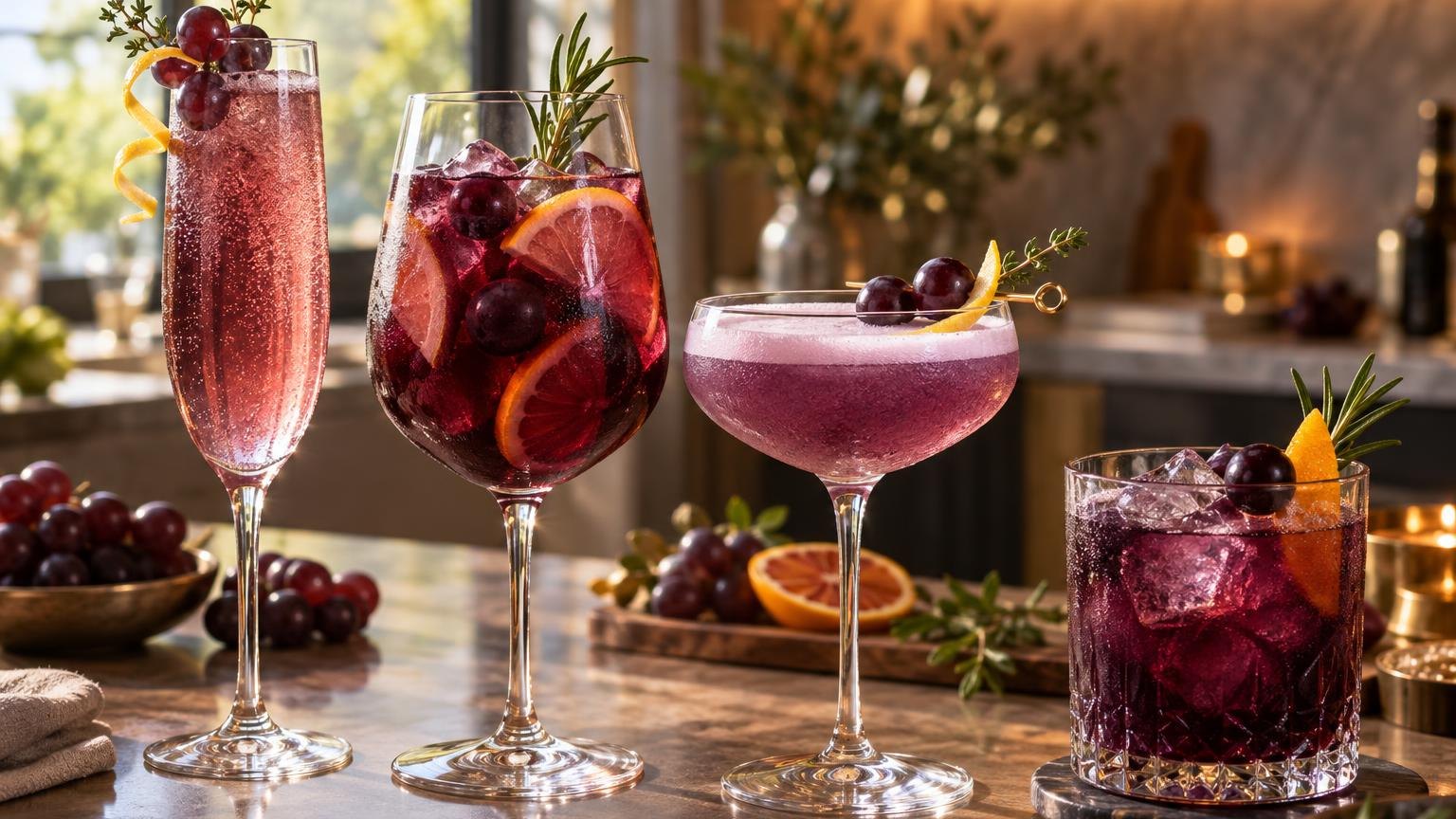
Not every spirit works equally well. The table below compares the most common options by flavor compatibility and standard mixing ratios.
| Liquor | ABV | Recommended Ratio (Spirit:Juice) | Flavor Profile |
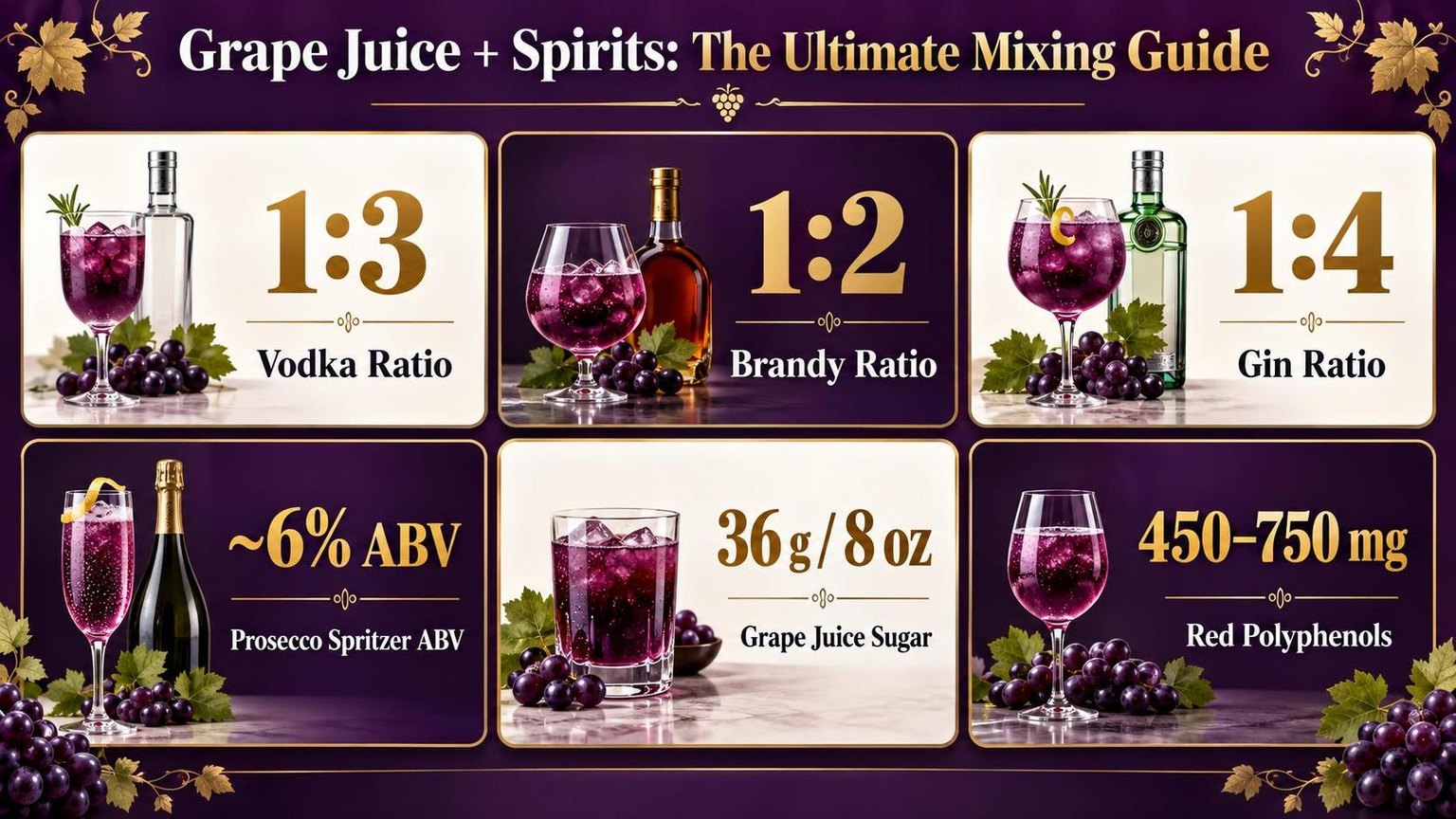
| Vodka | 40% | 1:3 | Clean, lets grape flavor dominate |
| White Rum | 40% | 1:3 | Adds subtle sweetness and warmth |
| Gin | 37.5–47% | 1:4 | Botanical notes contrast grape sweetness |
| Brandy | 35–60% | 1:2 | Grape-on-grape depth, rich and warming |
| Tequila Blanco | 40% | 1:3 | Agave brightness lifts Concord grape |
| Bourbon | 40–50% | 1:4 | Caramel and vanilla complement dark grape |
| Champagne/Prosecco | 11–12.5% | 1:1 | Effervescence with fruity sweetness |
Vodka: The Universal Match
Vodka is the most popular choice because its neutral flavor profile (required by U.S. TTB standards to be “without distinctive character”) allows grape juice to shine unaltered.
A 1.5 oz pour with 4.5 oz grape juice yields a drink around 8% ABV.
Brandy: The Natural Pairing
Brandy is distilled from fermented grape juice, making this combination a grape-on-grape layering. VS-grade brandy at around 40% ABV blends seamlessly. Cognac and Armagnac work especially well with Concord grape juice.
Gin: A Botanical Contrast
London Dry gin introduces juniper, coriander, and citrus peel against grape’s fruit-forward sweetness. Use a higher juice ratio (1:4) to prevent botanical bitterness from overwhelming the drink.
Adding 0.5 oz fresh lemon juice sharpens the balance.
Sparkling Wine
Mixing equal parts Prosecco and white grape juice creates a low-ABV spritzer around 6% ABV. This approach suits daytime events where full-strength cocktails feel excessive. Chill both components to 40–45°F before combining.
Spirits to Avoid
- Scotch whisky — peat and smoke clash with grape sweetness
- Mezcal — intense smoky agave overpowers fruit flavors
- Absinthe — anise dominance at 55–72% ABV creates an unpleasant combination
- Dark rum — heavy molasses notes muddy the grape character
Choosing by Grape Juice Type
Concord grape juice pairs best with darker spirits like brandy and bourbon due to its intense, jammy flavor. White grape juice works better with vodka, gin, and sparkling wine, where its lighter, crisper profile stays refreshing.
Always use 100% juice rather than grape-flavored cocktail mixes. Pure juice contains roughly 36 g of sugar per 8 oz serving, providing enough natural sweetness to eliminate added simple syrup in most recipes.
Red Versus White Grape Juice Cocktails
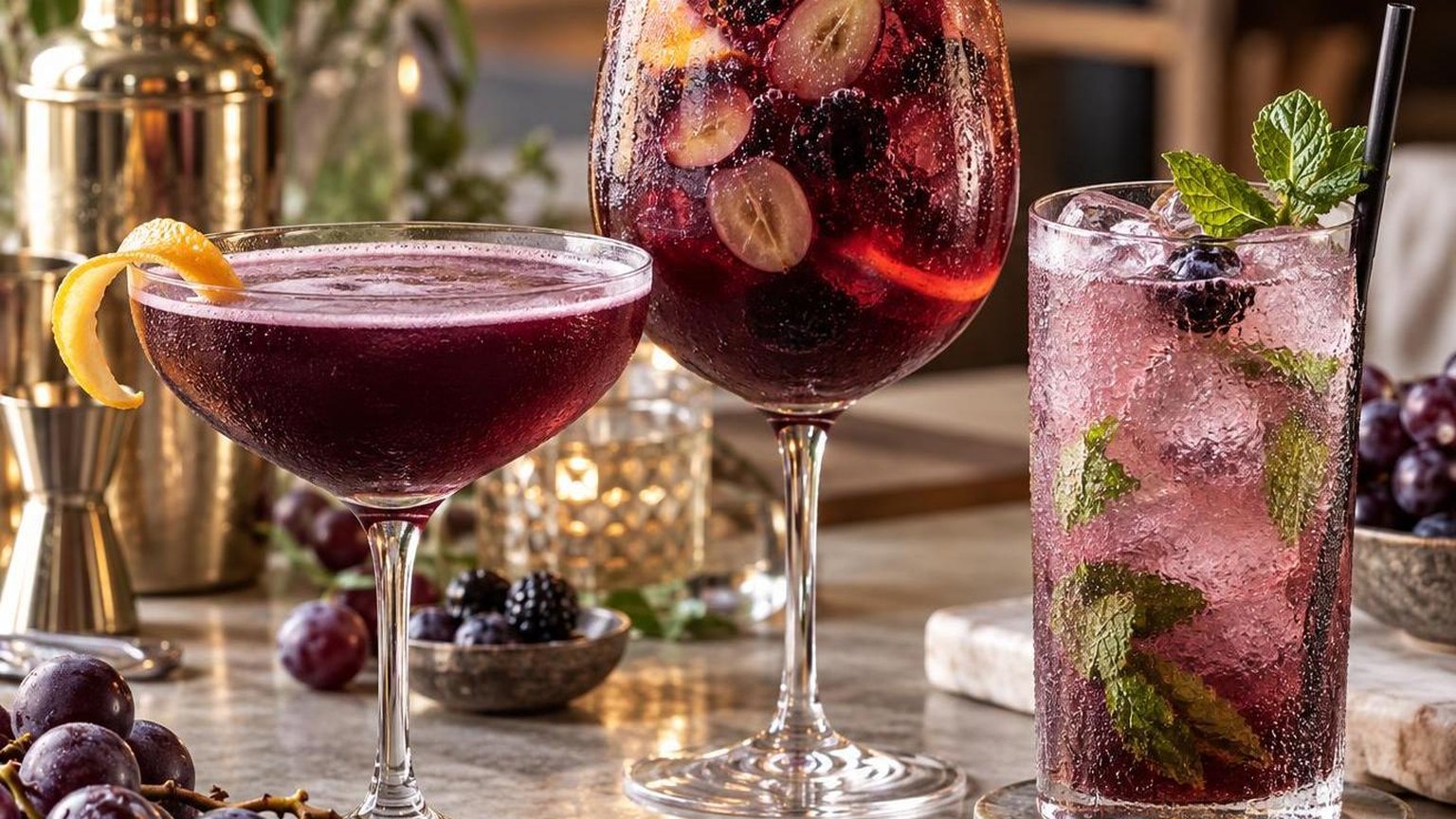
Red and white grape juices produce fundamentally different cocktails due to divergent sugar concentrations, acidity levels, and polyphenol content. Choosing the right variety shapes flavor balance, color presentation, and spirit compatibility.
Nutritional and Chemical Differences
The two juice types differ in measurable ways that directly affect cocktail construction.
| Property (per 240 ml serving) | Red Grape Juice | White Grape Juice |
| Calories | 152 kcal | 152 kcal |
| Total sugars | 36 g | 38 g |
| Titratable acidity (tartaric acid equiv.) | 0.5–0.7 g/100 ml | 0.6–0.9 g/100 ml |
| Total polyphenols | 450–750 mg GAE | 50–150 mg GAE |
| Dominant flavor compounds | Anthocyanins, tannins | Terpenes, esters |
| pH range | 3.2–3.5 | 3.0–3.3 |
White grape juice’s slightly lower pH and higher perceived acidity make it a sharper mixer. Red grape juice contributes tannic structure similar to red wine, adding body.
Best Spirit Pairings
Red grape juice pairs with aged, darker spirits. White grape juice suits clear, lighter ones. Mismatches create muddy or clashing flavor profiles.
- Red grape juice: bourbon, aged rum, brandy, rye whiskey, dark tequila (añejo)
- White grape juice: vodka, gin, blanco tequila, white rum, elderflower liqueur
- Either variety: Prosecco, Champagne, dry vermouth
Color and Presentation
Red Concord grape juice registers approximately 520–535 nm on the visible spectrum, producing deep violet hues. This pigmentation holds for 2–3 hours before oxidative browning begins in open cocktails.
White grape juice yields a pale gold to straw-colored drink. It accepts food-coloring modifications easily, making it more versatile for themed presentations and layered cocktails.
Sugar Management
Both juices contain roughly 36–38 grams of sugar per cup. Bartenders typically reduce added sweetener by 50–75% when substituting grape juice for simple syrup in standard recipes.
A 2:1 spirit-to-red-grape-juice ratio prevents cloying sweetness. White grape juice tolerates a more generous 1.5:1 ratio because its acidity counterbalances sugar perception on the palate.
Classic Cocktail Applications
- Transfusion (white): 45 ml vodka, 90 ml white grape juice, 30 ml ginger ale, squeeze of lime
- Pontifical Punch (red): 60 ml bourbon, 60 ml red grape juice, 15 ml lemon juice, 10 ml honey syrup
- Grape Spritz (either): 90 ml grape juice, 90 ml Prosecco, 30 ml Aperol, served over ice
Red grape juice cocktails pair best with grilled meats, charcuterie, and aged cheeses. White grape juice versions complement seafood, salads, and light appetizers — mirroring classic red-versus-white wine pairing logic.
Easy Grape Juice Cocktail Recipes
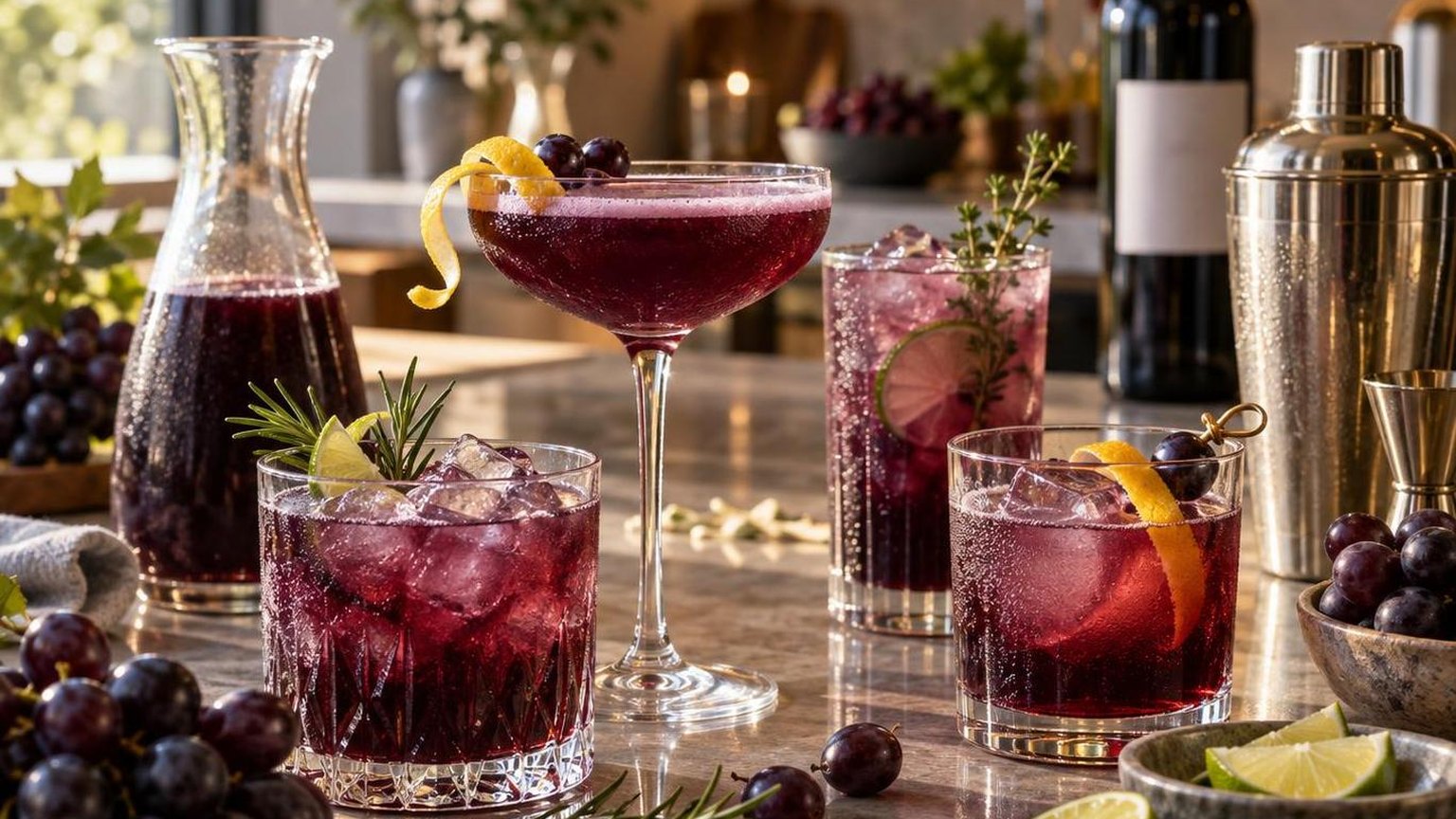
Grape juice adds body, color, sweetness, and fruit flavor without muddling or puréeing.
Use chilled 100% juice and fresh citrus, then taste before adding syrup because Concord grape juice is typically sweeter and more assertive than white grape juice.
Concord Grape Vodka Sour
Concord grape’s dark berry character stands up to vodka and lemon. This formula produces a balanced single drink rather than a glass dominated by sweet juice.
| Ingredient | Amount |
| 100% Concord grape juice | 3 fl oz |
| 80-proof vodka | 1 1/2 fl oz |
| Fresh lemon juice | 3/4 fl oz |
| Simple syrup | 1/4 fl oz, optional |
Add everything to an ice-filled shaker. Shake until the metal feels cold, then strain over fresh ice in a rocks glass. Lemon supplies necessary acidity; omit the syrup if the juice already tastes candied.
Grape Moscow Mule
Ginger beer contributes spice and carbonation, preventing the grape flavor from becoming heavy. Choose a strongly flavored ginger beer rather than mild ginger ale.
| Ingredient | Amount |
| Concord grape juice | 2 fl oz |
| 80-proof vodka | 1 1/2 fl oz |
| Fresh lime juice | 1/2 fl oz |
| Ginger beer | 3 fl oz |
Build the drink over ice in a copper mug or highball glass. Stir the juice, vodka, and lime first, then add ginger beer gently to preserve carbonation. Garnish with a lime wheel.
White Grape Gin Spritz
White grape juice has a lighter flavor than Concord juice, allowing gin’s citrus, juniper, and herbal notes to remain noticeable.
| Ingredient | Amount |
| White grape juice | 2 fl oz |
| London dry gin | 1 1/2 fl oz |
| Fresh lemon juice | 1/2 fl oz |
| Chilled club soda | 2 fl oz |
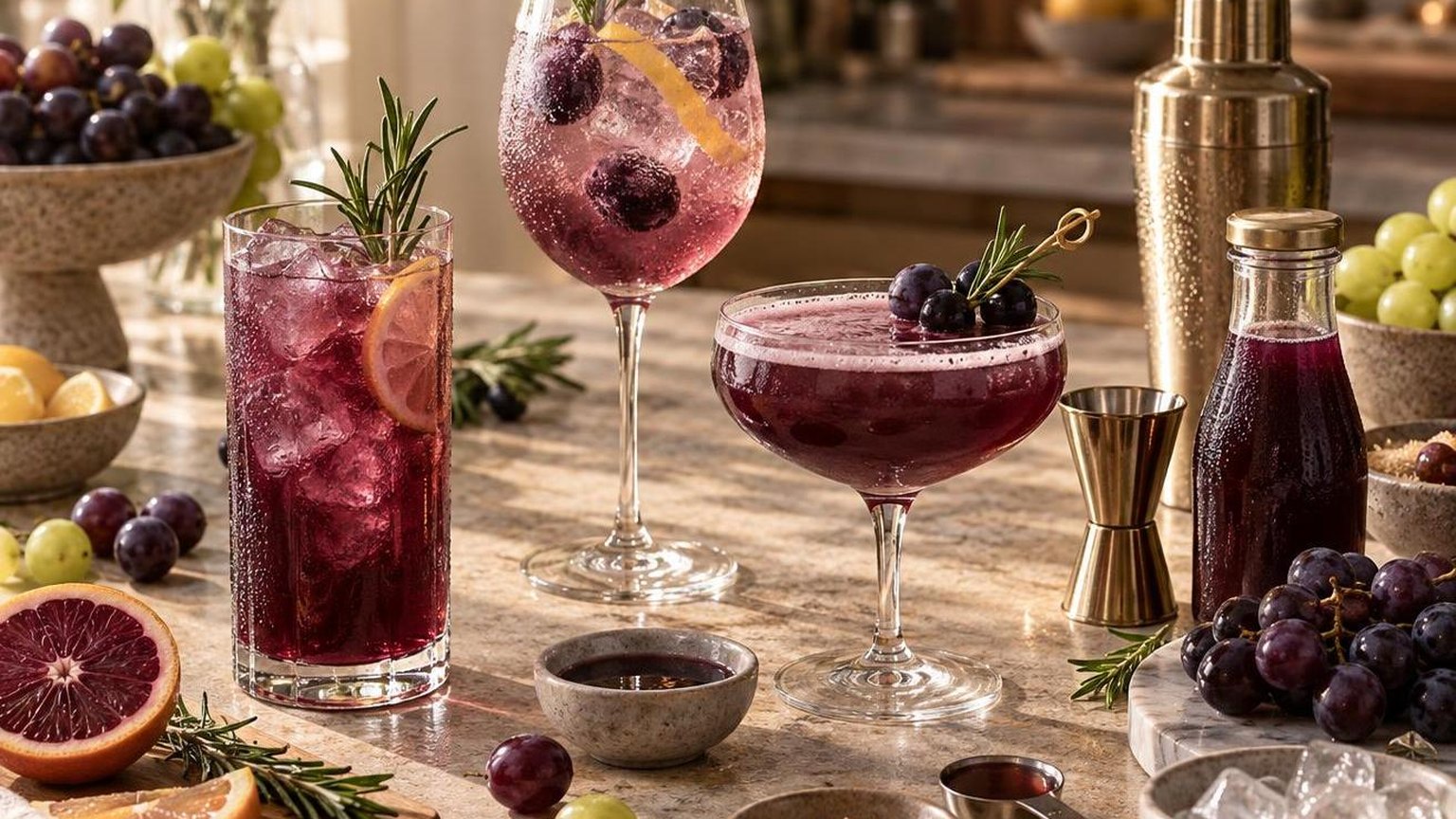
Pour the juice, gin, and lemon over ice in a wine glass. Stir briefly, top with club soda, and add a rosemary sprig. Clap the rosemary between your palms first to release its aromatic oils.
Quick Grape Sangria Pitcher
Dry red wine keeps this pitcher from becoming cloying. Rioja, Garnacha, or an unoaked Merlot works well because each offers fruit without heavy tannin.
| Ingredient | Amount |
| Dry red wine | 750 mL |
| Concord grape juice | 2 cups |
| Brandy | 1/2 cup |
| Orange, thinly sliced | 1 |
| Chilled club soda | 1 cup |
| Yield | 8 servings |
Combine everything except club soda and refrigerate until thoroughly chilled. Add soda immediately before serving over ice. Do not soak citrus overnight; prolonged contact with peel can introduce noticeable bitterness.
Alcohol and Substitution Notes
The National Institute on Alcohol Abuse and Alcoholism defines a U.S. standard drink as approximately 0.6 fluid ounce of pure alcohol.
| Reference serving | Approximate alcohol |
| 80-proof distilled spirit | 1 1/2 fl oz |
| Table wine at 12% ABV | 5 fl oz |
For alcohol-free versions, replace spirits with equal amounts of chilled club soda or zero-proof spirit. Use pasteurized juice when serving pregnant guests, children, older adults, or anyone with a weakened immune system.
How to Balance Sweetness and Acidity
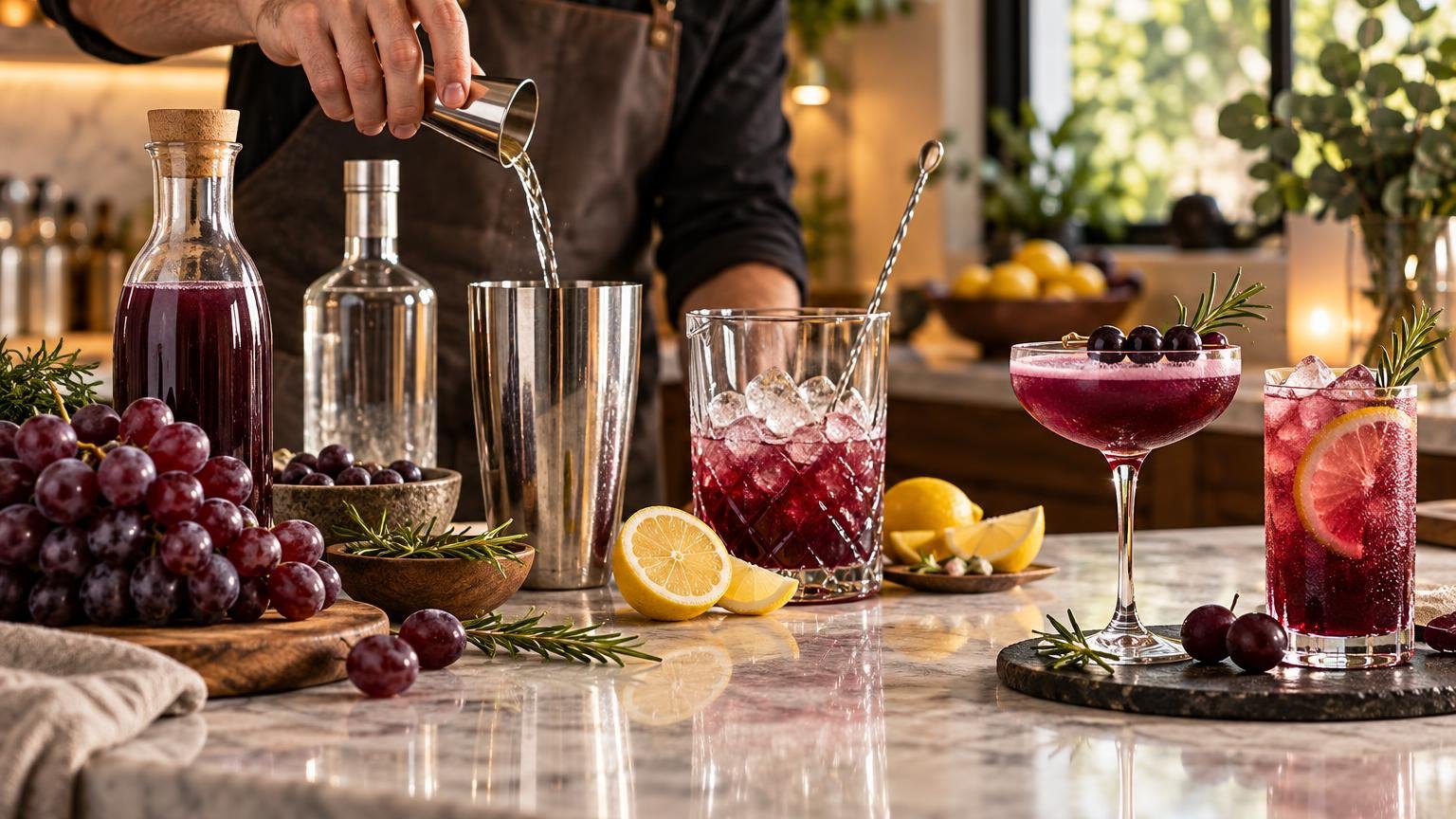
Balancing sweetness and acidity determines whether a grape juice cocktail tastes refreshing or cloying.
The target pH range for well-balanced drinks sits between 3.0 and 3.5, while residual sugar should land between 15–40 g/L depending on the cocktail style.
Understanding the Sugar-Acid Ratio
Professional bartenders use the Brix-to-acid ratio as a guide. Concord grape juice averages 16°Bx (grams of sugar per 100 mL) with a titratable acidity around 0.85%. That yields a ratio near 19:1, which skews sweet for cocktails.
For mixed drinks, a ratio between 12:1 and 14:1 produces the most balanced flavor profile. Reaching that range requires adding an acidic component to counteract the grape juice’s natural sugar load.
Acid Sources and Their Effective Doses
| Acid Source | pH | Amount per 60 mL Grape Juice | Flavor Character |
| Fresh lemon juice | 2.0–2.6 | 15–22 mL | Bright, sharp citrus |
| Fresh lime juice | 2.0–2.4 | 15–20 mL | Tart, slightly bitter |
| Red wine vinegar (shrub) | 2.4–3.4 | 10–15 mL | Tangy, fruity depth |
| Citric acid solution (10%) | 1.8–2.2 | 5–8 mL | Clean, neutral tartness |
| Verjus (unripe grape juice) | 2.8–3.2 | 20–30 mL | Soft, grape-forward acidity |
Verjus deserves special attention. It adds acidity without introducing competing fruit flavors, keeping the grape character intact while dropping the Brix-to-acid ratio into the ideal 12:1–14:1 zone.
Practical Techniques for Adjustment
- Taste in sequence: Add acid in 5 mL increments, stirring and tasting after each addition. Overshooting acidity is harder to correct than undershooting.
- Use simple syrup sparingly: If you overshoot acidity, add 1:1 simple syrup at 5 mL increments rather than more grape juice, which dilutes spirit concentration.
- Temperature matters: Sweetness perception drops 10–15% in drinks served below 5°C (41°F). Build cocktails slightly sweeter than target if serving over ice.
- Spirits shift perception: Ethanol at 15–20% ABV suppresses sweetness and amplifies bitterness. Account for this by reducing acid by roughly 5 mL when using high-proof spirits like overproof rum (57% ABV).
- Measure with pH strips: Litmus or digital pH meters costing $10–$15 provide immediate feedback. Target 3.2–3.4 for sipping cocktails and 3.0–3.2 for highballs where carbonation adds perceived sharpness.
The Role of Tannin as a Third Variable
Grape juice contains 0.1–0.3 g/L of tannins, far less than red wine’s 1–4 g/L. Adding 2–3 drops of liquid tannin extract per drink creates a drying mouthfeel that mimics dryness without reducing actual sugar content.
This technique, borrowed from wine blending, tricks the palate into perceiving less sweetness. Combined with proper acid dosing, it transforms overly sweet grape juice cocktails into complex, structured drinks worth ordering twice.
Garnishes and Serving Ideas
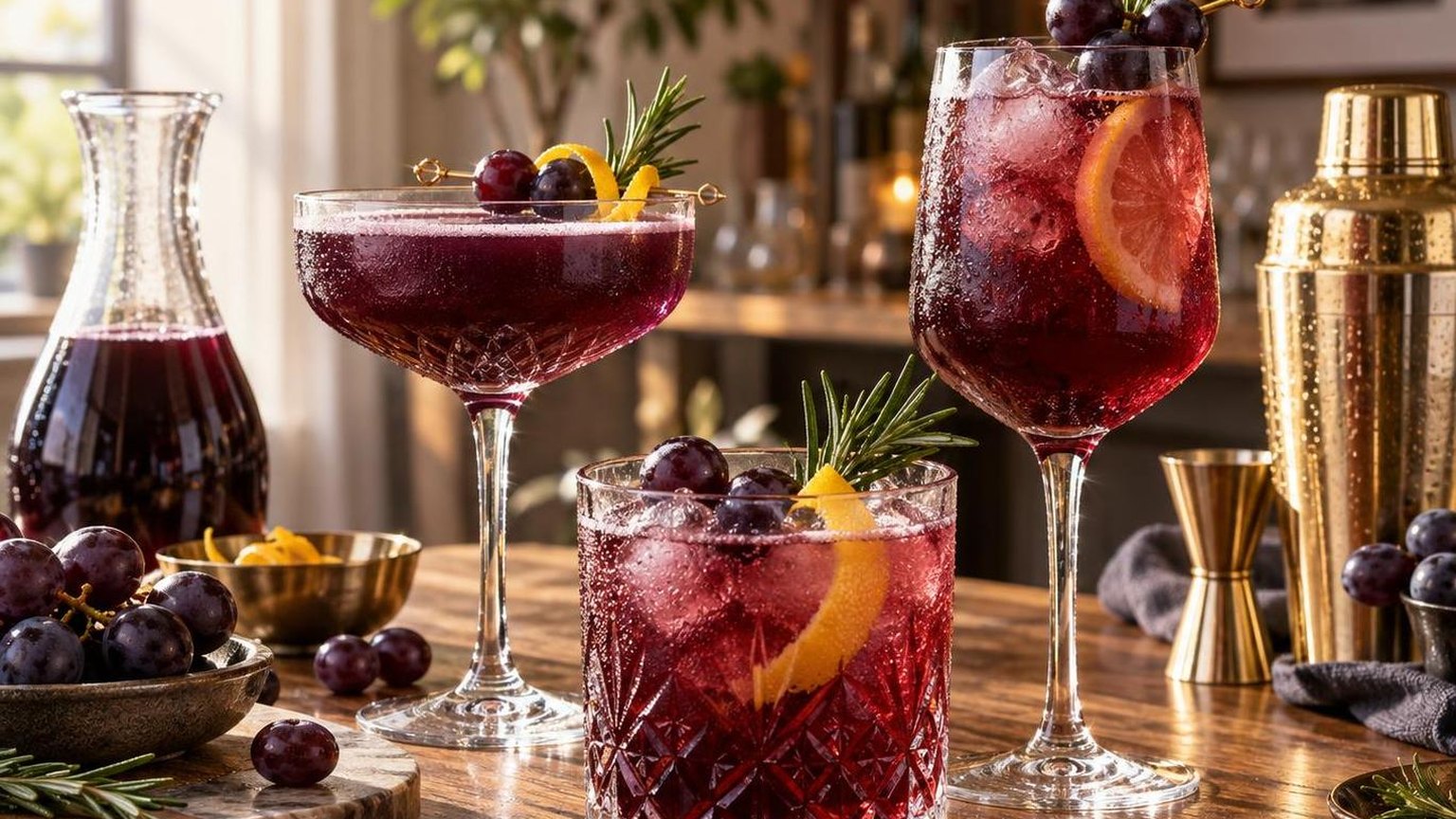
Garnishes transform grape juice cocktails from simple mixed drinks into visually striking presentations. The right garnish adds aromatic complexity, textural contrast, and a professional finish that elevates both flavor and perceived quality.
Classic Grape Cocktail Garnishes
Frozen grapes serve double duty as garnish and ice substitute. Thread 3–5 grapes onto a cocktail pick, freeze for at least 2 hours at 0°F (−18°C), and drop them into the glass. They chill the drink without diluting it.
- Frozen grape skewers: Alternate red and green grapes on a 4-inch bamboo pick for color contrast
- Sugared grapes: Brush with egg white, roll in superfine sugar, dry 30 minutes on parchment
- Citrus twists: A 3-inch lemon or orange peel spiral expressed over the drink adds essential oils
- Fresh herb sprigs: Rosemary (4–5 inches), thyme, or basil complement grape’s fruit-forward profile
- Edible flowers: Viola, lavender buds, or chamomile blooms float attractively on darker grape cocktails
Glassware Selection
Glassware choice affects aroma concentration, temperature retention, and portion perception. Match the glass to the cocktail style for optimal results.
| Cocktail Style | Recommended Glass | Capacity | Reason |
| Grape martini | Coupe or Nick & Nora | 5–6 oz | Concentrates aromatics, elegant presentation |
| Grape spritzer | Wine glass or Collins | 10–14 oz | Accommodates ice and carbonation headspace |
| Frozen grape slush | Hurricane glass | 14–16 oz | Wide bowl showcases color gradient |
| Grape old fashioned | Rocks glass | 8–10 oz | Heavy base keeps drink cold, fits large ice cube |
| Grape punch | Punch cup or mason jar | 6–8 oz | Encourages moderate pours, casual aesthetic |
Rim Treatments
A rimmed glass adds a tactile and flavor element with every sip. Run a lemon wedge around the outer rim edge, then dip into the coating of choice at a 45-degree angle to keep the interior clean.
- Grape Kool-Aid powder mixed with granulated sugar (1:1 ratio) — creates a sweet-tart purple rim
- Turbinado sugar with dried lavender — pairs with Concord grape cocktails
- Tajín seasoning — adds chile-lime heat against sweet grape, popular in Mexican-inspired serves
- Crushed freeze-dried grapes — intensifies grape flavor without added liquid
Temperature and Ice Considerations
Serve grape juice cocktails between 38°F and 45°F (3°C–7°C) for optimal flavor release. Standard ice cubes dilute drinks by approximately 15–25% over 10 minutes.
Use a single 2-inch silicone-molded cube to slow dilution by roughly 40% compared to standard cubes.
Pre-chill glasses in a freezer for 15–20 minutes before serving. This step maintains target temperature 3–4 minutes longer than room-temperature glassware, keeping grape cocktails vibrant and refreshing through the final sip.
Questions People Ask Most
What is the most common alcoholic drink made with grape juice?
Wine is the oldest and most widespread alcohol drink with grape juice as its base, produced through fermentation of crushed grapes by yeast that converts natural sugars into ethanol.
Beyond wine, the simplest mixed drink combines grape juice with vodka at a typical ratio of 3:1 (juice to spirit), yielding a cocktail around 10% ABV.
Concord grape juice pairs particularly well with clear spirits because its bold, sweet flavor masks alcohol bitterness.
Can you ferment store-bought grape juice into alcohol at home?
Yes—pasteurized 100% grape juice (such as Welch’s Concord) ferments reliably when you add wine yeast (Saccharomyces cerevisiae, e.g., Lalvin EC-1118) and allow 7–14 days at 18–24 °C.
One gallon of juice with a starting Brix of roughly 16° will produce a wine of approximately 8–9% ABV. Avoid juice containing potassium sorbate or sodium benzoate, as these preservatives inhibit yeast activity and stall fermentation.
What cocktails specifically call for grape juice as an ingredient?
The “Transfusion” is the best-known grape juice cocktail, combining 45 ml vodka, 90 ml Concord grape juice, 30 ml ginger ale, and a squeeze of lime—it originated on American golf courses in the 1970s.
The “Purple Hooter” blends vodka, Chambord raspberry liqueur, and white grape juice.
Non-standard punches often mix sparkling white grape juice with champagne or prosecco at a 1:1 ratio for a lower-cost, crowd-friendly sparkling drink.
Does mixing grape juice with alcohol reduce the health benefits of the juice?
Grape juice retains its polyphenols—particularly resveratrol (up to 1.5 mg per 150 ml of Concord juice) and anthocyanins—when mixed with spirits, since ethanol does not destroy these antioxidant compounds at cocktail concentrations.
However, alcohol itself introduces hepatotoxic effects and added calories (roughly 97 kcal per 45 ml of 80-proof spirit on top of the juice’s ~115 kcal per 200 ml).
The CDC defines moderate drinking as one drink per day for women and two for men, and exceeding this threshold negates any cardiovascular benefit from the grape polyphenols.
Which types of grape juice work best in alcoholic drinks—red, white, or Concord?
Concord grape juice has the highest sugar content (around 36 g per 240 ml) and the most assertive “foxy” Vitis labrusca flavor, making it ideal for masking strong spirits like vodka or bourbon.
White grape juice (Niagara or Thompson Seedless varieties) is more neutral at roughly 32 g sugar per 240 ml, pairing cleanly with gin, prosecco, or elderflower liqueur.
Red grape juice from Vitis vinifera varieties (Merlot or Cabernet) tends toward tannic and dry profiles and works better as a base for sangria-style punches than for simple two-ingredient cocktails.
How much alcohol does grape juice naturally contain before fermentation?
Freshly pressed, unpasteurized grape juice can begin spontaneous fermentation within hours due to wild yeast on grape skins, potentially reaching 1–2% ABV within 24–48 hours at room temperature.
Commercial pasteurized grape juice in the U.S. is legally permitted to contain up to 0.5% ABV and still be labeled non-alcoholic under TTB (Alcohol and Tobacco Tax and Trade Bureau) regulations.
Refrigerated, sealed, pasteurized juice effectively contains 0.0–0.1% ABV and poses no intoxication risk.
What is the correct ratio of grape juice to alcohol for a balanced drink?
Bartenders generally recommend a 2:1 to 3:1 grape juice-to-spirit ratio for a balanced cocktail between 8–12% ABV, comparable to a glass of wine.
For the classic Transfusion, the standard build is 45 ml (1.5 oz) vodka to 120 ml (4 oz) grape juice plus 30 ml ginger ale, producing roughly 9% ABV.
When using higher-proof spirits like overproof rum (57% ABV) or cask-strength bourbon (55–65% ABV), increase the juice proportion to 4:1 to keep the drink palatable and below 14% ABV.
- Does The Dragonfruit Refresher Have Caffeine? Answer By Expert
- How Much Caffeine Is In A Refresher? Find Out Now
- How To Make A Smoothie With Orange Juice? Simple Recipe
- Does Strawberry Acai Have Caffeine? Get the Answer
- How Many Beers Are in a Mike's Harder Lemonade?
- Can You Drink Lemon Water While Fasting? Find Out Now
- How Much Caffeine Is In A Starbucks Refresher? Find Out Now
- How Much Caffeine In Dunkin Refresher? (Shocking Facts, Real Experience & Complete Breakdown)
- Does Strawberry Acai Lemonade Have Caffeine? Find Out Now
- All Non-Alcoholic Beverages Guides
- TTB – Alcohol and Tobacco Tax and Trade Bureau, US Department of the Treasury (2024)
- USDA FoodData Central – Grape Juice, 100% (2024)
- National Institutes of Health, National Center for Complementary and Integrative Health – Red Wine and Resveratrol (2023)
- PubMed – "Phenolic Compounds in Grape Juice and Their Health Effects" (2020)
- Cornell University, Department of Food Science – Grape and Wine Chemistry (2023)
- Wine Spectator – How Wine Is Made: From Grape to Glass (2023)
- CDC – Alcohol Use and Your Health (2024)