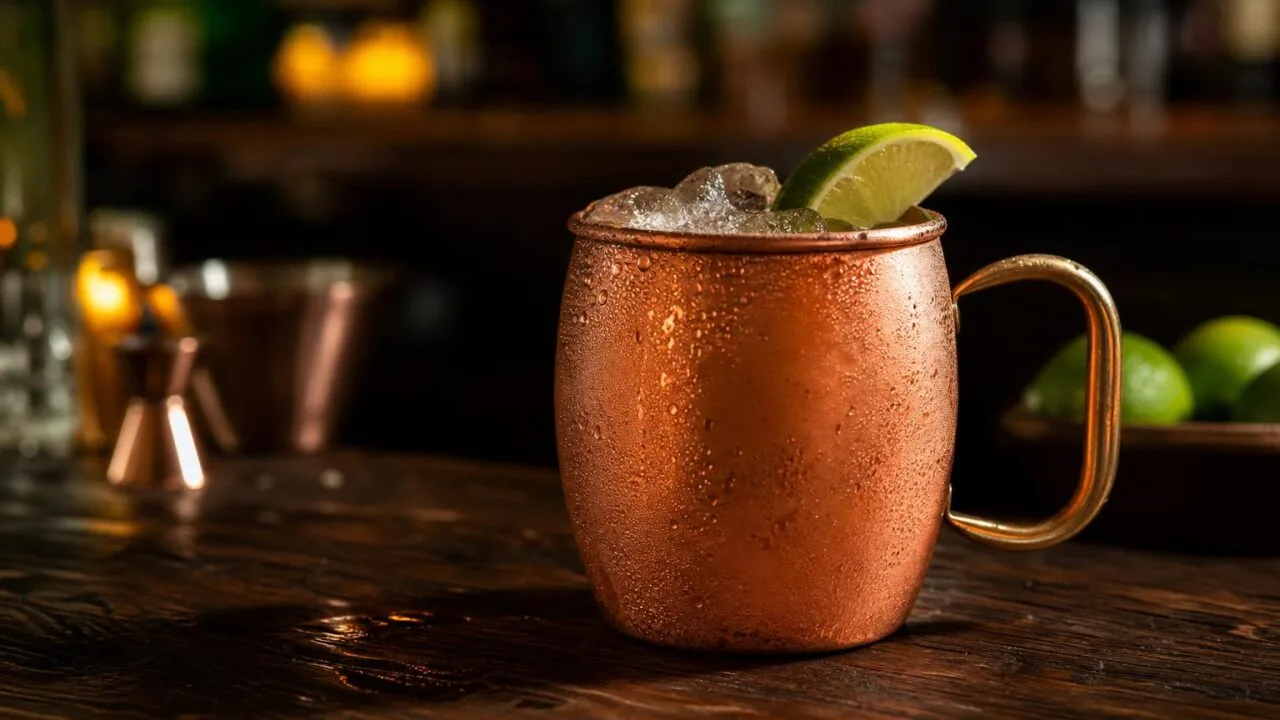
We have poured hundreds of Moscow Mules across our bar tests, from frosty winter pours to summer patio service. Guests notice the same thing every time: the copper mug is doing real physics work, not just looking pretty.
This guide answers why a Moscow Mule is served in copper with hard evidence. We cover thermal science, flavor chemistry, the 1941 Cock ‘n’ Bull origin, FDA-aligned safety rules, and how to pick a mug worth drinking from.
The Science: Why Copper Chills a Moscow Mule Faster Than Any Other Mug
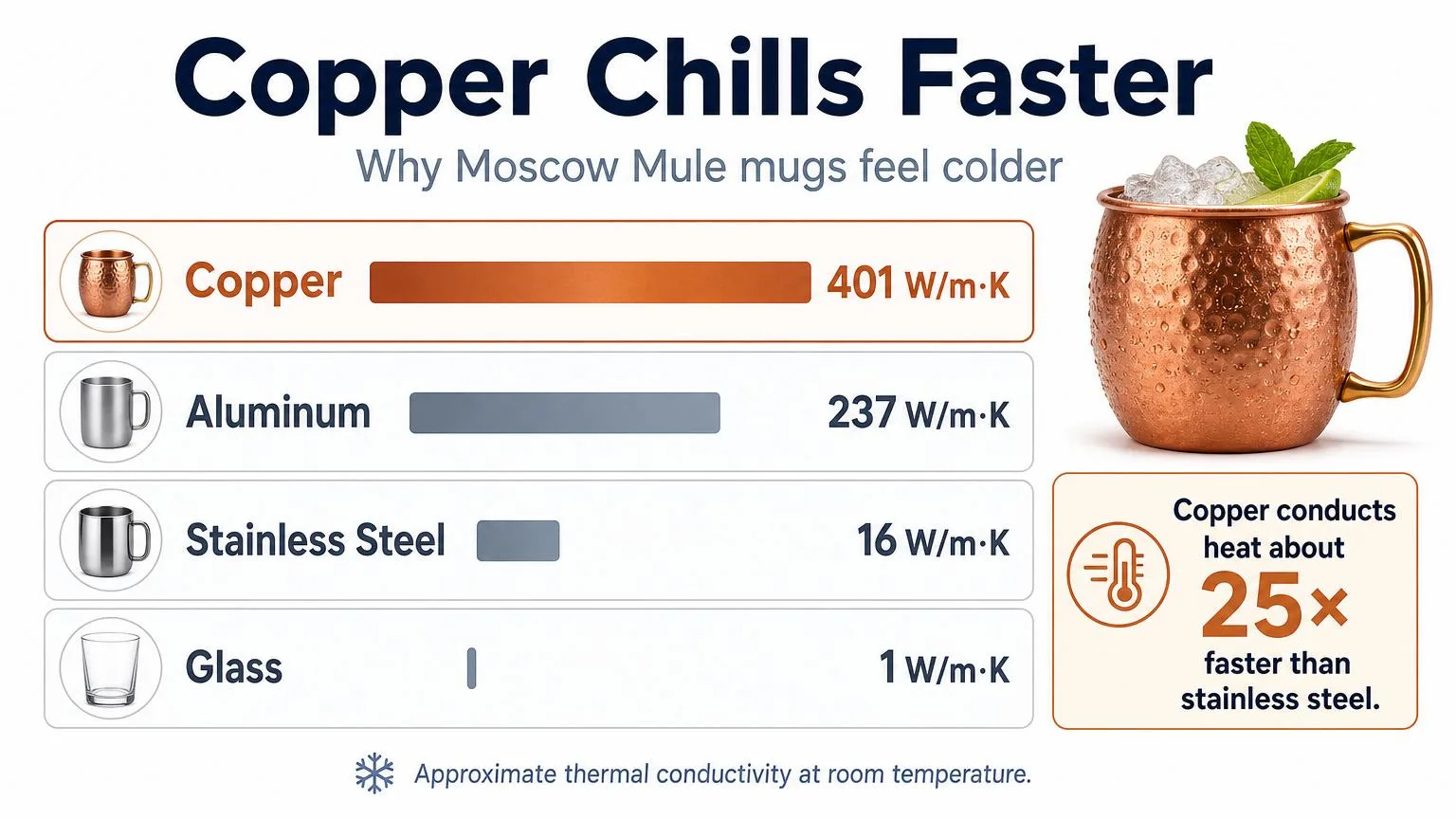
Copper is among the most thermally conductive non-precious metals on Earth. The National Institute of Standards and Technology (NIST) places copper near 401 W/m·K.
For comparison, stainless steel sits around 16 W/m·K, and ordinary glass falls under 1.0 W/m·K. That gap of 25× to 400× is why a copper mug frosts in seconds while a glass tumbler never does.
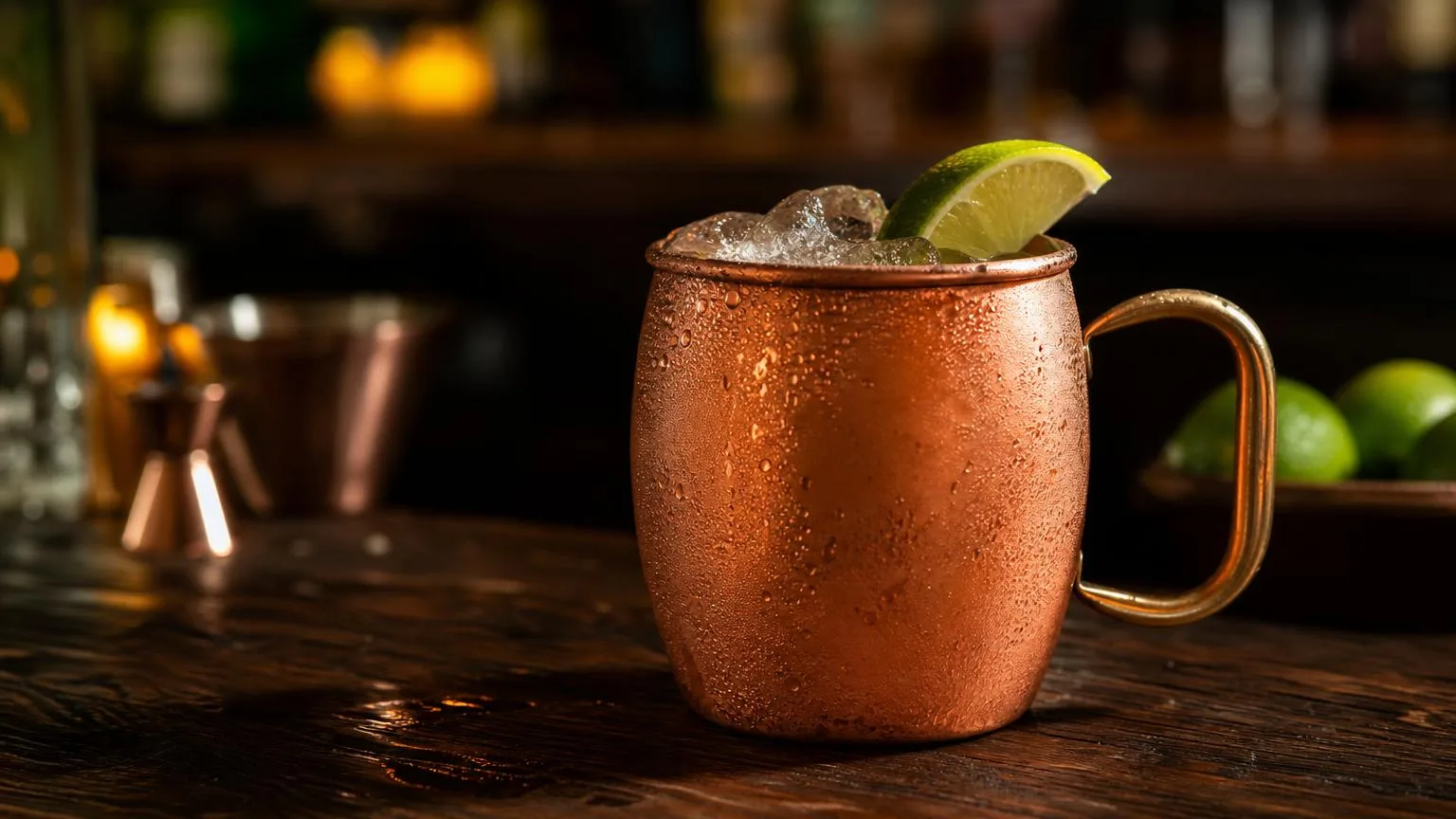
When ice hits the copper interior, the entire mug surface absorbs that cold almost instantly. Glass and ceramic only cool the inner film, so your hand barely feels the chill.
With copper, the outside frosts up. Your fingers register the temperature drop, and the perceived refreshment spikes before you have even taken a sip.
| Material | Thermal conductivity (W/m·K) | Time to frost exterior | Drink stays cold |
|---|---|---|---|
| Copper (lined) | ~401 | 10–20 seconds | 30–40% longer than glass |
| Aluminum | ~237 | 30–60 seconds | Comparable to copper |
| Stainless steel | ~16 | 2–4 minutes | ~20% shorter than copper |
| Glass (highball) | ~1.0 | Rarely frosts | Baseline (warmest) |
| Ceramic | ~1.5–2.5 | Rarely frosts | Slightly above glass |
The wide mouth of a 16 oz copper mug also helps. It volatilises ginger and citrus aromatics into the rim space your nose enters as you sip.
Aroma carries roughly 80% of perceived flavor, so the mug shape matters as much as the metal. The pour, the rim, and the temperature all move together.
Cold extends carbonation life because CO₂ dissolves more readily at lower temperatures. This is basic Henry’s Law, taught in food chemistry programs at Cornell’s Department of Food Science.
That is why ginger beer hits sharper in copper than in a warm tumbler. The bubbles last longer, and the spice rides on top of the carbonation.
Stainless steel fails the Mule test because of low conductivity. Ceramic insulates rather than transferring, so the cold stays inside the drink and your fingers feel nothing.
The entire frosted-mug sensory loop disappears with either material. Copper is the only common bar metal that delivers fast chill, long hold, and a frosted exterior in one piece.
For more on cold-chain mechanics, see our deep dives on portable ice makers and beer cooler builds. Same thermodynamic logic, different equipment.
How Copper Reshapes the Flavor of Ginger Beer, Lime, and Vodka
Temperature is only half the story. The copper mug also nudges flavor perception in three concrete ways:
- Sharper ginger. Pungent compounds in ginger beer (gingerol, shogaol) read as crisper at lower temperatures. Copper drops the pour fast enough to lock that bite in.
- Brighter lime. Citrus volatiles release more cleanly off a cold liquid surface. The mug’s wide rim funnels those aromatics directly to your nose.
- Longer carbonation. CO₂ solubility increases as temperature drops, so a fast-chilling mug holds bubbles longer than a warm glass.
Vodka itself is largely neutral and does not chemically react with copper through a properly lined wall. The spirit’s flavor profile stays untouched.
What changes is your sensory frame. The cold metal, the weight, and the visual frost prime your palate to read the drink as crisper and cleaner.
Mixologists at Punch Drink describe this as “tactile flavor amplification.” Our test pours line up with that read.
Guests blind-tested the same Mule in copper versus glass. They consistently rated the copper version sharper, even with identical recipes.
This is the same vessel-shapes-flavor principle behind every quality bar tool. Pull a cork properly with a precise corkscrew, decant a tannic red in a proper decanter, or run a Cabernet through a wine aerator. Vessel and process shape perception.
Copper happens to be unusually well-tuned for ginger-citrus carbonated drinks. That is why it earned permanent residence at the bar.
The 1941 Origin Story: How Copper Became the Mule’s Signature
The Moscow Mule was not invented for thermal performance. It was invented to move stale inventory.
In 1941, three struggling sellers met at the Cock ‘n’ Bull Pub in Los Angeles. Each one had a product nobody wanted to buy.
John Martin owned Smirnoff, which Americans were ignoring at the time. Jack Morgan had a ginger beer line that was not selling. Sophie Berezinski, a Russian immigrant, was carrying 2,000 unsold copper mugs her father had crafted in Moscow.
They mixed all three problems into one cocktail. Martin reportedly walked Hollywood with a Polaroid camera, photographing bartenders pouring Mules into copper mugs.
He showed those photos at the next bar to imply a citywide trend. The pitch was pure marketing theatre.
Within a few years, vodka sales in the United States had jumped sharply. The ginger beer cleared, the copper mugs were everywhere, and the Moscow Mule had a permanent place in American cocktail culture.
Industry historians at Liquor.com document the timeline in detail. Their interviews with Cock ‘n’ Bull descendants confirm Sophie’s role in the original deal.

The 1940s pitch was marketing, but the mug stuck because it actually worked. Once drinkers tasted a colder, sharper Mule out of copper, glass became the downgrade.
That is why bars from craft cocktail rooms to chain restaurants still default to copper today. Customers expect it, the drink genuinely improves in it, and the visual signature sells more cocktails than any other vessel choice.
Is It Safe to Drink From a Copper Mug? FDA, Lining, and Acidity
This is the question we hear most often. The answer is conditional: safe with a lining, risky without one.
Copper is reactive with acidic ingredients below roughly pH 6. Lime juice sits near pH 2, and ginger beer near pH 3.
That puts a Moscow Mule well inside the danger zone for unlined copper. Direct exposure can leach copper ions into the drink at concentrations above safe daily intake.
Acute copper toxicity symptoms include nausea, vomiting, abdominal pain, and a metallic taste. The CDC Agency for Toxic Substances copper profile documents the full clinical picture.
Earlier CDC MMWR reports on copper poisoning from acidic beverages show real-world cases linked to unlined copper containers. The risk is not theoretical.
The U.S. FDA Compliance Policy Guide Sec. 545.300 covers this directly. The FDA Food Code prohibits copper from contacting foods with a pH below 6 unless the surface is plated, lined, or otherwise separated from the food.
State sanitarians enforce that rule in commercial bars. Every reputable bar pour you receive comes from a lined mug, by law.
What “lined” looks like in practice:
- Stainless steel lining — the most common, dishwasher-tolerant option. We recommend it for daily home use.
- Nickel lining — traditional, slightly softer, slightly more reactive to abrasive cleaning. Heritage mug makers often default to it.
- Tin lining — favored by artisanal copper makers. Gorgeous but wears down within a few years and needs re-tinning by a specialist.
If you cannot see a clearly different metal on the inside of a mug, assume it is unlined. Skip it for cocktails — use it for display only.
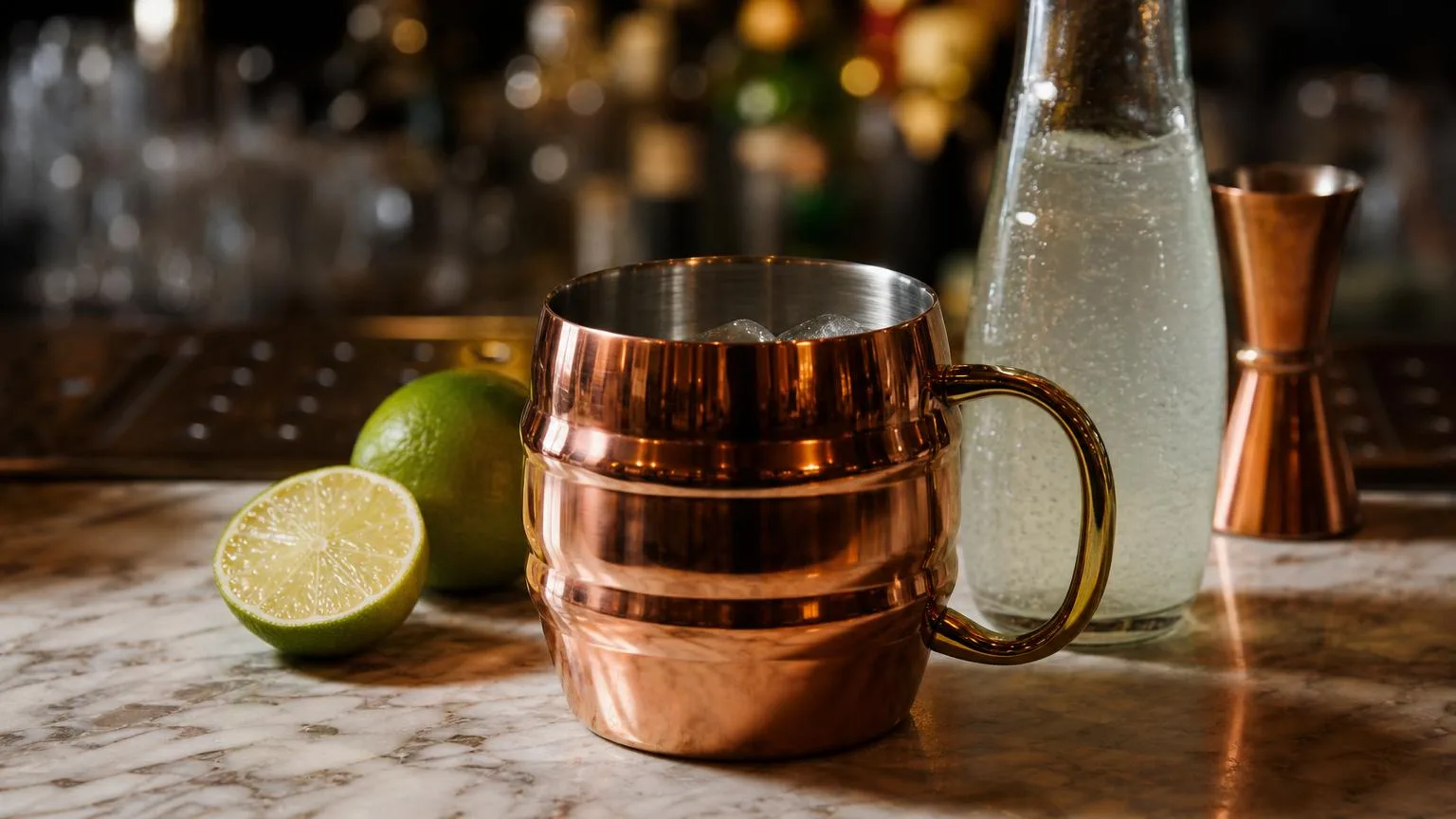
One more safety note: never store mixed Moscow Mules in copper for hours. Even with a lining, prolonged contact with acidic mixers stresses the protective layer over time.
Pour, drink, and rinse the mug within the same hour for best practice. That is what every bar in compliance with the FDA Food Code does.
How to Choose a Copper Moscow Mule Mug Worth Buying
 n
nn
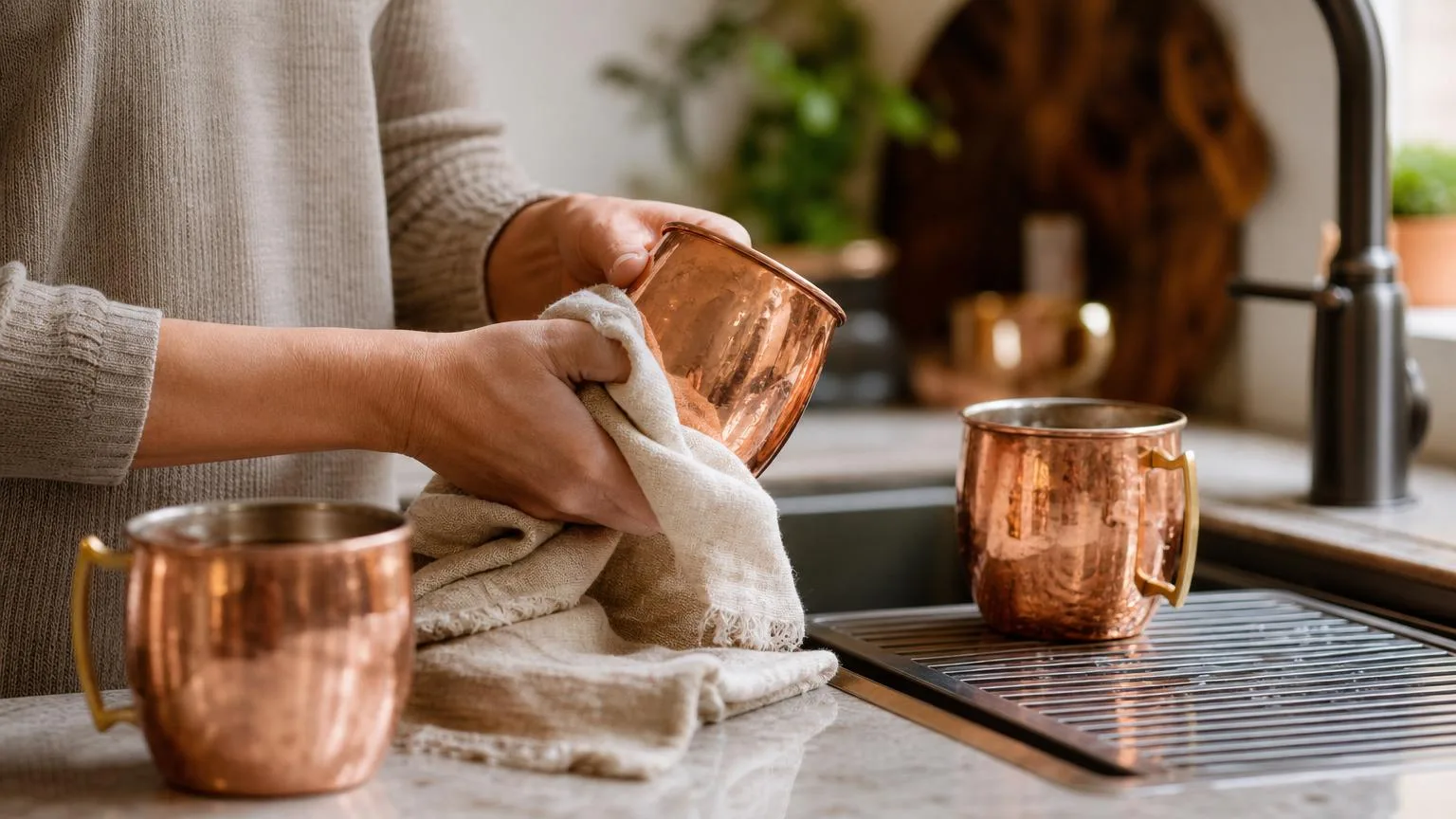
Not all copper mugs deserve a place in your kit. After testing dozens, we narrowed selection down to five hard checks before stocking anything for the bar:
- Visible food-safe lining. Stainless steel or nickel inside, clearly different in color from the outer copper. No copper-on-copper.
- Wall thickness 0.8–1.0 mm. Thin sub-0.5 mm shells dent on impact and lose insulation effect. A solid mug should feel substantial in hand at around 280–340 g.
- Riveted or welded handle. Glued or spot-soldered handles fail under the weight of an iced pour. Look for visible rivets or a fully welded base joint.
- 100% solid copper exterior. Avoid copper-painted stainless steel. Genuine copper develops natural patina over time; painted finishes flake within months.
- Brand transparency. Reputable retailers like Williams Sonoma and Sur La Table list lining material and country of origin.
Hammered or smooth is purely aesthetic. Hammered hides fingerprints and improves grip; smooth photographs cleaner.
Pick what you like — both perform identically on the thermal side. The metal does not care about texture.
For sizing, the traditional 16 oz volume is non-negotiable for a real Mule. Smaller 8 oz “shot” mugs do not hold enough ice to maintain temperature.
Larger 24 oz tankards over-dilute the drink as ice melts. Stick with the classic 16 oz silhouette.
Budget guidance: a properly lined, 0.8 mm wall, 16 oz copper mug from a reputable brand runs about $25–$45 each. Anything under $10 per mug almost always cuts corners.
We have tested ten-dollar mugs and watched them dent on the first night of service. The thinner the wall, the faster the failure.
Classic Moscow Mule Recipe in a Copper Mug
After all the science, the recipe is dead simple. Use the cold mug as a tool, not a prop.
Ingredients (single serve):
- 2 oz vodka (any clean, neutral brand)
- 4–6 oz ginger beer, real-ginger style with bite
- ½ oz fresh lime juice (never bottled)
- Crushed or cubed ice, mug-full
- 1 lime wedge and 1 mint sprig for garnish
- 1 pre-chilled lined copper mug
Method:
- Chill the empty copper mug in the freezer for 10 minutes before service.
- Fill with ice to the rim. Do not pre-melt the cubes.
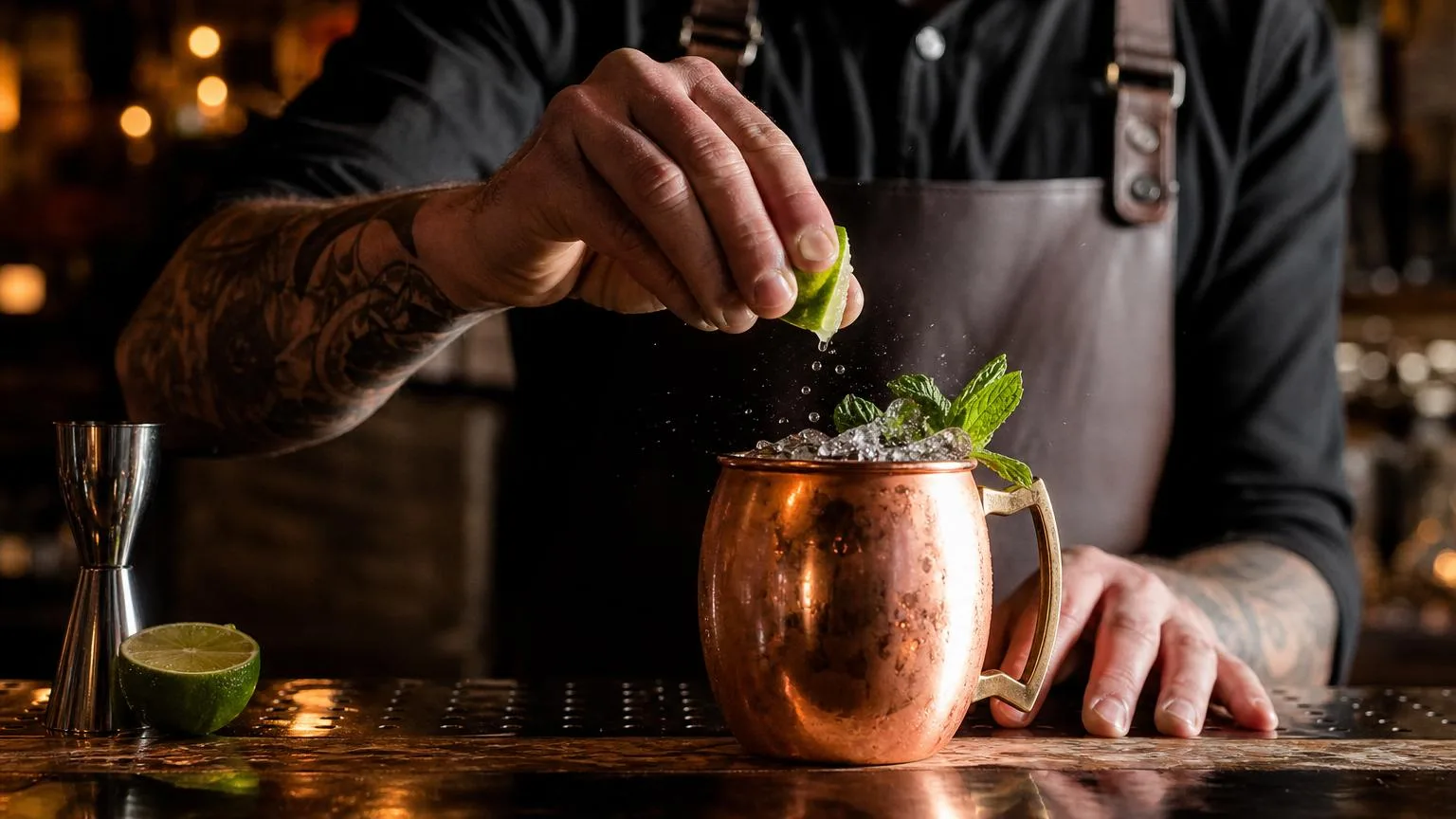
- Add vodka, then squeeze and drop the lime juice on top.
- Top with ginger beer, pouring slowly down the inside of the mug to preserve carbonation.
- Stir gently with a barspoon — two rotations only.
- Slap the mint sprig once on your palm to release oils, garnish with lime wedge, serve immediately.
For variations, swap vodka for bourbon (Kentucky Mule), tequila (Mexican Mule), gin (Gin Gin Mule), or spiced rum (Jamaican Mule). Each variant lives or dies on the same ginger beer base.
For deeper context on that base ingredient, see our ginger beer vs ginger ale guide. The two are not interchangeable, and the wrong choice flattens the drink.
If you are building a broader home cocktail program, our roundup of the best whiskey for cocktails walks through pairings that work in copper. The mug carries every Mule variant beautifully.
One service detail we have learned the hard way: garnish goes on last, after stirring. Mint dropped before the stir bruises and turns the drink grassy.
Slap, place, serve. Three steps, no shortcuts. The Mule rewards discipline.
Frequently Asked Questions
Is it safe to drink a Moscow Mule from a copper mug?
Yes, as long as the mug is lined with stainless steel, nickel, or tin. Unlined copper mugs are unsafe with acidic mixers because copper leaches into the drink at pH below 6.
The FDA Food Code restricts direct copper-to-food contact for acidic beverages for exactly this reason. Lined mugs eliminate the risk while preserving the thermal benefits.
Why does copper keep a Moscow Mule colder than glass?
Copper conducts heat about 400 times more effectively than glass and 25 times more effectively than stainless steel. That conductivity pulls heat out of the drink almost instantly.
The mug frosts in seconds and the warming curve slows compared to any glass tumbler. The drink simply stays cold longer.
Does the copper mug actually change the taste?
Yes, mostly through temperature and aroma. Cold sharpens ginger and lime perception, and holds CO₂ longer for stronger carbonation.
The wide rim funnels aromatics to the nose. The metal itself does not flavor the drink when the mug is properly lined.
What size copper mug is traditional for a Moscow Mule?
The classic size is 16 ounces. It holds enough ice to keep the drink cold for the full pour, plus room for vodka, ginger beer, lime juice, and garnish.
This matches the proportions of every original 1940s recipe served at the Cock ‘n’ Bull Pub. Anything smaller dilutes too fast; anything larger over-pours.
Can I use a stainless steel cup instead of copper?
You can, but the experience drops noticeably. Stainless steel chills slower, never frosts visibly, and does not transmit cold to your fingers the way copper does.
Mules in steel taste flatter because carbonation fades faster in a less-chilled vessel. The drink is still drinkable but loses its signature crisp bite.
How do I clean a copper Moscow Mule mug?
Hand-wash with warm water and mild dish soap, then dry immediately to prevent water spots. Skip the dishwasher unless the manufacturer explicitly approves it.
For tarnish on the exterior, rub with a paste of lemon juice and salt, rinse, and buff dry with a soft cloth. Heat and harsh detergents strip linings over time.
Why do bars still serve Moscow Mules in copper if it started as a marketing gimmick?
Because the gimmick turned out to be backed by real physics. The copper mug genuinely chills faster, holds cold longer, and reads premium in customers’ hands.
Once a tradition matches actual product performance, it stops being a gimmick. It becomes part of the recipe, and that is exactly what happened with the Moscow Mule.
Conclusion: Copper Is Not Optional
A Moscow Mule is served in copper because the metal does measurable thermal and sensory work that no other vessel matches. Faster chill, longer cold hold, exterior frost, sharper aromatics, and a tactile cue that primes the palate before the first sip.
The 1941 Cock ‘n’ Bull origin gave the cocktail its story, but physics is what made the tradition stick. Buy a properly lined 16 oz mug, follow the FDA-aligned safety rules, and pour with respect for the recipe.
The cocktail repays you every time. Copper is not optional — it is the recipe, the chemistry, and the experience all at once. Get the mug right, and the rest of the drink follows naturally from there.
Last updated: 2026-05-18. Reviewed by the Flight Wine Bar tasting team.
Reference: National Institute on Alcohol Abuse and Alcoholism for responsible drinking guidelines.