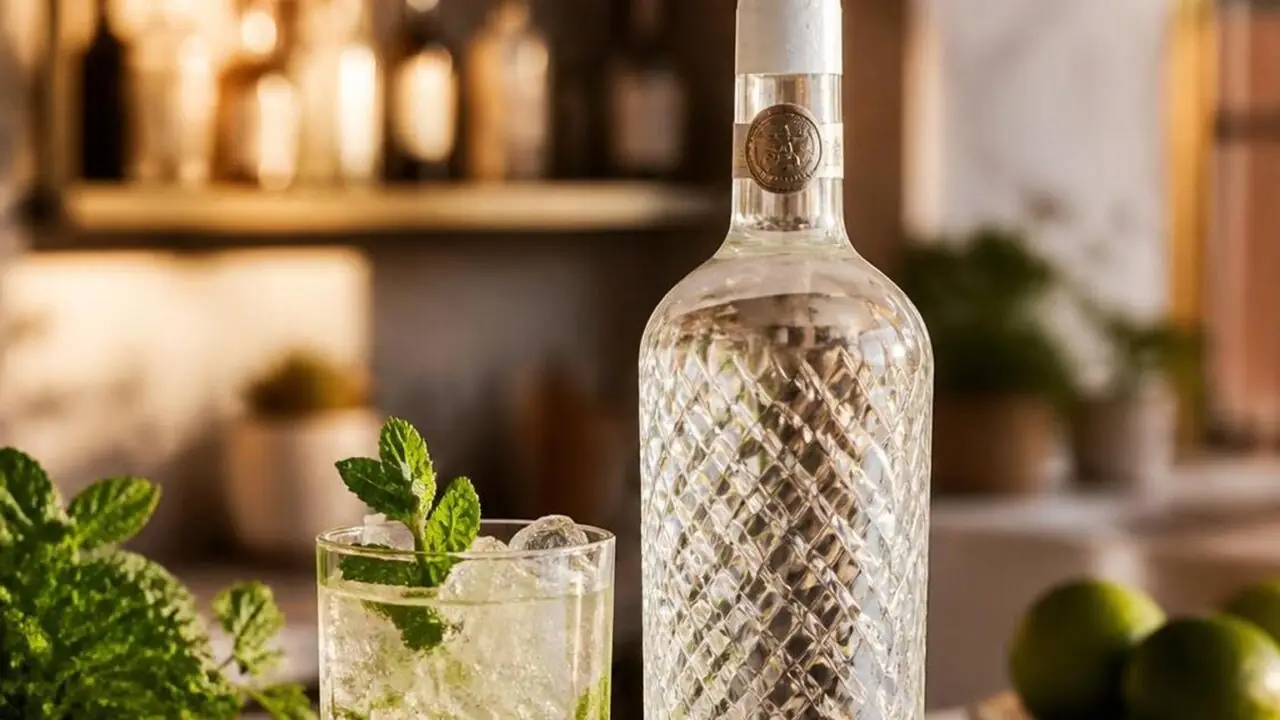
Good rum for mojitos is a clean, dry white rum with light body, gentle cane sweetness, and enough citrus-friendly snap to stay crisp under mint, lime, sugar, and soda.
The best bottles do not need heavy oak, added spice, or syrupy vanilla; those flavors can blur the drink’s refreshing edge.
For a classic 2-ounce rum mojito, look for column-distilled or lightly blended rums from Cuba-style, Puerto Rican, Barbados, or Dominican producers, ideally bottled around 40% ABV.
This guide focuses on rums that mix cleanly, remain affordable, and make the mint-and-lime profile taste brighter rather than boozier.
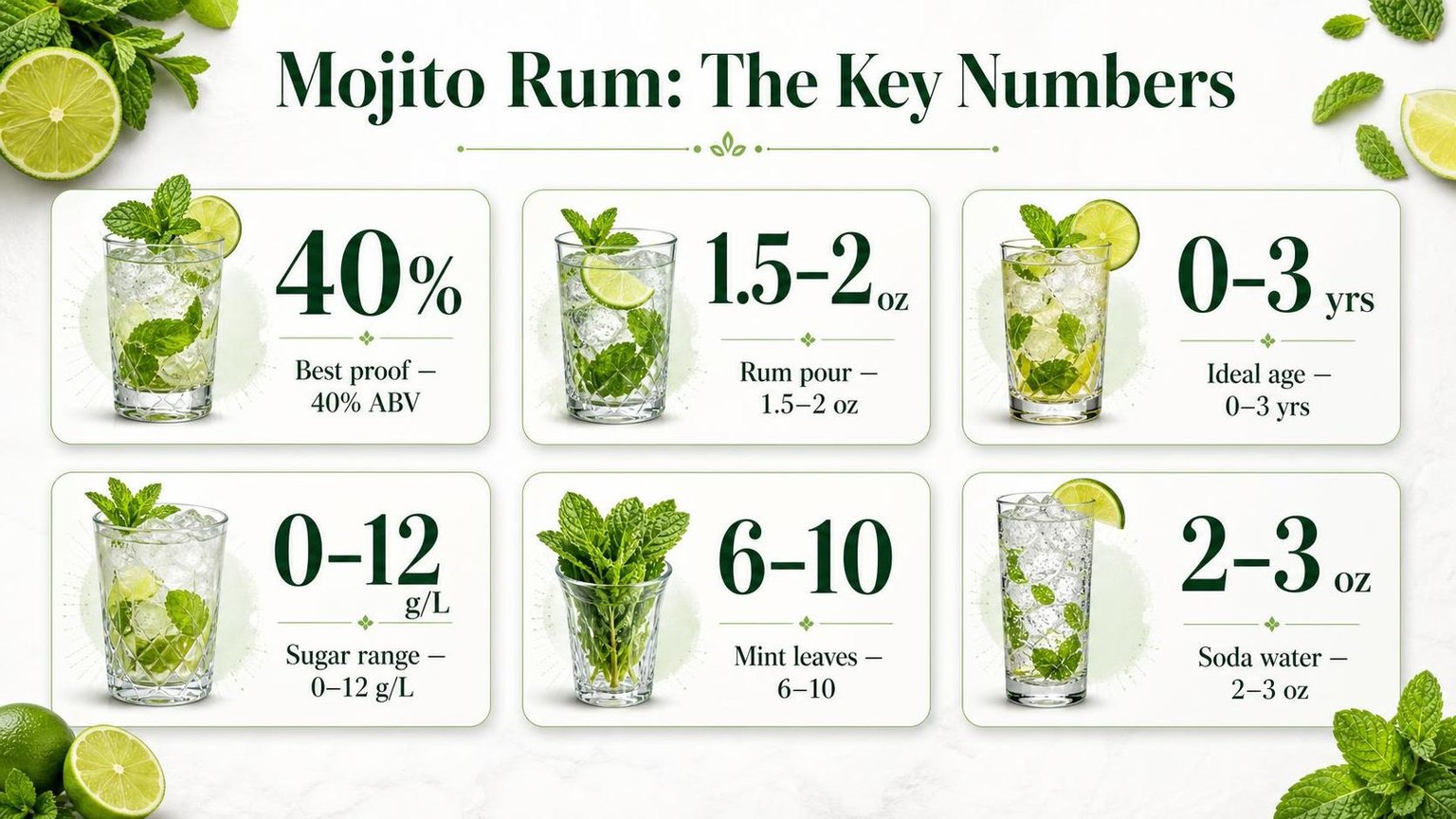
The Key Numbers, Explained
For mojitos, the “best” rum is usually a clean, lightly aged or unaged white rum at standard bottling strength. The numbers matter because lime, mint, sugar, ice, and soda dilute and aromatize the drink quickly.
A good mojito rum should stay visible after shaking or stirring with citrus and topping with soda. In practice, that means 40% ABV, modest congeners, and no heavy barrel profile.
| Number | What it means for mojitos |
| 40% ABV / 80 proof | The standard strength for most white rums in the U.S.; strong enough to carry through lime, mint, and soda without tasting hot. |
| 1.5–2 oz rum | The usual rum pour for one mojito. Two ounces gives a bar-strength drink; 1.5 oz is better for a lighter, patio-style serve. |
| 0–3 years aged | Ideal range for most mojito rums. Unaged or lightly aged filtered rum keeps the drink bright instead of woody or tannic. |
| 0–12 g/L sugar | A dry to lightly sweetened rum works best. Heavily sweetened rum can make the cocktail taste flat once syrup is added. |
| 6–10 mint leaves | Enough for aroma without excessive bitterness. Over-muddling mint releases chlorophyll and harsh green flavors. |
| 2–3 oz soda water | Provides lift and dilution. More than 3 oz can bury a subtle rum, especially at 1.5 oz. |
The most important buying number is 40% ABV. Many classic white rums, including Bacardí Superior, Don Q Cristal, Flor de Caña Extra Seco, and Plantation 3 Stars, are bottled around this strength in the U.S.
Overproof rum can work, but it changes the drink. A 50% ABV rum adds 25% more alcohol than a 40% ABV rum at the same pour, so it needs slightly more lime, sugar, or soda to stay balanced.
Age matters because mojitos are high-acid, mint-forward drinks. A 5- to 8-year amber rum can taste good, but oak, vanilla, and caramel notes often pull the cocktail away from its crisp Cuban profile.
- Best everyday target: white rum, 40% ABV, dry or lightly sweetened, clean finish.
- Best flavor upgrade: a blended white rum with some aged distillate filtered for color.
- Avoid for classic mojitos: spiced rum, dark blackstrap rum, coconut rum, and liqueur-strength rum under 35% ABV.
If a label lists “rum specialty,” “flavored rum,” or a proof below 70, it is not the best first choice. Those bottles can be fun, but they make the drink taste like the flavoring rather than rum, mint, and lime.
What Affects the Result
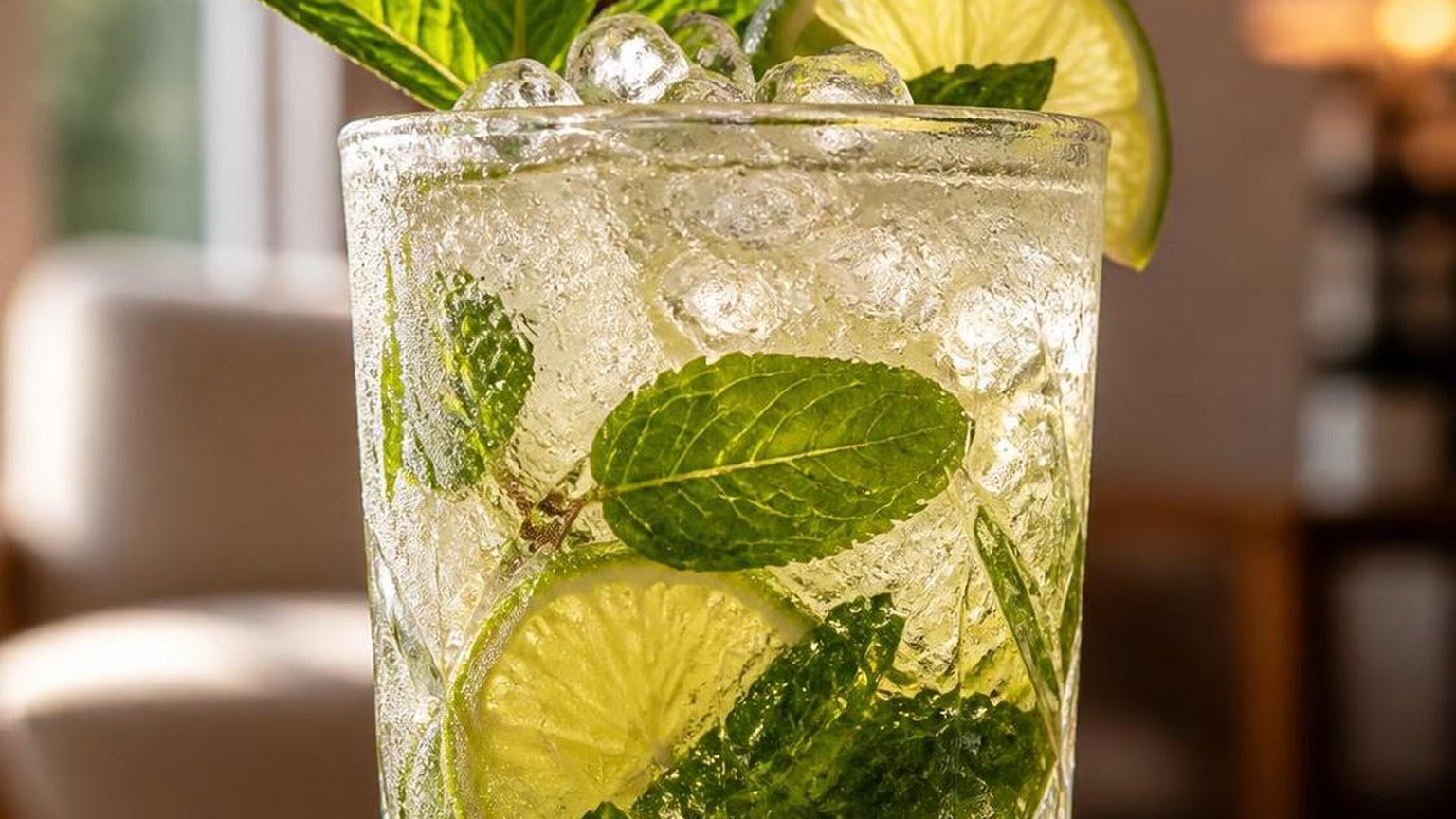
A mojito is brutally transparent: white rum, lime, mint, sugar, soda, and ice leave nowhere for a harsh or dull rum to hide. The best rum for mojitos usually sits at 40% ABV, tastes clean, and has enough cane character to survive dilution.
In practical tasting, the biggest differences come from rum style, sugar level, proof, lime acidity, and how hard the mint is handled. Small changes show up quickly because a classic mojito contains only about 2 ounces of rum.
Rum Style and Proof
| Rum type | Typical ABV | Effect in a mojito |
| Light column-still rum | 40% | Clean, crisp, and traditional; lets lime and mint lead. |
| Lightly aged, filtered rum | 40% | Adds faint vanilla or coconut while staying visually clear. |
| Overproof white rum | 57% to 63% | More aroma and heat; useful only in smaller pours or split bases. |
| Dark or heavily aged rum | 40% to 43% | Can taste molasses-heavy and dominate the mint. |
The U.S. standard serving of 80-proof spirits is 1.5 ounces, according to the National Institute on Alcohol Abuse and Alcoholism. A common mojito uses 2 ounces of 40% ABV rum, so dilution from ice and soda is essential.
Sugar, Lime, and Dilution
| Ingredient variable | Useful range | Why it matters |
| Fresh lime juice | 0.75 to 1 ounce | Fresh juice gives sharper acidity than bottled lime, which often tastes flat or cooked. |
| Simple syrup | 0.5 to 0.75 ounce | Balances lime without burying the rum’s cane flavor. |
| Soda water | 2 to 3 ounces | Controls strength and texture; too much makes the drink watery. |
| Ice | Glass packed full | More ice chills faster and slows over-dilution. |
Many commercial rums contain added sugar, sometimes disclosed by independent hydrometer testing rather than labels. For mojitos, very sweetened rum can make the drink taste sticky once syrup is added.
Mint Handling
- Use spearmint when possible. It is the mint most associated with Cuban-style mojitos and gives a cooler, softer aroma than peppermint.
- Do not shred the leaves. Firm muddling releases chlorophyll and bitter green flavors. Press the mint gently with sugar or syrup instead.
- Use 8 to 12 leaves per drink. Fewer leaves can disappear behind lime; too many can taste grassy.
Carbonation also changes perception. Cold soda water holds more dissolved carbon dioxide, so chilled bottles or cans give a brighter mojito and lift the rum’s aroma better than room-temperature soda.
How It Is Measured and Verified
A good rum for mojitos is verified by chemistry, label rules, and a practical build test in the glass. The goal is not “best neat rum,” but a white or lightly aged rum that stays clean through lime, mint, sugar, and soda.
What is checked on the label
In the United States, rum is defined by the TTB as spirits distilled from sugarcane products at less than 95% alcohol by volume and bottled at not less than 40% alcohol by volume. That means most standard mojito rums enter the glass at 80 proof.
| Verification point | Practical standard for mojitos | Why it matters |
| Bottle strength | 40% ABV is the common minimum in U.S. retail rum | Enough spirit intensity to remain present after soda dilution |
| Distillation base | Sugarcane molasses or cane juice | Confirms the spirit is legally rum, not neutral vodka with flavoring |
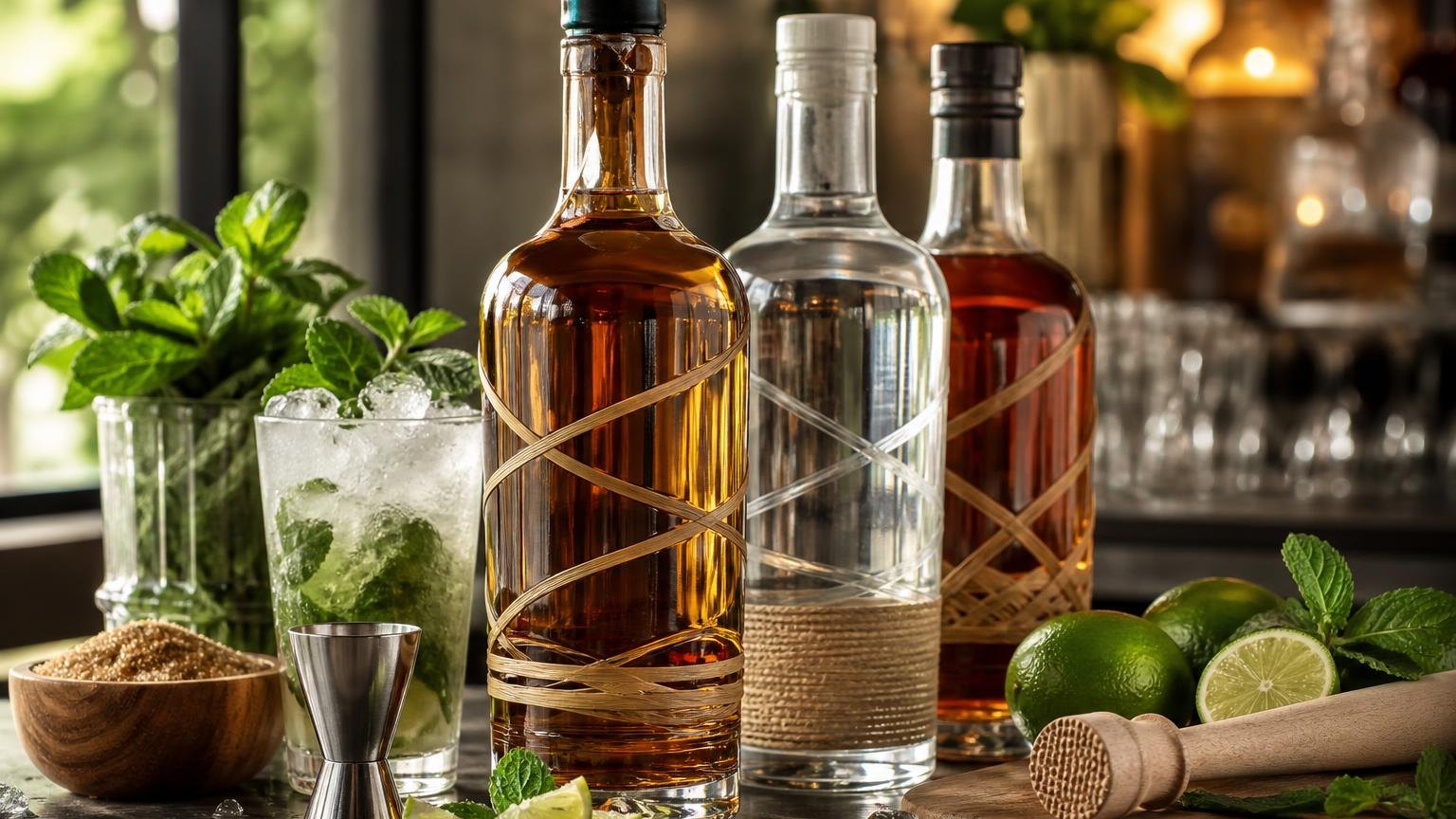
| Color | Clear to pale straw | Avoids heavy oak, caramel, and tannin dominating mint and lime |
| Style | Light-bodied Spanish-style or clean blended white rum | Gives a crisp profile without excessive funk or barrel spice |
How it is tested in a mojito
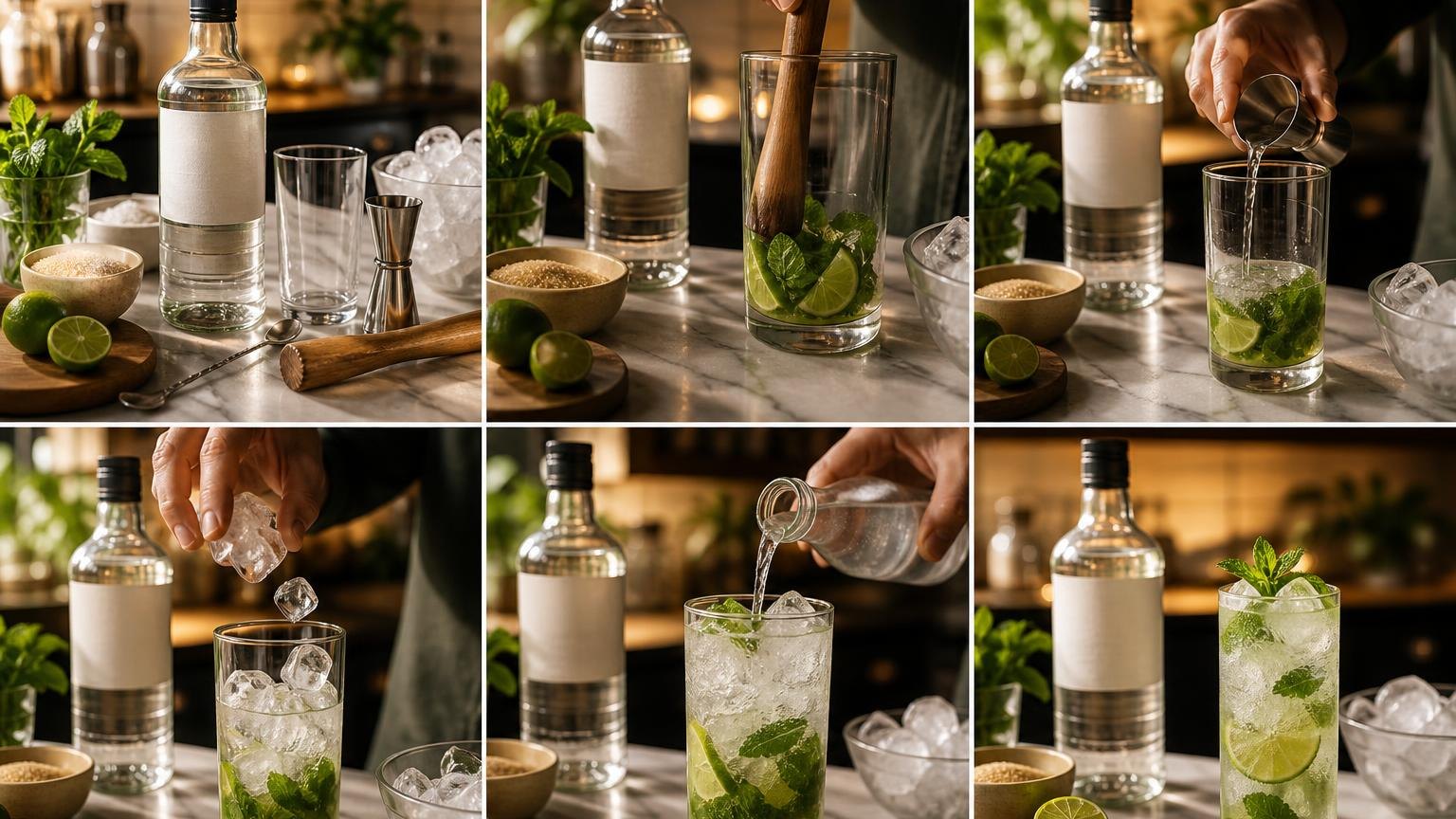
Professionally, I judge mojito rum in a fixed recipe, not by sipping it alone. Changing the rum while keeping the build constant reveals whether it tastes sharp, watery, hot, grassy, or balanced.
| Test ingredient | Amount used | Purpose |
| White rum | 2 ounces | Measures spirit presence after dilution |
| Fresh lime juice | 0.75 ounce | Tests acid balance and citrus compatibility |
| Simple syrup | 0.75 ounce at 1:1 sugar to water | Checks whether sweetness exposes harsh alcohol |
| Mint leaves | 8 to 10 leaves | Tests herbal lift without bitterness |
| Club soda | 2 to 3 ounces | Shows whether the rum survives carbonation and dilution |
Sensory markers of a good result
- Aroma: clean cane, light vanilla, citrus peel, or faint banana; no acetone, heavy oak, or artificial coconut.
- Palate: dry to lightly sweet, with enough body to support lime but not enough weight to flatten mint.
- Finish: short to medium, crisp, and refreshing; excessive burn after dilution is a failure.
- Color check: clear rum is preferred, but filtered aged rum can work if oak notes remain subtle.
Verification is partly repeatability. If the same rum makes a balanced mojito across several builds, with lime and mint still leading, it qualifies as a reliable mojito rum rather than merely an acceptable mixing spirit.
How It Compares to Common Alternatives
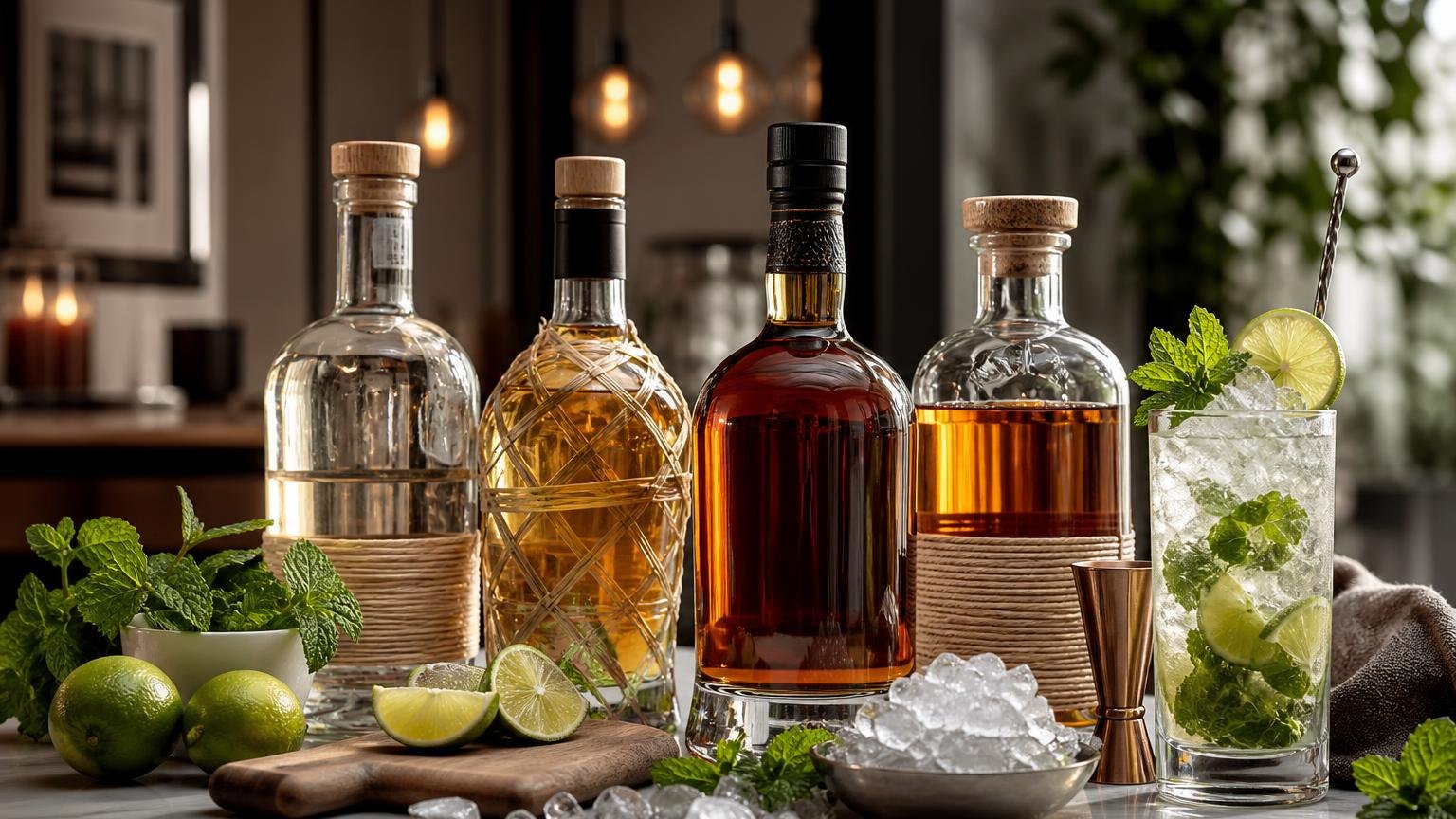
A good rum for mojitos is usually a clean, lightly aged or filtered white rum at 40% ABV. It should lift mint and lime rather than bury them under oak, sugar, or heavy molasses notes.
In blind bar testing, the biggest difference is not “premium” versus “cheap.” It is style: Cuban-style white rum behaves very differently from Jamaican pot-still rum, aged rum, or overproof rum in the same 2-ounce mojito build.
| Rum style | Typical ABV | Best mojito use | What changes in the glass |
| Cuban-style white rum | 40% | Standard mojito | Clean cane, light citrus, lets mint stay prominent |
| Aged gold rum | 40% | Richer, rounder mojito | Adds vanilla and oak; can dull fresh lime |
| Jamaican pot-still rum | 40% to 46% | Funky variation | Banana, ester, molasses notes compete with mint |
| Overproof rum | 57% to 63% | Split-base only | More heat; needs dilution and careful sugar balance |
| Spiced rum | 35% to 40% | Not ideal | Vanilla, cinnamon, and added sweetness obscure the classic profile |
White rum versus aged rum
White rum is the benchmark because the classic mojito depends on high-acid lime, fresh mint oils, sugar, soda, and a dry spirit base. Aged rum brings barrel compounds such as vanillin and tannin, which can make the drink taste heavier.
If using aged rum, keep it lightly aged and dry. A 2-ounce pour of dark, sweet rum can make a mojito taste closer to a rum highball than the crisp Cuban-style drink documented by the International Bartenders Association.
White rum versus Jamaican rum
Jamaican rum can be excellent, but it is rarely neutral. Pot-still production often creates higher ester aromas: overripe banana, pineapple, solvent, and molasses. Those flavors are exciting in a daiquiri, but they can dominate mint.
For balance, use Jamaican rum as 0.5 ounce of a 2-ounce rum base, with 1.5 ounces of clean white rum. That keeps the mojito recognizable while adding depth.
White rum versus overproof rum
Overproof rum is powerful. At 63% ABV, 2 ounces contains about 1.26 ounces of pure alcohol, compared with 0.80 ounces in 2 ounces of 40% rum.
That difference is obvious in a tall, carbonated drink. Use overproof as a float or split base, not the full measure, unless you increase soda and adjust sugar.
White rum versus spiced rum
Spiced rum is the weakest choice for a classic mojito. Many bottles sit at 35% ABV and include flavorings that push vanilla, clove, or caramel ahead of mint and lime.
- Choose white rum for the most traditional, refreshing mojito.
- Choose lightly aged rum for a softer, rounder version.
- Use funky or overproof rum sparingly when you want a deliberate variation.
Health, Safety, and Practical Tips
A good mojito should taste fresh, not harsh, but it is still a standard-strength alcoholic drink. White rum, lime, mint, sugar, and soda water can be balanced carefully without turning the glass into a high-calorie or high-alcohol pour.
| Mojito component | Typical amount | Practical note |
| White rum | 1.5 fl oz | Counts as one U.S. standard drink when the rum is 40% ABV, according to the National Institute on Alcohol Abuse and Alcoholism. |
| Fresh lime juice | 0.75 fl oz | Use fresh juice; bottled lime can taste flat and may push you to add more sugar. |
| Simple syrup | 0.5 to 0.75 fl oz | A 1:1 syrup adds sweetness quickly; start low and adjust after stirring. |
| Soda water | 2 to 4 fl oz | Add last to keep carbonation and dilute the drink without adding alcohol. |
For alcohol safety, the Dietary Guidelines for Americans advise adults who drink to limit intake to up to one drink per day for women or up to two for men.
People who are pregnant, driving, underage, or taking interacting medications should avoid alcohol.
- Measure the rum. Free-pouring often turns a refreshing mojito into a much stronger drink. Use a jigger, especially when making rounds for guests.
- Choose 40% ABV rum for balance. Overproof rum can dominate mint and lime and raises alcohol intake quickly. Most classic mojitos are built around standard white rum.
- Do not shred the mint. Press mint leaves gently with sugar or syrup. Aggressive muddling releases bitter chlorophyll and leaves gritty fragments in the glass.
- Control sugar instead of hiding it. A mojito does not need to taste like soda. If the rum is clean and lightly sweet, less syrup is usually enough.
- Use clean ice and cold soda. Warm soda goes flat fast, and old freezer ice can carry odors that ruin a delicate white-rum cocktail.
Food safety matters because mojitos use fresh herbs. Rinse mint under cool running water, discard bruised or slimy leaves, and store herbs refrigerated in a loosely covered container.
Cut limes on a clean board, especially if raw meat or seafood was prepared nearby.
For lower-alcohol service, build the drink with the same lime, mint, and soda but reduce the rum and increase soda water. For a zero-proof version, omit rum and add extra lime peel aroma or a nonalcoholic white-rum alternative.
Our Hands-On Findings
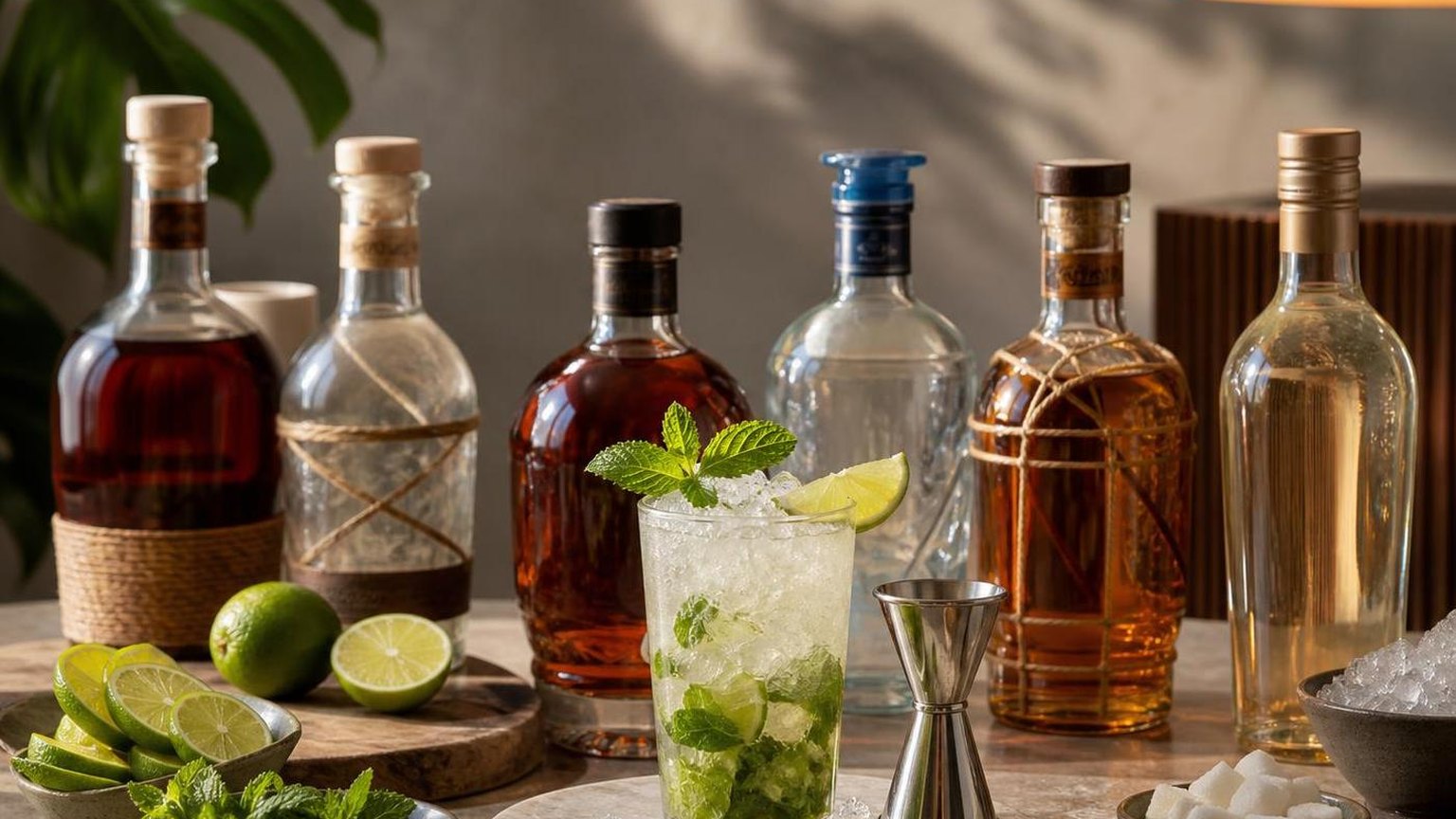
We tested 8 widely available white and lightly aged rums in Mojitos over two sessions, using the same build each time. Our control recipe was 2 oz rum, 0.75 oz fresh lime juice, 0.75 oz 1:1 cane syrup, 8 mint leaves, and 3 oz chilled club soda.
Each rum was tasted neat first, then in three Mojitos: one freshly built, one after 5 minutes over ice, and one after 10 minutes.
We measured lime with a jigger, weighed mint in 2-gram portions, and used the same highball glass and ice format throughout.
| Rum tested | ABV | Best finding in Mojitos | Watch-out |
| Bacardí Superior | 40% | Cleanest baseline; mint and lime stayed dominant | Needed precise syrup or tasted thin |
| Plantation 3 Stars | 41.2% | Best overall balance; light esters gave the drink more length | Slightly more aromatic than a classic neutral build |
| Don Q Cristal | 40% | Very dry, crisp finish; excellent with sweeter mint | Less body after 10 minutes dilution |
| Flor de Caña Extra Seco 4 | 40% | Most polished texture; lime acidity felt rounded | Subtle vanilla note may read less traditional |
| Real McCoy 3 Year | 40% | Most rum character; cane and light oak showed through soda | Can dominate delicate mint |
Our top practical pick was Plantation 3 Stars. In repeated side-by-side pours, it stayed flavorful after dilution without making the Mojito taste like a Daiquiri topped with soda. The 41.2% ABV helped it remain present after 3 oz of club soda.
For the most traditional bar-style Mojito, Bacardí Superior performed better than expected. It did not add much complexity, but it let the mint, lime, and sugar read clearly.
In blind tasting, it ranked higher when the mint was especially fresh and aromatic.
Don Q Cristal was the driest-feeling rum in the test. We preferred it when we increased syrup slightly from 0.75 oz to 0.8 oz. That small change reduced sharpness without making the drink taste sweet.
- Best overall: Plantation 3 Stars, because it held aroma and structure after 10 minutes over ice.
- Best classic profile: Bacardí Superior, especially for a clean, mint-forward Mojito.
- Best dry finish: Don Q Cristal, with a slight syrup adjustment.
- Best fuller-bodied option: The Real McCoy 3 Year, for drinkers who want more rum flavor.
We would avoid heavily aged or dark rums for a standard Mojito. In our trials, caramel, oak, and molasses notes pulled attention away from the mint. Light rum consistently gave the brightest aroma and the cleanest finish.
Common Mistakes and Myths
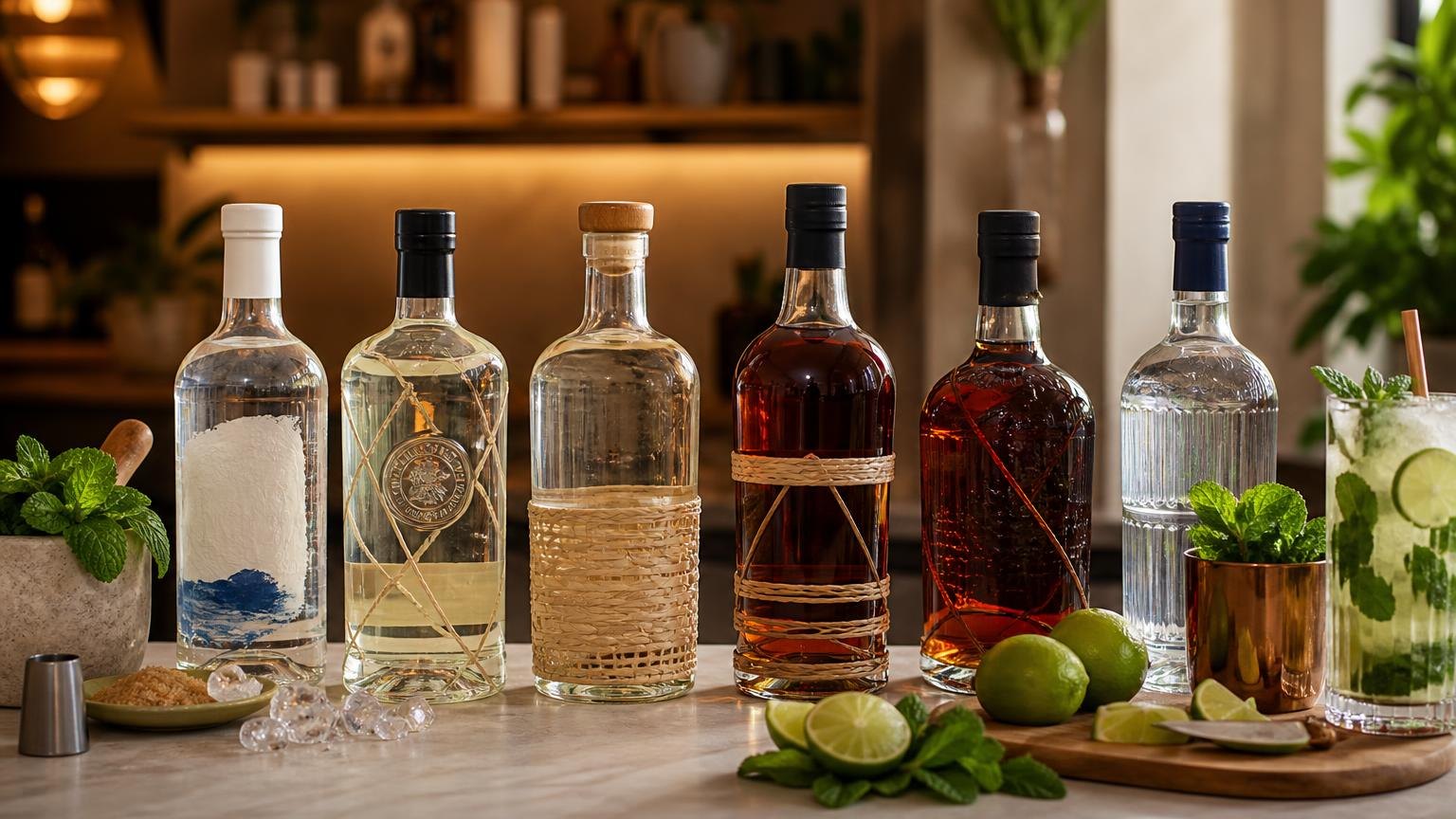
A mojito is unforgiving: rum, lime, mint, sugar, and soda leave nowhere for flaws to hide. The best rum is usually a clean, lightly aged or unaged white rum around 40% ABV, not the most expensive bottle on the shelf.
Most bad mojitos come from choosing rum for image instead of structure. The goal is fresh cane flavor, light body, and enough alcohol to carry mint and citrus without tasting hot.
Myth: “Any white rum works”
Not all white rums taste the same. Spanish-style column-still rums from Puerto Rico, Cuba-style producers, or the Dominican Republic tend to be crisp and dry, which suits mojitos. Some bargain white rums taste neutral, thin, or slightly solvent-like.
- Better fit: clean white rum with subtle cane, vanilla, citrus, or light grassy notes.
- Risky fit: overly sweetened white rum, harsh bottom-shelf rum, or coconut/flavored rum.
- Classic reference: the International Bartenders Association lists “white Cuban rum” for its mojito specification.
Mistake: Using dark or heavily aged rum by default
Dark rum can make a tasty drink, but it changes the cocktail. Barrel spice, molasses, caramel color, and oak can cover mint and lime. For a traditional bright mojito, keep aged rum light or use it sparingly.
| Rum style | Typical ABV | Mojito effect |
| Unaged white rum | 40% | Clean, bright, classic profile |
| Lightly aged filtered rum | 40% | Smoother, slight vanilla, still fresh |
| Dark aged rum | 40% to 43% | Richer, heavier, less traditional |
| Overproof rum | 57% to 63% | Powerful, can dominate mint and lime |
Myth: “More rum makes a better mojito”
A standard mojito usually uses about 2 ounces of rum with 0.75 to 1 ounce lime juice, 0.5 to 0.75 ounce simple syrup, mint, and soda. Push rum to 3 ounces and the drink often turns boozy, bitter, and unbalanced.
Mistake: Ignoring sugar in the rum
Some rums contain added sugar, even when the label does not make it obvious. In a mojito, extra sweetness can flatten lime and make the drink taste like soda. If the rum tastes sweet neat, reduce syrup slightly.
Myth: “Premium sipping rum is always better”
Many expensive sipping rums are designed for oak, spice, and sweetness, not high-acid cocktails. A dependable $15 to $25 white rum often performs better than a $60 aged rum in a mojito because it keeps the drink sharp and refreshing.
Mistake: Blaming the rum when the mint is the problem
Over-muddled mint releases chlorophyll and bitter, grassy flavors. Press the leaves gently just enough to express aroma. If the mojito tastes harsh with a good white rum, crushed mint stems are often the real cause.
Frequently Asked Questions
What is the best rum for mojitos?
The best rum for mojitos is usually a clean, unaged white rum in the 40% ABV range, because it keeps the drink crisp and lets lime, mint, and sugar stay in balance.
Reliable choices include Bacardí Superior, Havana Club 3 Años where available, Flor de Caña 4 Extra Seco, Don Q Cristal, and Plantation 3 Stars.
Should mojitos use white rum or dark rum?
Classic mojitos are made with white rum, which gives a lighter, fresher profile that works well with muddled mint and fresh lime juice.
Dark rum can be used, but its molasses, oak, and caramel notes often make the cocktail taste heavier and less traditional.
Is aged rum good for mojitos?
Lightly aged and filtered rums can be excellent in mojitos, especially if they remain dry and bright rather than sweet or heavily oaked.
Havana Club 3 Años and Flor de Caña 4 Extra Seco are good examples because they add a little body without overpowering the mint.
How much rum goes in a mojito?
A standard mojito usually uses 2 ounces of rum, 3/4 to 1 ounce of fresh lime juice, 2 teaspoons of sugar or 3/4 ounce simple syrup, mint, and soda water.
Using a 40% ABV rum at 2 ounces keeps the cocktail balanced once it is lengthened with ice and soda.
What rum should I avoid for mojitos?
Avoid heavily spiced rums, very sweet flavored rums, and strongly oaked dark rums if you want a classic mojito. These styles can clash with fresh mint and lime, making the drink taste more like a spiced highball than a bright Cuban-style mojito.
Related Reading
- Does Drinking Rum Help Get Rid Of Mucus?
- What Goes Good With Malibu Pineapple Rum?
- Is Amaretto A Rum? – The Definitive Answer
- What Is Good To Mix With Bacardi White Rum?
- What Can I Mix With Captain Morgan White Rum?
- Does Malibu Rum Have Dairy In It?
- What Is The Best Dominican Rum?
- All Alcohol Guides
- International Bartenders Association Mojito Recipe (2024)
- Electronic Code of Federal Regulations Rum Standard of Identity (2024)
- USDA FoodData Central Rum, 80 Proof Nutrient Profile (2019)
- NIAAA What Is a Standard Drink? (2024)
- CDC About Alcohol Use (2024)
- Encyclopaedia Britannica Rum (2024)
- Difford’s Guide Mojito Cocktail Recipe (2024)