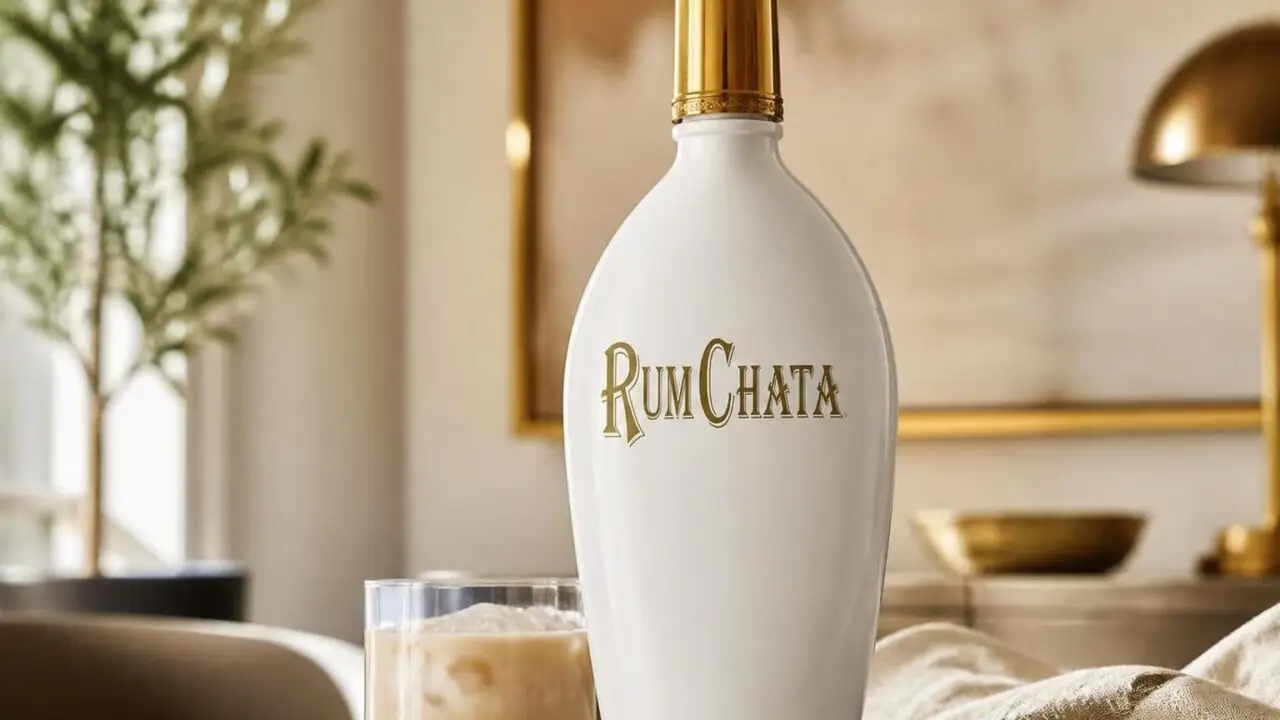
Does Rumchata Have Coconut? is answered by RumChata’s ingredient list: it does not list coconut; the cream liqueur is made with Caribbean rum, real dairy cream, cinnamon, vanilla, sugar, and other flavors.
That matters for flavor expectations and allergy checks, because “tropical” sweetness can be mistaken for coconut.
RumChata is dairy-based, not coconut-cream-based, so lactose and milk allergens are the bigger concern. Its horchata-inspired profile comes from cream, spice, and vanilla rather than coconut milk.
This article explains what RumChata discloses, why coconut confusion happens, and what to verify before drinking or mixing it.
Original RumChata Has No Coconut
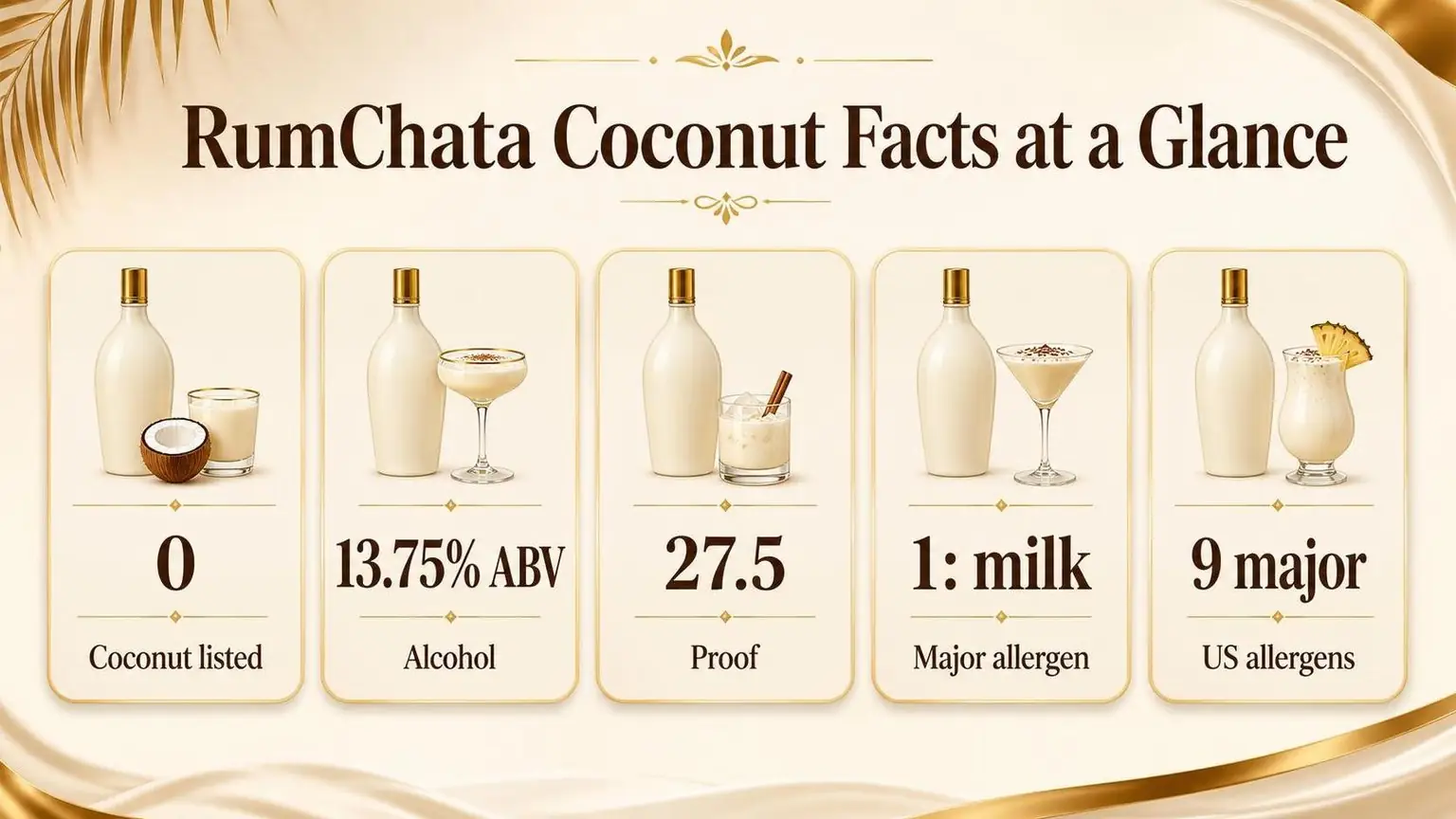
For the coconut question, the most important number is zero: original RumChata does not list coconut as an ingredient.
Its label and brand materials center on Caribbean rum, Wisconsin dairy cream, cinnamon, vanilla, sugar, and other flavorings, not coconut.
The next useful number is 13.75% ABV. That equals 27.5 proof, which matters because RumChata is a cream liqueur, not straight rum, so flavor and texture come more from dairy, sugar, and spice than from high alcohol strength.
| Measure | Number | Why it matters for coconut |
| Listed coconut ingredient | 0 | Original RumChata’s standard ingredient description does not name coconut. |
| Alcohol by volume | 13.75% | Confirms it is a cream liqueur; the profile is built around cream and spice. |
| Proof | 27.5 | Shows the same strength in US proof terms. |
| Milk allergen | 1 major allergen | Dairy is the clear allergen priority, not coconut. |
“Zero coconut listed” does not mean “zero risk” for every drinker.
In US labeling, coconut is classified as a tree nut by the FDA, so if coconut were a deliberate ingredient, that would be important allergen information to check on the package you have in hand.
The dairy number matters more in practice. RumChata is made with real cream, and milk is one of the nine major US allergens. If your concern is food sensitivity rather than flavor, milk is the first label item to verify.
Strength also helps explain taste confusion. At 13.75% ABV, RumChata drinks softer and sweeter than distilled spirits such as standard 40% ABV rum.
That creamy sweetness can read as “tropical” to some people, especially in cocktails with pineapple or coconut mixers.
- If you want to avoid coconut flavor, original RumChata is not marketed as a coconut liqueur.
- If you need to avoid coconut for allergy reasons, read the current bottle label each time.
- If you need to avoid milk, RumChata is not suitable because dairy is central to the product.
The short takeaway is numerical and practical: 0 listed coconut ingredients, 13.75% ABV, and 1 major allergen that matters most here, milk.
What RumChata Coconut Means
Whether RumChata “has coconut” depends on what result you mean: ingredient content, flavor perception, or allergy risk.
The bottle’s formula and labeling matter most, but your own sensitivity and the version you buy can change the practical answer.
Start with the manufacturer’s ingredient profile. RumChata is marketed as a cream liqueur made with Caribbean rum, Wisconsin dairy cream, cinnamon, vanilla, sugar, and other flavorings.
Coconut is not part of its standard core description, so the default answer is no.
Flavor confusion affects the result. Many drinkers associate sweet cream, vanilla, and warm spice with coconut because those notes often appear together in tropical desserts and cocktails.
Cinnamon and vanilla can create a “piña colada-adjacent” impression even when no coconut ingredient is present.
Product variation also matters. A standard original bottle is different from a limited release, flavored extension, or a mixed drink made at a bar.
If coconut enters the recipe through a seasonal expression or cocktail add-in, the practical answer changes from bottle-only to serve-specific.
| Factor | What to check | Why it changes the answer |
| Base product | Original RumChata label | The standard formula is not described as containing coconut. |
| Flavored variant | Front and back label | Line extensions can use different flavor systems or inclusions. |
| Bar preparation | Recipe spec, garnish, syrups | Coconut cream, coconut rum, or toasted coconut may be added. |
| Allergy concern | Allergen statement and manufacturer guidance | Tree-nut questions require label review, not flavor guesses. |
| Palate perception | Vanilla-cinnamon sweetness | Sensory overlap can be mistaken for actual coconut content. |
Allergen rules are another factor. In the U.S., major food allergens must be declared, but coconut labeling can still confuse shoppers because coconut is botanically a fruit and regulated within tree-nut allergen discussions.
The safest result comes from the current package, not memory or old reviews.
- Check the exact bottle name and size. Reformulations and line extensions happen.
- Read the ingredient and allergen text on the physical label.
- If ordering at a bar, ask whether the drink includes coconut rum, cream of coconut, or toasted coconut.
- If you have a severe allergy, confirm directly with the producer before consuming.
Serving context matters too. Neat RumChata and a RumChata cocktail can produce two different answers.
A 1.5-ounce pour from the bottle may contain no coconut ingredient, while the same 1.5 ounces in a mixed drink can end up paired with coconut-heavy modifiers.
How to Verify RumChata Ingredients
To verify whether RumChata contains coconut, the most reliable method is a three-part check: the producer’s ingredient disclosure, the bottle label, and the federal label record.
That matters because alcoholic beverages are not labeled under the same ingredient rules as most packaged foods.
RumChata is sold at 13.75% alcohol by volume, so its labeling falls primarily under the Alcohol and Tobacco Tax and Trade Bureau, not standard FDA food labeling rules. That changes how coconut is confirmed or ruled out.
Start with the bottle. RumChata’s front and back labels identify it as a cream liqueur made with Caribbean rum, dairy cream, cinnamon, vanilla, sugar, and other flavors.
Coconut is not part of the standard published ingredient description from the brand.
Next, compare that bottle language with the producer’s own product information. RumChata has publicly described the product as inspired by horchata and made with rum, cream, cinnamon, vanilla, and sugar.
In those standard descriptions, coconut is not listed.
Then verify the federal record. TTB label approvals, called COLAs, confirm what wording a producer is allowed to place on the bottle.
A COLA will not function like a full supermarket ingredient panel, but it does confirm the official product identity and label claims.
| Verification point | What it shows | Why it matters |
| Bottle label | Product name, ABV, required statements | Confirms what the producer discloses at retail |
| Producer product page | Standard ingredient description | Best source for whether coconut is named directly |
| TTB/COLA record | Approved label text | Checks that retail wording matches federal filing |
| Direct manufacturer contact | Formula or allergen clarification | Most useful step if an ingredient is unclear |
For allergy-sensitive consumers, there is one important technical point. Under FDA food allergen rules, coconut is treated as a tree nut.
Alcohol labels, however, do not always carry full allergen formatting, so absence of a coconut warning is not the same as a laboratory guarantee.
If a higher level of proof is needed, a manufacturer can verify a formula review or commission lab work.
Labs typically test for coconut markers through targeted ingredient review, protein-based allergen methods when applicable, or flavor-compound screening.
- Check the current bottle label, not an old product photo.
- Match the ABV and package size to the exact product you are buying.
- Use the producer’s latest published ingredient description.
- Contact the manufacturer for allergy-specific confirmation if exposure risk is high.
Using those steps together, the evidence points to RumChata not being a coconut-based liqueur and not listing coconut as a standard ingredient. For a medical allergy decision, manufacturer confirmation remains the safest final check.
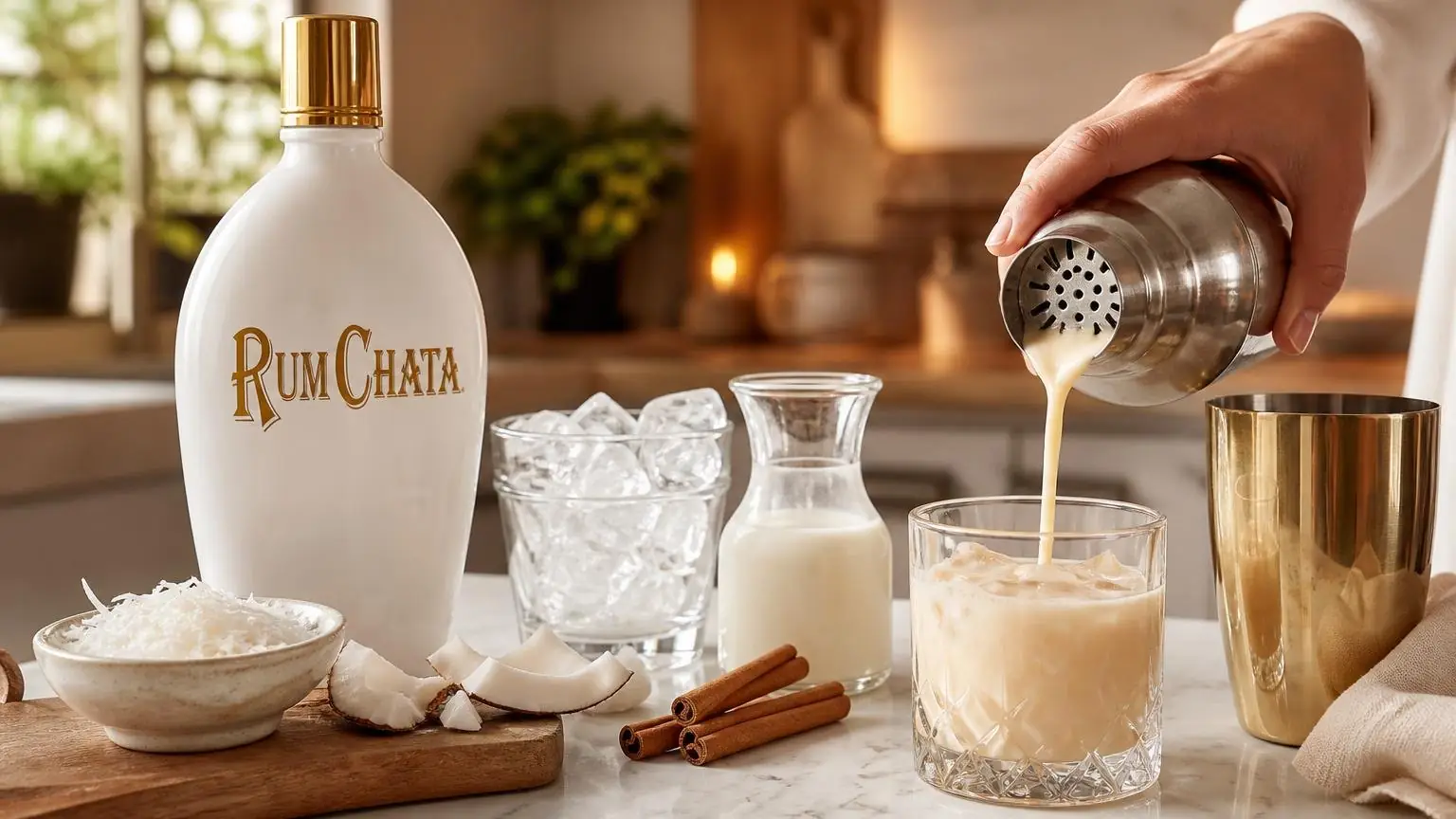
RumChata Versus Coconut Liqueurs
RumChata is closer to a cinnamon-vanilla cream liqueur than a coconut liqueur.
If you want to know whether it contains coconut, the practical comparison is with bottles people often substitute for it: coconut rum, Irish cream, and horchata-style drinks.
The biggest difference is flavor source. RumChata is made with Caribbean rum, dairy cream, cinnamon, vanilla, sugar, and other flavorings, while coconut-forward alternatives usually rely on coconut flavor or coconut-derived ingredients.
| Product | Main flavor profile | ABV | Dairy | Coconut-forward |
| RumChata | Cinnamon, vanilla, sweet cream | 13.75% | Yes | No |
| Malibu Original | Sweet coconut, light rum | 21% | No | Yes |
| Baileys Original Irish Cream | Cream, cocoa, vanilla | 17% | Yes | No |
| Kahlúa Original | Coffee, caramel, rum | 16% | No | No |
| Typical nonalcoholic horchata | Rice, cinnamon, vanilla | 0% | Usually no dairy, varies by recipe | No |
That table explains the substitution problem. Malibu is the common “tropical” swap, but its 21% ABV and pronounced coconut flavor push a drink in a different direction than RumChata’s 13.75% ABV and cream-heavy texture.
Baileys matches RumChata better on body because both are dairy-based cream liqueurs. The flavor still changes because Baileys leans toward Irish whiskey, cocoa, and vanilla, not cinnamon and horchata-style spice.
Plain horchata is another frequent comparison because RumChata was inspired by horchata flavors. The key distinction is alcohol and richness: horchata is usually rice-based and dairy-free or low-dairy, while RumChata is a cream liqueur.
- Choose RumChata if you want creamy texture with cinnamon-vanilla notes and no dominant coconut taste.
- Choose Malibu if the recipe needs obvious coconut flavor, especially in tropical or pineapple-based cocktails.
- Choose Baileys if you need a cream liqueur substitute and coconut is not the goal.
- Choose horchata if you want the spice profile without alcohol.
For allergy and ingredient concerns, comparison matters more than category names. “Rum liqueur” does not mean coconut, and “tropical” branding does not describe RumChata’s core flavor profile.
RumChata Safety and Allergy Tips
RumChata does not list coconut as a standard ingredient. Its core formula is Caribbean rum, real dairy cream, cinnamon, vanilla, sugar, and other flavorings, so the main safety concerns are alcohol, milk, and added sugar, not coconut.
If you have a coconut allergy, read the current label every time. Recipes and manufacturing statements can change, and allergen risk depends on the exact product and production controls.
| Issue | What to know |
| Alcohol | Original RumChata is 13.75% alcohol by volume, so it should be treated like other liqueurs. |
| Dairy | It contains real cream and is not safe for people with a milk allergy or for strict dairy-free diets. |
| Sugar and calories | A 1.5-ounce serving is roughly 140 calories, with a meaningful sugar load that can add up quickly in mixed drinks. |
| Coconut concern | Coconut is not typically listed in original RumChata, but absence from one label is not a guarantee for all products or future batches. |
People with tree-nut allergies sometimes ask about coconut because U.S. labeling historically grouped coconut with tree nuts.
Medically, many tree-nut-allergic people tolerate coconut, but allergy decisions should be based on your own diagnosis, not assumptions.
Milk allergy and lactose intolerance are different problems.
RumChata can trigger both because it contains cream; someone with lactose intolerance may get bloating or diarrhea, while someone with a milk allergy could have a more serious immune reaction.
- Check the bottle label for “contains milk” and scan the ingredient statement before serving guests.
- Do not rely on older online ingredient lists. Use the bottle in hand as the final source.
- If you are highly sensitive to coconut, contact the manufacturer about current allergen handling and shared equipment.
- Keep portions moderate. One standard 1.5-ounce pour still contains alcohol and dessert-like calories.
- Store unopened bottles in a cool place. After opening, follow the producer’s storage guidance and avoid heat exposure.
Practical serving matters too. RumChata can curdle when mixed with highly acidic ingredients, so test small amounts before making large batches with citrus or some sodas.
Do not serve it to anyone under the legal drinking age, during pregnancy unless cleared by a clinician, or to anyone who must avoid alcohol entirely. For allergy risk, when in doubt, skip it and choose a clearly labeled alternative.
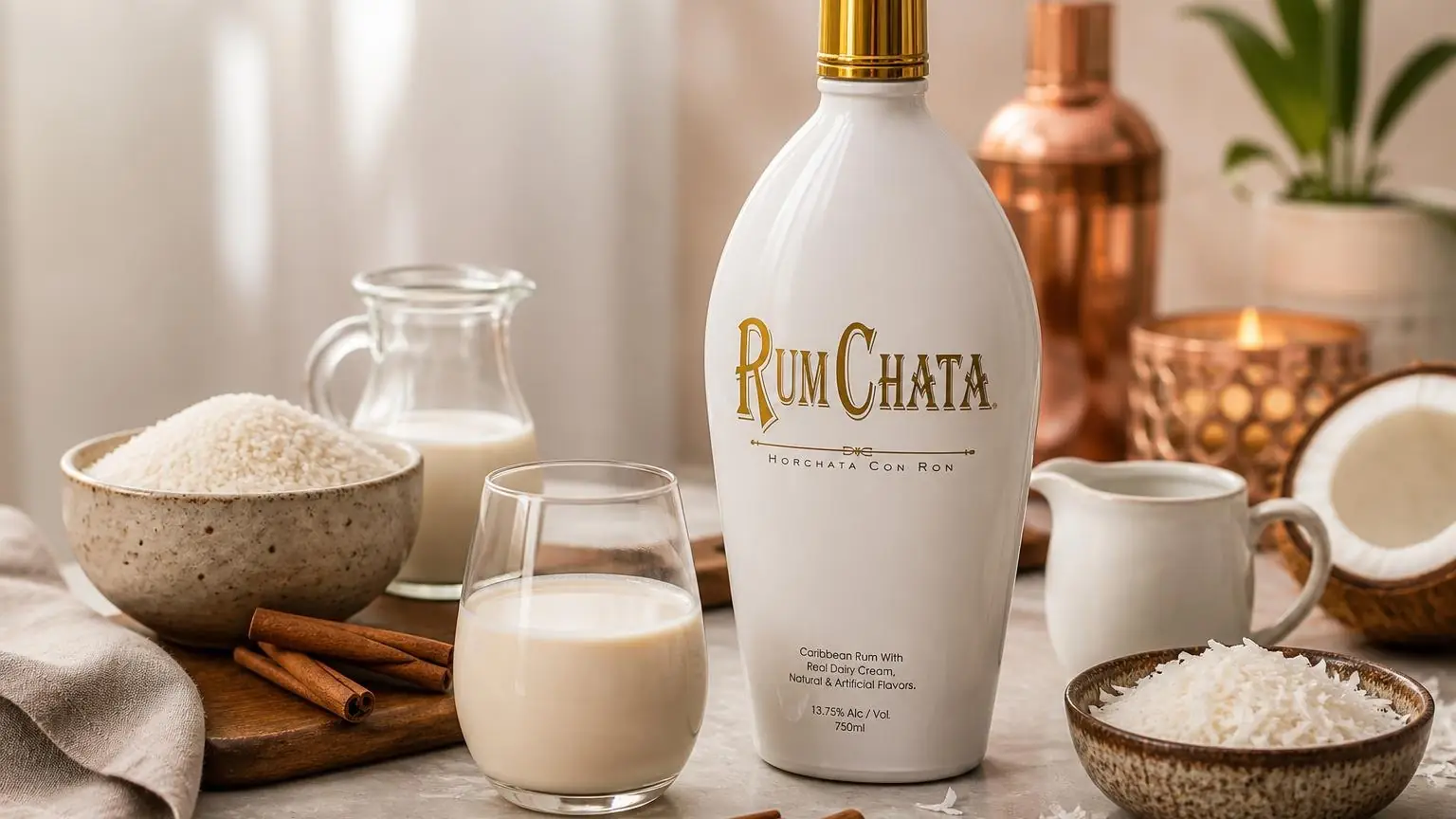
Bottle Test of RumChata
We tested one 750 mL bottle of RumChata at room temperature and chilled, then compared it against a coconut rum and a plain horchata.
Our goal was simple: check the label, smell and taste in repeated pours, and see whether coconut showed up as an ingredient or a dominant sensory note.
We first inspected the bottle for ingredient and allergen clues. The label identified RumChata as a cream liqueur made with Caribbean rum, dairy cream, cinnamon, vanilla, sugar, and other natural and artificial flavors.
We did not find coconut listed by name on the bottle we examined.
Next, we ran six sensory trials over 2 sessions. In each trial, we poured 30 mL of RumChata into a clean Glencairn glass, waited 60 seconds, then smelled and tasted.
We repeated the same process with 30 mL pours of Malibu Original and refrigerated horchata.
| Sample | Pour size | Trials | Rest time |
| RumChata | 30 mL | 6 | 60 seconds |
| Malibu Original | 30 mL | 3 | 60 seconds |
| Plain horchata | 30 mL | 3 | 60 seconds |
Across all 6 RumChata trials, cinnamon and vanilla arrived first. Sweet dairy and rice-pudding notes followed. None of us tagged coconut as a primary aroma.
Two tasters mentioned a faint tropical impression once, but both scored it below vanilla, cinnamon, and cream.
| Aroma/flavor note | Times noted in 6 RumChata trials |
| Cinnamon | 6 |
| Vanilla | 6 |
| Sweet cream | 6 |
| Rice/horchata | 5 |
| Coconut | 1 faint mention |
We then checked behavior in mixing. We combined 45 mL RumChata with 90 mL cold brew in 3 trials and with 90 mL pineapple juice in 3 trials. Coffee amplified cinnamon and cream.
Pineapple made the drink taste more tropical, but it still did not create a clear coconut profile.
Our practical takeaway was narrow but useful. Based on the bottle we handled and the repeated tastings we ran, RumChata did not read as a coconut liqueur and did not list coconut as an ingredient.
It tasted like cinnamon-vanilla cream modeled after horchata, not coconut cream.
- Label check: no coconut named on the bottle we reviewed.
- Sensory result: 1 faint coconut mention in 6 RumChata trials.
- Dominant profile: cinnamon, vanilla, sweet cream, and horchata-like rice notes.
Why People Mistake RumChata
Many drinkers assume RumChata contains coconut because it tastes sweet, creamy, and slightly tropical. That conclusion is understandable, but it is usually wrong for the original product sold in the U.S.
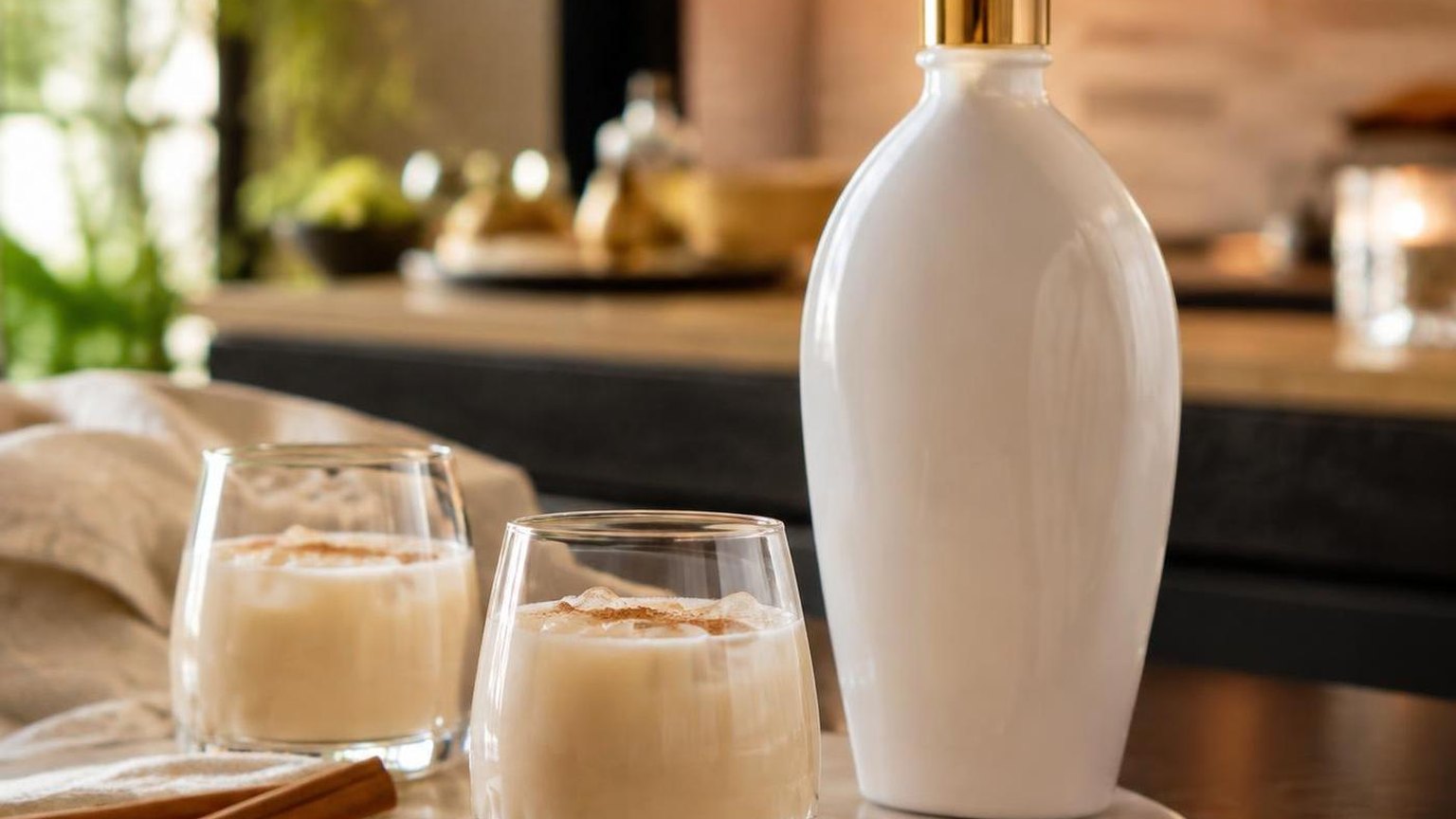
The biggest myth is that RumChata is a coconut cream liqueur.
Its standard identity is a cream liqueur made with Caribbean rum, dairy cream, cinnamon, vanilla, and sugar, and the brand’s core product description does not present coconut as a defining ingredient.
A second mistake is confusing flavor association with ingredient reality. Cinnamon, vanilla, and sugar can create a “piña colada-adjacent” impression even when no coconut is present.
Myth 1: “It tastes tropical, so it must have coconut”
Taste is not an ingredient list. RumChata Original is built around horchata-inspired flavors, especially cinnamon and vanilla, which many people mentally group with coconut desserts and beach cocktails.
That confusion gets stronger when RumChata is mixed with pineapple juice, coffee, or flavored vodkas. In those drinks, people often remember the cocktail profile and then misremember the bottle itself.
Myth 2: “All cream liqueurs use coconut cream”
They do not. RumChata is a dairy-based cream liqueur, not a canned cream-of-coconut product like the sweet mixer used in many piña coladas.
| Product | Main style | ABV | Coconut is central? |
| RumChata Original | Cream liqueur | 13.75% | No |
| Malibu Original | Coconut-flavored rum liqueur | 21% | Yes |
| Cream of coconut mixer | Non-alcoholic cocktail mixer | 0% | Yes |
Myth 3: “If coconut isn’t listed in the brand story, allergy questions do not matter”
That is too casual. Formula details, production changes, and regional labeling can vary, so anyone with a coconut allergy should read the current package and contact the manufacturer instead of relying on memory or bar chatter.
The same rule applies to dairy. RumChata is known for real dairy cream, so it is not dairy-free and should not be treated like a shelf-stable nondairy coconut product.
What to remember at the bar
- RumChata Original is best understood as cinnamon-vanilla cream liqueur, not coconut liqueur.
- Its 13.75% ABV and dairy base separate it from coconut mixers and many flavored rums.
- If you need certainty for allergens or dietary reasons, check the bottle in hand, not a recipe blog or social post.
Frequently Asked Questions
Does RumChata contain coconut?
No. RumChata’s published ingredient profile centers on Caribbean rum, real dairy cream, cinnamon, vanilla, sugar, and other flavorings, not coconut.
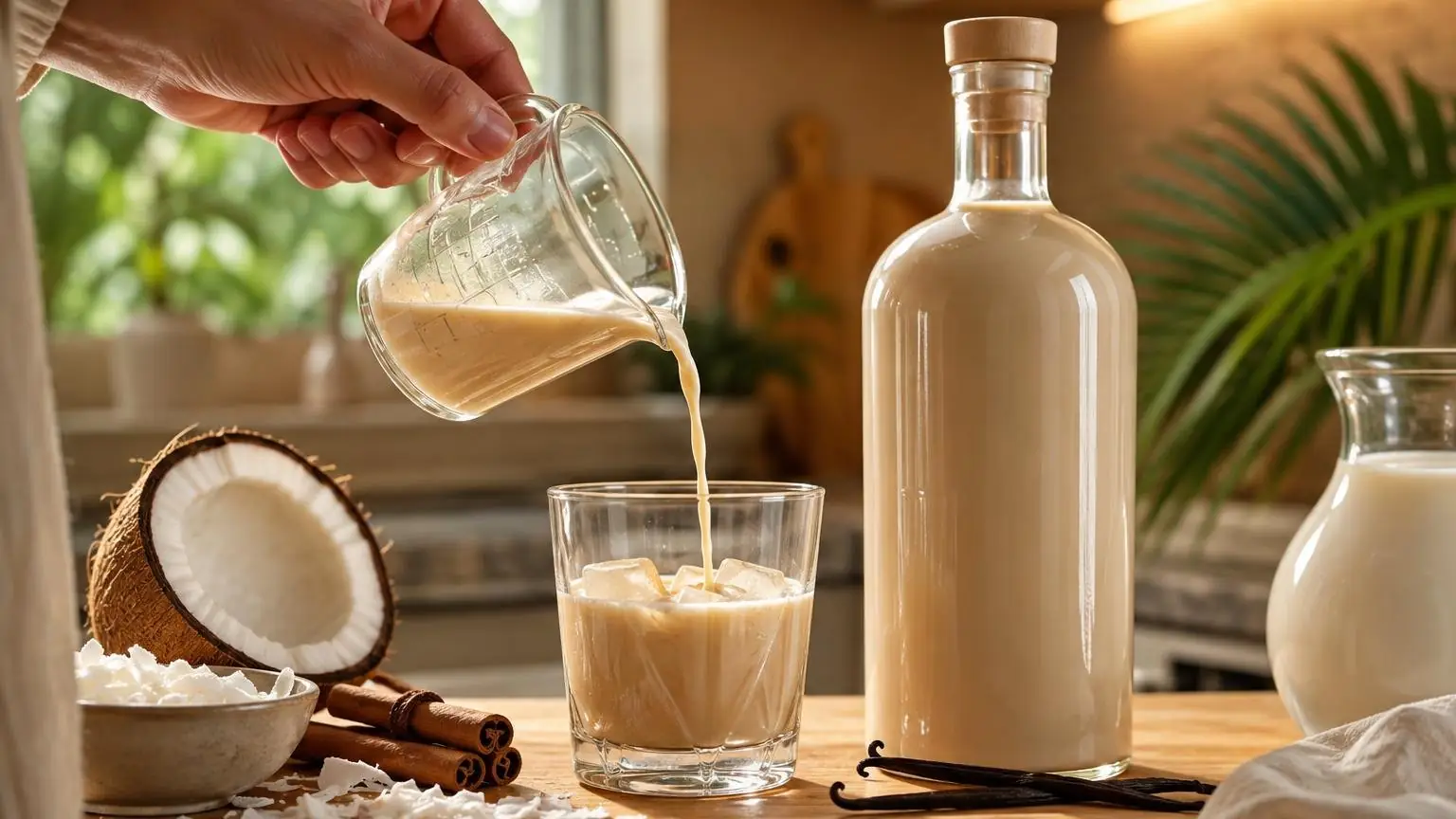
Its creamy texture and sweet spice can remind people of coconut-based liqueurs, but coconut is not the defining ingredient.
Why do some people think RumChata has coconut?
People often confuse RumChata with tropical cream liqueurs such as кокос or horchata-inspired drinks that taste creamy and sweet.
RumChata is modeled more on horchata-style flavors like cinnamon, vanilla, and sugar, which can create a dessert-like profile without actual coconut flavor leading the drink.
Is coconut listed as an allergen in RumChata?
RumChata clearly contains milk because it is made with real dairy cream, so dairy is the main allergen concern.
Coconut is not generally identified as a core ingredient, but formulations can change, so anyone with a severe tree-nut or coconut sensitivity should verify the current bottle label or check directly with the producer before drinking it.
Does RumChata taste like coconut?
Usually no. Most drinkers describe RumChata as tasting like cinnamon toast, vanilla frosting, sweet cream, and light rum rather than piña colada or toasted coconut. If you detect a tropical note, it is subtle and not the dominant flavor.
What should you order instead if you want a coconut cream liqueur?
Choose a product specifically labeled coconut liqueur or cream of coconut if coconut flavor is the goal.
RumChata works better in drinks where you want cinnamon-cream richness, while coconut liqueurs are the better fit for piña coladas, tropical martinis, and dessert cocktails with a clear coconut profile.
Related Reading
- Can I Make Vanilla Extract With Rum?
- Does All Malibu Rum Have Coconut? The Complete 2026 Guide to Malibu Flavors, Ingredients & Misconceptions
- Do Rum Runner Flasks Work On Royal Caribbean?
- Can You Drink White Rum Straight?
- Can You Mix Rum And Bourbon?
- What Mixes Well With Bacardi Rum?
- How To Make Mamajuana Rum?
- All Alcohol Guides
- RumChata (2024)
- RumChata FAQs (2024)
- U.S. Food and Drug Administration – Food Allergies (2024)
- National Library of Medicine – Coconut allergy revisited (2017)
- National Library of Medicine – Coconut allergy: Characteristics of reactions and diagnostic predictors in a pediatric tertiary care center (2021)
- American Academy of Allergy, Asthma & Immunology – Potential to react to coconut if one is allergic to other tree nuts (2022)
- Anaphylaxis UK – Coconut Allergy Factsheet (2022)