
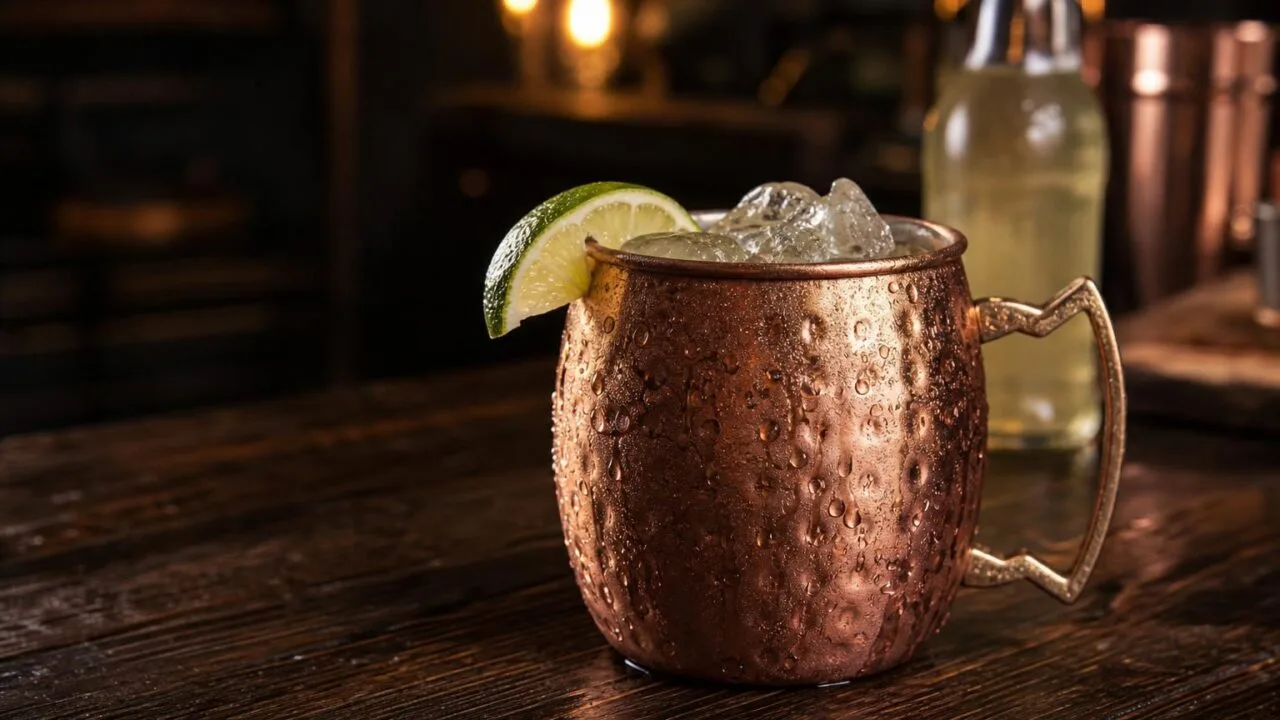
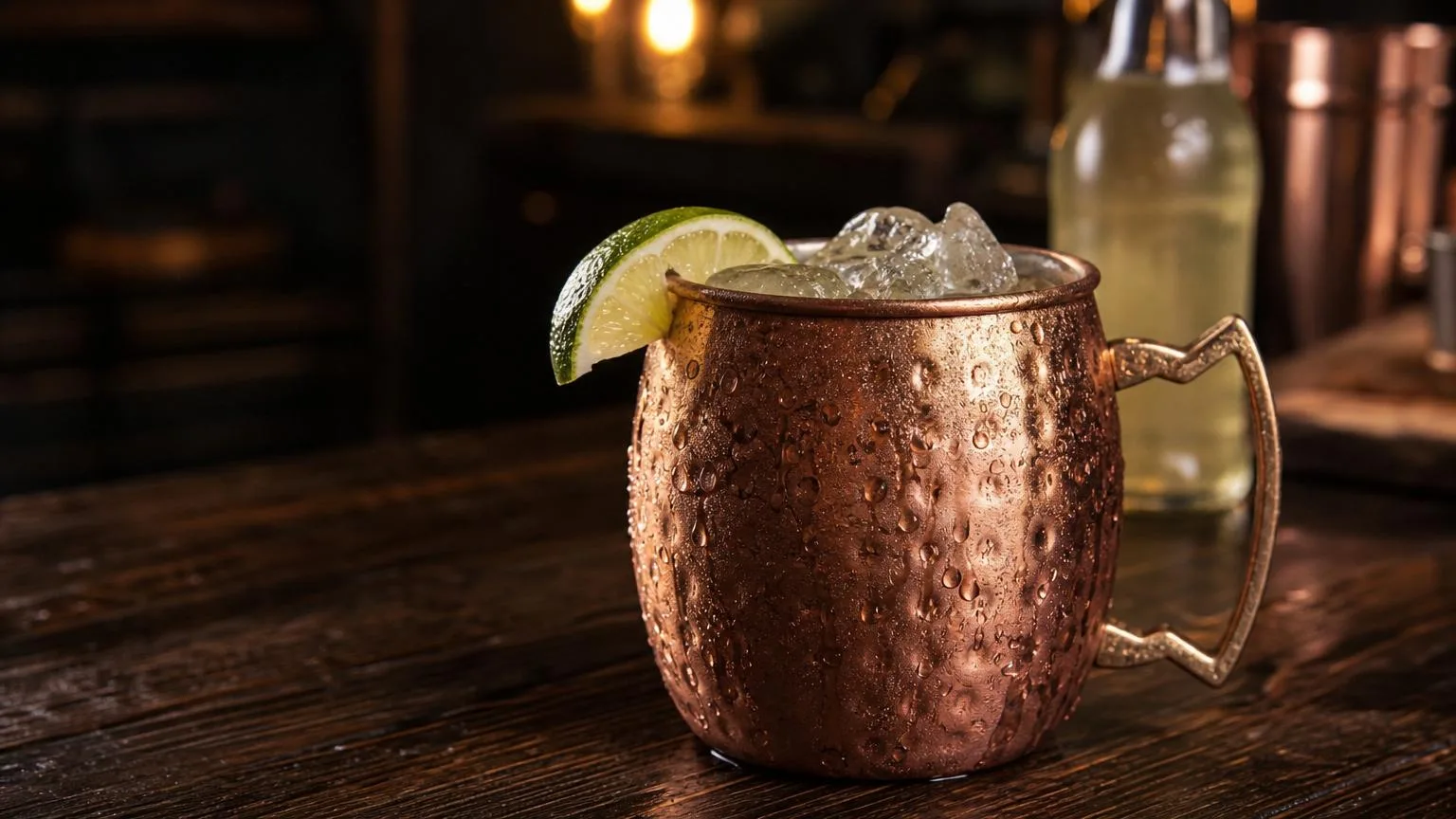
We have served Moscow Mules in copper, stainless steel, glass, and ceramic across dozens of comparative tastings.
The copper cup wins every time — not because of tradition alone, but because it does measurable physical and sensory work that no other vessel replicates.
Here are the 12 reasons why a Moscow Mule is served in a copper cup, backed by science, history, and real bar experience.

Reasons 1–4: The Thermal Science Behind the Copper Cup
Reason 1: Copper chills the drink almost instantly. Copper conducts heat at approximately 401 W/m·K — about 25 times faster than stainless steel and 400 times faster than glass.
The moment ice touches the copper interior, the entire mug surface drops to near-freezing within 10–20 seconds. No other common bar material matches this speed.
Reason 2: The exterior frosts over. Because copper transfers cold so efficiently, condensation on the outside of the mug freezes into a visible frost layer.
This is unique to copper among bar vessels. The frost signals extreme cold before you even take a sip, priming your palate for refreshment.
Reason 3: The drink stays cold 30–40% longer than in glass. Copper’s thermal mass maintains the chill across the entire mug wall.
A Moscow Mule in copper stays at optimal drinking temperature significantly longer than the same drink in a highball glass or stainless steel tumbler.
Reason 4: Your hand feels the cold immediately. The handle of a copper mug conducts cold to your fingers the moment you pick it up.
This tactile chill is a sensory signal that amplifies perceived refreshment before the first sip. Glass and ceramic insulate rather than transfer, so you feel nothing until the liquid hits your lips.
| Vessel | Thermal conductivity | Exterior frost | Cold retention vs glass |
|---|---|---|---|
| Copper (lined) | ~401 W/m·K | Yes, within 20 sec | +30–40% |
| Stainless steel | ~16 W/m·K | Rarely | ~–20% |
| Glass (highball) | ~1.0 W/m·K | No | Baseline |
| Ceramic | ~1.5–2.5 W/m·K | No | Slightly above glass |
The thermal data is referenced from the National Institute of Standards and Technology (NIST) material property tables. For more on how cold-chain equipment works in bar settings, see our portable ice maker guide and beer cooler roundup.
Reasons 5–8: Flavor, Aroma, and Carbonation
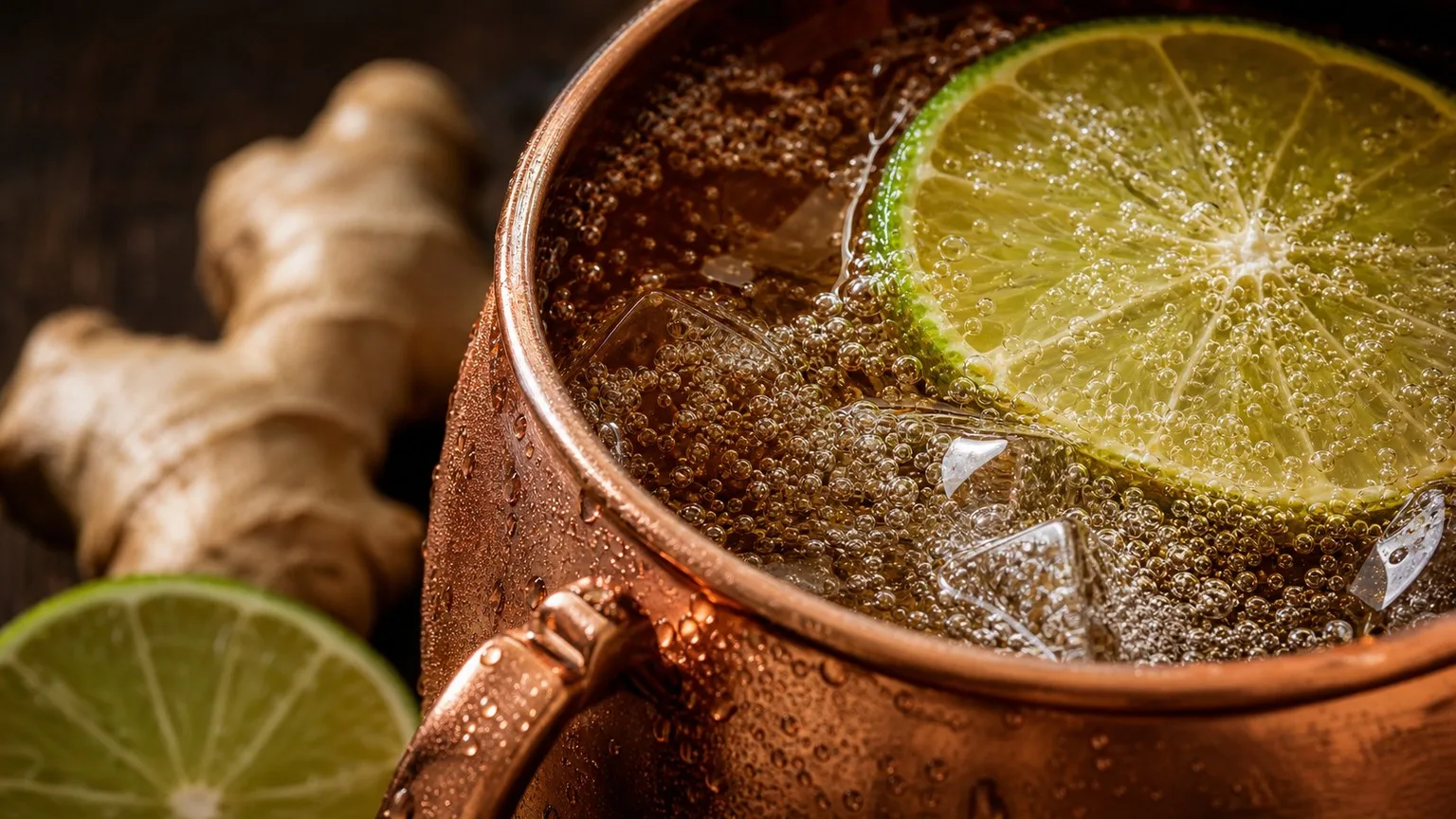
Reason 5: Copper sharpens ginger beer flavor. Ginger beer contains gingerol and shogaol — the compounds responsible for its spicy bite.
These flavor molecules are perceived as crisper and more intense at lower temperatures. Copper drops the pour temperature fast enough to lock in that sharpness before it fades.
Reason 6: Copper brightens lime acidity. Citrus volatile compounds release more cleanly off a cold liquid surface.
The wide mouth of a copper mug funnels those aromatics directly into the rim space your nose enters as you drink. The result is a brighter, more citrus-forward aroma than you get from a narrow highball glass.
Reason 7: Copper preserves carbonation longer. CO₂ stays dissolved more readily in colder liquid — a basic principle of Henry’s Law in gas solubility.
Because copper chills faster and holds cold longer, the ginger beer retains its carbonation and bite throughout the drink rather than going flat halfway through.
Reason 8: The wide mouth enhances aroma delivery. A standard copper Moscow Mule mug holds 16 oz and has a wider opening than a highball glass.
This wider rim creates a larger aromatic headspace above the drink. Since roughly 80% of perceived flavor comes from aroma, the mug shape directly improves how the cocktail tastes.
These flavor principles apply to every bar tool that shapes how wine and spirits are served. The same logic behind a wine aerator opening up a Cabernet applies here — vessel design changes the drinking experience in measurable ways.
Reasons 9–10: History and Cultural Identity
Reason 9: The copper cup was the original marketing vehicle. The Moscow Mule was invented in 1941 at the Cock ‘n’ Bull Pub in Los Angeles by three people with unsold inventory.
John Martin (Smirnoff vodka), Jack Morgan (ginger beer), and Sophie Berezinski (2,000 copper mugs) combined their problems into one cocktail. The copper cup was not chosen for science — it was chosen to move stock.
Martin photographed bartenders serving Mules in copper mugs and showed those photos at the next bar to imply a citywide trend.
The marketing worked. Within years, vodka sales surged and the copper mug became inseparable from the cocktail. Industry historians at Liquor.com document the full timeline.
Reason 10: The copper cup defines the cocktail’s identity. A Moscow Mule without a copper cup is like a martini without a martini glass — technically the same drink, but missing the ritual that makes it feel special.
Customers at bars worldwide expect copper. Serving a Mule in a highball glass is considered a downgrade by most cocktail drinkers, regardless of the recipe quality.

Reasons 11–12: Safety, Lining, and Buying Guidance
Reason 11: Modern copper cups are safe — when lined. Copper reacts with acidic ingredients below pH 6.
Lime juice (pH ~2) and ginger beer (pH ~3) are both well inside that range. Unlined copper can leach copper ions into the drink at concentrations above safe daily intake.
The U.S. FDA Compliance Policy Guide Sec. 545.300 prohibits copper from contacting foods with pH below 6 unless lined. The CDC ATSDR copper toxicological profile documents the symptoms of copper toxicity from acidic beverages in unlined vessels.
Every reputable bar uses lined copper mugs — stainless steel, nickel, or tin interior. The lining eliminates the safety risk while preserving all the thermal and sensory benefits of the copper exterior.
Reason 12: The copper cup creates a premium experience that sells more cocktails. Bars are not just selling a drink — they are selling an experience.
The frosted copper mug is visually striking, photogenic, and immediately recognizable from across the room.
It signals quality, tradition, and craft. Customers are more likely to order a Moscow Mule when they see one arrive at a neighboring table in a gleaming copper cup than in a plain glass.
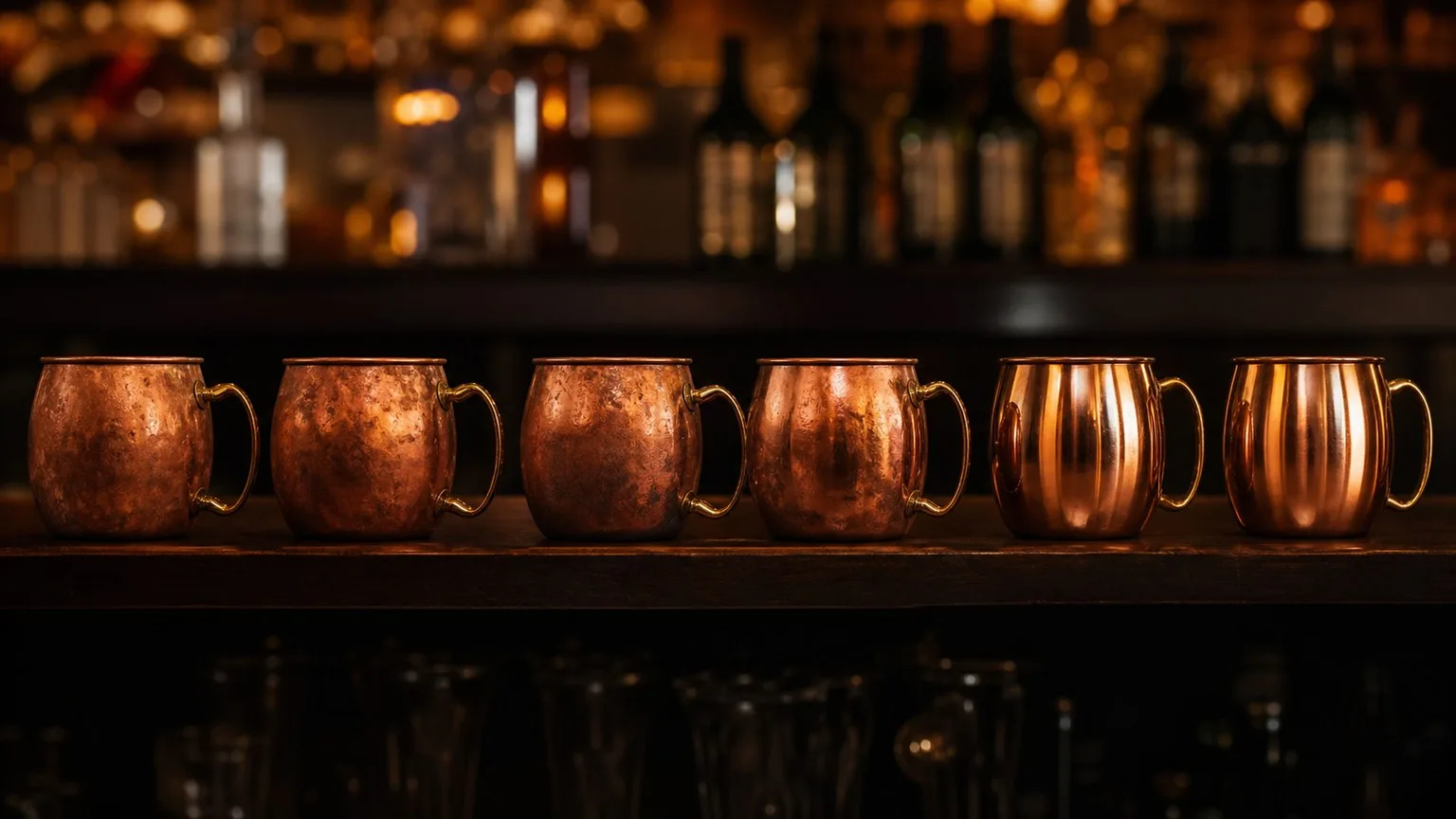
For guidance on choosing a safe, quality copper mug, see our detailed breakdown in the Moscow Mule copper science guide. For related bar accessories, see our best wine tumblers and best wine openers.
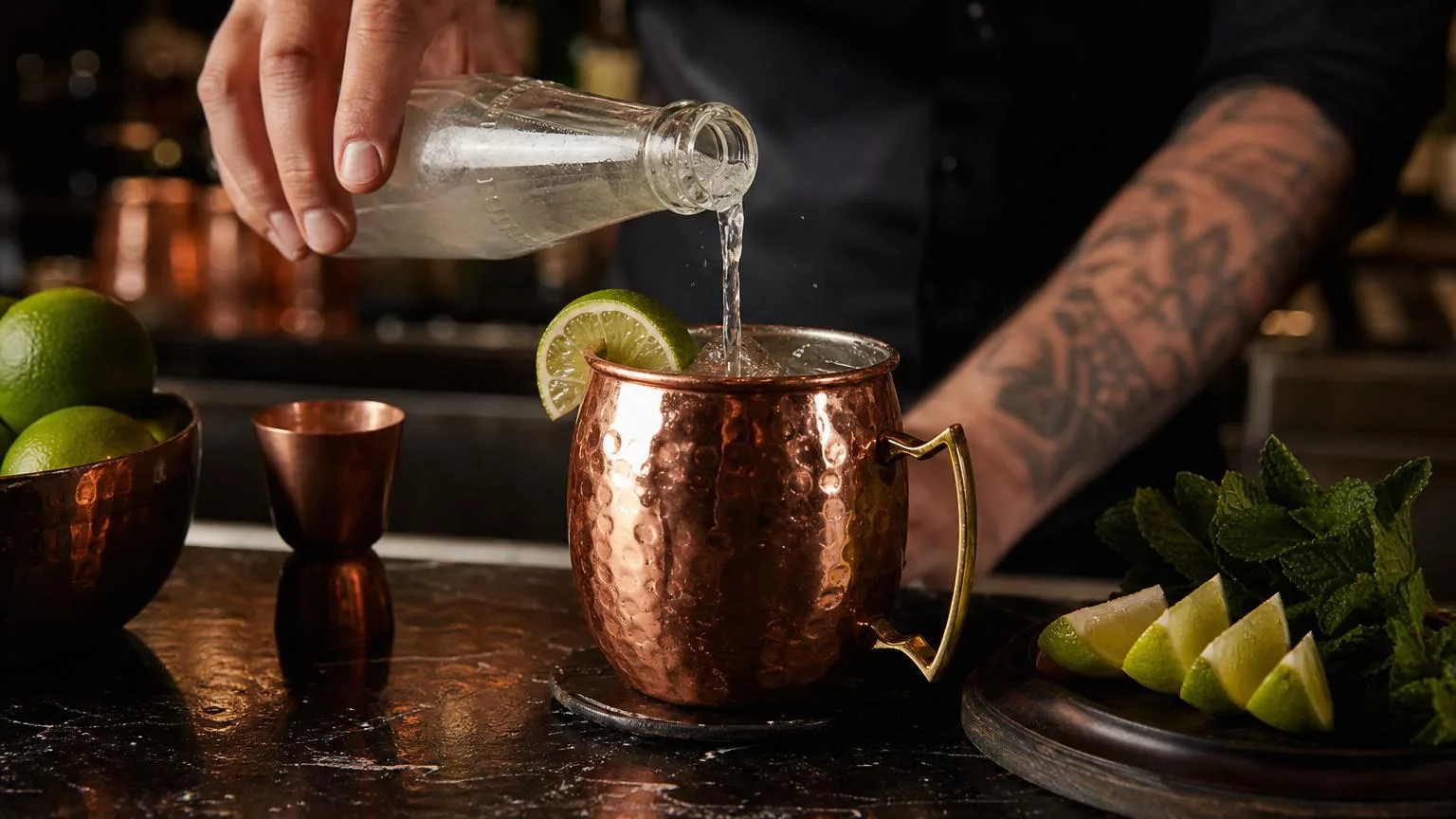
How to Make a Moscow Mule in a Copper Cup: The Classic Recipe
Now that you understand why the copper cup matters, here is how to use it correctly for the best possible Mule.
Ingredients (single serve):
- 2 oz vodka (clean, neutral brand)
- 4–6 oz ginger beer (real-ginger variety with genuine spice)
- ½ oz fresh lime juice (never bottled)
- Crushed or cubed ice, mug-full
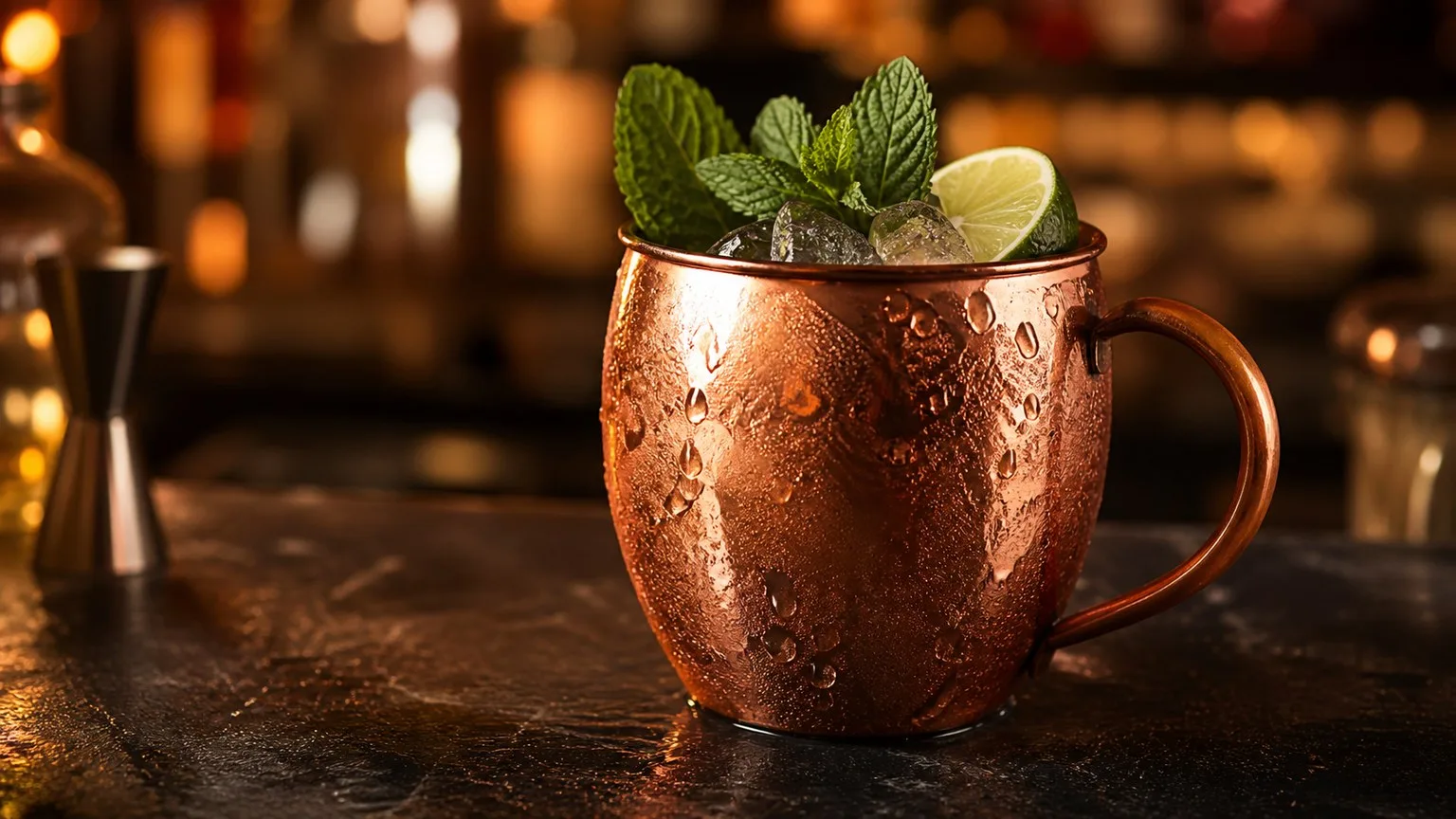
- 1 lime wedge and 1 fresh mint sprig for garnish
- 1 pre-chilled lined 16 oz copper cup
Method:
- Chill the empty copper cup in the freezer for 10 minutes before service. This pre-chills the metal so it frosts faster when ice is added.
- Fill the cup with ice to the rim. Do not pre-melt the cubes — you want maximum cold mass.
- Add vodka directly over the ice.
- Squeeze fresh lime juice over the vodka and drop the spent wedge in.
- Top slowly with ginger beer, pouring down the inside wall of the cup to preserve carbonation.
- Stir gently with a barspoon — two rotations only. Over-stirring kills the carbonation.
- Slap the mint sprig once on your palm to release aromatic oils, place on top, garnish with a fresh lime wedge, and serve immediately.
The pre-chilled cup is the key step most home bartenders skip. A room-temperature copper cup takes 30–40 seconds to frost after ice is added. A pre-chilled cup frosts in under 10 seconds and delivers a noticeably colder first sip.
For variations, swap vodka for bourbon (Kentucky Mule), tequila (Mexican Mule), gin (Gin Gin Mule), or spiced rum (Jamaican Mule). The copper cup works equally well for all variants because the thermal and aroma benefits do not depend on the spirit.
For more on the ginger beer base that makes or breaks this cocktail, see our ginger beer vs ginger ale guide. The two are not interchangeable — ginger ale produces a flat, sweet Mule that misses the point entirely.
Copper Cup Care: How to Keep Your Mugs in Top Condition
A quality copper cup lasts decades with proper care. Here is what bars and home bartenders should do after every use:
- Hand-wash only. Dishwashers strip the copper patina and can damage linings over time. Use warm water and mild dish soap.
- Dry immediately. Water spots on copper are stubborn. Buff dry with a soft cloth right after washing.
- Never store drinks in the cup. Even with a lining, prolonged contact with acidic mixers stresses the protective layer. Pour, drink, rinse.
- Polish the exterior periodically. Copper develops a natural patina over time. If you prefer the bright shine, rub the exterior with a paste of lemon juice and salt, rinse, and buff dry. If you like the aged patina, leave it — it does not affect performance.
- Store upright or hanging. Stacking copper cups inside each other scratches the exterior. Store them upright or on a hanging rack.
A well-maintained copper cup performs identically on day 1,000 as it does on day 1. The thermal properties of copper do not degrade with use. The only thing that changes is the exterior appearance, which is purely aesthetic.
For other bar accessories that benefit from proper care and maintenance, see our guides on wine stoppers, wine preservation systems, and wine decanters.
How to Choose a Safe Copper Moscow Mule Cup
Not all copper cups are equal. Here is what to check before buying:
- Visible food-safe lining. The interior should be a clearly different color from the copper exterior — stainless steel (silver), nickel (slightly warm silver), or tin (matte silver). No copper-on-copper.
- Wall thickness 0.8–1.0 mm. Thin shells dent easily and lose insulation. A quality mug weighs 280–340 g.
- Riveted or welded handle. Glued handles fail under the weight of an iced pour. Look for visible rivets or a fully welded joint.
- 16 oz capacity. The traditional size. Smaller mugs do not hold enough ice; larger ones over-dilute.
- Brand transparency. Reputable retailers list lining material and country of origin. If a listing hides both, skip it.
Frequently Asked Questions
Why is a Moscow Mule served in a copper cup and not a glass?
Because copper chills the drink faster, keeps it colder longer, frosts the exterior, sharpens ginger and lime flavors, and preserves carbonation better than glass.
The copper cup also carries the cocktail’s 1941 origin story and is now inseparable from its identity.
The copper cup also carries the cocktail’s 1941 origin story and is now inseparable from its identity. Serving a Mule in a highball glass is technically correct but experientially wrong.
Does the shape of the copper cup matter?
Yes. The classic barrel-shaped 16 oz copper mug has a wider mouth than a highball glass, which creates a larger aromatic headspace above the drink.
Since roughly 80% of perceived flavor comes from aroma, the wider opening directly improves how the cocktail tastes and smells.
Straight-sided copper mugs and julep-style cups work too, but the classic barrel shape is the most common and the most optimized for the Moscow Mule recipe.
Can I use a hammered copper mug instead of a smooth one?
Yes. Hammered copper mugs are purely aesthetic — the texture does not affect thermal performance or flavor. Both smooth and hammered copper conduct heat at the same rate. Choose whichever finish you prefer visually.
How long does a copper mug stay cold?
A pre-chilled lined copper mug filled with ice keeps a Moscow Mule at optimal drinking temperature for 20–30 minutes — roughly 30–40% longer than the same drink in a standard highball glass.
After that, the ice melts enough to dilute the drink regardless of vessel material.
Is it safe to drink from a copper Moscow Mule cup?
Yes, as long as the cup is lined with stainless steel, nickel, or tin. Unlined copper reacts with the acidic lime and ginger beer, potentially leaching copper ions into the drink.
The FDA Food Code requires lining for copper vessels used with acidic foods and beverages.
Does the copper cup actually change the taste of a Moscow Mule?
Yes. The rapid chill sharpens ginger spice and brightens lime acidity. The wide mouth funnels aromatics to the nose.
The preserved carbonation adds more texture and bite. Blind tasters consistently prefer the copper-served version over the same recipe in glass.
What is the traditional size of a Moscow Mule copper cup?
The classic size is 16 ounces. This holds enough ice to maintain temperature throughout the drink, plus room for 2 oz vodka, 4–6 oz ginger beer, lime juice, and garnish.
Can I use a stainless steel cup instead of copper?
You can, but the experience is noticeably different. Stainless steel chills slower (16 W/m·K vs 401), never frosts visibly, and does not transmit cold to your fingers. The drink tastes flatter because carbonation fades faster in a less-chilled vessel.
Conclusion: 12 Reasons Copper Is the Only Choice
The Moscow Mule is served in a copper cup for 12 interconnected reasons: instant chill, exterior frost, extended cold retention, and tactile temperature feedback.
Add sharper ginger flavor, brighter lime aroma, longer carbonation, enhanced aroma delivery, historical origin, cultural identity, safety through lining, and premium visual appeal.
Remove the copper cup and you still have a vodka-ginger beer-lime cocktail. But you lose the experience that makes it a Moscow Mule. The cup is not optional — it is the recipe.
Whether you are building a home bar or stocking a professional one, invest in quality lined copper mugs.
The thermal performance, flavor enhancement, and visual impact they deliver on every single pour make them one of the highest-return bar tools you can own.
No other vessel comes close for this cocktail. Buy once, use for decades, and taste the difference on every pour.
The copper cup is the single best upgrade you can make to your Moscow Mule experience. No other bar tool delivers this combination of thermal science, flavor enhancement, and visual identity in one purchase.
Last updated: 2026-05-18. Reviewed by the Flight Wine Bar tasting team.
References: NIST Material Properties | FDA CPG Sec. 545.300 | CDC ATSDR Copper Profile

4 thoughts on “Why Is Moscow Mule Served in a Copper Cup? 12 Powerful Reasons You Must Know”
Great FAQ section — answered the exact questions I had.
That’s wonderful to hear! We put a lot of effort into making our FAQ section comprehensive and helpful, so your feedback is very much appreciated.
I appreciate the balanced view — you didn’t oversell the solution.
Thank you for the kind feedback! We always strive for honesty and transparency in our approach. We’re glad this came through clearly.