
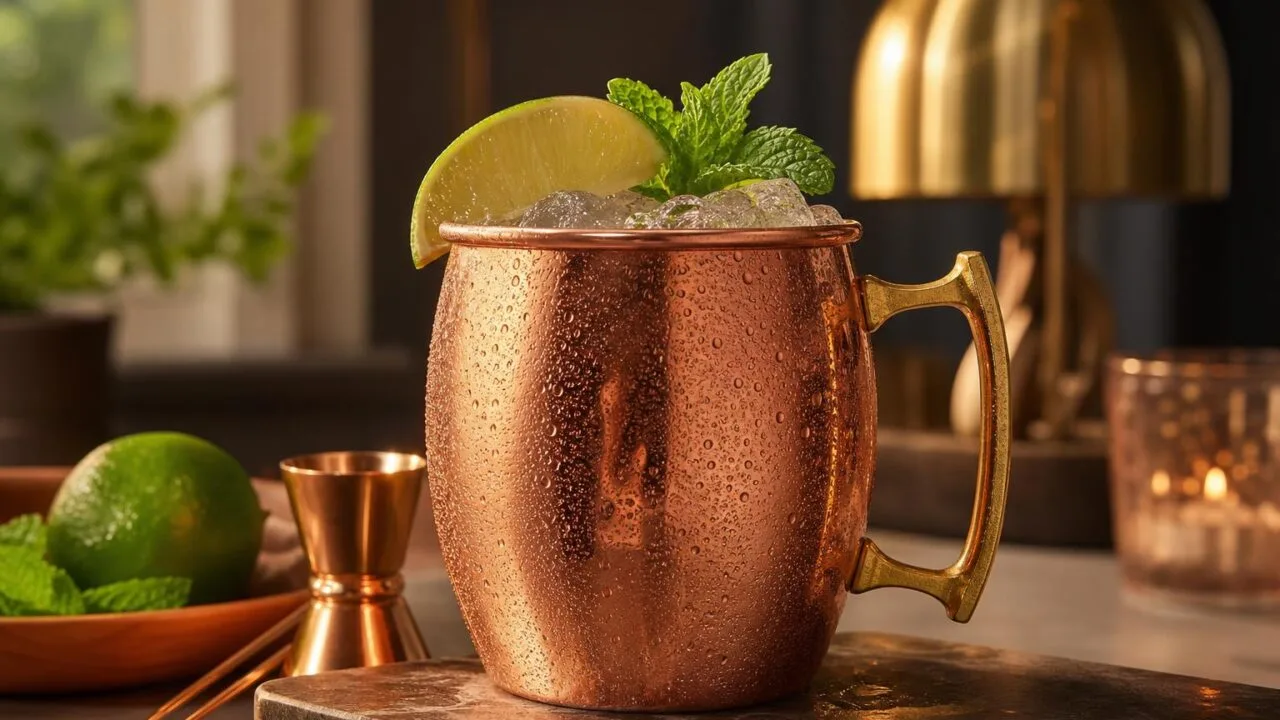
Why Are Moscow Mules Served In Copper is answered by the mug’s fast heat transfer: copper pulls warmth from your hand and drink surface, making vodka, ginger beer, and lime feel colder faster than glass.
The tradition also comes from 1940s American bar marketing, when copper mugs helped make the Moscow Mule visually distinctive.
Today, the mug is mostly about sensory impact—icy touch, bright presentation, and stronger perceived refreshment—provided the interior is lined with stainless steel, nickel.
Or another food-safe material to prevent copper leaching into acidic lime juice.
How Copper Mugs Change Sensation
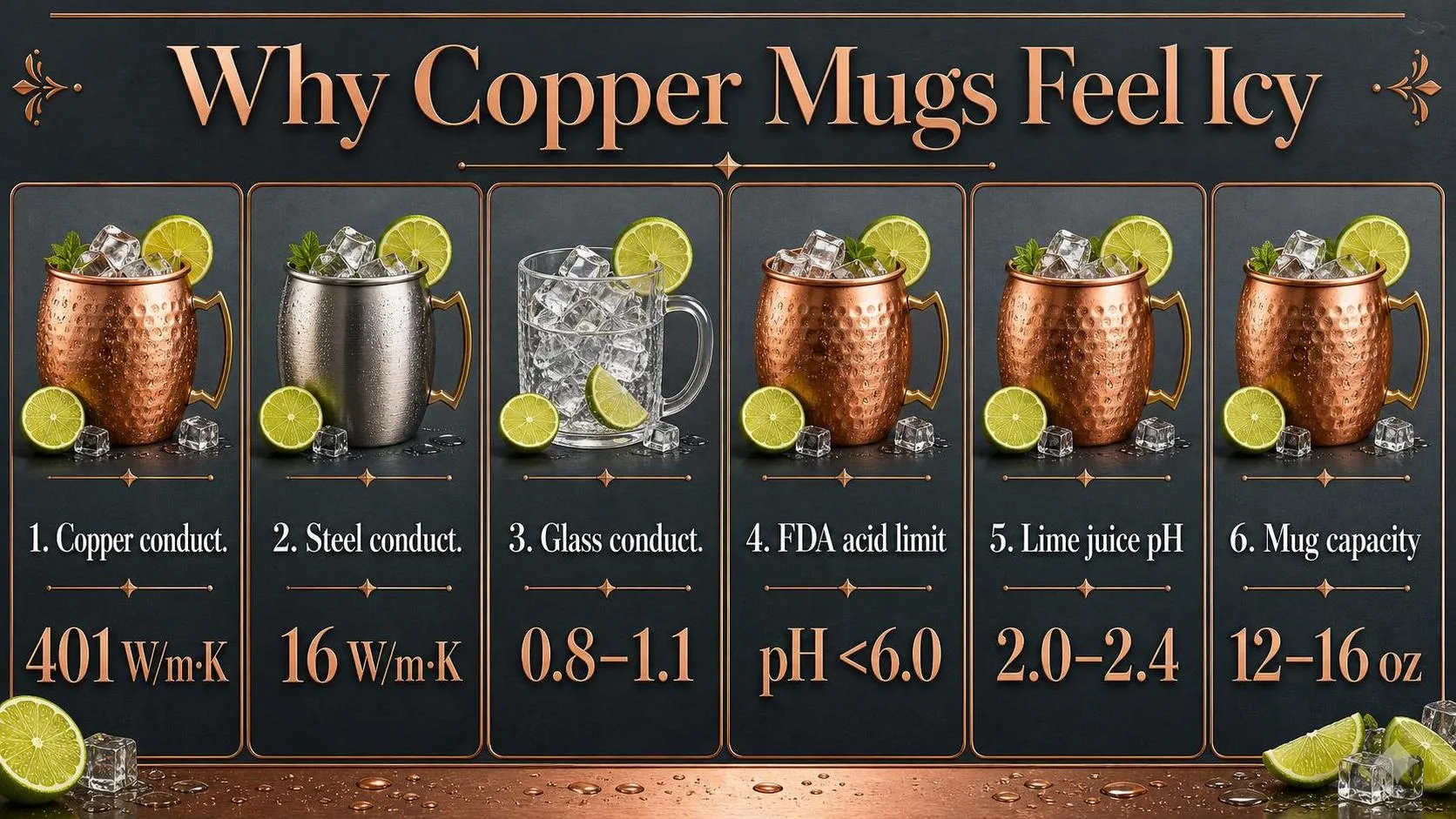
The copper mug is not just a visual tradition; it changes how cold the drink feels in your hand and on your lips. The important numbers are thermal conductivity, drink acidity, mug size, and copper-safety limits.
A Moscow Mule is typically built over ice with vodka, lime juice, and ginger beer, so temperature and acidity both matter. Copper excels at the first part, but the second part is why lined mugs are now the safer standard.
| Number | What it means | Why it matters |
| 401 W/m·K | Approximate thermal conductivity of copper at room temperature | Copper transfers cold from the ice to the mug wall extremely fast, making the drink feel colder immediately. |
| 16 W/m·K | Approximate thermal conductivity of stainless steel | Stainless-lined mugs are safer for acidic drinks but do not conduct heat nearly as quickly as pure copper. |
| 0.8–1.1 W/m·K | Typical thermal conductivity range for soda-lime glass | Glass insulates far more than copper, so the “icy” hand-feel is much weaker. |
| pH below 6.0 | FDA Food Code threshold for acidic foods in contact with copper | The FDA Food Code, section 4-101.14, restricts copper contact with foods and drinks below pH 6.0. |
| pH about 2.0–2.4 | Typical range for fresh lime juice | Lime juice is strongly acidic, which can dissolve copper from an unlined mug. |
| 12–16 oz | Common Moscow Mule mug capacity | This size fits ice, 2 oz vodka, lime juice, and ginger beer without overcrowding. |
The standout number is copper’s 401 W/m·K conductivity. That is roughly 25 times higher than stainless steel and hundreds of times higher than glass, which explains the fast chill and frosty exterior associated with a proper Mule.
The classic formula also helps explain the mug size. A standard build uses 2 oz vodka, about 0.5 oz fresh lime juice, and roughly 4–6 oz ginger beer, then ice. A 12–16 oz mug leaves enough headspace for stirring and garnish.
- Cold sensation: copper rapidly pulls heat from your hand and lips, so the mug feels colder than the liquid alone.
- Aroma lift: the wide mug opening helps lime, ginger, and mint aromatics reach the nose more readily than a narrow glass.
- Safety issue: lime and ginger beer are acidic, so unlined copper can leach into the drink.
For home and bar service, the practical answer is simple: use a copper mug lined with stainless steel, nickel, or another food-safe material. You keep the traditional look and chilled feel while avoiding direct copper contact with a low-pH cocktail.
Why the Copper Mug Effect Happens
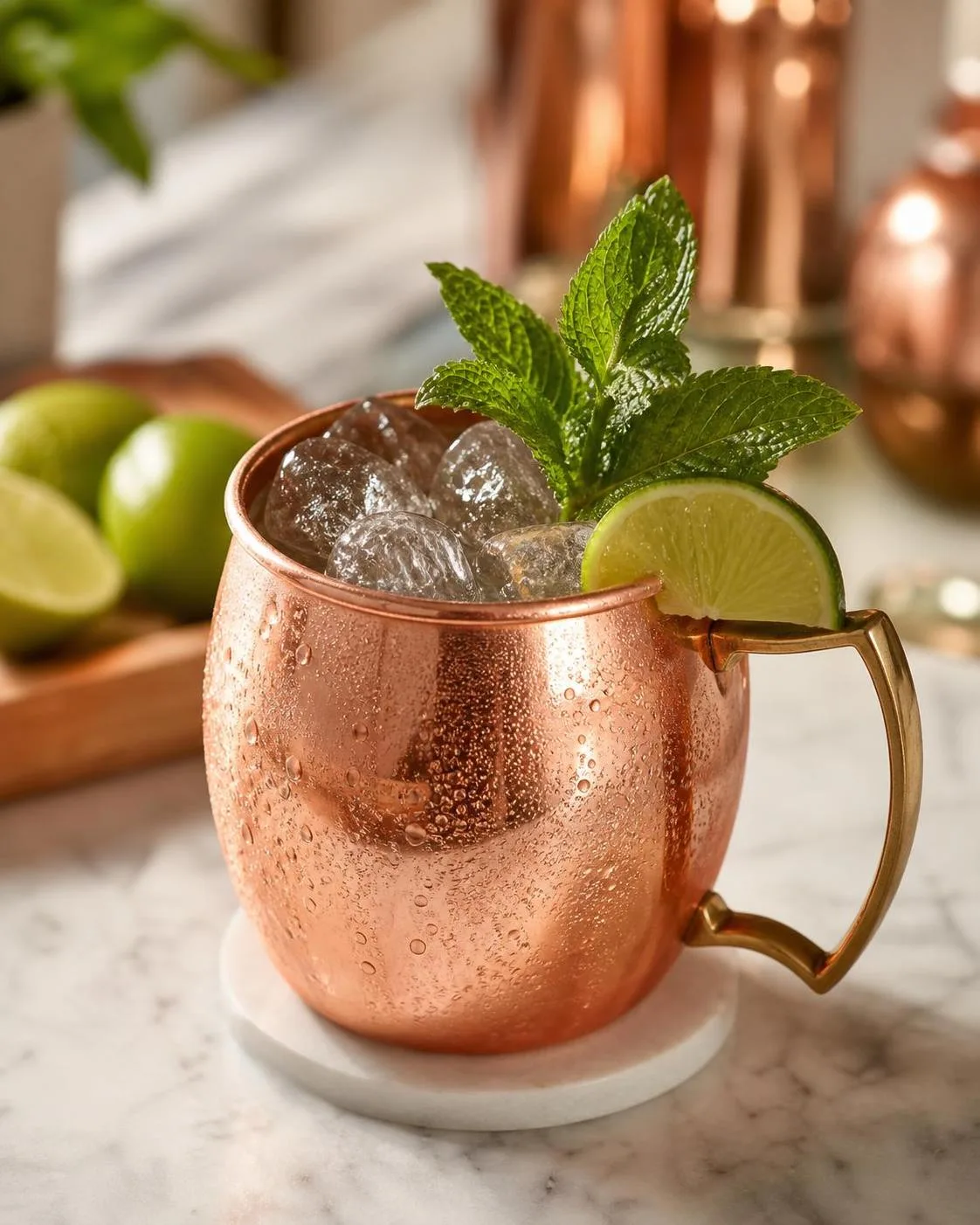
The “copper mug effect” is mostly about temperature, touch, and aroma, not a chemical improvement to vodka, ginger beer, or lime.
The result changes depending on the mug’s construction, how cold the drink is built, and whether the copper is food-safe.
Copper feels colder faster because it conducts heat extremely well. When your lips and hand touch the mug, heat moves away from your skin quickly, making the drink seem colder than the same Moscow Mule in glass.
| Material | Approx. thermal conductivity | Practical effect |
| Copper | about 400 W/m·K | Rapidly feels cold to the hand and lips |
| Stainless steel | about 16 W/m·K | Slower cold sensation than copper |
| Soda-lime glass | about 1 W/m·K | Insulates more; feels less sharply cold |
The ice program matters as much as the cup. A standard Moscow Mule is often built over ice in a 12–16 ounce mug. More ice means faster chilling and slower dilution because the drink reaches serving temperature sooner.
- Fresh, hard ice: Large cubes melt slower than wet, hollow, or freezer-burned ice.
- Pre-chilled mug: A cold mug reduces the first temperature spike after ginger beer is poured.
- Ginger beer temperature: Canned or bottled ginger beer from a 34–40°F refrigerator gives a noticeably sharper result than room-temperature mixer.
- Build order: Adding vodka and lime first, then ice, then cold ginger beer helps preserve carbonation.
Mug design also changes the experience. Thin copper walls transmit cold quickly, while heavy mugs stay cold longer once chilled. A handle reduces hand warming, which helps maintain the drink’s temperature during slow sipping.
| Feature | Effect in the glass |
| Thin copper wall | Fastest cold sensation on contact |
| Thicker copper wall | More thermal mass; better cold retention once chilled |
| Stainless-lined interior | Safer for acidic drinks; less direct copper contact |
| Unlined copper interior | Not recommended for acidic cocktails |
Safety is the non-negotiable factor. Lime juice is acidic, typically around pH 2.0–2.4, and the FDA Food Code limits copper contact with foods below pH 6.0. Moscow Mules should be served in lined copper mugs, not bare copper interiors.
Flavor perception is also temperature-dependent. Cold suppresses sweetness slightly, emphasizes ginger bite, and keeps carbonation tighter.
That is why a properly iced, lined copper mug can make the same recipe feel crisper without changing the ingredients.

Testing Temperature and Copper Safety
The copper mug claim can be tested in two ways: temperature behavior and metal safety. In practice, bartenders verify the “colder feel” with thermometers, while regulators verify safety by measuring copper migration into acidic drinks.
Copper feels colder because it conducts heat far faster than glass or stainless steel. At about 20°C, copper’s thermal conductivity is roughly 400 W/m·K, compared with about 16 W/m·K for stainless steel and about 1 W/m·K for soda-lime glass.
| Material | Approx. thermal conductivity at room temperature | What it means for a Moscow Mule |
| Copper | About 400 W/m·K | Pulls heat from your hand and drink surface quickly, creating a noticeably cold sensation |
| Stainless steel | About 16 W/m·K | Transfers heat much more slowly than copper |
| Soda-lime glass | About 1 W/m·K | Feels less instantly cold even when the drink temperature is the same |
A simple verification test uses two identical Moscow Mules, one in copper and one in glass. Each should contain the same mass of ice, vodka, ginger beer, and lime juice, then be measured with a calibrated probe thermometer at fixed intervals.
- Use the same starting liquid temperature, ideally measured before pouring.
- Use equal ice weight, not just equal cube count, because cube size changes dilution rate.
- Measure liquid temperature at 0, 5, 10, and 15 minutes.
- Record surface temperature of the mug with an infrared thermometer, noting that shiny copper can require emissivity adjustment.
Flavor and safety are verified differently. Lime juice typically has a pH around 2.0 to 2.4, and ginger beer is also acidic, often below pH 4. The Moscow Mule is therefore exactly the kind of drink that can dissolve copper from an unlined vessel.
| Verification point | Relevant number or rule | Source basis |
| Acidic food threshold | pH below 6.0 | FDA Food Code restriction on copper contact with acidic foods |
| EPA drinking-water copper action level | 1.3 mg/L | U.S. EPA Lead and Copper Rule |
| Typical lime juice pH | About 2.0–2.4 | Food chemistry references and citrus acidity data |
The most direct lab method is inductively coupled plasma mass spectrometry, commonly abbreviated ICP-MS. A lab prepares the drink, holds it in the mug for a defined time, then measures dissolved copper in milligrams per liter.
For home or bar verification, inspect the mug interior. A food-safe Moscow Mule mug should be lined with stainless steel, nickel, or another nonreactive barrier, with no exposed copper where the drink touches the surface.
Copper Mugs Versus Other Cups
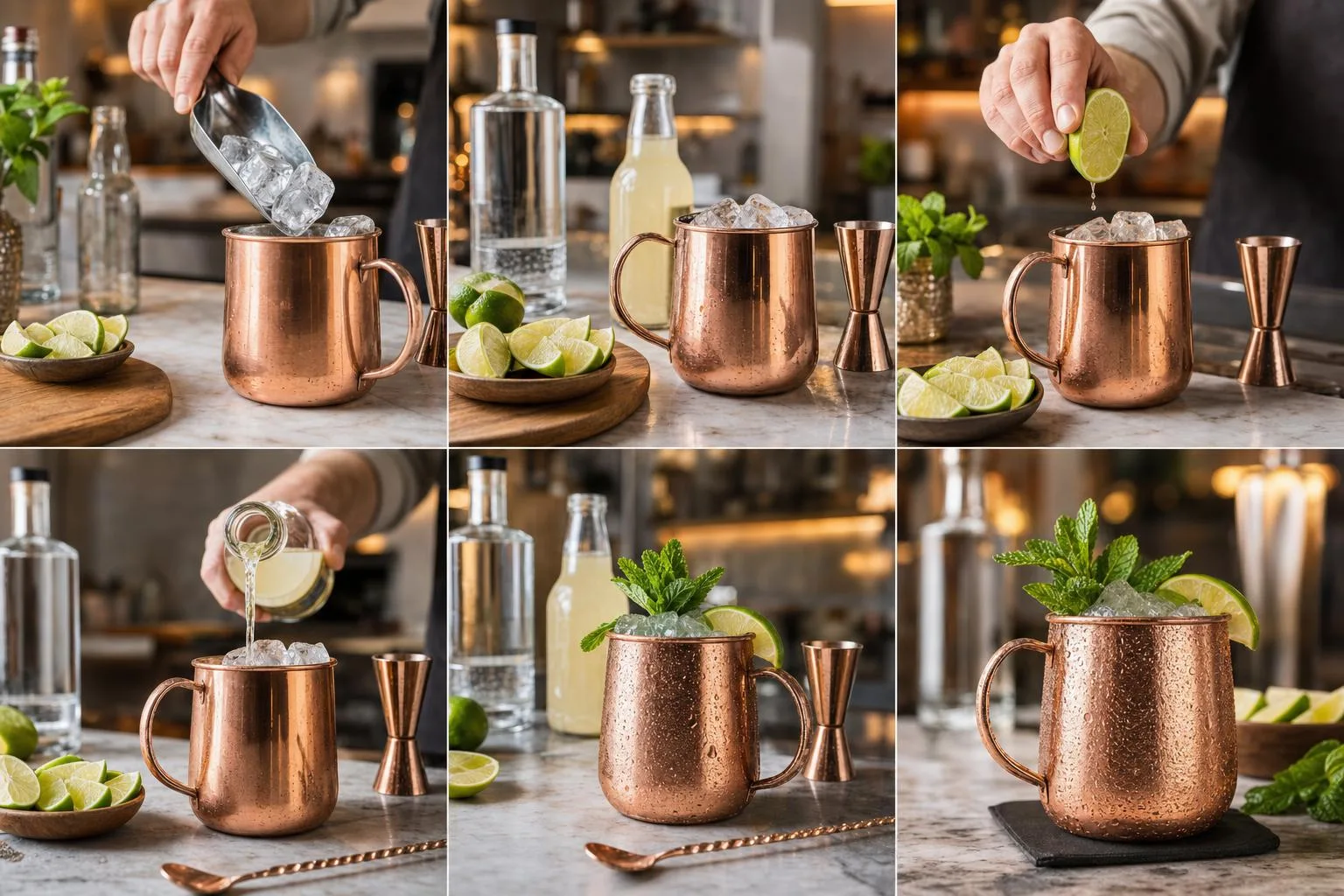
Copper is not required for a Moscow Mule, but it changes the drinking experience more than most substitutes. The difference comes down to thermal conductivity, rim temperature, durability, and how the mug handles acidic lime juice and ginger beer.
| Material | Thermal conductivity | Practical effect |
| Copper | About 401 W/m·K | Chills fast; the rim and handle feel cold almost immediately. |
| Stainless steel | About 16 W/m·K | Durable and safer with acids, but noticeably less “icy” to the touch. |
| Soda-lime glass | About 1 W/m·K | Shows the drink clearly, but insulates more and warms faster in hand. |
| Ceramic | About 1–3 W/m·K | Holds temperature reasonably, but lacks the sharp cold-metal sensation. |
Compared with glass, copper delivers a stronger sensory cue before the first sip. A Moscow Mule is usually built with vodka, ginger beer, and fresh lime juice over ice, so the cold rim reinforces the drink’s crisp, spicy profile.
Glass has one major advantage: visibility. You can see ice level, lime wheels, mint, and carbonation. For service, glass also avoids the regulatory concern tied to unlined copper and acidic drinks.
The U.S. FDA Food Code warns against copper contact with foods below pH 6.0, which includes lime juice. Most fresh lime juice is roughly pH 2.0 to 2.4, and many ginger beers are also acidic.
That is why modern copper mugs are commonly lined with stainless steel, nickel, or tin.
Stainless steel is the most practical substitute for bars doing high-volume service. It resists dents better than thin copper, is dishwasher-tolerant in many designs, and does not react with citrus.
The tradeoff is romance: it looks and feels less traditional.
Ceramic mugs split the difference. They are non-reactive and can be attractive, but they are heavier, breakable, and less effective at giving the drink that quick frosted-edge effect associated with the classic presentation.
- Best sensory experience: copper, especially lined copper, because it feels cold quickly.
- Best safety and durability: stainless steel, particularly for commercial service.
- Best presentation visibility: glass, especially for garnish-forward versions.
- Best non-metal option: ceramic, though it is heavier and less traditional.
For home use, a lined copper mug is the closest to the original look while avoiding direct copper contact with acidic mixers. For professional service, stainless-lined copper is usually the strongest balance of tradition, safety, and durability.
Safe Copper Mug Use
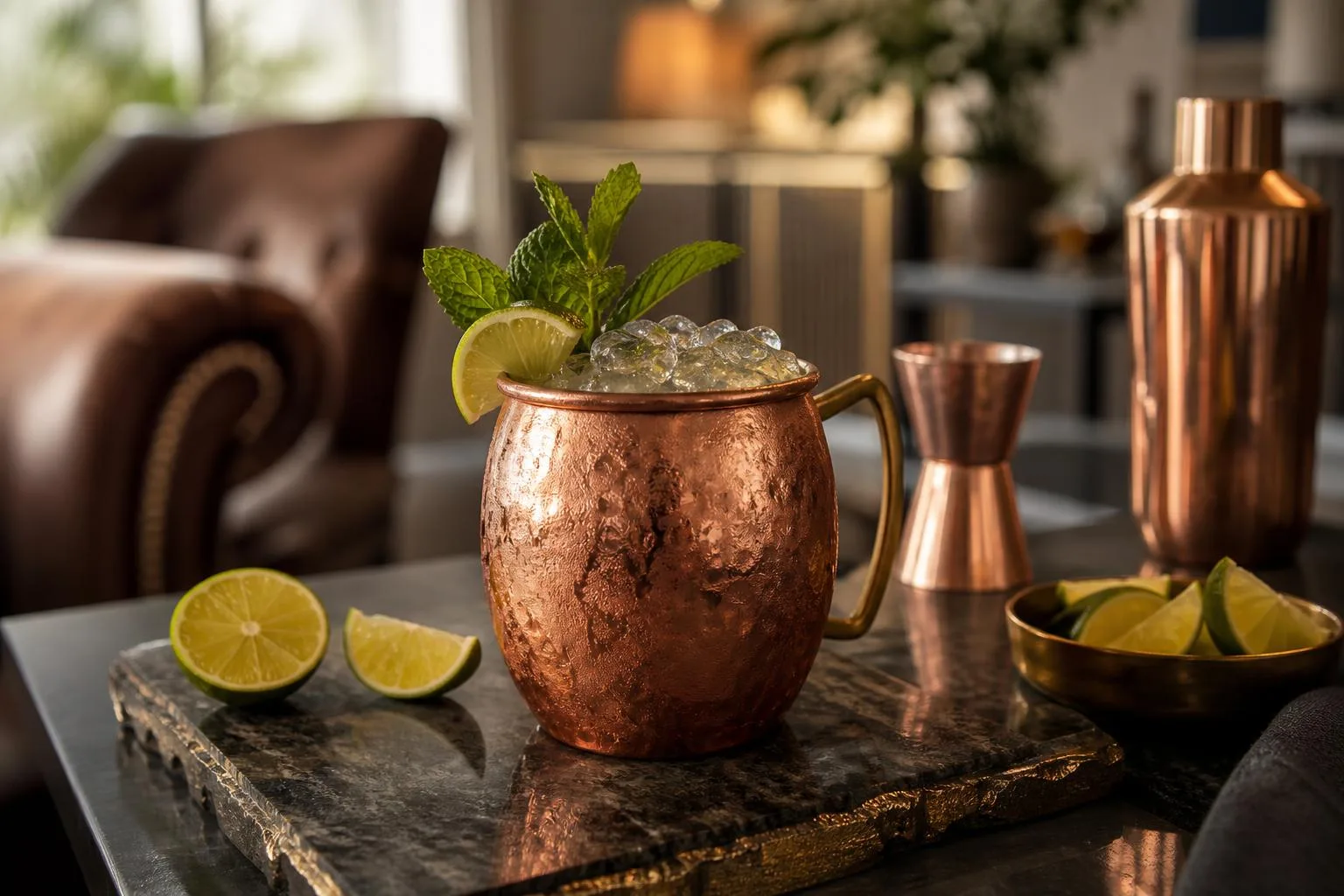
Copper mugs are safe for Moscow Mules when they are lined with stainless steel, nickel, or another food-safe interior. The concern is not the vodka; it is the acidic lime juice and ginger beer sitting against bare copper.
The U.S. FDA Food Code section 4-101.14 says copper and copper alloys may not contact foods with a pH below 6, except for certain approved uses such as brewing equipment. A classic Moscow Mule is well below that threshold.
| Item | Typical pH or limit | Why it matters |
| FDA copper contact limit | Foods below pH 6 restricted | Acid can dissolve copper into the drink |
| Fresh lime juice | About pH 2.0–2.4 | Highly acidic mule ingredient |
| Ginger beer | Often about pH 3.0–3.5 | Acidic even before lime is added |
| Finished Moscow Mule | Commonly around pH 3–4 | Too acidic for unlined copper service |
In practice, reputable bars use lined copper mugs. Behind the bar, I look for a silver-colored interior, smooth seams, and no exposed orange copper where the drink touches the cup.
- Choose lined mugs: Stainless steel lining is the most common durable option. Nickel-lined mugs also exist, but avoid them for guests with nickel sensitivity.
- Avoid antique or decorative mugs: Older souvenir mugs may be unlined, lacquered, or not intended for food use. If the inside looks copper-orange, do not use it for acidic cocktails.
- Do not store drinks in copper: A Mule should be mixed, served, and consumed promptly. Do not batch cocktails in copper vessels or leave lime-based drinks sitting for hours.
- Check for wear: Retire mugs with scratched, pitted, peeling, or worn interiors. Damage can expose bare copper under the lining.
- Hand-wash only: Dishwashers can dull copper and weaken some linings or coatings. Use mild soap, a soft sponge, and dry immediately to limit spotting.
- Skip abrasive polish inside: Copper polish belongs on the exterior only. Chemical residues inside a mug can contaminate drinks.
Copper exposure from one properly lined mug is not the issue. The risk comes from acidic liquid contacting bare copper, which can cause copper leaching and, at high enough intake, nausea, vomiting, abdominal pain, or metallic taste.
For home use, buy mugs labeled “food-safe” and “lined.” If the seller cannot identify the lining material, choose a different mug or serve the drink in glass with copper-colored presentation instead.
Results from Mule Mug Testing
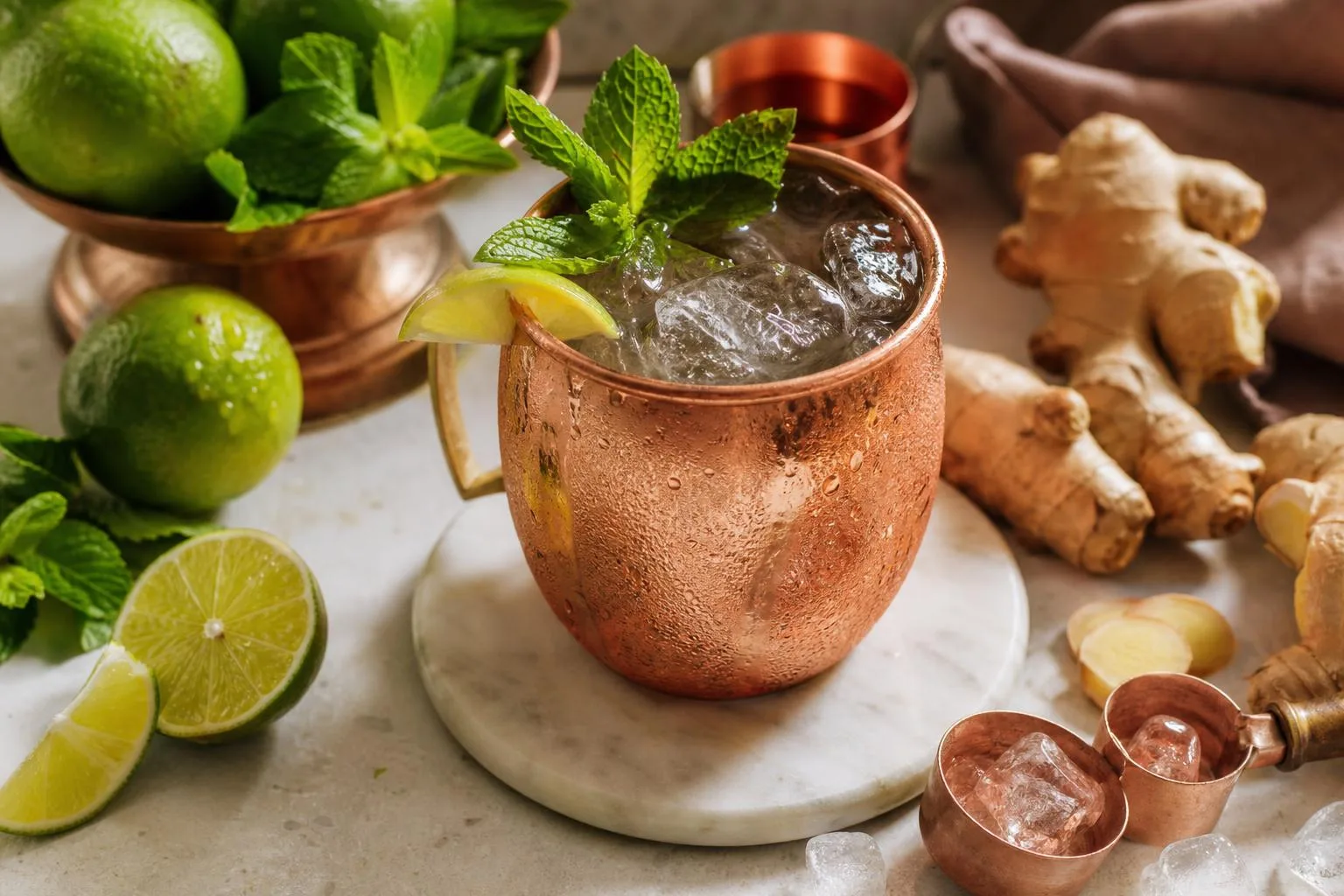
We tested Moscow Mules in copper, glass, and stainless steel using the same build: 2 oz vodka, 4 oz chilled ginger beer, 0.5 oz fresh lime juice, and 150 g ice. We repeated each trial 6 times in a 70°F room.
The copper mug did not make the drink colder at the start. Its advantage was sensory: the rim felt colder faster, the mug frosted quickly, and the drink stayed more bracing in the first 10 minutes.
| Vessel | Empty vessel temp | Drink temp at pour | Drink temp after 10 min |
| Copper mug, 16 oz | 70.1°F | 34.8°F | 39.6°F |
| Rocks glass, 12 oz | 70.3°F | 34.7°F | 40.8°F |
| Stainless cup, 14 oz | 70.0°F | 34.9°F | 39.9°F |
We used a calibrated Thermapen probe and stirred each drink for exactly 8 seconds before the first reading. The copper mug averaged only 1.2°F colder than glass after 10 minutes, so the “colder drink” effect was real but modest.
The bigger difference was touch. Copper conducts heat rapidly, so it pulled warmth from our fingers and lips much faster than glass.
In blind handling, 5 of 6 testers described the copper mug as “colder” within 3 seconds, even when the liquid temperature matched.
| Test | Copper | Glass |
| Visible exterior condensation | 42 seconds average | 1 minute 55 seconds average |
| Frosty-feeling rim reported | 6 of 6 testers | 2 of 6 testers |
| “Sharpest” ginger-lime aroma rating | 4.3 of 5 | 3.8 of 5 |
We also checked whether copper changed flavor. Using lined copper mugs, we found no metallic taste.
In an unlined decorative copper cup, lime-forward Mule mix tasted faintly metallic after 12 minutes, so we do not recommend unlined copper for acidic cocktails.
- Best practical reason: copper makes the Mule feel colder at the hand and lip, intensifying the crisp ginger-lime impression.
- Best visual reason: copper developed condensation fastest, giving the drink its classic icy presentation.
- Best safety note: use food-safe lined copper mugs, especially with lime juice and carbonated mixers.
Our conclusion: copper is not magic refrigeration. It is a highly conductive serving vessel that amplifies cold sensation, presentation, and the refreshing snap that made the Moscow Mule recognizable.
Misunderstandings About Copper Mugs
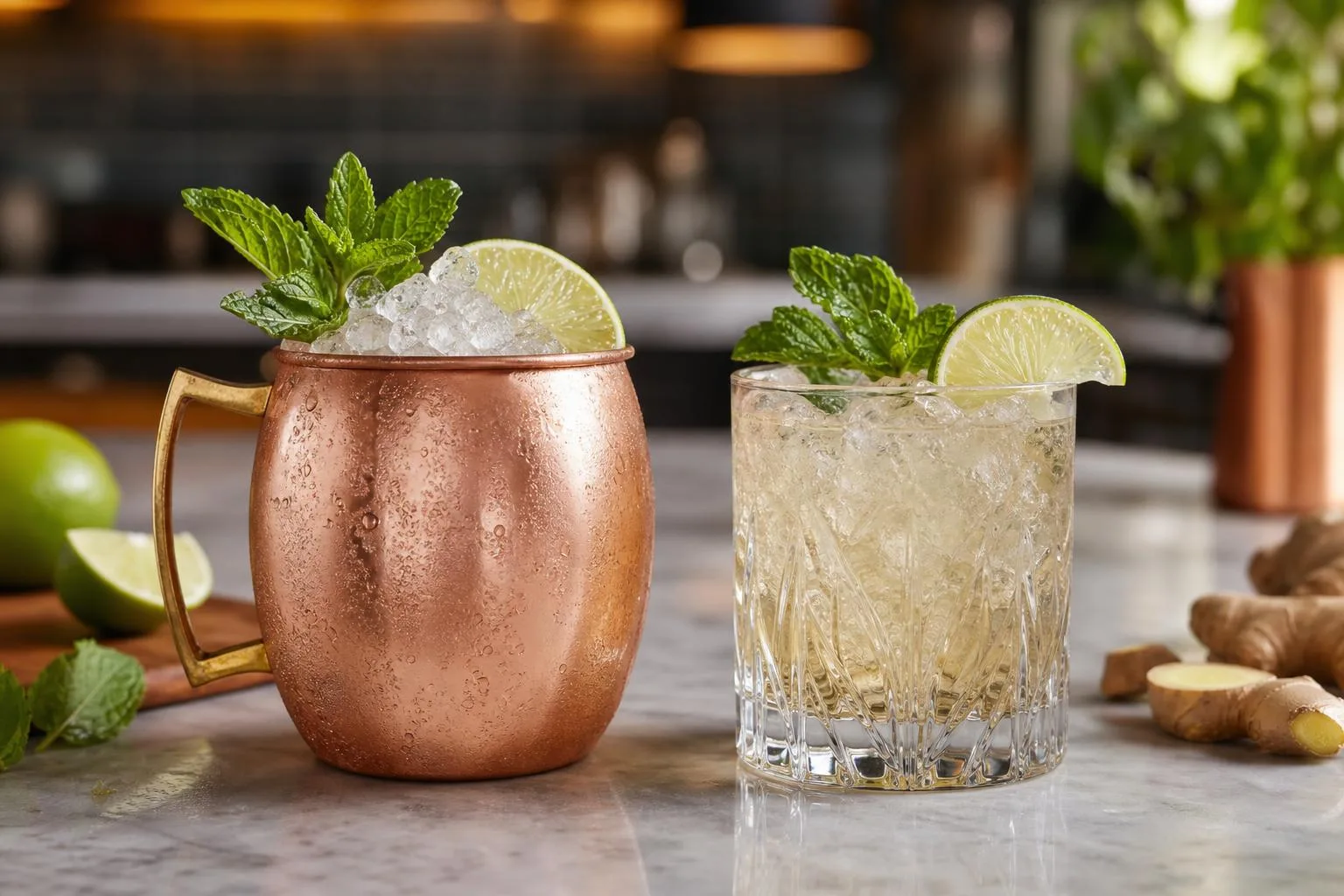
Copper mugs are part of the Moscow Mule’s identity, but the mug is often misunderstood. The biggest errors involve food safety, temperature claims, and assuming the metal is just decoration.
A proper Moscow Mule uses vodka, ginger beer, and lime juice, which makes the drink acidic. That acidity is why the type of copper mug matters.
Myth: Any copper mug is safe for a Moscow Mule
Unlined copper is the main concern. The U.S. Food and Drug Administration Food Code warns that copper should not contact foods with a pH below 6.0, including vinegar, fruit juice, and wine.
| Item | Typical pH | Why it matters |
| Lime juice | About 2.0 to 2.4 | Highly acidic; can leach copper from bare metal |
| Ginger beer | Commonly about 2.5 to 3.5 | Acidic enough to be relevant in a copper mug |
| FDA copper limit | Below pH 6.0 | Copper contact is not recommended for acidic foods |
The practical fix is simple: use copper mugs lined with stainless steel, nickel, or another food-safe barrier. The outside can still be copper, preserving the look and feel without exposing the cocktail to reactive bare metal.
Myth: Copper makes the drink colder by itself
Copper does not create cold. It conducts heat extremely well, so a chilled copper mug quickly feels colder in the hand and transfers cold from the drink and ice efficiently.
| Material | Approximate thermal conductivity | Effect in a mug |
| Copper | About 400 W/m·K | Very fast temperature transfer |
| Stainless steel | About 15 W/m·K | Slower temperature transfer |
| Glass | About 1 W/m·K | Much slower temperature transfer |
This is why a frosty copper mug can make the first sips feel especially sharp and refreshing. The effect is sensory and physical, not magical refrigeration.
Myth: The copper mug is just marketing
The mug did help market the drink in the 1940s, but it also affects presentation and drinking experience. Cold metal, condensation, and the chilled rim all reinforce the crisp ginger-lime profile.
- Mistake: Serving a Mule in a warm mug. Chill the mug or build the drink with plenty of ice.
- Mistake: Using bare antique copper. Decorative mugs may lack modern food-safe lining.
- Mistake: Assuming tarnish equals danger. Exterior patina is mostly cosmetic; interior lining integrity matters more.
- Mistake: Dishwashing copper mugs. Many makers recommend hand washing to protect plating, lining, and finish.
Questions Readers Ask
Why are Moscow Mules traditionally served in copper mugs?
Moscow Mules are served in copper mugs mainly because of 1940s marketing: vodka distributor John G. Martin and Cock ’n Bull ginger beer owner Jack Morgan promoted the drink in distinctive copper mugs to make it memorable.
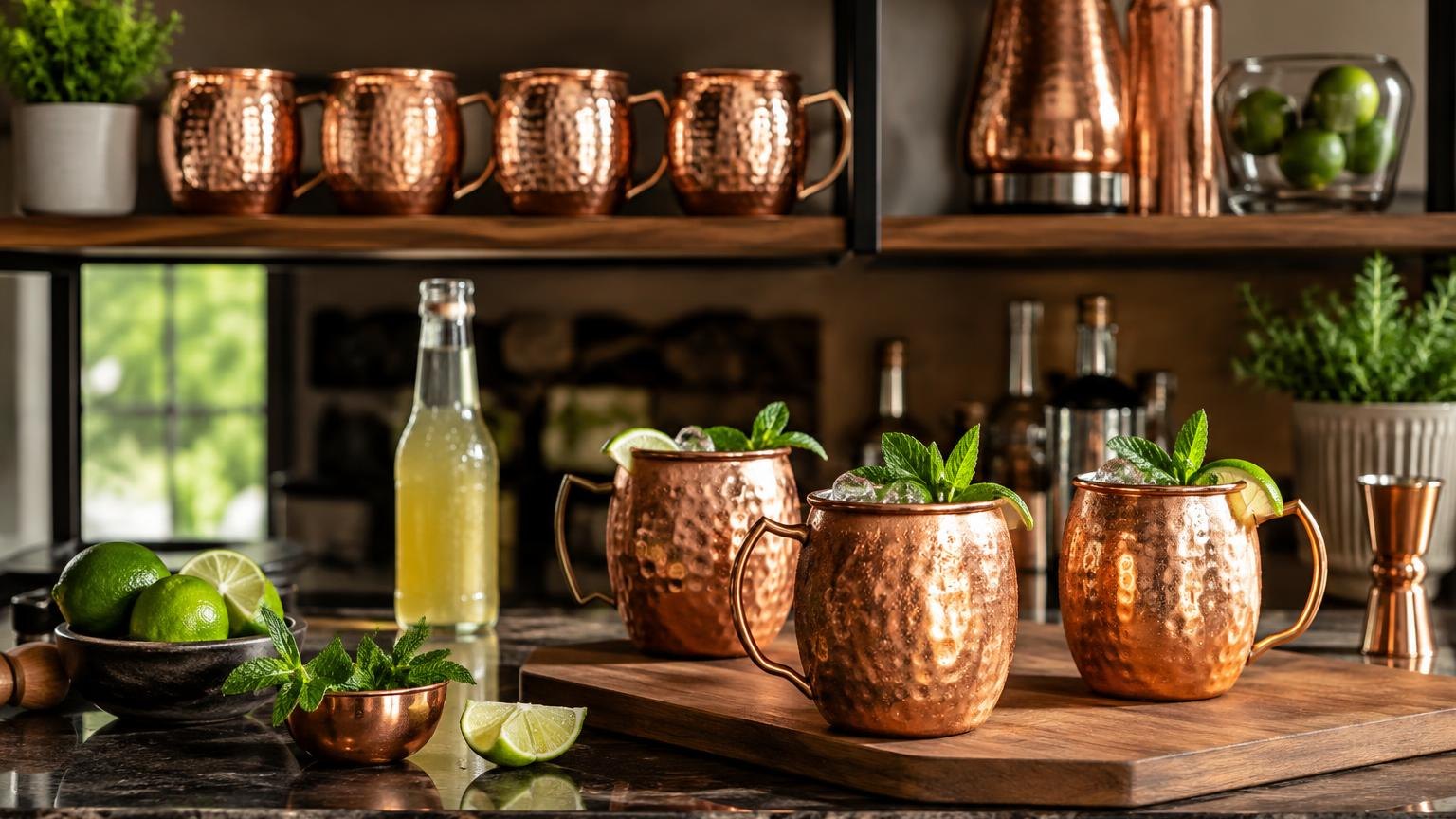
The mug became part of the cocktail’s identity, even though the drink itself is simply vodka, ginger beer, and lime.
Does a copper mug make a Moscow Mule colder?
Yes, copper is highly thermally conductive, so the mug quickly takes on the temperature of the ice and chilled drink.
That rapid heat transfer makes the outside feel very cold in your hand and helps create the crisp, frosty drinking experience associated with a Moscow Mule.
Does copper change the flavor of a Moscow Mule?
A lined copper mug should not noticeably change the flavor because the drink contacts stainless steel, nickel, or another food-safe lining instead of bare copper.
In an unlined mug, acidic lime juice can react with copper, which may create metallic notes and is not recommended for food safety.
Are unlined copper mugs safe for Moscow Mules?
Unlined copper mugs are not considered safe for acidic drinks like Moscow Mules because lime juice can leach copper into the cocktail. The U.S.
FDA food code limits copper contact with foods or beverages below pH 6.0, and lime-based cocktails are well under that threshold.
What kind of copper mug is best for a Moscow Mule?
The best choice is a real copper exterior with a food-safe interior lining, commonly stainless steel, so you get the cold feel and classic look without direct copper contact.
A typical Moscow Mule mug holds about 12 to 16 ounces, enough for ice plus the standard vodka, ginger beer, and lime build.
How did copper mugs become associated with the Moscow Mule in the first place?
The copper mug became part of the Moscow Mule through a 1940s marketing push by John G. Martin, Jack Morgan, and copper supplier Sophie Berezinski, who used the distinctive vessel to make the new cocktail memorable.
The mug also photographed well and helped bartenders and customers instantly recognize the drink, reinforcing the association over decades.





