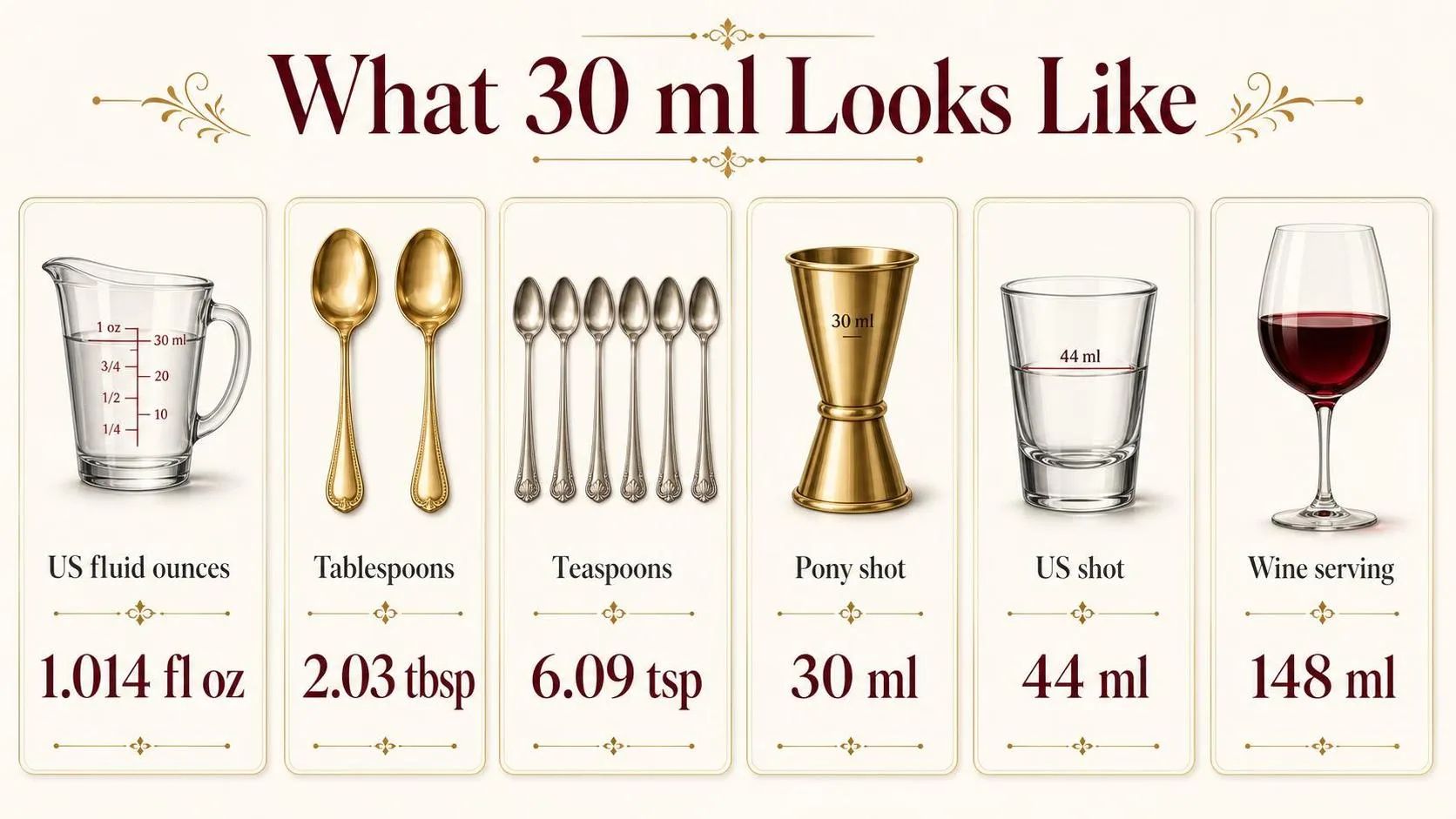
What Does 30 Ml Look Like is about 2 US tablespoons, 6 level teaspoons, or just over 1 US fluid ounce in a measuring cup. In a standard shot glass, 30 ml usually reaches a small single-pour line or sits below the rim of a 1.5-ounce shot glass.
For kitchen scale, 30 ml of water weighs about 30 grams. Visually, it is a shallow puddle in a wide glass, a full medicine cup, or roughly one-sixth of a 180 ml wine pour.
The exact height depends on the container’s width, so marked measuring tools are most reliable.
mL in Ounces and Cups
Thirty milliliters is a small pour: just over one U.S. fluid ounce. In bar terms, it is close to a “pony” pour and smaller than the standard U.S. shot commonly used for spirits.
The most useful way to picture 30 ml is by comparing it with kitchen and bar measures you may already know.
| Measure | Exact or common equivalent |
| 30 ml | 1.014 U.S. fluid ounces |
| 30 ml | 2.03 U.S. tablespoons |
| 30 ml | 6.09 U.S. teaspoons |
| 30 ml | 0.1268 U.S. cups |
| 30 ml | About 1/8 U.S. cup |
For accuracy, remember that U.S. kitchen measures are defined around teaspoons, tablespoons, cups, and fluid ounces, while milliliters are metric volume units. The conversion most bartenders use is simple: 1 U.S. fluid ounce equals 29.5735 ml.
| Bar pour | Volume | How 30 ml compares |
| Small tasting pour | 15 ml | 30 ml is double |
| Pony shot | 30 ml | Same size |
| Standard U.S. shot | 44 ml | 30 ml is smaller |
| Standard wine serving | 148 ml | 30 ml is about one-fifth |
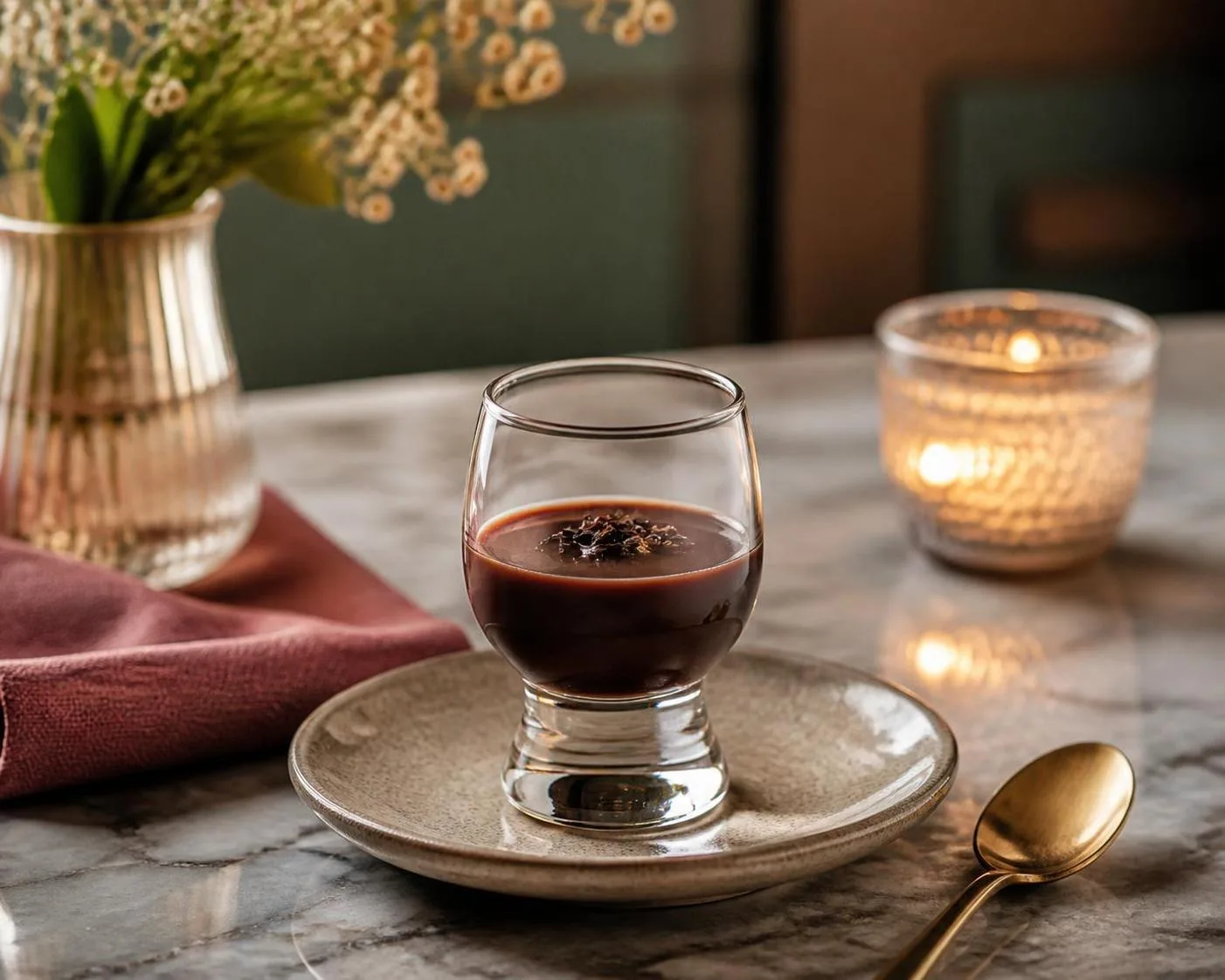
In a glass, 30 ml looks modest. In a narrow shot glass, it may fill the glass near the marked line. In a wide rocks glass, the same liquid forms only a shallow layer across the bottom.
- In a tablespoon: 30 ml is almost exactly 2 tablespoons, so it is easy to estimate when cooking.
- In a teaspoon: 30 ml is about 6 teaspoons, useful for medicine cups or small recipe adjustments.
- In a jigger: many double-sided jiggers include 30 ml on the smaller side or mark it clearly inside the cup.
- In wine tasting: 30 ml is enough for assessing aroma, color, acidity, and finish without serving a full glass.
If you are measuring alcohol, use the markings rather than the visual height in the glass. Glass diameter changes the appearance dramatically, but 30 ml remains the same volume whether it sits in a shot glass, coupe, tasting glass, or measuring cup.
Why 30 mL Looks Different
Thirty milliliters is a fixed volume, but it can look surprisingly different depending on the vessel, liquid, and measuring method. In bar terms, it is just over 1 US fluid ounce, so small errors in glassware or pouring technique are easy to see.
The biggest factor is container shape. A tall, narrow glass makes 30 ml look deeper; a wide rocks glass spreads the same liquid into a shallow layer.
| Comparison | Exact or common value | How 30 ml relates |
| US fluid ounce | 29.5735 ml | 30 ml is 1.014 US fl oz |
| US tablespoon | 14.7868 ml | 30 ml is about 2.03 tablespoons |
| US teaspoon | 4.9289 ml | 30 ml is about 6.09 teaspoons |
| Standard US spirit pour | 1.5 fl oz, about 44 ml | 30 ml is about two-thirds of it |
| UK single spirit measure | 25 ml or 35 ml, depending on venue | 30 ml sits between the two |
Glass diameter changes the visible height. Using the cylinder formula, 30 ml equals 30 cubic centimeters, so the liquid height depends directly on the inside width of the glass.
| Inside diameter of vessel | Approximate liquid height for 30 ml | Visual effect |
| 3 cm | 4.2 cm | Looks like a tall shot |
| 4 cm | 2.4 cm | Looks like a typical small pour |
| 5 cm | 1.5 cm | Looks modest in a rocks glass |
| 7 cm | 0.8 cm | Looks like only a thin layer |
- Meniscus: Water, wine, and spirits curve slightly at the surface. For accuracy, read the bottom of the meniscus at eye level in a measuring cylinder or jigger.
- Foam and bubbles: Sparkling wine, beer, shaken cocktails, and carbonated mixers can make 30 ml look larger until bubbles collapse.
- Viscosity: Syrups, cream liqueurs, and egg-based cocktail ingredients cling to the sides, making the measured amount appear greater than a clear spirit.
- Glass markings: Printed lines on medicine cups, jiggers, and measuring beakers are not always equally precise. A worn or low-cost cup can be off by several milliliters.
- Pouring speed: Free-pouring depends on the speed pourer, bottle angle, and bartender’s count. In practice, a “one-count” varies by person and can miss 30 ml noticeably.
Temperature has a small but real effect because liquids expand when warm, though it is minor for kitchen and bar use. For practical measuring, vessel shape and eye-level reading matter far more than thermal expansion.
Volume Measurement Versus Weight
Thirty milliliters is measured as volume, not weight. In practical bar terms, it is 1.014 U.S. fluid ounces, so it sits just above a 1-ounce pour and below the common 1.5-ounce U.S. shot.
The most reliable way to verify 30 ml is with a graduated liquid measure, a marked jigger, or a calibrated kitchen scale using water. At room temperature, 30 ml of water weighs about 30 grams because water’s density is close to 1 g/ml.
| Measurement | Equivalent | How to verify |
| 30 ml | 1.014 U.S. fl oz | Read at the 30 ml line on a metric jigger or cylinder |
| 30 ml water | About 30 g | Weigh on a digital scale after taring the empty cup |
| 30 ml | 2 U.S. tablespoons | Use two level 15 ml measuring spoons |
| 30 ml | 6 U.S. teaspoons | Use six level 5 ml measuring spoons |
For the cleanest visual check, place the measuring vessel on a flat counter and read the liquid at eye level. Use the bottom of the meniscus, the slight curve at the surface, not the raised edge against the glass.
In a bar setting, a jigger is the standard tool. Many double jiggers include 30 ml and 60 ml markings, especially metric models used outside the United States. U.S. jiggers may show 1 oz and 1.5 oz instead.
- Use a marked jigger: Fill to the 30 ml line, then stop when the lowest point of the meniscus touches the mark.
- Use a scale: Tare the empty container, add water until the display reads 30 g, then compare the fill level visually.
- Use measuring spoons: Combine two 15 ml tablespoons or six 5 ml teaspoons for a kitchen-accurate check.
- Avoid free-pouring: Timed pours vary by pour spout, bottle fill, angle, and bartender speed.
NIST Handbook 44 treats liquid volume measurement as dependent on calibrated capacity measures and proper reading technique. For alcohol labeling, the U.S. TTB also uses metric volumes, which is why bottles are labeled 50 ml, 375 ml, 750 ml, and 1 L.
At home, the scale method is the easiest verification test. If 30 g of water reaches the same line as your jigger’s 30 ml mark, the tool is accurate enough for cocktails, wine sampling, and recipe work.
How 30 mL Compares Visually
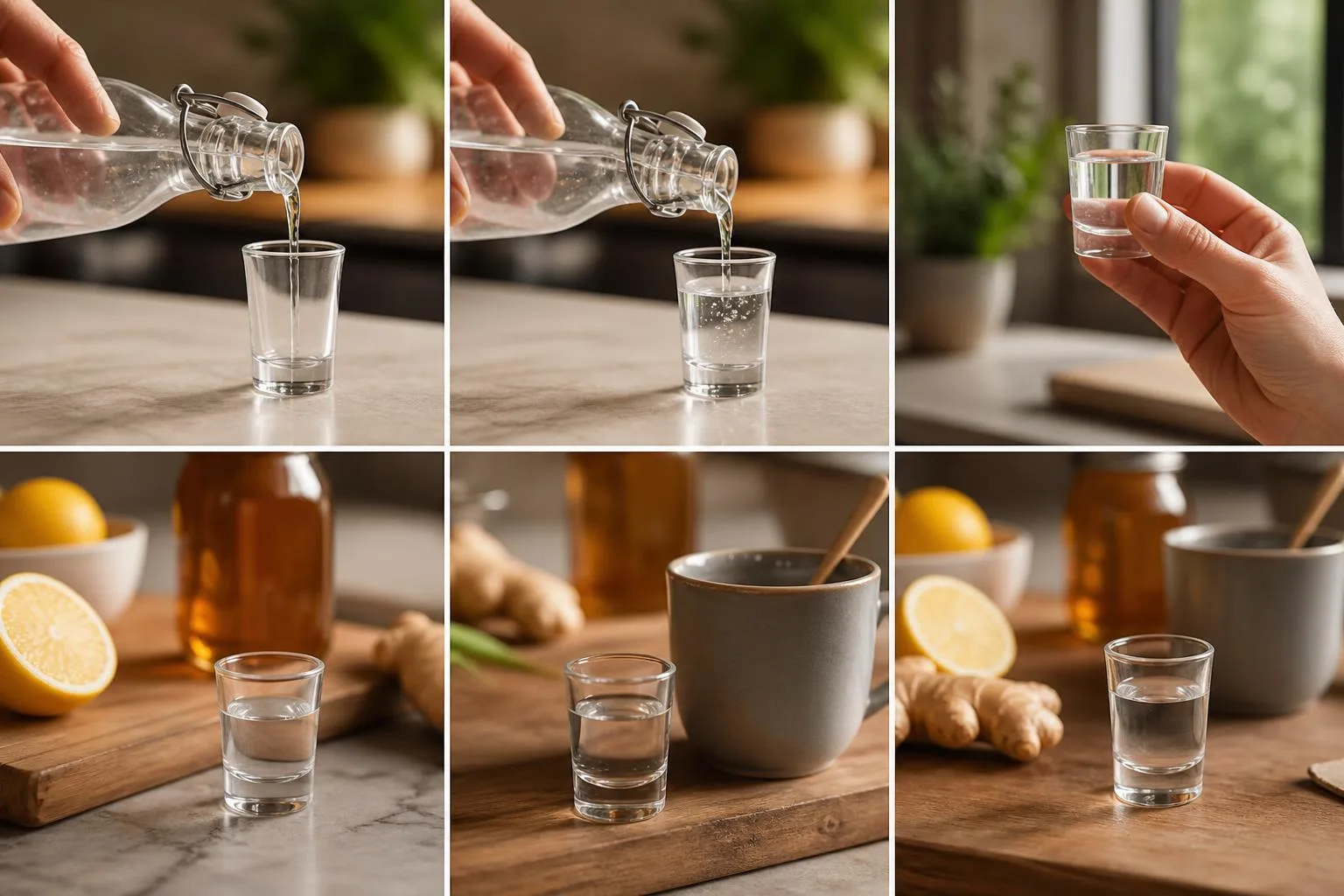
Thirty milliliters is just over a U.S. fluid ounce, so it looks like a small splash rather than a full drink pour. In a clear measuring cup, it usually reaches the lowest ounce mark plus a tiny bit.
| Common reference | Actual amount | How 30 ml compares |
| U.S. fluid ounce | 29.57 ml | 30 ml is 1.014 fl oz, essentially one U.S. ounce |
| Tablespoon | 14.79 ml | 30 ml is about 2 tablespoons |
| Teaspoon | 4.93 ml | 30 ml is about 6 teaspoons |
| Standard U.S. shot | 44.36 ml, or 1.5 fl oz | 30 ml is about two-thirds of a standard shot |
| Single jigger small side | 29.57 ml, or 1 fl oz | 30 ml nearly fills the small side |
| Standard wine pour | 147.87 ml, or 5 fl oz | 30 ml is about one-fifth of a standard wine pour |
Behind a bar, 30 ml is closest to the smaller side of a Japanese-style jigger or a one-ounce pour line. It is not the same as the typical U.S. “shot” served in many bars, which is usually larger.
| Container or item | What 30 ml looks like |
| Plastic medicine cup | Filled to the 30 ml line, often the top marked line on a dosing cup |
| Standard shot glass | Below the rim in most U.S. shot glasses, since many hold 44 ml to 59 ml |
| Wine glass | A shallow pool at the bottom, enough to swirl and smell but not a full tasting pour |
| Measuring spoons | Two level tablespoons, or six level teaspoons |
| Travel toiletry bottle | About one-third of a 3.4 oz TSA-size bottle |
For wine, 30 ml is useful for a controlled sample, aroma check, or side-by-side tasting. It gives enough liquid to coat the bowl of the glass, but it is noticeably smaller than a restaurant tasting pour.
- If using tablespoons: measure two level tablespoons for the closest kitchen equivalent.
- If using a shot glass: do not fill to the rim unless the glass is specifically marked at 30 ml.
- If using a jigger: the one-ounce side is the most reliable visual match.
- If pouring wine: expect the liquid to sit low in the bowl, not halfway up the glass.
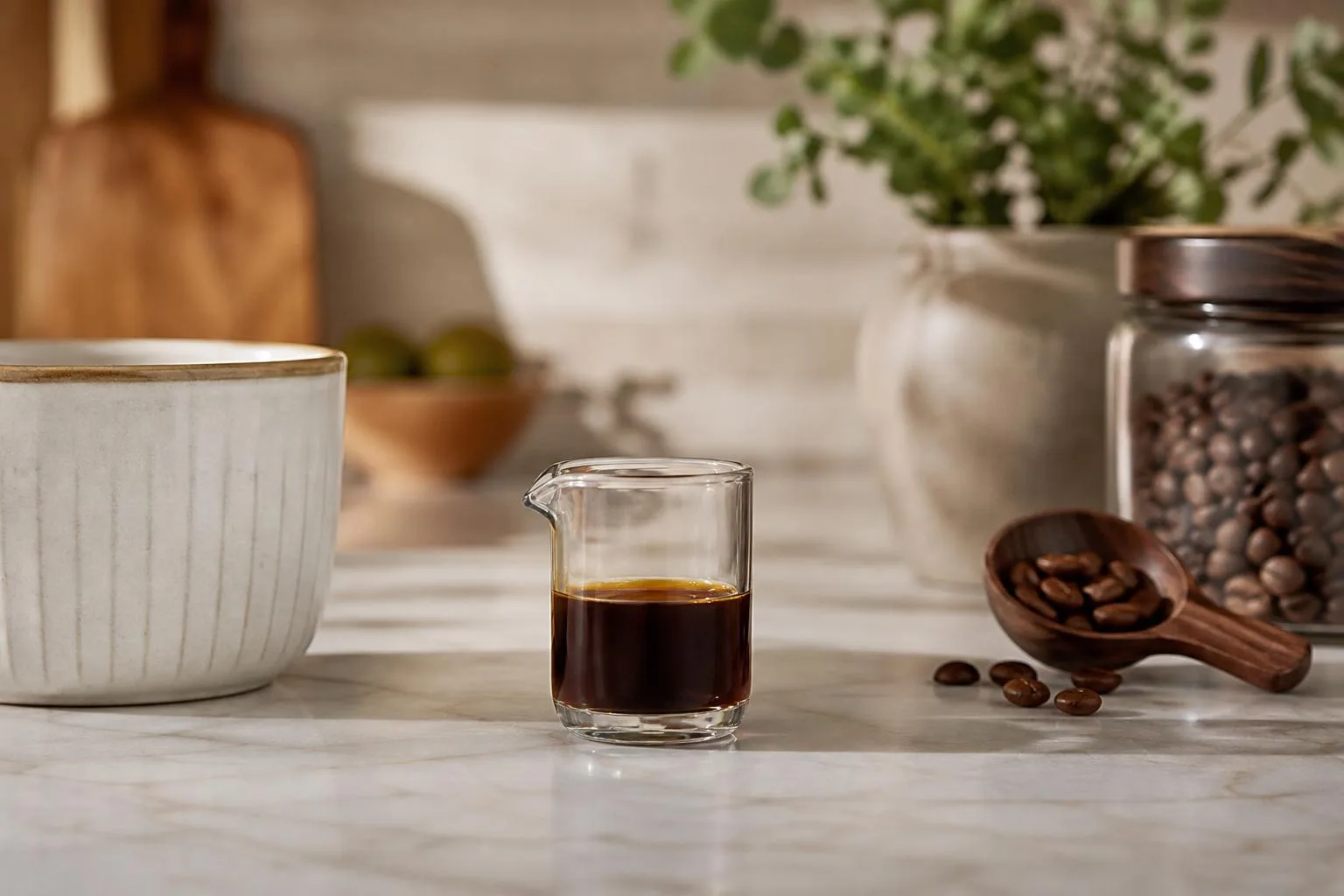
When 30 mL Accuracy Matters
Thirty milliliters is a small pour, but accuracy matters when it involves alcohol, medicine, concentrates, or cooking acids. In U.S. measurements, 30 ml is about 1.01 fluid ounces, very close to 2 tablespoons.
For bar service, 30 ml is often treated as a “1-ounce pour,” not a full U.S. standard drink. The National Institute on Alcohol Abuse and Alcoholism defines one standard drink as 14 grams of pure alcohol.
| Amount | Approximate Equivalent | Practical Visual Cue |
| 30 ml | 1.01 U.S. fl oz | Small shot or jigger side |
| 30 ml | 2.03 tablespoons | Two level tablespoons |
| 30 ml of 40% ABV spirits | 0.8 U.S. standard drink | Less than a typical 1.5 oz shot |
| 44 ml of 40% ABV spirits | 1 U.S. standard drink | Standard 1.5 oz liquor serving |
Alcohol Safety
- Do not estimate by glass size. Rocks glasses, tasting glasses, and shot glasses vary widely; many hold 45 ml to 60 ml when filled near the rim.
- Use a marked jigger. A Japanese-style jigger commonly has 30 ml and 60 ml sides, while U.S. jiggers often mark 1 oz and 1.5 oz.
- Track ABV. A 30 ml pour of 50% ABV whiskey contains 15 ml of pure alcohol, compared with 12 ml in 30 ml of 40% ABV vodka.
- Avoid free-pouring for health tracking. Even a 5-second count can vary by pour spout, bottle angle, and liquid thickness.
Medication and Household Safety
For liquid medicine, 30 ml can be a full dose or a dangerous overdose depending on the product. Always use the dosing cup, oral syringe, or marked device supplied with the medication.
- Do not use kitchen spoons for medicine. Household teaspoons can vary from about 2.5 ml to more than 7 ml.
- Check concentration. “30 ml” of one syrup may contain a different active ingredient amount than another brand or strength.
- Keep measuring tools separate. Do not reuse bar jiggers for medicine, cleaning concentrates, bitters, or tinctures.
Practical Measuring Tips
For the most accurate 30 ml at home, place the cup on a flat surface and read the mark at eye level. With clear liquids, use the bottom of the meniscus, the curved surface line.
- For cocktails: measure before adding ice, because meltwater changes volume and dilution.
- For cooking: 30 ml of oil is not the same weight as 30 ml of water; volume is equal, weight is not.
- For travel bottles: 30 ml equals 1 ounce, well under the TSA liquids limit of 3.4 ounces, or 100 ml, per container.
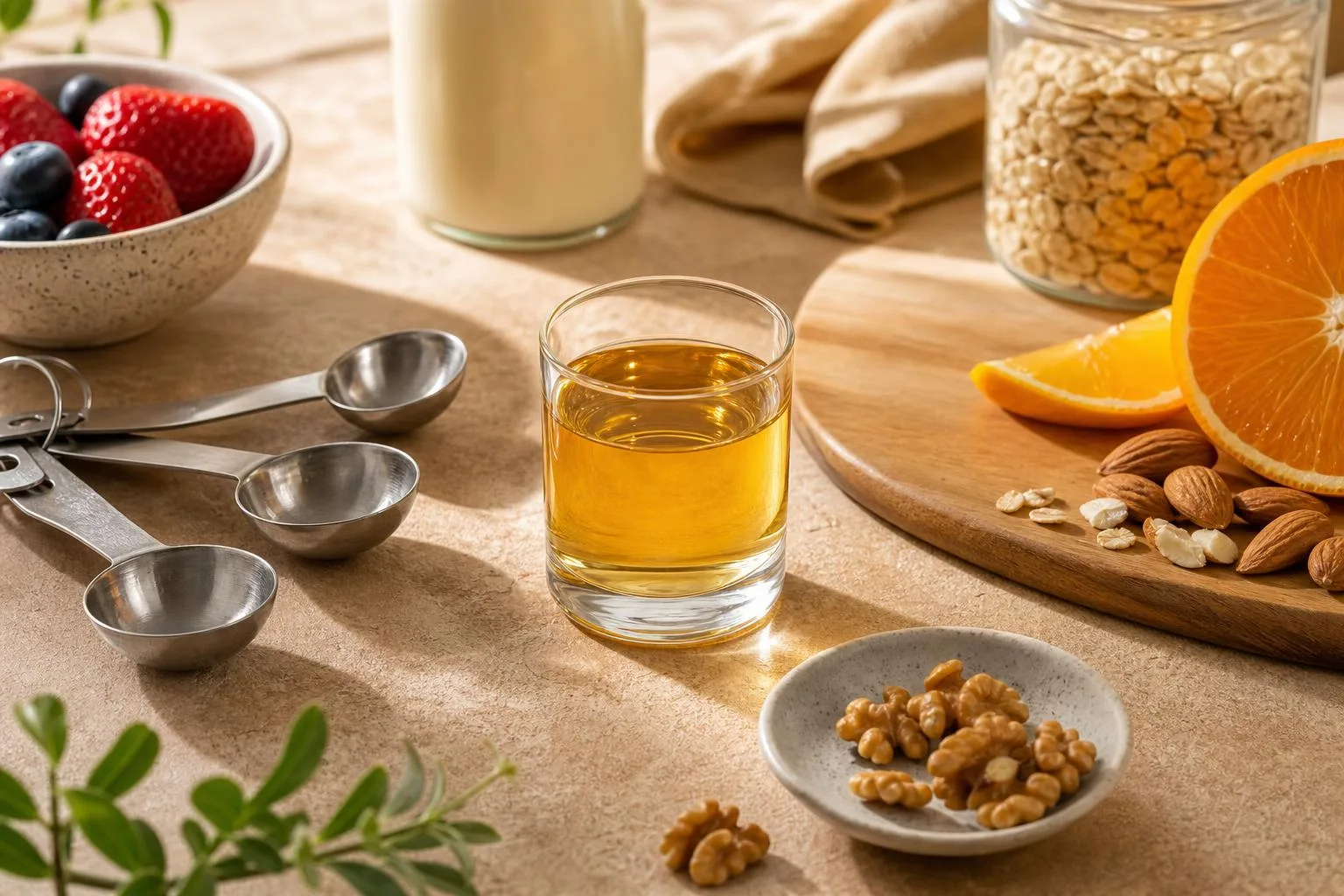
mL Tested with Home Tools
We measured 30 ml repeatedly in our bar prep area using tools guests commonly have at home: a jigger, measuring spoons, a medicine cup, and a standard U.S. shot glass.
We ran each test 5 times with room-temperature water, then checked the volume on a 100 ml graduated cylinder.
The clearest visual reference: 30 ml filled a standard 1-ounce jigger exactly to the rim. In a 2-ounce shot glass, it reached about halfway up, though the curve of the glass made “half” look slightly lower than expected from eye level.
| Item Tested | What 30 ml Looked Like | Measured Result |
| 1-ounce jigger | Filled to the top edge | 29.5 to 30.5 ml across 5 pours |
| Tablespoon | 2 level U.S. tablespoons | 29.6 ml total |
| Teaspoon | 6 level U.S. teaspoons | 29.6 ml total |
| 2-ounce shot glass | About half full | 30 ml in a 59 ml glass |
| Medicine cup | At the 30 ml printed line | 28.5 to 31 ml depending on viewing angle |
Our most consistent method was the jigger. When we poured slowly and stopped at the rim, the average reading was 30.1 ml. Fast pours were less accurate because surface tension created a slight dome before spilling.
Measuring spoons were also reliable, but only when leveled. Two U.S. tablespoons equal 1 fluid ounce, or about 29.57 ml. When we used rounded tablespoons instead of level ones, the total rose to roughly 34 to 36 ml.
- 30 ml is just over 2 tablespoons in visual terms if the spoons are not perfectly level.
- 30 ml is 1 U.S. fluid ounce, because 1 fl oz equals 29.5735 ml.
- 30 ml is 6 level U.S. teaspoons, since 1 teaspoon is about 4.93 ml.
- 30 ml is not always a full shot; many U.S. bars use 1.5 ounces, or about 44 ml, for a standard pour.
We also tested visibility in glassware. In a narrow cordial glass, 30 ml looked substantial, filling the bowl by roughly two-thirds. In a rocks glass, the same amount barely covered the base, measuring only about 6 mm deep.
Our takeaway: if you want to picture 30 ml quickly, think one full 1-ounce jigger, two level tablespoons, or half of a 2-ounce shot glass. For accuracy, the jigger beat the shot glass and medicine cup in our repeated checks.
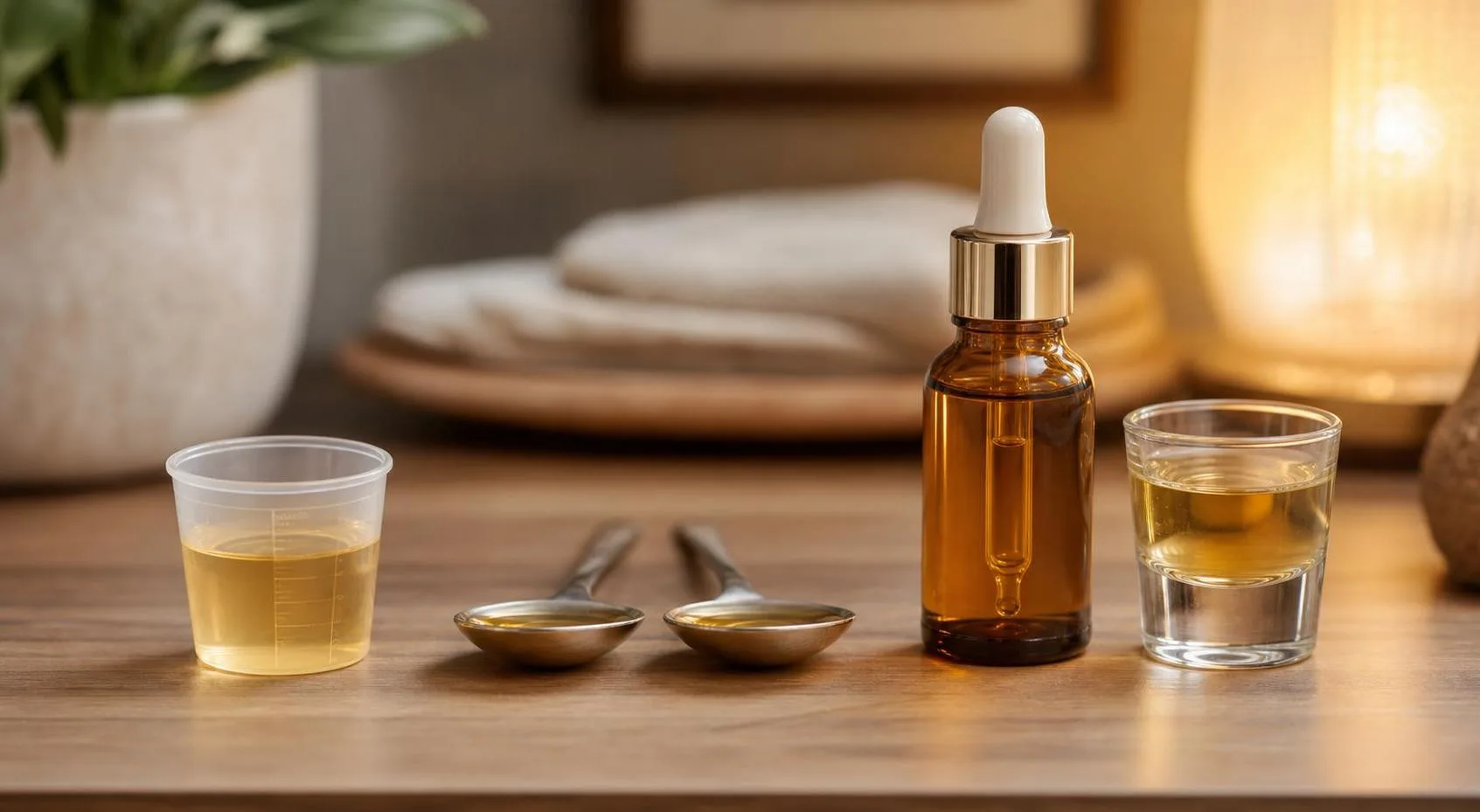
Common 30 mL Measurement Mistakes
Thirty milliliters is exactly 1 US fluid ounce to within about 1.4%, but people often misjudge it by sight. The biggest errors happen when using spoons, caps, shot glasses, or “a small splash” instead of a marked measure.
At Flight Wine Bar, we see this most often with cocktail specs, tasting pours, syrups, and low-volume wine samples. A 30 ml amount looks smaller than many guests expect, especially in a wide rocks glass.
Myth: One tablespoon equals 30 ml
In the US, 1 tablespoon is about 14.8 ml. That means 30 ml is just over 2 US tablespoons, not one. Using a single tablespoon when a recipe calls for 30 ml cuts the amount almost in half.
| Measure | Actual volume | Compared with 30 ml |
| 1 US tablespoon | 14.8 ml | About 49% of 30 ml |
| 2 US tablespoons | 29.6 ml | Nearly equal to 30 ml |
| 1 US teaspoon | 4.9 ml | About 6 teaspoons per 30 ml |
| 1 US fluid ounce | 29.57 ml | Practically equal |
Myth: Any shot glass is 30 ml
Shot glasses are not standardized by appearance. In US bars, a common shot is 1.5 fluid ounces, or about 44 ml. Some small cordial glasses hold 30 ml, while larger shot glasses can hold 50 ml or more.
- A full 1.5 oz shot glass is not 30 ml: it is about 44 ml, roughly 47% more than 30 ml.
- A jigger may have two sides: common sizes include 1 oz and 2 oz, or 0.75 oz and 1.5 oz.
- Filling to the rim is unreliable: bar tools are designed to be read at a line, shoulder, or marked capacity.
Myth: Bottle caps make good measuring tools
A wine, liquor, or syrup bottle cap can vary widely in capacity. Many caps hold only a few milliliters. Without measuring it once with water and a marked syringe or cup, a cap is only a guess.
Myth: 30 ml looks the same in every glass
Glass shape changes perception. In a narrow cordial glass, 30 ml may look like a generous pour. In a wide tumbler, the same volume may barely cover the base.
| Container | How 30 ml may appear |
| Narrow tasting glass | Noticeable small pour |
| Standard wine glass | Shallow tasting sample |
| Rocks glass | Thin layer at the bottom |
| Measuring cup | Accurate only if the 30 ml line is marked |
The safest visual rule is simple: 30 ml is about 2 US tablespoons or 1 US fluid ounce. For consistency, use a marked jigger, medicine cup, syringe, or kitchen scale with water, where 30 ml weighs about 30 grams.
Questions People Ask Most
What does 30 ml look like in a glass?
30 ml is about 1 US fluid ounce, so it looks like a small splash rather than a full drink. In a standard wine glass, it usually covers only the bottom bowl; in a narrow shot glass, it may fill roughly half to two-thirds depending on the glass size.
Is 30 ml the same as one shot?
In many US bars, a standard shot is 1.5 fl oz, which is about 44 ml, so 30 ml is smaller than a typical American shot. However, 30 ml is close to a “single measure” in some countries and equals about 1.01 US fl oz.
How many tablespoons is 30 ml?
30 ml equals 2 US tablespoons, since 1 US tablespoon is about 15 ml. If you are measuring without a jigger, two level tablespoons gives a close kitchen equivalent.
What does 30 ml of wine look like?
30 ml of wine is a tasting pour, about one-fifth of a standard 5 oz restaurant wine pour. Visually, it is enough to swirl and smell in a wine glass but not enough to fill the widest part of the bowl.
How can I measure 30 ml accurately?
The most accurate quick method is to use a 30 ml jigger, medicine cup, or metric measuring spoon set. If you only have US measures, use 2 tablespoons or measure just over 1 fluid ounce on a liquid measuring cup.
How many fluid ounces are in 30 ml?
Thirty milliliters equals about 1.01 US fluid ounces, so it is effectively 1 fluid ounce in everyday kitchen and bar use. That conversion comes from the exact relationship of 1 US fluid ounce = 29.57 milliliters, which is why labels often round 30 ml to 1 oz.
What common household item holds about 30 ml?
A standard medicine dosing cup often has a marked 30 ml line, making it one of the easiest visual references at home.
Some travel-size toiletry bottles also hold exactly 30 ml, though bottle shape can distort how “full” that amount appears compared with a short, wide container.
Related Reading
- How Many Cups Is 3 4 Pound?
- How Many Ounces In 2 Gallons? – 2026
- How Many Cups Is 7 Oz?
- How Many Gallons Is 1.75 Liters?
- How Much Is 20 Ounces? A Surprisingly Practical Question With Real-Life Answers
- How Many Ml Is 25 Oz?
- How Many 8 Ounces Of Water Are In A Liter? A Complete, Real-Life Guide You Can Actually Use
- All Blog Guides
- NIST Handbook 44, Appendix C: General Tables of Units of Measurement (2024)
- FDA eCFR 21 CFR §101.12 Reference Amounts Customarily Consumed Per Eating Occasion (2026)
- MedlinePlus Medical Encyclopedia: Metric Conversions (2023)
- PubMed: Unit of Measurement Used and Parent Medication Dosing Errors (2014)
- NIAAA: What Is a Standard Drink? (2025)
- University of Nebraska-Lincoln Food: Kitchen Measurement Conversions (2024)
- Institute for Safe Medication Practices: Recommendations for Safe Use of the Metric System to Prevent Medication Errors (2017)