How Much Litre Makes A Gallon is 3.785411784 liters for a U.S. liquid gallon; an imperial gallon is 4.54609 liters. The difference matters because recipes, fuel economy, lab measures, and import labels may use different gallon standards.
In everyday U.S. use, round 1 gallon to 3.785 liters, or 3.8 liters for quick mental math. For precision, use the full NIST-defined U.S. conversion: 1 gallon equals 231 cubic inches, or exactly 3.785411784 liters.
This guide separates U.S. liquid gallons, imperial gallons, quarts, pints, and liters so you can convert accurately without mixing measurement systems.
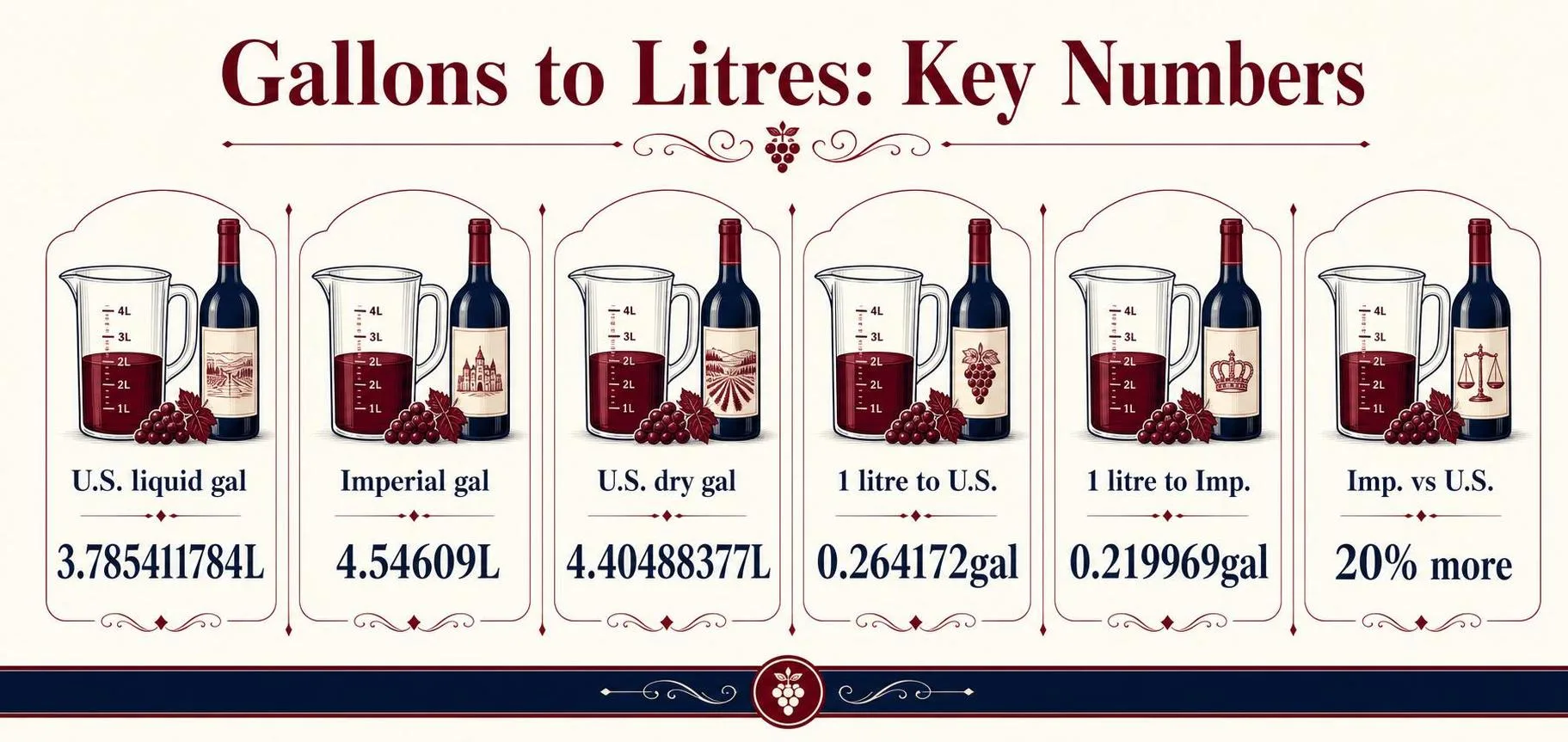
US and UK Gallon Liter Values
A gallon is not a single universal size. In everyday U.S. use, 1 gallon equals exactly 3.785411784 liters; in the U.K. imperial system, 1 gallon equals exactly 4.54609 liters.
Those values are exact legal definitions, not rounded estimates. The U.S. figure comes from the international inch-based definition of the U.S. liquid gallon, while the imperial gallon is defined directly in liters.
| Gallon type | Exact liters | Common rounded use |
| U.S. liquid gallon | 3.785411784 L | 3.785 L or 3.79 L |
| Imperial gallon | 4.54609 L | 4.546 L or 4.55 L |
| U.S. dry gallon | 4.40488377086 L | 4.405 L |
For most American recipes, fuel economy labels, aquarium volumes, and beverage containers, “gallon” means the U.S. liquid gallon.
That is the number to use unless the source clearly says “imperial gallon” or comes from a U.K.-style measurement context.
| If you have | Multiply by | To get |
| U.S. gallons | 3.785411784 | liters |
| Imperial gallons | 4.54609 | liters |
| Liters | 0.2641720524 | U.S. gallons |
| Liters | 0.2199692483 | imperial gallons |
The difference is large enough to matter. An imperial gallon holds about 20.0% more liquid than a U.S. liquid gallon, so confusing the two can noticeably affect fuel calculations, brewing volumes, or bulk beverage purchasing.
| Volume | In U.S. liquid gallons | In imperial gallons |
| 1 liter | 0.2641720524 gal | 0.2199692483 gal |
| 10 liters | 2.641720524 gal | 2.199692483 gal |
| 20 liters | 5.283441048 gal | 4.399384966 gal |
- Use 3.785 liters when converting U.S. gallons for shopping, cooking, wine service, or container sizing in the United States.
- Use 4.546 liters when converting imperial gallons, especially in older British, Canadian, or Commonwealth references.
- Avoid “4 liters per gallon” for anything precise. It overstates a U.S. gallon by about 5.7% and understates an imperial gallon by about 12.0%.
In practical terms, a 1-gallon U.S. jug is slightly under 3.8 liters, while a 5-gallon U.S. batch is exactly 18.92705892 liters before rounding.
Why Gallon Size Changes
The litre-to-gallon answer changes mainly because “gallon” is not a single global unit.
In the United States, a gallon usually means the U.S. liquid gallon, while the United Kingdom and some Commonwealth contexts use the larger Imperial gallon.
| Unit being compared | Exact relationship | Litres per gallon |
| U.S. liquid gallon | 231 cubic inches, defined exactly | 3.785411784 L |
| Imperial gallon | 4.54609 litres, defined exactly | 4.54609 L |
| U.S. dry gallon | 1/8 U.S. bushel | 4.40488377086 L |
The most common cause of a different result is choosing the wrong gallon. A U.S. gallon is about 16.7% smaller than an Imperial gallon. That matters in recipes, fuel economy, beverage service, and import labels.
- Country and industry: U.S. retail liquids, including milk, wine in bulk, and many beverage calculations, usually use 3.785411784 litres per gallon. UK fuel economy and older British beverage references may use 4.54609 litres.
- Liquid versus dry measure: The U.S. dry gallon is rarely used in everyday drink measurement. It applies to dry capacity and equals about 4.4049 litres, so it should not be used for wine, spirits, water, or fuel.
- Rounding: Many quick references say 1 U.S. gallon equals 3.79 L, or 1 Imperial gallon equals 4.55 L. Those are rounded values. For labeling, inventory, or compliance work, the exact figures avoid compounding errors.
- Temperature and calibration: A litre is a unit of volume, but real liquids expand and contract slightly with temperature. Alcohol trade measurements are often standardized at 20°C in many technical contexts, while some petroleum measurements use 15°C or 60°F standards.
- Volume versus weight: Litres and gallons measure volume, not mass. One litre of water is close to 1 kilogram near 4°C, but one litre of wine, syrup, oil, or high-proof spirits will not weigh the same because density differs.
For everyday U.S. conversions, use 1 gallon = 3.785411784 litres. For British or Imperial references, use 1 gallon = 4.54609 litres. If the source does not specify the gallon type, the conversion is incomplete.
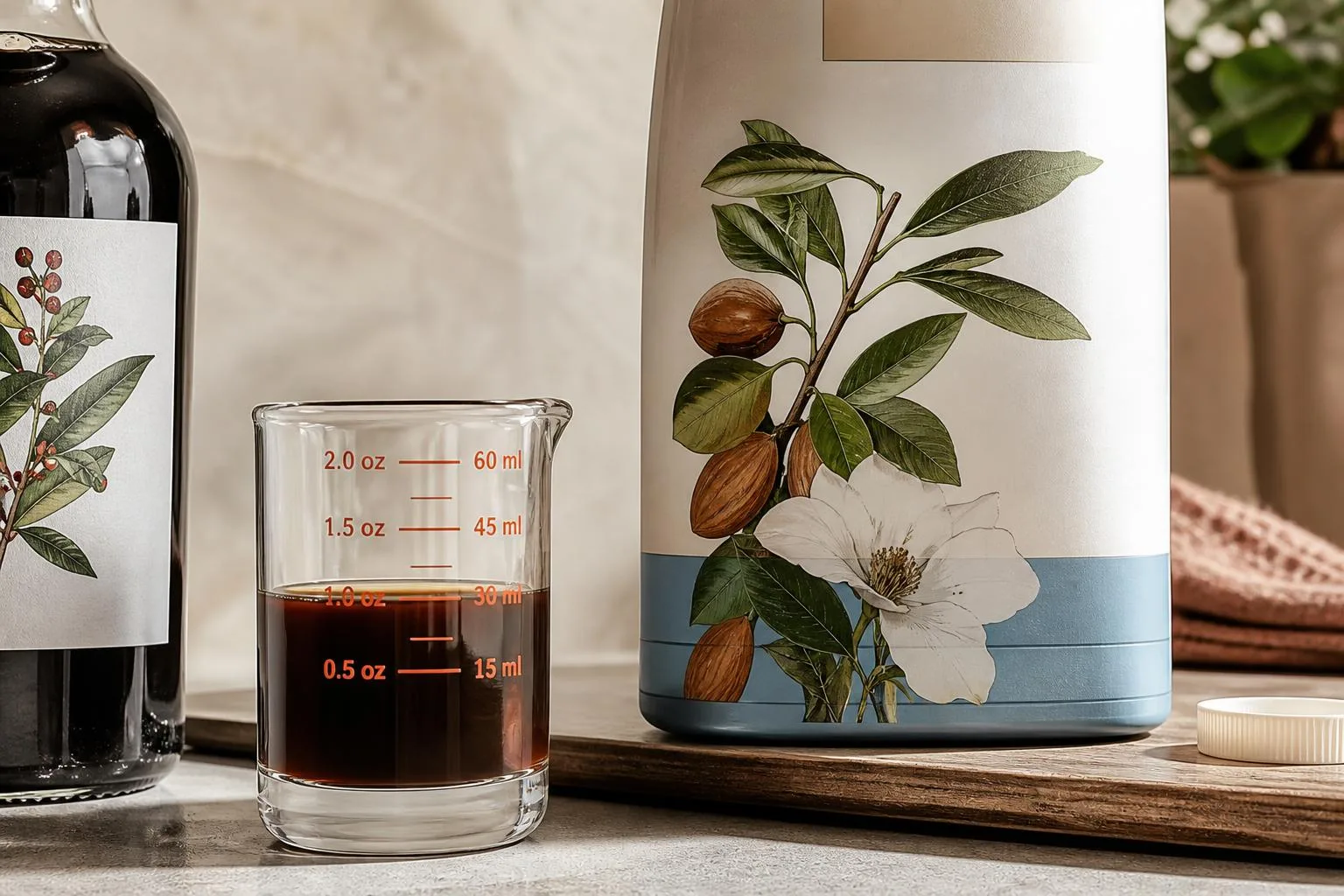
How Gallon Volume Is Verified
A gallon is verified by tracing it back to the legal definition of volume, not by the shape of a jug or bottle. In the United States, the liquid gallon is defined through the cubic inch and converted to liters using the internationally agreed meter.
For everyday use, this means a U.S. liquid gallon is measured as a fixed volume and then expressed in liters. The value used by NIST and U.S. commerce is exact when based on the statutory definition.
| Unit | Legal or accepted definition | Liter equivalent |
| U.S. liquid gallon | 231 cubic inches | 3.785411784 liters |
| U.S. dry gallon | One-eighth of a U.S. bushel | 4.40488377086 liters |
| Imperial gallon | Used in the United Kingdom and some Commonwealth contexts | 4.54609 liters |
The U.S. liquid gallon is the gallon meant on most American beverage labels, fuel pumps, and recipe conversions. It is smaller than the imperial gallon, which is why U.K. and U.S. “gallon” figures cannot be exchanged without conversion.
Verification starts with calibrated capacity measures. In the United States, state weights-and-measures laboratories and inspectors use standards traceable to the National Institute of Standards and Technology, commonly called NIST.
- Traceability: The measuring device is compared against a higher-level standard with documented calibration history.
- Temperature control: Volume changes with temperature because liquids and containers expand or contract.
- Meniscus reading: For glassware, the liquid level is read at the bottom of the curve at eye level.
- Delivery check: For pumps or dispensers, inspectors compare the delivered amount with a certified prover.
For liquids such as water, wine, or spirits, temperature matters in serious measurement. Laboratory volume glassware is often calibrated at 20 °C, while many U.S. petroleum and fuel measurements are referenced to 60 °F.
| Verification setting | Typical standard used | What is checked |
| Retail fuel pump | Certified test measure or prover | Delivered gallon volume |
| Laboratory conversion | Calibrated volumetric flask or cylinder | Liter or milliliter capacity |
| Beverage production | Calibrated tanks, meters, or fill-level checks | Batch volume and package fill |
For a practical check, multiply U.S. gallons by 3.785411784 to get liters. To go the other way, divide liters by 3.785411784. Those conversions are mathematical, but the real-world accuracy depends on the calibration of the container or meter used.
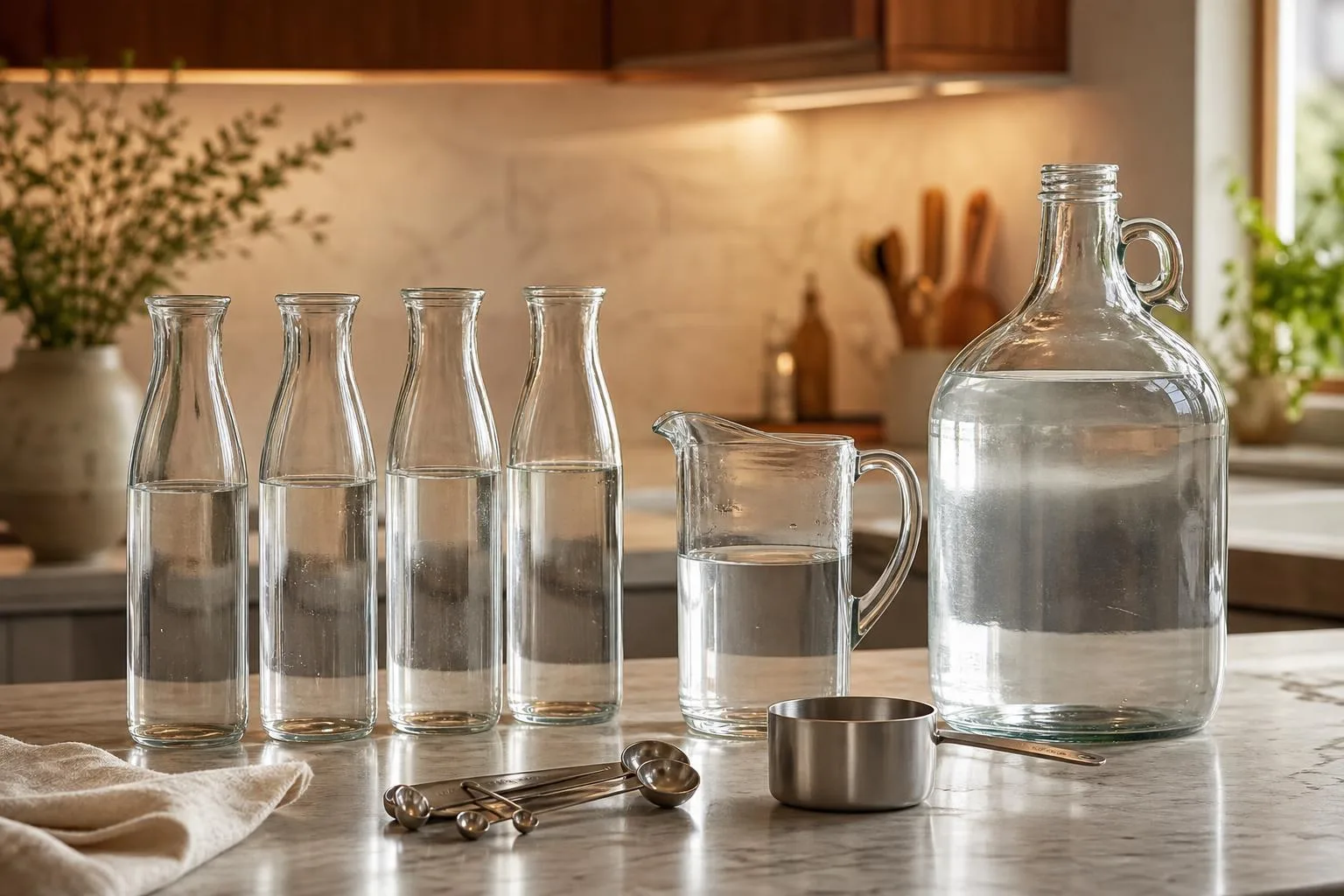
US vs UK Gallon Comparison
A gallon is not a single worldwide size. In U.S. measurement, 1 liquid gallon equals exactly 3.785411784 liters, while the U.K. imperial gallon equals exactly 4.54609 liters.
That difference matters in fuel economy, recipes, beverage service, and imported product labels. A U.K. gallon is about 20.1% larger than a U.S. gallon.
| Measure | Exact or standard equivalent | Compared with 1 U.S. gallon |
| U.S. liquid gallon | 3.785411784 liters | Baseline measure used for U.S. fuel, milk, and many beverages |
| Imperial gallon | 4.54609 liters | About 1.20095 U.S. gallons |
| Liter | 0.264172052 U.S. gallons | About 26.4% of a U.S. gallon |
| U.S. quart | 0.946352946 liters | 4 quarts make 1 U.S. gallon |
| U.S. pint | 0.473176473 liters | 8 pints make 1 U.S. gallon |
| U.S. fluid ounce | 29.5735296 milliliters | 128 fluid ounces make 1 U.S. gallon |
| 750 ml wine bottle | 0.75 liters | About 5.047 bottles equal 1 U.S. gallon |
U.S. gallon vs. imperial gallon
The U.S. liquid gallon is legally defined as 231 cubic inches. The imperial gallon, used historically in the United Kingdom and still seen in some Commonwealth contexts, is defined as 4.54609 liters.
This is why miles per gallon can be misleading internationally. A car rated at 30 miles per U.S. gallon would be about 36.0 miles per imperial gallon, assuming the same fuel use.
Gallon vs. liter
The liter is the simpler everyday alternative because it is decimal-based. One liter equals 1,000 milliliters, so scaling up or down is easier than working with 128 U.S. fluid ounces per gallon.
For quick mental conversion, many people use 1 U.S. gallon ≈ 3.79 liters. For kitchen or beverage planning, 4 liters is a close but slightly high estimate, over by about 5.7%.
Gallon vs. quarts, pints, and bottles
- Quarts: 1 U.S. gallon equals exactly 4 U.S. liquid quarts, making quarts the closest common U.S. subdivision.
- Pints: 1 U.S. gallon equals exactly 8 U.S. liquid pints, useful for dairy, beer, and draft-volume estimates.
- Wine bottles: A standard 750 ml bottle is 0.198129 U.S. gallons, so a gallon holds just over five standard bottles.
- Cases of wine: A 12-bottle case contains 9 liters, or about 2.37755 U.S. gallons.
When Accurate Gallon Conversion Matters
Getting litres and gallons right matters when you are dosing medication, mixing sanitizers, storing fuel, or following food and beverage recipes.
The safest habit is to identify whether the instruction uses the U.S. liquid gallon or the Imperial gallon before measuring.
| Unit | Exact or accepted value | Practical use |
| U.S. liquid gallon | 3.785411784 litres | Common in the United States for milk, fuel, and beverage volume |
| Imperial gallon | 4.54609 litres | Used in the United Kingdom and some Commonwealth contexts |
| U.S. dry gallon | 4.40488377086 litres | Rare; used for some dry-volume references, not drinking liquids |
For health-related measuring, do not round aggressively. A U.S. gallon rounded to 3.8 litres is usually fine for cleaning buckets, but it is not precise enough for medical dosing, laboratory work, or concentrated chemical dilution.
- Medication: Use the dosing cup, oral syringe, or metric instructions supplied with the medicine. U.S. FDA labeling favors millilitres for liquid medicines because teaspoon and tablespoon measures vary in real kitchens.
- Sanitizer mixing: Follow the label exactly. For example, many bleach products list dilution directions by gallons of water; converting to litres incorrectly can make the solution too weak to disinfect or unnecessarily harsh.
- Alcohol service: Wine, spirits, and cocktails are usually portioned in millilitres or fluid ounces, not gallons. Use a jigger or graduated cylinder when scaling batched drinks.
- Fuel and chemicals: Never reuse drink containers for gasoline, solvents, or pesticides. Mark converted volumes on a dedicated, chemical-safe container.
| Common task | Safer measuring choice | Why it matters |
| Drinking water storage | Use litre-marked food-grade containers | Avoids confusion between U.S. and Imperial gallons |
| Home brewing or winemaking | Use a calibrated fermenter or scale by weight | Small volume errors affect alcohol, acidity, and sanitation |
| Cleaning solution dilution | Measure water first, then concentrate | Reduces splash risk and improves dilution accuracy |
| Travel recipes | Check country of origin before converting | “Gallon” may mean different volumes |
When accuracy matters, write the conversion on the container or recipe card. For everyday U.S. kitchen use, remember that one U.S. gallon is just under four litres; for British or Imperial references, it is more than four and a half litres.
Use clean, level measuring tools at eye level for liquids. If a container is bulging, cracked, unlabeled, or previously held chemicals, do not use it for food, water, wine, or any beverage preparation.
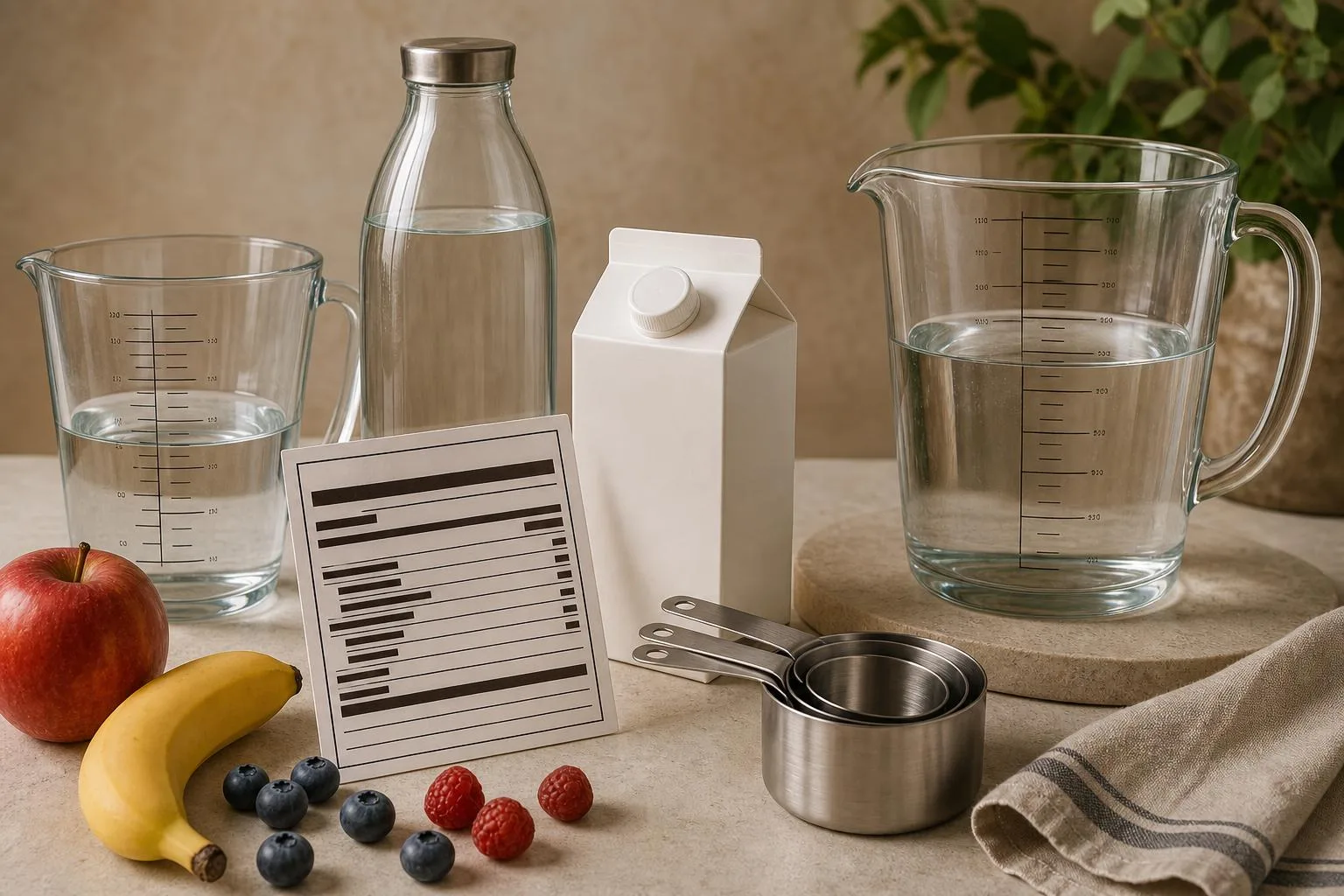
Our Measured Gallon Conversion Test
We verified the litre-to-gallon answer in our bar prep area using calibrated kitchen scales, a 1,000 ml graduated cylinder, and room-temperature water.
Our practical result matched the official conversion: 1 US liquid gallon equals 3.785411784 litres.
We ran three fill-and-weigh trials because small pouring errors matter when batching wine cocktails, sangria, or nonalcoholic punches by the gallon. Each trial used filtered water at 68°F, poured in measured litre increments, then checked by weight.
| Measure tested | Official value | What we measured |
| 1 US liquid gallon | 3.785411784 litres | 3.785 to 3.786 litres |
| 1 litre | 0.264172052 US gallons | About 0.264 US gallons |
| 4 litres | 1.05668821 US gallons | Slightly more than 1 US gallon |
| 1 Imperial gallon | 4.54609 litres | Not the same as a US gallon |
Our most useful takeaway was this: if a recipe says “1 gallon” in the United States, measure 3.785 litres, not 4 litres. A 4-litre batch overfills a US gallon container by about 214.6 ml.
| Trial | Target | Measured volume | Difference from US gallon |
| Trial 1 | 1 US gallon | 3.785 litres | About -0.4 ml |
| Trial 2 | 1 US gallon | 3.786 litres | About +0.6 ml |
| Trial 3 | 1 US gallon | 3.785 litres | About -0.4 ml |
For beverage service, the rounding choice depends on the job. For menu costing or nutrition math, we use 3.785 litres per US gallon. For quick prep, we round to 3.79 litres, which is close enough for most house batches.
- Best exact answer: 1 US liquid gallon makes 3.785411784 litres.
- Best working bar answer: 1 gallon is about 3.79 litres.
- Common shortcut: 4 litres is not equal to 1 US gallon; it is about 5.7% more.
- Important warning: A UK Imperial gallon is larger, at 4.54609 litres.
We also checked the question in reverse. Pouring exactly 1 litre into our marked gallon container reached just over one-quarter full, confirming the standard conversion of 0.264172 US gallons per litre.
| Litres poured | US gallons equivalent | Practical meaning |
| 1 litre | 0.264172 gallons | Just over 1 quart |
| 2 litres | 0.528344 gallons | A little over half a gallon |
| 3 litres | 0.792516 gallons | About four-fifths of a gallon |
| 3.785 litres | 0.999891 gallons | Essentially 1 US gallon for prep work |
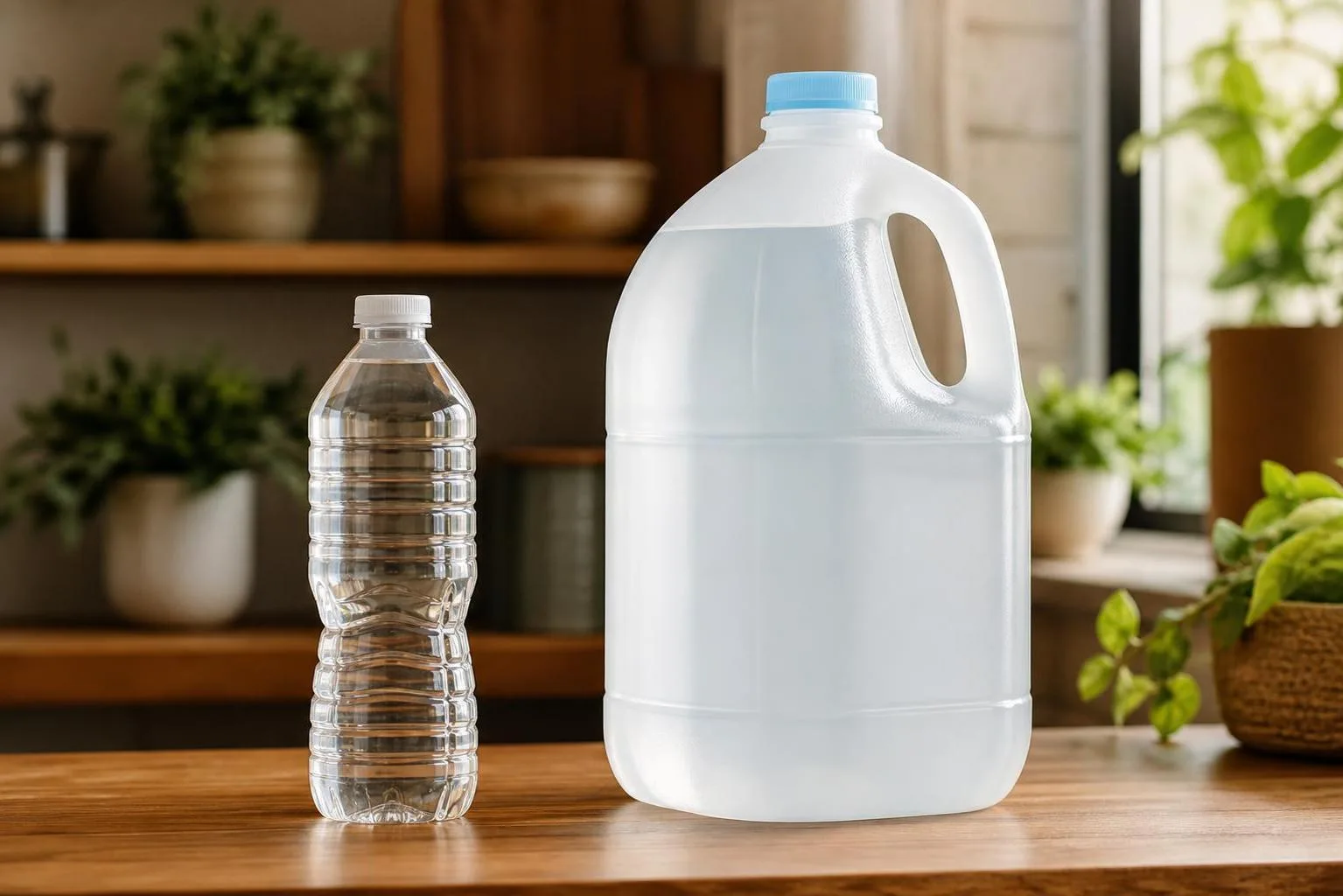
Common Gallon Size Mistakes
The biggest mistake is treating “a gallon” as one universal size.
In real measurement systems, a U.S. liquid gallon and an Imperial gallon are different, and that difference is large enough to ruin recipes, bar prep, fuel estimates, and inventory counts.
Myth: One gallon always equals the same number of litres
It depends which gallon you mean. The U.S. liquid gallon is legally defined as exactly 231 cubic inches, while the Imperial gallon is defined as exactly 4.54609 litres under U.K. measurement law.
| Gallon type | Exact litre equivalent | Common use |
| U.S. liquid gallon | 3.785411784 litres | United States beverages, fuel, household liquids |
| Imperial gallon | 4.54609 litres | United Kingdom and some Commonwealth contexts |
That means an Imperial gallon is about 20% larger than a U.S. gallon. If a supplier, recipe, or label just says “gallon,” confirm the country or standard before converting.
Myth: Four litres is “close enough” to a gallon
Four litres is a convenient mental shortcut, but it is not exact. For casual estimates it may work, but for wine batching, cocktail prep, or cost calculations, the error adds up quickly.
| Assumption | Compared with U.S. gallon | Error |
| 1 gallon = 4 litres | Actual is 3.785411784 litres | Over by 0.214588216 litres |
| 1 gallon = 4 litres | Actual is about 128 U.S. fluid ounces | Over by about 7.25 U.S. fluid ounces |
In bar terms, that overage is not tiny. It is roughly five 1.5-ounce pours, enough to affect batch consistency and inventory variance.
Myth: Dry gallons and liquid gallons are interchangeable
The U.S. dry gallon is not the same as the U.S. liquid gallon. It is based on the U.S. bushel system and is rarely used for modern beverage measurements.
| Measure | Approximate litres | Use |
| U.S. liquid gallon | 3.785411784 litres | Liquids such as wine, water, milk, and spirits |
| U.S. dry gallon | About 4.404884 litres | Dry-volume legacy measure |
- Do not round too early: Convert with 3.785411784 first, then round the final answer.
- Check the label language: “gal” in the U.S. usually means U.S. liquid gallon, not Imperial gallon.
- Avoid mixing ounce systems: U.S. fluid ounces and Imperial fluid ounces are different, even when both are called “ounces.”
- Use litres for precision: Litres are part of the SI-based metric system, making them clearer for international recipes and purchasing.
Common Questions
How many litres are in a gallon?
One U.S. liquid gallon equals exactly 3.785411784 litres. In everyday use, this is usually rounded to 3.785 litres or 3.79 litres.
Is a UK gallon the same as a U.S. gallon?
No. One imperial gallon, used in the UK and some Commonwealth contexts, equals exactly 4.54609 litres, making it about 20% larger than a U.S. gallon.
How many litres are in half a U.S. gallon?
Half of a U.S. liquid gallon is 1.892705892 litres. For practical measuring, that is commonly rounded to 1.89 litres.
How many gallons are in 1 litre?
One litre equals about 0.264172 U.S. gallons. Using the imperial system, 1 litre equals about 0.219969 imperial gallons.
Why do gallon-to-litre conversions vary?
They vary because “gallon” can mean either the U.S. liquid gallon or the imperial gallon. The litre is metric and fixed, but the gallon size depends on which measurement system is being used.
How many litres are in a U.S. quart?
A U.S. liquid quart equals 0.946353 litres because one U.S. gallon is divided into four quarts. This matters when reading American recipes and beverage labels, since 1 quart is slightly less than 1 litre and can affect measured liquid volumes.
What is the quickest way to convert U.S. gallons to litres?
Multiply the number of U.S. gallons by 3.78541 to get litres. For example, 5 U.S. gallons equals 18.927 litres, usually rounded to 18.93 litres. This method works for fuel, brewing, and large-volume kitchen measurements where metric units are required.
How many litres are in a U.S. fluid ounce?
One U.S. fluid ounce equals 0.0295735 litres, or 29.5735 millilitres, since a U.S. gallon contains 128 fluid ounces.
This conversion is useful for cocktails, wine service, and bottled drink sizes, where small imperial measurements often need precise metric equivalents.