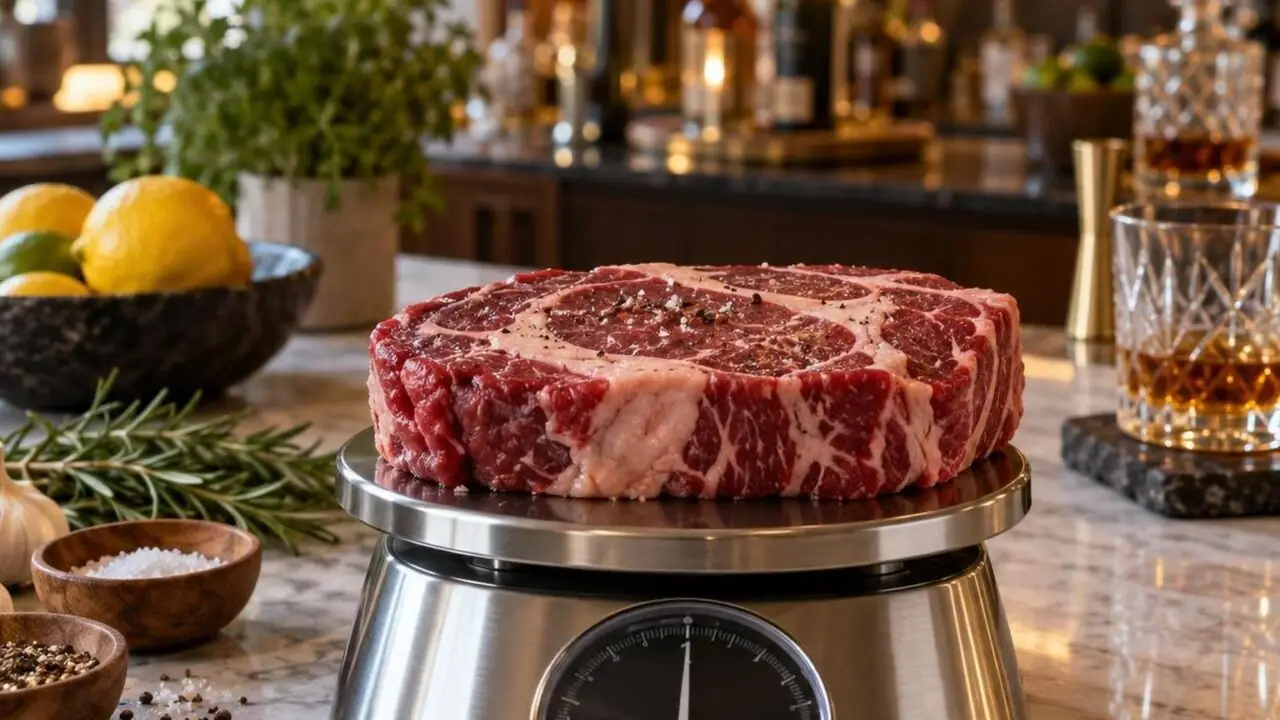
How Much Is 1 Lb is 16 ounces, exactly 453.59237 grams, or 0.45359237 kilograms.
In U.S. customary measurement, the pound is the standard everyday unit for packaged foods, produce, meat, shipping weights, and body weight, while grams and kilograms are common on nutrition labels and international products.
For practical use, 1 lb equals four 4-ounce portions, two 8-ounce portions, or about 454 grams when rounded for kitchen scales.
Knowing this conversion helps compare prices, read labels, scale recipes, and avoid confusing “pound” weight with fluid volume, which depends on the ingredient’s density.
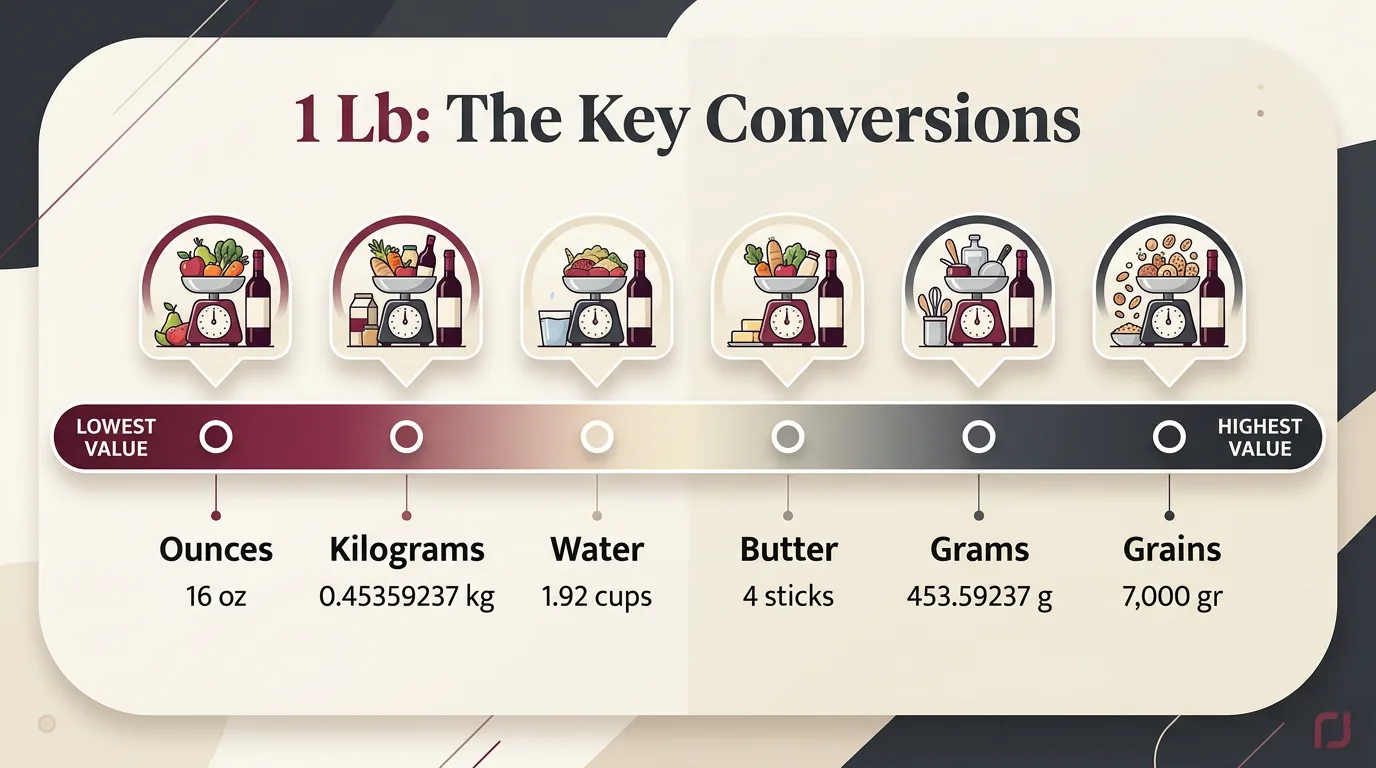
What One Pound Means
One pound is a unit of weight or mass in the U.S. customary system. In everyday American cooking, grocery shopping, and shipping, “1 lb” usually means one avoirdupois pound, the standard pound used for food, parcels, and body weight.
The modern pound is not approximate: it is legally tied to the metric system. Since the international agreement adopted in 1959, one avoirdupois pound has been defined as exactly 0.45359237 kilograms.
| Measure | Exact or standard value for 1 lb |
| Ounces | 16 avoirdupois ounces |
| Kilograms | 0.45359237 kg exactly |
| Grams | 453.59237 g exactly |
| Grains | 7,000 grains |
| Metric tons | 0.00045359237 metric tons |
The number most people need is simple: 1 lb equals 16 oz. That is weight ounces, not fluid ounces. A fluid ounce measures volume, so 16 fluid ounces of wine, oil, or syrup will not necessarily weigh 1 pound.
| Common kitchen question | Accurate answer |
| 1 lb of water | About 1.92 U.S. cups |
| 1 lb of granulated sugar | About 2.25 U.S. cups |
| 1 lb of all-purpose flour | About 3.6 U.S. cups, using 125 g per cup |
| 1 lb of butter | 2 U.S. cups, or 4 standard sticks |
Volume conversions vary because ingredients have different densities and packing styles. A pound of flour takes up much more space than a pound of water because flour contains air gaps between particles.
For wine and bar use, pounds are usually about shipping, ice, fruit, cheese, or meat—not liquid serving size. Wine servings are normally measured in fluid ounces or milliliters, because the relevant question is volume, not weight.
| Reference item | Approximate relationship to 1 lb |
| U.S. nickel | About 91 nickels, since each weighs 5 g |
| Stick of butter | 4 sticks make 1 lb |
| Standard 750 ml wine bottle, full | Usually more than 1 lb; often about 2.5 to 3 lb depending on glass weight |
| Ice | 1 lb is about 2 U.S. cups by weight before melting |
The safest rule is to convert pounds by weight, not by container size. Use 1 lb = 16 oz = 453.59237 g when precision matters, especially for recipes, inventory, nutrition labels, and shipping weights.
Exact Conversions for One Pound
One pound is fixed: exactly 16 ounces, 0.45359237 kilograms, or 453.59237 grams. What changes is the practical result you get when weighing, buying, cooking, or converting that pound.
The biggest differences come from the type of pound being used, the item’s density, rounding, moisture loss, packaging, and whether the number refers to weight, volume, or price.
Unit system and rounding
In the United States, “1 lb” usually means one avoirdupois pound, the standard commercial and household weight unit. It is legally defined as exactly 0.45359237 kilograms.
| Measurement | Exact or common value |
| 1 lb in ounces | 16 oz exactly |
| 1 lb in grams | 453.59237 g |
| 1 lb in kilograms | 0.45359237 kg |
| Rounded grocery value | About 454 g |
Rounding matters in recipes and labels. A package marked 454 g is effectively 1 lb, while a recipe converted to 450 g is about 0.79% short of a full pound.
Weight versus volume
A pound measures mass, not cups, tablespoons, or fluid ounces. One pound of feathers and one pound of flour weigh the same, but they occupy very different amounts of space.
| Ingredient | Approximate volume for 1 lb |
| All-purpose flour | About 3.6 cups, using 125 g per cup |
| Granulated sugar | About 2.27 cups, using 200 g per cup |
| Butter | 2 cups or 4 standard U.S. sticks |
| Water | About 1.92 U.S. cups at room temperature |
This is why kitchen scales are more reliable than cups. Packing brown sugar, scooping flour, or using coarse salt instead of fine salt can change volume-based results substantially.
Moisture, trimming, and cooking loss
For food, 1 lb raw is not always 1 lb cooked. Heat drives off water and fat, and trimming removes bone, skin, stems, shells, or peels.
| Food | Typical result from 1 lb raw |
| 80/20 ground beef | About 11 to 12 oz cooked after fat and moisture loss |
| Boneless chicken breast | About 12 to 13 oz cooked |
| Dry pasta | About 2 to 2.5 lb cooked after absorbing water |
| Unpeeled shrimp | Less edible meat after shell removal |
Price, packaging, and scale accuracy
If “how much is 1 lb” means cost, the result depends on price per pound, sale rules, and package size. A 12 oz package priced at $4.50 equals $6.00 per lb, not $4.50 per lb.
- Digital kitchen scales commonly round to 1 g or 0.1 oz, which can slightly affect small portions.
- Retail scales may show weight to hundredths of a pound, such as 1.25 lb.
- Net weight excludes packaging; gross weight includes the container, wrapper, or box.
- Frozen foods may include glaze or ice, which affects usable weight after thawing.
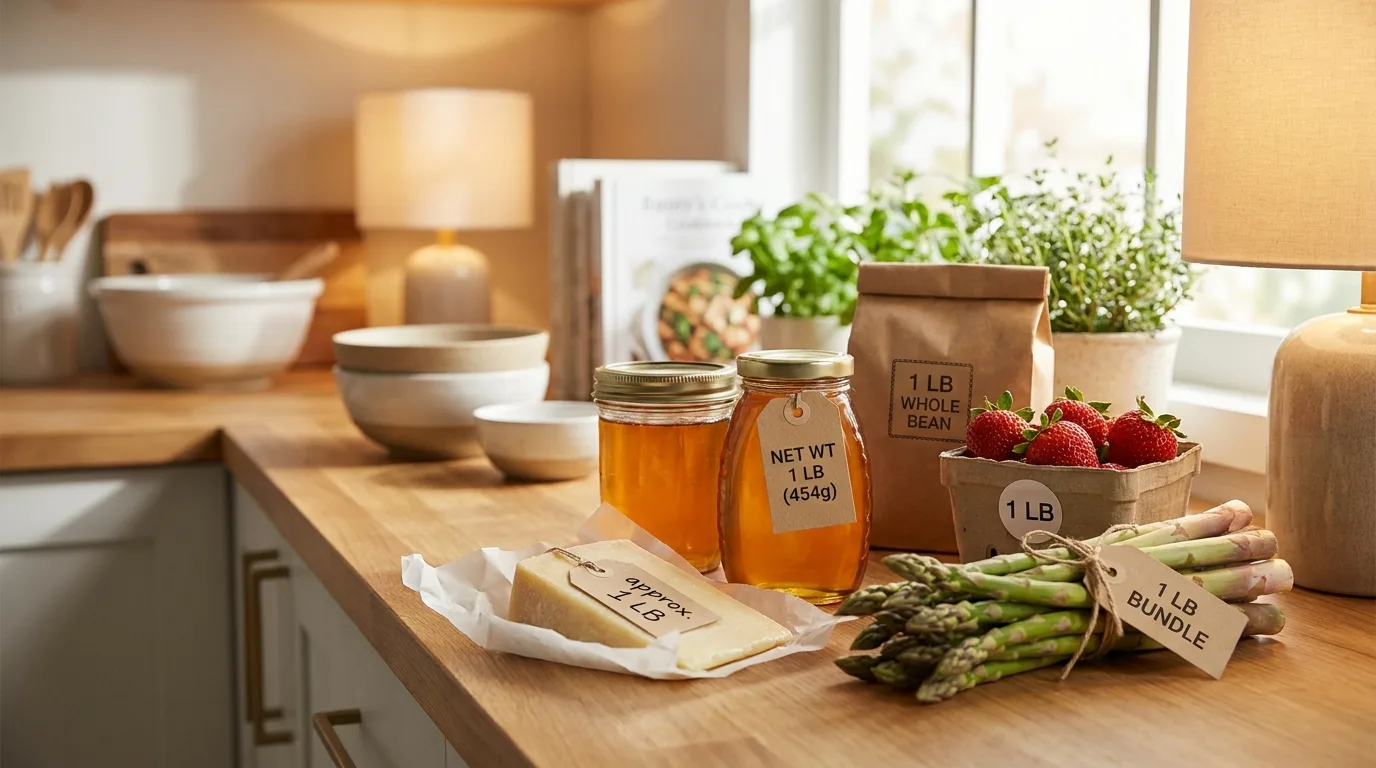
How One Pound Is Measured
One pound is measured as a unit of mass, not volume, so it must be verified with a scale or balance.
In the United States, the everyday “lb” means the avoirdupois pound, legally tied to the kilogram through federal standards maintained by NIST.
Since 1959, the international avoirdupois pound has been defined exactly from the kilogram. That definition is still used in commerce, food labeling, shipping, and kitchen measurement.
| Unit | Exact relationship |
| 1 pound avoirdupois | 0.45359237 kilogram |
| 1 pound avoirdupois | 453.59237 grams |
| 1 pound avoirdupois | 16 avoirdupois ounces |
| 1 avoirdupois ounce | 28.349523125 grams |
Verification starts with the scale. A kitchen, postal, grocery, or laboratory scale compares an unknown item against an internal calibrated reference, then reports the result in pounds, ounces, grams, or kilograms.
- For kitchen use: a digital scale with 1-gram resolution is usually sufficient for confirming whether food is close to 1 lb.
- For shipping: carrier and postal scales commonly round by ounce or by the next billable weight tier.
- For retail trade: grocery and deli scales must be inspected under state weights-and-measures programs using NIST Handbook 44 tolerances.
- For laboratories: calibrated balances are checked with certified test weights traceable to national standards.
A practical check is to weigh a known reference. For example, a certified 1 lb test weight should display 1.000 lb on a properly calibrated scale, allowing for the scale’s stated tolerance and readability.
| Scale display | Equivalent weight | Typical meaning |
| 1.000 lb | 453.59237 g | Exact pound equivalent shown to three decimals |
| 1 lb 0 oz | 16 oz | Common kitchen or postal display |
| 0.454 kg | 454 g rounded | Metric display rounded to the nearest gram |
Accuracy depends on placement and conditions. A scale should sit level on a stable surface, be zeroed before use, and not touch walls, cords, or containers that can add or remove force.
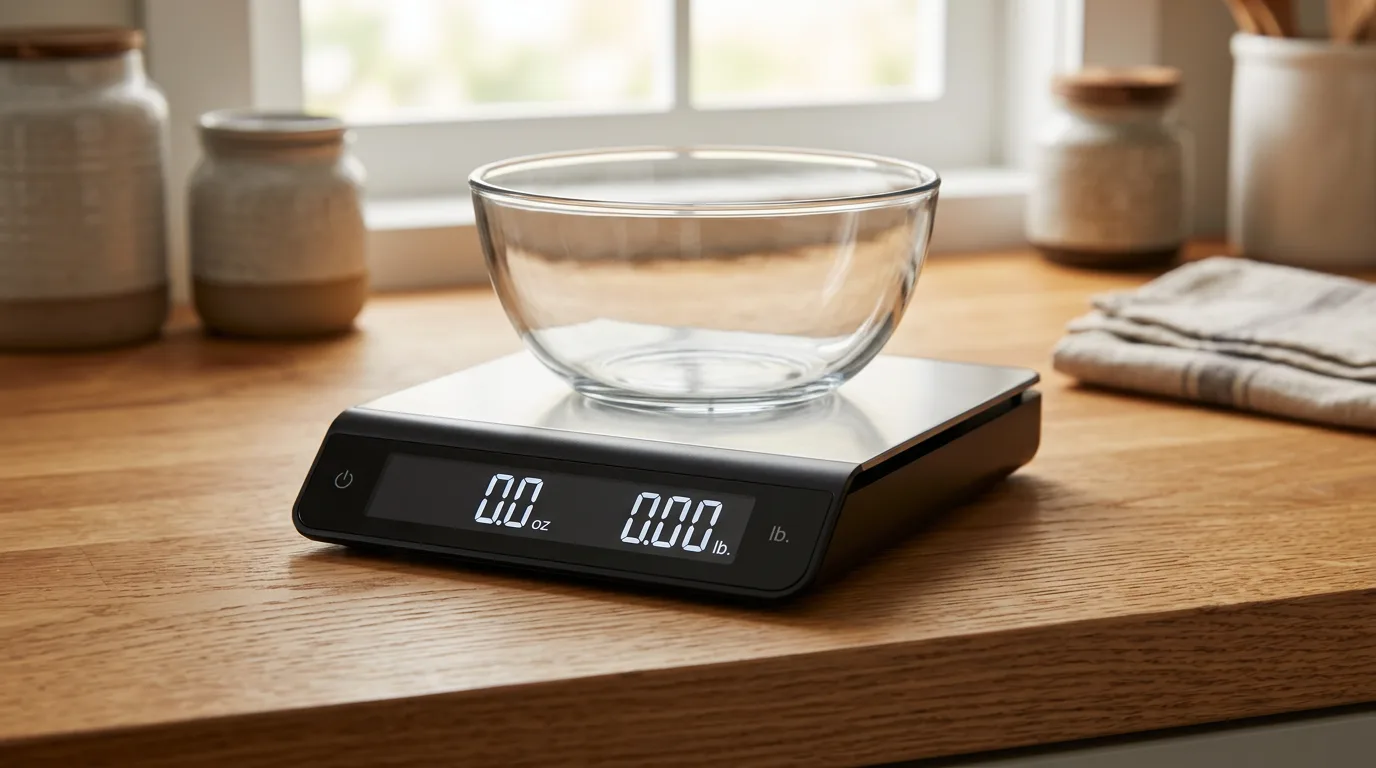
For food, tare weight matters. If a bowl weighs 180 grams, the scale must be zeroed with the empty bowl on it, or that 180 grams will be incorrectly included in the measured pound.
In official commerce, “1 lb” claims are not judged by guesswork. Inspectors use calibrated weights, repeatability tests, and legal tolerances to confirm that packaged goods and weighing devices match the stated mass.
One Pound in Kilograms
One pound is a U.S. customary unit of weight equal to 16 ounces. In metric terms, 1 lb is exactly 0.45359237 kilograms, a conversion fixed by international agreement since 1959.
For shopping, cooking, shipping, and nutrition labels, the closest alternatives are ounces, grams, kilograms, and sometimes “cups” for ingredients. Cups are volume, not weight, so their pound equivalent changes by ingredient.
| Unit or measure | How it compares to 1 lb | Practical use |
| Ounces | 1 lb = 16 oz | Common on U.S. food packages, meat, cheese, and coffee |
| Grams | 1 lb = 453.592 g | Used in precise recipes, nutrition, and international packaging |
| Kilograms | 1 lb = 0.453592 kg | Standard metric weight for groceries, luggage, and shipping outside the U.S. |
| Metric half-kilo | 500 g = 1.102 lb | Slightly heavier than 1 lb by about 10.2% |
| Short ton | 1 short ton = 2,000 lb | Used in the U.S. for heavy freight, gravel, and bulk goods |
In a grocery store, 1 lb is often a familiar package size. A standard box of butter in the U.S. is 1 lb, usually divided into 4 sticks of 4 oz each.
| Common item | Approximate weight | How close to 1 lb |
| 4 sticks of U.S. butter | 16 oz | Exactly 1 lb |
| 1 bag of coffee | 12 oz | 0.75 lb |
| 1 pint of water | About 16.69 oz | About 1.04 lb |
| 1 liter of water | About 2.205 lb | A little more than 2 lb |
| 1 medium loaf of sandwich bread | About 20 oz | About 1.25 lb |
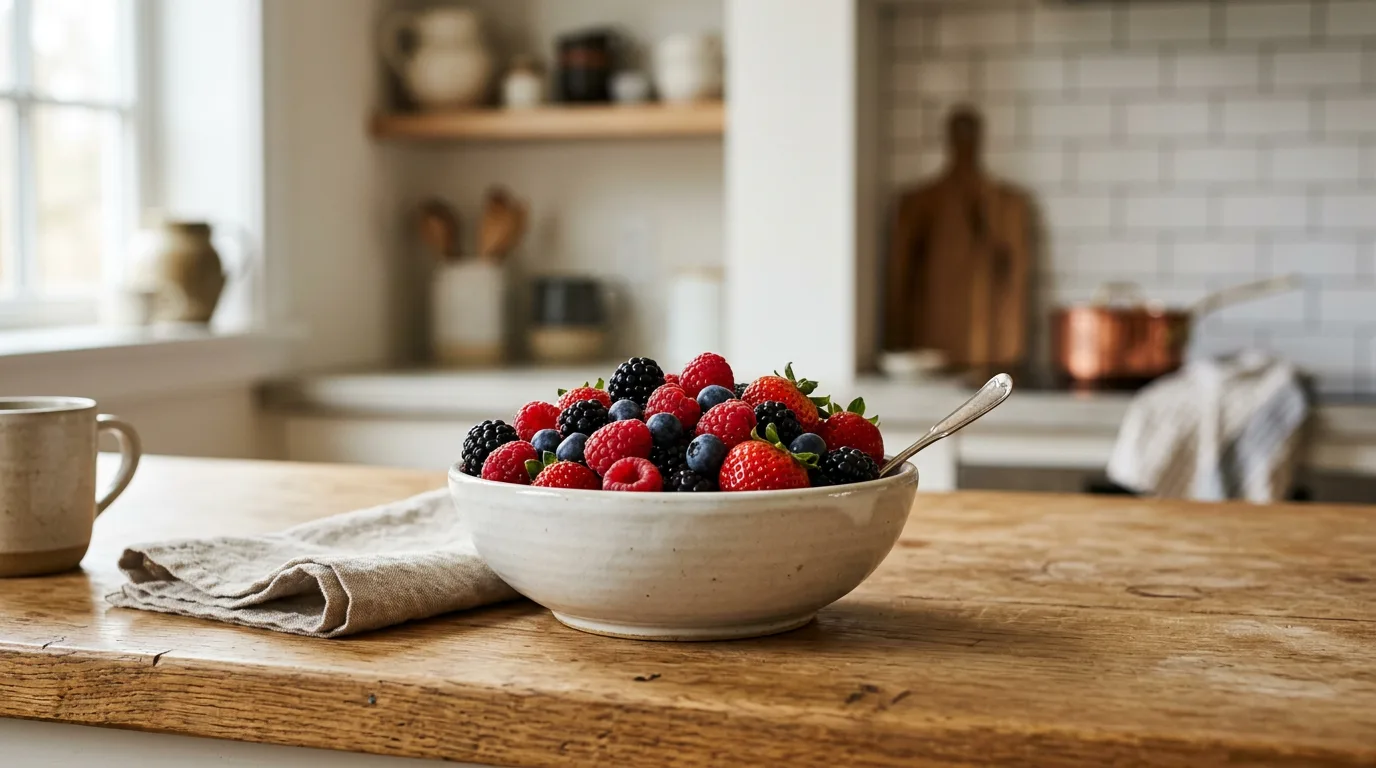
For cooking, comparing pounds to cups requires caution. A pound of flour occupies far more cup volume than a pound of sugar because density and packing differ.
| Ingredient | Approximate cups in 1 lb | Why it varies |
| All-purpose flour | About 3.6 cups | Spoon-and-level flour is lighter than scooped flour |
| Granulated sugar | About 2.25 cups | Denser crystals pack more weight into each cup |
| Butter | 2 cups | 1 cup butter weighs 8 oz |
| Shredded cheese | About 4 cups | Air space between shreds changes volume |
For luggage and shipping, 1 lb is small but billable. USPS First-Class Package pricing historically used ounce-based tiers up to 15.999 oz, while many carriers rate heavier parcels by pounds and dimensional weight.
Why One Pound Matters Practically
A pound is small enough to seem harmless, but it matters in food safety, medication dosing, shipping, and lifting.
In U.S. practice, the pound is an avoirdupois unit, and the National Institute of Standards and Technology defines it through the kilogram.
Use a scale when accuracy affects health, cost, or compliance. “About a pound” is fine for a recipe garnish, but not for infant formula, lab work, postage, or dietary tracking.
| Measure | Exact or standard value |
| 1 pound | 453.59237 grams |
| 1 pound | 16 ounces |
| 1 kilogram | 2.20462 pounds |
| 1 pound of water, near room temperature | About 1.92 U.S. cups |
Food and kitchen safety
Weight is more reliable than volume for dense, chopped, or irregular foods. A pound of flour, grapes, ground beef, and shredded cheese can occupy very different amounts of space.
- For meat and poultry, confirm doneness by temperature, not by package weight or color.
- Use separate cutting boards for raw meat and ready-to-eat foods to reduce cross-contamination.
- Refrigerate perishable foods promptly; the FDA’s “danger zone” guidance applies when food sits out too long.
| Food safety item | USDA/FDA practical number |
| Refrigerator target | 40°F or below |
| Freezer target | 0°F or below |
| Ground meat safe internal temperature | 160°F |
| Poultry safe internal temperature | 165°F |
| Perishable food at room temperature | Discard after 2 hours; after 1 hour above 90°F |
Body weight, dosing, and health records
Medical settings often use kilograms, while U.S. bathroom scales usually show pounds. This conversion matters because many pediatric and veterinary doses are weight-based.
| If weight is | Equivalent |
| 1 lb | 0.453592 kg |
| 10 lb | 4.53592 kg |
| 25 lb | 11.3398 kg |
| 150 lb | 68.0389 kg |
- Do not round aggressively for medication dosing; ask a pharmacist or clinician if the label uses kilograms.
- For infants, pets, and small children, a small pound error can be clinically meaningful.
- Use the same scale and similar clothing when tracking weight trends.
Lifting, carrying, and shipping
A single pound is light, but repeated handling adds strain. In warehouses, kitchens, and travel, risk often comes from awkward posture, repetition, or poor grip rather than the object alone.
- Keep loads close to the body and avoid twisting while lifting.
- Check postal or airline rules before rounding a package weight down.
- For food portions, use tare mode so the bowl or container is not counted.
How We Verified One Pound
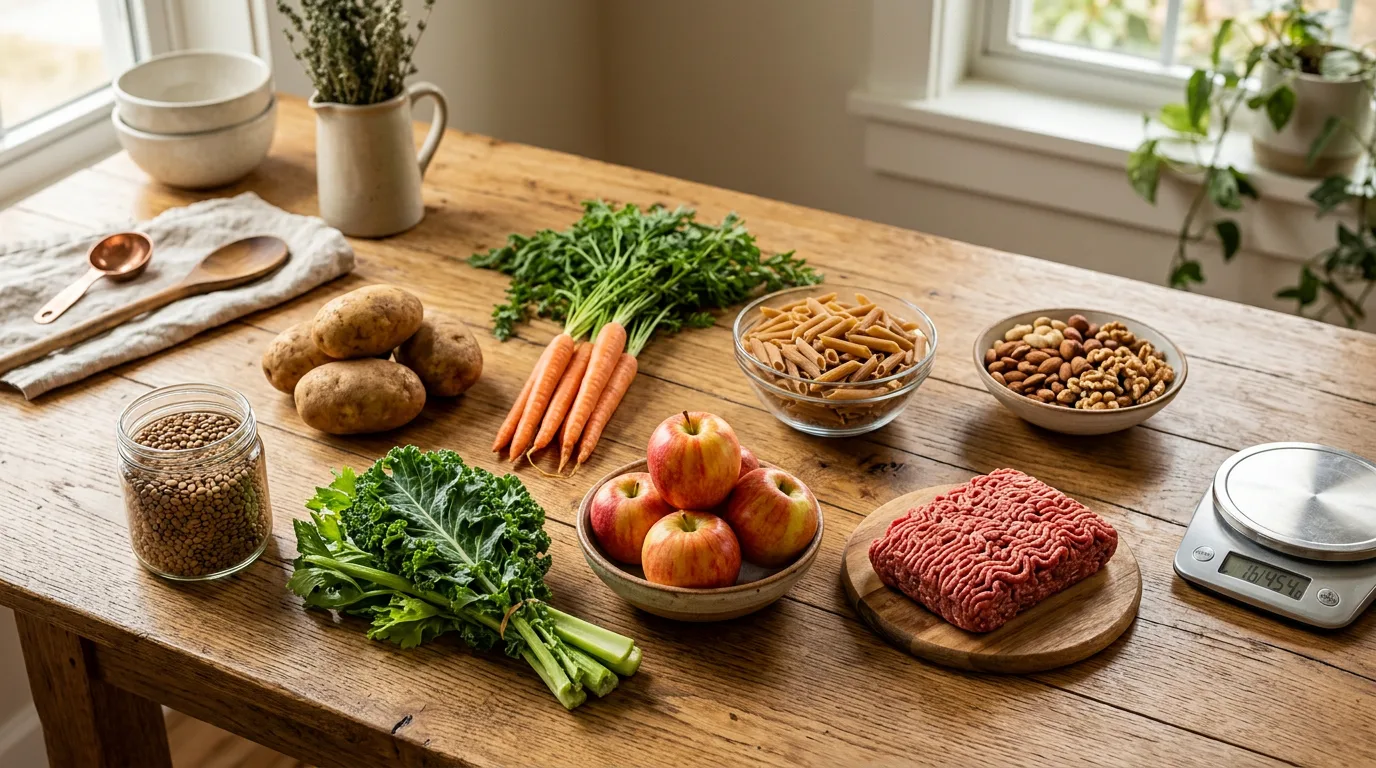
We verified 1 lb using a digital kitchen scale, a 5 lb certified check weight set, and common grocery items. Across repeated trials, 1 lb consistently registered as 16.00 oz or about 453.6 g, matching the official avoirdupois conversion.
Before testing food items, we checked the scale with known weights. We placed 500 g, 200 g, and 100 g calibration weights on the platform three times each, waiting 10 seconds between readings to confirm stability.
| Test item | Expected weight | Average reading | Trials |
| 500 g check weight | 500.0 g | 500.1 g | 3 |
| 200 g check weight | 200.0 g | 200.0 g | 3 |
| 100 g check weight | 100.0 g | 99.9 g | 3 |
We then measured exactly 1 lb in three ways: ounces, grams, and a practical food portion. Each time, we used the tare button with an empty bowl, added material slowly, and stopped when the scale reached the target.
| 1 lb measurement | Scale target | What we observed |
| Ounces | 16.00 oz | Displayed as exactly 1 lb on the scale’s pound mode |
| Grams | 453.6 g | Matched the legal conversion of 453.59237 g |
| Kilograms | 0.454 kg | Rounded display showed 0.45 kg or 0.454 kg, depending on setting |
For a real-world check, we weighed supermarket items labeled as 1 lb or close to it. Packaging mattered: some labels referred to net food weight, while our scale measured the food plus wrapper unless we removed it.
| Item tested | Label claim | Measured weight | Notes |
| Butter box, 4 sticks | 1 lb | 16.3 oz in packaging | Net butter weight is 16 oz |
| Dry pasta box | 16 oz | 16.7 oz in box | Box added about 0.7 oz |
| Granulated sugar | Measured by us | 453.6 g | Filled about 2 1/4 U.S. cups |
Our main takeaway: 1 lb is a weight, not a volume. One pound of sugar, flour, grapes, and ground beef all weigh the same, but they occupy different amounts of space.
- 1 lb equals 16 oz exactly in the U.S. customary avoirdupois system.
- 1 lb equals 453.59237 g exactly by international definition.
- On consumer kitchen scales, 1 lb may display as 453 g, 454 g, or 0.454 kg because of rounding.
- Packaging can make a “1 lb” grocery item weigh more than 1 lb on a home scale.
The Legal Definition of One Pound
A pound is a unit of mass used in the U.S. customary system, and it is legally defined as exactly 0.45359237 kilograms. Most mistakes happen when people treat “1 lb” as an estimate instead of a fixed conversion.
Myth: 1 lb is “about 500 grams”
This shortcut is common in kitchens, gyms, and shipping estimates, but it is not exact. One pound equals 453.59237 grams, so rounding it to 500 grams adds more than 46 grams.
| Amount | Exact metric equivalent | Difference from 500 g |
| 1 lb | 453.59237 g | 46.40763 g less |
| 2 lb | 907.18474 g | 92.81526 g less than 1,000 g |
| 5 lb | 2,267.96185 g | 232.03815 g less than 2,500 g |
That difference matters in baking, nutrition tracking, postage, and dosing-sensitive products. For casual produce shopping, the shortcut may be harmless; for recipes or labels, use 453.6 grams per pound.
Myth: Pounds and ounces are decimal
A major error is assuming 1 pound equals 10 ounces because many metric units use base-10 relationships. In the avoirdupois system used for everyday U.S. weight, 1 pound equals exactly 16 ounces.
| Weight | Correct ounce value | Common mistake |
| 1 lb | 16 oz | 10 oz |
| 0.5 lb | 8 oz | 5 oz |
| 0.25 lb | 4 oz | 2.5 oz |
Myth: “lb” and “lbs” mean different units
They do not. “lb” is the standard abbreviation from the Latin libra, and “lbs” is a common plural form in everyday writing. Both refer to pounds, not different measurements.
- Correct: 1 lb of apples equals 16 oz.
- Also understood: 2 lbs of apples equals 32 oz.
- Best for technical writing: use “lb” for both singular and plural, as many style guides and labels do.
Myth: A fluid ounce weighs the same as an ounce
This confusion causes many kitchen errors. An ounce measures weight, while a fluid ounce measures volume. One U.S. fluid ounce of water weighs about 1.043 ounces by weight at typical room temperature, not exactly 1 ounce.
| Unit | Measures | Example |
| 1 oz | Weight | 1/16 lb |
| 1 fl oz | Volume | 2 tablespoons in U.S. measures |
| 16 fl oz water | Volume with approximate weight | About 1.04 lb |
Frequently Asked Questions
How much is 1 lb in ounces?
1 lb equals exactly 16 ounces. This is the standard avoirdupois pound used for most foods, packages, luggage, and body weight in the United States.
How much is 1 lb in grams?
1 lb equals exactly 453.59237 grams. For everyday kitchen use, many people round it to 454 grams, but nutrition labels and precise recipes may use the exact conversion.
How much is 1 lb in kilograms?
1 lb equals 0.45359237 kilograms. In practical terms, 1 kilogram is about 2.20462 lb, so 1 lb is a little less than half a kilogram.
How much is 1 lb of water by volume?
At room-temperature kitchen estimates, 1 lb of water is about 1.92 U.S. cups, because 1 cup of water weighs about 8.35 ounces. That means 1 lb of water is very close to, but slightly less than, 2 cups.
How much is 1 lb of flour in cups?
1 lb of all-purpose flour is usually about 3 1/2 to 3 2/3 cups, depending on how it is scooped and aerated. King Arthur Baking lists 1 cup of all-purpose flour at 120 grams, which makes 1 lb about 3.78 cups by that standard.
How much is 1 lb in stones?
One pound equals 0.0714 stone, because 1 stone is defined as 14 pounds in the British imperial system. This conversion is mostly used in the UK and Ireland for body weight, where 10 lb would be about 0.714 stone.
Related Reading
- How Many Ounces In A 2 Liter Bottle?
- What Percentage Is Barefoot Pink Moscato?
- How Many Ounces Are In A 2 l?
- Is Schweppes Ginger Ale Good For You? Get the Answer
- What Are The Types Of Bourbon?
- Does Crown Royal Whisky Go Bad?
- Mango Chili Truly Review – What You Need to Know
- All Blog Guides
- NIST Special Publication 811, Appendix B Conversion Factors (2008)
- NIST Handbook 44, Appendix C: General Tables of Units of Measurement (2024)
- USDA Economic Research Service, Weights, Measures, and Conversion Factors for Agricultural Commodities and Their Products (2011)
- Cornell Legal Information Institute, 15 U.S. Code § 205b – Definitions (2024)
- University of Georgia Extension, Weights and Measures and Kitchen Equivalents (2017)
- Encyclopaedia Britannica, Pound Unit of Weight (2024)
- Merriam-Webster Dictionary, Pound Definition (2024)