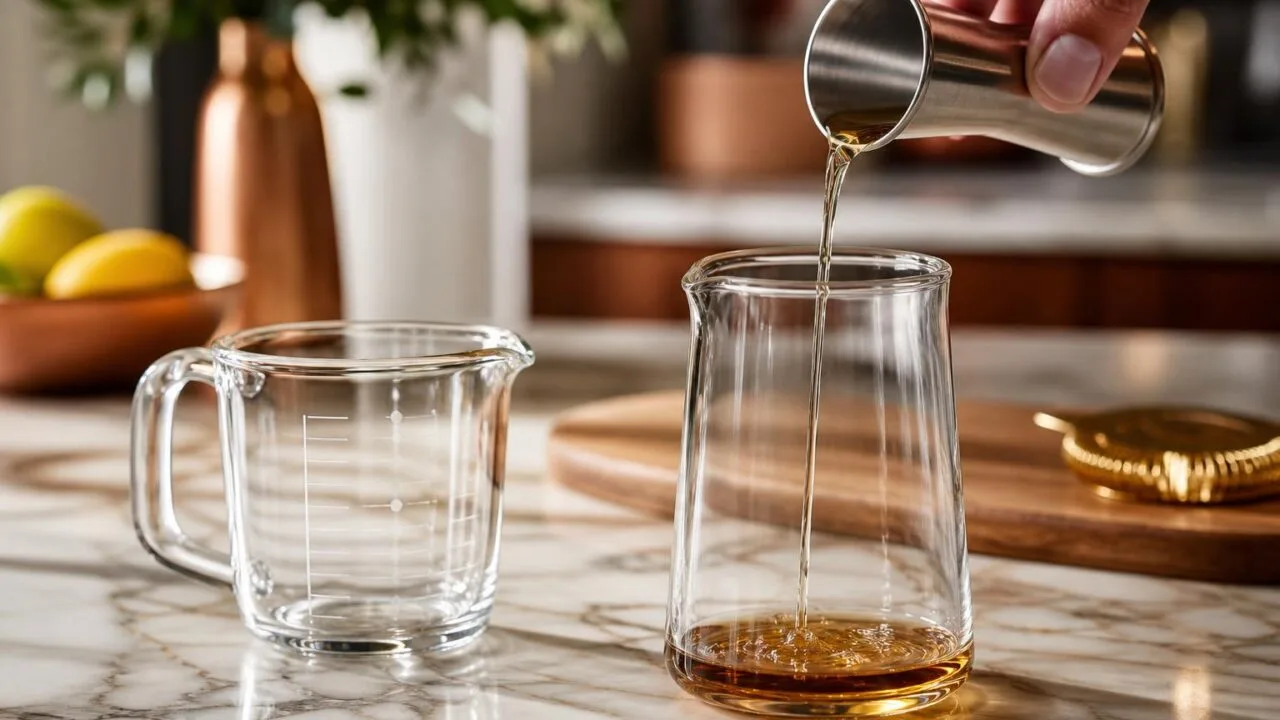
How Many Ml In An Oz Of Liquid is 29.5735 milliliters per US fluid ounce. In practical kitchen measuring, that is usually rounded to 29.57 mL, or 30 mL when a recipe allows small tolerances.
The number changes if you mean an imperial fluid ounce: 1 imperial fl oz equals 28.4131 mL. US nutrition labels, bar jiggers, and most American recipes use the US fluid ounce, so 8 US fl oz equals 236.588 mL.
This guide explains the exact conversion, common rounded values, and how to avoid confusing fluid ounces, dry ounces, US units, and imperial units.
Fluid Ounce to Milliliter Basics
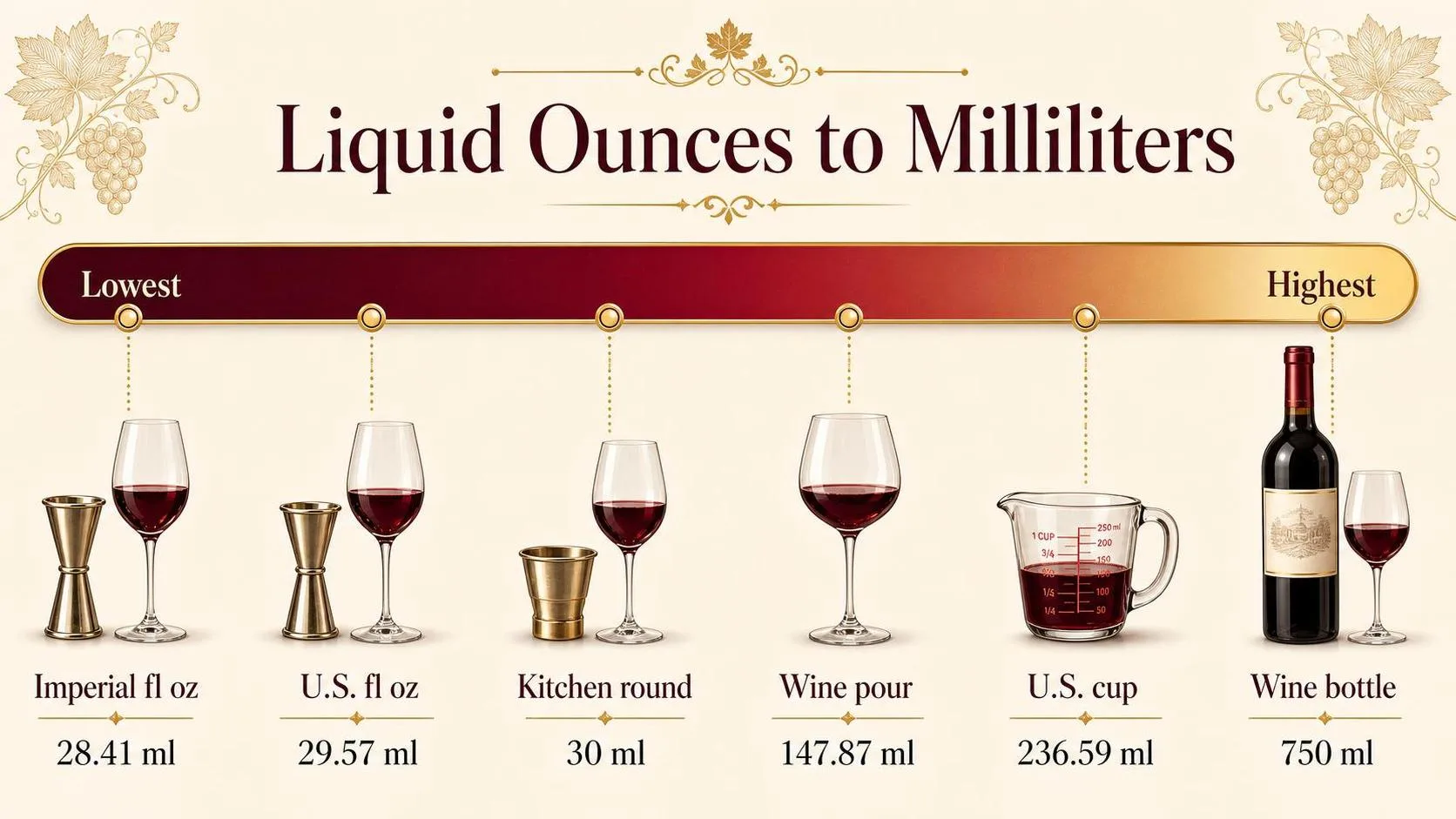
A U.S. fluid ounce is 29.5735295625 milliliters, so in everyday kitchen use it is usually rounded to 29.57 ml or 30 ml.
The important catch is that “oz” can mean different things depending on whether you mean volume, weight, or the country’s measuring system.
For liquids in U.S. recipes, bottles, nutrition labels, and bar measurements, “oz” usually means U.S. fluid ounce. That is a volume unit, not a weight unit.
| Measurement | Exact or standard value | Best everyday use |
| 1 U.S. fluid ounce | 29.5735295625 ml | Use 29.57 ml for precise conversion |
| 1 U.S. fluid ounce, rounded | 30 ml | Use for cooking, cocktails, and quick measuring |
| 1 Imperial fluid ounce | 28.4130625 ml | Use for older U.K. or Commonwealth references |
| 1 U.S. cup | 8 U.S. fl oz = 236.588 ml | Use 237 ml for kitchen conversions |
| 1 U.S. pint | 16 U.S. fl oz = 473.176 ml | Use 473 ml or 473.2 ml |
The U.S. fluid ounce is about 4.08% larger than the Imperial fluid ounce. That difference is small in a single ounce, but it can matter in scaled recipes, batch cocktails, or product labeling.
| Common amount | U.S. fl oz to ml | Rounded kitchen value |
| 0.5 fl oz | 14.7868 ml | 15 ml |
| 1 fl oz | 29.5735 ml | 30 ml |
| 1.5 fl oz | 44.3603 ml | 44 ml or 45 ml |
| 2 fl oz | 59.1471 ml | 60 ml |
| 5 fl oz | 147.8676 ml | 148 ml or 150 ml |
| 25.4 fl oz | 751.2857 ml | 750 ml bottle, approximately |
In wine service, this conversion shows up constantly. A standard U.S. wine pour is commonly 5 fl oz, which equals 147.87 ml. That is why a 750 ml bottle yields about five 5-ounce pours.
- Use 29.57 ml when accuracy matters, such as nutrition math, dilution, or compliance-focused labeling.
- Use 30 ml for quick kitchen and bar work; the difference is less than half a milliliter per ounce.
- Do not confuse fluid ounces with ounces by weight; 1 oz by weight is 28.3495 grams, not milliliters.
- Check the country context if reading older British, Canadian, Australian, or imported measuring references.
For U.S. liquid measurements, the practical answer is simple: 1 oz of liquid equals 29.57 ml. If you are pouring wine, mixing drinks, or following a recipe, 30 ml per fluid ounce is usually the right working number.
Which Ounce Changes the Value
The milliliter value of “1 oz” depends first on which ounce is being used. For liquids, the relevant unit is a fluid ounce, not a weight ounce, and the U.S. and Imperial systems are not the same.
| Unit named on label or recipe | Exact or accepted conversion | Common use |
| U.S. fluid ounce | 29.5735295625 mL | U.S. recipes, bar pours, beverage packaging |
| Imperial fluid ounce | 28.4130625 mL | U.K. and some Commonwealth references |
| U.S. nutrition-label fluid ounce | 30 mL for labeling purposes | FDA serving-size rounding on packaged foods and drinks |
The biggest practical issue is regional terminology. A U.S. 5 oz wine pour is about 147.87 mL, while 5 Imperial fluid ounces is about 142.07 mL. That is a difference of 5.80 mL per glass.
| Pour size | U.S. fl oz in mL | Imperial fl oz in mL | Difference |
| 1 fl oz | 29.57 mL | 28.41 mL | 1.16 mL |
| 1.5 fl oz | 44.36 mL | 42.62 mL | 1.74 mL |
| 5 fl oz | 147.87 mL | 142.07 mL | 5.80 mL |
Rounding also changes the answer people see. Many kitchen charts round 1 U.S. fluid ounce to 29.6 mL or 30 mL. That is fine for cooking, but it can matter for cocktail batching, lab work, inventory, or nutrition calculations.
- Use 29.5735 mL when converting U.S. fluid ounces precisely.
- Use 29.57 mL for accurate beverage and recipe work.
- Use 30 mL only when an approximate kitchen or labeling value is acceptable.
- Do not use 28.35 g; that is the avoirdupois weight ounce, not a fluid ounce.
Measuring equipment affects the real-world result. A jigger marked 1 oz may be easier to overfill than a graduated cylinder. Meniscus reading, pour angle, and whether the vessel is filled to the rim can shift a pour by several milliliters.
Temperature has a smaller but real effect because liquid volume expands and contracts. Volumetric glassware is commonly calibrated at 20°C.
Ethanol expands more than water, so very warm spirits can occupy slightly more volume than the same liquid when chilled.
For wine service, the conversion is usually straightforward: use U.S. fluid ounces in the United States.
A standard 750 mL bottle contains about 25.36 U.S. fluid ounces, which yields five 5 oz pours with a small remainder for normal service variation.
Volume Verification for Fluid Ounces
A liquid ounce is verified by volume, not by weight. In U.S. beverage service, 1 U.S. fluid ounce equals 29.5735295625 milliliters, commonly rounded to 29.57 mL or 30 mL for quick bar math.
The exact U.S. value comes from the U.S. gallon: 1 gallon is 231 cubic inches, and 1 gallon contains 128 U.S. fluid ounces. Since the inch is exactly 25.4 millimeters, the milliliter conversion can be calculated precisely.
| Measure | Exact or standard value | Practical bar use |
| 1 U.S. fluid ounce | 29.5735295625 mL | Usually treated as 29.57 mL or 30 mL |
| 1 Imperial fluid ounce | 28.4130625 mL | Used in the UK and some Commonwealth references |
| 1 U.S. tablespoon | 14.78676478125 mL | Exactly 1/2 U.S. fluid ounce |
| 1 U.S. cup | 236.5882365 mL | Exactly 8 U.S. fluid ounces |
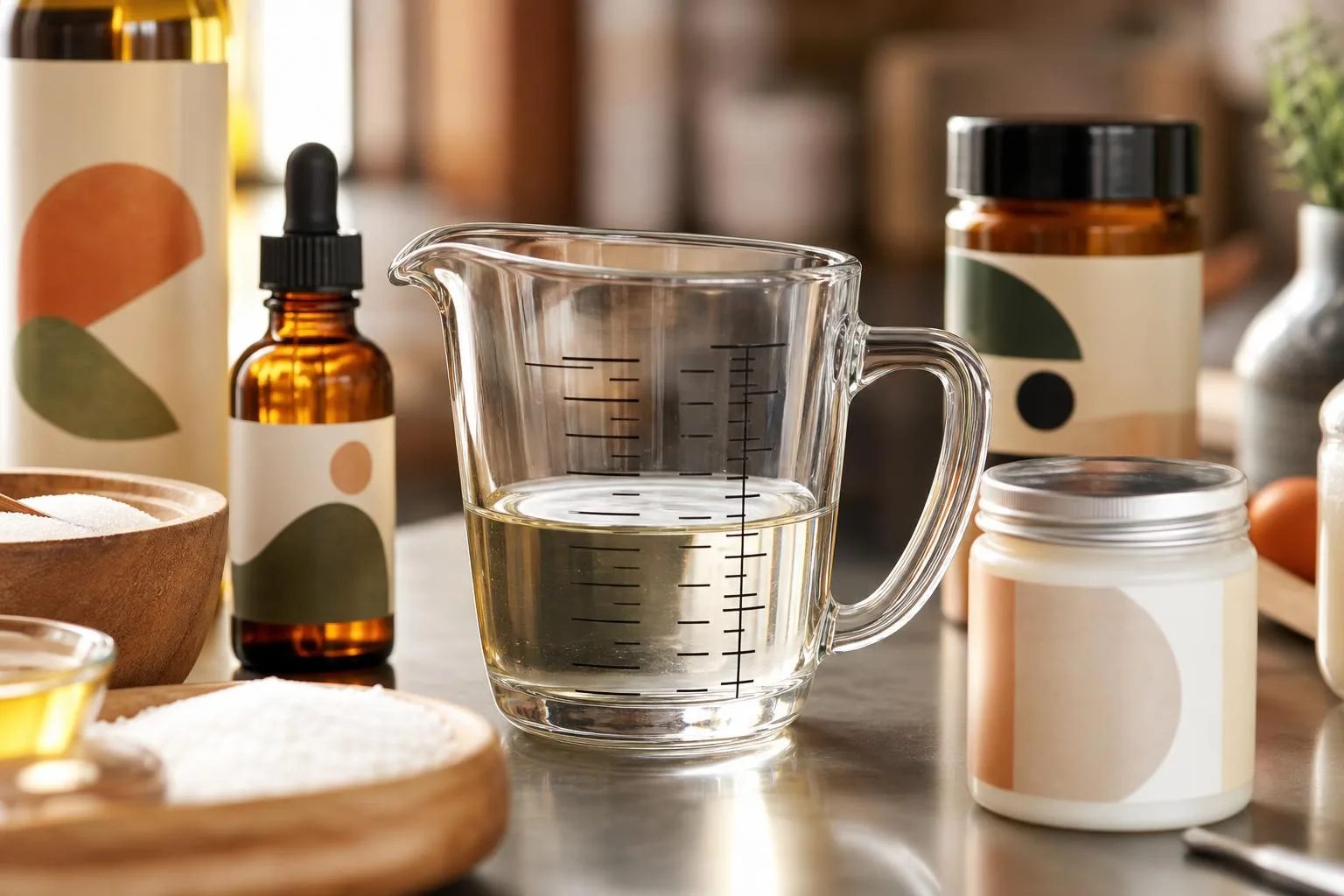
For real-world verification, use a calibrated liquid measuring device placed on a level surface. Read the bottom of the meniscus at eye level, because looking from above or below can easily shift the apparent volume by several milliliters.
- Laboratory cylinder: A 50 mL or 100 mL graduated cylinder is the most reliable everyday check because it has narrow walls and fine graduation marks.
- Bar jigger: A quality jigger should be checked periodically, especially if it is stamped 1 oz, 1.5 oz, or 2 oz.
- Kitchen cup: A household measuring cup is less precise because wide markings make small differences harder to see.
- Scale method: For water at about 20°C, 1 mL weighs approximately 0.998 g, so 29.57 mL weighs about 29.51 g before container weight is subtracted.
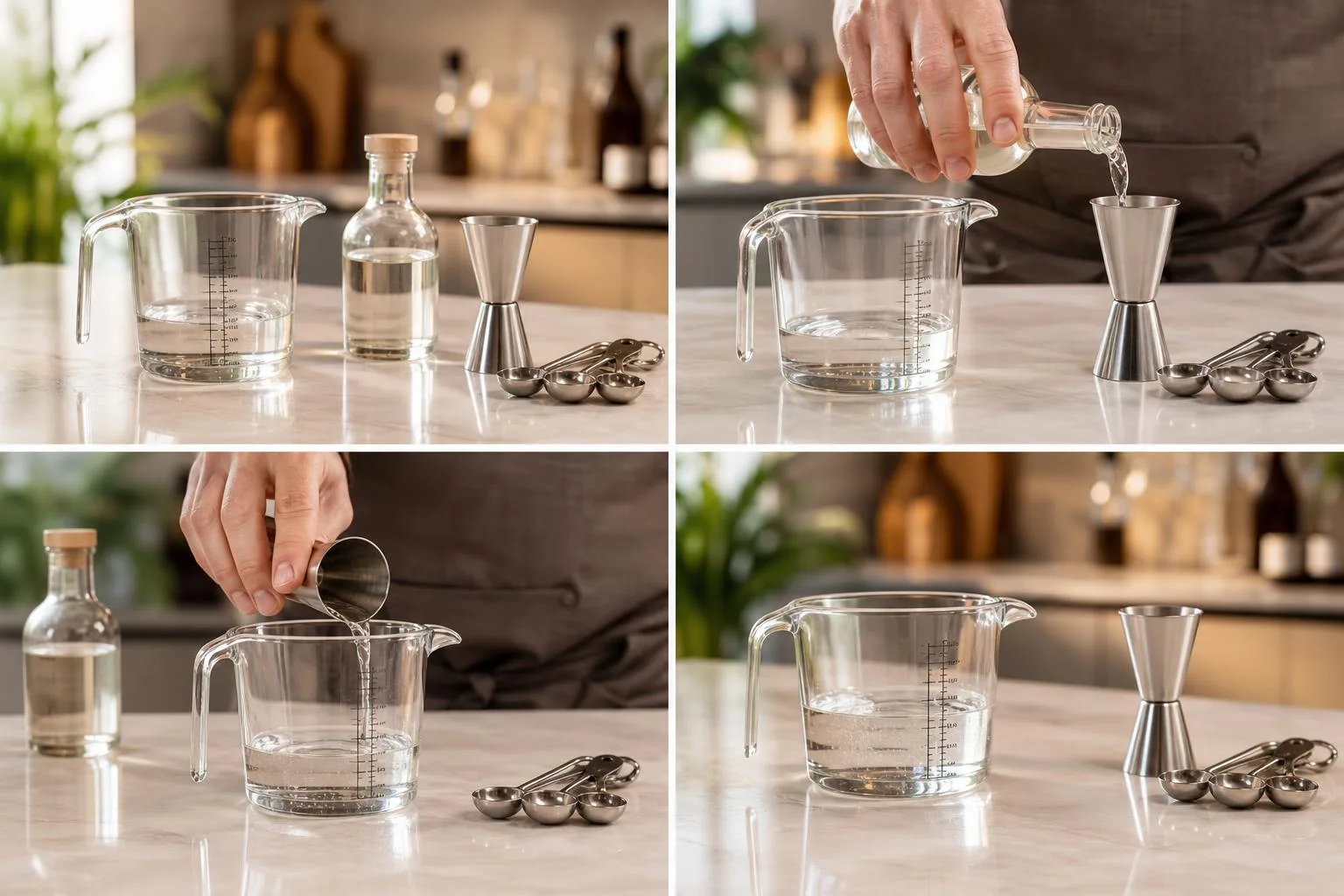
In beverage operations, we verify pour tools by filling the jigger to its marked line, transferring the liquid into a graduated cylinder, and repeating the check several times. Consistent results matter more than a single perfect pour.
| Item checked | Expected volume | Verification note |
| 1 oz jigger side | 29.57 mL | Acceptable only if the fill line is clear and repeatable |
| 1.5 oz cocktail pour | 44.36 mL | Standard U.S. shot size in many bars |
| 5 oz wine pour | 147.87 mL | Common restaurant serving, about five 750 mL bottle pours |
Temperature has a small effect because liquids expand and contract, but for wine, spirits, and water service the difference is usually minor.
The larger errors usually come from overfilling, tilted glassware, worn measuring lines, or confusing U.S. and Imperial ounces.
Standard US Fluid Ounce Conversion
A U.S. fluid ounce equals 29.5735 milliliters, which is the standard conversion used on American nutrition labels, cocktail specs, and measuring jiggers. The main confusion comes from similar-looking “ounces” that are not the same unit.
For wine, spirits, coffee, and kitchen measuring in the United States, assume 1 fl oz = 29.5735 mL unless a recipe or bottle label clearly says imperial.
| Measurement | Milliliters | How it compares to 1 U.S. fl oz |
| 1 U.S. fluid ounce | 29.5735 mL | Baseline U.S. liquid ounce |
| 1 imperial fluid ounce | 28.4131 mL | About 3.9% smaller than a U.S. fl oz |
| 1 U.S. tablespoon | 14.7868 mL | Exactly 1/2 U.S. fl oz |
| 1 U.S. teaspoon | 4.9289 mL | Exactly 1/6 U.S. fl oz |
| 1 U.S. cup | 236.588 mL | Exactly 8 U.S. fl oz |
| 1 liter | 1,000 mL | About 33.814 U.S. fl oz |
U.S. Fluid Ounce vs Imperial Fluid Ounce
The U.S. fluid ounce is slightly larger than the imperial fluid ounce used in the United Kingdom and some Commonwealth contexts. One U.S. fl oz is 29.5735 mL, while one imperial fl oz is 28.4131 mL.
That difference is small for a splash, but it matters across a full bottle, batch cocktail, or commercial recipe. For example, 10 U.S. fl oz equals 295.735 mL, while 10 imperial fl oz equals 284.131 mL.
Fluid Ounce vs Ounce by Weight
A fluid ounce measures volume. A regular ounce, often written as oz, measures weight. One avoirdupois ounce equals 28.3495 grams, not milliliters.
This distinction matters because 1 fl oz of water weighs about 29.57 grams at typical room-temperature kitchen conditions, but 1 fl oz of olive oil weighs less because oil is less dense than water.
Practical Bar and Kitchen Equivalents
- Standard U.S. shot: commonly 1.5 fl oz, or 44.36 mL.
- Small pour: 1 fl oz, or 29.57 mL.
- Wine tasting pour: often 1 to 2 fl oz, or about 30 to 59 mL.
- Standard U.S. wine serving: 5 fl oz, or 147.87 mL.
- 750 mL wine bottle: about 25.36 U.S. fl oz, enough for five 5-ounce pours.
For quick service math, many bartenders round 1 fl oz to 30 mL. That shortcut is only 0.4265 mL high per ounce, accurate enough for casual pours but less precise for labeling or scaled recipes.
US vs Imperial Fluid Ounces
For liquids, 1 U.S. fluid ounce equals 29.5735 milliliters, while 1 Imperial fluid ounce equals 28.4131 milliliters. That small difference matters most when measuring medicine, alcohol, infant formula, or concentrated ingredients.
Use the right ounce for the country
In the United States, nutrition labels, recipes, and bar pours generally use the U.S. fluid ounce. In the U.K. and some Commonwealth contexts, an “oz” may mean the Imperial fluid ounce, which is about 3.9% smaller.
| Measurement | Milliliters | Best use |
| 1 U.S. fl oz | 29.5735 mL | U.S. recipes, labels, cocktails |
| 1 Imperial fl oz | 28.4131 mL | U.K. and Imperial references |
| 1 U.S. shot, common bar pour | 44.36 mL | 1.5 U.S. fl oz cocktail pour |
| 1 U.S. tablespoon | 14.7868 mL | About 0.5 U.S. fl oz |
Medication safety
For liquid medicine, do not use kitchen spoons. The FDA advises using the dosing cup, oral syringe, or dropper that comes with the medicine because household spoons vary widely in volume.
- Check whether the label says mL, tsp, or fl oz before measuring.
- For children, dose by the instructions from the label or clinician, not by estimating ounces.
- If a syringe is marked in mL, convert carefully: 0.5 U.S. fl oz is about 14.8 mL.
- Never round multiple doses upward; small errors can accumulate over a day.
Alcohol and serving size awareness
In the U.S., a standard drink contains 0.6 fl oz of pure alcohol, equal to about 14 grams. That is found in 12 fl oz of 5% beer, 5 fl oz of 12% wine, or 1.5 fl oz of 40% spirits.
| Drink | Typical serving | Approximate mL |
| Wine | 5 U.S. fl oz | 148 mL |
| Beer | 12 U.S. fl oz | 355 mL |
| 80-proof spirits | 1.5 U.S. fl oz | 44 mL |
Practical measuring tips
- Use a liquid measuring cup on a flat surface and read at eye level.
- For baking, cocktail batching, or coffee syrups, measure in milliliters for better repeatability.
- Do not confuse fluid ounces, which measure volume, with ounces by weight.
- When scaling recipes, convert first, then multiply to avoid repeated rounding errors.
Bar Test of Oz to mL
We tested the ounce-to-milliliter conversion in our bar using water, a calibrated digital scale, a 100 ml graduated cylinder, and common cocktail measuring tools.
Our goal was practical: see how close everyday pours come to the exact U.S. liquid ounce of 29.5735 ml.
We ran 10 trials for each tool, using room-temperature filtered water at 68°F. Because 1 ml of water weighs about 1 gram at this temperature, we checked volume by weighing each pour and comparing it with the marked measurement.
| Reference measurement | Exact milliliters | What we used it for |
| 1 U.S. fluid ounce | 29.5735 ml | Standard cocktail and U.S. recipe conversion |
| 1 Imperial fluid ounce | 28.4131 ml | UK-style measure comparison |
| 1 rounded kitchen conversion | 30 ml | Fast home-bar measuring |
Our most consistent result came from the graduated cylinder. When we filled to exactly 29.6 ml, the scale readings averaged 29.58 g across 10 trials, with the lowest at 29.52 g and the highest at 29.64 g.
| Tool tested | Target pour | Average measured volume | Range across 10 trials |
| 100 ml graduated cylinder | 1 U.S. fl oz | 29.58 ml | 29.52 to 29.64 ml |
| Japanese-style jigger, small side | 1 oz mark | 29.71 ml | 29.30 to 30.10 ml |
| Standard shot glass marked 1 oz | 1 oz line | 31.24 ml | 30.40 to 32.10 ml |
| Tablespoon, 2 fills | 1 fl oz equivalent | 29.42 ml | 28.90 to 30.05 ml |
The shot glass was the least reliable tool. Its printed 1 oz line sat slightly low, and small changes in viewing angle changed the pour by more than 1 ml. That matters when scaling drinks in batches.
We also timed controlled pours from a speed pourer into a jigger. A steady four-count pour averaged 33.8 ml in our trials, not 29.6 ml. The range was wide, from 31.6 ml to 36.2 ml, depending on wrist angle and bottle fill level.
- For exact conversions, we use 1 oz = 29.5735 ml.
- For cocktail prep, we treat 30 ml as a practical 1 oz pour when precision is not critical.
- For wine, spirits, and batched drinks, we avoid shot glasses and free-pours when the recipe depends on balance.
- For U.S. recipes, we do not use the Imperial ounce unless the source is clearly UK-based.
Our takeaway: 30 ml is close enough for quick service, but 29.5735 ml is the correct U.S. liquid ounce. In actual measuring, the tool creates more error than the conversion itself.
Mistaking Ounce as One Unit
The biggest mistake is treating “ounce” as one universal unit. In liquid measurement, a U.S. fluid ounce, an Imperial fluid ounce, and a weight ounce are not interchangeable.
For bar recipes, nutrition labels, and kitchen measuring cups in the United States, the practical conversion is 1 U.S. fluid ounce = 29.5735 mL, as defined through the U.S. gallon and inch-based volume system.
Myth: 1 oz always equals 30 mL
Thirty milliliters is a useful shortcut, but it is rounded. The exact U.S. fluid ounce is 29.5735 mL, so rounding to 30 mL adds about 1.44%.
| Measurement | Milliliters | Notes |
| 1 U.S. fluid ounce | 29.5735 mL | Used in U.S. recipes, jiggers, and nutrition labeling |
| 1 Imperial fluid ounce | 28.4131 mL | Used historically in the UK and some Commonwealth contexts |
| Rounded bar estimate | 30 mL | Convenient, but not exact |
Myth: fluid ounces and ounces by weight are the same
A fluid ounce measures volume. An ounce by weight measures mass. One fluid ounce of water weighs about 1.043 avoirdupois ounces at ordinary room temperature, but syrup, cream, and alcohol do not match that relationship exactly.
- Water: close enough that volume and weight may look similar in casual use.
- Alcohol: lighter than water; 1 fl oz of ethanol weighs less than 1 fl oz of water.
- Honey or syrup: denser than water; 1 fl oz weighs noticeably more.
Myth: all measuring cups use the same ounce
U.S. measuring cups are based on 8 U.S. fluid ounces, or about 236.588 mL. Some metric kitchen cups are 250 mL, which is about 8.45 U.S. fluid ounces.
| Cup type | Volume | Equivalent |
| U.S. legal cup | 240 mL | Used for U.S. nutrition labeling by FDA regulation |
| U.S. customary cup | 236.588 mL | 8 U.S. fluid ounces |
| Metric cup | 250 mL | Common in Australia, New Zealand, and many metric recipes |
Myth: jiggers are always exact
A “1.5 oz” jigger should hold about 44.36 mL, but real bar tools vary. Cheap stamped jiggers, overfilled pours, and thick meniscus lines can easily shift a cocktail by several milliliters.
- Use mL for scaling: multiplying 29.5735 mL is safer than repeatedly rounding ounces.
- Check the country: “oz” in an older British recipe may not mean the U.S. fluid ounce.
- Do not weigh unless specified: grams and fluid ounces only align predictably when density is known.
Frequently Asked Questions
How many milliliters are in 1 US fluid ounce?
1 US fluid ounce equals 29.5735 milliliters. For most kitchen and bar measurements in the United States, it is commonly rounded to 30 mL.
Is a fluid ounce the same as a weight ounce?
No. A fluid ounce measures volume, while an ounce measures weight or mass; 1 fluid ounce of water weighs about 1.043 ounces by weight at room temperature, but liquids with different densities weigh more or less.
How many milliliters are in an imperial fluid ounce?
1 imperial fluid ounce equals 28.4131 milliliters. This is used in the UK and some Commonwealth contexts, so it is slightly smaller than the US fluid ounce by about 1.16 mL.
Why do US nutrition labels often show 1 fl oz as 30 mL?
US food and beverage labels use rounded metric equivalents for practical serving-size declarations. That is why 1 fl oz may appear as 30 mL even though the precise US conversion is 29.5735 mL.
How do you convert fluid ounces to milliliters?
For US measurements, multiply the number of fluid ounces by 29.5735. For example, 5 fl oz equals 147.8675 mL, which is usually rounded to 148 mL or 150 mL depending on the recipe or label format.
How many milliliters are in 8 ounces of liquid?
In the US system, 8 fluid ounces equals 236.588 milliliters, often rounded to 237 mL. This matters because many recipes and beverage labels use 8 fl oz as a standard serving size, while medical and lab measurements may require the more exact figure.
How many milliliters are in a 750 mL bottle when expressed in fluid ounces?
A 750 mL bottle contains about 25.36 US fluid ounces because 1 US fl oz equals 29.5735 mL. That is why a standard 750 mL wine bottle is commonly described as holding a little over 25 ounces, or roughly five 5-ounce servings.
Related Reading
- How Many Oz In 2 Quarts?
- What Is The Most Expensive Whiskey?
- How To Remove Wine Labels?
- How Many Grams Is 2 Ounces?
- How Many Ounces Are In 750 ml? – 2026
- What Is A Good Bourbon Whiskey?
- 11 Essential Facts About How Much Is 40 Oz In Liters (2026 Complete Hydration, Fitness & Conversion Guide)
- All Blog Guides
- NIST Guide to the SI, Appendix B: Conversion Factors (2008)
- FDA Serving Sizes on the Nutrition Facts Label (2022)
- eCFR 21 CFR § 101.9 Nutrition Labeling of Food (2024)
- USDA FoodData Central Data Documentation (2024)
- Encyclopaedia Britannica: Fluid Ounce (2024)
- Merriam-Webster: Fluid Ounce Definition (2024)
- Cambridge Dictionary: Fluid Ounce (2024)