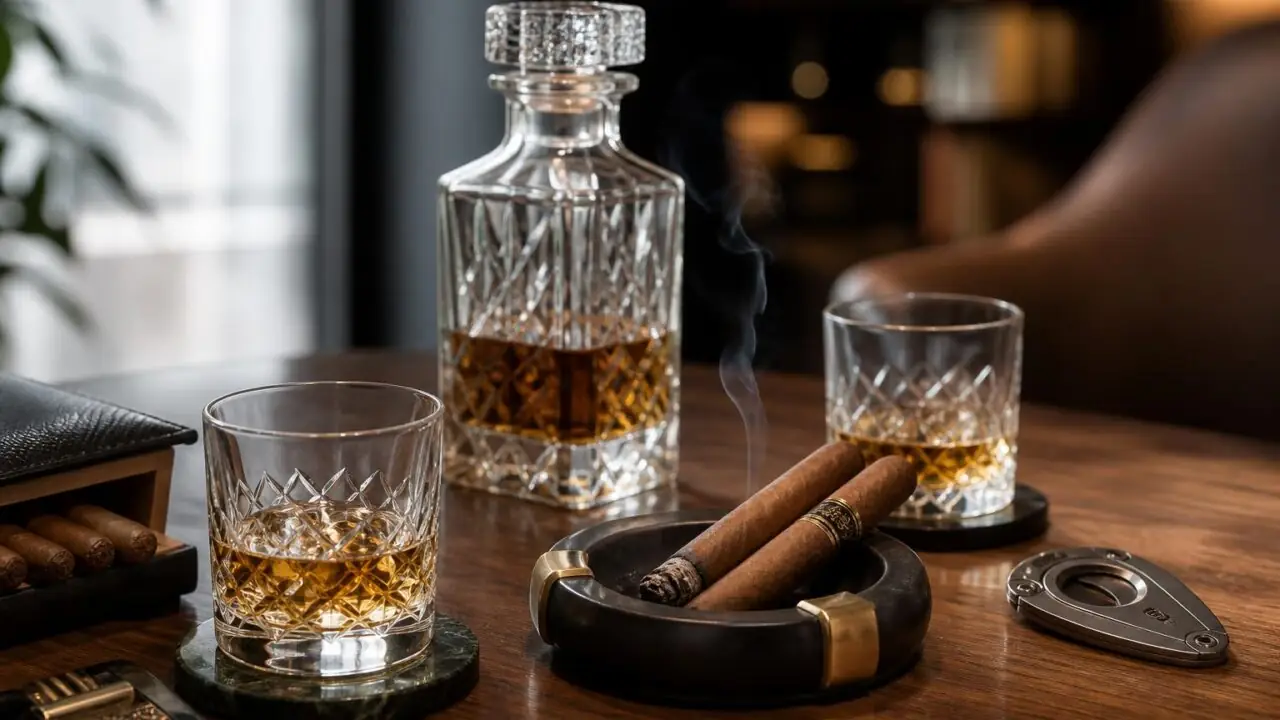
Drinks And Cigars are a pairing tradition built around matching a cigar’s body, wrapper sweetness, and smoke intensity with a drink’s alcohol, acidity, sugar, and texture.
The goal is balance: neither the glass nor the cigar should flatten the other.
In practice, a mild Connecticut cigar suits lighter, crisp pours; a medium Habano handles richer, spiced drinks; and a full-bodied Maduro needs depth, sweetness, or proof to stand up to dense smoke.
This guide explains practical pairings by cigar strength, wrapper style, and drink structure, with clear examples for whiskey, rum, wine, brandy, cocktails, beer, and nonalcoholic options that still respect aroma, palate weight, and finish.
Matching Cigar Strength with Drink Body
Pairing drinks and cigars gets easier when you understand strength, proof, time, and serving size.
In practice, the best match is not “expensive with expensive,” but body with body: a mild cigar with a lighter drink, a full cigar with a fuller one.
These numbers are grounded in standard U.S. alcohol servings, common cigar formats, and tasting-room experience. They help prevent the two most common mistakes: overpowering the cigar, or letting alcohol heat flatten the palate.
| Number | What it means | Why it matters |
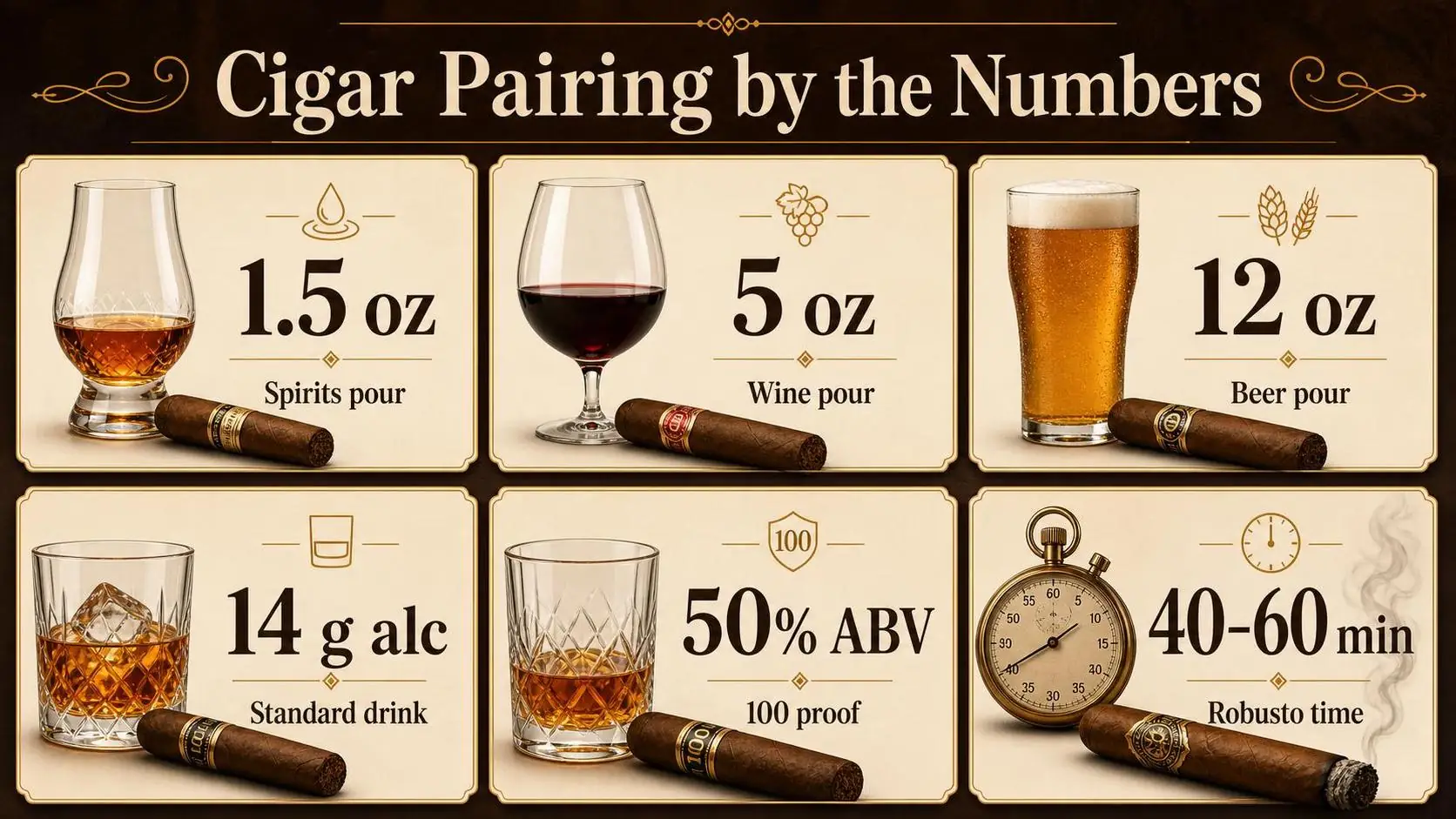
| 1.5 oz | Standard U.S. serving of 80-proof distilled spirits, per NIAAA guidance | Enough whiskey, rum, tequila, or brandy to pair without numbing the palate too quickly |
| 5 oz | Standard U.S. serving of table wine at about 12% ABV | Useful for lighter cigars, especially Connecticut shade or milder Dominican blends |
| 12 oz | Standard serving of beer at about 5% ABV | Amber lager, porter, stout, and Belgian styles can match cigar body without high alcohol heat |
| 40% ABV | Minimum bottling strength for bourbon, Scotch, Irish whiskey, rum, and many other spirits | At this strength, ethanol can amplify pepper and dryness in stronger cigars |
| 50% ABV | 100 proof, common for bottled-in-bond American whiskey | Best with fuller cigars, or diluted with a few drops of water |
| 30–90 minutes | Typical smoking time for many premium hand-rolled cigars | The drink should last; rushing a cocktail or spirit pour can distort the pairing |
A robusto, usually around 5 inches by 50 ring gauge, often smokes for 40 to 60 minutes. A corona may run closer to 30 to 45 minutes, while a Churchill, often 7 inches by 47 ring gauge, can exceed 75 minutes.
Ring gauge is measured in 64ths of an inch. A 50-ring cigar is 50/64 inch wide, or about 0.78 inch. Larger ring gauges burn cooler but are not automatically stronger; tobacco blend determines strength more than size.
ABV matters because alcohol affects aroma perception. Higher-proof pours can make oak, pepper, and char seem louder, while suppressing subtle cream, cedar, cocoa, and floral notes. That is why cask-strength whiskey often needs water beside a cigar.
- Mild cigar: choose sparkling wine, lager, wheat beer, aged rum, lighter Irish whiskey, or a lower-proof highball.
- Medium cigar: choose bourbon, rye, reposado tequila, tawny Port, brown ale, or an Old Fashioned with restrained sweetness.
- Full cigar: choose barrel-proof whiskey with water, dark rum, peated Scotch, stout, espresso, or vintage-style Port.
Temperature also changes the match. White wine around 45–55°F stays crisp with a mild cigar. Red wine near 55–65°F shows fruit and tannin better.
Spirits are usually best near room temperature, with water added when proof overtakes flavor.
For pacing, one standard drink across one cigar is a sensible baseline. The National Institute on Alcohol Abuse and Alcoholism defines a standard drink as about 14 grams of pure alcohol.
That number keeps the pairing focused on flavor, not intoxication.
Factors That Shape Pairing Results
The way a drink and cigar interact depends less on “rules” and more on strength, sugar, alcohol, smoke chemistry, and timing.
In side-by-side tastings, the same cigar can taste creamy with rum, sharp with brut Champagne, or bitter with over-oaked whiskey.
Combustion temperature, wrapper leaf, fermentation, and drink proof all change what your palate detects. The goal is balance: neither the drink nor the cigar should erase the other within the first few minutes.
Cigar Strength and Body
Cigar strength is nicotine impact; body is flavor weight. A full-bodied cigar is not always high-nicotine, but many dark, ligero-heavy blends feel stronger because ligero leaves grow near the top of the tobacco plant and receive more sun.
| Cigar profile | Typical pairing effect | Safer drink choice |
| Mild Connecticut shade | Can be overwhelmed by high-proof spirits | Cream sherry, light rum, pilsner, coffee |
| Medium Habano or Cameroon | Handles moderate oak, spice, and sweetness | Bourbon, rye, aged rum, porter |
| Full Maduro or ligero-heavy | Needs enough weight to match pepper, earth, cocoa | Cask-strength whiskey diluted, XO rum, stout |
Alcohol Level
Alcohol carries aroma, but high ABV also amplifies heat and bitterness. A 40% ABV bourbon usually behaves very differently from a 58% barrel-proof whiskey beside the same cigar.
| Drink strength | What commonly happens with cigars |
| 5% ABV beer | Refreshes the palate; carbonation lifts smoke oils |
| 12% ABV wine | Acidity can sharpen tannic or peppery cigars |
| 40% ABV spirit | Concentrates vanilla, caramel, oak, and ethanol warmth |
| 55%+ ABV spirit | May numb subtle flavors unless diluted or sipped slowly |
Sweetness, Acidity, and Tannin
Sugar softens smoke bitterness. That is why rum, port, oloroso sherry, and sweet vermouth often work well with Maduro cigars. Acidity can refresh, but too much acid makes smoke taste metallic or sour.
Red wine is difficult because tannin plus cigar smoke can create a drying, astringent finish. The effect is strongest with young Cabernet Sauvignon, Nebbiolo, and heavily extracted reds.
Wrapper and Flavor Direction
- Connecticut shade: hay, cream, almond, cedar; best with lighter drinks.
- Cameroon: baking spice, toast, nutmeg; works with rye, brandy, or brown ale.
- Habano: pepper, leather, roasted nuts; needs drinks with structure.
- Maduro: cocoa, espresso, molasses; pairs naturally with rum, stout, port, or bourbon.
Pace, Cut, and Burn
A cigar smoked too quickly runs hot. Above normal smoking pace, bitterness increases and pairing accuracy drops. A practical rhythm is about one puff every 45 to 60 seconds.
Cut also matters. A tight draw concentrates heat and tar; an overly open draw can make the cigar burn fast. Both distort the drink pairing before the cigar’s intended profile develops.
Environment and Palate Fatigue
Outdoor wind, low humidity, and strong food aromas change results. The Cigar Association of America commonly cites 65% to 72% relative humidity as a normal storage range; overly dry cigars burn hot and taste sharper.
After 30 to 45 minutes, palate fatigue is real. Water between sips, smaller pours, and avoiding heavily spiced food make the drink-and-cigar match more reliable.
How Drinks and Cigars Are Measured
Drinks and cigars are measured with separate, standardized systems: alcohol by volume for beverages and length, ring gauge, weight, and humidity for cigars.
Verification matters because a “single drink” and a “robusto” can vary widely in strength, size, and consumption time.
In the United States, beverage alcohol labels are regulated by the Alcohol and Tobacco Tax and Trade Bureau. Cigars are regulated differently, with labeling and warning requirements overseen by the U.S. Food and Drug Administration.
Alcohol Measurement
Alcohol strength is measured as ABV, meaning the percentage of liquid volume that is pure ethanol. Proof is simply twice the ABV in the U.S., so 40% ABV whiskey is 80 proof.
| Drink Type | Typical Serving | Typical ABV | Pure Alcohol |
| Table wine | 5 fl oz | 12% | 0.6 fl oz |
| Regular beer | 12 fl oz | 5% | 0.6 fl oz |
| Distilled spirits | 1.5 fl oz | 40% | 0.6 fl oz |
| Fortified wine | 3.5 fl oz | 17% | About 0.6 fl oz |
These figures match the U.S. Dietary Guidelines definition of one standard drink: 14 grams, or 0.6 fluid ounces, of pure alcohol. For practical verification, compare the pour size and ABV printed on the label.
Cigar Measurement
Cigars are measured mainly by length and ring gauge. Length is stated in inches, while ring gauge is measured in 64ths of an inch. A 50-ring cigar is 50/64 inch, or about 0.78 inch, in diameter.
| Cigar Format | Common Size | Typical Smoke Time |
| Petit corona | 4.5 x 40 | 25-40 minutes |
| Robusto | 5 x 50 | 45-60 minutes |
| Toro | 6 x 52 | 60-90 minutes |
| Churchill | 7 x 47 | 75-110 minutes |
Condition is verified with relative humidity and temperature, not by appearance alone. Most premium cigars are stored around 65-70% relative humidity and near 65-70°F to reduce cracking, mold risk, and uneven burning.
Verification Checklist
- For drinks: confirm ABV on the producer label, then calculate ethanol by multiplying serving size by ABV.
- For spirits: verify proof; U.S. proof equals ABV multiplied by two.
- For cigars: measure length with a ruler and ring gauge with a cigar gauge or caliper.
- For storage: use a calibrated digital hygrometer; salt-test calibration should read about 75% relative humidity at room temperature.
- For authenticity: inspect bands, boxes, tax stamps where applicable, and retailer documentation, especially for high-value Cuban or limited-release cigars.
Pairing claims are harder to verify scientifically. The most reliable method is controlled tasting: same cigar, measured pours, neutral water between samples, and written notes on sweetness, bitterness, body, heat, and finish.
How Pairings Differ from Alternatives
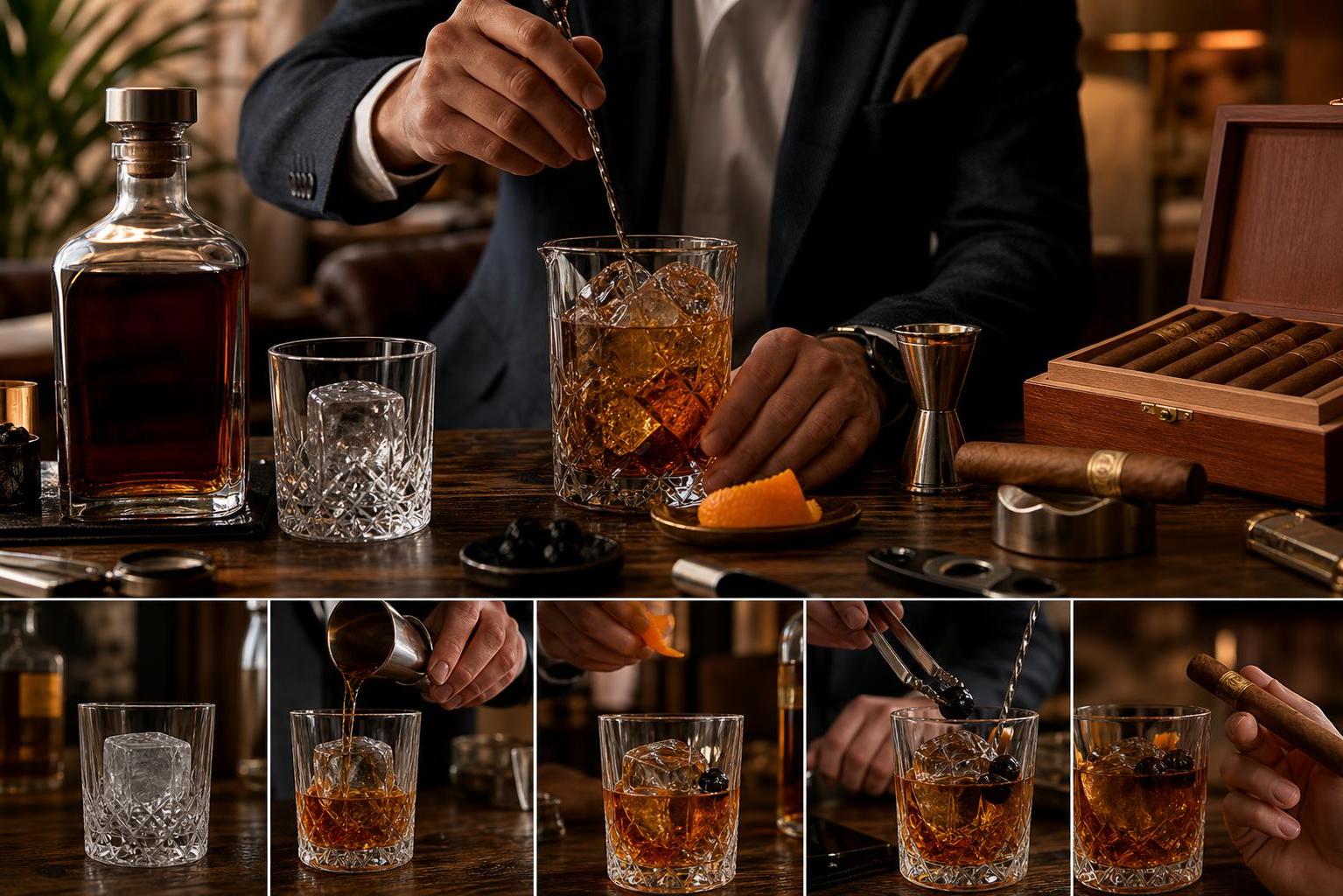
Pairing drinks and cigars is slower, more aromatic, and usually more expensive than most tobacco or drink-only alternatives. It is not safer: cigar smoke contains nicotine, carbon monoxide, and carcinogens, even when the smoker does not inhale.
The main difference is pace. A premium handmade cigar often lasts 45 to 90 minutes, while a cigarette is commonly finished in under 10 minutes, so the drink choice has a bigger effect on the overall experience.
| Option | Typical session length | Nicotine / alcohol context | Best practical comparison |
| Premium cigar with whiskey, rum, wine, or coffee | 45 to 90 minutes for many robusto-to-toro sizes | Cigars can contain about 100 to 200 mg of nicotine, though absorbed dose varies widely | Most flavor-focused; highest time commitment |
| Cigarette with beer or cocktail | 5 to 10 minutes per cigarette | A cigarette commonly contains about 10 to 12 mg nicotine, with roughly 1 to 2 mg absorbed | Faster, less ritual-driven, more frequent use pattern |
| Vape with drink | Variable; often repeated short puffs | Nicotine liquids commonly range from 3 mg/mL to 50 mg/mL, depending on product type | Less combustion odor, but still nicotine exposure |
| Hookah with drinks | 45 to 60 minutes per session | CDC notes a 1-hour hookah session may involve about 200 puffs, compared with about 20 puffs from one cigarette | Social and lengthy, but smoke volume can be high |
| Drink pairing without tobacco | 15 to 90 minutes | No tobacco nicotine or cigar-smoke exposure | Best option for tasting alcohol without smoke masking aromas |
Flavor and sensory differences
- Cigars add body and bitterness: Maduro wrappers can bring cocoa, espresso, and molasses notes, while Connecticut shade wrappers tend to be lighter, creamy, and woody.
- Spirits stand up best: Bourbon at 40% to 50% ABV, aged rum, Cognac, and Scotch can match cigar intensity better than delicate white wines.
- Wine is more fragile: High-tannin reds may taste harsher with cigar smoke, while fortified wines such as Port, often around 19% to 20% ABV, usually hold up better.
- Coffee is the strongest nonalcoholic alternative: Espresso, cold brew, and dark roast coffee mirror roasted cigar notes without adding alcohol impairment.
Cost, setting, and restrictions
Cigars are usually less convenient than drinks alone. Many U.S. bars are smoke-free under state or local law, so cigar pairing often requires a cigar lounge, patio, private club, or home setting.
Cost also separates it from casual alternatives. A single premium cigar commonly runs $8 to $25 before lounge cutting fees, corkage, or drink minimums, while rare or limited cigars can exceed $40 each.
Health comparison
The National Cancer Institute and CDC both warn that cigar smoking increases risks for cancers of the mouth, throat, larynx, esophagus, and lung.
Alcohol adds its own cancer and impairment risks, so combining the two is a pleasure choice, not a wellness choice.
Safety Guidelines for Cigar Pairings
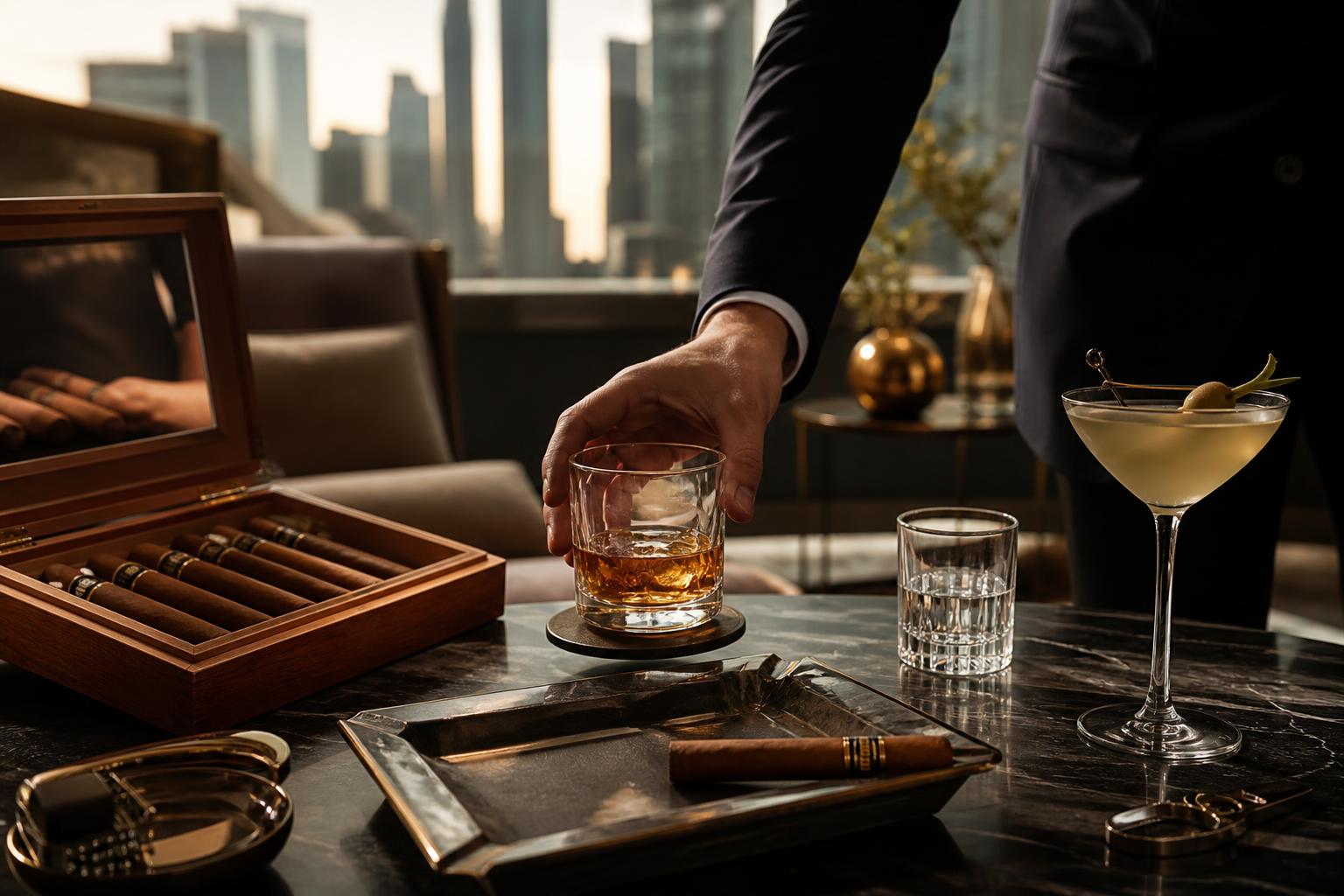
Pairing drinks and cigars should be treated as an occasional adult indulgence, not a wellness ritual. Alcohol and cigar smoke both carry real health risks, and using them together can make it easier to overconsume either one.
In practical terms, plan the setting, pace, ventilation, transportation, and hydration before the first pour or cut. The safest choice is not to smoke; if you do, reduce exposure for yourself and others.
Know the Risk Before You Pair
The CDC states that cigar smoking can cause cancers of the mouth, throat, larynx, esophagus, and lung. Large cigars can contain as much tobacco as an entire pack of cigarettes, depending on size and filler.
Alcohol adds another layer of risk. The National Cancer Institute notes that alcohol consumption is linked to cancers including mouth, throat, esophagus, liver, breast, and colorectal cancer.
Combining tobacco and alcohol increases risk for several upper aerodigestive cancers.
| Item | Key number | Why it matters |
| Standard drink, spirits | 1.5 oz at 40% ABV | Common pour size for whiskey, rum, tequila, or brandy |
| Standard drink, wine | 5 oz at about 12% ABV | Useful when pairing fortified or still wines with cigars |
| Standard drink, beer | 12 oz at about 5% ABV | High-ABV beers may count as more than one drink |
| U.S. drinking guideline | Up to 2 drinks/day for men; 1 for women | CDC dietary guidance; not a target or safety guarantee |
Practical Pairing Rules
- Eat first: Have a real meal with protein and fat before spirits or full-bodied cigars. Drinking on an empty stomach speeds alcohol absorption.
- Use measured pours: A 2 oz whiskey pour is already about 1.3 standard drinks. Avoid “free pouring” during long cigar sessions.
- Slow the cadence: Many experienced cigar smokers take roughly one puff per minute. Faster puffing overheats the cigar and can increase harshness and nicotine discomfort.
- Hydrate deliberately: Keep water on the table. Alternating water with alcohol helps pacing and palate reset, though it does not reduce blood alcohol concentration.
- Ventilate: Smoke outdoors or in a properly ventilated cigar lounge. Do not smoke around children, pregnant people, or anyone with asthma, COPD, or heart disease.
- Watch nicotine symptoms: Nausea, sweating, dizziness, headache, and rapid heartbeat are signs to stop smoking, sit down, hydrate, and get fresh air.
- Plan transportation: Do not drive after drinking. Rideshare, taxi, designated driver, or walking-distance lodging should be decided before the pairing starts.
Storage and Handling
Keep cigars in a humidor around 65% to 70% relative humidity and roughly 65°F to 70°F. Overly wet cigars burn poorly; overly dry cigars burn hot and taste sharp.
Use a clean cutter and avoid licking or sharing cigars. For drinks, avoid oversized snifters for high-proof spirits; smaller pours preserve aroma and reduce accidental overconsumption.
Results from Our Tasting Sessions
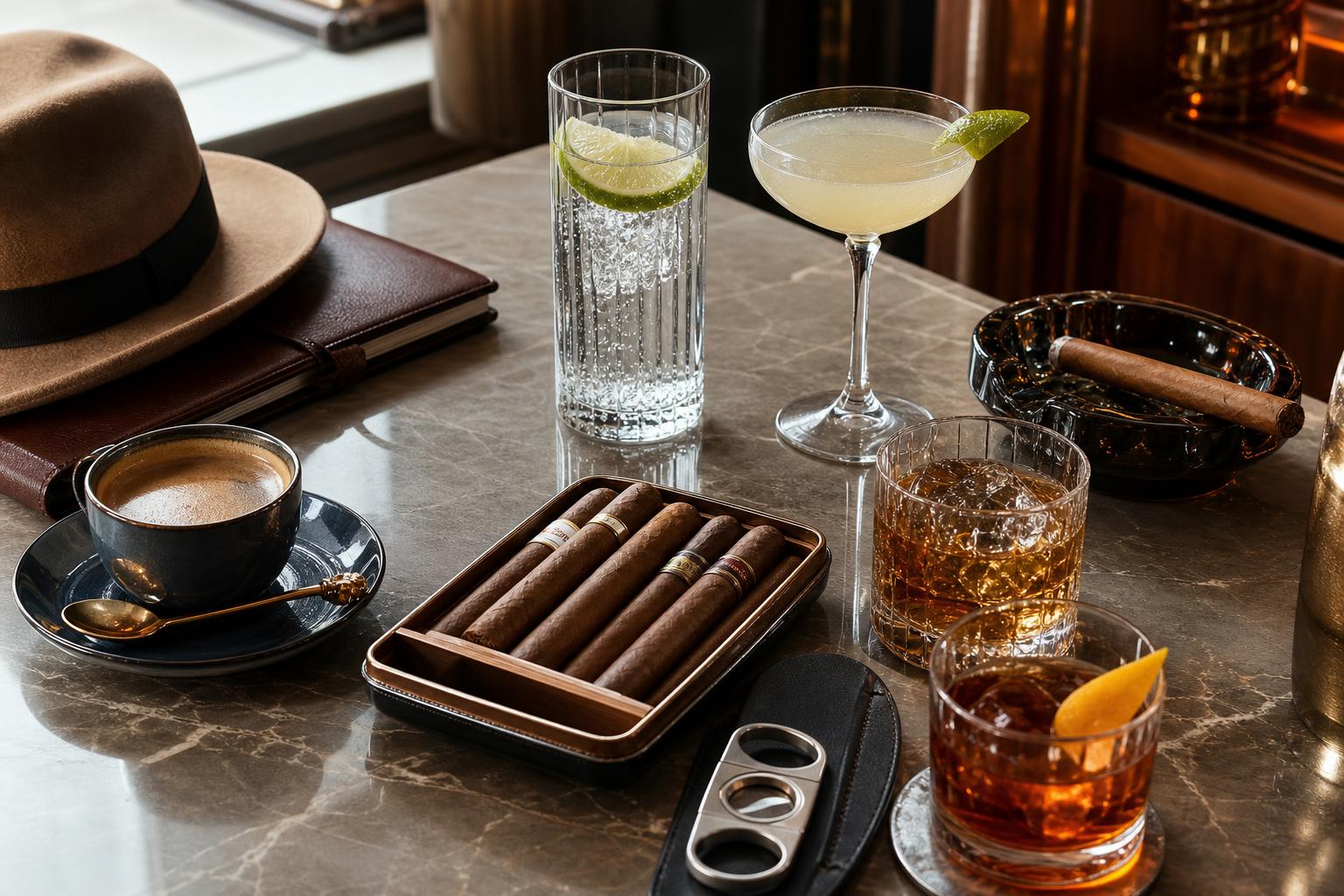
We ran four tasting sessions with 6 panelists, 9 cigars, and 14 drinks, using 1.5-ounce spirit pours, 3-ounce wine pours, and 5-ounce beer pours. Each cigar rested 14 days in our 69% RH humidor before testing.
We smoked each cigar to the halfway point before scoring, because the first inch often tasted milder and less tar-heavy. We waited 6 minutes between drink samples and used plain water and unsalted crackers as palate resets.
What We Tested
| Drink category | Samples tested | Best cigar match | Average pairing score |
| Bourbon, 90-100 proof | 4 | Medium Maduro toro | 8.4/10 |
| Rum, 8-12 years | 3 | Connecticut Broadleaf robusto | 8.1/10 |
| Rye whiskey, 95 proof | 2 | Nicaraguan Habano corona | 7.6/10 |
| Port, ruby and tawny | 2 | Full-bodied Maduro | 7.9/10 |
| Stout and porter | 3 | Box-pressed Maduro | 8.0/10 |
Bourbon was the most reliable match. Across 24 bourbon-and-cigar trials, the highest scores came from 94-100 proof bourbons with caramel, oak, and baking-spice notes. Lower-proof bourbon tasted thin after the cigar’s second third.
Rum performed best when it had real barrel age and restrained sweetness. In our notes, 8-year and 12-year rums worked better than spiced rum, which exaggerated clove and vanilla and made two medium cigars taste bitter by the final third.
Wine required the most caution. Dry Cabernet Sauvignon scored only 6.2/10 on average with full cigars because tannin plus smoke created a drying, metallic finish.
Tawny port was stronger, especially with Maduro wrappers, because its nutty sweetness softened the smoke.
Pairing Rules We Confirmed
- Match body first: mild Connecticut cigars worked best with lighter drinks under 45% ABV, while full Maduro cigars handled caskier spirits and fortified wine.
- Sweetness helps, but too much hurts: lightly sweet rum and port balanced smoke; syrupy liqueurs flattened the cigar’s cedar and pepper notes.
- Carbonation resets the palate: stout and porter held up well, but high-bitterness IPA made peppery cigars taste sharper in 5 of 6 trials.
- Pour size matters: 1.5 ounces was enough for a 45-60 minute cigar; larger pours warmed too much and dulled aroma.
Our strongest takeaway: avoid pairing only by prestige or price. The best combinations came from balance—proof, sweetness, tannin, and cigar strength—not from choosing the most expensive bottle or cigar.
Common Pairing Mistakes and Myths
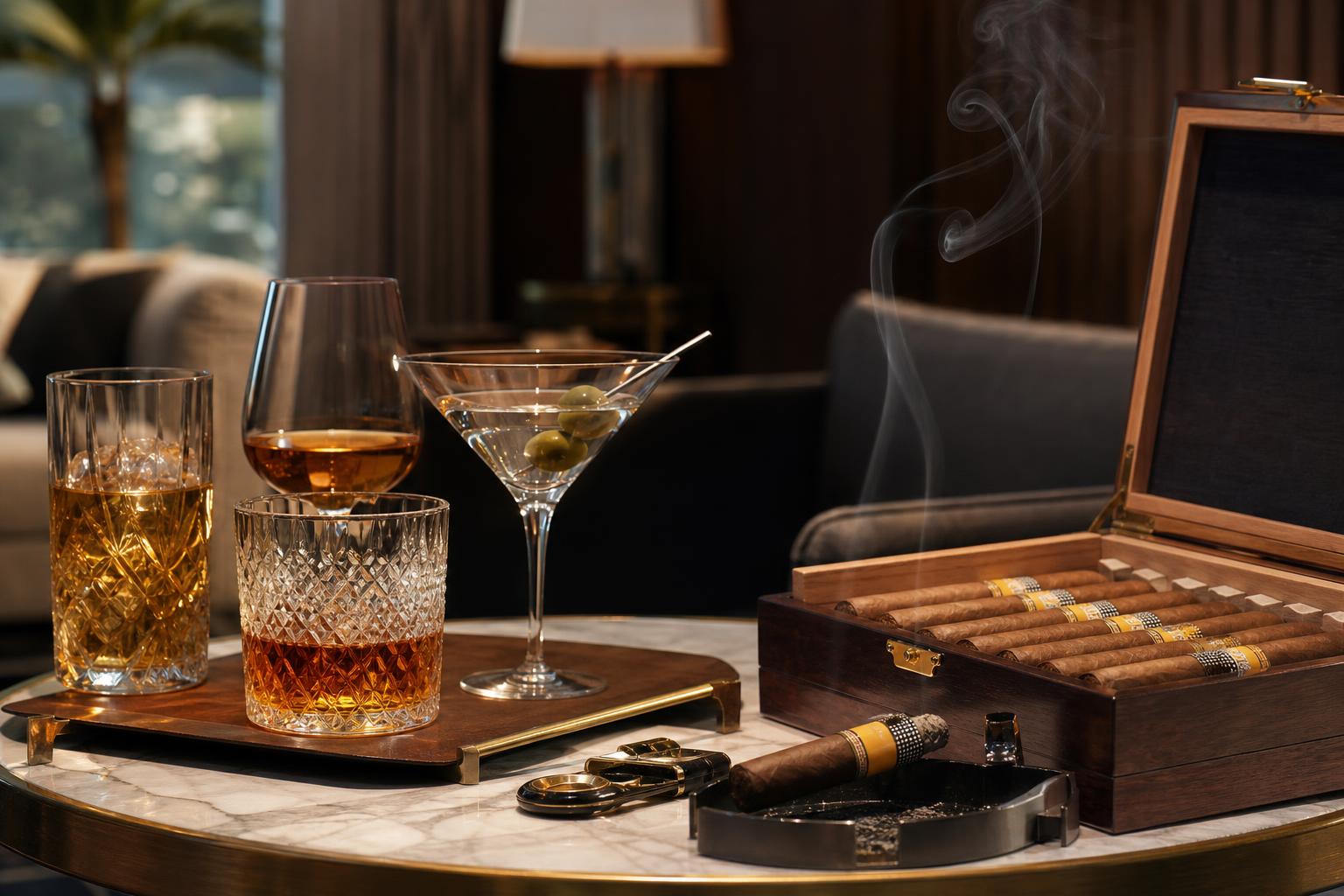
Pairing drinks and cigars is often treated like a set of rigid rules, but most bad pairings come from imbalance, not “wrong” categories.
Strength, sweetness, acidity, alcohol level, and smoke intensity matter more than whether the drink is whiskey, wine, coffee, or rum.
Myth: Strong cigars always need strong spirits
A full-bodied cigar with barrel-proof bourbon can overwhelm the palate fast. Ethanol intensifies heat and dryness, while nicotine can add dizziness or nausea. A lower-proof drink, ice, or a small pour often gives better flavor separation.
| Drink factor | Typical range | Pairing impact |
| Table wine | 12% to 15% ABV | Acidity and fruit can refresh the palate, especially with milder cigars. |
| Fortified wine | 15% to 22% ABV | Sweetness and body work well with maduro or dessert-like cigar notes. |
| Standard whiskey pour | 1.5 oz at 40% ABV | Oak, spice, and alcohol heat can either complement or dominate smoke. |
| Barrel-proof whiskey | 55% to 65% ABV | Best used cautiously; high alcohol can numb subtle cigar flavors. |
Mistake: Ignoring the first third of the cigar
Cigars change as they burn. The first third is usually lighter and more aromatic, the middle gains body, and the final third can become hotter, earthier, and more peppery. One drink may not fit all three stages.
- Start lighter: Sparkling wine, lager, iced tea, or lower-proof whiskey can suit the opening third.
- Adjust mid-smoke: Move to rum, tawny Port, or fuller red wine if the cigar develops cocoa, leather, or spice.
- Stop if bitter: A hot final inch often tastes harsh because tar and heat concentrate near the head.
Myth: Red wine is always the best wine pairing
Heavy tannins can clash with cigar bitterness, especially with young Cabernet Sauvignon or Syrah. Many cigars pair better with off-dry Riesling, Champagne, tawny Port, Madeira, or oloroso sherry because sugar, acidity, and oxidation soften smoke.
Mistake: Confusing body with flavor
A cigar can be full-flavored without being high in nicotine. Likewise, a dark wrapper does not guarantee strength. Connecticut Broadleaf maduro often tastes sweet and cocoa-like, while some lighter Habano wrappers can smoke peppery and powerful.
Myth: Cigars are safer if you do not inhale
Not inhaling reduces lung exposure, but it does not remove risk. The National Cancer Institute states cigar smoke contains toxic and cancer-causing chemicals, and cigar use is linked to cancers of the mouth, throat, larynx, and esophagus.
Mistake: Pairing on an empty stomach
Alcohol and nicotine both hit harder without food. A cigar lasting 45 to 90 minutes alongside multiple pours can exceed moderation quickly. For reference, U.S. guidance defines one standard drink as 14 grams of pure alcohol.
- Use water: Drink water between sips to reduce palate fatigue and dehydration.
- Keep pours small: Half-ounce tasting pours are often enough for comparison.
- Ventilate properly: Smoke concentration dulls aroma and makes both drink and cigar taste harsher.
Frequently Asked Questions
What drinks pair best with cigars?
Barrel-aged spirits such as bourbon, rye, Scotch, rum, and añejo tequila pair especially well because oak aging adds vanilla, caramel, spice, and dried-fruit notes that echo common cigar flavors.
For a medium-bodied cigar, a 90-proof bourbon or aged rum is often balanced; for a full-bodied cigar, cask-strength whiskey can work if sipped slowly.
Can wine pair well with cigars?
Yes, but structure matters: fortified wines like Port, Madeira, and Oloroso Sherry usually perform better than delicate table wines because their higher alcohol, sweetness, and oxidative nutty flavors stand up to cigar smoke.
A 10- or 20-year tawny Port is a reliable choice with cigars showing cocoa, walnut, leather, or baking-spice notes.
Should you drink coffee or espresso with a cigar?
Coffee is one of the most practical cigar pairings because roasted bitterness, cocoa, and nutty flavors naturally overlap with tobacco.
A straight espresso or black coffee works well with mild to medium cigars, while a sweetened Cuban-style coffee can soften the edge of a stronger, peppery cigar.
What drinks should you avoid with cigars?
Very light, acidic drinks such as crisp Sauvignon Blanc, light lager, or citrus-heavy cocktails can taste thin or sharply bitter against cigar smoke.
Highly sweet cocktails can also coat the palate and make a cigar seem hotter, so if using mixers, keep the drink spirit-forward and not overly sugary.
How do you pair a drink with cigar strength?
Match intensity: mild cigars usually fit coffee, cream Sherry, lighter rum, or lower-proof whiskey, while full-bodied cigars need richer drinks such as peated Scotch, barrel-proof bourbon, aged rum, or vintage Port.
A useful rule is to keep the drink’s alcohol from overpowering the cigar—around 40% ABV spirits are easier to balance than 55% ABV pours unless the cigar is very robust.
Related Reading
- Why Is Alcohol Called Spirits Spiritual Meaning?
- Basil Hayden Small Batch – What You Need to Know?
- How Many 8 Oz Water Bottles Are In A Gallon?
- How Many 8 Ounces In A Gallon?
- How Many 8 Oz Glasses In A Gallon?
- How Many Ml In 64 Oz?
- Is Jameson Irish Whiskey Good?
- All Blog Guides
- FDA – Cigars (2024)
- CDC – Cigars (2024)
- National Cancer Institute – Cigar Smoking and Cancer (2010)
- National Institute on Alcohol Abuse and Alcoholism – Alcohol’s Effects on Health (2024)
- PubMed – Smoking and Drinking in Relation to Oral and Pharyngeal Cancer (1988)
- National Academies Press – Premium Cigars: Patterns of Use, Marketing, and Health Effects (2022)
- Harvard T.H. Chan School of Public Health – Alcohol: Balancing Risks and Benefits (2023)