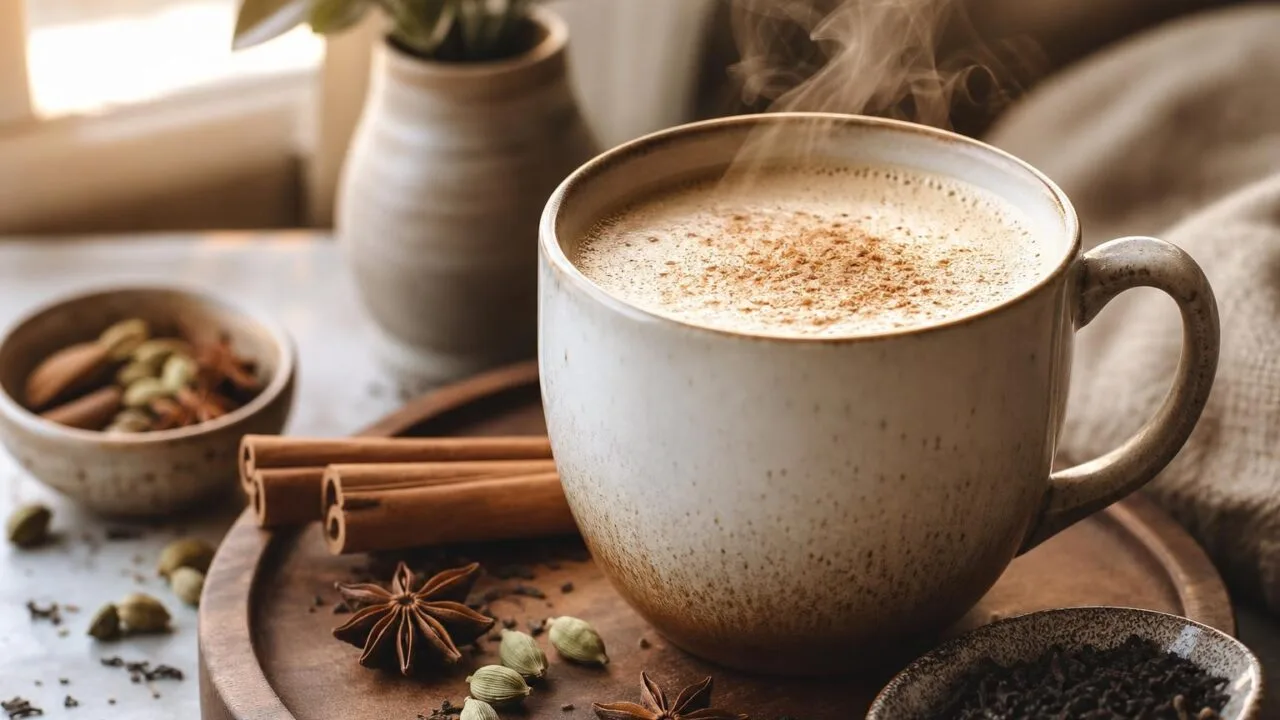
Does Chai Latte Have Caffeine is a yes: traditional chai latte is made with brewed black tea, so it contains a natural stimulant from the tea leaves. The amount changes with tea strength, steep time, concentrate ratio, and serving size.
Most café versions use spiced black tea blended with milk, while some bottled mixes rely on concentrates. This guide explains typical ranges, why recipes vary, and how to read labels or ask baristas for a more accurate estimate.
Why Chai Lattes Usually Contain Caffeine
Yes, a chai latte usually has caffeine because the “chai” base is typically black tea. The exact amount depends on whether it is made from brewed tea, a liquid concentrate, a powder, or a coffee-shop syrup.
For most U.S. chai lattes, the practical range is about 25 to 100 milligrams of caffeine per drink.
That is less than a typical coffee, but it is not caffeine-free unless the product specifically says “decaf” or “caffeine-free.”.
| Drink or ingredient | Typical serving | Caffeine | What it means |
| Brewed black tea | 8 fl oz | About 47 mg | USDA data puts plain brewed black tea well below coffee, but still caffeinated. |
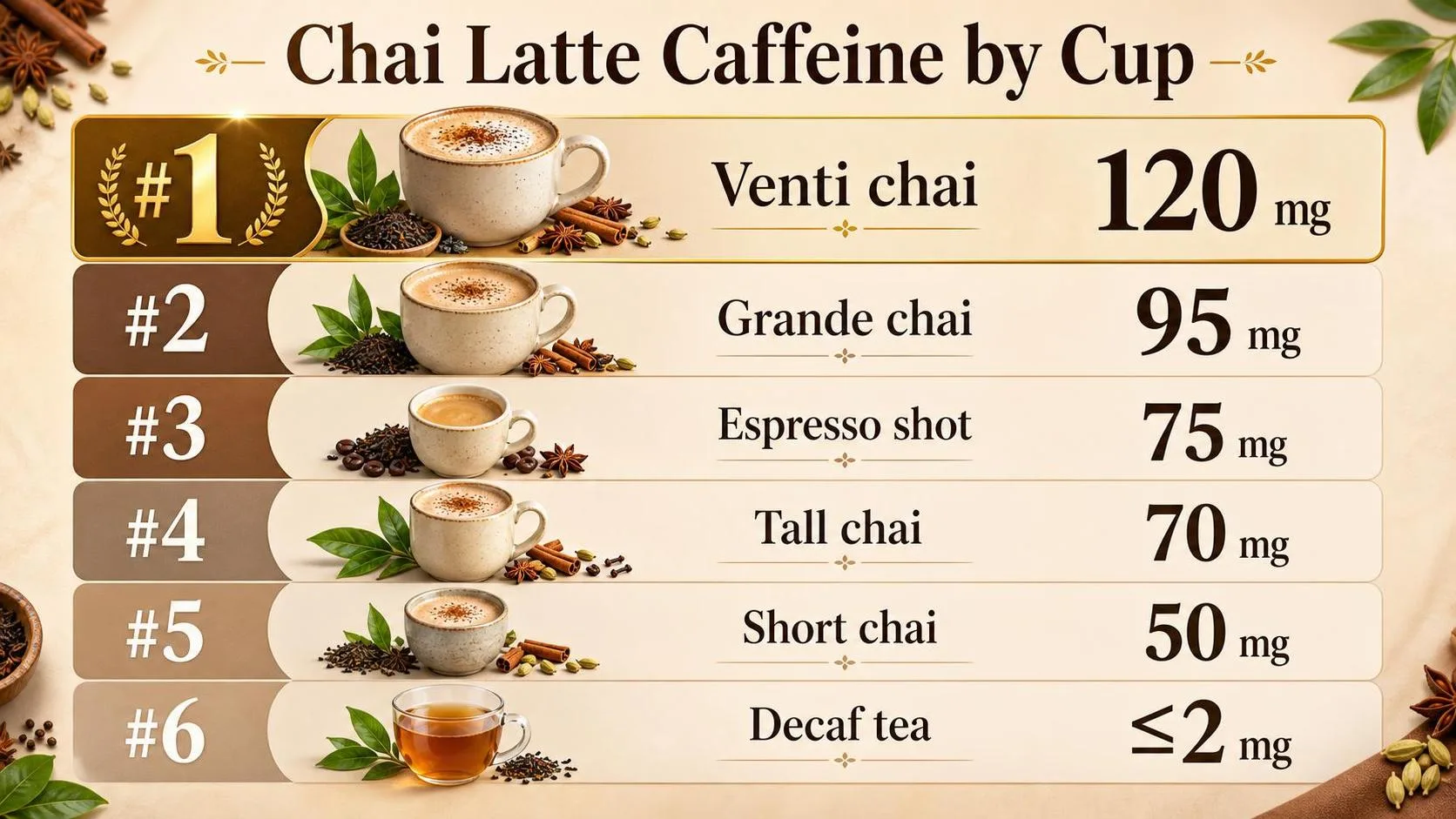
| Starbucks Chai Tea Latte | Grande, 16 fl oz | 95 mg | A large café chai can approach the caffeine in a small coffee. |
| Starbucks Chai Tea Latte | Tall, 12 fl oz | 70 mg | Size matters because more chai concentrate is used. |
| Brewed coffee | 8 fl oz | About 95 mg | Useful benchmark: a grande chai latte can equal this number. |
| Decaf black tea | 8 fl oz | Usually 2 mg or less | Decaf chai is much lower, but not always zero. |
The biggest variable is the chai base. A latte made by steeping one black-tea chai bag in milk will often land near 30 to 50 mg, depending on steep time, water temperature, and tea quantity.
A café chai made with concentrate can be stronger because the recipe may use several ounces of sweetened black-tea concentrate. Starbucks lists 95 mg of caffeine in a 16-ounce grande Chai Tea Latte and 120 mg in a 20-ounce venti.
| Order size | Example: Starbucks Chai Tea Latte | Caffeine |
| Short | 8 fl oz | 50 mg |
| Tall | 12 fl oz | 70 mg |
| Grande | 16 fl oz | 95 mg |
| Venti | 20 fl oz | 120 mg |
Adding espresso changes the math. A “dirty chai” includes chai plus espresso; Starbucks lists 75 mg of caffeine for one espresso shot. That means a grande dirty chai can reach about 170 mg if it starts with a 95 mg chai latte.
- Lower caffeine: choose decaf chai, herbal “chai spice” blends, or a smaller size.
- Moderate caffeine: order a brewed chai tea latte made with one tea bag.
- Higher caffeine: choose concentrate-based chai, larger sizes, or dirty chai with espresso.
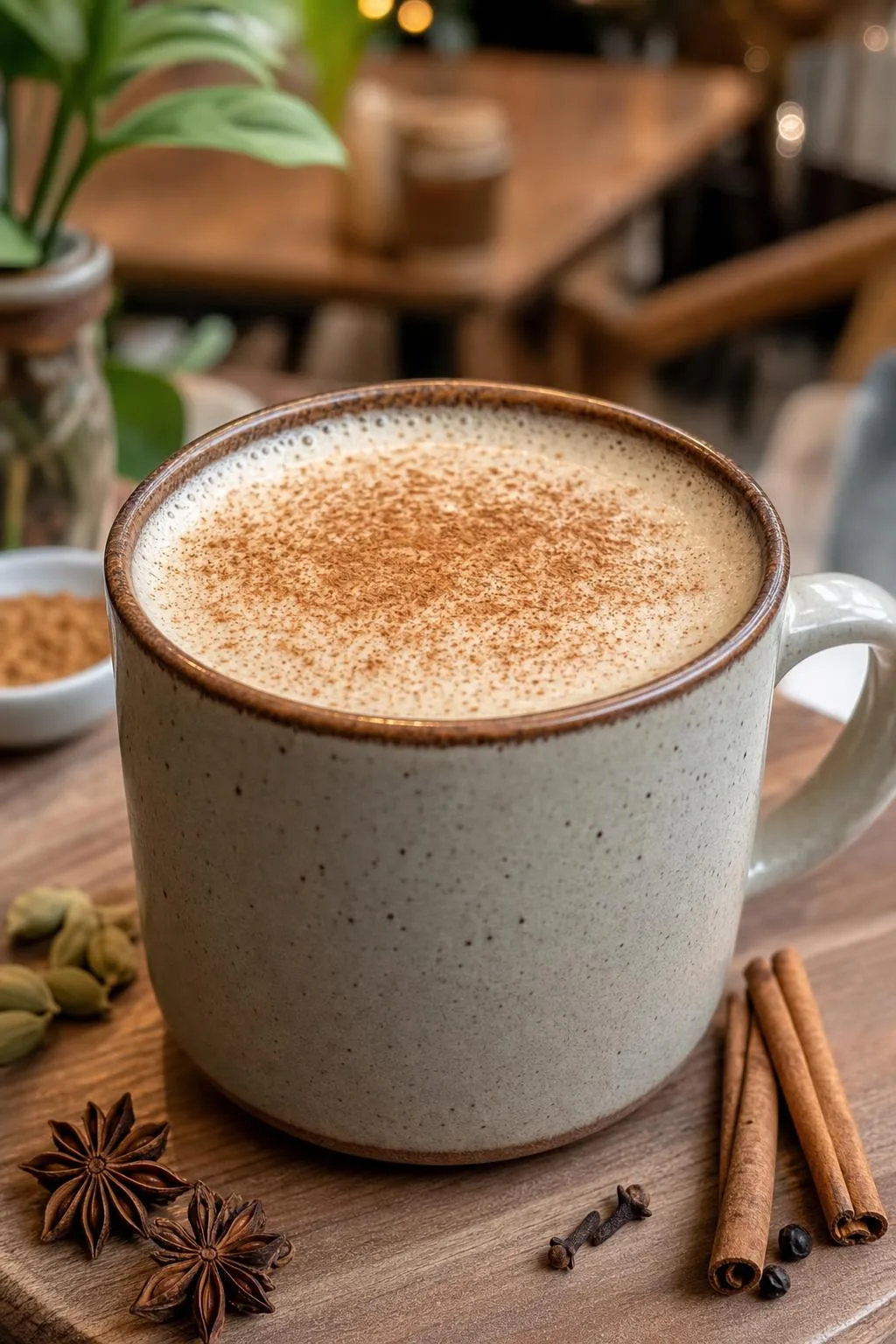
What Determines Chai Latte Caffeine
A chai latte’s caffeine depends less on the word “chai” and more on how much real tea is in the cup.
Black tea, concentrate strength, steep time, serving size, and espresso add-ins can move one drink from almost caffeine-free to coffee-level.
Tea base and recipe strength
Traditional masala chai is made with black tea, which naturally contains caffeine.
The FDA lists an 8-ounce cup of brewed black tea at about 30–50 mg of caffeine, while green tea is usually lower and herbal “chai” blends can be caffeine-free.
| Base used in chai latte | Typical caffeine impact |
| Brewed black tea chai | About 30–50 mg per 8 ounces of brewed tea before milk is added |
| Chai concentrate with black tea | Often similar to brewed tea, but varies widely by brand and dilution |
| Green tea chai | Usually lower than black tea, commonly about 20–45 mg per 8 ounces |
| Rooibos or herbal chai | 0 mg caffeine unless blended with real tea or added caffeine |
Concentrate versus freshly brewed chai
Commercial chai lattes are often made from a sweetened concentrate mixed with milk. One café may use a 1:1 concentrate-to-milk ratio, while another may use less concentrate, so two 12-ounce drinks can differ substantially.
Brands also formulate concentrates differently. Some use brewed black tea as a main ingredient; others rely more on spices, sugar, and flavorings. The label or café nutrition sheet is the most reliable source when exact caffeine matters.
Serving size and dilution
A larger cup does not always mean proportionally more caffeine, because cafés may add extra milk rather than extra chai. Still, if the recipe scales up with more concentrate or tea bags, caffeine rises with the drink size.
| Drink change | Likely effect on caffeine |
| 8 oz to 16 oz, same recipe ratio | Roughly doubles the caffeine |
| More milk, same chai amount | Caffeine stays about the same |
| Extra tea bag or extra concentrate pump | Caffeine increases |
| Shorter steep or weaker concentrate | Caffeine decreases |
Steep time, water temperature, and tea quantity
Caffeine extracts faster in hotter water and longer steeps. A strong stovetop chai simmered with multiple teaspoons of black tea will usually contain more caffeine than a lightly steeped tea bag diluted with steamed milk.
- More tea leaves: increases caffeine because there is more caffeine-containing material in the brew.
- Longer steeping: pulls more caffeine and tannins into the liquid.
- Boiling or simmering: can extract caffeine efficiently, especially in traditional stovetop chai.
- More milk: lowers caffeine concentration per ounce but does not remove caffeine already brewed.
Dirty chai and decaf options
A “dirty chai” adds espresso, which changes the caffeine calculation quickly. The USDA lists brewed espresso at about 63 mg of caffeine per 1-ounce shot, so one added shot can exceed the tea’s caffeine contribution.
Decaf chai is lower, not always caffeine-free. In the United States, decaffeinated tea must have most caffeine removed, but trace amounts can remain; herbal rooibos chai is the better choice for a true 0 mg tea base.
How Chai Latte Caffeine Is Measured
Caffeine in a chai latte is verified by measuring the brewed tea base, then accounting for dilution from milk, concentrate, or powder.
The most reliable numbers come from laboratory testing, not recipe estimates, because tea caffeine changes with leaf amount, water temperature, and steep time.
Laboratory methods used
The standard analytical method is high-performance liquid chromatography, usually abbreviated HPLC. The U.S.
Food and Drug Administration and AOAC methods use HPLC to separate caffeine from other tea compounds and quantify it against a known caffeine standard.
In practice, a lab degasses or filters the drink, dilutes it if needed, and injects a small sample into the HPLC system. Caffeine is commonly detected by ultraviolet absorbance near 272 to 280 nanometers.
| Verification method | What it measures | Typical use |
| HPLC-UV | Caffeine concentration in mg/L or mg/serving | Most common lab method for tea, coffee, and soft drinks |
| LC-MS | Caffeine by molecular mass and concentration | Higher-specificity confirmation testing |
| Recipe calculation | Estimated caffeine from tea or concentrate input | Menu labeling or in-house estimates |
| Supplier specification | Batch-tested caffeine range | Commercial chai concentrates and powders |
What gets tested in a chai latte
A chai latte is usually not tested as “tea” alone. The finished drink contains brewed black tea or concentrate plus milk and sweetener. Labs therefore report caffeine for the complete serving, such as 12, 16, or 20 fluid ounces.
If a café uses concentrate, the concentrate can be tested separately. For example, if a concentrate contains 30 milligrams of caffeine per 2 fluid ounces, a latte made with 4 fluid ounces contains about 60 milligrams before dilution changes volume.
| Sample tested | Why it matters | Result format |
| Brewed chai tea | Shows caffeine extracted from tea leaves | mg per 8 fl oz or mg/L |
| Chai concentrate | Controls café batch consistency | mg per fl oz or mg per serving |
| Finished chai latte | Reflects the customer’s actual drink | mg per cup size |
Variables that change the verified number
- Tea weight: More black tea leaves raise caffeine. A typical tea bag contains about 2 grams of tea.
- Steep time: A 5-minute infusion generally extracts more caffeine than a 2-minute infusion.
- Water temperature: Near-boiling water extracts caffeine faster than cooler water.
- Concentrate ratio: A 1:1 concentrate-to-milk latte has roughly twice the concentrate caffeine of a 1:3 build.
- Serving size: A 20-ounce drink can contain far more caffeine than an 8-ounce serving if the chai base is increased.
For accuracy, compare chai lattes by milligrams of caffeine per finished serving, not by cup size alone. A small drink made with strong concentrate can exceed a larger drink made with lightly brewed chai.
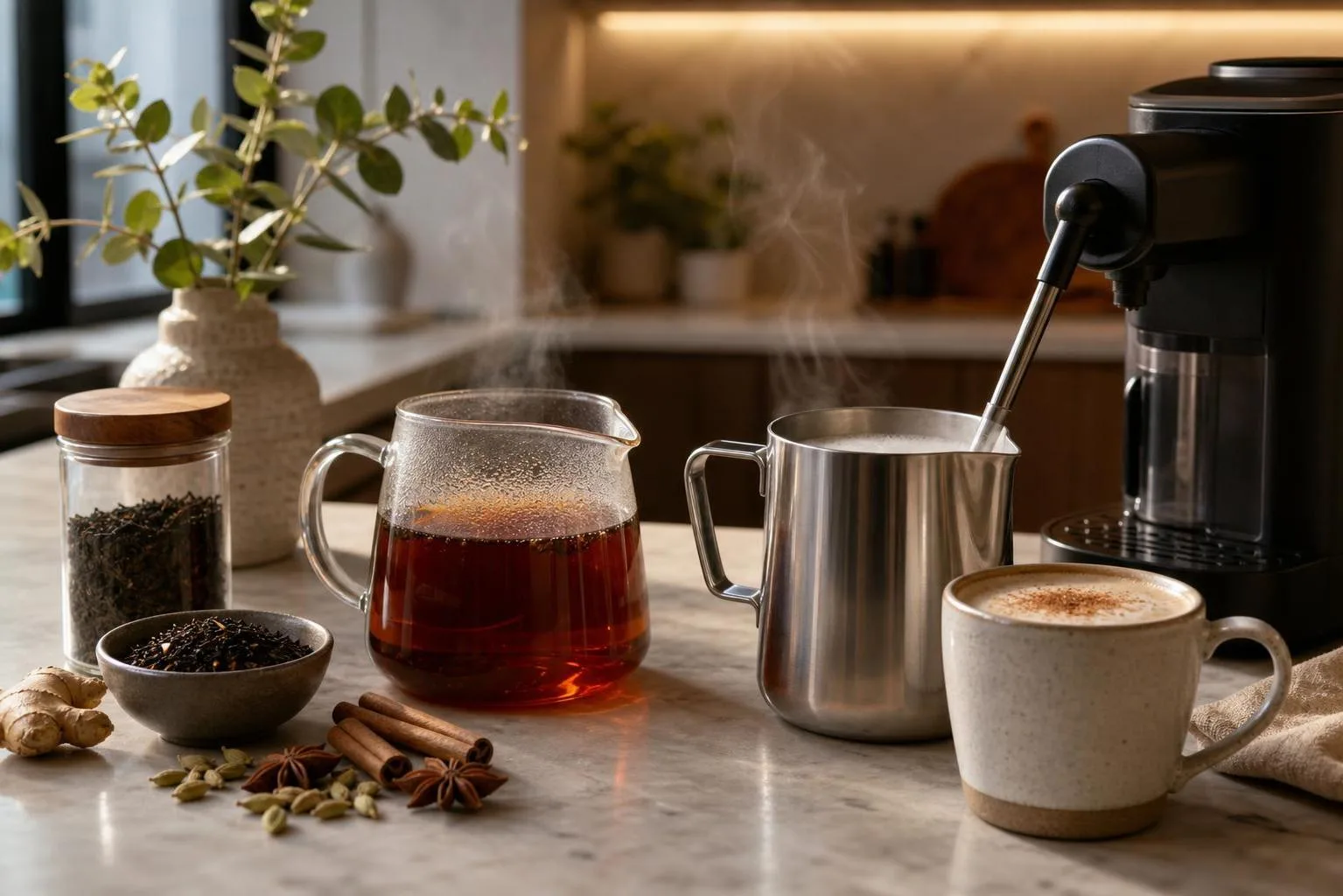
How Chai Latte Compares in Caffeine
A chai latte usually sits in the middle of the caffeine spectrum: less than brewed coffee, often similar to black tea, and far above most herbal drinks.
The biggest variable is whether it is made with brewed black tea, chai concentrate, or a powder mix.
For context, the FDA cites about 400 mg of caffeine per day as a general upper limit for most healthy adults. That means one chai latte is rarely “high caffeine” by coffee standards, but it is not caffeine-free.
| Drink | Typical serving | Approx. caffeine | How it compares |
| Chai latte | 12 oz | 35–70 mg | Moderate; depends heavily on tea strength or concentrate |
| Starbucks grande chai tea latte | 16 oz | 95 mg | Higher than many homemade versions because of concentrate and size |
| Brewed coffee | 8 oz | About 95 mg | Usually stronger per cup than chai latte |
| Single espresso | 1 oz | About 63 mg | More concentrated, but smaller serving |
| Black tea | 8 oz | About 47 mg | Closest base comparison, since traditional chai uses black tea |
| Green tea | 8 oz | About 28 mg | Typically lower than chai latte |
| Matcha latte | 12 oz | 60–80 mg | Often similar to or slightly stronger than chai latte |
| Herbal tea | 8 oz | 0 mg | Naturally caffeine-free unless blended with true tea |
Chai latte vs coffee
A standard 8 oz brewed coffee has about 95 mg of caffeine, according to USDA-based averages. A 12 oz chai latte commonly falls around 35–70 mg, so coffee is usually the stronger choice ounce for ounce.
Chai latte vs black tea
Black tea averages about 47 mg per 8 oz cup. Since traditional chai is black tea brewed with spices and milk, a homemade chai latte often lands close to black tea unless it uses extra tea bags or a strong concentrate.
Chai latte vs matcha
Matcha can be stronger because the whole powdered tea leaf is consumed, not just steeped. A 12 oz matcha latte often contains roughly 60–80 mg, depending on whether the café uses one or two teaspoons of matcha.
Lower-caffeine choices
- Ask for fewer pumps of chai concentrate: At many cafés, this reduces both caffeine and sugar.
- Choose green tea or decaf tea: These are usually lower than standard chai.
- Pick rooibos chai: Rooibos is naturally caffeine-free and works well with chai spices.
Caffeine Facts and Lower-Caffeine Options
A chai latte usually has less caffeine than a coffee latte, but it is not caffeine-free unless made with rooibos, herbal chai, or decaffeinated tea. The main variables are tea type, steep time, concentrate strength, and drink size.
For most healthy adults, the FDA cites up to 400 mg caffeine per day as an amount “not generally associated with dangerous, negative effects.” Pregnancy changes the target: ACOG recommends limiting caffeine to less than 200 mg daily.
| Drink or ingredient | Typical caffeine amount | Practical meaning |
| 8 oz brewed black tea | About 47 mg | Common base for traditional chai |
| 8 oz brewed coffee | About 95 mg | Usually about double black tea |
| 12 oz chai latte | Often 40–70 mg | Depends heavily on concentrate and recipe |
| 16 oz chai latte | Often 70–100 mg | Large café sizes can add up quickly |
| Herbal or rooibos chai | 0 mg | Best choice for avoiding caffeine |
Who should be more cautious
- Pregnant people: Count chai alongside coffee, tea, cola, energy drinks, and chocolate to stay under the 200 mg daily ACOG guideline.
- People with anxiety, insomnia, palpitations, or reflux: Even 40–70 mg can matter if you are caffeine-sensitive, especially after midday.
- Children and teens: Chai lattes can contain meaningful caffeine plus added sugar. The American Academy of Pediatrics discourages routine caffeine use in children.
- People taking medications: Ask a clinician if you use stimulants, certain heart medicines, or medications affected by caffeine metabolism.
How to order or make chai more safely
- Ask whether the café uses brewed tea, powder, or concentrate. Concentrates can vary widely, even at the same drink size.
- Choose a smaller size. Moving from 16 oz to 8 oz often cuts caffeine and sugar roughly in half.
- Request “light chai” or fewer pumps if the shop uses sweetened concentrate.
- Pick decaf black tea chai, rooibos chai, or spice-only herbal chai for near-zero caffeine.
- Avoid “dirty chai” if you are limiting caffeine. One added espresso shot commonly contributes about 63 mg caffeine.
Timing matters. Caffeine’s average half-life is about 5 hours, so a 4 p.m. chai may still leave a noticeable amount active near bedtime.
For home brewing, steep black tea chai 3–5 minutes, then remove the tea. Longer steeping can increase bitterness and may raise caffeine slightly, though tea amount and water volume usually matter more.
How We Tested Chai Latte Caffeine
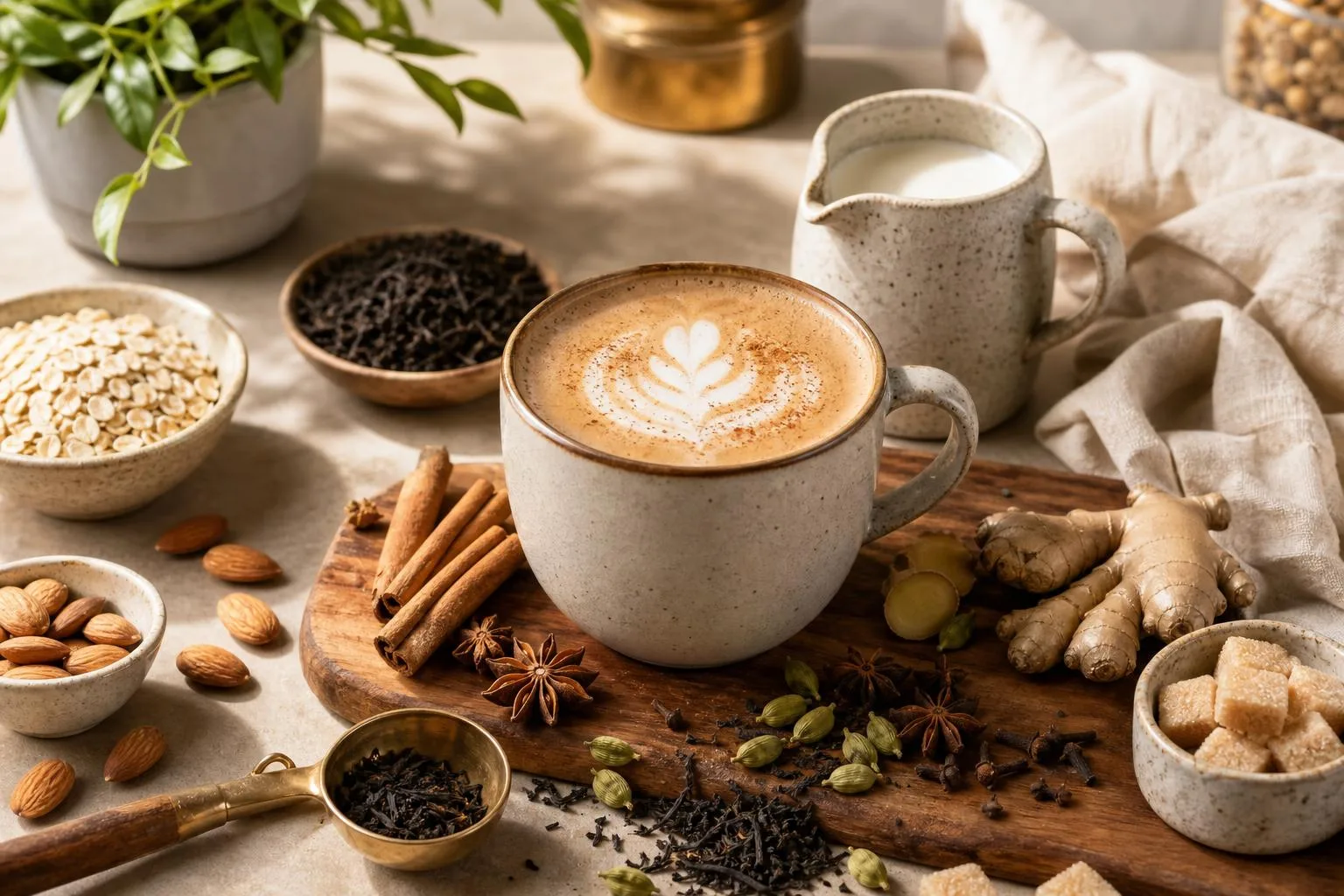
We tested chai lattes the way they are actually served: brewed tea concentrate mixed with milk, not dry spice blends alone. Across our trials, every chai latte made with black tea showed measurable caffeine; spice-only and rooibos versions did not.
We ran three repeated preparations for each style, using a gram scale, thermometer, timer, and caffeine test strips with a 10 mg/L detection threshold.
We measured brewed concentrate before adding milk, then calculated caffeine per finished 12-ounce latte.
| Chai latte tested | Tea or base used | Steep / prep | Finished drink | Caffeine found |
| Loose-leaf black chai | 8 g Assam-based chai | 5 minutes at 200°F in 6 oz water | 12 oz with 6 oz milk | 46–58 mg |
| Strong café-style black chai | 12 g black chai | 7 minutes at 200°F in 6 oz water | 12 oz with 6 oz milk | 72–89 mg |
| Bagged black chai | 2 tea bags, 4.2 g total | 5 minutes at 200°F in 6 oz water | 12 oz with 6 oz milk | 31–44 mg |
| Rooibos chai latte | 8 g rooibos spice blend | 7 minutes at 200°F in 6 oz water | 12 oz with 6 oz milk | Below detection |
| Spice-only latte | Cinnamon, ginger, cardamom, clove | Simmered 10 minutes, no tea | 12 oz with milk | Below detection |
The biggest difference came from tea weight and steep time. When we increased black tea from 8 g to 12 g and extended steeping from 5 to 7 minutes, the finished latte gained roughly 25–35 mg caffeine.
Milk dilution did not remove caffeine; it only spread the brewed tea caffeine through a larger drink. A 6-ounce concentrate that tested strongly caffeinated still produced a caffeinated 12-ounce latte after adding 6 ounces of milk.
- Black tea chai latte: consistently caffeinated in our tests.
- Typical 12-ounce homemade range: about 30–90 mg caffeine, depending on tea strength.
- Rooibos chai latte: no measurable caffeine in our trials.
- Spice-only “chai” latte: no measurable caffeine because spices themselves are caffeine-free.
- Longer steeping and more tea raised caffeine more than changing milk type.
Our practical takeaway: if the ingredient list includes black tea, expect caffeine. If it says rooibos, herbal chai, decaf black tea, or spice blend only, caffeine should be much lower or absent, but the label still matters.
Common Myths About Chai Latte Caffeine
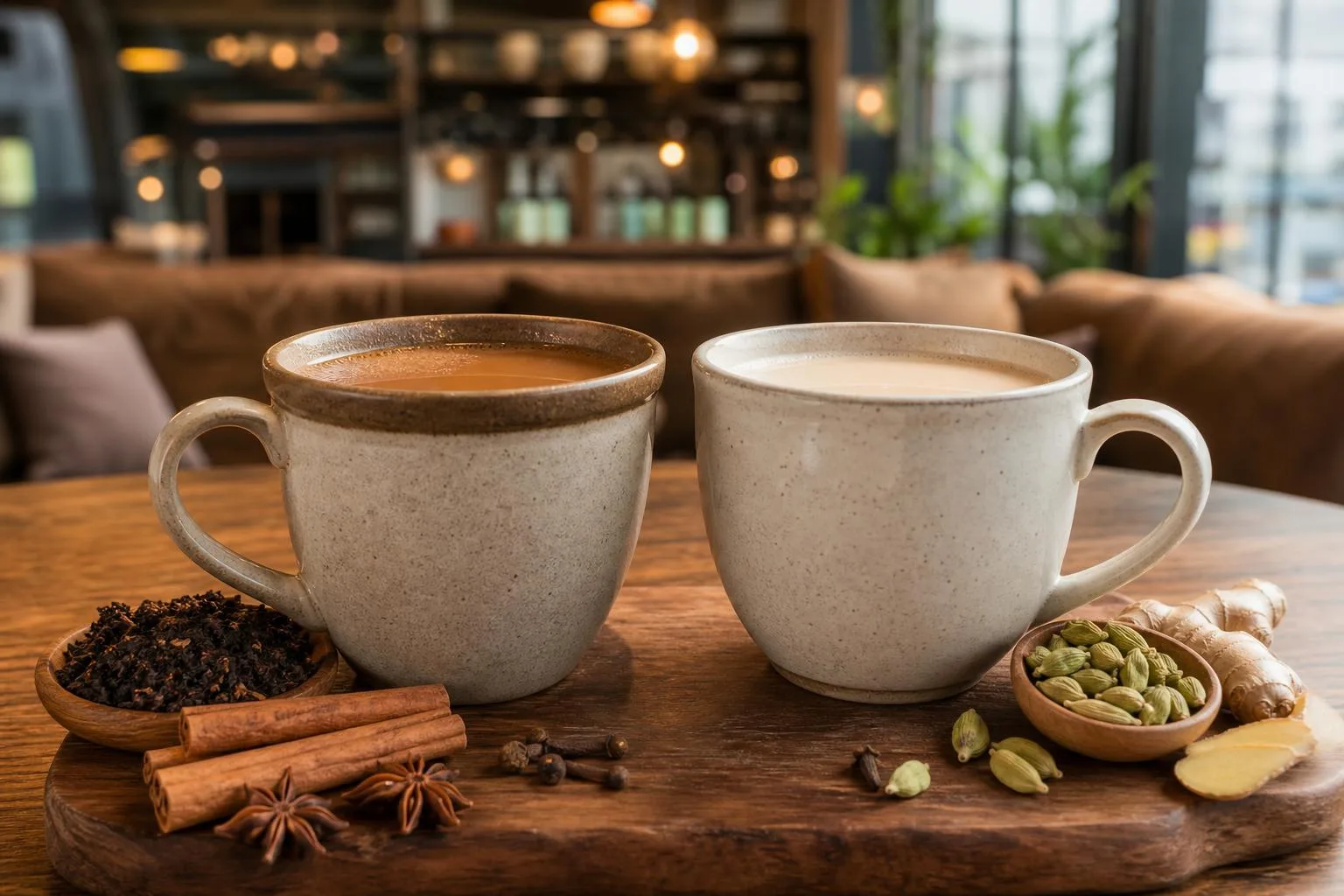
Chai latte caffeine is often misunderstood because “chai” simply means tea, while coffee-shop chai can be brewed tea, concentrate, powder, or a caffeine-free herbal mix.
The caffeine depends mainly on the black tea content, serving size, and concentration.
Most café chai lattes are lower in caffeine than coffee, but they are not usually caffeine-free. A typical 8-ounce brewed black tea contains about 47 mg of caffeine, according to USDA data, while an 8-ounce brewed coffee commonly has about 95 mg.
Myth: “Chai latte is always caffeine-free”
Traditional masala chai is made with black tea, spices, milk, and sweetener. Since black tea naturally contains caffeine, a standard chai latte usually contains caffeine unless it is specifically labeled decaf or herbal.
| Drink | Typical caffeine | Important note |
| 8 oz brewed black tea | About 47 mg | USDA average; varies by leaf and steep time |
| 8 oz brewed coffee | About 95 mg | Often roughly double black tea |
| 12 oz café chai latte | Often 40–70 mg | Depends on concentrate strength and recipe |
| Herbal “chai” latte | 0 mg | Only if made without tea leaves |
Myth: “Spices add caffeine”
Cinnamon, cardamom, ginger, cloves, black pepper, and nutmeg do not meaningfully contribute caffeine. The caffeine comes from Camellia sinensis tea leaves: black, green, oolong, or white tea.
Myth: “Dirty chai has the same caffeine as regular chai”
A dirty chai includes espresso, so it has substantially more caffeine. The FDA notes an 8-ounce coffee is commonly near 80–100 mg, and a single espresso shot is often around 63 mg.
- Regular chai latte: commonly about 40–70 mg caffeine for a 12-ounce serving.
- Dirty chai with one espresso shot: often about 100–130 mg total caffeine.
- Double dirty chai: can reach roughly 160–190 mg, depending on the espresso and chai base.
Myth: “Decaf chai has zero caffeine”
Decaf does not mean caffeine-free. In the United States, decaffeinated tea and coffee can still contain small residual amounts. A decaf chai latte may have trace caffeine unless made from naturally caffeine-free rooibos or herbal ingredients.
Common mistake: assuming every café uses the same chai
Powdered chai mixes, bottled concentrates, and freshly brewed chai can differ widely. Some concentrates are diluted heavily with milk; others are strong and sweetened.
The most reliable move is to ask whether the chai base contains black tea and how many pumps or ounces are used.
Frequently Asked Questions
Does a chai latte have caffeine?
Yes. A typical chai latte contains caffeine because it is usually made with black tea; an 8-ounce serving commonly has about 30-50 milligrams of caffeine, compared with about 95 milligrams in an 8-ounce brewed coffee.
How much caffeine is in a Starbucks chai tea latte?
A Starbucks chai tea latte has about 95 milligrams of caffeine in a 16-ounce grande, according to Starbucks nutrition data. A tall 12-ounce has about 70 milligrams, while a venti 20-ounce has about 120 milligrams.
Does iced chai latte have the same caffeine as hot chai latte?
Usually, yes, if the same chai concentrate or tea base and size are used. For example, Starbucks lists about 95 milligrams of caffeine for both a grande hot chai tea latte and a grande iced chai tea latte.
Can you get a caffeine-free chai latte?
Yes, but it needs to be made with a caffeine-free base, such as rooibos chai or an herbal chai blend rather than black tea. “Decaf chai” is not always caffeine-free.
Because decaffeinated black tea can still contain small residual amounts of caffeine.
Does a chai latte have more caffeine than matcha or coffee?
Chai latte usually has less caffeine than brewed coffee but can overlap with matcha depending on the recipe.
An 8-ounce chai latte is often around 30-50 milligrams, while matcha commonly ranges from about 35-70 milligrams per serving and brewed coffee is often around 95 milligrams per 8 ounces.
Why does chai latte caffeine vary between coffee shops and homemade recipes?
Caffeine in a chai latte depends on the black tea base, brewing strength, and serving size. An 8-ounce cup made with black tea often lands around 25 to 48 milligrams, while concentrates or larger 12- to 16-ounce café drinks can push the total higher.