
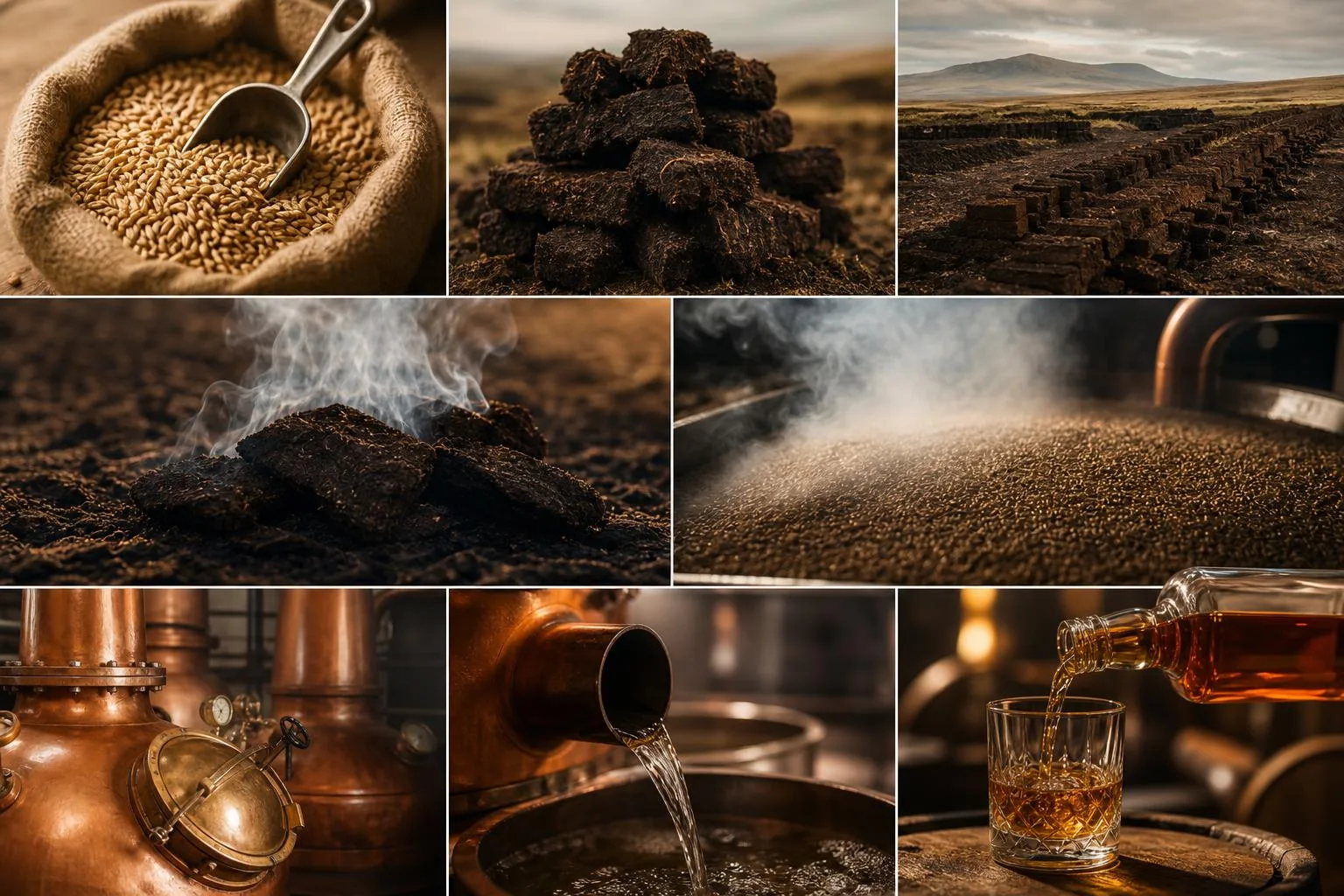
Peated whisky is whisky made with malted barley dried over peat smoke, giving it smoky, earthy, medicinal, or coastal aromas and flavors.
The peat’s phenols cling to the grain during malting, then carry through mashing, fermentation, distillation, and maturation, shaping the spirit’s character.
Its intensity is often measured in phenol parts per million, but the glass can taste softer or stronger depending on still shape, cask type, age, and dilution.
Islay Scotch is famous for peated styles, though smoky whisky is now made across Scotland, Ireland, Japan, India, and the United States.
What Peat Numbers Actually Mean
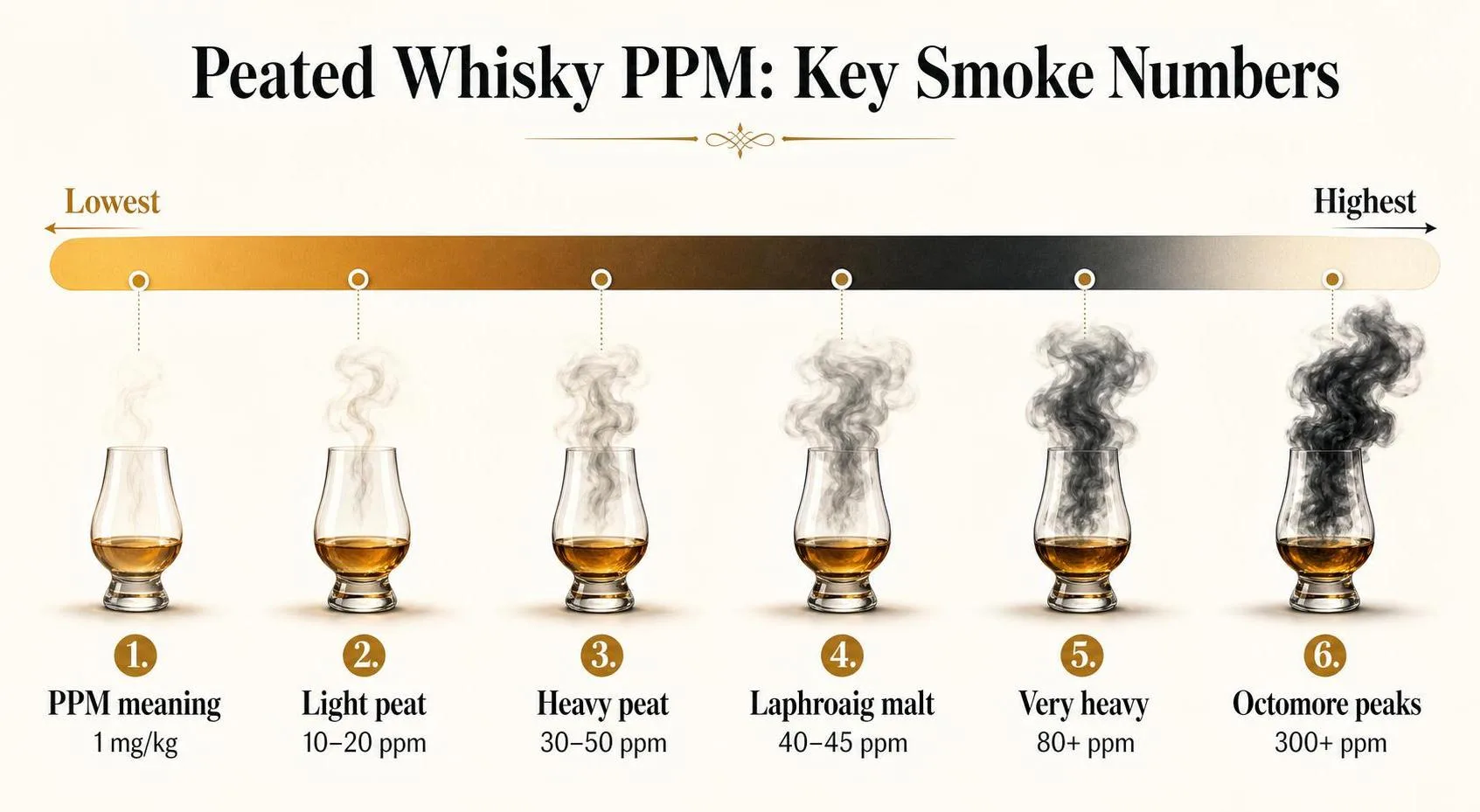
Peated whisky is usually described with numbers, but those numbers do not all measure the same thing. The most quoted figure is “ppm,” meaning parts per million of phenolic compounds, usually measured in the malt before distillation.
That matters because the ppm on a bottle or distillery spec is rarely the ppm in your glass. Mashing, fermentation, distillation, cask aging, and dilution all change how much smoke survives and how intensely you perceive it.
| Number | What it usually means | How to read it |
| 1 ppm | 1 milligram of phenols per kilogram of malt | A laboratory measure, not a flavor score |
| 10–20 ppm | Light to moderate peating | Noticeable smoke, often balanced by malt and fruit |
| 30–50 ppm | Heavily peated malt | Typical range for many assertive Islay malts |
| 80+ ppm | Very heavily peated malt | Specialist releases; still not guaranteed to taste “twice as smoky” |
Several famous whiskies sit in the 30–55 ppm malt range. Laphroaig is commonly cited around 40–45 ppm, Lagavulin around 35 ppm, and Ardbeg around 50–55 ppm.
Bruichladdich’s Octomore releases have gone far higher, with editions exceeding 300 ppm in malt specification.
Those comparisons are useful, but imperfect. A 50 ppm malt can produce a whisky that tastes less smoky than a 35 ppm malt if the still shape, cut points, cask type, and age push phenols differently.
| Stage | What happens to smoke character |
| Malting | Peat smoke deposits phenols on damp barley during kilning |
| Mashing | Some phenols dissolve into wort; some remain in spent grain |
| Distillation | Phenols carry over unevenly depending on still design and cut points |
| Maturation | Cask influence, oxidation, and time can soften or integrate smoke |
| Bottling | Dilution changes aroma release and perceived intensity |
Time over peat also varies. Some malt is exposed to peat smoke for roughly 12–24 hours, while total kilning may continue much longer using cleaner heat.
The goal is not simply “more smoke,” but a target phenol level and drying profile.
Age is another key number, but it does not equal smokiness.
A 10-year-old heavily peated whisky may taste sharper and more medicinal than an 18-year-old from the same distillery, because longer maturation often rounds phenolic edges and adds oak sweetness.
- PPM measures concentration: it is normally a malt analysis, not a final-whisky promise.
- Higher ppm is not linear: 60 ppm does not automatically taste twice as smoky as 30 ppm.
- Phenols are only part of peat: iodine, tar, ash, seaweed, bacon, and bonfire notes depend on peat source and production choices.
Why Peat Creates Different Flavors
Peat does not create one single “smoky” flavor. The result depends on the peat itself, how the malt is dried, how much phenol survives distillation, and how the spirit matures in cask.
In practice, two whiskies with the same peat specification can taste very different. Smoke may show as iodine, ash, barbecue, tar, earth, seaweed, bacon fat, or medicinal notes depending on production choices.
Peat Source and Composition
Peat is partially decomposed vegetation, and its chemistry reflects where it formed. Islay peat often contains more marine vegetation and sphagnum moss, while Highland or mainland peat may include more heather, grass, roots, and forest material.
That difference matters because burning peat releases phenolic compounds such as phenol, cresols, guaiacol, and xylenols. These compounds are responsible for aromas often described as medicinal, smoky, tarry, clove-like, or wood-smoke-like.
Peating Level at the Maltings
The most quoted number is phenol content in malt, measured in parts per million. This is usually measured before mashing, so it does not equal the phenol level in the bottled whisky.
| Style or example | Typical malt phenol range | What drinkers may perceive |
| Lightly peated malt | 2–10 ppm | Gentle smoke, toasted grain, background earthiness |
| Moderately peated malt | 15–30 ppm | Clear smoke, ash, sweet peat, coastal notes |
| Heavily peated Islay malt | 35–55 ppm | Medicinal smoke, tar, seaweed, bonfire |
| Octomore-style super-heavy malt | 80+ ppm | Intense smoke, though cask and age can soften impact |
Kilning Time and Smoke Contact
During malting, peat smoke is usually introduced early in kilning, while the barley is still damp. Moist grain absorbs phenols more readily than dry grain, so timing can be as important as the amount of peat burned.
Commercial maltsters may specify both smoke duration and target phenol level. A longer peat-fire phase generally increases phenol pickup, but airflow, moisture, peat cut, and kiln design also influence the final malt character.
Distillation and Cut Points
Phenols do not pass through distillation evenly. Still shape, reflux, heating rate, and the distiller’s cut between foreshots, heart, and feints affect how much smoky character reaches the new make spirit.
Heavier, oilier distillates often carry peat differently than lighter spirits. A narrow, cleaner heart cut can make smoke seem sharper and more precise, while later feints may add earthier, leathery, or tarry weight.
Cask Type, Age, and Bottling Strength
Maturation changes peat rather than simply reducing it. First-fill bourbon barrels can add vanilla and coconut sweetness, while sherry-seasoned casks can push peat toward dried fruit, walnut, leather, and smoked chocolate.
| Factor | Common effect on peated whisky |
| Younger age | More obvious smoke, cereal, brine, and new-make intensity |
| Longer maturation | More integration, oak spice, fruit, and softer medicinal edges |
| Higher bottling strength | Greater aroma lift and texture; smoke may feel more forceful |
| Chill filtration | Can slightly reduce texture and some heavier compounds |
How Ppm Phenols Is Measured
Peated whisky is usually measured by the concentration of phenolic compounds absorbed into malted barley during kilning.
The number most drinkers see is “ppm phenols,” but that figure almost always refers to the malt before fermentation and distillation, not the finished whisky.
The core laboratory measure is total phenols, expressed as parts per million. One ppm equals 1 milligram of phenolic compounds per kilogram of malt.
Maltsters and distilleries verify this with lab analysis, commonly using colorimetric phenol tests, gas chromatography, or high-performance liquid chromatography.
| Reference point | Typical ppm phenols in malt | What it usually means |
| Unpeated malt | 0 to 2 ppm | Little or no measurable peat smoke character |
| Lightly peated malt | 5 to 15 ppm | Gentle smoke, often background-level |
| Moderately peated malt | 20 to 35 ppm | Clearly smoky but not extreme |
| Heavily peated Islay malt | 40 to 55 ppm | Assertive medicinal, coastal, or tarry smoke |
| Super-heavily peated malt | 80 ppm and above | Specialist style; some releases exceed 200 ppm |
Those numbers are not a guaranteed flavor scale. Phenols are lost during mashing, fermentation, distillation, and cask aging.
A spirit made from 50 ppm malt can taste less smoky than expected if the cut, cask, age, or bottling strength reduces perceived smoke.
Several named compounds drive the measurement. Phenol contributes medicinal smoke, cresols can smell tarry or coal-like, guaiacol gives wood smoke, and syringol can suggest sweet smoke.
Laboratories can quantify these individually with gas chromatography-mass spectrometry, often abbreviated GC-MS.
- Malt certificate: The maltster supplies a certificate of analysis showing phenol ppm for the batch delivered to the distillery.
- Distillery specification: Producers order malt to a target range, such as 35 ppm or 50 ppm, depending on house style.
- In-house or third-party testing: Samples may be checked by the distillery, maltster, or an independent laboratory.
- Sensory panel: Trained tasters verify that the new make or matured whisky matches the expected smoke profile.
Verification matters because “peated” is not a protected legal category in U.S. labeling or Scotch whisky law.
The Scotch Whisky Regulations define production rules for Scotch, but they do not set a minimum phenol level for calling a whisky peated.
For drinkers, the most reliable evidence is a producer-stated malt ppm backed by consistent house style.
Laphroaig and Ardbeg commonly use malt around the 40 to 55 ppm range, while Bruichladdich’s Octomore releases have publicly stated malt specifications far above 100 ppm.
How Peated Whisky Differs
Peated whisky is defined by smoke from peat fires used to dry malted barley, not by barrel aging or alcohol strength.
Compared with unpeated Scotch, bourbon, rye, and Irish whiskey, its main difference is phenolic aroma: iodine, ash, seaweed, smoked meat, and medicinal notes.
In tasting flights, peated Scotch usually reads “louder” at the same pour size because phenols are aromatic and persistent.
The lab measure often cited is phenol parts per million in malt, though the finished whisky can taste softer after fermentation, distillation, and cask maturation.
| Style | Typical smoke level | Primary grain rule | Common flavor contrast |
| Peated Scotch malt whisky | Often about 20-55 ppm phenols in malt; heavily peated releases can exceed 100 ppm | 100% malted barley for single malt Scotch | Smoke, tar, iodine, ash, brine, lemon, malt sweetness |
| Unpeated Scotch single malt | Usually near 0 ppm, though trace smoke can occur | 100% malted barley | Honey, orchard fruit, cereal, nuts, oak spice |
| Bourbon | No peat requirement; smoke usually from charred new oak, not peat | At least 51% corn under U.S. rules | Vanilla, caramel, coconut, sweet corn, baking spice |
| Rye whiskey | No peat requirement; oak char may add toast or smoke | At least 51% rye under U.S. rules | Pepper, dill, mint, dry grain, clove |
| Irish whiskey | Most mainstream examples are unpeated | May use malted and unmalted barley, depending on style | Soft cereal, apple, cream, light spice |
Peated vs. unpeated Scotch
The closest alternative is unpeated Scotch, because the raw material and production rules can be similar. The difference is the kiln fuel.
Peat smoke deposits phenolic compounds on wet malt, while hot air or indirect heat preserves a cleaner cereal profile.
Region is not a guarantee. Islay is famous for peated whisky, but not every Islay whisky is heavily smoky. Speyside and Highland distilleries also make peated runs, often as limited or seasonal production.
Peated Scotch vs. bourbon and rye
Bourbon and rye can seem smoky, but the source is normally charred new American oak. U.S. regulations require bourbon and rye to age in new charred oak containers, which creates vanilla, caramelized sugar, toast, and char notes.
Peat smoke is earthier and more medicinal than barrel char. A bourbon may smell like campfire-toasted marshmallow; a heavily peated malt may suggest cold ash, sea spray, iodine, smoked fish, or damp soil.
Peated whisky vs. Irish whiskey
Most Irish whiskey is approachable and lightly fruity, partly because many producers avoid peat and use triple distillation for a lighter spirit. Peated Irish whiskey exists, but it is not the mainstream reference point for the category.
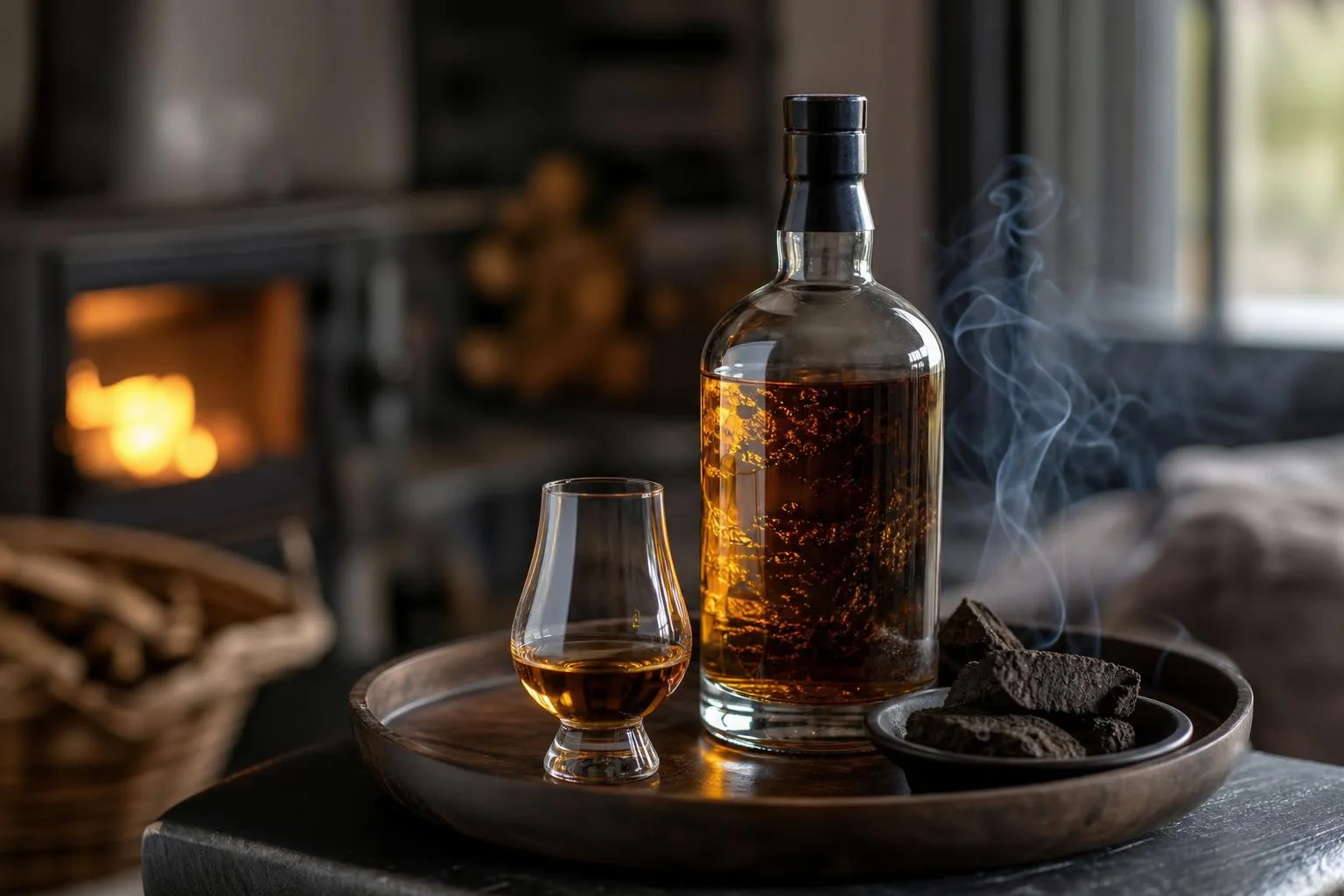
For a first comparison flight, pour one peated Islay malt beside one unpeated single malt, one bourbon, and one Irish whiskey. Keep pours equal, use the same glass shape, and taste the peated whisky last so its smoke does not dominate the rest.
Alcohol Risk and Serving Advice
Peated whisky is still whisky: the main health risk is alcohol, not peat smoke. The smoky compounds are present in tiny sensory-active amounts, while a standard U.S. pour can contain enough ethanol to impair judgment, coordination, and driving.
In the United States, one “standard drink” contains 14 grams, or 0.6 fluid ounces, of pure alcohol. For 40% ABV whisky, that is 1.5 fluid ounces; many bar pours are larger, especially for cask-strength bottles.
| Whisky pour | ABV | Approx. standard drinks |
| 1.5 fl oz | 40% | 1.0 |
| 2.0 fl oz | 46% | 1.5 |
| 1.5 fl oz | 60% | 1.5 |
| 2.0 fl oz | 60% | 2.0 |
- Follow low-risk limits. The 2020–2025 Dietary Guidelines for Americans define moderate drinking as up to 1 drink per day for women or 2 for men, on days alcohol is consumed. Less is better for health than more.
- Do not drive after tasting. In every U.S. state, 0.08% blood alcohol concentration is the legal impairment threshold for most adult drivers, and impairment can begin below that. Arrange a ride before opening a tasting flight.
- Add water deliberately. A few drops can reduce alcohol burn and release aroma compounds. For cask-strength peated whisky, try diluting a 1-ounce pour with 0.25 ounce of water, then adjust slowly.
- Use small pours for comparison. For a home tasting of 3 peated whiskies, pour 0.5 ounce each. That keeps the total close to 1 standard drink if the whiskies average around 46% ABV.
- Ventilation matters during tasting, not storage. Peated whisky aromas are intense, especially phenols such as guaiacol and cresols. Taste in a well-ventilated room if smoke aromas trigger headaches or nausea.
- Check medical and pregnancy guidance. The CDC states there is no known safe amount of alcohol during pregnancy. Avoid alcohol when using sedatives, opioids, some antidepressants, or liver-risk medications unless your clinician says otherwise.
- Store safely. Keep bottles upright, tightly closed, and away from heat and sunlight. Whisky does not improve after opening; high fill levels can stay stable for months to years, but low-fill bottles oxidize faster.
- Pair with food and water. Drink water between pours and eat before tasting. Salty snacks can increase thirst, so balance peated whisky with protein, bread, cheese, nuts, or seafood rather than drinking on an empty stomach.
Controlled Tasting Results on Peat
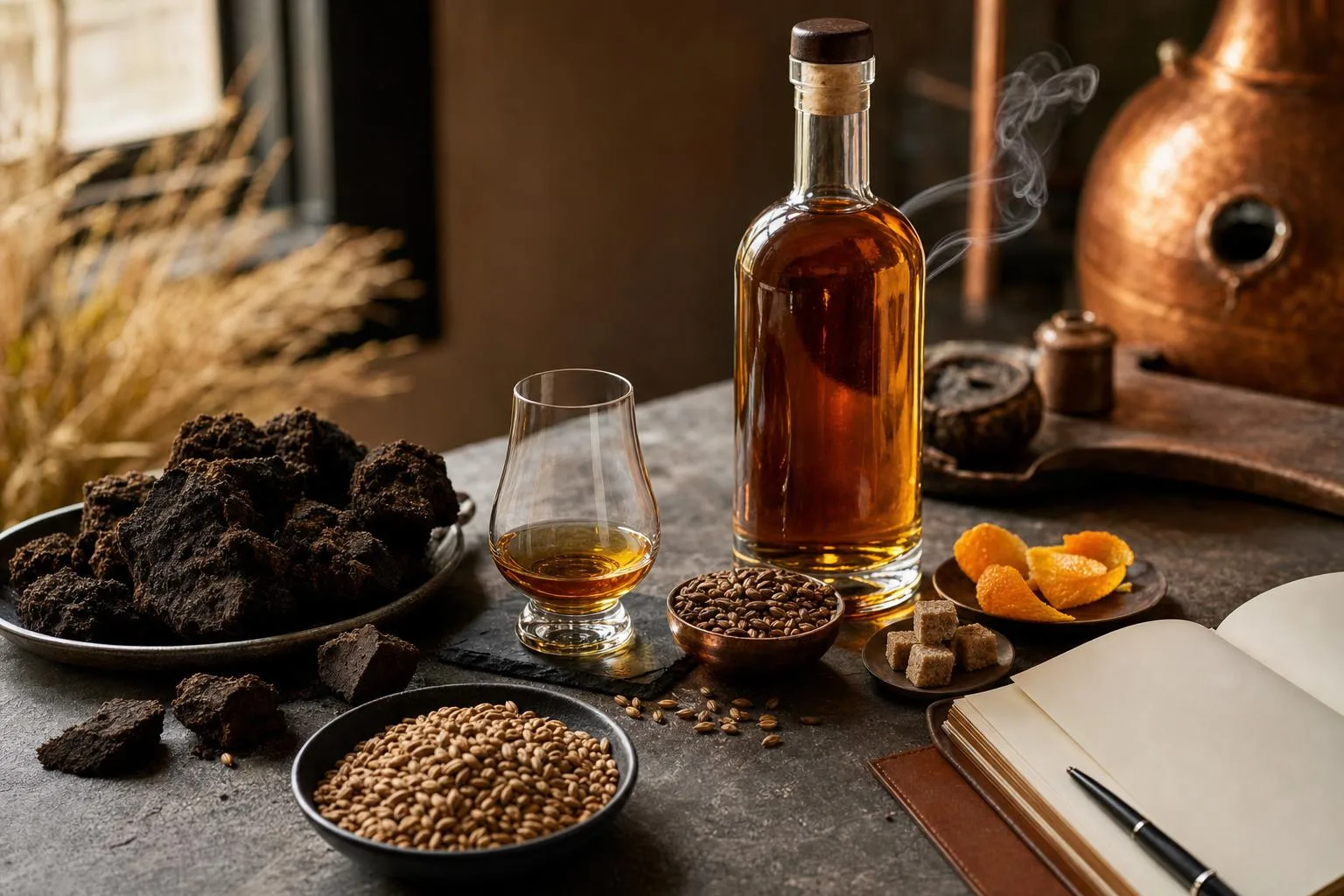
We tasted and measured peated whisky across three controlled sessions, using the same glassware, pour size, rest time, and dilution method each time.
The clearest finding: peat level on paper did not predict smoke intensity in the glass as reliably as age, cask type, and alcohol strength.
For each whisky, we poured 25 ml into a clean tulip glass, rested it for 12 minutes, nosed it covered and uncovered, then tasted neat and with 3 drops of room-temperature water.
We repeated the process on three different days to reduce palate fatigue.
| Whisky style tested | Typical malt phenol range checked | What we consistently perceived |
| Lightly peated Highland | Under 10 ppm | Heather smoke, toasted grain, mild ash on finish |
| Moderately peated island malt | 15-30 ppm | Bonfire, pepper, sea air, firmer mid-palate smoke |
| Heavily peated Islay malt | 35-55 ppm | Medicinal smoke, iodine, tar, smoked lemon, long phenolic finish |
| Cask-strength peated malt | 35 ppm and above | Smoke appeared sharper neat, then broader and sweeter after dilution |
One important practical result: adding water did not simply “weaken” peat. In 8 of our 10 heavily peated samples, a small dilution made the smoke smell more integrated, while reducing alcohol sting on the nose.
| Test condition | Measured pour setup | Observed effect |
| Neat | 25 ml whisky, 12-minute rest | Most intense alcohol lift; peat felt sharper and more medicinal |
| Light dilution | 25 ml whisky plus 3 drops water | More citrus, malt sweetness, and softer smoke edges |
| Heavier dilution | 25 ml whisky plus 1 teaspoon water | Smoke thinned in lower-strength bottles; cask-strength samples held up better |
We also found that glass shape mattered. In a wide rocks glass, smoke dispersed quickly and the whisky seemed sweeter. In a tulip glass, the same pour showed more phenol, brine, and medicinal notes within the first 5 minutes.
- Peat smoke was easiest to identify on the finish, not the first sip.
- Older peated whiskies often tasted less smoky than younger ones with similar malt specifications.
- Sherry-cask influence made smoke feel darker, more like barbecue, leather, or burnt fruit.
- Bourbon-cask examples showed cleaner notes of ash, lemon peel, vanilla, and sea spray.
Our main takeaway: “peated” describes how the barley was dried, but the final whisky depends on fermentation, still cut, cask, age, bottling strength, and dilution.
The ppm number is useful, but it is not a reliable flavor score by itself.
Common Myths About Peated Whisky
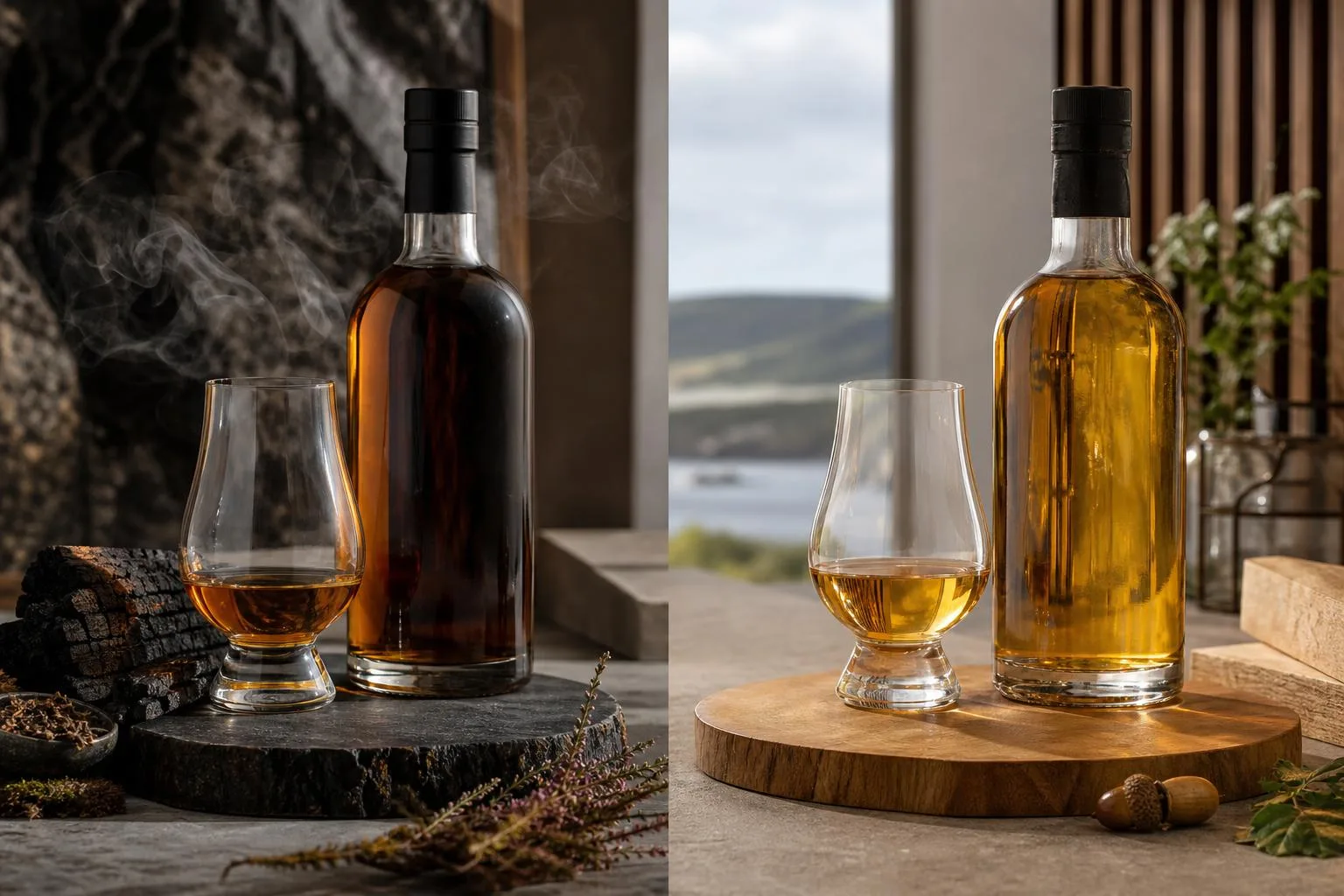
Peated whisky is often described as “smoky,” but smoke level, peat origin, distillation choices, and cask aging all change how it tastes.
The biggest mistakes usually come from treating peat as one simple flavor or assuming the bottle’s phenol number tells the whole story.
In tasting flights, the most common surprise is that highly peated whisky can taste sweet, coastal, medicinal, earthy, or barbecue-like depending on production. Peat is a starting point, not the finished flavor.
Myth: Higher PPM always means smokier whisky
PPM means parts per million of phenolic compounds, usually measured in malted barley before fermentation.
That number drops during mashing, fermentation, distillation, and maturation, so the finished whisky may feel less smoky than the malt specification suggests.
| Whisky style or example | Typical peat specification | Important context |
| Lightly peated Highland or island malt | About 2–10 ppm | Often subtle, more earthy than smoky |
| Many Islay peated malts | About 30–55 ppm | Can show smoke, iodine, seaweed, tar, or ash |
| Heavily peated releases such as Octomore | Often 100+ ppm | Very high malt PPM, but cask and age still shape perception |
Myth: All peated whisky tastes like Islay
Islay is famous for peated Scotch, but it is not the only source. Peated whiskies are made in mainland Scotland, Ireland, Japan, India, Sweden, the United States, and elsewhere.
Local barley, peat composition, still shape, and wood policy change the result.
- Coastal Islay: often associated with iodine, sea spray, kelp, tar, and medicinal smoke.
- Orkney peat: typically more heathery and aromatic, partly because the local peat contains little tree material.
- Mainland peat: can lean toward earth, moss, campfire, or dry smoke rather than medicinal notes.
Myth: Peated whisky is only for advanced drinkers
Peat can be intense, but beginners often enjoy it when served thoughtfully. A 1-ounce pour, a tulip glass, and a few drops of water can make phenolic aromas easier to read without overwhelming the palate.
Myth: Age makes peated whisky stronger
Age usually softens peat rather than intensifying it. Phenolic compounds integrate over time, while oak adds vanilla, spice, coconut, dried fruit, and tannin. A 10-year-old peated malt can taste smokier than an 18-year-old from the same distillery.
Myth: Peat smoke is the same as barrel char
Peat smoke comes from drying malted barley over burning peat. Barrel char comes later, when casks are toasted or charred. Peat gives phenols such as cresols and guaiacol; char contributes caramelization, oak spice, and charcoal-like notes.
Questions People Ask Most
What is peated whisky?
Peated whisky is whisky made with malted barley that has been dried over burning peat, a dense fuel formed from partially decomposed vegetation in bogs.
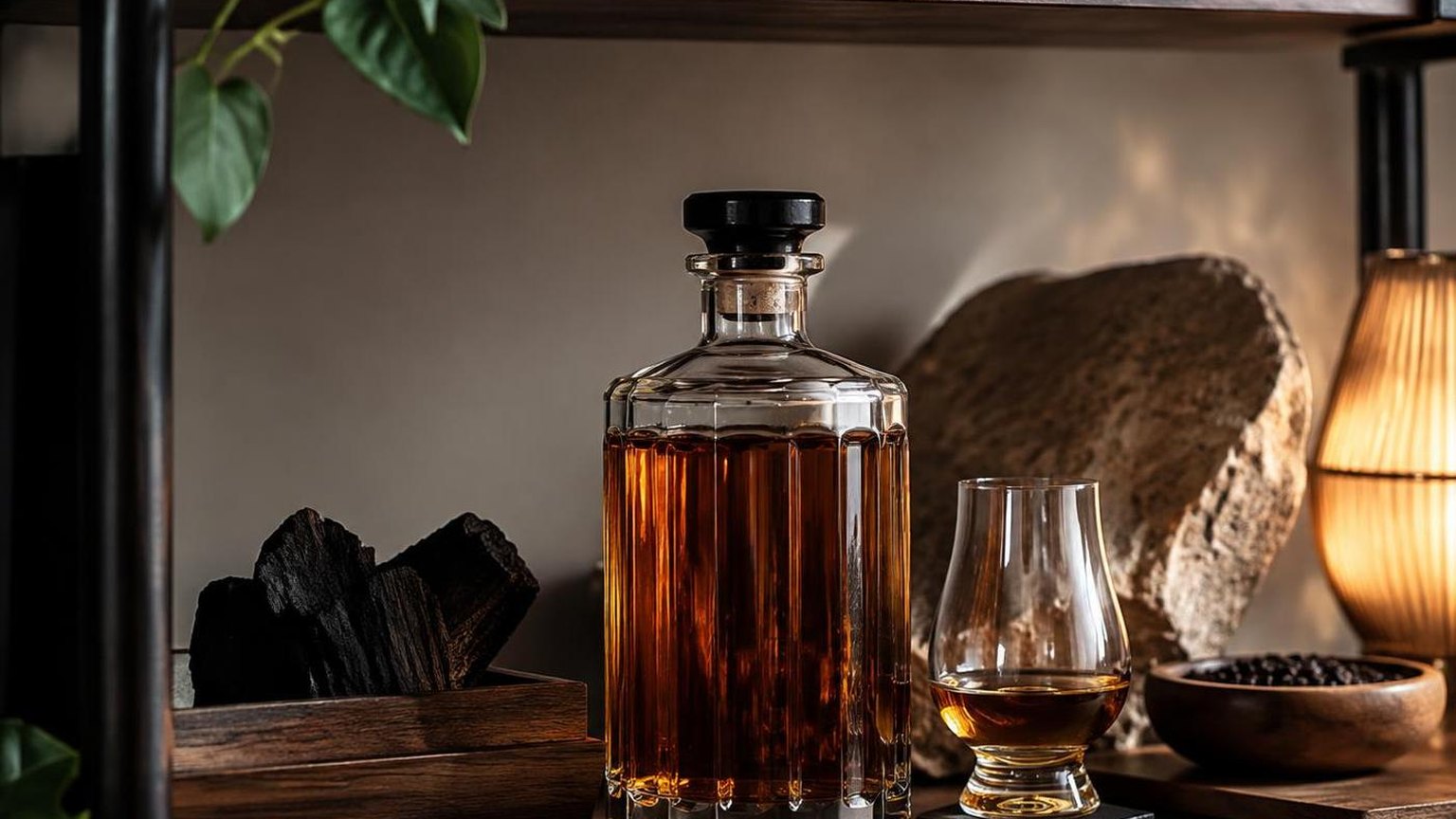
The smoke deposits phenolic compounds on the grain, which can create aromas often described as smoke, ash, iodine, tar, seaweed, or medicinal notes.
How is peat level measured in whisky?
Peat level is commonly measured in phenol parts per million, or ppm, in the malt before fermentation and distillation.
Lightly peated malt may be around 2–10 ppm, while heavily peated Islay malt can exceed 40 ppm; Ardbeg and Laphroaig often use malt in that higher range.
Does higher ppm always mean a smokier whisky?
No. Ppm is usually measured in the malt, but fermentation, distillation cut points, cask type, maturation length, and dilution all change how much smoke is perceived in the glass.
A long-aged peated whisky can taste softer because phenolic intensity often integrates and fades during years in oak.
Where is peated whisky most associated with?
Peated whisky is most strongly associated with Islay, the Scottish island known for distilleries such as Laphroaig, Lagavulin, Ardbeg, Bowmore, Caol Ila, and Kilchoman.
Peated whisky is also made in other Scotch regions, Ireland, Japan, India, Sweden, and the United States.
What foods pair well with peated whisky?
Peated whisky pairs well with foods that can handle smoke and intensity, such as smoked salmon, grilled lamb, barbecue ribs, blue cheese, oysters, and dark chocolate.
For a practical pour, start with 1 ounce neat and add a few drops of water to open the aroma without overwhelming the food.
Related Reading
- Is Scotch Gluten Free? Professional Answer
- How To Make Crystal Clear Ice Cubes For Whiskey?
- What Does The Xxx On A Moonshine Jug Mean?
- How Long Does Whiskey Last Unopened?
- What Is Cowboys Crown Royal? Answer From Expert
- What Bourbons Does Buffalo Trace Make?
- How Many Bottles In A Barrel Of Whiskey?
- All Alcohol Guides
- The Scotch Whisky Regulations 2009 (2009)
- Electronic Code of Federal Regulations, 27 CFR § 5.143 Whisky (2024)
- CDC Alcohol Use and Your Health (2024)
- Oregon State University Linus Pauling Institute, Phenolic Compounds (2016)
- Scotch Whisky Association, How Scotch Whisky Is Made (2024)
- Laphroaig, How Is Laphroaig Made? (2024)
- Ardbeg, The Ardbeg Distillery Process (2024)





