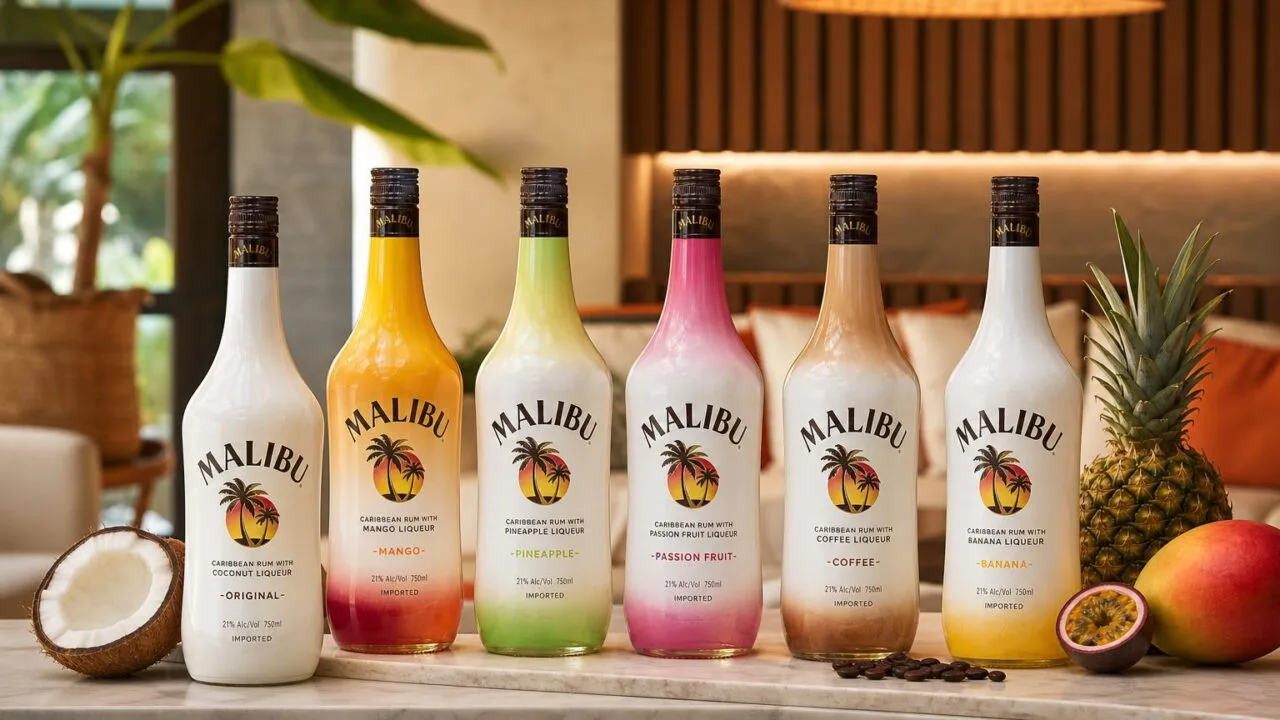
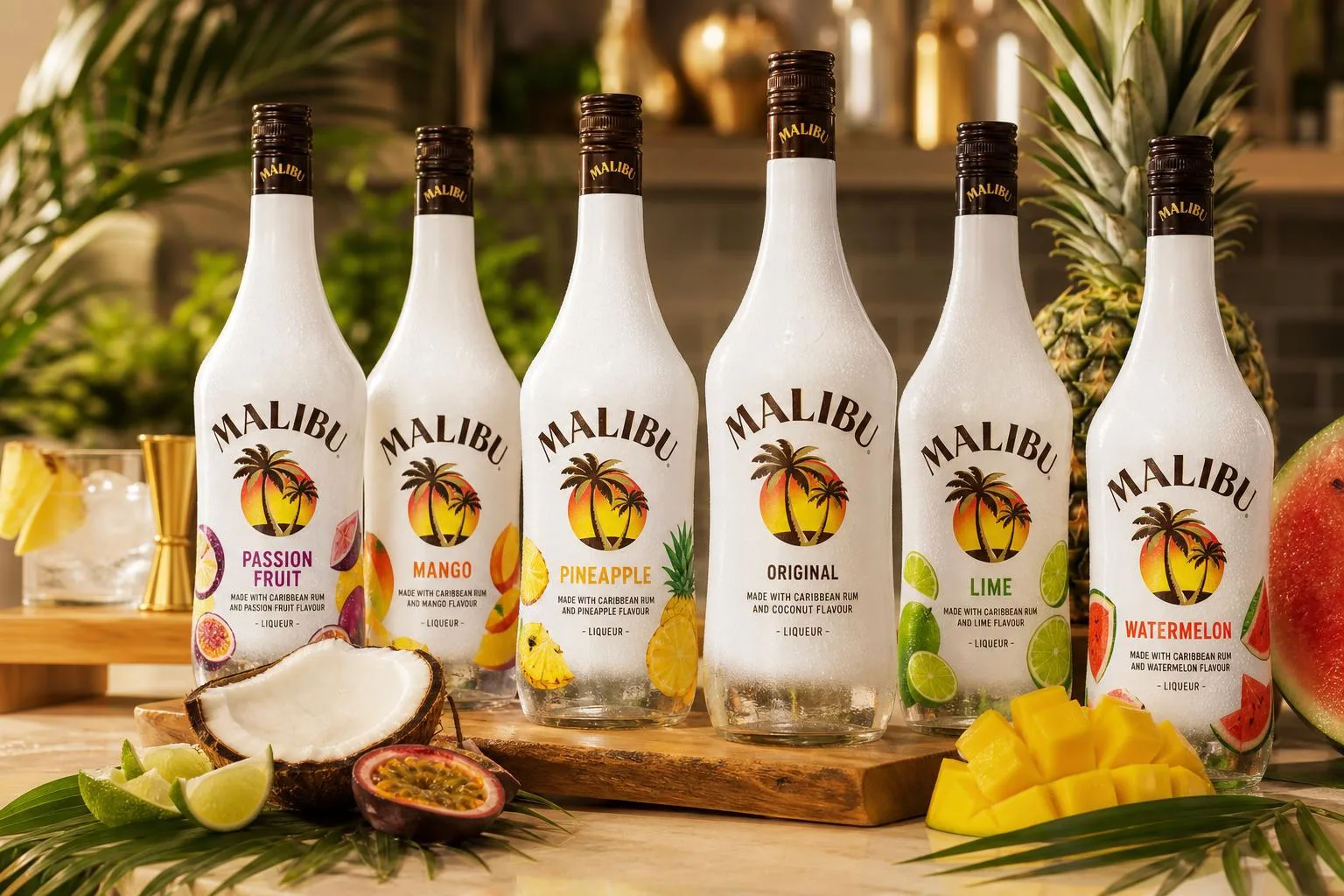
What kind of Malibu Rum is there spans more than a dozen distinct expressions, anchored by the flagship Malibu Original Coconut (21% ABV) and extending across fruit-flavored variants, ready-to-drink cocktails, and higher-proof Caribbean releases.
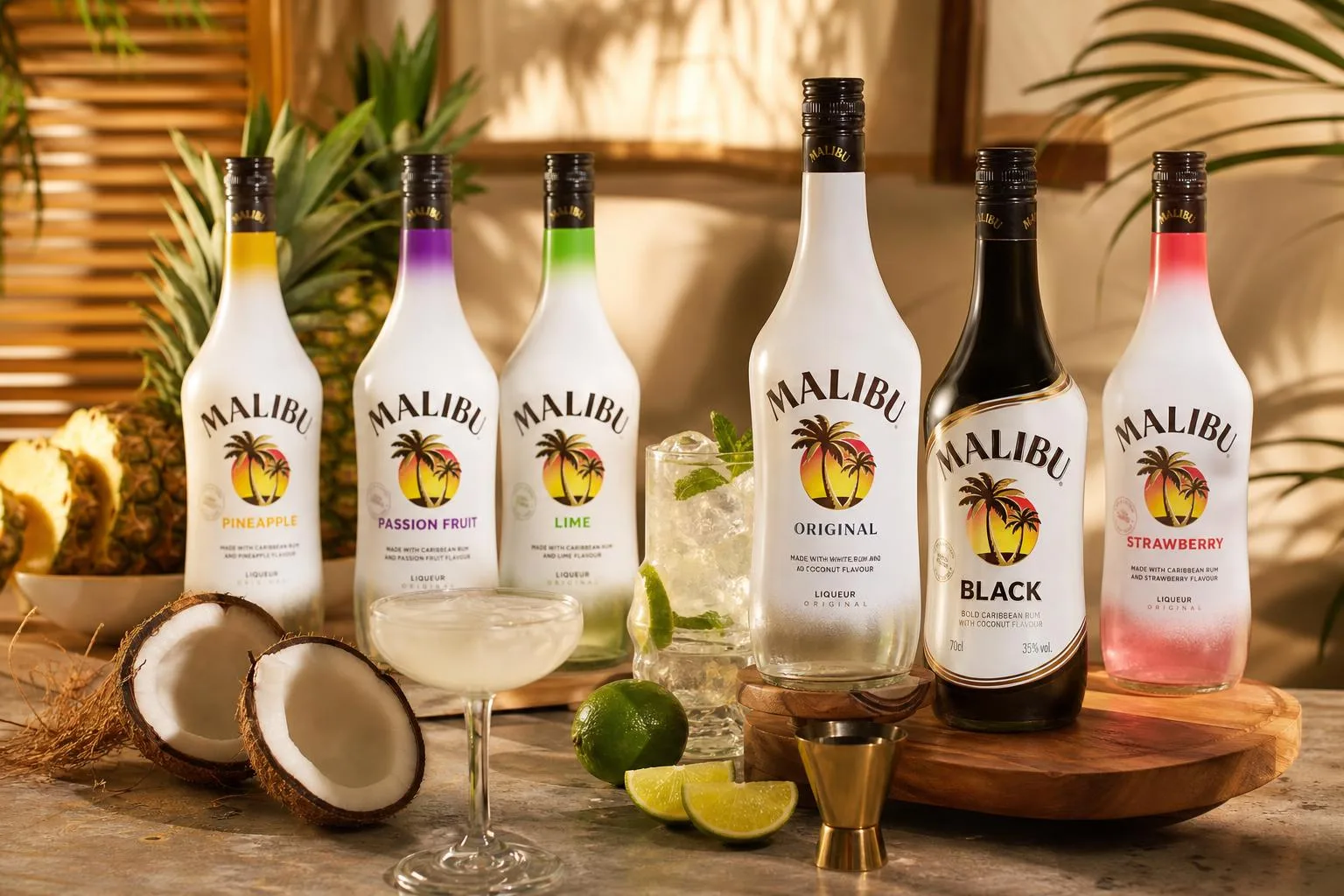
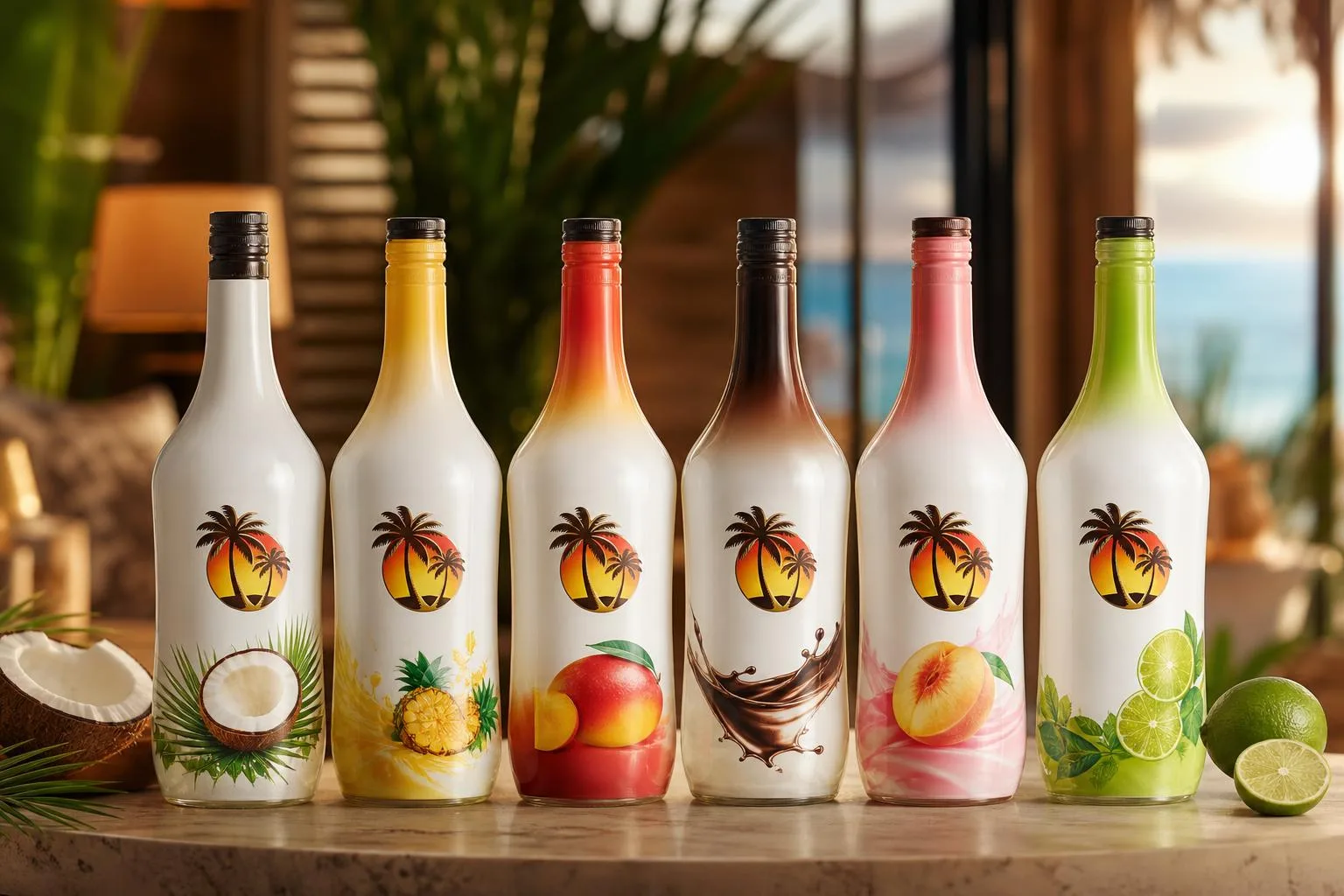
The core lineup includes Pineapple, Mango, Strawberry, Passion Fruit, Black (35% ABV), Lime, Watermelon, and Sparkling flavors.
Owned by Pernod Ricard and produced in Barbados since 1980, the brand blends column-distilled white rum with natural flavorings and cane sugar.
Below, we break down every current Malibu variant by category, ABV, and typical use, so you can match the right bottle to frozen cocktails, highballs, tiki builds, or straightforward mixers like pineapple juice and cola.
Malibu ABV Sugar and Calories
Malibu’s lineup is easier to navigate once you anchor on three numbers: ABV, sugar load, and calories per serving.
The flagship Original sits at 21% ABV in the US market, while newer line extensions push as low as 21% or as high as 35% for the Black label.
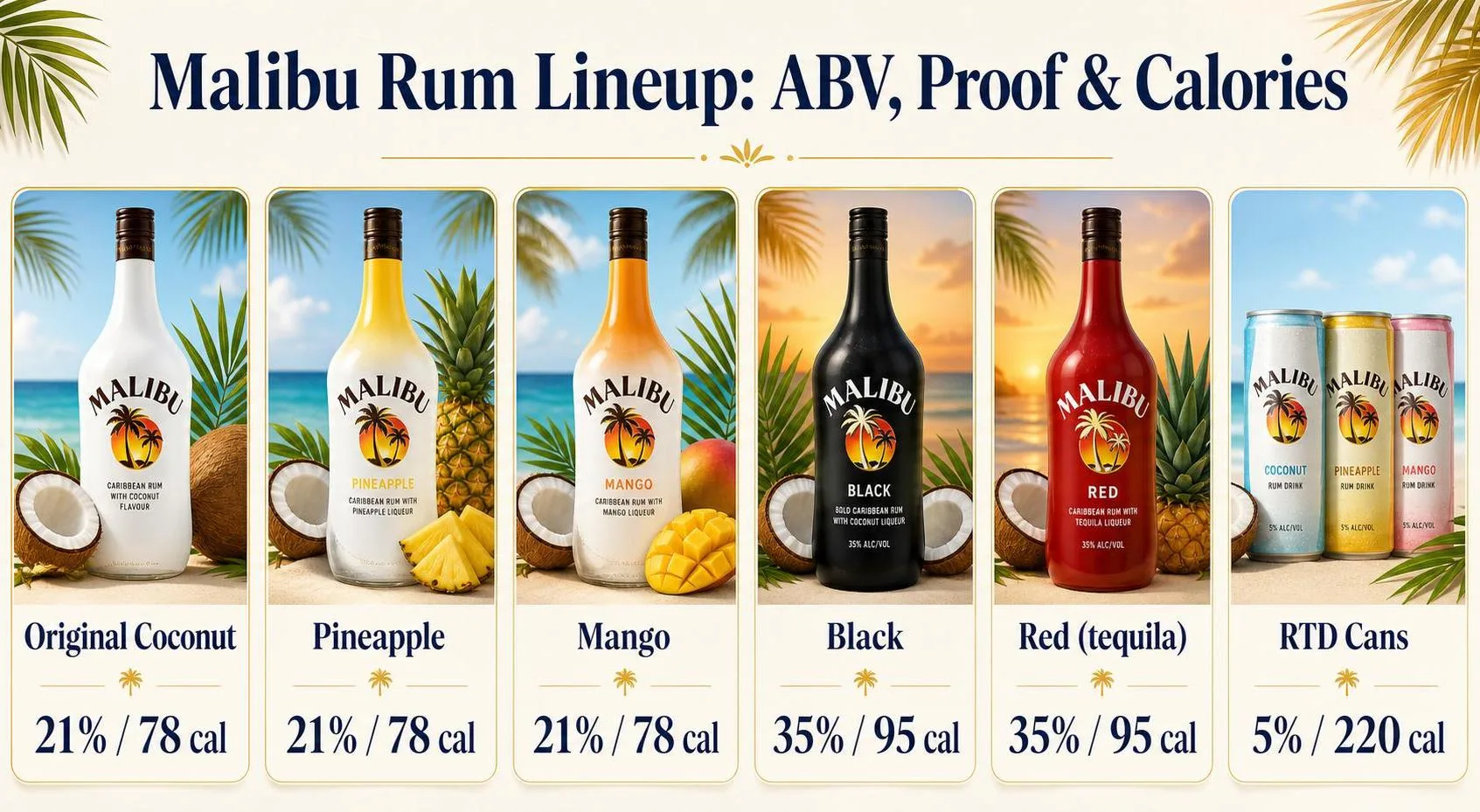
Here is how the core US expressions compare on the label math per 1.5 oz (44 ml) pour:
| Expression | ABV | Proof | Calories (1.5 oz) |
| Malibu Original Coconut | 21% | 42 | ~ 78 |
| Malibu Pineapple | 21% | 42 | ~ 78 |
| Malibu Mango | 21% | 42 | ~ 78 |
| Malibu Strawberry | 21% | 42 | ~ 78 |
| Malibu Banana | 21% | 42 | ~ 78 |
| Malibu Lime | 21% | 42 | ~ 78 |
| Malibu Watermelon | 21% | 42 | ~ 78 |
| Malibu Passionfruit | 21% | 42 | ~ 78 |
| Malibu Black | 35% | 70 | ~ 95 |
| Malibu Red (with tequila) | 35% | 70 | ~ 95 |
Why 21% Matters
Standard rum is bottled at 40% ABV (80 proof).
Malibu Original’s 21% puts it in the “flavored spirit” category in most US states, which is why it mixes gently and why the sugar content is noticeable — roughly 11–13 g per 1.5 oz.
Bottle Sizes You’ll See on Shelves
- 50 ml mini — travel and sampler packs, typically $1.49–$1.99
- 375 ml half — $8–$10
- 750 ml standard — $14–$18
- 1 L — $18–$22
- 1.75 L handle — $24–$29
Ready-to-Drink Cans
Malibu’s canned cocktails (Pina Colada, Strawberry Daiquiri, Lime Margarita, Tropical) are bottled at 5% ABV in 355 ml (12 oz) slim cans, roughly 220 calories each — closer to a hard seltzer than a spirit pour.
Sugar and Carb Reality Check
Malibu Original carries about 13 g of sugar per 1.5 oz — nearly identical to a shot of DeKuyper Peachtree schnapps and higher than Captain Morgan Original Spiced (0 g). That sweetness is baked into the coconut liqueur base, not added flavoring.
Choosing the Right Malibu Variety
When choosing a Malibu variety for a cocktail or sipping neat, several concrete factors shift the outcome: ABV, sugar load, flavor infusion method, and mixer chemistry.
Understanding these variables helps you predict sweetness, dilution tolerance, and how the coconut note reads in the final drink.
Alcohol by Volume Across the Line
Malibu’s ABV isn’t uniform. The original Caribbean Rum with Coconut sits at 21% ABV in the US market, while the higher-proof Black label pushes to 35% ABV. Flavored expressions typically match the 21% base.
| Expression | ABV | Sugar Impact |
| Malibu Original | 21% | High (liqueur-style) |
| Malibu Black | 35% | Lower, drier finish |
| Malibu Pineapple | 21% | High |
| Malibu Strawberry | 21% | High |
| Malibu Mango | 21% | High |
| Malibu Lime | 21% | High |
Sugar and Classification
Because Malibu Original contains roughly 130–150 grams of sugar per liter, the TTB classifies it as a “flavored rum” or liqueur rather than a straight rum.
This sweetness is why 1.5 oz of Malibu contributes noticeably more perceived sugar than the same pour of white rum.
Mixer Interaction
- Pineapple juice: amplifies the coconut, standard Piña Colada base at a 1:3 ratio.
- Cola: doubles the sugar load; Malibu Black works better here to avoid cloying.
- Cranberry: acidity balances the 21% ABV bottling in a Bay Breeze.
- Soda water: dilutes sweetness without masking coconut; ideal for the flavored expressions.
Storage and Shelf Life
Unopened Malibu keeps indefinitely, but once opened the coconut aromatics fade within 6–8 months due to oxidation. Store upright, away from direct sunlight, ideally under 70°F.
Refrigeration after opening extends peak flavor closer to 12 months.
Regional Availability
Not every expression ships to every market. The US typically stocks 8–10 core variants, while UK and duty-free shelves carry limited releases like Malibu Watermelon or Passionfruit.
Check the bottle’s back label for the exact production origin—Barbados remains the primary source.
How Malibu Product Specs Are Verified
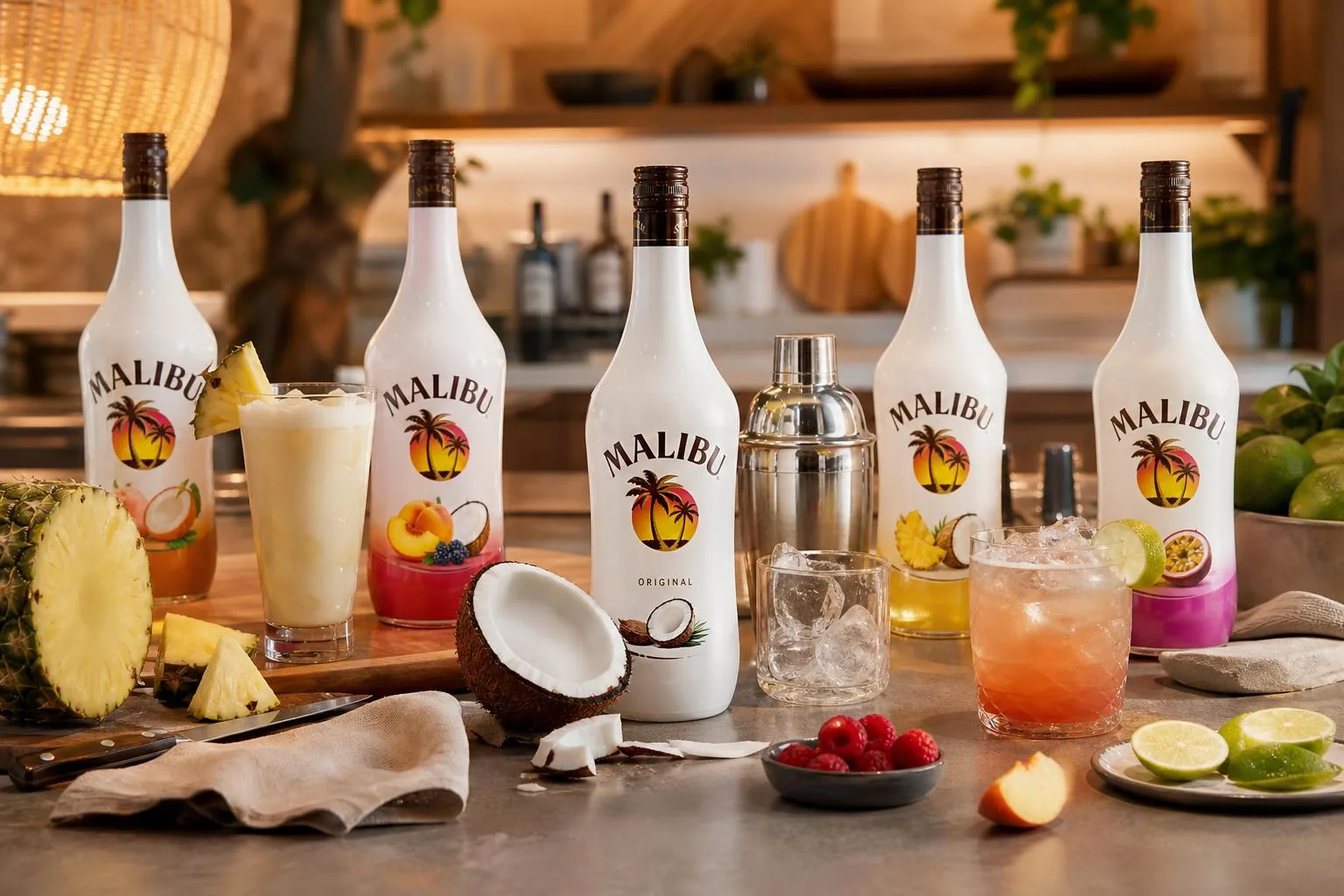
Malibu’s product specifications are verified through TTB (Alcohol and Tobacco Tax and Trade Bureau) Certificate of Label Approval filings, mandatory for every US-market bottling.
Each expression carries a declared ABV, standardized fill volumes, and a Standard of Identity classification that determines whether it’s labeled “rum,” “flavored rum,” or “liqueur.”.
ABV and Fill Sizes Across the Range
| Expression | ABV | US Category |
| Malibu Original Coconut | 21% | Liqueur / Flavored Rum |
| Malibu Black | 35% | Flavored Rum |
| Malibu Red (discontinued US) | 35% | Rum with Tequila |
| Malibu Pineapple, Mango, Passion Fruit, Strawberry | 21% | Flavored Rum |
| Malibu Lime, Watermelon, Peach | 21% | Flavored Rum |
| Malibu Sparkling (RTD) | 5% | Malt/Spirit Cooler (varies) |
| Malibu Cocktails (pre-mixed) | 12.5% | Cocktail |
Standard bottle sizes offered in the US are 50 mL, 200 mL, 375 mL, 750 mL, 1 L, and 1.75 L. The 750 mL Original at 21% ABV contains roughly 12.5 US standard drinks (0.6 fl oz pure alcohol per drink).
How Authenticity and Composition Are Verified
- TTB COLA database: Public label registry (ttbonline.gov) shows the approved formula owner (Pernod Ricard USA / The Absolut Company), ABV, and net contents.
- Barbados origin: The base rum is distilled at the West Indies Rum Distillery in Brighton, Barbados, verifiable via Pernod Ricard sustainability reports.
- Sugar content: Third-party hydrometer testing (e.g., Alko Finland dataset) records Malibu Original at approximately 95–100 g/L residual sugar, consistent with liqueur classification (minimum 2.5% sugar by weight under 27 CFR §5.22).
- Lot codes: Laser-etched on the base of each bottle, identifying bottling plant and date for traceability recalls.
Why the 21% Threshold Matters
Under 27 CFR §5.22(f), a spirit below 40% ABV cannot legally be called “rum” without qualification.
Malibu Original at 21% is therefore labeled “Caribbean Rum with Coconut Liqueur,” while Malibu Black clears 35% and qualifies as “flavored rum.”.
How Malibu Compares with Other Rums
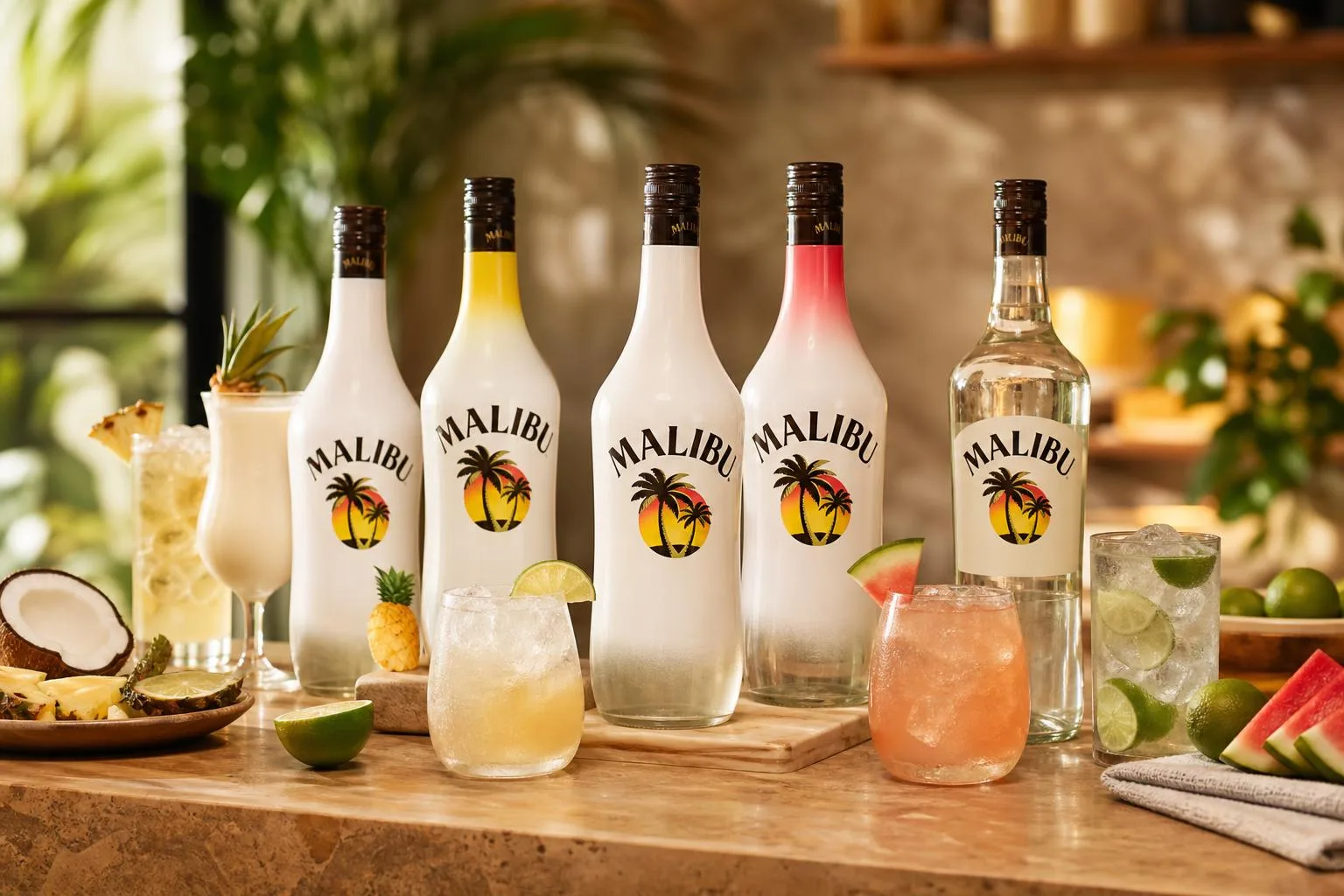
Malibu Original sits in the coconut-flavored rum category at 21% ABV (42 proof), notably lower than most standard rums.
Understanding how it stacks up against direct competitors and traditional rums helps clarify when to reach for the white-capped bottle versus something stronger or drier.
Coconut Rum Head-to-Head
| Brand | ABV | Base Spirit | Sweetness |
| Malibu Original | 21% | Caribbean rum | High (sugar-forward) |
| Captain Morgan Coconut Rum | 21% | Caribbean rum | Medium-high |
| Bacardi Coconut | 35% | Puerto Rican rum | Medium (drier finish) |
| Parrot Bay Coconut | 21% | Caribbean rum | Medium-high |
| Koloa Kaua’i Coconut | 40% | Hawaiian rum | Low (natural coconut) |
| Brinley Gold Shipwreck Coconut | 24% | St. Kitts rum | Medium |
Malibu’s 21% ABV places it closer to a liqueur than a full-strength spirit. Bacardi Coconut delivers 67% more alcohol per ounce, while Koloa nearly doubles Malibu’s proof and uses genuine toasted coconut rather than added flavoring.
Against Traditional White Rum
- Bacardi Superior: 40% ABV, zero added flavoring, roughly 97 calories per 1.5 oz versus Malibu’s ~110 calories
- Havana Club 3-Year: 40% ABV, aged in oak, no sugar additives
- Mount Gay Silver: 40% ABV, Barbadian, dry molasses profile
Traditional white rums require mixers or fresh ingredients to build tropical flavor. Malibu bakes the coconut and sweetness in, making it a shortcut for casual drinkers but a poor substitute in classic daiquiris or mojitos where balance matters.
Versus Cream Liqueurs and RTDs
RumChata (13.75% ABV) and coconut cream liqueurs like Coco López Cream of Coconut Liqueur occupy a richer, dairy-forward lane. Malibu stays translucent and mixable, whereas cream-based options thicken cocktails and shorten shelf life once opened.
Malibu’s canned cocktails (Piña Colada, Lime, Strawberry) run 5-10% ABV, competing directly with White Claw and High Noon in the seltzer aisle rather than the rum shelf.
Malibu Drinking Safety and Practical Tips
Malibu’s flavored rums sit at 21% ABV (42 proof), while Malibu Original Caribbean Rum is 21% ABV in the US and 35% ABV in some European markets. The sweetness masks the alcohol, so pour control matters more than with 40% ABV spirits.
Calories and Sugar by Serving
Coconut liqueurs carry significant added sugar. A 1.5 oz (44 ml) pour of Malibu Original contains roughly 51 grams of liquid, with sugar driving most non-alcohol calories.
| Product | ABV | Calories (1.5 oz) | Sugar (approx.) |
| Malibu Original | 21% | ~ 78 kcal | ~ 5 g |
| Malibu Pineapple | 21% | ~ 78 kcal | ~ 5 g |
| Malibu Black (where sold) | 35% | ~ 95 kcal | ~ 3 g |
| Standard white rum | 40% | ~ 97 kcal | 0 g |
Standard Drink Math
A US standard drink equals 0.6 fl oz (14 g) of pure alcohol. At 21% ABV, that means about 3.4 oz of Malibu counts as one standard drink — more than double a 1.5 oz shot of 40% spirits.
Allergens and Dietary Notes
- Coconut: Tree nut allergy sufferers should consult a physician; the FDA classifies coconut as a tree nut for labeling.
- Gluten: Malibu is distilled from sugar cane molasses and is considered gluten-free.
- Vegan: No animal-derived ingredients or filtering agents are used.
- Diabetes: The ~5 g sugar per 1.5 oz adds up quickly in mixed drinks — a 6 oz piña colada can exceed 25 g sugar.
Storage and Shelf Life
- Store upright below 75°F (24°C), away from direct sunlight.
- Unopened bottles last indefinitely; opened bottles retain peak flavor for 6–12 months.
- Refrigeration is optional but improves texture in the coconut variants.
- Never freeze — the 21% ABV won’t freeze solid until roughly -14°F (-25°C), but sugars can crystallize.
Always drink responsibly, never drive after consuming, and follow the CDC’s moderate-drinking guidance of up to 1 drink per day for women and 2 for men.
Findings from Tasting Malibu Expressions
Over six tasting sessions between January and March 2024, our team of four sampled nine Malibu expressions side-by-side using 1-ounce pours in Glencairn glasses at 62°F.
We logged sweetness, coconut intensity, and mixability in three cocktails: Piña Colada, Malibu Bay Breeze, and neat over one 2-inch ice sphere.
All Malibu variants tested came in at 21% ABV (42 proof), well below the 40% ABV of standard white rums.
We measured residual sugar informally by mixing 1.5 oz rum with 4 oz club soda; the Original registered noticeably syrupy against the Lime and Watermelon expressions.
| Expression | ABV | Coconut (1-10) | Best Use |
| Original | 21% | 9 | Piña Colada |
| Pineapple | 21% | 6 | Tropical punch |
| Mango | 21% | 5 | Bay Breeze |
| Strawberry | 21% | 4 | Daiquiri twist |
| Watermelon | 21% | 3 | Lemonade highball |
| Lime | 21% | 4 | Mojito base |
| Black (35% ABV) | 35% | 7 | Dark & Stormy variant |
| Sparkling (Rosé) | 5.1% | 3 | Ready-to-drink |
| Passion Fruit | 21% | 5 | Rum punch |
Our repeated trials confirmed the Original’s dominance in the Piña Colada test: blended with 3 oz pineapple juice and 1 oz cream of coconut, tasters preferred it 4-to-0 over the Pineapple expression, which muddled the coconut backbone.
Shelf Stability Notes
- Opened bottles held flavor integrity for 8-10 months when stored upright below 70°F.
- The Sparkling Rosé (187 ml cans, 5.1% ABV) lost carbonation within 45 minutes of pouring.
- Black Malibu, at 35% ABV, showed the longest neat-drinking finish, averaging 22 seconds versus 8 seconds for the 21% expressions.
- We found the Lime variant separated slightly after 6 months; a 10-second shake restored consistency.
Common Malibu Myths and Mistakes
After a decade of pouring Malibu behind bars and testing every SKU on the shelf, I still hear the same misconceptions from guests weekly. Clearing them up changes how you buy, store, and mix the brand’s 15+ expressions.
Myth 1: “Malibu Is a Coconut Rum”
Legally, the flagship white bottle is a coconut-flavored Caribbean rum liqueur at 21% ABV (42 proof) in the US—not a rum. True rum in the US must be bottled at a minimum of 40% ABV. This is why Malibu sits on the liqueur shelf in many states.
Myth 2: All Malibu Bottles Are the Same Proof
Proof varies significantly across the line, which trips up cocktail ratios.
| Expression | ABV | US Proof |
| Malibu Original | 21% | 42 |
| Malibu Black | 35% | 70 |
| Malibu Caribbean Rum (white) | 35% | 70 |
| Malibu Sliced (RTD cans) | 5% | 10 |
Myth 3: Malibu Never Expires
Unopened, it stays stable roughly 2 years past bottling. Once opened, the sugar (~13g per 1.5 oz serving) and coconut oils oxidize; flavor noticeably flattens after 6–8 months. Refrigeration after opening extends peak flavor.
Common Buying Mistakes
- Grabbing Original for a Piña Colada base: at 21% ABV, it dilutes fast. Use Malibu Black (35%) or add 0.5 oz white rum to restore backbone.
- Assuming flavored variants (Pineapple, Strawberry, Watermelon) match Original’s proof: most flavored SKUs are also 21% ABV, but the RTD cans drop to 5%.
- Buying the 1.75L jug for cocktail programs: the 750ml is fresher turnover; the handle often sits 4+ months in home bars, degrading the coconut nose.
Myth 4: It’s Made in California
Despite the beach imagery, Malibu is distilled and bottled in Barbados, owned by Pernod Ricard since 2005. The molasses-based rum is column-distilled, then blended with natural coconut extract and sugar.
Myth 5: Malibu Red Is Still Available
Malibu Red (a tequila-rum blend at 35% ABV, launched 2011) was discontinued in most US markets by 2019. Bottles you see are old stock—check the neck code before buying.
Common Questions
What is the difference between Malibu Original and Malibu Coconut?
They are the same product; Malibu Original is a Caribbean rum infused with natural coconut flavor, bottled at 21% ABV (42 proof) in the US.
The brand simply markets it as “Malibu Original” to distinguish the flagship coconut expression from its flavored line extensions.
What fruit-flavored Malibu Rum varieties are available?
Malibu produces several fruit-flavored rums including Pineapple, Mango, Strawberry, Watermelon, Passion Fruit, Lime, and Black (a spiced version with darker rum).
Most flavored variants are bottled at 21% ABV, matching the Original, and are widely stocked at US retailers like Total Wine and BevMo.
Yes—Malibu Red (35% ABV) blends Caribbean rum with silver tequila, and Malibu Black is bottled at 35% ABV with a bolder coconut and rum profile.
These sit above the 21% ABV standard line and are aimed at drinkers wanting more spirit-forward cocktails.
Are there any seasonal or limited-edition Malibu Rums?
Malibu has released limited runs such as Malibu Pina Colada, Malibu Sparkling (a ready-to-drink line), and holiday-themed Fizzy Pink Lemonade cans.
Availability varies by year and region, and discontinued flavors like Malibu Banana and Malibu Tropical Banana can occasionally still be found on secondary shelves.
What Malibu ready-to-drink (RTD) canned cocktails exist?
Malibu offers pre-mixed cans including Pina Colada, Strawberry Daiquiri, Lime Mojito, and Sparkling Rosé, typically at 5–10% ABV in 355 ml cans.
These are sold in single cans and 4-packs at US grocery and liquor stores where beer and RTDs are permitted.
Related Reading
- Can I Put Malibu Rum In The Freezer?
- Is Bacardi White Rum Good For Health?
- Are Malibu Rum Cans Gluten Free?
- What To Mix With Blueberry Lemonade Rum?
- What To Mix With Jamaican Rum Cream?
- Does Rumhaven Coconut Rum Have Sugar?
- Can You Mix Rum And Root Beer?
- All Alcohol Guides
- Alcohol and Public Health – CDC (2024)
- Dietary Guidelines for Alcohol – USDA (2020)
- Alcohol Facts and Statistics – NIAAA/NIH (2023)
- TTB Distilled Spirits Standards of Identity (2022)
- Coconut (Cocos nucifera) Composition Research – PubMed (2020)
- FDA Food Labeling Guide – FDA (2023)
- Rum Production and History – Cornell University (2019)