
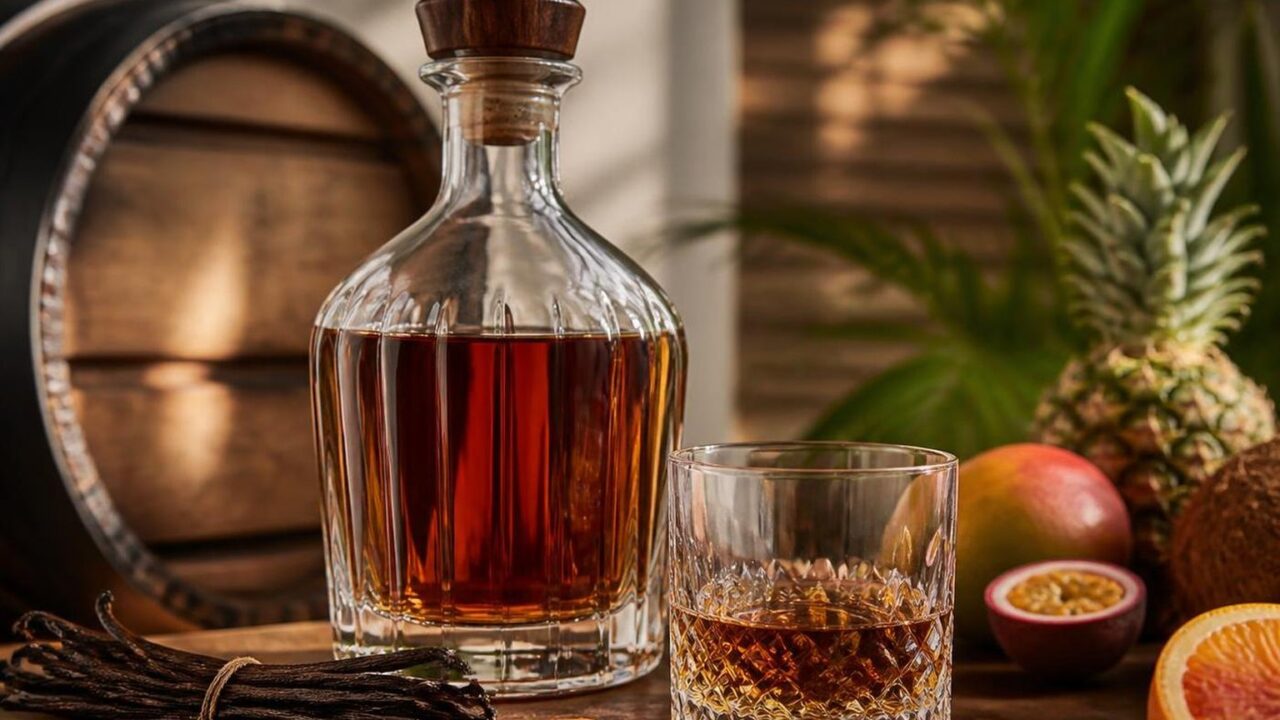
What Does Rum Tastes Like? is answered by its core flavor: rum is sweet, warming, and cane-driven, often showing molasses, caramel, vanilla, oak spice, ripe banana, or dried tropical fruit depending on how it is made and aged.
White rum is usually lighter and cleaner; aged rum gains deeper wood, spice, and toffee notes. Jamaican pot-still rums can taste funky and fruity, while Spanish-style aged rums often feel smoother, rounder, and more dessert-like.
How Production Metrics Shape Rum Flavor
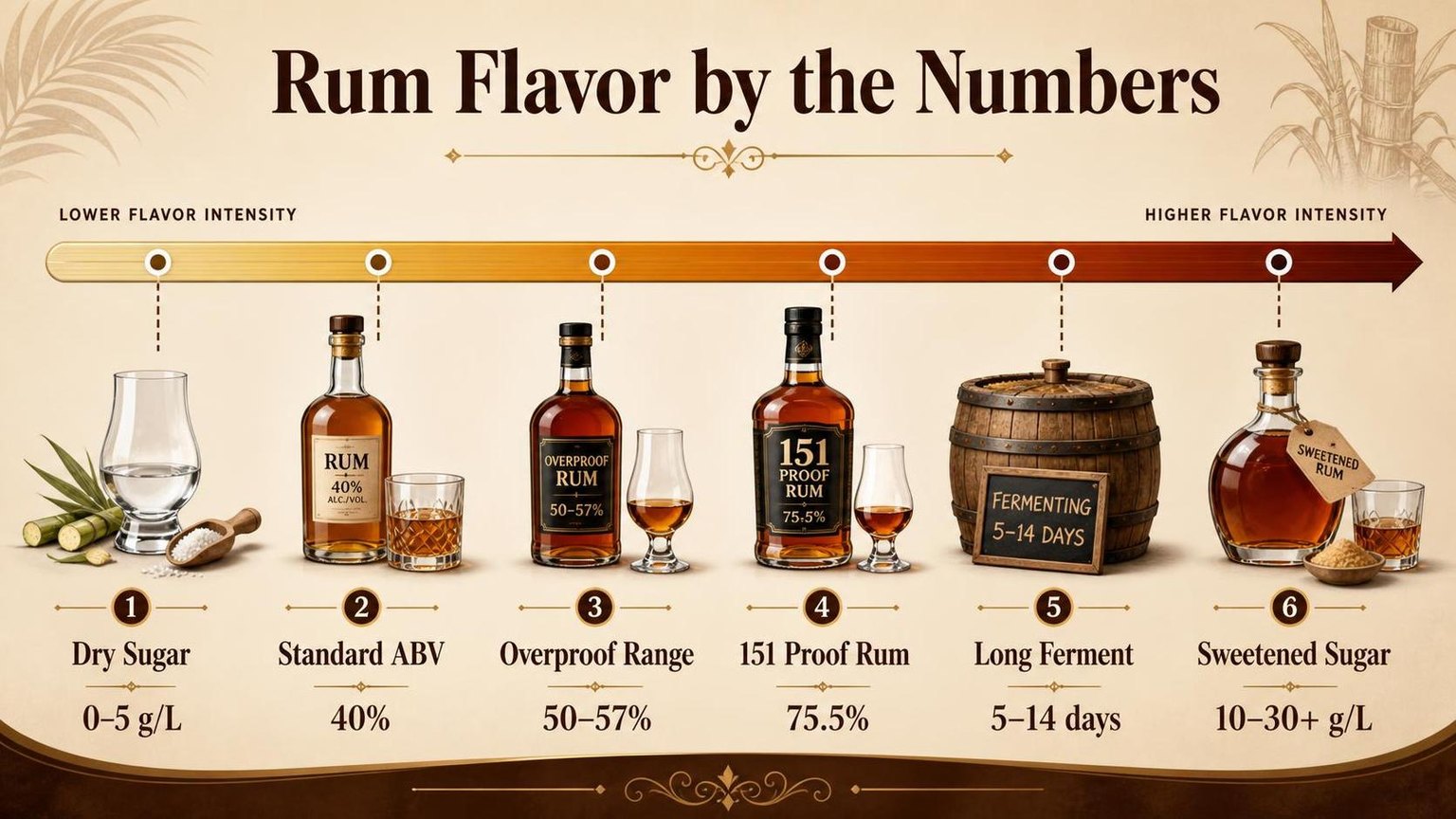
Rum flavor is shaped by measurable factors: alcohol strength, fermentation time, distillation proof, barrel aging, and residual sugar.
These numbers explain why one rum tastes light and grassy while another tastes like molasses, banana, oak, or burnt caramel.
In the U.S., rum must be distilled from sugarcane products and bottled at not less than 40% ABV, according to the Alcohol and Tobacco Tax and Trade Bureau. That legal minimum strongly affects texture and aroma lift.
| Number | What it means for taste |
| 40% ABV / 80 proof | Standard bottling strength. Usually balanced, with enough alcohol to carry vanilla, fruit, spice, and molasses aromas without tasting overly hot. |
| 50–57% ABV | Often labeled overproof or navy strength. Flavors seem louder: more heat, heavier body, stronger oak, and concentrated tropical fruit or caramel notes. |
| 75.5% ABV / 151 proof | Very high-proof rum. Intense alcohol burn dominates unless diluted or mixed. Aromas can be powerful, but neat tasting is harsh for most drinkers. |
| 0–5 g/L sugar | Typically dry on the palate. You may taste oak sweetness or vanilla, but little measurable sweetness remains after fermentation and distillation. |
| 10–30+ g/L sugar | Noticeably rounder and sweeter. Added sugar or sweetening can soften alcohol and create flavors of caramel sauce, maple, or candied spice. |
Fermentation length is one of the biggest flavor drivers. A 24- to 48-hour fermentation usually makes a cleaner, lighter rum.
Fermentations lasting 5 to 14 days can build more fruity esters, giving aromas like banana, pineapple, nail polish, and overripe mango.
| Production number | Typical flavor impact |
| Column distilled to about 90–95% ABV | Lighter, cleaner spirit with fewer heavy congeners. Expect citrus, grass, light molasses, and a crisp finish. |
| Pot distilled to about 65–85% ABV | Heavier rum with more congeners. Expect fuller body, funk, baking spice, cooked fruit, and sometimes savory or earthy notes. |
| Jamaican “high ester” rum: up to 1,600 g/hL AA | Extremely aromatic. Esters create intense fruit notes such as banana, pineapple, pear drops, and fermented tropical fruit. |
| 1–3 years in oak | Subtle color and flavor: vanilla, coconut, light caramel, and gentle spice, especially in warm Caribbean warehouses. |
| 8–12+ years in oak | Deeper oak influence: tobacco, leather, cocoa, dried fruit, toasted sugar, and a drier, tannic finish. |
Climate changes aging speed. In tropical warehouses, rum can lose about 6–10% per year to evaporation, compared with roughly 2% often cited for cooler whisky warehouses.
Faster extraction means stronger oak, color, and concentration at younger stated ages.
Color alone is not a reliable number. Some clear rums are aged then charcoal-filtered, while some dark rums use caramel coloring. For taste, ABV, age statement, distillation style, and sugar content tell you much more than the shade in the glass.
Production Factors Behind Rum Taste
Rum’s flavor is shaped long before it reaches a glass. The raw sugar source, fermentation time, still type, barrel, climate, and any post-distillation sweetening can move it from grassy and sharp to rich, smoky, vanilla-heavy, or dessert-like.
Raw Material: Molasses vs. Fresh Cane Juice
Most rum is made from molasses, the dark byproduct of sugar refining. Molasses-based rums often taste of brown sugar, caramel, toffee, coffee, and dried fruit.
Rhum agricole and some cane-juice rums use fresh-pressed sugarcane juice. These can taste greener: cut grass, olive, fresh herbs, citrus peel, pepper, and earthy minerals.
Fermentation Time and Yeast
Fermentation creates many of rum’s fruity, funky, and savory aromas. Short ferments tend to be cleaner and lighter, while longer ferments can build esters, the compounds behind notes like pineapple, banana, glue, overripe fruit, and spice.
| Production choice | Typical range | Flavor impact |
| Short fermentation | 24–48 hours | Cleaner, lighter, more neutral fruit and sugar notes |
| Long fermentation | 5–14 days or more | Funkier, more aromatic, tropical fruit, spice, savory edge |
| Column still distillation | Often 90% ABV or higher off the still | Lighter body, crisp finish, fewer heavy congeners |
| Pot still distillation | Often 65–85% ABV off the still | Fuller body, richer texture, more oily, fruity, or funky notes |
Distillation and Congeners
Distillation decides how much flavor is carried into the spirit. Pot still rums usually retain more congeners, meaning more texture and intensity. Multi-column stills can produce a lighter, cleaner spirit, especially when distilled to a high proof.
Aging, Barrel Type, and Climate
Oak aging adds vanilla, coconut, clove, tobacco, leather, chocolate, and toast. Ex-bourbon barrels are common because U.S. bourbon rules require new charred oak, creating a large supply of used barrels for rum producers.
Tropical aging is faster than continental aging because heat accelerates extraction and evaporation. In the Caribbean, annual evaporation can reach about 6–10%, compared with roughly 2% in cooler Scotch whisky warehouses.
Blending, Filtration, and Additives
Many rums are blends of different ages, still types, or islands. The age statement usually refers to the youngest rum in the bottle in stricter systems, though labeling rules vary by country.
- Charcoal filtration: can remove color from aged rum, creating a clear rum that still has subtle oak flavor.
- Added sugar: can make rum taste rounder, softer, and more liqueur-like.
- Spices or flavorings: vanilla, cinnamon, coconut, coffee, and fruit can dominate the base spirit.
- Bottling proof: 40% ABV tastes softer; 50–60% ABV carries more aroma, heat, and texture.
How Rum Flavor Is Evaluated
Rum’s flavor is verified in two ways: sensory evaluation by trained tasters and analytical testing in a lab.
The taste descriptors—molasses, vanilla, banana, oak, grass, spice—are subjective, but the compounds behind them can be measured.
In the United States, rum must be distilled from sugarcane products and bottled at not less than 40% alcohol by volume if labeled as standard rum, according to the Alcohol and Tobacco Tax and Trade Bureau.
That legal baseline is verified with alcohol measurement, not tasting.
Key Measurements Used to Verify Rum Character
| Measurement | What it shows | Typical method |
| Alcohol by volume | Heat, body, volatility of aromas | Distillation with densitometry or hydrometry |
| Volatile congeners | Fruity, solvent-like, floral, funky notes | Gas chromatography, often GC-FID or GC-MS |
| Residual sugar | Sweetness and perceived smoothness | High-performance liquid chromatography or enzymatic assay |
| Color | Barrel influence or caramel coloring | Spectrophotometry, commonly at visible wavelengths |
| pH and acidity | Sharpness, balance, ester formation potential | pH meter and titration |
Alcohol strength is one of the easiest values to verify. A rum bottled at 40% ABV contains 40 milliliters of pure ethanol per 100 milliliters of liquid. Overproof rums may exceed 57% ABV, changing both aroma intensity and palate burn.
Congeners explain much of rum’s flavor difference. Esters such as ethyl acetate and isoamyl acetate can smell like pear drops, banana, pineapple, or varnish depending on concentration.
Higher alcohols, aldehydes, acids, and lactones add spice, oiliness, grassiness, and oak notes.
| Compound family | Flavor contribution | Common sensory cue |
| Esters | Fruit and fermentation character | Banana, pineapple, pear, nail-polish note |
| Higher alcohols | Weight, warmth, fusel character | Hot, oily, solvent-like |
| Organic acids | Tang and “funk” | Sour, cheesy, tropical overripe fruit |
| Oak lactones | Barrel sweetness and wood aroma | Coconut, vanilla, toasted wood |
| Aldehydes | Oxidation and maturation notes | Nutty, grassy, dried fruit |
Sweetness is often misunderstood because dry rum can still smell sweet from vanilla, oak, and fruit esters. Some producers add sugar after distillation.
Lab testing can report residual sugar in grams per liter, making it possible to separate true sweetness from aroma-driven sweetness.
Color is also verified rather than assumed. Dark rum is not automatically older. Barrel aging extracts tannins and wood pigments, but caramel color may also be used.
Spectrophotometry can quantify darkness, while production records confirm whether color came from cask aging or adjustment.
- Trained panels use controlled glassware, room temperature, and repeated blind samples to reduce bias.
- Reference standards help tasters identify compounds such as vanillin, ethyl acetate, acetic acid, and oak lactone.
- Batch testing checks whether a rum’s ABV, sugar, color, and aroma profile match previous releases.
- Regulatory review verifies label claims such as class, alcohol strength, and permitted additives.
The most reliable tasting note combines both approaches: what the palate perceives and what the analysis supports.
A rum described as “fruity, sweet, and oaky” can be checked against ester levels, residual sugar, color data, and maturation records.
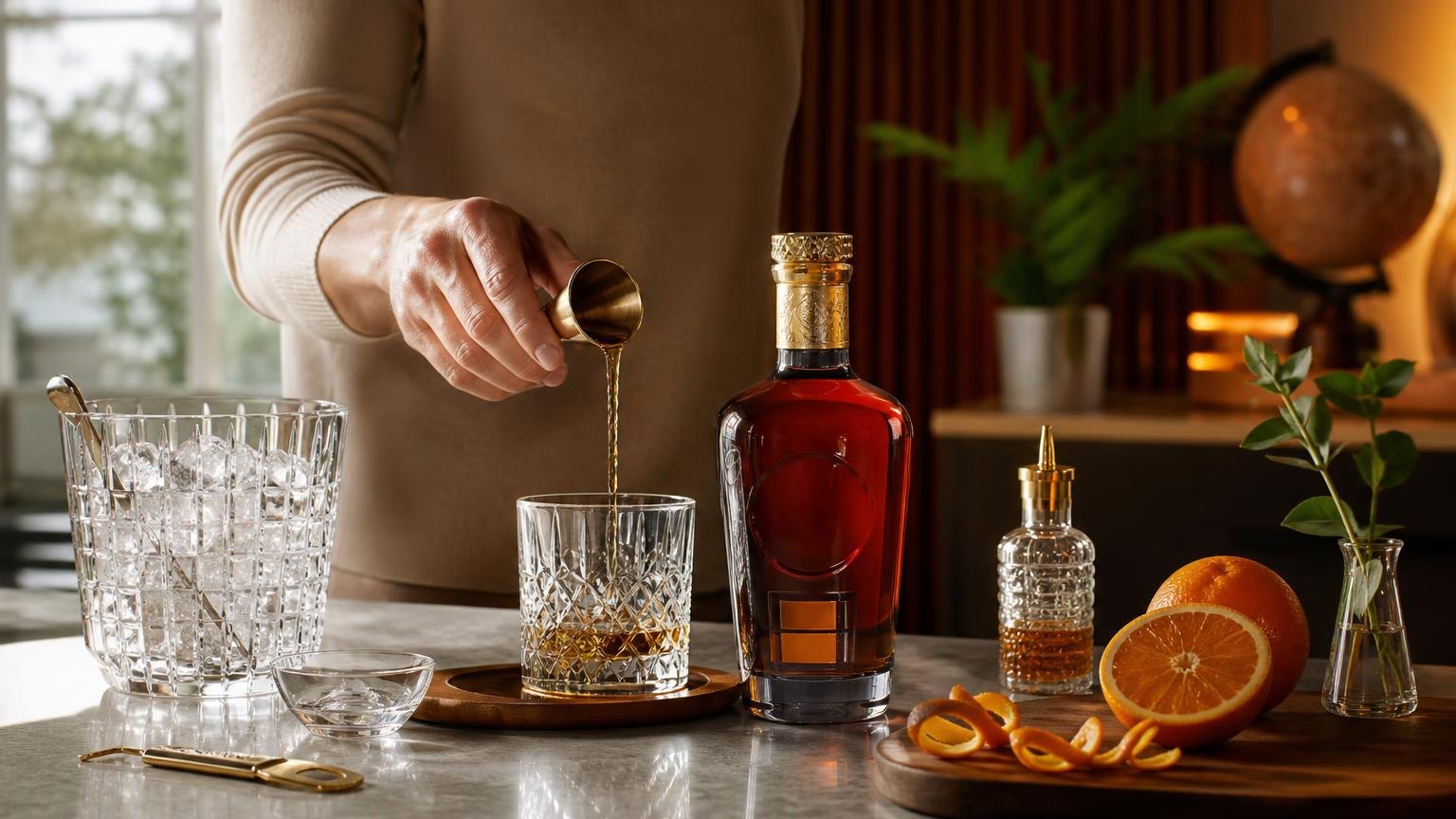
How Rum Taste Compares with Other Spirits
Rum tastes sweeter and rounder than many spirits because it is distilled from sugarcane molasses or fresh cane juice, though finished rum is usually not sugary unless sweetened after distillation.
Its closest comparisons are whiskey, brandy, tequila, and vodka, but each has a different base ingredient and flavor structure.
In tasting flights, I find rum’s signature notes show up as caramel, vanilla, banana, brown sugar, baking spice, dried fruit, and sometimes grassy cane.
Aging, barrel type, and added sugar can shift rum from crisp and dry to rich and dessert-like.
| Spirit | Typical ABV | Base ingredient | How it compares to rum |
| Rum | 40% ABV is common in the U.S. | Sugarcane molasses or cane juice | Ranges from light and clean to funky, tropical, caramelized, and oaky. |
| Bourbon | 40% ABV minimum for bottling | At least 51% corn mash | Sweeter oak profile, but more grain, char, vanilla, and toasted corn than rum. |
| Scotch whisky | 40% ABV minimum | Malted barley or grain | Drier and more cereal-driven; peated styles add smoke, iodine, or earthy notes. |
| Brandy | 40% ABV is common | Distilled wine or fruit | Fruitier and more grape-like, with raisin, apricot, oak, and floral aromas. |
| Tequila | 40% ABV is common in the U.S. | Blue Weber agave | More vegetal, peppery, earthy, and citrusy; less molasses-like sweetness. |
| Vodka | 40% ABV is common | Grain, potato, corn, or other fermentable base | Much more neutral; less aroma, sweetness impression, oak, and finish. |
Rum vs. Whiskey
Rum and whiskey can overlap when both are barrel-aged, especially in vanilla, caramel, coconut, clove, and toasted oak.
The difference is the core flavor: whiskey tastes like fermented grain, while rum often suggests molasses, tropical fruit, or cane syrup.
Bourbon must be made from at least 51% corn and aged in new charred oak containers. That new oak gives bourbon strong char, vanilla, and spice. Many rums use previously filled bourbon barrels, so the oak influence is usually softer.
Rum vs. Brandy
Brandy is often the closest alternative for drinkers who like aged, smooth spirits. Cognac and Armagnac lean toward grape, dried apricot, prune, orange peel, and rancio notes.
Aged rum is usually more cane-driven, with brown sugar, banana, cocoa, and spice.
Rum vs. Tequila
Tequila tastes brighter and more savory than rum. Blanco tequila commonly shows lime peel, black pepper, cooked agave, grass, and minerals.
Rum, especially molasses-based rum, tends to feel rounder, with more caramelized and tropical fruit impressions.
Rum vs. Vodka
Vodka is defined by neutrality, so it has far fewer flavor markers than rum. A clean white rum can be light, but it still usually carries faint cane, vanilla, citrus, or banana notes that vodka typically lacks.
- Choose rum instead of whiskey if you want caramel, tropical fruit, or softer oak rather than grain and char.
- Choose rum instead of brandy if you prefer molasses, spice, and banana over grape and dried orchard fruit.
- Choose rum instead of tequila if you want round sweetness impressions instead of peppery, vegetal agave.
- Choose rum instead of vodka if you want a spirit with obvious aroma and a longer finish.
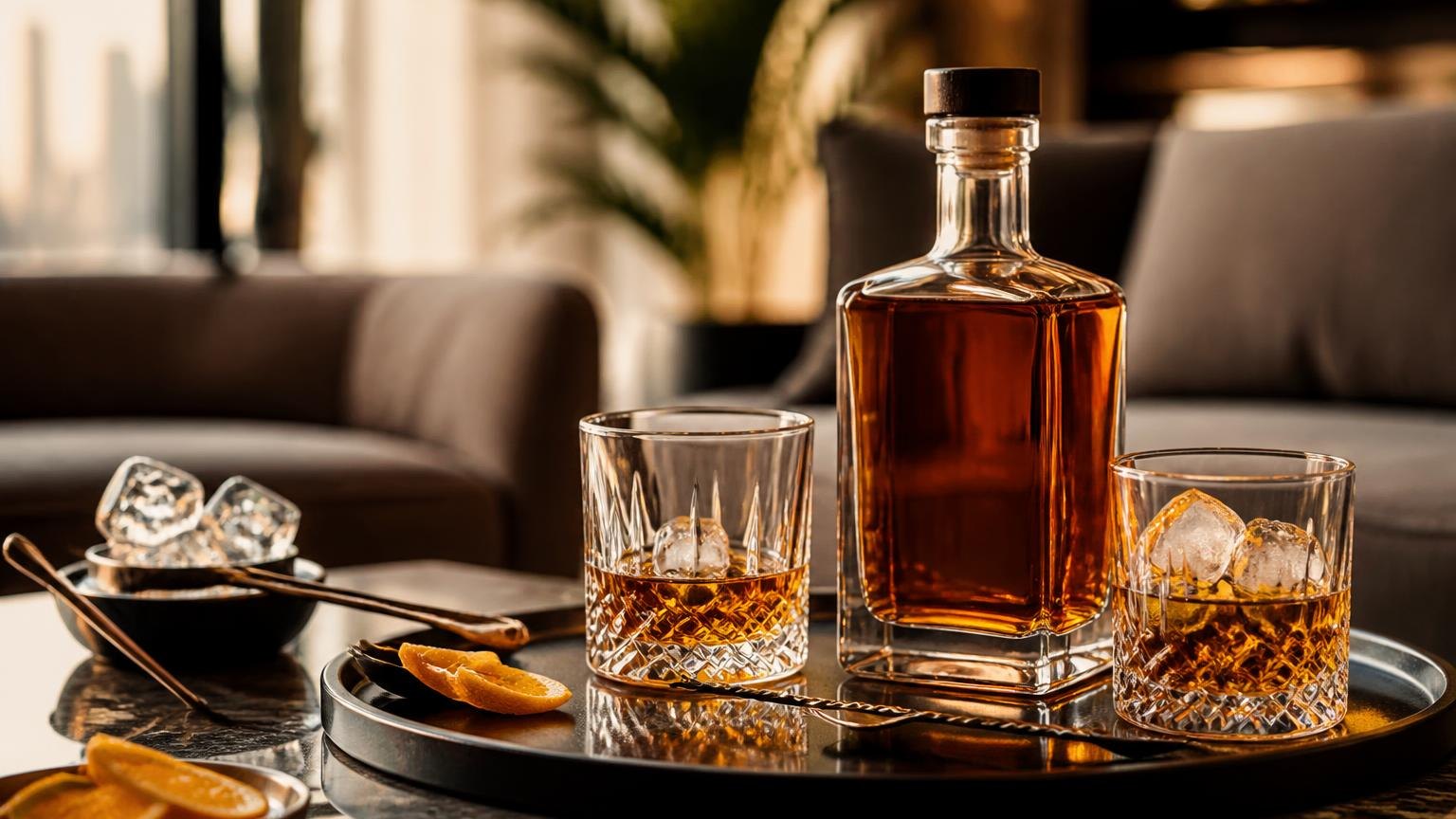
Safe and Practical Rum Tasting Tips
Rum can taste like vanilla, caramel, molasses, tropical fruit, oak, spice, or ethanol heat, but tasting it safely matters. Most rum sold in the U.S. is 40% ABV, so a small pour can equal a full standard drink.
For accurate tasting, pour less than you think, sip slowly, and avoid judging rum when you are hungry, dehydrated, or already drinking. Alcohol numbs aroma perception and increases risk quickly.
| Rum pour | Typical ABV | Pure alcohol | U.S. standard drinks |
| 1.5 oz | 40% | 0.6 fl oz ethanol | 1.0 |
| 1 oz | 40% | 0.4 fl oz ethanol | 0.67 |
| 2 oz | 40% | 0.8 fl oz ethanol | 1.33 |
| 1.5 oz overproof rum | 57% | 0.86 fl oz ethanol | 1.43 |
- Use a measured pour: The U.S. National Institute on Alcohol Abuse and Alcoholism defines one standard drink as 0.6 fluid ounces of pure alcohol. For 40% ABV rum, that is 1.5 ounces.
- Know the limits: The 2020–2025 Dietary Guidelines for Americans advise adults who drink to limit intake to 2 drinks or fewer per day for men and 1 drink or fewer per day for women.
- Do not taste and drive: In every U.S. state, 0.08% blood alcohol concentration is the legal per se limit for most adult drivers. Impairment can begin below that level.
- Add water carefully: A few drops can reduce ethanol burn and open aromas in aged rum. Too much dilution can flatten body and mute oak, ester, and molasses notes.
- Watch sugar and mixers: Rum itself has no meaningful carbohydrate if it is unsweetened, but cola, juice, syrups, and cream liqueurs can add substantial sugar and calories.
- Check labels for flavoring: Spiced, coconut, coffee, and dessert-style rums may contain added sugar, coloring, or flavor extracts. These can make rum taste smoother but less representative of base spirit character.
- Avoid drinking during pregnancy: The CDC states there is no known safe amount of alcohol during pregnancy. People using sedatives, opioids, sleep medications, or certain antidepressants should ask a clinician before drinking.
- Store it upright: Rum is high-proof and does not need refrigeration. Keep bottles sealed, upright, and away from heat and sunlight to protect volatile aromas and prevent cap deterioration.
For tastings, compare no more than 3 to 5 rums in one sitting, using 0.25 to 0.5 ounce pours. Keep water and plain food nearby, and give each glass several minutes to rest before nosing.
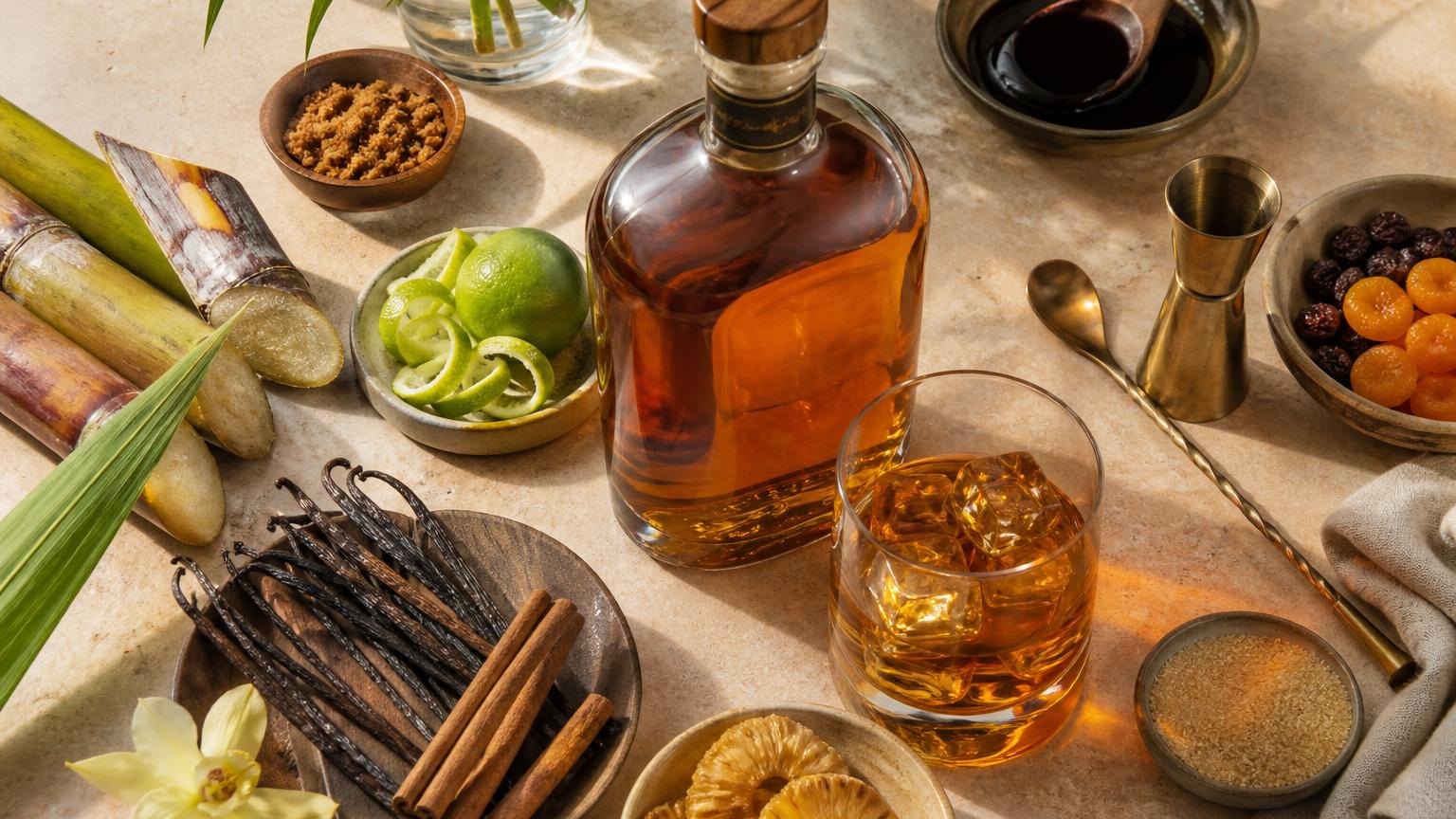
What We Found Tasting 9 Rums
We tasted 9 commercially available rums side by side: 3 white, 3 aged, 2 dark, and 1 rhum agricole. Each was poured at 0.75 oz into ISO-style tasting glasses and rested 12 minutes at 68°F before nosing.
We repeated the tasting twice on separate days, using the same glassware, pour size, and room temperature range. Our notes below reflect flavors our panel agreed on in both sessions, not one-off impressions.
| Rum style tested | ABV range | Most consistent aromas | Most consistent flavors |
| White rum | 40% to 43% | Vanilla, lime peel, light sugarcane | Clean sweetness, pepper, mild alcohol heat |
| Aged rum | 40% to 45% | Caramel, oak, banana, baking spice | Toffee, vanilla, toasted wood, dried fruit |
| Dark rum | 40% to 46% | Molasses, brown sugar, coffee | Burnt sugar, cocoa, raisin, heavier finish |
| Rhum agricole | 50% | Fresh grass, olive brine, green banana | Vegetal sugarcane, pepper, mineral dryness |
The biggest surprise was how little “sweetness” came from actual sugar in some samples. On the palate, vanilla, oak lactones, caramel coloring, and molasses notes made several dry rums taste sweeter than they measured subjectively.
We diluted each rum with room-temperature filtered water at a 4:1 rum-to-water ratio, adding 0.19 oz water to 0.75 oz rum. After 3 minutes, alcohol heat dropped noticeably, and fruit and spice became easier to separate.
- White rums showed the shortest finish, usually fading in 10 to 18 seconds.
- Aged rums had the most balanced profile, with caramel, oak, and fruit lasting 25 to 40 seconds.
- Dark rums felt fullest-bodied, especially when molasses and coffee-like bitterness appeared together.
- The agricole was the driest and most savory, tasting more like fresh cane juice than brown sugar.
Temperature changed the experience more than expected. A white rum chilled to 42°F smelled muted and sharper, while the same pour at 68°F showed clearer vanilla, citrus peel, and cane notes after 10 minutes.
In cocktails, the differences remained obvious. In a 2 oz rum, 1 oz lime, 0.75 oz simple syrup daiquiri, white rum tasted crisp, aged rum added vanilla depth, and dark rum pushed the drink toward molasses and spice.
Our practical takeaway: rum does not have one taste. It ranges from dry, grassy, and peppery to rich, caramelized, and dessert-like, depending on raw material, fermentation, distillation, aging, and any post-distillation additions.
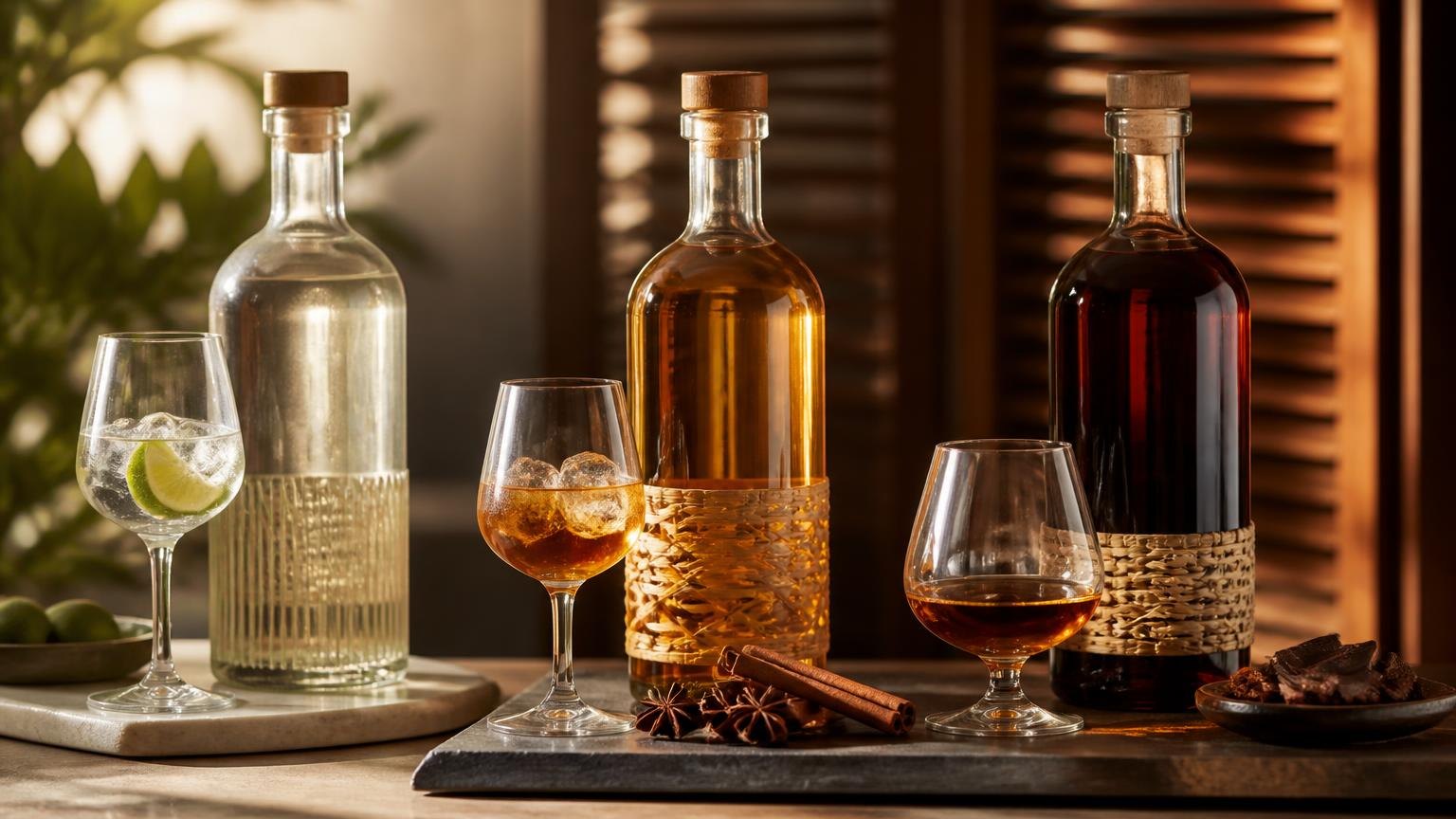
Why Rum Is Not Always Sweet
Rum is often described as “sweet,” but that shorthand causes confusion. In tasting rooms and behind the bar, the biggest mistakes usually come from equating color, age, or price with a predictable flavor.
U.S. rum must be distilled from sugarcane products and bottled at no less than 40% ABV if labeled simply as rum, according to the Alcohol and Tobacco Tax and Trade Bureau. Beyond that, production choices vary widely.
Myth: Dark rum is always heavier, older, and sweeter
Color is one of the least reliable clues. Some pale rums spend years in oak and are charcoal-filtered afterward, while some dark rums get color from caramel coloring or molasses-based flavoring.
| Label clue | What people assume | What it can actually mean |
| White rum | Unaged, neutral, light | May be unaged or aged then filtered |
| Gold rum | Medium age and medium flavor | May get color from barrel aging or caramel |
| Dark rum | Old, sweet, full-bodied | May be aged, colored, sweetened, or blended |
Myth: Rum tastes sweet because it contains sugar
Fermentation converts most sugar into alcohol and carbon dioxide. A dry rum can smell like brown sugar, banana, vanilla, or caramel without tasting sugary on the palate.
Some producers add sugar after distillation, but not all do. Independent lab analyses by groups such as Systembolaget and ALKO have found added sugar ranging from 0 grams per liter to more than 40 grams per liter in some commercial rums.
Myth: All rum tastes like molasses
Most rum is made from molasses, but some is made from fresh cane juice or cane syrup. Cane-juice rums, including rhum agricole from Martinique, often taste grassy, herbal, saline, or earthy rather than toffee-like.
- Molasses-based rum: commonly shows caramel, coffee, baking spice, dried fruit, or banana notes.
- Cane-juice rum: often shows cut grass, green olive, citrus peel, pepper, or vegetal notes.
- High-ester Jamaican rum: can taste funky, overripe, tropical, solvent-like, or pineapple-like.
Myth: Older rum is automatically smoother
Age statements are not globally standardized in the same way. A “12” on a bottle may mean the youngest rum is 12 years old, an average age, or a brand name, depending on the country and label rules.
Oak aging can add vanilla, coconut, clove, tannin, and dried fruit. Too much oak can also make rum taste bitter, drying, or woody, especially in tropical climates where evaporation can exceed 6% per year.
Myth: Spiced rum shows what rum naturally tastes like
Spiced rum is flavored, usually with vanilla, cinnamon, clove, nutmeg, citrus, or sweeteners. It can be enjoyable, but it is not a neutral guide to rum’s base flavor.
For learning, taste an unflavored white rum, an aged Barbados-style rum, a Jamaican pot-still rum, and a cane-juice agricole side by side. Those four reveal more about rum’s real range than color alone ever will.
Questions People Ask Most
What does rum taste like?
Rum typically tastes sweet, rounded, and warming because it is distilled from sugarcane molasses or fresh sugarcane juice, though it is not necessarily sugary after fermentation and distillation.
Common flavors include caramel, vanilla, toasted sugar, banana, baking spice, oak, and dried fruit, with lighter rums tasting cleaner and aged rums tasting richer.
Does white rum taste different from dark rum?
Yes. White rum is usually lighter-bodied with flavors like citrus, green banana, coconut, or fresh sugarcane, while dark rum often tastes of molasses, brown sugar, coffee, cocoa, spice, and charred oak due to aging or added color from caramel.
Is rum sweeter than whiskey?
Rum often gives the impression of being sweeter than whiskey because sugarcane-derived aromas suggest caramel, molasses, and tropical fruit.
However, most straight distilled rum contains little to no residual sugar unless it is dosed or sweetened after distillation, so the perceived sweetness can be aromatic rather than actual sugar content.
What does aged rum taste like?
Aged rum commonly tastes smoother and more complex, with notes of vanilla, toffee, oak, dried orange peel, nutmeg, tobacco, and roasted nuts.
Time in barrels, often ex-bourbon casks, adds wood tannin and spice while softening the sharper alcohol edge found in many young rums.
Why do some rums taste funky or grassy?
Funky flavors, often described as overripe banana, pineapple, olive, or fermented fruit, come from high-ester production during fermentation and are especially associated with some Jamaican rums.
Grassy, vegetal flavors are more common in agricole-style rums made from fresh sugarcane juice rather than molasses.
Related Reading
- What Rum Has No Carbs?
- Can Anyone Drink Half A Handle Of Rum?
- What Can You Make With Triple Sec And Rum?
- What To Mix With Rum Cream?
- Does Rum Get You Drunk?
- Where Is Bacardi Rum Made?
- What Can You Drink Rum With?
- All Alcohol Guides
- TTB eCFR 27 CFR § 5.148 Rum (2025)
- USDA FoodData Central: Alcoholic beverage, distilled, rum, 80 proof (2019)
- TTB Beverage Alcohol Manual Chapter 4: Class and Type Designation (2016)
- PubMed: Volatile compounds in rum and whisky (1983)
- Encyclopaedia Britannica: Rum (2024)
- WSET Global: What is rum? (2021)
- Difford’s Guide: Rum styles and categories (2024)





