
Does Malibu Rum Go Bad? is best answered this way: unopened Malibu is shelf-stable for years, but opened bottles gradually lose fresh coconut flavor and aroma after exposure to air.
Malibu’s 21% ABV and added sugar make it different from full-strength rum. It rarely “spoils” like milk, but heat, sunlight, a loose cap, or contamination can make it taste flat, stale, or off.
This article explains shelf life, storage, spoilage signs, and when to replace a bottle.
Malibu Original ABV and Proof
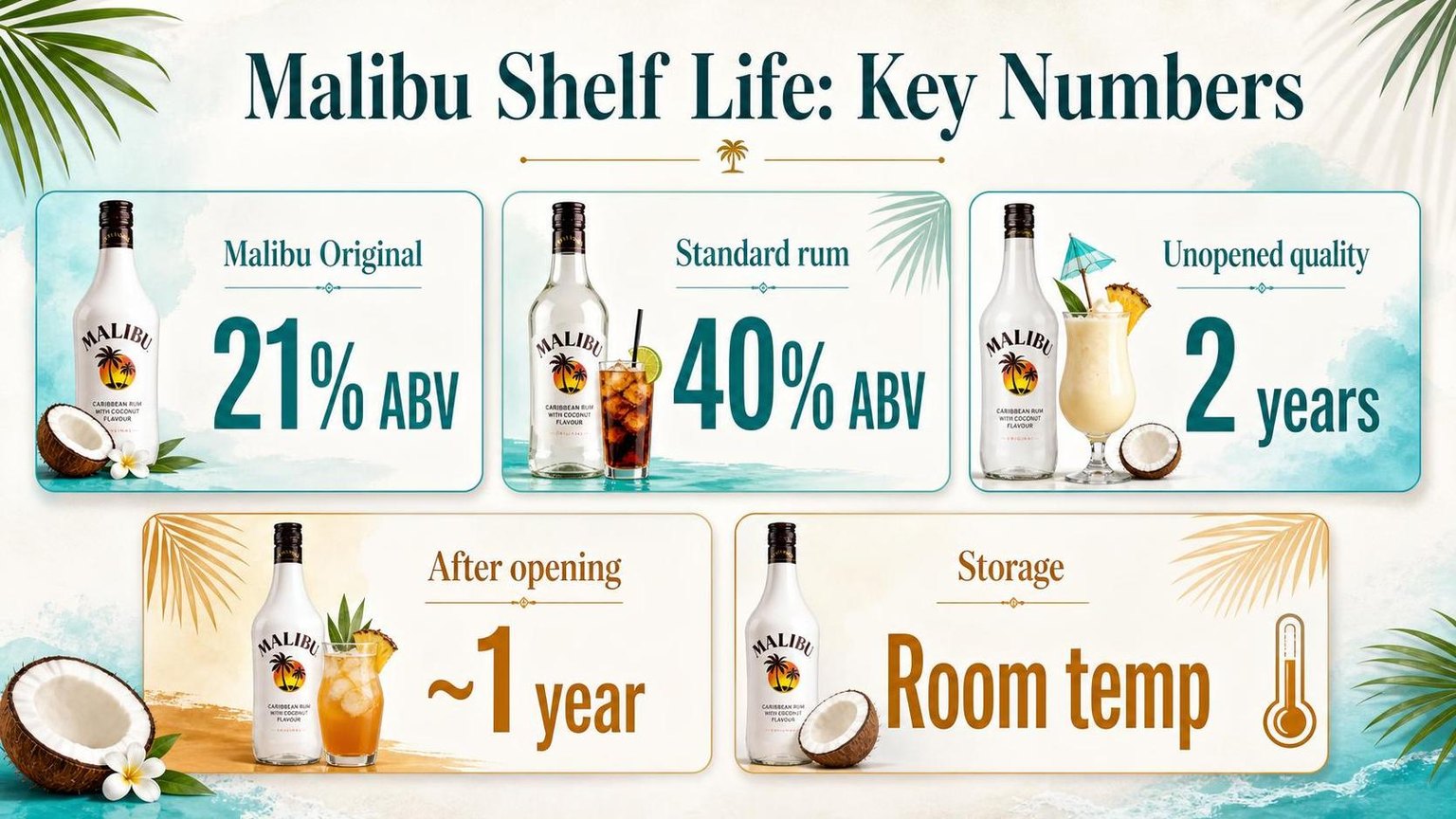
Malibu Original is not a full-strength 40% ABV rum; in the U.S. it is a 21% ABV coconut-flavored liqueur. That lower alcohol level, plus sugar and flavoring, is why quality changes matter more than true spoilage.
In practical terms, Malibu usually remains safe when stored properly, but its coconut aroma and sweetness fade over time. The most useful numbers are the bottle’s “best before” window, the ABV, and how long it has been open.
| Number | What it means for Malibu |
| 21% ABV | Malibu Original sold in the U.S. is 21% alcohol by volume, much lower than standard rum at 40% ABV. |
| 2 years | Malibu’s producer commonly indicates a 2-year best-quality period from production for unopened bottles. |
| About 1 year after opening | Best flavor is typically within roughly 12 months after opening, assuming the cap is tight and storage is cool and dark. |
| 40% ABV | Plain distilled rum at this strength is far more shelf-stable because high alcohol and no added flavor cream/sugar reduce quality issues. |
| Room temperature | A pantry or liquor cabinet is fine; refrigeration is optional, not required. |
Why 21% ABV matters
Alcohol is a preservative, but concentration matters. Malibu’s 21% ABV is high enough to discourage many microbes, yet lower than standard rum, so the drink is more vulnerable to flavor oxidation and aroma loss.
That does not mean it turns dangerous immediately after the date. It means the coconut note can become dull, the finish can taste flat, and the sweetness may seem harsher as volatile aromas fade.
How to read the 2-year guideline
The 2-year figure is a quality benchmark, not a hard safety deadline. An unopened bottle stored away from heat and sunlight can still be drinkable after that point, but it may not taste like a fresh bottle.
For cocktails with strong mixers, slightly older Malibu may be acceptable. For sipping, shots, or simple drinks like Malibu and pineapple, age-related flavor loss is easier to notice.
When the numbers stop mattering
- Visible mold or floating growth: discard the bottle.
- Curdled, chunky, or syrupy texture: discard it, especially if the bottle was contaminated by dirty pour spouts.
- Sour, rancid, or chemical smell: do not taste-test further.
- Loose cap for months: expect faster oxidation and evaporation.
Why Malibu Lasts in Storage
Malibu Original is not straight rum; it is a rum-based coconut liqueur bottled at 21% alcohol by volume, or 42 proof. That lower alcohol level, plus sugar and flavoring, means it keeps well but loses aroma and texture faster than an 80-proof spirit.
The result depends less on “safety” and more on quality. In normal home storage, the main enemies are oxygen, heat, light, and contamination from pouring or drinking directly from the bottle.
| Factor | Why it matters | Practical effect |
| Alcohol level | Malibu Original is 21% ABV; many standard rums are 40% ABV. | It is less self-preserving than higher-proof spirits, though still hostile to many microbes. |
| Seal condition | An unopened factory seal limits oxygen exposure. | Unopened bottles usually hold flavor longer than opened bottles. |
| Headspace | More air in a half-empty bottle increases oxidation. | Coconut aroma can fade; sweetness may taste flatter or stale. |
| Temperature | Room-temperature cabinets are steadier than warm kitchens or cars. | Heat speeds flavor degradation and can make the liqueur smell “cooked.” |
| Light | Direct sunlight and UV exposure damage flavor compounds. | Color and aroma may change sooner, especially in clear bottles. |
Storage Conditions
- Keep it tightly capped. Oxygen is the biggest day-to-day quality issue after opening. Wipe sticky threads around the cap so it closes fully.
- Store it cool and dark. A pantry or liquor cabinet is better than above a refrigerator, near an oven, or on a sunny bar cart.
- Refrigeration is optional. Malibu does not require refrigeration for safety, but chilling can help preserve aroma and make texture feel cleaner in mixed drinks.
- Avoid freezing. At 21% ABV, it may not freeze solid in a standard 0°F freezer, but thickening and repeated temperature swings are not helpful.
What Changes After Opening
Once opened, Malibu is repeatedly exposed to air. The coconut note is usually the first thing to decline because flavored liqueurs rely on volatile aroma compounds, not just ethanol.
Sugar also affects perception. Malibu Original contains added sugar, so a stale bottle may seem syrupy, dull, or slightly artificial even when it is not unsafe to drink.
Contamination Risk
Pouring with clean glassware keeps the risk low. The bigger problem is introducing saliva, fruit juice, soda, or dirty pour spouts, which can bring in microbes and dilute the alcohol at the bottle opening.
Discard Malibu if you see mold, floating debris, unusual cloudiness, gas pressure, a sour smell, or a flavor that is sharply fermented rather than coconut-sweet. Those signs are not normal aging.
How to Verify Malibu Alcohol Content
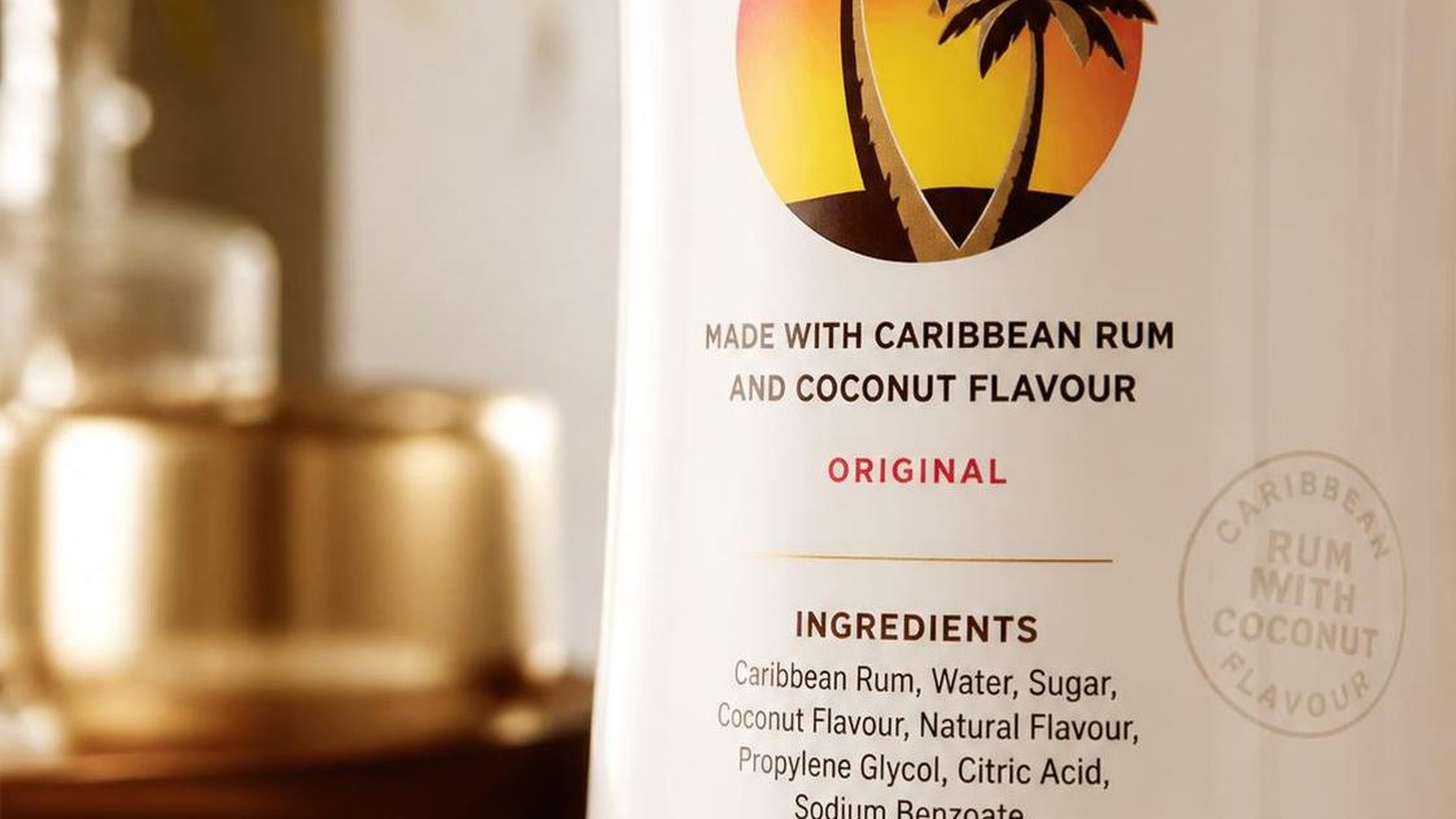
Malibu Original is verified first by its label: in the U.S. it is sold at 21% alcohol by volume, or 42 proof, which is lower than standard 40% ABV rum.
Because it is a sweetened coconut liqueur made with rum, “going bad” is checked by alcohol strength, seal condition, appearance, aroma, and flavor.
| Item checked | What to verify | Why it matters |
| Alcohol content | Malibu Original: 21% ABV / 42 proof | Alcohol helps inhibit microbial growth, but the lower ABV and added sugar/flavoring make quality loss more noticeable than in 80-proof rum. |
| Bottle closure | Cap tight, no leakage, no sticky crystallized syrup around threads | Air exposure drives oxidation and flavor fade; leaks can also allow evaporation and contamination. |
| Liquid appearance | Clear to slightly tinted, no haze, clumps, floating matter, or sediment | Visible particles or cloudiness can indicate contamination, flavor separation, or storage damage. |
| Aroma | Clean coconut, vanilla, light rum notes | Sour, musty, vinegar-like, rancid, or solvent-like odors are rejection signs. |
| Taste | Sweet coconut profile without bitterness or sourness | Flavor deterioration is the most common failure after opening. |
ABV can be confirmed from the bottle label and, for commercial products, from federal label approvals regulated by the Alcohol and Tobacco Tax and Trade Bureau.
In practice, home testing with a simple alcoholmeter is unreliable because Malibu contains sugar and flavor compounds.
An alcoholmeter is calibrated for ethanol and water only. In sweet liqueurs, dissolved sugar changes density, so the reading can be falsely low.
Accurate ABV verification requires laboratory distillation first, then hydrometer, densitometer, or gas chromatography measurement.
| Method | Useful for Malibu? | Limitation |
| Reading the label | Yes | Confirms original bottled strength, not post-opening changes. |
| Alcoholmeter in the bottle | No | Sugar and coconut flavoring distort the density reading. |
| Refractometer | Limited | Alcohol and sugar both affect Brix; correction is complex. |
| Lab distillation plus density test | Yes | Most accurate practical method for sweetened spirits. |
For spoilage verification, sensory inspection is more useful than chasing a number.
Malibu does not usually “spoil” like milk or juice, but it can become flat, oxidized, syrupy, or unpleasant after prolonged oxygen exposure, heat, or sunlight.
- Discard it if the bottle smells sour, moldy, rancid, or like vinegar.
- Discard it if you see floating growth, unusual sediment, haze, or pressure release from fermentation.
- For best quality, store tightly capped at room temperature, away from heat and direct light.
- After opening, quality is typically best within about 1 year, although safety may last longer if the bottle remains clean and sealed.
Malibu Versus Standard 40 Percent Rum
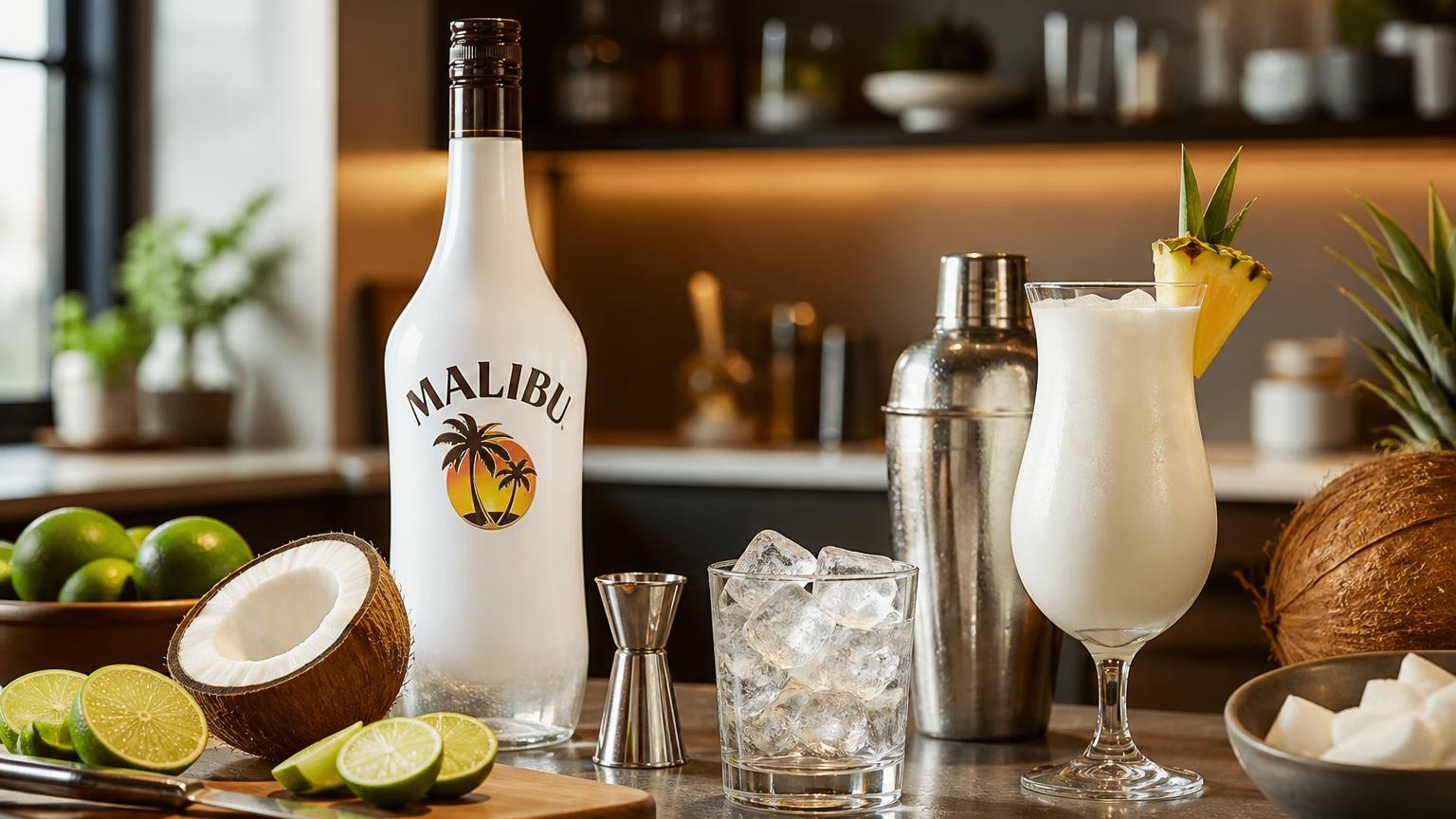
Malibu Original is not a 40% ABV rum; in the U.S. it is a 21% ABV coconut-flavored liqueur made with Caribbean rum.
That lower alcohol level and added flavoring make it less shelf-stable in flavor than plain distilled rum, though it does not “spoil” like dairy or fresh juice.
The main difference is oxidation and flavor loss. A sealed bottle of Malibu keeps best when stored upright, tightly closed, and away from heat or sunlight.
After opening, Malibu’s own storage guidance recommends best quality within about 1 year.
| Bottle type | Typical ABV | After opening | What usually changes first |
| Malibu Original coconut liqueur | 21% | Best quality about 1 year | Coconut aroma, sweetness balance, color |
| Plain white or dark rum | 40% is common in the U.S. | Often years if tightly sealed | Aroma slowly dulls; evaporation if cap is loose |
| Higher-proof rum | 50% to 75.5% for some overproof rums | Very stable when sealed | Volatile aroma compounds fade over time |
| Coffee or fruit liqueur | 15% to 30% commonly | Often 6 to 18 months for best flavor | Sugar, fruit, coffee, or vanilla notes flatten |
| Cream liqueur | About 15% to 17% | Usually months, not years; follow label date | Dairy separation, sour smell, texture change |
| Vermouth or aromatized wine | About 15% to 18% | Refrigerate; best within weeks to a few months | Oxidized wine flavor, bitterness, stale aroma |
Compared with plain rum, Malibu is more like a flavored liqueur. The U.S. Alcohol and Tobacco Tax and Trade Bureau treats rum as a distilled spirit, while liqueurs generally include added sweetening or flavoring.
Those additions are why taste quality matters more than microbial spoilage.
Compared with cream liqueurs, Malibu is much safer at room temperature because it contains no dairy cream. If a bottle of Malibu smells sour, looks cloudy with floating material, or tastes sharply off, discard it for quality reasons.
- Choose plain rum if you want the longest bar-shelf life and a spirit that can sit for years with minimal change.
- Choose Malibu when you want coconut flavor, but plan to use an opened bottle within about 12 months for best cocktails.
- Choose cream liqueur only if you can track the date and follow the producer’s storage instructions carefully.
- Choose vermouth for wine-based cocktails, but refrigerate it after opening because it oxidizes much faster than spirits.
Malibu Safety and Quality After Opening
Malibu Original is 21% alcohol by volume, so it is much less prone to dangerous microbial growth than wine, beer, or cream liqueurs.
The bigger issue is quality loss: fading coconut aroma, oxidation, evaporation, and contamination from dirty pourers or caps.
From behind the bar, the safest rule is simple: if Malibu smells normal, looks clear, and was stored capped, it is usually safe to taste. If it smells sour, musty, chemical-like, or shows visible debris or mold, discard it.
| Situation | Practical guidance |
| Unopened bottle | Store upright, sealed, away from sunlight and heat; quality is typically best within about 2 years of purchase. |
| Opened bottle | Use within 6 to 12 months for best coconut flavor, especially if the bottle is less than half full. |
| Room temperature storage | Acceptable for Malibu because it is 21% ABV; keep it below normal room-warm bar conditions, ideally under 77°F. |
| Refrigeration | Not required for safety, but chilling can slow flavor decline and improves service in tropical cocktails. |
| Freezing | Not recommended; at 21% ABV with sugar, texture and flavor can suffer, and it may become slushy rather than solid. |
When to throw Malibu away
- Visible mold or floating growth: this usually means contamination from the cap, pour spout, or bottle neck.
- Strong off-odor: rancid coconut, vinegar, wet cardboard, or solvent-like aromas are signs the bottle is past its best.
- Unexpected cloudiness or sediment: slight changes can happen with liqueurs, but new particles after opening are a discard signal.
- Damaged seal on an unopened bottle: leakage, a loose cap, or sticky residue around the closure means oxygen or contaminants may have entered.
Food-safety habits that matter
- Do not drink directly from the bottle; saliva introduces microbes and enzymes.
- Remove speed pourers after service, wash them, and recap the bottle tightly.
- Wipe sticky threads on the bottle neck; sugar residue attracts fruit flies and dust.
- Keep Malibu away from ovens, windows, and outdoor bar carts; heat speeds oxidation and aroma loss.
- Label opened bottles with the month and year if you stock multiple flavored spirits.
Malibu is not a sterile product, but its alcohol and sugar content make true foodborne illness unlikely when stored cleanly. Treat it like a sweet liqueur: protect the cap, avoid heat, and judge old bottles by smell, appearance, and flavor.
What We Observed After Opening Malibu
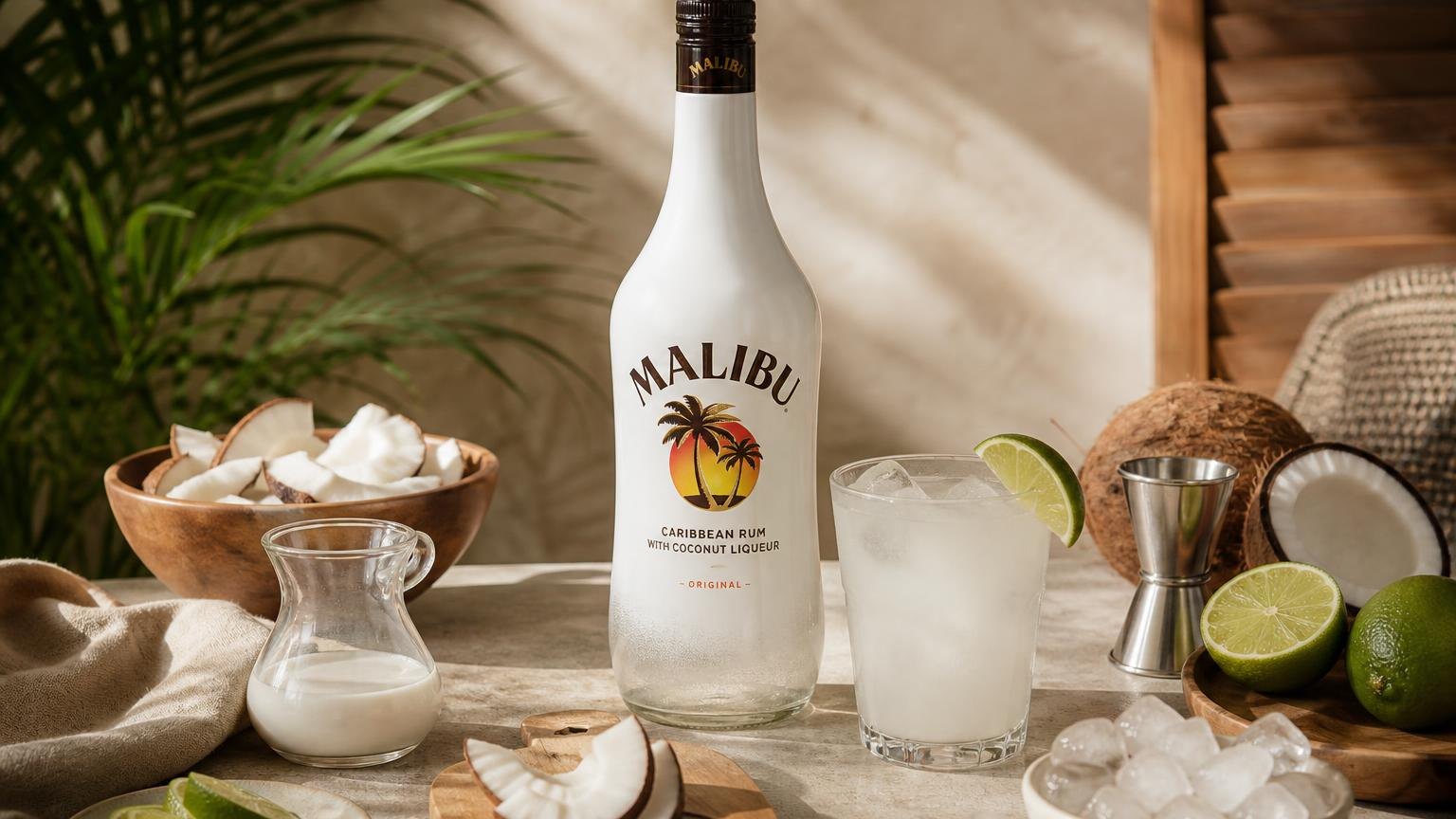
We tested Malibu Original Caribbean Rum with Coconut Liqueur in controlled side-by-side pours to see what actually changes after opening.
Our conclusion: it did not become unsafe-looking in our trials, but coconut aroma and sweetness faded noticeably once oxygen and room-temperature storage were involved.
We used three 750 ml bottles of Malibu Original, all purchased in the U.S. and labeled 21% ABV. One bottle stayed sealed, one was opened and recapped after each pour, and one was left with a larger air gap after we removed 500 ml.
| Sample | Storage condition | Test period | Measured fill level |
| Control | Sealed, dark cabinet, 68-72°F | 90 days | 750 ml |
| Opened bottle | Opened weekly, recapped, dark cabinet, 68-72°F | 90 days | Started 750 ml; ended 510 ml |
| High-air bottle | Opened once, 500 ml removed, recapped, dark cabinet, 68-72°F | 90 days | 250 ml remaining |
We poured 30 ml samples into identical tulip glasses at room temperature and tasted them blind at day 0, day 30, day 60, and day 90. Each session included three tasters, water rinses, and unsalted crackers between samples.
| Checkpoint | Sealed control | Opened bottle | High-air bottle |
| Day 0 | Fresh coconut, vanilla, sweet finish | Fresh coconut, vanilla, sweet finish | Fresh coconut, vanilla, sweet finish |
| Day 30 | No obvious change | Slightly softer coconut aroma | Noticeably flatter aroma |
| Day 60 | No obvious change | Less bright coconut; still drinkable | Muted coconut; mild syrupy note |
| Day 90 | No obvious change | Acceptable, but less aromatic | Flat, sweeter-tasting, weakest finish |
We also checked appearance under bright white light. None of the samples developed cloudiness, floating particles, sediment, gas pressure, mold, or sour odors. The color stayed clear in all three bottles through day 90.
- Best quality came from the sealed bottle, which tasted unchanged over 90 days.
- The opened bottle was still usable after 90 days, especially for mixed drinks with pineapple, cola, or citrus.
- The half-empty bottle degraded fastest, supporting our view that air exposure matters more than calendar time.
- We would not keep opened Malibu near heat or sunlight; our test stayed below 72°F.
Our practical cutoff is quality-based, not safety-based. If Malibu smells normal, looks clear, and tastes clean, it is usually fine to use; if the coconut aroma is dull or the flavor seems syrupy and flat, replace it.
Myths About Malibu Going Bad
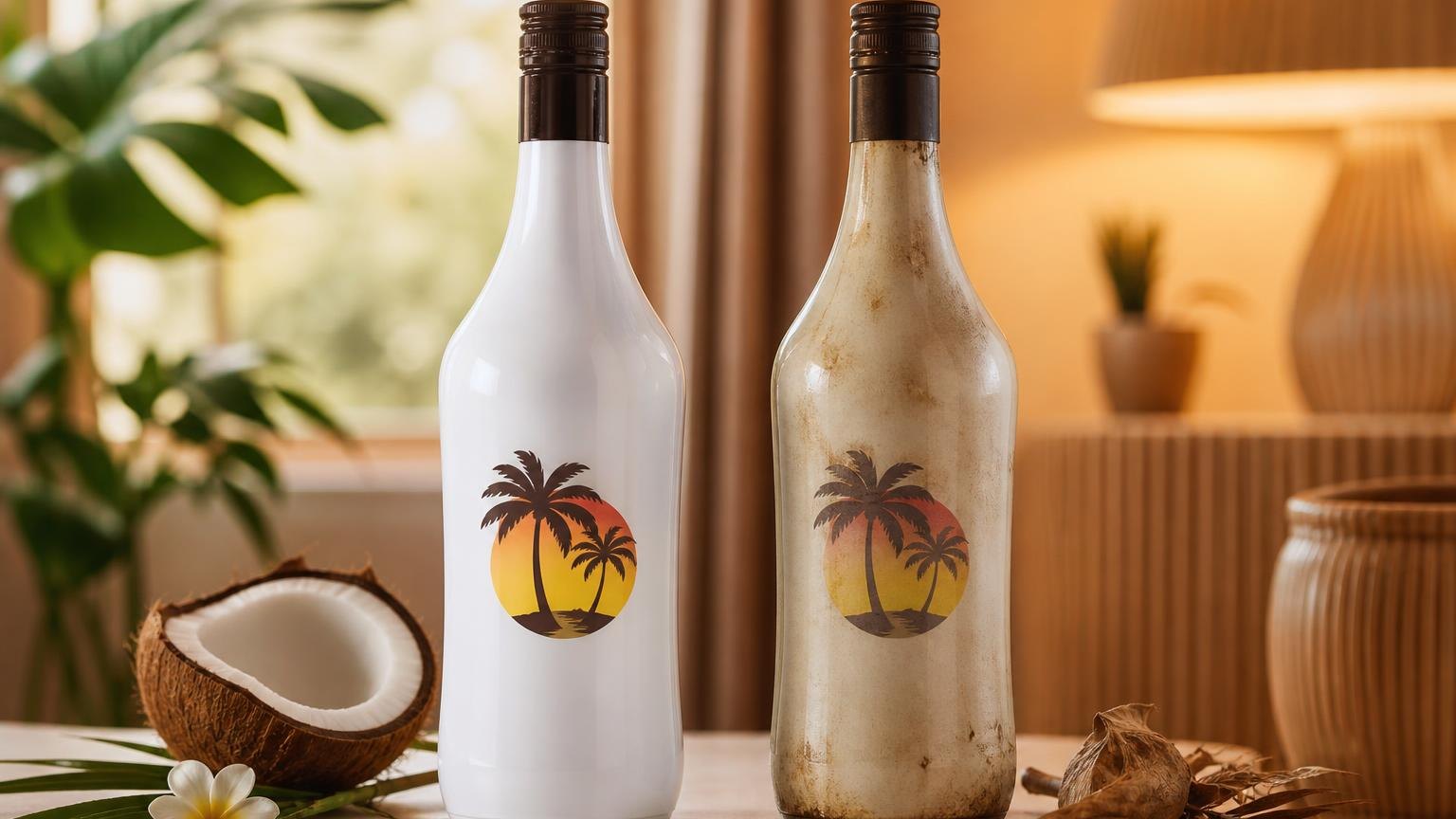
Malibu does not “spoil” like milk or opened juice, but it can lose flavor, aroma, and texture. The biggest mistakes come from treating it either like high-proof rum or like a dairy-based liqueur; it is neither.
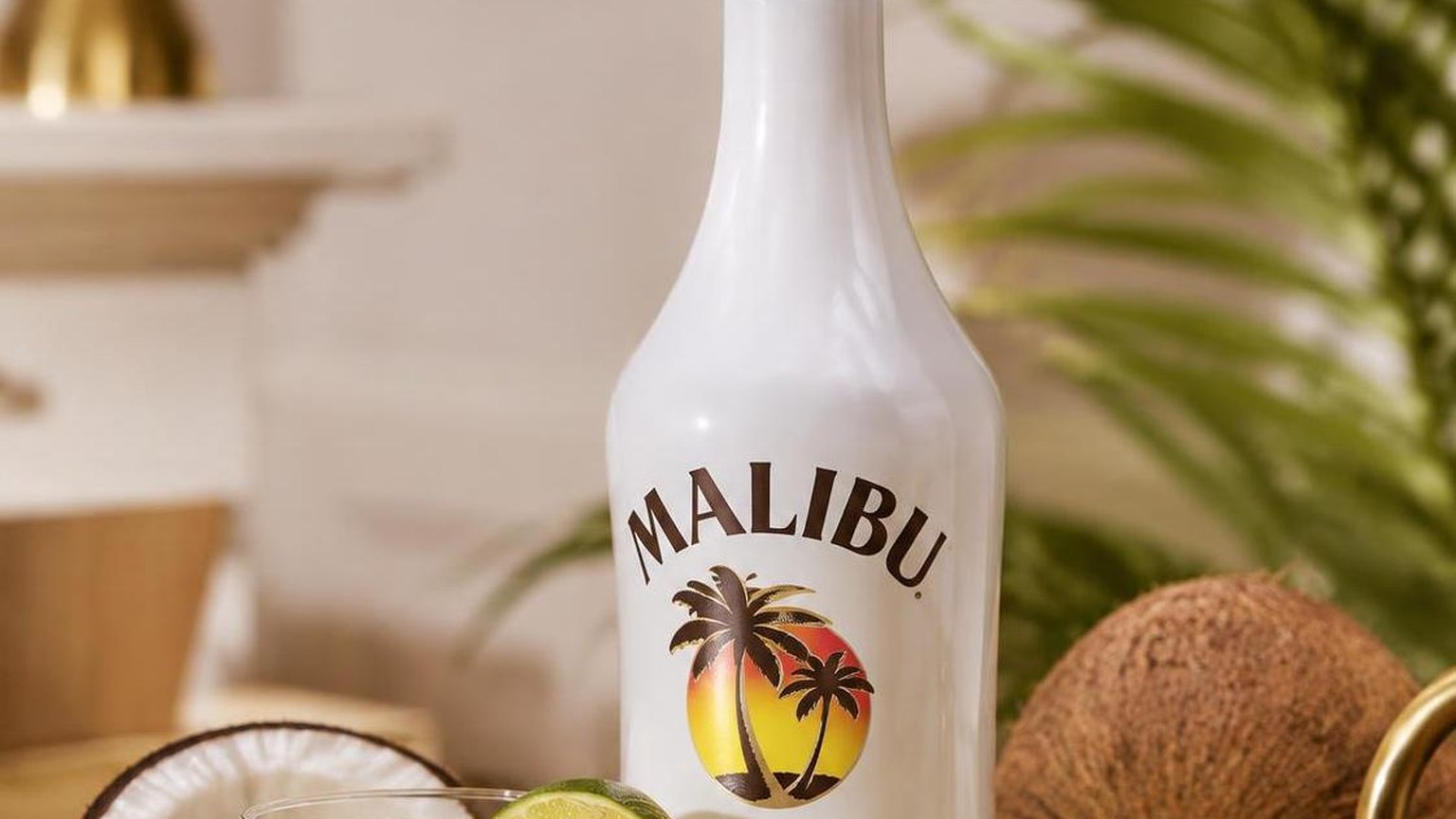
Classic Malibu Original is a coconut-flavored rum liqueur at 21% ABV, far below standard 40% ABV rum. That lower alcohol level, plus sugar and flavoring, makes quality decline more noticeable after opening.
| Product type | Typical ABV | What usually changes first |
| Malibu Original | 21% | Coconut aroma fades; sweetness tastes flat or stale |
| Standard white rum | 40% | Very slow aroma loss after opening |
| Cream liqueur | 15% to 20% | Dairy spoilage, curdling, sour smell |
- Myth: “Alcohol means it lasts forever.” High-proof spirits are very stable, but Malibu is not a 40% ABV rum. Once opened, oxygen exposure gradually dulls the coconut flavor. It may remain safe if stored properly, but “safe” and “good” are not the same thing.
- Mistake: storing it on a sunny bar cart. Light and heat speed up flavor degradation. A closed cabinet at normal room temperature is better. Avoid keeping the bottle above an oven, near a window, or in a garage that swings from 40°F to 90°F.
- Myth: “If it smells like coconut, it is fine.” Smell helps, but it is not the only test. Check for a harsh alcohol note, stale candy-like aroma, cloudiness that was not present before, floating particles, or a sticky, crystallized cap caused by repeated spills.
- Mistake: drinking from the bottle. Saliva and food particles can introduce contamination and off-flavors. This matters more with sweet liqueurs than with dry spirits. Pour Malibu into a glass or jigger, then reseal the cap tightly.
- Myth: “Refrigeration is required.” Malibu does not require refrigeration after opening, according to normal liqueur storage practice. Chilling can make it taste fresher in tropical drinks, but the key is a tight seal, darkness, and steady temperature.
- Mistake: keeping an opened bottle for years and expecting the same cocktail quality. For best flavor, use opened Malibu within about 12 months. It can last longer, but a Piña Colada or Bay Breeze will taste noticeably weaker when the coconut aromatics fade.
- Myth: “Freezing is the best storage method.” At 21% ABV, Malibu may become very thick or partially slushy in a home freezer. Freezing is unnecessary and can make pouring inconsistent. Store it cool, not frozen.
Frequently Asked Questions
Does Malibu Rum go bad after opening?
Malibu Rum is a coconut-flavored liqueur at 21% ABV, so it is less shelf-stable than full-strength 40% rum but still lasts a long time if stored properly.
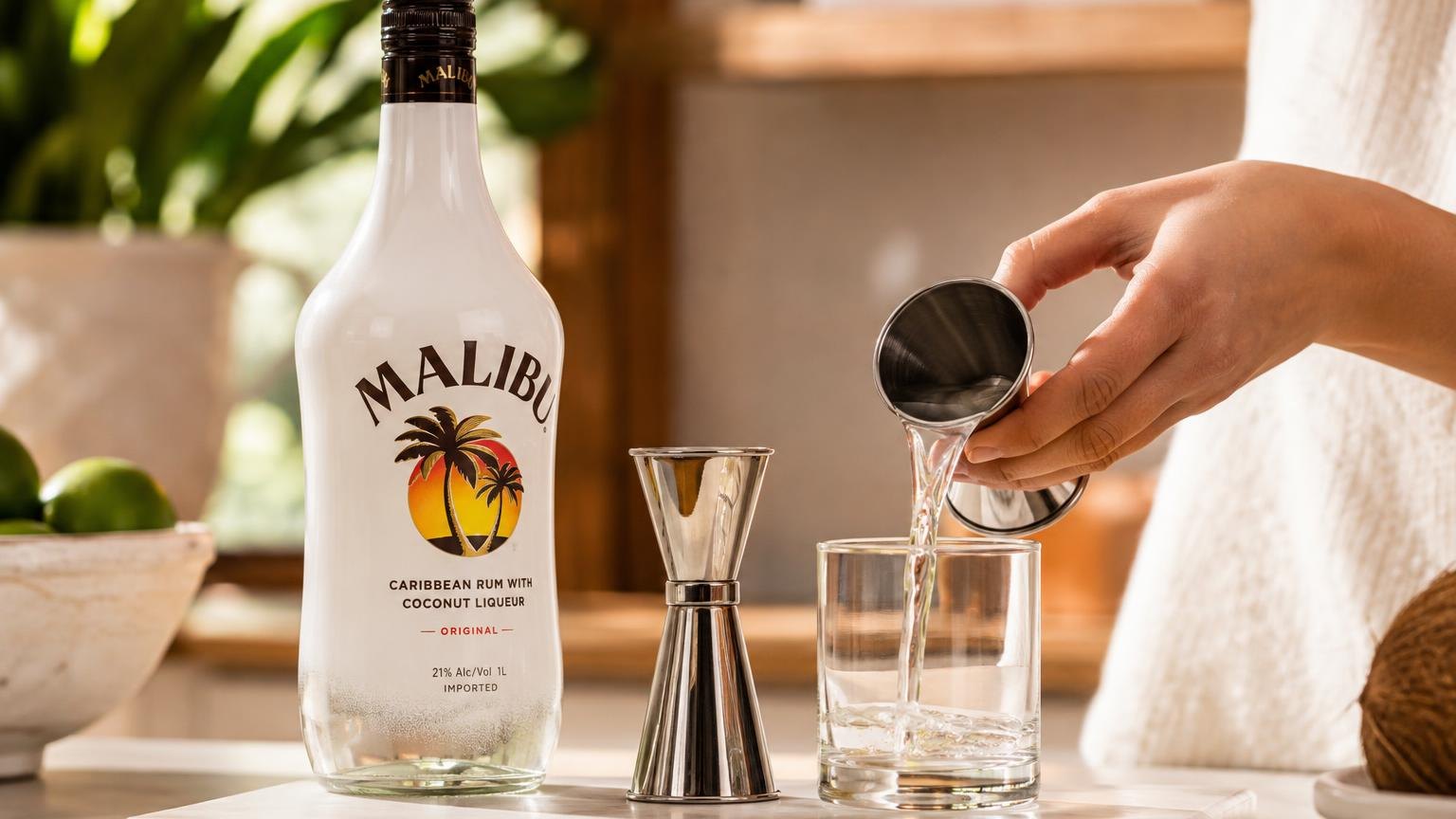
After opening, Malibu recommends using it within 1 year for best flavor, because the coconut flavoring and sugar can fade or change before the alcohol becomes unsafe.
How can you tell if Malibu Rum has gone bad?
Discard Malibu if it smells sour, musty, fermented, or noticeably different from its normal sweet coconut aroma.
Also avoid drinking it if you see cloudiness that was not there before, floating particles, mold around the cap, or a sharp unpleasant taste.
Does unopened Malibu Rum expire?
An unopened bottle of Malibu does not usually “expire” in the food-safety sense if the seal is intact and it has been stored cool and dark.
For best quality, use it within about 2 years of purchase, since flavored spirits can lose aroma and taste over time even when unopened.
Should Malibu Rum be refrigerated after opening?
Malibu does not need refrigeration after opening, but refrigeration can help preserve its coconut flavor if you do not use it often.
Store the bottle tightly capped, upright, and away from sunlight or heat, ideally below normal room temperature rather than near a stove or sunny bar cart.
Can old Malibu Rum make you sick?
Old Malibu is more likely to taste flat, stale, or off than to make you sick, because its alcohol and sugar content make it inhospitable to many microbes.
However, if the bottle was contaminated, stored with a dirty cap, or shows visible spoilage, it is safest to throw it away rather than taste-test it.
How long does Malibu Rum last in the freezer?
Malibu Rum can be stored in the freezer indefinitely without freezing solid, as its 21% ABV keeps it in a slushy-liquid state. However, freezing does not extend flavor quality beyond the recommended 12-month post-opening window.
Cold storage slows oxidation but does not prevent the gradual degradation of its coconut flavoring compounds.
Related Reading
- What Kind Of Rum For Bananas Foster?
- What Is the Difference Between Rum and Vodka?
- Can Carnival See Rum Runners In Checked In Luggage?
- What Does 151 Rum Mean?
- Can You Mix Rum And Bourbon?
- What To Mix With Lemon Rum?
- How To Make Jello Shots With Malibu Coconut Rum?
- All Alcohol Guides
- Malibu Rum Official FAQ (2024)
- U.S. Food and Drug Administration Food Code (2022)
- USDA Food Safety and Inspection Service: Food Product Dating (2024)
- National Institute on Alcohol Abuse and Alcoholism: What Is a Standard Drink? (2024)
- Electronic Code of Federal Regulations: 27 CFR § 5.147 Rum (2024)
- Iowa State University Extension AnswerLine: Storage of Alcoholic Beverages (2021)
- U.S. Alcohol and Tobacco Tax and Trade Bureau Beverage Alcohol Manual: Distilled Spirits (2024)





