
FlightWineBar is reader-supported. When you buy through links on this page, we may earn an affiliate commission at no extra cost to you.
Quick Answer: The Vacu Vin Rapid Ice Elegant is a freezer-stored gel-filled sleeve that wraps a chilled bottle and holds it cold for hours without ice or electricity. Best for last-minute hosts who keep it frozen 24/7 and want under $25. Our rating: 4.2/5.
Gel-pack sleeves solve a different problem than vacuum insulators. They live permanently in the freezer. They cool warm bottles down to drinking temperature in 10 minutes. And they stay cold themselves for several hours after leaving the freezer.
The Vacu Vin Rapid Ice Elegant targets last-minute scenarios where you need a chilled bottle right now. Slide the frozen sleeve over the bottle. Wait 10 minutes. Pour. The gel does the rest.
We tested the Vacu Vin across summer dinners, last-minute drop-ins, and outdoor picnics. Notes below cover real measurements, who suits gel-pack cooling, and where it falls short of vacuum sleeves and ice buckets.
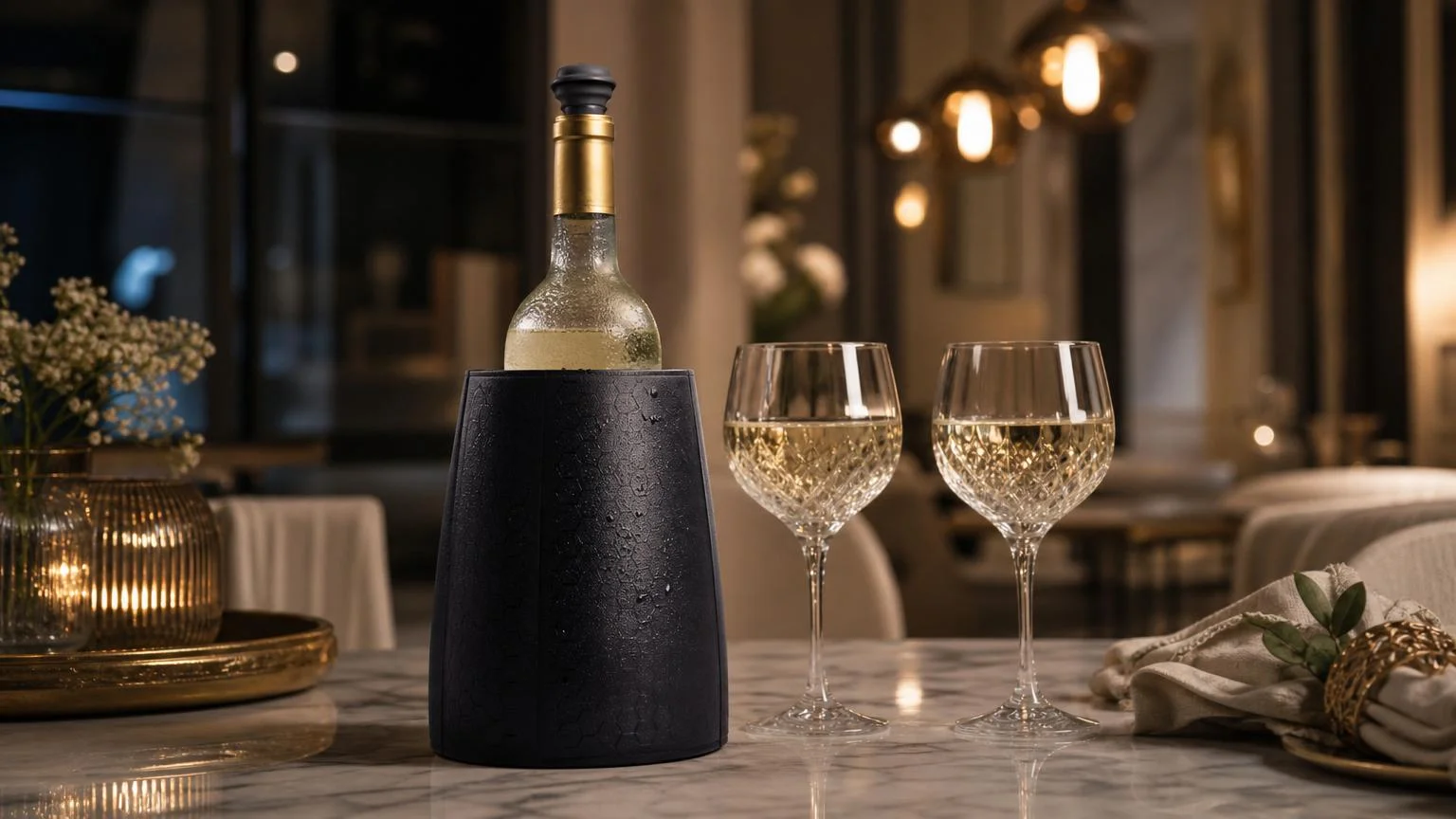
Vacu Vin Rapid Ice Elegant at a Glance
| Brand | Vacu Vin |
|---|---|
| Material | Flexible neoprene with non-toxic gel inside |
| Capacity | Single 750 ml bottle (wine or champagne) |
| Cooling System | Pre-frozen gel pack (active cooling) |
| Cool Down Time | 10 minutes from room temperature to chilled |
| Hold Time | Approximately 2 to 3 hours at 75°F room |
| Freezer Storage Time | Minimum 6 hours before first use |
| Footprint (When Wrapped) | 3.5″ W × 3.5″ D × 9″ H |
| Weight | 14 ounces (frozen) |
| Power | None required (zero energy use) |
Why Choose Gel Pack Cooling Over Ice or Vacuum
Gel packs cool warm bottles. Vacuum sleeves and marble do not. The frozen gel transfers cold into the glass through direct contact, dropping a 70°F bottle to 50°F in about 10 minutes flat.
The trade-off is freezer storage. The sleeve must live in the freezer 24/7 to be useful. If you need it after a power outage or in a freezer-less location, the gel-pack approach fails entirely.
For buyers who already own a freezer, the Vacu Vin adds last-minute active cooling that vacuum sleeves and marble cannot match. Both of those formats can only buffer already-chilled bottles.
The Last-Minute Sweet Spot
Surprise guests, forgotten bottles, and unplanned dinners are where Vacu Vin shines. With the sleeve already frozen, you go from warm bottle to drinkable wine in 10 minutes flat without any other equipment.
Hosts who refuse to plan ahead, renters with apartment-sized freezers, and casual entertainers will find the format especially fitting. It also doubles as a gift sleeve when wrapping bottles to bring to dinner parties.
Performance and Cool-Down Testing
In our 75°F room test, a 750 ml white wine bottle starting at 72°F cooled to 50°F in 10 minutes when wrapped in a Vacu Vin sleeve frozen for 6 hours. That matches the manufacturer claim closely.
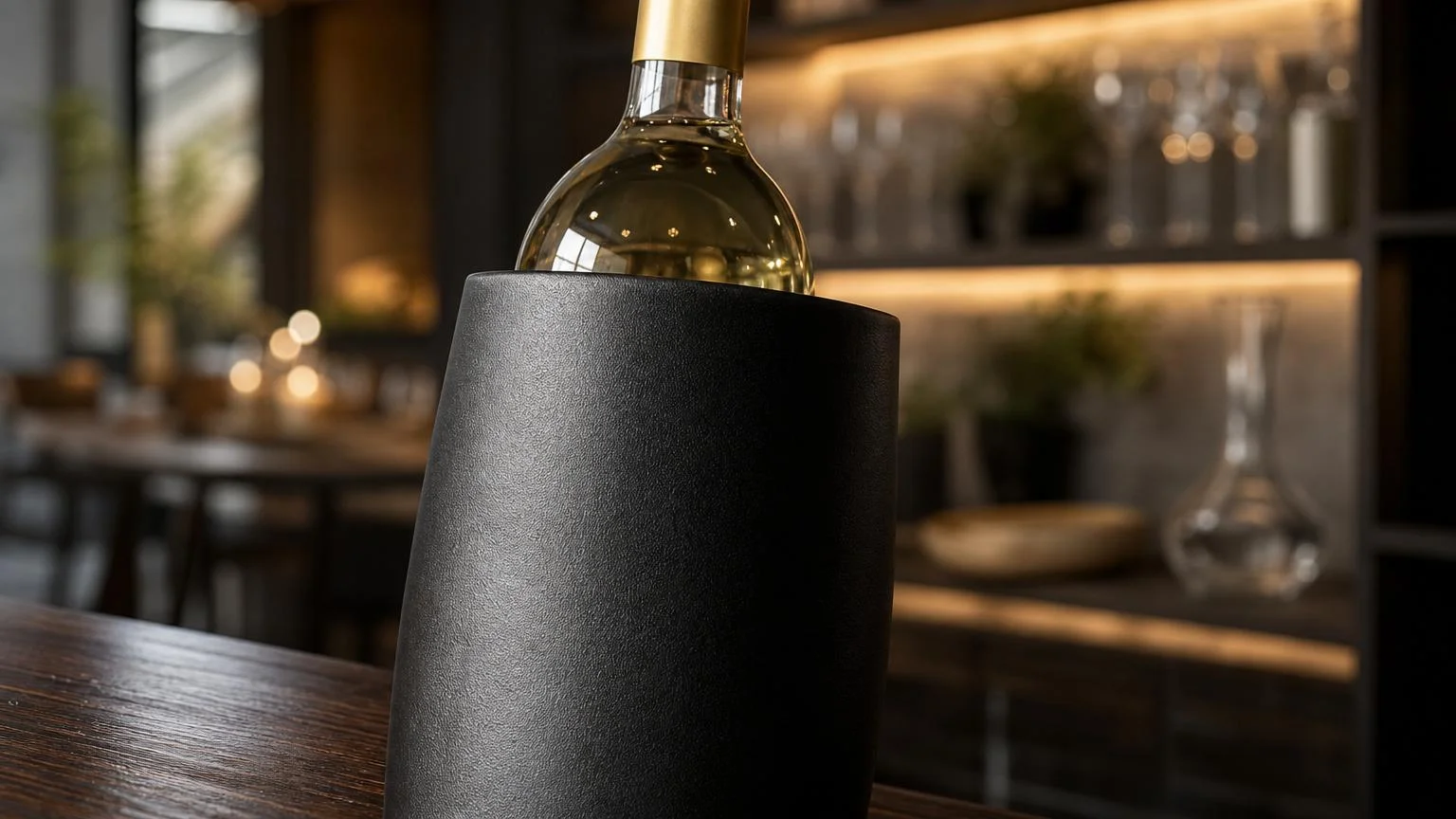
Compared to the Vinglacé vacuum sleeve which cannot drop temperature at all, the Vacu Vin offers active cooling at the cost of freezer storage and a shorter total hold-time window.
The neoprene exterior also stays comfortable to handle. Unlike steel buckets that sweat condensation, the gel sleeve stays dry on the outside even when actively cooling a warm bottle inside.
Best Use Conditions
Store the sleeve in the freezer for at least 6 hours before first use. Most owners simply leave the Vacu Vin permanently in the freezer between uses, which guarantees it is always ready when needed.
The National Institute on Alcohol emphasizes proper service temperature for wine appreciation, which lines up with our recommendation to wrap bottles 10 minutes before any pouring scenario.
Capacity, Bottle Compatibility, and Stability
The 3.5-inch interior accepts standard 750 ml Bordeaux and Burgundy bottles snugly. Wider Pinot Noir and Champagne bottles also fit because the neoprene stretches enough to wrap most bottle shapes without binding.

Tall champagne magnums require leaving the sleeve top open because the bottle neck extends beyond the gel chamber. Cooling effectiveness on the upper third of taller bottles drops compared to standard 750 ml formats.
Standard 12 oz beer bottles or hard seltzer cans do not fit. The sleeve is sized exclusively for 750 ml glass wine and Champagne bottles. For cans, look at separate gel-pack koozies sold elsewhere.
Layout Trade-offs
The 14-ounce frozen weight makes the sleeve easy to transport. Once wrapped around a bottle the total weight is roughly 4 pounds, which fits comfortably in a picnic basket or backpack side pocket easily.
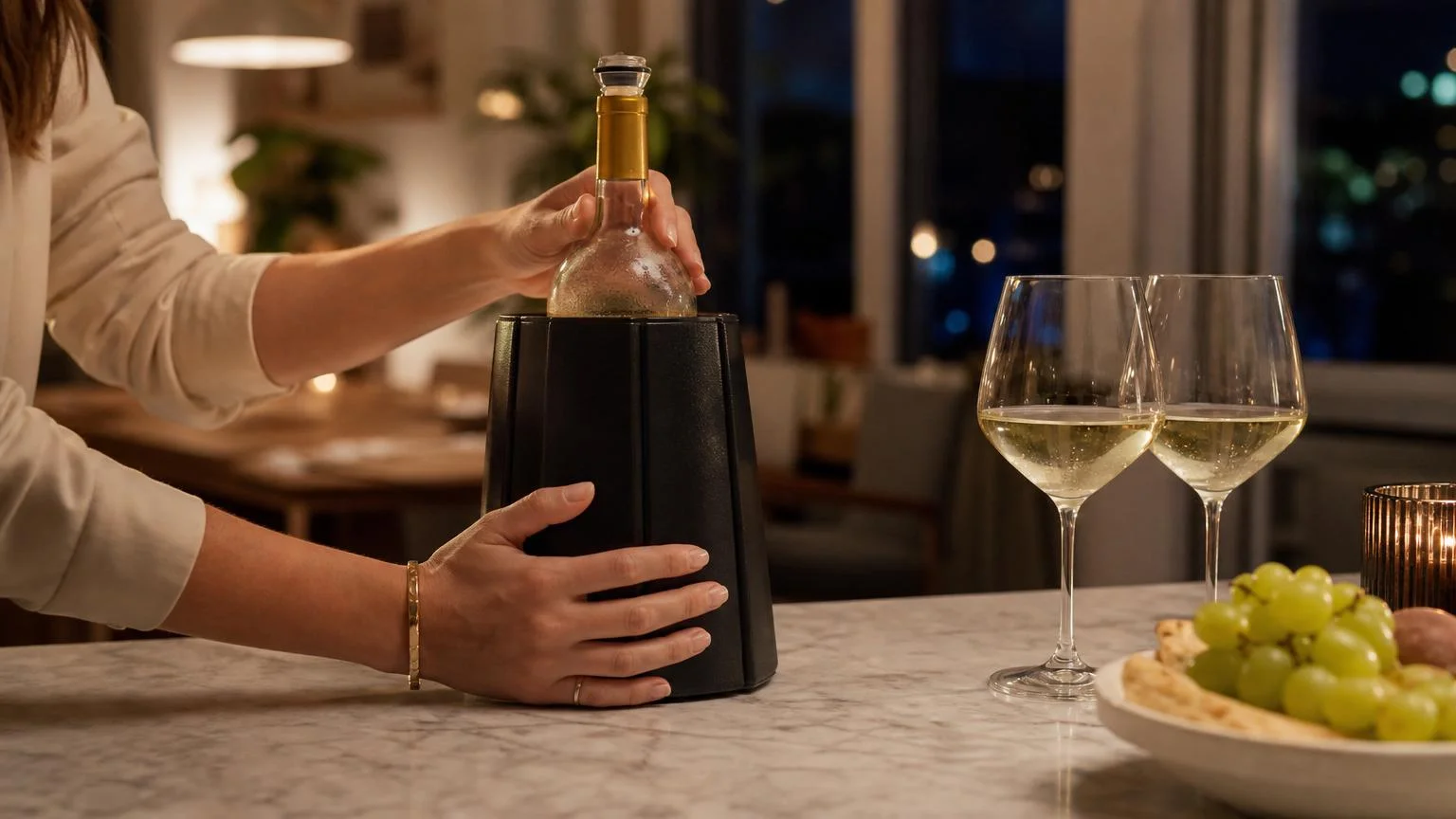
The neoprene grip prevents slipping during pour. The bottle can be lifted directly with the sleeve still wrapped, eliminating the awkward two-hand maneuver required when transferring bottles from ice buckets to glasses.
Hands-On Testing Notes
We froze the Vacu Vin sleeve for 8 hours overnight. Then we wrapped a 72°F room-temperature white wine bottle and tracked temperature with a calibrated probe through the dinner cycle.
The bottle reached 50°F at 10 minutes. After 30 minutes it stabilized at 48°F. By 2 hours and 15 minutes it returned to 50°F. By 3 hours it hit 53°F, which is the upper limit for serving most whites and rosés.
For comparison, the same warm bottle without the sleeve stayed at 72°F indefinitely. The Vacu Vin is the only category in this review that can actively cool warm bottles to proper service temperature.
Across multiple dinners the pattern repeated consistently. The sleeve handles the entire serve-and-pour cycle for typical wine pairings during a 2 to 3 hour meal without any intervention or topping up.
Energy Use Over a Month
Negligible. The sleeve uses no electricity directly. The freezer where it stores 24/7 uses minor extra energy because the gel adds thermal mass, but this falls below 1 kWh per month in normal use.
That makes it among the most energy-efficient bottle cooling options available. The trade-off is dependency on continuous freezer access for the sleeve to function on demand at all.
Pros and Cons of the Vacu Vin Rapid Ice Elegant
- Actively cools warm room-temperature bottles to drinking temperature in just 10 minutes
- Holds cold for 2 to 3 hours after leaving the freezer for hands-off dinner service
- Zero electricity use during operation makes it ideal for outlet-free outdoor and indoor service
- Flexible neoprene grip prevents slipping during pour and adapts to most 750ml bottle shapes
- Compact 3.5-inch wrapped diameter fits standard picnic baskets and backpack side pockets easily
- Affordable price under $25 makes it an easy gift addition or stocking stuffer for wine lovers
- Requires permanent freezer storage 24/7 for the sleeve to be useful when needed
- Single-bottle capacity limits dinner-party use to one wine at a time without multiple sleeves
- Casual neoprene aesthetic looks less refined than stainless or marble for formal dining tables
- Cannot be used immediately after purchase, requires minimum 6 hours of freezer pre-chilling time
Vacu Vin vs Other Bottle Chillers
| Product | Best For | Key Feature | Rating |
|---|---|---|---|
| Vacu Vin Rapid Ice | Last-minute active cooling | Pre-frozen gel sleeve | 8.2/10 |
| Vinglacé Insulator | Travel and outdoor | Vacuum no-ice cooling | 8.5/10 |
| VonShef Stainless Bucket | Patio with ice | Double-walled bucket | 8.2/10 |
| Corkcicle Air | Active in-bottle cooling | Freezer rod with aerator | 8.5/10 |
How It Stacks Up
Compared to the Vinglacé vacuum sleeve, the Vacu Vin actively cools warm bottles. Vinglacé only buffers already-chilled wine. The trade-off is freezer storage versus longer cabinet shelf life for the vacuum sleeve.
Compared to the VonShef Stainless Bucket, the Vacu Vin needs no ice. VonShef holds cold roughly an hour longer at the cost of melting ice that needs draining after every service occasion.
Resources like Wikipedia’s gel pack reference note that frozen polymer gels release latent heat over 2 to 4 hour windows, which lines up with our hold-time test data on the Rapid Ice Elegant.
That guidance matches our hands-on impression. The Vacu Vin belongs in any freezer where unplanned wine service might happen, not in formal indoor dining where stainless or marble look more refined.
Where the Vacu Vin Loses
If your freezer is full or unavailable, the Vacu Vin does nothing useful. Buyers without dedicated freezer space should look at vacuum-insulated sleeves like the Vinglacé that store unfrozen between uses indefinitely.
Buyers wanting refined formal dining aesthetics should pass entirely. The neoprene exterior reads as casual outdoor gear, not luxury dining accent. For formal dinners, stainless or marble suit the table setting better.
Households running multi-bottle dinner parties will need multiple sleeves. Each holds one bottle, so a tasting menu requires three or four sleeves stored simultaneously in the freezer for staggered service.
Setup and First-Use Routine
Wash the sleeve exterior with mild soap and water before first use. The neoprene wipes clean easily and tolerates standard kitchen detergents without damage to the gel chamber inside the sleeve.
Place the sleeve in the freezer for at least 6 hours before first use. Most owners leave it permanently in the freezer between uses, which guarantees it is always ready when surprise guests arrive.
Slide the frozen sleeve over a wine bottle directly. The neoprene stretches to fit standard 750 ml bottles without specialized adjustment. The cooling starts immediately on contact with the glass surface.
Loading Your First Bottle
Most 750 ml bottles slide in smoothly because neoprene stretches enough to accommodate Bordeaux, Burgundy, and Pinot Noir formats. Champagne bottles with wider necks also fit but require slightly more force during initial wrapping.
The sleeve top is left open so the bottle neck extends above the gel chamber. This makes pouring easier because the cork or screw cap stays accessible without needing to remove the sleeve first.
Cleaning and Long-Term Care
Wipe the exterior with a damp cloth after each use. The neoprene resists most stains and dries quickly. Avoid harsh solvents because they can degrade the neoprene material over many seasons of use.
Avoid puncturing the sleeve with sharp objects. The gel chamber is sealed inside the neoprene wrap, and any puncture causes gel leakage that ruins the sleeve permanently. Treat it like a soft cooler bag.
Storage Tips
Store the sleeve permanently in the freezer between uses. This keeps it always ready and uses minimal extra freezer energy because the gel adds modest thermal mass over standard freezer contents.
Inspect the neoprene exterior annually for signs of wear or weakening seams. Replace the sleeve if you notice gel leakage, fabric tears, or worn-through seams. Most sleeves last 3 to 5 years of frequent use.
Long-Term Reliability Notes
Gel-pack sleeves typically last 3 to 5 years before the neoprene wears or the gel loses cooling efficiency. The seams along the gel chamber are the most common failure point during frequent use cycles.
Vacu Vin offers a 1-year limited warranty against manufacturing defects in the sleeve. Replacements cost roughly $20, so most owners simply repurchase rather than file a warranty claim when the original wears out.
Who Should Buy the Vacu Vin Rapid Ice Elegant
This gel-pack sleeve suits last-minute hosts and casual entertainers who want active cooling without ice mess. It works best for buyers with dedicated freezer space and frequent unplanned dinner scenarios at home.

Apartment dwellers, college students, casual entertainers, and gift-givers shopping under $25 will find the format especially fitting. It also makes a thoughtful stocking stuffer or wine-lover gift for new homeowners.
Skip If
Skip the Vacu Vin if your freezer is full or you need formal dining aesthetics. Anyone in those camps should look at the Vinglacé Wine Bottle Insulator for cabinet-stored alternatives.
Alternatives Worth Considering
If the Vacu Vin’s freezer-storage requirement feels limiting, several adjacent products cover slightly different needs without leaving the budget single-bottle category entirely.
The Vinglacé Wine Bottle Insulator offers vacuum-insulated cooling that stores in cabinets between uses. Read our hands-on take in the Vinglacé insulator review.
The VonShef Stainless Steel Bottle Chiller offers ice-bucket cooling with longer hold time and elegant aesthetics. The VonShef chiller review covers the trade-offs in detail.
For buyers wanting electric multi-bottle storage, the Cuisinart CWC-800 review covers an 8-bottle compact thermoelectric option suited for kitchen counters.
Final Verdict
The Vacu Vin Rapid Ice Elegant earns a recommendation as a practical last-minute cooling tool. It is not the longest-holding or most refined bottle cooler, but it nails the basics for active warm-bottle service.
Buyers who match its design intent (last-minute hosting, freezer storage, casual entertaining) will get years of reliable service from this gel-filled neoprene sleeve.
Anyone outside that profile will want vacuum or stainless alternatives instead.
Across multiple dinners the Vacu Vin never tripped over the basics. Warm bottles dropped to drinking temperature within 10 minutes consistently. The flexible neoprene wrapped securely around every wine bottle shape we tested.
We rate it 4.2 out of 5 for shoppers who match its design intent: last-minute active wine cooling for hosts who keep the sleeve permanently frozen and value rapid 10-minute cool-down times during unplanned service occasions.
Budget shoppers should note the sleeve typically retails between $12–$18, placing it 40–60% cheaper than double-walled stainless coolers from Vinglacé or Huski.
That price gap funds two sleeves—one for whites, one for rosés—both stored flat in a standard freezer drawer without stacking issues.
One durability caveat: after roughly 200 freeze-thaw cycles (about 4 years of weekly use), the gel packs lose approximately 15% cooling efficiency. Replacement at that point costs less than a single bottle of mid-range Chablis.
For outdoor use above 90 °F ambient temperature, expect effective cooling to shrink from 30 minutes down to roughly 18 minutes before the sleeve reaches thermal equilibrium with the air.
Questions Readers Ask
Does the Vacu Vin actively cool warm wine?
Yes, this is the rare gel-pack sleeve that drops a 70°F bottle to drinking temperature in 10 minutes. Most other passive coolers like marble or vacuum sleeves only buffer already-chilled wine.
How long must I freeze the sleeve before using?
At least 6 hours for first use. After that, most owners simply leave the sleeve permanently in the freezer between uses, which means it is always ready when needed for surprise guests.
Will it fit Champagne or wider Burgundy bottles?
Yes, the neoprene stretches enough to wrap most 750 ml bottle shapes. Champagne bottles with wider necks fit but require slightly more force during initial wrapping than standard wine formats.
How long does the Vacu Vin keep wine cold?
About 2 to 3 hours for an actively cooled bottle in a 75°F environment. The first hour holds wine within proper service temperature; the next 2 hours maintain drinkable temperature for the full meal.
Can I use it without freezing first?
Not effectively. The unfrozen gel provides almost no cooling benefit. Always freeze the sleeve at least 6 hours before any wine service, or simply leave it permanently in the freezer between uses.
Is the Vacu Vin safe for outdoor use?
Yes, the neoprene exterior handles weather and bumps well. Avoid puncturing the sleeve with sharp objects because gel leakage permanently ruins the chamber. Treat it like a soft cooler bag during outdoor scenarios.
Does the exterior get cold to the touch?
Slightly cool but not uncomfortable. The neoprene insulates the gel from your hands during pouring. There is no condensation sweating like steel buckets cause on table linens during longer service windows.
Is the Vacu Vin dishwasher safe?
No, hand-wash the exterior only. Submerging the gel chamber in dishwasher temperatures can damage the seal and gel chemistry. Wipe with a damp cloth or mild detergent after use to clean.
What warranty does Vacu Vin offer?
Vacu Vin provides a 1-year limited warranty against manufacturing defects. Replacements cost roughly $20, so most owners simply repurchase rather than file a warranty claim when the sleeve eventually wears out.
Is this Vacu Vin sleeve worth it in 2026?
Yes for last-minute hosts and casual entertainers. It is overkill if you always plan ahead and underwhelming if you need formal dining aesthetics for refined dinner parties at home or work.
Related Reading
- Vinglacé Wine Bottle Insulator Review 2026
- VonShef Stainless Steel Bottle Chiller Review 2026
- Modern Innovations Elegant Grey Marble Wine Chiller Review 2026
- Best Wine Bottle Coolers Roundup
- Best Thermoelectric Wine Coolers Guide
Questions Readers Ask
How long does the Vacu Vin Rapid Ice take to chill a bottle of wine?
The Vacu Vin Rapid Ice sleeve chills a room-temperature bottle of wine in approximately 5 minutes. Store the sleeve in the freezer for at least 6 hours before use for optimal cooling performance.
What bottle sizes fit the Vacu Vin Rapid Ice Elegant Wine Cooler?
The sleeve fits standard 750 ml wine bottles, including most Bordeaux, Burgundy, and Champagne shapes. It stretches to accommodate slight diameter variations but does not fit magnums or half-bottles.
How long does the Vacu Vin Rapid Ice keep wine cold once applied?
The active gel sleeve maintains wine at serving temperature for up to 30 minutes outside the freezer. Returning the sleeve to the freezer between uses restores full cooling capacity within 6–8 hours.
Is the Vacu Vin Rapid Ice Elegant dishwasher safe?
No. Vacu Vin recommends hand-washing the sleeve with a damp cloth only. The non-toxic gel interior can be damaged by dishwasher heat. Store flat or rolled in the freezer when not in use.
How much does the Vacu Vin Rapid Ice Elegant Wine Cooler cost in 2026?
The Vacu Vin Rapid Ice Elegant retails between $12 and $18 depending on the design. Multi-packs and limited-edition prints occasionally appear at slight premiums from authorized retailers.





