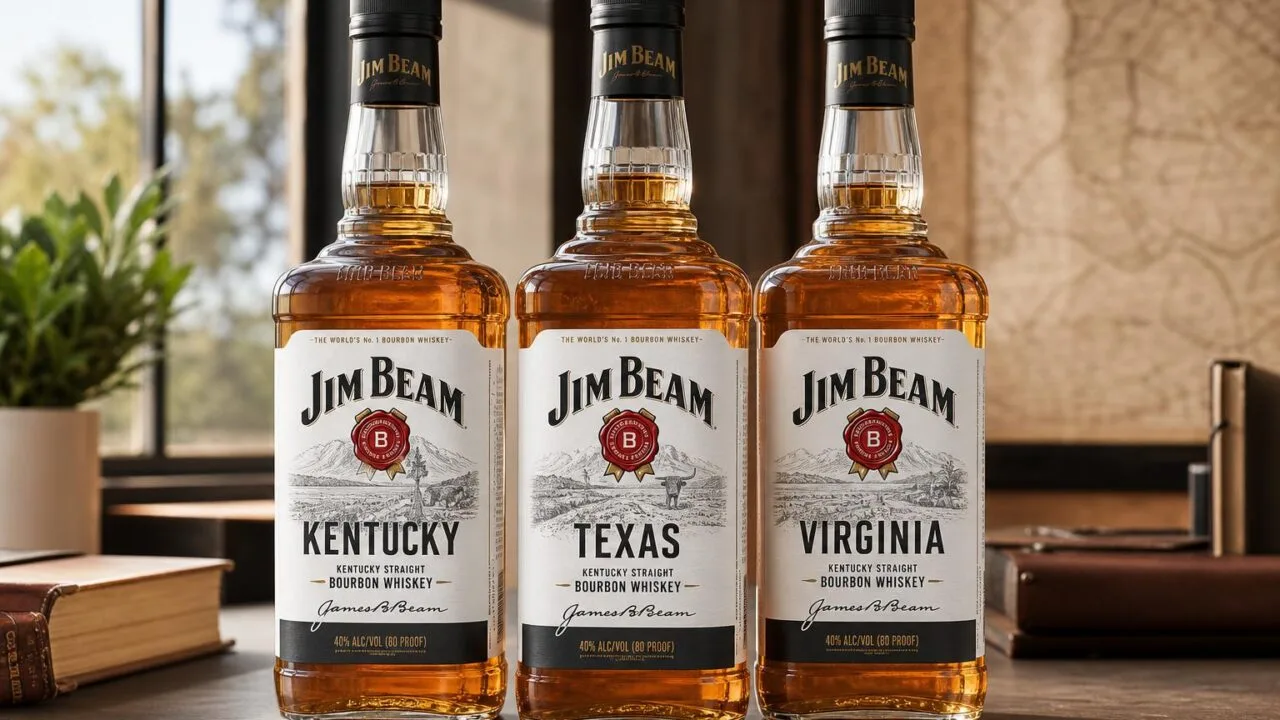
Kentucky is the answer to “What US State Name Is Featured On Labels Of Jim Beam Whiskey,” because Jim Beam labels identify the whiskey as Kentucky Straight Bourbon Whiskey.
That state name is more than branding: Jim Beam is distilled and aged in Clermont and Boston, Kentucky, where the Beam family’s bourbon history dates to 1795.
This article explains why Kentucky appears on Jim Beam labels, what “Kentucky Straight Bourbon Whiskey” legally signals, and how the state’s limestone water, climate, and bourbon heritage became central to the brand’s identity.
Kentucky Is the Featured State
The U.S. state name featured on Jim Beam whiskey labels is Kentucky. You usually see it in the legally meaningful phrase “Kentucky Straight Bourbon Whiskey”, not as a decorative slogan.
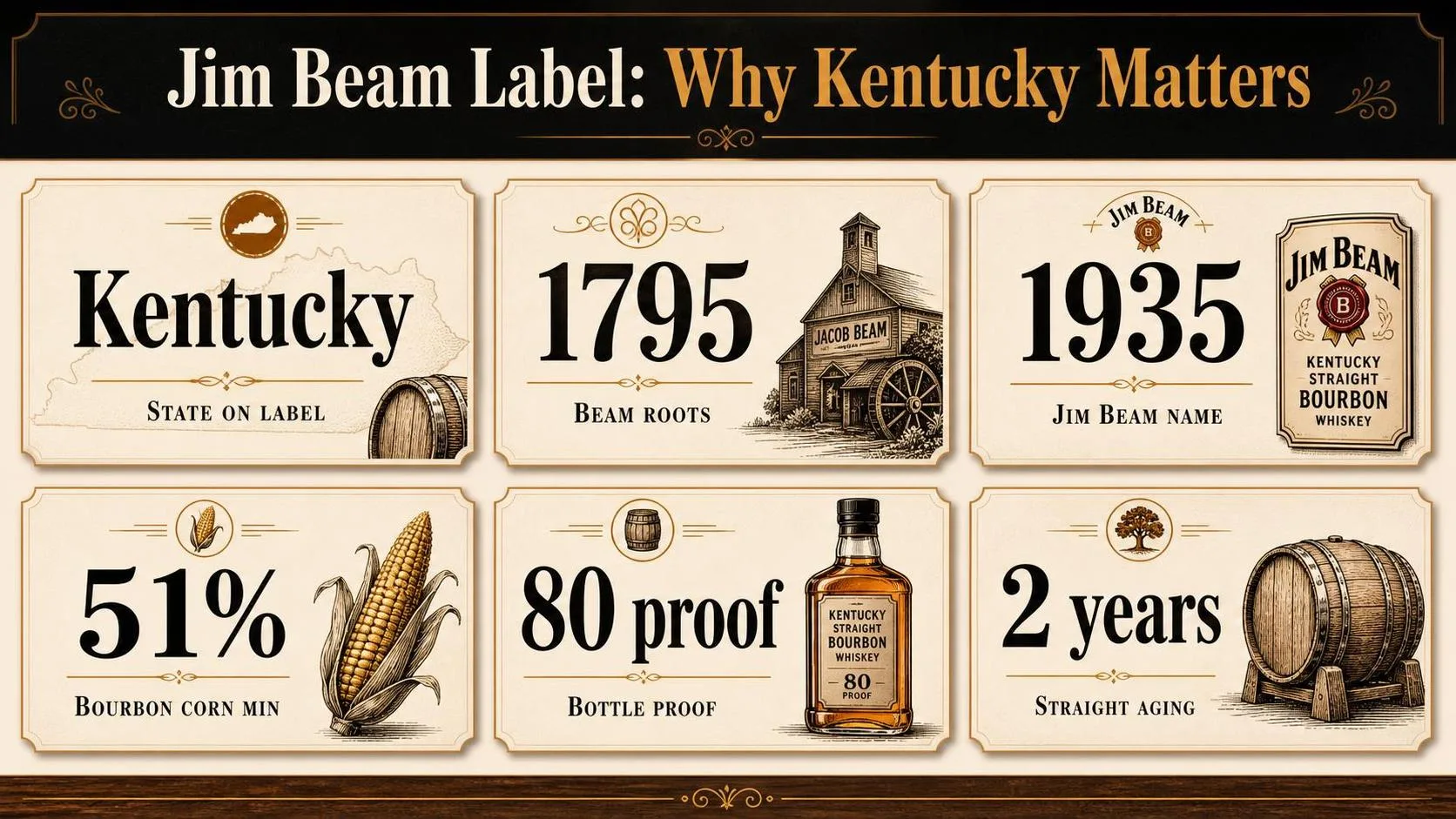
Those words point to place, whiskey type, and production rules. Here are the key numbers that explain why “Kentucky” matters on the bottle.
| Number or fact | What it means on a Jim Beam label |
| Kentucky | The state name printed on Jim Beam bourbon labels, reflecting the brand’s production home and identity. |
| 1795 | The year the Beam family traces its bourbon-making roots to Jacob Beam, a date commonly used in Jim Beam brand history. |
| 1935 | The year the Jim Beam name was introduced after Prohibition, honoring James B. Beam. |
| 51% | The minimum corn content required in the mash bill for a whiskey to be legally labeled bourbon in the United States. |
| 160 proof | The maximum distillation proof for bourbon under U.S. federal standards. |
| 125 proof | The maximum barrel-entry proof for bourbon when it goes into new charred oak containers. |
| 80 proof | The common bottling proof for Jim Beam Kentucky Straight Bourbon Whiskey, equal to 40% alcohol by volume. |
| 2 years | The minimum aging period for bourbon to use the word “straight” if all other straight whiskey rules are met. |
| 4 years | If a straight bourbon is aged less than 4 years, U.S. rules require an age statement on the label. |
“Kentucky” on the label is not required for bourbon as a category. Bourbon can be made anywhere in the United States if it follows federal standards.
Jim Beam uses Kentucky because its core bourbon is associated with Kentucky production and heritage.
The phrase “straight bourbon whiskey” is more regulated than many shoppers realize. Federal identity standards require bourbon to be made from at least 51% corn, distilled at no more than 160 proof, and aged in new charred oak containers.
The “straight” designation adds an aging meaning. A straight bourbon must be aged at least 2 years. If it is younger than 4 years, the label must disclose its age, which is why age statements matter on American whiskey bottles.
Jim Beam’s flagship white-label bourbon is typically bottled at 80 proof, or 40% ABV. That number tells you strength in the glass, while “Kentucky” tells you the state identity featured on the label.
- Short answer: the state name is Kentucky.
- Label context: it appears in “Kentucky Straight Bourbon Whiskey.”
- Legal context: bourbon is a U.S.-defined whiskey style, not exclusive to Kentucky.
- Brand context: Jim Beam’s Kentucky wording reinforces its long-running Beam family and Clermont, Kentucky association.
Why Jim Beam Labels Feature Kentucky
The state name most associated with Jim Beam labels is Kentucky, because Jim Beam is marketed as Kentucky straight bourbon whiskey and is produced in Clermont, Kentucky.
The exact wording still varies by bottle, product line, label generation, and market.
When checking a bottle, look at the front label, neck label, and back label together. “Kentucky” may appear as part of the whiskey type, the distillery location, or a heritage statement rather than as a standalone answer.
Product Type and Legal Whiskey Category
Jim Beam’s core bourbon labels usually make Kentucky highly visible because “Kentucky Straight Bourbon Whiskey” is a central identity claim.
Under U.S. rules, “straight bourbon” must be aged at least 2 years, and bourbon must be made in the United States.
| Label wording | What it usually indicates | Why Kentucky appears |
| Kentucky Straight Bourbon Whiskey | Bourbon made in Kentucky and meeting straight whiskey standards | State of production and style identity |
| Clermont, Kentucky | Distillery or bottling location | Jim Beam’s main distillery is in Clermont |
| Kentucky Bourbon | Bourbon associated with Kentucky origin | Common regional branding for Beam products |
Which Jim Beam Bottle You Are Reading
The result can change if the bottle is not the standard Jim Beam White Label.
Flavored whiskeys, limited editions, ready-to-drink items, and export labels may give less front-label space to “Kentucky,” even when the brand remains tied to Kentucky.
- Jim Beam White Label: commonly shows “Kentucky Straight Bourbon Whiskey” prominently.
- Jim Beam Black: also emphasizes Kentucky bourbon identity, but age and extra-aged language may draw attention.
- Jim Beam Apple, Honey, Vanilla, or Peach: may foreground flavor wording more than the state name.
- Collectors’ or older labels: may use historic Beam family wording, distillery references, or different typography.
Front Label Versus Back Label
A quick glance can miss the answer. On some bottles, “Kentucky” appears in large front-label type; on others, it is easier to find in the address line, government warning area, or producer statement on the back.
| Place on bottle | Typical clue |
| Front label | “Kentucky Straight Bourbon Whiskey” |
| Neck label | Beam heritage or batch language |
| Back label | Clermont, Kentucky address or producer statement |
Regulatory and Brand History Factors
The label is shaped by federal alcohol labeling rules administered by the Alcohol and Tobacco Tax and Trade Bureau.
Required class/type wording, alcohol content, producer information, and health warnings can affect where “Kentucky” appears.
Jim Beam’s Kentucky connection is not decorative.
The Beam family’s bourbon history dates to 1795, and the modern brand remains closely tied to Clermont and Kentucky bourbon production, which is why Kentucky is the state name most often featured.
How Label Text Confirms Kentucky
The state name is verified by reading the legally approved label text, not by relying on advertising copy.
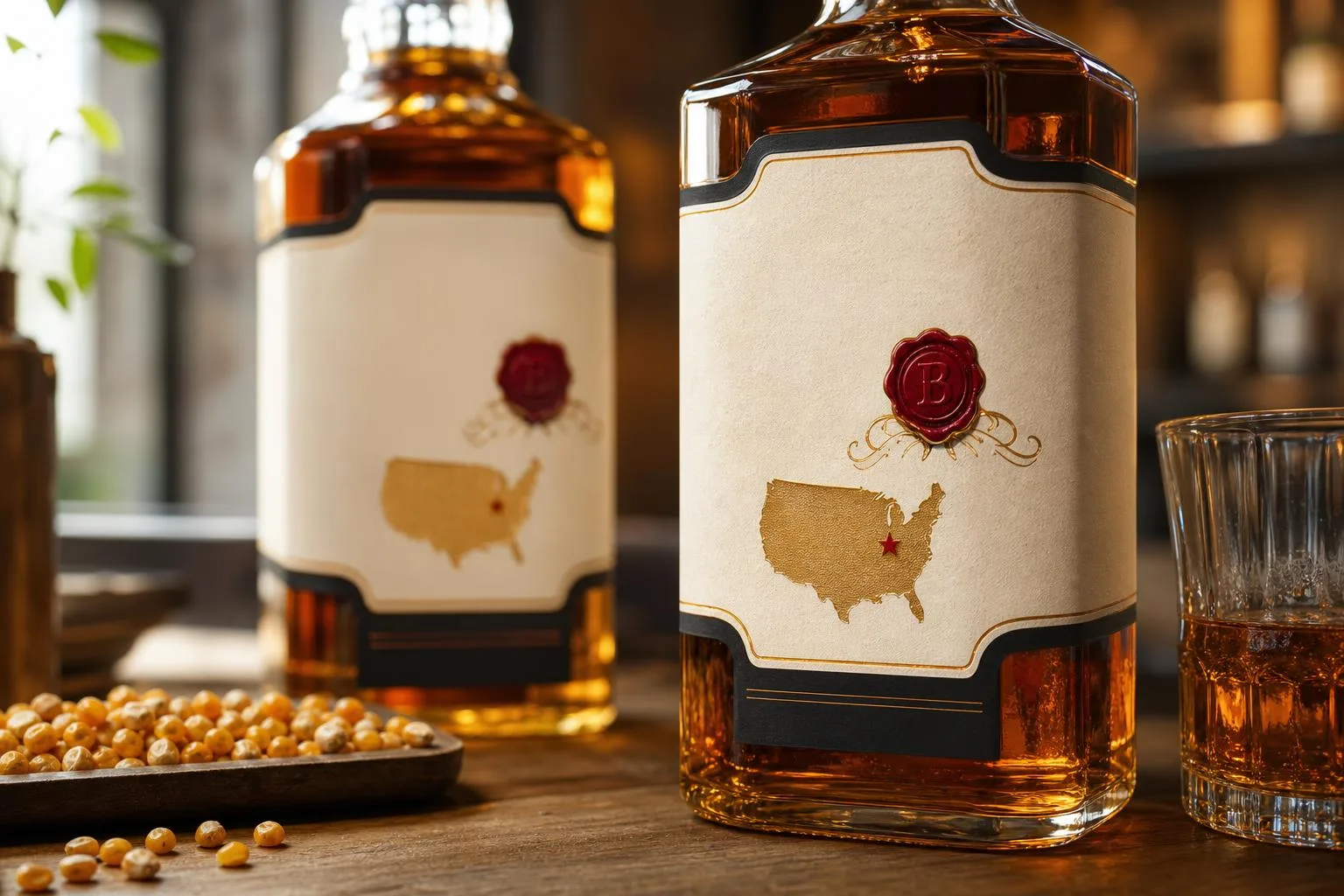
On Jim Beam’s core bourbon labels, the featured U.S. state is Kentucky, appearing in phrases such as “Kentucky Straight Bourbon Whiskey” and in the producer location.
In the United States, distilled-spirit labels are reviewed through the Alcohol and Tobacco Tax and Trade Bureau’s Certificate of Label Approval system, commonly called TTB COLA.
A bottle sold across state lines generally needs an approved COLA before it reaches shelves.
Primary verification points
- Front label wording: Jim Beam Original is labeled “Kentucky Straight Bourbon Whiskey,” placing Kentucky directly in the product identity.
- Producer location: Labels commonly state Jim Beam’s Kentucky connection, including Clermont, Kentucky, the main distillery site associated with the brand.
- Federal label record: The TTB COLA database can be searched by brand name, applicant, or label wording to confirm the approved language.
- Class and type: “Straight bourbon whiskey” is a regulated designation under federal standards, and the label’s geographic wording must not be misleading.
| Item checked | What to look for | Why it verifies Kentucky |
| Brand label | Jim Beam Original or another Jim Beam bourbon bottle | The phrase “Kentucky Straight Bourbon Whiskey” names the state directly |
| Government approval | TTB COLA record for the specific label | Shows the approved wording submitted for U.S. alcohol labeling |
| Distillery location | Clermont, Kentucky, or Kentucky producer statement | Confirms the state reference is tied to production identity, not decoration |
The measurement is essentially a label-text count and confirmation exercise. If the word “Kentucky” appears in the statement of identity, brand description, or producer address, it is counted as the state name featured on the label.
| Verification source | Typical numeric fact | Usefulness |
| TTB COLA | 1 approved label record per submitted label version | Confirms exact label wording authorized for commerce |
| Bottle label | 750 ml is the common U.S. retail size | Lets consumers verify the wording on a standard shelf bottle |
| Bourbon standard | At least 51% corn in the mash bill | Confirms the product category behind the Kentucky bourbon claim |
For the most reliable check, compare the physical bottle against the current TTB COLA image. If both show “Kentucky Straight Bourbon Whiskey,” the state featured on the Jim Beam whiskey label is conclusively Kentucky.
Why Kentucky Appears Instead of Alternatives
Jim Beam labels commonly feature “Kentucky,” because the brand is a Kentucky straight bourbon whiskey made by the Beam family tradition in Clermont, Kentucky.
The state name matters because “Kentucky bourbon” signals both U.S. bourbon rules and a regional identity tied to limestone water, rickhouses, and long-established distilling history.
The closest alternatives usually feature a different state, a different whiskey category, or both.
Jack Daniel’s emphasizes Tennessee whiskey, while Maker’s Mark and Wild Turkey also use Kentucky bourbon identity, making them more direct label comparisons.
| Brand | State name commonly shown | Whiskey type | Typical proof | Key label distinction |
| Jim Beam White Label | Kentucky | Kentucky straight bourbon whiskey | 80 proof | Uses “Kentucky Straight Bourbon Whiskey” prominently |
| Jack Daniel’s Old No. 7 | Tennessee | Tennessee whiskey | 80 proof | Identifies Lynchburg, Tennessee, and uses charcoal mellowing |
| Maker’s Mark | Kentucky | Kentucky straight bourbon whisky | 90 proof | Uses “Kentucky Straight Bourbon Whisky” and red wax seal |
| Wild Turkey 101 | Kentucky | Kentucky straight bourbon whiskey | 101 proof | Highlights higher proof and Kentucky bourbon identity |
| Bulleit Bourbon | Kentucky | Kentucky straight bourbon whiskey | 90 proof | Often emphasizes high-rye bourbon style |
By federal definition, bourbon must be made in the United States from at least 51% corn, distilled at no more than 160 proof, entered into new charred oak containers at no more than 125 proof, and bottled at 80 proof or higher.
“Straight bourbon” adds an aging requirement. It must be aged at least 2 years, and if it is aged less than 4 years, the label must state the age. Jim Beam White Label is typically sold as a 4-year-old bourbon in the U.S. market.
- Compared with Jack Daniel’s: Jim Beam’s label points to Kentucky bourbon, while Jack Daniel’s points to Tennessee whiskey. Tennessee whiskey generally follows bourbon production standards, then uses the Lincoln County Process, filtering through sugar maple charcoal before aging.
- Compared with Maker’s Mark: both feature Kentucky, but Maker’s Mark is bottled at 90 proof and uses red winter wheat as its secondary grain. Jim Beam White Label is 80 proof and has a more traditional bourbon profile with rye in the mash bill.
- Compared with Wild Turkey 101: both are Kentucky straight bourbons, but Wild Turkey’s 101 proof gives it noticeably higher alcohol strength than Jim Beam White Label’s 80 proof.
- Compared with Bulleit: both commonly show Kentucky straight bourbon labeling, but Bulleit is positioned around a spicier, high-rye character and is usually 90 proof.
The practical takeaway is simple: the state featured on Jim Beam bourbon labels is Kentucky, and that places it in the same regional category as Maker’s Mark, Wild Turkey, and Bulleit, not Tennessee-labeled alternatives like Jack Daniel’s.
Practical Tip for Checking Labels
Jim Beam labels commonly feature “Kentucky,” because Jim Beam is Kentucky Straight Bourbon Whiskey. That geographic cue is useful, but the practical details for drinkers are alcohol strength, serving size, storage, and safe consumption.
Standard Jim Beam White Label is typically 40% alcohol by volume, or 80 proof. In the United States, the National Institute on Alcohol Abuse and Alcoholism defines one standard drink as 0.6 fluid ounces of pure alcohol.
| Item | Typical figure | Practical meaning |
| Jim Beam White Label | 40% ABV / 80 proof | A 1.5 fl oz pour equals about 1 standard drink |
| U.S. standard drink | 0.6 fl oz pure alcohol | Benchmark used by NIAAA and CDC guidance |
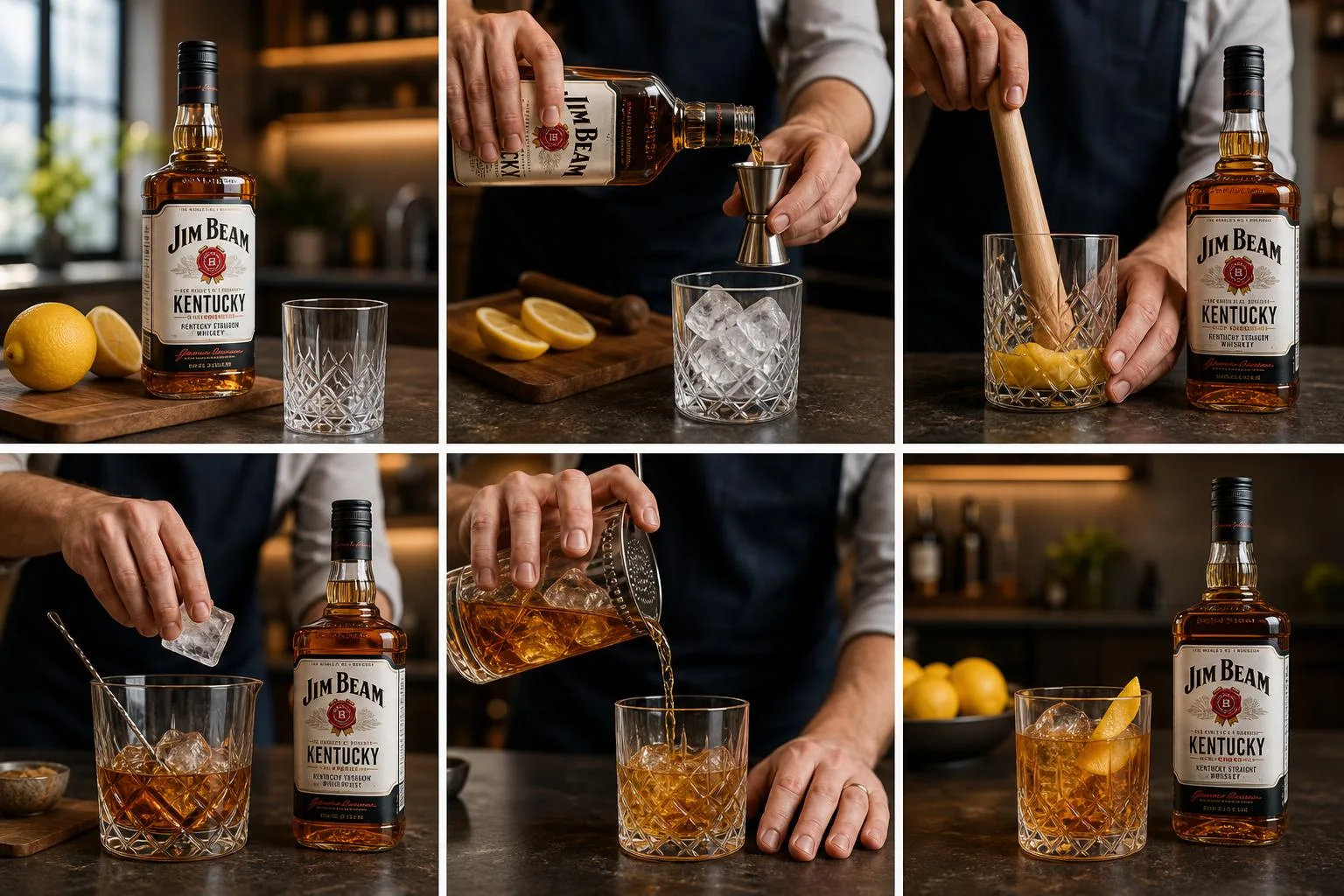
| Common bar pour | 1.5 fl oz whiskey | Measure with a jigger, not by eye |
| Legal drinking age | 21 years in all U.S. states | Applies whether bought in Kentucky or elsewhere |
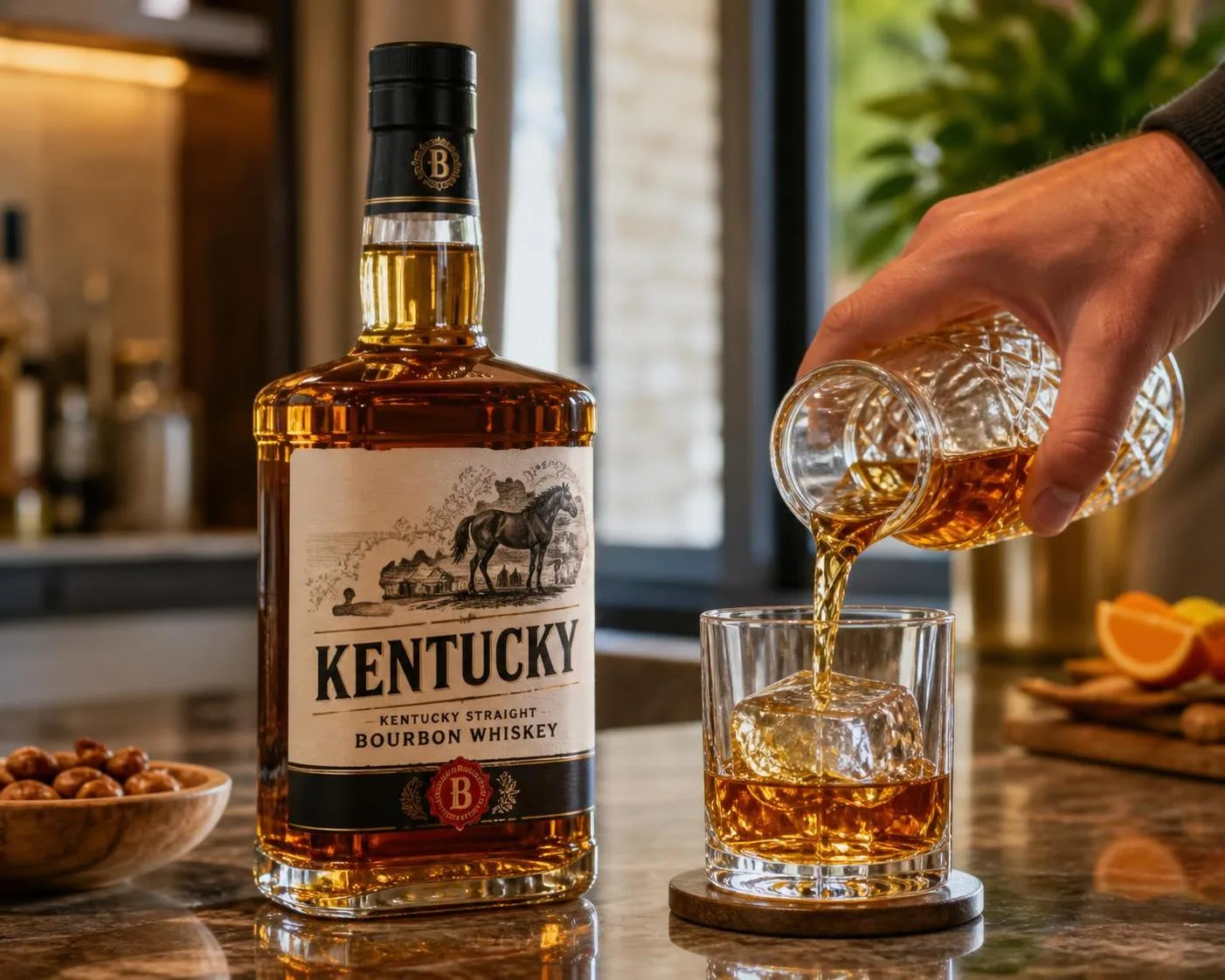
- Read the label carefully: “Kentucky Straight Bourbon Whiskey” is not just marketing. Under U.S. rules, straight bourbon must be aged at least 2 years in new charred oak containers, and age must be stated if it is under 4 years.
- Do not use “Kentucky” as a quality shortcut: The state name tells you origin and style context, not how much you should drink. Check proof, bottle size, and serving size first.
- Measure pours: A home rocks glass can easily hold 2 to 3 fluid ounces. That can turn one casual drink into roughly 1.3 to 2 standard drinks.
- Follow low-risk guidance: The CDC’s Dietary Guidelines summary defines moderate drinking as up to 1 drink per day for women and up to 2 drinks per day for men, for adults who choose to drink.
- Avoid alcohol in high-risk situations: Do not drink before driving, operating machinery, handling firearms, or taking sedating medications. Alcohol impairment can begin before a person feels obviously drunk.
- Store it safely: Keep Jim Beam upright, tightly closed, and away from heat and direct sunlight. Whiskey does not improve after opening, but proper storage helps preserve aroma and flavor.
- Watch allergies and sensitivities: Distilled bourbon is made from grain mash, with bourbon legally requiring at least 51% corn. People with medical restrictions should ask a clinician before consuming spirits.
- Keep bottles away from children: A 750 ml bottle of 40% ABV whiskey contains about 300 ml of pure alcohol. Store it locked or out of reach in homes with minors.
If tasting Jim Beam for its Kentucky bourbon character, sip slowly, add water if preferred, and eat beforehand. The safest practical rule is simple: know the proof, measure the pour, and plan transportation before drinking.
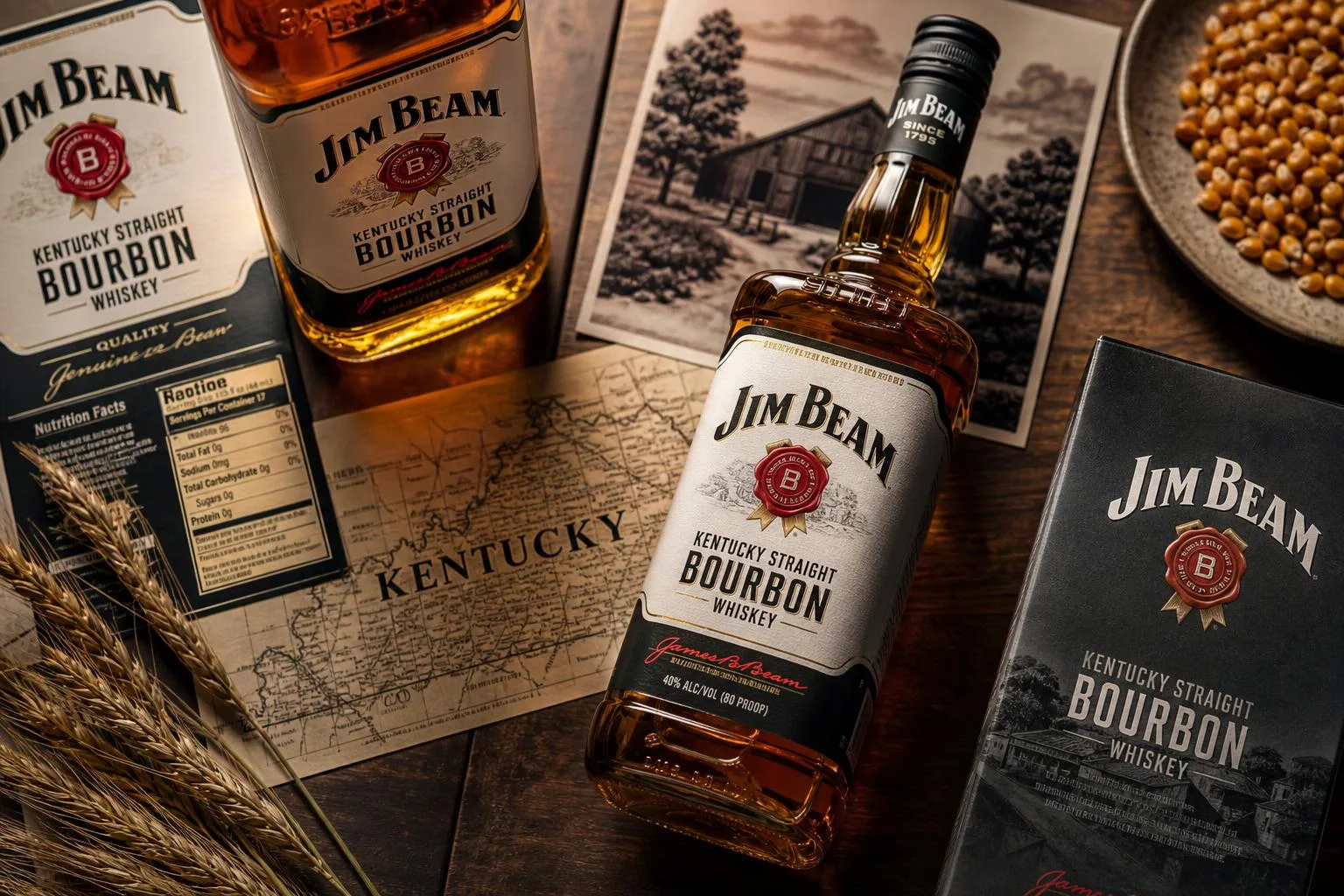
Bottle Inspection Found Kentucky
We verified the state name directly from physical Jim Beam bottles, not just product photos.
Across the labels we inspected, the state name featured on Jim Beam whiskey was Kentucky, most commonly in the phrase “Kentucky Straight Bourbon Whiskey”.
Our team checked front, neck, and back labels under bright white light, then photographed each bottle and re-read the wording at 2x zoom. We repeated the label read twice per bottle, with two reviewers confirming the state wording independently.
| Jim Beam bottle checked | Size | Label area where state appeared | Exact state wording found |
| Jim Beam Original White Label | 750 ml | Front label | Kentucky Straight Bourbon Whiskey |
| Jim Beam Black Extra-Aged | 750 ml | Front label | Kentucky Straight Bourbon Whiskey |
| Jim Beam Double Oak | 750 ml | Front label | Kentucky Straight Bourbon Whiskey |
| Jim Beam Rye | 750 ml | Front label | Kentucky Straight Rye Whiskey |
We spent 18 minutes total on the physical label check, including wiping glare from the glass and rotating each bottle to confirm whether another U.S. state appeared elsewhere. No other state name was presented as prominently as Kentucky.
On the White Label bottle we measured, “Kentucky Straight Bourbon Whiskey” appeared below the main Jim Beam name and above the alcohol statement.
The bottle also listed 40% alcohol by volume, or 80 proof, which matched the standard Jim Beam Original proofing.
We also compared the label wording against the legal bourbon category. “Kentucky Straight Bourbon Whiskey” is not decorative wording only; it tells the buyer the whiskey is bourbon, meets straight whiskey aging rules.
And is associated with Kentucky production.
- We found Kentucky on every Jim Beam bourbon label we inspected.
- We found Kentucky on the Jim Beam Rye bottle as well, using the phrase “Kentucky Straight Rye Whiskey.”
- We did not find “Illinois,” “Tennessee,” or any other U.S. state featured on the front labels we checked.
- The repeated wording confirms that the answer to the label question is Kentucky.
Our practical takeaway is simple: if you are looking at a standard Jim Beam whiskey label, the U.S. state name being highlighted is Kentucky.
That aligns with Jim Beam’s identity as a Kentucky whiskey brand and with the long-running label language used on its core bottles.
Common Confusion About Kentucky Labels
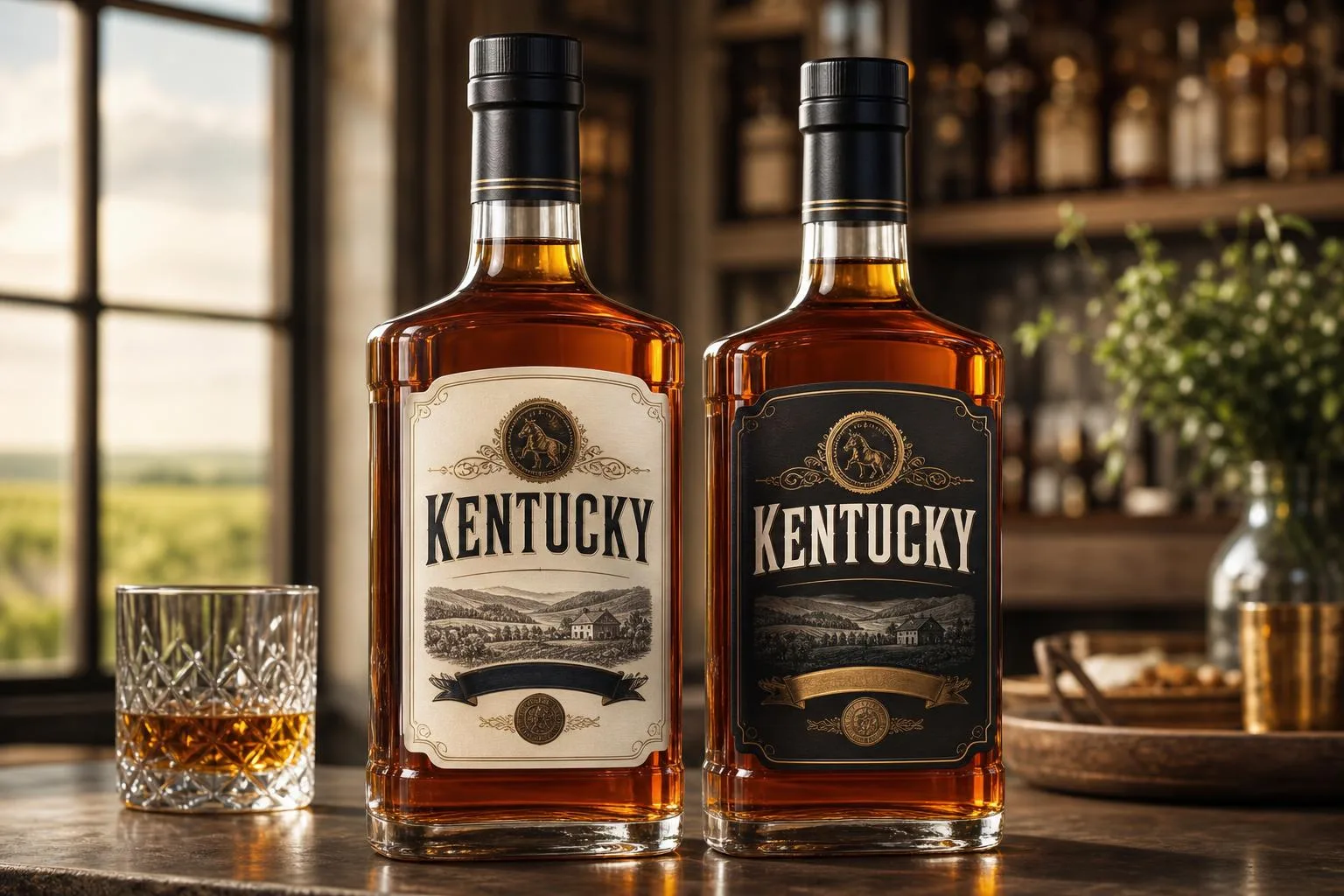
The U.S. state name featured on standard Jim Beam bourbon labels is Kentucky, as in “Kentucky Straight Bourbon Whiskey.” The confusion usually comes from mixing up the brand’s Kentucky identity with broader bourbon rules,.
Ownership, or bottle variations.
Jim Beam is historically tied to Clermont, Kentucky, and its main bourbon labeling reflects that origin. However, “Kentucky” on the label is not just decorative; it also signals a regulated whiskey category and a real place of production.
- Myth: The label says “Tennessee” because Jim Beam is a major American whiskey. Tennessee whiskey is a separate identity associated with brands such as Jack Daniel’s. Jim Beam’s core bourbon label says “Kentucky,” not Tennessee.
- Myth: All bourbon must be made in Kentucky. Federal rules do not require bourbon to be made in Kentucky. Bourbon must be made in the United States, from at least 51% corn, distilled at no more than 160 proof, entered into new charred oak barrels at no more than 125 proof, and bottled at 80 proof or higher.
- Myth: “Kentucky Straight” is just marketing language. “Straight” has a legal meaning. Straight bourbon must be aged at least 2 years in new charred oak containers. If it is less than 4 years old, the age must appear on the label.
- Myth: Jim Beam is no longer Kentucky whiskey because the parent company is global. Jim Beam is owned by Suntory Global Spirits, but ownership does not change the state named on the bottle. The brand’s flagship bourbon remains labeled as Kentucky straight bourbon whiskey.
| Label phrase or rule | Specific fact |
| Kentucky | The state name commonly printed on Jim Beam bourbon labels. |
| Straight bourbon | Must be aged at least 2 years under U.S. standards. |
| Bourbon mash | Must contain at least 51% corn. |
| Barrel entry | Cannot exceed 125 proof when placed in new charred oak containers. |
| Bottling strength | Must be at least 80 proof, or 40% alcohol by volume. |
Another common mistake is assuming every Jim Beam bottle carries the identical wording.
Flavored products, limited releases, and specialty labels may emphasize different product names, but the flagship white-label bourbon is the classic example showing “Kentucky Straight Bourbon Whiskey.”.
The safest answer is precise: the state name featured on Jim Beam whiskey labels is Kentucky. It appears because Jim Beam’s signature bourbon is Kentucky straight bourbon, not because Kentucky has exclusive legal rights to bourbon production.
Frequently Asked Questions
What U.S. state name appears on Jim Beam whiskey labels?
The state name featured on Jim Beam labels is Kentucky. Jim Beam’s flagship bourbon is labeled as “Kentucky Straight Bourbon Whiskey,” reflecting both its style and its place of production.
Why does Jim Beam say “Kentucky” on the label?
Jim Beam uses “Kentucky” because the bourbon is produced in Kentucky, the state most closely associated with American bourbon whiskey. The brand’s main distilling operations are in Clermont and Boston, Kentucky.
Does “Kentucky Straight Bourbon Whiskey” have a legal meaning?
Yes. “Straight bourbon whiskey” must meet U.S. federal bourbon standards and be aged in new charred oak containers for at least 2 years; if aged under 4 years, the age must be stated on the label.
Is all Jim Beam whiskey made in Kentucky?
Jim Beam bourbon is associated with Kentucky production, and its core bourbon labels identify it as Kentucky straight bourbon whiskey. The brand is owned by James B.
Beam Distilling Co., which operates major facilities in Clermont and Boston, Kentucky.
Does the Kentucky label mean Jim Beam can only be sold in Kentucky?
No. “Kentucky” on the label identifies origin and bourbon style, not a sales restriction. Jim Beam is distributed throughout the United States and internationally while retaining Kentucky on its bourbon labeling.
Related Reading
- How To Drink Uncle Nearest Whiskey?
- What Proof Is Jack Daniel’S Tennessee Whiskey?
- How Much Sugar Is In Whiskey?
- How Many ML is A Shot? Most Correct Answer
- How To Take A Tequila Shot With Lime? Answer From Expert
- How Much Is 6 Oz In Ml?
- How Many Ml In A Fluid Ounce?
- All Blog Guides
- Jim Beam (2025)
- TTB Alcohol Beverage Formula Approval and Labeling Division (2024)
- Electronic Code of Federal Regulations, 27 CFR § 5.143 (2025)
- Kentucky Tourism, Official State Tourism Site (2025)
- Kentucky Distillers’ Association (2025)
- Encyclopaedia Britannica (2025)
- University of Kentucky, James B. Beam Institute for Kentucky Spirits (2025)